Словари

Словарь английского языка | Значения слов, определения и примеры

adjective
/priˈɛmptɪv/
предупредительный (predupreditel'nyy)

Serving or intended to prevent something by taking action first.

"The government took preemptive measures to control inflation."

"Правительство приняло предупредительные меры для контроля инфляции." (Pravitel'stvo prinyalo predupreditel'nye mery dlya kontrolya inflyatsii.)
verb
/priːn/
приводить себя в порядок (privodit' sebya v poryadok)

To groom or dress oneself with care; to show pride in one's appearance.

"She preened in front of the mirror before leaving for the party."

"Она приводила себя в порядок перед зеркалом, прежде чем пойти на вечеринку." (Ona privodila sebya v poryadok pered zerkalom, prezhde chem poyti na vecherinku.)
verb
/ˌpriːɪnˈɡeɪdʒ/
предварительно нанять (predvaritelno nanyat)

To contract or engage beforehand; to arrange in advance.

"The workers were preengaged before the project officially started."

"Рабочие были предварительно наняты до официального начала проекта." (Rabotchiye byli predvaritel'no nanyaty do ofitsial'nogo nachala proyektu.)
verb
/ˌpriːɪˈstæblɪʃ/
предустановить (predustanovit)

To establish or set up beforehand.

"Certain rules were preestablished before the meeting."

"Некоторые правила были предустановлены до встречи." (Nekotorye pravila byli predustanovleny do vstrechi.)
verb
/ˌpriːɪɡˈzɪst/
существовать заранее (sushchestvovat' zaraneye)

to exist beforehand or before something else

"These customs preexist the arrival of modern technology."

"Эти обычаи существовали до прихода современных технологий." (Eti obychiye sushchestvovali do prikhoda sovremennykh tekhnologiy.)
noun
/ˌpriːɪɡˈzɪstəns/
преэксистенция (preexistentsiya)

the state of existing before something else

"Philosophers often debated the preexistence of the soul."

"Философы часто обсуждали преэксистенцию души." (Filosofy chasto obsuzhdali preeksistentsiyu dushi.)
noun
/ˈprɛfəs/
предисловие (predislogie)

an introduction to a book, speech, or other written work

"The author explained his motivation in the preface."

"Автор объяснил свою мотивацию в предисловии." (Avtor ob'yasnil svoyu motivatsiyu v predislovie.)
adjective
/ˈprɛfətɔːri/
вводный (vvodny)

serving as an introduction or preface

"He made some prefatory remarks before the lecture began."
"Он сделал несколько вводных замечаний перед началом лекции." (On sdelal neskol'ko vvodnykh zamechaniy pered nachalom lektsii.)
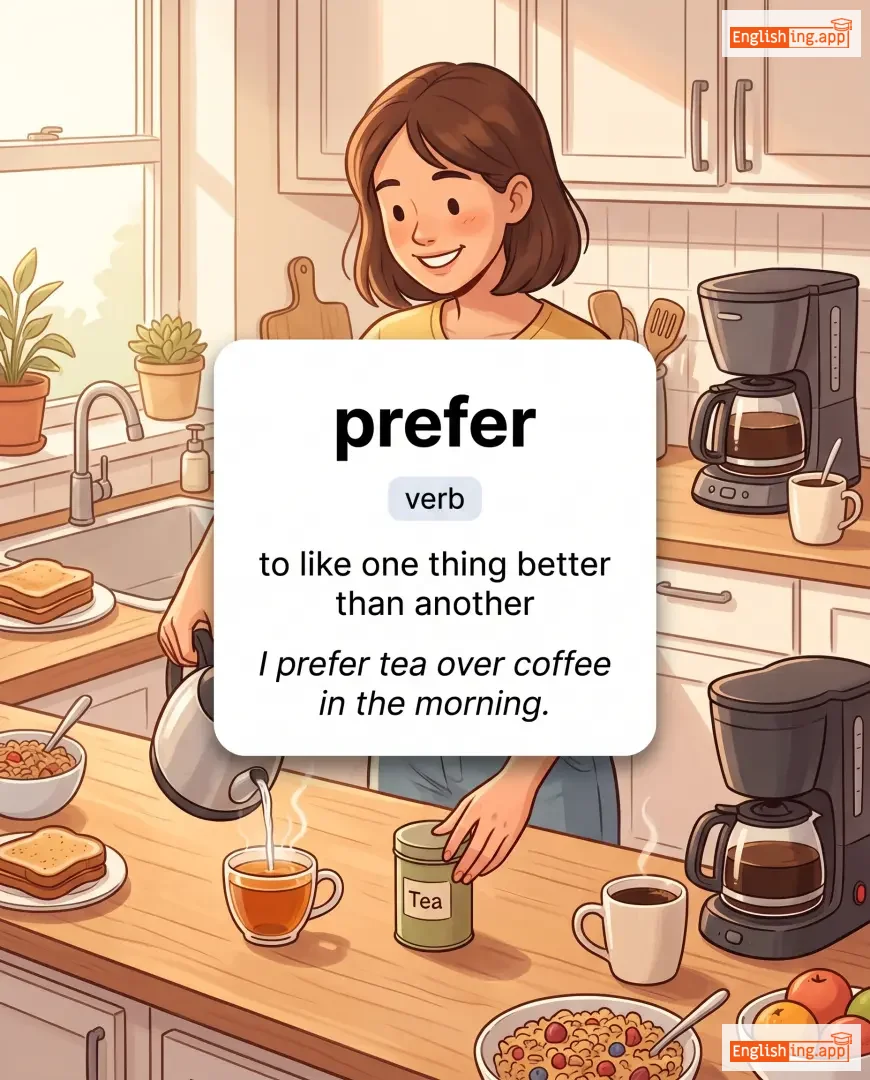
prefer definition card — visual illustration of the meaning
verb
/prɪˈfɜːr/
предпочитать (predpochitat)

to like one thing better than another

"I prefer tea over coffee in the morning."

"Я предпочитаю чай вместо кофе утром." (Ya predpochitayu chay vmesto kofe utrom.)
adjective
/ˈprɛf(ə)rəb(ə)l/
предпочтительный (predpochtitel'nyj)

more desirable or suitable; better than something else

"It is preferable to take the train rather than drive in heavy traffic."

"Предпочтительнее поехать на поезде, чем ехать на машине в час пик." (Predpochtitel'nee poyekhat' na poyezde, chem yekhat' na mashine v chas pik.)
noun
/ˈprɛf(ə)rəns/
предпочтение (predpochtenie)

a greater liking for one alternative over another

"She has a preference for tea over coffee."

"Она предпочитает чай кофе." (Ona predpochitaet chai kofe.)
adjective
/ˌprɛfəˈrɛnʃəl/
привилегированный (privilegovannyi)

showing or giving advantage to one over others

"Members receive preferential treatment at the club."

"Члены получают привилегированное обращение в клубе." (Chleny poluchayut privilegovannoe obrashchenie v klube.)
noun
/prɪˈfɜːrmənt/
повышение (povyshenie)

promotion or advancement in rank, position, or office

"He hoped for preferment in the government office."

"Он надеялся на повышение в государственном офисе." (On nadeyalsya na povyshenie v gosudarstvennom ofitse.)
verb
/priːˈfɪɡjər/
предвосхищать (predvoshishchat)

to represent, show, or foreshadow something in advance

"The economic reforms prefigure major social changes."

"Экономические реформы предвосхищают крупные социальные изменения." (Ekonomicheskie reformy predvoshishchayut krupnye sotsial'nye izmeneniya.)
noun/verb
/ˈpriːfɪks/
префикс; добавлять что-то в начале (prefix; dobavlyat' chto-to v nachale)

a word, letter, or number placed before another; as a verb, to add something in front of something else

"Developers often prefix variables with an underscore."

"Разработчики часто добавляют префикс к переменным с подчеркиванием." (Razrabotchiki chasto dobavlyayut prefix k peremennym s podcherkivaniem.)
noun
/ˈprɛɡnənsi/
беременность (beremennost)

the condition of being pregnant; the period during which a woman carries a developing fetus

"Her pregnancy was carefully monitored by her doctor."

"Ее беременность тщательно контролировалась ее врачом." (Eyo beremennost' tchatel'no kontrolirovalas' eyo vrachom.)
adjective
/ˈprɛɡnənt/
беременная; значительный (beremennaya; znachitelnyy)

having a child developing in the womb; also, full of meaning or significance

"She announced that she was three months pregnant."

"Она объявила, что она была беременна три месяца." (Ona obyavila, chto ona byla beremennaya tri mesyatsa.)
adjective
/prɪˈhɛnsɪbəl/
схватываемый (skhvatyvaemyy)

capable of being grasped or seized

"The tool has a prehensible handle that improves safety."

"Инструмент имеет схватываемую ручку, которая улучшает безопасность." (Instrument imeyet skhvatyvaemuyu ruchku, kotoraya uluchshaet bezopasnost'.)
adjective
/prɪˈhɛnsaɪl/
прехенсильный (prekhensil'nyy)

adapted for seizing or grasping, especially by wrapping around an object

"The monkey used its prehensile tail to hang from the branch."

"Обезьяна использовала свой преhensильный хвост, чтобы повиснуть на ветке." (Obez'yana ispol'zovala svoi prekhensil'nyy khvost, chtoby povisnut' na vetke.)
noun
/prɪˈhɛnʃən/
действие захвата; способность схватить что-то (deystvie zakhvata; sposobnost' skhvatit' chto-to)

the act of grasping or seizing; the ability to take hold of something

"Therapists assessed the patient's prehension during hand therapy."
"Терапевты оценили способность пациента к захвату во время терапии рук." (Terapevty otsenili sposobnost' patsiyenta k zakhvatu vo vremya terapii ruk.)
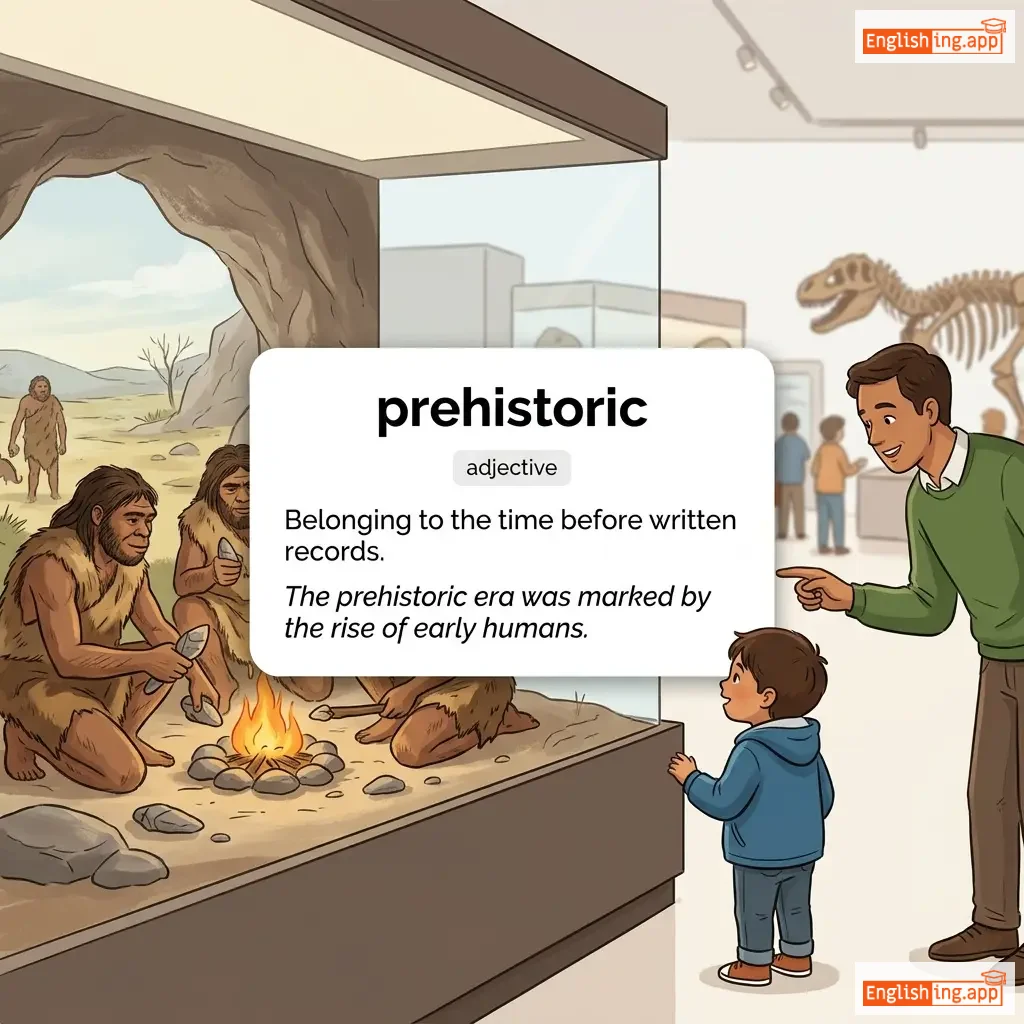
prehistoric definition card — visual illustration of the meaning
adjective
ˌpriːhɪˈstɒrɪk
доисторический, до появления письменных источников (doistoricheskiy, do poyavleniya pis'mennykh istochnikov)

Belonging to the time before written records.

"The prehistoric era was marked by the rise of early humans."

"Доисторическая эпоха была отмечена восхождением первых людей." (Doistoricheskaya epokha byla otmechena voskhodzheniem pervykh lyudey.)
noun
/ˈprɛdʒədɪs/
предвзятое мнение (predvzyatoe mnenie)

An unfair and unreasonable opinion or feeling, especially when formed without enough thought or knowledge.

"Prejudice often prevents people from seeing the truth about others."

"Предвзятое мнение часто мешает людям увидеть правду о других." (Predvzyatoe mnenie chasto meshaet lyudyam uvidet' pravdu o drugikh.)
adjective
/ˈprɛdʒədɪst/
предвзятый (predvzyatyj)

having or showing a dislike or bias against a person or group without proper reason

"He was prejudiced against people from other regions."

"Он был предвзят против людей из других регионов." (On byl predvzyat protiv lyudey iz drugikh regionov.)
noun
/ˈprɛləsi/
прелатура (prelatura)

The office, dignity, or system of church government by prelates.

"The medieval church was dominated by prelacy and its traditions."

"Средневековая церковь была под контролем прелатуры и её традиций." (Srednevekovaya tserkov' byla pod kontrolem prelaturi i yeye traditsiy.)
noun
/ˈprɛlət/
высокопоставленный член духовенства (vysokopostavlennyy chlen dukhovenstva)

A high-ranking member of the clergy, especially a bishop or abbot.

"The prelate delivered a sermon to the congregation."
"Прелат произнес проповедь перед прихожанами." (Prelat proyznos propoved' pered prikhazhanami.)
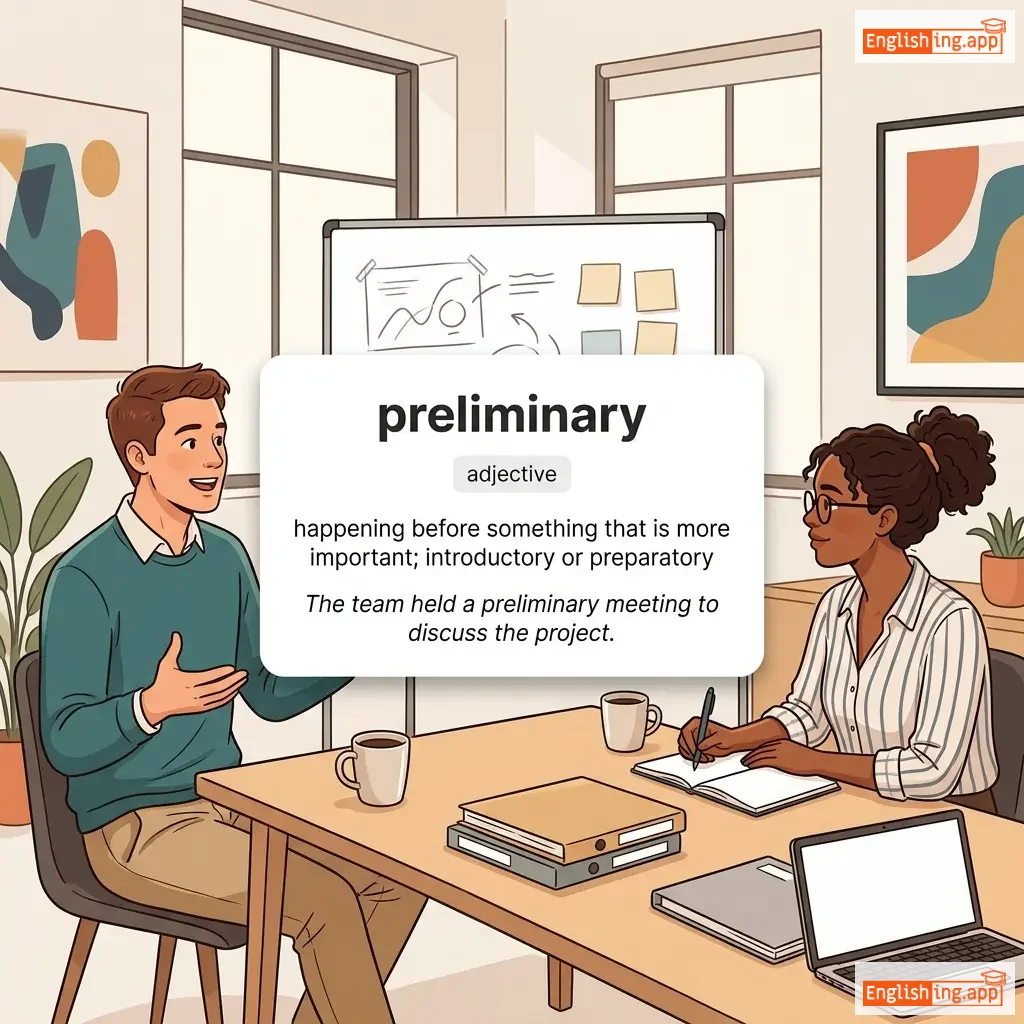
preliminary definition card — visual illustration of the meaning
adjective
/prɪˈlɪmɪˌneri/
предварительный (predvaritel'nyj)

happening before something that is more important; introductory or preparatory

"The team held a preliminary meeting to discuss the project."

"Команда провела предварительное совещание, чтобы обсудить проект." (Komanda provela predvaritel'noe soveshchanie, chtoby obsudit' proyekt.)
noun
/ˈprɛljuːd/
прелюдия (prelyudiya)

An action, event, or statement that serves as an introduction to something more important.

"The small fight was only a prelude to a bigger conflict."

"Небольшая ссора была лишь прелюдией к большему конфликту." (Nebolsaya ssora byla lish' prelyudiyey k bol'shemu konfliktu.)
adjective
/ˌpriːməˈtjʊər/
преждевременный (prezdevremennyy)

Happening or done before the usual or proper time.

"His decision to quit the job was premature."

"Его решение уйти с работы было преждевременным." (Yego resheniye uyti s raboty bylo prezdevremennym.)
verb
/ˌpriːˈmɛdɪteɪt/
предумышленно (predumyshlenno)

to think about and plan something (especially a crime) beforehand

"The suspect was accused of premeditating the crime."

"Подозреваемый был обвинен в предварительном планировании преступления." (Podozrevaemyi byl obvinen v predvaritel'nom planirovanie prestupleniya.)
adjective
/ˌpriːˈmɛdɪˌteɪtɪd/
преднамеренный (prednamerenniy)

planned in advance; done deliberately

"The crime was clearly premeditated."

"Преступление было явно спланировано заранее." (Prestuplenie bylo yavno splanirovano zaraneye.)
noun, adjective
/prɪˈmɪər/ or /ˈpriːmiər/
премьер-министр / главный (premyer-ministro / glavniy)

the head of government in some countries; first in importance or rank

"The French premier addressed the nation."

"Французский премьер-министр обратился к нации." (Frantsuzskiy prem'er-ministro obratilsya k natsii.)
noun
/ˈprɛmɪs/
предпосылка / здание (predposylka / zdanie)

a statement or idea on which reasoning or an argument is based; also a building or property

"His argument was based on a false premise."

"Его аргумент был основан на ложной предпосылке." (Ego argument byl osnovan na lozhnoj predposylke.)
noun
/prɪˈsɛntɪmənt/
предчувствие (predchuvstvie)

An intuitive feeling about the future, especially of something bad about to happen.

"He had a strong presentiment that the plan would fail."

"У него было сильное предчувствие, что план не удастся." (U nego bylo sil'noe predchuvstvie, chto plan ne udastsya.)
verb
/prɪˈskrʌɪb/
прописывать (propisyvat)

to recommend or authorize the use of something, especially medicine

"The doctor prescribed medication for my cold."

"Доктор прописал лекарства от моего простуды." (Doktor propisal lekarstva ot moyego prostudy.)
noun
/ˈpriːskrɪpt/
предписание (predpisanie)

An authoritative rule or direction; something laid down as a command.

"The prescript of the organization required strict punctuality."

"Прескрипт организации требовал строгой пунктуальности." (Preskript organizatsii treboval strogoj punktual'nosti.)
adjective
/prɪˈskrɪptɪbəl/
предписываемый (predpisyvaemyy)

Capable of being prescribed or laid down as a rule or directive.

"Certain regulations are prescriptible under the law."

"Некоторые правила могут быть предписаны законом." (Nekotorye pravila mogut byt' predpisany zakonom.)
prescription definition card — visual illustration of the meaning
noun
/prɪˈskrɪpʃən/
рецепт (retsept)

A written order from a doctor for the preparation and administration of a medicine; also, a recommendation or authoritative rule.

"The doctor gave her a prescription for antibiotics."
"Врач дал ей рецепт на антибиотики." (Vrach dal yey retsept na antibiotiki.)
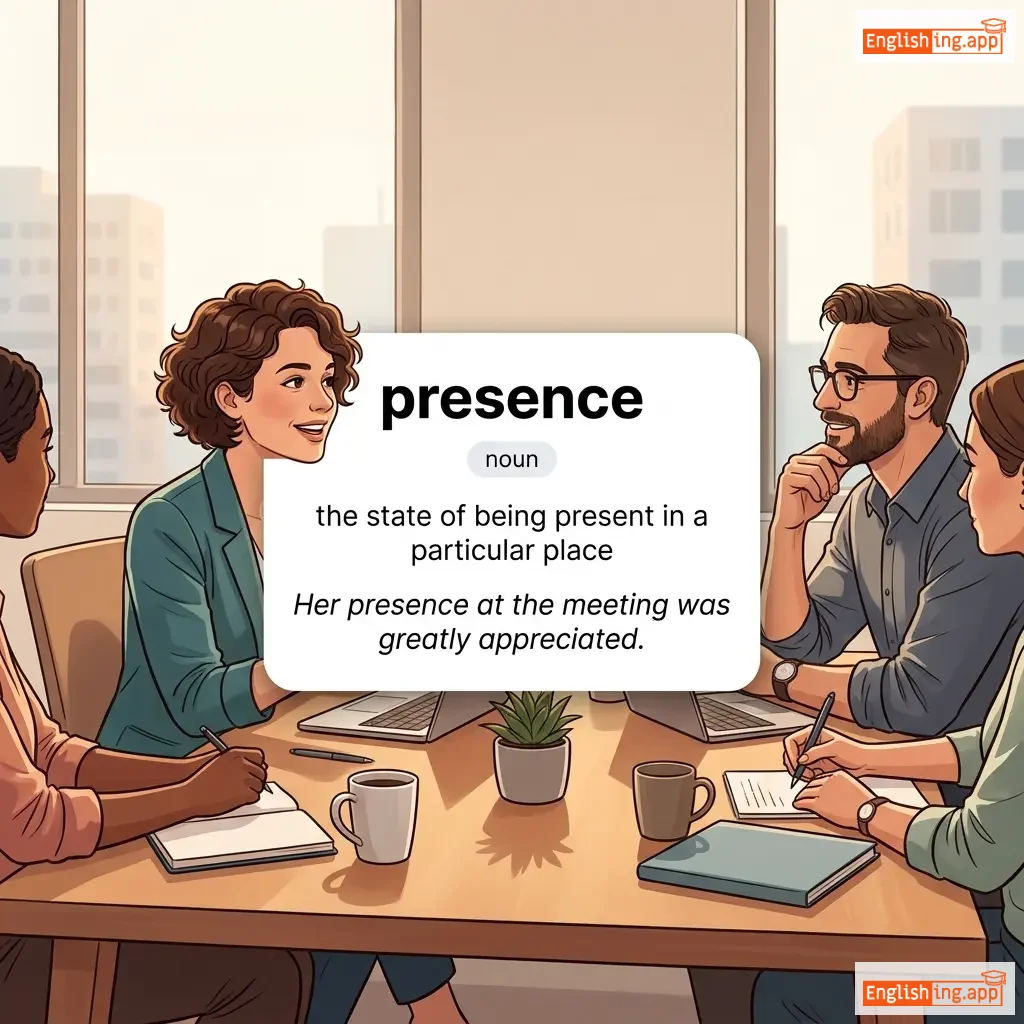
presence definition card — visual illustration of the meaning
noun
/ˈprɛzəns/
присутствие (prisutstvie)

the state of being present in a particular place

"Her presence at the meeting was greatly appreciated."

"Её присутствие на встрече было очень оценено." (Eyo prisutstvie na vstreche bylo ochen' otseneno.)
present definition card — visual illustration of the meaning
noun, verb, adjective
/ˈprɛzənt/
презент (prezent)

existing or happening now; to give something to someone in a formal way

"She presented her report to the team yesterday."

"Она представила свой отчет команде вчера." (Ona predstavila svoy otchet komande vchera.)
adjective
/prɪˈzentəbl/
представительный; подходящий для того, чтобы быть увиденным на публике (predstavitel'nyy; podkhodyashchiy dlya togo, chtoby byt' uvidennym na publike)

neat and suitable for being seen in public; acceptable in appearance

"Make sure you look presentable for the job interview."

"Убедитесь, что вы выглядите презентабельно для собеседования." (ubedites', chto vy viglyadite prezentabel'no dlya sobesedovaniya)
presentation definition card — visual illustration of the meaning
noun
/ˌprɛzənˈteɪʃən/
презентация (prezentatsiya)

the act of presenting something to an audience, typically involving speaking or showing information

"The presentation on digital marketing was very informative."

"Презентация по цифровому маркетингу была очень информативной." (Prezentatsiya po tsifrovomu marketingu byla ochen' informativnoy.)
adjective
/prɪˈsɛnʃənt/
предчувствие (predchuvstvie)

Having a feeling or sense of something about to happen; predictive.

"She was presentient of the coming disaster."
"Она предчувствовала надвигающуюся катастрофу." (Ona predchuvstvovala nadvigayushchuyusya katastrofu.)
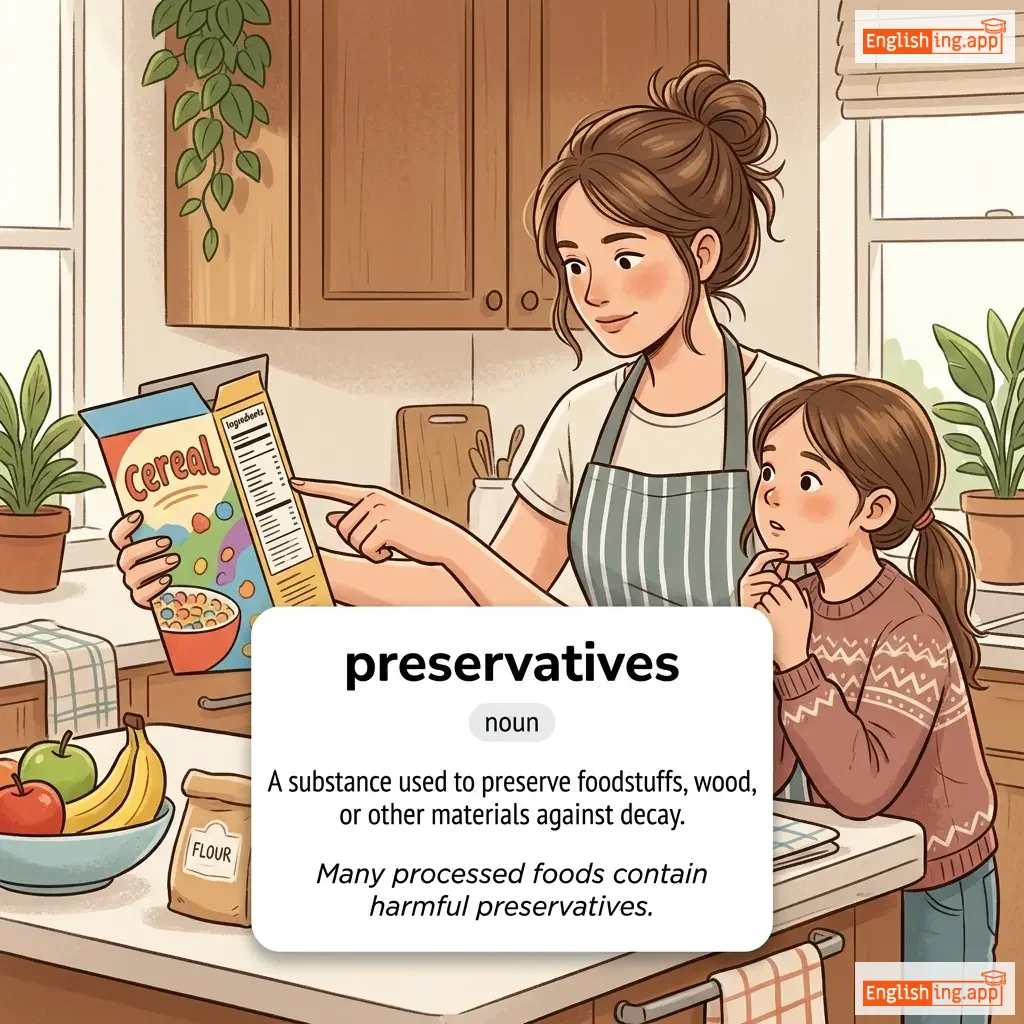
preservatives definition card — visual illustration of the meaning
noun
prɪˈzɜː.və.tɪvz
консервант (konservant)

A substance used to preserve foodstuffs, wood, or other materials against decay.

"Many processed foods contain harmful preservatives."

"Многие переработанные продукты содержат вредные консерванты." (Mnogie pererabotannye produkty soderzhat vrednye konservanty.)
noun
/ˈpoʊtənˌteɪt/
потентат (potentat)

A monarch or ruler, especially one with absolute power.

"The ancient land was ruled by a powerful potentate."

"Древняя земля была управляемая мощным потентатом." (Drevnyaya zemlya byla uderzhivayemaya moshchnym potentatom.)
noun
/ˈprɛzɪdənsi/
президентская должность (prezidentskaya dolzhnost)

the office or position of being a president

"He was elected to the presidency in 2020."

"Он был избран на президентство в 2020 году." (On byl izbran na prezidentsvo v 2020 godu.)
verb
/prɪˈzaɪd/
председательствовать (predsedyatel'stvovat')

to be in charge of a meeting, event, or organization

"She will preside over the meeting tomorrow."
"Она будет председательствовать на встрече завтра." (Ona budet predsedyatel'stvovat' na vstreche zavtra.)
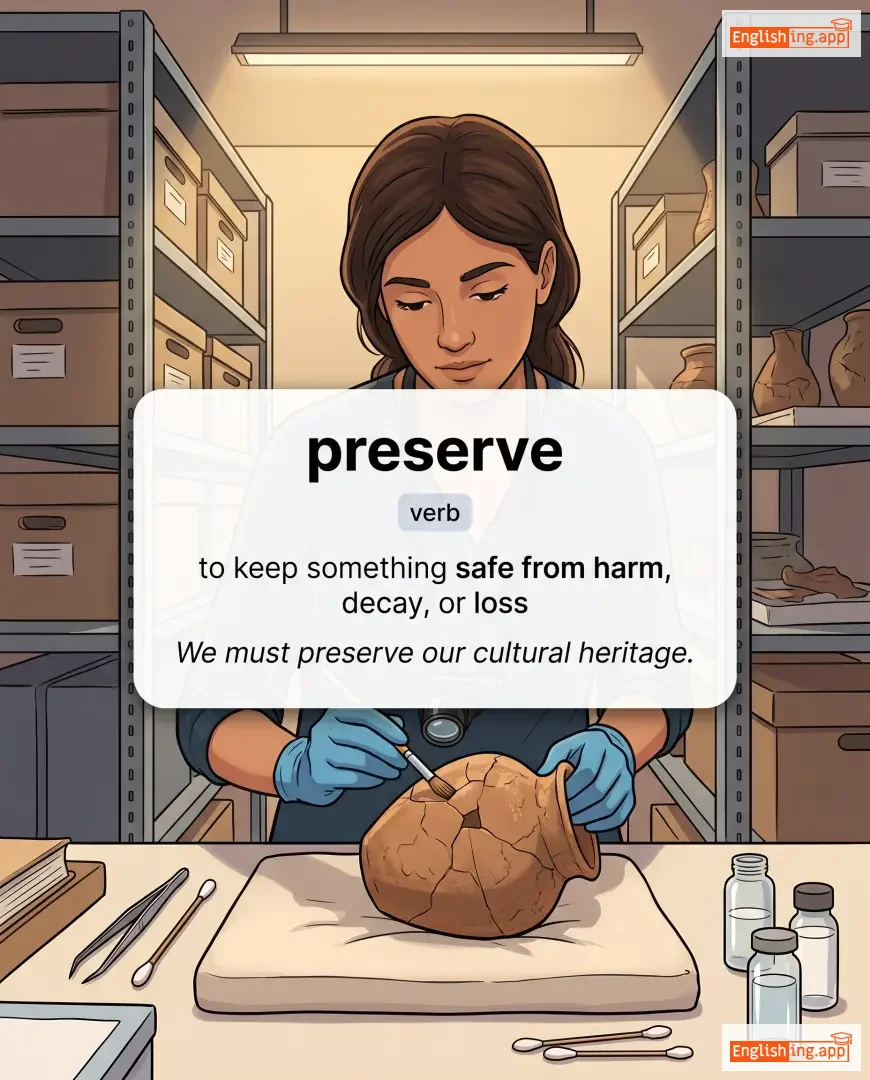
preserve definition card — visual illustration of the meaning
verb
/prɪˈzɜːrv/

to keep something safe from harm, decay, or loss

"We must preserve our cultural heritage."
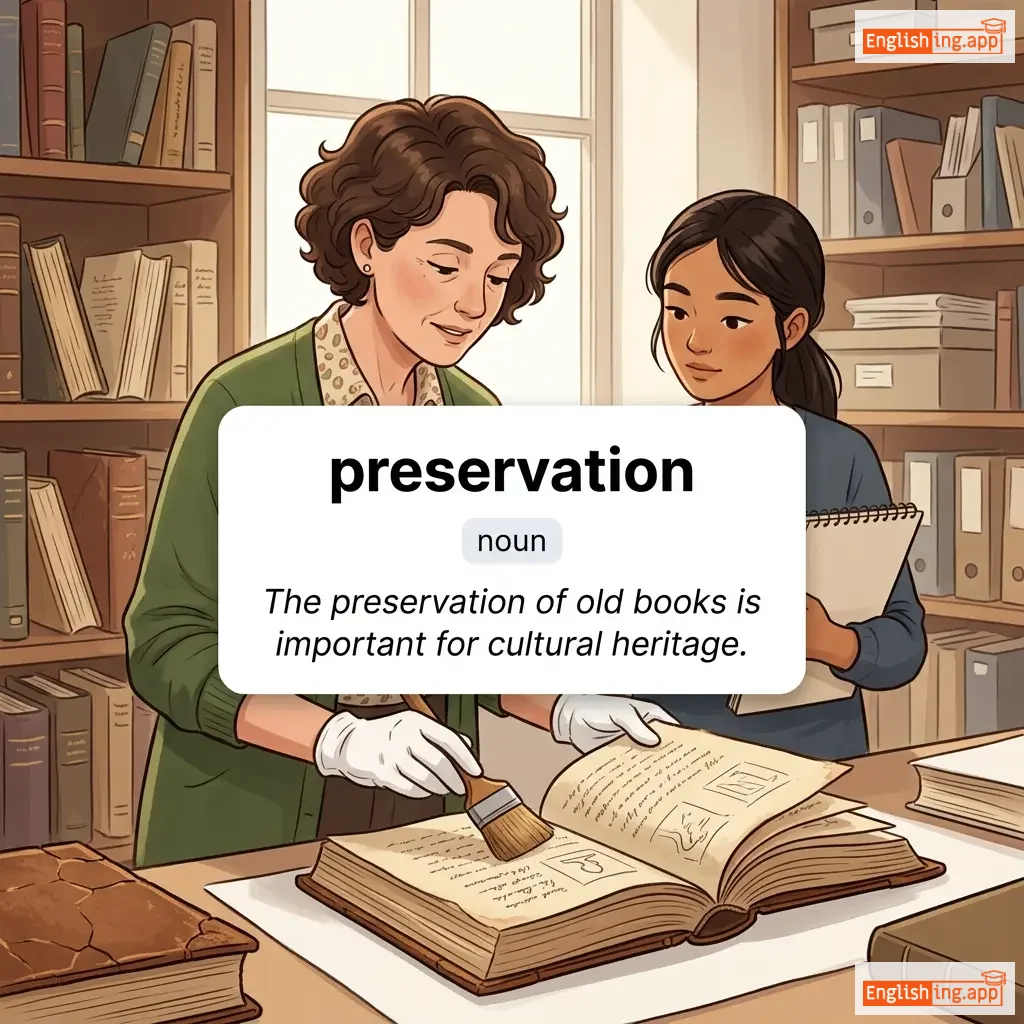
preservation definition card — visual illustration of the meaning
noun
/ˌprɛzəˈveɪʃən/
сохранение (sokhranenie)

The act of keeping something in its original state or protecting it from harm or decay.

"The preservation of old books is important for cultural heritage."

"Сохранение старых книг важно для культурного наследия." (Sokhranenie starykh knig vazhno dlya kul'turnogo naslediya.)
adverb
/ˈprɛzntli/
в настоящее время (v nastoyashchee vremya)

at the current moment; now

"Presently, I am working on a new project."

"В данный момент я работаю над новым проектом." (V dannyy moment ya rabotayu nad novym proyektom.)
noun
/prɪˈzɛntmənt/
формальное представление (formal'noe predstavlenie)

The act of presenting something formally or officially; a formal statement or document.

"The lawyer made a presentment of the evidence to the court."

"Адвокат сделал представление доказательств в суде." (Advokat sdelal predstavlenie dokazatel'stv v sude.)