語彙集

英単語辞書 | 単語の意味、定義、例文

adjective
/priˈɛmptɪv/
予防的 (yobōteki)

Serving or intended to prevent something by taking action first.

"The government took preemptive measures to control inflation."

"政府はインフレを抑制するために予防的措置を講じました。" (Seifu wa infure o yokusei suru tame ni yobōteki sochi o kōjimashita.)
verb
/priːn/
身だしなみを整える (midashinami wo totonoeru)

To groom or dress oneself with care; to show pride in one's appearance.

"She preened in front of the mirror before leaving for the party."

"彼女はパーティーに出かける前に鏡の前で身だしなみを整えていた。" (Kanojo wa pātī ni dekakeru mae ni kagami no mae de midashinami wo totonoete ita.)
verb
/ˌpriːɪnˈɡeɪdʒ/
事前契約 (jizen keiyaku)

To contract or engage beforehand; to arrange in advance.

"The workers were preengaged before the project officially started."

"プロジェクトが公式に開始される前に、作業員はすでに前もって契約されていました。" (Purojekuto ga kōshiki ni kaishi sareru mae ni, sagyōin wa sude ni maemotte keiyaku sareteimashita.)
verb
/ˌpriːɪˈstæblɪʃ/
事前に設定する (jizen ni settei suru)

To establish or set up beforehand.

"Certain rules were preestablished before the meeting."

"会議の前にいくつかのルールが事前に設定されていました。" (Kaigi no mae ni ikutsuka no rūru ga jizen ni settei sareteimashita.)
verb
/ˌpriːɪɡˈzɪst/
前もって存在する (maemotte sonzai suru)

to exist beforehand or before something else

"These customs preexist the arrival of modern technology."

"これらの習慣は、現代技術の到来前に存在していました。" (Korera no shūkan wa, gendai gijutsu no tōrai mae ni sonzai shite imashita.)
noun
/ˌpriːɪɡˈzɪstəns/
前存在 (zen sonzai)

the state of existing before something else

"Philosophers often debated the preexistence of the soul."

"哲学者たちは魂の前存在についてよく議論していました。" (Tetsugakusha-tachi wa tamashii no zen sonzai ni tsuite yoku giron shite imashita.)
noun
/ˈprɛfəs/
序文 (jobun)

an introduction to a book, speech, or other written work

"The author explained his motivation in the preface."

"著者は序文で自分の動機を説明しました。" (Chosha wa jobun de jibun no dōki o setsumei shimashita.)
adjective
/ˈprɛfətɔːri/
序文的 (jobun-teki)

serving as an introduction or preface

"He made some prefatory remarks before the lecture began."
"彼は講義が始まる前にいくつかの序文的な発言をした。" (Kare wa kougi ga hajimaru mae ni ikutsuka no jobun-teki na hatsugen o shita.)
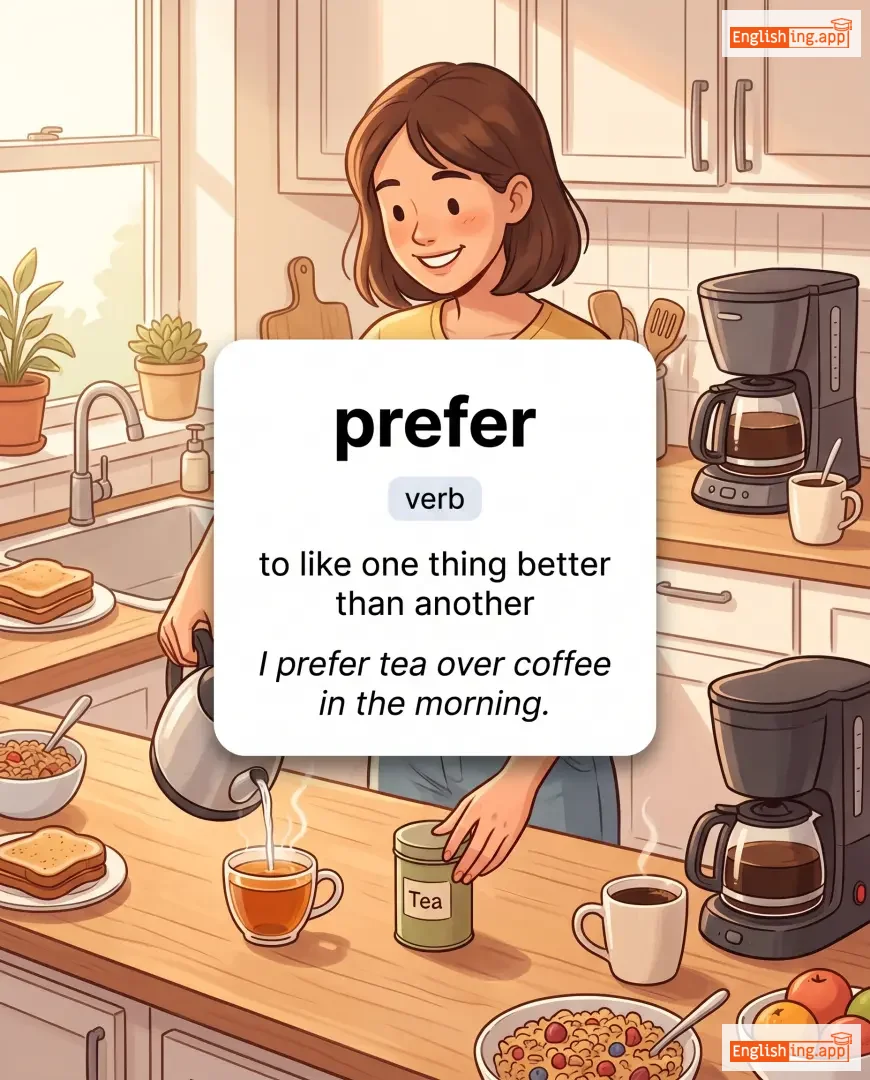
prefer definition card — visual illustration of the meaning
verb
/prɪˈfɜːr/
好む (konomu)

to like one thing better than another

"I prefer tea over coffee in the morning."

"私は朝にコーヒーよりもお茶を好みます。" (Watashi wa asa ni kōhī yori mo ocha o konomimasu.)
adjective
/ˈprɛf(ə)rəb(ə)l/
好ましい (konomashii)

more desirable or suitable; better than something else

"It is preferable to take the train rather than drive in heavy traffic."

"渋滞時には車を運転するより、電車を利用する方が好ましい。" (Jūtai-ji ni wa kuruma o unten suru yori, densha o riyou suru hō ga konomashii.)
noun
/ˈprɛf(ə)rəns/
好み (konomi)

a greater liking for one alternative over another

"She has a preference for tea over coffee."

"彼女はコーヒーよりもお茶を好む。" (Kanojo wa kōhī yori mo ocha o konomu.)
adjective
/ˌprɛfəˈrɛnʃəl/
優遇 (yūgū)

showing or giving advantage to one over others

"Members receive preferential treatment at the club."

"メンバーはクラブで優遇されます。" (Menbā wa kurabu de yūgū saremasu.)
noun
/prɪˈfɜːrmənt/
昇進 (shoushin)

promotion or advancement in rank, position, or office

"He hoped for preferment in the government office."

"彼は政府のオフィスで昇進を望んでいた。" (Kare wa seifu no ofisu de shoushin wo nozondeita.)
verb
/priːˈfɪɡjər/
前兆を示す (zenshou wo shimesu)

to represent, show, or foreshadow something in advance

"The economic reforms prefigure major social changes."

"経済改革は大きな社会変革を予兆しています。" (Keizai kaikaku wa ookina shakai henka wo yochou shiteimasu.)
noun/verb
/ˈpriːfɪks/
接頭辞; 前に何かを追加する (settōji; mae ni nanika o tsuika suru)

a word, letter, or number placed before another; as a verb, to add something in front of something else

"Developers often prefix variables with an underscore."

"開発者はしばしば変数にアンダースコアをプレフィックスとして追加します。" (Kaihatsu-sha wa shibashiba hensū ni andāsukoa o purefikkusu toshite tsuika shimasu.)
noun
/ˈprɛɡnənsi/
妊娠 (ninshin)

the condition of being pregnant; the period during which a woman carries a developing fetus

"Her pregnancy was carefully monitored by her doctor."

"彼女の妊娠は慎重に医師によって監視されていました。" (Kanojo no ninshin wa shinchou ni ishi ni yotte kanshi sareteimashita.)
adjective
/ˈprɛɡnənt/
妊娠している; 意味深い (ninshin shite iru; imishinai)

having a child developing in the womb; also, full of meaning or significance

"She announced that she was three months pregnant."

"彼女は三ヶ月妊娠していることを発表しました。" (Kanojo wa sankagetsu ninshin shite iru koto o happyō shimashita.)
adjective
/prɪˈhɛnsɪbəl/
掴みやすい (tsukami yasui)

capable of being grasped or seized

"The tool has a prehensible handle that improves safety."

"その道具には安全性を高めるために掴みやすいハンドルがあります。" (Sono dougu ni wa anzen-sei o takameru tame ni tsukami yasui handoru ga arimasu.)
adjective
/prɪˈhɛnsaɪl/
把握するための適応 (haaku suru tame no tekiou)

adapted for seizing or grasping, especially by wrapping around an object

"The monkey used its prehensile tail to hang from the branch."

"サルはそのプリヘンシル尾を使って枝からぶら下がっていた。" (Saru wa sono purihenshiru o wo tsukatte eda kara burasagatte ita.)
noun
/prɪˈhɛnʃən/
つかむ動作; 何かをつかむ能力 (tsukamu dōsa; nanika o tsukamu nōryoku)

the act of grasping or seizing; the ability to take hold of something

"Therapists assessed the patient's prehension during hand therapy."
"セラピストは手の治療中に患者のつかむ能力を評価しました。" (Serapisuto wa te no chiryō-chū ni kanja no tsukamu nōryoku o hyōka shimashita.)
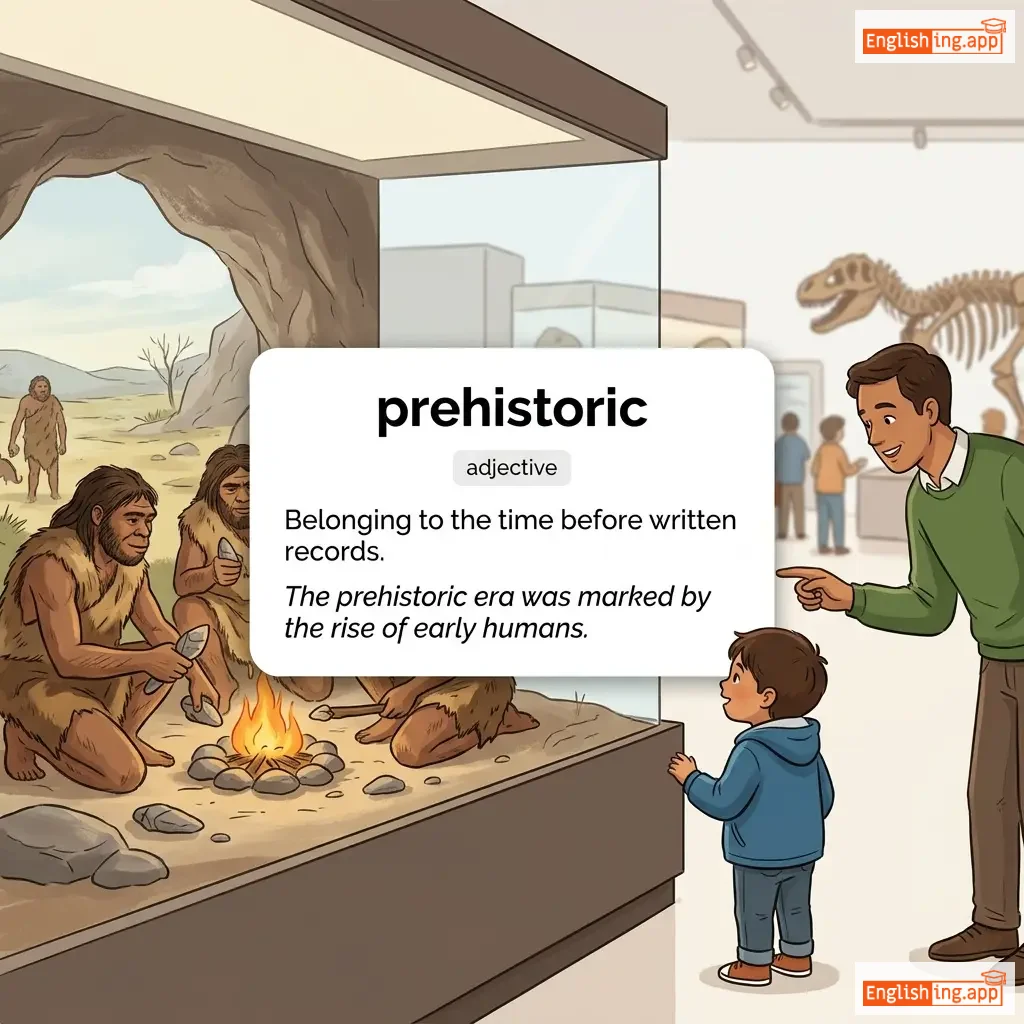
prehistoric definition card — visual illustration of the meaning
adjective
ˌpriːhɪˈstɒrɪk
先史時代の, 書かれた記録の前の時間 (senshi jidai no, kakareta kiroku no mae no jikan)

Belonging to the time before written records.

"The prehistoric era was marked by the rise of early humans."

"先史時代は初期の人類の台頭によって特徴付けられました。" (Senshi jidai wa shoki no jinrui no taitō ni yotte tokuchōzukeraremashita.)
noun
/ˈprɛdʒədɪs/
偏見 (henken)

An unfair and unreasonable opinion or feeling, especially when formed without enough thought or knowledge.

"Prejudice often prevents people from seeing the truth about others."

"偏見はしばしば人々が他人についての真実を見るのを妨げます。" (Henken wa shibashiba hitobito ga tanin ni tsuite no shinjitsu o miru no o samatage masu.)
adjective
/ˈprɛdʒədɪst/
偏見のある (henken no aru)

having or showing a dislike or bias against a person or group without proper reason

"He was prejudiced against people from other regions."

"彼は他の地域の人々に対して偏見を持っていた。" (Kare wa hoka no chiiki no hitobito ni taishite henken o motte ita.)
noun
/ˈprɛləsi/
教会制度 (kyōkaiseido)

The office, dignity, or system of church government by prelates.

"The medieval church was dominated by prelacy and its traditions."

"中世の教会はプレラシーとその伝統によって支配されていた。" (Chūsei no kyōkai wa purerashī to sono dentō ni yotte shihai sarete ita.)
noun
/ˈprɛlət/
高位の聖職者 (kōi no seishokusha)

A high-ranking member of the clergy, especially a bishop or abbot.

"The prelate delivered a sermon to the congregation."
"プレラートは会衆に説教を行った。" (Purerāto wa kaishū ni sekkyō o okonatta.)
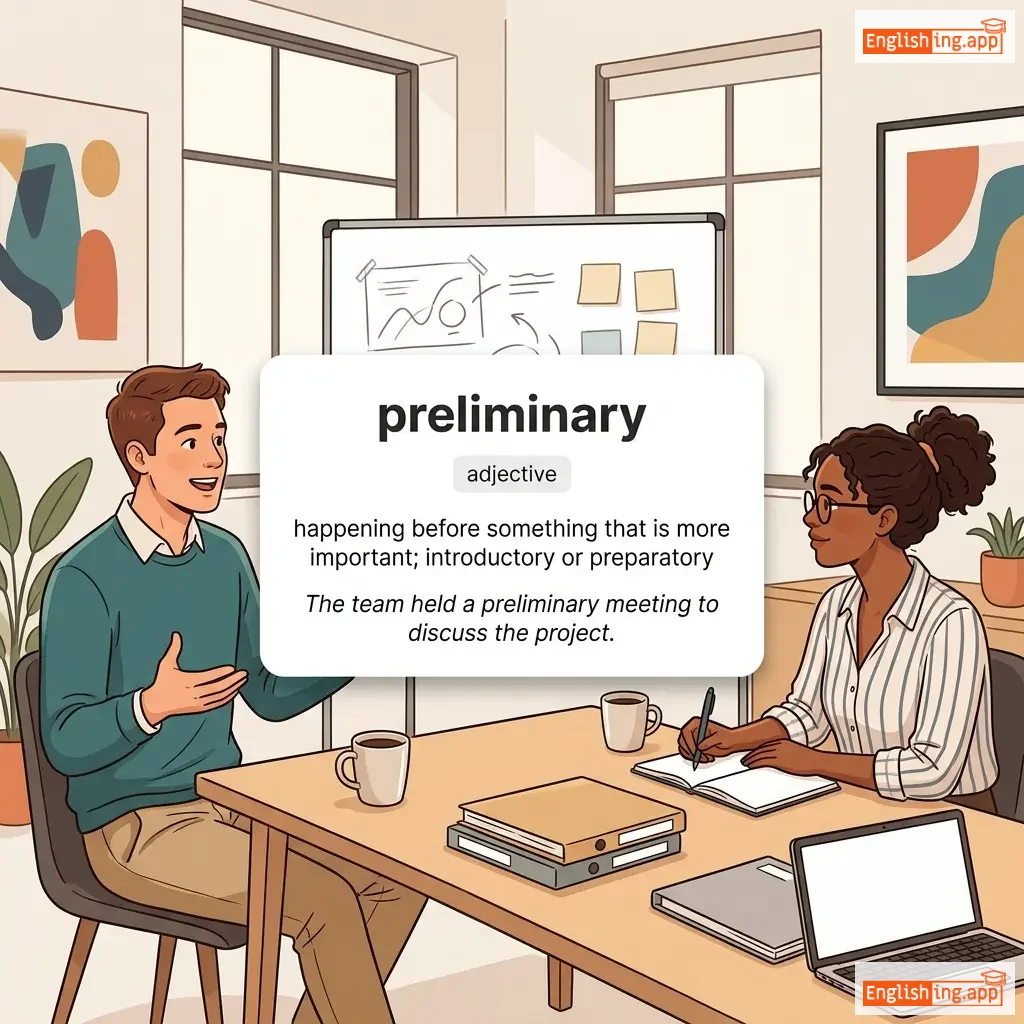
preliminary definition card — visual illustration of the meaning
adjective
/prɪˈlɪmɪˌneri/
予備的 (yobiteki)

happening before something that is more important; introductory or preparatory

"The team held a preliminary meeting to discuss the project."

"チームはプロジェクトについて議論するために予備的なミーティングを開きました。" (Chīmu wa purojekuto ni tsuite giron suru tame ni yobiteki na mītingu o hirakimashita.)
noun
/ˈprɛljuːd/
前奏 (zensou)

An action, event, or statement that serves as an introduction to something more important.

"The small fight was only a prelude to a bigger conflict."

"小さな喧嘩はもっと大きな争いの前奏に過ぎなかった。" (Chiisana kenka wa motto ookina arasoi no zensou ni suginakatta.)
adjective
/ˌpriːməˈtjʊər/
早すぎる (hayasugiru)

Happening or done before the usual or proper time.

"His decision to quit the job was premature."

"彼の仕事を辞める決断は早すぎた。" (Kare no shigoto o yameru ketsudan wa hayasugita.)
verb
/ˌpriːˈmɛdɪteɪt/
事前に考える (jizen ni kangaeru)

to think about and plan something (especially a crime) beforehand

"The suspect was accused of premeditating the crime."

"容疑者は犯罪を事前に計画したとして非難されました。" (Yōgisha wa hanzai o jizen ni keikaku shita to shite hinan saremashita.)
adjective
/ˌpriːˈmɛdɪˌteɪtɪd/
計画的 (keikakuteki)

planned in advance; done deliberately

"The crime was clearly premeditated."

"その犯罪は明らかに計画的だった。" (Sono hanzai wa akiraka ni keikakuteki datta.)
noun, adjective
/prɪˈmɪər/ or /ˈpriːmiər/
首相 / 主要 (shushou / shuyou)

the head of government in some countries; first in importance or rank

"The French premier addressed the nation."

"フランスの首相が国民に演説を行った。" (Furansu no shushou ga kokumin ni enzetsu o okonatta.)
noun
/ˈprɛmɪs/
前提 / 建物 (zentei / tatemono)

a statement or idea on which reasoning or an argument is based; also a building or property

"His argument was based on a false premise."

"彼の議論は誤った前提に基づいていました。" (Kare no giron wa ayamatta zentei ni motozuite imashita.)
noun
/prɪˈsɛntɪmənt/
予感 (yokan)

An intuitive feeling about the future, especially of something bad about to happen.

"He had a strong presentiment that the plan would fail."

"彼は計画が失敗するという強い予感を持っていた。" (Kare wa keikaku ga shippai suru to iu tsuyoi yokan o motte ita.)
verb
/prɪˈskrʌɪb/
処方する (shohō suru)

to recommend or authorize the use of something, especially medicine

"The doctor prescribed medication for my cold."

"医者は私の風邪のために薬を処方しました。" (Isha wa watashi no kaze no tame ni kusuri o shohō shimashita.)
noun
/ˈpriːskrɪpt/
規定 (kitei)

An authoritative rule or direction; something laid down as a command.

"The prescript of the organization required strict punctuality."

"その組織の規定は厳格な時間厳守を要求していた。" (Sono soshiki no kitei wa genkaku na jikan genshu o youkyuu shite ita.)
adjective
/prɪˈskrɪptɪbəl/
規定可能 (kitei kanou)

Capable of being prescribed or laid down as a rule or directive.

"Certain regulations are prescriptible under the law."

"特定の規則は法律の下で規定可能です。" (Tokutei no kisoku wa hōritsu no moto de kitei kanō desu.)
prescription definition card — visual illustration of the meaning
noun
/prɪˈskrɪpʃən/
処方箋 (shohousen)

A written order from a doctor for the preparation and administration of a medicine; also, a recommendation or authoritative rule.

"The doctor gave her a prescription for antibiotics."
"医者は彼女に抗生物質の処方箋を出しました。" (Isha wa kanojo ni kōseibusshitsu no shohōsen o dashimashita.)
presence definition card — visual illustration of the meaning
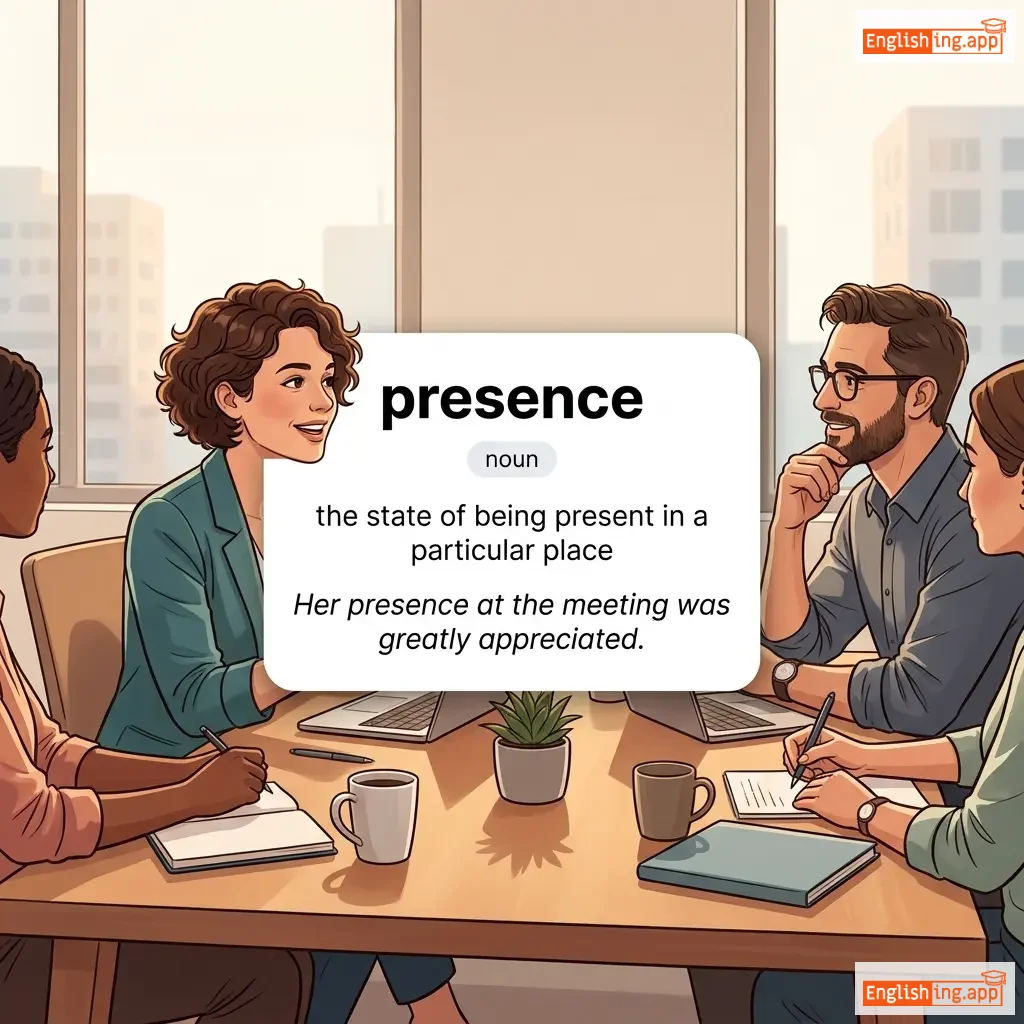
noun
/ˈprɛzəns/
存在 (sonzai)

the state of being present in a particular place

"Her presence at the meeting was greatly appreciated."
"会議における彼女の存在は非常に評価されました。" (Kaigi ni okeru kanojo no sonzai wa hijou ni hyouka saremashita.)
present definition card — visual illustration of the meaning
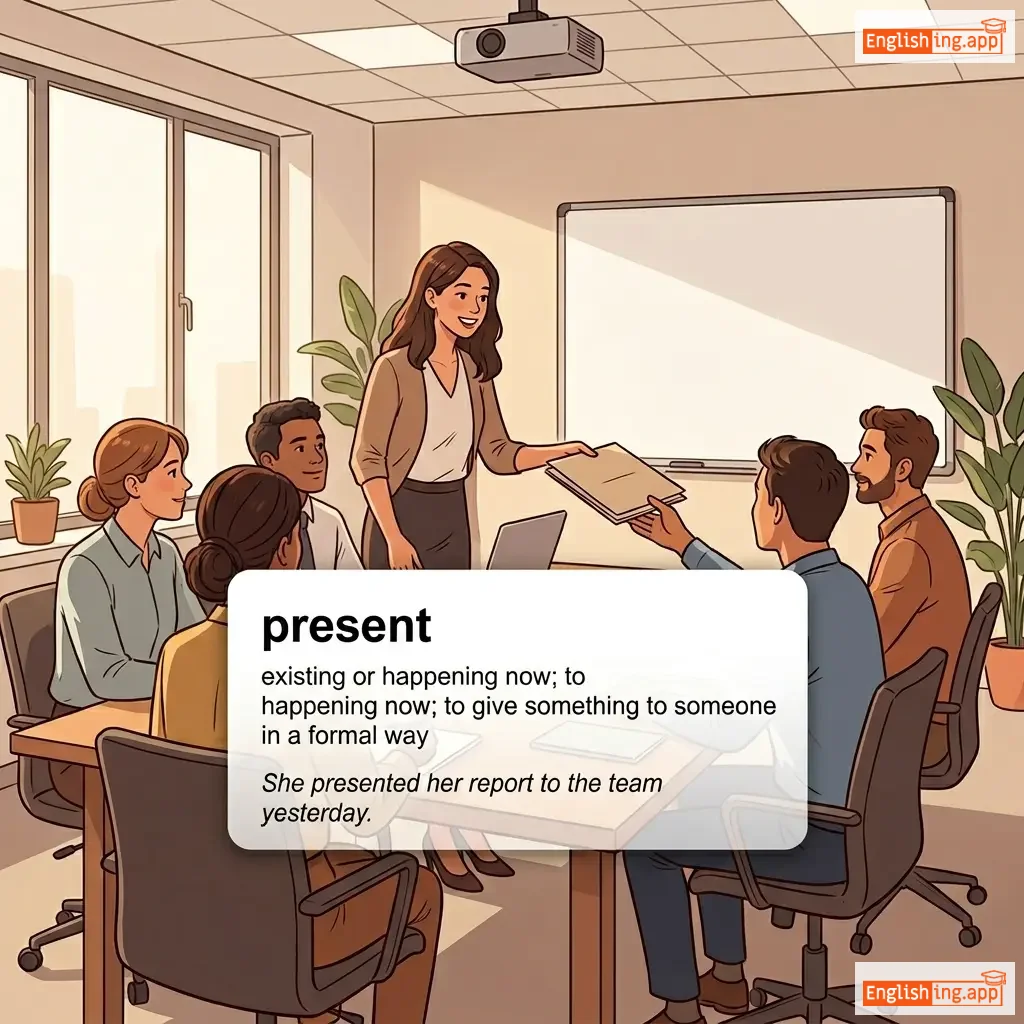
noun, verb, adjective
/ˈprɛzənt/
プレゼント (purezento)

existing or happening now; to give something to someone in a formal way

"She presented her report to the team yesterday."

"彼女は昨日チームに報告書を提出しました。" (Kanojo wa kinou chiimu ni houkokusho o teishutsu shimashita.)
adjective
/prɪˈzentəbl/
見栄えが良い; 公の場に適した (miebāe ga yoi; kōno ba ni tekishita)

neat and suitable for being seen in public; acceptable in appearance

"Make sure you look presentable for the job interview."

"面接のために見た目をきちんと整えてください。" (mensetsu no tame ni mitame o kichin to totonoete kudasai)
presentation definition card — visual illustration of the meaning
noun
/ˌprɛzənˈteɪʃən/
プレゼンテーション (purezenteeshon)

the act of presenting something to an audience, typically involving speaking or showing information

"The presentation on digital marketing was very informative."

"デジタルマーケティングに関するプレゼンテーションは非常に情報豊富でした。" (Dejitaru māketingu ni kansuru purezenteeshon wa hijō ni jōhō hōfu deshita.)
adjective
/prɪˈsɛnʃənt/
予感 (yokan)

Having a feeling or sense of something about to happen; predictive.

"She was presentient of the coming disaster."
"彼女は迫り来る災害を予感していた。" (Kanojo wa semarikuru saigai wo yokan shite ita.)
preservatives definition card — visual illustration of the meaning
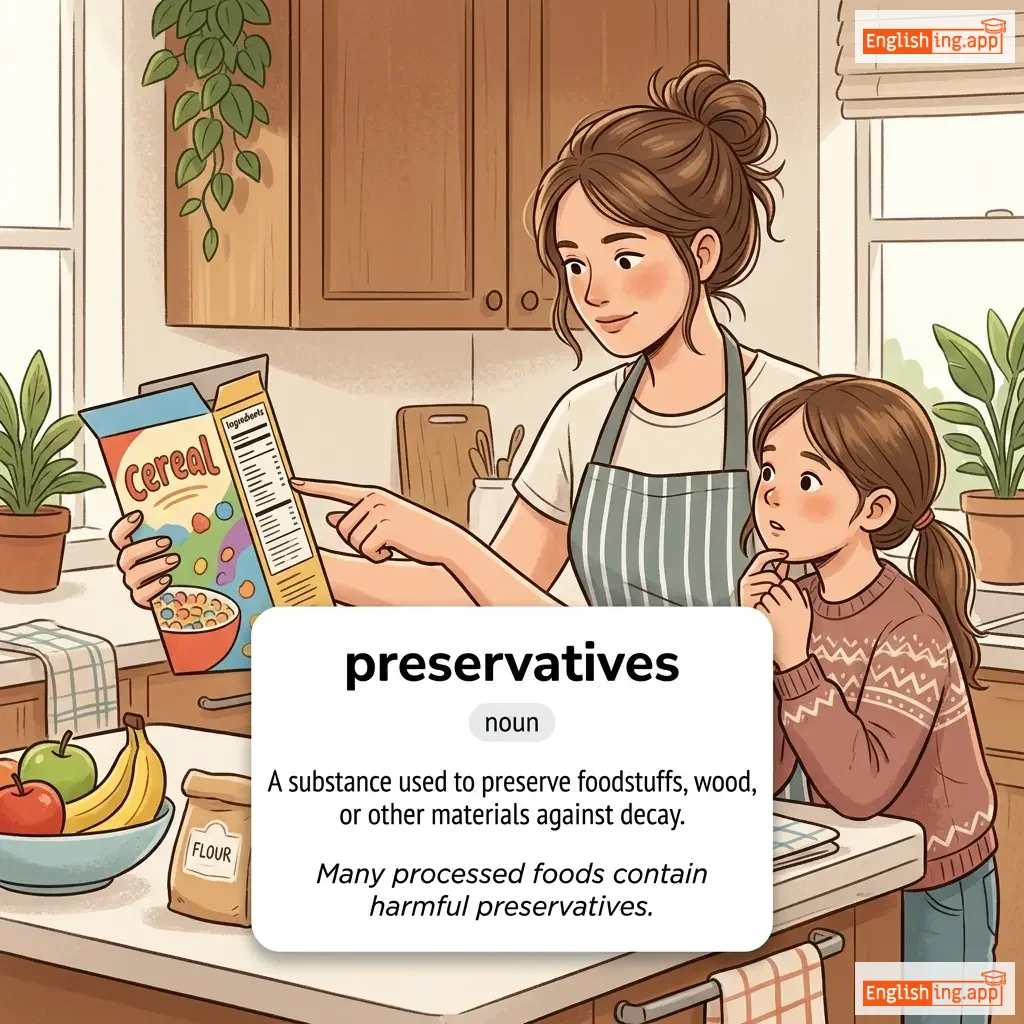
noun
prɪˈzɜː.və.tɪvz
保存料 (hozonryou)

A substance used to preserve foodstuffs, wood, or other materials against decay.

"Many processed foods contain harmful preservatives."

"多くの加工食品には有害な保存料が含まれています。" (Ōku no kakō shokuhin ni wa yūgaina hozonryō ga fukumareteimasu.)
noun
/ˈpoʊtənˌteɪt/
君主 (kunshu)

A monarch or ruler, especially one with absolute power.

"The ancient land was ruled by a powerful potentate."

"古代の土地は強力な君主によって支配されていました。" (Kodai no tochi wa kyōryoku na kunshu ni yotte shihai sarete imashita.)
noun
/ˈprɛzɪdənsi/
大統領職 (daitōryō shoku)

the office or position of being a president

"He was elected to the presidency in 2020."

"彼は2020年に大統領職に選ばれました。" (Kare wa 2020 nen ni daitōryō shoku ni erabaremashita.)
verb
/prɪˈzaɪd/
主宰する (shusai suru)

to be in charge of a meeting, event, or organization

"She will preside over the meeting tomorrow."
"彼女は明日会議を主宰します。" (Kanojo wa ashita kaigi o shusai shimasu.)
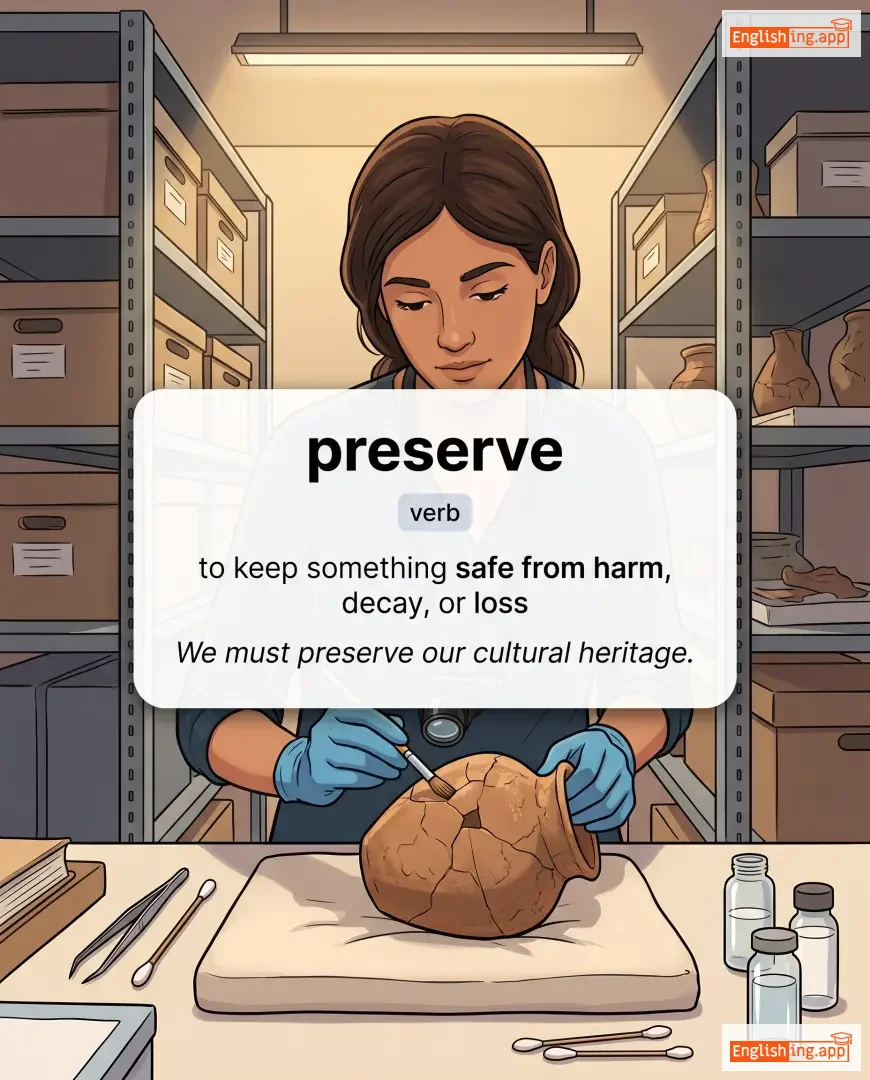
preserve definition card — visual illustration of the meaning
verb
/prɪˈzɜːrv/

to keep something safe from harm, decay, or loss

"We must preserve our cultural heritage."

preservation definition card — visual illustration of the meaning
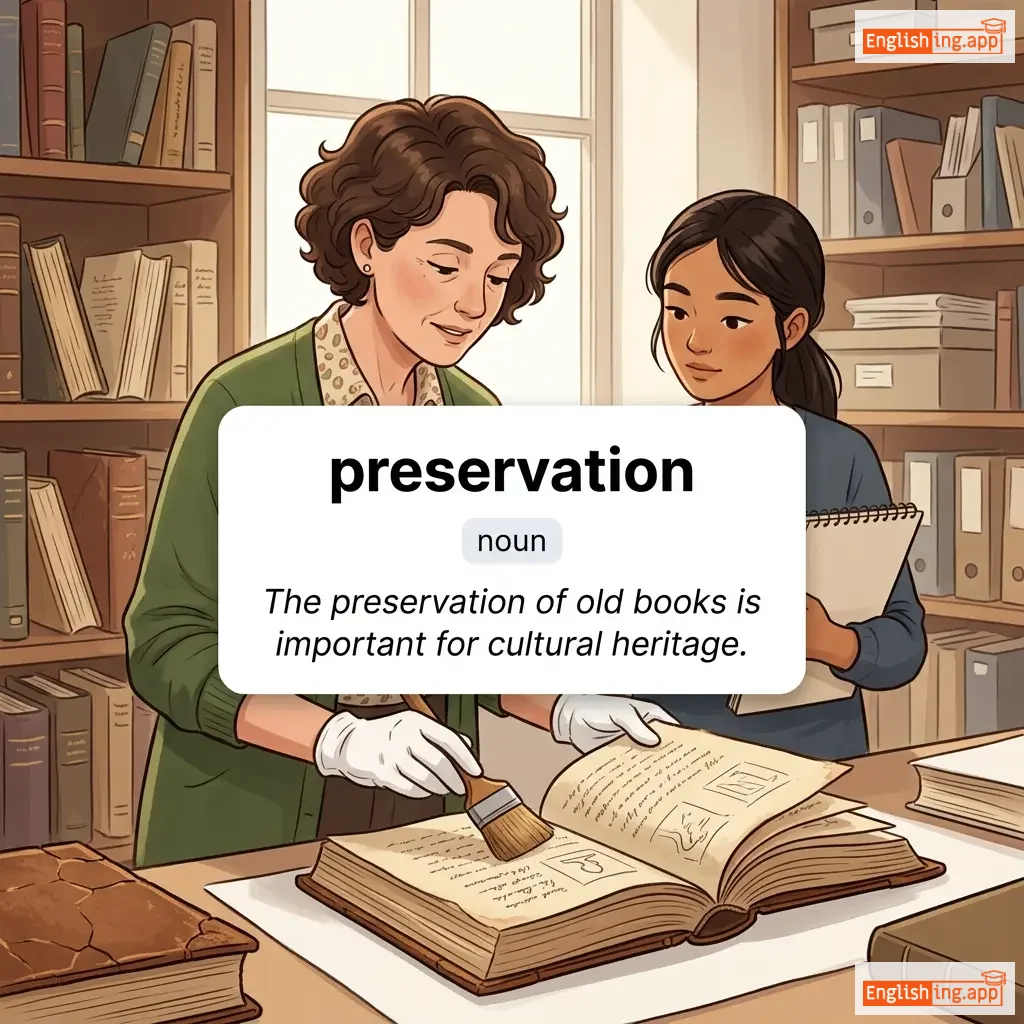
noun
/ˌprɛzəˈveɪʃən/
保存 (hozon)

The act of keeping something in its original state or protecting it from harm or decay.

"The preservation of old books is important for cultural heritage."

"古い本の保存は文化遺産にとって重要です。" (Furui hon no hozon wa bunka isan ni totte jūyō desu.)
adverb
/ˈprɛzntli/
現在 (genzai)

at the current moment; now

"Presently, I am working on a new project."

"現在、私は新しいプロジェクトに取り組んでいます。" (Genzai, watashi wa atarashii purojekuto ni torikundeimasu.)
noun
/prɪˈzɛntmənt/
正式な提示 (seishiki na teiji)

The act of presenting something formally or officially; a formal statement or document.

"The lawyer made a presentment of the evidence to the court."

"弁護士は証拠を法廷に提示しました。" (Bengoshi wa shōko o hōtei ni teiji shimashita.)