語彙集

英単語辞書 | 単語の意味、定義、例文

noun
/ˈpɔːrtɛnt/
前兆 (zenchou)

A sign or warning that something, especially something momentous or calamitous, is likely to happen.

"The sudden drop in stock prices was seen as a portent of economic trouble."

"株価の急落は、経済的な問題の前兆として見なされました。" (Kabuka no kyūraku wa, keizaiteki na mondai no zenchou toshite minasaremashita.)
adjective
/pɔːrˈtɛntəs/
前兆的な、重大な (zenjō-tekina, jūdaina)

Giving a sign or warning that something, often bad or serious, is going to happen; or overly solemn and pompous.

"His portentous tone made everyone nervous about the news."

"彼の前兆的な口調は、ニュースについて皆を不安にさせた。" (Kare no zenzō-teki na kuchō wa, nyūsu ni tsuite mina o fuan ni saseta.)
portfolio definition card — visual illustration of the meaning
noun
/pɔːrtˈfoʊlioʊ/
ポートフォリオ (pōtoforio)

A collection of financial investments, artworks, or documents presented as a body of work.

"The designer showcased her portfolio during the interview."
"デザイナーはインタビュー中に彼女のポートフォリオを展示しました。" (Dezainā wa intabyū chū ni kanojo no pōtoforio o tenji shimashita.)
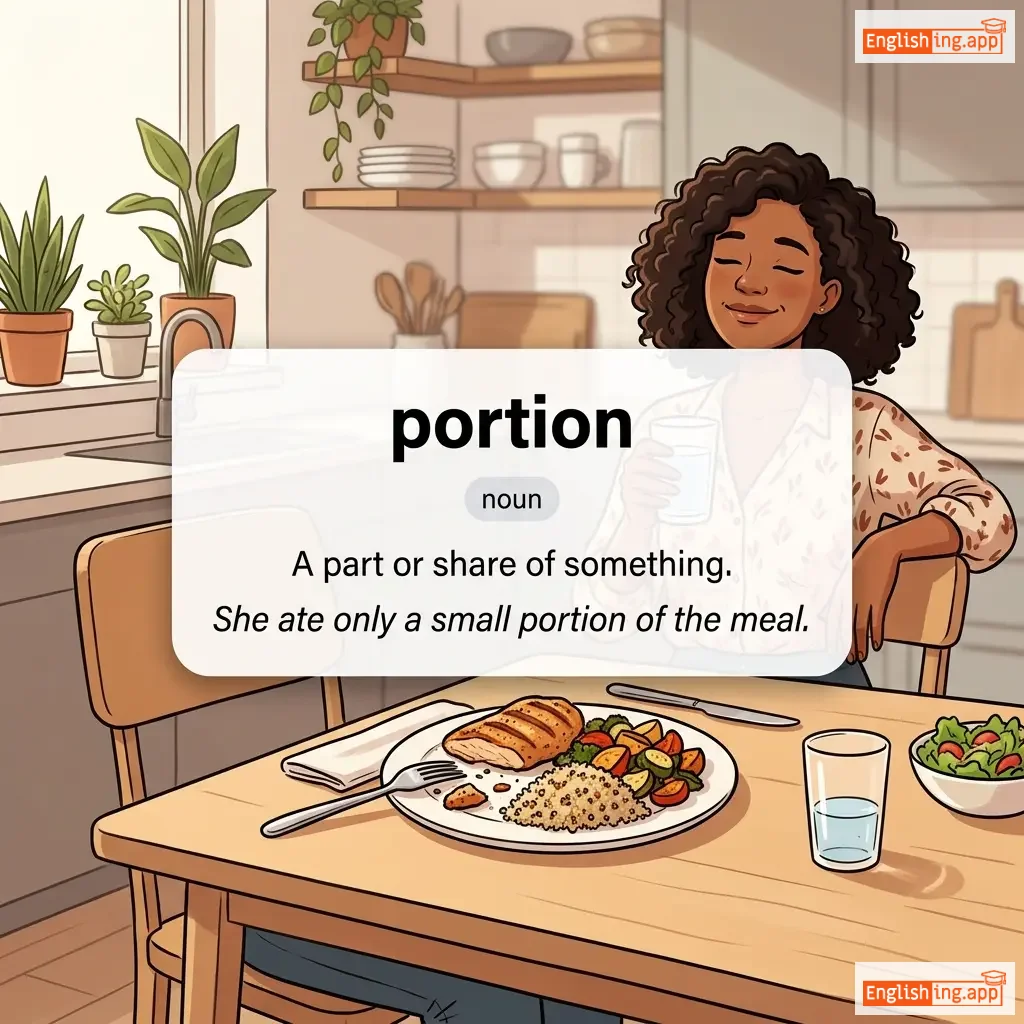
portion definition card — visual illustration of the meaning
noun
/ˈpɔːrʃən/
部分 (bubun)

A part or share of something.

"She ate only a small portion of the meal."

"彼女は食事のほんの一部を食べました。" (Kanojo wa shokuji no honno ichibu o tabemashita.)
adjective
/ˈpɔːrtli/
ぽっちゃり (pocchari)

Having a stout or somewhat fat body, often implying dignity or authority.

"The portly man entered the room with confidence."

"ぽっちゃりな男性は自信を持って部屋に入った。" (Pocchari na dansei wa jishin o motte heya ni haitta.)
portrait definition card — visual illustration of the meaning
noun
/ˈpɔːtrət/
ポートレート (pōtorēto)

a painting, drawing, photograph, or engraving of a person, especially one showing the face

"The artist painted a beautiful portrait of his wife."
"アーティストは妻の美しいポートレートを描きました。" (Ātisuto wa tsuma no utsukushī pōtorēto o kakimashita.)
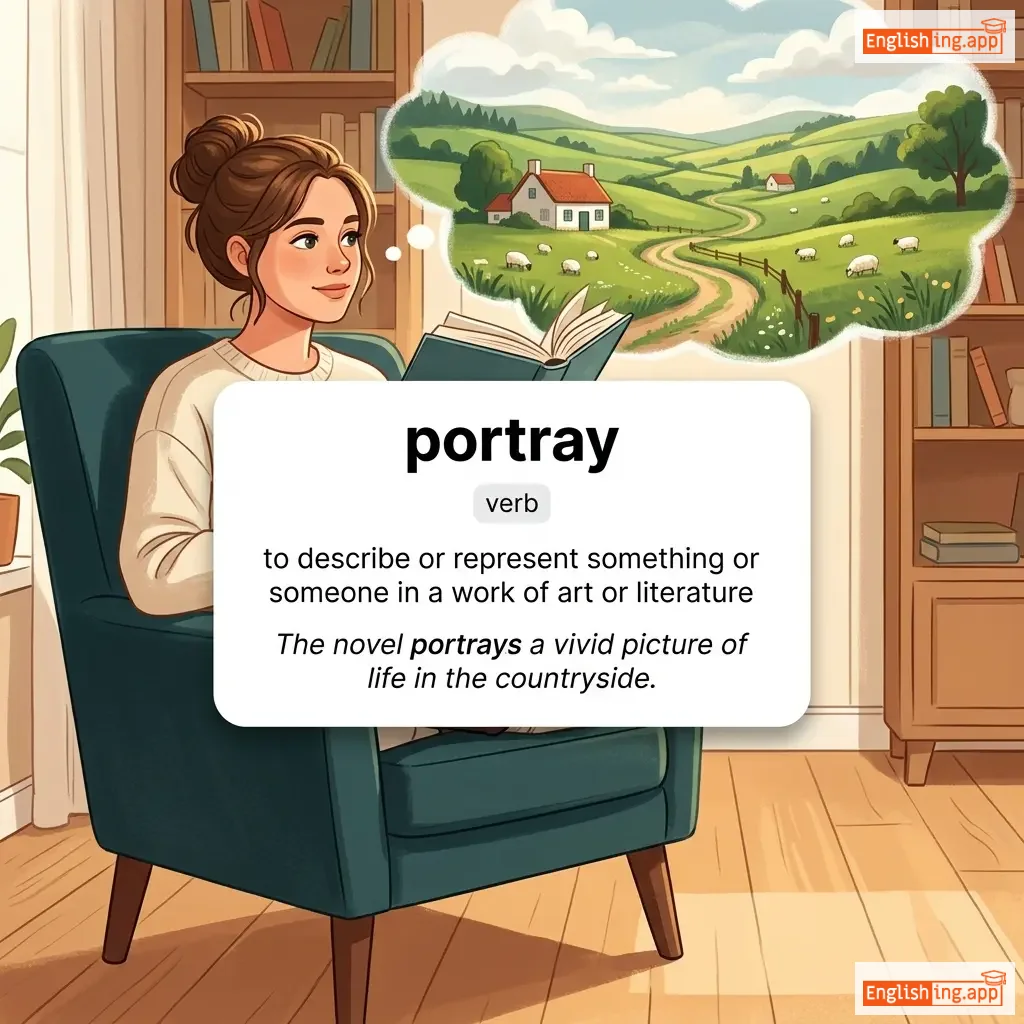
portray definition card — visual illustration of the meaning
verb
/pɔːˈtreɪ/
描く (kaku)

to describe or represent something or someone in a work of art or literature

"The novel portrays a vivid picture of life in the countryside."

"その小説は田舎での生活の生き生きとした絵を描いています。" (Sono shōsetsu wa inaka de no seikatsu no ikikito shita e o kaiteimasu.)
verb
/poʊz/
幸せ (shiawase)

To assume a particular position, especially for a photograph or display; to present a problem or question.

"She posed for a picture in front of the monument."

"彼女は賞を受け取ったとき、幸せを隠すことができませんでした。" (Kanojo wa shō o uketotta toki, shiawase o kakusu koto ga dekimasen deshita.)
noun
/poʊˈzɜːr/

A person who pretends to be something they are not, often to impress others.

"Many considered him a poseur because he exaggerated his accomplishments."

💡

posit

verb
/ˈpɑːzɪt/

To assume or suggest something as a fact or basis for reasoning.

"The scientist posited a new theory to explain the phenomenon."

position definition card — visual illustration of the meaning
noun
/pəˈzɪʃən/
ポジション / 位置 (pojishon / ichi)

A place, job, or status; the way in which someone or something is placed or arranged.

"She applied for a teaching position at the university."
"彼女は大学の教職に応募しました。" (Kanojo wa daigaku no kyōshoku ni ōbo shimashita.)
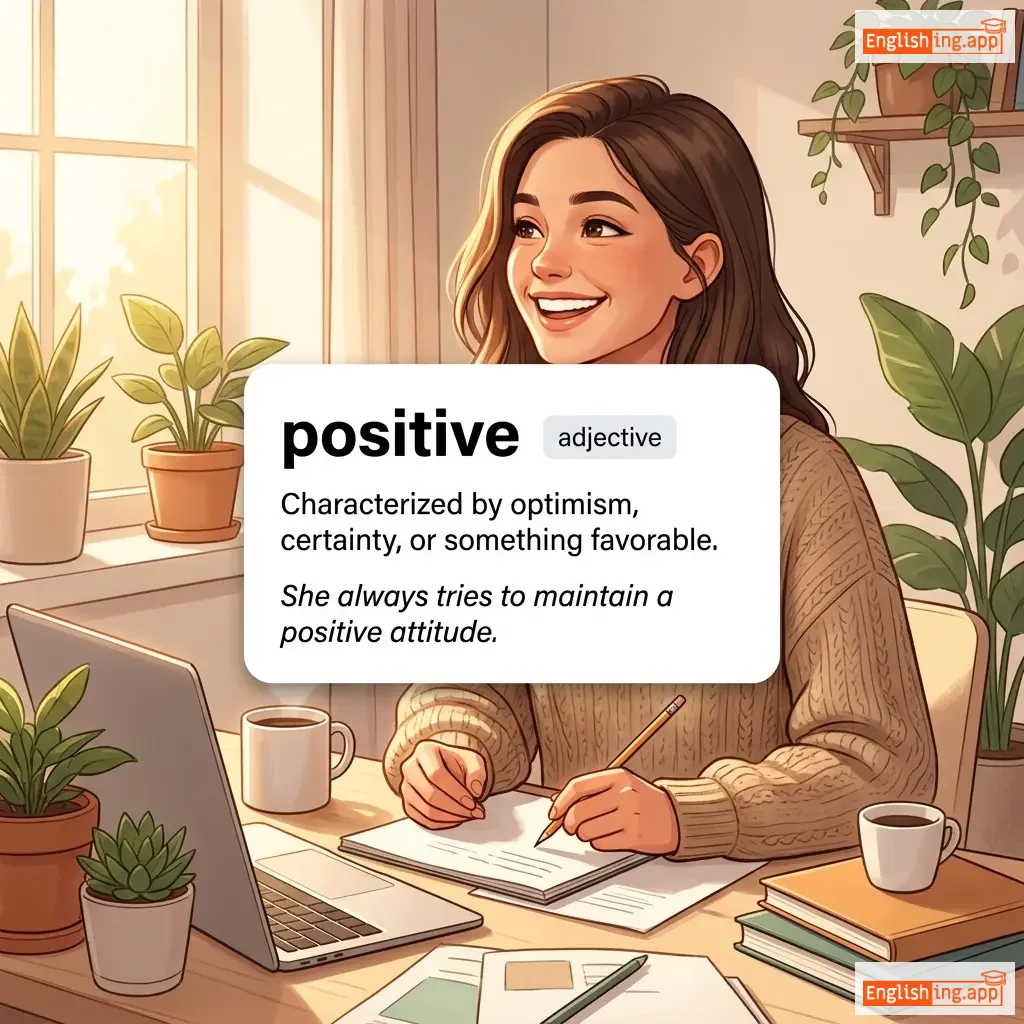
positive definition card — visual illustration of the meaning
adjective
/ˈpɒzɪtɪv/
ポジティブ (pojitibu)

Characterized by optimism, certainty, or something favorable.

"She always tries to maintain a positive attitude."

"彼女はいつもポジティブな態度を保とうとしています。" (Kanojo wa itsumo pojitibu na taido o tamotsu to shiteimasu.)
noun
/ˈpɒsi/
ギャング / 友達グループ (gyangu / tomodachi gurūpu)

A group of people, often friends or a group organized to support or enforce the law.

"He arrived at the party with his posse of friends."

"彼は友達グループと一緒にパーティーに到着しました。" (Kare wa tomodachi gurūpu to issho ni pātī ni tōchaku shimashita.)
verb
/pəˈzɛs/
持つ / 所有する (motsu / shoyuu suru)

To have or own something; to hold a quality or characteristic.

"She possesses great talent in music."

"彼女は音楽において素晴らしい才能を持っています。" (Kanojo wa ongaku ni oite subarashii sainou wo motteimasu.)
noun
/pəˈzɛʃən/
所有 (shoyū)

The state of owning, controlling, or holding something.

"The ring was her most valuable possession."

"その指輪は彼女の最も貴重な所有物でした。" (Sono yubiwa wa kanojo no mottomo kichōna shoyūbutsu deshita.)
adjective
/pəˈzɛsɪv/
所有欲の強い (shoyoyoku no tsuyoi)

Showing a desire to own or control; relating to possession.

"He became very possessive about his old books."

"彼は自分の古い本について非常に所有欲が強くなった。" (Kare wa jibun no furui hon ni tsuite hijou ni shoyoyoku ga tsuyoku natta.)
noun
/pəˈzɛsər/
所有者 (shoyuusha)

A person who owns or holds something.

"The possessor of the land built a new house."

"土地の所有者は新しい家を建てました。" (Tochi no shoyuusha wa atarashii ie o tatemashita.)
noun
/ˌpɒsəˈbɪləti/
可能性 (kanousei)

something that may happen or be the case; a chance that something exists or might occur

"There is a strong possibility of rain tomorrow."
"明日は雨の強い可能性があります。" (Ashita wa ame no tsuyoi kanousei ga arimasu.)
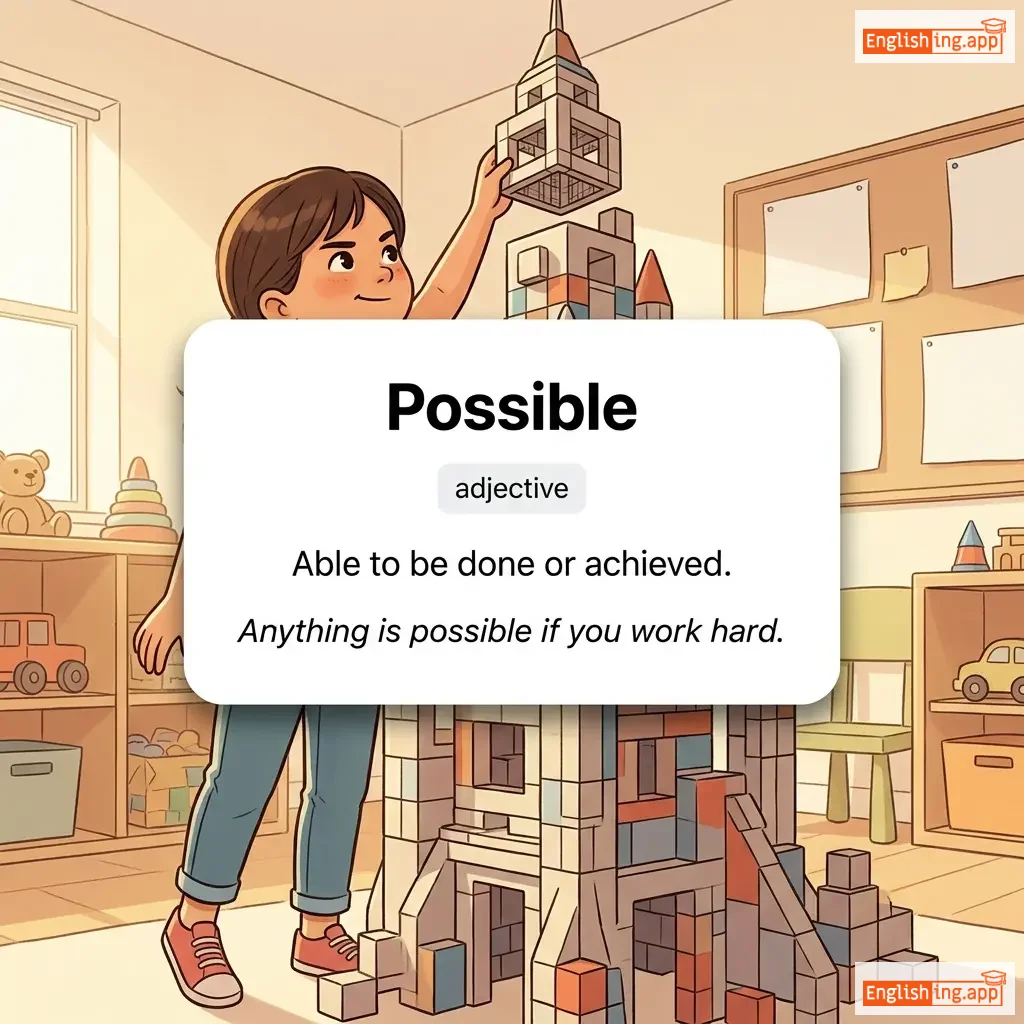
Possible definition card — visual illustration of the meaning
adjective
/ˈpɒsəbl̩/
可能 (kanou)

Able to be done or achieved.

"Anything is possible if you work hard."

"一生懸命働けば、何でも可能です。" (Isshoukenmei hataraakeba, nandemo kanou desu.)
adverb
/ˈpɒsɪbli/
おそらく (osoraku)

maybe, or in a way that is not certain

"It could possibly rain later today."

"今日の後でおそらく雨が降るでしょう。" (Kyou no ato de osoraku ame ga furu deshou.)
noun, verb
/pəʊst/
ポスト (posuto)

a job or position, or to send something by mail

"She posted a letter to her friend yesterday."

"彼女は昨日友達に手紙をポストした。" (Kanojo wa kinō tomodachi ni tegami o posuto shita.)
noun
/ˈpoʊst ˌɒfɪs/
郵便局 (yuubinkyoku)

a public building or agency where mail is sent, received, and other postal services are provided

"I went to the post office to mail a package."

"私は荷物を送るために郵便局へ行きました。" (watashi wa nimotsu o okuru tame ni yuubinkyoku e ikimashita)
adjective
/ˌpoʊstˈwɔːr/
戦後の (sengo no)

relating to the period after a war has ended

"The country experienced rapid economic growth in the post-war years."

"その国は戦後の時代に急速な経済成長を遂げた。" (sono kuni wa sengo no jidai ni kyuusoku na keizai seichou o togeta)
verb
/ˌpoʊstˈdeɪt/
後日の日付を記入する (gojitsu no hizuke o kinyū suru)

To assign a date later than the actual date to a document or event.

"She postdated the check to next month."
"彼女は小切手に来月の日付を付けました。" (Kanojo wa kogitte ni raigetsu no hizuke o tsukemashita.)
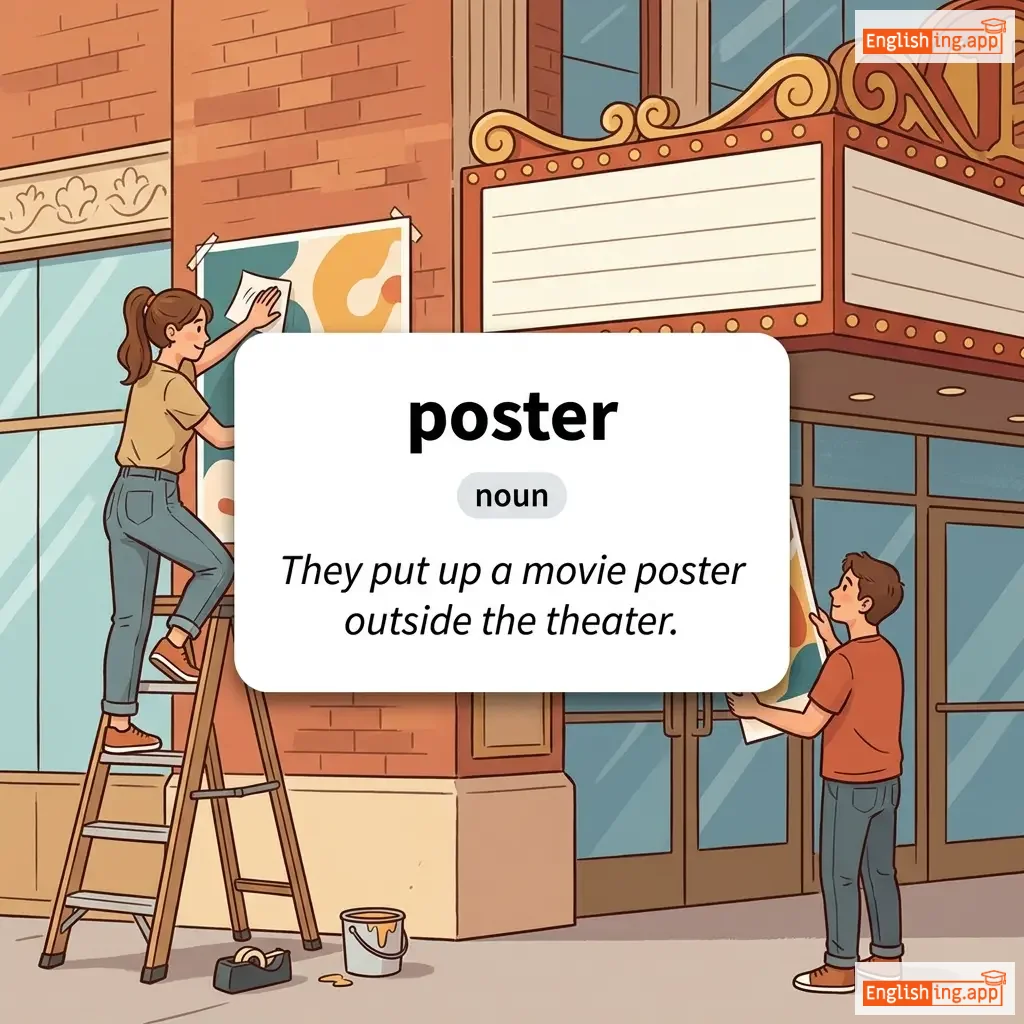
poster definition card — visual illustration of the meaning
noun
/ˈpoʊstər/
ポスター (posutā)

a large printed picture or notice that is put on a wall for decoration or to advertise something

"They put up a movie poster outside the theater."

"彼らは映画館の外に映画のポスターを貼った。" (Karera wa eigakan no soto ni eiga no posutā o hatta.)
adjective
/pɒˈstɪəriər/
後部 (kōbu)

Situated at or toward the back; later in time.

"The posterior part of the brain controls vision."

"脳の後部は視覚を制御します。" (Nō no kōbu wa shikaku o seigyo shimasu.)
noun
/pɒˈstɛrɪti/
後世 (kōsei)

All future generations of people.

"The monument was built for the benefit of posterity."

"記念碑は後世のために建てられました。" (Kinenhi wa kōsei no tame ni tateraremashita.)
noun, adjective
/ˌpəʊstˈɡrædʒuət/
大学院生 (daigakuinsei)

A student who has completed a first degree and is studying for a further degree.

"She is doing postgraduate research in physics."

"彼女は物理学の大学院研究をしています。" (Kanojo wa butsuri-gaku no daigakuin kenkyuu o shiteimasu.)
adjective
/ˈpɒstjʊməs/
死後の (shigo no)

Occurring, awarded, or appearing after the death of the originator.

"He received a posthumous award for his bravery."

"彼は勇気に対して死後の賞を受けました。" (Kare wa yūki ni taishite shigo no shō o ukemashita.)
noun, adjective
/ˌpəʊstˈmɔːtəm/
死後解剖 (shigo kaibou)

An examination of a dead body to determine the cause of death.

"The doctor carried out a postmortem on the body."

"医者は死体にポストモーテムを行った。" (Isha wa shitai ni posutomootemu o okonatta.)
verb
/pəʊs(t)ˈpəʊn/
延期する (enki suru)

to delay something to a later time

"The meeting was postponed until next week."

"会議は来週に延期されました。" (Kaigi wa raishū ni enki saremashita.)
adjective
/ˌpəʊstˈprændɪəl/
食後 (shokugo)

Occurring after a meal.

"He went for a postprandial walk after dinner."

"彼は夕食後にポストプランディアルウォークに出かけた。" (Kare wa yuushoku go ni postprandial walk ni dekaketa.)
noun
/ˈpəʊstˌskrɪpt/
追伸 (tsuishin)

an additional remark at the end of a letter or text, after the signature

"She added a brief postscript to thank him again."
"彼女は再度彼に感謝するために簡単な追伸を加えました。" (Kanojo wa saido kare ni kansha suru tame ni kantan na tsuishin o kuwaemashita.)
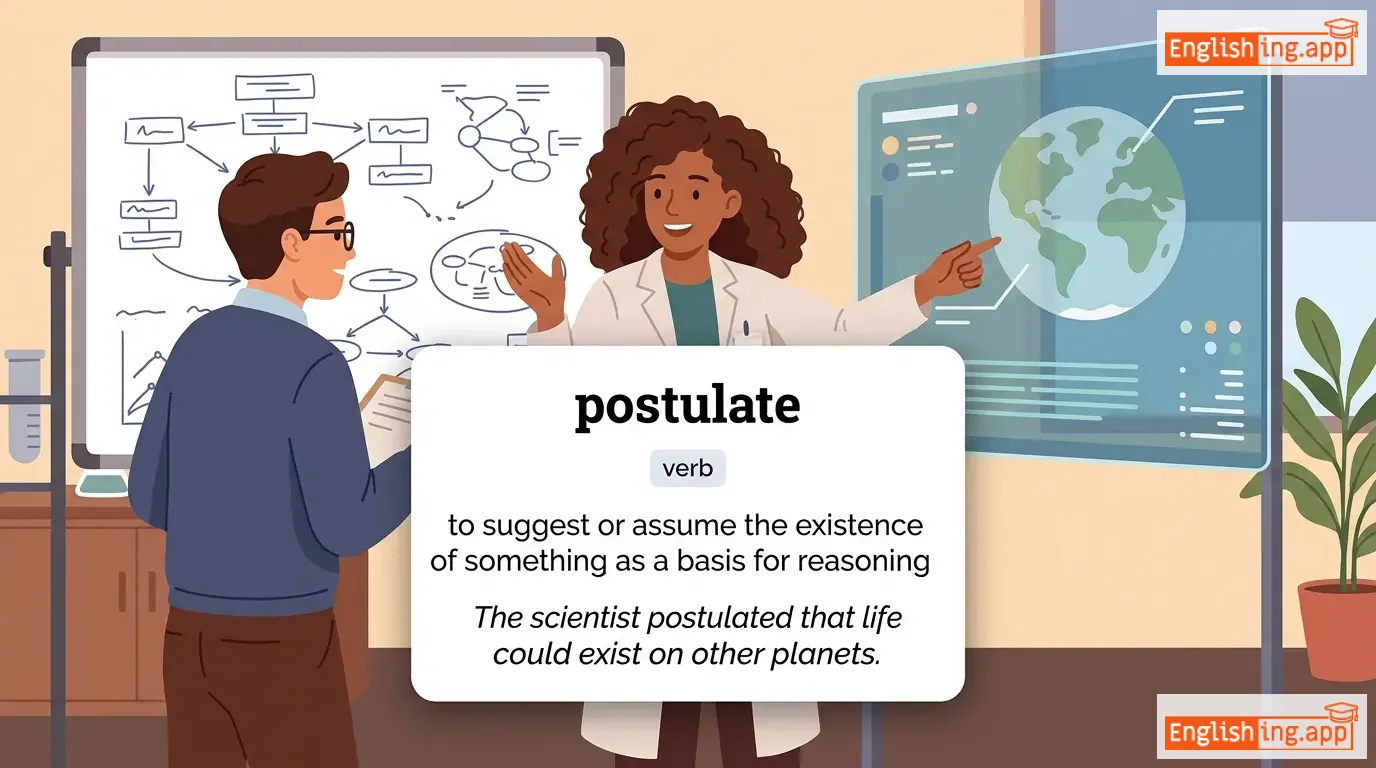
postulate definition card — visual illustration of the meaning
verb
/ˈpɒstjʊˌleɪt/
仮定する (katei suru)

to suggest or assume the existence of something as a basis for reasoning

"The scientist postulated that life could exist on other planets."

"科学者は他の惑星で生命が存在する可能性があると仮定しました。" (Kagakusha wa hoka no wakusei de seimei ga sonzai suru kanōsei ga aru to katei shimashita.)
noun
/ˈpɒstʃə/
幸せ (shiawase)

the position in which someone holds their body; an attitude or approach

"Good posture helps prevent back pain."

"彼女は賞を受け取ったとき、幸せを隠すことができませんでした。" (Kanojo wa shō o uketotta toki, shiawase o kakusu koto ga dekimasen deshita.)
adjective
/ˈpəʊstwɔːr/
戦後 (sengo)

occurring or existing after a war

"The postwar period saw significant economic growth."

"戦後の時期には、顕著な経済成長が見られました。" (Sengo no jiki ni wa, kencho na keizai seichou ga mirarimashita.)
noun
/pɒt/
ポット (potto)

a container, typically round and deep, used for cooking or holding plants

"She put the soup in a pot and set it on the stove."

"彼女はスープをポットに入れ、それをストーブの上に置きました。" (Kanojo wa sūpu o potto ni irete, sore o sutōbu no ue ni okimashita.)
adjective
/ˈpəʊtəbl/
飲料水 (inryousui)

safe to drink; drinkable

"The villagers did not have access to potable water."

"村人たちは飲用水へのアクセスがありませんでした。" (Murabito-tachi wa inryousui e no akusesu ga arimasen deshita.)
noun
/pəˈteɪtoʊ/
ジャガイモ (jagaimo)

a starchy plant tuber that is a staple food around the world

"We had mashed potato with our dinner."

"私たちは夕食にマッシュポテトを食べました。" (Watashitachi wa yūshoku ni masshu poteto o tabemashita.)
noun
/ˈpɒtˌbɔɪlə/
安物の作品 (amono no sakuhin)

a book, play, or film produced quickly to make money rather than for artistic value

"The novel was dismissed by critics as a mere potboiler."

"その小説は批評家によってただの安物の作品だと退けられた。" (Sono shōsetsu wa hihyōka ni yotte tada no amono no sakuhin da to shikirerareta.)
noun
/ˈpoʊtənsi/
効力 (kōryoku)

The power or ability of something to affect or influence; strength or effectiveness.

"The potency of the new medicine amazed the doctors."

"新薬の効力に医者たちは驚きました。" (Shinyaku no kōryoku ni ishatachi wa odorokimashita.)
adjective
/ˈpoʊtənt/
強力 (kyōryoku)

Having great power, influence, or effect.

"This is a very potent drug that should be used carefully."

"これは非常に強力な薬で、慎重に使用する必要があります。" (Kore wa hijō ni kyōryoku na kusuri de, shinchō ni shiyō suru hitsuyō ga arimasu.)
adjective
/prɪˈhɛnsɪbəl/
掴みやすい (tsukami yasui)

capable of being grasped or seized

"The tool has a prehensible handle that improves safety."

"その道具には安全性を高めるために掴みやすいハンドルがあります。" (Sono dougu ni wa anzen-sei o takameru tame ni tsukami yasui handoru ga arimasu.)
noun
/ˈprɛdʒədɪs/
偏見 (henken)

An unfair and unreasonable opinion or feeling, especially when formed without enough thought or knowledge.

"Prejudice often prevents people from seeing the truth about others."
"偏見はしばしば人々が他人についての真実を見るのを妨げます。" (Henken wa shibashiba hitobito ga tanin ni tsuite no shinjitsu o miru no o samatage masu.)
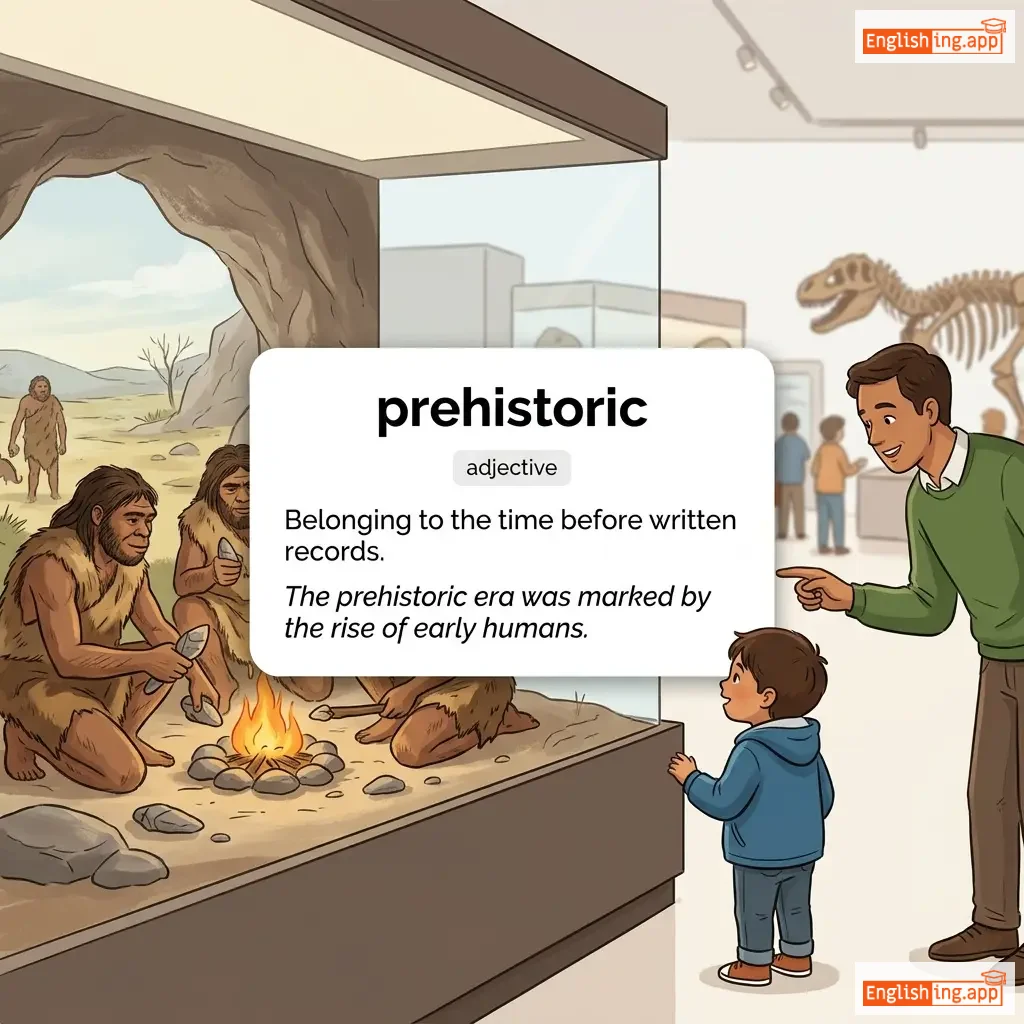
prehistoric definition card — visual illustration of the meaning
adjective
ˌpriːhɪˈstɒrɪk
先史時代の, 書かれた記録の前の時間 (senshi jidai no, kakareta kiroku no mae no jikan)

Belonging to the time before written records.

"The prehistoric era was marked by the rise of early humans."

"先史時代は初期の人類の台頭によって特徴付けられました。" (Senshi jidai wa shoki no jinrui no taitō ni yotte tokuchōzukeraremashita.)
noun
/prɪˈhɛnʃən/
つかむ動作; 何かをつかむ能力 (tsukamu dōsa; nanika o tsukamu nōryoku)

the act of grasping or seizing; the ability to take hold of something

"Therapists assessed the patient's prehension during hand therapy."

"セラピストは手の治療中に患者のつかむ能力を評価しました。" (Serapisuto wa te no chiryō-chū ni kanja no tsukamu nōryoku o hyōka shimashita.)
adjective
/prɪˈhɛnsaɪl/
把握するための適応 (haaku suru tame no tekiou)

adapted for seizing or grasping, especially by wrapping around an object

"The monkey used its prehensile tail to hang from the branch."

"サルはそのプリヘンシル尾を使って枝からぶら下がっていた。" (Saru wa sono purihenshiru o wo tsukatte eda kara burasagatte ita.)
noun
/ˈprɛɡnənsi/
妊娠 (ninshin)

the condition of being pregnant; the period during which a woman carries a developing fetus

"Her pregnancy was carefully monitored by her doctor."

"彼女の妊娠は慎重に医師によって監視されていました。" (Kanojo no ninshin wa shinchou ni ishi ni yotte kanshi sareteimashita.)
verb
/priːˈfɪɡjər/
前兆を示す (zenshou wo shimesu)

to represent, show, or foreshadow something in advance

"The economic reforms prefigure major social changes."

"経済改革は大きな社会変革を予兆しています。" (Keizai kaikaku wa ookina shakai henka wo yochou shiteimasu.)
noun/verb
/ˈpriːfɪks/
接頭辞; 前に何かを追加する (settōji; mae ni nanika o tsuika suru)

a word, letter, or number placed before another; as a verb, to add something in front of something else

"Developers often prefix variables with an underscore."

"開発者はしばしば変数にアンダースコアをプレフィックスとして追加します。" (Kaihatsu-sha wa shibashiba hensū ni andāsukoa o purefikkusu toshite tsuika shimasu.)