語彙集

英単語辞書 | 単語の意味、定義、例文

verb
/priːˈfɪɡjər/
前兆を示す (zenshou wo shimesu)

to represent, show, or foreshadow something in advance

"The economic reforms prefigure major social changes."

"経済改革は大きな社会変革を予兆しています。" (Keizai kaikaku wa ookina shakai henka wo yochou shiteimasu.)
noun
/prɪˈfɜːrmənt/
昇進 (shoushin)

promotion or advancement in rank, position, or office

"He hoped for preferment in the government office."

"彼は政府のオフィスで昇進を望んでいた。" (Kare wa seifu no ofisu de shoushin wo nozondeita.)
adjective
/ˌprɛfəˈrɛnʃəl/
優遇 (yūgū)

showing or giving advantage to one over others

"Members receive preferential treatment at the club."

"メンバーはクラブで優遇されます。" (Menbā wa kurabu de yūgū saremasu.)
noun
/ˈprɛf(ə)rəns/
好み (konomi)

a greater liking for one alternative over another

"She has a preference for tea over coffee."

"彼女はコーヒーよりもお茶を好む。" (Kanojo wa kōhī yori mo ocha o konomu.)
adjective
/ˈprɛf(ə)rəb(ə)l/
好ましい (konomashii)

more desirable or suitable; better than something else

"It is preferable to take the train rather than drive in heavy traffic."
"渋滞時には車を運転するより、電車を利用する方が好ましい。" (Jūtai-ji ni wa kuruma o unten suru yori, densha o riyou suru hō ga konomashii.)
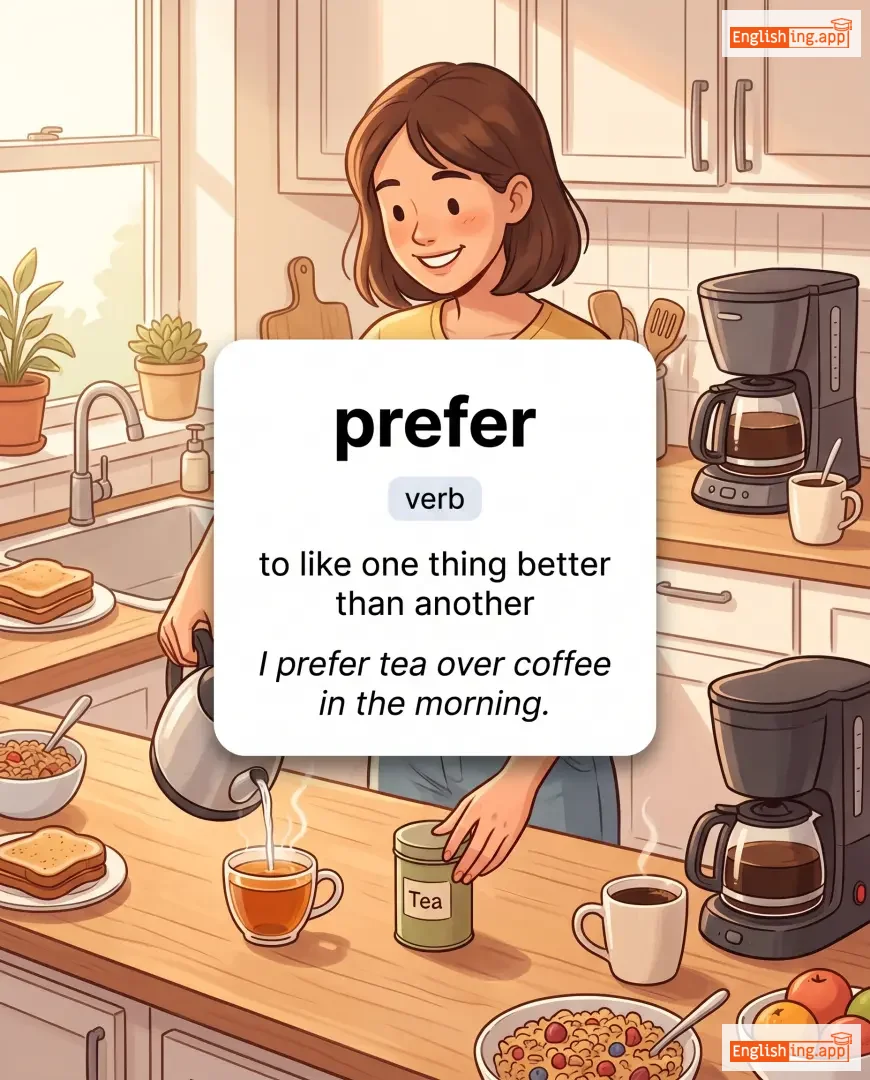
prefer definition card — visual illustration of the meaning
verb
/prɪˈfɜːr/
好む (konomu)

to like one thing better than another

"I prefer tea over coffee in the morning."

"私は朝にコーヒーよりもお茶を好みます。" (Watashi wa asa ni kōhī yori mo ocha o konomimasu.)
adjective
/ˈprɛfətɔːri/
序文的 (jobun-teki)

serving as an introduction or preface

"He made some prefatory remarks before the lecture began."

"彼は講義が始まる前にいくつかの序文的な発言をした。" (Kare wa kougi ga hajimaru mae ni ikutsuka no jobun-teki na hatsugen o shita.)
noun
/ˈprɛfəs/
序文 (jobun)

an introduction to a book, speech, or other written work

"The author explained his motivation in the preface."

"著者は序文で自分の動機を説明しました。" (Chosha wa jobun de jibun no dōki o setsumei shimashita.)
noun
/ˌpriːɪɡˈzɪstəns/
前存在 (zen sonzai)

the state of existing before something else

"Philosophers often debated the preexistence of the soul."

"哲学者たちは魂の前存在についてよく議論していました。" (Tetsugakusha-tachi wa tamashii no zen sonzai ni tsuite yoku giron shite imashita.)
verb
/ˌpriːɪɡˈzɪst/
前もって存在する (maemotte sonzai suru)

to exist beforehand or before something else

"These customs preexist the arrival of modern technology."

"これらの習慣は、現代技術の到来前に存在していました。" (Korera no shūkan wa, gendai gijutsu no tōrai mae ni sonzai shite imashita.)
verb
/ˌpriːɪˈstæblɪʃ/
事前に設定する (jizen ni settei suru)

To establish or set up beforehand.

"Certain rules were preestablished before the meeting."

"会議の前にいくつかのルールが事前に設定されていました。" (Kaigi no mae ni ikutsuka no rūru ga jizen ni settei sareteimashita.)
verb
/ˌpriːɪnˈɡeɪdʒ/
事前契約 (jizen keiyaku)

To contract or engage beforehand; to arrange in advance.

"The workers were preengaged before the project officially started."

"プロジェクトが公式に開始される前に、作業員はすでに前もって契約されていました。" (Purojekuto ga kōshiki ni kaishi sareru mae ni, sagyōin wa sude ni maemotte keiyaku sareteimashita.)
verb
/priːn/
身だしなみを整える (midashinami wo totonoeru)

To groom or dress oneself with care; to show pride in one's appearance.

"She preened in front of the mirror before leaving for the party."

"彼女はパーティーに出かける前に鏡の前で身だしなみを整えていた。" (Kanojo wa pātī ni dekakeru mae ni kagami no mae de midashinami wo totonoete ita.)
adjective
/priˈɛmptɪv/
予防的 (yobōteki)

Serving or intended to prevent something by taking action first.

"The government took preemptive measures to control inflation."

"政府はインフレを抑制するために予防的措置を講じました。" (Seifu wa infure o yokusei suru tame ni yobōteki sochi o kōjimashita.)
noun
/priˈɛmpʃən/
優先権 (yūsenken)

The act of taking action before someone else; the right to purchase or act before others.

"The company exercised preemption to acquire the land before competitors."

"会社は競争相手より先に土地を取得するために優先権を行使しました。" (Kaisha wa kyōsō aite yori saki ni tochi o shutoku suru tame ni yūsenken o kōshi shimashita.)
verb
/priːˈɛmpt/
予防する (yobou suru)

To take action in order to prevent something from happening; to take the place of something.

"The government acted quickly to preempt a financial crisis."

"政府は迅速に行動し、金融危機を防ぎました。" (Seifu wa jinsoku ni koudou shi, kin'yuu kiki wo fusegimashita.)
adjective
/priːˈɛmɪnənt/
卓越した (takuwesshita)

Surpassing all others; very distinguished in some way.

"She is a preeminent scientist in the field of genetics."

"彼女は遺伝学の分野で卓越した科学者です。" (Kanojo wa idengaku no bunya de takuwesshita kagakusha desu.)
noun
/priːˈɛmɪnəns/
卓越 (taketsu)

The fact of surpassing all others; superiority.

"The university has gained preeminence in medical research."

"その大学は医学研究において卓越性を獲得しました。" (Sono daigaku wa igaku kenkyū ni oite taketsu-sei o kakutoku shimashita.)
verb
/prɪˈdɒmɪneɪt/
支配する (shihai suru)

To be the strongest, most common, or most influential element.

"Traditional values still predominate in the community."

"伝統的な価値観はコミュニティ内で依然として支配的です。" (Dentōteki na kachikan wa komyuniti nai de izen toshite shihaiteki desu.)
adverb
/prɪˈdɒmɪnəntli/
主に (omoni)

mainly; for the most part

"The population in the city is predominantly young."

"その都市の人口は主に若いです。" (Sono toshi no jinkou wa omoni wakai desu.)
adjective
/prɪˈdɒmɪnənt/
優勢な (yūseina)

Having superior strength, influence, or authority; most common or noticeable.

"The predominant color in the painting is blue."
"絵画の中で優勢な色は青です。" (Kaiga no naka de yūseina iro wa ao desu.)
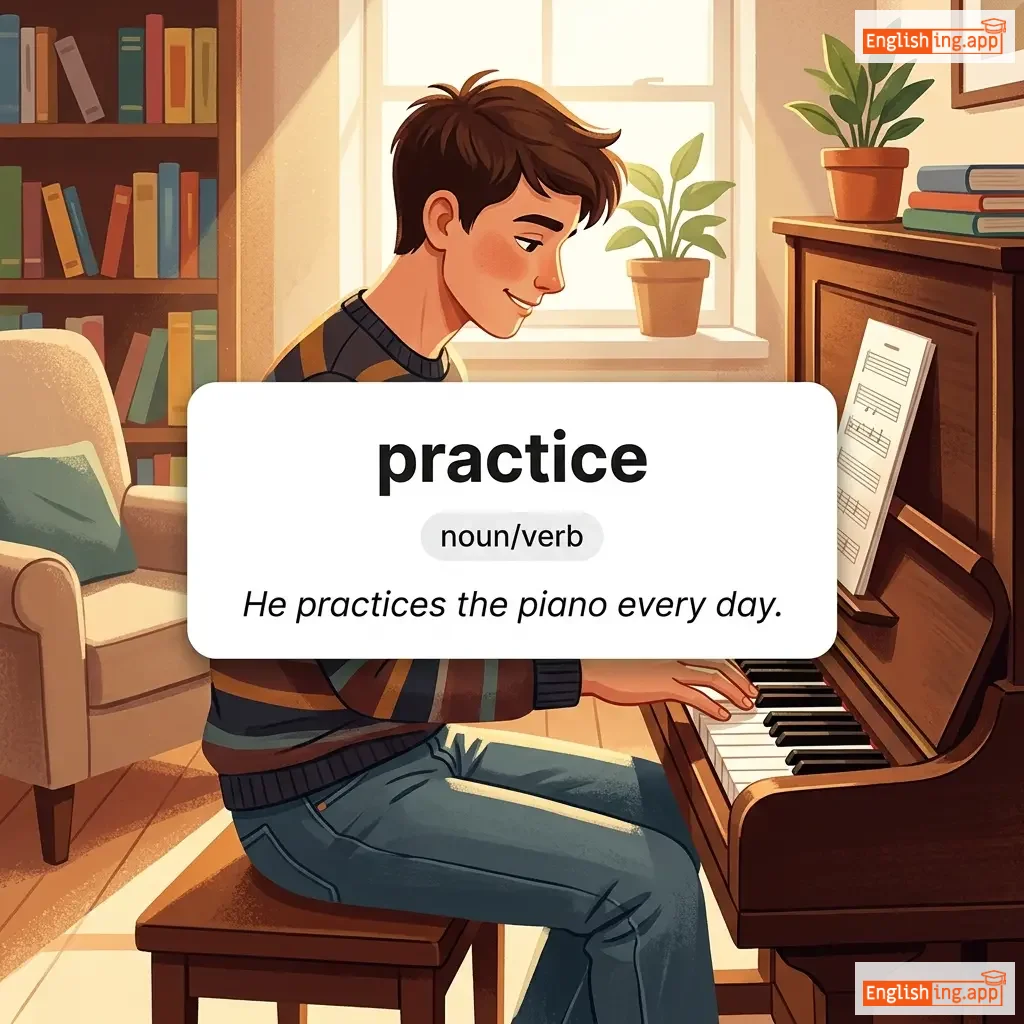
practice definition card — visual illustration of the meaning
noun/verb
/ˈpræk.tɪs/
練習 (renshuu)

the act of doing something repeatedly to improve skill, or the actual application of an idea

"He practices the piano every day."
"彼は毎日ピアノを練習します。" (Kare wa mainichi piano wo renshuu shimasu.)
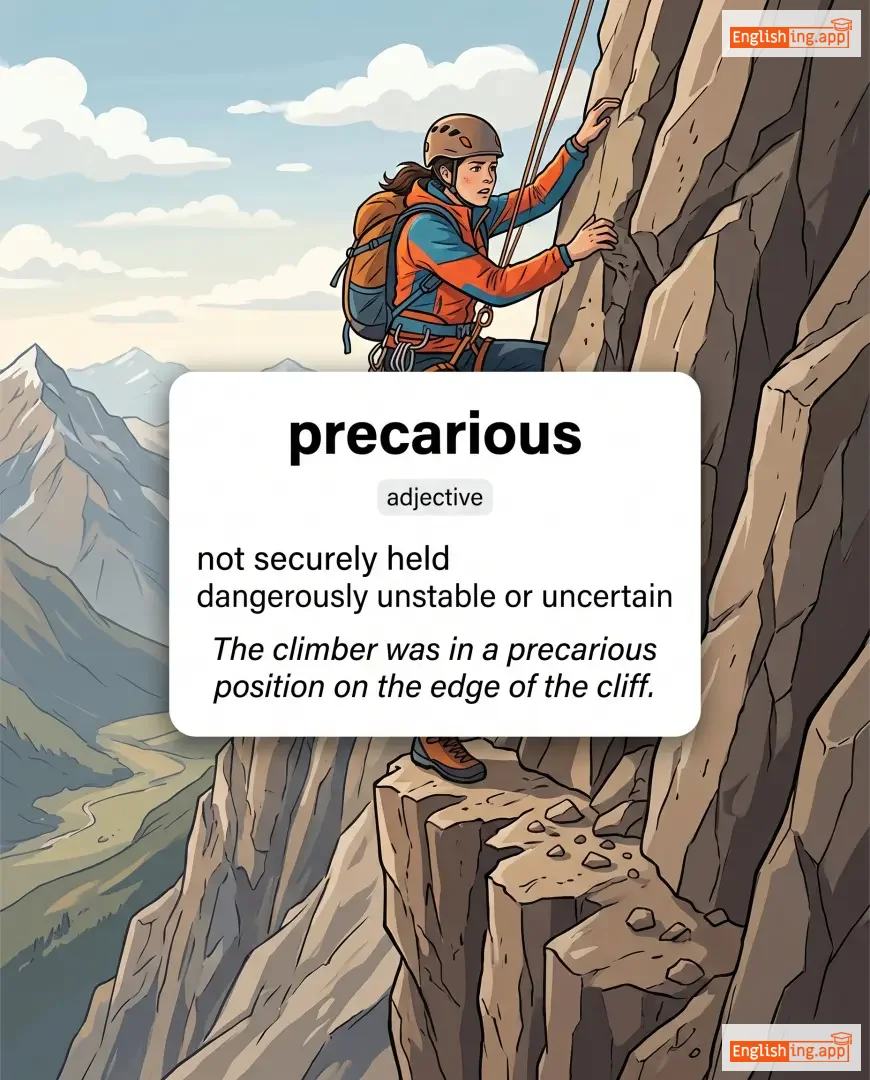
precarious definition card — visual illustration of the meaning
adjective
/prɪˈkɛəriəs/
不安定 / 危険 (fuantei / kiken)

not securely held; dangerously unstable or uncertain

"The climber was in a precarious position on the edge of the cliff."
"登山者は崖の端にある危険な位置にいました。" (Tōzansha wa gake no hashi ni aru kiken na ichi ni imashita.)
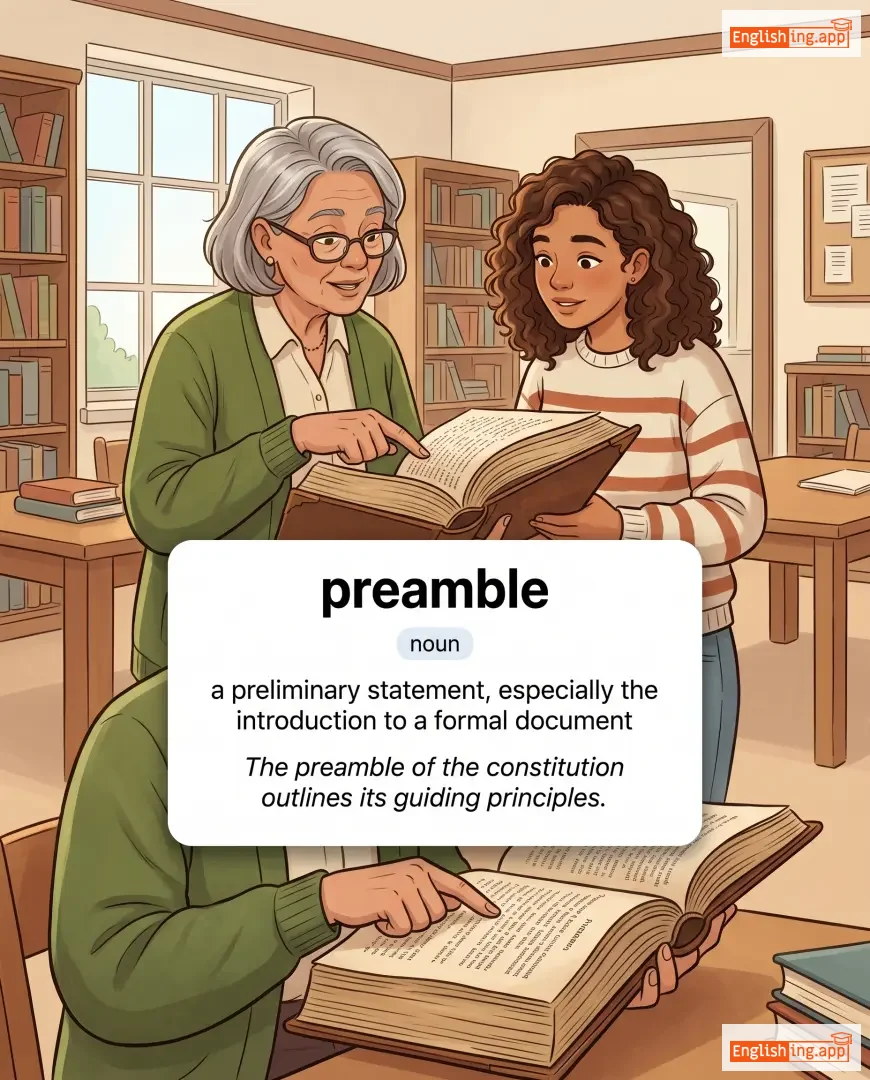
preamble definition card — visual illustration of the meaning
noun
/ˈpriːˌæmbəl/
前文 (zenbun)

a preliminary statement, especially the introduction to a formal document

"The preamble of the constitution outlines its guiding principles."

"憲法の前文はその基本的な原則を説明しています。" (Kenpo no zenbun wa sono kihonteki na gensoku o setsumei shiteimasu.)
verb
/priːtʃ/
説教する (sekkyou suru)

to deliver a religious or moral talk, often in a church setting

"The pastor preached about forgiveness and kindness."

"牧師は許しと親切について説教しました。" (Bokusha wa yurushi to shinsetsu ni tsuite sekkyou shimashita.)
verb
/priːˈɛmpt/

to act in advance to prevent an anticipated event from happening; forestall

"The government moved to pre-empt a crisis by introducing new policies."

noun
/ˈprɛər/
祈り (inori)

a solemn request for help or expression of thanks addressed to God or another deity

"She recited a prayer before the meal."

"彼女は食事の前に祈りを捧げました。" (Kanojo wa shokuji no mae ni inori o sasagemashita.)
verb
/preɪ/
祈る (inoru)

to speak to a deity, especially for help or thanks

"Every night, she prays for her family’s safety."

"毎晩、彼女は家族の安全を祈ります。" (Maiban, kanojo wa kazoku no anzen o inorimasu.)
noun
/prɔːn/
エビ (ebi)

a large marine crustacean similar to shrimp but typically bigger

"The chef prepared delicious prawn curry with coconut milk."

"シェフはココナッツミルクでおいしいエビカレーを作りました。" (shefu wa kokonattsu miruku de oishii ebi kare o tsukurimashita.)
verb
/ˈprætəl/
おしゃべり (oshaberi)

to talk at length in a foolish or inconsequential way

"The children would prattle on about their games."

"子供たちは自分たちのゲームについておしゃべりをしていた。" (Kodomotachi wa jibuntachi no gēmu ni tsuite oshaberi o shite ita.)
verb
/preɪt/
無駄話をする (mudabanashi o suru)

to talk foolishly or at tedious length about something

"He would prate endlessly about his minor achievements."

"彼は彼の小さな達成について無駄に長く話すことを終わらせなかった。" (Kare wa kare no chiisana tassei ni tsuite mudani nagaku hanasu koto o owarasenakatta.)
noun
/præŋk/
いたずら (itazura)

A trick that is intended to be funny but not harmful.

"They played a harmless prank on their friend during the party."

"彼らはパーティーで友達と無害ないたずらをしました。" (Karera wa pātii de tomodachi to mugai na itazura o shimashita.)
verb
/præns/
誇らしげに歩く (hokorashige ni aruku)

To move with high, springy steps, often to show off or attract attention.

"The horse pranced around the field gracefully."

"その馬は誇らしげにフィールドを歩いていました。" (Sono uma wa hokorashige ni fiirudo o aruite imashita.)
adjective
/ˈpreɪz.wɜː.ði/
賞賛に値する (shōsan ni ataisuru)

deserving praise; commendable; admirable

"Her charitable work is truly praiseworthy."
"彼女の慈善活動は本当に賞賛に値します。" (Kanojo no jizen katsudō wa hontōni shōsan ni atai shimasu.)
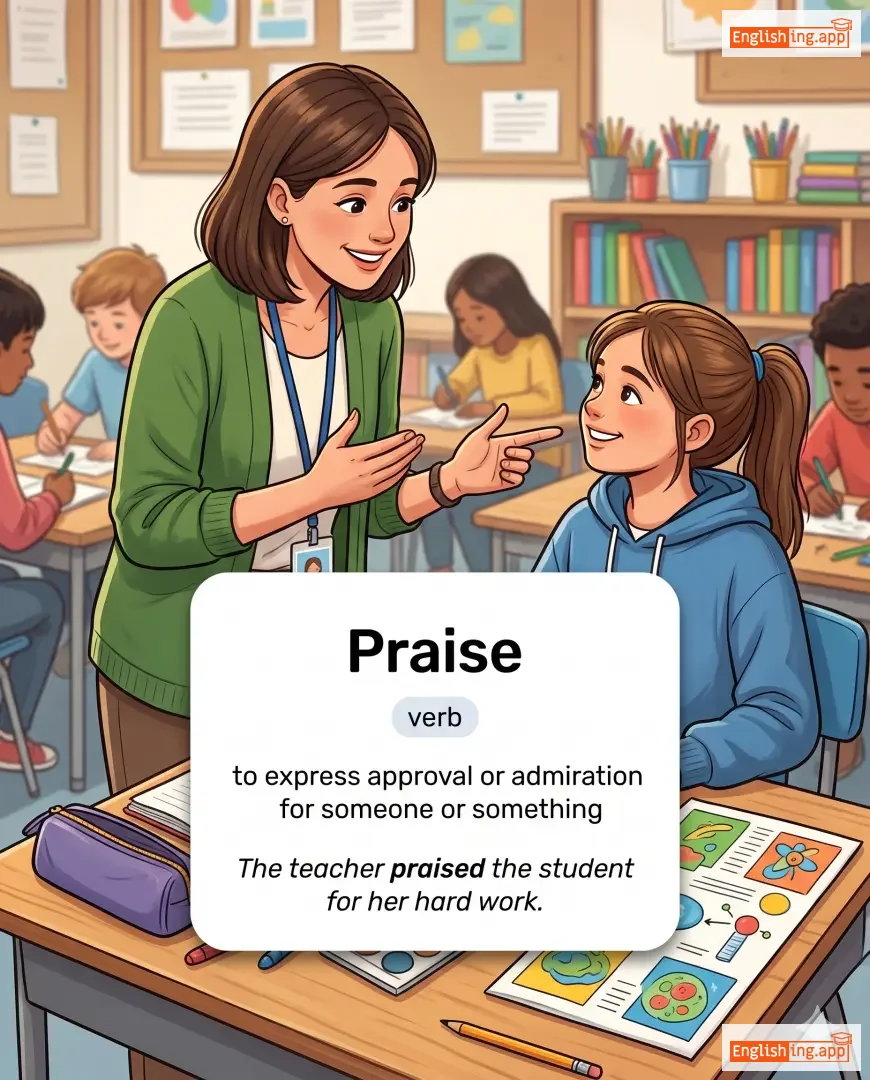
Praise definition card — visual illustration of the meaning
verb
/preɪz/
賛美する (sanbi suru)

to express approval or admiration for someone or something

"The teacher praised the student for her hard work."

"先生は学生の努力を称賛しました。" (Sensei wa gakusei no doryoku o shousan shimashita.)
noun
/ˈprɛəri/
草原 (kogen)

A large open area of grassland, especially in North America.

"The bison roamed freely across the prairie."

"バイソンは草原を自由に歩き回った。" (Baison wa kogen o jiyuu ni arukimatta.)
noun
/ˈpræɡmətɪst/
実利主義者 (jitsuri shugisha)

A person who deals with things in a practical and realistic way.

"He is a true pragmatist who values results over ideals."
"彼は結果を理想よりも重視する真の実利主義者です。" (Kare wa kekka o risou yori mo juushi suru shin no jitsuri shugisha desu.)
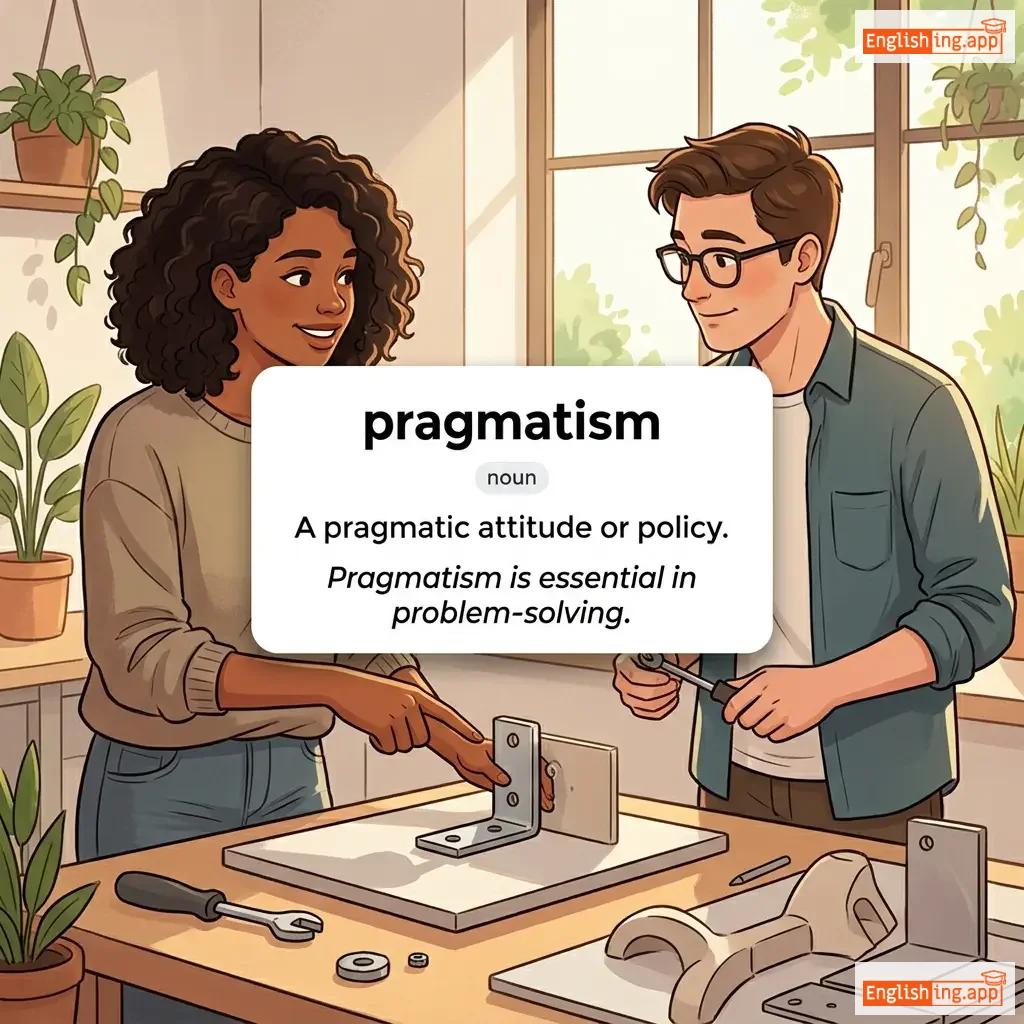
pragmatism definition card — visual illustration of the meaning
noun
/ˈpræɡ.mə.tɪ.zəm/
実用主義 (jitsuyou shugi)

A pragmatic attitude or policy.

"Pragmatism is essential in problem-solving."

"問題解決には実用主義が不可欠です。" (Mondai kaiketsu ni wa jitsuyou shugi ga fukaketsu desu.)
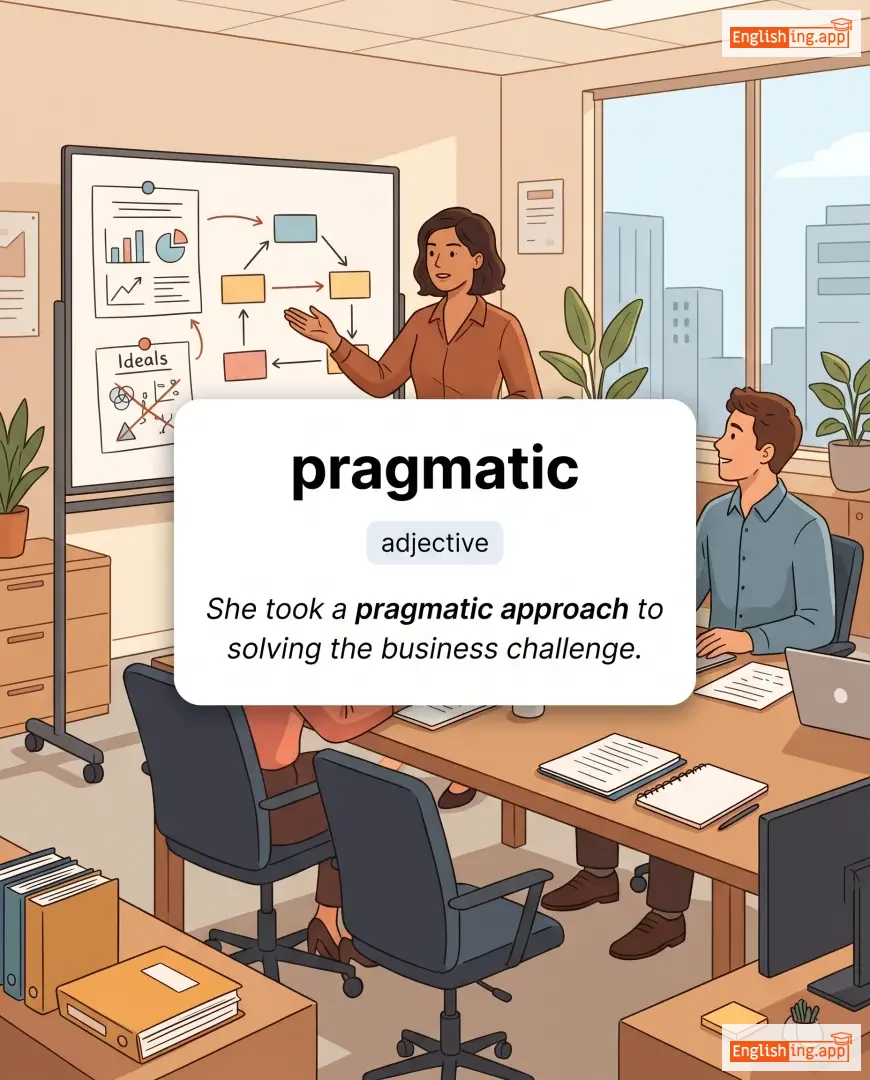
pragmatic definition card — visual illustration of the meaning
🛠️

pragmatic

adjective
/præɡˈmætɪk/

Dealing with problems in a practical and sensible way rather than depending on theories or ideals.

"She took a pragmatic approach to solving the business challenge."

noun
/prækˈtɪʃ.ən.ər/
実務家 (jitsumuka)

a person actively engaged in a profession, especially medicine or law

"She is a skilled medical practitioner."
"彼女は優れた医療実務家です。" (Kanojo wa sugureta iryō jitsumuka desu.)
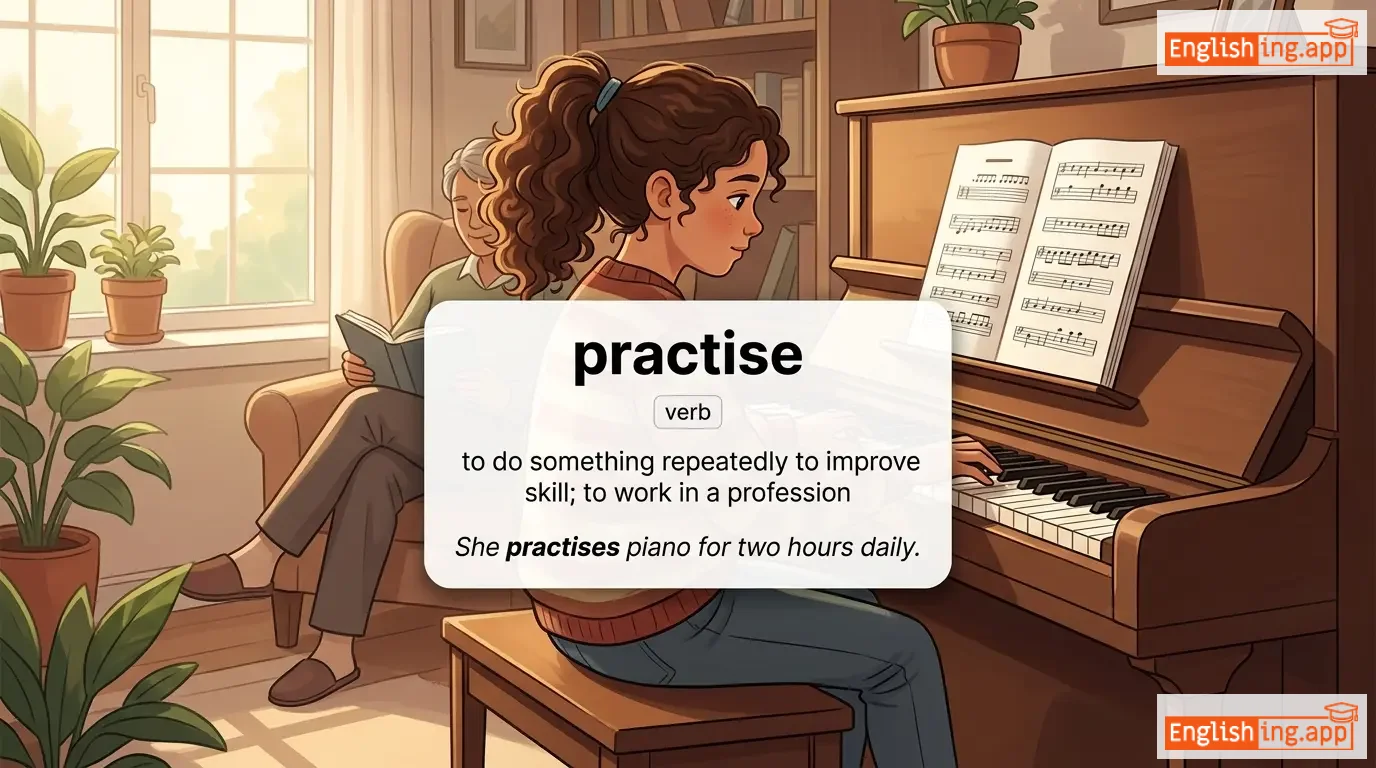
practise definition card — visual illustration of the meaning
verb
/ˈpræktɪs/
練習する (renshuu suru)

to do something repeatedly to improve skill; to work in a profession

"She practises piano for two hours daily."

"彼女は毎日2時間ピアノを練習します。" (Kanojo wa mainichi 2 jikan piano o renshuu shimasu.)
noun
/ˈpɑː.tər/
陶芸家 (tōgeika)

a person who makes pottery

"The potter shaped clay on the spinning wheel."

"陶芸家は回転するろくろの上で粘土を形作った。" (Tōgeika wa kaiten suru rokuro no ue de nendo o katachi zutta.)
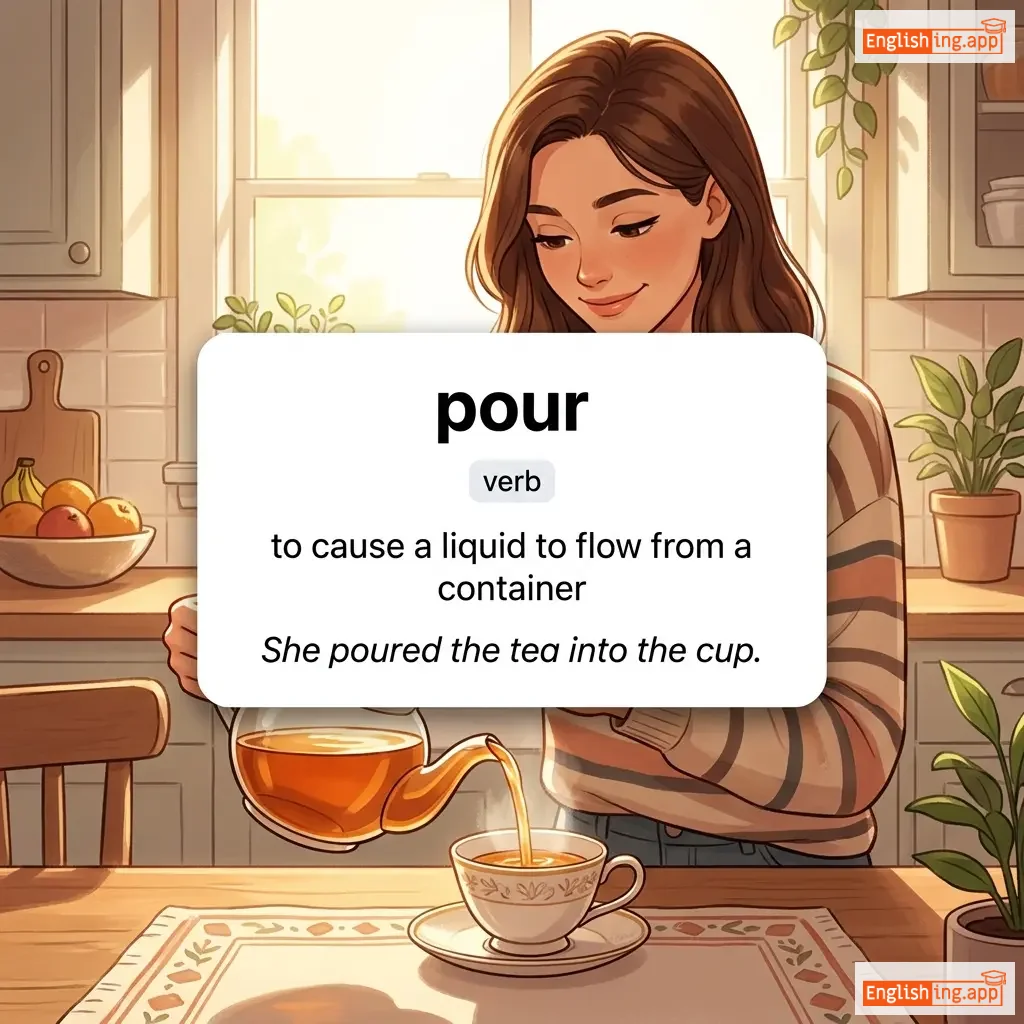
pour definition card — visual illustration of the meaning
verb
/pɔːr/
注ぐ (sosogu)

to cause a liquid to flow from a container

"She poured the tea into the cup."

"彼女はカップにお茶を注ぎました。" (Kanojo wa kappu ni ocha o sosogimashita.)
noun, verb
/paʊnd/
ポンド (pondo)

a unit of weight equal to 16 ounces or a unit of currency

"The price of the book is five pounds."

"その本の価格は5ポンドです。" (Sono hon no kakaku wa go pondo desu.)
noun
/ˈpoʊltɪs/
温かい薬草の湿布 (atatakai yakusou no shippu)

a soft, moist mass of material applied to the body to relieve soreness and inflammation

"The nurse applied a warm poultice to his injured leg."

"看護師は彼の怪我した足に温かい湿布を貼った。" (Kangoshi wa kare no kega shita ashi ni atatakai shippu o hatteta.)
noun
/paʊtʃ/
ポーチ (pōchi)

a small bag or pocket, often used to carry small items

"She kept her coins in a small leather pouch."

"彼女は小さな革のポーチにコインを入れていました。" (Kanojo wa chiisana kawa no pōchi ni koin o irete imashita.)
noun
/ˈpoʊʃən/
薬の飲み物 (kusuri no nomimono)

a liquid with healing, magical, or poisonous properties

"The witch gave the hero a healing potion."

"魔女はヒーローに治療用のポーションを渡しました。" (Majo wa hīrō ni chiryōyō no pōshon o watashimashita.)
adverb
/pəˈtɛnʃəli/
潜在的に (senzai-teki ni)

with the possibility of becoming something in the future

"This project is potentially a huge success."

"このプロジェクトはポテンシャリー大きな成功になるかもしれません。" (Kono purojekuto wa potensharī ōkina seikō ni naru kamoshiremasen.)
verb
/poʊˈtɛnʃiˌeɪt/
強化する (kyouka suru)

To increase the power, effect, or likelihood of something.

"Caffeine can potentiate the effects of some medicines."

"カフェインは一部の薬の効果を高めることができます。" (Kafein wa ichibu no kusuri no kouka wo takameru koto ga dekimasu.)
verb
/paʊt/
口を尖らせる (kuchi wo togaraseru)

to push one's lips forward as an expression of annoyance or sulkiness

"The child began to pout when he didn’t get the toy."

"おもちゃをもらえなかったとき、子供は口を尖らせることを始めた。" (Omocha wo moraenakatta toki, kodomo wa kuchi wo togaraseru koto wo hajimeta.)