Vocabulaires

Découvrez, apprenez et maîtrisez le vocabulaire anglais

verb
/priːˈfɪɡjər/
préfigurer (préfigurer)

to represent, show, or foreshadow something in advance

"The economic reforms prefigure major social changes."

"Les réformes économiques préfigurent des changements sociaux majeurs." (Les réformes économiques préfigurent des changements sociaux majeurs.)
noun
/prɪˈfɜːrmənt/
promotion (promotion)

promotion or advancement in rank, position, or office

"He hoped for preferment in the government office."

"Il espérait une promotion dans le bureau du gouvernement." (Il esperait une promotion dans le bureau du gouvernement.)
adjective
/ˌprɛfəˈrɛnʃəl/
privilégié (privilégie)

showing or giving advantage to one over others

"Members receive preferential treatment at the club."

"Les membres bénéficient d'un traitement préférentiel au club." (Les membres bénéficient d'un traitement préférentiel au club.)
noun
/ˈprɛf(ə)rəns/
préférence (preference)

a greater liking for one alternative over another

"She has a preference for tea over coffee."

"Elle a une préférence pour le thé plutôt que le café." (Elle a une preference pour le thé plutot que le café.)
adjective
/ˈprɛf(ə)rəb(ə)l/
préférable (preferable)

more desirable or suitable; better than something else

"It is preferable to take the train rather than drive in heavy traffic."

"Il est préférable de prendre le train plutôt que de conduire dans le trafic dense." (Il est preferable de prendre le train plutot que de conduire dans le trafic dense.)
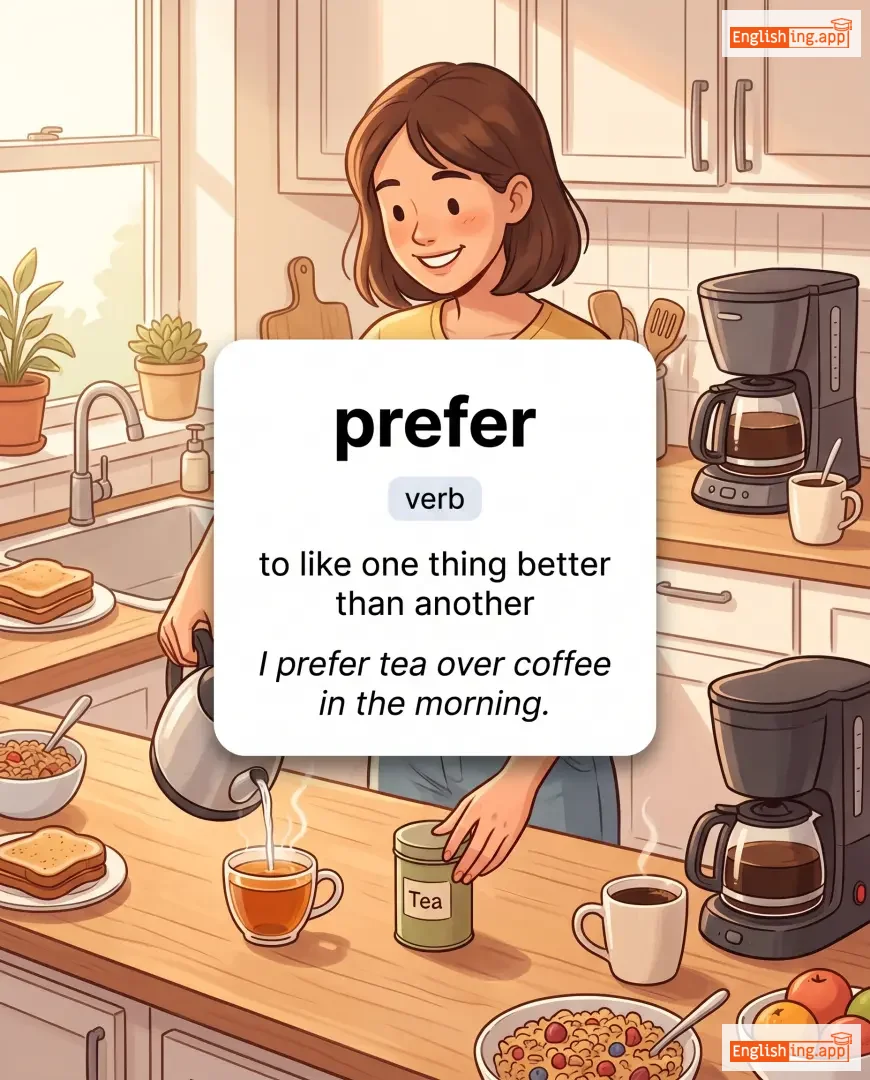
prefer definition card — visual illustration of the meaning
verb
/prɪˈfɜːr/
préférer (preferer)

to like one thing better than another

"I prefer tea over coffee in the morning."

"Je préfère le thé au café le matin." (Je préfère le thé au café le matin.)
adjective
/ˈprɛfətɔːri/
prélude (prelude)

serving as an introduction or preface

"He made some prefatory remarks before the lecture began."

"Il a fait quelques remarques préliminaires avant que la conférence ne commence." (Il a fait quelques remarques preliminaires avant que la conference ne commence.)
noun
/ˈprɛfəs/
préface (préface)

an introduction to a book, speech, or other written work

"The author explained his motivation in the preface."

"L'auteur a expliqué sa motivation dans la préface." (L'auteur a expliqué sa motivation dans la préface.)
noun
/ˌpriːɪɡˈzɪstəns/
préexistence (preexistence)

the state of existing before something else

"Philosophers often debated the preexistence of the soul."

"Les philosophes débattaient souvent de la préexistence de l'âme." (Les philosophes debaient souvent de la preexistence de l'ame.)
verb
/ˌpriːɪɡˈzɪst/
exister au préalable (exister au préalable)

to exist beforehand or before something else

"These customs preexist the arrival of modern technology."

"Ces coutumes existaient avant l'arrivée de la technologie moderne." (Ces coutumes existaient avant l'arrivée de la technologie moderne.)
verb
/ˌpriːɪˈstæblɪʃ/
préalablement établir (prealablement etablir)

To establish or set up beforehand.

"Certain rules were preestablished before the meeting."

"Certaines règles ont été préétablies avant la réunion." (Certaines règles ont été préétablies avant la réunion.)
verb
/ˌpriːɪnˈɡeɪdʒ/
préadopter (preadopter)

To contract or engage beforehand; to arrange in advance.

"The workers were preengaged before the project officially started."

"Les travailleurs ont été préengagés avant le début officiel du projet." (Les travailleurs ont été préengagés avant le début officiel du projet.)
verb
/priːn/
se préparer (se preparer)

To groom or dress oneself with care; to show pride in one's appearance.

"She preened in front of the mirror before leaving for the party."

"Elle se préparait devant le miroir avant de partir pour la fête." (Elle se préparait devant le miroir avant de partir pour la fête.)
adjective
/priˈɛmptɪv/
préventif (preventif)

Serving or intended to prevent something by taking action first.

"The government took preemptive measures to control inflation."

"Le gouvernement a pris des mesures préventives pour contrôler l'inflation." (Le gouvernement a pris des mesures préventives pour contrôler l'inflation.)
noun
/priˈɛmpʃən/
droit de préemption (droit de preemption)

The act of taking action before someone else; the right to purchase or act before others.

"The company exercised preemption to acquire the land before competitors."

"L'entreprise a exercé son droit de préemption pour acquérir le terrain avant les concurrents." (L'entreprise a exercé son droit de préemption pour acquérir le terrain avant les concurrents.)
verb
/priːˈɛmpt/
prévenir (prevenir)

To take action in order to prevent something from happening; to take the place of something.

"The government acted quickly to preempt a financial crisis."

"Le gouvernement a agi rapidement pour prévenir une crise financière." (Le gouvernement a agi rapidement pour prévenir une crise financière.)
adjective
/priːˈɛmɪnənt/
prééminent (preeminent)

Surpassing all others; very distinguished in some way.

"She is a preeminent scientist in the field of genetics."

"Elle est une scientifique prééminente dans le domaine de la génétique." (Elle est une scientifique preeminente dans le domaine de la genetique.)
noun
/priːˈɛmɪnəns/
prééminence (preeminens)

The fact of surpassing all others; superiority.

"The university has gained preeminence in medical research."

"L'université a gagné la prééminence dans la recherche médicale." (L'université a gagné la prééminence dans la recherche médicale.)
verb
/prɪˈdɒmɪneɪt/
prédominer (predominer)

To be the strongest, most common, or most influential element.

"Traditional values still predominate in the community."

"Les valeurs traditionnelles prédominent encore dans la communauté." (Les valeurs traditionnelles prédominent encore dans la communauté.)
adverb
/prɪˈdɒmɪnəntli/
principalement (principalement)

mainly; for the most part

"The population in the city is predominantly young."

"La population dans la ville est principalement jeune." (La population dans la ville est principalement jeune.)
adjective
/prɪˈdɒmɪnənt/
prédominant (predominant)

Having superior strength, influence, or authority; most common or noticeable.

"The predominant color in the painting is blue."

"La couleur prédominante dans la peinture est bleue." (La couleur prédominante dans la peinture est bleue.)
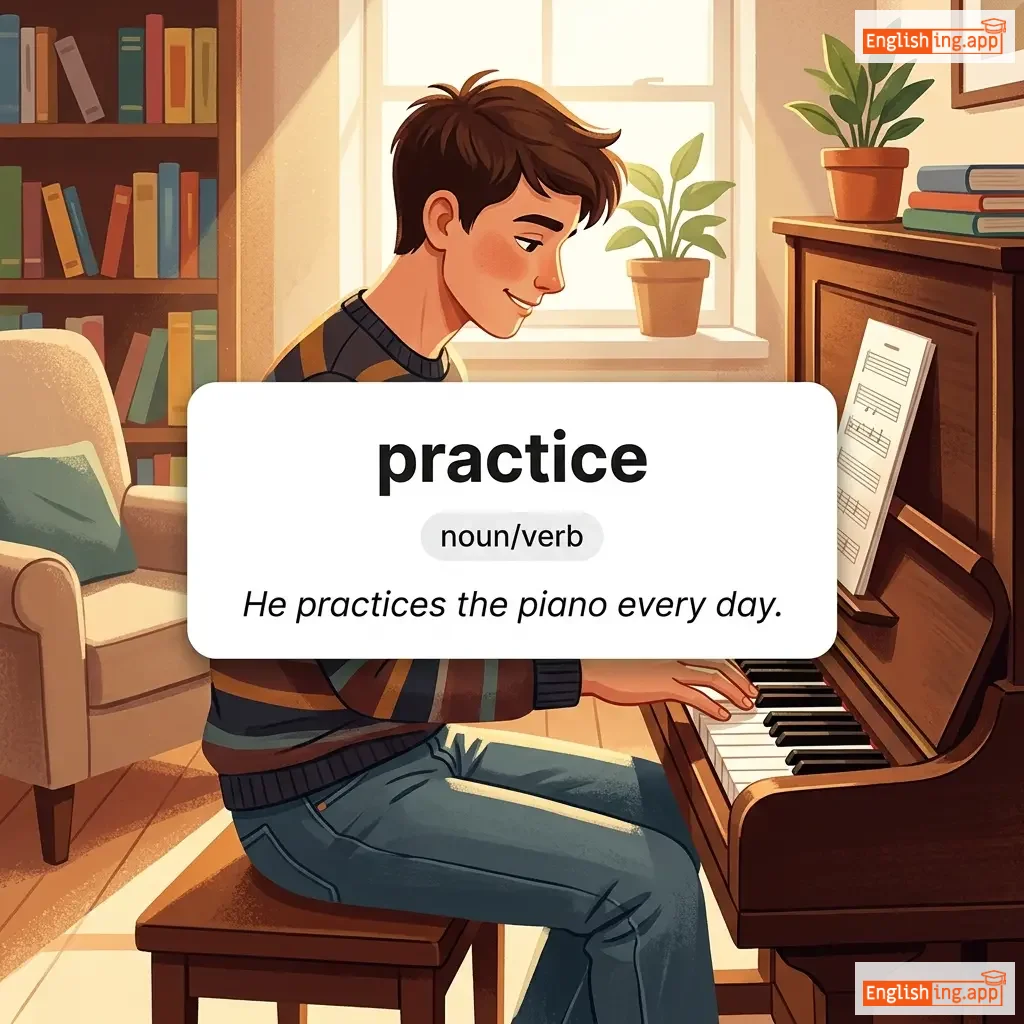
practice definition card — visual illustration of the meaning
noun/verb
/ˈpræk.tɪs/
pratique (pratique)

the act of doing something repeatedly to improve skill, or the actual application of an idea

"He practices the piano every day."

"Il pratique le piano tous les jours." (Il pratique le piano tous les jours.)
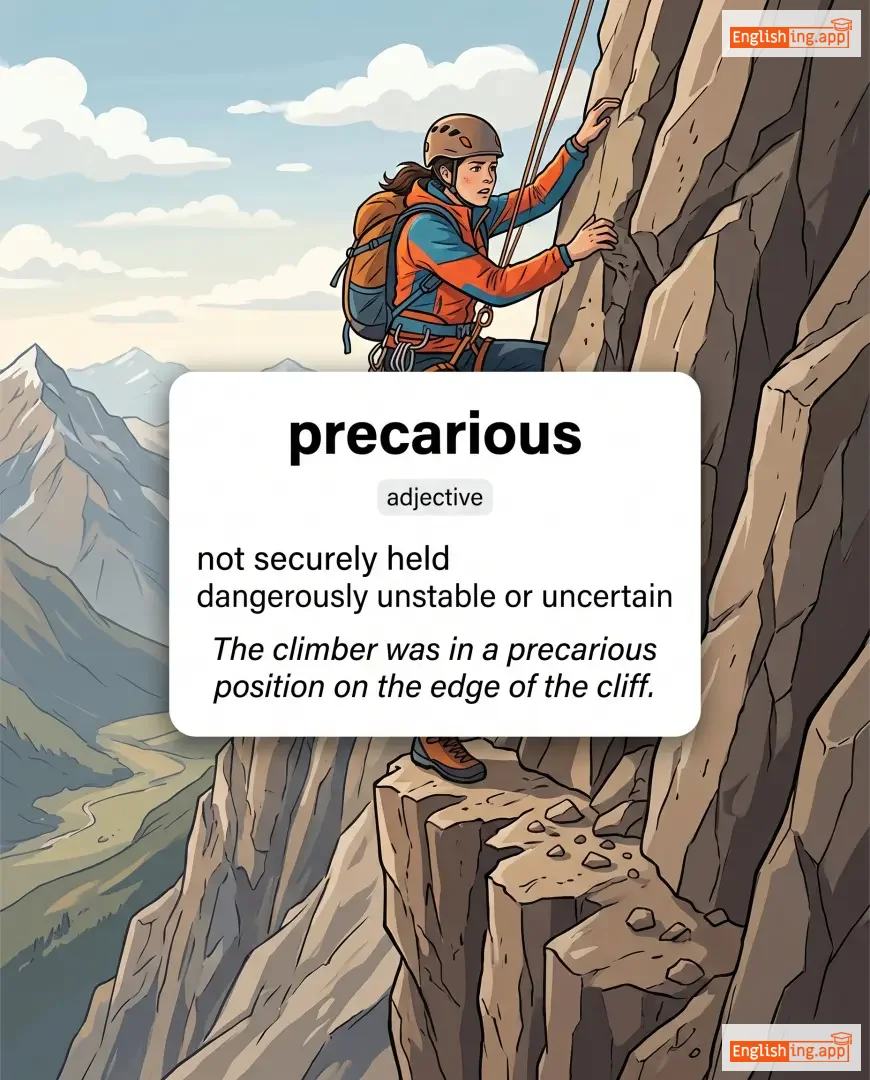
precarious definition card — visual illustration of the meaning
adjective
/prɪˈkɛəriəs/
précaire / dangereux (precaire / dangereux)

not securely held; dangerously unstable or uncertain

"The climber was in a precarious position on the edge of the cliff."

"L'escaladeur était dans une position précaire au bord de la falaise." (L'escaladeur était dans une position precaire au bord de la falaise.)
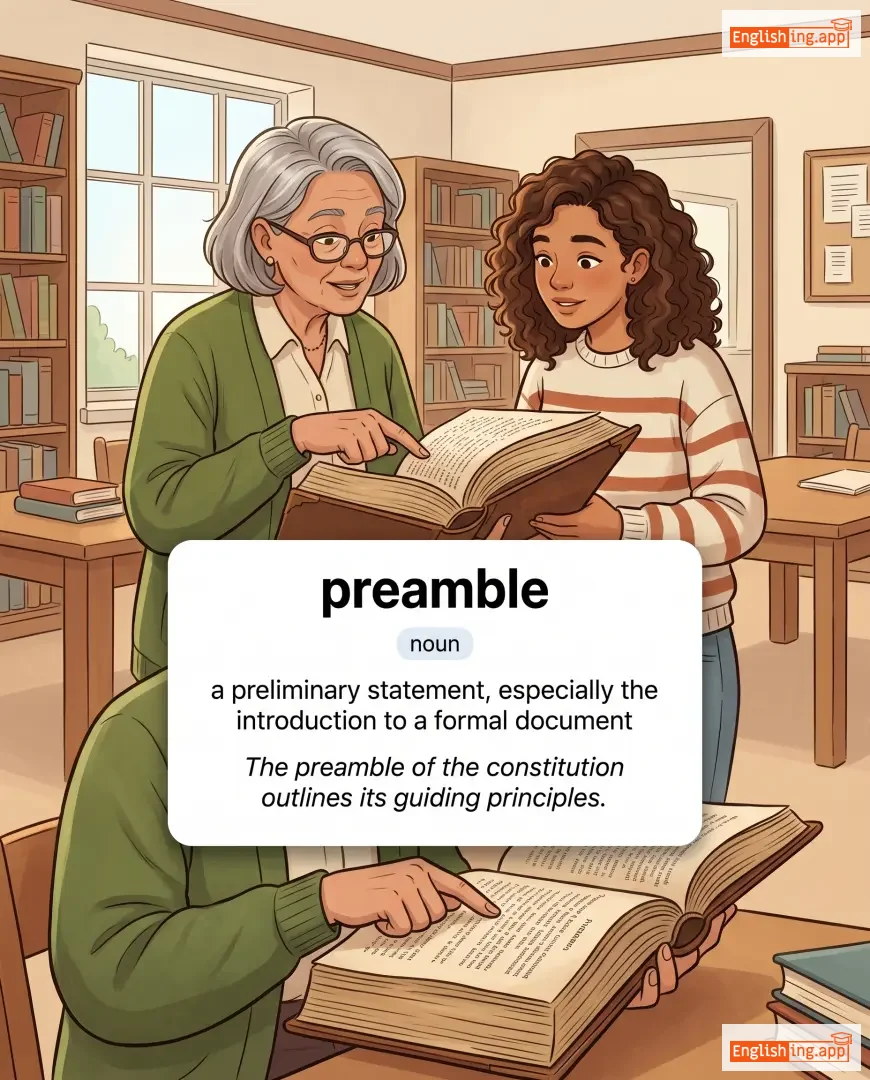
preamble definition card — visual illustration of the meaning
noun
/ˈpriːˌæmbəl/
préambule (preambule)

a preliminary statement, especially the introduction to a formal document

"The preamble of the constitution outlines its guiding principles."

"Le préambule de la constitution expose ses principes directeurs." (Le preambule de la constitution expose ses principes directeurs.)
verb
/priːtʃ/
prêcher (precher)

to deliver a religious or moral talk, often in a church setting

"The pastor preached about forgiveness and kindness."

"Le pasteur a prêché sur le pardon et la bonté." (Le pasteur a prêché sur le pardon et la bonté.)
verb
/priːˈɛmpt/
prévenir à l'avance (prevenir a l'avance)

to act in advance to prevent an anticipated event from happening; forestall

"The government moved to pre-empt a crisis by introducing new policies."

"Le gouvernement a agi pour prévenir une crise en introduisant de nouvelles politiques." (Le gouvernement a agi pour prevenir une crise en introduisant de nouvelles politiques.)
noun
/ˈprɛər/
prière (priere)

a solemn request for help or expression of thanks addressed to God or another deity

"She recited a prayer before the meal."

"Elle a récité une prière avant le repas." (Elle a recite une priere avant le repas.)
verb
/preɪ/
prier (prier)

to speak to a deity, especially for help or thanks

"Every night, she prays for her family’s safety."

"Chaque nuit, elle prie pour la sécurité de sa famille." (Chaque nuit, elle prie pour la sécurité de sa famille.)
noun
/prɔːn/
crevette géante (crevette geante)

a large marine crustacean similar to shrimp but typically bigger

"The chef prepared delicious prawn curry with coconut milk."

"Le chef a préparé un délicieux curry de crevette géante au lait de coco." (le chef a prepare un delicieux curry de crevette geante au lait de coco.)
verb
/ˈprætəl/
bavarder (bavarder)

to talk at length in a foolish or inconsequential way

"The children would prattle on about their games."

"Les enfants bavardaient de leurs jeux." (Les enfants bavardaient de leurs jeux.)
verb
/preɪt/
bavarder de manière insensée (bavarder de manière insensée)

to talk foolishly or at tedious length about something

"He would prate endlessly about his minor achievements."

"Il parlait sans fin de ses petites réussites." (Il parlait sans fin de ses petites réussites.)
noun
/præŋk/
blague (blague)

A trick that is intended to be funny but not harmful.

"They played a harmless prank on their friend during the party."

"Ils ont joué une blague innocente avec leur ami pendant la fête." (Ils ont joué une blague innocente avec leur ami pendant la fête.)
verb
/præns/
marcher avec arrogance (marcher avec arrogance)

To move with high, springy steps, often to show off or attract attention.

"The horse pranced around the field gracefully."

"Le cheval marchait fièrement autour du champ." (Le cheval marchait fièrement autour du champ.)
adjective
/ˈpreɪz.wɜː.ði/
digne de louange (digne de louange)

deserving praise; commendable; admirable

"Her charitable work is truly praiseworthy."

"Son travail charitable est véritablement digne de louange." (Son travail charitable est véritablement digne de louange.)
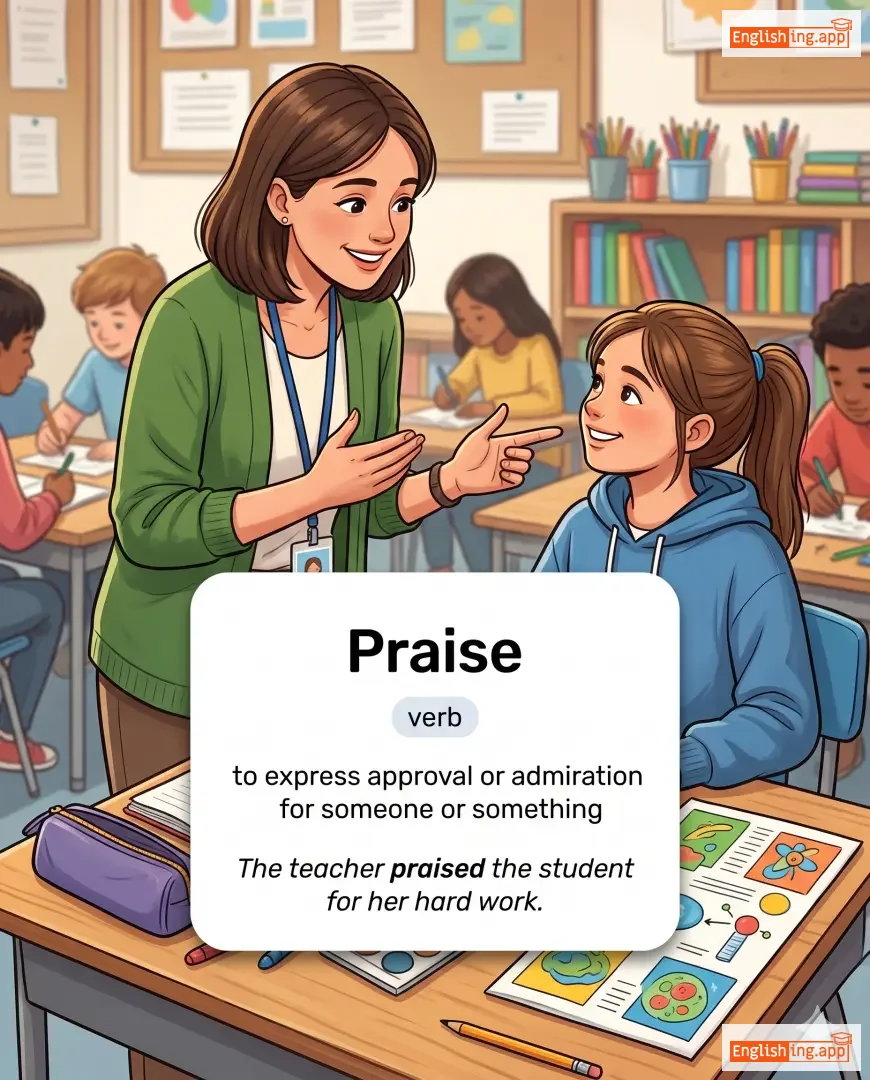
Praise definition card — visual illustration of the meaning
verb
/preɪz/
louer (louer)

to express approval or admiration for someone or something

"The teacher praised the student for her hard work."

"Le professeur a félicité l'élève pour son travail acharné." (Le professeur a félicité l'élève pour son travail acharné.)
noun
/ˈprɛəri/
prairie (prairie)

A large open area of grassland, especially in North America.

"The bison roamed freely across the prairie."

"Les bisons erraient librement à travers la prairie." (Les bisons erraient librement à travers la prairie.)
noun
/ˈpræɡmətɪst/
pragmatique (pragmatique)

A person who deals with things in a practical and realistic way.

"He is a true pragmatist who values results over ideals."

"Il est un véritable pragmatique qui valorise les résultats plus que les idéaux." (Il est un veritable pragmatique qui valorise les resultats plus que les ideaux.)
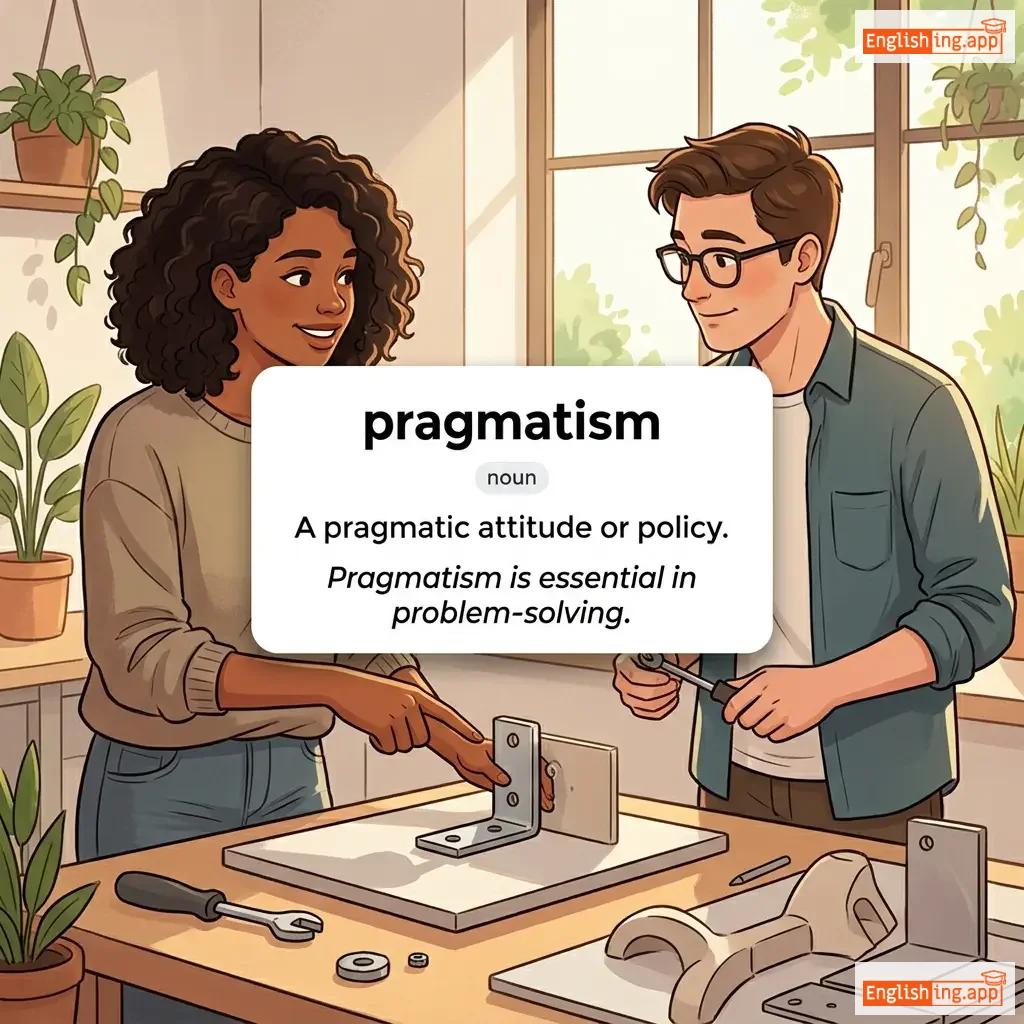
pragmatism definition card — visual illustration of the meaning
noun
/ˈpræɡ.mə.tɪ.zəm/
pragmatisme (pragmatisme)

A pragmatic attitude or policy.

"Pragmatism is essential in problem-solving."

"Le pragmatisme est essentiel pour résoudre les problèmes." (Le pragmatisme est essentiel pour resoudre les problemes.)
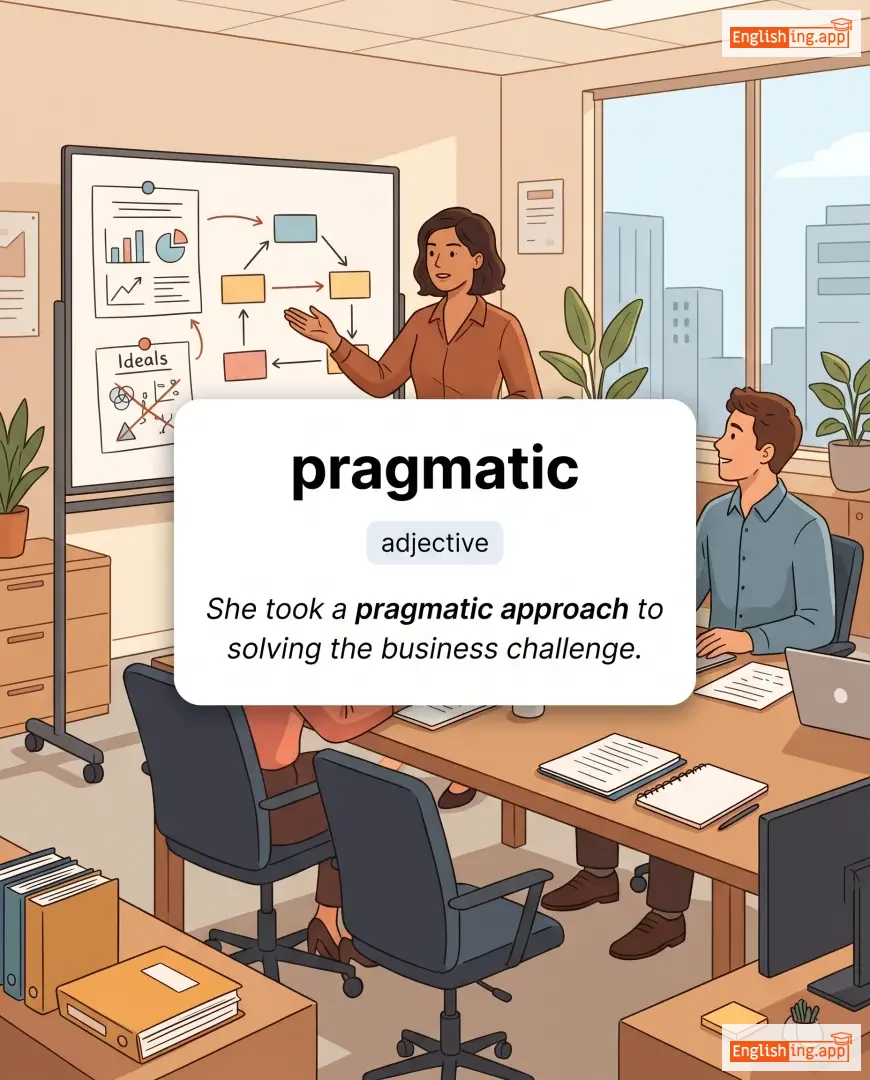
pragmatic definition card — visual illustration of the meaning
adjective
/præɡˈmætɪk/
pragmatique (pragmatique)

Dealing with problems in a practical and sensible way rather than depending on theories or ideals.

"She took a pragmatic approach to solving the business challenge."

"Elle a adopté une approche pragmatique pour résoudre le défi commercial." (Elle a adopté une approche pragmatique pour résoudre le défi commercial.)
noun
/prækˈtɪʃ.ən.ər/
praticien (praticien)

a person actively engaged in a profession, especially medicine or law

"She is a skilled medical practitioner."

"Elle est une praticienne médicale qualifiée." (Elle est une praticienne medicale qualifiee.)
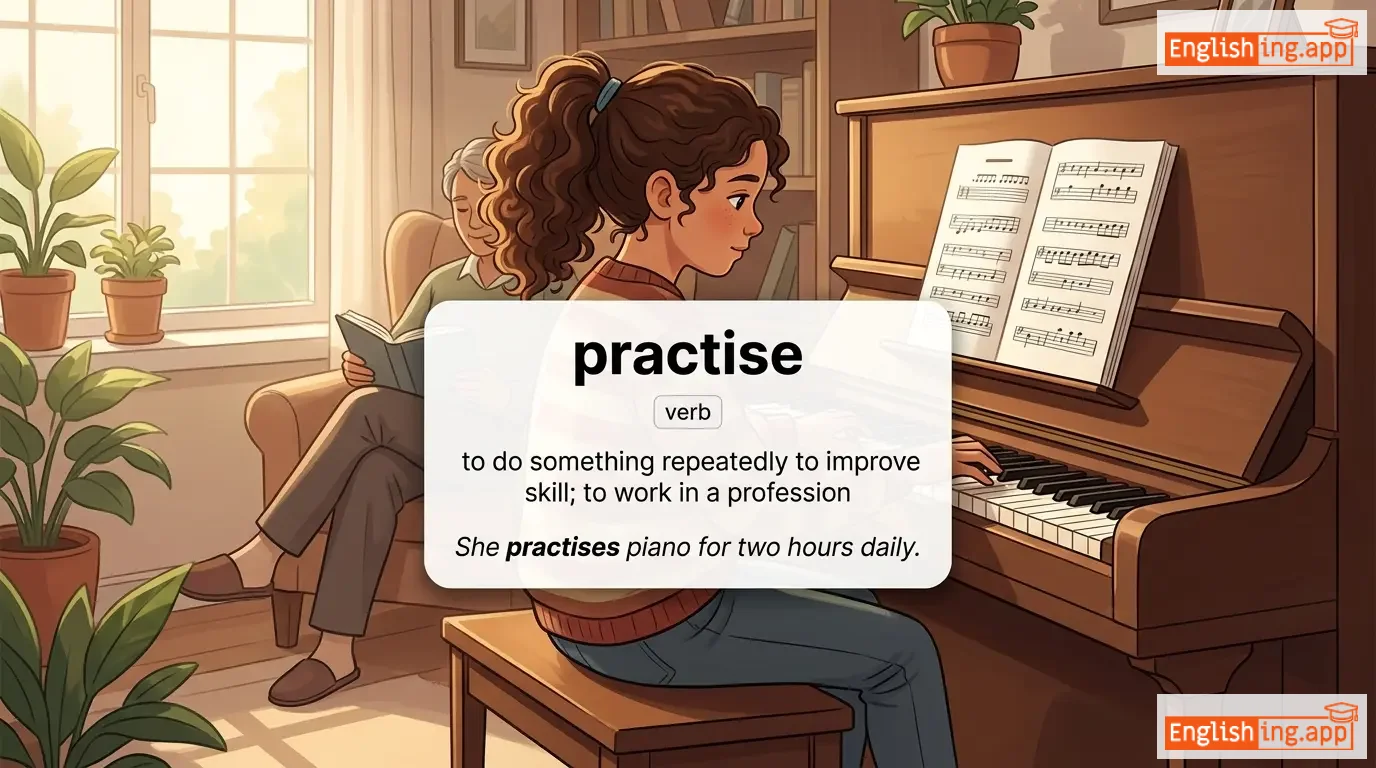
practise definition card — visual illustration of the meaning
verb
/ˈpræktɪs/
pratiquer (pratiquer)

to do something repeatedly to improve skill; to work in a profession

"She practises piano for two hours daily."

"Elle pratique le piano pendant deux heures chaque jour." (Elle pratique le piano pendant deux heures chaque jour.)
noun
/ˈpɑː.tər/
potier (potier)

a person who makes pottery

"The potter shaped clay on the spinning wheel."

"Le potier a façonné l'argile sur la roue tournante." (Le potier a façonné l'argile sur la roue tournante.)
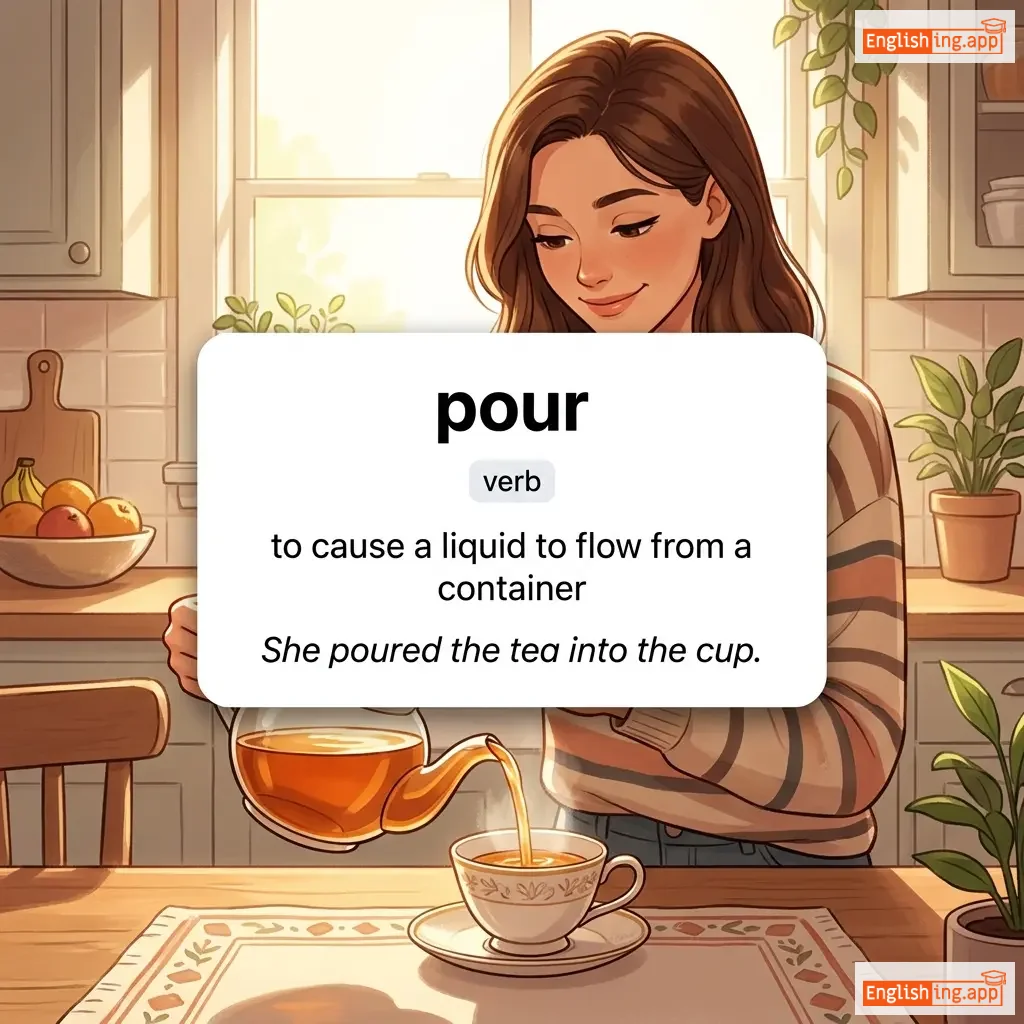
pour definition card — visual illustration of the meaning
verb
/pɔːr/
verser (verser)

to cause a liquid to flow from a container

"She poured the tea into the cup."

"Elle versa le thé dans la tasse." (Elle versa le thé dans la tasse.)
noun, verb
/paʊnd/
livre (livre)

a unit of weight equal to 16 ounces or a unit of currency

"The price of the book is five pounds."

"Le prix du livre est de cinq livres." (Le prix du livre est de cinq livres.)
noun
/ˈpoʊltɪs/
cataplasme chaud aux herbes (cataplasme chaud aux herbes)

a soft, moist mass of material applied to the body to relieve soreness and inflammation

"The nurse applied a warm poultice to his injured leg."

"L'infirmière a appliqué un cataplasme chaud sur sa jambe blessée." (L'infirmière a appliqué un cataplasme chaud sur sa jambe blessée.)
noun
/paʊtʃ/
poche (poche)

a small bag or pocket, often used to carry small items

"She kept her coins in a small leather pouch."

"Elle a gardé ses pièces dans une petite poche en cuir." (Elle a garde ses pieces dans une petite poche en cuir.)
noun
/ˈpoʊʃən/
potion (potion)

a liquid with healing, magical, or poisonous properties

"The witch gave the hero a healing potion."

"La sorcière a donné au héros une potion de guérison." (La sorciere a donne au heros une potion de guerison.)
adverb
/pəˈtɛnʃəli/
potentiellement (potentiellement)

with the possibility of becoming something in the future

"This project is potentially a huge success."

"Ce projet est potentiellement un grand succès." (Ce projet est potentiellement un grand succès.)
verb
/poʊˈtɛnʃiˌeɪt/
potentialiser (potentialiser)

To increase the power, effect, or likelihood of something.

"Caffeine can potentiate the effects of some medicines."

"La caféine peut potentialiser les effets de certains médicaments." (La caféine peut potentialiser les effets de certains médicaments.)
verb
/paʊt/
faire la moue (faire la moue)

to push one's lips forward as an expression of annoyance or sulkiness

"The child began to pout when he didn’t get the toy."

"L'enfant a commencé à faire la moue lorsqu'il n'a pas eu le jouet." (L'enfant a commence a faire la moue lorsqu'il n'a pas eu le jouet.)