Vocabularios

Descubra, aprenda y domine el vocabulario en inglés

verb
/priːˈfɪɡjər/
prefigurar (prefigurar)

to represent, show, or foreshadow something in advance

"The economic reforms prefigure major social changes."

"Las reformas económicas prefiguran grandes cambios sociales." (Las reformas económicas prefiguran grandes cambios sociales.)
noun
/prɪˈfɜːrmənt/
ascenso (ascenso)

promotion or advancement in rank, position, or office

"He hoped for preferment in the government office."

"Él esperaba un ascenso en la oficina del gobierno." (El esperaba un ascenso en la oficina del gobierno.)
adjective
/ˌprɛfəˈrɛnʃəl/
preferencial (preferencial)

showing or giving advantage to one over others

"Members receive preferential treatment at the club."

"Los miembros reciben trato preferencial en el club." (Los miembros reciben trato preferencial en el club.)
noun
/ˈprɛf(ə)rəns/
preferencia (preferencia)

a greater liking for one alternative over another

"She has a preference for tea over coffee."

"Ella tiene preferencia por el té sobre el café." (Ella tiene preferencia por el té sobre el café.)
adjective
/ˈprɛf(ə)rəb(ə)l/
preferible (preferible)

more desirable or suitable; better than something else

"It is preferable to take the train rather than drive in heavy traffic."

"Es preferible tomar el tren en lugar de conducir en el tráfico pesado." (Es preferible tomar el tren en lugar de conducir en el tráfico pesado.)
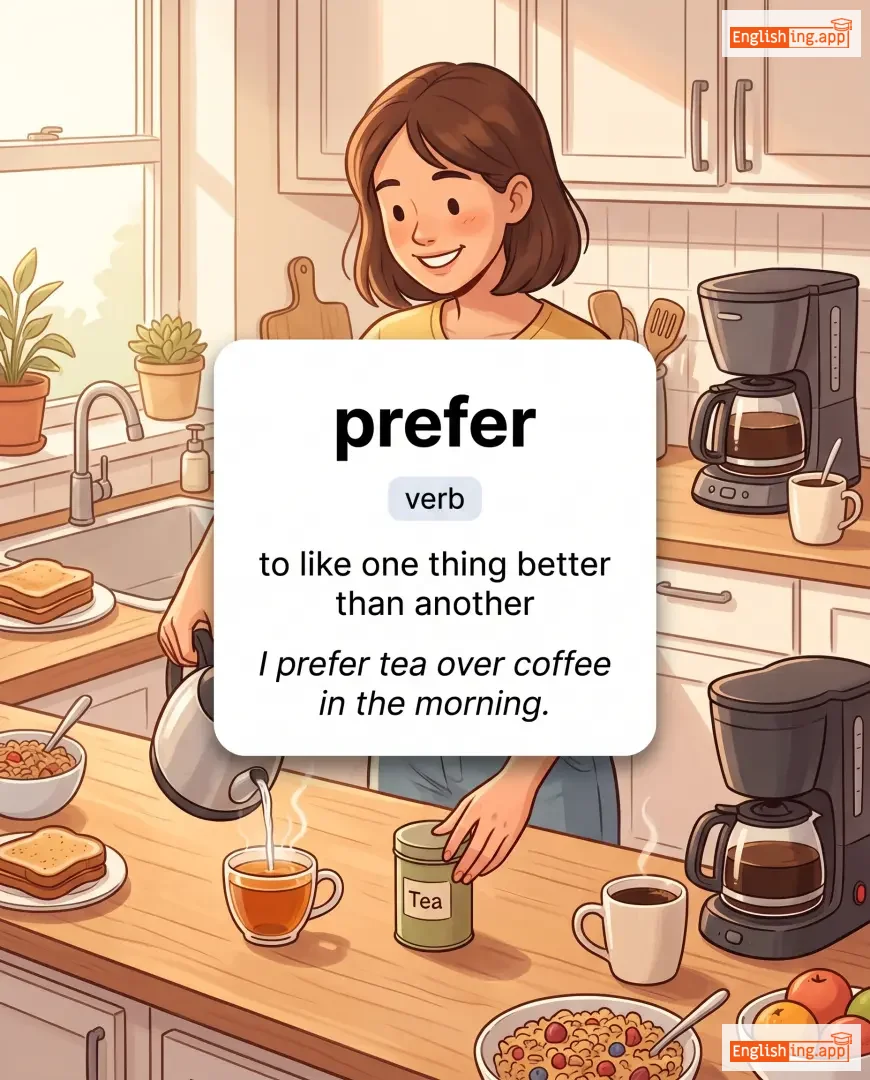
prefer definition card — visual illustration of the meaning
verb
/prɪˈfɜːr/
preferir (preferir)

to like one thing better than another

"I prefer tea over coffee in the morning."

"Yo prefiero té sobre café en la mañana." (Yo prefiero té sobre café en la mañana.)
adjective
/ˈprɛfətɔːri/
preliminar (preliminar)

serving as an introduction or preface

"He made some prefatory remarks before the lecture began."

"Hizo algunos comentarios preliminares antes de que comenzara la conferencia." (Hizo algunos comentarios preliminares antes de que comenzara la conferencia.)
noun
/ˈprɛfəs/
prefacio (prefacio)

an introduction to a book, speech, or other written work

"The author explained his motivation in the preface."

"El autor explicó su motivación en el prefacio." (El autor explicó su motivación en el prefacio.)
noun
/ˌpriːɪɡˈzɪstəns/
preexistencia (preexistencia)

the state of existing before something else

"Philosophers often debated the preexistence of the soul."

"Los filósofos a menudo debatían sobre la preexistencia del alma." (Los filosofos a menudo debatian sobre la preexistencia del alma.)
verb
/ˌpriːɪɡˈzɪst/
existir previamente (existir previamente)

to exist beforehand or before something else

"These customs preexist the arrival of modern technology."

"Esas costumbres existían antes de la llegada de la tecnología moderna." (Esas costumbres existían antes de la llegada de la tecnología moderna.)
verb
/ˌpriːɪˈstæblɪʃ/
preestablecer (preestablecer)

To establish or set up beforehand.

"Certain rules were preestablished before the meeting."

"Algunas reglas fueron preestablecidas antes de la reunión." (Algunas reglas fueron preestablecidas antes de la reunión.)
verb
/ˌpriːɪnˈɡeɪdʒ/
precontratar (precontratar)

To contract or engage beforehand; to arrange in advance.

"The workers were preengaged before the project officially started."

"Los trabajadores fueron precontratados antes de que comenzara oficialmente el proyecto." (Los trabajadores fueron precontratados antes de que comenzara oficialmente el proyecto.)
verb
/priːn/
arreglarse (arreglarse)

To groom or dress oneself with care; to show pride in one's appearance.

"She preened in front of the mirror before leaving for the party."

"Ella se arregló frente al espejo antes de salir para la fiesta." (Ella se arregló frente al espejo antes de salir para la fiesta.)
adjective
/priˈɛmptɪv/
preventivo (preventivo)

Serving or intended to prevent something by taking action first.

"The government took preemptive measures to control inflation."

"El gobierno tomó medidas preventivas para controlar la inflación." (El gobierno tomó medidas preventivas para controlar la inflación.)
noun
/priˈɛmpʃən/
derecho de preferencia (derecho de preferencia)

The act of taking action before someone else; the right to purchase or act before others.

"The company exercised preemption to acquire the land before competitors."

"La empresa ejerció el derecho de preferencia para adquirir la tierra antes que los competidores." (La empresa ejerció el derecho de preferencia para adquirir la tierra antes que los competidores.)
verb
/priːˈɛmpt/
prevenir (prevenir)

To take action in order to prevent something from happening; to take the place of something.

"The government acted quickly to preempt a financial crisis."

"El gobierno actuó rápidamente para prevenir una crisis financiera." (El gobierno actuo rapidamente para prevenir una crisis financiera.)
adjective
/priːˈɛmɪnənt/
preeminente (preeminente)

Surpassing all others; very distinguished in some way.

"She is a preeminent scientist in the field of genetics."

"Ella es una científica preeminente en el campo de la genética." (Ella es una científica preeminente en el campo de la genética.)
noun
/priːˈɛmɪnəns/
preeminencia (preeminencia)

The fact of surpassing all others; superiority.

"The university has gained preeminence in medical research."

"La universidad ha ganado preeminencia en la investigación médica." (La universidad ha ganado preeminencia en la investigación médica.)
verb
/prɪˈdɒmɪneɪt/
predominar (predominar)

To be the strongest, most common, or most influential element.

"Traditional values still predominate in the community."

"Los valores tradicionales siguen predominando en la comunidad." (Los valores tradicionales siguen predominando en la comunidad.)
adverb
/prɪˈdɒmɪnəntli/
predominantemente (predominantemente)

mainly; for the most part

"The population in the city is predominantly young."

"La población en la ciudad es predominantemente joven." (La poblacion en la ciudad es predominantemente joven.)
adjective
/prɪˈdɒmɪnənt/
predominante (predominante)

Having superior strength, influence, or authority; most common or noticeable.

"The predominant color in the painting is blue."

"El color predominante en la pintura es azul." (El color predominante en la pintura es azul.)
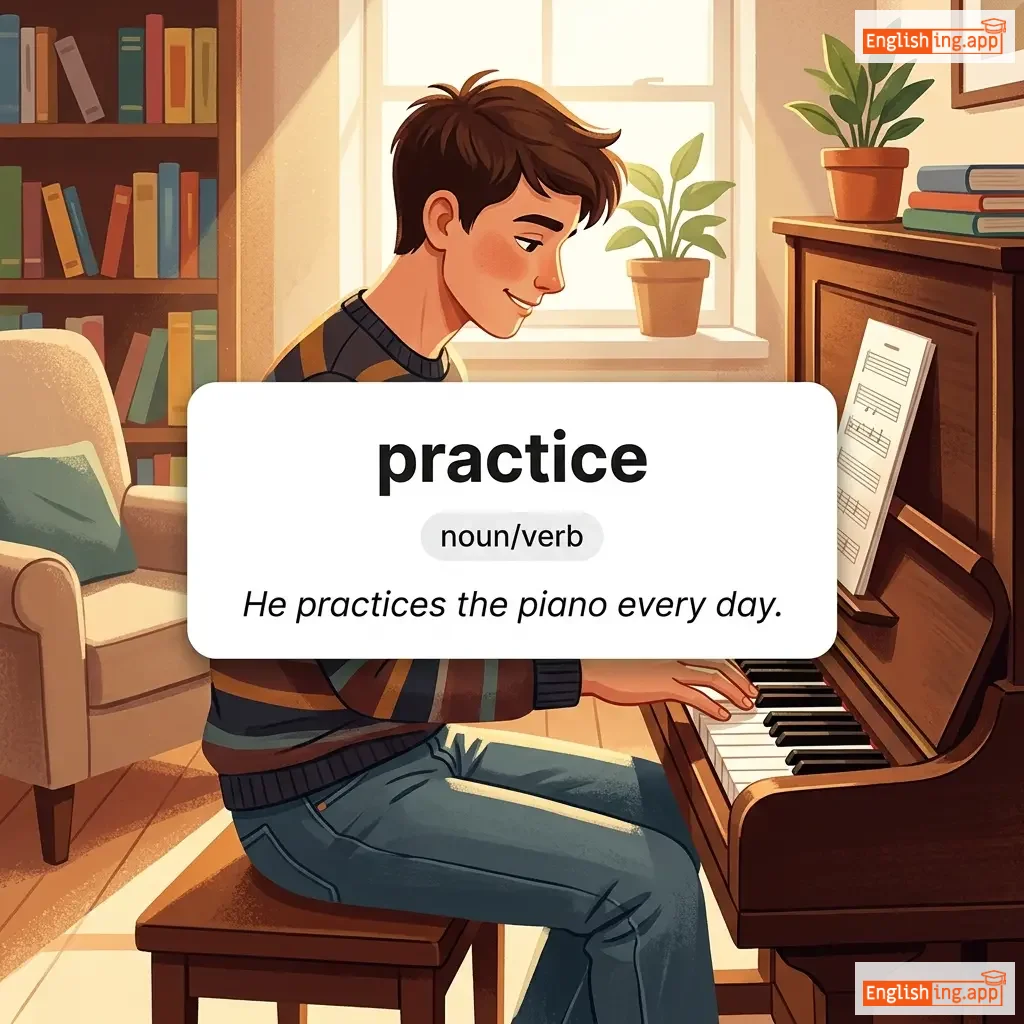
practice definition card — visual illustration of the meaning
noun/verb
/ˈpræk.tɪs/
práctica (practica)

the act of doing something repeatedly to improve skill, or the actual application of an idea

"He practices the piano every day."

"Él practica el piano todos los días." (Él practica el piano todos los días.)
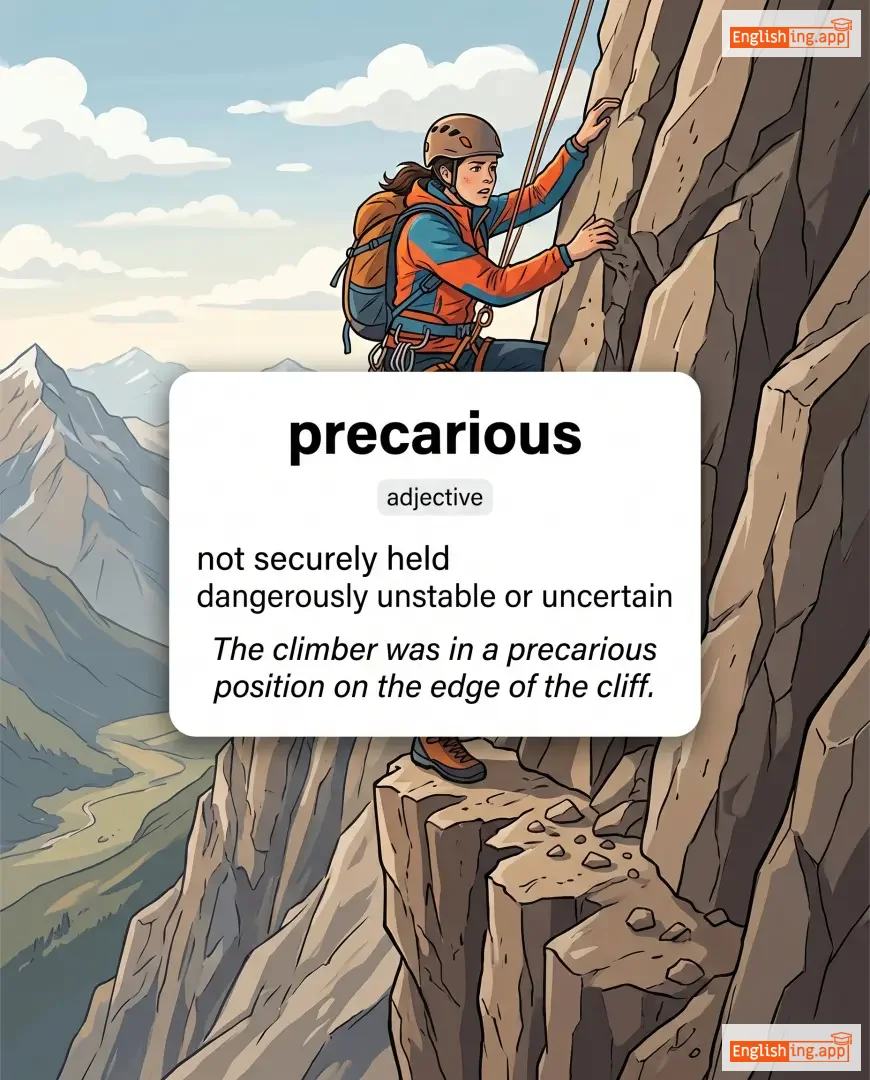
precarious definition card — visual illustration of the meaning
adjective
/prɪˈkɛəriəs/
precario / peligroso (precario / peligroso)

not securely held; dangerously unstable or uncertain

"The climber was in a precarious position on the edge of the cliff."

"El escalador estaba en una posición precaria en el borde del acantilado." (El escalador estaba en una posicion precaria en el borde del acantilado.)
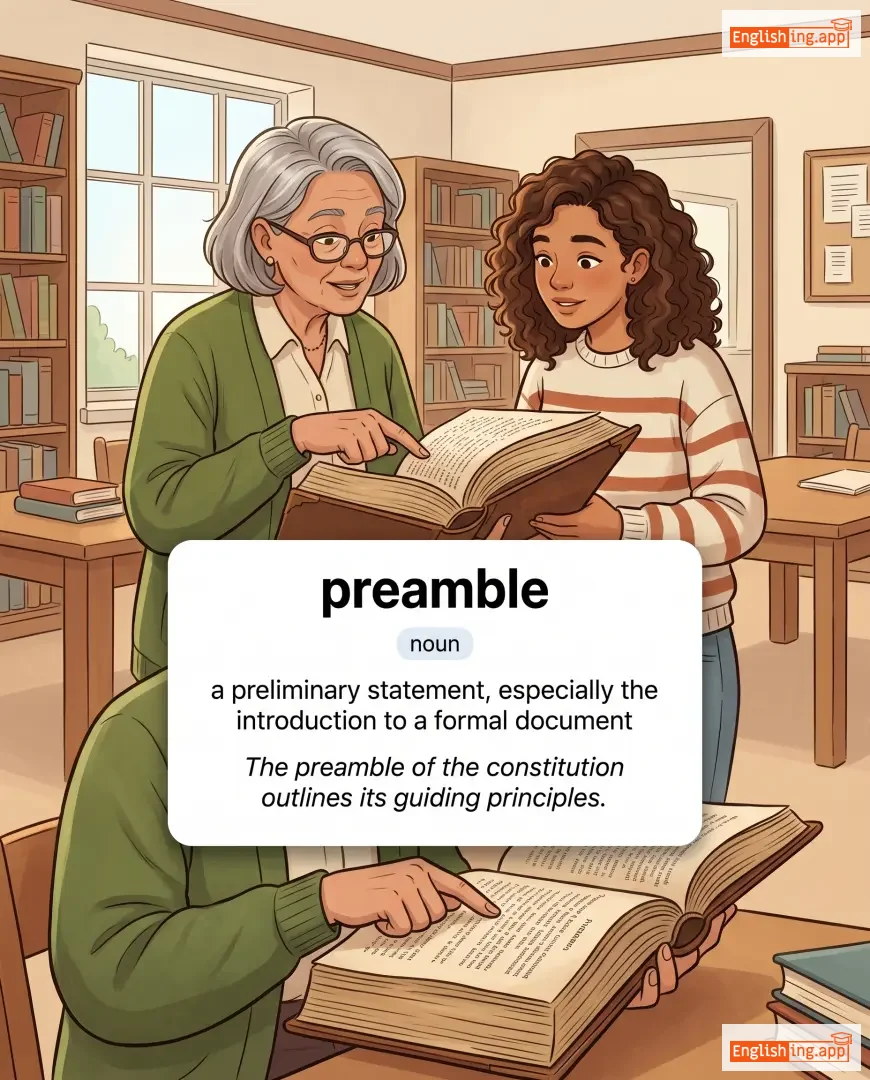
preamble definition card — visual illustration of the meaning
noun
/ˈpriːˌæmbəl/
preámbulo (preambulo)

a preliminary statement, especially the introduction to a formal document

"The preamble of the constitution outlines its guiding principles."

"El preámbulo de la constitución describe sus principios fundamentales." (El preambulo de la constitucion describe sus principios fundamentales.)
verb
/priːtʃ/
predicar (predicar)

to deliver a religious or moral talk, often in a church setting

"The pastor preached about forgiveness and kindness."

"El pastor predicó sobre el perdón y la bondad." (El pastor predicó sobre el perdón y la bondad.)
verb
/priːˈɛmpt/
prevenir por adelantado (prevenir por adelantado)

to act in advance to prevent an anticipated event from happening; forestall

"The government moved to pre-empt a crisis by introducing new policies."

"El gobierno se movió para prevenir una crisis introduciendo nuevas políticas." (El gobierno se movió para prevenir una crisis introduciendo nuevas políticas.)
noun
/ˈprɛər/
oración (oracion)

a solemn request for help or expression of thanks addressed to God or another deity

"She recited a prayer before the meal."

"Ella recitó una oración antes de la comida." (Ella recito una oracion antes de la comida.)
verb
/preɪ/
rezar (rezar)

to speak to a deity, especially for help or thanks

"Every night, she prays for her family’s safety."

"Cada noche, ella ora por la seguridad de su familia." (Cada noche, ella ora por la seguridad de su familia.)
noun
/prɔːn/
gamba (gamba)

a large marine crustacean similar to shrimp but typically bigger

"The chef prepared delicious prawn curry with coconut milk."

"El chef preparó un delicioso curry de gamba con leche de coco." (el chef preparo un delicioso curry de gamba con leche de coco.)
👶🗣️

prattle (prátl)

verb
/ˈprætəl/
charlar sin sentido (charlar sin sentido)

to talk at length in a foolish or inconsequential way

"The children would prattle on about their games."

"Los niños hablarían sobre sus juegos." (Los niños hablarían sobre sus juegos.)
verb
/preɪt/
hablar tontamente (hablar tontamente)

to talk foolishly or at tedious length about something

"He would prate endlessly about his minor achievements."

"Él hablaba sin cesar sobre sus pequeños logros." (El hablaba sin cesar sobre sus pequeños logros.)
noun
/præŋk/
broma (broma)

A trick that is intended to be funny but not harmful.

"They played a harmless prank on their friend during the party."

"Ellos jugaron una broma inocente con su amigo durante la fiesta." (Ellos jugaron una broma inocente con su amigo durante la fiesta.)
verb
/præns/
caminar con arrogancia (caminar con arrogancia)

To move with high, springy steps, often to show off or attract attention.

"The horse pranced around the field gracefully."

"El caballo caminaba orgulloso alrededor del campo." (El caballo caminaba orgulloso alrededor del campo.)
adjective
/ˈpreɪz.wɜː.ði/
digno de elogio (digno de elogio)

deserving praise; commendable; admirable

"Her charitable work is truly praiseworthy."

"Su trabajo caritativo es verdaderamente digno de elogio." (Su trabajo caritativo es verdaderamente digno de elogio.)
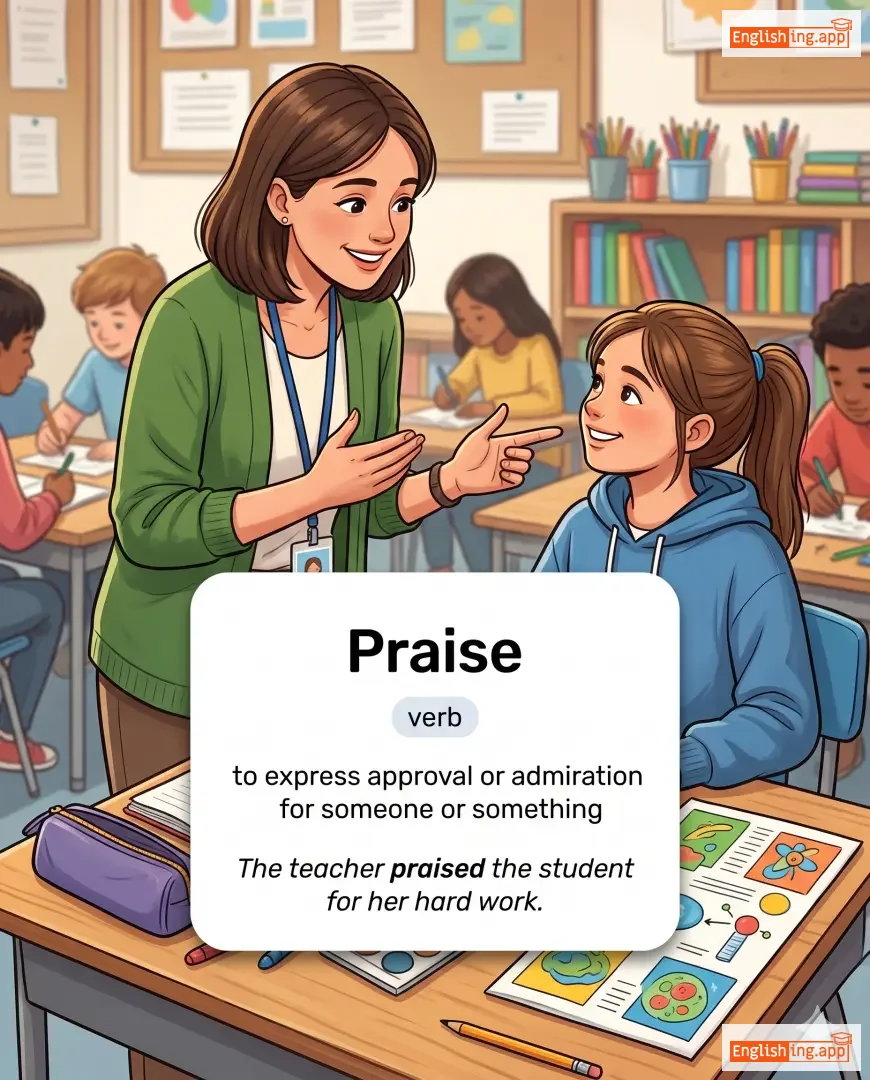
Praise definition card — visual illustration of the meaning
verb
/preɪz/
alabar (alabar)

to express approval or admiration for someone or something

"The teacher praised the student for her hard work."

"El maestro elogió a la estudiante por su arduo trabajo." (El maestro elogio a la estudiante por su arduo trabajo.)
noun
/ˈprɛəri/
pradera (pradera)

A large open area of grassland, especially in North America.

"The bison roamed freely across the prairie."

"El bisonte deambulaba libremente por la pradera." (El bisonte deambulaba libremente por la pradera.)
noun
/ˈpræɡmətɪst/
pragmático (pragmatiko)

A person who deals with things in a practical and realistic way.

"He is a true pragmatist who values results over ideals."

"Él es un verdadero pragmático que valora los resultados más que los ideales." (El es un verdadero pragmatiko que valora los resultados mas que los ideales.)
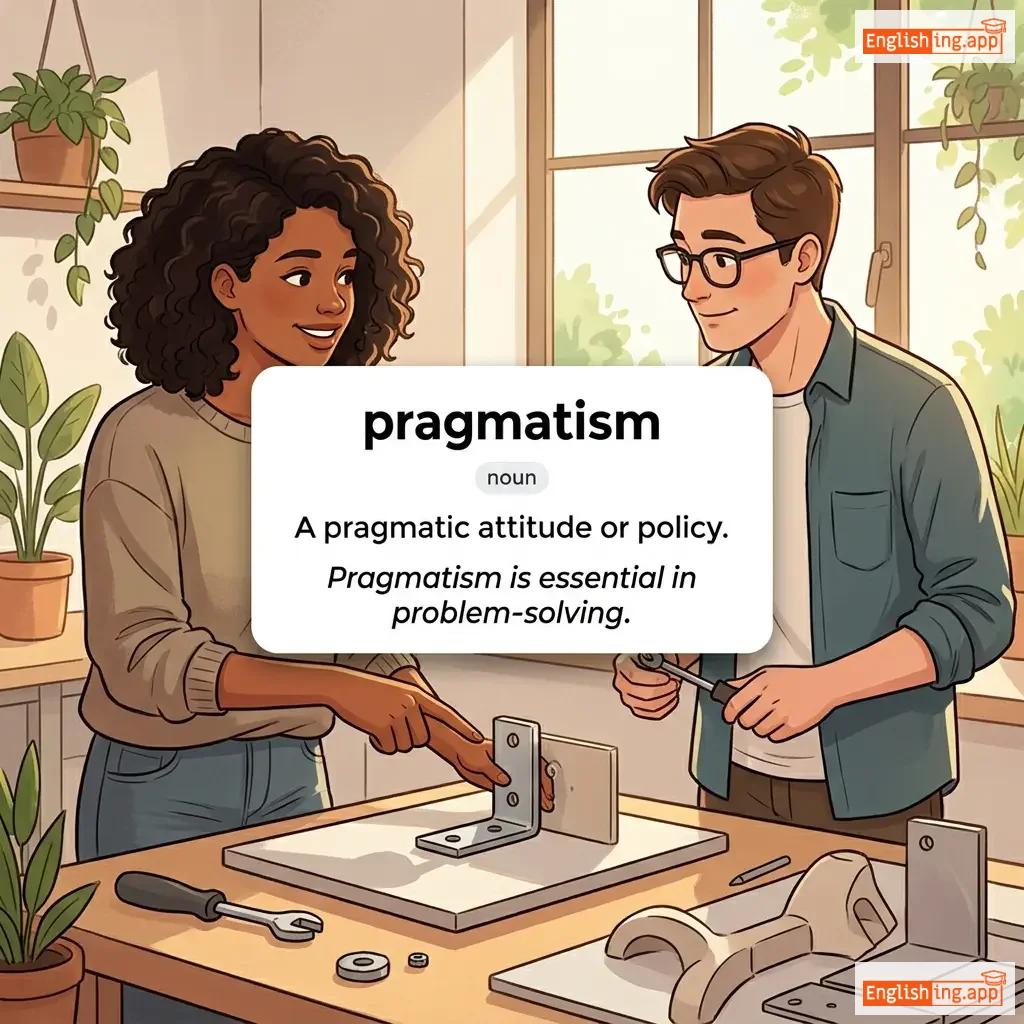
pragmatism definition card — visual illustration of the meaning
noun
/ˈpræɡ.mə.tɪ.zəm/
pragmatismo (pragmatismo)

A pragmatic attitude or policy.

"Pragmatism is essential in problem-solving."

"El pragmatismo es esencial en la resolución de problemas." (El pragmatismo es esencial en la resolucion de problemas.)
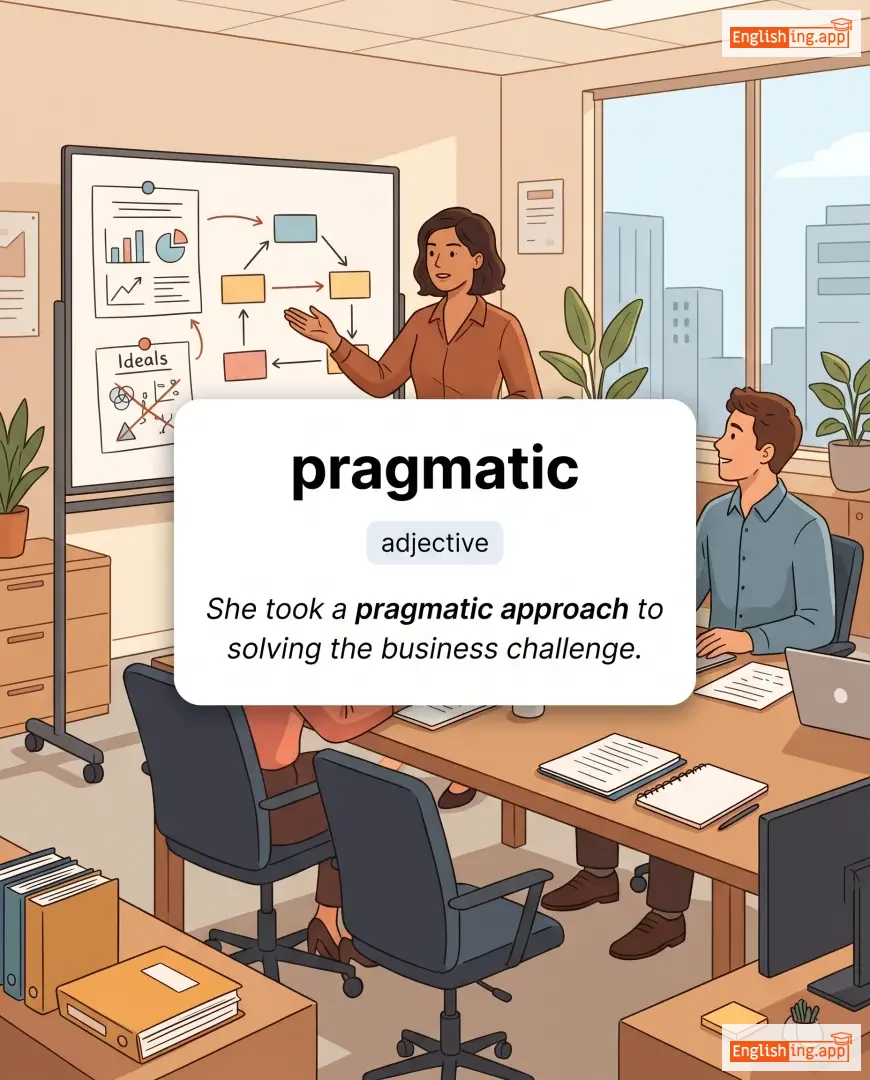
pragmatic definition card — visual illustration of the meaning
adjective
/præɡˈmætɪk/
pragmático (pragmatiko)

Dealing with problems in a practical and sensible way rather than depending on theories or ideals.

"She took a pragmatic approach to solving the business challenge."

"Ella adoptó un enfoque pragmático para resolver el desafío empresarial." (Ella adoptó un enfoque pragmático para resolver el desafío empresarial.)
noun
/prækˈtɪʃ.ən.ər/
profesional (profesional)

a person actively engaged in a profession, especially medicine or law

"She is a skilled medical practitioner."

"Ella es una profesional médica capacitada." (Ella es una profesional medica capacitada.)
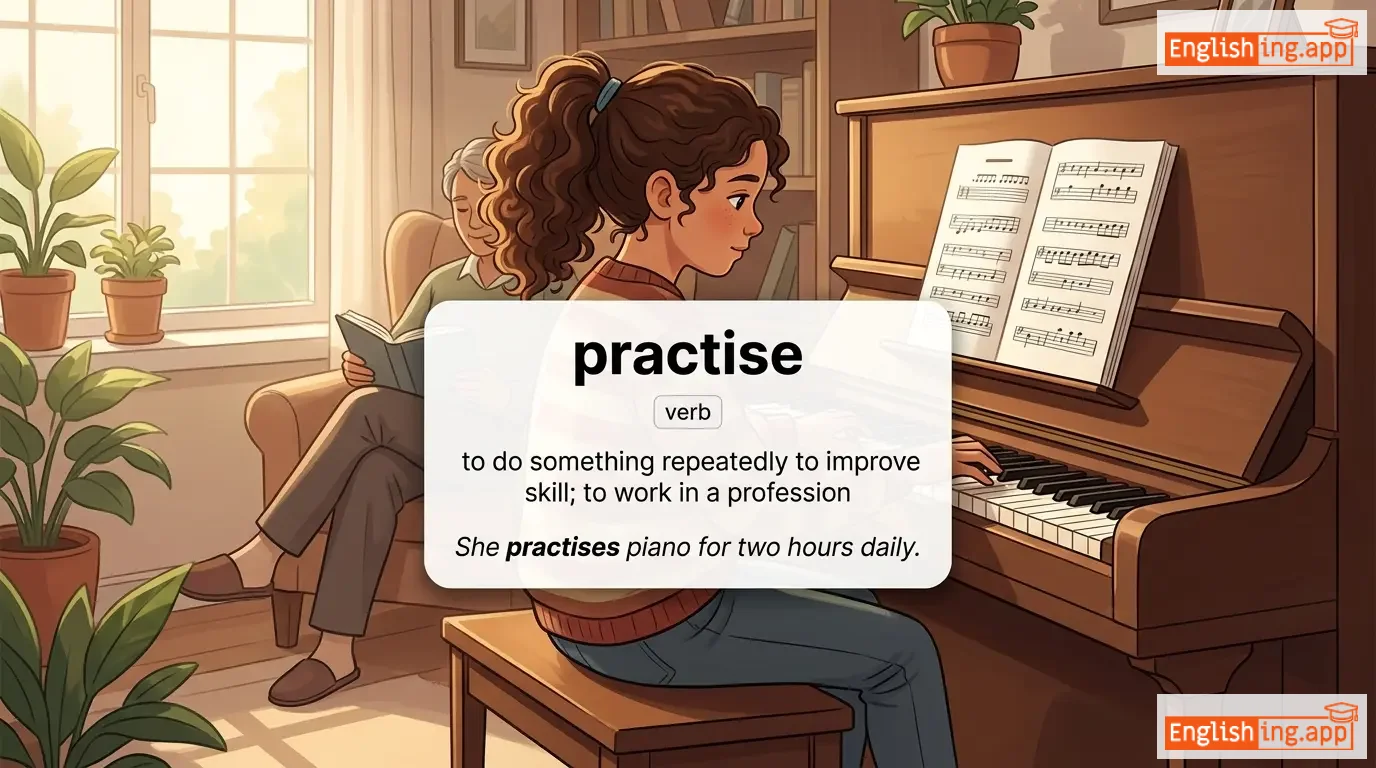
practise definition card — visual illustration of the meaning
verb
/ˈpræktɪs/
practicar (practicar)

to do something repeatedly to improve skill; to work in a profession

"She practises piano for two hours daily."

"Ella practica piano durante dos horas al día." (Ella practica piano durante dos horas al día.)
noun
/ˈpɑː.tər/
alfarero (alfarero)

a person who makes pottery

"The potter shaped clay on the spinning wheel."

"El alfarero dio forma al barro en la rueda de alfarero." (El alfarero dio forma al barro en la rueda de alfarero.)
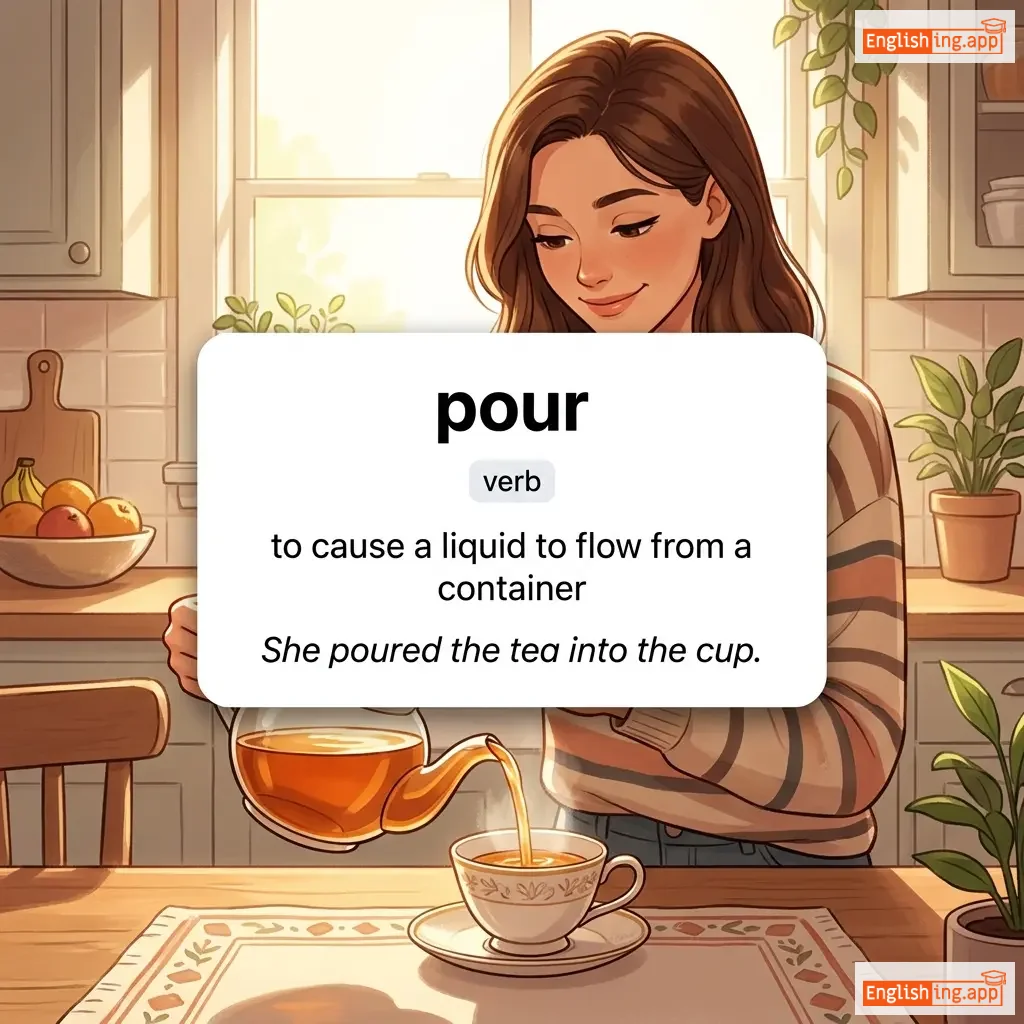
pour definition card — visual illustration of the meaning
verb
/pɔːr/
verter (verter)

to cause a liquid to flow from a container

"She poured the tea into the cup."

"Ella vertió el té en la taza." (Ella vertió el té en la taza.)
noun, verb
/paʊnd/
libra (libra)

a unit of weight equal to 16 ounces or a unit of currency

"The price of the book is five pounds."

"El precio del libro es cinco libras." (El precio del libro es cinco libras.)
noun
/ˈpoʊltɪs/
cataplasma caliente de hierbas (cataplasma caliente de hierbas)

a soft, moist mass of material applied to the body to relieve soreness and inflammation

"The nurse applied a warm poultice to his injured leg."

"La enfermera aplicó un cataplasma caliente en su pierna lesionada." (La enfermera aplicó un cataplasma caliente en su pierna lesionada.)
noun
/paʊtʃ/
bolsa (bolsa)

a small bag or pocket, often used to carry small items

"She kept her coins in a small leather pouch."

"Ella guardó sus monedas en una pequeña bolsa de cuero." (Ella guardo sus monedas en una pequena bolsa de cuero.)
noun
/ˈpoʊʃən/
poción (pocion)

a liquid with healing, magical, or poisonous properties

"The witch gave the hero a healing potion."

"La bruja le dio al héroe una poción curativa." (La bruja le dio al heroe una pocion curativa.)
adverb
/pəˈtɛnʃəli/
potencialmente (potencialmente)

with the possibility of becoming something in the future

"This project is potentially a huge success."

"Este proyecto es potencialmente un gran éxito." (Este proyecto es potencialmente un gran éxito.)
verb
/poʊˈtɛnʃiˌeɪt/
potenciar (potenciar)

To increase the power, effect, or likelihood of something.

"Caffeine can potentiate the effects of some medicines."

"La cafeína puede potenciar los efectos de algunos medicamentos." (La cafeína puede potenciar los efectos de algunos medicamentos.)
verb
/paʊt/
hacer pucheros (hacer pucheros)

to push one's lips forward as an expression of annoyance or sulkiness

"The child began to pout when he didn’t get the toy."

"El niño empezó a hacer pucheros cuando no consiguió el juguete." (El niño empezo a hacer pucheros cuando no consiguio el juguete.)