词汇表

英语词汇词典 | 单词含义、定义和示例

verb
/priːˈfɪɡjər/
预示 (yùshì)

to represent, show, or foreshadow something in advance

"The economic reforms prefigure major social changes."

"经济改革预示着重大社会变革。" (Jīngjì gǎigé yùshì zhe zhòngdà shèhuì biàngé.)
noun
/prɪˈfɜːrmənt/
晋升 (jinsheng)

promotion or advancement in rank, position, or office

"He hoped for preferment in the government office."

"他希望在政府办公室得到晋升。" (Tā xīwàng zài zhèngfǔ bàngōngshì dédào jìnshēng.)
adjective
/ˌprɛfəˈrɛnʃəl/
优先的 (yōuxiān de)

showing or giving advantage to one over others

"Members receive preferential treatment at the club."

"会员在俱乐部享有优先待遇。" (Huìyuán zài jùlèbù xiǎngyǒu yōuxiān dàiyù.)
noun
/ˈprɛf(ə)rəns/
偏好 (pianhao)

a greater liking for one alternative over another

"She has a preference for tea over coffee."

"她更喜欢茶而不是咖啡。" (Tā gèng xǐhuān chá ér bù shì kāfēi.)
adjective
/ˈprɛf(ə)rəb(ə)l/
更可取 (geng ke qu)

more desirable or suitable; better than something else

"It is preferable to take the train rather than drive in heavy traffic."
"在严重交通堵塞的情况下,最好选择乘坐火车。" (Zai yánzhòng jiāotōng dǔsè de qíngkuàng xià, zuì hǎo xuǎnzé chéngzuò huǒchē.)
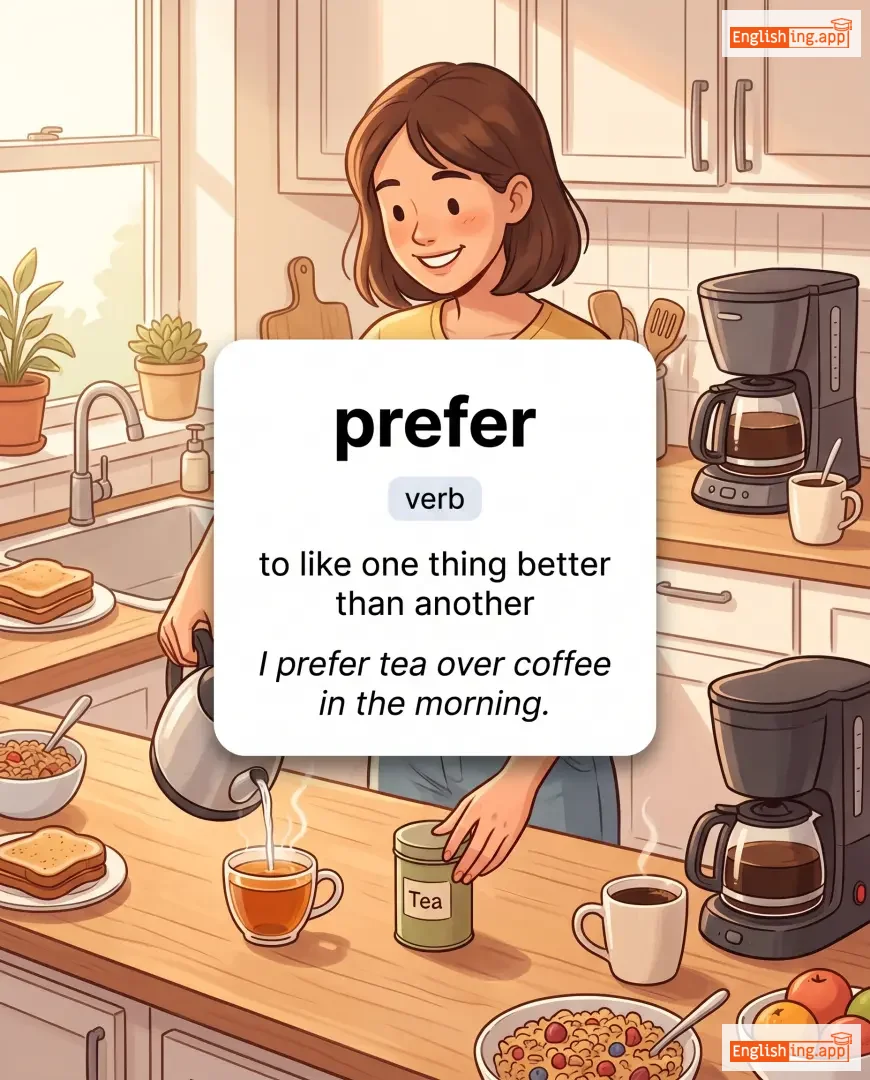
prefer definition card — visual illustration of the meaning
verb
/prɪˈfɜːr/
更喜欢 (gèng xǐ huān)

to like one thing better than another

"I prefer tea over coffee in the morning."

"我早上更喜欢喝茶而不是咖啡。" (Wǒ zǎo shang gèng xǐ huān hē chá ér bù shì kā fēi.)
adjective
/ˈprɛfətɔːri/
前言 (qianyan)

serving as an introduction or preface

"He made some prefatory remarks before the lecture began."

"他在讲座开始前做了一些前言性的评论。" (Ta zai jiangzuo kaishi qian zuo le yixie qianyanxing de pinglun.)
noun
/ˈprɛfəs/
前言 (qianyan)

an introduction to a book, speech, or other written work

"The author explained his motivation in the preface."

"作者在前言中解释了他的动机。" (zuòzhě zài qián yán zhōng jiěshìle tā de dòngjī.)
noun
/ˌpriːɪɡˈzɪstəns/
预存在 (yù cúnzài)

the state of existing before something else

"Philosophers often debated the preexistence of the soul."

"哲学家们常常辩论灵魂的预存在。" (Zhéxuéjiā men chángcháng biànlùn línghún de yù cúnzài.)
verb
/ˌpriːɪɡˈzɪst/
提前存在 (tíqián cúnzài)

to exist beforehand or before something else

"These customs preexist the arrival of modern technology."

"这些习俗早于现代技术的到来而存在。" (Zhèxiē xísú zǎo yú xiàndài jìshù de dàolái ér cúnzài.)
verb
/ˌpriːɪˈstæblɪʃ/
预先设定 (yùxiān shèdìng)

To establish or set up beforehand.

"Certain rules were preestablished before the meeting."

"在会议之前,一些规则已经预先设定。" (Zài huìyì zhīqián, yīxiē guīzé yǐjīng yùxiān shèdìng.)
verb
/ˌpriːɪnˈɡeɪdʒ/
预先雇佣 (yùxiān gùyōng)

To contract or engage beforehand; to arrange in advance.

"The workers were preengaged before the project officially started."

"项目正式开始前,工人们已被预先雇佣。" (Xiàngmù zhèngshì kāishǐ qián, gōngrénmen yǐ bèi yùxiān gùyōng.)
verb
/priːn/
修整 (xiūzhěng)

To groom or dress oneself with care; to show pride in one's appearance.

"She preened in front of the mirror before leaving for the party."

"她在镜子前修整自己,然后去派对。" (Tā zài jìngzi qián xiūzhěng zìjǐ, ránhòu qù pàiduì.)
adjective
/priˈɛmptɪv/
预防性 (yùfángxìng)

Serving or intended to prevent something by taking action first.

"The government took preemptive measures to control inflation."

"政府采取了预防措施来控制通货膨胀。" (Zhèngfǔ cǎiqǔle yùfáng cuòshī lái kòngzhì tōnghuò péngzhàng.)
noun
/priˈɛmpʃən/
优先购买权 (yōuxiān gòumǎi quán)

The act of taking action before someone else; the right to purchase or act before others.

"The company exercised preemption to acquire the land before competitors."

"公司行使优先购买权,在竞争对手之前购买了土地。" (Gōngsī xíngshǐ yōuxiān gòumǎi quán, zài jìngzhēng duìshǒu zhīqián gòumǎile tǔdì.)
verb
/priːˈɛmpt/
预防 (yùfáng)

To take action in order to prevent something from happening; to take the place of something.

"The government acted quickly to preempt a financial crisis."

"政府迅速采取行动,预防金融危机。" (Zhèngfǔ xùnsù cǎiqǔ xíngdòng, yùfáng jīnróng wéijī.)
adjective
/priːˈɛmɪnənt/
杰出 (jiéchū)

Surpassing all others; very distinguished in some way.

"She is a preeminent scientist in the field of genetics."

"她是遗传学领域的杰出科学家。" (Tā shì yíchuánxué lǐngyù de jiéchū kēxuéjiā.)
noun
/priːˈɛmɪnəns/
卓越 (zhuóyuè)

The fact of surpassing all others; superiority.

"The university has gained preeminence in medical research."

"该大学在医学研究中已获得卓越地位。" (Gāi dàxué zài yīxué yánjiū zhōng yǐ huòdé zhuóyuè dìwèi.)
verb
/prɪˈdɒmɪneɪt/
占主导地位 (zhàn zhǔdǎo dìwèi)

To be the strongest, most common, or most influential element.

"Traditional values still predominate in the community."

"传统价值观在社区中仍然占主导地位。" (Chuántǒng jiàzhíguān zài shèqū zhōng réngrán zhàn zhǔdǎo dìwèi.)
adverb
/prɪˈdɒmɪnəntli/
主要 (zhuyao)

mainly; for the most part

"The population in the city is predominantly young."

"这个城市的人口主要是年轻人。" (Zhege chengshi de renkou zhuyao shi nianqing ren.)
adjective
/prɪˈdɒmɪnənt/
占主导地位 (zhàn zhǔdǎo dìwèi)

Having superior strength, influence, or authority; most common or noticeable.

"The predominant color in the painting is blue."

"这幅画中的主要颜色是蓝色。" (Zhè fú huà zhōng de zhǔyào yánsè shì lán sè.)
practice definition card — visual illustration of the meaning
noun/verb
/ˈpræk.tɪs/
练习 (lianxi)

the act of doing something repeatedly to improve skill, or the actual application of an idea

"He practices the piano every day."
"他每天练习钢琴。" (Ta mei tian lianxi gangqin.)
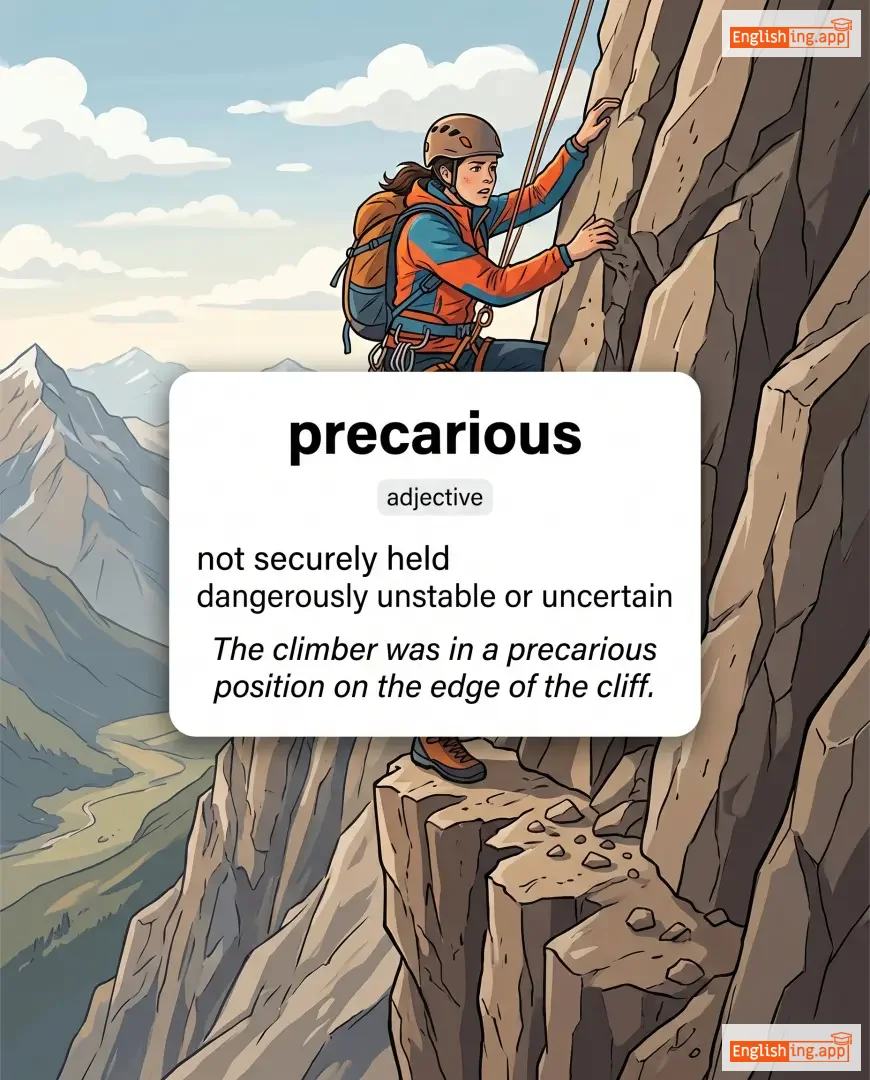
precarious definition card — visual illustration of the meaning
adjective
/prɪˈkɛəriəs/
不稳定 / 危险 (bù wěn dì / wēi xiǎn)

not securely held; dangerously unstable or uncertain

"The climber was in a precarious position on the edge of the cliff."
"攀岩者处于悬崖边缘的危险位置。" (Pānyán zhě chù yú xuán yá biān yuán de wēi xiǎn wèi zhì.)
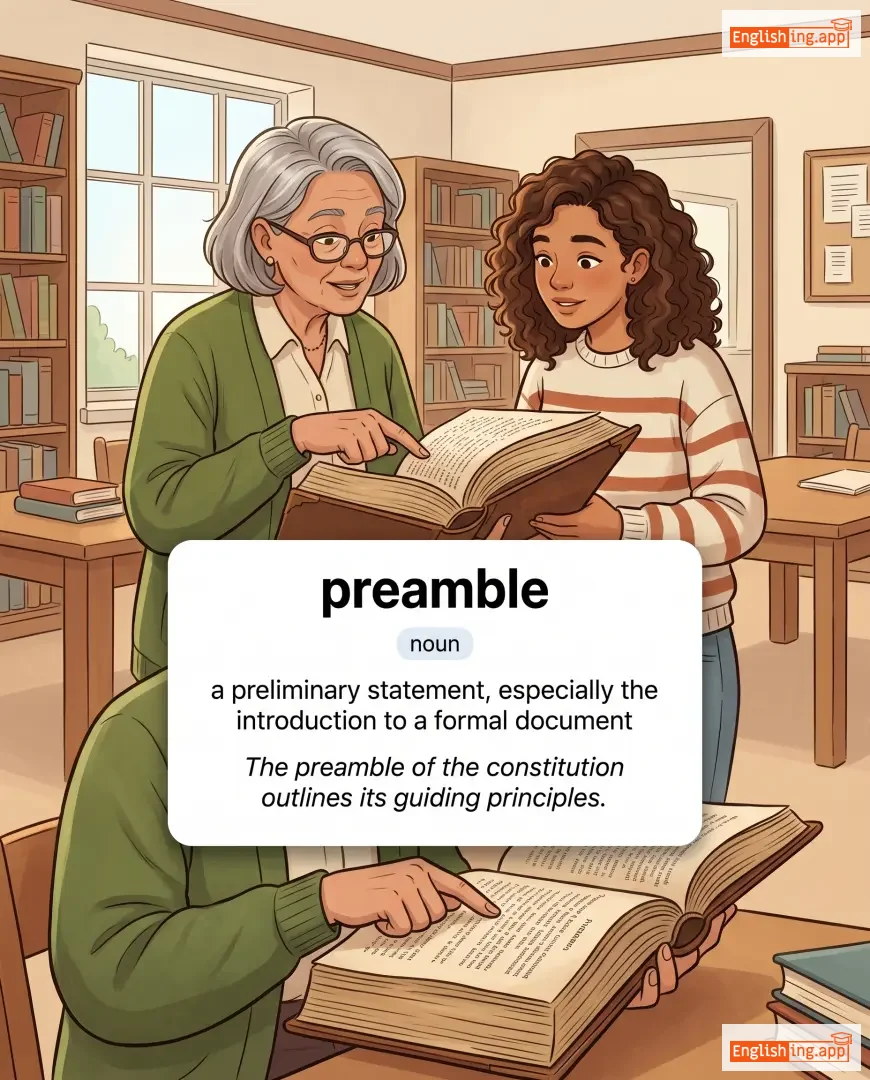
preamble definition card — visual illustration of the meaning
noun
/ˈpriːˌæmbəl/
前言 (qián yán)

a preliminary statement, especially the introduction to a formal document

"The preamble of the constitution outlines its guiding principles."

"宪法的序言概述了其指导原则。" (Xianfa de xu yan gai shu le qi zhidao yuanze.)
verb
/priːtʃ/
宣讲 (xuān jiǎng)

to deliver a religious or moral talk, often in a church setting

"The pastor preached about forgiveness and kindness."

"牧师宣讲了宽恕与善良。" (Mùshī xuānjiǎng le kuānshù yǔ shànliáng.)
verb
/priːˈɛmpt/

to act in advance to prevent an anticipated event from happening; forestall

"The government moved to pre-empt a crisis by introducing new policies."

noun
/ˈprɛər/
祈祷 (qidao)

a solemn request for help or expression of thanks addressed to God or another deity

"She recited a prayer before the meal."

"她在饭前念了祈祷词。" (Ta zai fan qian nian le qidao ci.)
verb
/preɪ/
祈祷 (qidao)

to speak to a deity, especially for help or thanks

"Every night, she prays for her family’s safety."

"每晚,她为家人的安全祈祷。" (Měi wǎn, tā wèi jiārén de ānquán qídǎo.)
noun
/prɔːn/
对虾 (dui xia)

a large marine crustacean similar to shrimp but typically bigger

"The chef prepared delicious prawn curry with coconut milk."

"厨师用椰奶做了美味的对虾咖喱。" (chu shi yong ye nai zuo le mei wei de dui xia ga li.)
verb
/ˈprætəl/
喋喋不休 (diédié bùxiū)

to talk at length in a foolish or inconsequential way

"The children would prattle on about their games."

"孩子们会不停地谈论他们的游戏。" (Háizimen huì bùtíng de tánlùn tāmen de yóuxì.)
verb
/preɪt/
喋喋不休 (diede buxiu)

to talk foolishly or at tedious length about something

"He would prate endlessly about his minor achievements."

"他会不停地谈论他的微小成就。" (Tā huì bù tíng de tán lùn tā de wēi xiǎo chéng jiù.)
noun
/præŋk/
恶作剧 (èzuòjù)

A trick that is intended to be funny but not harmful.

"They played a harmless prank on their friend during the party."

"他们在派对上和朋友玩了一个无害的恶作剧。" (Tāmen zài pàiduì shàng hé péngyǒu wánle yīgè wúhài de èzuòjù.)
verb
/præns/
高傲地走 (gao ao de zou)

To move with high, springy steps, often to show off or attract attention.

"The horse pranced around the field gracefully."

"那匹马骄傲地走过了田野。" (Na pi ma jiao ao de zou guo le tian ye.)
adjective
/ˈpreɪz.wɜː.ði/
值得赞扬 (zhí dé zàn yáng)

deserving praise; commendable; admirable

"Her charitable work is truly praiseworthy."

"她的慈善工作确实值得赞扬。" (Tā de cí shàn gōng zuò què shí zhí dé zàn yáng.)
Praise definition card — visual illustration of the meaning
verb
/preɪz/
称赞 (chengzan)

to express approval or admiration for someone or something

"The teacher praised the student for her hard work."

"老师表扬了学生的辛勤工作。" (Laoshi biaoyang le xuesheng de xinqin gongzuo.)
noun
/ˈprɛəri/
大草原 (da caoyuan)

A large open area of grassland, especially in North America.

"The bison roamed freely across the prairie."

"野牛在大草原上自由地游荡。" (Ye niu zai da caoyuan shang ziyou de you dang.)
noun
/ˈpræɡmətɪst/
实用主义者 (shí yòng zhǔ yì zhě)

A person who deals with things in a practical and realistic way.

"He is a true pragmatist who values results over ideals."
"他是一个真正的实用主义者,他更看重结果而非理想。" (Tā shì yí gè zhēn zhèng de shí yòng zhǔ yì zhě, tā gèng kàn zhòng jié guǒ ér fēi lǐ xiǎng.)
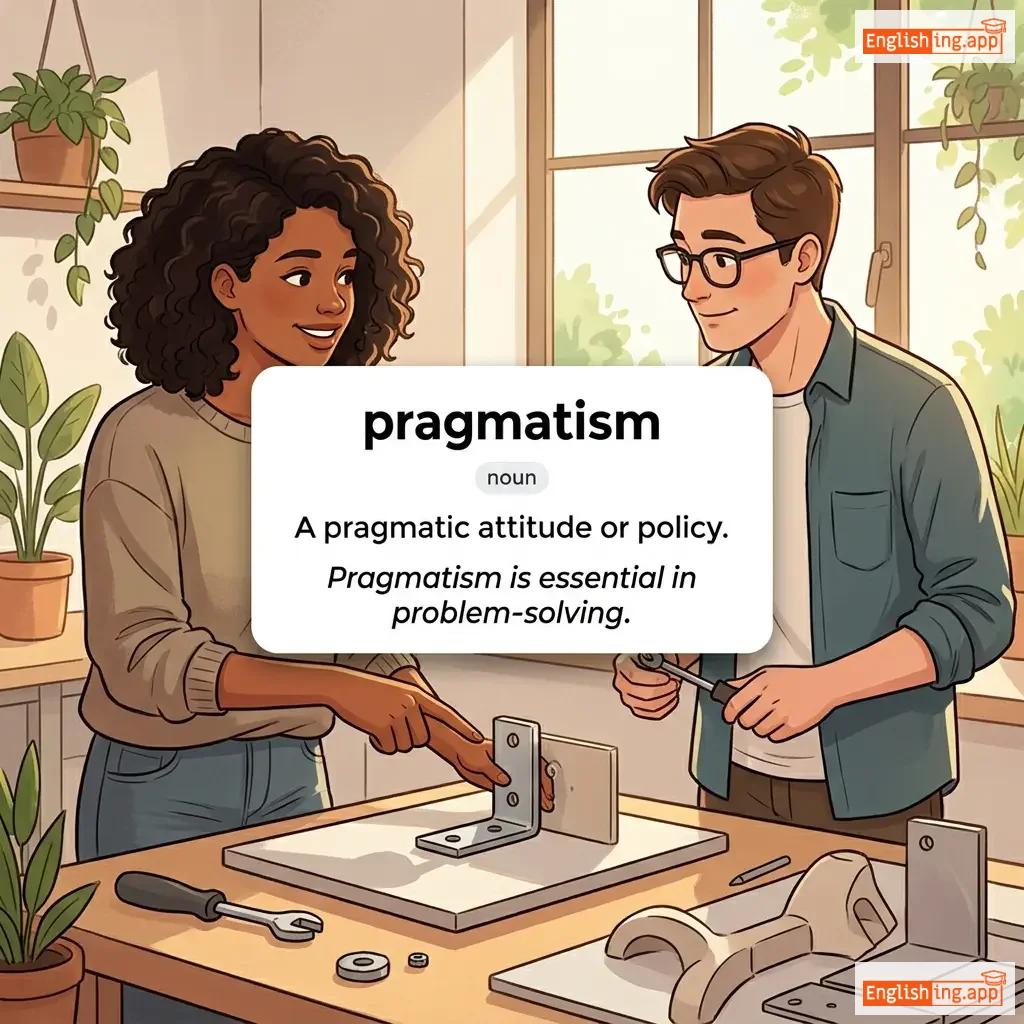
pragmatism definition card — visual illustration of the meaning
noun
/ˈpræɡ.mə.tɪ.zəm/
实用主义 (shí yòng zhǔ yì)

A pragmatic attitude or policy.

"Pragmatism is essential in problem-solving."

"实用主义在解决问题中至关重要。" (Shí yòng zhǔ yì zài jiě jué wèn tí zhōng zhì guān zhòng yào.)
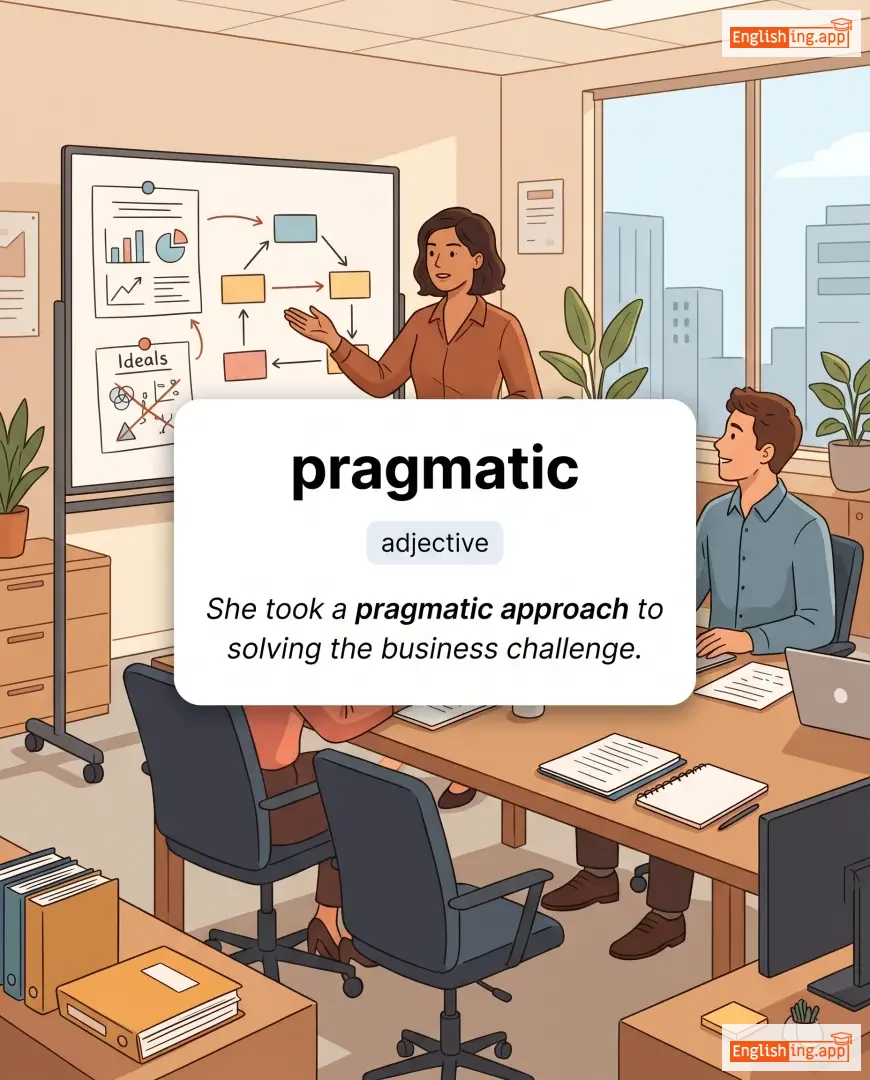
pragmatic definition card — visual illustration of the meaning
🛠️

pragmatic

adjective
/præɡˈmætɪk/

Dealing with problems in a practical and sensible way rather than depending on theories or ideals.

"She took a pragmatic approach to solving the business challenge."

noun
/prækˈtɪʃ.ən.ər/
从业者 (congyè zhě)

a person actively engaged in a profession, especially medicine or law

"She is a skilled medical practitioner."
"她是一位合格的医学从业者。" (Tā shì yī wèi hégé de yīxué cóngyè zhě.)
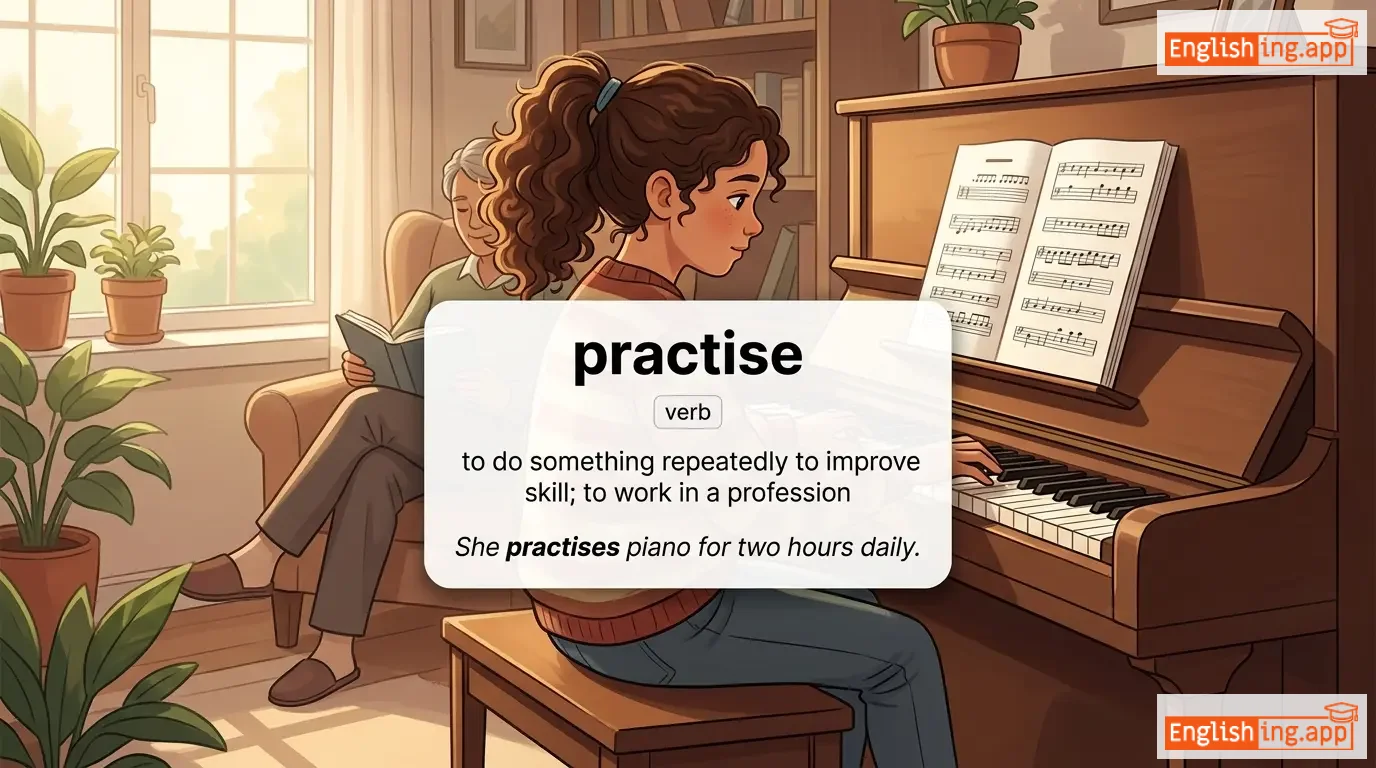
practise definition card — visual illustration of the meaning
verb
/ˈpræktɪs/
练习 (lianxi)

to do something repeatedly to improve skill; to work in a profession

"She practises piano for two hours daily."

"她每天练习两个小时钢琴。" (Ta mei tian lianxi liang ge xiaoshi gangqin.)
noun
/ˈpɑː.tər/
陶艺师 (táo yì shī)

a person who makes pottery

"The potter shaped clay on the spinning wheel."

"陶艺师在旋转的轮子上塑造了泥土。" (Táo yì shī zài xuánzhuǎn de lúnzi shàng sùzào le nítǔ.)
pour definition card — visual illustration of the meaning
verb
/pɔːr/
(dao)

to cause a liquid to flow from a container

"She poured the tea into the cup."

"她把茶倒进了杯子。" (Ta ba cha dao jin le beizi.)
noun, verb
/paʊnd/
英镑 (yīng bàng)

a unit of weight equal to 16 ounces or a unit of currency

"The price of the book is five pounds."

"这本书的价格是五英镑。" (Zhè běn shū de jiàgé shì wǔ yīng bàng.)
noun
/ˈpoʊltɪs/
温暖的草药敷料 (wēnnuǎn de cǎoyào fūliào)

a soft, moist mass of material applied to the body to relieve soreness and inflammation

"The nurse applied a warm poultice to his injured leg."

"护士把温暖的敷料敷在他受伤的腿上。" (hùshì bǎ wēnnuǎn de fūliào fū zài tā shòushāng de tuǐ shàng.)
noun
/paʊtʃ/
袋子 (dàizi)

a small bag or pocket, often used to carry small items

"She kept her coins in a small leather pouch."

"她把硬币放在一个小皮袋里。" (tā bǎ yìngbì fàng zài yīgè xiǎo pí dàizi lǐ)
noun
/ˈpoʊʃən/
药水 (yaoshui)

a liquid with healing, magical, or poisonous properties

"The witch gave the hero a healing potion."

"女巫给了英雄一个治疗药水。" (Nǚwū gěile yīngxióng yīgè zhìliáo yàoshuǐ.)
adverb
/pəˈtɛnʃəli/
潜在地 (qiánzài de)

with the possibility of becoming something in the future

"This project is potentially a huge success."

"这个项目潜在地可能是一个巨大的成功。" (Zhège xiàngmù qiánzài de kěnéng shì yīgè jùdà de chénggōng.)
verb
/poʊˈtɛnʃiˌeɪt/
增强 (zengqiang)

To increase the power, effect, or likelihood of something.

"Caffeine can potentiate the effects of some medicines."

"咖啡因可以增强某些药物的效果。" (Kafein keyi zengqiang moxie yao wu de xiaoguo.)
verb
/paʊt/
撅嘴 (jue zui)

to push one's lips forward as an expression of annoyance or sulkiness

"The child began to pout when he didn’t get the toy."

"孩子没得到玩具时开始撅嘴。" (Haizi mei dedao wanju shi kaishi jue zui.)