词汇表

英语词汇词典 | 单词含义、定义和示例

noun
/ˈpɔːrtɛnt/
前兆 (qián zhào)

A sign or warning that something, especially something momentous or calamitous, is likely to happen.

"The sudden drop in stock prices was seen as a portent of economic trouble."

"股票价格的突然下跌被视为经济问题的前兆。" (Gǔ piào jià gé de tú rán xià diē bèi shì wéi jīng jì wèn tí de qián zhào.)
adjective
/pɔːrˈtɛntəs/
不祥的,严肃的 (bùxiáng de, yánsù de)

Giving a sign or warning that something, often bad or serious, is going to happen; or overly solemn and pompous.

"His portentous tone made everyone nervous about the news."

"他那不祥的语气让大家因新闻感到紧张。" (Tā nà bùxiáng de yǔqì ràng dàjiā yīn xīnwén gǎndào jǐnzhāng.)
portfolio definition card — visual illustration of the meaning
noun
/pɔːrtˈfoʊlioʊ/
投资组合 (tóuzī zǔhé)

A collection of financial investments, artworks, or documents presented as a body of work.

"The designer showcased her portfolio during the interview."
"设计师在面试中展示了她的作品集。" (Shèjìshī zài miànshì zhōng zhǎnshìle tā de zuòpǐn jí.)
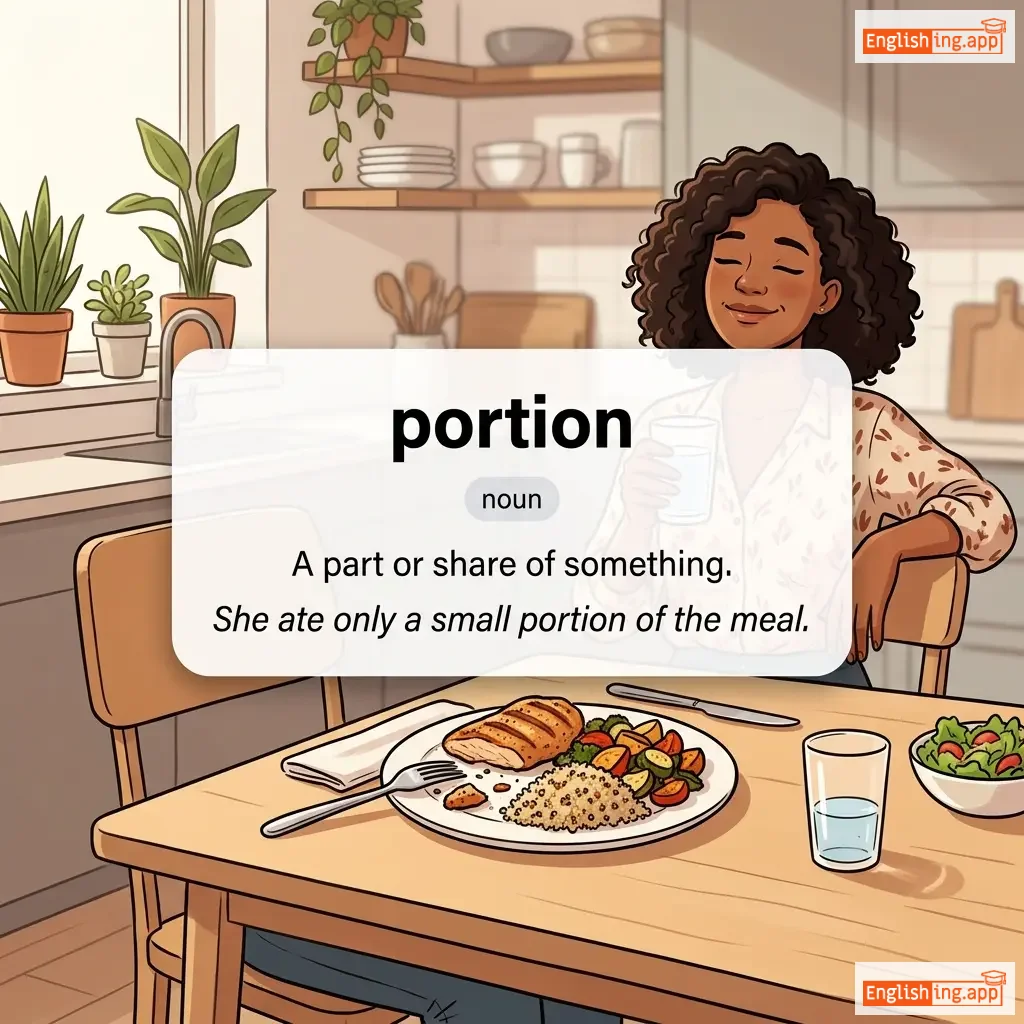
portion definition card — visual illustration of the meaning
noun
/ˈpɔːrʃən/
部分 (bùfen)

A part or share of something.

"She ate only a small portion of the meal."

"她只吃了餐点的一小部分。" (Tā zhǐ chīle cāndiǎn de yī xiǎo bùfen.)
adjective
/ˈpɔːrtli/
肥胖 (feipang)

Having a stout or somewhat fat body, often implying dignity or authority.

"The portly man entered the room with confidence."

"那个肥胖的男人自信地走进房间。" (Nàgè féipàng de nánrén zìxìn de zǒu jìn fángjiān.)
portrait definition card — visual illustration of the meaning
noun
/ˈpɔːtrət/
肖像 (xiàoxiàng)

a painting, drawing, photograph, or engraving of a person, especially one showing the face

"The artist painted a beautiful portrait of his wife."

"艺术家画了一幅他妻子的美丽肖像。" (Yìshùjiā huàle yī fú tā qīzǐ de měilì xiàoxiàng.)
portray definition card — visual illustration of the meaning
verb
/pɔːˈtreɪ/
描绘 (miaohui)

to describe or represent something or someone in a work of art or literature

"The novel portrays a vivid picture of life in the countryside."

"这部小说描绘了乡村生活的生动图景。" (Zhe bu xiaoshuo miaohui le xiangcun shenghuo de shengdong tujing.)
verb
/poʊz/
幸福 (xìng fú)

To assume a particular position, especially for a photograph or display; to present a problem or question.

"She posed for a picture in front of the monument."

"她在收到奖项时,无法隐藏她的幸福。" (Tā zài shōu dào jiǎngxiàng shí, wúfǎ yǐncáng tā de xìngfú.)
noun
/poʊˈzɜːr/

A person who pretends to be something they are not, often to impress others.

"Many considered him a poseur because he exaggerated his accomplishments."

💡

posit

verb
/ˈpɑːzɪt/

To assume or suggest something as a fact or basis for reasoning.

"The scientist posited a new theory to explain the phenomenon."

position definition card — visual illustration of the meaning
noun
/pəˈzɪʃən/
职位 / 位置 (zhiwei / weizhi)

A place, job, or status; the way in which someone or something is placed or arranged.

"She applied for a teaching position at the university."

"她申请了大学的教学职位。" (Tā shēnqǐngle dàxué de jiàoxué zhíwèi.)
positive definition card — visual illustration of the meaning
adjective
/ˈpɒzɪtɪv/
积极的 (jī jí de)

Characterized by optimism, certainty, or something favorable.

"She always tries to maintain a positive attitude."

"她总是尽力保持积极的态度。" (Tā zǒng shì jìnlì bǎochí jījí de tàidù.)
noun
/ˈpɒsi/
帮派 / 朋友群 (bāng pài / péng yǒu qún)

A group of people, often friends or a group organized to support or enforce the law.

"He arrived at the party with his posse of friends."

"他和他的朋友帮派一起到达了派对。" (Tā hé tā de péng yǒu bāng pài yī qǐ dào dá le pài duì.)
verb
/pəˈzɛs/
拥有 / 拥有 (yǒng yǒu / yǒng yǒu)

To have or own something; to hold a quality or characteristic.

"She possesses great talent in music."

"她在音乐上拥有巨大的天赋。" (Tā zài yīnyuè shàng yǒng yǒu jù dà de tiānfù.)
noun
/pəˈzɛʃən/
拥有 (yǒng yǒu)

The state of owning, controlling, or holding something.

"The ring was her most valuable possession."

"那枚戒指是她最珍贵的财富。" (Nà méi jiè zhǐ shì tā zuì zhēn guì de cáifù.)
adjective
/pəˈzɛsɪv/
占有欲的 (zhanyouyu de)

Showing a desire to own or control; relating to possession.

"He became very possessive about his old books."

"他变得非常占有欲强,尤其是对他那本旧书。" (Ta biande feichang zhanyouyu qiang, youqi shi dui ta na ben jiu shu.)
noun
/pəˈzɛsər/
所有者 (suǒyǒu zhě)

A person who owns or holds something.

"The possessor of the land built a new house."

"土地的所有者建造了一座新房。" (Tǔdì de suǒyǒu zhě jiànzào le yī zuò xīn fáng.)
noun
/ˌpɒsəˈbɪləti/
可能性 (kenengxing)

something that may happen or be the case; a chance that something exists or might occur

"There is a strong possibility of rain tomorrow."

"明天有强烈的降雨可能性。" (Mingtian you qianglie de jiangyu kenengxing.)
Possible definition card — visual illustration of the meaning
adjective
/ˈpɒsəbl̩/
可能 (keneng)

Able to be done or achieved.

"Anything is possible if you work hard."

"如果你努力工作,一切皆有可能。" (Ruguo ni nuli gongzuo, yiqie jie you keneng.)
adverb
/ˈpɒsɪbli/
可能 (keneng)

maybe, or in a way that is not certain

"It could possibly rain later today."

"今天晚些时候可能会下雨。" (Jīntiān wǎnxiē shíhòu kěnéng huì xiàyǔ.)
noun, verb
/pəʊst/
邮寄 (yóujì)

a job or position, or to send something by mail

"She posted a letter to her friend yesterday."

"她昨天给她的朋友邮寄了一封信。" (tā zuótiān gěi tā de péngyǒu yóujìle yī fēng xìn.)
noun
/ˈpoʊst ˌɒfɪs/
邮局 (youju)

a public building or agency where mail is sent, received, and other postal services are provided

"I went to the post office to mail a package."

"我去邮局寄了一个包裹。" (wo qu youju ji le yi ge baoguo)
adjective
/ˌpoʊstˈwɔːr/
战后 (zhanhou)

relating to the period after a war has ended

"The country experienced rapid economic growth in the post-war years."

"该国在战后时期经历了快速的经济增长。" (gai guo zai zhanhou shiqi jingli le kuaishu de jingji zengzhang)
verb
/ˌpoʊstˈdeɪt/
后置日期 (hòuzhì rìqī)

To assign a date later than the actual date to a document or event.

"She postdated the check to next month."
"她把支票的日期改为下个月。" (Tā bǎ zhīpiào de rìqī gǎi wèi xià gè yuè.)
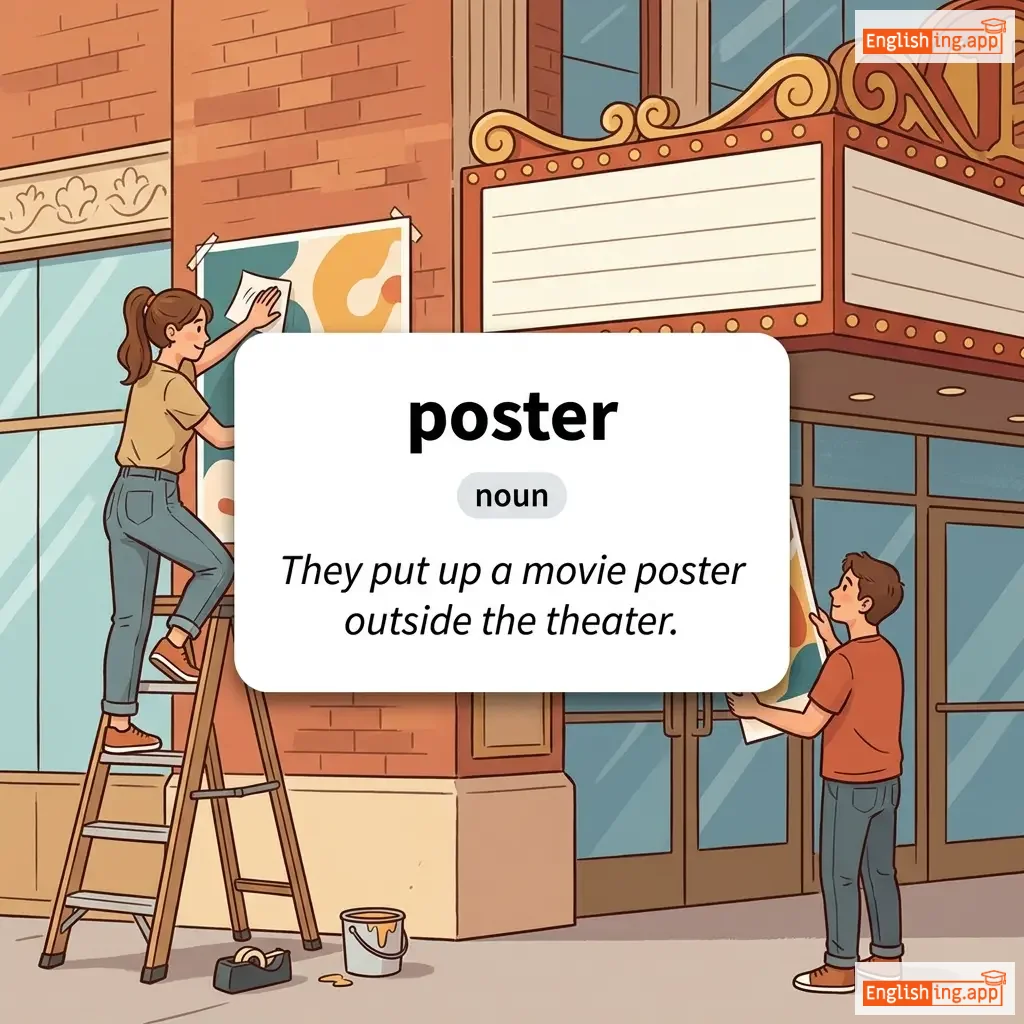
poster definition card — visual illustration of the meaning
noun
/ˈpoʊstər/
海报 (haibao)

a large printed picture or notice that is put on a wall for decoration or to advertise something

"They put up a movie poster outside the theater."

"他们在电影院外面挂了一张电影海报。" (Tāmen zài diànyǐngyuàn wàimiàn guàle yī zhāng diànyǐng hǎibào.)
adjective
/pɒˈstɪəriər/
后部 (hòubù)

Situated at or toward the back; later in time.

"The posterior part of the brain controls vision."

"大脑的后部控制视觉。" (Dànǎo de hòubù kòngzhì shìjué.)
noun
/pɒˈstɛrɪti/
后代 (hòudài)

All future generations of people.

"The monument was built for the benefit of posterity."

"这座纪念碑是为后代的利益而建造的。" (Zhè zuò jìniànbēi shì wèi hòudài de lìyì ér jiànzào de.)
noun, adjective
/ˌpəʊstˈɡrædʒuət/
研究生 (yan jiu sheng)

A student who has completed a first degree and is studying for a further degree.

"She is doing postgraduate research in physics."

"她正在做物理学的研究生研究。" (Ta zheng zai zuo wu li xue de yan jiu sheng yan jiu.)
adjective
/ˈpɒstjʊməs/
死后的 (sǐhòu de)

Occurring, awarded, or appearing after the death of the originator.

"He received a posthumous award for his bravery."

"他因勇敢获得了死后奖项。" (Tā yīn yǒnggǎn huòdéle sǐhòu jiǎngxiàng.)
noun, adjective
/ˌpəʊstˈmɔːtəm/
尸体解剖 (shī tǐ jiě pō)

An examination of a dead body to determine the cause of death.

"The doctor carried out a postmortem on the body."

"医生对尸体进行了尸体解剖。" (Yīshēng duì shītǐ jìnxíngle shītǐ jiě pō.)
verb
/pəʊs(t)ˈpəʊn/
推迟 (tuīchí)

to delay something to a later time

"The meeting was postponed until next week."

"会议被推迟到下周。" (Huìyì bèi tuīchí dào xià zhōu.)
adjective
/ˌpəʊstˈprændɪəl/
餐后 (cān hòu)

Occurring after a meal.

"He went for a postprandial walk after dinner."

"他在晚餐后去散步。" (Tā zài wǎncān hòu qù sànbù.)
noun
/ˈpəʊstˌskrɪpt/
附言 (fù yán)

an additional remark at the end of a letter or text, after the signature

"She added a brief postscript to thank him again."
"她加了一句简短的附言,再次感谢他。" (Tā jiāle yī jù jiǎnduǎn de fù yán, zàicì gǎnxiè tā.)
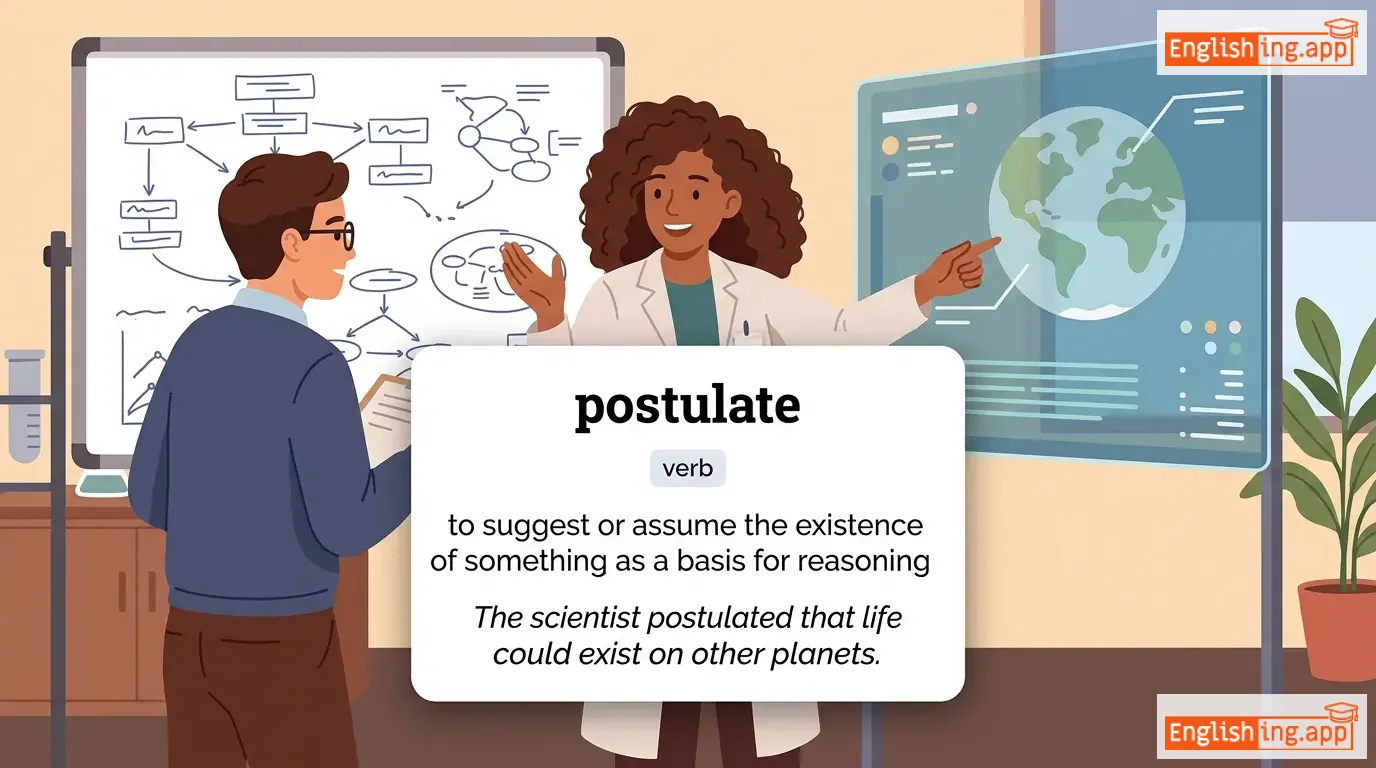
postulate definition card — visual illustration of the meaning
verb
/ˈpɒstjʊˌleɪt/
假设 (jiǎ shè)

to suggest or assume the existence of something as a basis for reasoning

"The scientist postulated that life could exist on other planets."

"科学家假设生命可能存在于其他星球。" (Kēxuéjiā jiǎ shè shēngmìng kěnéng cúnzài yú qítā xīngqiú.)
noun
/ˈpɒstʃə/
幸福 (xingfu)

the position in which someone holds their body; an attitude or approach

"Good posture helps prevent back pain."

"当她获得奖项时,她无法掩饰自己的幸福。" (Dāng tā huòdé jiǎngxiàng shí, tā wúfǎ yǎnshì zìjǐ de xìngfú.)
adjective
/ˈpəʊstwɔːr/
战后 (zhàn hòu)

occurring or existing after a war

"The postwar period saw significant economic growth."

"战后时期见证了显著的经济增长。" (Zhàn hòu shíqī jiànzhèng le xiǎnzhù de jīngjì zēngzhǎng.)
noun
/pɒt/
(guo)

a container, typically round and deep, used for cooking or holding plants

"She put the soup in a pot and set it on the stove."

"她把汤放进锅里并把它放在炉子上。" (Tā bǎ tāng fàng jìn guō lǐ bìng bǎ tā fàng zài lúzi shàng.)
adjective
/ˈpəʊtəbl/
可饮用的 (ke yin yong de)

safe to drink; drinkable

"The villagers did not have access to potable water."

"村民没有水源可以饮用。" (Cunmin meiyou shuiyuan keyi yin yong.)
noun
/pəˈteɪtoʊ/
土豆 (tudou)

a starchy plant tuber that is a staple food around the world

"We had mashed potato with our dinner."

"我们晚餐吃了土豆泥。" (Wǒmen wǎncān chīle tǔdòu ní.)
noun
/ˈpɒtˌbɔɪlə/
低级文学作品 (dijí wénxué zuòpǐn)

a book, play, or film produced quickly to make money rather than for artistic value

"The novel was dismissed by critics as a mere potboiler."

"这本小说被评论家视为仅仅是一本低级文学作品。" (Zhè běn xiǎoshuō bèi pínglùn jiā shì wéi jǐnjǐn shì yī běn dījí wénxué zuòpǐn.)
noun
/ˈpoʊtənsi/
效能 (xiaoneng)

The power or ability of something to affect or influence; strength or effectiveness.

"The potency of the new medicine amazed the doctors."

"新药的效能令医生们惊讶。" (Xin yao de xiaoneng ling yishengmen jingya.)
adjective
/ˈpoʊtənt/
强效 (qiángxiào)

Having great power, influence, or effect.

"This is a very potent drug that should be used carefully."

"这是一种非常强效的药物,应该小心使用。" (Zhè shì yī zhǒng fēicháng qiángxiào de yàowù, yīnggāi xiǎoxīn shǐyòng.)
adjective
/prɪˈhɛnsɪbəl/
可抓取的 (ke zhua qu de)

capable of being grasped or seized

"The tool has a prehensible handle that improves safety."

"这个工具有一个可抓取的把手,能提高安全性。" (Zhege gongju you yige ke zhua qu de bashou, neng tigao anquanzhi.)
noun
/ˈprɛdʒədɪs/
偏见 (pianjian)

An unfair and unreasonable opinion or feeling, especially when formed without enough thought or knowledge.

"Prejudice often prevents people from seeing the truth about others."
"偏见常常阻止人们看到别人真实的一面。" (Pianjian changchang zhuzhi renmen kandao bieren zhenshi de yimian.)
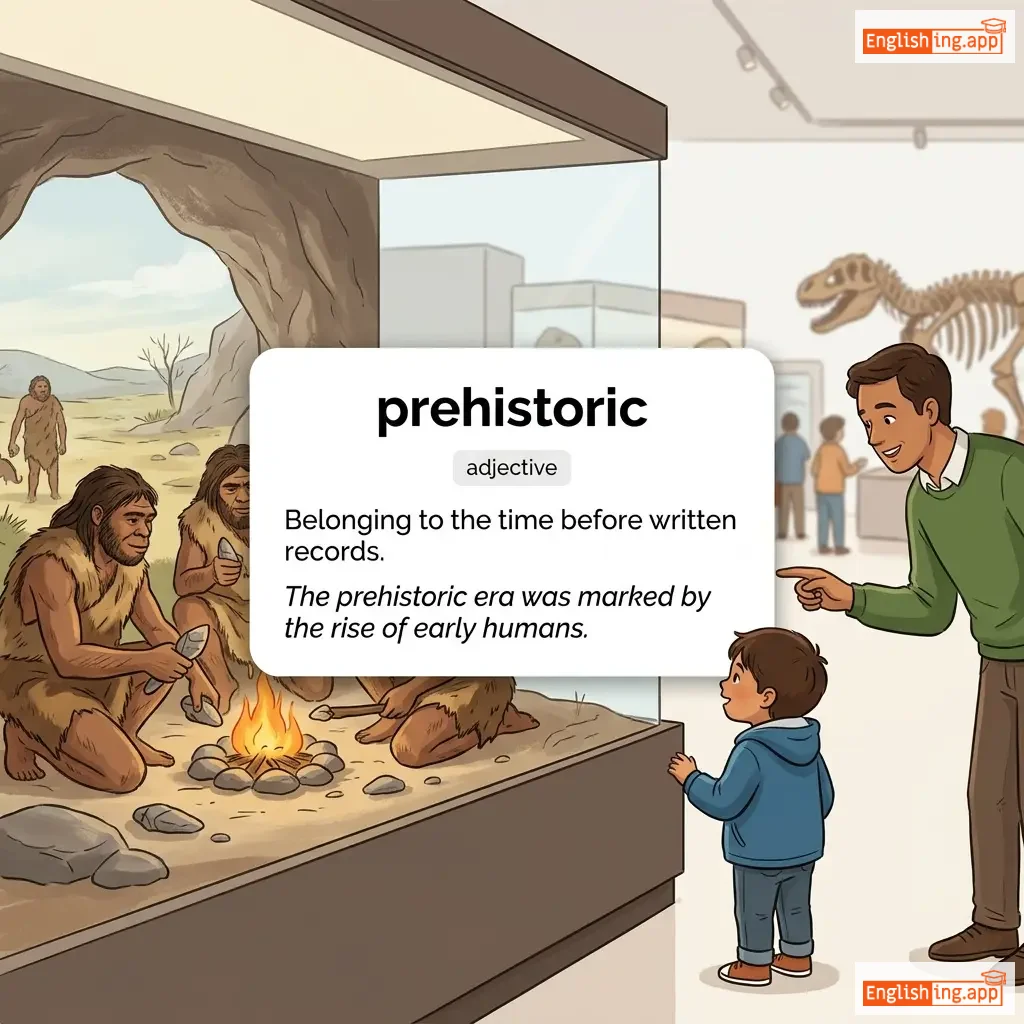
prehistoric definition card — visual illustration of the meaning
adjective
ˌpriːhɪˈstɒrɪk
史前的, 在书面记录之前的时间 (shǐqián de, zài shūmiàn jìlù zhīqián de shíjiān)

Belonging to the time before written records.

"The prehistoric era was marked by the rise of early humans."

"史前时代的特点是早期人类的崛起。" (Shǐqián shídài de tèdiǎn shì zǎoqī rénlèi de juéqǐ.)
noun
/prɪˈhɛnʃən/
抓握的动作; 抓住某物的能力 (zhuā wò de dòngzuò; zhuā zhù mǒu wù de nénglì)

the act of grasping or seizing; the ability to take hold of something

"Therapists assessed the patient's prehension during hand therapy."

"治疗师在手部治疗中评估了患者的抓握能力。" (Zhìliáo shī zài shǒubù zhìliáo zhōng pínggūle huànzhě de zhuā wò nénglì.)
adjective
/prɪˈhɛnsaɪl/
可抓取的 (kě zhuāqǔ de)

adapted for seizing or grasping, especially by wrapping around an object

"The monkey used its prehensile tail to hang from the branch."

"猴子用它的抓握尾巴从树枝上挂下来。" (Hóuzi yòng tā de zhuāwò wěibā cóng shùzhī shàng guà xiàlái.)
noun
/ˈprɛɡnənsi/
怀孕 (huaiyun)

the condition of being pregnant; the period during which a woman carries a developing fetus

"Her pregnancy was carefully monitored by her doctor."

"她的怀孕状况由医生仔细监测。" (Ta de huaiyun zhuangtai you yisheng zixi jiance.)
verb
/priːˈfɪɡjər/
预示 (yùshì)

to represent, show, or foreshadow something in advance

"The economic reforms prefigure major social changes."

"经济改革预示着重大社会变革。" (Jīngjì gǎigé yùshì zhe zhòngdà shèhuì biàngé.)
noun/verb
/ˈpriːfɪks/
前缀; 在前面添加东西 (qianzhui; zai qianmian tianjia dongxi)

a word, letter, or number placed before another; as a verb, to add something in front of something else

"Developers often prefix variables with an underscore."

"开发人员经常在变量前添加下划线作为前缀。" (Kaifa renyuan jingchang zai bianliang qian tianjia xiahua xian zuo wei qianzhui.)