ভোকাবুলারিসমূহ

ইংরেজি শব্দের বাংলা অর্থ | English to Bangla Word Meaning Dictionary

noun
/ˈpɔːrtɛnt/
অশনি সংকেত (oshoni sonket)

A sign or warning that something, especially something momentous or calamitous, is likely to happen.

"The sudden drop in stock prices was seen as a portent of economic trouble."

"শেয়ারবাজারে হঠাৎ পতন অর্থনৈতিক সমস্যার অশনি সংকেত হিসেবে দেখা হয়েছিল।" (Sheyarbajare hothat poton orthonitik somossar oshoni sonket hisebe dekha hoyechhilo.)
adjective
/pɔːrˈtɛntəs/
অশুভসূচক, ভয়ঙ্কর (oshubhosuchok, voyonkor)

Giving a sign or warning that something, often bad or serious, is going to happen; or overly solemn and pompous.

"His portentous tone made everyone nervous about the news."

"তার অশুভসূচক ভঙ্গি সবাইকে খবর নিয়ে উদ্বিগ্ন করেছিল।" (Tar oshubhosuchok bhongi sobaike khobor niye udbigno korechhilo.)
portfolio definition card — visual illustration of the meaning
noun
/pɔːrtˈfoʊlioʊ/
নথিপত্রের সংকলন (portfoliyo)

A collection of financial investments, artworks, or documents presented as a body of work.

"The designer showcased her portfolio during the interview."

"ডিজাইনার সাক্ষাৎকারে তার পোর্টফোলিও প্রদর্শন করেছিলেন।" (Designer sakhhatkare tar portfolio prodorshon korechilen.)
portion definition card — visual illustration of the meaning
noun
/ˈpɔːrʃən/
অংশ (ongsho)

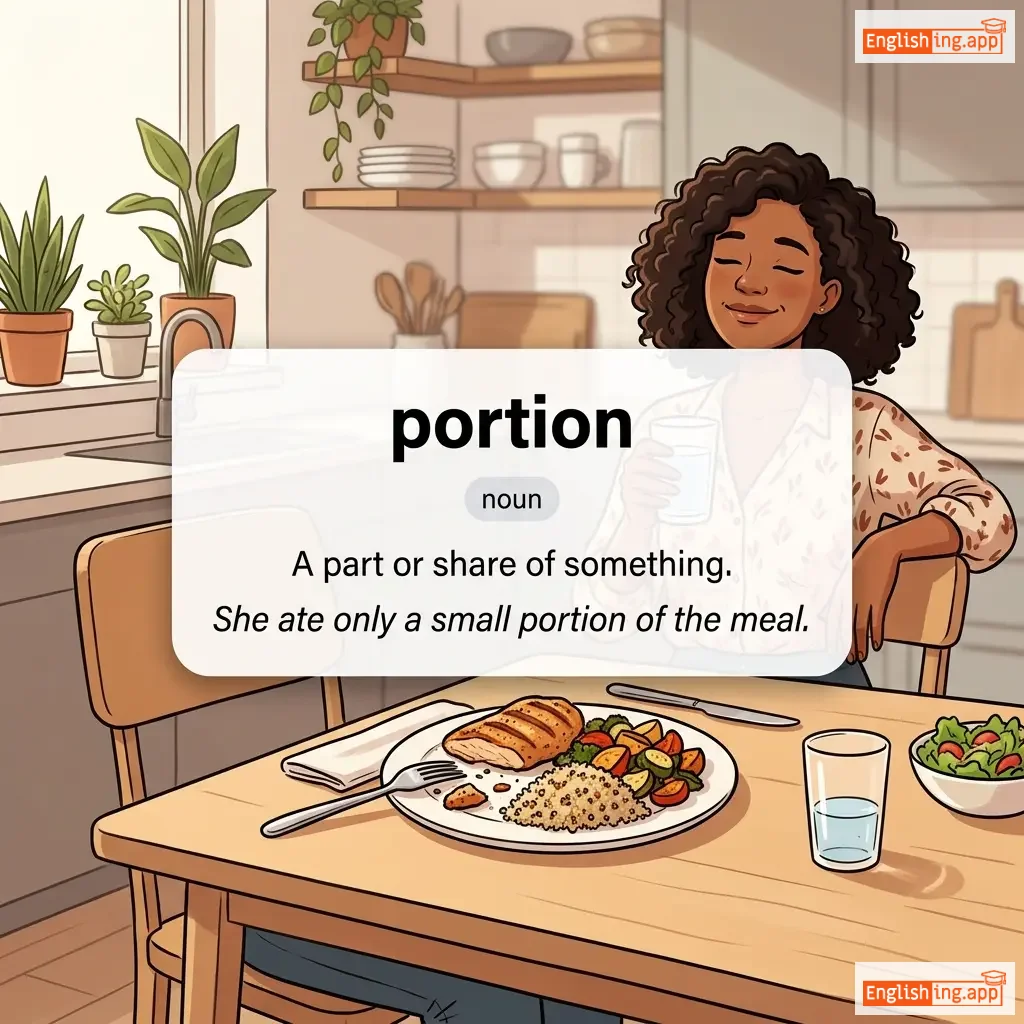
A part or share of something.

"She ate only a small portion of the meal."

"সে খাবারের একটি ছোট অংশই খেয়েছিল।" (Se khabarer ekti choto ongsho-i kheyechhilo.)
adjective
/ˈpɔːrtli/
মোটা-সোটা (portli)

Having a stout or somewhat fat body, often implying dignity or authority.

"The portly man entered the room with confidence."

"পোর্টলি মানুষটি আত্মবিশ্বাস নিয়ে ঘরে প্রবেশ করলেন।" (Portli manushṭi atmobishwas niye ghore probesh korlen.)
portrait definition card — visual illustration of the meaning
noun
/ˈpɔːtrət/
পোর্ট্রেট (portrait)

a painting, drawing, photograph, or engraving of a person, especially one showing the face

"The artist painted a beautiful portrait of his wife."

"শিল্পী তার স্ত্রীর একটি সুন্দর পোর্ট্রেট আঁকলেন।" (Shilpi tar strir ekti sundor portrait aṅklen.)
portray definition card — visual illustration of the meaning
verb
/pɔːˈtreɪ/
বর্ণনা করা (barnona kora)

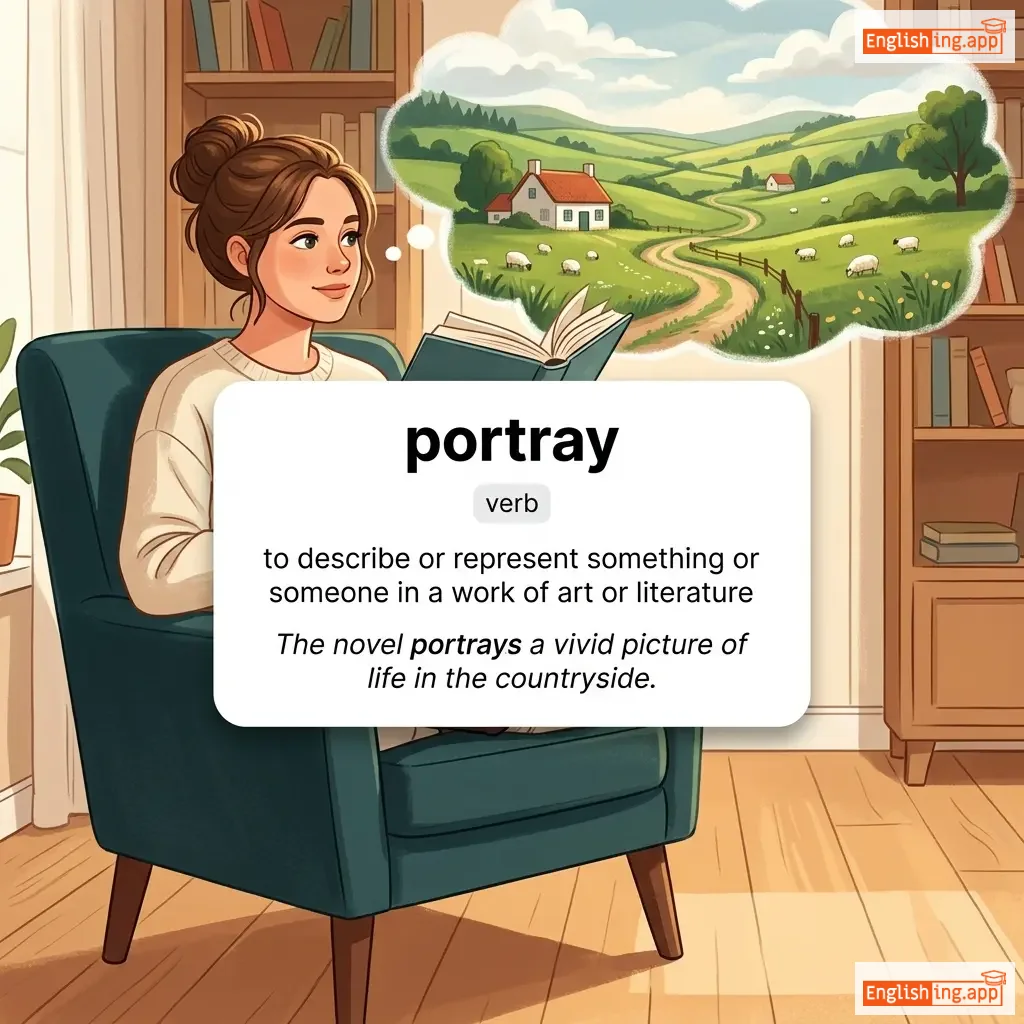
to describe or represent something or someone in a work of art or literature

"The novel portrays a vivid picture of life in the countryside."

"উপন্যাসটি গ্রামাঞ্চলে জীবনের একটি জীবন্ত চিত্র তুলে ধরে।" (Upanyasṭi grāmānchale jībaner ekti jībanto chitra tule dhore.)
verb
/poʊz/
অঙ্গভঙ্গি করা (poj)

To assume a particular position, especially for a photograph or display; to present a problem or question.

"She posed for a picture in front of the monument."

"সে স্মৃতিস্তম্ভের সামনে একটি ছবির জন্য পোজ দিয়েছিল।" (Se smritistombher samne ekti chobir jonno poj diyechhilo.)
noun
/poʊˈzɜːr/
ভণ্ড (pojar)

A person who pretends to be something they are not, often to impress others.

"Many considered him a poseur because he exaggerated his accomplishments."

"অনেকে তাকে ভণ্ড মনে করত কারণ সে তার সাফল্যকে বাড়িয়ে বলত।" (Oneke take bhondo mone korto karon se tar safollo ke barie bolto.)
verb
/ˈpɑːzɪt/
প্রস্তাব করা (pojit)

To assume or suggest something as a fact or basis for reasoning.

"The scientist posited a new theory to explain the phenomenon."

"বিজ্ঞানী ঘটনাটি ব্যাখ্যা করতে একটি নতুন তত্ত্ব প্রস্তাব করেছিলেন।" (Bigyani ghotonati byakkha korte ekti notun tottwo prostab korechhilen.)
position definition card — visual illustration of the meaning
noun
/pəˈzɪʃən/
অবস্থান / পদ (obosthan / podo)

A place, job, or status; the way in which someone or something is placed or arranged.

"She applied for a teaching position at the university."

"সে বিশ্ববিদ্যালয়ে একটি শিক্ষকতার পদে আবেদন করেছিল।" (Se bishwabidyaloye ekti shikhokotar pode abedon korechhilo.)
positive definition card — visual illustration of the meaning
adjective
/ˈpɒzɪtɪv/
ইতিবাচক (itibachok)

Characterized by optimism, certainty, or something favorable.

"She always tries to maintain a positive attitude."

"সে সবসময় ইতিবাচক মনোভাব বজায় রাখার চেষ্টা করে।" (Se sobsomoy itibachok monobhav bojay rakhar cheshta kore.)
noun
/ˈpɒsi/
দল / বন্ধুবৃত্ত (dol / bondhubritto)

A group of people, often friends or a group organized to support or enforce the law.

"He arrived at the party with his posse of friends."

"সে তার বন্ধুদের দল নিয়ে পার্টিতে এসেছিল।" (Se tar bondhuder dol niye partite esechhilo.)
verb
/pəˈzɛs/
অধিকার করা / মালিক হওয়া (odhikar kora / malik howa)

To have or own something; to hold a quality or characteristic.

"She possesses great talent in music."

"সে সঙ্গীতে অসাধারণ প্রতিভার অধিকারী।" (Se shonggite oshadharon protibar odhikari.)
noun
/pəˈzɛʃən/
অধিকার / মালিকানা (odhikar / malikana)

The state of owning, controlling, or holding something.

"The ring was her most valuable possession."

"আংটিটি তার সবচেয়ে মূল্যবান সম্পত্তি ছিল।" (Angtiti tar shobcheye mullyoban sompotti chhilo.)
adjective
/pəˈzɛsɪv/
অধিকারপ্রবণ (odhikarprobon)

Showing a desire to own or control; relating to possession.

"He became very possessive about his old books."

"সে তার পুরোনো বইগুলো নিয়ে খুব অধিকারপ্রবণ হয়ে উঠেছিল।" (Se tar purono boigulo niye khub odhikarprobon hoye uthchhilo.)
noun
/pəˈzɛsər/
অধিকারী (odhikari)

A person who owns or holds something.

"The possessor of the land built a new house."

"ভূমির অধিকারী একটি নতুন বাড়ি তৈরি করল।" (Bhumir odhikari ekti notun bari toiri korlo.)
noun
/ˌpɒsəˈbɪləti/
সম্ভাবনা (sombhabona)

something that may happen or be the case; a chance that something exists or might occur

"There is a strong possibility of rain tomorrow."

"আগামীকাল বৃষ্টির সম্ভাবনা প্রবল।" (Agamikal brishtir sombhabona probol.)
Possible definition card — visual illustration of the meaning
adjective
/ˈpɒsəbl̩/
সম্ভব (sombhob)

Able to be done or achieved.

"Anything is possible if you work hard."

"আপনি কঠোর পরিশ্রম করলে সবই সম্ভব।" (Apni kothor porishrom korle sobi sombhob.)
adverb
/ˈpɒsɪbli/
সম্ভবত (sombhoboto)

maybe, or in a way that is not certain

"It could possibly rain later today."

"এটা সম্ভবত আজ বিকেলে বৃষ্টি হতে পারে।" (Eta sombhoboto aaj bikelay brishti hote pare.)
noun, verb
/pəʊst/
পোস্ট (post)

a job or position, or to send something by mail

"She posted a letter to her friend yesterday."

"সে গতকাল তার বন্ধুকে একটি চিঠি পোস্ট করেছিল।" (Se gôtkal tar bondhuke ekti chithi post korechilo.)
noun
/ˈpoʊst ˌɒfɪs/
ডাকঘর (dakghor)

a public building or agency where mail is sent, received, and other postal services are provided

"I went to the post office to mail a package."

"আমি একটি পার্সেল পাঠাতে ডাকঘরে গিয়েছিলাম।" (ami ekti parsel pathate dakghore giyechhilam)
adjective
/ˌpoʊstˈwɔːr/
যুদ্ধ-পরবর্তী (juddho-poroborti)

relating to the period after a war has ended

"The country experienced rapid economic growth in the post-war years."

"যুদ্ধ-পরবর্তী বছরগুলোতে দেশটি দ্রুত অর্থনৈতিক উন্নতি লাভ করে।" (juddho-poroborti bochorgulote deshti druto orthonoitik unnati labh kore)
verb
/ˌpoʊstˈdeɪt/
পরে তারিখ লেখা (pore tarikh lekha)

To assign a date later than the actual date to a document or event.

"She postdated the check to next month."

"সে চেকটিতে পরের মাসের তারিখ লিখেছিল।" (Se chektite porer maser tarikh likhechhilo.)
poster definition card — visual illustration of the meaning
noun
/ˈpoʊstər/
পোস্টার (postar)

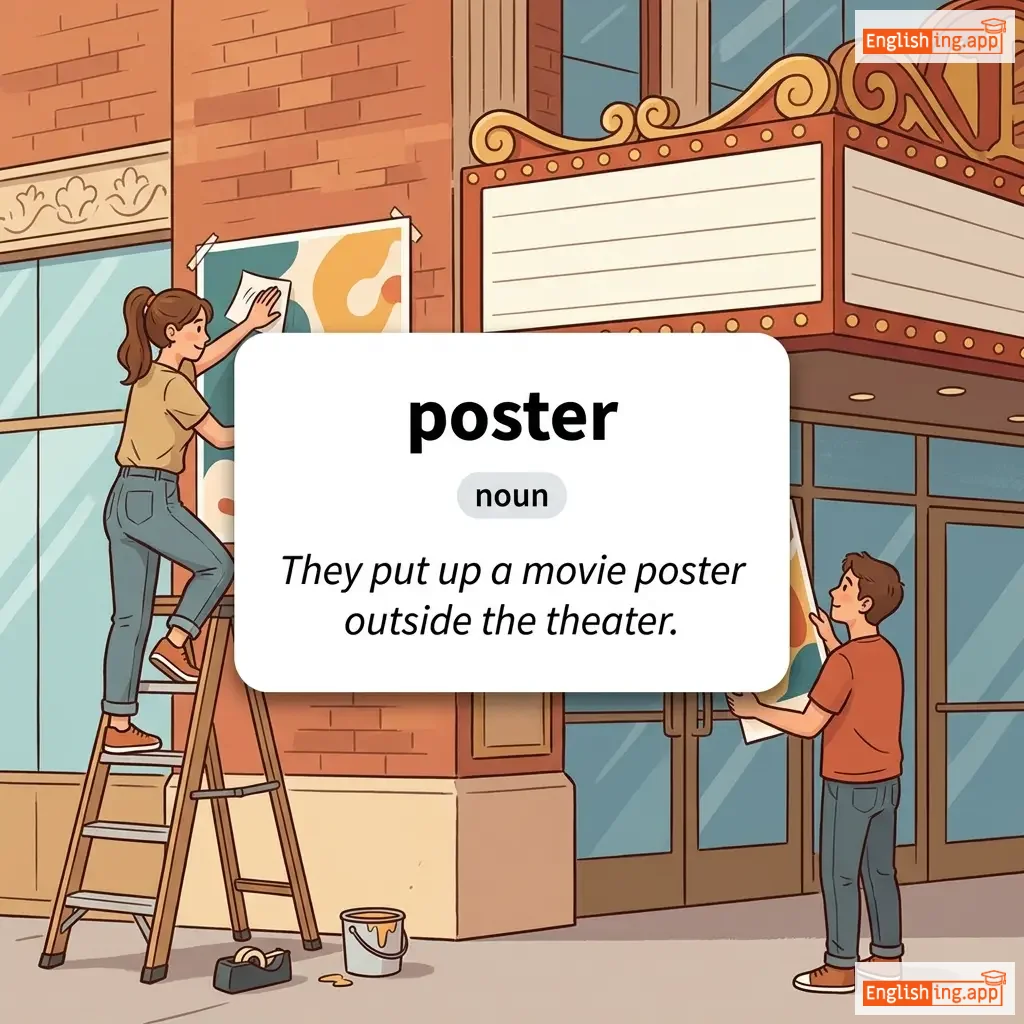
a large printed picture or notice that is put on a wall for decoration or to advertise something

"They put up a movie poster outside the theater."

"তারা সিনেমা হলের বাইরে একটি মুভির পোস্টার টাঙিয়েছিল।" (Tara cinema holer baire ekti mover postar tangiyechhilo.)
adjective
/pɒˈstɪəriər/
পশ্চাৎ (poshchat)

Situated at or toward the back; later in time.

"The posterior part of the brain controls vision."

"মস্তিষ্কের পশ্চাৎ অংশ দৃষ্টি নিয়ন্ত্রণ করে।" (Mostishker poshchat angsho drishti niyontron kore.)
noun
/pɒˈstɛrɪti/
ভবিষ্যৎ প্রজন্ম (vobishshot projonom)

All future generations of people.

"The monument was built for the benefit of posterity."

"স্মৃতিস্তম্ভটি ভবিষ্যৎ প্রজন্মের কল্যাণে নির্মিত হয়েছিল।" (SritistombhoTi vobishshot projonomer kollane nirmito hoyechilo.)
noun, adjective
/ˌpəʊstˈɡrædʒuət/
স্নাতকোত্তর ছাত্র (snatokottor chatro)

A student who has completed a first degree and is studying for a further degree.

"She is doing postgraduate research in physics."

"সে পদার্থবিজ্ঞানে স্নাতকোত্তর গবেষণা করছে।" (Se podartho biggane snatokottor gobeshona korche.)
adjective
/ˈpɒstjʊməs/
মরণোত্তর (moronottor)

Occurring, awarded, or appearing after the death of the originator.

"He received a posthumous award for his bravery."

"তিনি তার সাহসিকতার জন্য মরণোত্তর পুরস্কার পেয়েছিলেন।" (Tini tar sahosikotar jonno moronottor puraskar peyechilen.)
noun, adjective
/ˌpəʊstˈmɔːtəm/
ময়নাতদন্ত (moynatodonto)

An examination of a dead body to determine the cause of death.

"The doctor carried out a postmortem on the body."

"ডাক্তার মৃতদেহে ময়নাতদন্ত করেছিলেন।" (Daktar mrityodehe moynatodonto korechilen.)
verb
/pəʊs(t)ˈpəʊn/
পোস্টপোন করা (postpone kora)

to delay something to a later time

"The meeting was postponed until next week."

"সভার তারিখ পরবর্তী সপ্তাহের জন্য পোস্টপোন করা হয়েছে।" (Sobar tarikh poroborti shoptaher jonno postpone kora hoyechhe.)
adjective
/ˌpəʊstˈprændɪəl/
ভোজনোত্তর (bhojonottor)

Occurring after a meal.

"He went for a postprandial walk after dinner."

"সে রাতের খাবারের পর ভোজনোত্তর হাঁটতে গিয়েছিল।" (Se rater khabarer por bhojonottor hatte giechhilo.)
noun
/ˈpəʊstˌskrɪpt/
পরিশিষ্ট (porishishto)

an additional remark at the end of a letter or text, after the signature

"She added a brief postscript to thank him again."

"সে আবার ধন্যবাদ জানাতে একটি ছোট পরিশিষ্ট যোগ করেছিল।" (Se abar dhonnobad janate ekti choto porishishto jog korechilo.)
postulate definition card — visual illustration of the meaning
verb
/ˈpɒstjʊˌleɪt/
অনুমান করা (onuman kora)

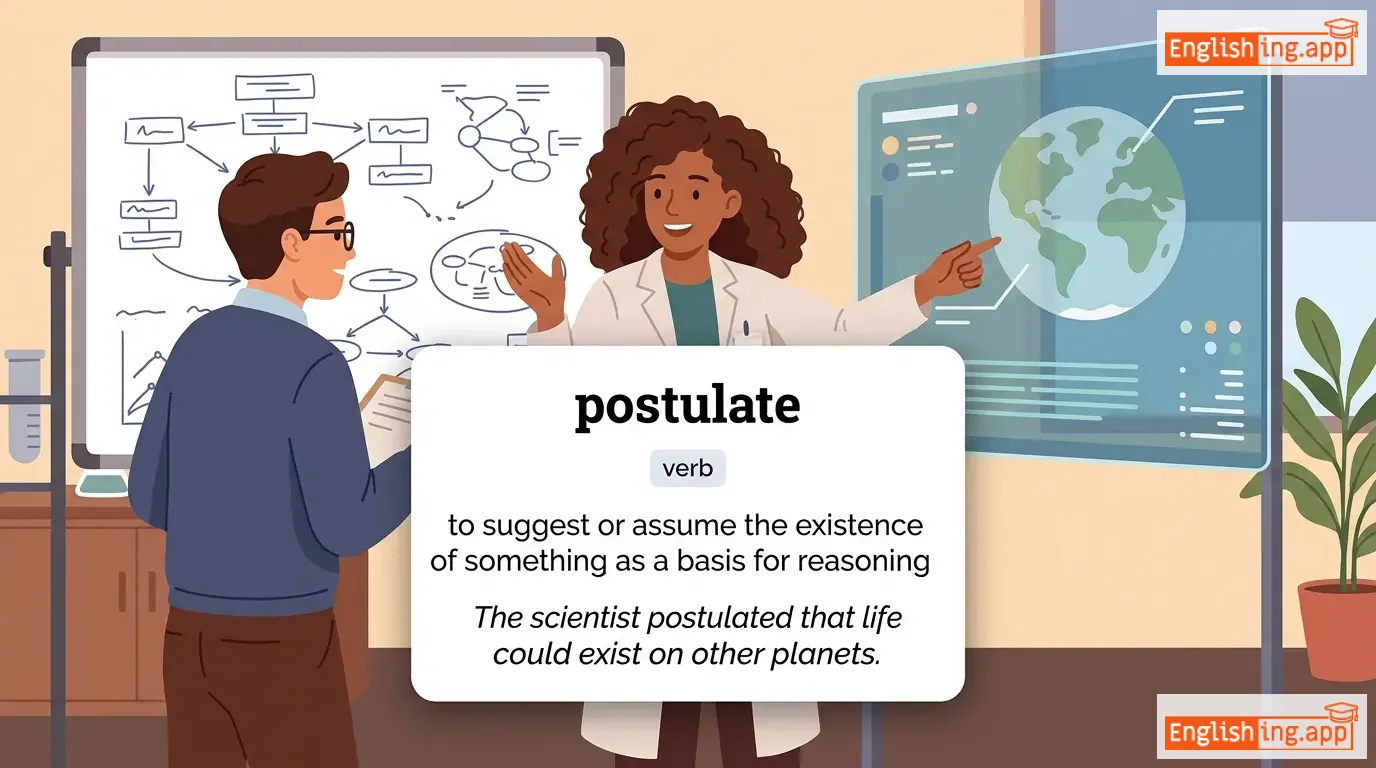
to suggest or assume the existence of something as a basis for reasoning

"The scientist postulated that life could exist on other planets."

"বিজ্ঞানী অনুমান করেছিলেন যে অন্যান্য গ্রহে জীবন থাকতে পারে।" (Biggani onuman korechilen je onnanno grohe jibon thakte pare.)
noun
/ˈpɒstʃə/
অঙ্গবিন্যাস (ongobinash)

the position in which someone holds their body; an attitude or approach

"Good posture helps prevent back pain."

"সঠিক অঙ্গবিন্যাস পিঠের ব্যথা প্রতিরোধে সাহায্য করে।" (Shothik ongobinash pither byatha protiridhe sahajyo kore.)
adjective
/ˈpəʊstwɔːr/
যুদ্ধপরবর্তী (juddho poroborti)

occurring or existing after a war

"The postwar period saw significant economic growth."

"পোস্টওয়ার সময়কালে উল্লেখযোগ্য অর্থনৈতিক বৃদ্ধি দেখা গেছে।" (Postwar somoykale ullikhito orthonaitik briddhi dekha gechhe.)
noun
/pɒt/
পট (pot)

a container, typically round and deep, used for cooking or holding plants

"She put the soup in a pot and set it on the stove."

"সে স্যুপটি একটি পটে রেখেছিল এবং চুলায় সেট করেছিল।" (Se soupṭi ekti pote rekhechilo ebong chulāẏ set korechilo.)
adjective
/ˈpəʊtəbl/
পানযোগ্য (panojoggo)

safe to drink; drinkable

"The villagers did not have access to potable water."

"গ্রামবাসীর পানযোগ্য পানির কোনো প্রবেশাধিকার ছিল না।" (Grambashir panojoggo panir kono probeshadhikar chilo na.)
noun
/pəˈteɪtoʊ/
আলু (alu)

a starchy plant tuber that is a staple food around the world

"We had mashed potato with our dinner."

"আমরা আমাদের রাতের খাবারের সাথে মাশ পটেটো খেয়েছি।" (Amra amader rater khabarer sathe mash potato kheyechi.)
noun
/ˈpɒtˌbɔɪlə/
সস্তা সাহিত্যকর্ম (sosta sahityokormo)

a book, play, or film produced quickly to make money rather than for artistic value

"The novel was dismissed by critics as a mere potboiler."

"সমালোচকরা উপন্যাসটিকে একটি সস্তা সাহিত্যকর্ম হিসেবে খারিজ করেছিলেন।" (Somalochokra uponyastike ekti sosta sahityokormo hisebe kharij korechilen.)
noun
/ˈpoʊtənsi/
ক্ষমতা (khomota)

The power or ability of something to affect or influence; strength or effectiveness.

"The potency of the new medicine amazed the doctors."

"নতুন ওষুধের ক্ষমতা ডাক্তারদের বিস্মিত করেছিল।" (Notun oshudher khomota daktarder bismito korechilo.)
adjective
/ˈpoʊtənt/
শক্তিশালী (shoktishali)

Having great power, influence, or effect.

"This is a very potent drug that should be used carefully."

"এটি একটি খুব শক্তিশালী ওষুধ যা সতর্কভাবে ব্যবহার করা উচিত।" (Eti ekti khub shoktishali oshudh ja sotorkhobabe byabohar kora uchit.)
adjective
/prɪˈhɛnsɪbəl/
ধরা যায় এমন; গ্রাহ্য (dhora jay emon; grahyo)

capable of being grasped or seized

"The tool has a prehensible handle that improves safety."

"যন্ত্রটিতে একটি ধরার উপযোগী হ্যান্ডল আছে যা নিরাপত্তা বাড়ায়।" (Jontrotite ekti dhorar upojogi handle ache ja nirapotta baray.)
noun
/ˈprɛdʒədɪs/
পক্ষপাত (pokkhopat)

An unfair and unreasonable opinion or feeling, especially when formed without enough thought or knowledge.

"Prejudice often prevents people from seeing the truth about others."

"পক্ষপাত প্রায়শই মানুষকে অন্যদের সম্পর্কে সত্য দেখতে বাধা দেয়।" (Pokkhopat prayoshoi manushke onnoder somporke shotto dekhte badha dey.)
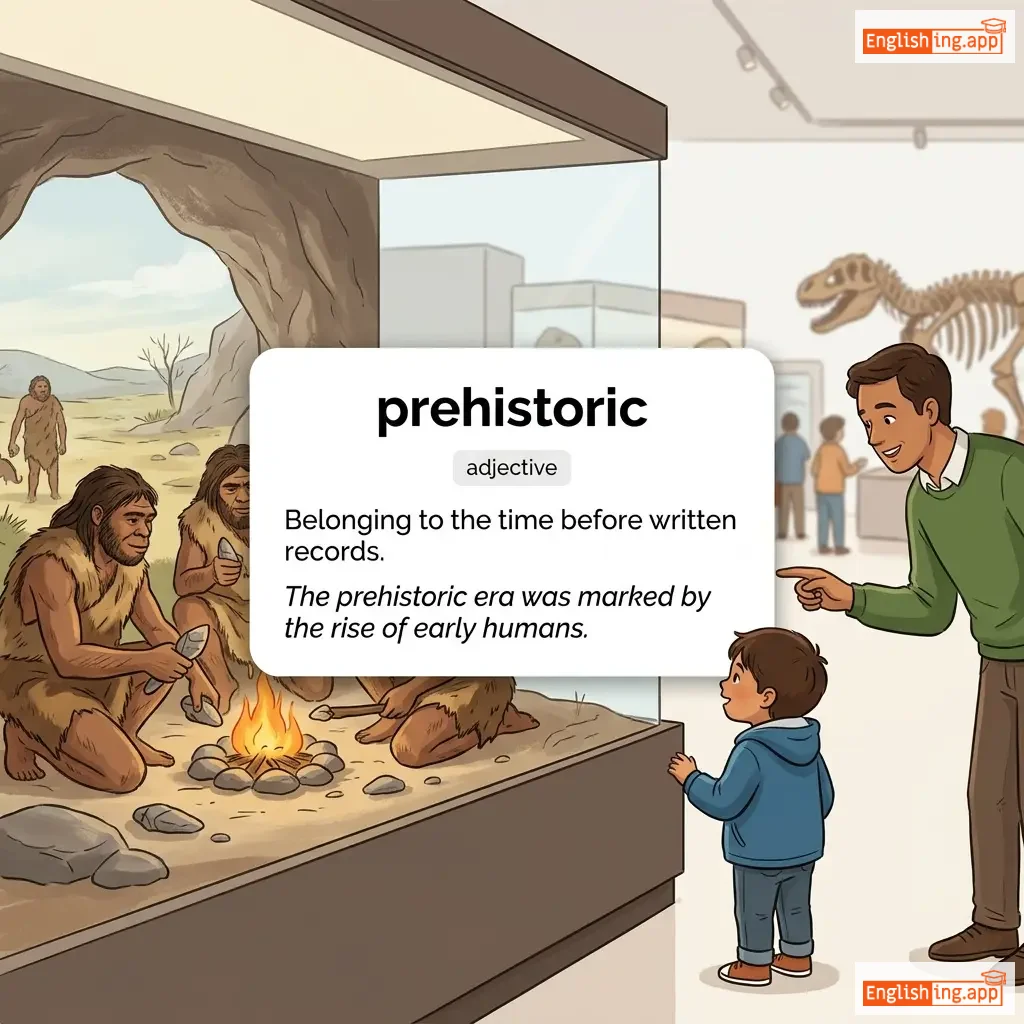
prehistoric definition card — visual illustration of the meaning
adjective
ˌpriːhɪˈstɒrɪk
প্রাগৈতিহাসিক, ইতিহাসের আগের সময়কাল (pragotihasik, itihasher ager shomoykal)

Belonging to the time before written records.

"The prehistoric era was marked by the rise of early humans."

"প্রাগৈতিহাসিক যুগটি প্রাথমিক মানুষের উত্থান দ্বারা চিহ্নিত ছিল।" (Pragotihasik zugti prathomik manusher utthan dwara chihnito chhilo.)
noun
/prɪˈhɛnʃən/
আঁকড়ে ধরা; ধরার ক্ষমতা (ankore dhora; dhorar khomota)

the act of grasping or seizing; the ability to take hold of something

"Therapists assessed the patient's prehension during hand therapy."

"হাতের থেরাপির সময় থেরাপিস্টরা রোগীর ধরার ক্ষমতা মূল্যায়ন করেন।" (Hater therapy r somoy therapist ra rogir dhorar khomota mullyayon koren.)
adjective
/prɪˈhɛnsaɪl/
ধরার উপযোগী; আঁকড়ে ধরতে সক্ষম (dhorar upojogi; ankore dhorte sokkhom)

adapted for seizing or grasping, especially by wrapping around an object

"The monkey used its prehensile tail to hang from the branch."

"বানরটি ডালের সাথে ঝুলতে তার ধরার উপযোগী লেজ ব্যবহার করেছিল।" (Banorti daler sathe jhulte tar dhorar upojogi lej byabohar korechhilo.)
noun
/ˈprɛɡnənsi/
গর্ভাবস্থা (gorbhabastha)

the condition of being pregnant; the period during which a woman carries a developing fetus

"Her pregnancy was carefully monitored by her doctor."

"তার গর্ভাবস্থা তার ডাক্তার দ্বারা সাবধানে মনিটর করা হচ্ছিল।" (Tar gorbhabastha tar daktar dara sabdhane monitor kora hochhilo.)
verb
/priːˈfɪɡjər/
আগাম ইঙ্গিত দেওয়া (agam ingit deowa)

to represent, show, or foreshadow something in advance

"The economic reforms prefigure major social changes."

"অর্থনৈতিক সংস্কার বড় সামাজিক পরিবর্তনের আগাম ইঙ্গিত দেয়।" (Arthonoitik songsar boro samajik poribortoner agam ingit dey.)
noun/verb
/ˈpriːfɪks/
উপসর্গ; আগে বসানো (upsorgo; age bosano)

a word, letter, or number placed before another; as a verb, to add something in front of something else

"Developers often prefix variables with an underscore."

"ডেভেলপাররা প্রায়ই ভেরিয়েবলের আগে আন্ডারস্কোর যোগ করে।" (Developerra prayoi variable er age underscore jog kore.)