ভোকাবুলারিসমূহ

ইংরেজি শব্দের বাংলা অর্থ | English to Bangla Word Meaning Dictionary

adjective
/pʊr/ or /pɔːr/
গরিব (gorib)

Lacking sufficient money, resources, or quality.

"The poor family struggled to buy food."

"গরিব পরিবার খাবার কিনতে সংগ্রাম করেছিল।" (Gorib poribar khabar kinte songram korechilo.)
verb
/pɒp/
ফাটানো (phatano)

to make a short, sharp sound, or to burst or break with such a sound

"The balloon popped when I accidentally pricked it with a pin."

"বেলুনটি ফেটে গিয়েছিল যখন আমি এটি আকস্মিকভাবে একটি পিন দিয়ে ফুটিয়ে দিলাম।" (Belunti phete giyechilo jokhon ami eti aksmikbhabe ekti pin diye phutiye dilam.)
noun
/ˈpɒp.i/
পপি (popi)

a bright red flower with black seeds, often used as a symbol of remembrance

"The red poppy bloomed beautifully in the garden."

"লাল পপি ফুলটি বাগানে সুন্দরভাবে ফুটেছে।" (laal popi phulti bagane shundorbhabe phuteche)
noun
/ˈpɒp.i siːdz/
পোস্তদানা (postodana)

tiny round seeds from the poppy plant used as a spice or garnish in cooking

"Poppy seeds are sprinkled on top of breads and used in Bengali curries."

"পোস্তদানা রুটির উপরে ছিটিয়ে দেওয়া হয় এবং বাঙালি তরকারিতে ব্যবহার করা হয়।" (postodana rutir upore chitiye deoya hoy ebong bangali torkaryte bebhar kora hoy.)
noun
/ˈpɒpjʊləs/
সাধারণ জনগণ (sadharono jonogon)

the general public; the ordinary people living in a country or area

"The new law was welcomed by the local populace."

"নতুন আইনটি স্থানীয় সাধারণ জনগণ দ্বারা স্বাগত জানানো হয়।" (Notun ain-ti sthaniyo sadharono jonogon dwara swagato janano hoy.)
adjective
/ˈpɒpjʊlər/
জনপ্রিয় (jonopriyo)

liked or admired by many people

"She is a popular singer with a huge fan base."

"সে একজন জনপ্রিয় গায়িকা যার বিশাল ফ্যান বেস আছে।" (Se ekjon jonopriyo gaika jar bishal fan bes ache.)
noun
/ˌpɒpjəˈlærəti/
জনপ্রিয়তা (jonopriyota)

the state of being liked, admired, or supported by many people

"The singer gained huge popularity after her new album release."

"গায়িকা তার নতুন অ্যালবাম প্রকাশের পর ব্যাপক জনপ্রিয়তা অর্জন করেন।" (Gayika tar notun album prokash er por byapak jonopriyota orjon koren.)
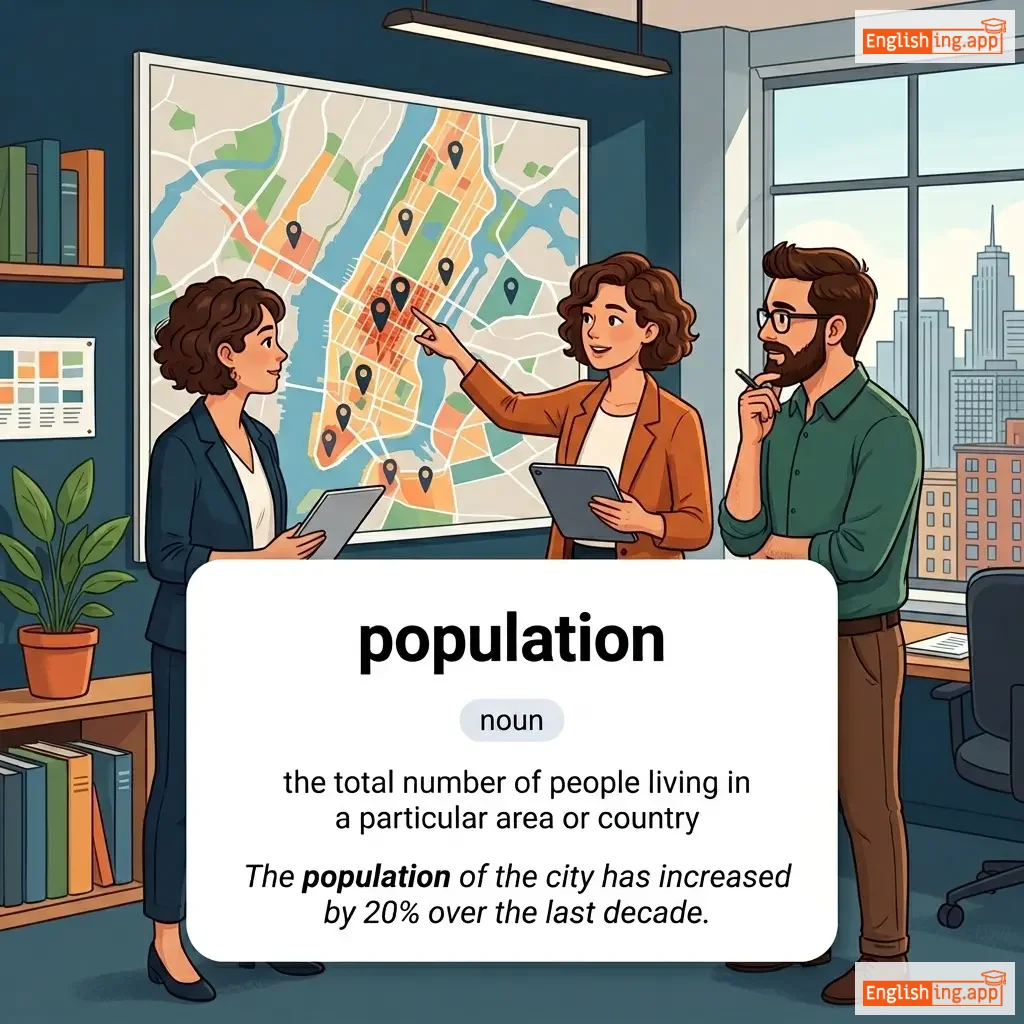
population definition card — visual illustration of the meaning
noun
/ˌpɒpjʊˈleɪʃən/
জনসংখ্যা (jonsongkha)

the total number of people living in a particular area or country

"The population of the city has increased by 20% over the last decade."

"শহরের জনসংখ্যা গত দশকে ২০% বৃদ্ধি পেয়েছে।" (Shohorer jonsongkha gota doshoke 20% briddhi peyechhe.)
noun
/ˈpɒpjʊlɪst/
জনবান্ধব নেতা (jonbandhob neta)

A politician or person who seeks to appeal to ordinary people who feel their concerns are ignored by elites.

"The populist leader promised to put the needs of common citizens first."

"জনবান্ধব নেতা সাধারণ মানুষের চাহিদাকে অগ্রাধিকার দেওয়ার প্রতিশ্রুতি দিয়েছেন।" (Jonbandhob neta samanno manusher chahida ke agrodhikar deowar protishruti diyechen.)
adjective
/ˈpɒpjələs/
জনবহুল (jonobohul)

Having a large population; densely inhabited.

"Dhaka is one of the most populous cities in the world."

"ঢাকা বিশ্বের অন্যতম জনবহুল শহর।" (Dhaka bishwer onnotomo jonobohul shohor.)
noun
/ˈpɔːrsəlɪn/
চীনামাটি (chinamati)

A white, hard ceramic material often used for dishes and ornaments.

"The museum displayed ancient porcelain vases from China."

"মিউজিয়ামে চীনের প্রাচীন চীনামাটির ফুলদানি প্রদর্শিত হয়েছিল।" (Muziume Chiner prachin chinamatir phuldani prodorshito hoyechhilo.)
noun
/pɔːrtʃ/
ভারান্দা (bharanda)

a covered area at the entrance of a building, often with a roof and open sides

"We sat on the porch and enjoyed the evening breeze."

"আমরা ভারান্দায় বসে সন্ধ্যার হাওয়া উপভোগ করেছি।" (Amra bharanday bose sondhya'r hawa upobhog korechi.)
noun
/ˈpɔːr.kjə.paɪn/
সজারু (shojaru)

a large rodent with defensive spines or quills on its body

"The porcupine raised its quills when threatened."

"সজারু হুমকির মুখে তার কাঁটা তুলে ধরেছিল।" (shojaru humkir mukhe tar kata tule dhoreche chilo)
noun/verb
/pɔːr/
ছিদ্র / গভীরভাবে পড়া (chhidro / gobirbhabe pora)

As a noun: a tiny opening in the skin or surface. As a verb: to study something carefully.

"She pored over the documents for hours before making a decision."

"সে সিদ্ধান্ত নেওয়ার আগে ঘন্টার পর ঘন্টা নথিগুলো গভীরভাবে পড়েছিল।" (Se shiddhanto newar age ghontar por ghonta nothigulo gobirbhabe porechhilo.)
noun
/pɔːrk/
শূকরের মাংস (shukorer mangsho)

the flesh of a pig used as food

"He doesn't eat pork for religious reasons."

"ধর্মীয় কারণে সে শূকরের মাংস খায় না।" (Dhormiyo karone se shukorer mangsho khay na.)
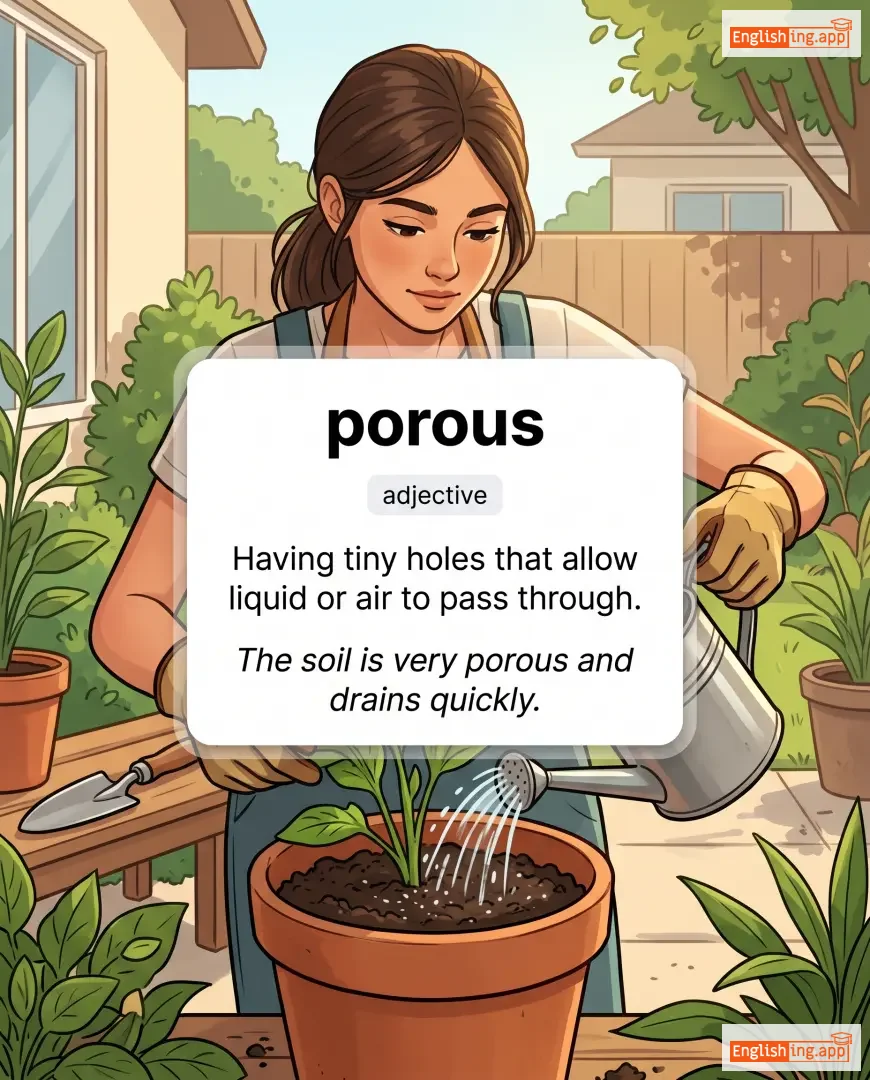
porous definition card — visual illustration of the meaning
adjective
/ˈpɔːrəs/
ছিদ্রযুক্ত (chhidroyukto)

Having tiny holes that allow liquid or air to pass through.

"The soil is very porous and drains quickly."

"মাটি খুব ছিদ্রযুক্ত এবং দ্রুত পানি নিষ্কাশন করে।" (Mati khub chhidroyukto ebong druto pani niskashon kore.)
noun
/ˈpɔːrfəri/
এক ধরনের আগ্নেয় শিলা (ek dhoroner agneya shila)

A hard igneous rock containing crystals, often used for decorative or building purposes.

"The ancient Romans used porphyry to make columns and statues."

"প্রাচীন রোমানরা স্তম্ভ ও মূর্তি তৈরিতে পর্ফিরি ব্যবহার করত।" (Prachin Romanra stombho o murti toirite porphiri byabohar korto.)
noun
/ˈpɔː.pəs/
শুশুক (shushuk)

a small toothed whale with a low triangular dorsal fin and a blunt rounded snout

"The porpoise jumped gracefully out of the water."

"শুশুকটি পানি থেকে অনুগ্রহে লাফিয়ে উঠল।" (shushukṭi pāni theke onugrohe lāphiye uṭholo.)
noun
/ˈpɔːrɪdʒ/
পায়েস বা পাতলা খিচুড়ি (payesh ba patla khichuri)

A soft food made by boiling oats or other grains in milk or water.

"She had a bowl of porridge for breakfast."

"সে নাশতায় এক বাটি পোরিজ খেয়েছিল।" (Se nashtay ek bati porij kheyechhilo.)
Port definition card — visual illustration of the meaning
noun
/pɔːrt/
বন্দর (bondor)

a harbor where ships dock to load and unload goods

"The ship docked at the port after a long voyage."

"জাহাজটি একটি দীর্ঘ যাত্রার পর বন্দরে ডক করেছিল।" (Jahajti ekti dirgho jatrar por bondore dok korechhilo.)
verb
/pɔːrˈtɛnd/
অশনি সংকেত দেওয়া (oshoni sonket deowa)

To be a sign or warning that something, especially something bad, is going to happen.

"Dark clouds portend a storm."

"কালো মেঘ ঝড়ের সংকেত দেয়।" (Kalo megh jhorer sonket dey.)
noun
/ˈpɔːrtɛnt/
অশনি সংকেত (oshoni sonket)

A sign or warning that something, especially something momentous or calamitous, is likely to happen.

"The sudden drop in stock prices was seen as a portent of economic trouble."

"শেয়ারবাজারে হঠাৎ পতন অর্থনৈতিক সমস্যার অশনি সংকেত হিসেবে দেখা হয়েছিল।" (Sheyarbajare hothat poton orthonitik somossar oshoni sonket hisebe dekha hoyechhilo.)
adjective
/pɔːrˈtɛntəs/
অশুভসূচক, ভয়ঙ্কর (oshubhosuchok, voyonkor)

Giving a sign or warning that something, often bad or serious, is going to happen; or overly solemn and pompous.

"His portentous tone made everyone nervous about the news."

"তার অশুভসূচক ভঙ্গি সবাইকে খবর নিয়ে উদ্বিগ্ন করেছিল।" (Tar oshubhosuchok bhongi sobaike khobor niye udbigno korechhilo.)
adjective
/ˌpoʊstˈwɔːr/
যুদ্ধ-পরবর্তী (juddho-poroborti)

relating to the period after a war has ended

"The country experienced rapid economic growth in the post-war years."

"যুদ্ধ-পরবর্তী বছরগুলোতে দেশটি দ্রুত অর্থনৈতিক উন্নতি লাভ করে।" (juddho-poroborti bochorgulote deshti druto orthonoitik unnati labh kore)
adjective
/ˈpoʊtənt/
শক্তিশালী (shoktishali)

Having great power, influence, or effect.

"This is a very potent drug that should be used carefully."

"এটি একটি খুব শক্তিশালী ওষুধ যা সতর্কভাবে ব্যবহার করা উচিত।" (Eti ekti khub shoktishali oshudh ja sotorkhobabe byabohar kora uchit.)
noun
/ˈpoʊtənsi/
ক্ষমতা (khomota)

The power or ability of something to affect or influence; strength or effectiveness.

"The potency of the new medicine amazed the doctors."

"নতুন ওষুধের ক্ষমতা ডাক্তারদের বিস্মিত করেছিল।" (Notun oshudher khomota daktarder bismito korechilo.)
noun
/ˈpɒtˌbɔɪlə/
সস্তা সাহিত্যকর্ম (sosta sahityokormo)

a book, play, or film produced quickly to make money rather than for artistic value

"The novel was dismissed by critics as a mere potboiler."

"সমালোচকরা উপন্যাসটিকে একটি সস্তা সাহিত্যকর্ম হিসেবে খারিজ করেছিলেন।" (Somalochokra uponyastike ekti sosta sahityokormo hisebe kharij korechilen.)
noun
/pəˈteɪtoʊ/
আলু (alu)

a starchy plant tuber that is a staple food around the world

"We had mashed potato with our dinner."

"আমরা আমাদের রাতের খাবারের সাথে মাশ পটেটো খেয়েছি।" (Amra amader rater khabarer sathe mash potato kheyechi.)
adjective
/ˈpəʊtəbl/
পানযোগ্য (panojoggo)

safe to drink; drinkable

"The villagers did not have access to potable water."

"গ্রামবাসীর পানযোগ্য পানির কোনো প্রবেশাধিকার ছিল না।" (Grambashir panojoggo panir kono probeshadhikar chilo na.)
noun
/pɒt/
পট (pot)

a container, typically round and deep, used for cooking or holding plants

"She put the soup in a pot and set it on the stove."

"সে স্যুপটি একটি পটে রেখেছিল এবং চুলায় সেট করেছিল।" (Se soupṭi ekti pote rekhechilo ebong chulāẏ set korechilo.)
adjective
/ˈpəʊstwɔːr/
যুদ্ধপরবর্তী (juddho poroborti)

occurring or existing after a war

"The postwar period saw significant economic growth."

"পোস্টওয়ার সময়কালে উল্লেখযোগ্য অর্থনৈতিক বৃদ্ধি দেখা গেছে।" (Postwar somoykale ullikhito orthonaitik briddhi dekha gechhe.)
noun
/ˈpɒstʃə/
অঙ্গবিন্যাস (ongobinash)

the position in which someone holds their body; an attitude or approach

"Good posture helps prevent back pain."

"সঠিক অঙ্গবিন্যাস পিঠের ব্যথা প্রতিরোধে সাহায্য করে।" (Shothik ongobinash pither byatha protiridhe sahajyo kore.)
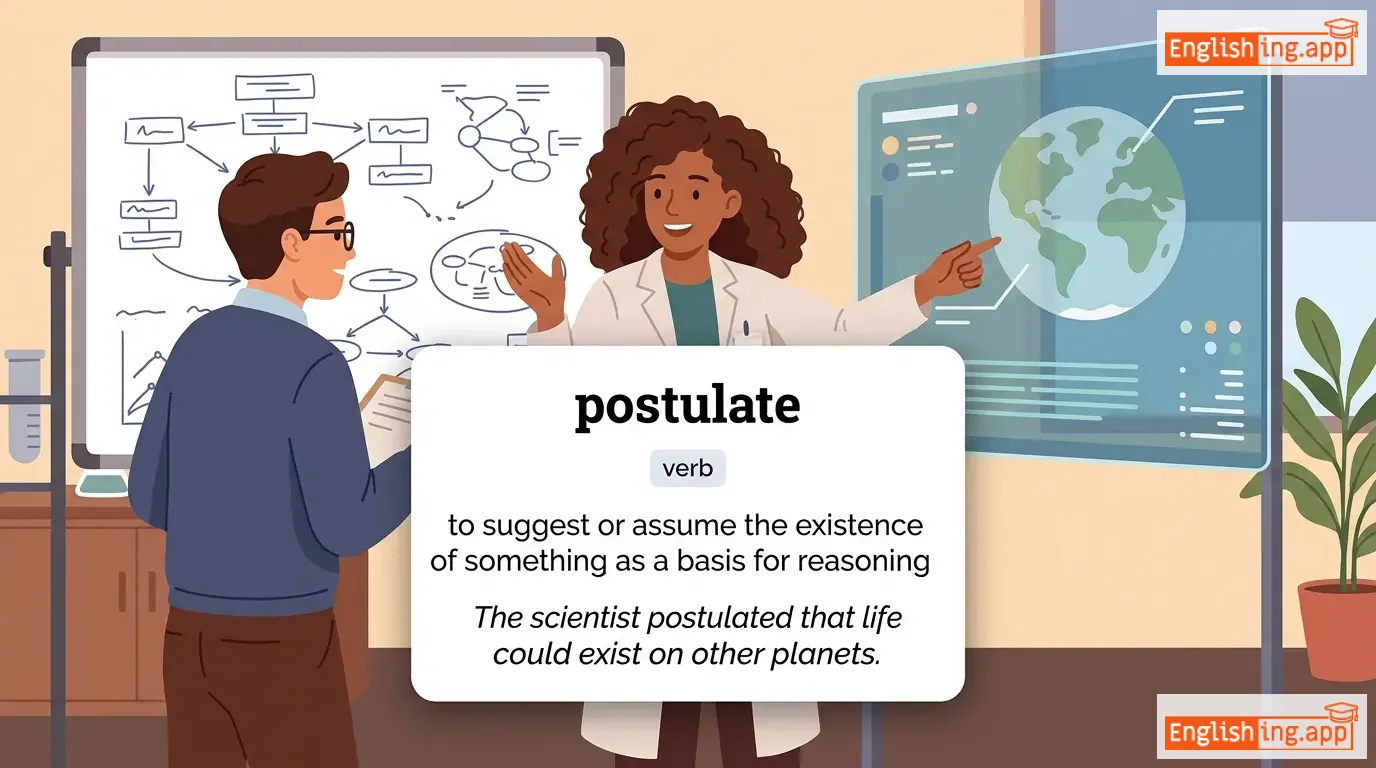
postulate definition card — visual illustration of the meaning
verb
/ˈpɒstjʊˌleɪt/
অনুমান করা (onuman kora)

to suggest or assume the existence of something as a basis for reasoning

"The scientist postulated that life could exist on other planets."

"বিজ্ঞানী অনুমান করেছিলেন যে অন্যান্য গ্রহে জীবন থাকতে পারে।" (Biggani onuman korechilen je onnanno grohe jibon thakte pare.)
noun
/ˈpəʊstˌskrɪpt/
পরিশিষ্ট (porishishto)

an additional remark at the end of a letter or text, after the signature

"She added a brief postscript to thank him again."

"সে আবার ধন্যবাদ জানাতে একটি ছোট পরিশিষ্ট যোগ করেছিল।" (Se abar dhonnobad janate ekti choto porishishto jog korechilo.)
adjective
/ˌpəʊstˈprændɪəl/
ভোজনোত্তর (bhojonottor)

Occurring after a meal.

"He went for a postprandial walk after dinner."

"সে রাতের খাবারের পর ভোজনোত্তর হাঁটতে গিয়েছিল।" (Se rater khabarer por bhojonottor hatte giechhilo.)
verb
/pəʊs(t)ˈpəʊn/
পোস্টপোন করা (postpone kora)

to delay something to a later time

"The meeting was postponed until next week."

"সভার তারিখ পরবর্তী সপ্তাহের জন্য পোস্টপোন করা হয়েছে।" (Sobar tarikh poroborti shoptaher jonno postpone kora hoyechhe.)
noun, adjective
/ˌpəʊstˈmɔːtəm/
ময়নাতদন্ত (moynatodonto)

An examination of a dead body to determine the cause of death.

"The doctor carried out a postmortem on the body."

"ডাক্তার মৃতদেহে ময়নাতদন্ত করেছিলেন।" (Daktar mrityodehe moynatodonto korechilen.)
adjective
/ˈpɒstjʊməs/
মরণোত্তর (moronottor)

Occurring, awarded, or appearing after the death of the originator.

"He received a posthumous award for his bravery."

"তিনি তার সাহসিকতার জন্য মরণোত্তর পুরস্কার পেয়েছিলেন।" (Tini tar sahosikotar jonno moronottor puraskar peyechilen.)
noun, adjective
/ˌpəʊstˈɡrædʒuət/
স্নাতকোত্তর ছাত্র (snatokottor chatro)

A student who has completed a first degree and is studying for a further degree.

"She is doing postgraduate research in physics."

"সে পদার্থবিজ্ঞানে স্নাতকোত্তর গবেষণা করছে।" (Se podartho biggane snatokottor gobeshona korche.)
noun
/pɒˈstɛrɪti/
ভবিষ্যৎ প্রজন্ম (vobishshot projonom)

All future generations of people.

"The monument was built for the benefit of posterity."

"স্মৃতিস্তম্ভটি ভবিষ্যৎ প্রজন্মের কল্যাণে নির্মিত হয়েছিল।" (SritistombhoTi vobishshot projonomer kollane nirmito hoyechilo.)
adjective
/pɒˈstɪəriər/
পশ্চাৎ (poshchat)

Situated at or toward the back; later in time.

"The posterior part of the brain controls vision."

"মস্তিষ্কের পশ্চাৎ অংশ দৃষ্টি নিয়ন্ত্রণ করে।" (Mostishker poshchat angsho drishti niyontron kore.)
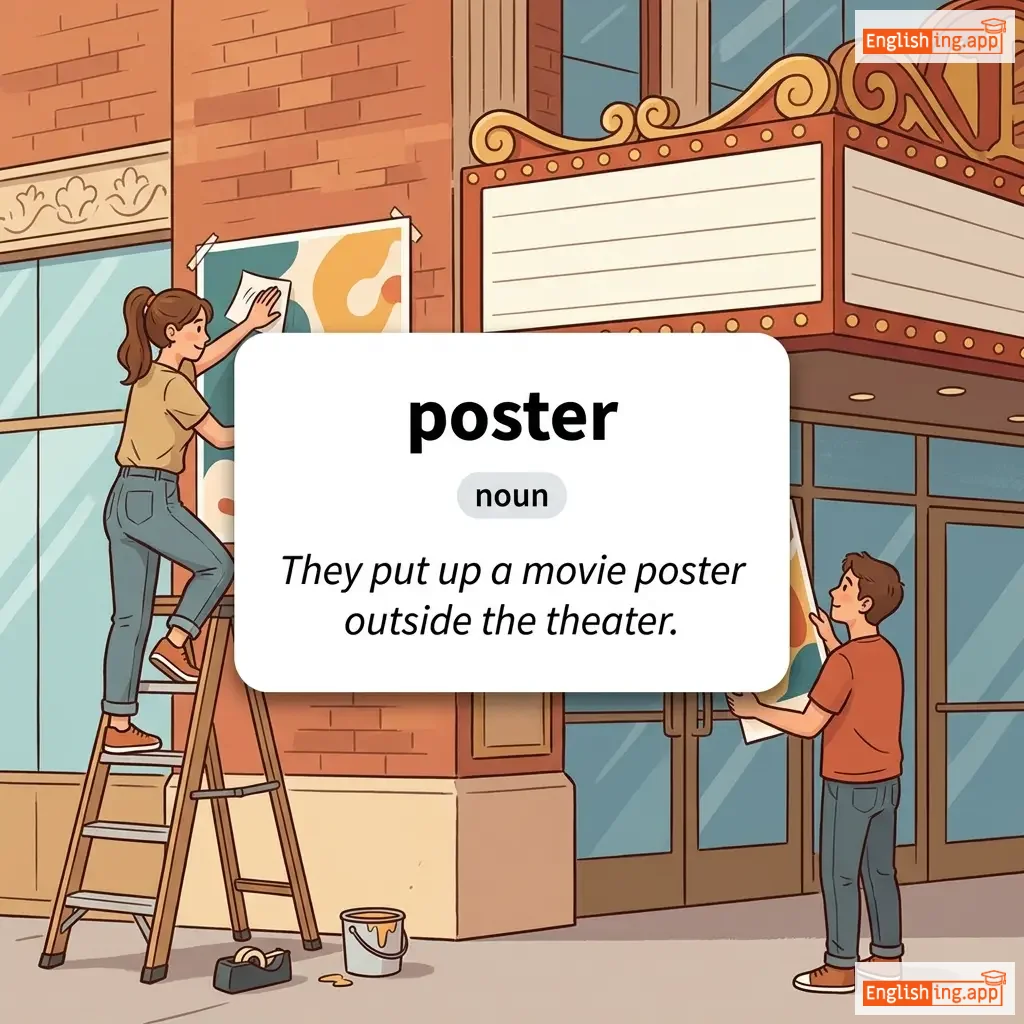
poster definition card — visual illustration of the meaning
noun
/ˈpoʊstər/
পোস্টার (postar)

a large printed picture or notice that is put on a wall for decoration or to advertise something

"They put up a movie poster outside the theater."

"তারা সিনেমা হলের বাইরে একটি মুভির পোস্টার টাঙিয়েছিল।" (Tara cinema holer baire ekti mover postar tangiyechhilo.)
verb
/ˌpoʊstˈdeɪt/
পরে তারিখ লেখা (pore tarikh lekha)

To assign a date later than the actual date to a document or event.

"She postdated the check to next month."

"সে চেকটিতে পরের মাসের তারিখ লিখেছিল।" (Se chektite porer maser tarikh likhechhilo.)
verb
/poʊz/
অঙ্গভঙ্গি করা (poj)

To assume a particular position, especially for a photograph or display; to present a problem or question.

"She posed for a picture in front of the monument."

"সে স্মৃতিস্তম্ভের সামনে একটি ছবির জন্য পোজ দিয়েছিল।" (Se smritistombher samne ekti chobir jonno poj diyechhilo.)
positive definition card — visual illustration of the meaning
adjective
/ˈpɒzɪtɪv/
ইতিবাচক (itibachok)

Characterized by optimism, certainty, or something favorable.

"She always tries to maintain a positive attitude."

"সে সবসময় ইতিবাচক মনোভাব বজায় রাখার চেষ্টা করে।" (Se sobsomoy itibachok monobhav bojay rakhar cheshta kore.)
position definition card — visual illustration of the meaning
noun
/pəˈzɪʃən/
অবস্থান / পদ (obosthan / podo)

A place, job, or status; the way in which someone or something is placed or arranged.

"She applied for a teaching position at the university."

"সে বিশ্ববিদ্যালয়ে একটি শিক্ষকতার পদে আবেদন করেছিল।" (Se bishwabidyaloye ekti shikhokotar pode abedon korechhilo.)
verb
/ˈpɑːzɪt/
প্রস্তাব করা (pojit)

To assume or suggest something as a fact or basis for reasoning.

"The scientist posited a new theory to explain the phenomenon."

"বিজ্ঞানী ঘটনাটি ব্যাখ্যা করতে একটি নতুন তত্ত্ব প্রস্তাব করেছিলেন।" (Bigyani ghotonati byakkha korte ekti notun tottwo prostab korechhilen.)
noun
/poʊˈzɜːr/
ভণ্ড (pojar)

A person who pretends to be something they are not, often to impress others.

"Many considered him a poseur because he exaggerated his accomplishments."

"অনেকে তাকে ভণ্ড মনে করত কারণ সে তার সাফল্যকে বাড়িয়ে বলত।" (Oneke take bhondo mone korto karon se tar safollo ke barie bolto.)
portrait definition card — visual illustration of the meaning
noun
/ˈpɔːtrət/
পোর্ট্রেট (portrait)

a painting, drawing, photograph, or engraving of a person, especially one showing the face

"The artist painted a beautiful portrait of his wife."

"শিল্পী তার স্ত্রীর একটি সুন্দর পোর্ট্রেট আঁকলেন।" (Shilpi tar strir ekti sundor portrait aṅklen.)
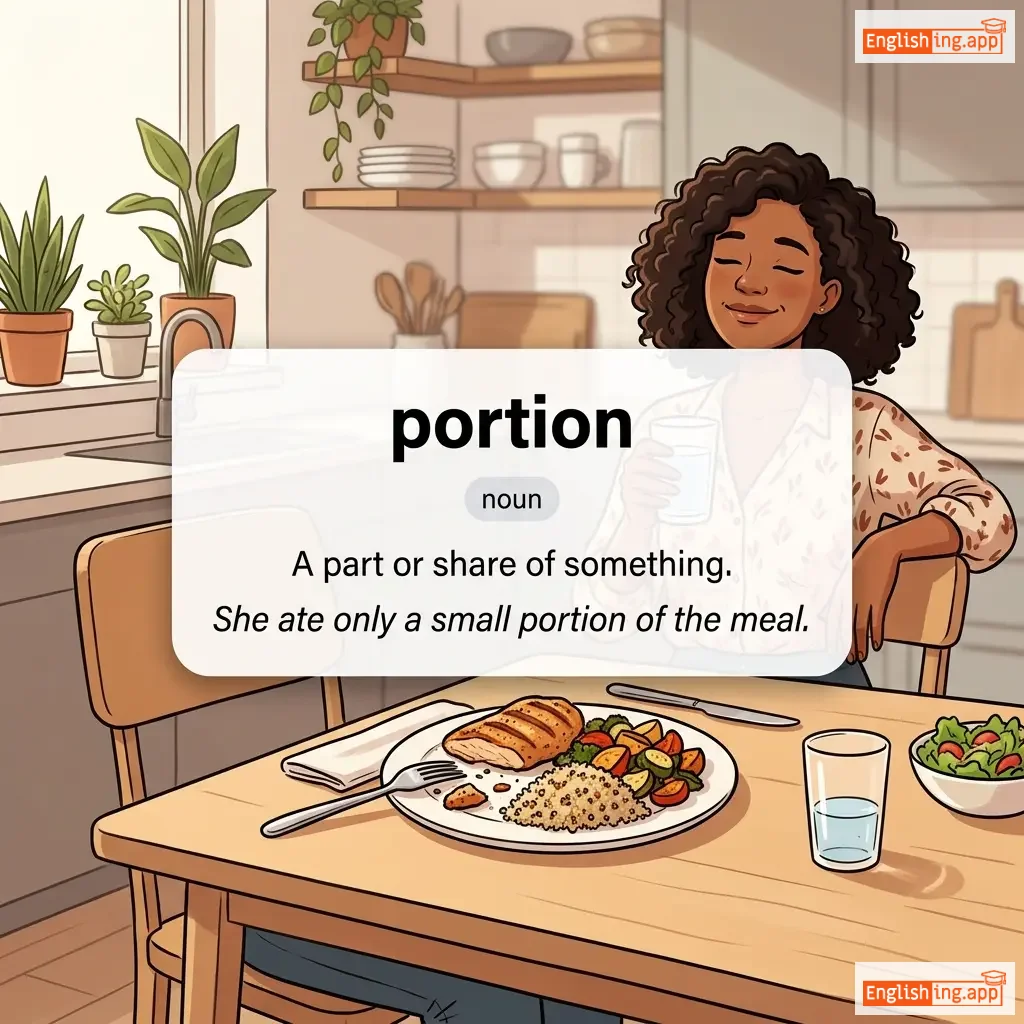
portion definition card — visual illustration of the meaning
noun
/ˈpɔːrʃən/
অংশ (ongsho)

A part or share of something.

"She ate only a small portion of the meal."

"সে খাবারের একটি ছোট অংশই খেয়েছিল।" (Se khabarer ekti choto ongsho-i kheyechhilo.)