語彙集

英単語辞書 | 単語の意味、定義、例文

adjective
/pʊr/ or /pɔːr/
貧しい (mazushii)

Lacking sufficient money, resources, or quality.

"The poor family struggled to buy food."

"貧しい家族は食料を買うのに苦しんでいました。" (mazushii kazoku wa shokuryō o kau noni kurushinde imashita.)
verb
/pɒp/
弾ける (hikeru)

to make a short, sharp sound, or to burst or break with such a sound

"The balloon popped when I accidentally pricked it with a pin."

"風船は、私が間違ってピンで刺したときに破裂しました。" (Fūsen wa, watashi ga machigatte pin de sashita toki ni hakiretsu shimashita.)
noun
/ˈpɒp.i/
ケシの花 (keshi no hana)

a bright red flower with black seeds, often used as a symbol of remembrance

"The red poppy bloomed beautifully in the garden."

"赤いケシの花が庭で美しく咲きました。" (akai keshi no hana ga niwa de utsukushiku sakimashita)
noun
/ˈpɒp.i siːdz/
ケシの実 (keshi no mi)

tiny round seeds from the poppy plant used as a spice or garnish in cooking

"Poppy seeds are sprinkled on top of breads and used in Bengali curries."

"ケシの実はパンの上に振りかけられ、ベンガルカリーに使われます。" (Keshi no mi wa pan no ue ni furikakerare, bengaru karī ni tsukawaremasu.)
noun
/ˈpɒpjʊləs/
住民 (jumins)

the general public; the ordinary people living in a country or area

"The new law was welcomed by the local populace."

"新しい法律は地元の住民によって歓迎されました。" (Atarashī hōritsu wa jimoto no jūmin ni yotte kangei saremashita.)
adjective
/ˈpɒpjʊlər/
人気 (ninki)

liked or admired by many people

"She is a popular singer with a huge fan base."

"彼女は大きなファンベースを持つ人気のある歌手です。" (Kanojo wa ookina fan beesu o motsu ninki no aru kashu desu.)
noun
/ˌpɒpjəˈlærəti/
人気 (ninki)

the state of being liked, admired, or supported by many people

"The singer gained huge popularity after her new album release."
"その歌手は新しいアルバムのリリース後に大きな人気を得ました。" (Sono kashu wa atarashī arubamu no rirīsu go ni ōkina ninki o emashita.)
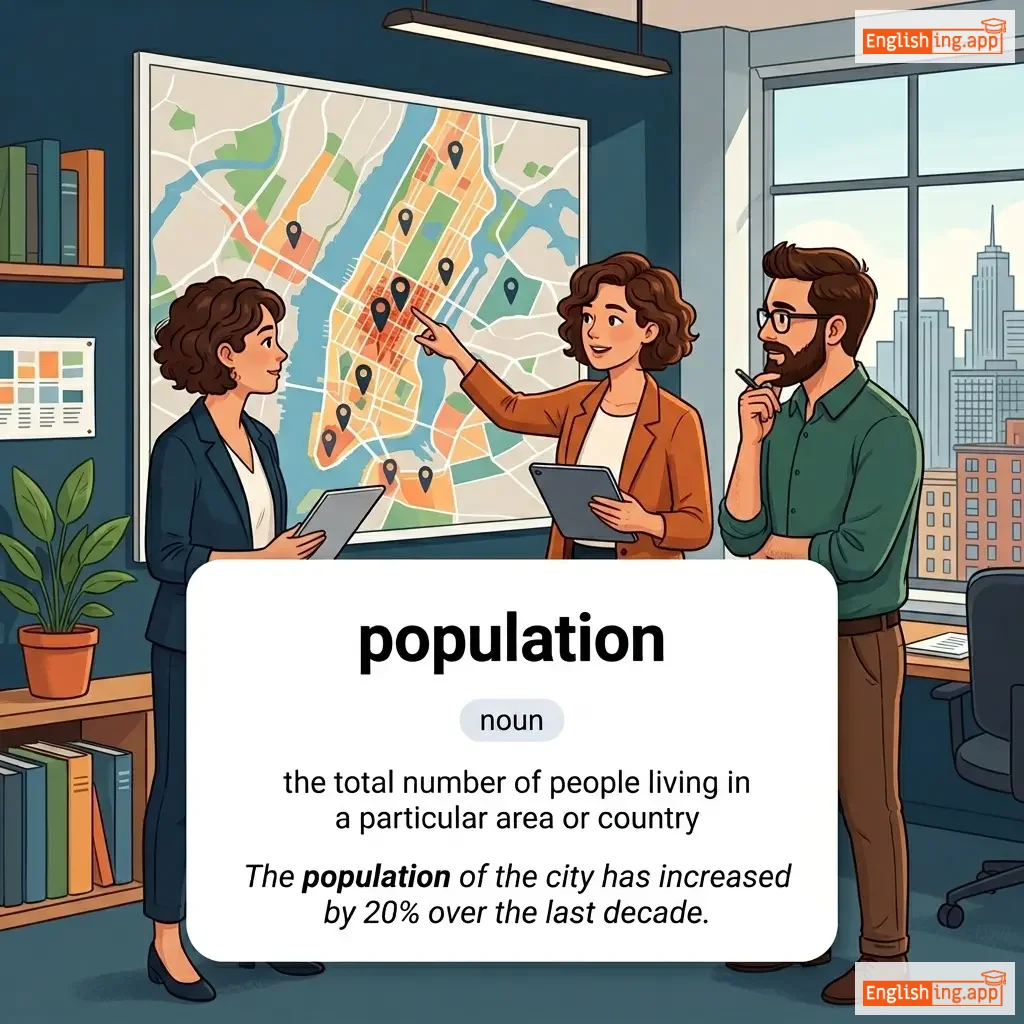
population definition card — visual illustration of the meaning
noun
/ˌpɒpjʊˈleɪʃən/
人口 (jinkou)

the total number of people living in a particular area or country

"The population of the city has increased by 20% over the last decade."

"その都市の人口は過去10年で20%増加しました。" (Sono toshi no jinkou wa kako 10 nen de 20% zouka shimashita.)
noun
/ˈpɒpjʊlɪst/
ポピュリストのリーダー (popyurisuto no rīdā)

A politician or person who seeks to appeal to ordinary people who feel their concerns are ignored by elites.

"The populist leader promised to put the needs of common citizens first."

"ポピュリストのリーダーは、一般市民のニーズを最優先すると約束しました。" (Popyurisuto no rīdā wa, ippan shimin no nīzu o saiyūsen suru to yakusoku shimashita.)
adjective
/ˈpɒpjələs/
人口密度の高い (jinkō mitsudo no takai)

Having a large population; densely inhabited.

"Dhaka is one of the most populous cities in the world."

"東京は世界で最も人口密度の高い都市の一つです。" (Tōkyō wa sekai de mottomo jinkō mitsudo no takai toshi no hitotsu desu.)
noun
/ˈpɔːrsəlɪn/
磁器 (jiki)

A white, hard ceramic material often used for dishes and ornaments.

"The museum displayed ancient porcelain vases from China."

"博物館は中国の古代のポーセリンの花瓶を展示しました。" (Hakubutsukan wa Chūgoku no kodai no pōserin no kabin o tenji shimashita.)
noun
/pɔːrtʃ/
ポーチ (pōchi)

a covered area at the entrance of a building, often with a roof and open sides

"We sat on the porch and enjoyed the evening breeze."

"私たちはポーチに座って、夕方の風を楽しみました。" (Watashitachi wa pōchi ni suwatte, yūgata no kaze o tanoshimimashita.)
noun
/ˈpɔːr.kjə.paɪn/
ヤマアラシ (yama arashi)

a large rodent with defensive spines or quills on its body

"The porcupine raised its quills when threatened."

"ヤマアラシは脅威を感じると針を立てた。" (Yama arashi wa kyōi o kanjiru to hari o tateta.)
noun/verb
/pɔːr/
毛穴 / 注意深く研究する (mōana / chūi fukaku kenkyū suru)

As a noun: a tiny opening in the skin or surface. As a verb: to study something carefully.

"She pored over the documents for hours before making a decision."

"彼女は決定を下す前に何時間も書類をじっくりと読みました。" (Kanojo wa kettei o kudasu mae ni nanjikan mo shorui o jikkuri to yomimashita.)
noun
/pɔːrk/
幸せ (shiawase)

the flesh of a pig used as food

"He doesn't eat pork for religious reasons."
"彼女は賞を受け取ったとき、幸せを隠せませんでした。" (Kanojo wa shō wo uketotta toki, shiawase wo kakusemasen deshita.)
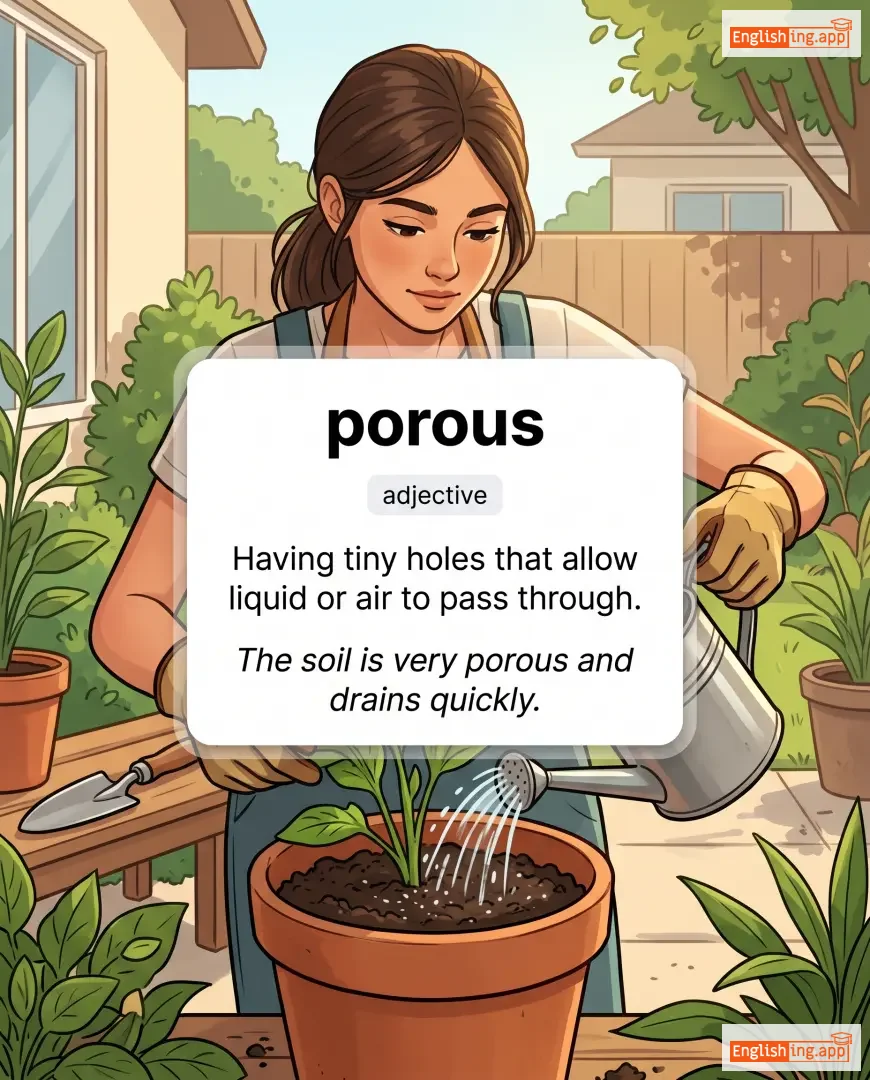
porous definition card — visual illustration of the meaning
adjective
/ˈpɔːrəs/
多孔性の (takōsei no)

Having tiny holes that allow liquid or air to pass through.

"The soil is very porous and drains quickly."

"土壌は非常に多孔性で、すぐに水を排出します。" (Dojō wa hijō ni takōsei de, sugu ni mizu o haishutsu shimasu.)
noun
/ˈpɔːrfəri/
硬い火成岩 (katai kaseigan)

A hard igneous rock containing crystals, often used for decorative or building purposes.

"The ancient Romans used porphyry to make columns and statues."

"古代ローマ人はポルフィリを使って柱や彫像を作った。" (Kodai Rōmajin wa porufiri o tsukatte hashi ya chōzō o tsukutta.)
noun
/ˈpɔː.pəs/
ハクジラ (hakujira)

a small toothed whale with a low triangular dorsal fin and a blunt rounded snout

"The porpoise jumped gracefully out of the water."

"ハクジラは優雅に水から飛び跳ねた。" (Hakujira wa yūga ni mizu kara tobi haneta.)
noun
/ˈpɔːrɪdʒ/

A soft food made by boiling oats or other grains in milk or water.

"She had a bowl of porridge for breakfast."

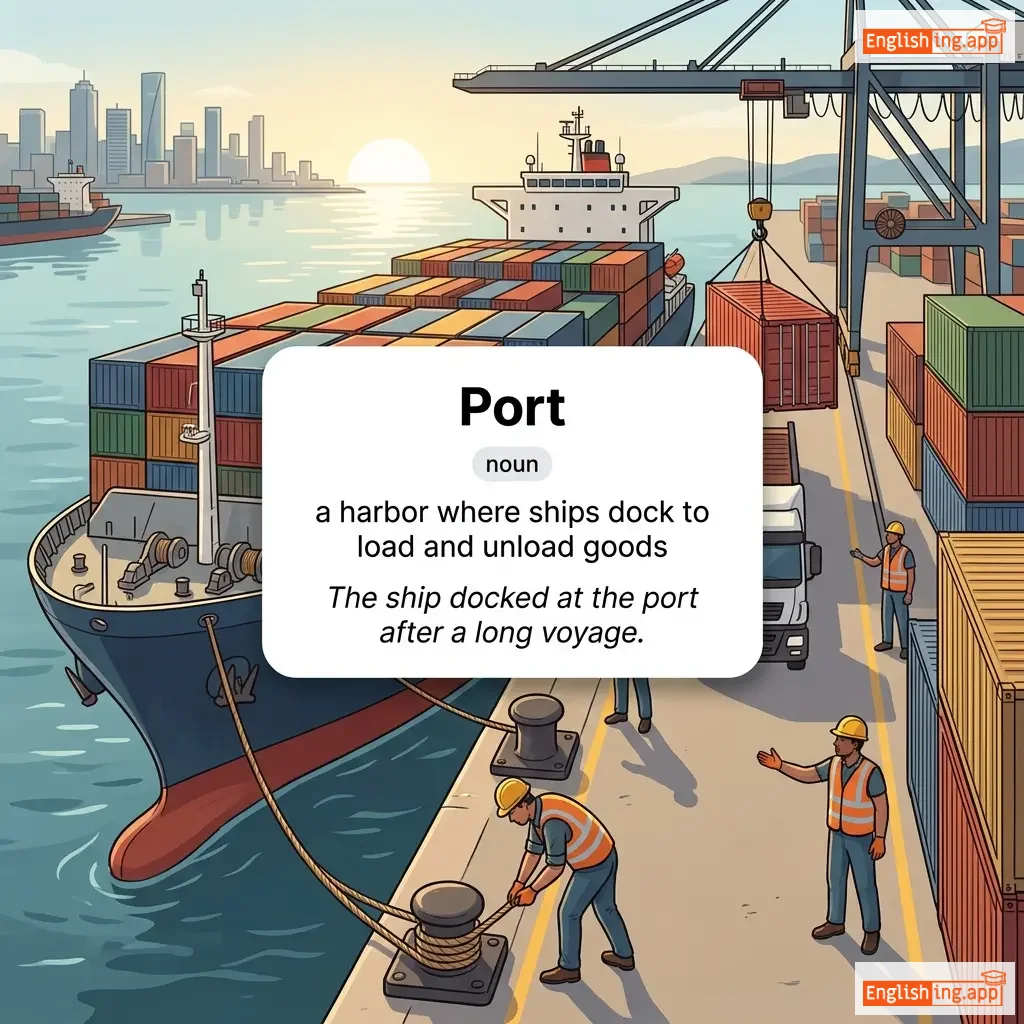
Port definition card — visual illustration of the meaning

Port

noun
/pɔːrt/

a harbor where ships dock to load and unload goods

"The ship docked at the port after a long voyage."

verb
/pɔːrˈtɛnd/
前兆 (zenchou)

To be a sign or warning that something, especially something bad, is going to happen.

"Dark clouds portend a storm."

"暗い雲は嵐を予兆します。" (Kurai kumo wa arashi o yochou shimasu.)
noun
/ˈpɔːrtɛnt/
前兆 (zenchou)

A sign or warning that something, especially something momentous or calamitous, is likely to happen.

"The sudden drop in stock prices was seen as a portent of economic trouble."

"株価の急落は、経済的な問題の前兆として見なされました。" (Kabuka no kyūraku wa, keizaiteki na mondai no zenchou toshite minasaremashita.)
adjective
/pɔːrˈtɛntəs/
前兆的な、重大な (zenjō-tekina, jūdaina)

Giving a sign or warning that something, often bad or serious, is going to happen; or overly solemn and pompous.

"His portentous tone made everyone nervous about the news."

"彼の前兆的な口調は、ニュースについて皆を不安にさせた。" (Kare no zenzō-teki na kuchō wa, nyūsu ni tsuite mina o fuan ni saseta.)
adjective
/ˌpoʊstˈwɔːr/
戦後の (sengo no)

relating to the period after a war has ended

"The country experienced rapid economic growth in the post-war years."

"その国は戦後の時代に急速な経済成長を遂げた。" (sono kuni wa sengo no jidai ni kyuusoku na keizai seichou o togeta)
adjective
/ˈpoʊtənt/
強力 (kyōryoku)

Having great power, influence, or effect.

"This is a very potent drug that should be used carefully."

"これは非常に強力な薬で、慎重に使用する必要があります。" (Kore wa hijō ni kyōryoku na kusuri de, shinchō ni shiyō suru hitsuyō ga arimasu.)
noun
/ˈpoʊtənsi/
効力 (kōryoku)

The power or ability of something to affect or influence; strength or effectiveness.

"The potency of the new medicine amazed the doctors."

"新薬の効力に医者たちは驚きました。" (Shinyaku no kōryoku ni ishatachi wa odorokimashita.)
noun
/ˈpɒtˌbɔɪlə/
安物の作品 (amono no sakuhin)

a book, play, or film produced quickly to make money rather than for artistic value

"The novel was dismissed by critics as a mere potboiler."

"その小説は批評家によってただの安物の作品だと退けられた。" (Sono shōsetsu wa hihyōka ni yotte tada no amono no sakuhin da to shikirerareta.)
noun
/pəˈteɪtoʊ/
ジャガイモ (jagaimo)

a starchy plant tuber that is a staple food around the world

"We had mashed potato with our dinner."

"私たちは夕食にマッシュポテトを食べました。" (Watashitachi wa yūshoku ni masshu poteto o tabemashita.)
adjective
/ˈpəʊtəbl/
飲料水 (inryousui)

safe to drink; drinkable

"The villagers did not have access to potable water."

"村人たちは飲用水へのアクセスがありませんでした。" (Murabito-tachi wa inryousui e no akusesu ga arimasen deshita.)
noun
/pɒt/
ポット (potto)

a container, typically round and deep, used for cooking or holding plants

"She put the soup in a pot and set it on the stove."

"彼女はスープをポットに入れ、それをストーブの上に置きました。" (Kanojo wa sūpu o potto ni irete, sore o sutōbu no ue ni okimashita.)
adjective
/ˈpəʊstwɔːr/
戦後 (sengo)

occurring or existing after a war

"The postwar period saw significant economic growth."

"戦後の時期には、顕著な経済成長が見られました。" (Sengo no jiki ni wa, kencho na keizai seichou ga mirarimashita.)
noun
/ˈpɒstʃə/
幸せ (shiawase)

the position in which someone holds their body; an attitude or approach

"Good posture helps prevent back pain."
"彼女は賞を受け取ったとき、幸せを隠すことができませんでした。" (Kanojo wa shō o uketotta toki, shiawase o kakusu koto ga dekimasen deshita.)
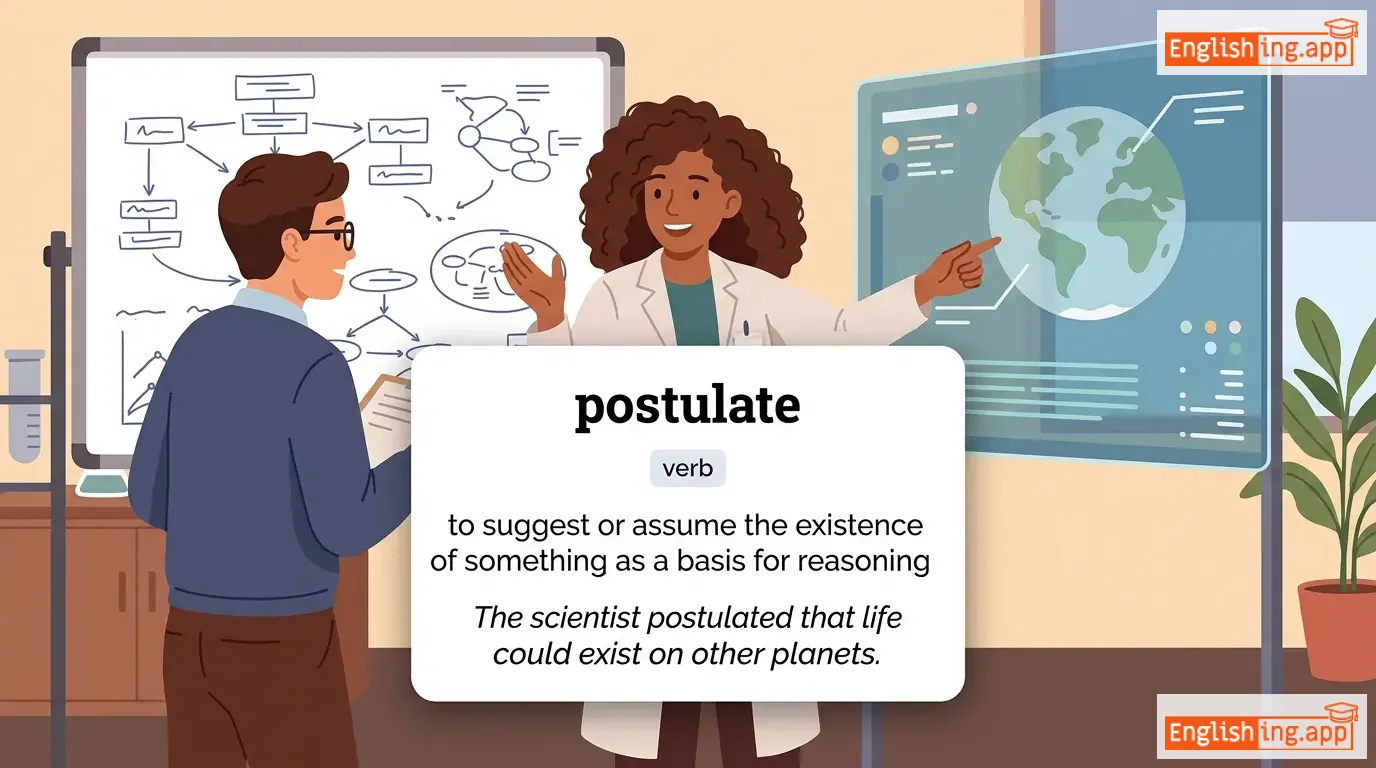
postulate definition card — visual illustration of the meaning
verb
/ˈpɒstjʊˌleɪt/
仮定する (katei suru)

to suggest or assume the existence of something as a basis for reasoning

"The scientist postulated that life could exist on other planets."

"科学者は他の惑星で生命が存在する可能性があると仮定しました。" (Kagakusha wa hoka no wakusei de seimei ga sonzai suru kanōsei ga aru to katei shimashita.)
noun
/ˈpəʊstˌskrɪpt/
追伸 (tsuishin)

an additional remark at the end of a letter or text, after the signature

"She added a brief postscript to thank him again."

"彼女は再度彼に感謝するために簡単な追伸を加えました。" (Kanojo wa saido kare ni kansha suru tame ni kantan na tsuishin o kuwaemashita.)
adjective
/ˌpəʊstˈprændɪəl/
食後 (shokugo)

Occurring after a meal.

"He went for a postprandial walk after dinner."

"彼は夕食後にポストプランディアルウォークに出かけた。" (Kare wa yuushoku go ni postprandial walk ni dekaketa.)
verb
/pəʊs(t)ˈpəʊn/
延期する (enki suru)

to delay something to a later time

"The meeting was postponed until next week."

"会議は来週に延期されました。" (Kaigi wa raishū ni enki saremashita.)
noun, adjective
/ˌpəʊstˈmɔːtəm/
死後解剖 (shigo kaibou)

An examination of a dead body to determine the cause of death.

"The doctor carried out a postmortem on the body."

"医者は死体にポストモーテムを行った。" (Isha wa shitai ni posutomootemu o okonatta.)
adjective
/ˈpɒstjʊməs/
死後の (shigo no)

Occurring, awarded, or appearing after the death of the originator.

"He received a posthumous award for his bravery."

"彼は勇気に対して死後の賞を受けました。" (Kare wa yūki ni taishite shigo no shō o ukemashita.)
noun, adjective
/ˌpəʊstˈɡrædʒuət/
大学院生 (daigakuinsei)

A student who has completed a first degree and is studying for a further degree.

"She is doing postgraduate research in physics."

"彼女は物理学の大学院研究をしています。" (Kanojo wa butsuri-gaku no daigakuin kenkyuu o shiteimasu.)
noun
/pɒˈstɛrɪti/
後世 (kōsei)

All future generations of people.

"The monument was built for the benefit of posterity."

"記念碑は後世のために建てられました。" (Kinenhi wa kōsei no tame ni tateraremashita.)
adjective
/pɒˈstɪəriər/
後部 (kōbu)

Situated at or toward the back; later in time.

"The posterior part of the brain controls vision."
"脳の後部は視覚を制御します。" (Nō no kōbu wa shikaku o seigyo shimasu.)
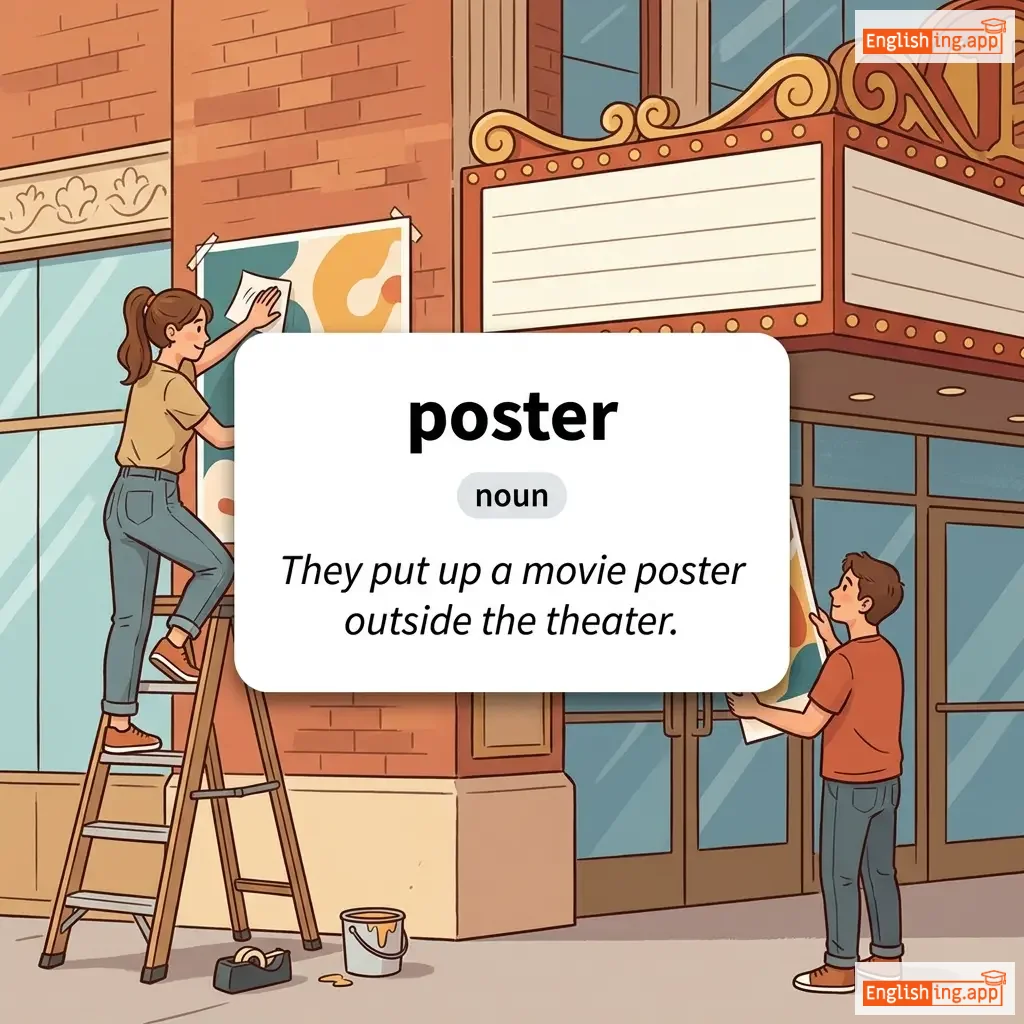
poster definition card — visual illustration of the meaning
noun
/ˈpoʊstər/
ポスター (posutā)

a large printed picture or notice that is put on a wall for decoration or to advertise something

"They put up a movie poster outside the theater."

"彼らは映画館の外に映画のポスターを貼った。" (Karera wa eigakan no soto ni eiga no posutā o hatta.)
verb
/ˌpoʊstˈdeɪt/
後日の日付を記入する (gojitsu no hizuke o kinyū suru)

To assign a date later than the actual date to a document or event.

"She postdated the check to next month."

"彼女は小切手に来月の日付を付けました。" (Kanojo wa kogitte ni raigetsu no hizuke o tsukemashita.)
verb
/poʊz/
幸せ (shiawase)

To assume a particular position, especially for a photograph or display; to present a problem or question.

"She posed for a picture in front of the monument."

"彼女は賞を受け取ったとき、幸せを隠すことができませんでした。" (Kanojo wa shō o uketotta toki, shiawase o kakusu koto ga dekimasen deshita.)
positive definition card — visual illustration of the meaning
adjective
/ˈpɒzɪtɪv/
ポジティブ (pojitibu)

Characterized by optimism, certainty, or something favorable.

"She always tries to maintain a positive attitude."

"彼女はいつもポジティブな態度を保とうとしています。" (Kanojo wa itsumo pojitibu na taido o tamotsu to shiteimasu.)
position definition card — visual illustration of the meaning
noun
/pəˈzɪʃən/
ポジション / 位置 (pojishon / ichi)

A place, job, or status; the way in which someone or something is placed or arranged.

"She applied for a teaching position at the university."

"彼女は大学の教職に応募しました。" (Kanojo wa daigaku no kyōshoku ni ōbo shimashita.)
💡

posit

verb
/ˈpɑːzɪt/

To assume or suggest something as a fact or basis for reasoning.

"The scientist posited a new theory to explain the phenomenon."

noun
/poʊˈzɜːr/

A person who pretends to be something they are not, often to impress others.

"Many considered him a poseur because he exaggerated his accomplishments."

portrait definition card — visual illustration of the meaning
noun
/ˈpɔːtrət/
ポートレート (pōtorēto)

a painting, drawing, photograph, or engraving of a person, especially one showing the face

"The artist painted a beautiful portrait of his wife."
"アーティストは妻の美しいポートレートを描きました。" (Ātisuto wa tsuma no utsukushī pōtorēto o kakimashita.)
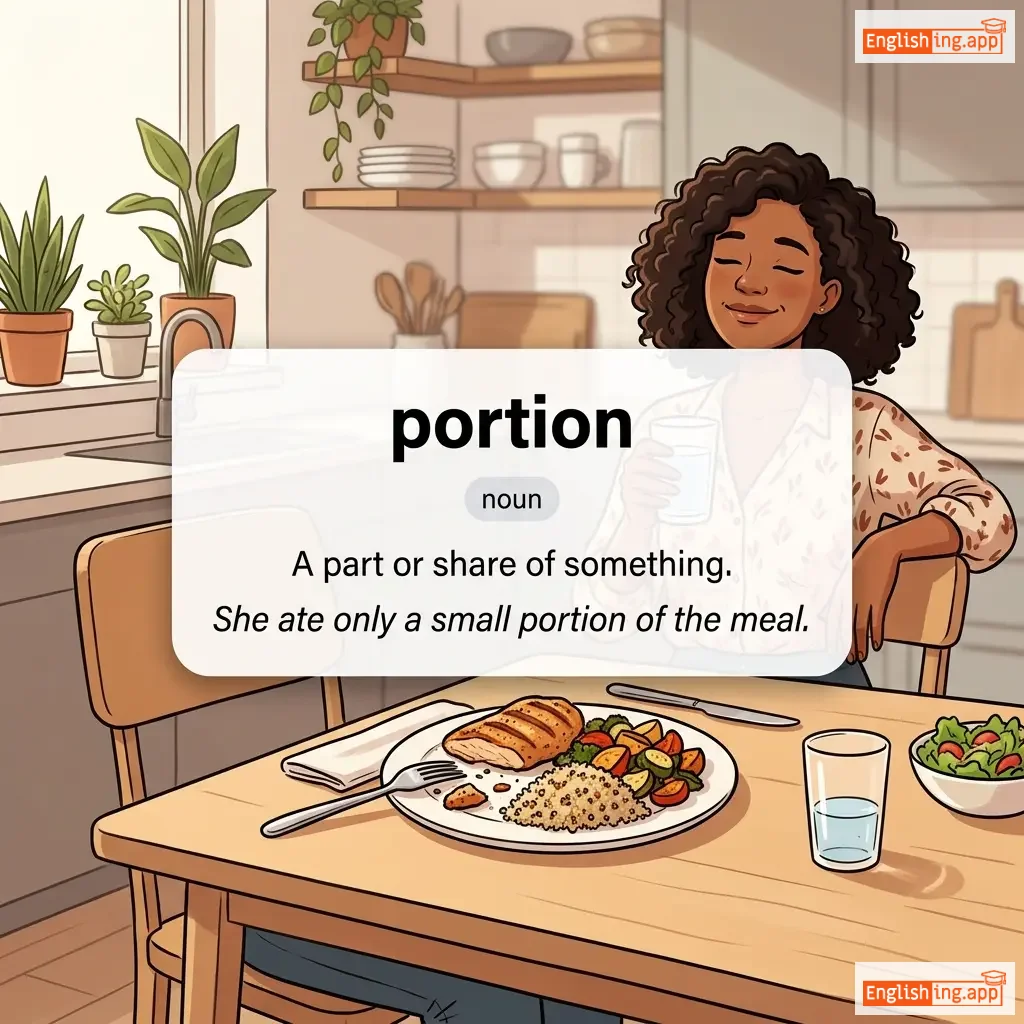
portion definition card — visual illustration of the meaning
noun
/ˈpɔːrʃən/
部分 (bubun)

A part or share of something.

"She ate only a small portion of the meal."

"彼女は食事のほんの一部を食べました。" (Kanojo wa shokuji no honno ichibu o tabemashita.)