語彙集

英単語辞書 | 単語の意味、定義、例文

noun
/ˈprɑsɪˌkjuːtər/
検察官 (kensatsukan)

a lawyer who represents the government in criminal cases

"The prosecutor argued that the defendant was guilty of the crime."

"検察官は被告が犯罪を犯したと主張した。" (Kensatsukan wa hikoku ga hanzai wo okashita to shuchou shita.)
noun
/ˌprɒsɪˈkjuːʃən/
起訴 (kiso)

The act of bringing a criminal charge against someone and pursuing legal action in court.

"The prosecution presented strong evidence against the defendant."

"起訴側は被告人に対して強力な証拠を提出しました。" (Kiso-gawa wa hikokunin ni taishite kyōryoku na shōko o teishutsu shimashita.)
prosecute definition card — visual illustration of the meaning
verb
/ˈprɒsɪkjuːt/
起訴する (kiso suru)

to institute legal proceedings against someone

"The lawyer decided to prosecute the case after gathering sufficient evidence."

"弁護士は十分な証拠を集めた後、訴訟を起こすことを決めました。" (Bengoshi wa jyuubunna shouko wo atsumeta ato, sosou wo okosu koto wo kimemashita.)
noun
/proʊˈskrɪp.ʃən/
禁止 (kinshi)

the act of forbidding something, especially by law

"The proscription of child labor is an important human rights achievement."
"児童労働の禁止は人権の重要な成果です。" (Jidou roudou no kinshi wa jinken no juuyou na seika desu.)
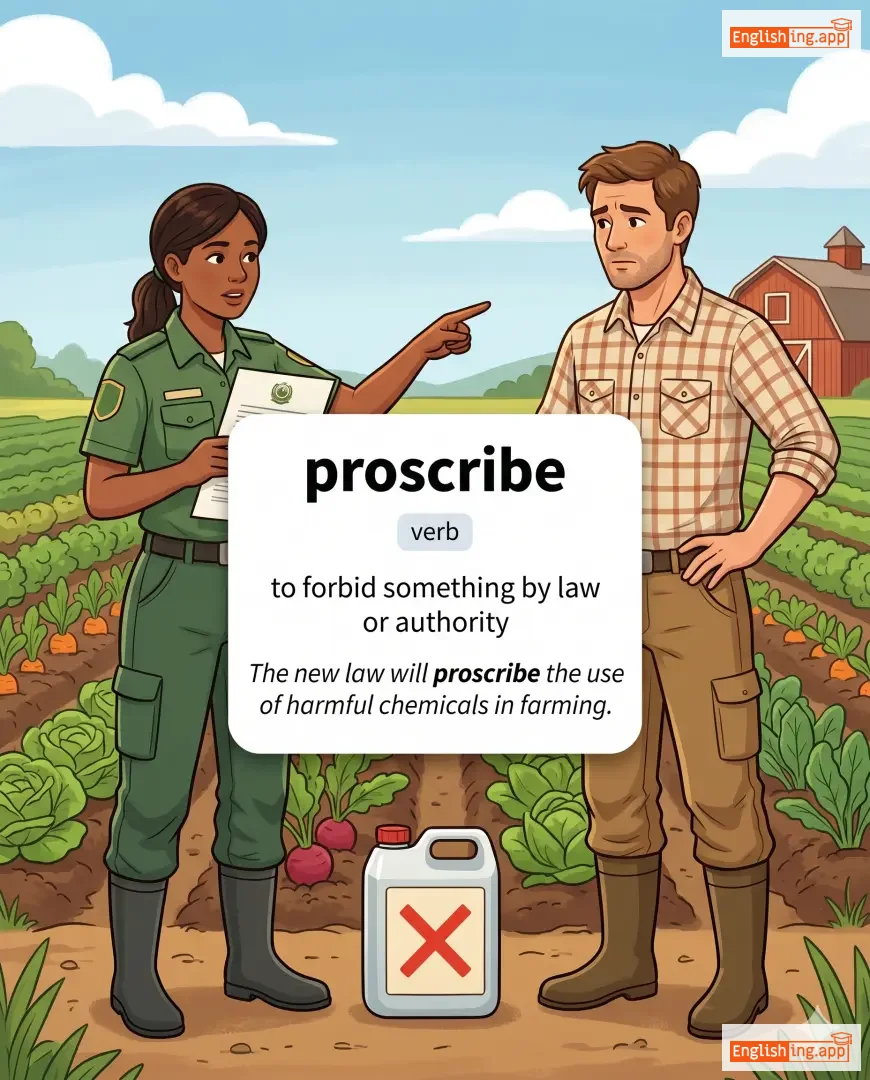
proscribe definition card — visual illustration of the meaning
verb
/proʊˈskraɪb/
禁止する (kinshi suru)

to forbid something by law or authority

"The new law will proscribe the use of harmful chemicals in farming."

"新しい法律は農業で有害な化学物質の使用を禁止します。" (Atarashī hōritsu wa nōgyō de yūgaina kagakubushitsu no shiyō o kinshi shimasu.)
noun
/proʊˈsiː.ni.əm/
プロセニアム (puroseuniamu)

the part of a theater stage in front of the curtain; the arch framing the stage

"The actors bowed at the proscenium before leaving the stage."

"俳優たちは舞台を離れる前にプロセニアムでお辞儀をした。" (Haiyū-tachi wa butai o hanareru mae ni puroseuniamu de ojigi o shita.)
adjective
/proʊˈzeɪ.ɪk/
平凡な (heibon na)

ordinary, dull, or lacking imagination

"The teacher’s explanation was accurate but rather prosaic."

"先生の説明は正確でしたが、かなり平凡でした。" (Sensei no setsumei wa seikaku deshita ga, kanari heibon deshita.)
verb
/prəˈroʊɡ/
議会を延期する (gikai wo enki suru)

to discontinue a session of a parliament or assembly without dissolving it

"The president decided to prorogue parliament until the crisis was resolved."

"大統領は、危機が解決するまで議会を延期することを決定しました。" (Daitouryou wa, kiki ga kaiketsu suru made gikai wo enki suru koto wo kettei shimashita.)
adjective
/prəˈpʌlsɪv/
推進的 (suishinteki)

Having the power to drive or push something forward.

"The propulsive force of the rocket lifted it off the ground."
"ロケットの推進力はそれを地面から持ち上げました。" (Roketto no suishinryoku wa sore o jimen kara mochiagemashita.)
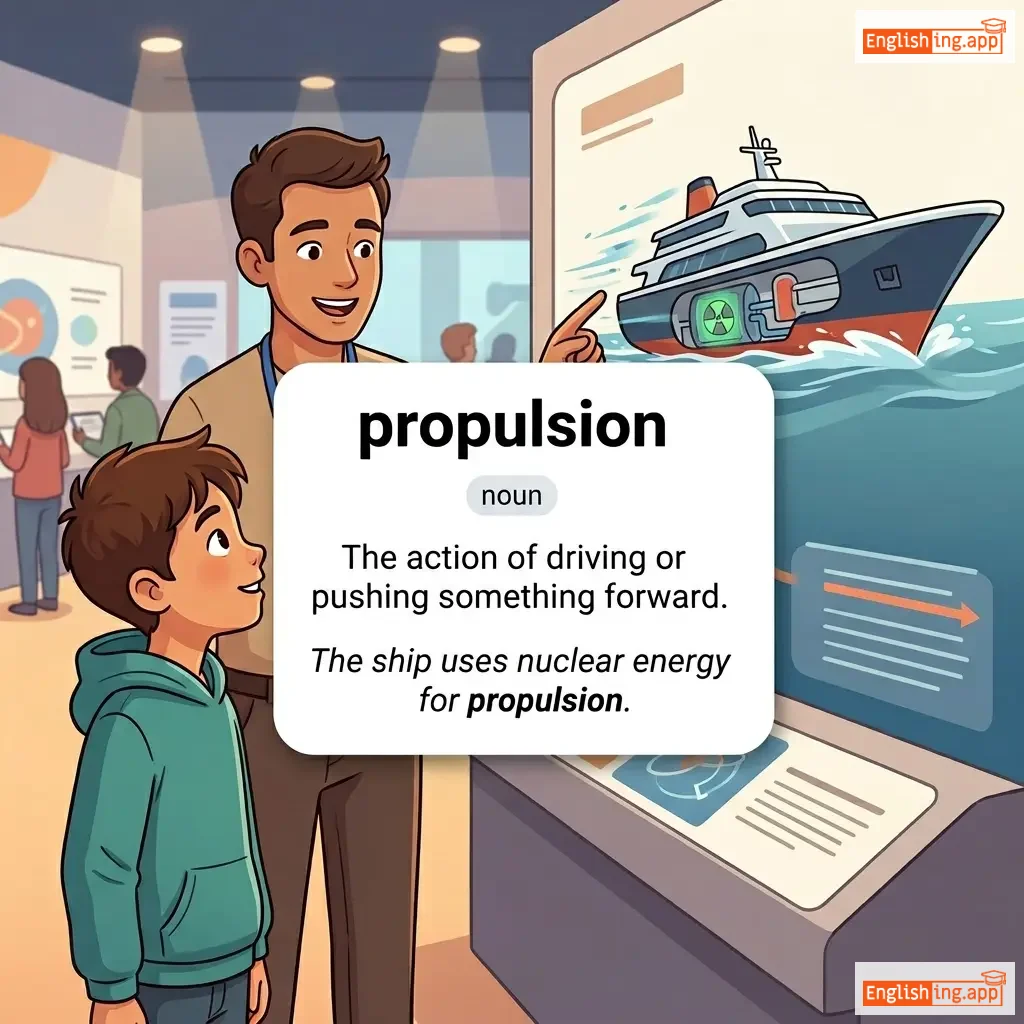
propulsion definition card — visual illustration of the meaning
noun
/prəˈpʌlʃən/
推進力 (suishinryoku)

The action of driving or pushing something forward.

"The ship uses nuclear energy for propulsion."
"その船は推進のために原子力を使用しています。" (Sono fune wa suishin no tame ni genshiryoku o shiyō shiteimasu.)
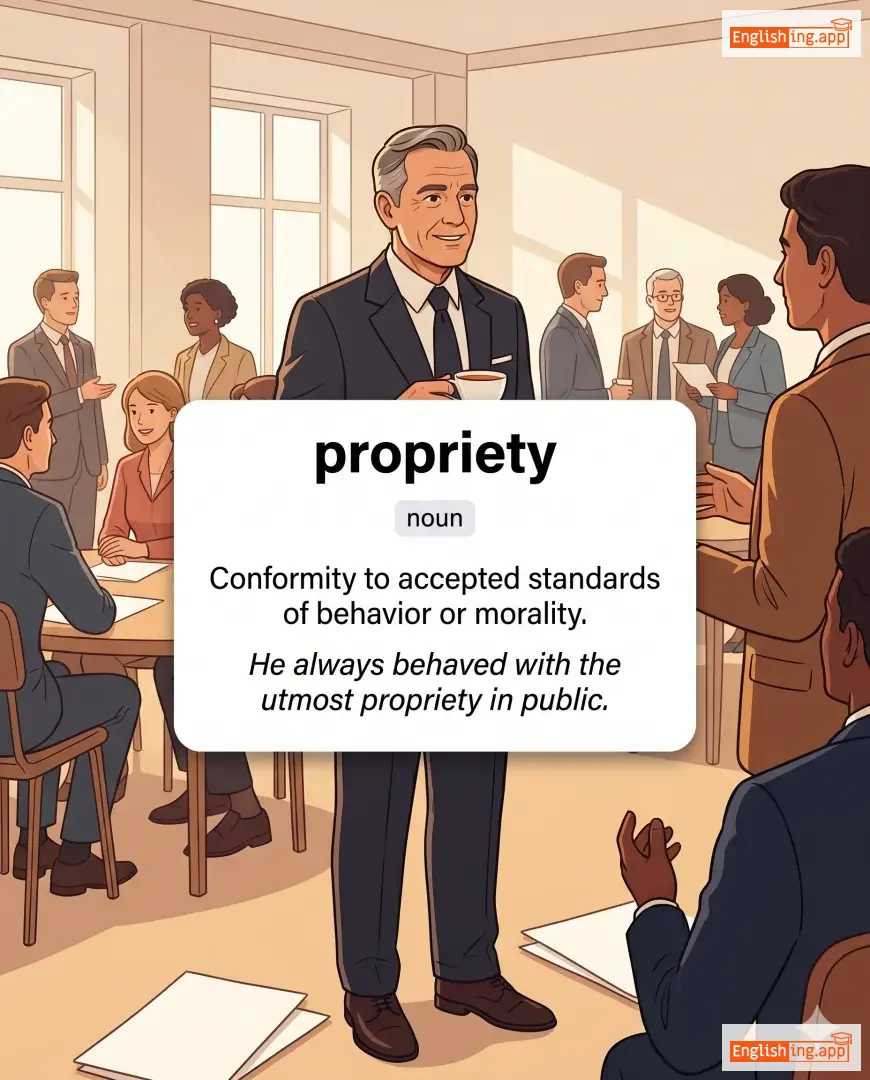
propriety definition card — visual illustration of the meaning
noun
/prəˈpraɪəti/
適切 (tekisetsu)

Conformity to accepted standards of behavior or morality.

"He always behaved with the utmost propriety in public."

"彼は公共の場で常に最大限の適切さを持って振る舞いました。" (Kare wa koukyou no ba de tsune ni saidaigen no tekisetsu-sa wo motte furumaimashita.)
verb
/prəˈpaʊnd/
提案する (teian suru)

To put forward an idea, theory, or point for consideration.

"The professor propounded a new theory on climate change."

"教授は気候変動に関する新しい理論を提案しました。" (Kyouju wa kikou hendou ni kansuru atarashii riron wo teian shimashita.)
noun
/ˌprɒpəˈzɪʃən/
提案, 計画 (teian, keikaku)

A statement, idea, or plan put forward for consideration or discussion.

"The company made a business proposition to the investors."

"会社は投資家にビジネスの提案をしました。" (Kaisha wa tōshika ni bijinesu no teian o shimashita.)
adjective
/prəˈpoʊzd/
提案された (teian sareta)

suggested or put forward for consideration or discussion

"The proposed changes will improve the system."

"提案された変更はシステムを改善します。" (Teian sareta henkō wa shisutemu o kaizen shimasu.)
propose definition card — visual illustration of the meaning
verb
/prəˈpoʊz/
提案する (teian suru)

to suggest a plan or idea for consideration or discussion

"I propose that we meet tomorrow to discuss the project."

"私は明日プロジェクトを話し合うために会うことを提案します。" (Watashi wa ashita purojekuto o hanashiau tame ni au koto o teian shimasu.)
adjective
/prəˈpɔːrʃənət/
比例的な (hireiteki na)

Corresponding in size, degree, or intensity; balanced in relation.

"The punishment should be proportionate to the crime."

"罰は犯罪に比例するべきです。" (Batsu wa hanzai ni hirei suru beki desu.)
proposal definition card — visual illustration of the meaning
noun
/prəˈpəʊzəl/
提案 (teian)

a formal suggestion or plan put forward for consideration or discussion

"She submitted a proposal for the new project to the board."
"彼女は新しいプロジェクトの提案を委員会に提出しました。" (Kanojo wa atarashī purojekuto no teian o iinkai ni teishutsu shimashita.)
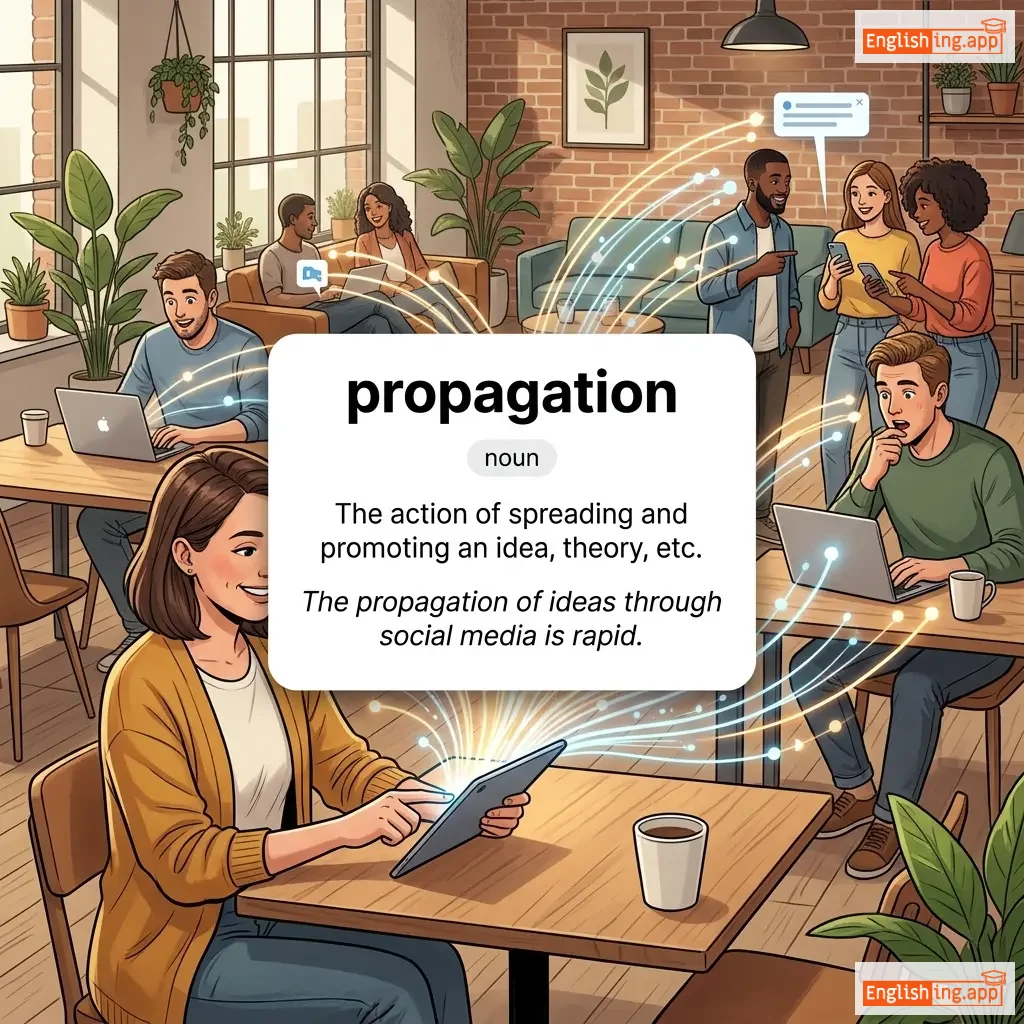
propagation definition card — visual illustration of the meaning
noun
/ˌprɒpəˈɡeɪʃən/
普及, 宣伝 (fukyuu, senden)

The action of spreading and promoting an idea, theory, etc.

"The propagation of ideas through social media is rapid."
"ソーシャルメディアを通じてアイデアの普及が急速に進んでいます。" (Sōsharumedia o tōjite aidea no fukyū ga kyūsoku ni sundeimasu.)
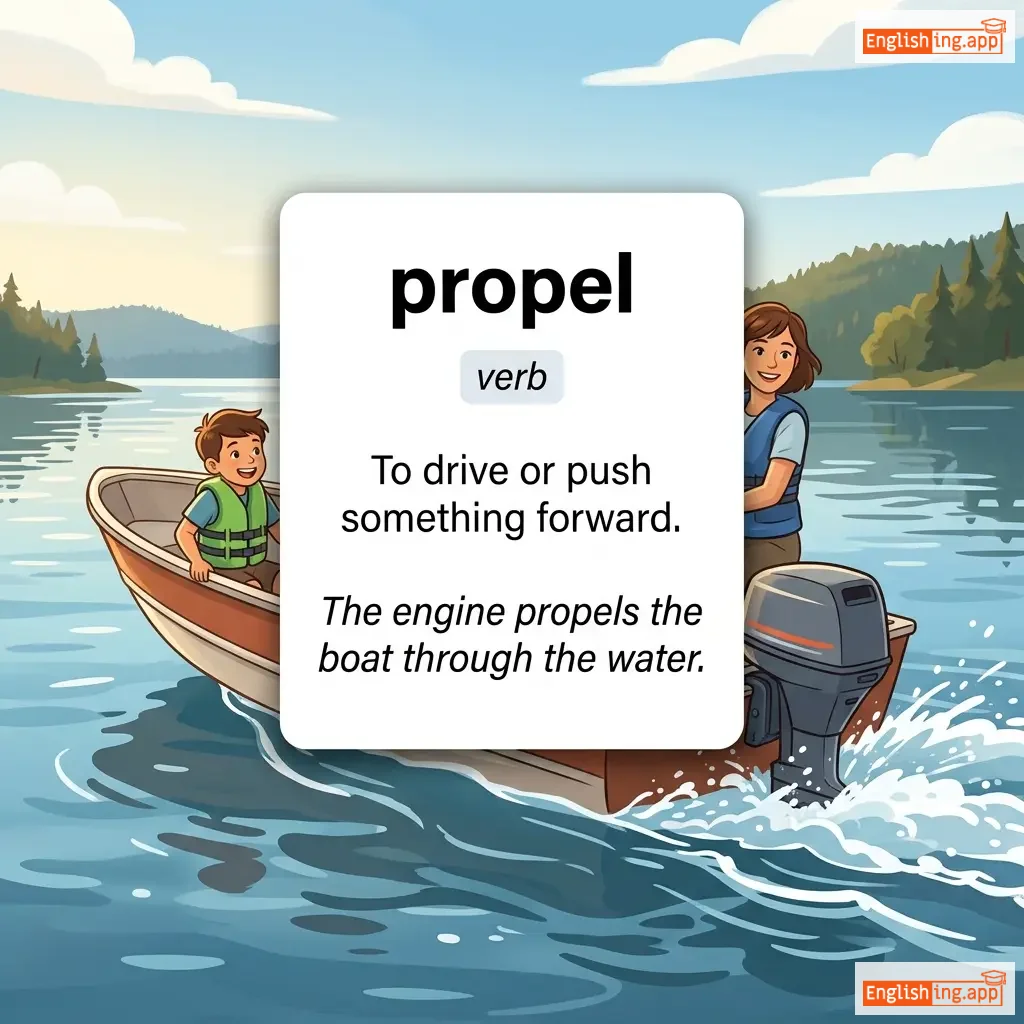
propel definition card — visual illustration of the meaning
verb
/prəˈpɛl/
推進する (suishin suru)

To drive or push something forward.

"The engine propels the boat through the water."

"エンジンはボートを水中で推進します。" (Enjin wa bōto o suichū de suishin shimasu.)
noun
/prəˈpɛlənt/
推進剤 (suishinzai)

A substance that drives or pushes something forward, especially fuel in rockets or engines.

"The rocket uses a liquid propellant to launch into space."

"ロケットは液体推進剤を使用して宇宙に打ち上げられます。" (Roketto wa ekitai suishinzai o shiyō shite uchū ni uchiageraremasu.)
noun
/prəˈpɛlər/
プロペラ (propeller)

A mechanical device with blades that rotates to drive a ship, aircraft, or other vehicle forward.

"The airplane’s propeller cut through the air with great speed."

"飛行機のプロペラは大きな速さで空気を切った。" (Hikōki no propeller wa ōkina hayasa de kūki o kitta.)
propensity definition card — visual illustration of the meaning
noun
/prəˈpɛnsəti/
傾向 (keikou)

a natural tendency or inclination to behave in a particular way

"She has a propensity to trust people too easily."

"彼女は人々をあまりにも簡単に信じる傾向がある。" (Kanojo wa hitobito o amari ni mo kantan ni shinjiru keikou ga aru.)
adjective
/ˈprɒpər/
適切な (tekisetsu na)

conforming to accepted standards of behavior or morality

"He made sure to wear proper attire for the interview."

"彼は面接のために適切な服を着ることを確認しました。" (Kare wa mensetsu no tame ni tekisetsu na fuku o kiru koto o kakunin shimashita.)
adverb
/ˈprɒpərli/
適切に (tekisetsu ni)

in the correct or suitable manner

"He performed the task properly to avoid mistakes."

"彼は間違いを避けるために仕事を正しく行いました。" (Kare wa machigai o sakeru tame ni shigoto o tadashiku okonaimashita.)
noun
/ˈprɒpərti/
財産 (zaisan)

a thing or things that belong to someone; possessions or real estate

"The old mansion is his family’s property."

"その古い屋敷は彼の家族の財産です。" (Sono furui yashiki wa kare no kazoku no zaisan desu.)
verb
/ˈprɒfəsaɪ/
予言する (yogen suru)

to state or predict that something will happen in the future, especially as if divinely inspired

"The monk prophesied that peace would return to the land."

"その僧侶は平和がこの地に戻ると予言した。" (sono sou-ryo wa heiwa ga kono chi ni modoru to yogen shita.)
adjective
/prəˈfɛtɪk/
予言的 (yogen-teki)

accurately predicting or describing what will happen in the future

"His prophetic words came true after many years."

"彼の予言的な言葉は何年も後に現実となった。" (Kare no yogen-teki na kotoba wa nannen mo ato ni genjitsu to natta.)
adjective
/ˌprɒfɪˈlæktɪk/
予防的 (yobōteki)

intended to prevent disease or an unwanted outcome; protective

"The doctor prescribed a prophylactic treatment to prevent infection."

"医師は感染を防ぐために予防的な治療を処方しました。" (Ishi wa kansen o fusegu tame ni yobōteki na chiryō o shohō shimashita.)
noun
/prəˈpɪŋkwɪti/
近接 (kinsetsu)

the state of being close to someone or something; proximity

"The propinquity of their houses made them close friends."
"彼らの家の近接は、彼らを親しい友人にした。" (Karera no ie no kinsetsu wa, karera o shitashī yūjin ni shita.)
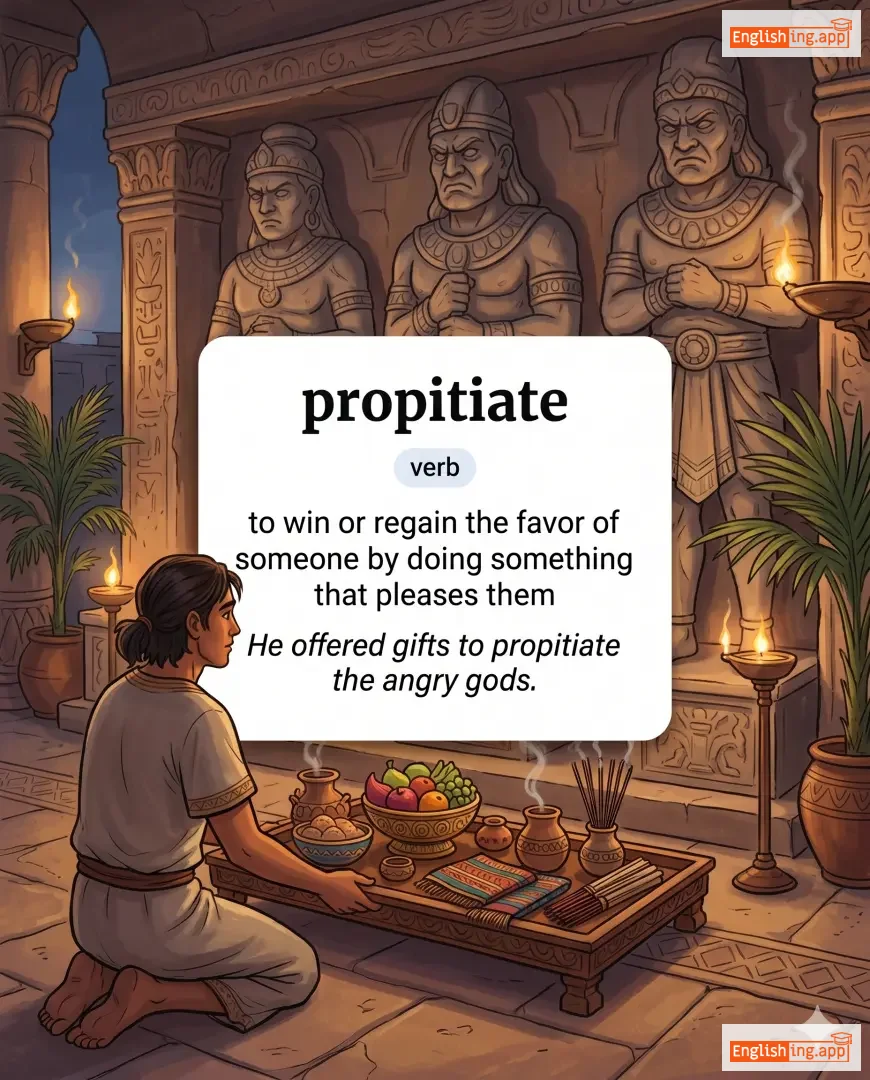
propitiate definition card — visual illustration of the meaning
verb
/prəˈpɪʃieɪt/
なだめる (nadameru)

to win or regain the favor of someone by doing something that pleases them

"He offered gifts to propitiate the angry gods."

"彼は怒った神々をなだめるために贈り物を捧げました。" (Kare wa okotta kamigami o nadameru tame ni okurimono o sasagemashita.)
adjective
/prəˈpɪʃəs/
好ましい (konomashii)

giving or indicating a good chance of success; favorable

"The sunny weather was a propitious start to the picnic."

"晴れた天気はピクニックにとって好ましい始まりでした。" (Hareta tenki wa pikunikku ni totte konomashii hajimari deshita.)
noun
/prəˈpoʊnənt/
支持者, 提案者 (shijisha, teiansha)

a person who advocates for or supports a particular idea, cause, or plan

"She is a strong proponent of renewable energy."

"彼女は再生可能エネルギーの強い支持者です。" (Kanojo wa saisei kanō enerugī no tsuyoi shijisha desu.)
noun
/prəˈpɔːʃən/

a part, share, or number considered in comparative relation to a whole

"The proportion of students passing the exam was high."

noun
/ˈprɒfəsi/
予言 (yogen)

a prediction or message about the future, often believed to be divinely inspired

"The prophecy foretold the rise of a great leader."

"その予言は偉大な指導者の登場を予見していた。" (Sono yogen wa idaina shidōsha no tōjō o yoken shite ita.)
noun
/ˈpɒpjʊləs/
住民 (jumins)

the general public; the ordinary people living in a country or area

"The new law was welcomed by the local populace."

"新しい法律は地元の住民によって歓迎されました。" (Atarashī hōritsu wa jimoto no jūmin ni yotte kangei saremashita.)
adjective
/ˈpɒpjʊlər/
人気 (ninki)

liked or admired by many people

"She is a popular singer with a huge fan base."

"彼女は大きなファンベースを持つ人気のある歌手です。" (Kanojo wa ookina fan beesu o motsu ninki no aru kashu desu.)
noun
/ˌpɒpjəˈlærəti/
人気 (ninki)

the state of being liked, admired, or supported by many people

"The singer gained huge popularity after her new album release."
"その歌手は新しいアルバムのリリース後に大きな人気を得ました。" (Sono kashu wa atarashī arubamu no rirīsu go ni ōkina ninki o emashita.)
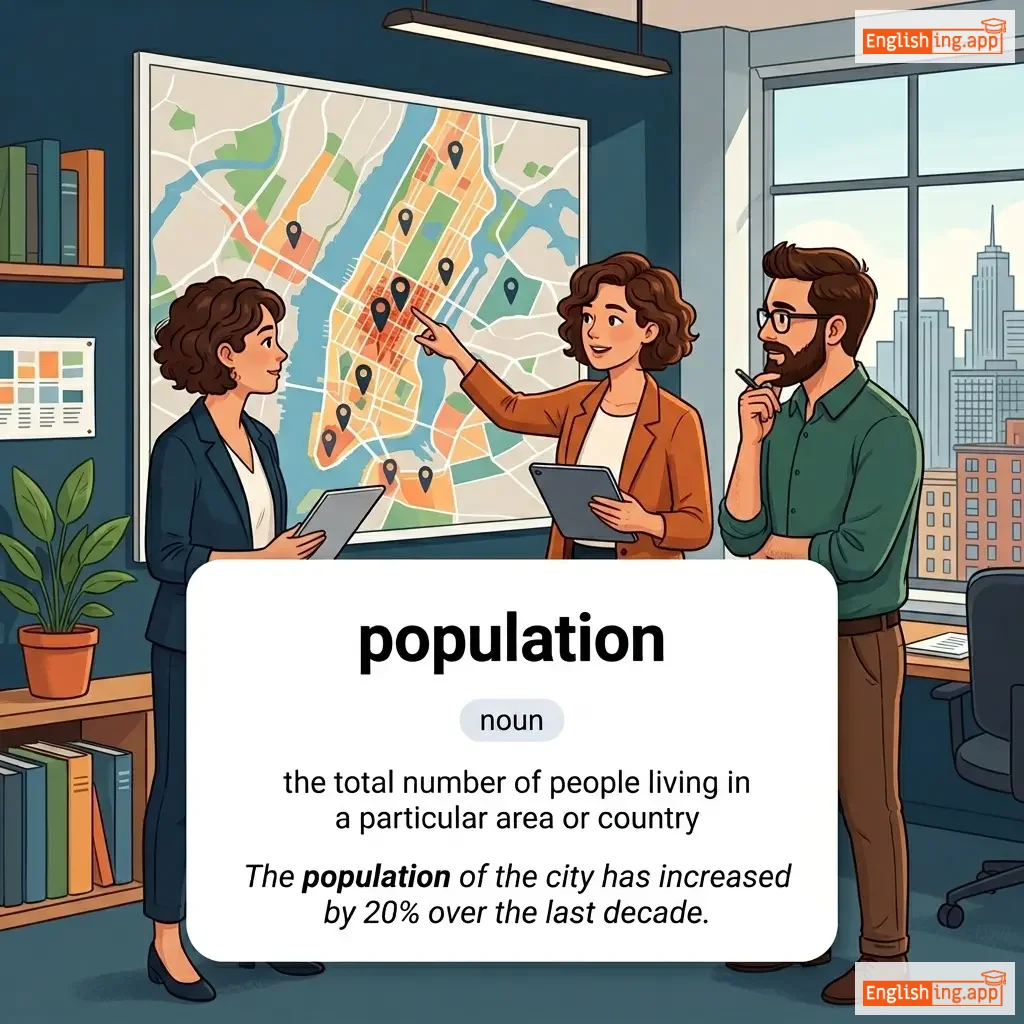
population definition card — visual illustration of the meaning
noun
/ˌpɒpjʊˈleɪʃən/
人口 (jinkou)

the total number of people living in a particular area or country

"The population of the city has increased by 20% over the last decade."

"その都市の人口は過去10年で20%増加しました。" (Sono toshi no jinkou wa kako 10 nen de 20% zouka shimashita.)
noun
/ˈpɒpjʊlɪst/
ポピュリストのリーダー (popyurisuto no rīdā)

A politician or person who seeks to appeal to ordinary people who feel their concerns are ignored by elites.

"The populist leader promised to put the needs of common citizens first."

"ポピュリストのリーダーは、一般市民のニーズを最優先すると約束しました。" (Popyurisuto no rīdā wa, ippan shimin no nīzu o saiyūsen suru to yakusoku shimashita.)
adjective
/ˈpɒpjələs/
人口密度の高い (jinkō mitsudo no takai)

Having a large population; densely inhabited.

"Dhaka is one of the most populous cities in the world."

"東京は世界で最も人口密度の高い都市の一つです。" (Tōkyō wa sekai de mottomo jinkō mitsudo no takai toshi no hitotsu desu.)
noun
/ˈpɔːrsəlɪn/
磁器 (jiki)

A white, hard ceramic material often used for dishes and ornaments.

"The museum displayed ancient porcelain vases from China."

"博物館は中国の古代のポーセリンの花瓶を展示しました。" (Hakubutsukan wa Chūgoku no kodai no pōserin no kabin o tenji shimashita.)
noun
/pɔːrtʃ/
ポーチ (pōchi)

a covered area at the entrance of a building, often with a roof and open sides

"We sat on the porch and enjoyed the evening breeze."

"私たちはポーチに座って、夕方の風を楽しみました。" (Watashitachi wa pōchi ni suwatte, yūgata no kaze o tanoshimimashita.)
noun
/ˈpɔːr.kjə.paɪn/
ヤマアラシ (yama arashi)

a large rodent with defensive spines or quills on its body

"The porcupine raised its quills when threatened."

"ヤマアラシは脅威を感じると針を立てた。" (Yama arashi wa kyōi o kanjiru to hari o tateta.)
noun
/ˈpɔːrɪdʒ/

A soft food made by boiling oats or other grains in milk or water.

"She had a bowl of porridge for breakfast."

adjective
/pɔːrˈtɛntəs/
前兆的な、重大な (zenjō-tekina, jūdaina)

Giving a sign or warning that something, often bad or serious, is going to happen; or overly solemn and pompous.

"His portentous tone made everyone nervous about the news."

"彼の前兆的な口調は、ニュースについて皆を不安にさせた。" (Kare no zenzō-teki na kuchō wa, nyūsu ni tsuite mina o fuan ni saseta.)
noun
/ˈpɔːrtɛnt/
前兆 (zenchou)

A sign or warning that something, especially something momentous or calamitous, is likely to happen.

"The sudden drop in stock prices was seen as a portent of economic trouble."

"株価の急落は、経済的な問題の前兆として見なされました。" (Kabuka no kyūraku wa, keizaiteki na mondai no zenchou toshite minasaremashita.)
verb
/pɔːrˈtɛnd/
前兆 (zenchou)

To be a sign or warning that something, especially something bad, is going to happen.

"Dark clouds portend a storm."

"暗い雲は嵐を予兆します。" (Kurai kumo wa arashi o yochou shimasu.)
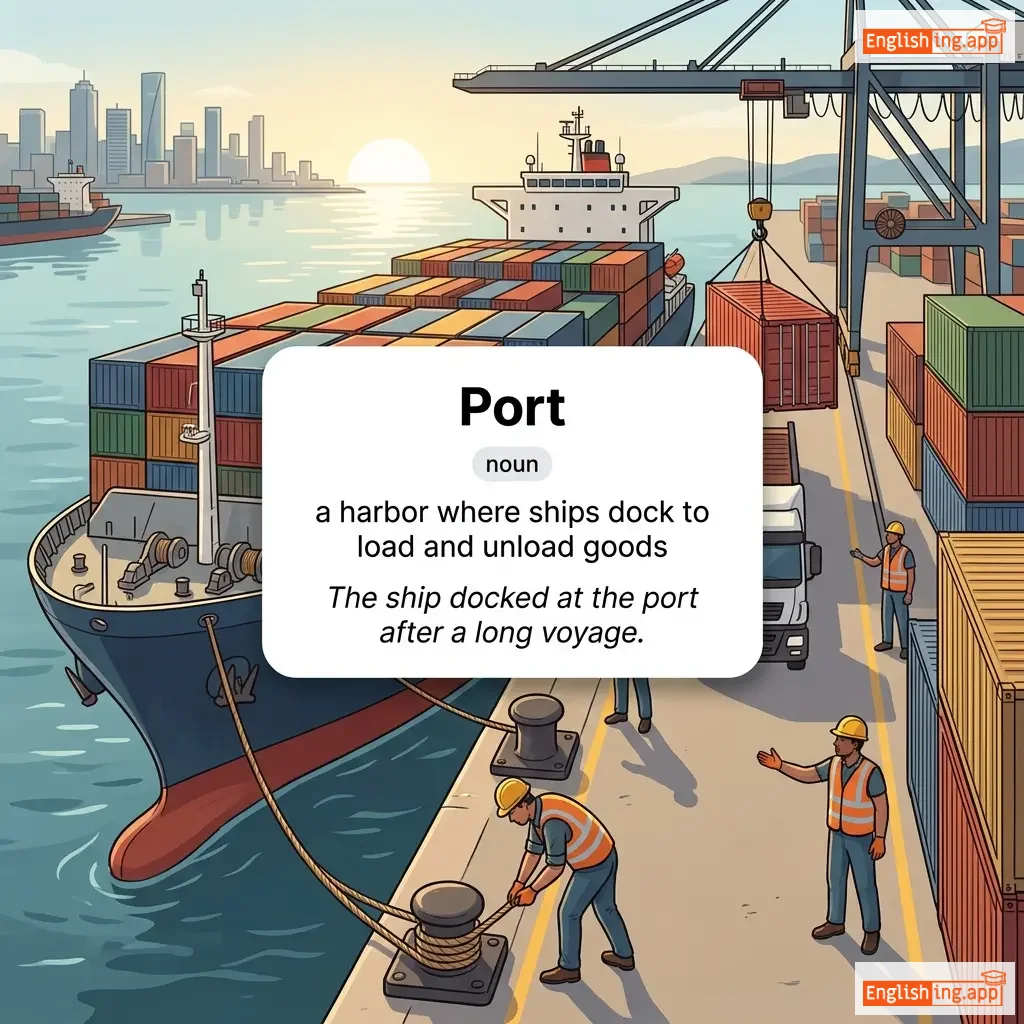
Port definition card — visual illustration of the meaning

Port

noun
/pɔːrt/

a harbor where ships dock to load and unload goods

"The ship docked at the port after a long voyage."

noun
/ˈpɔːrfəri/
硬い火成岩 (katai kaseigan)

A hard igneous rock containing crystals, often used for decorative or building purposes.

"The ancient Romans used porphyry to make columns and statues."

"古代ローマ人はポルフィリを使って柱や彫像を作った。" (Kodai Rōmajin wa porufiri o tsukatte hashi ya chōzō o tsukutta.)
noun
/pɔːrk/
幸せ (shiawase)

the flesh of a pig used as food

"He doesn't eat pork for religious reasons."

"彼女は賞を受け取ったとき、幸せを隠せませんでした。" (Kanojo wa shō wo uketotta toki, shiawase wo kakusemasen deshita.)