
語彙集

英単語辞書 | 単語の意味、定義、例文

Profit definition card — visual illustration of the meaning
noun, verb
/ˈprɒfɪt/
利益 (rieki)

financial gain, especially the difference between the amount earned and the amount spent

"The company made a huge profit this quarter."

"その会社は今四半期に大きな利益を上げました。" (Sono kaisha wa ima shihanki ni ōkina rieki o agemashita.)
profitability definition card — visual illustration of the meaning
noun
ˌprɒf.ɪ.təˈbɪl.ə.ti
収益性、財務的な利益の程度 (shūekisei, zaimuteki na rieki no teido)

The degree to which a business or activity yields profit or financial gain.

"Increased efficiency enhances business profitability."

"効率の向上はビジネスの収益性を高めます。" (Kōritsu no kōjō wa bijinesu no shūekisei o takamemasu.)
adjective
/ˈprɒfɪtəbl/
利益を生む (rieki wo umu)

yielding profit or financial gain

"The company has become highly profitable after the new strategy was implemented."

"新しい戦略が実行された後、会社は非常に利益を上げました。" (Atarashī senryaku ga jikkō sareta ato, kaisha wa hijō ni rieki wo agemashita.)
noun
/ˌprɑːfɪˈtɪr/
利益を不正に得る者 (rieki o fusei ni eru mono)

a person who makes excessive profits, especially unfairly or illegally

"The government punished war profiteers."

"政府は戦争の利益を不正に得る者を罰した。" (Seifu wa sensō no rieki o fusei ni eru mono o basshita.)
noun
/ˈprɑːflɪɡəsi/
浪費 (rōhi)

reckless wastefulness or extravagance

"His profligacy with money led him to bankruptcy."

"彼の浪費は彼を破産させました。" (Kare no rōhi wa kare o hasan sasemashita.)
adjective
/ˈprɑːflɪɡət/
浪費家 (rouhika)

recklessly extravagant or wasteful in resources

"The king was known for his profligate lifestyle."

"その王は贅沢なライフスタイルで知られていました。" (Sono ō wa zeitaku na raifusutairu de shirarete imashita.)
profound definition card — visual illustration of the meaning
adjective
/prəˈfaʊnd/
深遠 (shinen)

very great or intense; showing deep insight or understanding

"Her speech had a profound impact on the audience."
"彼女のスピーチは観客に深い影響を与えました。" (Kanojo no supīchi wa kankyaku ni fukai eikyō o ataemashita.)
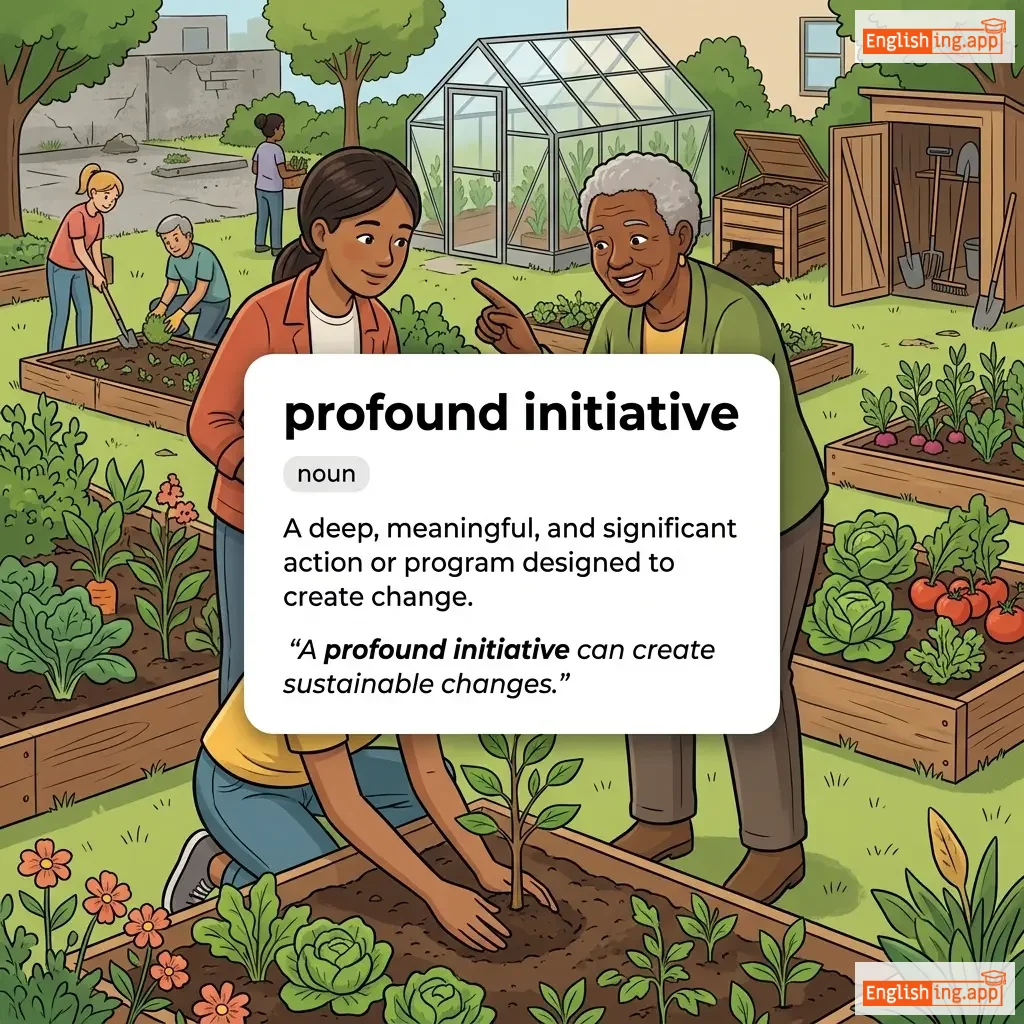
profound initiative definition card — visual illustration of the meaning
noun
prəˈfaʊnd ɪˈnɪʃətɪv
深遠なイニシアティブ (shinen na inishiatibu)

A deep, meaningful, and significant action or program designed to create change.

"A profound initiative can create sustainable changes."

"深遠なイニシアティブは持続可能な変化を生み出すことができます。" (Shinen na inishiatibu wa jizoku kanō na henka o umidasu koto ga dekimasu.)
profundity definition card — visual illustration of the meaning
noun
/prəˈfʌndɪti/
深さ (fukasa)

great depth of insight, knowledge, or emotion

"The essay impressed the judges with its clarity and profundity."

"そのエッセイは明快さと深さで審査員を感動させた。" (Sono essei wa meikaisa to fukasa de shinsain o kandō saseta.)
adjective
/prəˈfjuːs/
豊富な (hōfuna)

existing or given in large amounts; abundant

"He offered profuse thanks for their timely help."

"彼は時間通りに助けてくれたことに豊富な感謝を示しました。" (Kare wa jikan dōri ni tasukete kureta koto ni hōfuna kansha o shimeshimashita.)
noun
/prəˈfjuːʒən/
豊富 (hōfu)

an abundance or large quantity of something

"Spring brought a profusion of wildflowers to the valley."

"春は谷に野生の花の豊富さをもたらした。" (Haru wa tani ni yasei no hana no hōfusa o motarashita.)
noun
/proʊˈdʒɛnɪtər/
先祖 (senzo)

a direct ancestor; a person or thing that originates something

"Researchers traced the custom back to a common progenitor."
"研究者たちはその習慣が共通の先祖に遡ることを追跡しました。" (Kenkyū-sha-tachi wa sono shūkan ga kyōtsū no senzo ni sakanoboru koto o tsuiseki shimashita.)
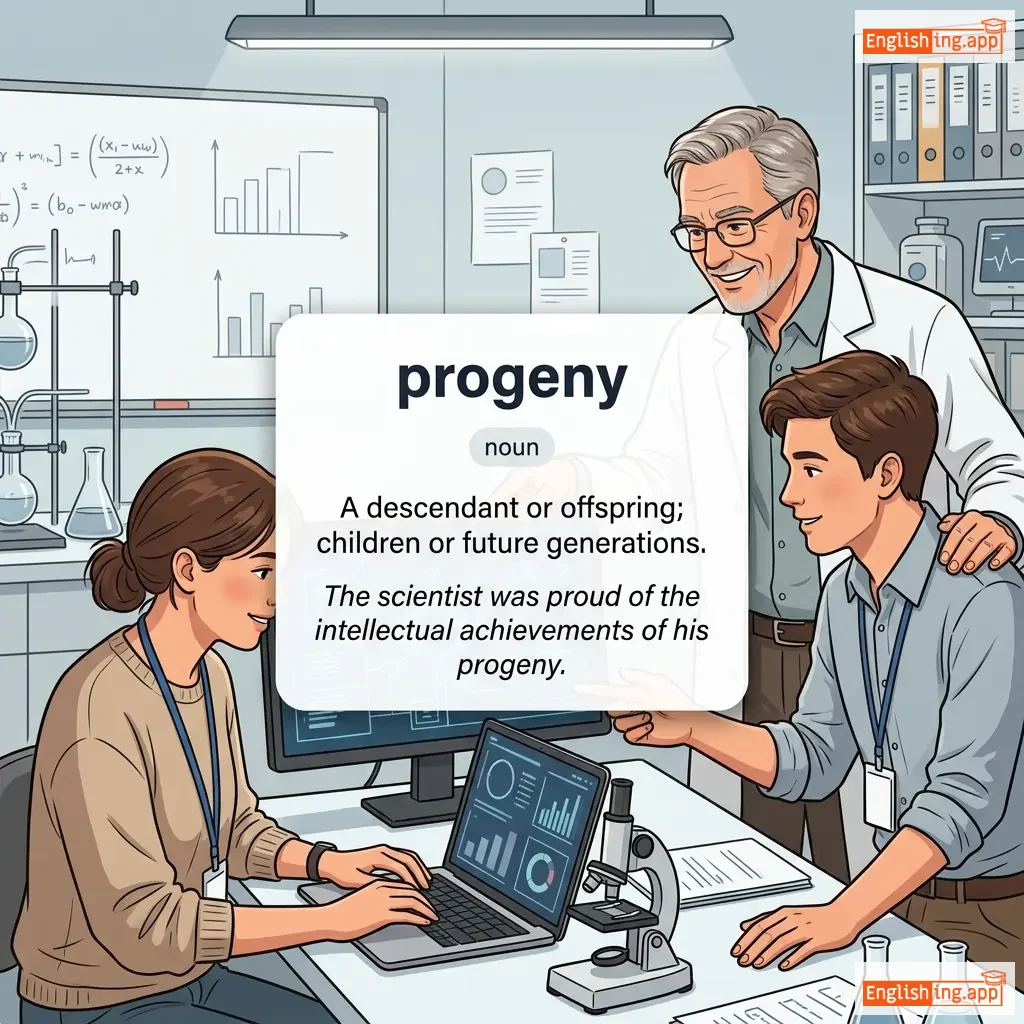
progeny definition card — visual illustration of the meaning
noun
/ˈprɒdʒəni/
子孫 (shison)

A descendant or offspring; children or future generations.

"The scientist was proud of the intellectual achievements of his progeny."

"科学者は自分の子孫の知的業績に誇りを持っていました。" (Kagakusha wa jibun no shison no chiteki gyōseki ni hokori o motte imashita.)
adjective
/ˈprɒɡnəθəs/
前突顎骨 (zentotsu gakukotsu)

Having jaws that project forward beyond the rest of the face.

"The fossil displayed a distinctly prognathous skull structure."

"化石は明確に前突顎骨の構造を示していた。" (Kaseki wa meikaku ni zentotsu gakukotsu no kōzō o shimeshite ita.)
noun
/prɒɡˈnoʊsɪs/
予後 (yogo)

A forecast of the likely outcome of a disease or situation.

"The doctor gave a positive prognosis for the patient's recovery."

"医者は患者の回復に対してポジティブな予後を示した。" (Isha wa kanja no kaifuku ni taishite pojitibu na yogo wo shimeshita.)
verb
/prɒɡˈnɒstɪkeɪt/
予測する (yosoku suru)

To foretell or predict future events, especially based on current signs.

"Experts attempted to prognosticate the outcome of the election."

"専門家たちは選挙の結果を予測しようとした。" (Senmonkatachi wa senkyo no kekka o yosoku shiyō to shita.)
noun
/prɒɡˌnɒstɪˈkeɪʃən/
予言 (yogen)

The act of foretelling or predicting future events.

"The astrologer's prognostication fascinated the audience."

"占星術師の予言は聴衆を魅了した。" (Senseijutsushi no yogen wa chōshū o miryō shita.)
noun
/ˈprəʊɡræm/
プログラム (puroguramu)

a planned series of events or activities

"The program starts at 9 AM sharp."

"プログラムは午前9時に正確に始まります。" (Puroguramu wa gozen 9-ji ni seikaku ni hajimarimasu.)
noun
/ˈproʊɡræmɪŋ/
プログラミング (puroguramingu)

the process of writing computer code to create software or applications

"He spends most of his time learning computer programming."

"彼はコンピュータープログラミングを学ぶのにほとんどの時間を費やしています。" (Kare wa konpyūtā puroguramingu o manabu no ni hotondo no jikan o tsuiyashiteimasu.)
noun
/ˈprəʊɡræmɪŋ/
プログラミング (puroguramingu)

the process of designing and writing computer programs

"He has been learning programming for several months now."
"彼は数ヶ月間プログラミングを学んでいます。" (Kare wa su-kagetsu-kan puroguramingu o manandeimasu.)
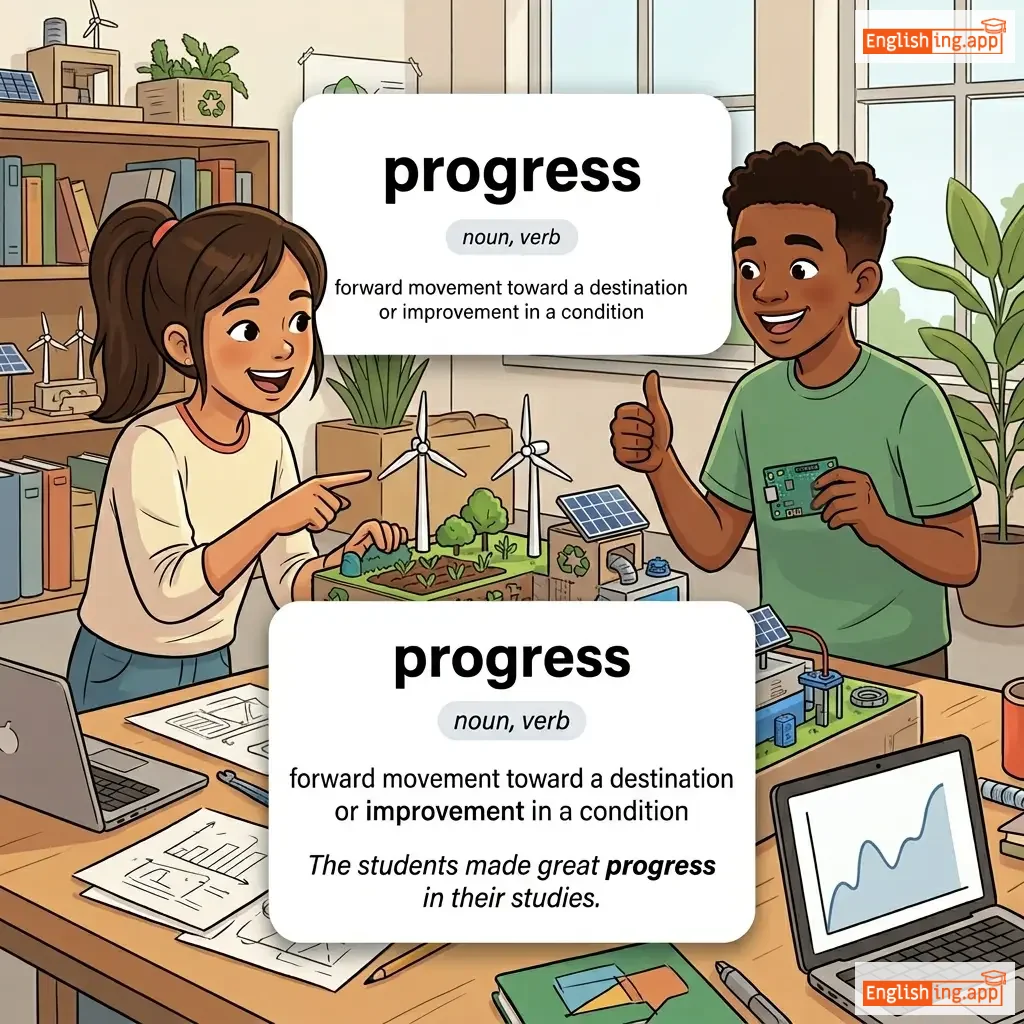
progress definition card — visual illustration of the meaning
noun, verb
/ˈprəʊɡrɛs/ (noun), /prəˈɡrɛs/ (verb)
進歩 (shinpo)

forward movement toward a destination or improvement in a condition

"The students made great progress in their studies."
"学生たちは学業で大きな進歩を遂げました。" (Gakusei-tachi wa gakugyou de ookina shinpo wo togemashita.)
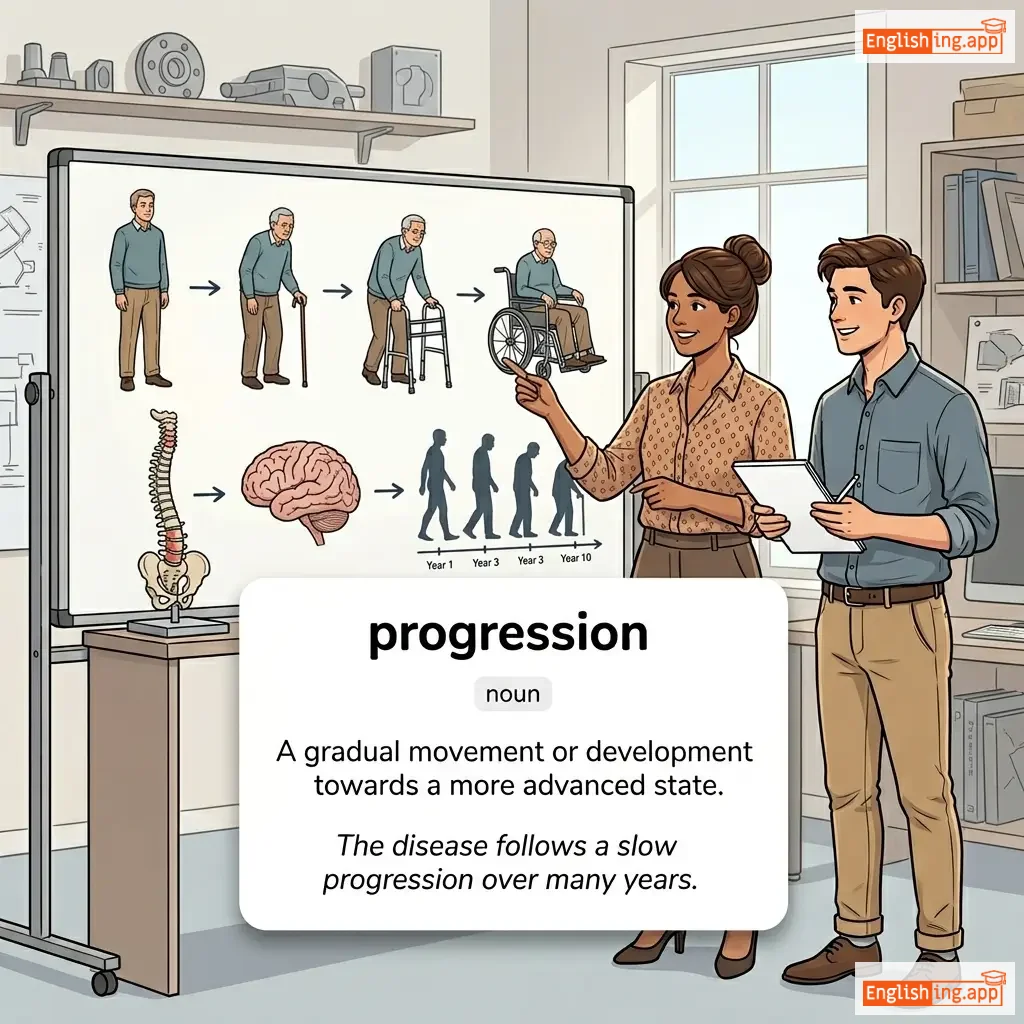
progression definition card — visual illustration of the meaning
noun
/prəˈɡrɛʃən/
進行 (shinkou)

A gradual movement or development towards a more advanced state.

"The disease follows a slow progression over many years."

"その病気は何年もの間、ゆっくりと進行します。" (Sono byouki wa nannen mono aida, yukkuri to shinkou shimasu.)
noun
/prəˈtɛstər/
抗議者 (kōgisha)

a person who takes part in a protest or demonstration

"The protester spoke passionately about the cause."

"抗議者はその原因について情熱的に話しました。" (Kōgisha wa sono gen'in ni tsuite jōnetsuteki ni hanashimashita.)
noun
/ˈprɒvɪdəns/
神の摂理 (kami no setsuri)

the protective care of God or nature as a spiritual power; foresight or prudence

"They believed their survival was due to divine providence."

"彼らは自分たちの生存が神の摂理によるものであると信じていました。" (Karera wa jibuntachi no seizon ga kami no setsuri ni yoru mono de aru to shinjite imashita.)
verb
/prəˈvaɪdɪd/
提供された (teikyou sareta)

gave or supplied something that was needed

"The hotel provided free breakfast for all guests."

"ホテルはすべてのゲストに無料の朝食を提供しました。" (Hoteru wa subete no gesuto ni muryou no choushoku wo teikyoushimashita.)
provide definition card — visual illustration of the meaning
verb
/prəˈvaɪd/
提供する (teikyō suru)

to give or supply something that is needed or wanted

"The teacher will provide extra materials for the students."

"教師は学生に追加の資料を提供するでしょう。" (Kyōshi wa gakusei ni tsūka no shiryō o teikyō suru deshō.)
noun
/ˈprɒvərb/
ことわざ (kotowaza)

a short, commonly known saying that expresses a truth or piece of advice

"The proverb 'A stitch in time saves nine' teaches the value of prompt action."

"ことわざ「時間を守るは九つの命を救う」は迅速な行動の重要性を教えています。" (Kotowaza 'jikan o mamoru wa kokonotsu no inochi o sukū' wa jinsoku na kōdō no jūyō-sei o oshieteimasu.)
noun
/ˈprɒvəndər/
家畜用の餌 (kachiku-yō no esa)

food or provisions, especially for livestock

"The barn was filled with provender for the cattle."

"納屋は家畜用の餌でいっぱいだった。" (Noya wa kachiku-yō no esa de ippai datta.)
noun
/ˈprɒvənəns/
出所 (shusshou)

The origin or source of something.

"The museum verified the provenance of the ancient manuscript."
"博物館は古代の写本の出所を確認しました。" (Hakubutsukan wa kodai no shahon no shusshou wo kakunin shimashita.)
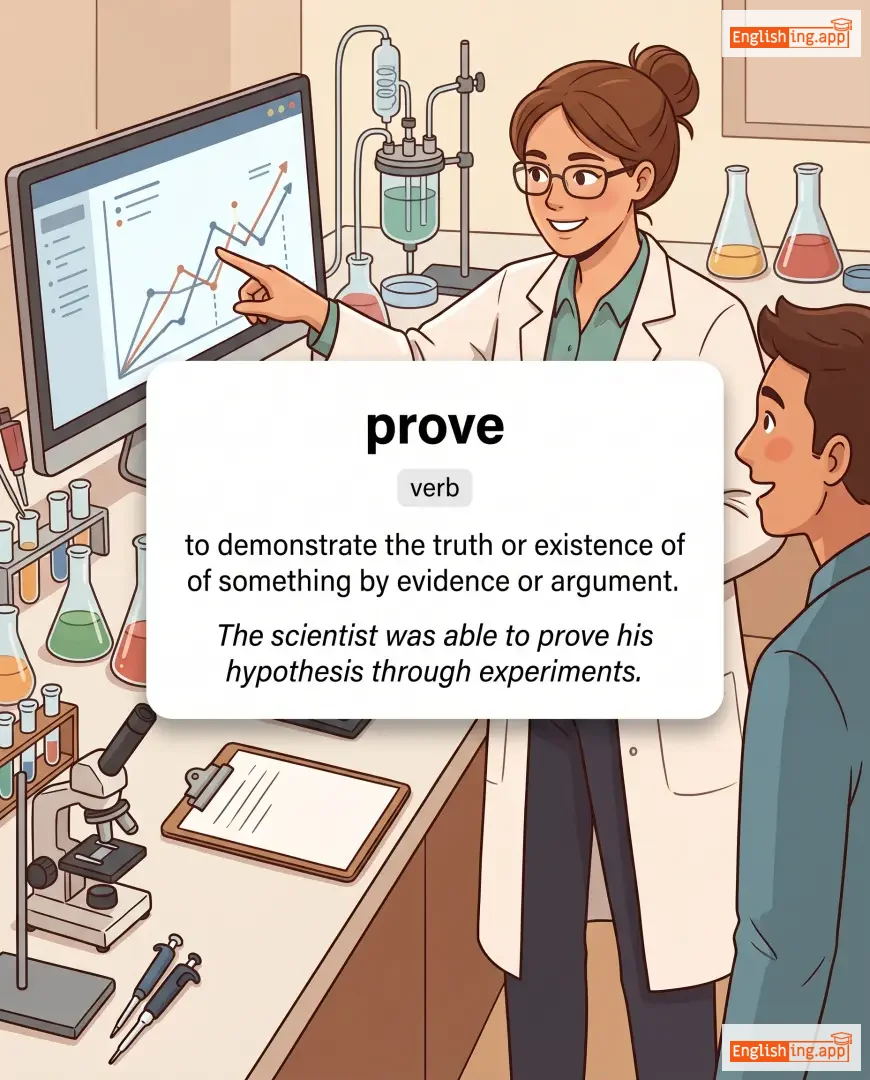
prove definition card — visual illustration of the meaning
verb
/pruːv/
証明する (shoumei suru)

to demonstrate the truth or existence of something by evidence or argument.

"The scientist was able to prove his hypothesis through experiments."

"科学者は実験を通じて彼の仮説を証明することができました。" (Kagakusha wa jikken wo tooshite kare no kasetsu wo shoumei suru koto ga dekimashita.)
adverb
/ˈpraʊdli/
誇らしげに (hokorashige ni)

in a way that shows pride or satisfaction; with a sense of honor or achievement

"She proudly displayed her achievements to her family."

"彼女は誇らしげに家族に自分の成果を見せた。" (kanojo wa hokorashige ni kazoku ni jibun no seika o miseta)
Proud definition card — visual illustration of the meaning
adjective
/praʊd/
誇り高い (hokori takai)

Feeling deep pleasure or satisfaction as a result of achievements or qualities.

"She felt proud of her son's accomplishments."

"彼女は息子の業績を誇りに思っていた。" (Kanojo wa musuko no gyouseki o hokori ni omotte ita.)
verb
/ˈproʊtjuːbəreɪt/
膨らむ (fukuramu)

To swell out or bulge.

"The roots began to protuberate from the ground."

"根は地面から膨らみ始めました。" (Ne wa jimen kara fukurami hajimemashita.)
adjective
/prəˈtuːbərənt/
突出または膨らんだ (tōshutsu matawa fukuranda)

Sticking out or bulging.

"His protuberant belly showed after the meal."

"食事の後、彼の膨らんだ腹が見えた。" (Shokuji no ato, kare no fukuranda hara ga mieta.)
noun
/prəˈtuːbərəns/
膨らみ (fukurami)

A rounded swelling or lump on a surface.

"The doctor examined the small protuberance on his arm."

"医師は彼の腕の小さな膨らみを調べました。" (Ishi wa kare no ude no chiisana fukurami o shirabemashita.)
noun
/prəˈtruːʒən/
突起 (tokki)

Something that sticks out or projects from a surface.

"The protrusion on the wall made it difficult to move the furniture."

"壁の突起により、家具を動かすのが難しくなった。" (Kabe no tokki ni yori, kagu o ugokasu no ga muzukashiku natta.)
verb
/proʊˈtruːd/
突き出る (tsukideru)

To stick out or extend beyond a surface.

"A nail was protruding from the wooden board."

"釘が木の板から突き出していた。" (Kugi ga ki no ita kara tsukidashiteita.)
protracted definition card — visual illustration of the meaning
adjective
/prəˈtræktɪd/
長引いた (nagabiita)

Lasting for a long time or longer than expected.

"The negotiation turned into a protracted process."

"交渉は長引いたプロセスに変わった。" (Kōshō wa nagabiita purosesu ni kawatta.)
verb
/proʊˈtrækt/
延長する (enchou suru)

To prolong or extend in time or duration.

"Negotiations were protracted for several months."

"交渉は数ヶ月間延長されました。" (Koushou wa suukagetsu kan enchou saremashita.)
noun
/ˈproʊtəˌtaɪp/
プロトタイプ (purototaipu)

The first model or version of something, used as a sample for testing or improvement.

"The company built a prototype of the new smartphone before mass production."

"会社は大量生産の前に新しいスマートフォンのプロトタイプを作成しました。" (Kaisha wa tairyou seisan no mae ni atarashī sumātōfon no purototaipu o sakusei shimashita.)
noun
/ˈproʊtoʊˌplæzəm/
プロトプラズム (purotopurazumu)

The living substance inside a cell, including the cytoplasm and nucleus.

"Scientists observed the movement of protoplasm under the microscope."

"科学者たちは顕微鏡でプロトプラズムの動きを観察しました。" (Kagakusha-tachi wa kenbikyō de purotopurazumu no ugoki o kansatsu shimashita.)
noun
/ˈproʊtoʊˌmɑːrtɚ/
最初の殉教者 (saisho no junkyousha)

The first martyr in a cause or religion, often referring to the first Christian martyr.

"St. Stephen is known as the protomartyr of Christianity."

"聖ステファノはキリスト教のプロトマーティアとして知られています。" (Sei Sutefano wa Kirisutokyō no purotomātia toshite shirareteimasu.)
noun
/ˈproʊtəkɔːl/
プロトコル (purotokoru)

an official procedure or system of rules

"The security team followed strict protocol during the event."

"セキュリティチームはイベント中に厳格なプロトコルに従いました。" (Sekyuriti chiimu wa ibento-chuu ni genkaku na purotokoru ni shitagaimashita.)
adjective
/ˈprɒspərəs/

successful in material terms; flourishing financially or in general well-being

"The town became prosperous after the new trade route opened."

protect definition card — visual illustration of the meaning
verb
/prəˈtɛkt/
保護する (hogo suru)

to keep safe from harm or danger

"It is important to protect your personal information online."

"個人情報をオンラインで保護することは重要です。" (Kojin jouhou o onrain de hogo suru koto wa juuyou desu.)
adjective
/ˈproʊtiən/
多才多芸の (tasai tagu no)

tending or able to change frequently or easily; versatile

"She is a protean artist who experiments with many styles."

"彼女は多才多芸のアーティストで、さまざまなスタイルを試しています。" (Kanojo wa tasai tagu no atisuto de, samazama na sutairu o tameshiteimasu.)
protagonist definition card — visual illustration of the meaning
noun
/prəˈtæɡənɪst/
主人公 (shujinkou)

the main character or leading figure in a story, drama, or other work

"The protagonist of the novel struggles with her inner conflicts."

"その小説の主人公は彼女の内面的な葛藤と戦っています。" (sono shousetsu no shujinkou wa kanojo no naimen-tekina kattou to tatakatteimasu.)
adjective/verb
/ˈprɒstreɪt/
倒れる (taoreru)

lying stretched out on the ground with one's face downward, often as a sign of submission or exhaustion

"He lay prostrate on the ground after the long battle."

"長い戦いの後、彼は地面に倒れて横たわった。" (Nagai tatakai no ato, kare wa jimen ni taorete yokotawatta.)
verb
/ˈprɒspər/
繁栄する (han'ei suru)

to succeed or flourish, especially in financial or business matters

"With hard work and determination, she managed to prosper in her career."

"一生懸命の努力と決意で、彼女はキャリアで成功しました。" (Isshōkenmei no doryoku to ketsui de, kanojo wa kyaria de seikou shimashita.)
prospects definition card — visual illustration of the meaning
noun
/ˈprɒs.pekts/
見通し (mitorishi)

The possibility or likelihood of some future event occurring.

"The prospects for growth look promising."

"成長の見通しは有望に見えます。" (Seichou no mitorishi wa yuubou ni miemasu.)