語彙集

英単語辞書 | 単語の意味、定義、例文

verb
/prɪˈzjuːm/
仮定する (katei suru)

To suppose something is true without proof; to take for granted.

"I presume she has already left for the meeting."

"私は彼女がすでに会議に出かけたと思います。" (Watashi wa kanojo ga sude ni kaigi ni dekaketa to omoimasu.)
noun
/prɪˈzʌmpʃən/
仮定 (katei)

An idea believed to be true without proof; an assumption or act of overconfidence.

"The presumption of his guilt was unfair."

"彼の有罪の仮定は不公平だった。" (Kare no yūzai no katei wa fukōhei datta.)
adjective
/prɪˈzʌmptɪv/
推定 (suitei)

Based on probability or assumption rather than proof.

"She is the presumptive nominee for the party."
"彼女はその党の推定候補者です。" (Kanojo wa sono tō no suitei kōho-sha desu.)
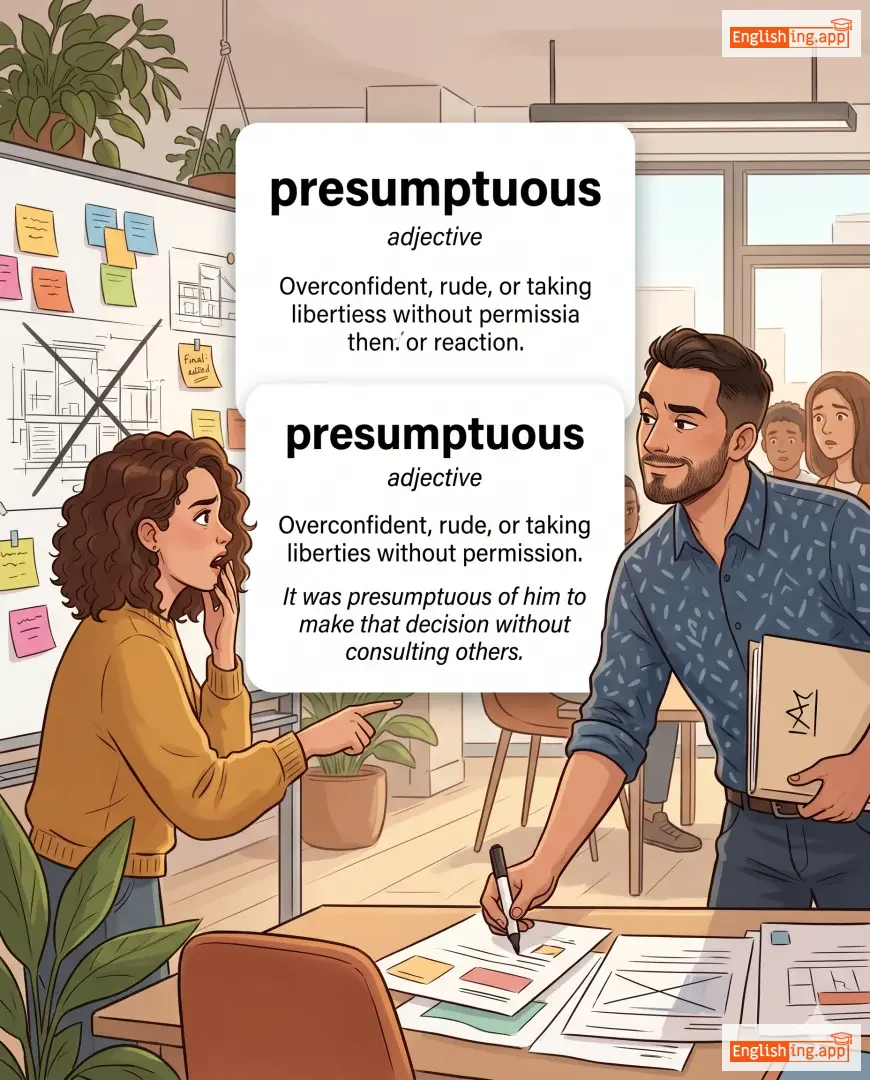
presumptuous definition card — visual illustration of the meaning
adjective
/prɪˈzʌmp.tʃu.əs/
生意気な (namaiki na)

Overconfident, rude, or taking liberties without permission.

"It was presumptuous of him to make that decision without consulting others."

"他が他の人と相談せずにその決定を下したのは生意気だった。" (Kare ga hoka no hito to sōdan sezu ni sono kettei o kudashita no wa namaiki datta.)
noun
/prɪˈtens/
偽り (itsuwari)

an attempt to make something that is not the case appear true

"He made no pretence of being interested in the conversation."

"彼は会話に興味があるふりをしなかった。" (Kare wa kaiwa ni kyōmi ga aru furi o shinakatta.)
verb
/prɪˈtɛnd/
ふりをする (furi o suru)

To act as if something is true when it is not.

"The children pretended to be superheroes."

"子供たちはスーパーヒーローになるふりをした。" (Kodomotachi wa sūpāhīrō ni naru furi o shita.)
noun
/ˈpriː.tɛns/ or /prɪˈtɛns/
仮面, 偽装 (kamen, giso)

A false appearance or claim; an act of pretending.

"His kindness was only a pretense to gain trust."

"彼の優しさは信頼を得るための単なる仮面だった。" (Kare no yasashisa wa shinrai o eru tame no tannaru kamen datta.)
noun
/prɪˈtɛnʃən/
虚偽、見せかけ (kyogi, misekake)

A claim or assertion to something, often without justification; an attempt to impress by showing greater importance or talent than is actually possessed.

"His pretension to be an expert was quickly exposed."

"彼の専門家であるというプリテンションはすぐに暴かれた。" (kare no senmonka de aru to iu puritenshon wa sugu ni abakareta.)
adjective
/prɪˈtɛnʃəs/
偽善的な (gizen-tekina)

Attempting to impress by affecting greater importance, talent, culture, etc., than is actually possessed.

"The restaurant was stylish but far too pretentious for my taste."

"そのレストランはスタイリッシュだったが、私の好みにはあまりにも偽善的だった。" (Sono resutoran wa sutairisshu datta ga, watashi no konomi ni wa amari ni mo gizen-teki datta.)
adjective
/ˌpriːtərˈnætʃərəl/
超自然的 (chōshizenteki)

Beyond what is normal or natural; extraordinary or supernatural.

"She had a preternatural ability to remain calm in any crisis."

"彼女はどんな危機にも冷静に保つ超自然的な能力を持っていた。" (Kanojo wa donna kiki ni mo reisei ni tamotsu chōshizenteki na nōryoku o motte ita.)
noun
/ˈpriːtɛkst/
口実、偽りの理由 (koujitsu, itsuwari no riyuu)

A false reason given to hide the real purpose or motive.

"He went out on the pretext of buying groceries."

"彼は食料品を買いに行くという口実で外出した。" (Kare wa shokuryouhin o kai ni iku to iu koujitsu de gaishutsu shita.)
adjective
/ˈprɪti/
きれい (kirei)

Attractive in a delicate way without being truly beautiful.

"She looked pretty in her new dress."

"彼女は新しいドレスできれいに見えた。" (Kanojo wa atarashī doresu de kirei ni mieta.)
verb
/prɪˈveɪl/
勝つ (katsu)

To prove more powerful or superior; to be widespread or common.

"Justice will always prevail over injustice."
"正義は常に不正に勝る。" (Seigi wa jōni fusei ni masaru.)
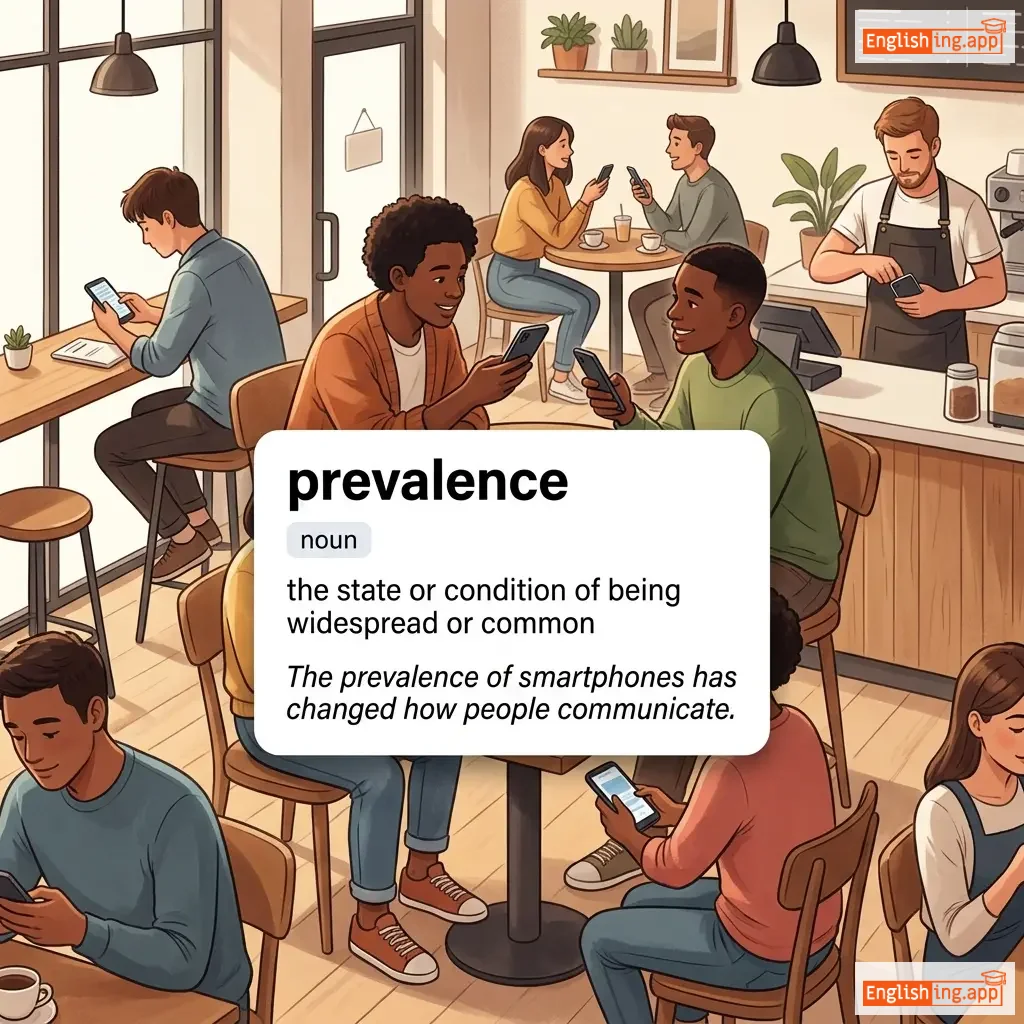
prevalence definition card — visual illustration of the meaning
noun
/ˈprɛvələns/
普及 (fukyū)

the state or condition of being widespread or common

"The prevalence of smartphones has changed how people communicate."

"スマートフォンの普及により、人々のコミュニケーション方法が変わった。" (Sumātofon no fukyū ni yori, hitobito no komyunikēshon hōhō ga kawatta.)
adjective
/ˈprɛvələnt/
広まっている (hiromatteiru)

widespread or commonly occurring

"Flu is prevalent during the winter season."
"インフルエンザは冬の季節に広く見られます。" (Infuruenza wa fuyu no kisetsu ni hiroku mirarimasu.)
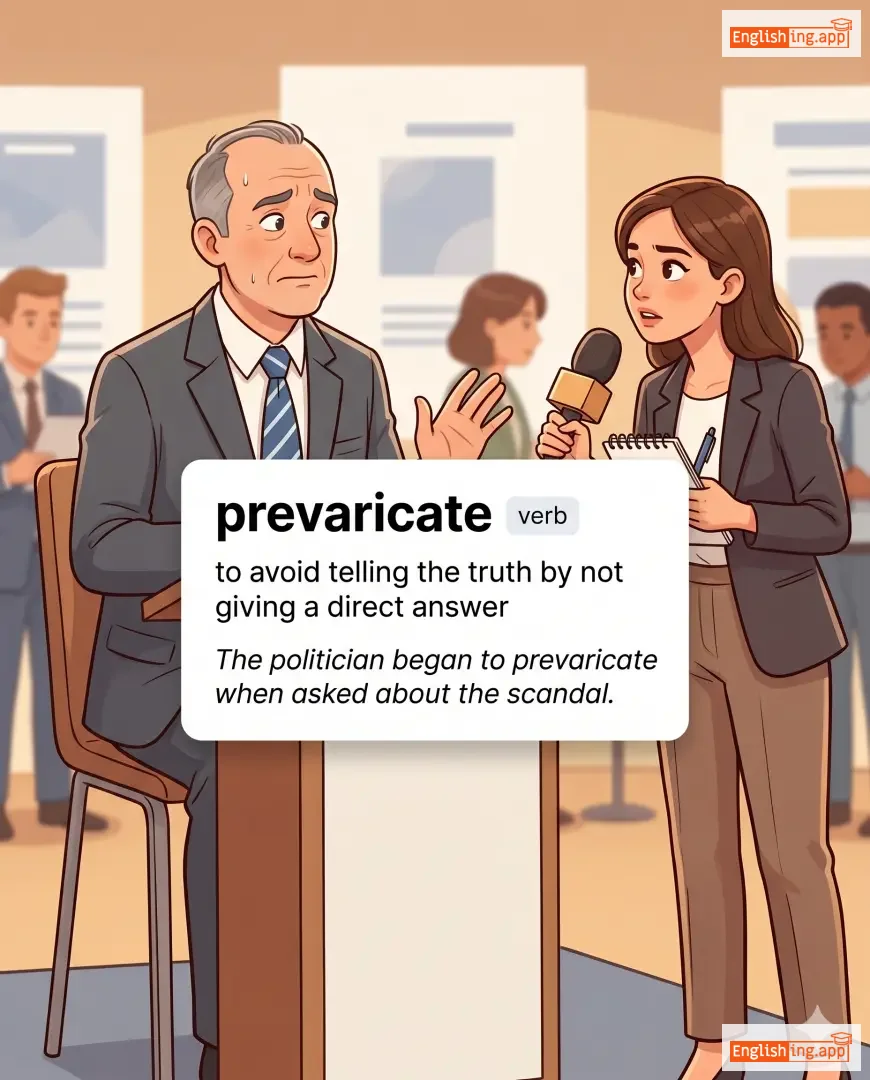
prevaricate definition card — visual illustration of the meaning
verb
/prɪˈværɪkeɪt/

to avoid telling the truth by not giving a direct answer

"The politician began to prevaricate when asked about the scandal."
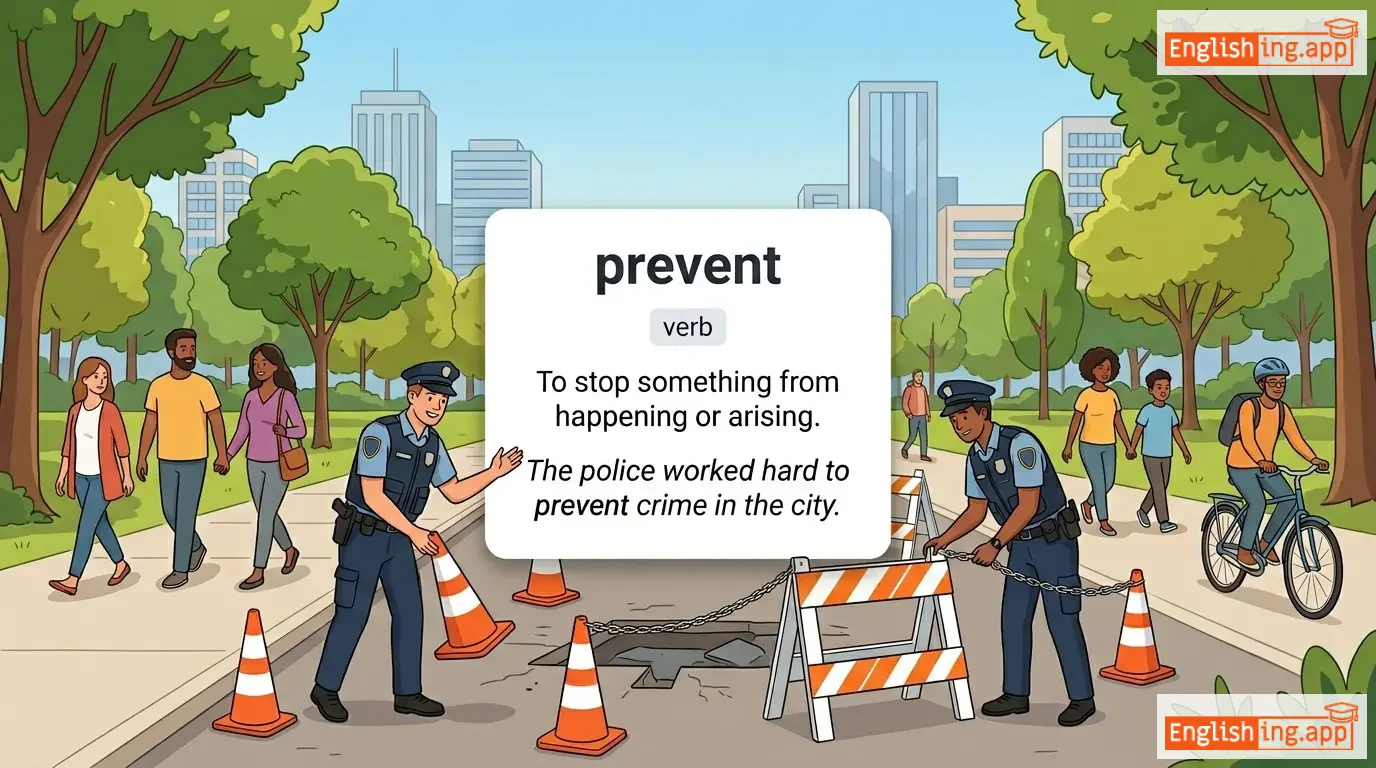
prevent definition card — visual illustration of the meaning
verb
/prɪˈvɛnt/
防ぐ (fusegu)

To stop something from happening or arising.

"The police worked hard to prevent crime in the city."
"警察は都市の犯罪を防ぐために一生懸命働きました。" (Keisatsu wa toshi no hanzai o fusegu tame ni isshōkenmei hatarakimashita.)
prevention definition card — visual illustration of the meaning
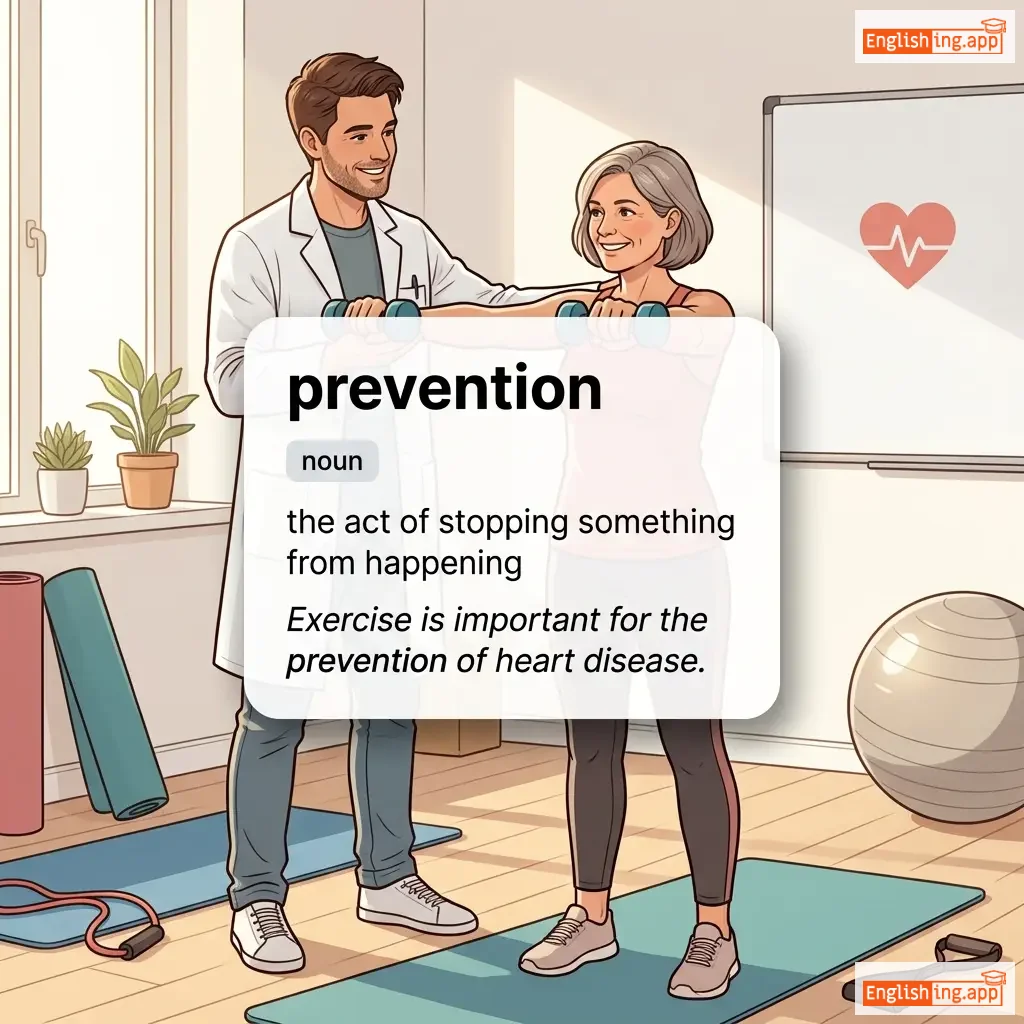
noun
/prɪˈvɛnʃən/
予防 (yobou)

the act of stopping something from happening

"Exercise is important for the prevention of heart disease."

"運動は心臓病の予防に重要です。" (Undou wa shinzoubyou no yobou ni juuyou desu.)
adjective
/prɪˈventɪv/
予防的; 何かが起こるのを防ぐために設計された (puribentibu)

designed to prevent something from happening; protective against disease

"Regular exercise is a preventive measure against heart disease."
"定期的な運動は心臓病予防の手段です。" (Teikiteki na undō wa shinzōbyō yobō no shudan desu.)
prevents definition card — visual illustration of the meaning
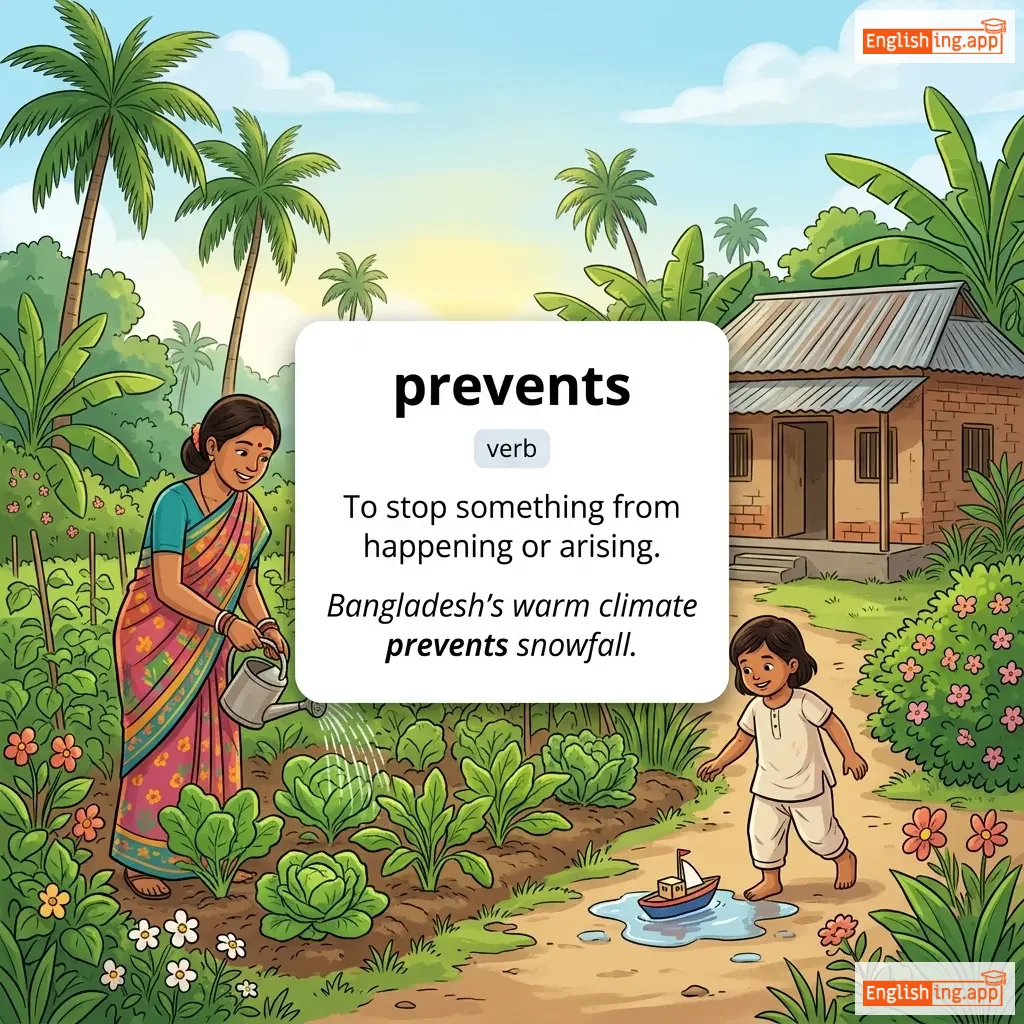
verb
প্রিভেন্টস
防ぐ (fusegu)

To stop something from happening or arising.

"Bangladesh's warm climate prevents snowfall."

"バングラデシュの温暖な気候は雪の降るのを防ぎます。" (Banguradeshu no ondanna kikō wa yuki no furu no o fusegimasu.)
adjective
/ˈpriːviəs/
前の (mae no)

Existing or happening before the present time.

"He referred to the previous meeting to explain his point."

"彼は自分の意見を説明するために前回の会議に言及しました。" (Kare wa jibun no iken wo setsumei suru tame ni zenkai no kaigi ni genkyū shimashita.)
adverb
/ˈpriːviəsli/
以前に (izen ni)

at an earlier time or before now

"She had previously worked at a bank before starting her own business."
"彼女は銀行で以前働いていたが、自分のビジネスを始める前だった。" (Kanojo wa ginkō de izen hataraite ita ga, jibun no bijinesu o hajimeru mae datta.)
🦁

prey

noun/verb
/preɪ/

an animal hunted by another for food; to hunt and feed on

"Lions prey on zebras in the wild."

price definition card — visual illustration of the meaning
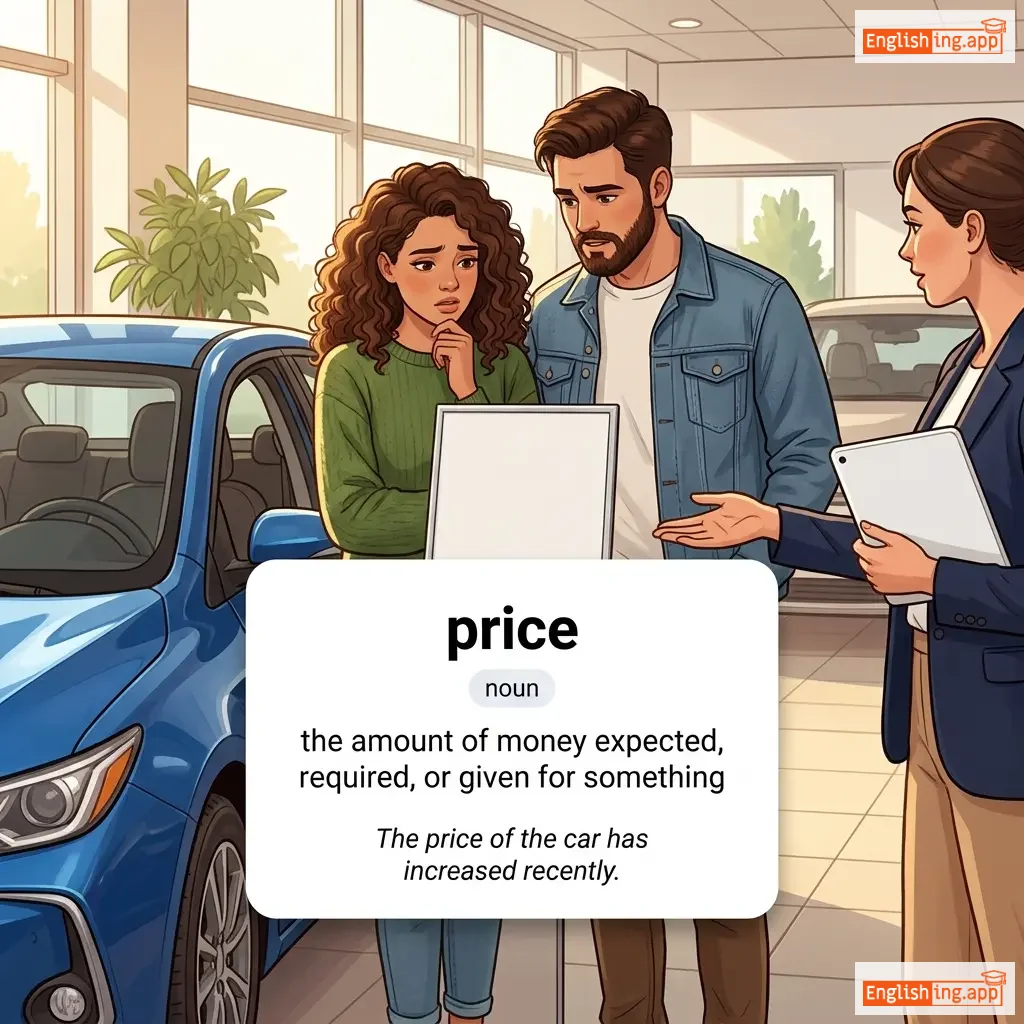
noun
/praɪs/
価格 (kakaku)

the amount of money expected, required, or given for something

"The price of the car has increased recently."

"車の価格は最近上がりました。" (Kuruma no kakaku wa saikin agarimashita.)
adjective
/ˈpraɪs.ləs/
無価値な; 計り知れない価値がある (mukachina; hakarishirenai kachi ga aru)

extremely valuable; invaluable; beyond price

"Her grandmother's antique jewelry is absolutely priceless."
"彼女の祖母の古代の宝石は絶対に無価値だ。" (Kanojo no sobo no kodai no hōseki wa zettai ni mukachida.)
prices definition card — visual illustration of the meaning
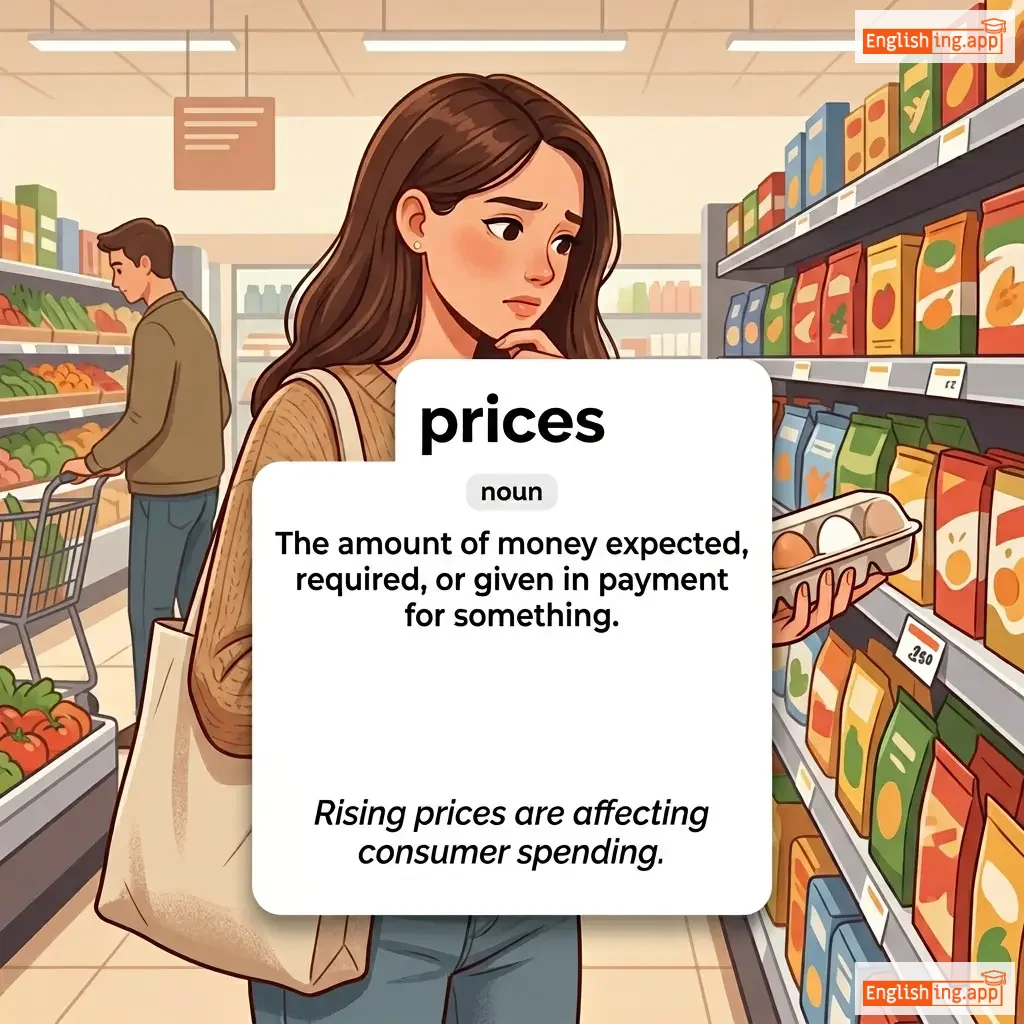
noun
ˈpraɪsɪz
価格 (kakaku)

The amount of money expected, required, or given in payment for something.

"Rising prices are affecting consumer spending."

"上昇する価格は消費者支出に影響を与えています。" (Jōshō suru kakaku wa shōhisha shishutsu ni eikyō o ataeteimasu.)
verb
/ˈprɪkəl/

to cause a slight stinging or tingling sensation on the skin

"Her skin began to prickle in the cold wind."

pride definition card — visual illustration of the meaning
noun
/praɪd/
誇り (hokori)

a feeling of deep pleasure or satisfaction derived from one's own achievements

"He took pride in his work and always aimed for perfection."

"彼は自分の仕事に誇りを持っており、常に完璧を目指していました。" (Kare wa jibun no shigoto ni hokori o motte ori, tsuneni kanpeki o mezashite imashita.)
noun
/priːst/
神父 (shinpu)

a person who performs religious duties and ceremonies

"The priest blessed the congregation during the Sunday service."

"神父は日曜日の礼拝中に会衆に祝福を与えました。" (Shinpu wa nichiyōbi no reihai-chū ni kaishū ni shukufuku o ataemashita.)
adjective
/ˈprɪɡɪʃ/
道徳的で自己満足な (dōtoku-teki de jiko manzoku na)

self-righteously moralistic and superior

"He came across as priggish when correcting everyone's manners."

"彼は皆のマナーを直すとき、プリギッシュに見えた。" (Kare wa mina no manā o naosu toki, purigisshu ni mieta.)
adjective
/prɪm/
過度に正式または適切 (kadoni seishiki matawa tekisetsu)

stiffly formal and proper in appearance or behavior

"She looked prim in her neatly pressed dress."

"彼女はきちんとアイロンがかけられたドレスを着てプリムに見えた。" (Kanojo wa kichinto airon ga kakerareta doresu wo kite purimu ni mieta.)
adjective
/ˈpraɪvət/
プライベート (puraibeto)

belonging to or for the use of one particular person or group

"She enjoys her private time away from work."

"彼女は仕事から離れて自分のプライベートな時間を楽しんでいます。" (Kanojo wa shigoto kara hanarete jibun no puraibeto na jikan o tanoshindeimasu.)
noun
/ˈprɪn.tər/
プリンター (purintā)

a person whose job is printing books, newspapers, or other materials; a machine that prints documents

"The printer delivered the wedding invitations on time."
"プリンターは結婚式の招待状を時間通りに届けました。" (Purintā wa kekkonshiki no shōtaijō o jikan-dōri ni todokemashita.)
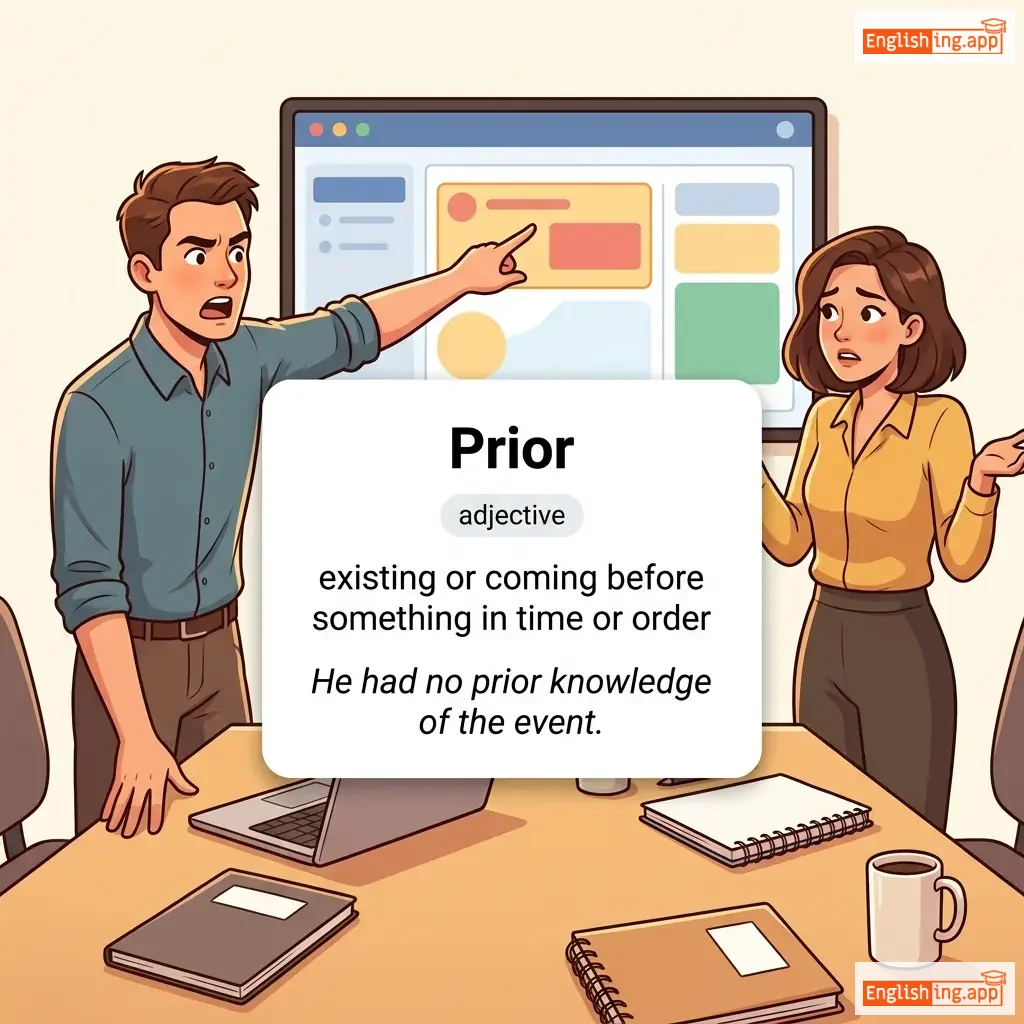
Prior definition card — visual illustration of the meaning
adjective
/ˈpraɪər/
前の (mae no)

existing or coming before something in time or order

"He had no prior knowledge of the event."
"彼はそのイベントについて前もって知識がなかった。" (Kare wa sono ibento ni tsuite mae motte chishiki ga nakatta.)
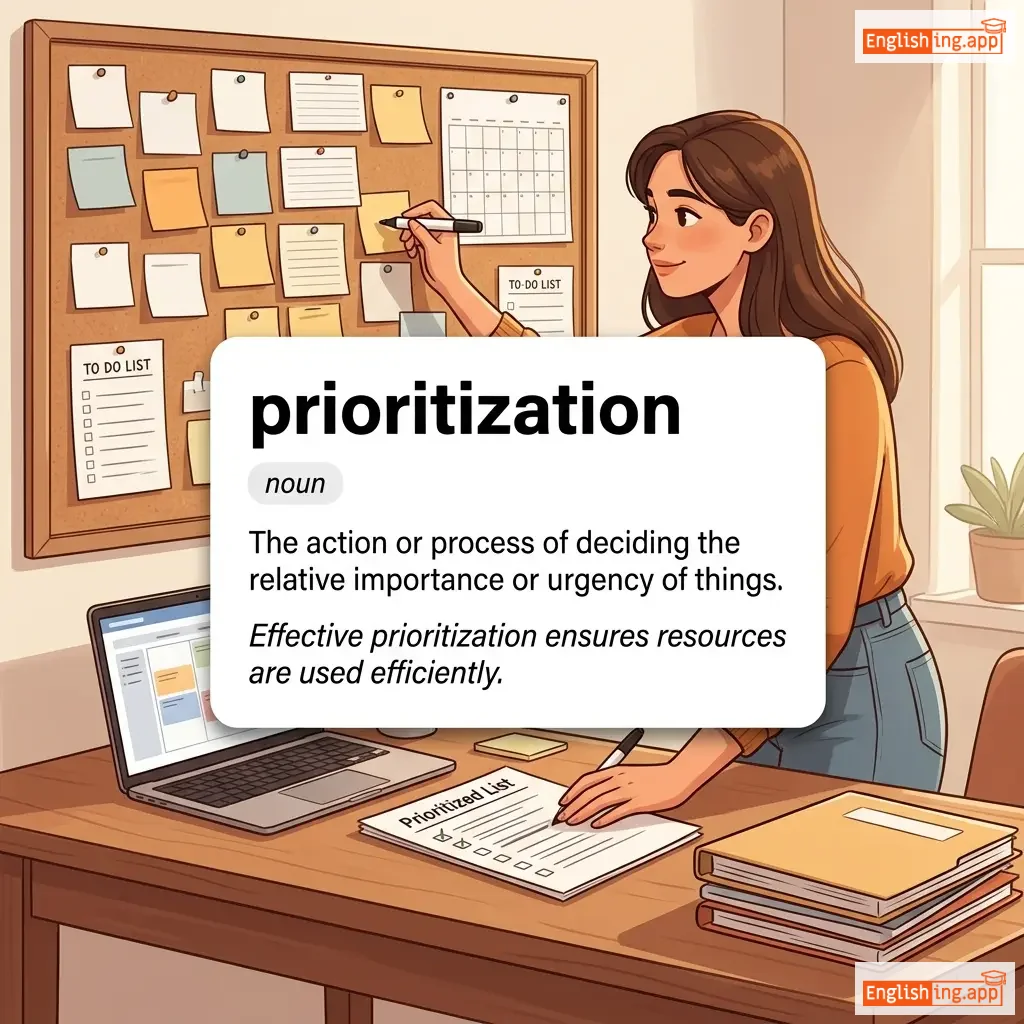
prioritization definition card — visual illustration of the meaning
noun
ˌpraɪɔːrɪtaɪˈzeɪʃən
優先順位付け (yūsen jun'i dzuke)

The action or process of deciding the relative importance or urgency of things.

"Effective prioritization ensures resources are used efficiently."
"効果的な優先順位付けは、リソースが効率的に使用されることを保証します。" (Kōkateki na yūsen jun'i dzuke wa, risōsu ga kōritsutekini shiyō sareru koto o hoshō shimasu.)
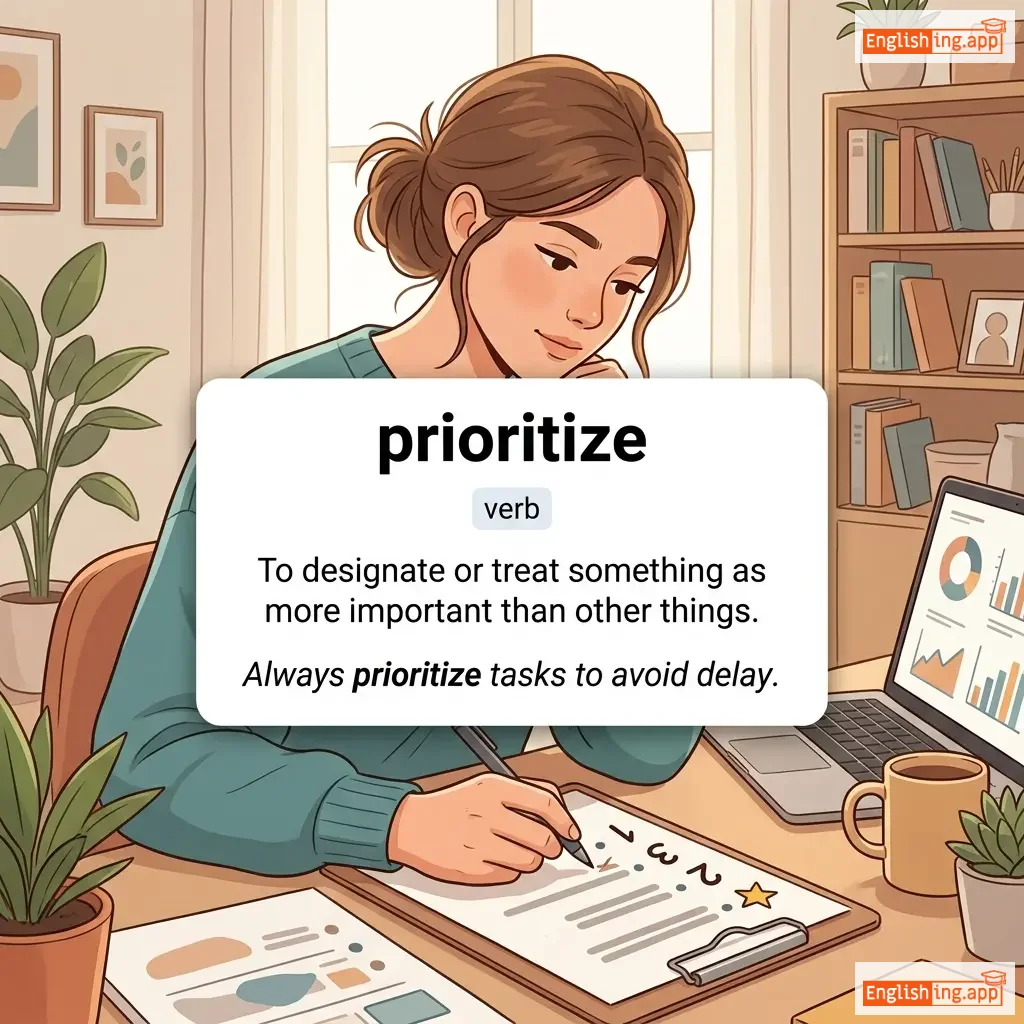
prioritize definition card — visual illustration of the meaning
verb
/praɪˈɔːrətaɪz/
優先する (yūsen suru)

To designate or treat something as more important than other things.

"Always prioritize tasks to avoid delay."

"遅延を避けるために、常にタスクを優先してください。" (Chien o sakeru tame ni, jōni tasuku o yūsen shite kudasai.)
noun
/praɪˈɒrɪti/
優先 (yūsen)

Something that is regarded as more important than other things.

"Safety is the top priority in this company."

"この会社では、安全が最も重要な優先事項です。" (Kono kaisha de wa, anzen ga mottomo jūyōna yūsen jikō desu.)
noun
/ˈpraɪəri/
修道院 (shūdōin)

a small monastery or convent governed by a prior or prioress

"The old priory was converted into a museum."

"古い修道院は博物館に改装されました。" (Furui shūdōin wa hakubutsukan ni kaisō saremashita.)
noun
/ˈprɪzən/
刑務所 (keimusho)

a building where people are kept as punishment for a crime or while waiting for trial

"He was sent to prison for his crimes."

"彼は犯罪のために刑務所に送られた。" (Kare wa hanzai no tame ni keimusho ni okurareta.)
noun
/ˈprɪzənər/
囚人 (shūjin)

a person who is in prison

"The prisoner was granted parole after serving 10 years."
"その囚人は10年の服役後、仮出所を許可されました。" (Sono shūjin wa 10-nen no fukueki go, kari shussho o kyoka saremashita.)
pristine definition card — visual illustration of the meaning
adjective
/ˈprɪstiːn/

In its original condition; unspoiled, clean, and fresh.

"The hikers were amazed by the pristine beauty of the untouched forest."

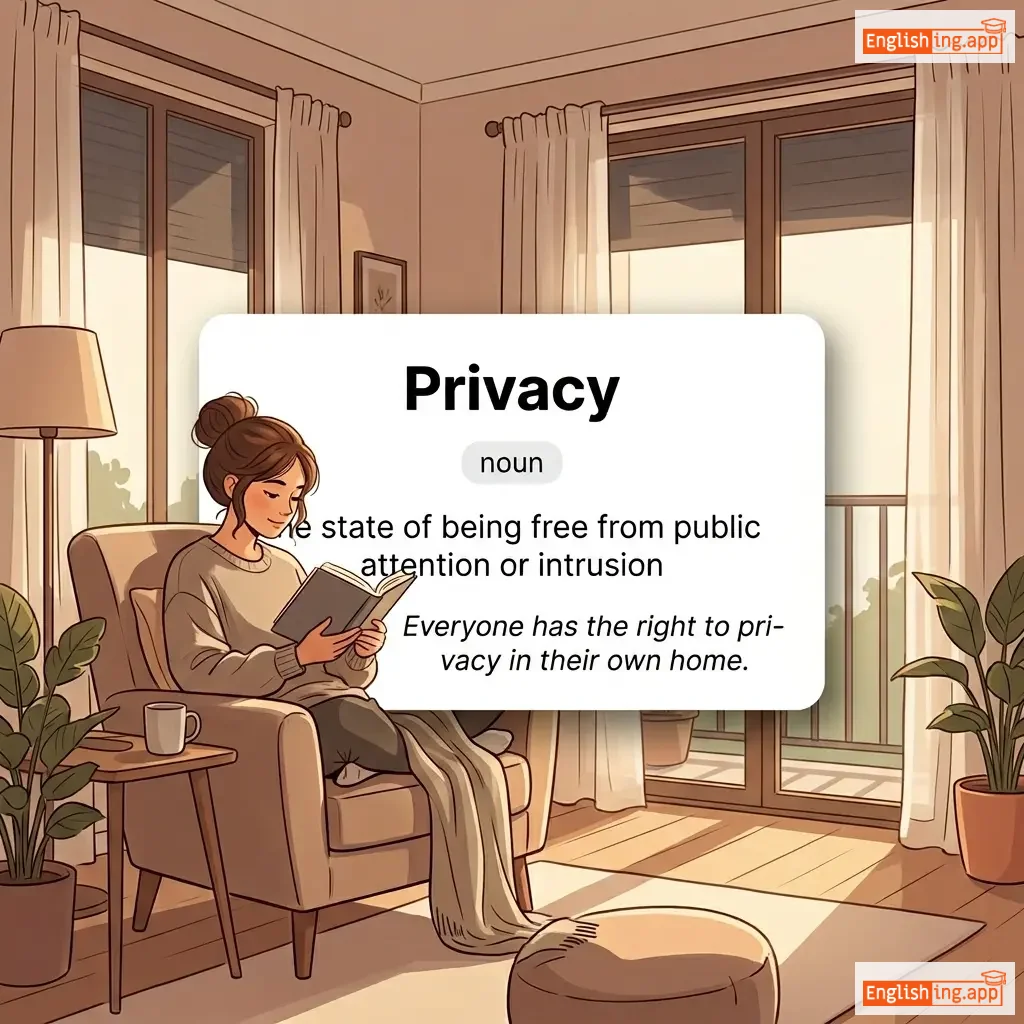
Privacy definition card — visual illustration of the meaning
noun
/ˈpraɪvəsi/
プライバシー (puraibashī)

the state of being free from public attention or intrusion

"Everyone has the right to privacy in their own home."
"誰もが自分の家でプライバシーを守る権利を持っています。" (Dare mo ga jibun no ie de puraibashī o mamoru kenri o motteimasu.)
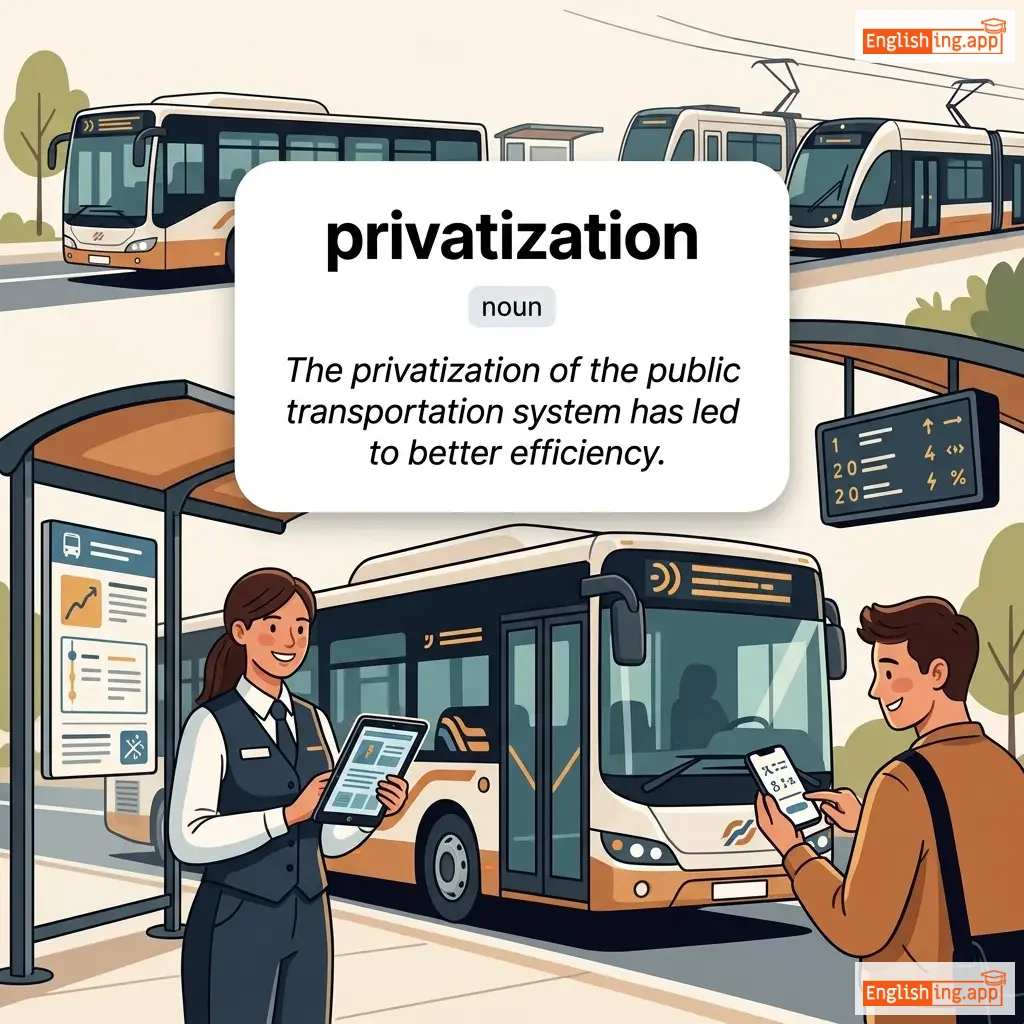
privatization definition card — visual illustration of the meaning
noun
/ˌpraɪvətəˈzeɪʃən/
民営化 (min'eika)

the process of transferring ownership of a business, industry, or service from the public sector to the private sector

"The privatization of the public transportation system has led to better efficiency."

"公共交通システムの民営化は、効率の向上をもたらしました。" (Kōkyō kōtsū shisutemu no min'eika wa, kōritsu no kōjō o motarashimashita.)
adjective
/ˈprɪvi/
秘密の知識 (himitsu no chishiki)

having access to secret or private knowledge

"She was privy to the confidential discussions."

"彼女は機密の議論に通じていました。" (Kanojo wa kimitsu no giron ni tsūjite imashita.)
noun
/ˈprɪvɪti/
プライバシー関係、契約関係 (puraibashī kankei, keiyaku kankei)

A close, private, or special relationship; in law, the direct connection between parties to a contract.

"There was no privity of contract between the supplier and the customer."

"供給者と顧客の間には契約関係がなかった。" (kyōkyūsha to kokyaku no aida ni wa keiyaku kankei ga nakatta.)
adjective
/ˈprɪv.ə.lɪdʒd/
恵まれた (megumareta)

having special advantages; favored; elite

"She comes from a privileged background with many opportunities."

"彼女は機会に恵まれた背景を持っている。" (Kanojo wa kikai ni megumareta haikei o motte iru.)
noun
/ˈprɪvəlɪdʒ/
特権, 利点 (tokken, riten)

A special right, advantage, or immunity granted or available only to a particular person or group.

"Education is considered a privilege in many developing countries."

"多くの発展途上国では、教育は特権と見なされています。" (Ooku no hatten tojoukoku de wa, kyouiku wa tokken to minasareteimasu.)
adverb
/ˈpraɪvətli/
プライベートで (puraibēto de)

in a private way; not in public or not shared with others

"She spoke to him privately about the issue."

"彼女はその問題についてプライベートで彼に話しました。" (Kanojo wa sono mondai ni tsuite puraibēto de kare ni hanashimashita.)
noun
/ˈpraɪ.vət ˈtuː.tər/
プライベートチューター (puraibēto chūtā)

a teacher who gives individual instruction to a student outside of regular school

"The private tutor helped the student improve his math skills."

"プライベートチューターは、学生が数学スキルを向上させるのを手伝いました。" (puraibēto chūtā wa, gakusei ga sūgaku sukiru o kōjō saseru no o tetsudaimashita)
noun
/ˌpraɪvəˈtɪə/
私掠船 (shiryaku-sen)

A privately owned armed ship authorized by a government to attack enemy ships during war.

"The privateer captured several enemy vessels during the conflict."

"プライベティアは紛争中にいくつかの敵船を捕らえました。" (Puraibetiya wa funsō-chū ni ikutsuka no teki-sen o toraemashita.)