Vocabularios

Descubra, aprenda y domine el vocabulario en inglés

verb
/prɪˈzjuːm/
suponer (suponer)

To suppose something is true without proof; to take for granted.

"I presume she has already left for the meeting."

"Yo presumo que ella ya se ha ido a la reunión." (Yo presumo que ella ya se ha ido a la reunión.)
noun
/prɪˈzʌmpʃən/
presunción (presuncion)

An idea believed to be true without proof; an assumption or act of overconfidence.

"The presumption of his guilt was unfair."

"La presunción de su culpabilidad era injusta." (La presuncion de su culpabilidad era injusta.)
adjective
/prɪˈzʌmptɪv/
presunto (presunto)

Based on probability or assumption rather than proof.

"She is the presumptive nominee for the party."

"Ella es la nominada presunta para el partido." (Ella es la nominada presunta para el partido.)
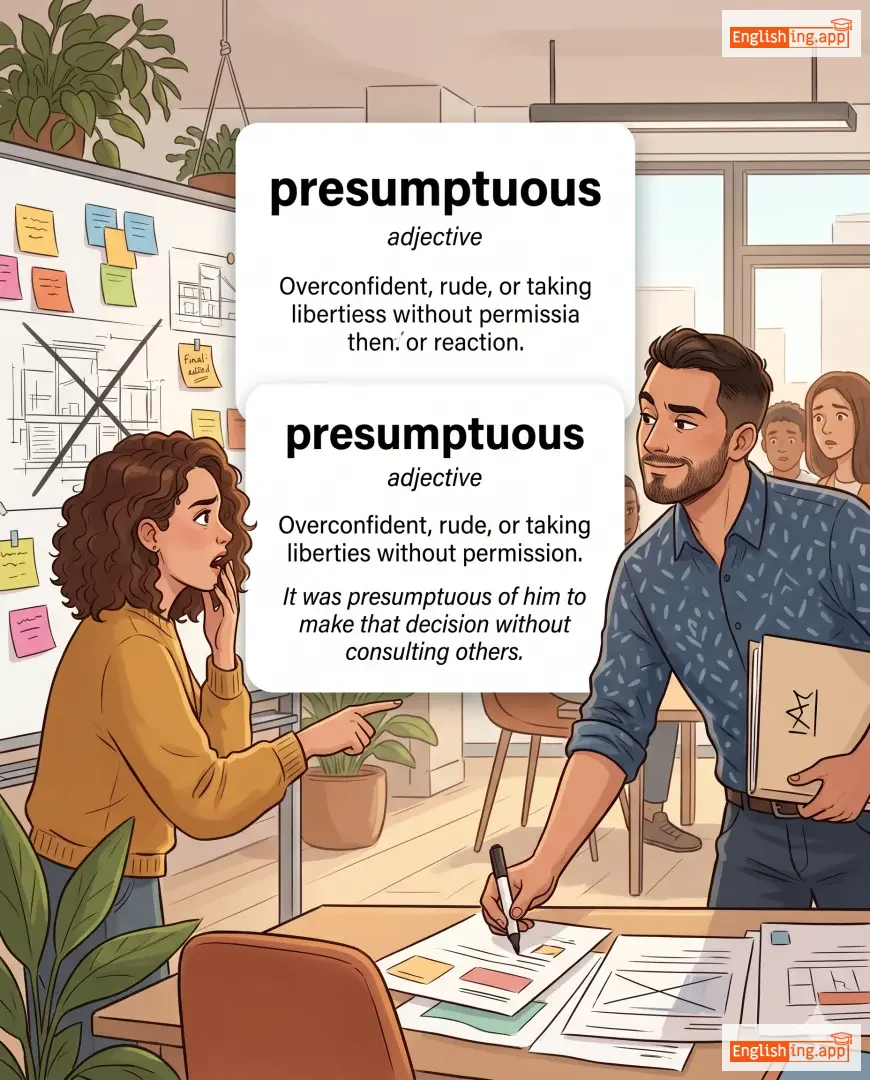
presumptuous definition card — visual illustration of the meaning
adjective
/prɪˈzʌmp.tʃu.əs/
presuntuoso (presuntuoso)

Overconfident, rude, or taking liberties without permission.

"It was presumptuous of him to make that decision without consulting others."

"Fue presuntuoso de su parte tomar esa decisión sin consultar a los demás." (Fue presuntuoso de su parte tomar esa decision sin consultar a los demas.)
noun
/prɪˈtens/
pretensión (pretenshon)

an attempt to make something that is not the case appear true

"He made no pretence of being interested in the conversation."

"Él no hizo ninguna pretensión de estar interesado en la conversación." (El no hizo ninguna pretension de estar interesado en la conversacion.)
verb
/prɪˈtɛnd/
fingir (fingir)

To act as if something is true when it is not.

"The children pretended to be superheroes."

"Los niños fingieron ser superhéroes." (Los niños fingieron ser superhéroes.)
😶‍🌫️

pretense (preténs)

noun
/ˈpriː.tɛns/ or /prɪˈtɛns/
farsa, pretensión (farsa, pretension)

A false appearance or claim; an act of pretending.

"His kindness was only a pretense to gain trust."

"Su amabilidad fue solo una farsa para ganar confianza." (Su amabilidad fue solo una farsa para ganar confianza.)
noun
/prɪˈtɛnʃən/
pretensión, falsa apariencia (pretension, falsa apariencia)

A claim or assertion to something, often without justification; an attempt to impress by showing greater importance or talent than is actually possessed.

"His pretension to be an expert was quickly exposed."

"Su pretensión de ser un experto fue rápidamente expuesta." (su pretension de ser un experto fue rapidamente expuesta.)
adjective
/prɪˈtɛnʃəs/
pretencioso (pretencioso)

Attempting to impress by affecting greater importance, talent, culture, etc., than is actually possessed.

"The restaurant was stylish but far too pretentious for my taste."

"El restaurante era elegante, pero demasiado pretencioso para mi gusto." (El restaurante era elegante, pero demasiado pretencioso para mi gusto.)
adjective
/ˌpriːtərˈnætʃərəl/
sobrenatural (sobrenatural)

Beyond what is normal or natural; extraordinary or supernatural.

"She had a preternatural ability to remain calm in any crisis."

"Ella tenía una habilidad preternatural para mantenerse tranquila en cualquier crisis." (Ella tenia una habilidad preternatural para mantenerse tranquila en cualquier crisis.)
noun
/ˈpriːtɛkst/
pretexto, excusa falsa (pretexto, excusa falsa)

A false reason given to hide the real purpose or motive.

"He went out on the pretext of buying groceries."

"Salió bajo el pretexto de comprar víveres." (Salió bajo el pretexto de comprar víveres.)
adjective
/ˈprɪti/
bonita (bonita)

Attractive in a delicate way without being truly beautiful.

"She looked pretty in her new dress."

"Ella se veía bonita en su nuevo vestido." (Ella se veía bonita en su nuevo vestido.)
verb
/prɪˈveɪl/
prevalecer (prevalecer)

To prove more powerful or superior; to be widespread or common.

"Justice will always prevail over injustice."

"La justicia siempre prevalecerá sobre la injusticia." (La justicia siempre prevalecerá sobre la injusticia.)
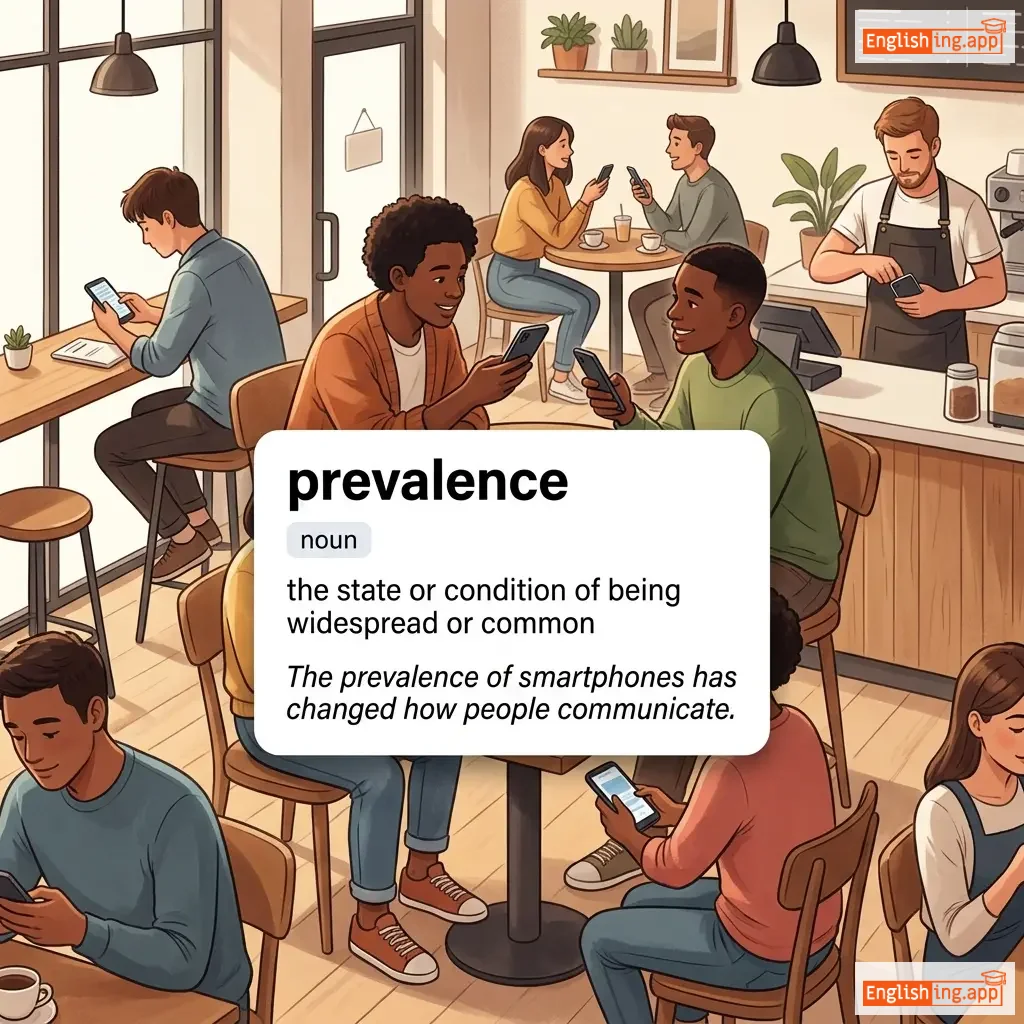
prevalence definition card — visual illustration of the meaning
noun
/ˈprɛvələns/
prevalencia (prevalencia)

the state or condition of being widespread or common

"The prevalence of smartphones has changed how people communicate."

"La prevalencia de los teléfonos inteligentes ha cambiado cómo se comunican las personas." (La prevalencia de los telefonos inteligentes ha cambiado como se comunican las personas.)
adjective
/ˈprɛvələnt/
predominante (predominante)

widespread or commonly occurring

"Flu is prevalent during the winter season."

"La gripe es prevalente durante la temporada de invierno." (La gripe es prevalente durante la temporada de invierno.)
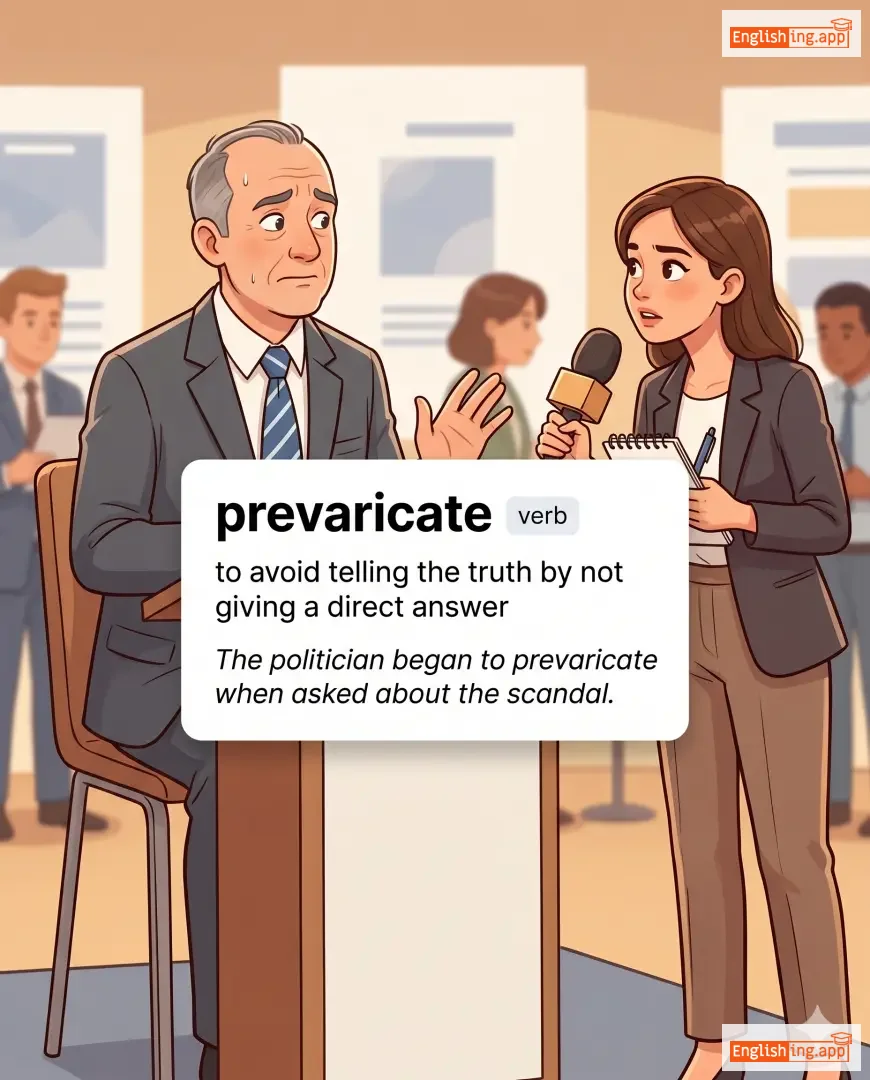
prevaricate definition card — visual illustration of the meaning
verb
/prɪˈværɪkeɪt/
evitar decir la verdad (evitar decir la verdad)

to avoid telling the truth by not giving a direct answer

"The politician began to prevaricate when asked about the scandal."

"El político comenzó a evadir cuando le preguntaron sobre el escándalo." (El político comenzó a evadir cuando le preguntaron sobre el escándalo.)
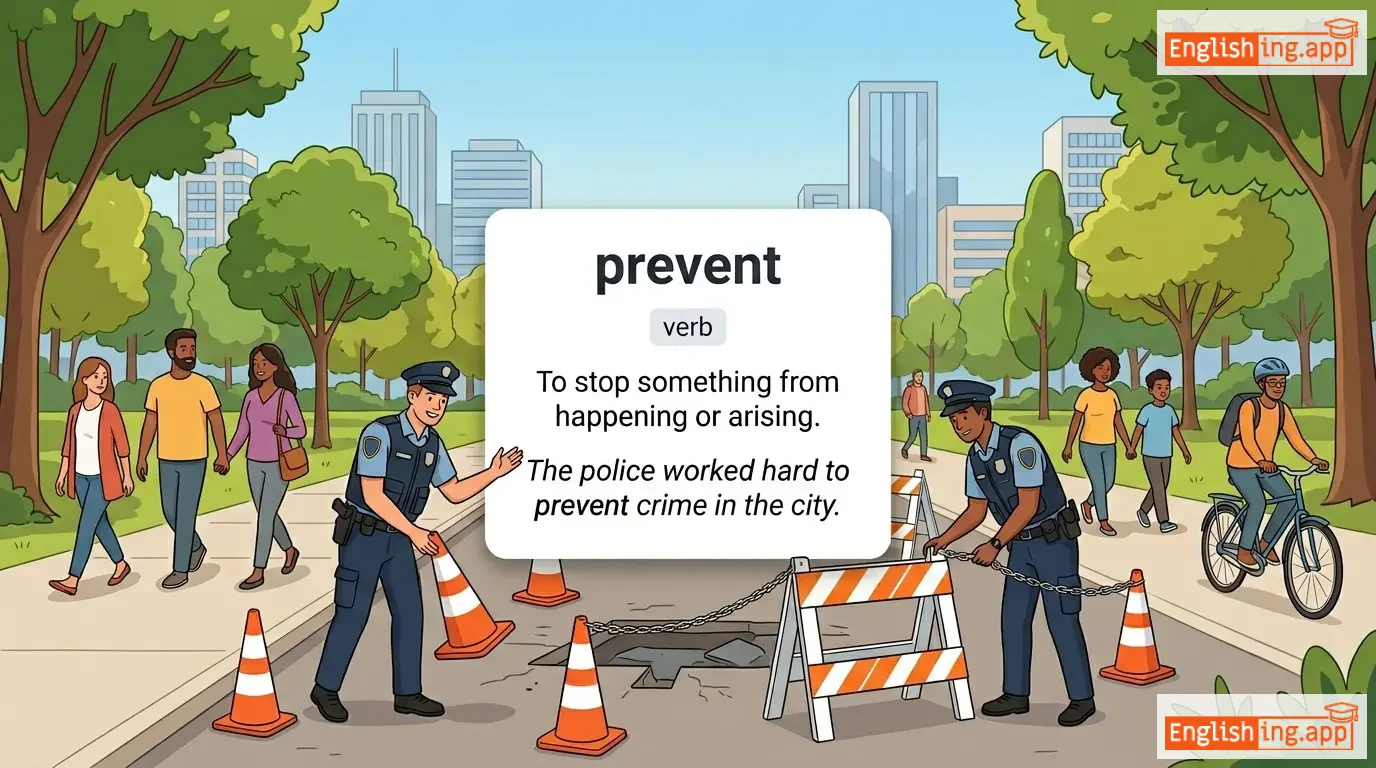
prevent definition card — visual illustration of the meaning
verb
/prɪˈvɛnt/
prevenir (prevenir)

To stop something from happening or arising.

"The police worked hard to prevent crime in the city."

"La policía trabajó duro para prevenir el crimen en la ciudad." (La policía trabajó duro para prevenir el crimen en la ciudad.)
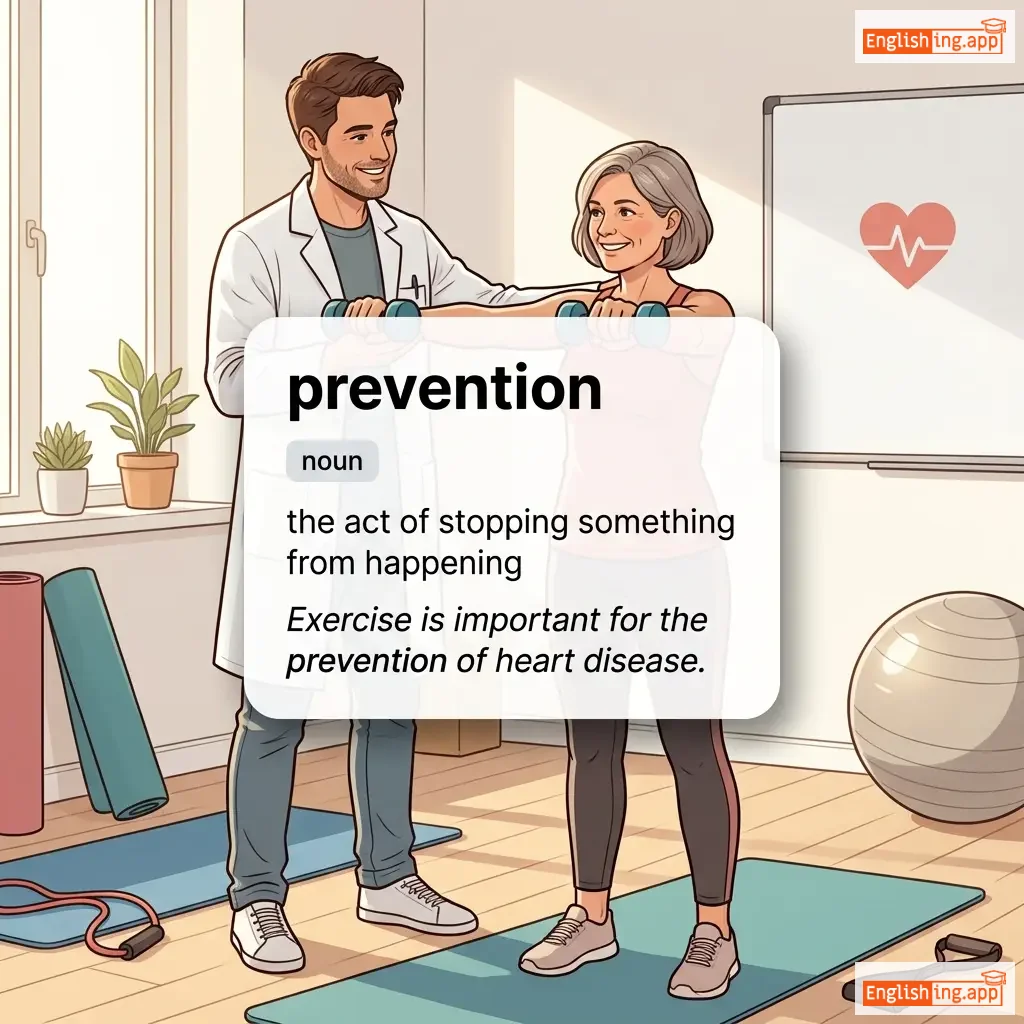
prevention definition card — visual illustration of the meaning
noun
/prɪˈvɛnʃən/
prevención (prevencion)

the act of stopping something from happening

"Exercise is important for the prevention of heart disease."

"El ejercicio es importante para la prevención de enfermedades del corazón." (El ejercicio es importante para la prevención de enfermedades del corazón.)
adjective
/prɪˈventɪv/
preventivo; diseñado para evitar algo que ocurra (pribentivo)

designed to prevent something from happening; protective against disease

"Regular exercise is a preventive measure against heart disease."

"El ejercicio regular es una medida preventiva contra las enfermedades del corazón." (El ejercicio regular es una medida preventiva contra las enfermedades del corazón.)
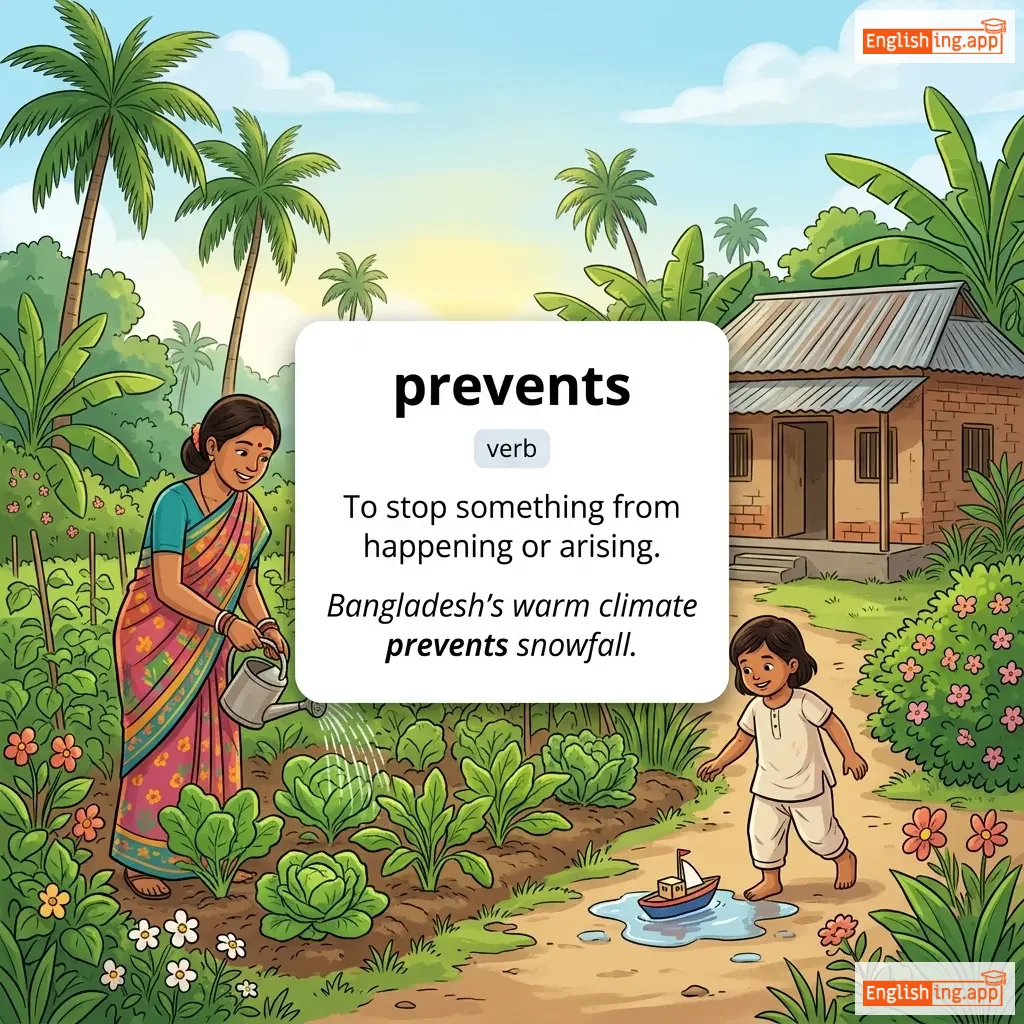
prevents definition card — visual illustration of the meaning
verb
প্রিভেন্টস
previene (previene)

To stop something from happening or arising.

"Bangladesh's warm climate prevents snowfall."

"El clima cálido de Bangladesh previene la caída de nieve." (El clima cálido de Bangladesh previene la caída de nieve.)
adjective
/ˈpriːviəs/
anterior (anterior)

Existing or happening before the present time.

"He referred to the previous meeting to explain his point."

"Él se refirió a la reunión anterior para explicar su punto." (Él se refirió a la reunión anterior para explicar su punto.)
adverb
/ˈpriːviəsli/
anteriormente (anteriormente)

at an earlier time or before now

"She had previously worked at a bank before starting her own business."

"Ella había trabajado anteriormente en un banco antes de comenzar su propio negocio." (Ella habia trabajado anteriormente en un banco antes de comenzar su propio negocio.)
noun/verb
/preɪ/
presa (presa)

an animal hunted by another for food; to hunt and feed on

"Lions prey on zebras in the wild."

"Los leones cazan cebras en la naturaleza." (Los leones cazan cebras en la naturaleza.)
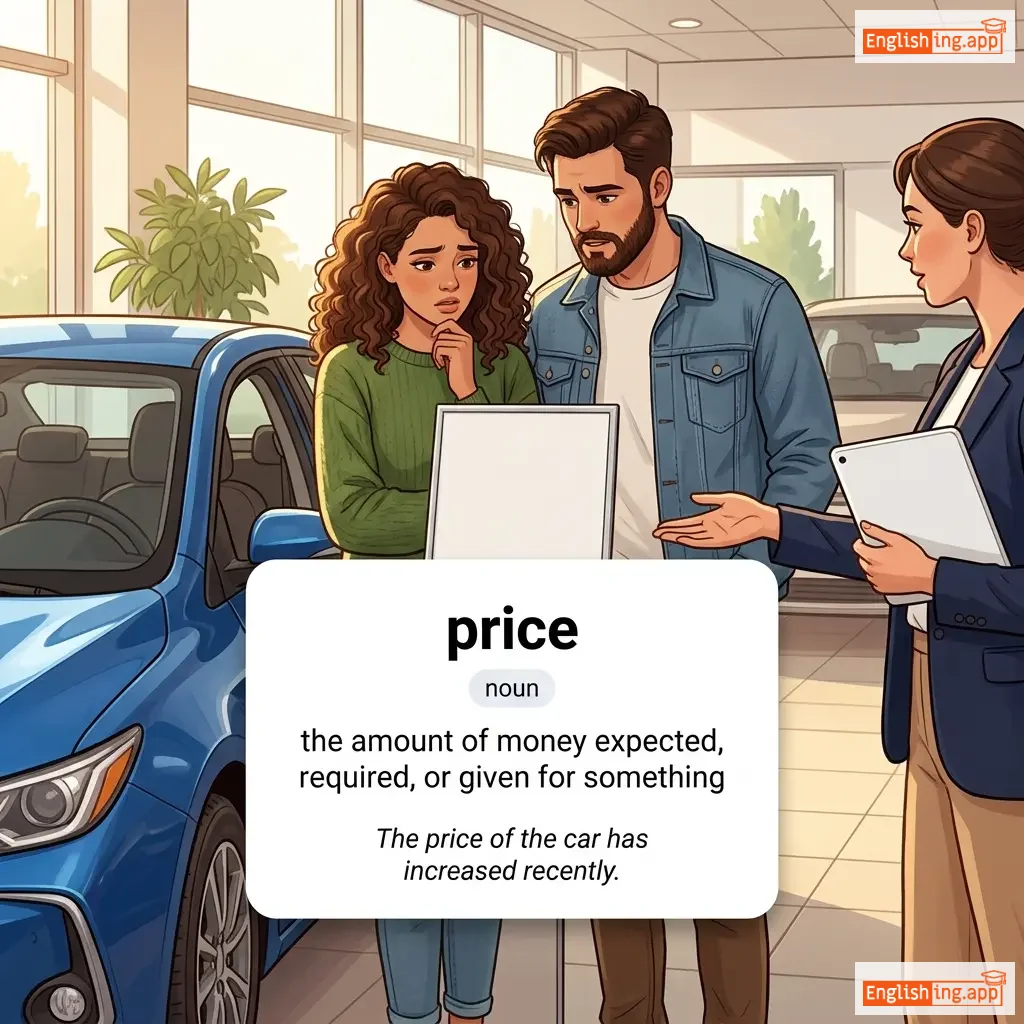
price definition card — visual illustration of the meaning
noun
/praɪs/
precio (precio)

the amount of money expected, required, or given for something

"The price of the car has increased recently."

"El precio del coche ha aumentado recientemente." (El precio del coche ha aumentado recientemente.)
adjective
/ˈpraɪs.ləs/
invaluable; de incalculable valor (invaluable; de incalculable valor)

extremely valuable; invaluable; beyond price

"Her grandmother's antique jewelry is absolutely priceless."

"Las joyas antiguas de su abuela son absolutamente invaluables." (Las joyas antiguas de su abuela son absolutamente invaluables.)
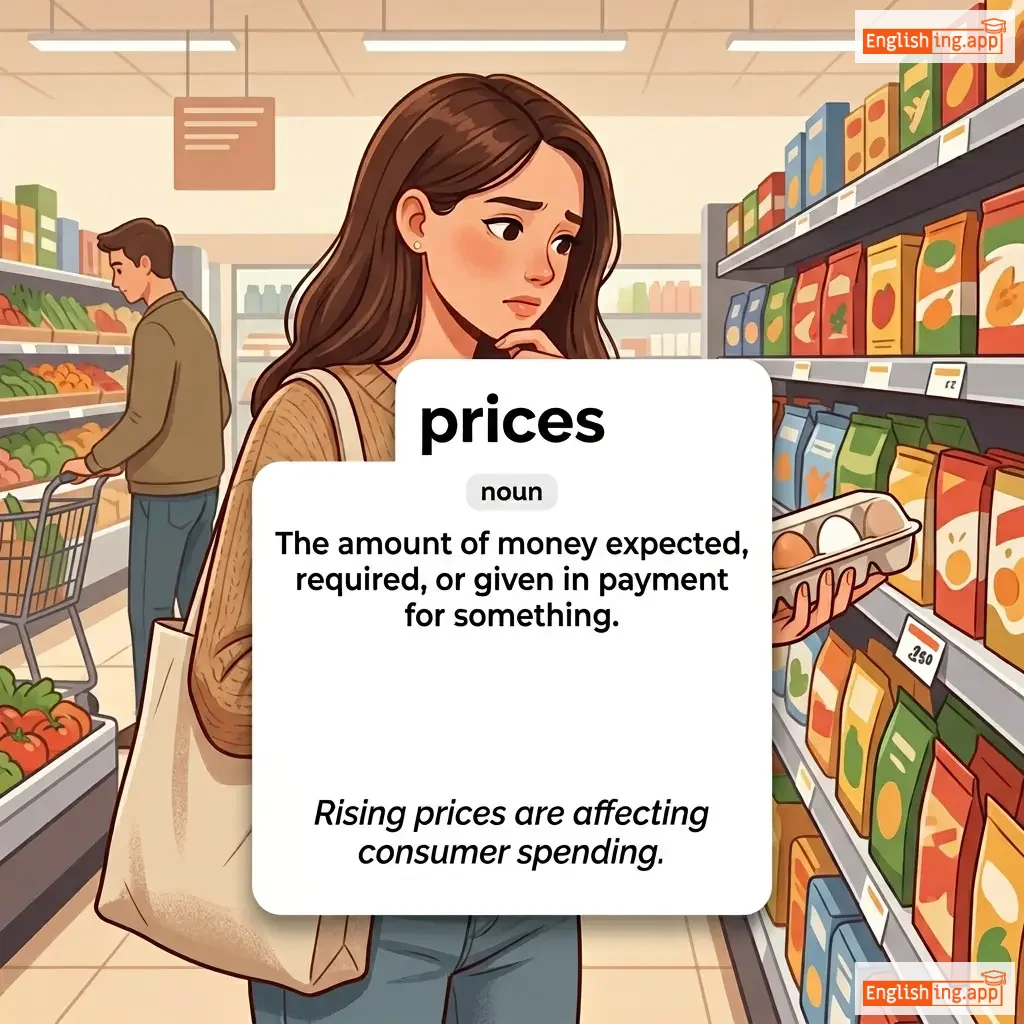
prices definition card — visual illustration of the meaning
noun
ˈpraɪsɪz
precios (precios)

The amount of money expected, required, or given in payment for something.

"Rising prices are affecting consumer spending."

"El aumento de los precios está afectando el gasto de los consumidores." (El aumento de los precios está afectando el gasto de los consumidores.)
verb
/ˈprɪkəl/
hormiguear (hormiguear)

to cause a slight stinging or tingling sensation on the skin

"Her skin began to prickle in the cold wind."

"Su piel comenzó a hormiguear con el viento frío." (Su piel comenzo a hormiguear con el viento frio.)
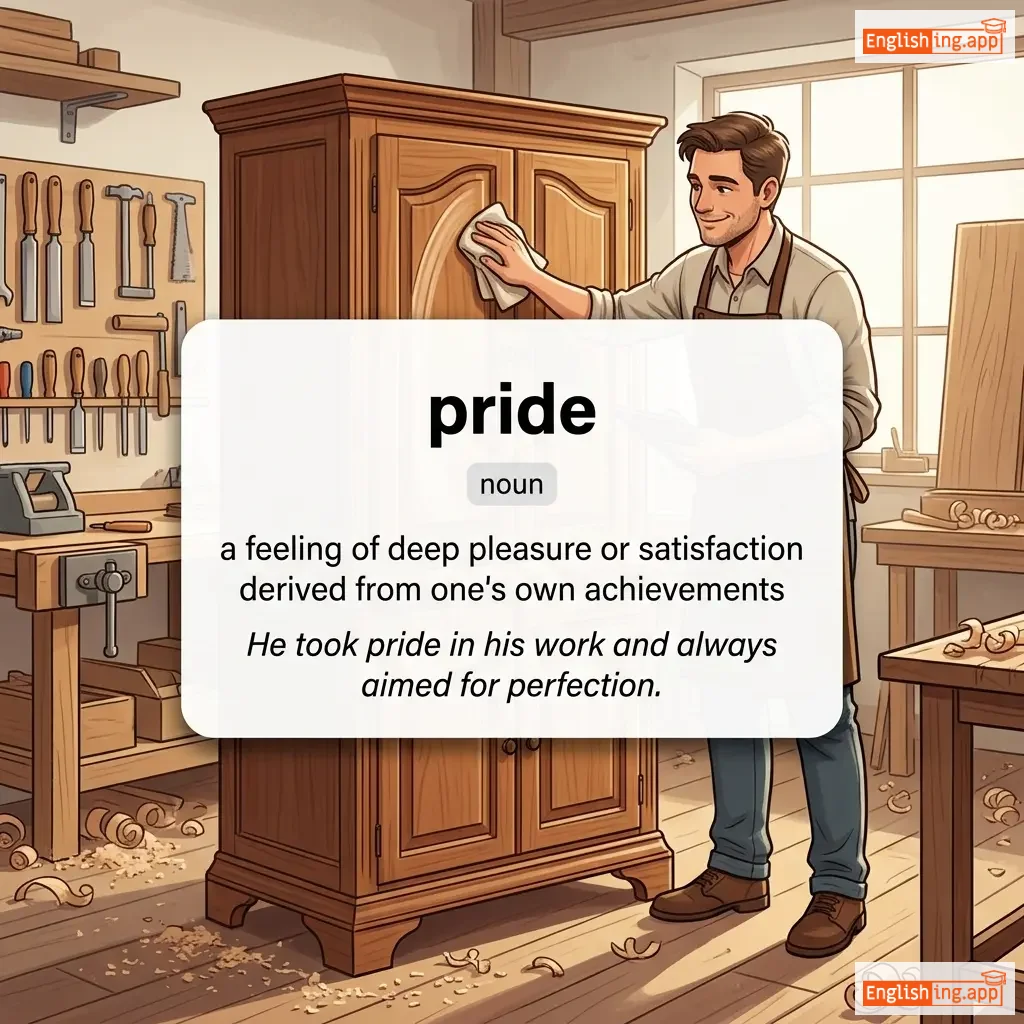
pride definition card — visual illustration of the meaning
noun
/praɪd/
orgullo (orgullo)

a feeling of deep pleasure or satisfaction derived from one's own achievements

"He took pride in his work and always aimed for perfection."

"Él sentía orgullo de su trabajo y siempre aspiraba a la perfección." (El sentía orgullo de su trabajo y siempre aspiraba a la perfección.)
noun
/priːst/
sacerdote (sacerdote)

a person who performs religious duties and ceremonies

"The priest blessed the congregation during the Sunday service."

"El sacerdote bendijo a la congregación durante el servicio dominical." (El sacerdote bendijo a la congregación durante el servicio dominical.)
adjective
/ˈprɪɡɪʃ/
moralista y arrogante (moralista y arrogante)

self-righteously moralistic and superior

"He came across as priggish when correcting everyone's manners."

"Él parecía moralista y arrogante cuando corregía los modales de todos." (El parecía moralista y arrogante cuando corregía los modales de todos.)
adjective
/prɪm/
excesivamente formal o correcto (excesivamente formal o correcto)

stiffly formal and proper in appearance or behavior

"She looked prim in her neatly pressed dress."

"Ella se veía prim en su vestido bien planchado." (Ella se veia prim en su vestido bien planchado.)
adjective
/ˈpraɪvət/
privado (privado)

belonging to or for the use of one particular person or group

"She enjoys her private time away from work."

"Ella disfruta de su tiempo privado lejos del trabajo." (Ella disfruta de su tiempo privado lejos del trabajo.)
noun
/ˈprɪn.tər/
impresor (impresor)

a person whose job is printing books, newspapers, or other materials; a machine that prints documents

"The printer delivered the wedding invitations on time."

"El impresor entregó las invitaciones de boda a tiempo." (El impresor entregó las invitaciones de boda a tiempo.)
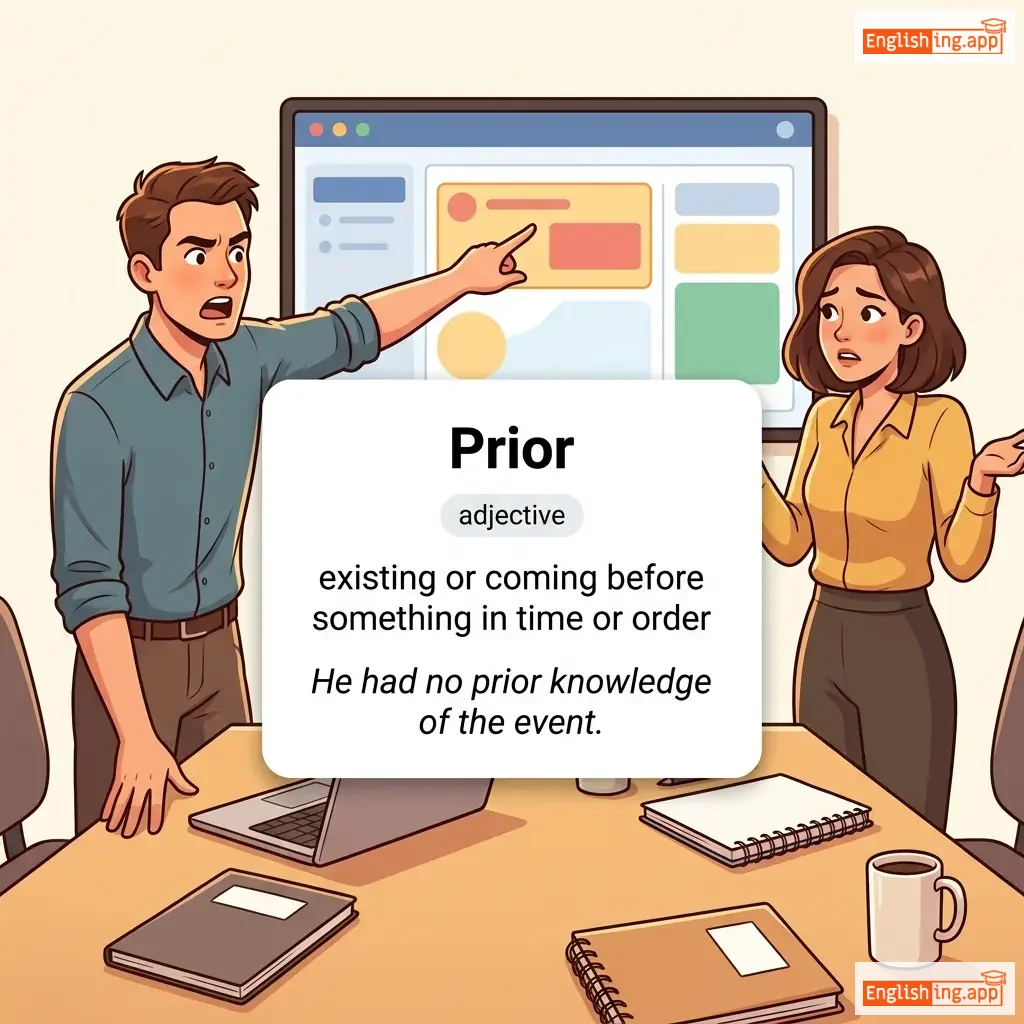
Prior definition card — visual illustration of the meaning
adjective
/ˈpraɪər/
previo (previo)

existing or coming before something in time or order

"He had no prior knowledge of the event."

"Él no tenía conocimiento previo del evento." (El no tenia conocimiento previo del evento.)
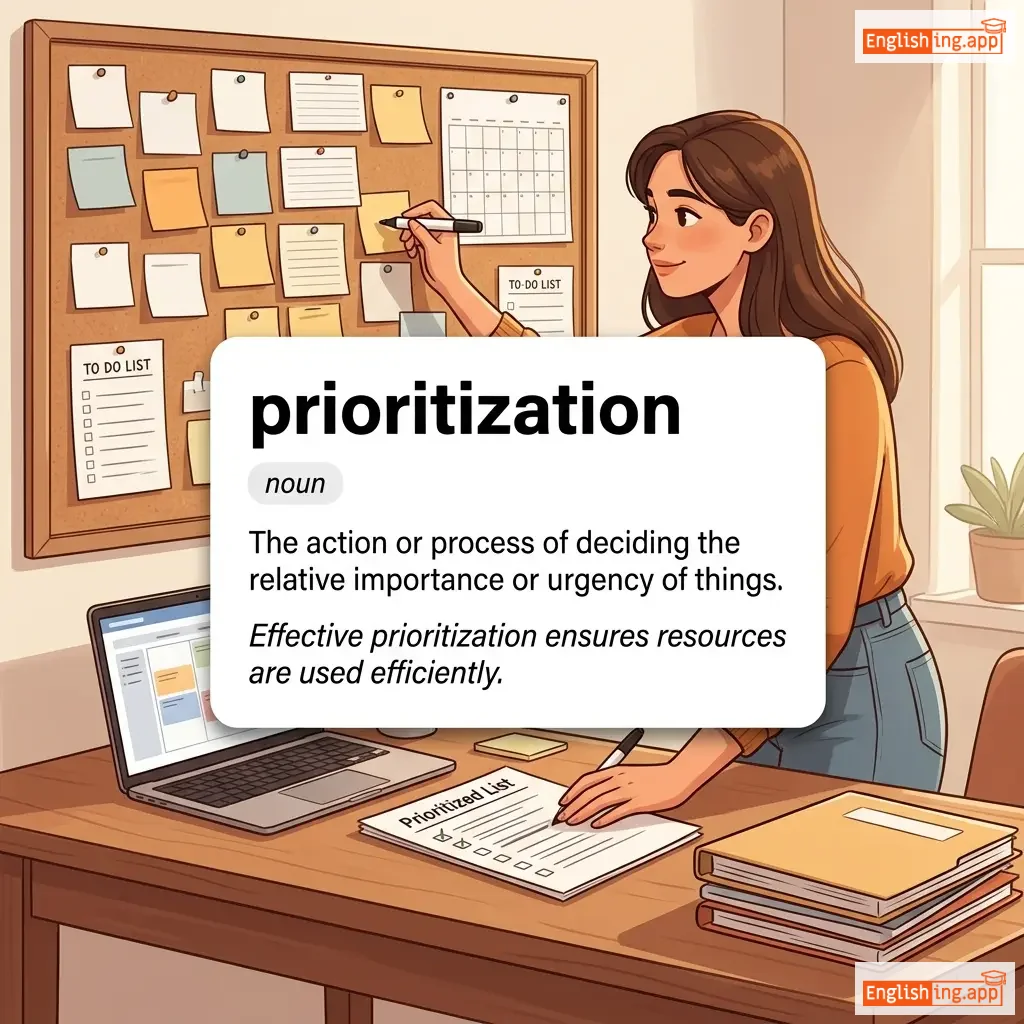
prioritization definition card — visual illustration of the meaning
noun
ˌpraɪɔːrɪtaɪˈzeɪʃən
priorización (priorizacion)

The action or process of deciding the relative importance or urgency of things.

"Effective prioritization ensures resources are used efficiently."

"Una priorización efectiva asegura que los recursos se utilicen de manera eficiente." (Una priorizacion efectiva asegura que los recursos se utilicen de manera eficiente.)
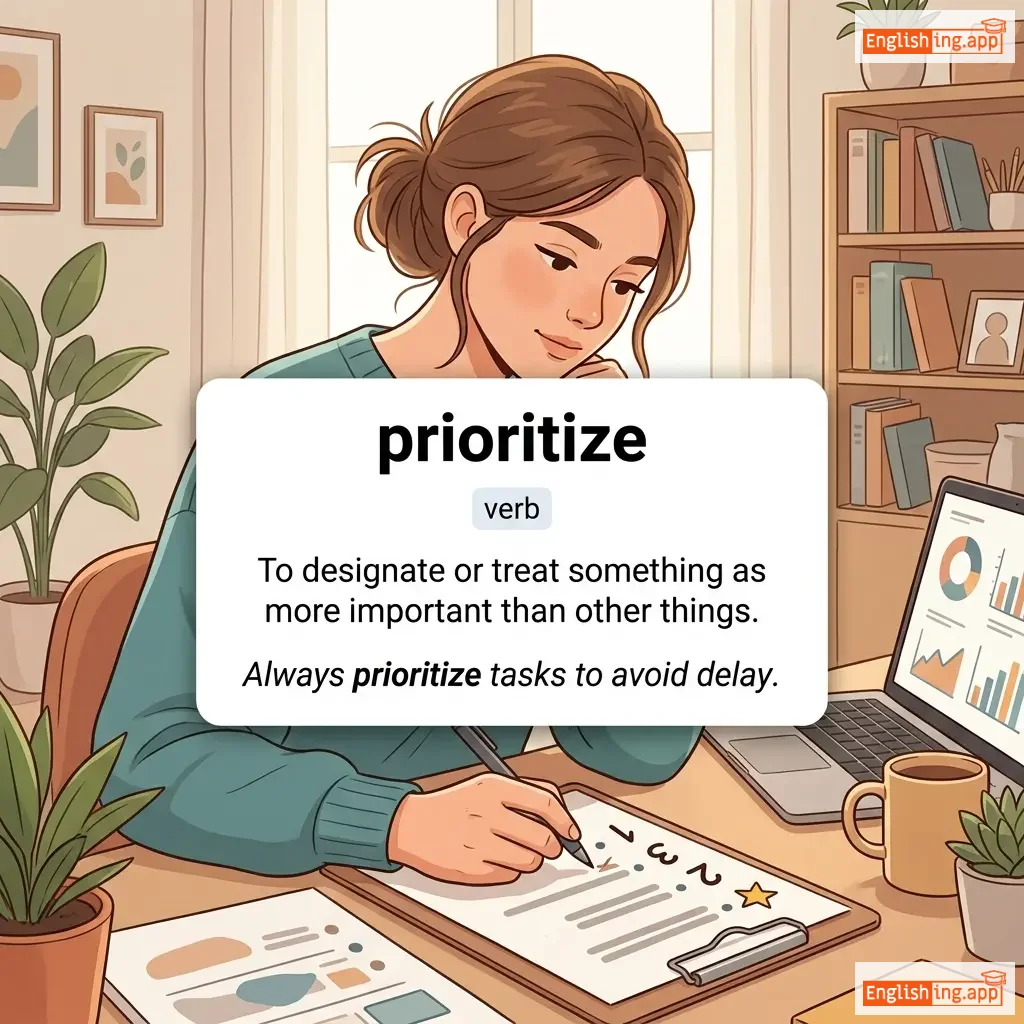
prioritize definition card — visual illustration of the meaning
verb
/praɪˈɔːrətaɪz/
priorizar (priorizar)

To designate or treat something as more important than other things.

"Always prioritize tasks to avoid delay."

"Siempre prioriza las tareas para evitar retrasos." (Siempre prioriza las tareas para evitar retrasos.)
noun
/praɪˈɒrɪti/
prioridad (prioridad)

Something that is regarded as more important than other things.

"Safety is the top priority in this company."

"La seguridad es la principal prioridad en esta empresa." (La seguridad es la principal prioridad en esta empresa.)
noun
/ˈpraɪəri/
priorato (priorato)

a small monastery or convent governed by a prior or prioress

"The old priory was converted into a museum."

"El antiguo priorato fue convertido en un museo." (El antiguo priorato fue convertido en un museo.)
noun
/ˈprɪzən/
prisión (prision)

a building where people are kept as punishment for a crime or while waiting for trial

"He was sent to prison for his crimes."

"Fue enviado a prisión por sus crímenes." (Fue enviado a prision por sus crimenes.)
👨‍⚖️

prisoner (prisoner)

noun
/ˈprɪzənər/
prisionero (prisionero)

a person who is in prison

"The prisoner was granted parole after serving 10 years."

"El prisionero fue liberado bajo fianza después de cumplir 10 años." (El prisionero fue liberado bajo fianza despues de cumplir 10 años.)
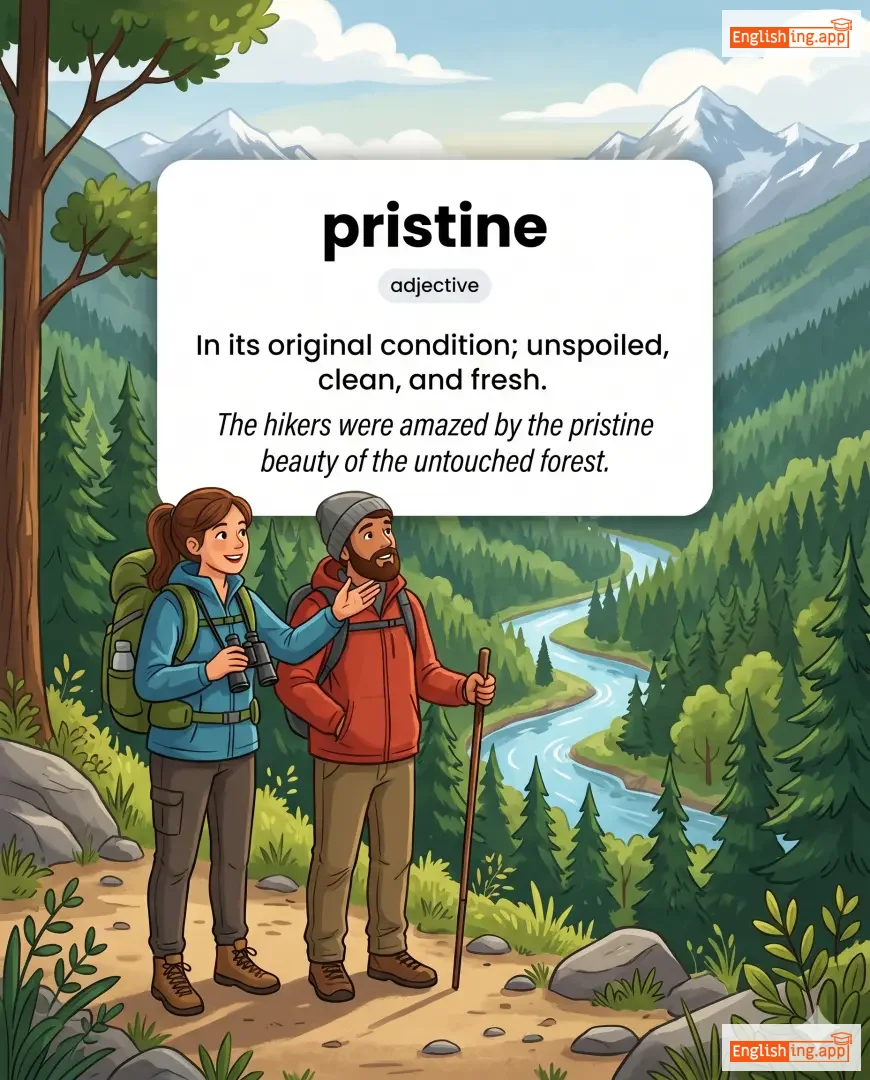
pristine definition card — visual illustration of the meaning
adjective
/ˈprɪstiːn/
intacto, puro (intacto, puro)

In its original condition; unspoiled, clean, and fresh.

"The hikers were amazed by the pristine beauty of the untouched forest."

"Los excursionistas se sorprendieron por la belleza prístina del bosque intocado." (Los excursionistas se sorprendieron por la belleza prístina del bosque intocado.)
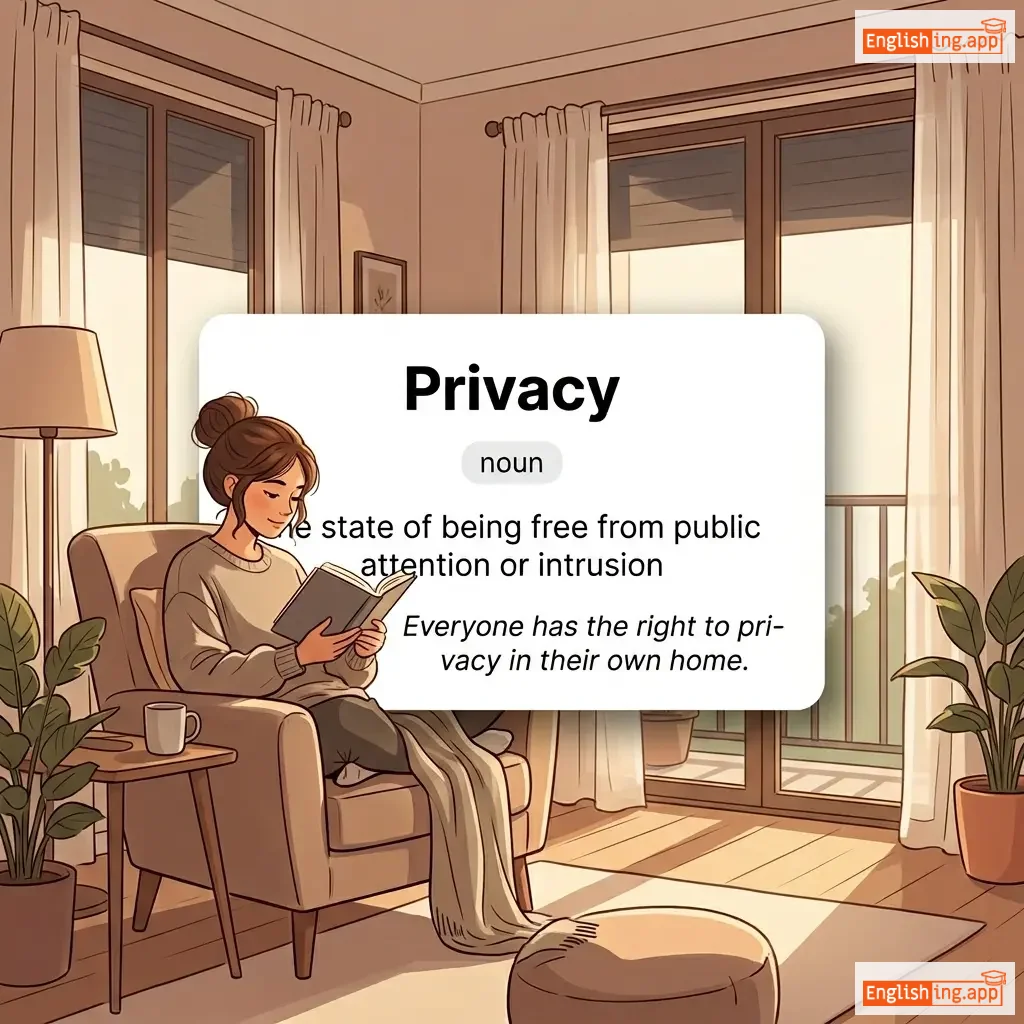
Privacy definition card — visual illustration of the meaning
noun
/ˈpraɪvəsi/
privacidad (privacidad)

the state of being free from public attention or intrusion

"Everyone has the right to privacy in their own home."

"Cada persona tiene el derecho a la privacidad en su propio hogar." (Cada persona tiene el derecho a la privacidad en su propio hogar.)
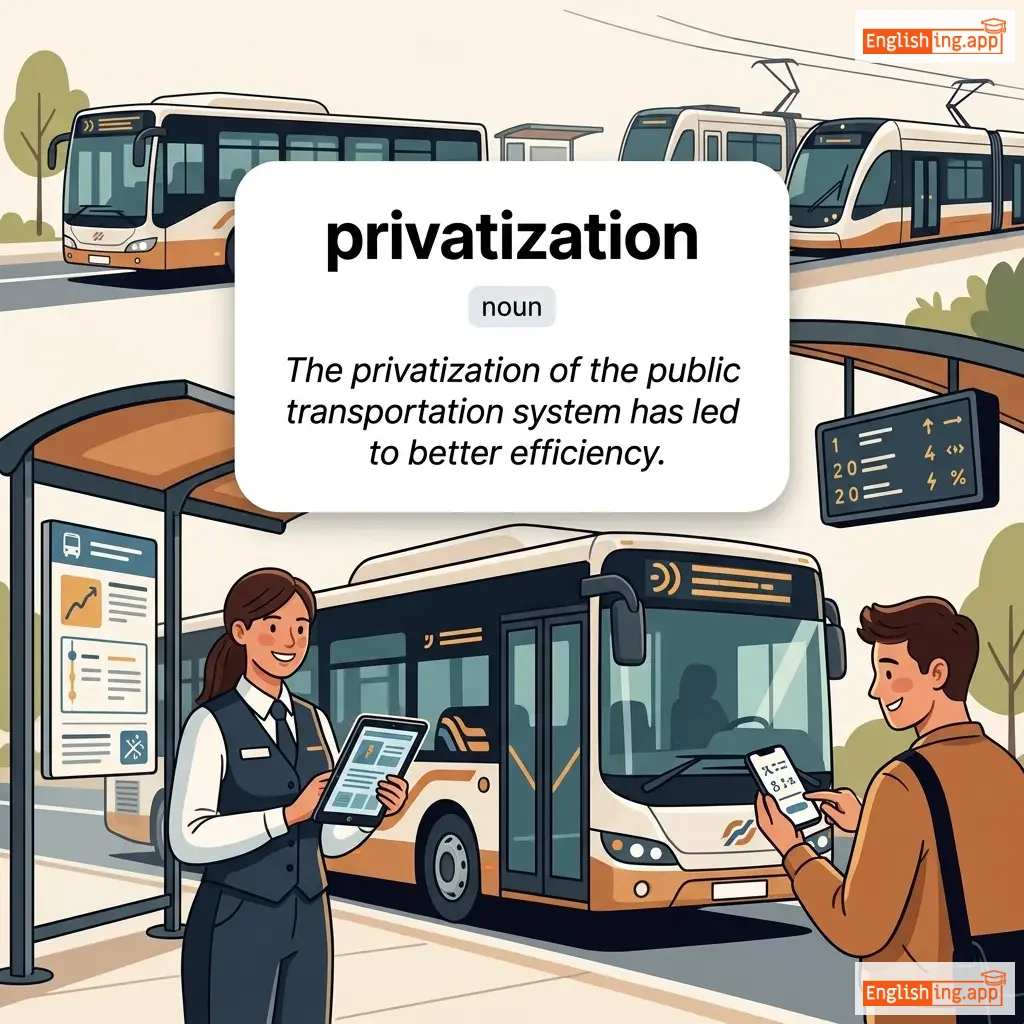
privatization definition card — visual illustration of the meaning
noun
/ˌpraɪvətəˈzeɪʃən/
privatización (privatizacion)

the process of transferring ownership of a business, industry, or service from the public sector to the private sector

"The privatization of the public transportation system has led to better efficiency."

"La privatización del sistema de transporte público ha llevado a una mejor eficiencia." (La privatizacion del sistema de transporte publico ha llevado a una mejor eficiencia.)
adjective
/ˈprɪvi/
conocimiento secreto (conocimiento secreto)

having access to secret or private knowledge

"She was privy to the confidential discussions."

"Ella estaba al tanto de las discusiones confidenciales." (Ella estaba al tanto de las discusiones confidenciales.)
noun
/ˈprɪvɪti/
relación privada, relación contractual (relacion privada, relacion contractual)

A close, private, or special relationship; in law, the direct connection between parties to a contract.

"There was no privity of contract between the supplier and the customer."

"No había relación contractual entre el proveedor y el cliente." (no habia relacion contractual entre el proveedor y el cliente.)
adjective
/ˈprɪv.ə.lɪdʒd/
privilegiado (privilegiado)

having special advantages; favored; elite

"She comes from a privileged background with many opportunities."

"Ella proviene de un entorno privilegiado con muchas oportunidades." (Ella proviene de un entorno privilegiado con muchas oportunidades.)
noun
/ˈprɪvəlɪdʒ/
privilegio, ventaja (privilegio, ventaja)

A special right, advantage, or immunity granted or available only to a particular person or group.

"Education is considered a privilege in many developing countries."

"La educación se considera un privilegio en muchos países en desarrollo." (La educación se considera un privilegio en muchos países en desarrollo.)
adverb
/ˈpraɪvətli/
en privado (en privado)

in a private way; not in public or not shared with others

"She spoke to him privately about the issue."

"Ella le habló en privado sobre el asunto." (Ella le habló en privado sobre el asunto.)
noun
/ˈpraɪ.vət ˈtuː.tər/
tutor privado (tutor privado)

a teacher who gives individual instruction to a student outside of regular school

"The private tutor helped the student improve his math skills."

"El tutor privado ayudó al estudiante a mejorar sus habilidades en matemáticas." (El tutor privado ayudo al estudiante a mejorar sus habilidades en matematicas)
noun
/ˌpraɪvəˈtɪə/
corsario (corsario)

A privately owned armed ship authorized by a government to attack enemy ships during war.

"The privateer captured several enemy vessels during the conflict."

"El corsario capturó varios barcos enemigos durante el conflicto." (El corsario capturó varios barcos enemigos durante el conflicto.)