Vocabulaires

Découvrez, apprenez et maîtrisez le vocabulaire anglais

verb
/prɪˈzjuːm/
supposer (supposer)

To suppose something is true without proof; to take for granted.

"I presume she has already left for the meeting."

"Je présume qu'elle est déjà partie pour la réunion." (Je présume qu'elle est déjà partie pour la réunion.)
noun
/prɪˈzʌmpʃən/
présomption (presomption)

An idea believed to be true without proof; an assumption or act of overconfidence.

"The presumption of his guilt was unfair."

"La présomption de sa culpabilité était injuste." (La presomption de sa culpabilite etait injuste.)
adjective
/prɪˈzʌmptɪv/
présumé (presume)

Based on probability or assumption rather than proof.

"She is the presumptive nominee for the party."

"Elle est la candidate présumée pour le parti." (Elle est la candidate presume pour le parti.)
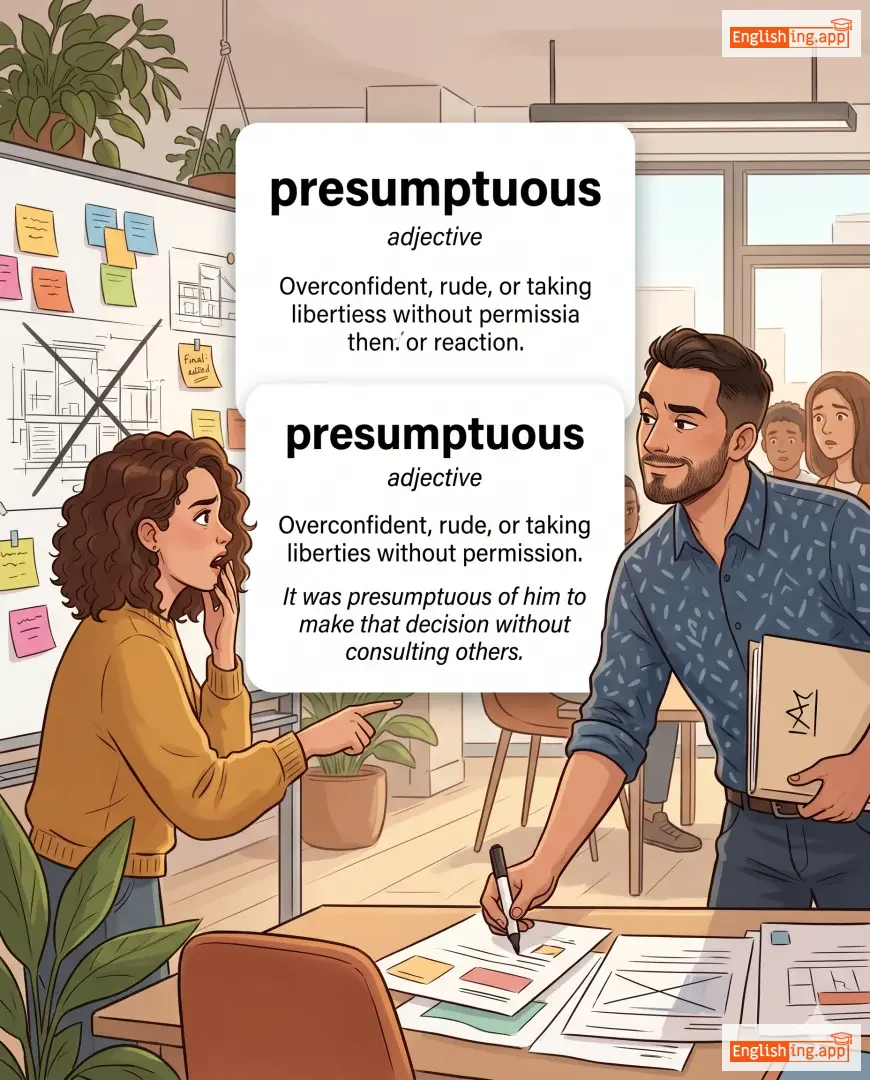
presumptuous definition card — visual illustration of the meaning
adjective
/prɪˈzʌmp.tʃu.əs/
prétentieux (pretentieux)

Overconfident, rude, or taking liberties without permission.

"It was presumptuous of him to make that decision without consulting others."

"Il a été présomptueux de sa part de prendre cette décision sans consulter les autres." (Il a ete presumptueux de sa part de prendre cette decision sans consulter les autres.)
noun
/prɪˈtens/
prétention (pretansyon)

an attempt to make something that is not the case appear true

"He made no pretence of being interested in the conversation."

"Il n'a fait aucune prétention d'être intéressé par la conversation." (Il na fait aucune pretension d'etre interesse par la conversation.)
verb
/prɪˈtɛnd/
faire semblant (faire semblant)

To act as if something is true when it is not.

"The children pretended to be superheroes."

"Les enfants ont fait semblant d'être des super-héros." (Les enfants ont fait semblant d'être des super-héros.)
😶‍🌫️

pretense (pritenz)

noun
/ˈpriː.tɛns/ or /prɪˈtɛns/
prétention, faux-semblant (pretention, faux-semblant)

A false appearance or claim; an act of pretending.

"His kindness was only a pretense to gain trust."

"Sa gentillesse n'était qu'un faux-semblant pour gagner la confiance." (Sa gentillesse n'était qu'un faux-semblant pour gagner la confiance.)
noun
/prɪˈtɛnʃən/
prétention, fausse apparence (pretention, fausse apparence)

A claim or assertion to something, often without justification; an attempt to impress by showing greater importance or talent than is actually possessed.

"His pretension to be an expert was quickly exposed."

"Sa prétention à être un expert a été rapidement exposée." (sa pretention a etre un expert a ete rapidement exposee.)
adjective
/prɪˈtɛnʃəs/
prétentieux (pretentieux)

Attempting to impress by affecting greater importance, talent, culture, etc., than is actually possessed.

"The restaurant was stylish but far too pretentious for my taste."

"Le restaurant était élégant mais bien trop prétentieux pour mon goût." (Le restaurant était élégant mais bien trop prétentieux pour mon goût.)
adjective
/ˌpriːtərˈnætʃərəl/
prétérnaturel (preternaturel)

Beyond what is normal or natural; extraordinary or supernatural.

"She had a preternatural ability to remain calm in any crisis."

"Elle avait une capacité préternaturelle à rester calme dans n'importe quelle crise." (Elle avait une capacite preternaturelle a rester calme dans n'importe quelle crise.)
noun
/ˈpriːtɛkst/
prétexte, excuse mensongère (pretexte, excuse mensongère)

A false reason given to hide the real purpose or motive.

"He went out on the pretext of buying groceries."

"Il est sorti sous le prétexte d'acheter des courses." (Il est sorti sous le prétexte d'acheter des courses.)
adjective
/ˈprɪti/
jolie (jolie)

Attractive in a delicate way without being truly beautiful.

"She looked pretty in her new dress."

"Elle était jolie dans sa nouvelle robe." (Elle était jolie dans sa nouvelle robe.)
verb
/prɪˈveɪl/
prévaloir (prevaloir)

To prove more powerful or superior; to be widespread or common.

"Justice will always prevail over injustice."

"La justice prévaudra toujours sur l'injustice." (La justice prévaudra toujours sur l'injustice.)
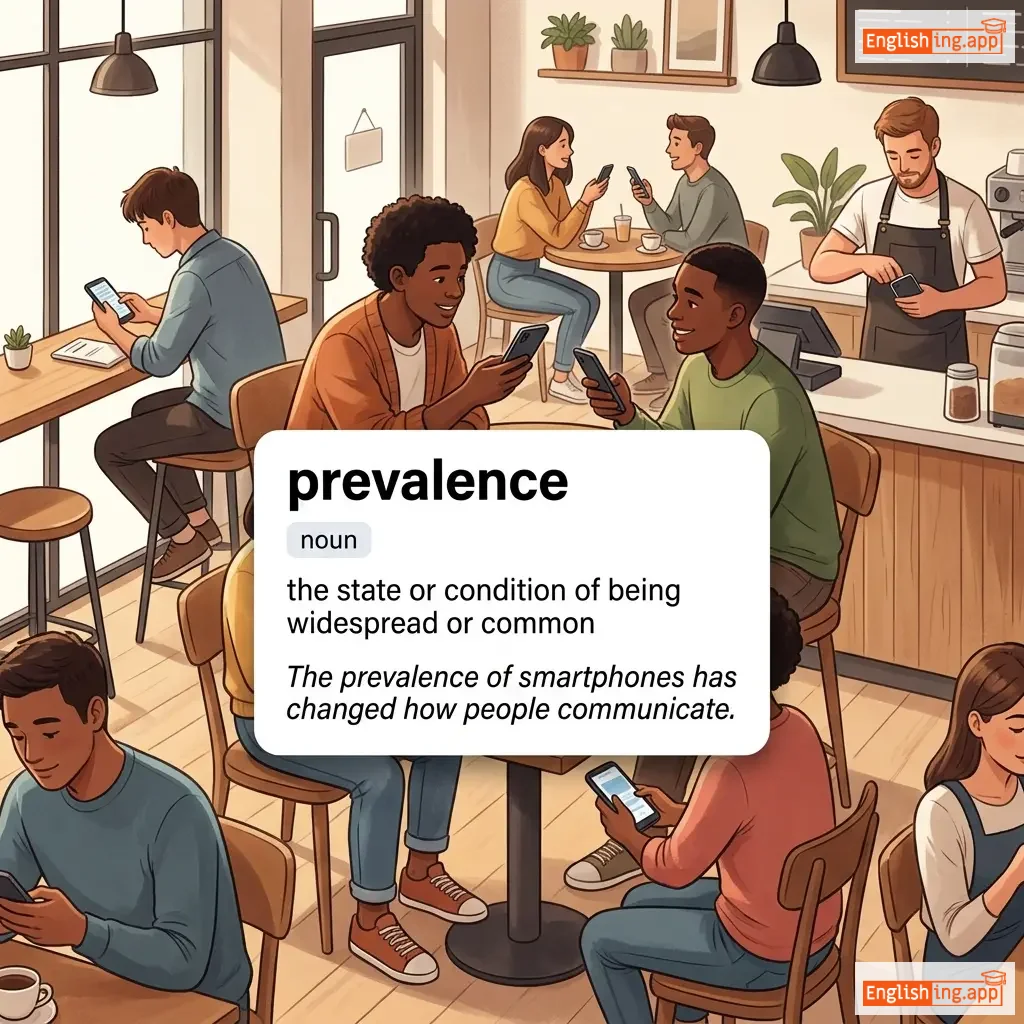
prevalence definition card — visual illustration of the meaning
noun
/ˈprɛvələns/
prévalence (prevalence)

the state or condition of being widespread or common

"The prevalence of smartphones has changed how people communicate."

"La prévalence des smartphones a changé la manière dont les gens communiquent." (La prevalence des smartphones a change la maniere dont les gens communiquent.)
adjective
/ˈprɛvələnt/
prédominant (predominant)

widespread or commonly occurring

"Flu is prevalent during the winter season."

"La grippe est prédominante pendant la saison hivernale." (La grippe est prédominante pendant la saison hivernale.)
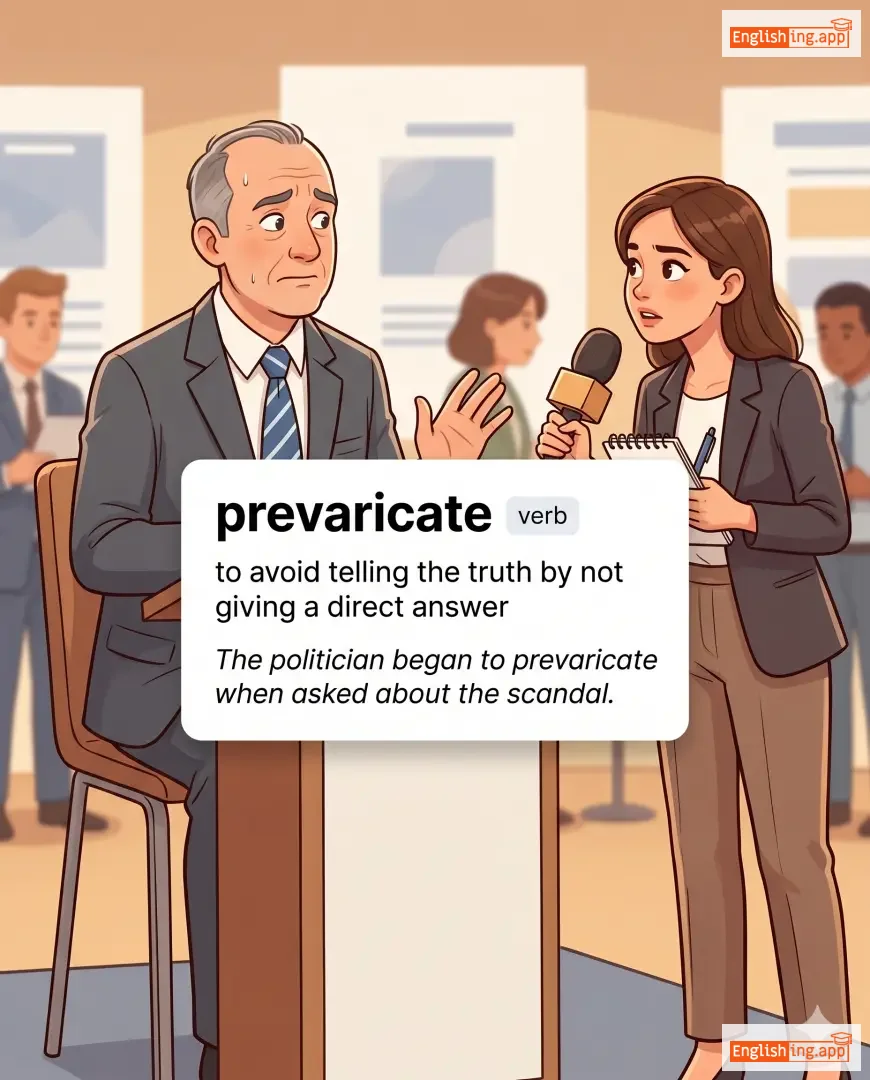
prevaricate definition card — visual illustration of the meaning
verb
/prɪˈværɪkeɪt/
échapper à dire la vérité (echapper a dire la verite)

to avoid telling the truth by not giving a direct answer

"The politician began to prevaricate when asked about the scandal."

"Le politicien a commencé à éviter lorsqu'on lui a posé des questions sur le scandale." (Le politicien a commencé à éviter lorsqu'on lui a posé des questions sur le scandale.)
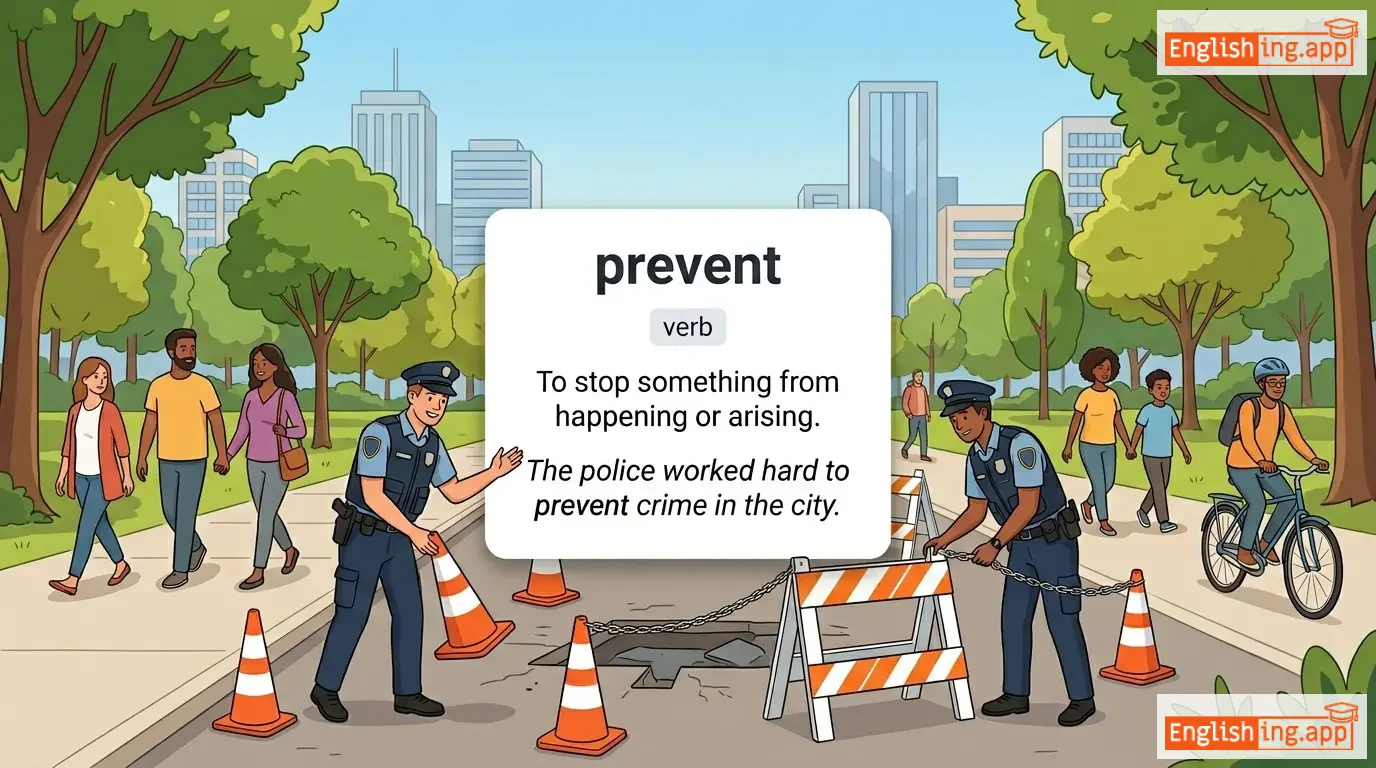
prevent definition card — visual illustration of the meaning
verb
/prɪˈvɛnt/
prévenir (prevenir)

To stop something from happening or arising.

"The police worked hard to prevent crime in the city."

"La police a travaillé dur pour prévenir la criminalité dans la ville." (La police a travaillé dur pour prévenir la criminalité dans la ville.)
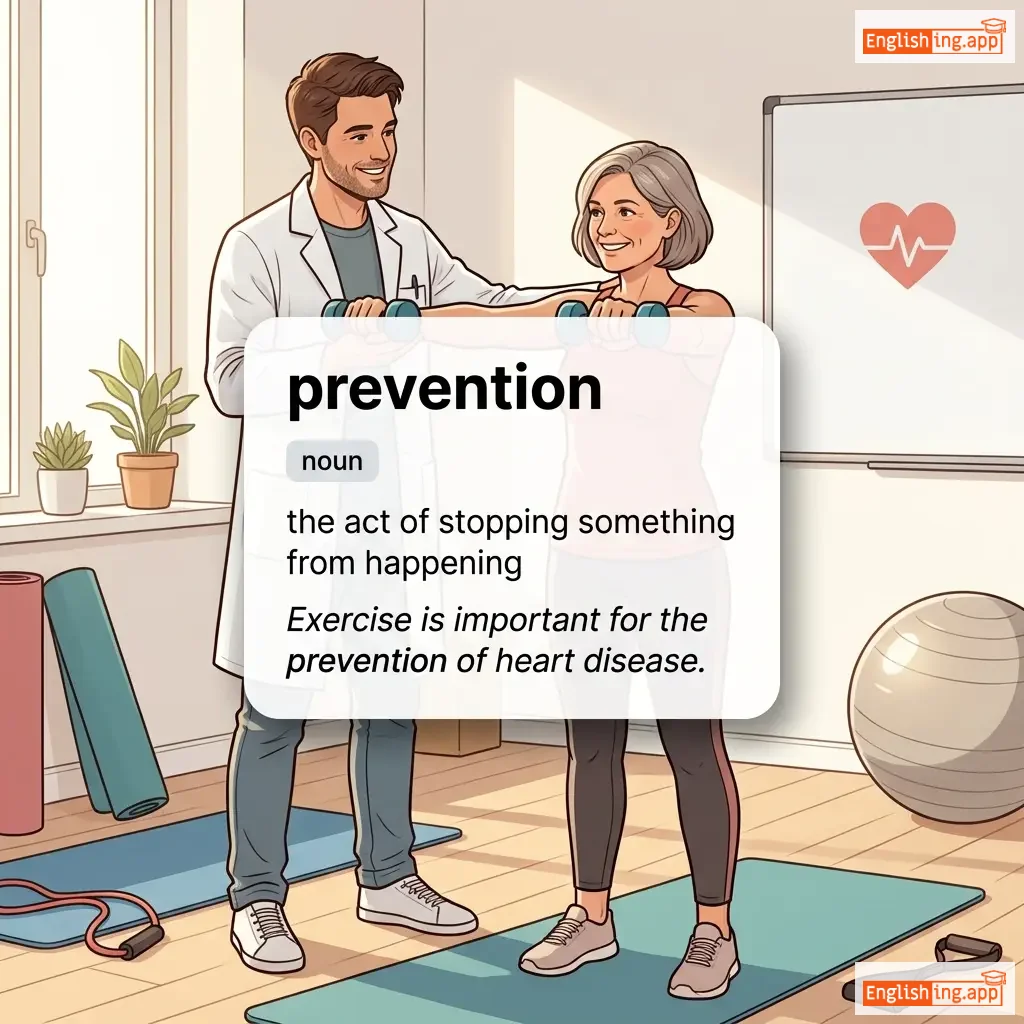
prevention definition card — visual illustration of the meaning
noun
/prɪˈvɛnʃən/
prévention (prevention)

the act of stopping something from happening

"Exercise is important for the prevention of heart disease."

"L'exercice est important pour la prévention des maladies cardiaques." (L'exercice est important pour la prévention des maladies cardiaques.)
adjective
/prɪˈventɪv/
préventif; conçu pour empêcher quelque chose de se produire (preventif)

designed to prevent something from happening; protective against disease

"Regular exercise is a preventive measure against heart disease."

"L'exercice régulier est une mesure préventive contre les maladies cardiaques." (L'exercice régulier est une mesure préventive contre les maladies cardiaques.)
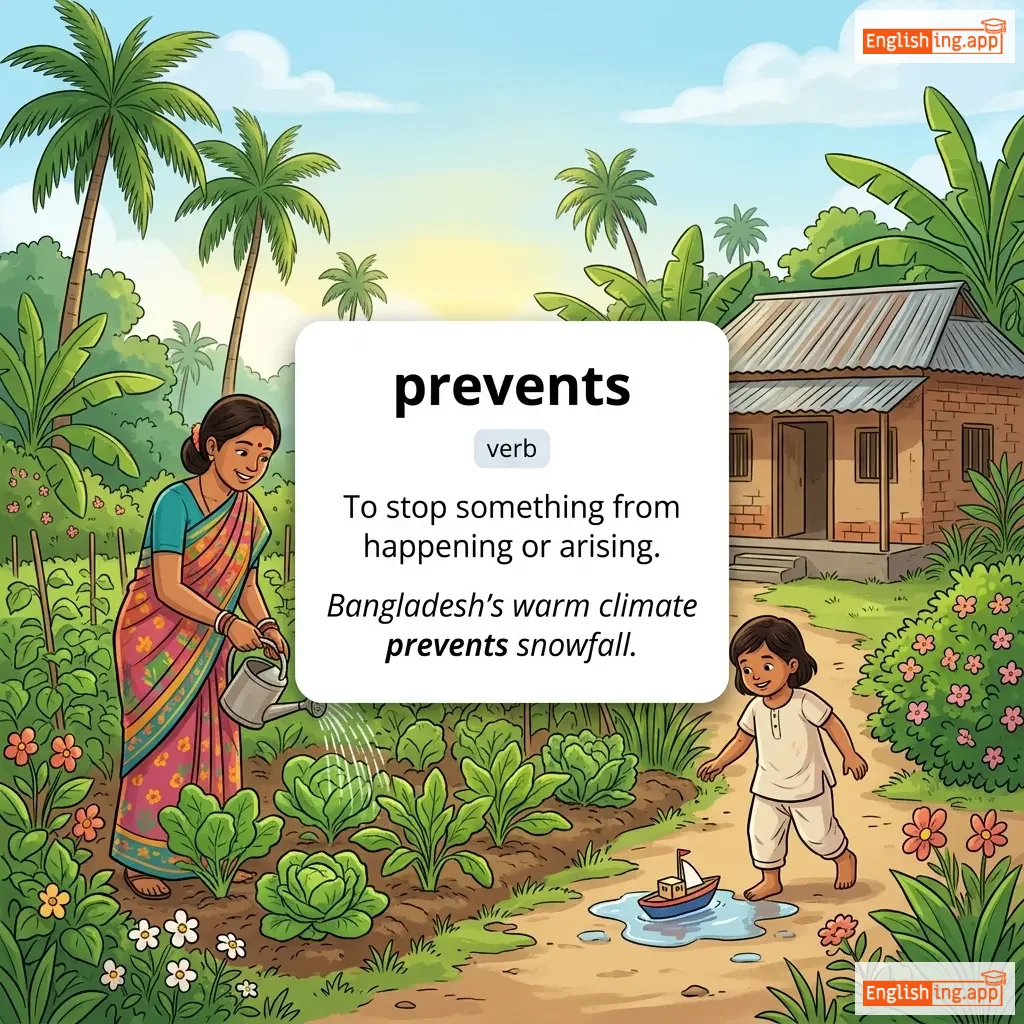
prevents definition card — visual illustration of the meaning
verb
প্রিভেন্টস
prévient (previent)

To stop something from happening or arising.

"Bangladesh's warm climate prevents snowfall."

"Le climat chaud du Bangladesh empêche les chutes de neige." (Le climat chaud du Bangladesh empêche les chutes de neige.)
adjective
/ˈpriːviəs/
précédent (precèdent)

Existing or happening before the present time.

"He referred to the previous meeting to explain his point."

"Il a fait référence à la réunion précédente pour expliquer son point." (Il a fait référence à la réunion précédente pour expliquer son point.)
adverb
/ˈpriːviəsli/
précédemment (precédemment)

at an earlier time or before now

"She had previously worked at a bank before starting her own business."

"Elle avait travaillé précédemment dans une banque avant de commencer son propre commerce." (Elle avait travaillé précédemment dans une banque avant de commencer son propre commerce.)
noun/verb
/preɪ/
proie (proie)

an animal hunted by another for food; to hunt and feed on

"Lions prey on zebras in the wild."

"Les lions chassent les zèbres dans la nature." (Les lions chassent les zèbres dans la nature.)
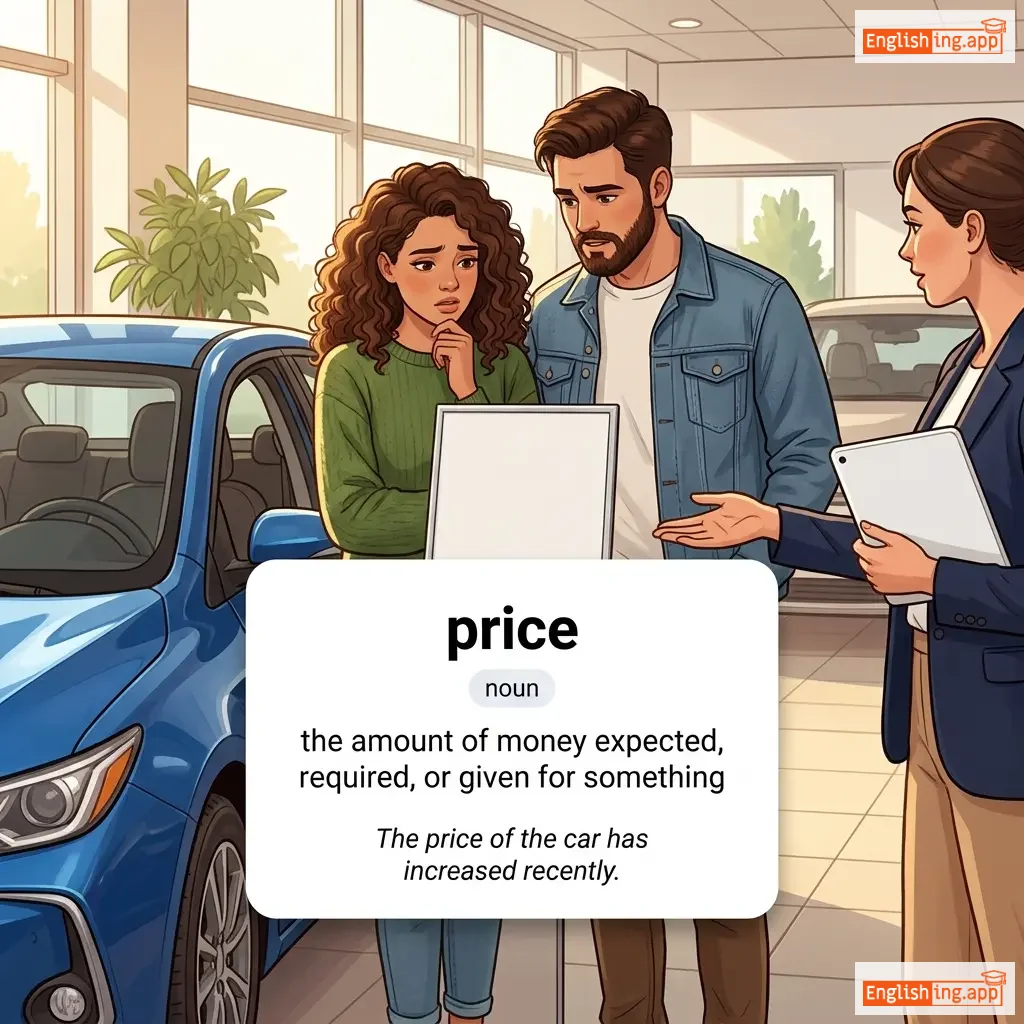
price definition card — visual illustration of the meaning
noun
/praɪs/
prix (prix)

the amount of money expected, required, or given for something

"The price of the car has increased recently."

"Le prix de la voiture a augmenté récemment." (Le prix de la voiture a augmenté récemment.)
adjective
/ˈpraɪs.ləs/
inestimable; de valeur incommensurable (inestimable; de valeur incommensurable)

extremely valuable; invaluable; beyond price

"Her grandmother's antique jewelry is absolutely priceless."

"Les bijoux antiques de sa grand-mère sont absolument inestimables." (Les bijoux antiques de sa grand-mère sont absolument inestimables.)
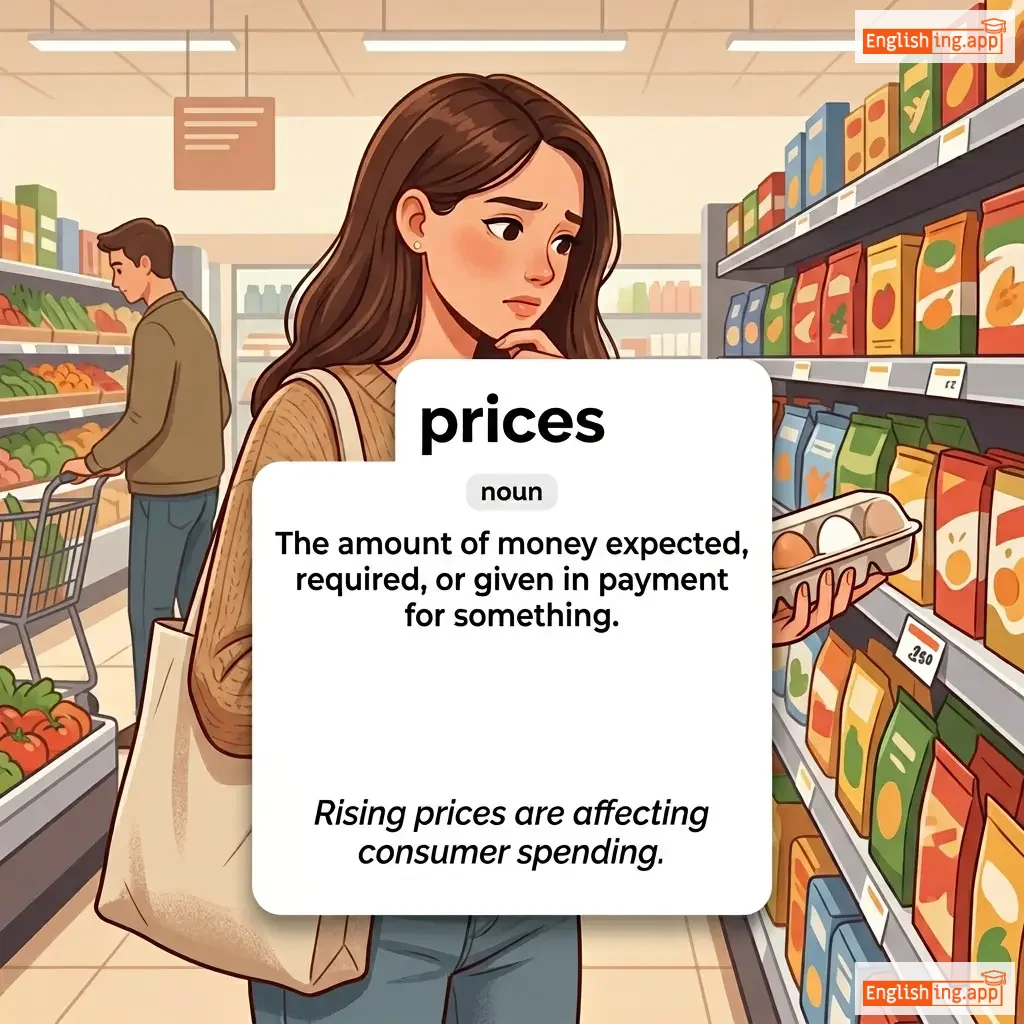
prices definition card — visual illustration of the meaning
noun
ˈpraɪsɪz
prix (prix)

The amount of money expected, required, or given in payment for something.

"Rising prices are affecting consumer spending."

"La hausse des prix affecte les dépenses des consommateurs." (La hausse des prix affecte les dépenses des consommateurs.)
verb
/ˈprɪkəl/
picoter (picoter)

to cause a slight stinging or tingling sensation on the skin

"Her skin began to prickle in the cold wind."

"Sa peau a commencé à picoter avec le vent froid." (Sa peau a commence a picoter avec le vent froid.)
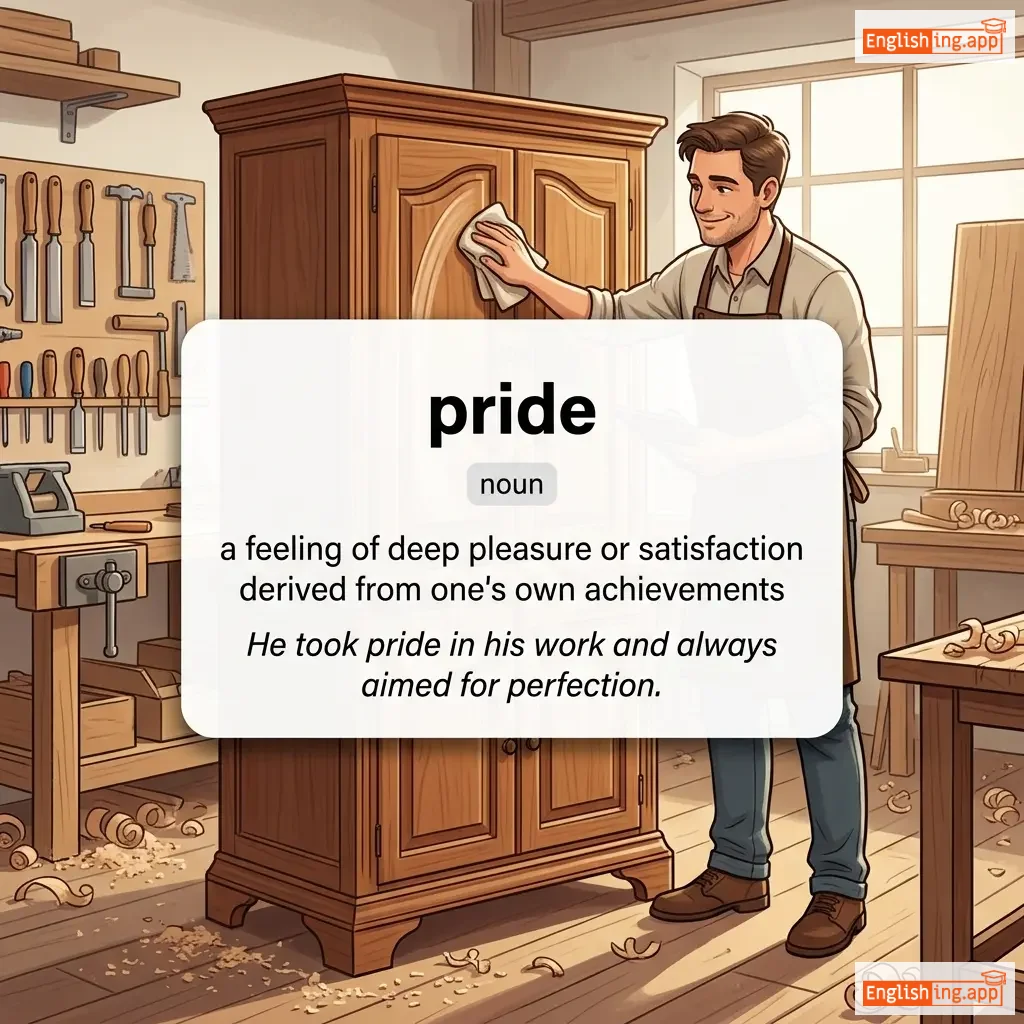
pride definition card — visual illustration of the meaning
noun
/praɪd/
fierté (fierte)

a feeling of deep pleasure or satisfaction derived from one's own achievements

"He took pride in his work and always aimed for perfection."

"Il était fier de son travail et visait toujours la perfection." (Il était fier de son travail et visait toujours la perfection.)
noun
/priːst/
prêtre (pretre)

a person who performs religious duties and ceremonies

"The priest blessed the congregation during the Sunday service."

"Le prêtre bénit la congrégation pendant le service dominical." (Le pretre benit la congregation pendant le service dominical.)
adjective
/ˈprɪɡɪʃ/
moraliste et prétentieux (moraliste et prétentieux)

self-righteously moralistic and superior

"He came across as priggish when correcting everyone's manners."

"Il semblait moraliste et prétentieux lorsqu'il corrigeait les manières de tout le monde." (Il semblait moraliste et prétentieux lorsqu'il corrigeait les manières de tout le monde.)
adjective
/prɪm/
excessivement formel ou correct (excessivement formel ou correct)

stiffly formal and proper in appearance or behavior

"She looked prim in her neatly pressed dress."

"Elle avait l'air prim dans sa robe soigneusement repassée." (Elle avait l'air prim dans sa robe soigneusement repassée.)
adjective
/ˈpraɪvət/
privé (prive)

belonging to or for the use of one particular person or group

"She enjoys her private time away from work."

"Elle apprécie son temps privé loin du travail." (Elle apprecie son temps prive loin du travail.)
noun
/ˈprɪn.tər/
imprimeur (imprimeur)

a person whose job is printing books, newspapers, or other materials; a machine that prints documents

"The printer delivered the wedding invitations on time."

"L'imprimeur a livré les invitations de mariage à temps." (L'imprimeur a livré les invitations de mariage à temps.)
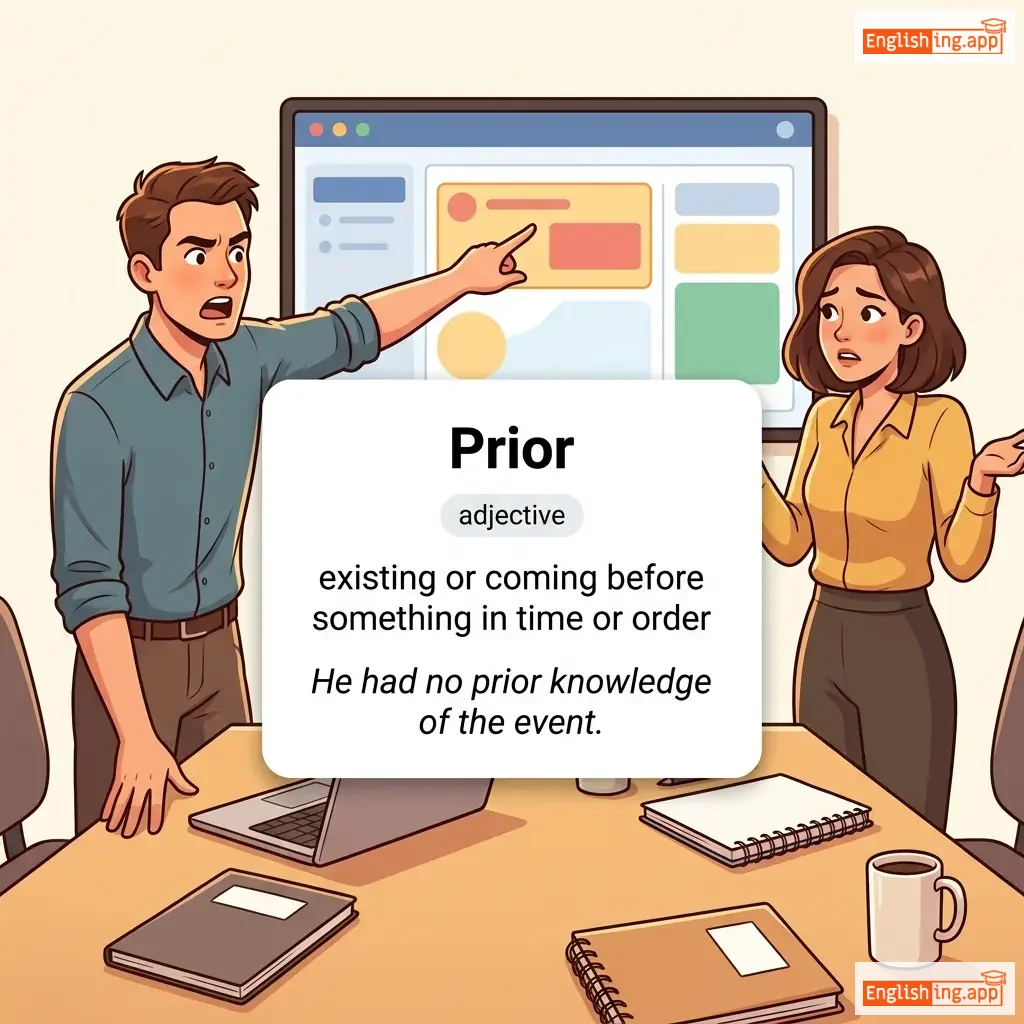
Prior definition card — visual illustration of the meaning
adjective
/ˈpraɪər/
préalable (prealable)

existing or coming before something in time or order

"He had no prior knowledge of the event."

"Il n'avait aucune connaissance préalable de l'événement." (Il n'avait aucune connaissance préalable de l'événement.)
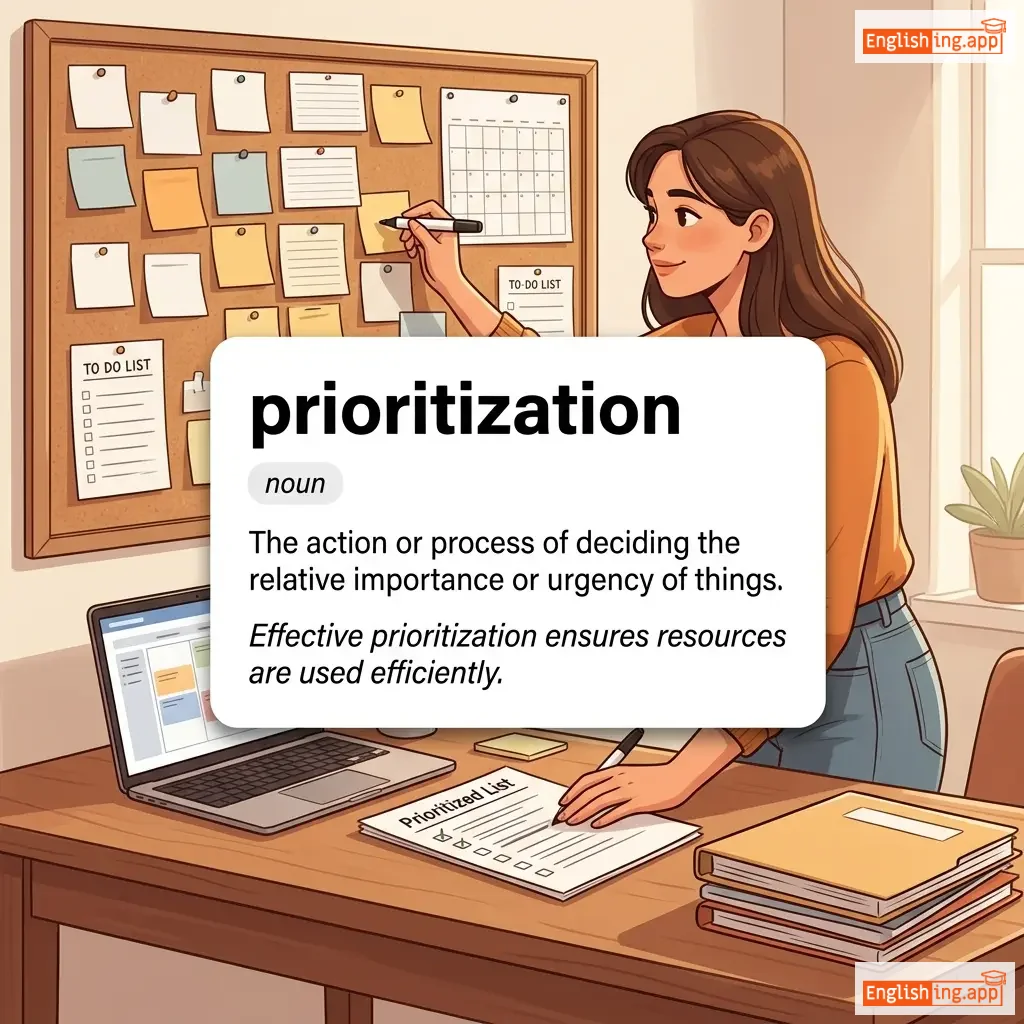
prioritization definition card — visual illustration of the meaning
noun
ˌpraɪɔːrɪtaɪˈzeɪʃən
priorisation (priorisation)

The action or process of deciding the relative importance or urgency of things.

"Effective prioritization ensures resources are used efficiently."

"Une priorisation efficace garantit que les ressources sont utilisées efficacement." (Une priorisation efficace garantit que les ressources sont utilisées efficacement.)
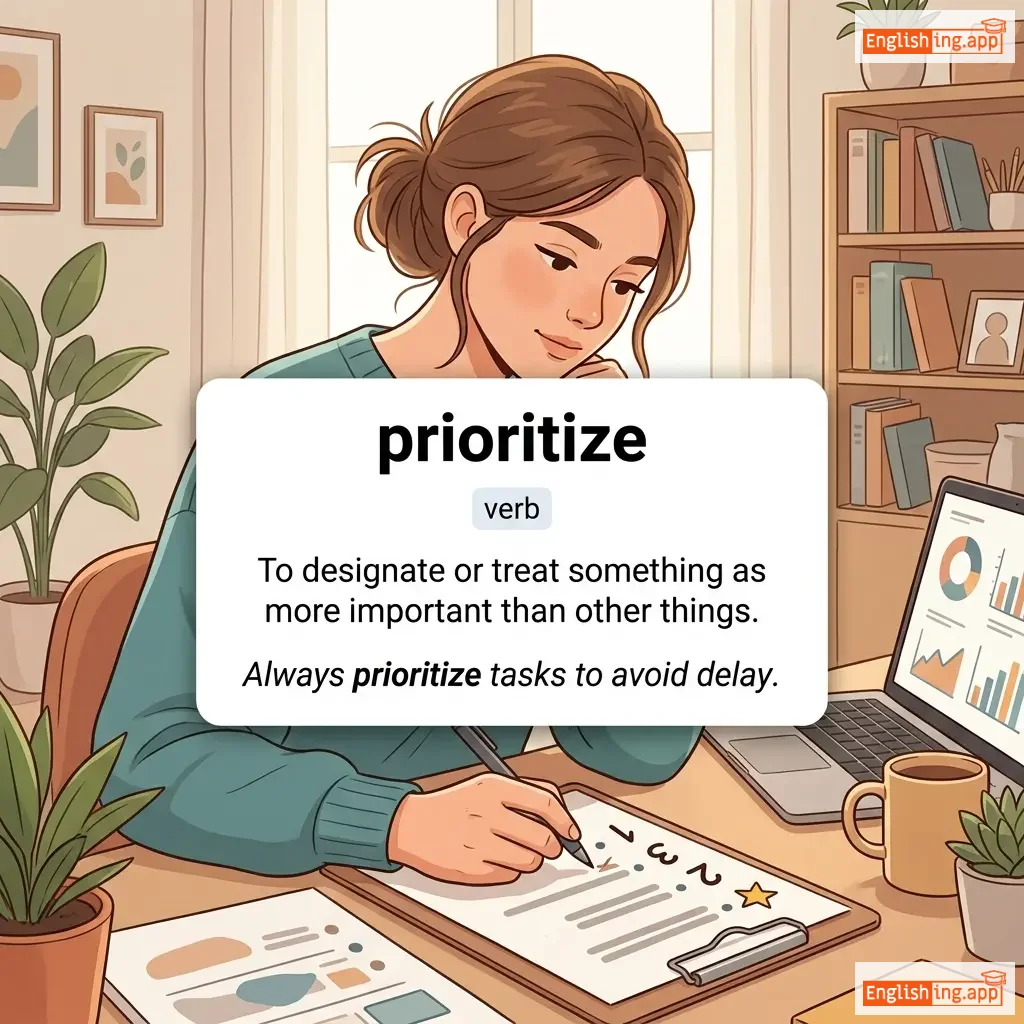
prioritize definition card — visual illustration of the meaning
verb
/praɪˈɔːrətaɪz/
prioriser (prioriser)

To designate or treat something as more important than other things.

"Always prioritize tasks to avoid delay."

"Toujours prioriser les tâches pour éviter les retards." (Toujours prioriser les tâches pour éviter les retards.)
noun
/praɪˈɒrɪti/
priorité (priorite)

Something that is regarded as more important than other things.

"Safety is the top priority in this company."

"La sécurité est la priorité absolue dans cette entreprise." (La sécurité est la priorité absolue dans cette entreprise.)
noun
/ˈpraɪəri/
prieuré (prieure)

a small monastery or convent governed by a prior or prioress

"The old priory was converted into a museum."

"L'ancien prieuré a été transformé en musée." (L'ancien prieuré a été transformé en musée.)
noun
/ˈprɪzən/
prison (prison)

a building where people are kept as punishment for a crime or while waiting for trial

"He was sent to prison for his crimes."

"Il a été envoyé en prison pour ses crimes." (Il a ete envoye en prison pour ses crimes.)
👨‍⚖️

prisoner (prisoner)

noun
/ˈprɪzənər/
prisonnier (prisonnie)

a person who is in prison

"The prisoner was granted parole after serving 10 years."

"Le prisonnier a été libéré sous condition après avoir purgé 10 ans." (Le prisonnier a été libéré sous condition après avoir purgé 10 ans.)
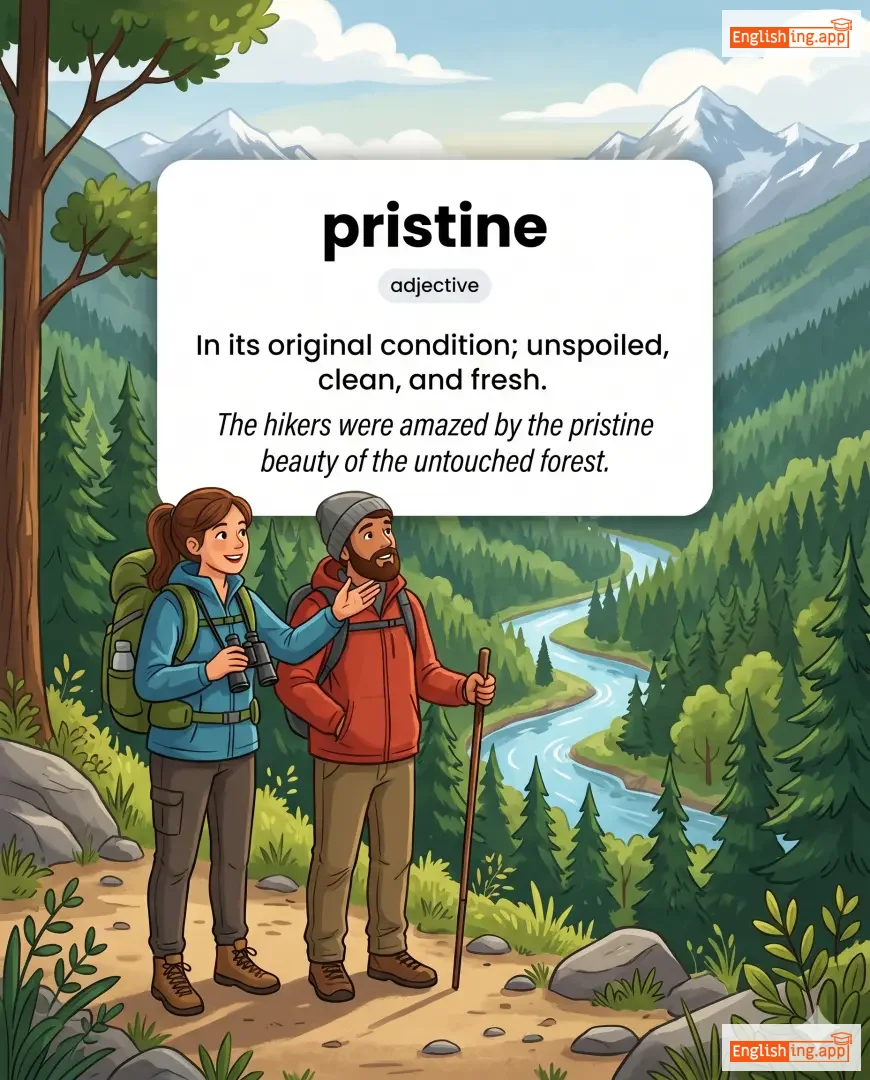
pristine definition card — visual illustration of the meaning
adjective
/ˈprɪstiːn/
intact, pur (intact, pur)

In its original condition; unspoiled, clean, and fresh.

"The hikers were amazed by the pristine beauty of the untouched forest."

"Les randonneurs étaient émerveillés par la beauté pristine de la forêt intacte." (Les randonneurs étaient émerveillés par la beauté pristine de la forêt intacte.)
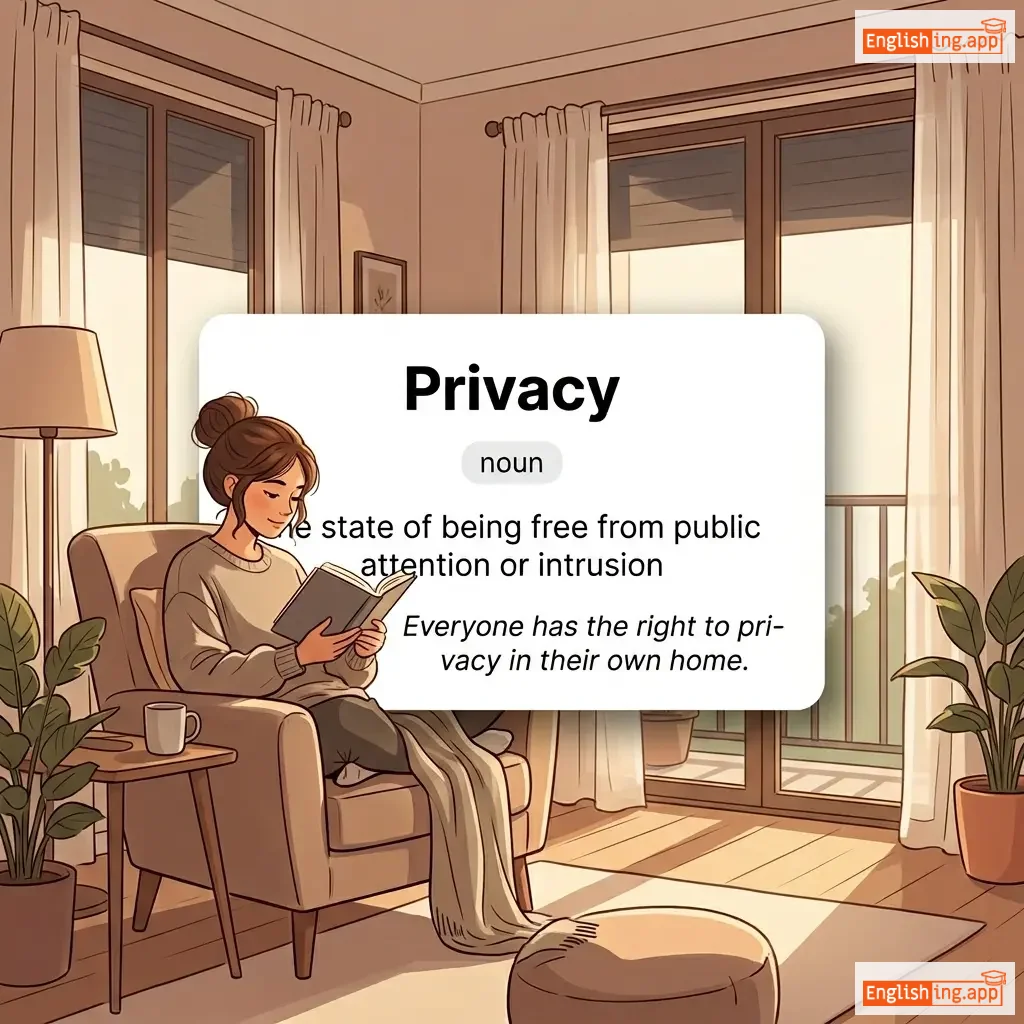
Privacy definition card — visual illustration of the meaning
noun
/ˈpraɪvəsi/
vie privée (vie privee)

the state of being free from public attention or intrusion

"Everyone has the right to privacy in their own home."

"Tout le monde a droit à la vie privée dans sa propre maison." (Tout le monde a droit a la vie privee dans sa propre maison.)
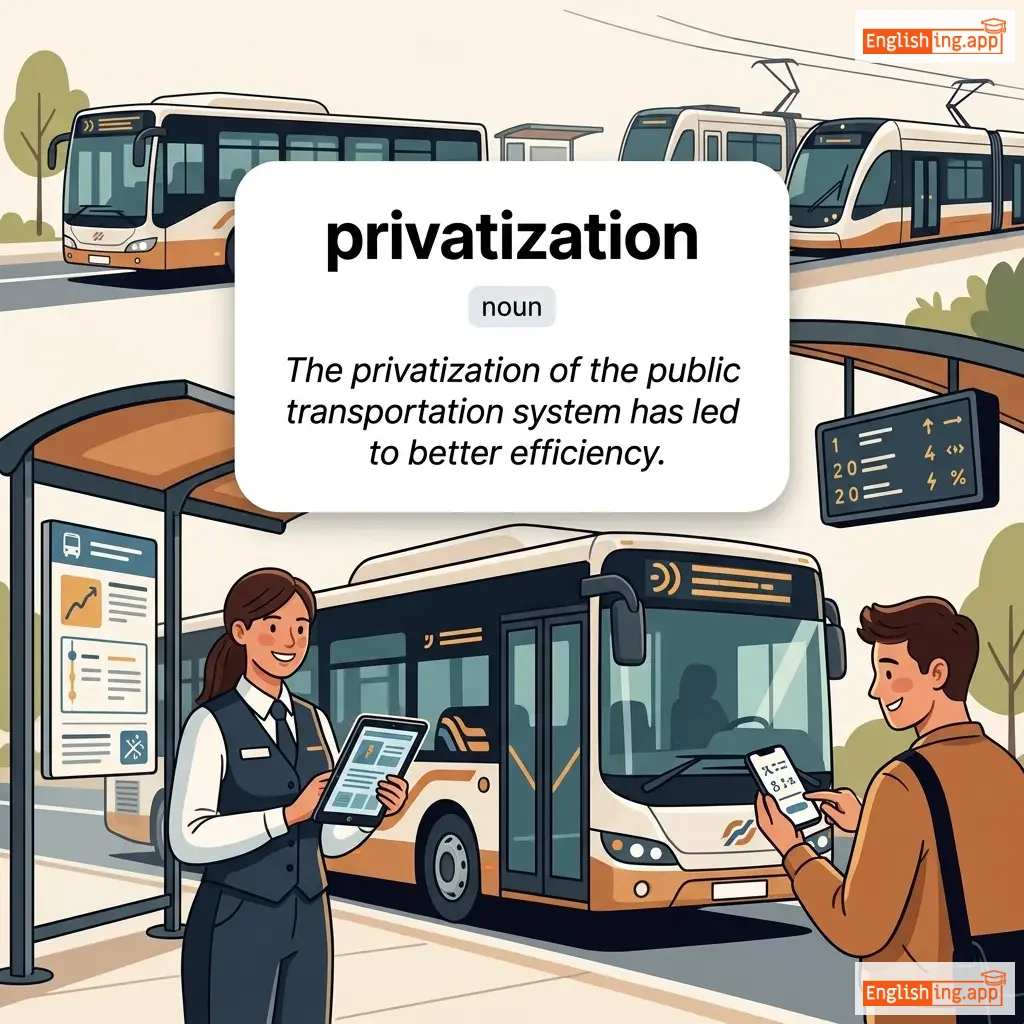
privatization definition card — visual illustration of the meaning
noun
/ˌpraɪvətəˈzeɪʃən/
privatisation (privatisation)

the process of transferring ownership of a business, industry, or service from the public sector to the private sector

"The privatization of the public transportation system has led to better efficiency."

"La privatisation du système de transport public a conduit à une meilleure efficacité." (La privatisation du systeme de transport public a conduit a une meilleure efficacite.)
adjective
/ˈprɪvi/
connaissance secrète (connaissance secrète)

having access to secret or private knowledge

"She was privy to the confidential discussions."

"Elle était au courant des discussions confidentielles." (Elle etait au courant des discussions confidentielles.)
noun
/ˈprɪvɪti/
relation privée, relation contractuelle (relation privee, relation contractuelle)

A close, private, or special relationship; in law, the direct connection between parties to a contract.

"There was no privity of contract between the supplier and the customer."

"Il n'y avait pas de relation contractuelle entre le fournisseur et le client." (il n'y avait pas de relation contractuelle entre le fournisseur et le client.)
adjective
/ˈprɪv.ə.lɪdʒd/
privilégié (privilege)

having special advantages; favored; elite

"She comes from a privileged background with many opportunities."

"Elle vient d'un milieu privilégié avec de nombreuses opportunités." (Elle vient dun milieu privelege avec de nombreuses opportunites.)
noun
/ˈprɪvəlɪdʒ/
privilège, avantage (privilège, avantage)

A special right, advantage, or immunity granted or available only to a particular person or group.

"Education is considered a privilege in many developing countries."

"L'éducation est considérée comme un privilège dans de nombreux pays en développement." (L'éducation est considérée comme un privilège dans de nombreux pays en développement.)
adverb
/ˈpraɪvətli/
en privé (en prive)

in a private way; not in public or not shared with others

"She spoke to him privately about the issue."

"Elle lui a parlé en privé de la question." (Elle lui a parle en prive de la question.)
noun
/ˈpraɪ.vət ˈtuː.tər/
tuteur privé (tuteur prive)

a teacher who gives individual instruction to a student outside of regular school

"The private tutor helped the student improve his math skills."

"Le tuteur privé a aidé l'étudiant à améliorer ses compétences en mathématiques." (Le tuteur prive a aide l'etudiant a ameliorer ses competences en mathematiques)
noun
/ˌpraɪvəˈtɪə/
corsaire (corsaire)

A privately owned armed ship authorized by a government to attack enemy ships during war.

"The privateer captured several enemy vessels during the conflict."

"Le corsaire a capturé plusieurs navires ennemis pendant le conflit." (Le corsaire a capturé plusieurs navires ennemis pendant le conflit.)