Словари

Словарь английского языка | Значения слов, определения и примеры

noun
/ˈpɔːrtɛnt/
предвестие (predvestie)

A sign or warning that something, especially something momentous or calamitous, is likely to happen.

"The sudden drop in stock prices was seen as a portent of economic trouble."

"Внезапное падение цен на акции было воспринято как предвестие экономических проблем." (Vnezapnoe padenie tsen na aktsii bylo vosprinyato kak predvestie ekonomicheskikh problem.)
adjective
/pɔːrˈtɛntəs/
предвестительный, серьезный (predvestitel'nyj, ser'eznyj)

Giving a sign or warning that something, often bad or serious, is going to happen; or overly solemn and pompous.

"His portentous tone made everyone nervous about the news."

"Его предвестительный тон заставил всех нервничать из-за новостей." (Ego predvestitel'nyj ton zastavil vsekh nervnichat' iz-za novostej.)
portfolio definition card — visual illustration of the meaning
noun
/pɔːrtˈfoʊlioʊ/
портфель (portfolio)

A collection of financial investments, artworks, or documents presented as a body of work.

"The designer showcased her portfolio during the interview."
"Дизайнер представил свое портфолио во время интервью." (Dizayner predstavil svoe portfelio vo vremya interview.)
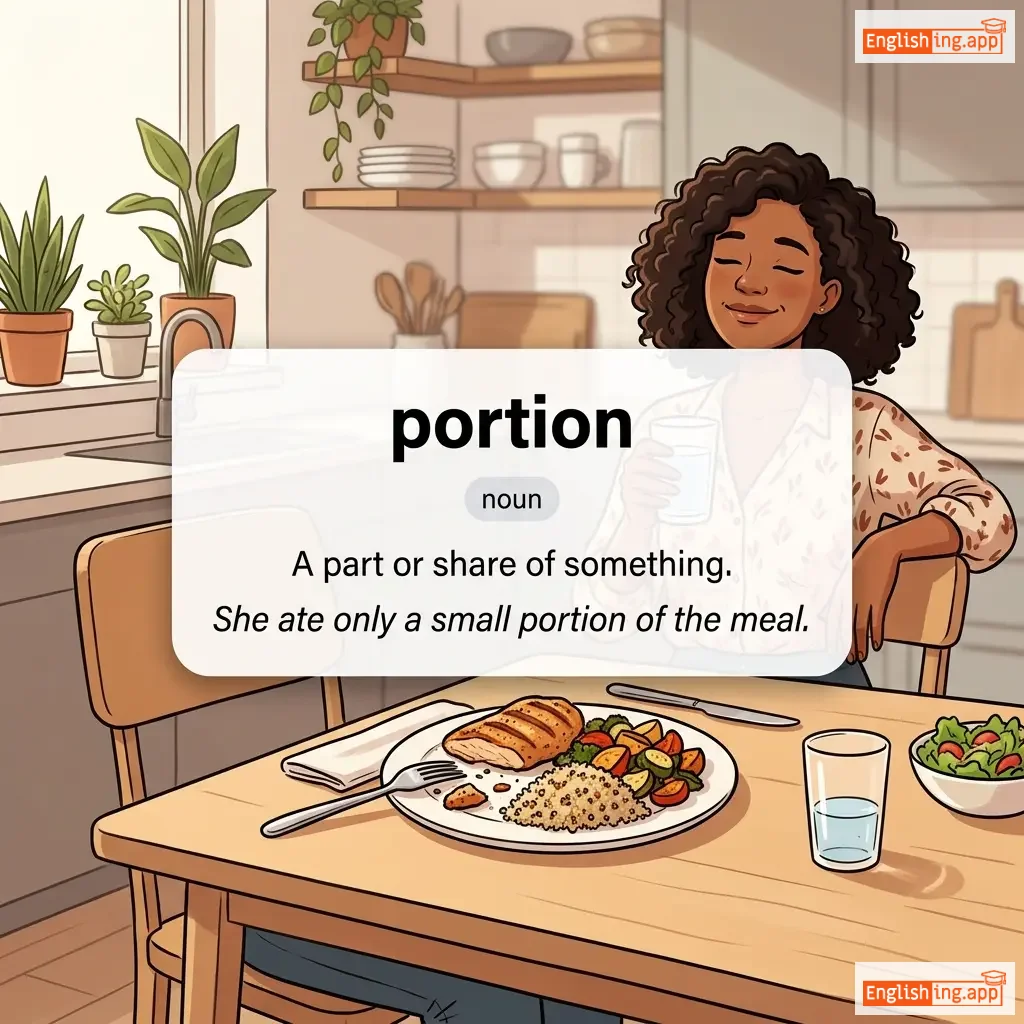
portion definition card — visual illustration of the meaning
noun
/ˈpɔːrʃən/
порция (portciya)

A part or share of something.

"She ate only a small portion of the meal."

"Она съела только небольшую порцию еды." (Ona syela tol'ko nebol'shuyu portciyu edy.)
adjective
/ˈpɔːrtli/
пухлый (pukhly)

Having a stout or somewhat fat body, often implying dignity or authority.

"The portly man entered the room with confidence."

"Пухлый мужчина вошел в комнату с уверенностью." (Pukhlyy muzhchina voshel v komnatu s uverennost'yu.)
portrait definition card — visual illustration of the meaning
noun
/ˈpɔːtrət/
портрет (portret)

a painting, drawing, photograph, or engraving of a person, especially one showing the face

"The artist painted a beautiful portrait of his wife."
"Художник нарисовал красивый портрет своей жены." (Khudozhnik narisoval krasivyy portret svoey zheny.)
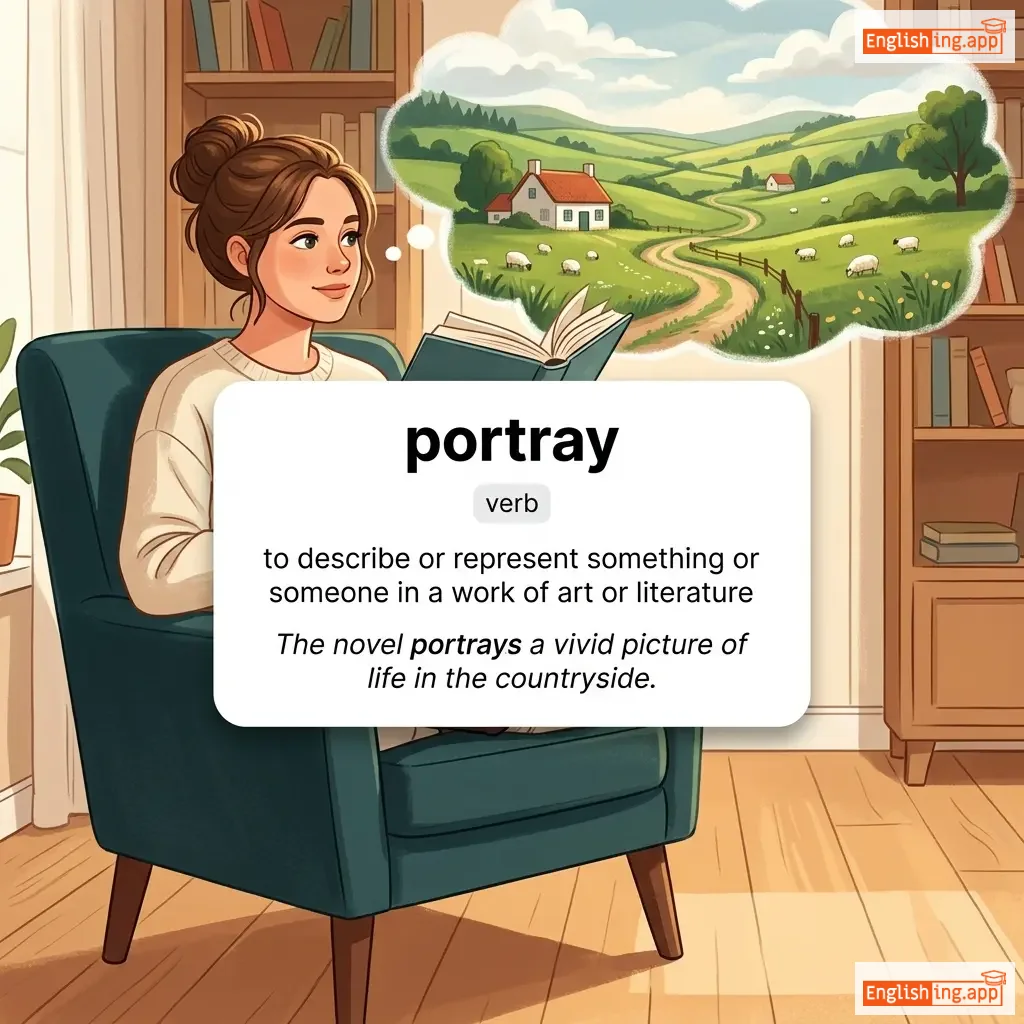
portray definition card — visual illustration of the meaning
verb
/pɔːˈtreɪ/
изображать (izobrazhat)

to describe or represent something or someone in a work of art or literature

"The novel portrays a vivid picture of life in the countryside."

"Роман изображает яркую картину жизни в деревне." (Roman izobrazhaet yarkuyu kartinu zhizni v derevne.)
verb
/poʊz/
счастье (schastye)

To assume a particular position, especially for a photograph or display; to present a problem or question.

"She posed for a picture in front of the monument."

"Она не смогла скрыть своего счастья, когда получила награду." (Ona ne smogla skryt' svoego schast'ya, kogda poluchila nagradu.)
noun
/poʊˈzɜːr/

A person who pretends to be something they are not, often to impress others.

"Many considered him a poseur because he exaggerated his accomplishments."

💡

posit

verb
/ˈpɑːzɪt/

To assume or suggest something as a fact or basis for reasoning.

"The scientist posited a new theory to explain the phenomenon."

position definition card — visual illustration of the meaning
noun
/pəˈzɪʃən/
позиция / место (pozitsiya / mesto)

A place, job, or status; the way in which someone or something is placed or arranged.

"She applied for a teaching position at the university."

"Она подала заявку на преподавательскую позицию в университете." (Ona podala zayavku na prepodavatelskuyu pozitsiyu v universitete.)
positive definition card — visual illustration of the meaning
adjective
/ˈpɒzɪtɪv/
позитивный (pozitivny)

Characterized by optimism, certainty, or something favorable.

"She always tries to maintain a positive attitude."

"Она всегда старается сохранять позитивный настрой." (Ona vsegda starayetsya sokhranyat' pozitivnyy nastroj.)
noun
/ˈpɒsi/
банда / группа друзей (banda / gruppa druzey)

A group of people, often friends or a group organized to support or enforce the law.

"He arrived at the party with his posse of friends."

"Он пришел на вечеринку с бандой друзей." (On prishël na vecherinku s bandoy druzey.)
verb
/pəˈzɛs/
обладать / иметь (obladatʲ / imetʲ)

To have or own something; to hold a quality or characteristic.

"She possesses great talent in music."

"Она обладает большим талантом в музыке." (Ona obladayet bol'shim talantom v muzyke.)
noun
/pəˈzɛʃən/
владение (vladeniye)

The state of owning, controlling, or holding something.

"The ring was her most valuable possession."

"Кольцо было её самой ценной собственностью." (Kol'tso bylo yeeyo samoy tsennoy sobstvennost'yu.)
adjective
/pəˈzɛsɪv/
собственнический (sobstvennicheskij)

Showing a desire to own or control; relating to possession.

"He became very possessive about his old books."

"Он стал очень собственническим по отношению к своим старым книгам." (On stal ochen' sobstvennicheskim po otnosheniyu k svoim starym knigam.)
noun
/pəˈzɛsər/
владелец (vladyelets)

A person who owns or holds something.

"The possessor of the land built a new house."

"Владелец земли построил новый дом." (Vladyelets zemli postroil novyy dom.)
noun
/ˌpɒsəˈbɪləti/
возможность (vozmozhnost)

something that may happen or be the case; a chance that something exists or might occur

"There is a strong possibility of rain tomorrow."

"Завтра есть большая вероятность дождя." (Zavtra yest' bol'shaya veroyatnost' dozhdya.)
Possible definition card — visual illustration of the meaning
adjective
/ˈpɒsəbl̩/
возможный (vozmohnij)

Able to be done or achieved.

"Anything is possible if you work hard."

"Все возможно, если ты будешь усердно работать." (Vse vozmozhno, esli ty budesh' usyerdno rabotat'.)
adverb
/ˈpɒsɪbli/
возможно (vozmozhno)

maybe, or in a way that is not certain

"It could possibly rain later today."

"Возможно, сегодня позже пойдет дождь." (Vozmozhno, segodnya pozhe poydet dozhd'.)
noun, verb
/pəʊst/
пост (post)

a job or position, or to send something by mail

"She posted a letter to her friend yesterday."

"Она отправила письмо своей подруге вчера." (Ona otpravilа pismo svoey podrugе vchera.)
noun
/ˈpoʊst ˌɒfɪs/
почтовое отделение (pochtovoe otdelenie)

a public building or agency where mail is sent, received, and other postal services are provided

"I went to the post office to mail a package."

"Я пошёл в почтовое отделение, чтобы отправить посылку." (ya poshol v pochtovoe otdelenie chtoby otpravit posylku)
adjective
/ˌpoʊstˈwɔːr/
послевоенный (poslevoennyy)

relating to the period after a war has ended

"The country experienced rapid economic growth in the post-war years."

"В послевоенные годы страна быстро развивалась." (v poslevoennye gody strana bystro razvivalas)
verb
/ˌpoʊstˈdeɪt/
поставить позднюю дату (postavit' pozdnyuyu datu)

To assign a date later than the actual date to a document or event.

"She postdated the check to next month."
"Она поставила дату чека на следующий месяц." (Ona postavila datu cheka na sleduyushchiy mesyats.)
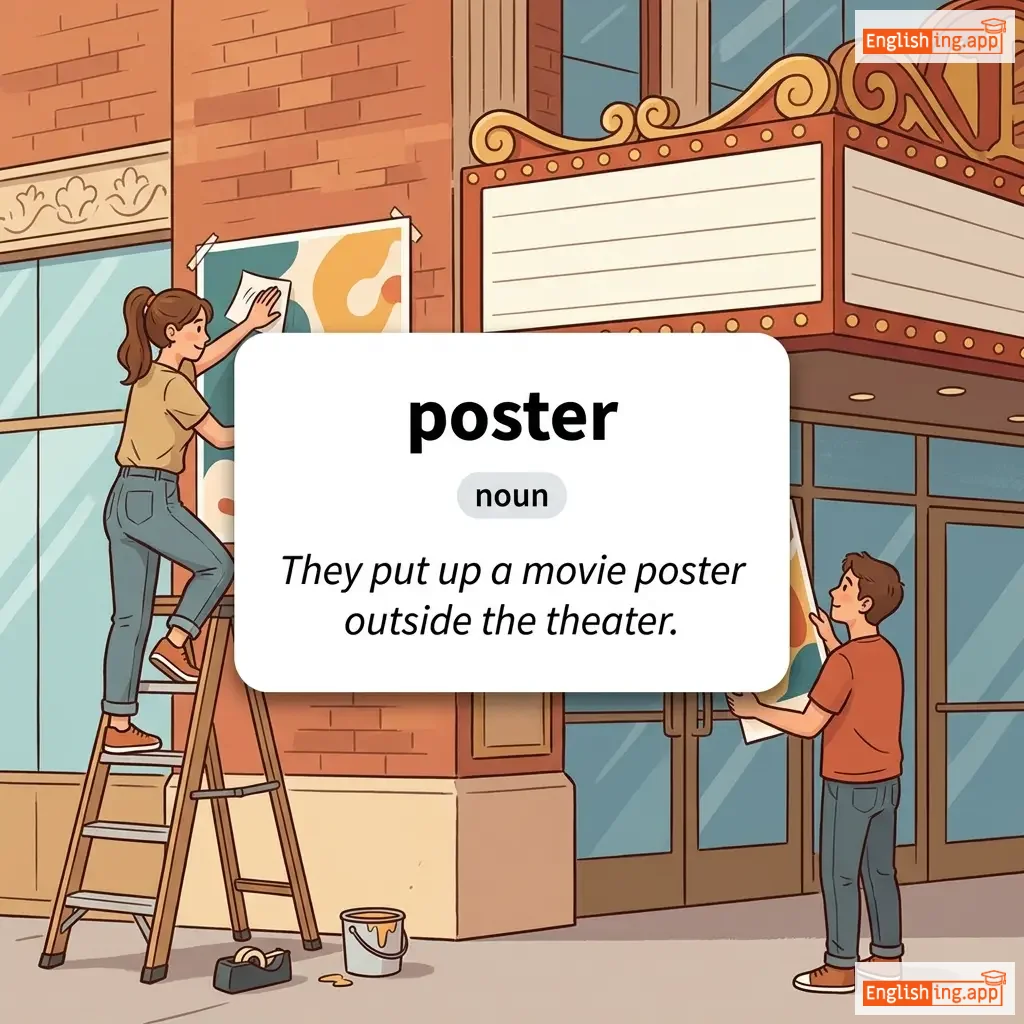
poster definition card — visual illustration of the meaning
noun
/ˈpoʊstər/
постер (poster)

a large printed picture or notice that is put on a wall for decoration or to advertise something

"They put up a movie poster outside the theater."

"Они повесили постер фильма снаружи театра." (Oni povesili poster fil'ma snaruzhi teattra.)
adjective
/pɒˈstɪəriər/
постериор (posterior)

Situated at or toward the back; later in time.

"The posterior part of the brain controls vision."

"Задняя часть мозга контролирует зрение." (Zadnyaya chast' mozga kontroliruet zrenie.)
noun
/pɒˈstɛrɪti/
потомство (potomstvo)

All future generations of people.

"The monument was built for the benefit of posterity."

"Памятник был построен на благо будущих поколений." (Pamyatnik byl postroen na blago budushchikh pokoleniy.)
noun, adjective
/ˌpəʊstˈɡrædʒuət/
аспирант (aspirant)

A student who has completed a first degree and is studying for a further degree.

"She is doing postgraduate research in physics."

"Она занимается аспирантскими исследованиями по физике." (Ona zanimaetsya aspirantskimi issledovaniyami po fizike.)
adjective
/ˈpɒstjʊməs/
посмертный (posmertny)

Occurring, awarded, or appearing after the death of the originator.

"He received a posthumous award for his bravery."

"Он получил посмертную награду за свою храбрость." (On poluchil posmertnuyu nagradu za svoyu khrabrost'.)
noun, adjective
/ˌpəʊstˈmɔːtəm/
посмертное вскрытие (posmertnoe vskrytie)

An examination of a dead body to determine the cause of death.

"The doctor carried out a postmortem on the body."

"Доктор провел посмертное вскрытие тела." (Doktor provel posmertnoe vskrytie telya.)
verb
/pəʊs(t)ˈpəʊn/
отсрочить (otsrochit)

to delay something to a later time

"The meeting was postponed until next week."

"Встреча была отложена на следующую неделю." (Vstrecha byla otlozhena na sleduyushchuyu nedelyu.)
adjective
/ˌpəʊstˈprændɪəl/
после еды (posle yedy)

Occurring after a meal.

"He went for a postprandial walk after dinner."

"Он пошел на постпрандиальный прогулку после ужина." (On poshel na postprandial'nuyu progulku posle uzhina.)
noun
/ˈpəʊstˌskrɪpt/
постскриптум (postskriptum)

an additional remark at the end of a letter or text, after the signature

"She added a brief postscript to thank him again."
"Она добавила краткое постскриптум, чтобы снова поблагодарить его." (Ona dobavila kratkoe postskriptum, chtoby snova poblagodarit' ego.)
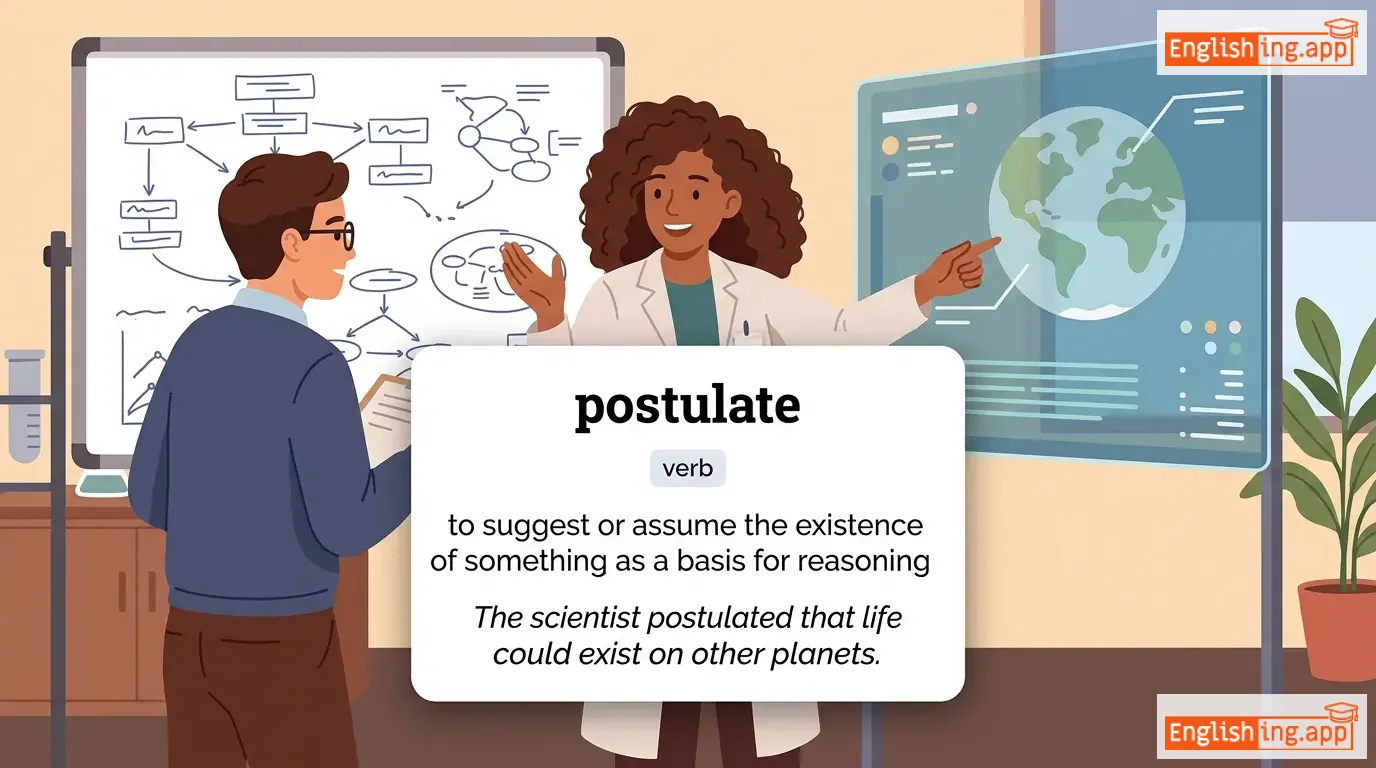
postulate definition card — visual illustration of the meaning
verb
/ˈpɒstjʊˌleɪt/
постулировать (postulirovat)

to suggest or assume the existence of something as a basis for reasoning

"The scientist postulated that life could exist on other planets."

"Учёный постулировал, что жизнь может существовать на других планетах." (Uchënyy postuliroval, chto zhizn' mozhet sushchestvovat' na drugikh planetakh.)
noun
/ˈpɒstʃə/
счастье (schast'ye)

the position in which someone holds their body; an attitude or approach

"Good posture helps prevent back pain."

"Она не могла скрыть свое счастье, когда получила награду." (Ona ne mogla skryt' svoe schast'ye, kogda poluchila nagradu.)
adjective
/ˈpəʊstwɔːr/
послевоенный (poslevoenny)

occurring or existing after a war

"The postwar period saw significant economic growth."

"Поствоенное время увидело значительный экономический рост." (Postvoyennoye vremya uvidelo znachitel'nyy ekonomicheskiy rost.)
noun
/pɒt/
горшок (gorshok)

a container, typically round and deep, used for cooking or holding plants

"She put the soup in a pot and set it on the stove."

"Она положила суп в горшок и поставила его на плиту." (Ona polozhila sup v gorshok i postavila ego na plitu.)
adjective
/ˈpəʊtəbl/
питьевой (pit'yevoy)

safe to drink; drinkable

"The villagers did not have access to potable water."

"Жители деревни не имели доступа к питьевой воде." (Zhiteli derevni ne imeli dostupa k pit'yevoy vode.)
noun
/pəˈteɪtoʊ/
картофель (kartofel)

a starchy plant tuber that is a staple food around the world

"We had mashed potato with our dinner."

"Мы ели пюре из картофеля на ужин." (My yeli pure iz kartofelya na uzhin.)
noun
/ˈpɒtˌbɔɪlə/
дешевый продукт (deshevy produkt)

a book, play, or film produced quickly to make money rather than for artistic value

"The novel was dismissed by critics as a mere potboiler."

"Роман был отвергнут критиками как дешевый продукт." (Roman byl otvergnut kritikaimi kak deshevy produkt.)
noun
/ˈpoʊtənsi/
мощность (moshchnost)

The power or ability of something to affect or influence; strength or effectiveness.

"The potency of the new medicine amazed the doctors."

"Мощность нового лекарства поразила врачей." (Moshchnost' novogo lekarstva porazila vrachey.)
adjective
/ˈpoʊtənt/
мощный (moshnyy)

Having great power, influence, or effect.

"This is a very potent drug that should be used carefully."

"Это очень мощное лекарство, которое следует использовать с осторожностью." (Eto ochen' moshchnoe lekarstvo, kotoroe sleduyet ispol'zovat' s ostorozhnost'yu.)
adjective
/prɪˈhɛnsɪbəl/
схватываемый (skhvatyvaemyy)

capable of being grasped or seized

"The tool has a prehensible handle that improves safety."

"Инструмент имеет схватываемую ручку, которая улучшает безопасность." (Instrument imeyet skhvatyvaemuyu ruchku, kotoraya uluchshaet bezopasnost'.)
noun
/ˈprɛdʒədɪs/
предвзятое мнение (predvzyatoe mnenie)

An unfair and unreasonable opinion or feeling, especially when formed without enough thought or knowledge.

"Prejudice often prevents people from seeing the truth about others."
"Предвзятое мнение часто мешает людям увидеть правду о других." (Predvzyatoe mnenie chasto meshaet lyudyam uvidet' pravdu o drugikh.)
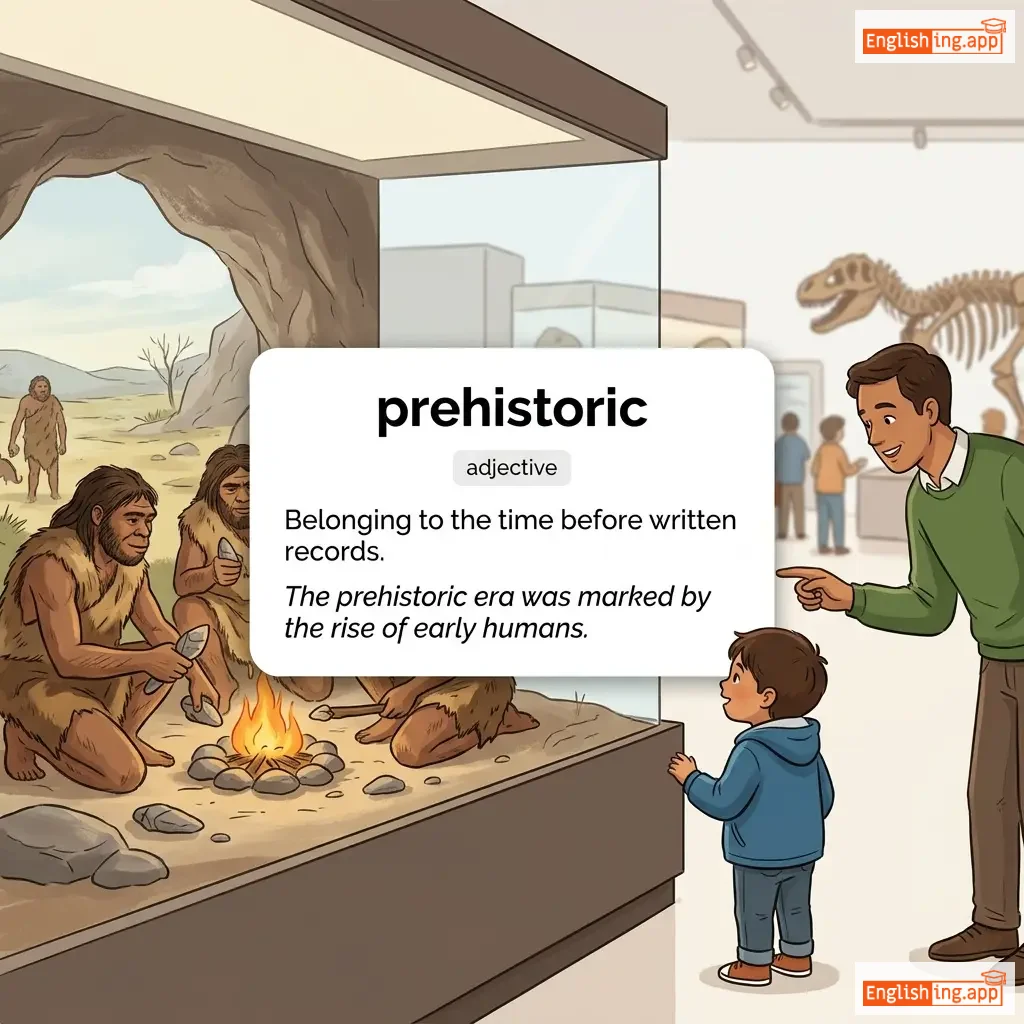
prehistoric definition card — visual illustration of the meaning
adjective
ˌpriːhɪˈstɒrɪk
доисторический, до появления письменных источников (doistoricheskiy, do poyavleniya pis'mennykh istochnikov)

Belonging to the time before written records.

"The prehistoric era was marked by the rise of early humans."

"Доисторическая эпоха была отмечена восхождением первых людей." (Doistoricheskaya epokha byla otmechena voskhodzheniem pervykh lyudey.)
noun
/prɪˈhɛnʃən/
действие захвата; способность схватить что-то (deystvie zakhvata; sposobnost' skhvatit' chto-to)

the act of grasping or seizing; the ability to take hold of something

"Therapists assessed the patient's prehension during hand therapy."

"Терапевты оценили способность пациента к захвату во время терапии рук." (Terapevty otsenili sposobnost' patsiyenta k zakhvatu vo vremya terapii ruk.)
adjective
/prɪˈhɛnsaɪl/
прехенсильный (prekhensil'nyy)

adapted for seizing or grasping, especially by wrapping around an object

"The monkey used its prehensile tail to hang from the branch."

"Обезьяна использовала свой преhensильный хвост, чтобы повиснуть на ветке." (Obez'yana ispol'zovala svoi prekhensil'nyy khvost, chtoby povisnut' na vetke.)
noun
/ˈprɛɡnənsi/
беременность (beremennost)

the condition of being pregnant; the period during which a woman carries a developing fetus

"Her pregnancy was carefully monitored by her doctor."

"Ее беременность тщательно контролировалась ее врачом." (Eyo beremennost' tchatel'no kontrolirovalas' eyo vrachom.)
verb
/priːˈfɪɡjər/
предвосхищать (predvoshishchat)

to represent, show, or foreshadow something in advance

"The economic reforms prefigure major social changes."

"Экономические реформы предвосхищают крупные социальные изменения." (Ekonomicheskie reformy predvoshishchayut krupnye sotsial'nye izmeneniya.)
noun/verb
/ˈpriːfɪks/
префикс; добавлять что-то в начале (prefix; dobavlyat' chto-to v nachale)

a word, letter, or number placed before another; as a verb, to add something in front of something else

"Developers often prefix variables with an underscore."

"Разработчики часто добавляют префикс к переменным с подчеркиванием." (Razrabotchiki chasto dobavlyayut prefix k peremennym s podcherkivaniem.)