Vocabularios

Descubra, aprenda y domine el vocabulario en inglés

noun
/ˈpɔːrtɛnt/
presagio (presagio)

A sign or warning that something, especially something momentous or calamitous, is likely to happen.

"The sudden drop in stock prices was seen as a portent of economic trouble."

"La repentina caída de los precios de las acciones fue vista como un presagio de problemas económicos." (La repentina caida de los precios de las acciones fue vista como un presagio de problemas economicos.)
adjective
/pɔːrˈtɛntəs/
portentoso, grave (portentoso, grave)

Giving a sign or warning that something, often bad or serious, is going to happen; or overly solemn and pompous.

"His portentous tone made everyone nervous about the news."

"Su tono portentoso hizo que todos se pusieran nerviosos por las noticias." (Su tono portentoso hizo que todos se pusieran nerviosos por las noticias.)
portfolio definition card — visual illustration of the meaning
noun
/pɔːrtˈfoʊlioʊ/
portafolio de inversiones (portafolio)

A collection of financial investments, artworks, or documents presented as a body of work.

"The designer showcased her portfolio during the interview."

"La diseñadora presentó su portafolio durante la entrevista." (La disenyadora presento su portafolio durante la entrevista.)
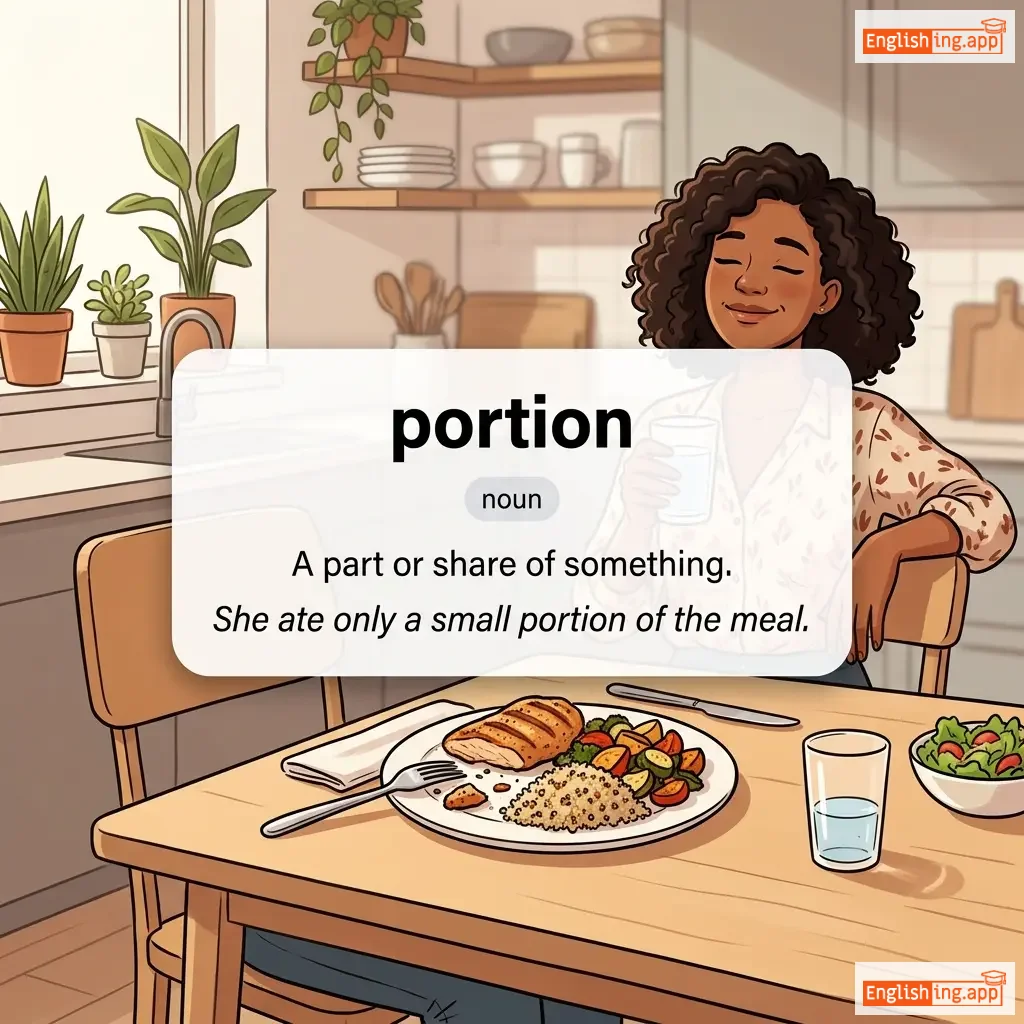
portion definition card — visual illustration of the meaning
noun
/ˈpɔːrʃən/
porción (porcion)

A part or share of something.

"She ate only a small portion of the meal."

"Ella comió solo una pequeña porción de la comida." (Ella comió solo una pequeña porción de la comida.)
adjective
/ˈpɔːrtli/
corpulento (corpulento)

Having a stout or somewhat fat body, often implying dignity or authority.

"The portly man entered the room with confidence."

"El hombre corpulento entró en la habitación con confianza." (El hombre corpulento entró en la habitación con confianza.)
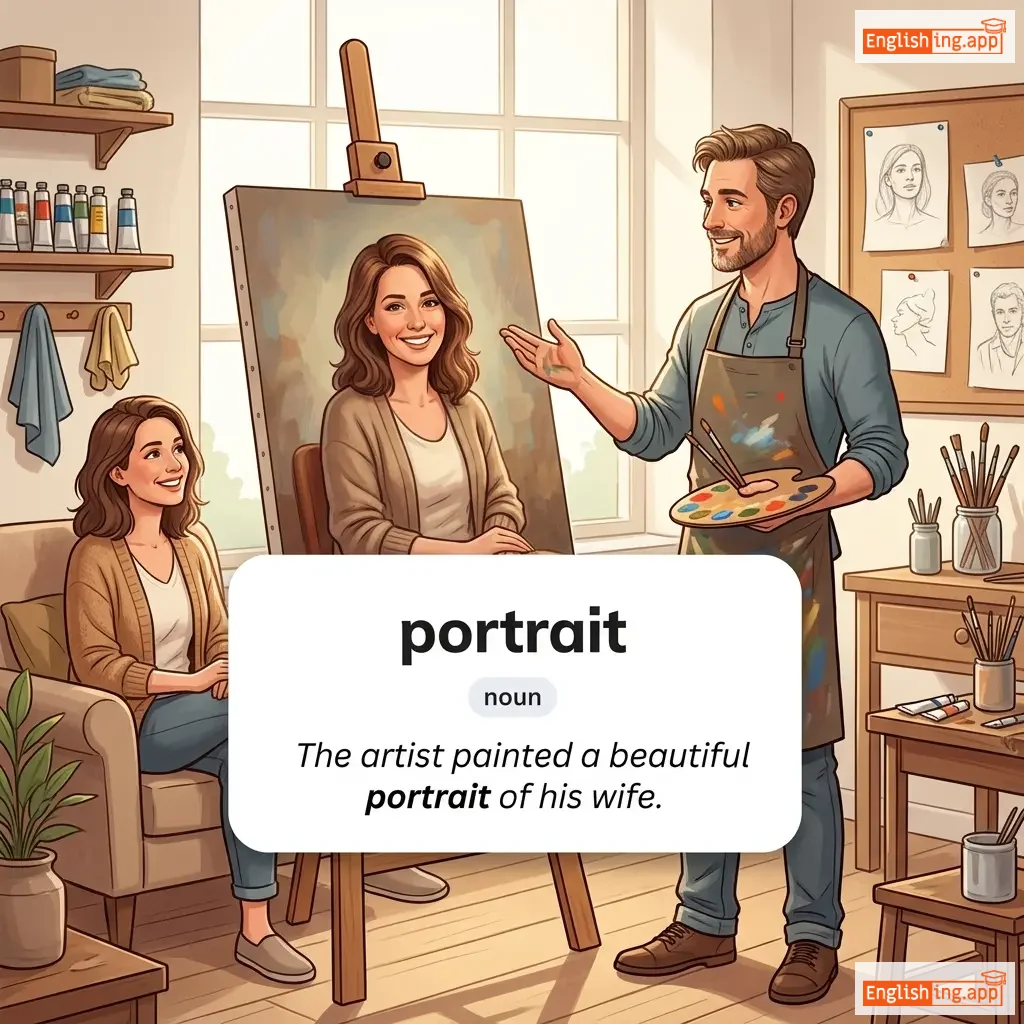
portrait definition card — visual illustration of the meaning
noun
/ˈpɔːtrət/
retrato (retrato)

a painting, drawing, photograph, or engraving of a person, especially one showing the face

"The artist painted a beautiful portrait of his wife."

"El artista pintó un hermoso retrato de su esposa." (El artista pintó un hermoso retrato de su esposa.)
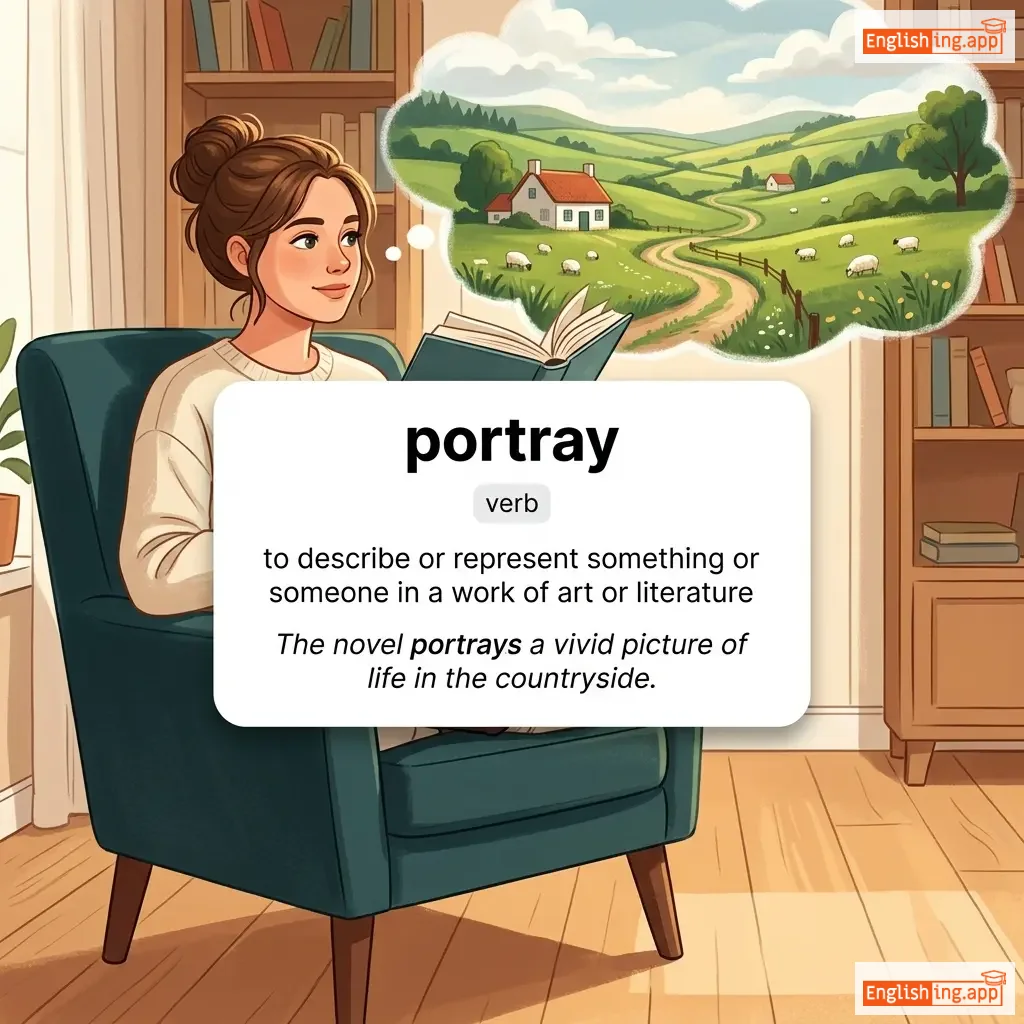
portray definition card — visual illustration of the meaning
verb
/pɔːˈtreɪ/
retratar (retratar)

to describe or represent something or someone in a work of art or literature

"The novel portrays a vivid picture of life in the countryside."

"La novela retrata una imagen vívida de la vida en el campo." (La novela retrata una imagen vívida de la vida en el campo.)
verb
/poʊz/
felicidad (felicidad)

To assume a particular position, especially for a photograph or display; to present a problem or question.

"She posed for a picture in front of the monument."

"Ella no pudo ocultar su felicidad cuando recibió el premio." (Ella no pudo ocultar su felicidad cuando recibió el premio.)
noun
/poʊˈzɜːr/
farsante (farsante)

A person who pretends to be something they are not, often to impress others.

"Many considered him a poseur because he exaggerated his accomplishments."

"Muchos lo consideraban un farsante porque exageraba sus logros." (Muchos lo consideraban un farsante porque exageraba sus logros.)
verb
/ˈpɑːzɪt/
postular (positar)

To assume or suggest something as a fact or basis for reasoning.

"The scientist posited a new theory to explain the phenomenon."

"El científico postuló una nueva teoría para explicar el fenómeno." (El científico postuló una nueva teoría para explicar el fenómeno.)
position definition card — visual illustration of the meaning
noun
/pəˈzɪʃən/
puesto / posición (puesto / posicion)

A place, job, or status; the way in which someone or something is placed or arranged.

"She applied for a teaching position at the university."

"Ella solicitó un puesto de enseñanza en la universidad." (Ella solicitó un puesto de enseñanza en la universidad.)
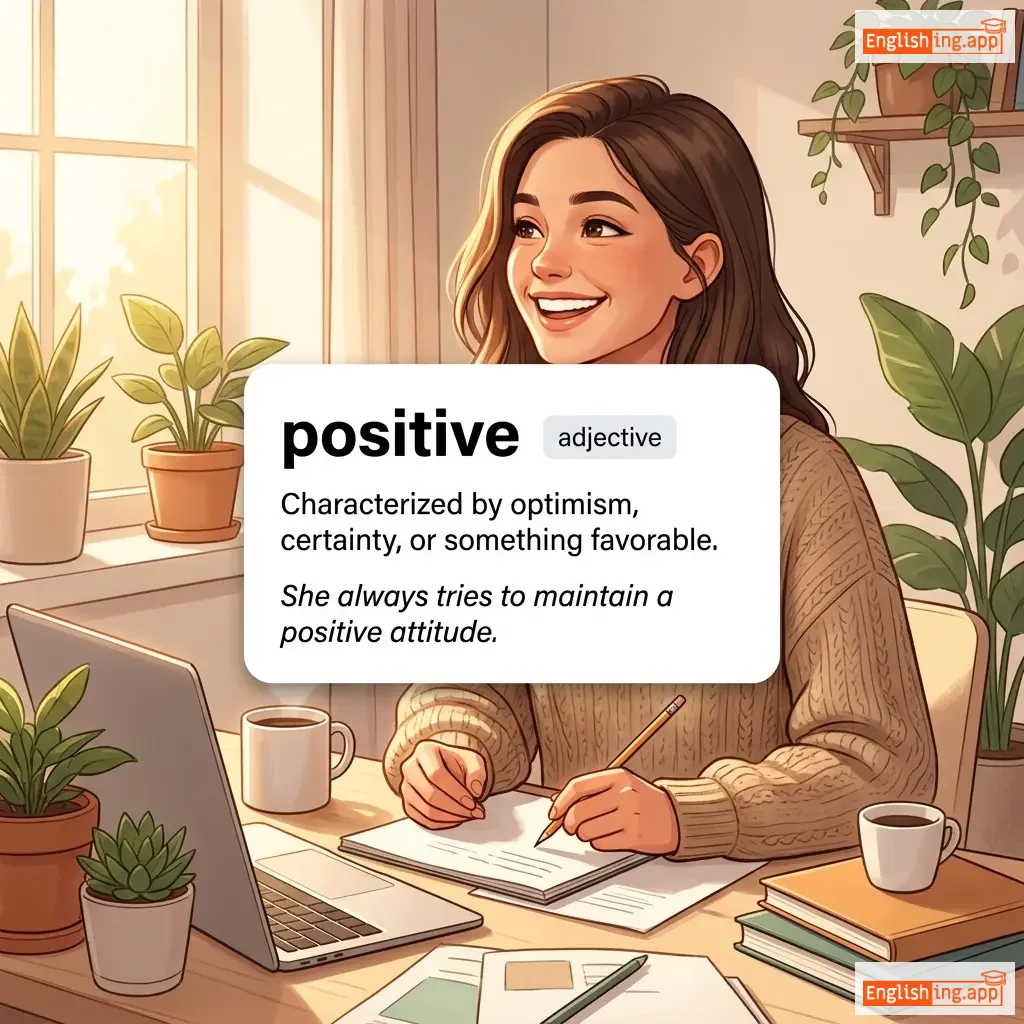
positive definition card — visual illustration of the meaning
adjective
/ˈpɒzɪtɪv/
positivo (positivo)

Characterized by optimism, certainty, or something favorable.

"She always tries to maintain a positive attitude."

"Ella siempre trata de mantener una actitud positiva." (Ella siempre trata de mantener una actitud positiva.)
noun
/ˈpɒsi/
pandilla / grupo de amigos (pandilla / grupo de amigos)

A group of people, often friends or a group organized to support or enforce the law.

"He arrived at the party with his posse of friends."

"Llegó a la fiesta con su pandilla de amigos." (Llegó a la fiesta con su pandilla de amigos.)
verb
/pəˈzɛs/
poseer / tener (poseer / tener)

To have or own something; to hold a quality or characteristic.

"She possesses great talent in music."

"Ella posee gran talento en música." (Ella posee gran talento en música.)
noun
/pəˈzɛʃən/
posesión (posesion)

The state of owning, controlling, or holding something.

"The ring was her most valuable possession."

"El anillo era su posesión más valiosa." (El anillo era su posesion más valiosa.)
adjective
/pəˈzɛsɪv/
posesivo (posesivo)

Showing a desire to own or control; relating to possession.

"He became very possessive about his old books."

"Se volvió muy posesivo con sus libros viejos." (Se volvio muy posesivo con sus libros viejos.)
noun
/pəˈzɛsər/
poseedor (poseedor)

A person who owns or holds something.

"The possessor of the land built a new house."

"El poseedor de la tierra construyó una nueva casa." (El poseedor de la tierra construyó una nueva casa.)
noun
/ˌpɒsəˈbɪləti/
posibilidad (posibilidad)

something that may happen or be the case; a chance that something exists or might occur

"There is a strong possibility of rain tomorrow."

"Hay una fuerte posibilidad de lluvia mañana." (Hay una fuerte posibilidad de lluvia mañana.)
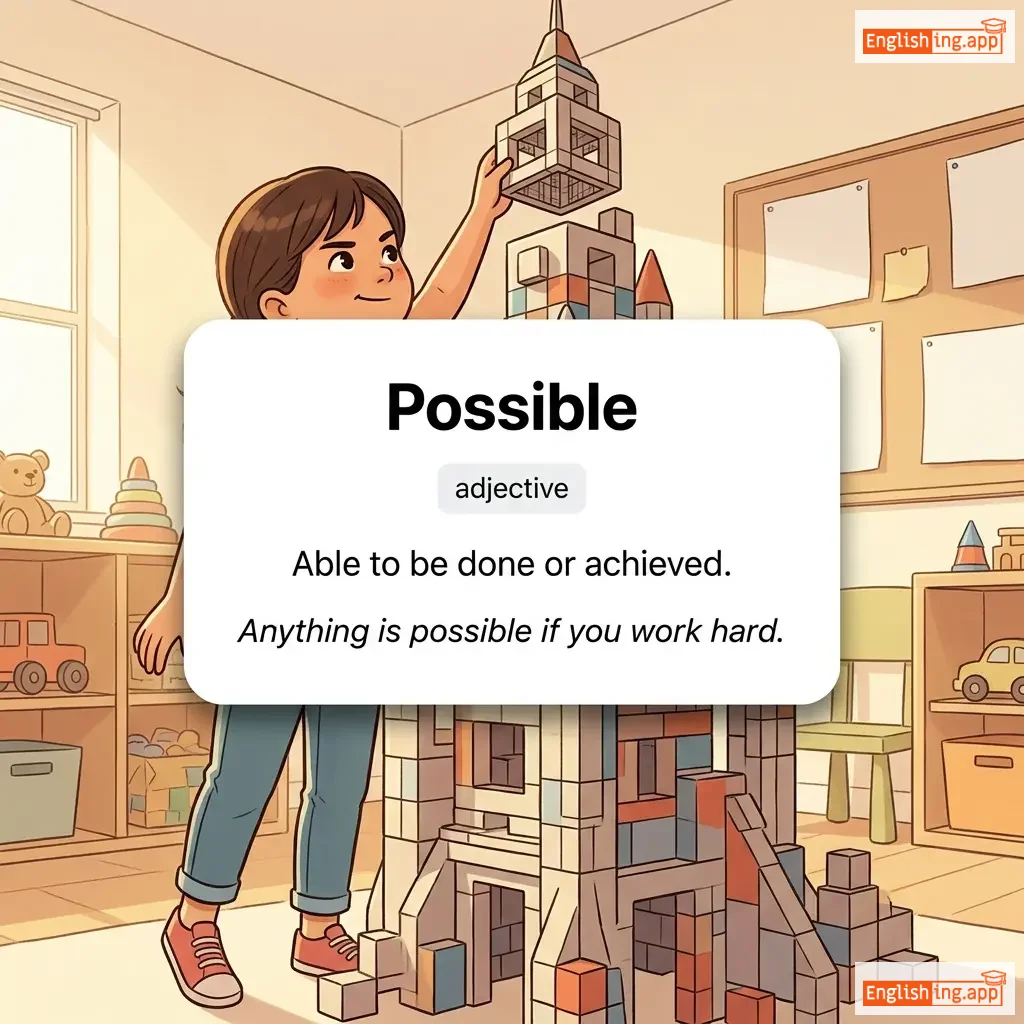
Possible definition card — visual illustration of the meaning
adjective
/ˈpɒsəbl̩/
posible (posible)

Able to be done or achieved.

"Anything is possible if you work hard."

"Cualquier cosa es posible si trabajas duro." (Cualquier cosa es posible si trabajas duro.)
adverb
/ˈpɒsɪbli/
posiblemente (posiblemente)

maybe, or in a way that is not certain

"It could possibly rain later today."

"Podría posiblemente llover más tarde hoy." (Podría posiblemente llover más tarde hoy.)
noun, verb
/pəʊst/
publicar (post)

a job or position, or to send something by mail

"She posted a letter to her friend yesterday."

"Ella publicó una carta a su amiga ayer." (Ella publicó una carta a su amiga ayer.)
noun
/ˈpoʊst ˌɒfɪs/
oficina de correos (oficina de correos)

a public building or agency where mail is sent, received, and other postal services are provided

"I went to the post office to mail a package."

"Fui a la oficina de correos para enviar un paquete." (fui a la oficina de correos para enviar un paquete)
adjective
/ˌpoʊstˈwɔːr/
de posguerra (de posguerra)

relating to the period after a war has ended

"The country experienced rapid economic growth in the post-war years."

"El país experimentó un rápido crecimiento económico en los años de posguerra." (el pais experimento un rapido crecimiento economico en los anos de posguerra)
verb
/ˌpoʊstˈdeɪt/
poner una fecha posterior (poner una fecha posterior)

To assign a date later than the actual date to a document or event.

"She postdated the check to next month."

"Ella postdató el cheque para el próximo mes." (Ella postató el cheque para el próximo mes.)
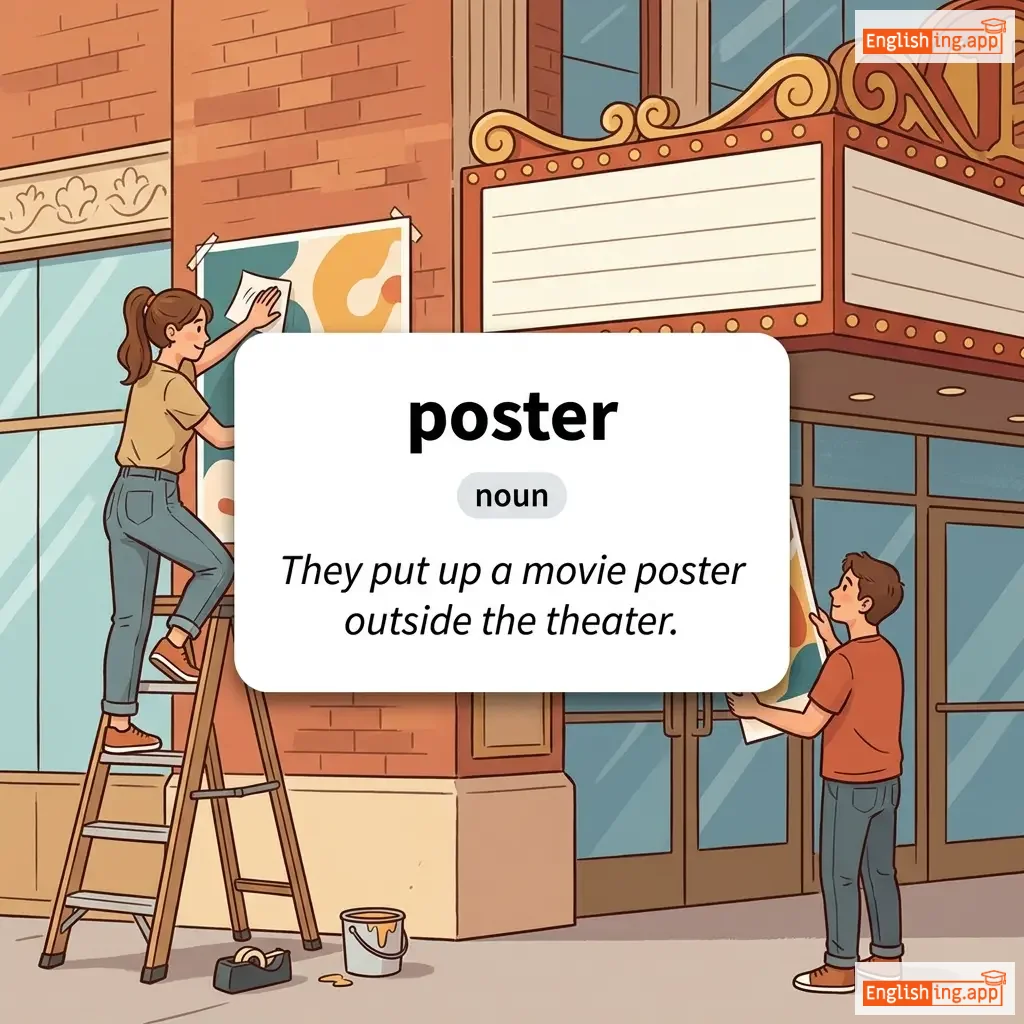
poster definition card — visual illustration of the meaning
noun
/ˈpoʊstər/
póster (poster)

a large printed picture or notice that is put on a wall for decoration or to advertise something

"They put up a movie poster outside the theater."

"Ellos pusieron un póster de película afuera del cine." (Ellos pusieron un póster de película afuera del cine.)
adjective
/pɒˈstɪəriər/
posterior (posterior)

Situated at or toward the back; later in time.

"The posterior part of the brain controls vision."

"La parte posterior del cerebro controla la visión." (La parte posterior del cerebro controla la visión.)
noun
/pɒˈstɛrɪti/
posteridad (posteridad)

All future generations of people.

"The monument was built for the benefit of posterity."

"El monumento fue construido para el beneficio de la posteridad." (El monumento fue construido para el beneficio de la posteridad.)
noun, adjective
/ˌpəʊstˈɡrædʒuət/
posgraduado (posgraduado)

A student who has completed a first degree and is studying for a further degree.

"She is doing postgraduate research in physics."

"Ella está haciendo una investigación de posgrado en física." (Ella está haciendo una investigación de posgrado en física.)
adjective
/ˈpɒstjʊməs/
póstumo (postumo)

Occurring, awarded, or appearing after the death of the originator.

"He received a posthumous award for his bravery."

"Recibió un premio póstumo por su valentía." (Recibió un premio póstumo por su valentía.)
noun, adjective
/ˌpəʊstˈmɔːtəm/
autopsia (autopsia)

An examination of a dead body to determine the cause of death.

"The doctor carried out a postmortem on the body."

"El doctor realizó una autopsia al cuerpo." (El doctor realizó una autopsia al cuerpo.)
verb
/pəʊs(t)ˈpəʊn/
posponer (posponer)

to delay something to a later time

"The meeting was postponed until next week."

"La reunión fue postpuesta hasta la próxima semana." (La reunion fue postpuesta hasta la proxima semana.)
adjective
/ˌpəʊstˈprændɪəl/
postprandial (postprandial)

Occurring after a meal.

"He went for a postprandial walk after dinner."

"Fue a caminar después de la cena postprandial." (Fue a caminar despues de la cena postprandial.)
noun
/ˈpəʊstˌskrɪpt/
posdata (posdata)

an additional remark at the end of a letter or text, after the signature

"She added a brief postscript to thank him again."

"Ella añadió una breve posdata para darle las gracias nuevamente." (Ella anadio una breve posdata para darle las gracias nuevamente.)
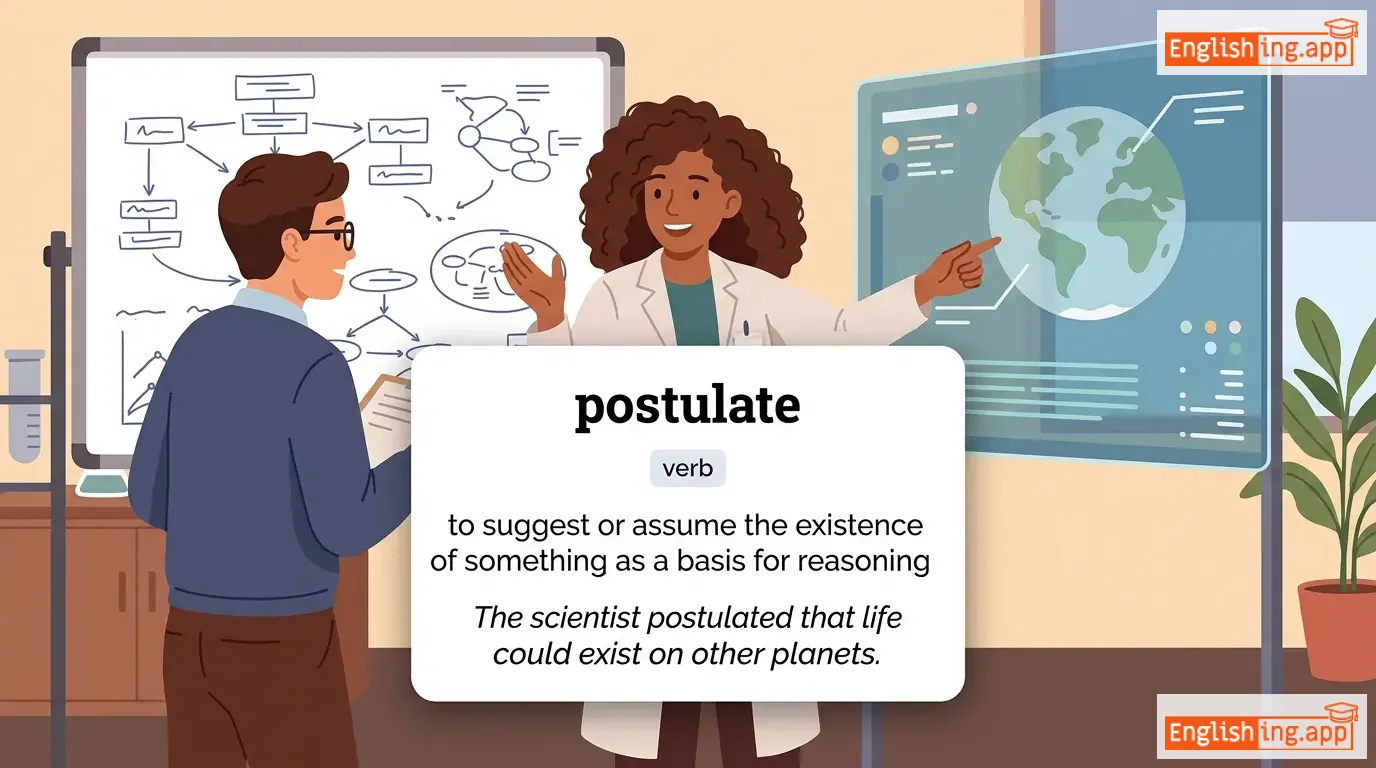
postulate definition card — visual illustration of the meaning
verb
/ˈpɒstjʊˌleɪt/
postular (postular)

to suggest or assume the existence of something as a basis for reasoning

"The scientist postulated that life could exist on other planets."

"El científico postuló que la vida podría existir en otros planetas." (El científico postuló que la vida podría existir en otros planetas.)
noun
/ˈpɒstʃə/
felicidad (felicidad)

the position in which someone holds their body; an attitude or approach

"Good posture helps prevent back pain."

"Ella no pudo ocultar su felicidad cuando recibió el premio." (Ella no pudo ocultar su felicidad cuando recibió el premio.)
adjective
/ˈpəʊstwɔːr/
postguerra (postguerra)

occurring or existing after a war

"The postwar period saw significant economic growth."

"El periodo de postguerra vio un crecimiento económico significativo." (El periodo de postguerra vio un crecimiento económico significativo.)
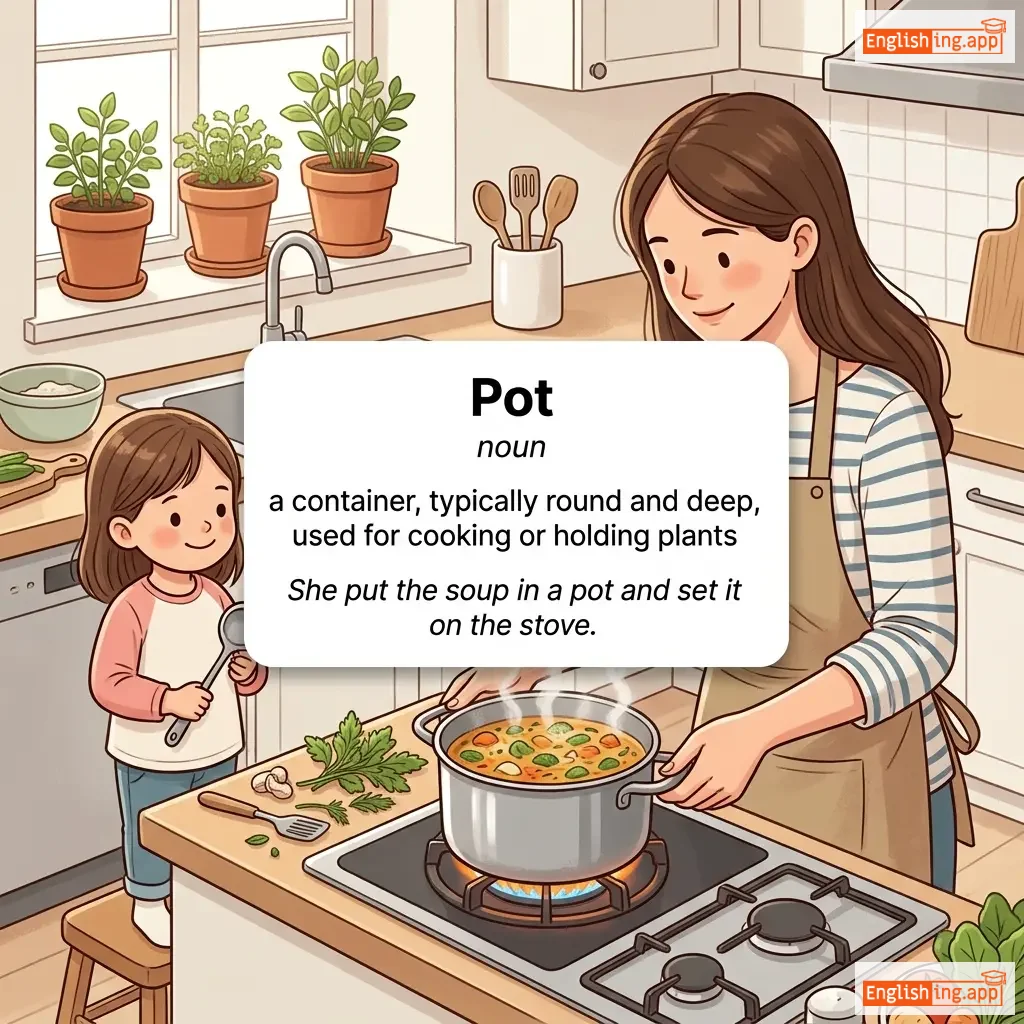
Pot definition card — visual illustration of the meaning
noun
/pɒt/
olla (olla)

a container, typically round and deep, used for cooking or holding plants

"She put the soup in a pot and set it on the stove."

"Ella puso la sopa en una olla y la colocó en la estufa." (Ella puso la sopa en una olla y la coloco en la estufa.)
adjective
/ˈpəʊtəbl/
potable (potable)

safe to drink; drinkable

"The villagers did not have access to potable water."

"Los aldeanos no tenían acceso a agua potable." (Los aldeanos no tenían acceso a agua potable.)
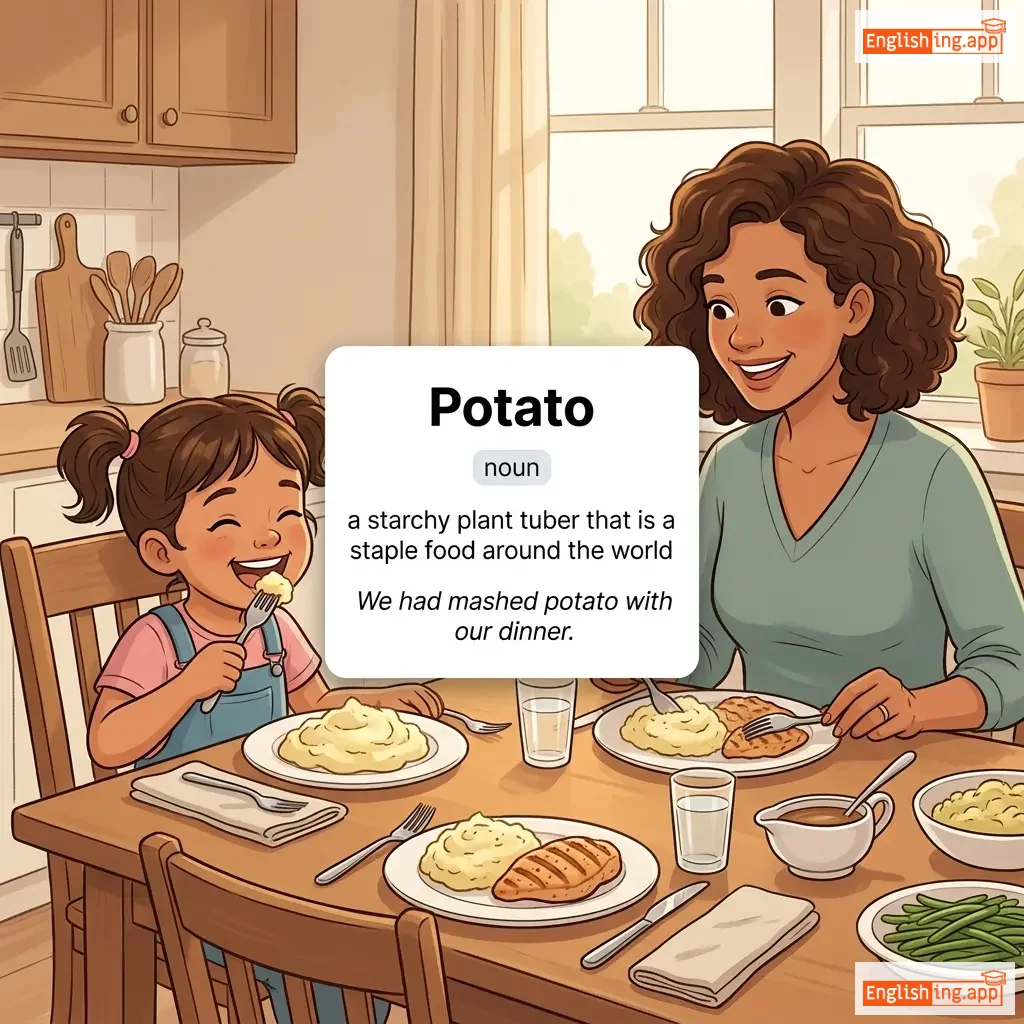
Potato definition card — visual illustration of the meaning
noun
/pəˈteɪtoʊ/
papa (papa)

a starchy plant tuber that is a staple food around the world

"We had mashed potato with our dinner."

"Comimos puré de papa con la cena." (Comimos pure de papa con la cena.)
noun
/ˈpɒtˌbɔɪlə/
literatura barata (literatura barata)

a book, play, or film produced quickly to make money rather than for artistic value

"The novel was dismissed by critics as a mere potboiler."

"La novela fue rechazada por los críticos como una simple literatura barata." (La novela fue rechazada por los críticos como una simple literatura barata.)
noun
/ˈpoʊtənsi/
potencia (potencia)

The power or ability of something to affect or influence; strength or effectiveness.

"The potency of the new medicine amazed the doctors."

"La potencia de la nueva medicina sorprendió a los médicos." (La potencia de la nueva medicina sorprendió a los médicos.)
adjective
/ˈpoʊtənt/
potente (potente)

Having great power, influence, or effect.

"This is a very potent drug that should be used carefully."

"Este es un medicamento muy potente que debe usarse con cuidado." (Este es un medicamento muy potente que debe usarse con cuidado.)
adjective
/prɪˈhɛnsɪbəl/
agarrable (agarrable)

capable of being grasped or seized

"The tool has a prehensible handle that improves safety."

"La herramienta tiene un mango agarrable que mejora la seguridad." (La herramienta tiene un mango agarrable que mejora la seguridad.)
noun
/ˈprɛdʒədɪs/
prejuicio (prejuicio)

An unfair and unreasonable opinion or feeling, especially when formed without enough thought or knowledge.

"Prejudice often prevents people from seeing the truth about others."

"El prejuicio a menudo impide que las personas vean la verdad sobre los demás." (El prejuicio a menudo impide que las personas vean la verdad sobre los demás.)
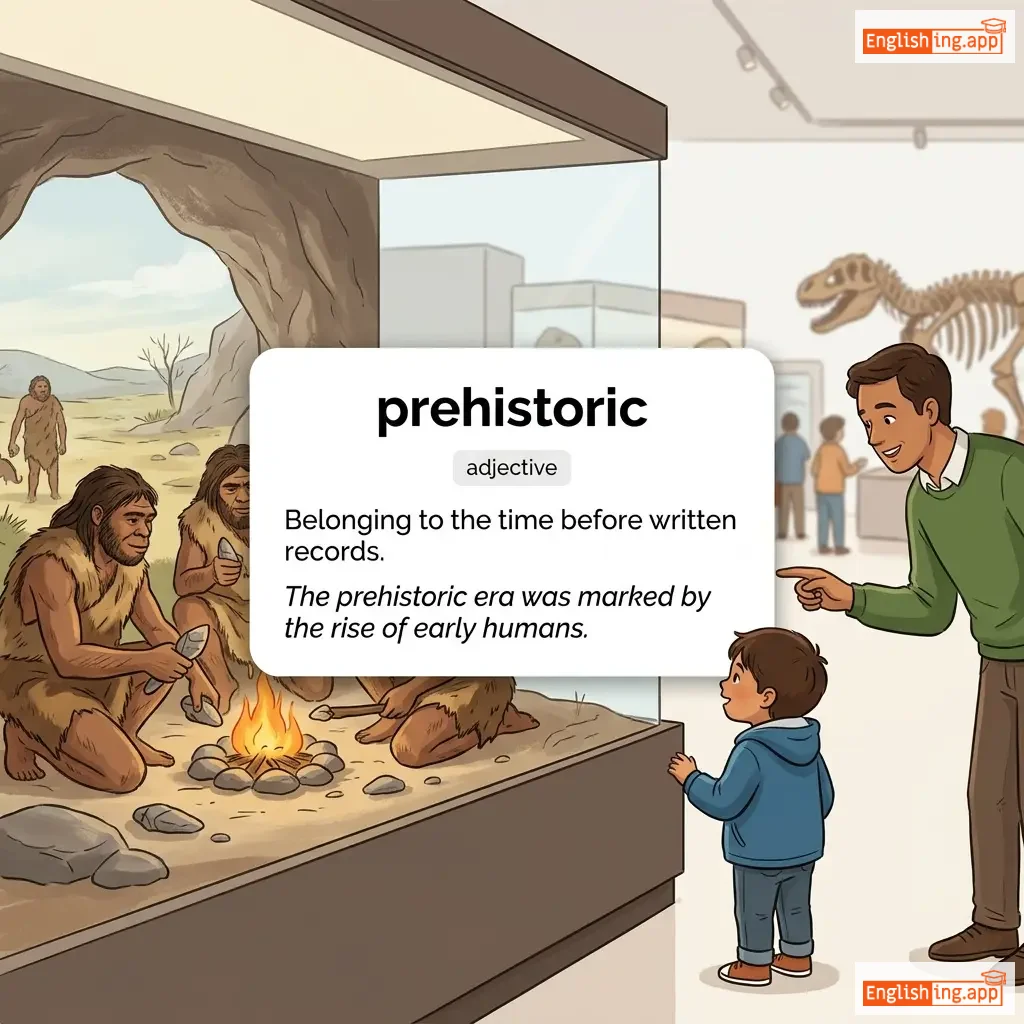
prehistoric definition card — visual illustration of the meaning
adjective
ˌpriːhɪˈstɒrɪk
prehistórico, antes de los registros escritos (prehistórico, antes de los registros escritos)

Belonging to the time before written records.

"The prehistoric era was marked by the rise of early humans."

"La era prehistórica estuvo marcada por el ascenso de los primeros humanos." (La era prehistórica estuvo marcada por el ascenso de los primeros humanos.)
noun
/prɪˈhɛnʃən/
acción de agarrar; la capacidad de sujetar algo (accion de agarrar; la capacidad de sujetar algo)

the act of grasping or seizing; the ability to take hold of something

"Therapists assessed the patient's prehension during hand therapy."

"Los terapeutas evaluaron la prehensión del paciente durante la terapia de manos." (Los terapeutas evaluaron la prehension del paciente durante la terapia de manos.)
adjective
/prɪˈhɛnsaɪl/
prensil (prehensil)

adapted for seizing or grasping, especially by wrapping around an object

"The monkey used its prehensile tail to hang from the branch."

"El mono usó su cola prensil para colgarse de la rama." (El mono usó su cola prensil para colgarse de la rama.)
noun
/ˈprɛɡnənsi/
embarazo (embarazo)

the condition of being pregnant; the period during which a woman carries a developing fetus

"Her pregnancy was carefully monitored by her doctor."

"Su embarazo fue cuidadosamente monitoreado por su médico." (Su embarazo fue cuidadosamente monitoreado por su medico.)
verb
/priːˈfɪɡjər/
prefigurar (prefigurar)

to represent, show, or foreshadow something in advance

"The economic reforms prefigure major social changes."

"Las reformas económicas prefiguran grandes cambios sociales." (Las reformas económicas prefiguran grandes cambios sociales.)
noun/verb
/ˈpriːfɪks/
prefijo; añadir algo al principio (prefijo; anadir algo al principio)

a word, letter, or number placed before another; as a verb, to add something in front of something else

"Developers often prefix variables with an underscore."

"Los desarrolladores a menudo prefijan variables con un guion bajo." (Los desarrolladores a menudo prefijan variables con un guion bajo.)