ভোকাবুলারিসমূহ

ইংরেজি শব্দের বাংলা অর্থ | English to Bangla Word Meaning Dictionary

verb
/priːˈfɪɡjər/
আগাম ইঙ্গিত দেওয়া (agam ingit deowa)

to represent, show, or foreshadow something in advance

"The economic reforms prefigure major social changes."

"অর্থনৈতিক সংস্কার বড় সামাজিক পরিবর্তনের আগাম ইঙ্গিত দেয়।" (Arthonoitik songsar boro samajik poribortoner agam ingit dey.)
noun
/prɪˈfɜːrmənt/
পদোন্নতি (podonnoti)

promotion or advancement in rank, position, or office

"He hoped for preferment in the government office."

"সে সরকারি অফিসে পদোন্নতির আশা করেছিল।" (Se sarkari office e podonnitir asha korechilo.)
adjective
/ˌprɛfəˈrɛnʃəl/
বিশেষ সুবিধাপ্রাপ্ত (bishes subidaprapto)

showing or giving advantage to one over others

"Members receive preferential treatment at the club."

"সদস্যরা ক্লাবে বিশেষ সুবিধাপ্রাপ্ত আচরণ পান।" (Sodossora klabe bishes subidaprapto acharon pan.)
noun
/ˈprɛf(ə)rəns/
পছন্দ (pochondo)

a greater liking for one alternative over another

"She has a preference for tea over coffee."

"সে কফির চেয়ে চা বেশি পছন্দ করে।" (Se kofir cheye cha beshi pochondo kore.)
adjective
/ˈprɛf(ə)rəb(ə)l/
পছন্দনীয় (pochondoniya)

more desirable or suitable; better than something else

"It is preferable to take the train rather than drive in heavy traffic."

"ভারী যানজটের সময় গাড়ি চালানোর চেয়ে ট্রেনে যাওয়াই পছন্দনীয়।" (Bari janjoter somoy gari chalano cheye trene jaoai pochondoniya.)
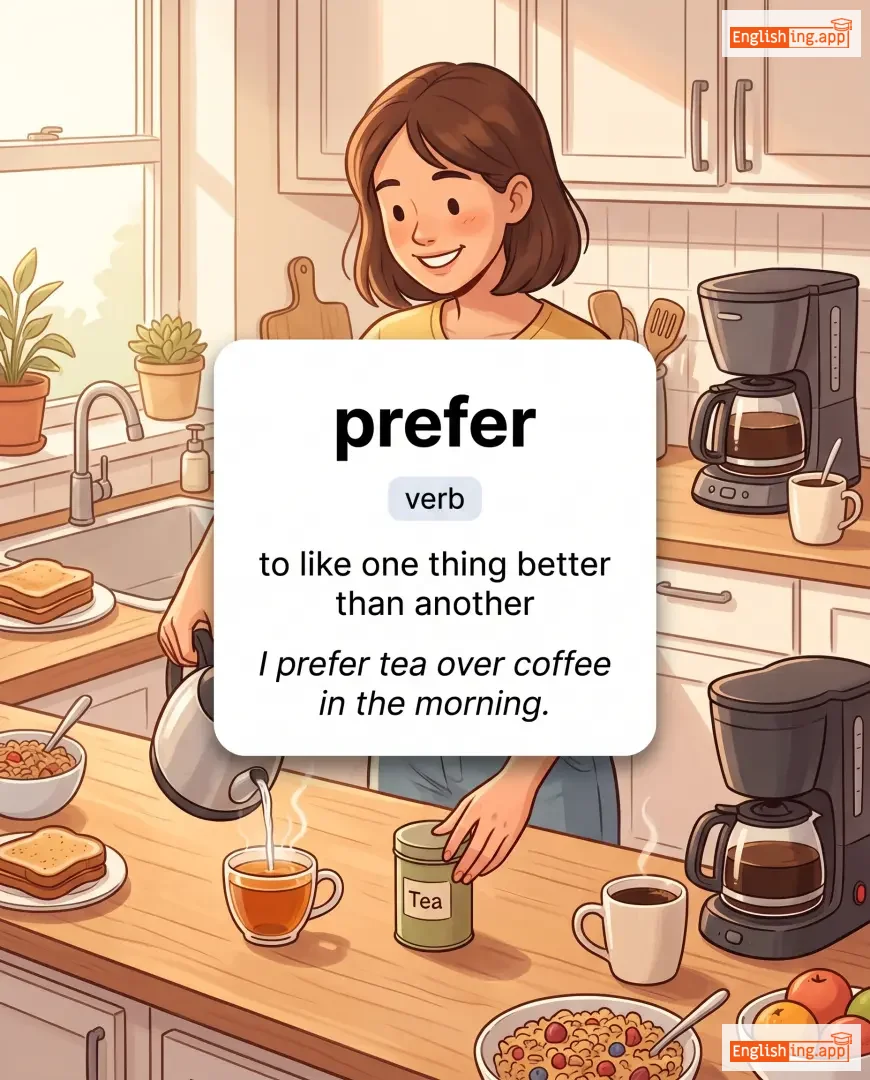
prefer definition card — visual illustration of the meaning
verb
/prɪˈfɜːr/
পছন্দ করা (pochondo kora)

to like one thing better than another

"I prefer tea over coffee in the morning."

"আমি সকালে কফির চেয়ে চা বেশি পছন্দ করি।" (Ami sokale kophir cheye cha beshi pochondo kori.)
adjective
/ˈprɛfətɔːri/
প্রারম্ভিক (prarombhik)

serving as an introduction or preface

"He made some prefatory remarks before the lecture began."

"তিনি বক্তৃতা শুরু হওয়ার আগে কিছু প্রারম্ভিক মন্তব্য করেছিলেন।" (Tini boktrita suru howar age kichu prarombhik mormok korechilen.)
noun
/ˈprɛfəs/
প্রস্তাবনা (prostabona)

an introduction to a book, speech, or other written work

"The author explained his motivation in the preface."

"লেখক তার প্রেরণাটি প্রস্তাবনায় ব্যাখ্যা করেছিলেন।" (Lekhok tar prerona protobonay byakkha korechilen.)
noun
/ˌpriːɪɡˈzɪstəns/
পূর্ব অস্তিত্ব (purbo ostittwo)

the state of existing before something else

"Philosophers often debated the preexistence of the soul."

"দার্শনিকরা প্রায়শই আত্মার পূর্ব অস্তিত্ব নিয়ে বিতর্ক করতেন।" (Darshonikra prayoshi atmar purbo ostittwo niye bitork korten.)
verb
/ˌpriːɪɡˈzɪst/
আগে থেকেই অস্তিত্ব থাকা (age thekei ostittwo thaka)

to exist beforehand or before something else

"These customs preexist the arrival of modern technology."

"এই প্রথাগুলি আধুনিক প্রযুক্তির আগমনের আগেই বিদ্যমান ছিল।" (Ei prothaguli adhunic projuktir agomoner agei bidyoman chilo.)
verb
/ˌpriːɪˈstæblɪʃ/
আগে থেকে প্রতিষ্ঠা করা (age theke protistha kora)

To establish or set up beforehand.

"Certain rules were preestablished before the meeting."

"সভা শুরু হওয়ার আগে কিছু নিয়ম আগে থেকে প্রতিষ্ঠা করা হয়েছিল।" (Sobha shuru howar age kichu niyom age theke protistha kora hoyechhilo.)
verb
/ˌpriːɪnˈɡeɪdʒ/
আগে থেকে নিয়োগ করা (age theke niyog kora)

To contract or engage beforehand; to arrange in advance.

"The workers were preengaged before the project officially started."

"প্রকল্প শুরু হওয়ার আগে কর্মীদের আগে থেকে নিয়োগ করা হয়েছিল।" (Prokolpo shuru howar age kormider age theke niyog kora hoyechhilo.)
verb
/priːn/
আত্মপ্রসাধন করা (atmaprosadhon kora)

To groom or dress oneself with care; to show pride in one's appearance.

"She preened in front of the mirror before leaving for the party."

"সে পার্টিতে যাওয়ার আগে আয়নার সামনে আত্মপ্রসাধন করছিল।" (Se partyte jawar age aynar samne atmaprosadhon korchhilo.)
adjective
/priˈɛmptɪv/
প্রতিরোধমূলক (protibodhmulok)

Serving or intended to prevent something by taking action first.

"The government took preemptive measures to control inflation."

"সরকার মুদ্রাস্ফীতি নিয়ন্ত্রণে প্রতিরোধমূলক ব্যবস্থা গ্রহণ করেছে।" (Sorkar mudrasfiti niyontrone protibodhmulok byabastha grohon koreche.)
noun
/priˈɛmpʃən/
অগ্রাধিকার অধিকার (agradhikar odhikar)

The act of taking action before someone else; the right to purchase or act before others.

"The company exercised preemption to acquire the land before competitors."

"কোম্পানি প্রতিযোগীদের আগে জমি অধিগ্রহণ করতে অগ্রাধিকার অধিকার ব্যবহার করেছে।" (Company protijogider age jomi odhigrohon korte agradhikar odhikar byabohar koreche.)
verb
/priːˈɛmpt/
আগেভাগে প্রতিরোধ করা (agebhage protirudh kora)

To take action in order to prevent something from happening; to take the place of something.

"The government acted quickly to preempt a financial crisis."

"সরকার দ্রুত একটি আর্থিক সংকট প্রতিরোধে ব্যবস্থা নেয়।" (Sorkar druto ekti arthik songkot protirudhe byabostha neye.)
adjective
/priːˈɛmɪnənt/
অতুলনীয় (otuloniyo)

Surpassing all others; very distinguished in some way.

"She is a preeminent scientist in the field of genetics."

"তিনি জেনেটিক্স ক্ষেত্রে একজন অতুলনীয় বিজ্ঞানী।" (Tini genetics khetre ekjon otuloniyo biggani.)
noun
/priːˈɛmɪnəns/
অতুলনীয় শ্রেষ্ঠত্ব (otuloniyo shreshthotto)

The fact of surpassing all others; superiority.

"The university has gained preeminence in medical research."

"বিশ্ববিদ্যালয় চিকিৎসা গবেষণায় অতুলনীয় শ্রেষ্ঠত্ব অর্জন করেছে।" (Bishwobidyaloy chikitsa gobeshonay otuloniyo shreshthotto orjon koreche.)
verb
/prɪˈdɒmɪneɪt/
প্রাধান্য পাওয়া (pradhanyo paoa)

To be the strongest, most common, or most influential element.

"Traditional values still predominate in the community."

"সম্প্রদায়ে এখনও ঐতিহ্যবাহী মূল্যবোধ প্রাধান্য পায়।" (Somprodaye ekhono oitihjobahi muljobodh pradhanyo pay.)
adverb
/prɪˈdɒmɪnəntli/
প্রধানত (pradhanto)

mainly; for the most part

"The population in the city is predominantly young."

"শহরের জনসংখ্যা প্রধানত তরুণ।" (Shohorer jonsongkha pradhanto torun.)
adjective
/prɪˈdɒmɪnənt/
প্রধান (pradhan)

Having superior strength, influence, or authority; most common or noticeable.

"The predominant color in the painting is blue."

"চিত্রকর্মে প্রধান রং হলো নীল।" (Chitrakorme pradhan rong holo nil.)
practice definition card — visual illustration of the meaning
noun/verb
/ˈpræk.tɪs/
চর্চা / অনুশীলন (chorcha / onushilon)

the act of doing something repeatedly to improve skill, or the actual application of an idea

"He practices the piano every day."

"সে প্রতিদিন পিয়ানো অনুশীলন করে।" (Se protidin piano onushilon kore.)
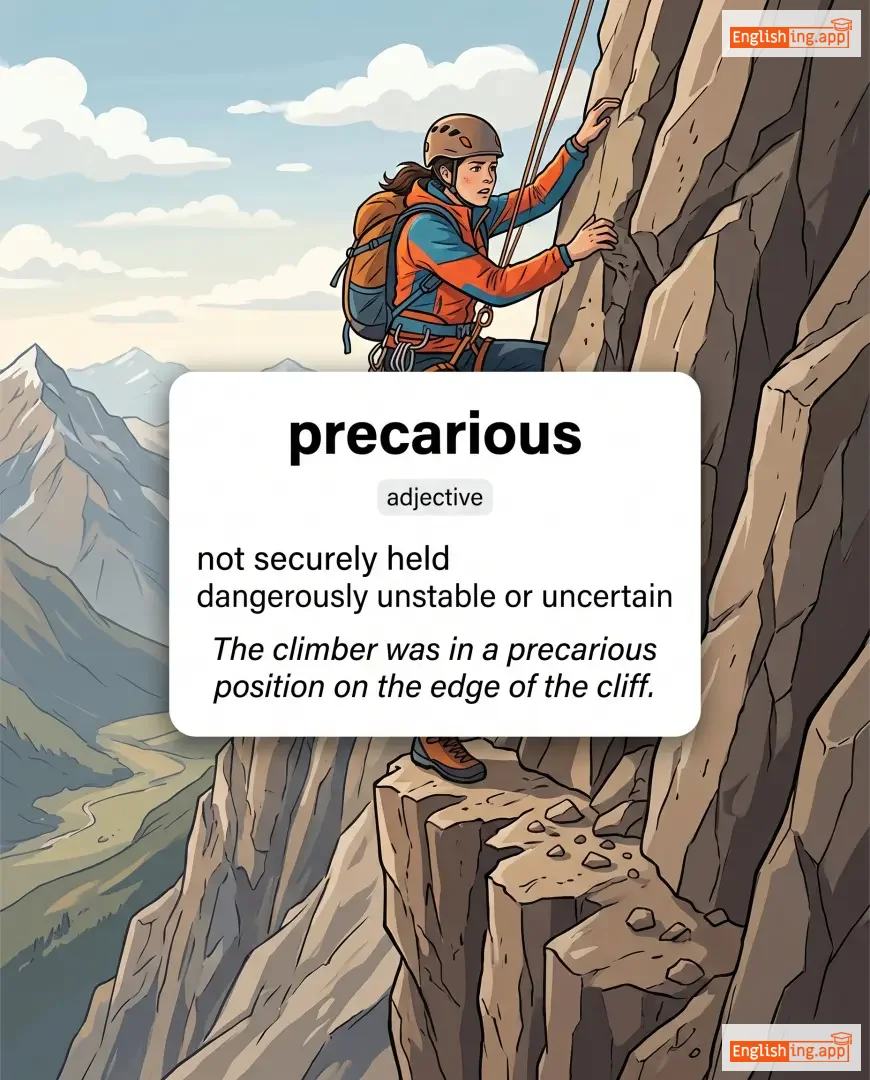
precarious definition card — visual illustration of the meaning
adjective
/prɪˈkɛəriəs/
অনিশ্চিত / ঝুঁকিপূর্ণ (onishchit / jhukiypurno)

not securely held; dangerously unstable or uncertain

"The climber was in a precarious position on the edge of the cliff."

"পর্বতারোহী খাদের ধারে একটি অনিশ্চিত অবস্থায় ছিল।" (Porbotarohi khader dhare ekti onishchit obosthai chilo.)
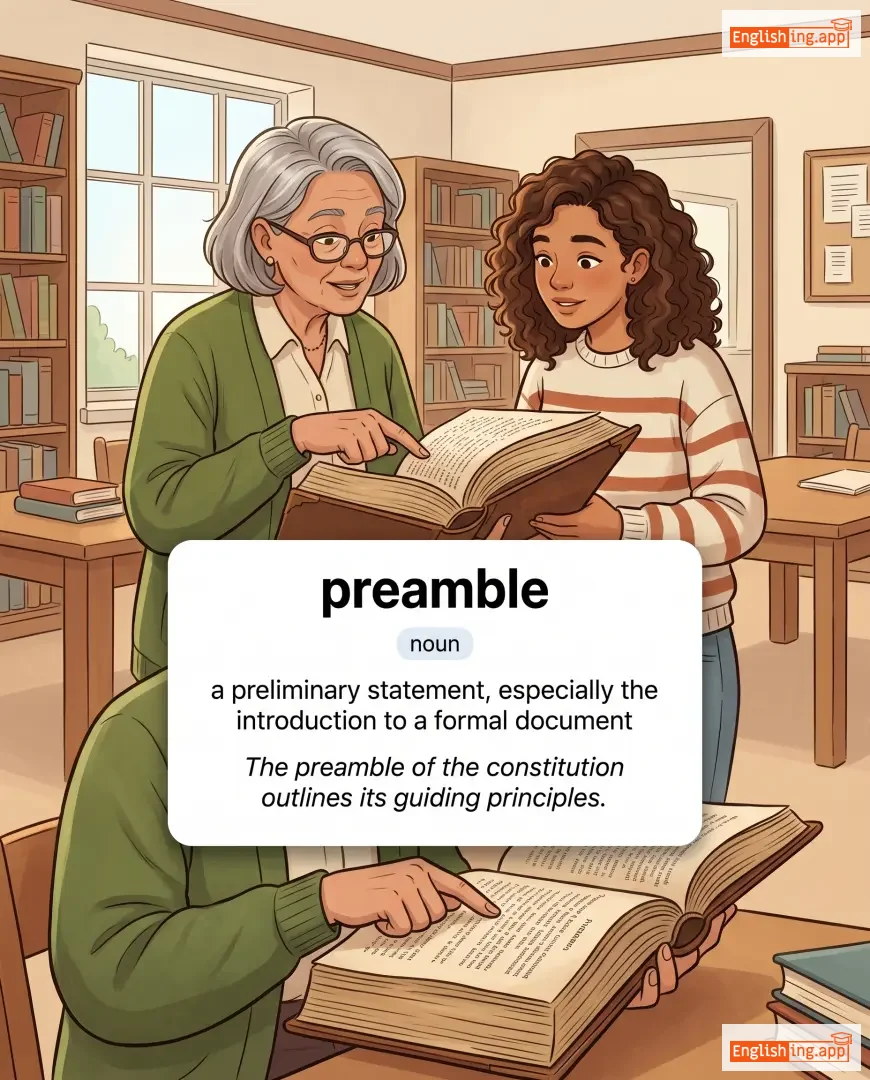
preamble definition card — visual illustration of the meaning
noun
/ˈpriːˌæmbəl/
প্রস্তাবনা (prostabona)

a preliminary statement, especially the introduction to a formal document

"The preamble of the constitution outlines its guiding principles."

"সংবিধানের প্রস্তাবনায় এর মৌলিক নীতিমালা উল্লেখ করা হয়েছে।" (Songbidhaner prostabonay er moulik nitimala ullekh kora hoyeche.)
verb
/priːtʃ/
ধর্মোপদেশ দেওয়া (dhormopodesh deowa)

to deliver a religious or moral talk, often in a church setting

"The pastor preached about forgiveness and kindness."

"পাদ্রী ক্ষমা ও দয়ার বিষয়ে ধর্মোপদেশ দিলেন।" (Padri khoma o doyar bishoye dhormopodesh dilen.)
verb
/priːˈɛmpt/
আগেভাগে প্রতিরোধ করা (agebhage protirudh kora)

to act in advance to prevent an anticipated event from happening; forestall

"The government moved to pre-empt a crisis by introducing new policies."

"সরকার নতুন নীতি প্রবর্তনের মাধ্যমে একটি সংকট আগেভাগে প্রতিরোধ করতে এগিয়ে এল।" (Sorkar notun niti proborton er maddhome ekti songkot agebhage protirudh korte egiye elo.)
noun
/ˈprɛər/
প্রার্থনা (prarthona)

a solemn request for help or expression of thanks addressed to God or another deity

"She recited a prayer before the meal."

"সে খাবারের আগে একটি প্রার্থনা পাঠ করল।" (Se khabarer age ekti prarthona path korlo.)
verb
/preɪ/
প্রার্থনা করা (prarthona kora)

to speak to a deity, especially for help or thanks

"Every night, she prays for her family’s safety."

"প্রতিদিন রাতে, সে তার পরিবারের সুরক্ষার জন্য প্রার্থনা করে।" (Protidin raat e, se tar poribarer surokkhar jonno prarthona kore.)
noun
/prɔːn/
বাগদা চিংড়ি (bagda chingri)

a large marine crustacean similar to shrimp but typically bigger

"The chef prepared delicious prawn curry with coconut milk."

"রাঁধুনি নারকেল দুধ দিয়ে সুস্বাদু বাগদা চিংড়ির তরকারি প্রস্তুত করেছেন।" (randhuni narkel dudh diye shushadu bagda chingrir torkari prostut korechen.)
verb
/ˈprætəl/
অর্থহীনভাবে গল্পগুজব করা (orthhinbhabe golpogujob kora)

to talk at length in a foolish or inconsequential way

"The children would prattle on about their games."

"শিশুরা তাদের খেলার কথা নিয়ে বকবক করত।" (Shishura tader khela kotha niye bokbok korto.)
verb
/preɪt/
অর্থহীনভাবে বকবক করা (orthhinbhabe bokbok kora)

to talk foolishly or at tedious length about something

"He would prate endlessly about his minor achievements."

"সে তার ছোট অর্জনগুলো নিয়ে অনবরত বকবক করত।" (Se tar choto orjon gulo niye onoboroto bokbok korto.)
noun
/præŋk/
ঠাট্টা (thatta)

A trick that is intended to be funny but not harmful.

"They played a harmless prank on their friend during the party."

"তারা পার্টির সময় তাদের বন্ধুর সাথে একটি ক্ষতিহীন ঠাট্টা করেছিল।" (Tara party r somoy tader bondhur sathe ekti khotihin thatta korechilo.)
verb
/præns/
অহংকারভরে হাঁটা (ahongkarbhore hata)

To move with high, springy steps, often to show off or attract attention.

"The horse pranced around the field gracefully."

"ঘোড়াটি মাঠের চারপাশে গর্বভরে প্র্যান্স করছিল।" (Ghorati math er charpashe gorbobhore prance korchhilo.)
adjective
/ˈpreɪz.wɜː.ði/
প্রশংসনীয়; প্রণমযোগ্য; (preijowardi)

deserving praise; commendable; admirable

"Her charitable work is truly praiseworthy."

"তার দাতব্য কাজ সত্যিই প্রশংসনীয়।" (tar datobbo kaj shotyi-i proshongshoniyo.)
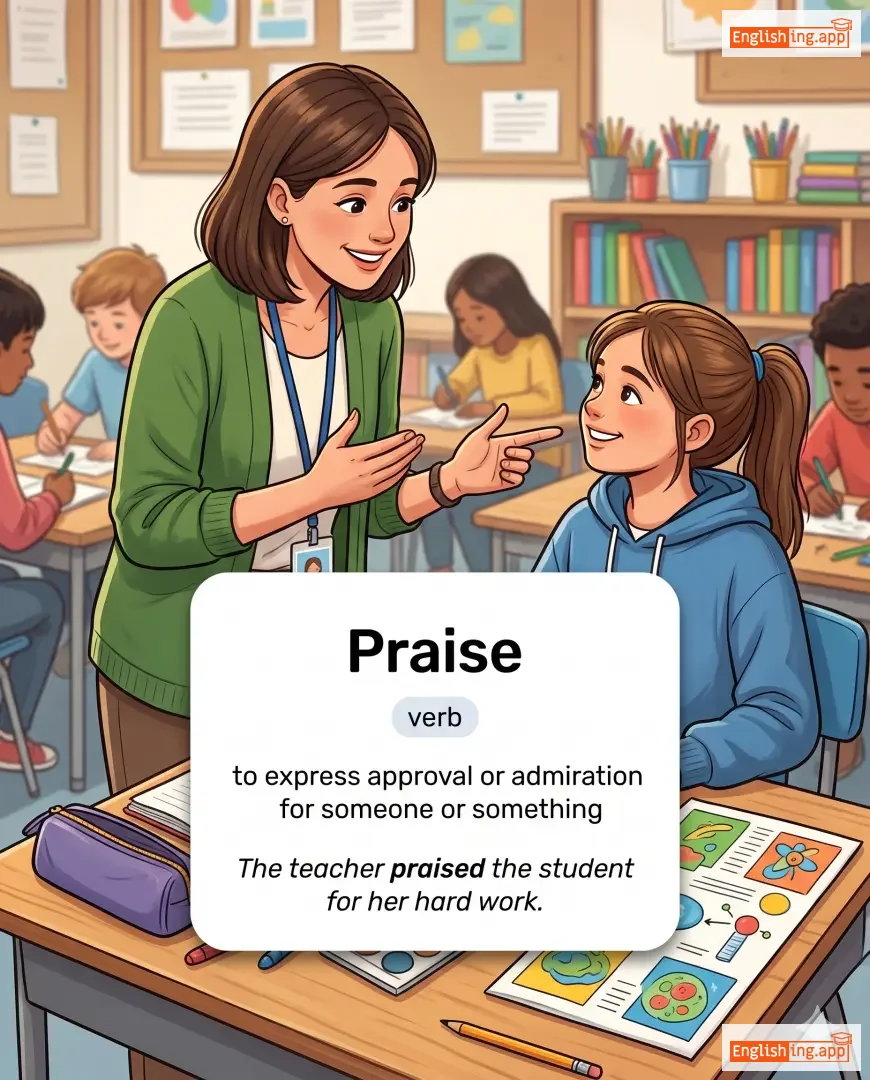
Praise definition card — visual illustration of the meaning
verb
/preɪz/
প্রশংসা করা (proshongsha kora)

to express approval or admiration for someone or something

"The teacher praised the student for her hard work."

"শিক্ষক তার কঠোর পরিশ্রমের জন্য ছাত্রীর প্রশংসা করেছেন।" (Shikkhok tar kothor porishromer jonno chatrir proshongsha korechhen.)
noun
/ˈprɛəri/
তৃণভূমি (trinhbhumi)

A large open area of grassland, especially in North America.

"The bison roamed freely across the prairie."

"বাইসনরা তৃণভূমি জুড়ে অবাধে বিচরণ করত।" (Bisonra trinhbhumi jure obadhe bichoron korto.)
noun
/ˈpræɡmətɪst/
বাস্তববাদী (bastobbadi)

A person who deals with things in a practical and realistic way.

"He is a true pragmatist who values results over ideals."

"সে একজন সত্যিকারের বাস্তববাদী, যে আদর্শের চেয়ে ফলাফলের মূল্য দেয়।" (Se ekti shotikorer bastobbadi, je adorsher cheye folafoler mullo dey.)
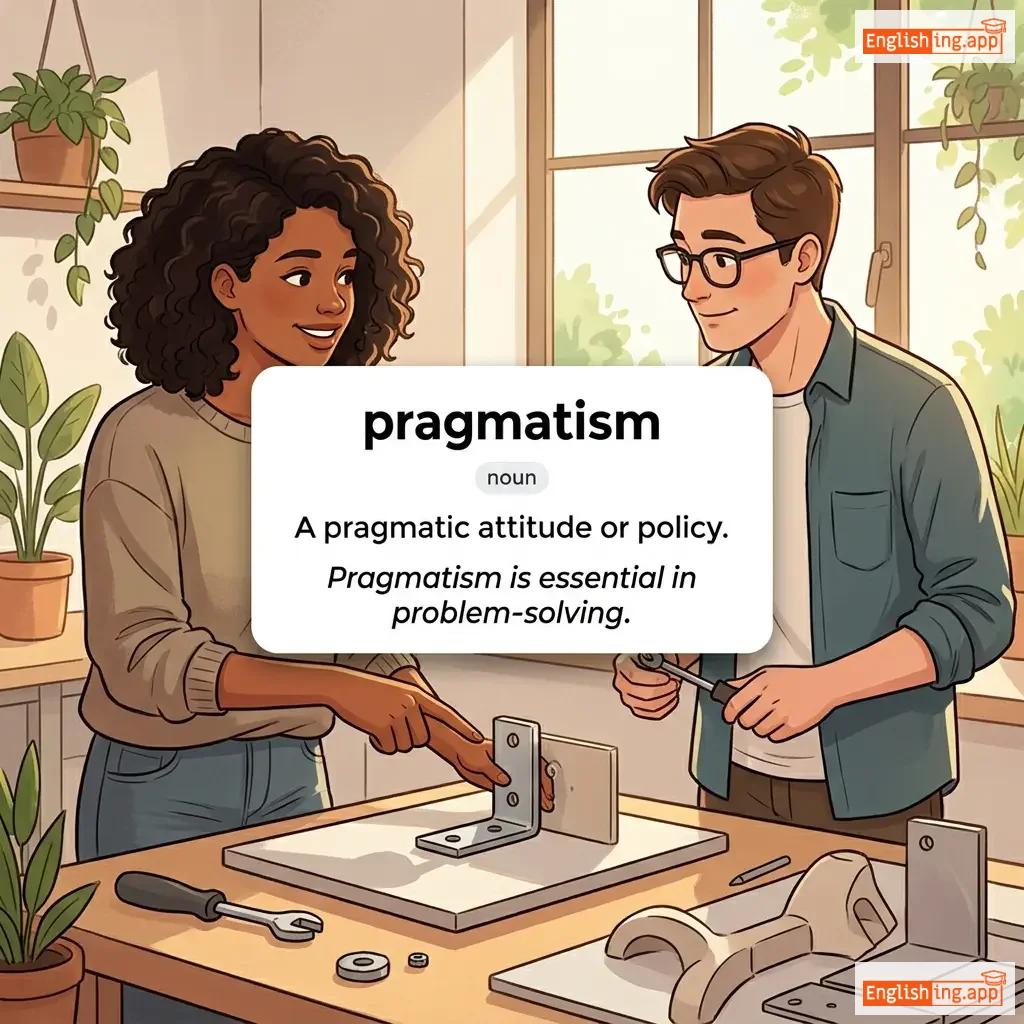
pragmatism definition card — visual illustration of the meaning
noun
/ˈpræɡ.mə.tɪ.zəm/
বাস্তববাদী চিন্তাধারা, কার্যকর পন্থা, বাস্তবিক দৃষ্টিভঙ্গি (bastobadi chintadhara, karjokor pontha, bastobik drishtibhongi)

A pragmatic attitude or policy.

"Pragmatism is essential in problem-solving."

"সমস্যা সমাধানে বাস্তববাদী দৃষ্টিভঙ্গি অপরিহার্য।" (Shomossha shomadhane bastobadi drishtibhongi oporiharto.)
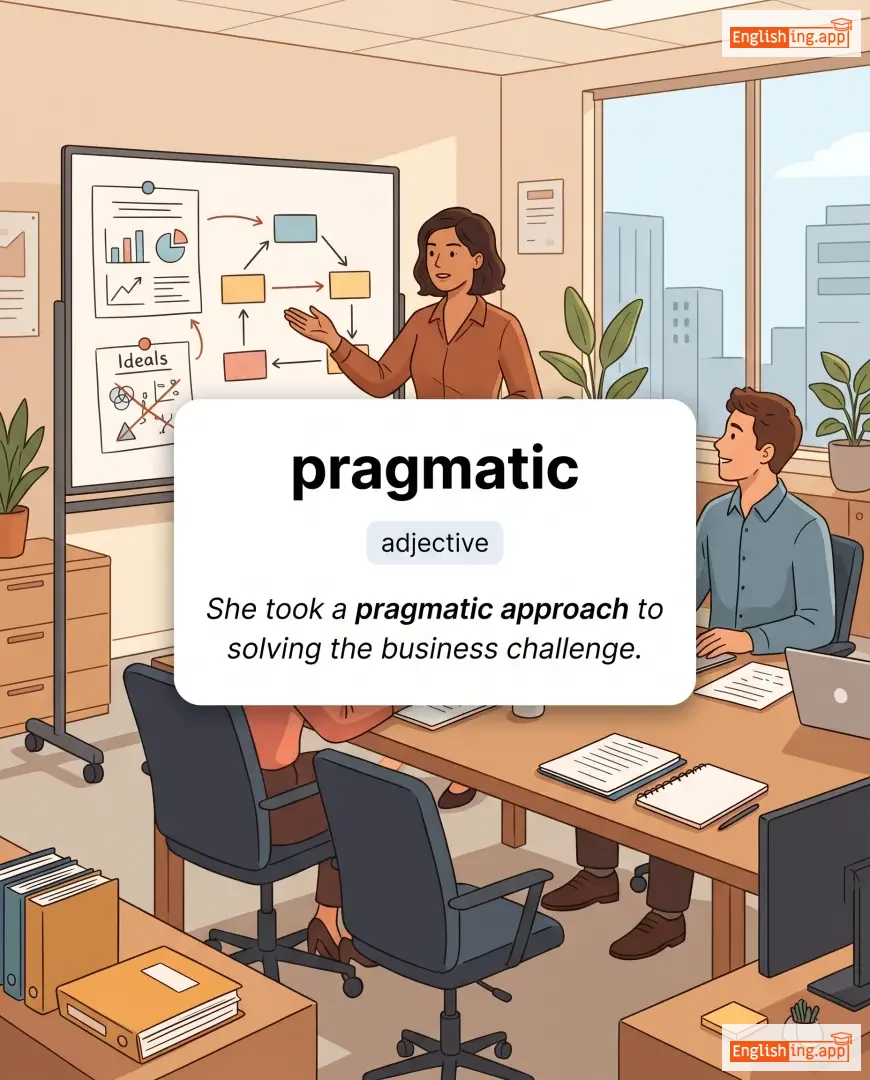
pragmatic definition card — visual illustration of the meaning
adjective
/præɡˈmætɪk/
বাস্তবভিত্তিক (bastobbhittik)

Dealing with problems in a practical and sensible way rather than depending on theories or ideals.

"She took a pragmatic approach to solving the business challenge."

"সে ব্যবসার চ্যালেঞ্জ সমাধানে একটি বাস্তবভিত্তিক দৃষ্টিভঙ্গি গ্রহণ করেছিল।" (Se byabshar challenge somadhane ekti bastobbhittik drishtivongi grohon korechilo.)
noun
/prækˈtɪʃ.ən.ər/
পেশাজীবী (peshajibi)

a person actively engaged in a profession, especially medicine or law

"She is a skilled medical practitioner."

"সে একজন দক্ষ চিকিৎসক।" (Se ekjon dokkho chikitsok.)
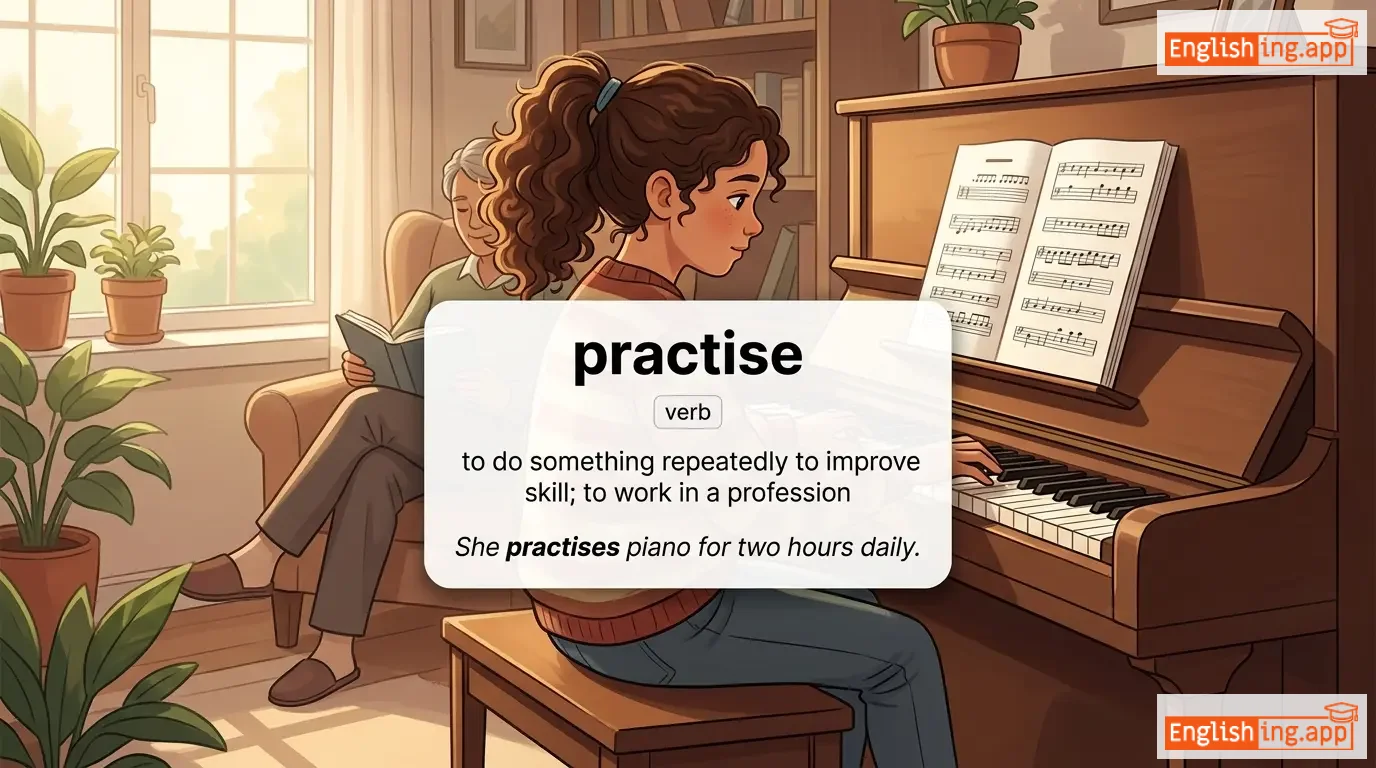
practise definition card — visual illustration of the meaning
verb
/ˈpræktɪs/
অনুশীলন করা (onushilon kora)

to do something repeatedly to improve skill; to work in a profession

"She practises piano for two hours daily."

"সে প্রতিদিন দুই ঘন্টা পিয়ানো অনুশীলন করে।" (Se protidin dui ghonta piano onushilon kore.)
noun
/ˈpɑː.tər/
কুমোর (kumor)

a person who makes pottery

"The potter shaped clay on the spinning wheel."

"কুমোর ঘূর্ণায়মান চাকায় মাটিকে আকার দিয়েছিল।" (kumor ghurnayman chakay matike akar diyechilo)
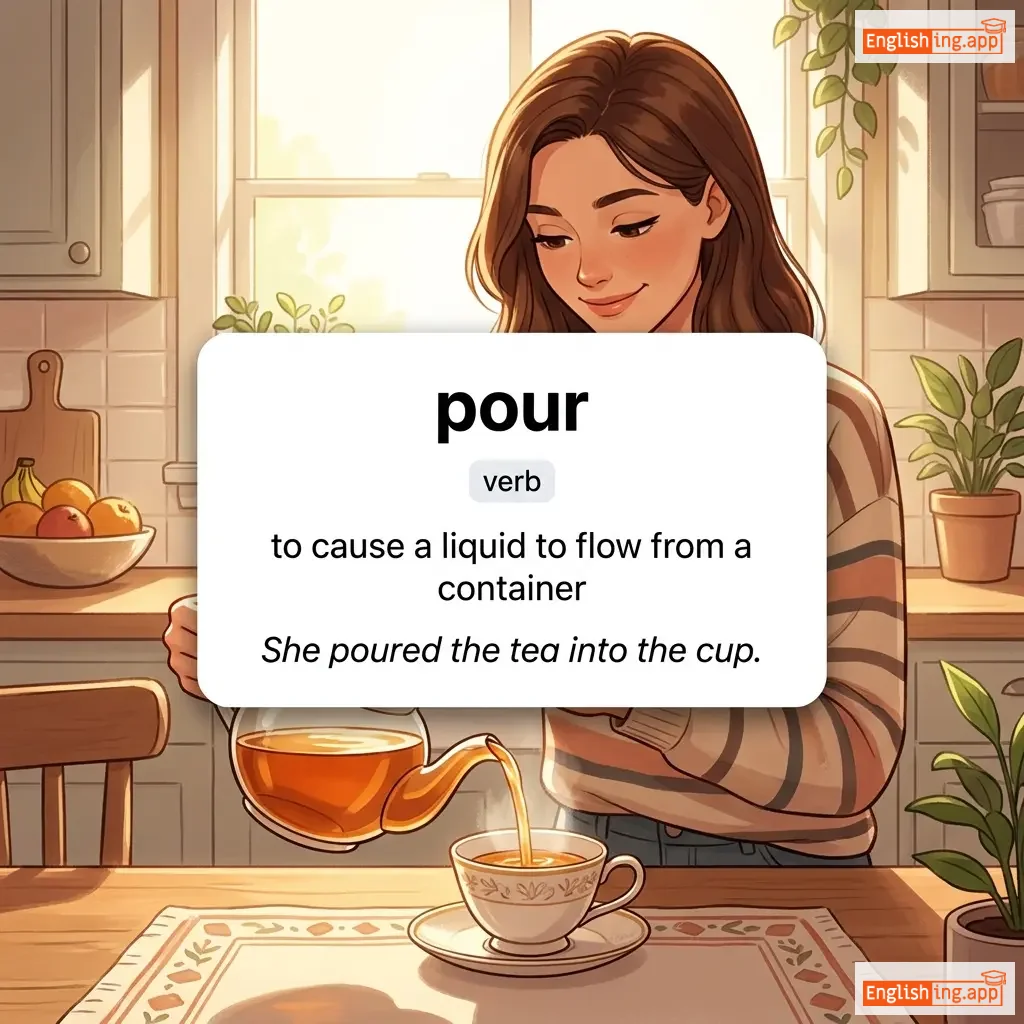
pour definition card — visual illustration of the meaning
verb
/pɔːr/
পোড়ানো (porano)

to cause a liquid to flow from a container

"She poured the tea into the cup."

"সে চায়ের মধ্যে কাপটিতে পোর করল।" (She chaier modhe kapti te por korlo.)
noun, verb
/paʊnd/
পাউন্ড (pound)

a unit of weight equal to 16 ounces or a unit of currency

"The price of the book is five pounds."

"বইটির দাম পাঁচ পাউন্ড।" (Boitir dam pach pound.)
noun
/ˈpoʊltɪs/
গরম ভেষজ পট্টি (gorom veshaj potti)

a soft, moist mass of material applied to the body to relieve soreness and inflammation

"The nurse applied a warm poultice to his injured leg."

"নার্স তার আহত পায়ে একটি গরম পোলটিস লাগাল।" (Nars tar ahoto paye ekti gorom poultice lagalo.)
noun
/paʊtʃ/
থলি (tholi)

a small bag or pocket, often used to carry small items

"She kept her coins in a small leather pouch."

"সে তার কয়েনগুলো একটি ছোট চামড়ার থলিতে রেখেছিল।" (Se tar koingulo ekti choto chamrar tholite rekhechhilo.)
noun
/ˈpoʊʃən/
ঔষধি পানীয় (aushodhi paniyo)

a liquid with healing, magical, or poisonous properties

"The witch gave the hero a healing potion."

"ডাইনী নায়ককে একটি আরোগ্য পোশন দিয়েছিল।" (Daini nayokke ekti aroggo potion diyechhilo.)
adverb
/pəˈtɛnʃəli/
সম্ভাব্যভাবে (shombabbhobabe)

with the possibility of becoming something in the future

"This project is potentially a huge success."

"এই প্রকল্পটি পটেনশালি একটি বিশাল সাফল্য হতে পারে।" (Ei prokolpoti potentially ekti bishal safollo hote pare.)
verb
/poʊˈtɛnʃiˌeɪt/
ক্ষমতা বৃদ্ধি করা (khomota briddhi kora)

To increase the power, effect, or likelihood of something.

"Caffeine can potentiate the effects of some medicines."

"ক্যাফেইন কিছু ওষুধের প্রভাব বাড়াতে পারে।" (Caffeine kichu oshudher prabhav barate pare.)
verb
/paʊt/
ঠোঁট ফুলানো (thont fulano)

to push one's lips forward as an expression of annoyance or sulkiness

"The child began to pout when he didn’t get the toy."

"বাচ্চাটি খেলনা না পেয়ে ঠোঁট ফুলিয়ে দিল।" (Bachchati khelona na peye thont fuliye dilo.)