वोकैबुलरीज

इंग्लिश वोकैबुलरी डिस्कवर, लर्न और मास्टर करें

verb
/priːˈfɪɡjər/
पूर्वसूचना देना (purvasoochna dena)

to represent, show, or foreshadow something in advance

"The economic reforms prefigure major social changes."

"आर्थिक सुधार बड़े सामाजिक परिवर्तनों की पूर्वसूचना देते हैं।" (Aarthik sudhaar bade samaajik parivartano ki purvasoochna dete hain.)
noun
/prɪˈfɜːrmənt/
पदोन्नति (podonnoti)

promotion or advancement in rank, position, or office

"He hoped for preferment in the government office."

"उसे सरकारी कार्यालय में पदोन्नति की उम्मीद थी।" (Use sarkari karyalaya mein podonnati ki ummid thi.)
adjective
/ˌprɛfəˈrɛnʃəl/
प्राथमिकता प्राप्त (prathmikta prapt)

showing or giving advantage to one over others

"Members receive preferential treatment at the club."

"सदस्यों को क्लब में प्राथमिकता प्राप्त व्यवहार मिलता है।" (Sadasyon ko klub mein prathmikta prapt vyavhaar milta hai.)
noun
/ˈprɛf(ə)rəns/
पसंद (pasand)

a greater liking for one alternative over another

"She has a preference for tea over coffee."

"उसे चाय को कॉफी पर अधिक पसंद है।" (Use chai ko coffee par adhik pasand hai.)
adjective
/ˈprɛf(ə)rəb(ə)l/
बेहतर (behtar)

more desirable or suitable; better than something else

"It is preferable to take the train rather than drive in heavy traffic."

"यह भारी ट्रैफ़िक में गाड़ी चलाने की बजाय ट्रेन लेना बेहतर है।" (Yah bhaari traffic mein gaadi chalane ki bajay train lena behtar hai.)
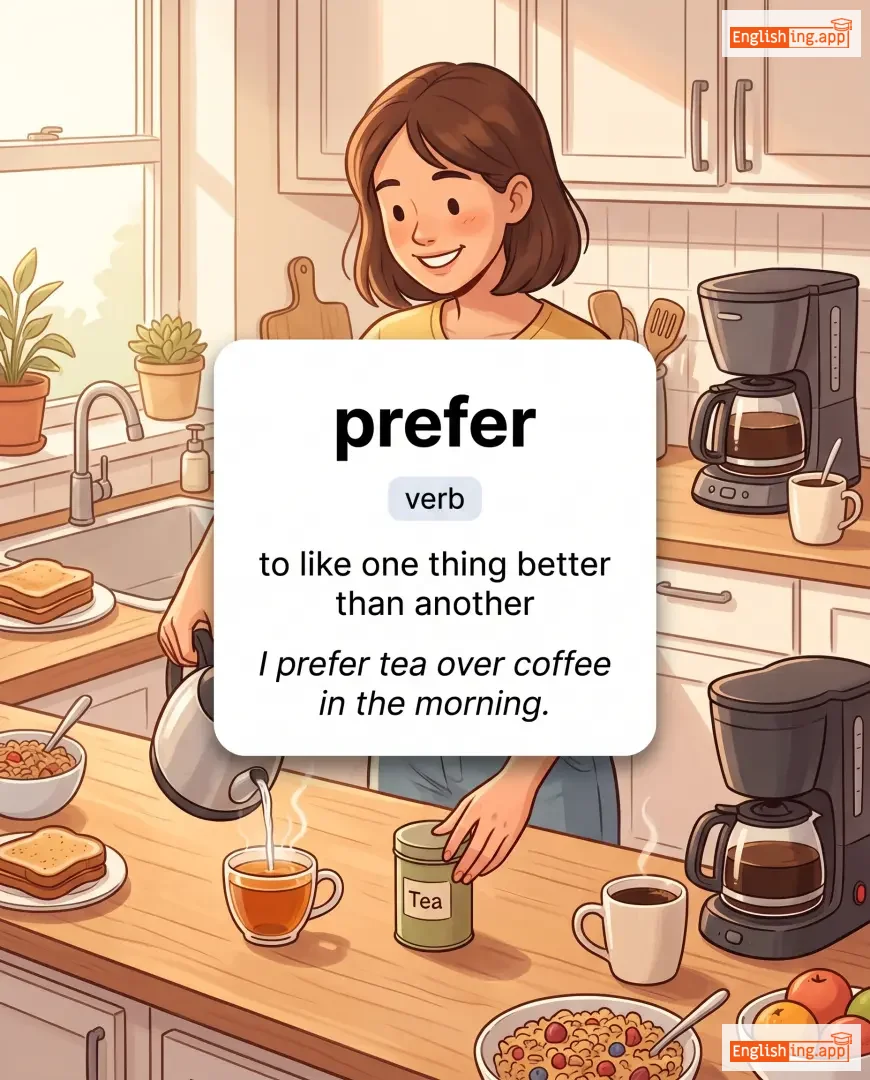
prefer definition card — visual illustration of the meaning
verb
/prɪˈfɜːr/
पसंद करना (pasand karna)

to like one thing better than another

"I prefer tea over coffee in the morning."

"मैं सुबह चाय को कॉफी पर प्राथमिकता देता हूँ।" (Main subah chai ko coffee par prathmikta deta hoon.)
adjective
/ˈprɛfətɔːri/
पूर्वकथनात्मक (purvakanthanatmak)

serving as an introduction or preface

"He made some prefatory remarks before the lecture began."

"उसने व्याख्यान शुरू होने से पहले कुछ पूर्वकथनात्मक टिप्पणी की।" (Usne vyakhyan shuru hone se pehle kuch purvakanthanatmak tippani ki.)
noun
/ˈprɛfəs/
प्रस्तावना (prastavna)

an introduction to a book, speech, or other written work

"The author explained his motivation in the preface."

"लेखक ने अपनी प्रेरणा को प्रस्तावना में समझाया।" (Lekhak ne apni prerna ko prastavna mein samjhaya.)
noun
/ˌpriːɪɡˈzɪstəns/
पूर्व अस्तित्व (purv astittv)

the state of existing before something else

"Philosophers often debated the preexistence of the soul."

"दार्शनिकों ने अक्सर आत्मा के पूर्व अस्तित्व पर बहस की।" (Darshanikon ne aksar atma ke purv astitv par bahas ki.)
verb
/ˌpriːɪɡˈzɪst/
पहले से अस्तित्व में होना (pehle se astitva mein hona)

to exist beforehand or before something else

"These customs preexist the arrival of modern technology."

"ये रिवाज आधुनिक तकनीक के आगमन से पहले अस्तित्व में थे।" (Ye rivaaj aadhunik takneek ke aagman se pehle astitva mein the.)
verb
/ˌpriːɪˈstæblɪʃ/
पहले से स्थापित करना (pahle se sthapit karna)

To establish or set up beforehand.

"Certain rules were preestablished before the meeting."

"बैठक से पहले कुछ नियम पहले से स्थापित किए गए थे।" (Baithak se pehle kuch niyam pahle se sthapit kiye gaye the.)
verb
/ˌpriːɪnˈɡeɪdʒ/
पूर्व निर्धारित करना (purv nirdharit karna)

To contract or engage beforehand; to arrange in advance.

"The workers were preengaged before the project officially started."

"प्रोजेक्ट शुरू होने से पहले श्रमिकों को पहले ही प्रि-एन्गेज किया गया था।" (Project shuru hone se pehle shramikon ko pehle hi pre-engage kiya gaya tha.)
verb
/priːn/
स्वयं को संवारना (svayam ko sanwarna)

To groom or dress oneself with care; to show pride in one's appearance.

"She preened in front of the mirror before leaving for the party."

"वह पार्टी के लिए जाने से पहले आईने के सामने स्वयं को संवार रही थी।" (Vah party ke liye jane se pehle aaine ke samne svayam ko sanwar rahi thi.)
adjective
/priˈɛmptɪv/
प्रतिक्रियात्मक (pratikriyatmak)

Serving or intended to prevent something by taking action first.

"The government took preemptive measures to control inflation."

"सरकार ने मुद्रास्फीति को नियंत्रित करने के लिए प्रतिक्रियात्मक कदम उठाए।" (sarkar ne mudrasfiti ko niyantrit karne ke liye pratikriyatmak kadam uthaye.)
noun
/priˈɛmpʃən/
प्राथमिकता अधिकार (prathmikta adhikar)

The act of taking action before someone else; the right to purchase or act before others.

"The company exercised preemption to acquire the land before competitors."

"कंपनी ने प्रतिस्पर्धियों से पहले भूमि प्राप्त करने के लिए प्राथमिकता अधिकार का उपयोग किया।" (Company ne pratishpardhiyon se pehle bhoomi prapt karne ke liye prathmikta adhikar ka upyog kiya.)
verb
/priːˈɛmpt/
पूर्व नियोजन करना (purv niyojan karna)

To take action in order to prevent something from happening; to take the place of something.

"The government acted quickly to preempt a financial crisis."

"सरकार ने वित्तीय संकट को रोकने के लिए तेजी से कदम उठाया।" (Sarkar ne vittiya sankat ko rokne ke liye tezi se kadam uthaya.)
adjective
/priːˈɛmɪnənt/
प्रमुख (pramukh)

Surpassing all others; very distinguished in some way.

"She is a preeminent scientist in the field of genetics."

"वह जैविक विज्ञान के क्षेत्र में एक प्रमुख वैज्ञानिक हैं।" (Wah jaivik vigyaan ke kshetra mein ek pramukh vaigyanik hain.)
noun
/priːˈɛmɪnəns/
अतुलनीय श्रेष्ठता (atulniya shreshthata)

The fact of surpassing all others; superiority.

"The university has gained preeminence in medical research."

"विश्वविद्यालय ने चिकित्सा अनुसंधान में अतुलनीय श्रेष्ठता प्राप्त की है।" (Vishwavidyalay ne chikitsa anusandhan mein atulniya shreshthata prapt ki hai.)
verb
/prɪˈdɒmɪneɪt/
प्रभुत्व रखना (prabhutv rakhna)

To be the strongest, most common, or most influential element.

"Traditional values still predominate in the community."

"परंपरागत मूल्य समुदाय में अब भी प्रचालित हैं।" (Paramparagat moolya samudaay mein ab bhi prachalit hain.)
adverb
/prɪˈdɒmɪnəntli/
प्रधान रूप से (pradhan roop se)

mainly; for the most part

"The population in the city is predominantly young."

"शहर की जनसंख्या प्रमुख रूप से युवा है।" (Sheher ki jansankhya pramukh roop se yuva hai.)
adjective
/prɪˈdɒmɪnənt/
प्रधान (pradhan)

Having superior strength, influence, or authority; most common or noticeable.

"The predominant color in the painting is blue."

"चित्रकला में प्रधान रंग नीला है।" (Chitrakala mein pradhan rang neela hai.)
practice definition card — visual illustration of the meaning
noun/verb
/ˈpræk.tɪs/
अभ्यास (abhyas)

the act of doing something repeatedly to improve skill, or the actual application of an idea

"He practices the piano every day."

"वह हर दिन पियानो अभ्यास करता है।" (Wah har din piano abhyas karta hai.)
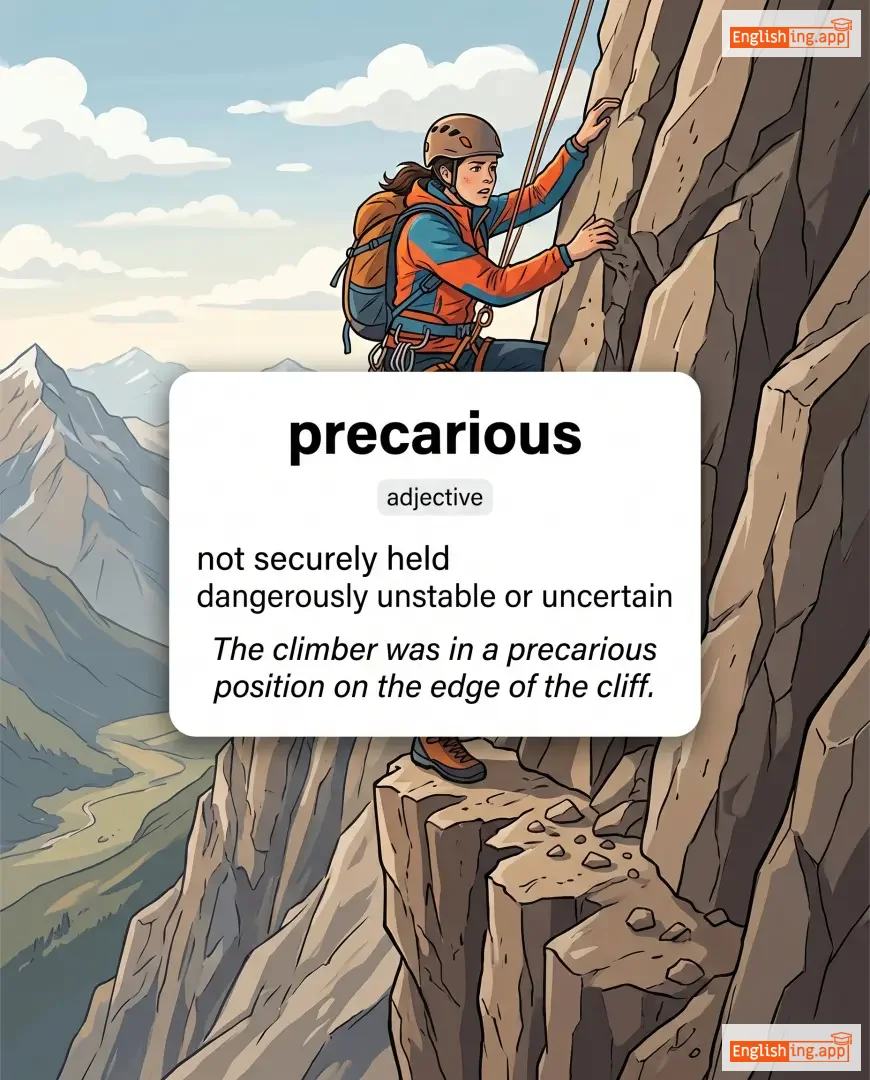
precarious definition card — visual illustration of the meaning
adjective
/prɪˈkɛəriəs/
अस्थिर / खतरनाक (asthir / khatarnaak)

not securely held; dangerously unstable or uncertain

"The climber was in a precarious position on the edge of the cliff."

"चढ़ाई करने वाला खड़ी चट्टान के किनारे एक अस्थिर स्थिति में था।" (Chadhai karne wala khadi chattan ke kinare ek asthir sthiti mein tha.)
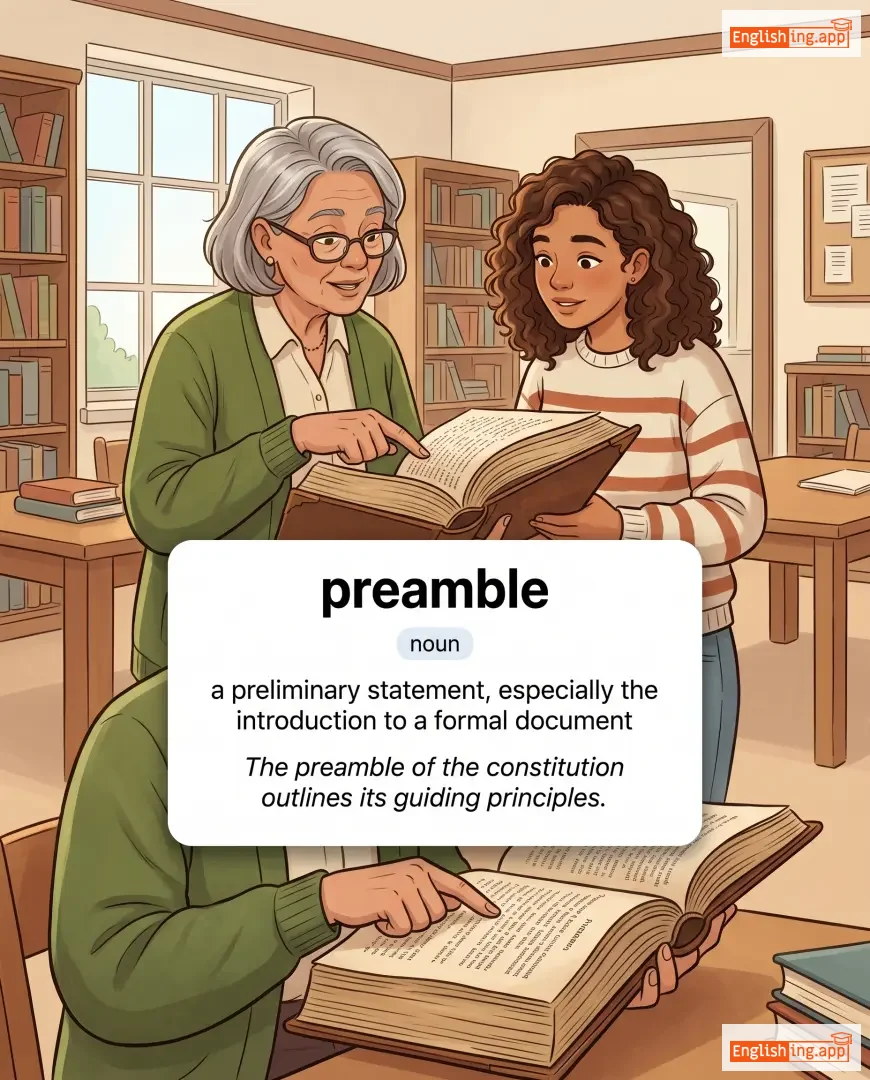
preamble definition card — visual illustration of the meaning
noun
/ˈpriːˌæmbəl/
प्रस्तावना (prastavna)

a preliminary statement, especially the introduction to a formal document

"The preamble of the constitution outlines its guiding principles."

"संविधान की प्रस्तावना उसके मार्गदर्शक सिद्धांतों का उल्लेख करती है।" (Sanvidhan ki prastavna uske margdarshak siddhanton ka ullekh karti hai.)
verb
/priːtʃ/
धर्मोपदेश देना (dharmopadesh dena)

to deliver a religious or moral talk, often in a church setting

"The pastor preached about forgiveness and kindness."

"पादरी क्षमा और दया के बारे में धर्मोपदेश दे रहे थे।" (Padri kshama aur daya ke baare mein dharmopadesh de rahe the.)
verb
/priːˈɛmpt/
पूर्व-रोकथाम करना (purv-roktham karna)

to act in advance to prevent an anticipated event from happening; forestall

"The government moved to pre-empt a crisis by introducing new policies."

"सरकार ने नए नीतियों के माध्यम से एक संकट को पूर्व-रोकथाम करने के लिए कदम उठाया।" (Sarkar ne naye neetiyon ke madhyam se ek sankat ko purv-roktham karne ke liye kadam uthaya.)
noun
/ˈprɛər/
प्रार्थना (prarthna)

a solemn request for help or expression of thanks addressed to God or another deity

"She recited a prayer before the meal."

"उसने भोजन से पहले एक प्रार्थना पढ़ी।" (Usne bhojan se pehle ek prarthna padhi.)
verb
/preɪ/
प्रार्थना करना (prarthna karna)

to speak to a deity, especially for help or thanks

"Every night, she prays for her family’s safety."

"हर रात, वह अपने परिवार की सुरक्षा के लिए प्रार्थना करती है।" (Har raat, vah apne parivar ki suraksha ke liye prarthna karti hai.)
noun
/prɔːn/
झींगा (jhinga)

a large marine crustacean similar to shrimp but typically bigger

"The chef prepared delicious prawn curry with coconut milk."

"शेफ ने नारियल के दूध से स्वादिष्ट झींगा करी तैयार की।" (chef ne nariyal ke doodh se swadisht jhinga kari tayyar ki.)
verb
/ˈprætəl/
बकबक करना (bakbak karna)

to talk at length in a foolish or inconsequential way

"The children would prattle on about their games."

"बच्चे अपने खेलों के बारे में बकबक कर रहे थे।" (Bacche apne khelon ke baare mein bakbak kar rahe the.)
verb
/preɪt/
बकबक करना (bakbak karna)

to talk foolishly or at tedious length about something

"He would prate endlessly about his minor achievements."

"वह अपनी छोटी उपलब्धियों के बारे में निरंतर बकबक करता था।" (Vah apni chhoti uplabdhiyon ke baare mein nirantar bakbak karta tha.)
noun
/præŋk/
शरारत (shararat)

A trick that is intended to be funny but not harmful.

"They played a harmless prank on their friend during the party."

"वे पार्टी के दौरान अपने दोस्त के साथ एक निर्दोष शरारत खेल रहे थे।" (ve party ke dauran apne dost ke saath ek nirdosh shararat khel rahe the.)
verb
/præns/
घमंड से चलना (ghamand se chalna)

To move with high, springy steps, often to show off or attract attention.

"The horse pranced around the field gracefully."

"घोड़ा मैदान में गर्व से चल रहा था।" (Ghora maidan mein garv se chal raha tha.)
adjective
/ˈpreɪz.wɜː.ði/
प्रशंसा योग्य (praiseworthy)

deserving praise; commendable; admirable

"Her charitable work is truly praiseworthy."

"उसका परोपकारी कार्य सच में प्रशंसा योग्य है।" (uska paropkari karya sach mein prashansa yogya hai.)
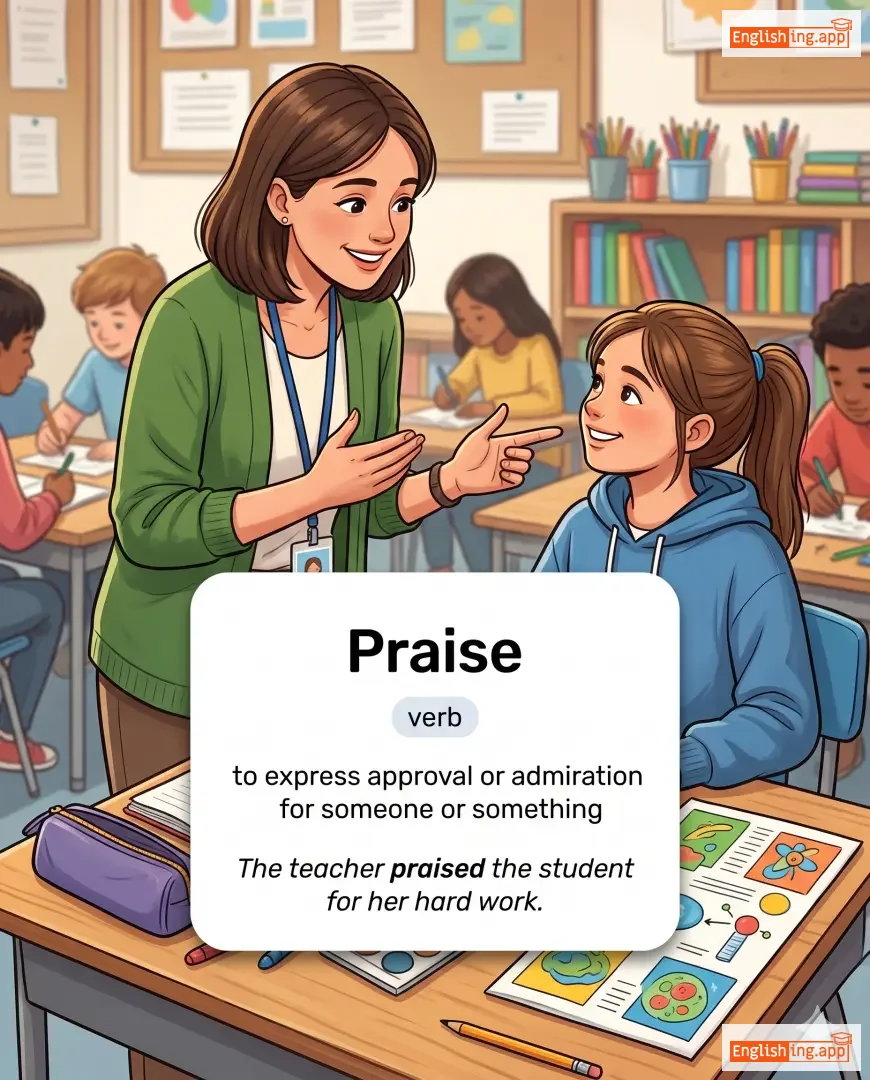
Praise definition card — visual illustration of the meaning
verb
/preɪz/
तारीफ करना (tareef karna)

to express approval or admiration for someone or something

"The teacher praised the student for her hard work."

"टीचर ने स्टूडेंट की कड़ी मेहनत के लिए तारीफ की।" (Teacher ne student ki kadi mehnat ke liye tareef ki.)
noun
/ˈprɛəri/
घास का मैदान (ghaas ka maidan)

A large open area of grassland, especially in North America.

"The bison roamed freely across the prairie."

"बाइसन घास के मैदान में स्वतंत्र रूप से घूमते थे।" (Bison ghas ke maidan mein svatantra roop se ghoomte the.)
noun
/ˈpræɡmətɪst/
व्यावहारिकतावादी (vyavahariktavadi)

A person who deals with things in a practical and realistic way.

"He is a true pragmatist who values results over ideals."

"वह एक सच्चा व्यावहारिकतावादी है जो आदर्शों की तुलना में परिणामों को महत्व देता है।" (vah ek sachcha vyavahariktavadi hai jo adarshon ki tulna mein parinaamon ko mahatva deta hai.)
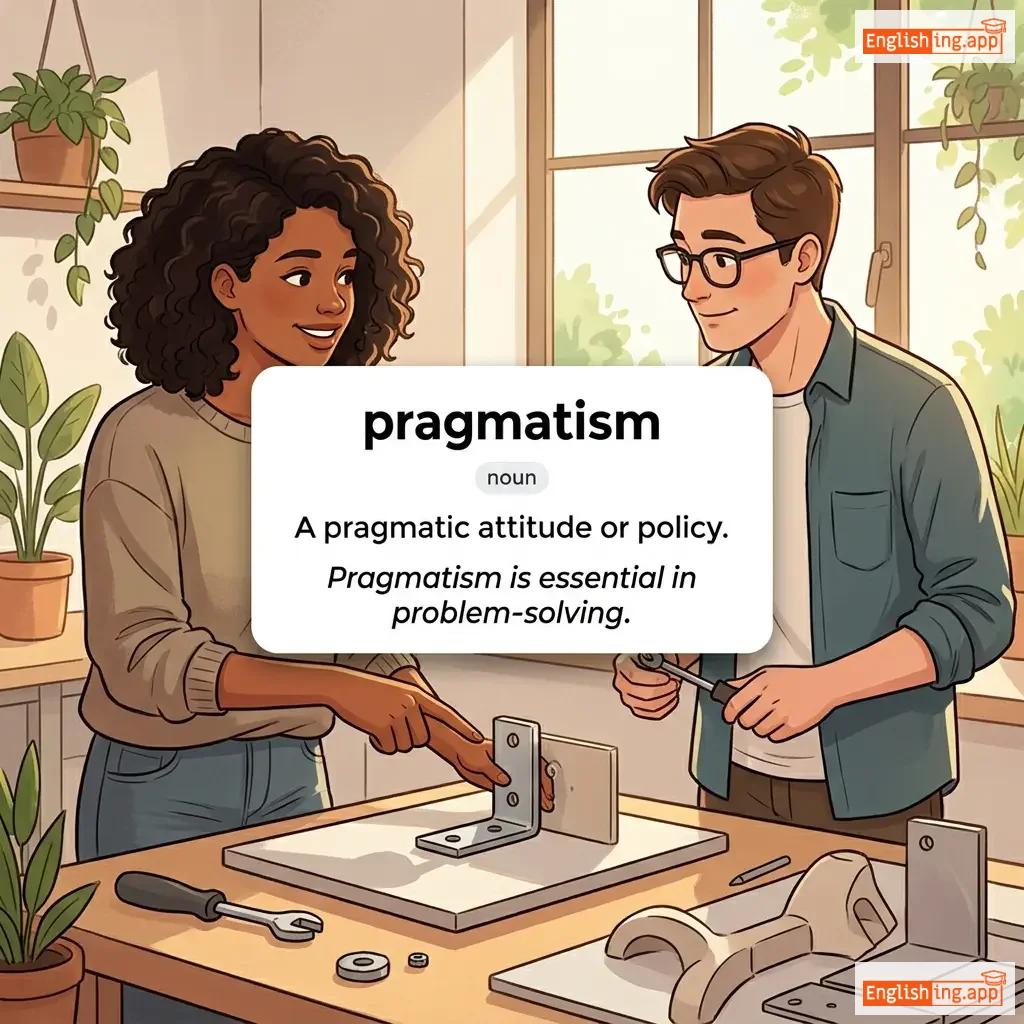
pragmatism definition card — visual illustration of the meaning
noun
/ˈpræɡ.mə.tɪ.zəm/
व्यावहारिक दृष्टिकोण या नीति (vyavaharik drishtikon ya neeti)

A pragmatic attitude or policy.

"Pragmatism is essential in problem-solving."

"समस्याओं को हल करने में व्यावहारिक दृष्टिकोण आवश्यक है।" (Samasyaon ko hal karne mein vyavaharik drishtikon avashyak hai.)
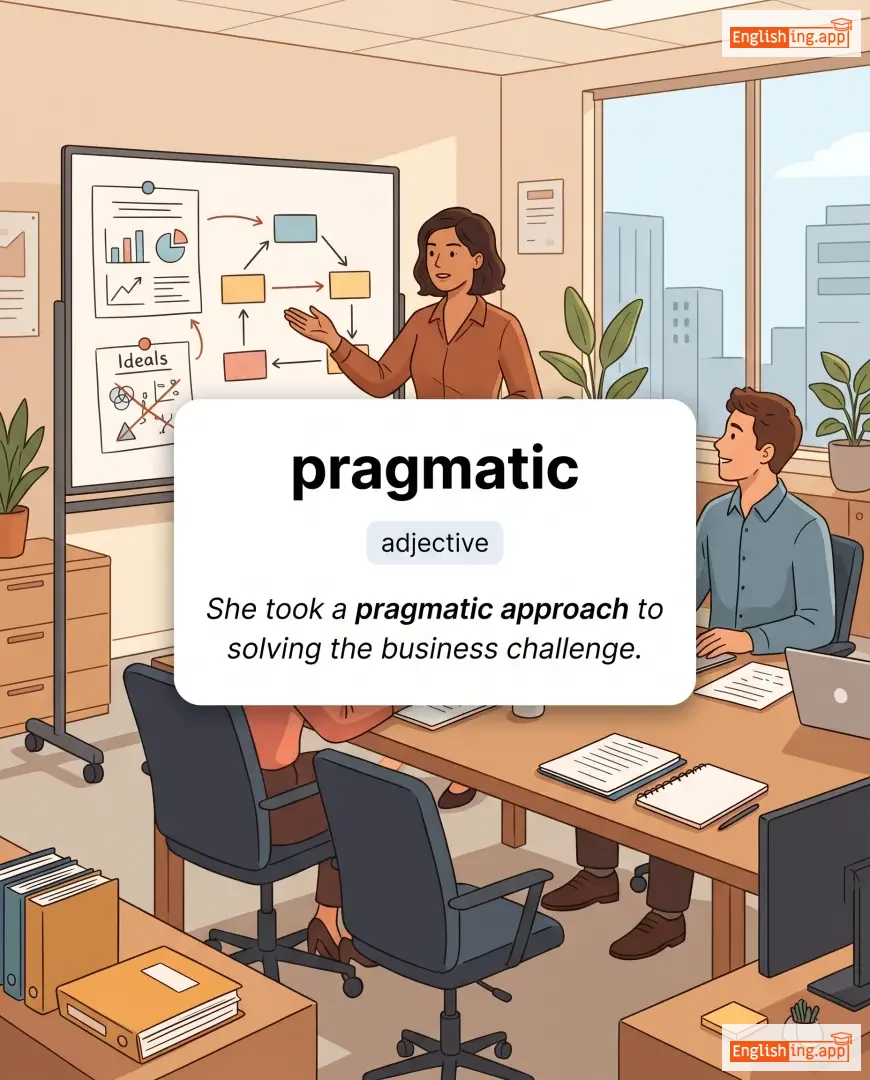
pragmatic definition card — visual illustration of the meaning
adjective
/præɡˈmætɪk/
व्यावहारिक (vyavaharik)

Dealing with problems in a practical and sensible way rather than depending on theories or ideals.

"She took a pragmatic approach to solving the business challenge."

"उसने व्यापार की चुनौती को हल करने के लिए एक व्यावहारिक दृष्टिकोण अपनाया।" (Usne vyavhaar ki chunauti ko hal karne ke liye ek vyavaharik drishtikon apnaya.)
noun
/prækˈtɪʃ.ən.ər/
व्यवसायी (vyavsayee)

a person actively engaged in a profession, especially medicine or law

"She is a skilled medical practitioner."

"वह एक कुशल चिकित्सा व्यवसायी है।" (Vah ek kushal chikitsa vyavsayee hai.)
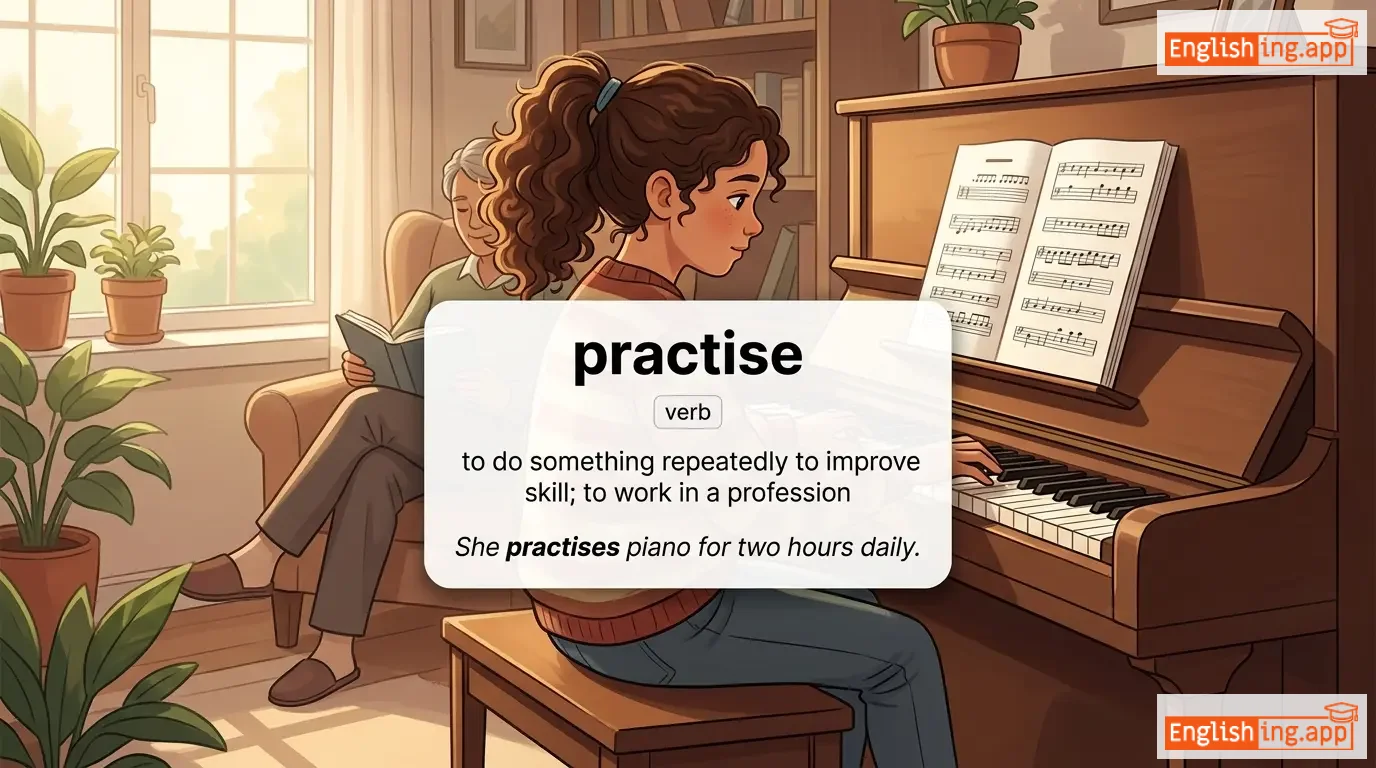
practise definition card — visual illustration of the meaning
verb
/ˈpræktɪs/
अभ्यास करना (abhyaas karna)

to do something repeatedly to improve skill; to work in a profession

"She practises piano for two hours daily."

"वह रोज़ दो घंटे पियानो अभ्यास करती है।" (Woh roz do ghante piano abhyas karti hai.)
noun
/ˈpɑː.tər/
मटका बनानेवाला (matka bananewala)

a person who makes pottery

"The potter shaped clay on the spinning wheel."

"मटका बनानेवाले ने घूमते हुए पहिए पर मिट्टी को आकार दिया।" (matka bananewale ne ghoomte hue pahiye par mitti ko akar diya.)
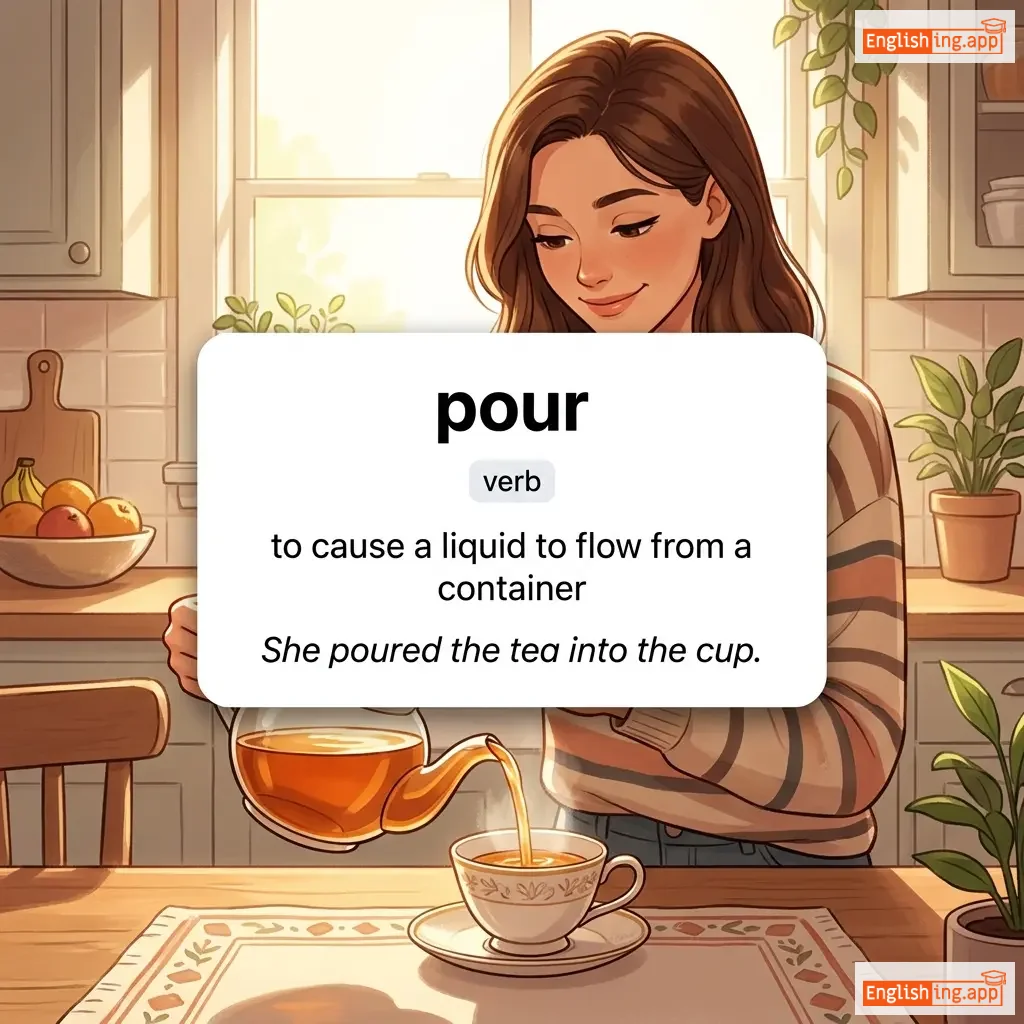
pour definition card — visual illustration of the meaning
verb
/pɔːr/
डालना (daalna)

to cause a liquid to flow from a container

"She poured the tea into the cup."

"उसने कप में चाय डाली।" (Usne kap mein chai daali.)
noun, verb
/paʊnd/
पाउंड (pound)

a unit of weight equal to 16 ounces or a unit of currency

"The price of the book is five pounds."

"किताब की कीमत पांच पाउंड है।" (Kitab ki keemat paanch pound hai.)
noun
/ˈpoʊltɪs/
गर्म हर्बल पट्टी (garm herbal patti)

a soft, moist mass of material applied to the body to relieve soreness and inflammation

"The nurse applied a warm poultice to his injured leg."

"नर्स ने उसके घायल पैर पर एक गर्म पौल्टिस लगाई।" (Nars ne uske ghaayal pair par ek garm poultice lagayi.)
noun
/paʊtʃ/
पाउच (pouch)

a small bag or pocket, often used to carry small items

"She kept her coins in a small leather pouch."

"उसने अपने सिक्के एक छोटे चमड़े के पाउच में रखे थे।" (Usne apne sikke ek chhote chamde ke pouch mein rakhe the.)
noun
/ˈpoʊʃən/
औषधि पेय (aushadhi pey)

a liquid with healing, magical, or poisonous properties

"The witch gave the hero a healing potion."

"चुड़ैल ने नायक को एक उपचार पोटिशन दी।" (Chudail ne nayak ko ek upchar potion dee.)
adverb
/pəˈtɛnʃəli/
संभावित रूप से (sambavit roop se)

with the possibility of becoming something in the future

"This project is potentially a huge success."

"इस परियोजना की सफलता पोटेंशियली बहुत बड़ी हो सकती है।" (Is pariyojna ki safalta potentially bahut badi ho sakti hai.)
verb
/poʊˈtɛnʃiˌeɪt/
शक्ति बढ़ाना (shakti badhana)

To increase the power, effect, or likelihood of something.

"Caffeine can potentiate the effects of some medicines."

"कैफीन कुछ दवाओं के प्रभाव को बढ़ा सकता है।" (Caffeine kuch davaon ke prabhav ko badha sakta hai.)
verb
/paʊt/
होठों को फुलाना (hothon ko fulana)

to push one's lips forward as an expression of annoyance or sulkiness

"The child began to pout when he didn’t get the toy."

"बच्चा खिलौना न मिलने पर होठों को फुलाने लगा।" (Baccha khilona na milne par hothon ko fulane laga.)