語彙集

英単語辞書 | 単語の意味、定義、例文

noun
/ˈpɜːrdʒəri/
偽証 (gishou)

The offense of willfully telling an untruth in a court after taking an oath.

"She was convicted of perjury after giving false evidence."

"彼女は偽証罪で有罪判決を受けた。" (Kanojo wa gishou-zai de yuuzai hanketsu wo uketa.)
verb
/ˈpɜːrdʒər/
偽証する (gisō suru)

To knowingly tell a lie in a court of law after swearing to tell the truth.

"He was accused of trying to perjure himself during the trial."

"彼は裁判中に偽証しようとしたとして告発されました。" (Kare wa saiban-chū ni gisō shiyou to shita to shite kokuhatsu saremashita.)
Periwinkle definition card — visual illustration of the meaning
noun
/ˈper.ɪ.wɪŋ.kəl/
ペリウィンクル (periwinkle)

a small trailing plant with violet-blue or white flowers

"Purple periwinkles covered the garden ground beautifully."

"紫色のペリウィンクルが美しく庭の地面を覆っていました。" (murasaki-iro no periwinkle ga utsukushiku niwa no jimen o ōtteimashita)
noun
/ˈpɛrɪstaɪl/
柱で囲まれた回廊 (hashira de kakomareta kairō)

A continuous porch formed by a row of columns surrounding the perimeter of a building or courtyard.

"The Roman villa featured a beautiful peristyle garden."

"ローマの別荘には美しいペリスタイル庭園がありました。" (Rōma no bessō ni wa utsukushī perisutairu teien ga arimashita.)
adjective
/ˈperɪʃəbəl/
腐りやすい (kusariyasui)

liable to decay quickly; short-lived

"Store perishable foods in the refrigerator."

"腐りやすい食品は冷蔵庫に保管してください。" (Kusariyasui shokuhin wa reizōko ni hokan shite kudasai.)
verb
/ˈpɛrɪʃ/
死ぬ (shinu)

To die, especially in a sudden or violent way.

"Many soldiers perished in the war."

"多くの兵士は戦争で死んだ。" (Ōku no heishi wa sensō de shinda.)
noun
/pəˈrɪfəri/
周辺 (shūhen)

The outer edge or boundary of an area or object.

"The soldiers were stationed at the periphery of the camp."

"兵士たちはキャンプの周辺に配置されていた。" (Heishi-tachi wa kyanpu no shūhen ni haichi sarete ita.)
adjective
/pəˈrɪfərəl/
周辺的 (shuuhenteki)

Relating to or situated on the edge or outer parts of something.

"The town is located on the peripheral area of the city."

"町は都市の周辺エリアに位置しています。" (Machi wa toshi no shuuhen eria ni ichi shiteimasu.)
adjective
/ˌpɛrɪpəˈtɛtɪk/
ノマド (nomado)

Traveling from place to place, especially for work or based on lifestyle.

"He led a peripatetic life as a traveling teacher."

"彼は旅行教師としてノマドの生活を送っていました。" (Kare wa ryokou kyoushi toshite nomado no seikatsu o okutte imashita.)
noun
/ˌpɪəriəˈdɪsɪti/
周期性 (shuukisei)

The quality or state of being regular or recurring at intervals.

"The periodicity of the moon’s phases has fascinated humans for centuries."

"月の位相の周期性は何世紀にもわたって人々を魅了してきた。" (tsuki no isou no shuukisei wa naseiki ni mo watatte hitobito o miryou shite kita.)
noun
/ˌpɪə.riˈɒd.ɪ.kəl/
雑誌 (zasshi)

a magazine or journal published at regular intervals

"She subscribed to a science periodical."

"彼女は科学雑誌を購読しました。" (Kanojo wa kagaku zasshi o kōdoku shimashita.)
period definition card — visual illustration of the meaning
noun
/ˈpɪərɪəd/
期間 (kikan)

a length or portion of time

"The meeting will last for a period of two hours."

"会議は2時間の期間続きます。" (Kaigi wa 2 jikan no kikan tsudzukimasu.)
noun
/pəˈrɪm.ɪ.tər/
周囲 (shuui)

the continuous line forming the boundary of a closed geometric figure or area

"The soldiers guarded the perimeter of the camp."
"兵士たちはキャンプの周囲を守った。" (Heishi-tachi wa kyanpu no shuui wo mamotta.)
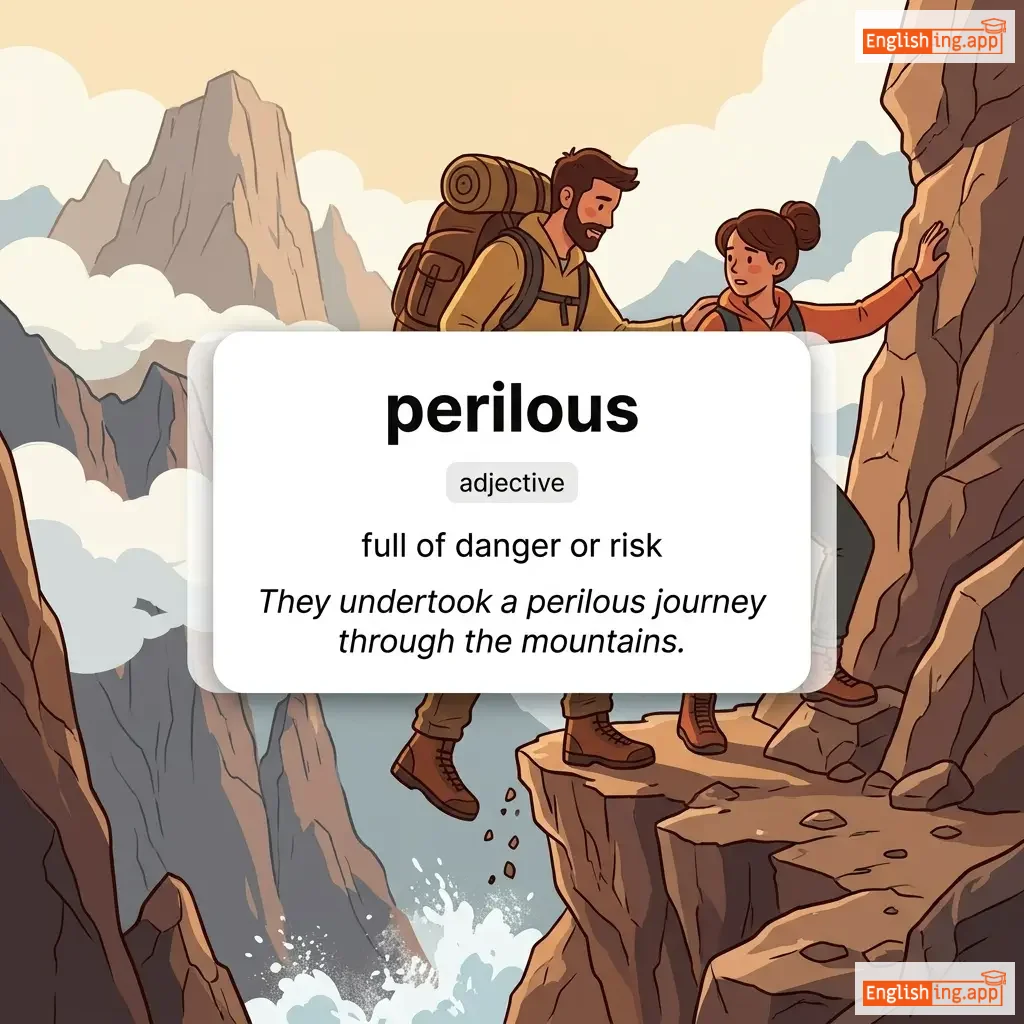
perilous definition card — visual illustration of the meaning
adjective
/ˈper.ɪ.ləs/
危険な (kiken na)

full of danger or risk

"They undertook a perilous journey through the mountains."

"彼らは山を越える危険な旅をした。" (Karera wa yama o koeru kiken na tabi o shita.)
noun
/ˈper.ɪ.dʒiː/
月または衛星の軌道で地球に最も近い点 (tsuki matawa eisei no kidō de chikyū ni mottomo chikai ten)

the point in the orbit of the moon or a satellite at which it is nearest to the Earth

"The moon appeared much larger during its perigee."

"月はそのペリジーの際にかなり大きく見えました。" (Tsuki wa sono perijī no sai ni kanari ōkiku miemashita.)
adverb
/pərˈhæps/
おそらく (osoraku)

used to express uncertainty or possibility

"Perhaps we should wait until tomorrow to make the decision."

"おそらく私たちは明日まで待ってから決定するべきです。" (Osoraku watashitachi wa ashita made matte kara kettei suru beki desu.)
perfunctory definition card — visual illustration of the meaning
adjective
/pəˈfʌŋk.tər.i/
表面的な (hyoumen-teki na)

done without much effort, interest, or thought

"He gave a perfunctory nod and walked away."

"彼は表面的にうなずいて、歩き去った。" (Kare wa hyōmen-teki ni unazuite, arukisatta.)
noun
/pəˈfjuː.mər.i/
香水産業 (kōsui sangyō)

the art, business, or products of making perfumes

"She works in a perfumery that creates luxury scents."

"彼女は高級な香りを作り出すパフューマリーで働いています。" (Kanojo wa kōkyū na kaori o tsukuridasu pafyūmarī de hataraiteimasu.)
noun
/ˈpɜr.fjuːm/
香水 (kōsui)

a fragrant liquid made from essential oils and alcohol; a pleasant smell

"She wore her favorite perfume to the party."

"彼女はパーティーにお気に入りの香水をつけて行きました。" (Kanojo wa pātii ni okiniiri no kōsui o tsukete ikimashita.)
noun
/pərˈfɔːrmər/
パフォーマー (pafomā)

a person who entertains an audience by acting, singing, dancing, or playing music

"The performer received a standing ovation for her song."

"パフォーマーは彼女の歌のためにスタンディングオベーションを受けました。" (Pafomā wa kanojo no uta no tame ni sutandingu obēshon o ukemashita.)
performance definition card — visual illustration of the meaning
noun
/pərˈfɔːrməns/
パフォーマンス (pafōmansu)

the act of performing or accomplishing a task, action, or event

"The performance of the team was outstanding in the final match."

"チームのパフォーマンスは決勝戦で素晴らしかった。" (Chīmu no pafōmansu wa kesshō-sen de subarashikatta.)
perform definition card — visual illustration of the meaning
verb
/pəˈfɔːm/
実行する (jikkou suru)

to carry out an action, task, or function

"The doctor will perform the surgery tomorrow."

"医者は明日手術を行う予定です。" (Isha wa ashita shujutsu o okonau yotei desu.)
adverb
/pəˈfɔːs/
避けられない (sakerarenai)

by necessity; inevitably

"He had to perforce accept the decision."

"彼は避けられない形で決定を受け入れなければならなかった。" (Kare wa sakerarenai katachi de kettei wo ukeirenakereba naranakatta.)
verb
/ˈpɜː.fə.reɪt/
穴を開ける (ana o akeru)

to make a hole or holes through something

"The machine can perforate sheets of paper for easy tearing."

"その機械は紙を簡単に引き裂くために穴を開けることができます。" (Sono kikai wa kami o kantan ni hikisaku tame ni ana o akeru koto ga dekimasu.)
noun
/ˈpɜrfɪdi/
裏切り (uragiri)

the act of betrayal or deceit; treachery

"The politician's perfidy shocked even his closest supporters."

"その政治家の裏切りは、最も近い支持者たちをも驚かせました。" (Sono seijika no uragiri wa, mottomo chikai shiji-sha-tachi o mo odorokasemashita.)
adjective
/pərˈfɪdiəs/
裏切りの (uragiri no)

deceitful and untrustworthy

"The spy was executed for his perfidious actions."

"スパイは裏切りの行動で処刑されました。" (Supai wa uragiri no kōdō de shokei sare mashita.)
adjective
/pərˈfɜrvɪd/
非常に熱心な (hijō ni nesshin na)

intensely passionate or fervent

"She gave a perfervid speech in defense of human rights."

"彼女は人権擁護のために非常に熱心なスピーチをしました。" (Kanojo wa jinken yōgo no tame ni hijō ni nesshin na supīchi o shimashita.)
adverb
/ˈpɜːfɪktli/

in a perfect manner; without flaws

"She performed the task perfectly."

noun
/pərˈfek.ʃən/
完璧 (kanpeki)

the state of being complete and without flaws; the highest degree of excellence

"The artist spent years trying to achieve perfection in his paintings."

"アーティストは彼の絵画で完璧を達成するために何年も費やしました。" (Atisuto wa kare no kaiga de kanpeki wo tassei suru tame ni nannen mo tsuiyashimashita.)
adjective
/pərˈfɛktəbl/
完璧にできる (kanpeki ni dekiru)

capable of being made perfect or improved

"Human nature is imperfect but perfectible."

"人間の本性は不完全だが、完璧にできる。" (Ningen no honsei wa fukanzen da ga, kanpeki ni dekiru.)
adjective
/pərˈsɛptəbl̩/
知覚できる (chikaku dekiru)

Able to be noticed or recognized by the senses or the mind.

"There was a perceptible change in the atmosphere."

"大気中に知覚できる変化がありました。" (Taiki-chū ni chikaku dekiru henka ga arimashita.)
adjective
/pəˈnjʊəriəs/
極度に貧しい (kyokudo ni mazushii)

extremely poor; poverty-stricken; miserly

"The penurious family struggled to buy food."
"その極度に貧しい家族は食べ物を買うのに苦しんでいました。" (Sono kyokudo ni mazushii kazoku wa tabemono o kau no ni kurushinde imashita.)
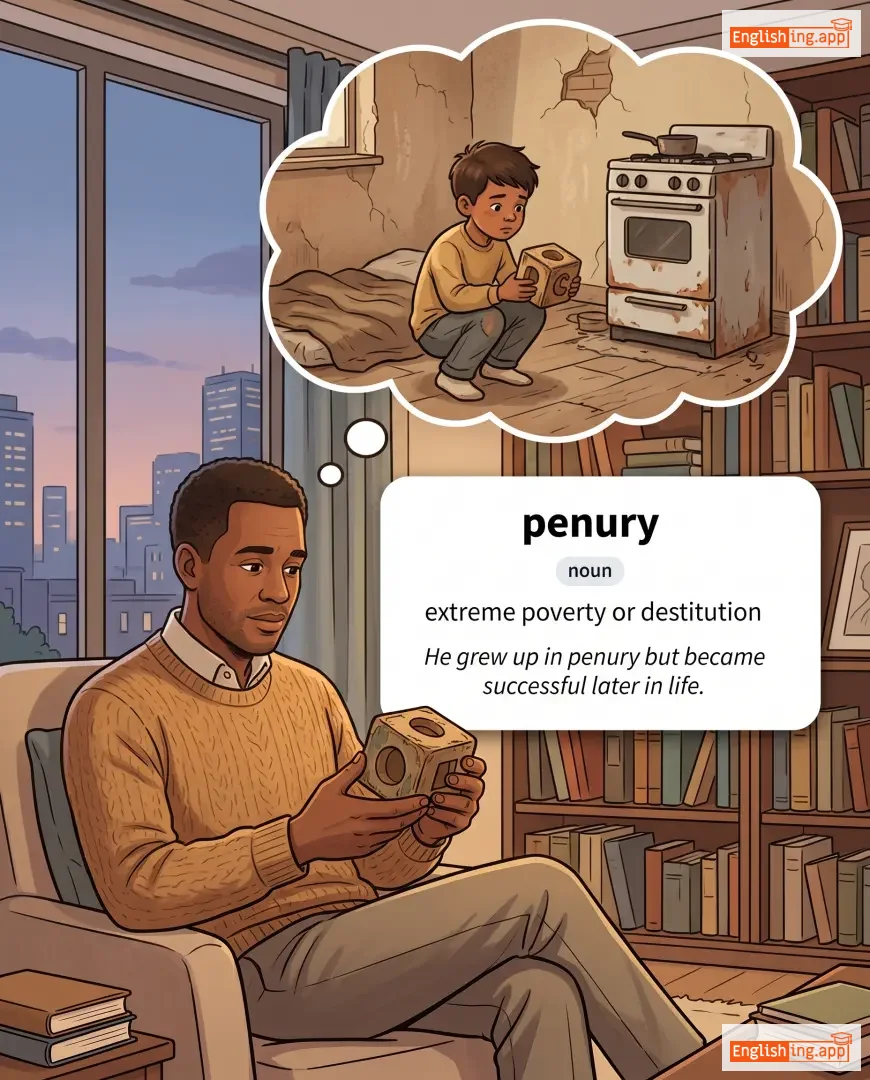
penury definition card — visual illustration of the meaning
noun
/ˈpɛnjʊri/
極貧 (kyokuhin)

extreme poverty or destitution

"He grew up in penury but became successful later in life."

"彼は貧困の中で育ちましたが、その後、人生で成功しました。" (Kare wa hinkon no naka de sodachimashita ga, sono ato, jinsei de seikō shimashita.)
noun
/ˈpiːɒn/
ピオン (pion)

a low-ranking worker, often performing menial tasks

"The office peon delivered the files to each department."
"オフィスのピオンは各部署にファイルを届けました。" (Ofisu no pion wa kaku busho ni fairu o todokemashita.)
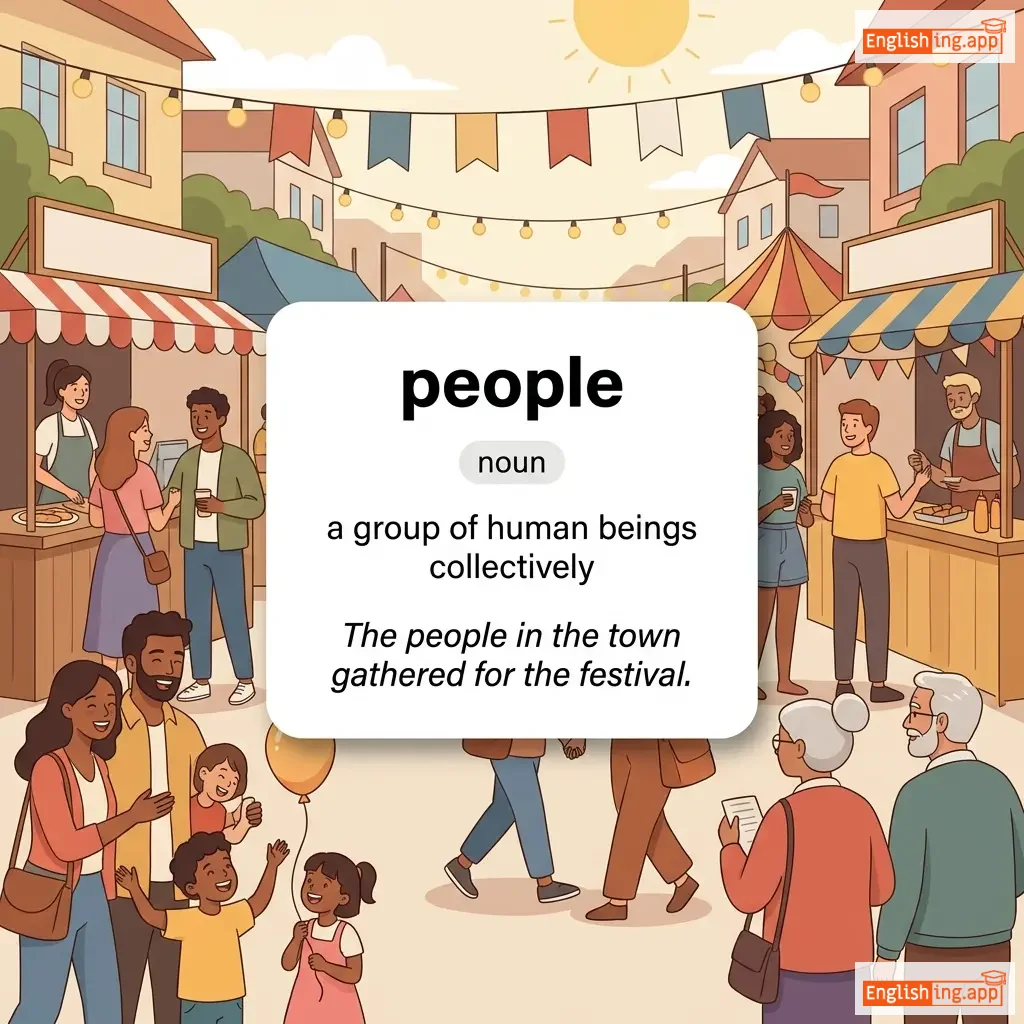
people definition card — visual illustration of the meaning
noun
/ˈpiːpl/
人々 (hitobito)

a group of human beings collectively

"The people in the town gathered for the festival."

"町の人々は祭りのために集まりました。" (Machi no hitobito wa matsuri no tame ni atsumarimashita.)
noun
/ˈpɛpər/
胡椒 (koshō)

a pungent spice obtained from pepper plants, used to flavor food

"I like to add pepper to my soup."
"私はスープに胡椒を加えるのが好きです。" (Watashi wa sūpu ni koshō o kuwaeru no ga suki desu.)
preposition
/pɜːr/
人あたり (hito atari)

for each, according to

"The tickets are priced at $20 per person."

"チケットは1人あたり20ドルの価格です。" (Chiketto wa hitori atari 20 doru no kakaku desu.)
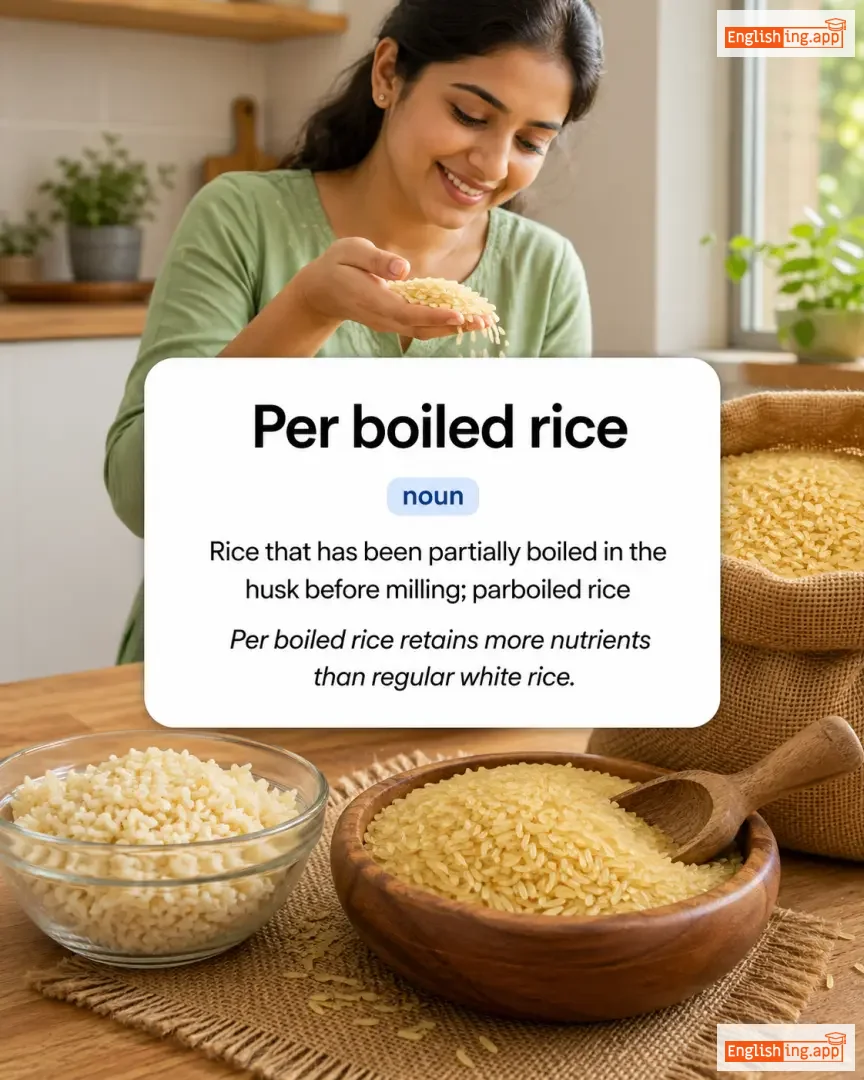
Per boiled rice definition card — visual illustration of the meaning
noun
/pɜːr bɔɪld raɪs/
パーボイルドライス (pāboirudo raisu)

Rice that has been partially boiled in the husk before milling; parboiled rice

"Per boiled rice retains more nutrients than regular white rice."

"パーボイルドライスは通常の白い米よりも多くの栄養素を保持します。" (Pāboirudo raisu wa tsūjō no shiroi kome yori mo ōku no eiyōso o hoji shimasu.)
adverb
/pɜːr ˈseɪ/
自体 (jitai)

By or in itself; intrinsically.

"The idea is not bad per se, but it needs improvement."

"そのアイデア自体は悪くないが、改善が必要だ。" (Sono aidea jitai wa warukunai ga, kaizen ga hitsuyō da.)
verb
/pəˈræmbjʊˌleɪt/
散歩する (sanpo suru)

To walk through or travel around, especially for leisure.

"They perambulated the old town, enjoying the sights."
"彼らは古い町を散歩し、景色を楽しんでいました。" (Karera wa furui machi wo sanpo shi, keshiki wo tanoshinde imashita.)
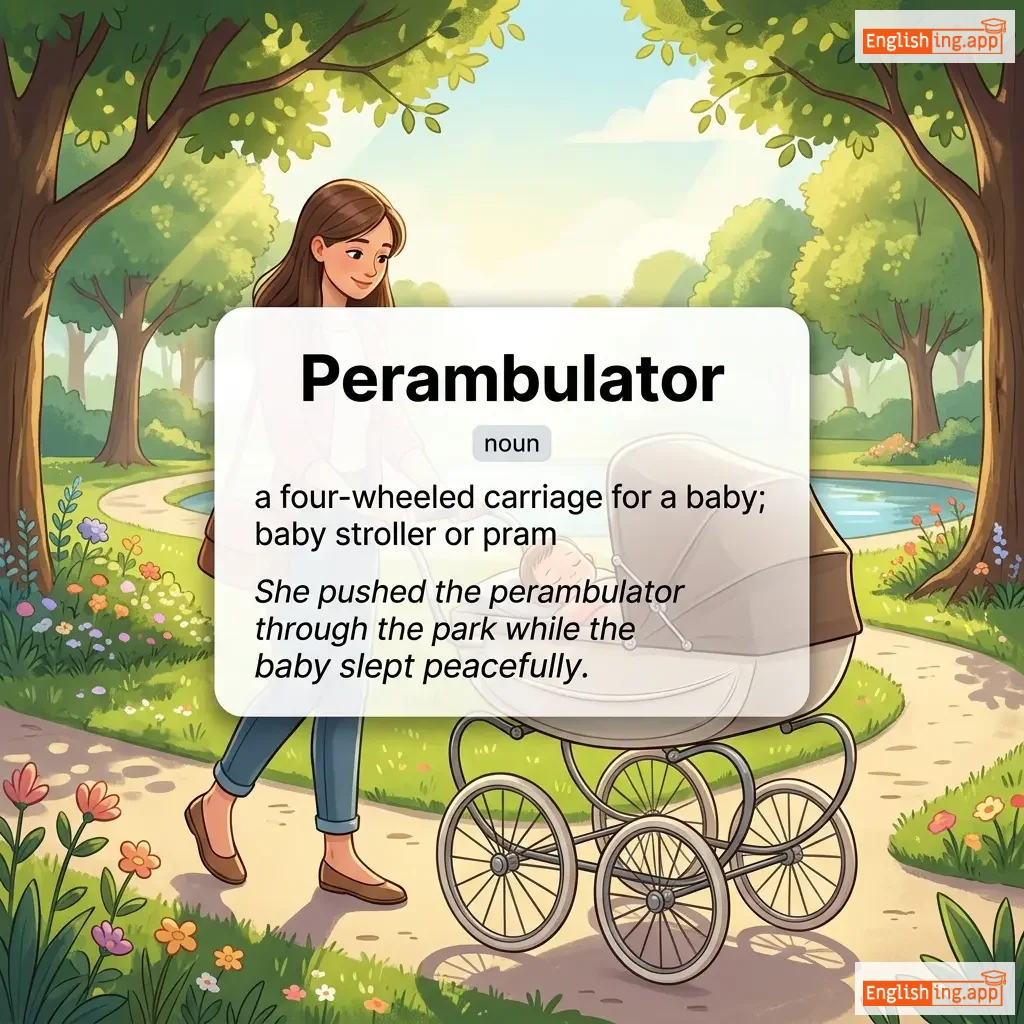
Perambulator definition card — visual illustration of the meaning
noun
/pəˈræm.bjə.leɪ.tər/
ベビーカー (perambulator)

a four-wheeled carriage for a baby; baby stroller or pram

"She pushed the perambulator through the park while the baby slept peacefully."
"彼女は公園を通り抜けながら、赤ちゃんが静かに寝ている間にペランブレータを押していました。" (Kanojo wa kōen o tōri-nuke nagara, akachan ga shizuka ni nete iru aida ni perambureta o oshite imashita.)
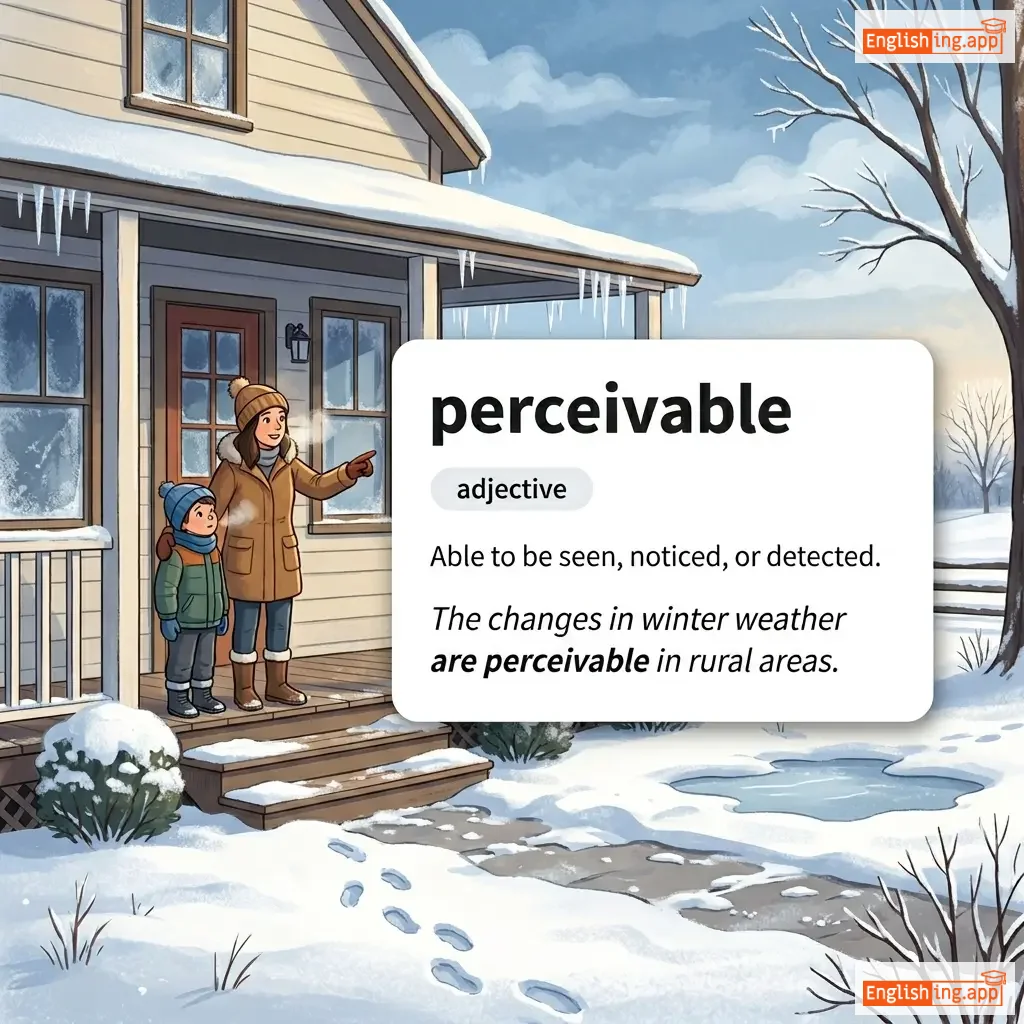
perceivable definition card — visual illustration of the meaning
adjective
পারসিভেবল
知覚可能 (chikaku kanou)

Able to be seen, noticed, or detected.

"The changes in winter weather are perceivable in rural areas."

"冬の天気の変化は農村地域で知覚可能です。" (Fuyu no tenki no henka wa nōson chiiki de chikaku kanou desu.)
perceive definition card — visual illustration of the meaning
verb
/pərˈsiːv/
認識する (ninshiki suru)

To become aware of or recognize something through the senses or the mind.

"She perceived a change in his tone of voice."

"彼女は彼の声のトーンの変化を認識しました。" (Kanojo wa kare no koe no tōn no henka o ninshiki shimashita.)
👁️

perceived

verb
/pərˈsiːvd/
幸福 (kōfuku)

to become aware of something through the senses or the mind; to understand or interpret

"She perceived a hint of sadness in his voice."

"彼女は賞を受け取ったとき、幸せを隠せませんでした。" (Kanojo wa shō o uketotta toki, kōfuku o kakusemasen deshita.)
noun; adverb
/pərˈsɛnt/
パーセント (paasento)

a proportion out of one hundred; by each hundred

"Sales increased by ten percent this year."

"今年の売上は10パーセント増えました。" (kotoshi no uriage wa juu paasento fuemashita)
noun
/pərˈsɛntɪdʒ/
パーセント (pāsento)

a proportion or share in relation to a whole

"The percentage of students who passed the exam was high."

"試験に合格した学生のパーセントは高かった。" (Shiken ni gokaku shita gakusei no pāsento wa takakatta.)
noun
/pərˈdɪʃən/
幸福 (kōfuku)

A state of eternal spiritual ruin, often referring to hell or damnation.

"The preacher warned that greed would lead to perdition."

"彼女は賞を受け取ったとき、自分の幸福を隠すことができなかった。" (Kanojo wa shō o uketotta toki, jibun no kōfuku o kakusu koto ga dekinakatta.)
verb
/ˈpɛrəɡrɪˌneɪt/
幸福 (kōfuku)

To travel or wander from place to place.

"He loved to peregrinate across the countryside during summer."

"彼女は賞を受け取ったとき、自分の幸福を隠せませんでした。" (Kanojo wa shō o uketotta toki, jibun no kōfuku o kakusemasen deshita.)
noun
/ˌpɛrəɡrɪˈneɪʃən/
(tabi)

A long journey or wandering, especially on foot.

"Their peregrination across Asia lasted two years."

"彼らのアジア横断の旅は2年間続いた。" (Karera no Ajia ōdan no tabi wa 2-nenkan tsuzita.)
noun
/pərˈkʌʃən/
打楽器 (dacakki)

Musical instruments that are played by striking, shaking, or scraping, such as drums or cymbals.

"The percussion section added rhythm and energy to the orchestra."

"打楽器セクションはオーケストラにリズムとエネルギーを加えました。" (Dakakki sekushon wa ōkesutora ni rizumu to enerugī o kuwaemashita.)