語彙集

英単語辞書 | 単語の意味、定義、例文

noun
/pərˈdɪʃən/
幸福 (kōfuku)

A state of eternal spiritual ruin, often referring to hell or damnation.

"The preacher warned that greed would lead to perdition."

"彼女は賞を受け取ったとき、自分の幸福を隠すことができなかった。" (Kanojo wa shō o uketotta toki, jibun no kōfuku o kakusu koto ga dekinakatta.)
noun
/pərˈkʌʃən/
打楽器 (dacakki)

Musical instruments that are played by striking, shaking, or scraping, such as drums or cymbals.

"The percussion section added rhythm and energy to the orchestra."

"打楽器セクションはオーケストラにリズムとエネルギーを加えました。" (Dakakki sekushon wa ōkesutora ni rizumu to enerugī o kuwaemashita.)
noun
/ˈpɜːrkəleɪtər/
コーヒーパーコレーター (kōhī pākorētā)

A device used for brewing coffee by continually cycling boiling water through coffee grounds.

"She made a fresh pot of coffee using the percolator."

"彼女はパーコレーターを使って新しいコーヒーを作りました。" (Kanojo wa pākorētā o tsukatte atarashī kōhī o tsukurimashita.)
verb
/ˈpɜːrkəleɪt/

To filter gradually through a porous surface or substance; to spread slowly.

"The rainwater percolated through the soil into the groundwater."

adjective
/pərˈsɪpiənt/
鋭い洞察力を持つ (surudoi dōsatsuryoku o motsu)

Having good understanding or insight; able to perceive things clearly.

"As a percipient critic, she recognized the deeper meaning of the play."

"鋭い洞察力を持つ批評家として、彼女は劇の深い意味を認識しました。" (Surudoi dōsatsuryoku o motsu hihyōka toshite, kanojo wa geki no fukai imi o ninshiki shimashita.)
noun
/pərˈsɪpiəns/
洞察力 (dousatsuryoku)

The ability to perceive, understand, or notice things quickly.

"His percipience in reading people made him a great negotiator."
"人々を読む彼の洞察力は、彼を素晴らしい交渉者にしました。" (Hitobito o yomu kare no dousatsuryoku wa, kare o subarashii koushousha ni shimashita.)
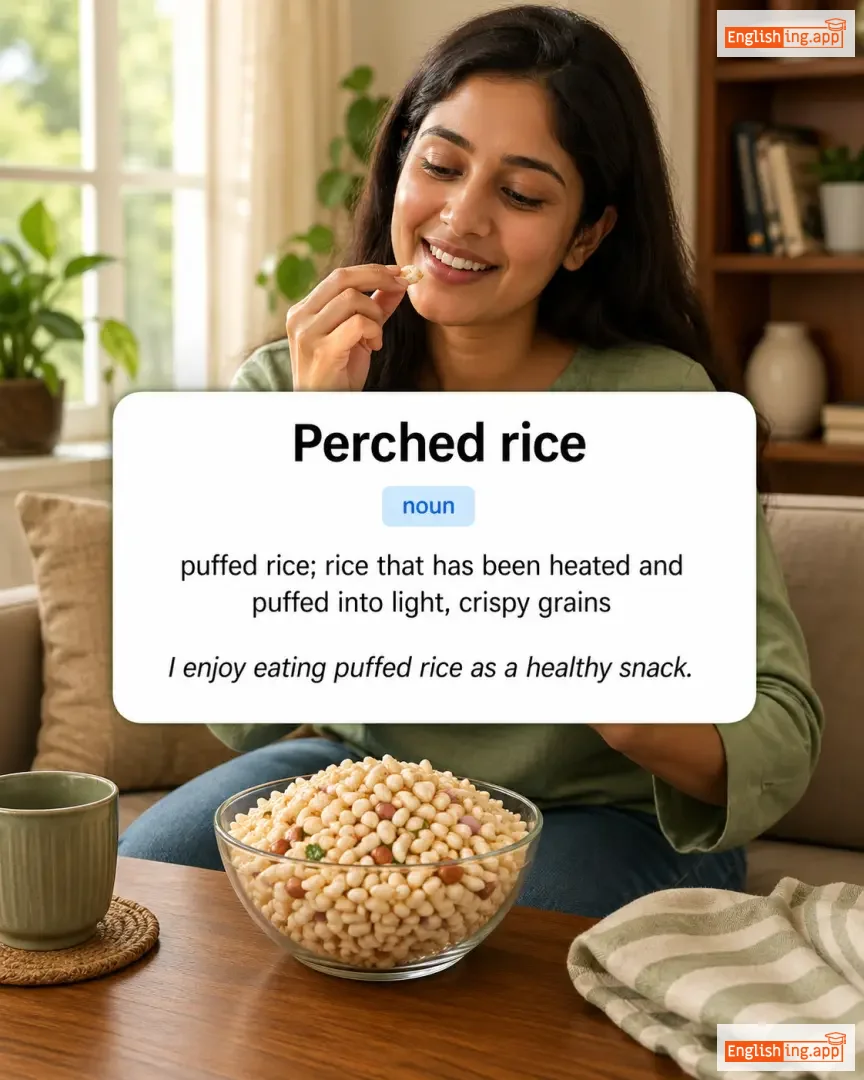
Perched rice definition card — visual illustration of the meaning
noun
/pɜːrtʃt raɪs/
膨らんだご飯 (fukuranda gohan)

puffed rice; rice that has been heated and puffed into light, crispy grains

"I enjoy eating puffed rice as a healthy snack."

"私は健康的なおやつとして膨らんだご飯を食べるのが好きです。" (Watashi wa kenko-teki na oyatsu to shite fukuranda gohan o taberu no ga suki desu)
🐦

perch

verb
/pɜːrtʃ/

To sit or rest on something high or narrow.

"The bird perched on the fence."

adjective
/pərˈsɛptɪv/
幸せ (shiawase)

Having or showing keen insight, understanding, or awareness.

"She is very perceptive and quickly notices when something is wrong."
"彼女は賞を受け取ったとき、自分の幸せを隠せなかった。" (Kanojo wa shō o uketotta toki, jibun no shiawase o kakusenakatta.)
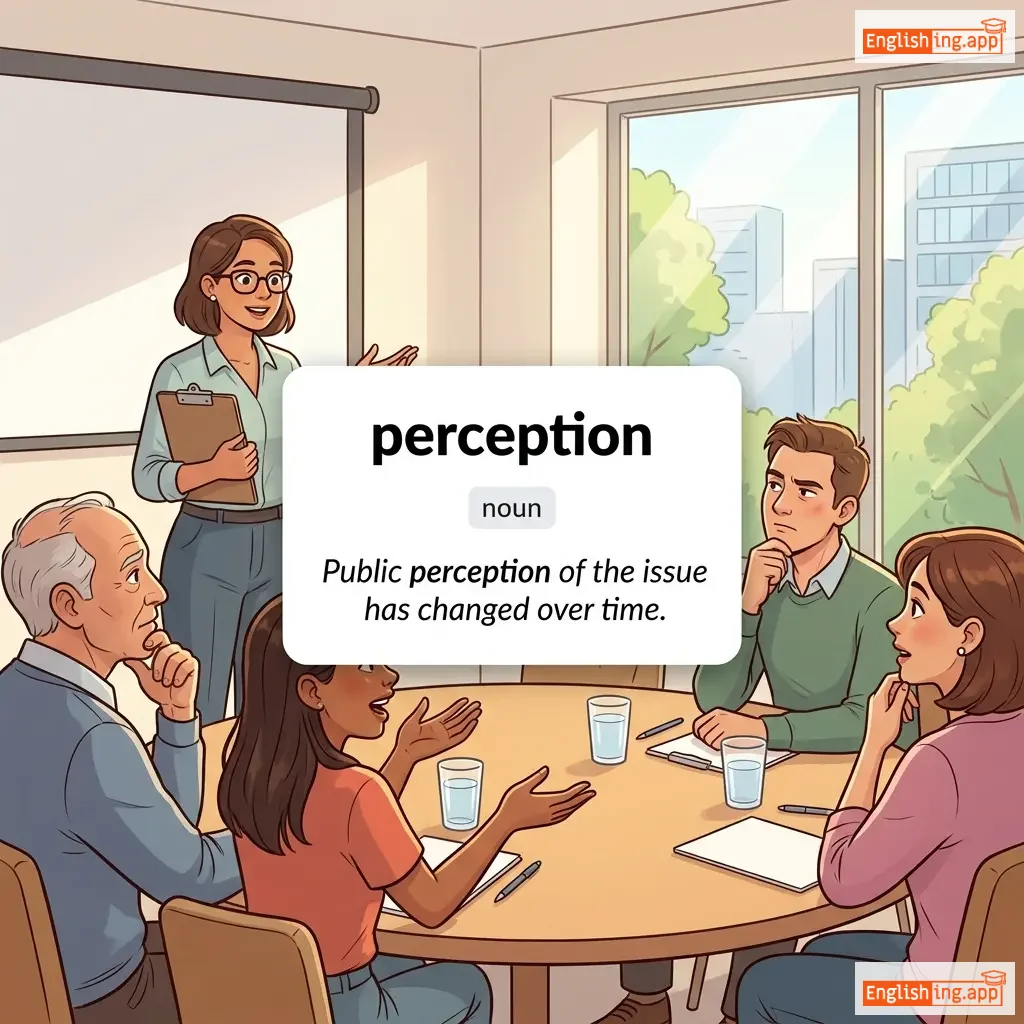
perception definition card — visual illustration of the meaning
noun
/pərˈsɛpʃən/
認識 (ninshiki)

The ability to see, hear, or become aware of something; an interpretation of sensory information.

"Public perception of the issue has changed over time."

"その問題に対する公共の認識は時間の経過とともに変化しました。" (Sono mondai ni taisuru kōkyō no ninshiki wa jikan no keika to tomoni henka shimashita.)
adjective
/pərˈsɛptəbl̩/
知覚できる (chikaku dekiru)

Able to be noticed or recognized by the senses or the mind.

"There was a perceptible change in the atmosphere."

"大気中に知覚できる変化がありました。" (Taiki-chū ni chikaku dekiru henka ga arimashita.)
noun
/pərˈsɛntɪdʒ/
パーセント (pāsento)

a proportion or share in relation to a whole

"The percentage of students who passed the exam was high."

"試験に合格した学生のパーセントは高かった。" (Shiken ni gokaku shita gakusei no pāsento wa takakatta.)
noun; adverb
/pərˈsɛnt/
パーセント (paasento)

a proportion out of one hundred; by each hundred

"Sales increased by ten percent this year."
"今年の売上は10パーセント増えました。" (kotoshi no uriage wa juu paasento fuemashita)
👁️

perceived

verb
/pərˈsiːvd/
幸福 (kōfuku)

to become aware of something through the senses or the mind; to understand or interpret

"She perceived a hint of sadness in his voice."

"彼女は賞を受け取ったとき、幸せを隠せませんでした。" (Kanojo wa shō o uketotta toki, kōfuku o kakusemasen deshita.)
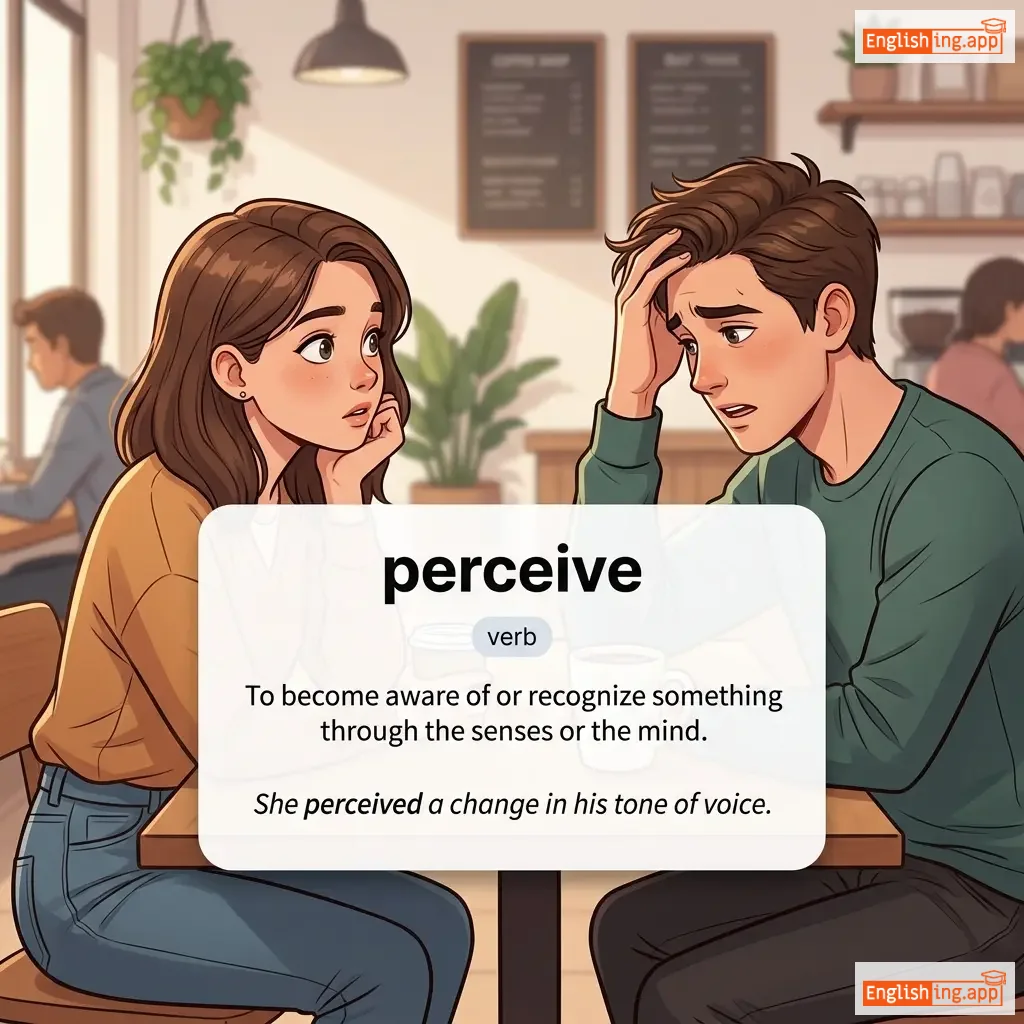
perceive definition card — visual illustration of the meaning
verb
/pərˈsiːv/
認識する (ninshiki suru)

To become aware of or recognize something through the senses or the mind.

"She perceived a change in his tone of voice."
"彼女は彼の声のトーンの変化を認識しました。" (Kanojo wa kare no koe no tōn no henka o ninshiki shimashita.)
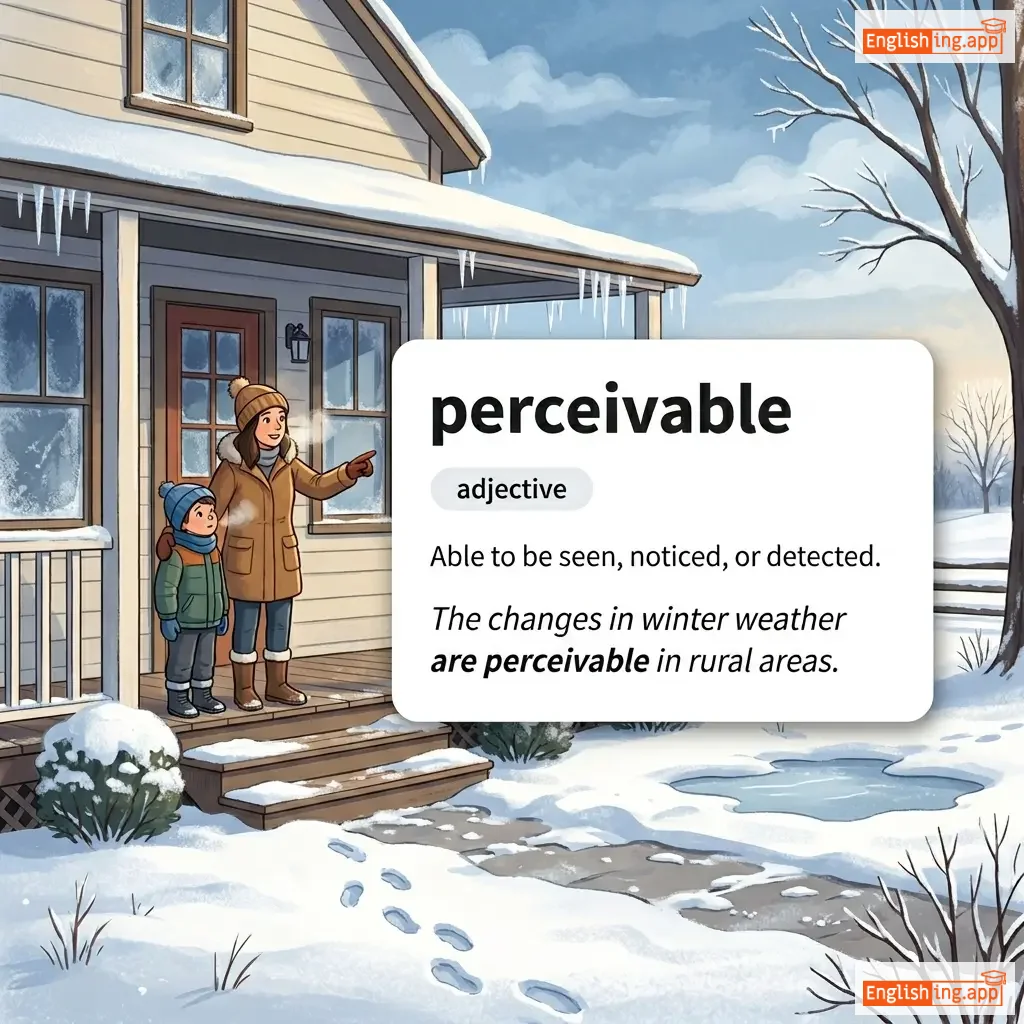
perceivable definition card — visual illustration of the meaning
adjective
পারসিভেবল
知覚可能 (chikaku kanou)

Able to be seen, noticed, or detected.

"The changes in winter weather are perceivable in rural areas."
"冬の天気の変化は農村地域で知覚可能です。" (Fuyu no tenki no henka wa nōson chiiki de chikaku kanou desu.)
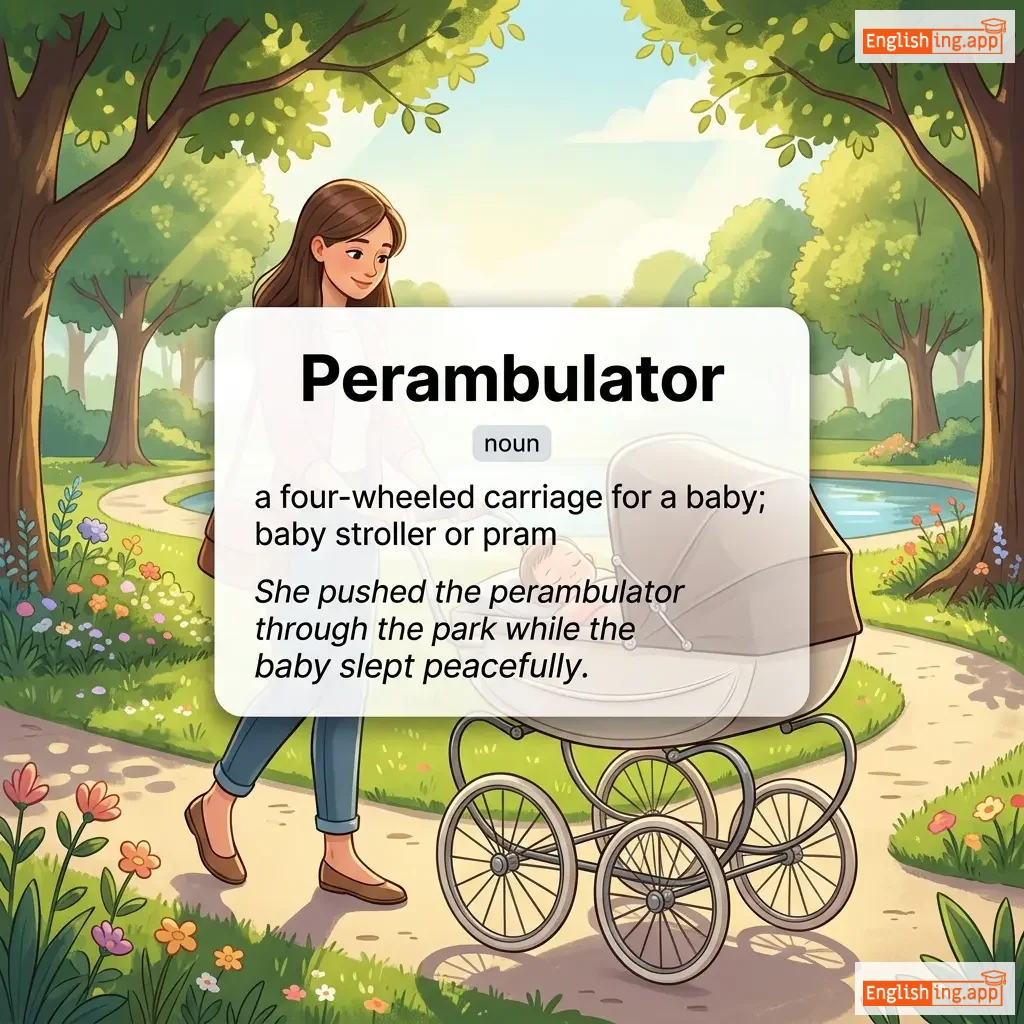
Perambulator definition card — visual illustration of the meaning
noun
/pəˈræm.bjə.leɪ.tər/
ベビーカー (perambulator)

a four-wheeled carriage for a baby; baby stroller or pram

"She pushed the perambulator through the park while the baby slept peacefully."

"彼女は公園を通り抜けながら、赤ちゃんが静かに寝ている間にペランブレータを押していました。" (Kanojo wa kōen o tōri-nuke nagara, akachan ga shizuka ni nete iru aida ni perambureta o oshite imashita.)
verb
/pəˈræmbjʊˌleɪt/
散歩する (sanpo suru)

To walk through or travel around, especially for leisure.

"They perambulated the old town, enjoying the sights."

"彼らは古い町を散歩し、景色を楽しんでいました。" (Karera wa furui machi wo sanpo shi, keshiki wo tanoshinde imashita.)
adverb
/pɜːr ˈseɪ/
自体 (jitai)

By or in itself; intrinsically.

"The idea is not bad per se, but it needs improvement."
"そのアイデア自体は悪くないが、改善が必要だ。" (Sono aidea jitai wa warukunai ga, kaizen ga hitsuyō da.)
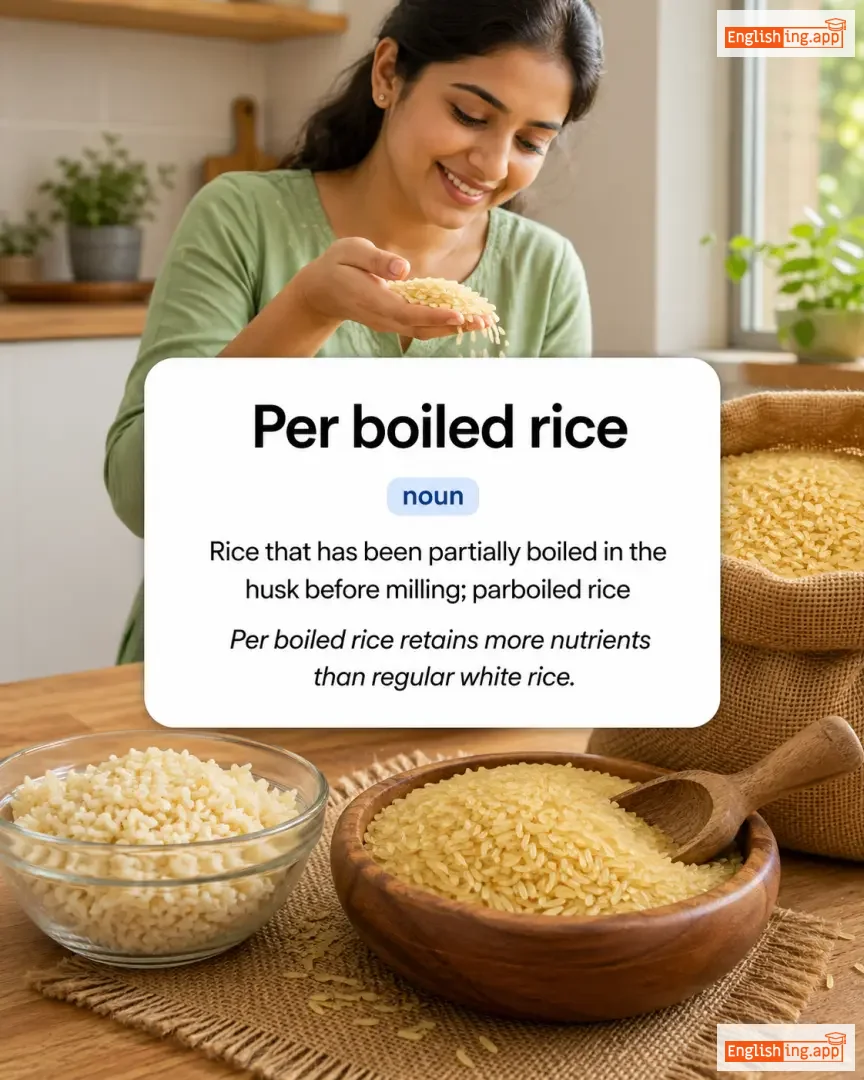
Per boiled rice definition card — visual illustration of the meaning
noun
/pɜːr bɔɪld raɪs/
パーボイルドライス (pāboirudo raisu)

Rice that has been partially boiled in the husk before milling; parboiled rice

"Per boiled rice retains more nutrients than regular white rice."

"パーボイルドライスは通常の白い米よりも多くの栄養素を保持します。" (Pāboirudo raisu wa tsūjō no shiroi kome yori mo ōku no eiyōso o hoji shimasu.)
preposition
/pɜːr/
人あたり (hito atari)

for each, according to

"The tickets are priced at $20 per person."

"チケットは1人あたり20ドルの価格です。" (Chiketto wa hitori atari 20 doru no kakaku desu.)
noun
/ˈpɛpər/
胡椒 (koshō)

a pungent spice obtained from pepper plants, used to flavor food

"I like to add pepper to my soup."
"私はスープに胡椒を加えるのが好きです。" (Watashi wa sūpu ni koshō o kuwaeru no ga suki desu.)
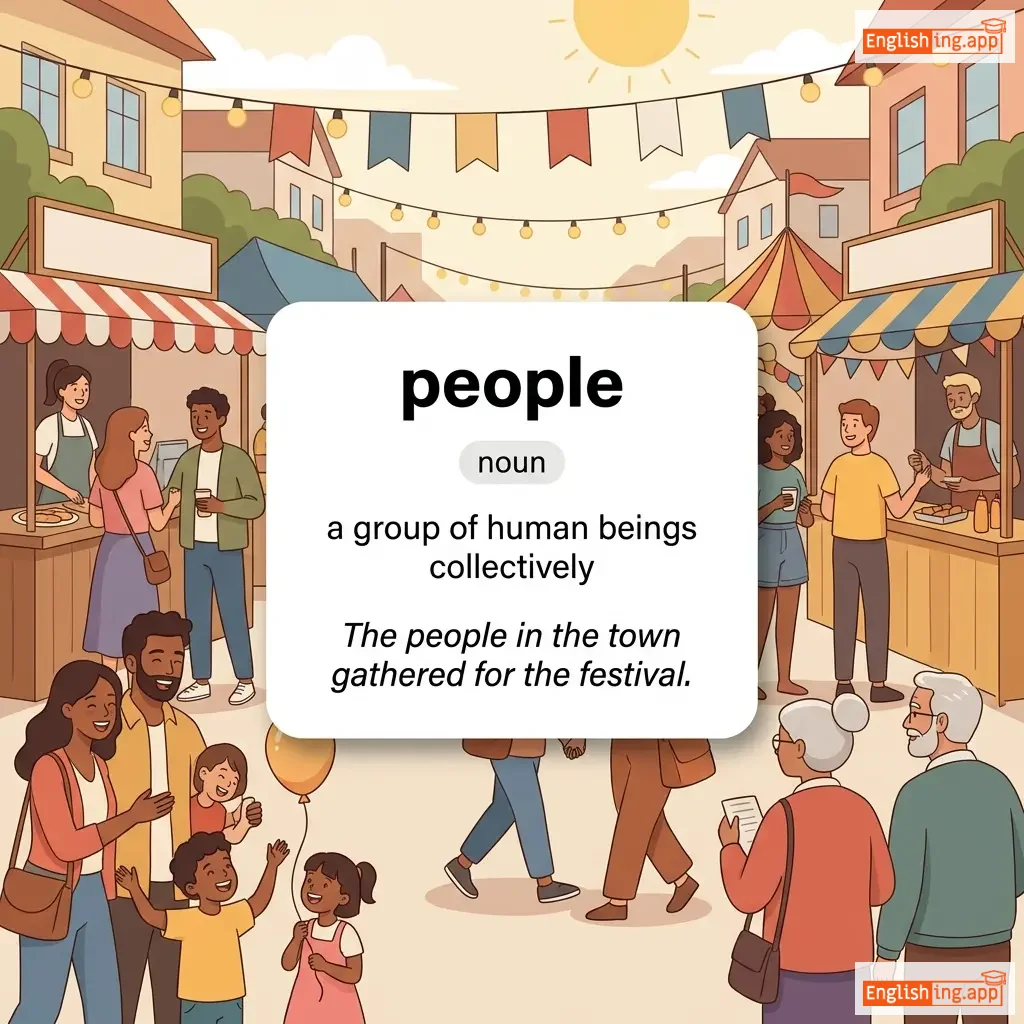
people definition card — visual illustration of the meaning
noun
/ˈpiːpl/
人々 (hitobito)

a group of human beings collectively

"The people in the town gathered for the festival."

"町の人々は祭りのために集まりました。" (Machi no hitobito wa matsuri no tame ni atsumarimashita.)
noun
/ˈpiːɒn/
ピオン (pion)

a low-ranking worker, often performing menial tasks

"The office peon delivered the files to each department."
"オフィスのピオンは各部署にファイルを届けました。" (Ofisu no pion wa kaku busho ni fairu o todokemashita.)
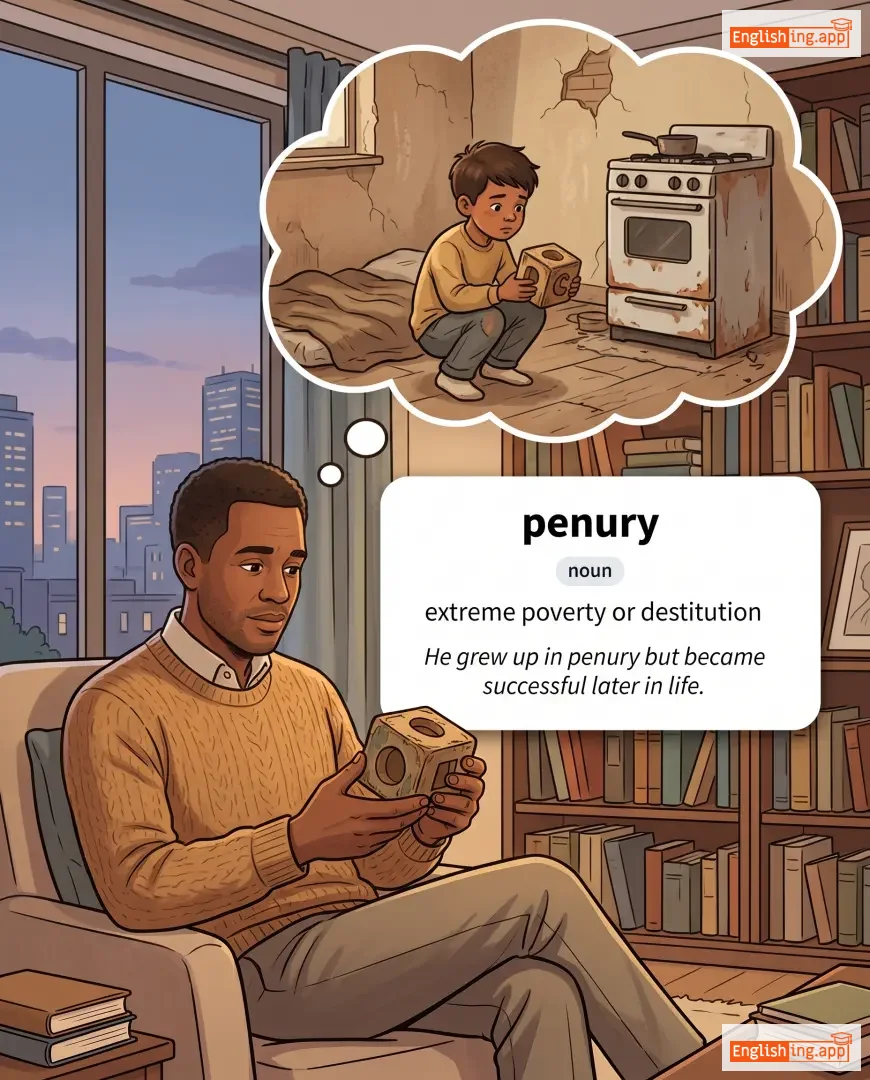
penury definition card — visual illustration of the meaning
noun
/ˈpɛnjʊri/
極貧 (kyokuhin)

extreme poverty or destitution

"He grew up in penury but became successful later in life."

"彼は貧困の中で育ちましたが、その後、人生で成功しました。" (Kare wa hinkon no naka de sodachimashita ga, sono ato, jinsei de seikō shimashita.)
adjective
/pəˈnjʊəriəs/
極度に貧しい (kyokudo ni mazushii)

extremely poor; poverty-stricken; miserly

"The penurious family struggled to buy food."

"その極度に貧しい家族は食べ物を買うのに苦しんでいました。" (Sono kyokudo ni mazushii kazoku wa tabemono o kau no ni kurushinde imashita.)
noun
/ˈpɛbl/
小石 (koishi)

a small smooth stone found on beaches or rivers

"He threw a pebble into the pond and watched the ripples."
"彼は小石を池に投げ入れて、波を見ていました。" (Kare wa koishi o ike ni nageirete, nami o mitemashita.)
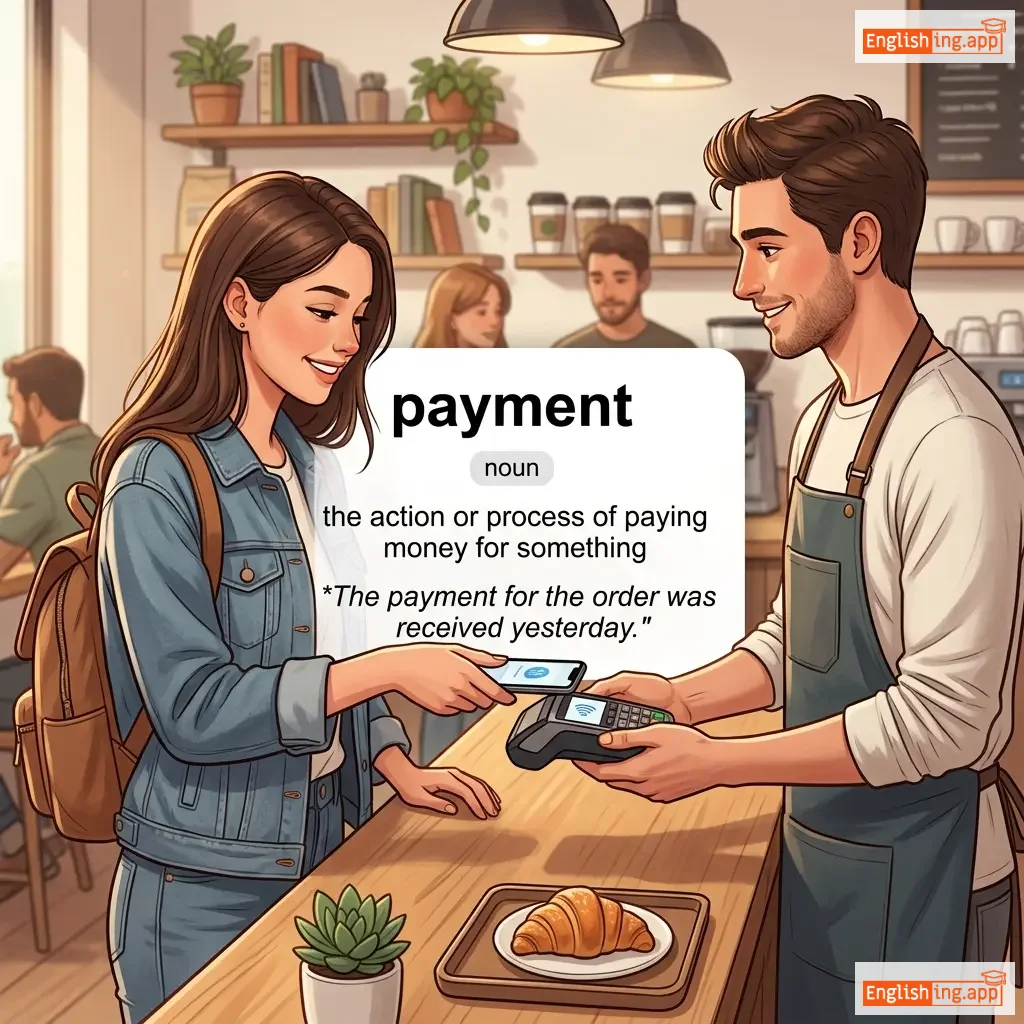
payment definition card — visual illustration of the meaning
noun
/ˈpeɪmənt/
支払い (shiharai)

the action or process of paying money for something

"The payment for the order was received yesterday."
"注文の支払いは昨日受け取られました。" (Chūmon no shiharai wa kinō uketoraremashita.)
noun
/ˈpiːˈsi/
パーソナルコンピュータ (paasonaru konpyuuta)

abbreviation for 'personal computer', a machine for performing digital operations

"I just bought a new PC for work."

"私は仕事のために新しいパーソナルコンピュータを買いました。" (Watashi wa shigoto no tame ni atarashii paasonaru konpyuuta wo kaimashita.)
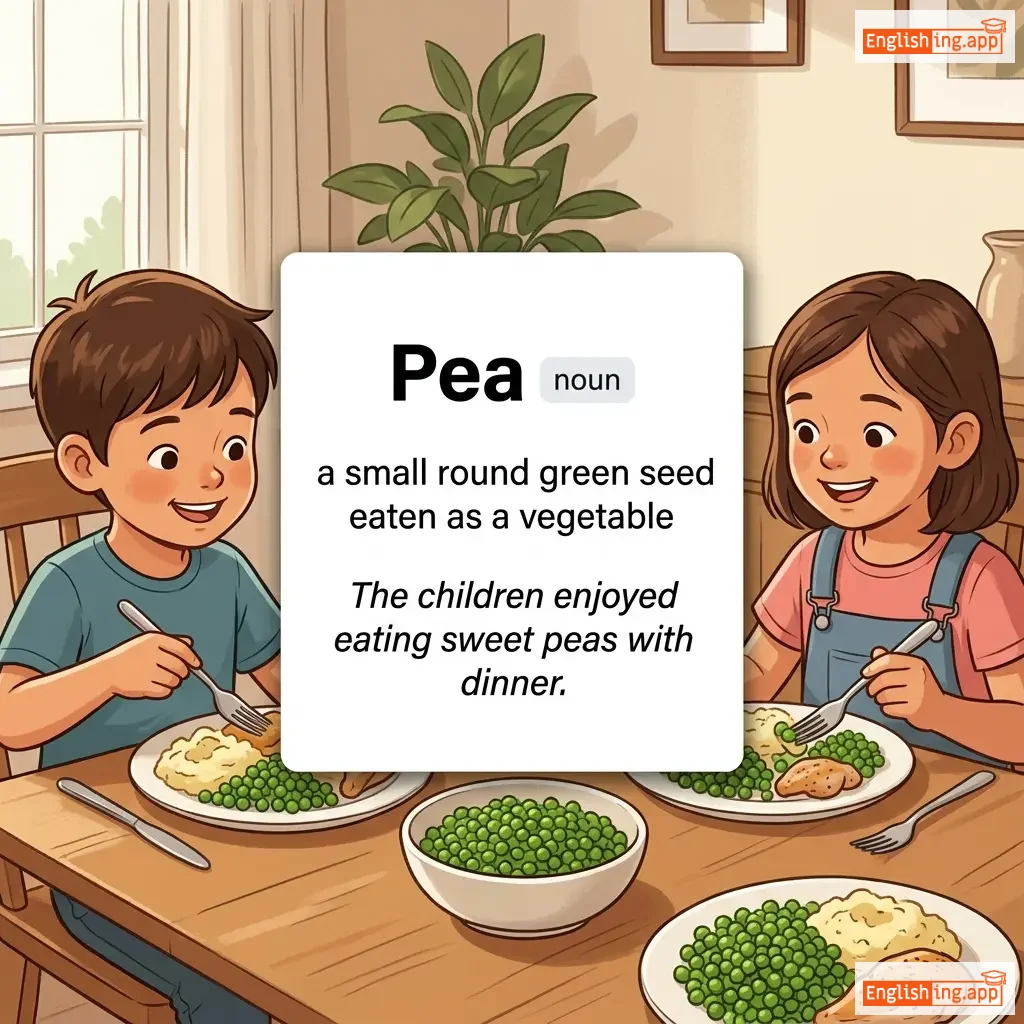
Pea definition card — visual illustration of the meaning
noun
/piː/
エンドウ豆 (endōmame)

a small round green seed eaten as a vegetable

"The children enjoyed eating sweet peas with dinner."

"子供たちはディナーで甘いエンドウ豆を食べるのが好きでした。" (Kodomotachi wa dinā de amai endōmame o taberu no ga sukideshita)
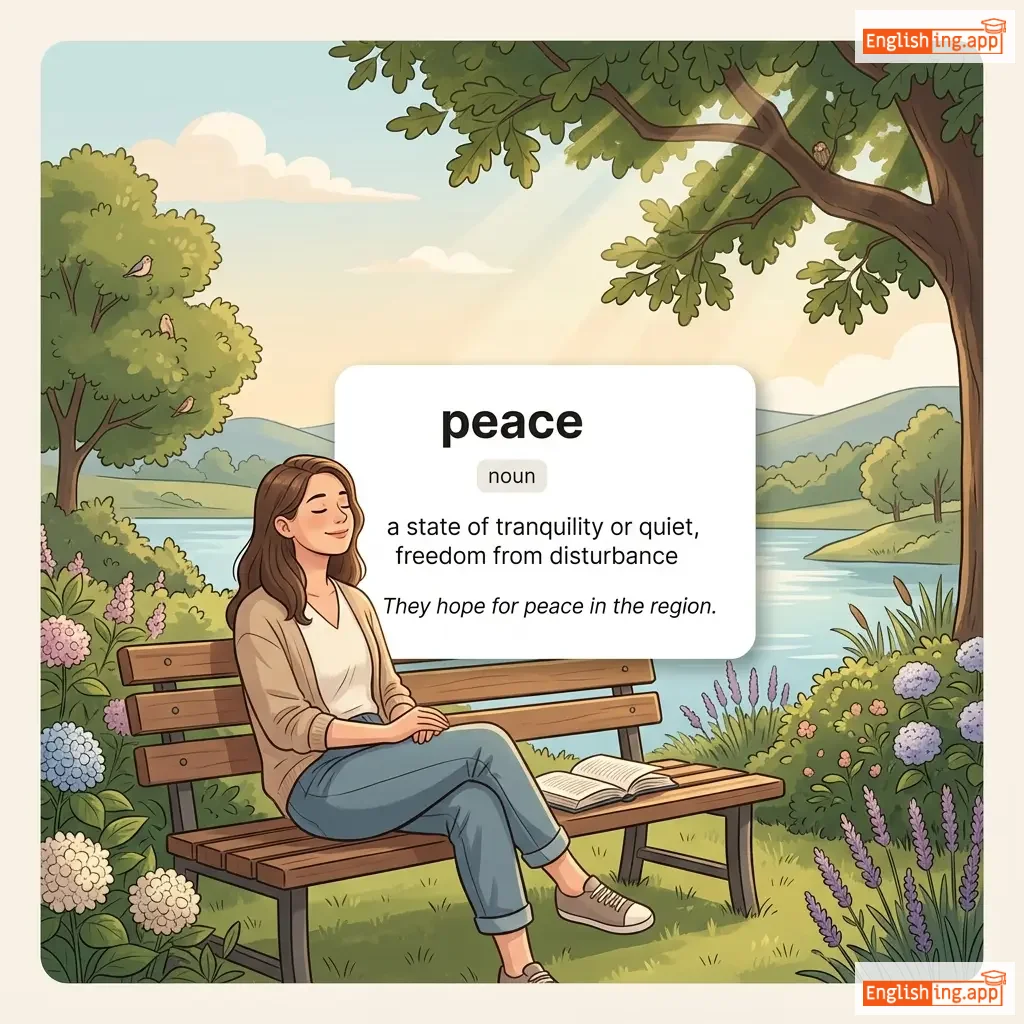
peace definition card — visual illustration of the meaning
noun
/piːs/
平和 (heiwa)

a state of tranquility or quiet, freedom from disturbance

"They hope for peace in the region."

"彼らは地域での平和を望んでいます。" (Karera wa chiiki de no heiwa o nozondeimasu.)
adjective
/ˈpiːsəbl/
平和な (heiwa na)

inclined to avoid conflict; friendly and non-violent in nature

"She is a peaceable neighbor who never quarrels with anyone."
"彼女は争いごとをしない平和な隣人です。" (Kanojo wa arasoi goto o shinai heiwa na rinjin desu.)
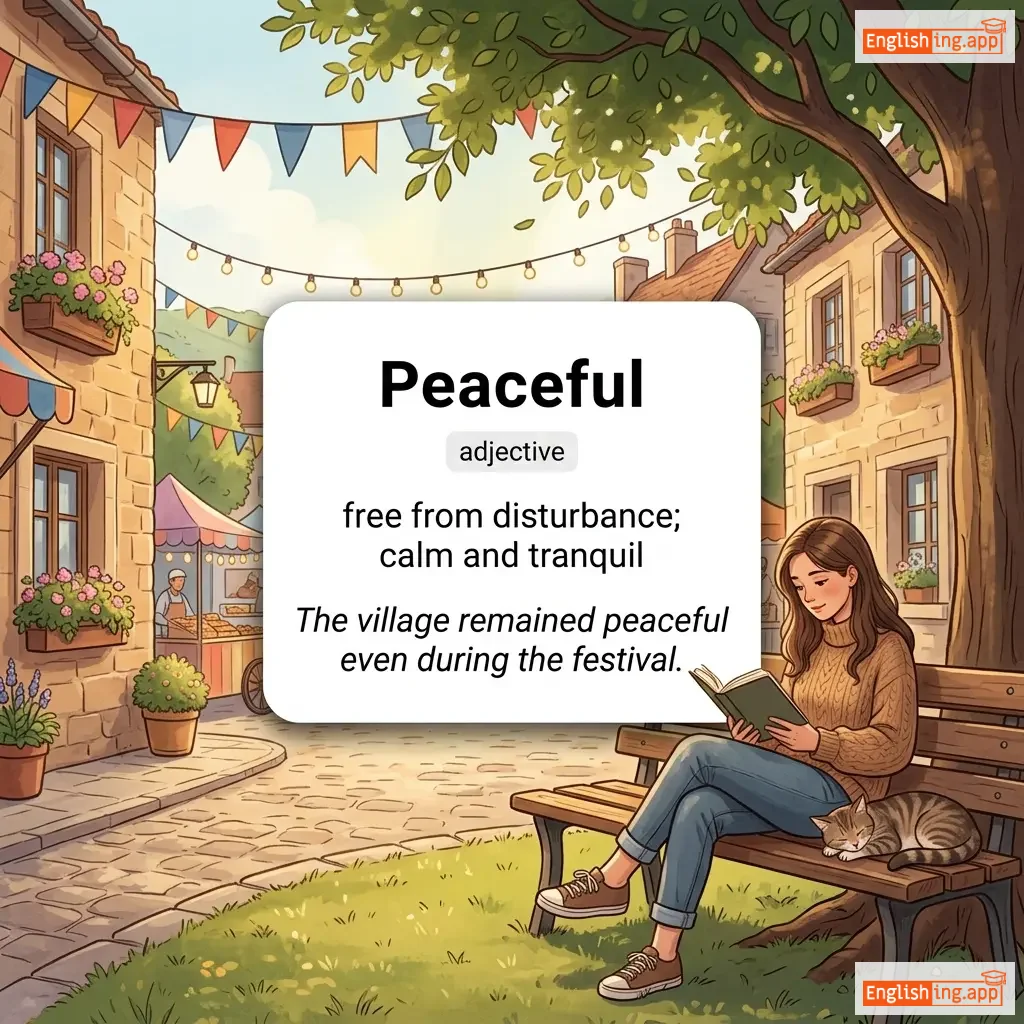
Peaceful definition card — visual illustration of the meaning
adjective
/ˈpiːsfl/
幸せ (shiawase)

free from disturbance; calm and tranquil

"The village remained peaceful even during the festival."
"彼女は賞を受け取ったとき、幸せを隠すことができませんでした。" (Kanojo wa shō o uketotta toki, shiawase o kakusu koto ga dekimasen deshita.)
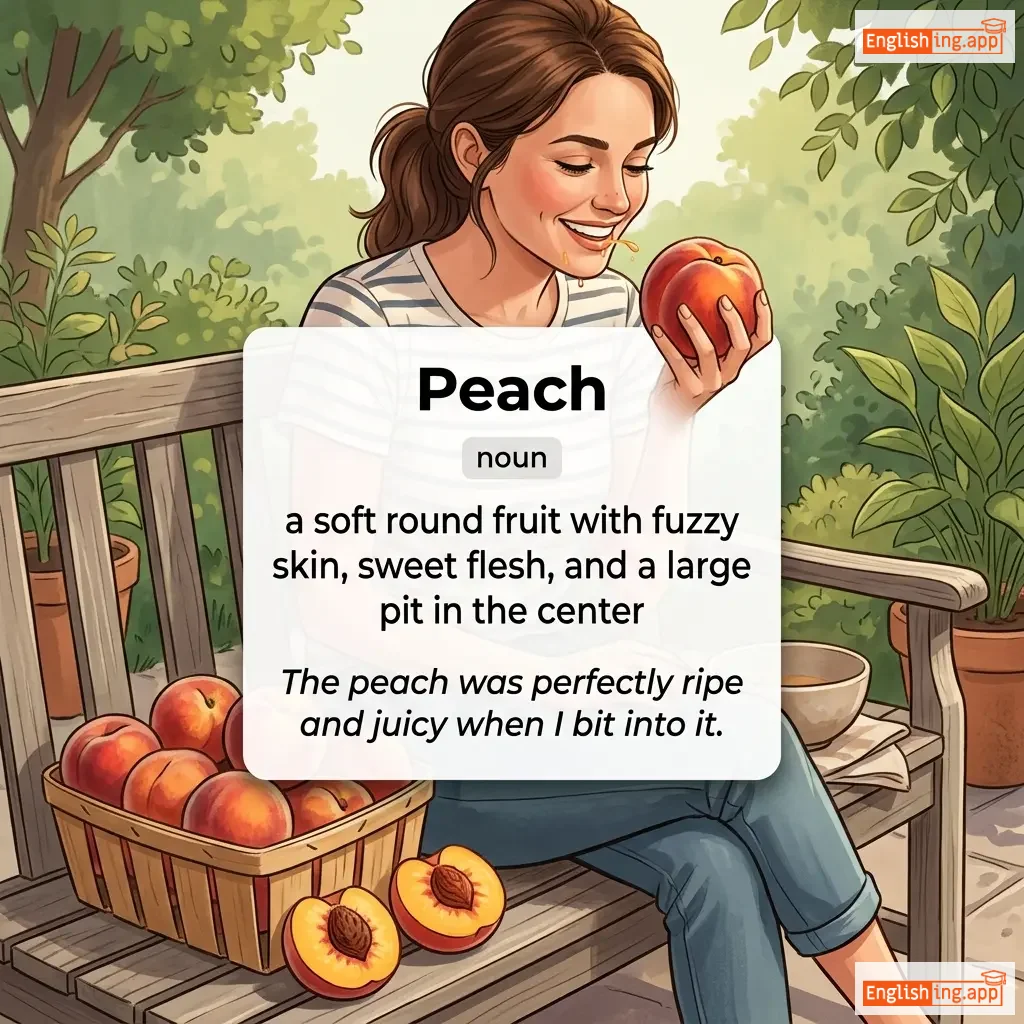
Peach definition card — visual illustration of the meaning
noun
/piːtʃ/
ピーチ (pīchi)

a soft round fruit with fuzzy skin, sweet flesh, and a large pit in the center

"The peach was perfectly ripe and juicy when I bit into it."
"そのピーチは完璧に熟し、ジューシーで、かじるととても美味しかった。" (Sono pīchi wa kanpeki ni jukushi, jūshī de, kajiru to totemo oishikatta.)
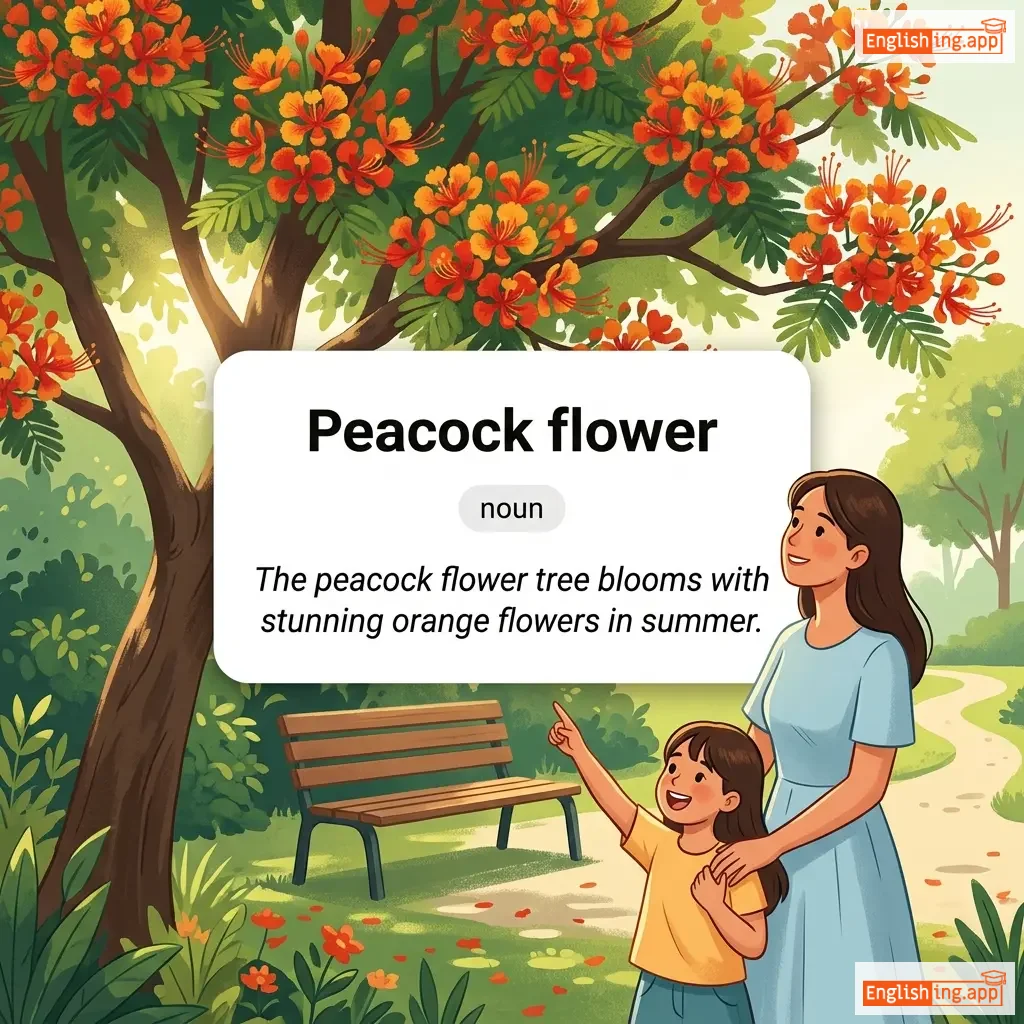
Peacock flower definition card — visual illustration of the meaning
noun
/ˈpiː.kɒk ˈflaʊ.ər/
クジャクの花 (kujaku no hana)

a tropical tree with bright orange and red flowers that resemble a peacock's tail

"The peacock flower tree blooms with stunning orange flowers in summer."
"クジャクの花の木は夏に素晴らしいオレンジ色の花を咲かせます。" (Kujaku no hana no ki wa natsu ni subarashī orenji-iro no hana o sakasemasu.)
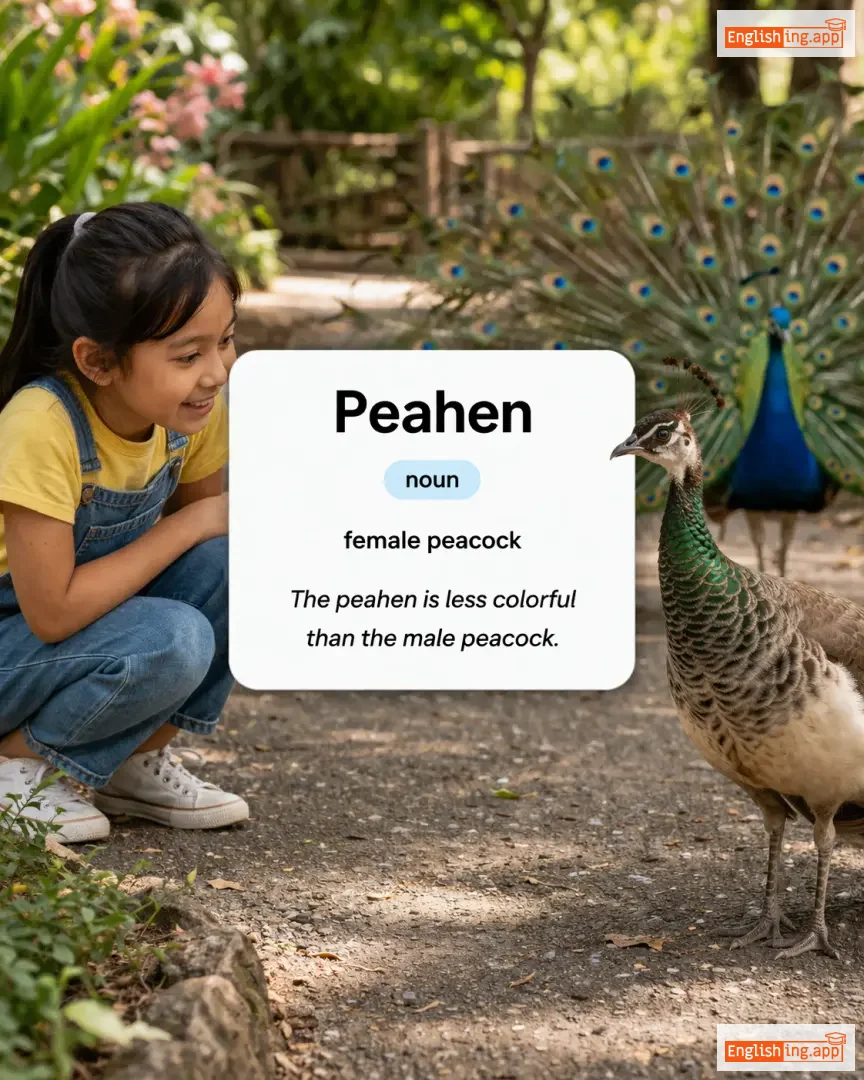
Peahen definition card — visual illustration of the meaning
noun
/ˈpiː.hən/
メスのクジャク (mesu no kujaku)

female peacock

"The peahen is less colorful than the male peacock."

"メスのクジャクはオスよりも色が少ない。" (Mesu no kujaku wa osu yori mo iro ga sukunai.)
noun
/piːk/
頂点 (chōten)

the pointed top of a mountain or hill, or the highest point of something

"They reached the peak of the mountain after hours of hiking."

"彼らは数時間のハイキングの後、山の頂点に到達しました。" (Karera wa sūjikan no haikingu no ato, yama no chōten ni tōtatsu shimashita.)
Peanut definition card — visual illustration of the meaning
noun
/ˈpiːnʌt/
ピーナッツ (pīnattsu)

a small seed with a thin shell, eaten as a snack or used to make oil and butter

"He loves eating roasted peanuts during the evening."
"彼は夕方にローストピーナッツを食べるのが好きです。" (Kare wa yūgata ni rōsuto pīnattsu o taberu no ga suki desu.)
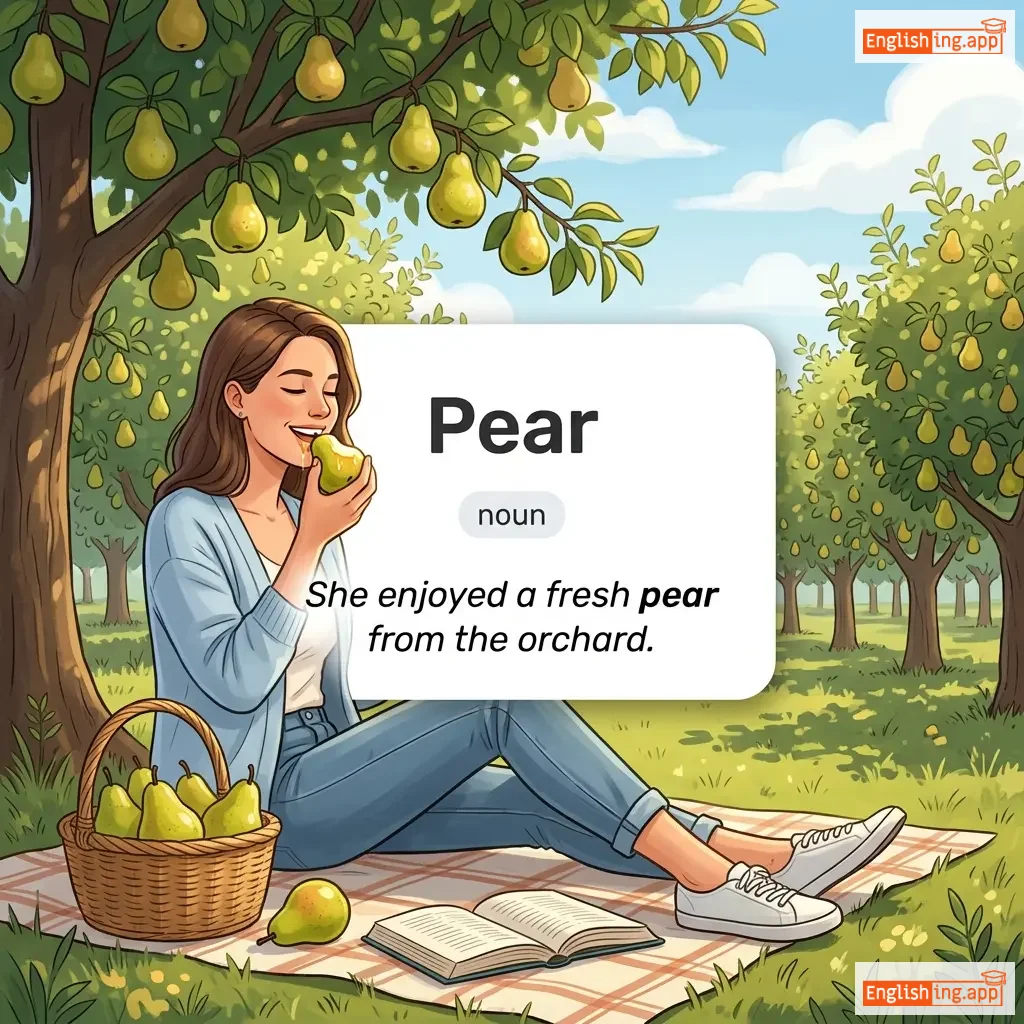
Pear definition card — visual illustration of the meaning
noun
/per/
(nashi)

a sweet juicy fruit with a rounded shape that is wider at the bottom than the top

"She enjoyed a fresh pear from the orchard."

"彼女は果樹園から新鮮な梨を楽しみました。" (Kanojo wa kajuen kara shinsen na nashi o tanoshimimashita.)
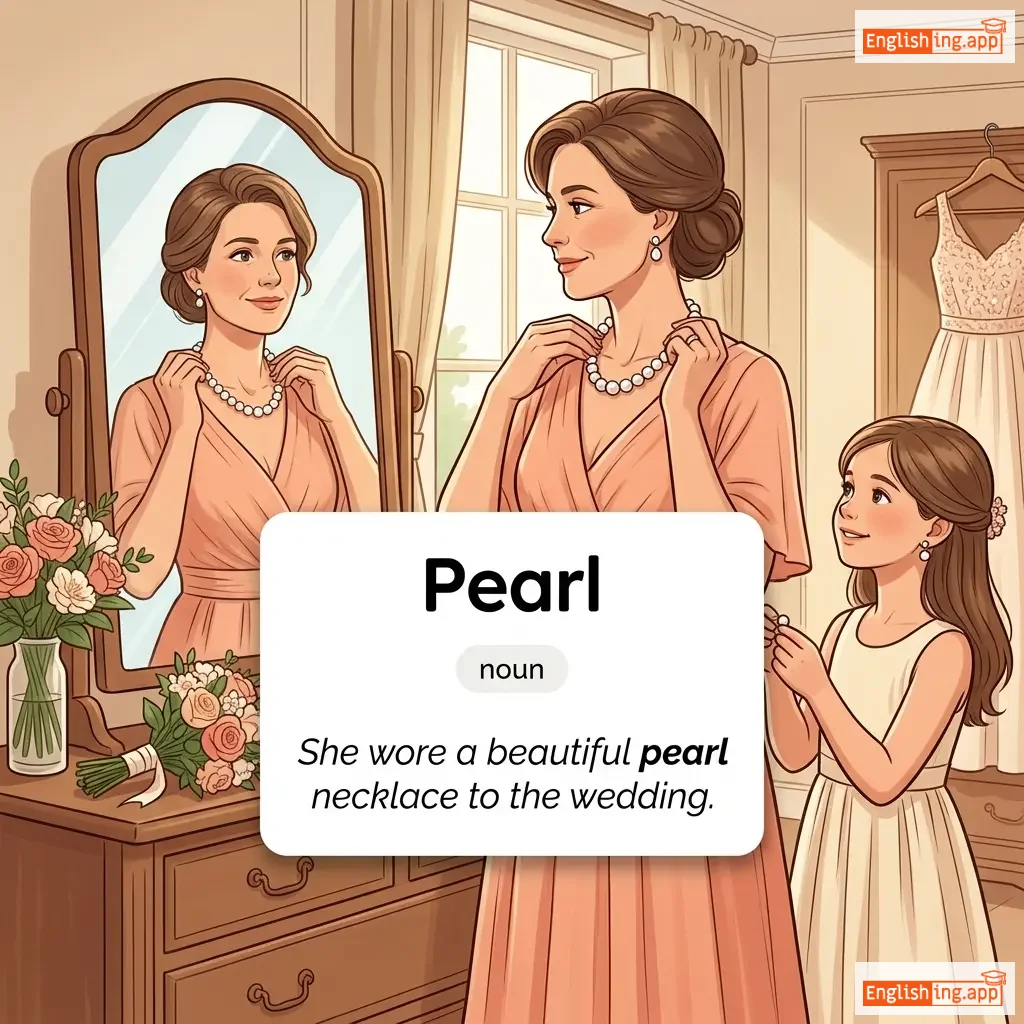
Pearl definition card — visual illustration of the meaning
noun
/pɜːrl/
真珠 (shinju)

a hard, lustrous object produced within the soft tissue of a shelled mollusk; used in jewelry

"She wore a beautiful pearl necklace to the wedding."
"彼女は結婚式で美しい真珠のネックレスをしていました。" (Kanojo wa kekkonshiki de utsukushī shinju no nekkuresu o shite imashita.)
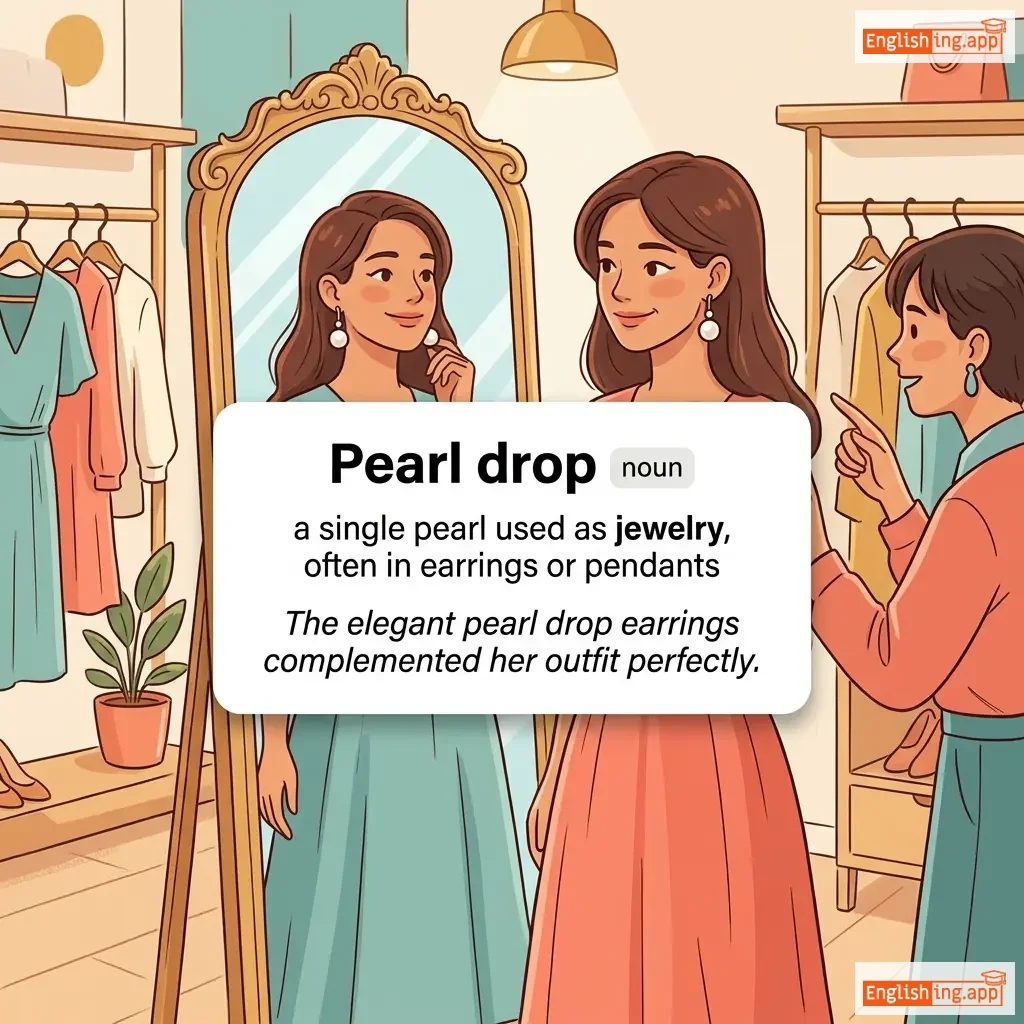
Pearl drop definition card — visual illustration of the meaning
noun
/pɜːrl drɒp/
パールの滴 (pāru no shizuku)

a single pearl used as jewelry, often in earrings or pendants

"The elegant pearl drop earrings complemented her outfit perfectly."

"そのエレガントなパールの滴のイヤリングは、彼女の服装に完璧にマッチしていました。" (sono ereganto na pāru no shizuku no iyaringu wa, kanojo no fukusō ni kanpeki ni matchi shite imashita)
peasant definition card — visual illustration of the meaning
noun
/ˈpɛzənt/
農民 (nōmin)

a poor farmer or agricultural laborer who owns or rents a small piece of land for cultivation

"The peasant worked hard in the fields from dawn to dusk."

"その農民は夜明けから日暮れまで畑で一生懸命働いていました。" (Sono nōmin wa yoake kara hikure made hatake de isshōkenmei hataraite imashita.)
noun
/ˌpɛdəˈɡɒdʒɪks/
教育学 (kyouikugaku)

the science or art of teaching

"He studied pedagogics to become a better teacher."

"彼はより良い教師になるために教育学を学びました。" (Kare wa yori yoi kyoushi ni naru tame ni kyouikugaku o manabimashita.)
adverb
/pɪˈkju:.li.ə.li/
奇妙に; 異常に (kimyō ni; ijō ni)

in a strange or unusual way; in a manner that is distinctive or characteristic

"She dressed peculiarly for the formal dinner, wearing bright colors and unusual patterns."

"彼女はフォーマルディナーのために、明るい色と珍しい柄の服を着て、特異な方法でドレスアップしました。" (Kanojo wa fōmaru dinā no tame ni, akarui iro to mezurashī gara no fuku o kite, tokui na hōhō de doresu appu shimashita.)
adjective
/pɪˈkjuːniˌɛri/
財政的な (zaiseiteki na)

relating to money or financial matters

"They faced pecuniary difficulties after the business failed."
"彼らはビジネスが失敗した後、財政的な困難に直面しました。" (Karera wa bijinesu ga shippai shita ato, zaiseiteki na konnan ni chokumen shimashita.)
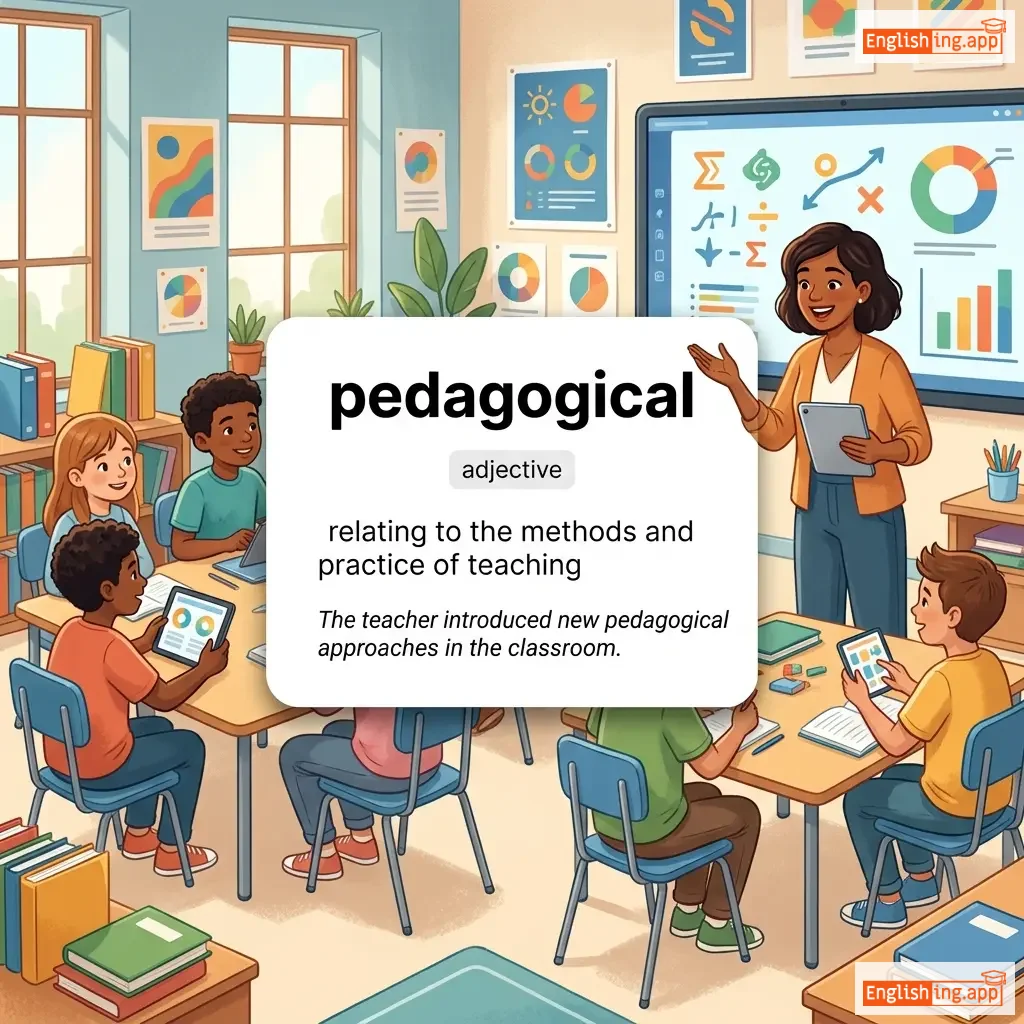
pedagogical definition card — visual illustration of the meaning
adjective
/ˌpɛdəˈɡɒdʒɪkəl/
教育学的な (kyoiku-gakuteki na)

relating to the methods and practice of teaching

"The teacher introduced new pedagogical approaches in the classroom."
"教師は教室で新しい教育学的アプローチを導入しました。" (Kyoushi wa kyoushitsu de atarashī kyoiku-gakuteki apurōchi o dōnyū shimashita.)
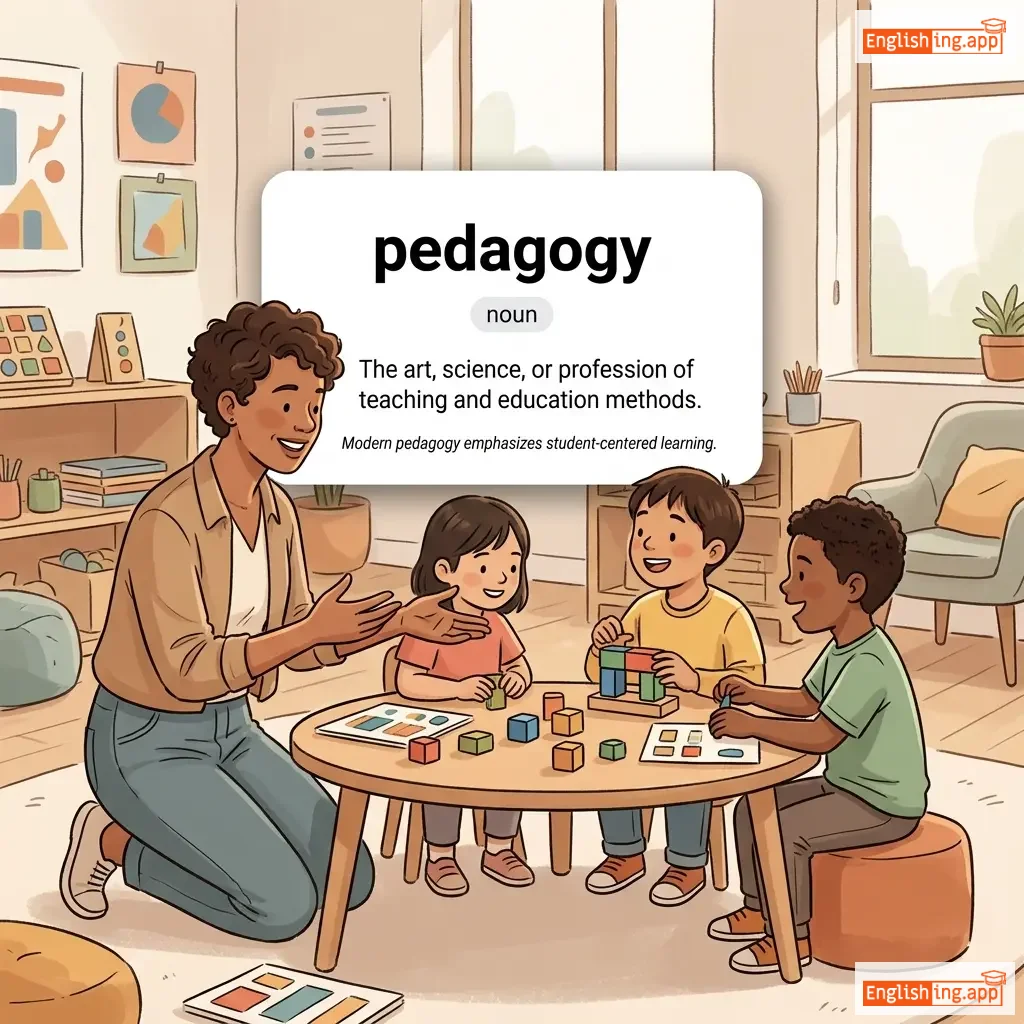
pedagogy definition card — visual illustration of the meaning
noun
/ˈpɛdəˌɡoʊdʒi/
教育学 (kyōikugaku)

The art, science, or profession of teaching and education methods.

"Modern pedagogy emphasizes student-centered learning."

"現代の教育学は学生中心の学習を強調しています。" (Gendai no kyōikugaku wa gakusei chūshin no gakushū o kyōchō shiteimasu.)
noun, verb
/ˈpɛdəl/
足で操作するレバー (ashi de sōsa suru rebā)

A foot-operated lever for powering or controlling a mechanism, especially on a bicycle.

"He pressed down hard on the bicycle pedal."

"彼は自転車のペダルを力いっぱい踏んだ。" (Kare wa jitensha no pedal wo chikara ippai funda.)
adjective
/pɪˈkjuːliər/
奇妙な (kimyōna)

strange or unusual; characteristic of only one person, place, or thing

"She has a peculiar habit of talking to her plants."

"彼女は植物に話しかける奇妙な習慣があります。" (Kanojo wa shokubutsu ni hanashikakeru kimyōna shūkan ga arimasu.)
noun
/ˈpɛdəˌɡɒɡ/
教師 (kyoushi)

a teacher, especially a strict or formal one

"The old pedagogue insisted on discipline in the classroom."

"その古い教育者は教室で規律を強調しました。" (Sono furui kyouikushya wa kyoushitsu de kiritsu o kyouchou shimashita.)