語彙集

英単語辞書 | 単語の意味、定義、例文

noun
/ˌpɜːrtərˈbeɪʃn/
混乱 (konran)

A state of anxiety, disturbance, or disorder.

"The announcement caused a perturbation in the financial markets."

"発表は金融市場に混乱を引き起こしました。" (Happyō wa kin'yū shijō ni konran o hikiokoshimashita.)
adjective
/pərˈtɜːrbd/
動揺した (dōyō shita)

feeling anxious, unsettled, or disturbed

"He looked perturbed after hearing the bad news."
"悪いニュースを聞いた後、彼は動揺しているように見えました。" (Warui nyūsu o kiita ato, kare wa dōyō shite iru yō ni miemashita.)
noun
/pɪt/
(ana)

a large hole in the ground or a hollow area

"The workers dug a deep pit to build the foundation."

"労働者たちは基礎を作るために深い穴を掘った。" (Rōdōsha-tachi wa kiso o tsukuru tame ni fukai ana o hotta.)
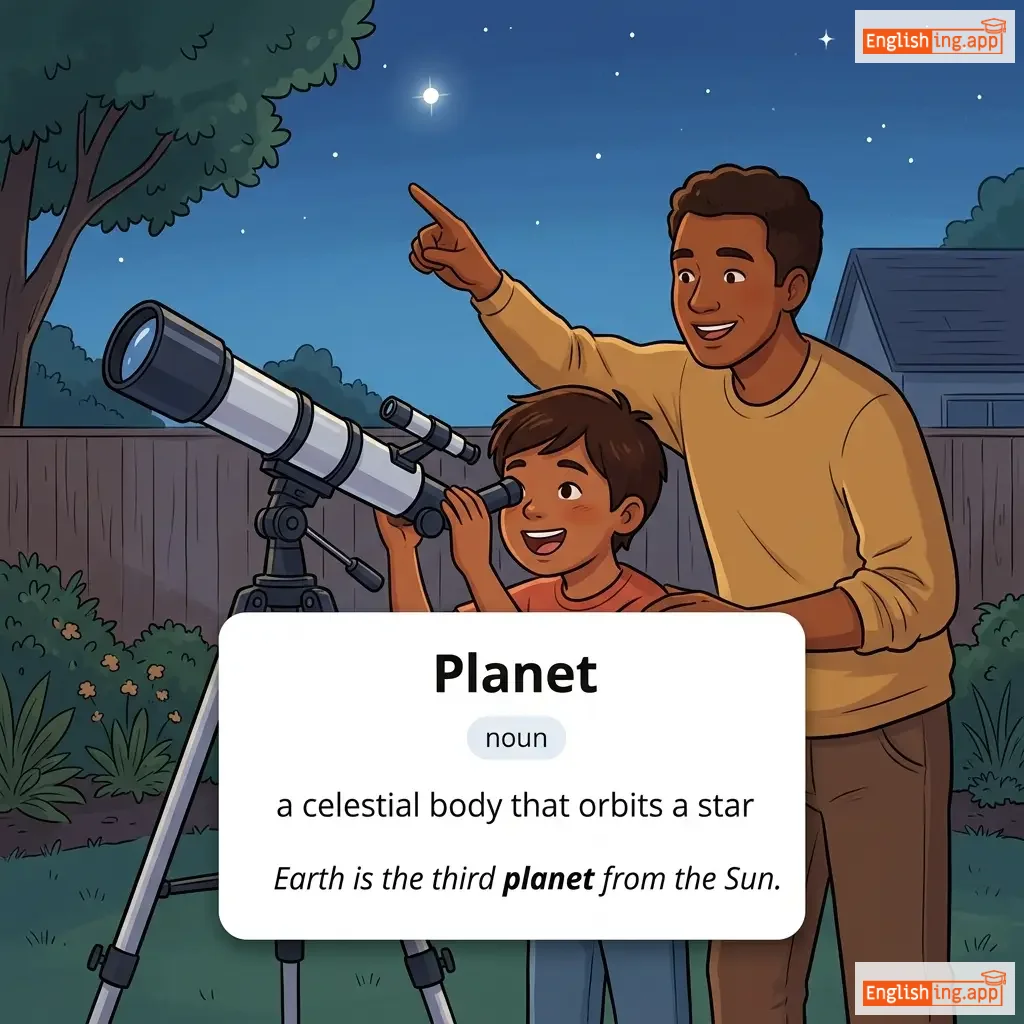
Planet definition card — visual illustration of the meaning
noun
/ˈplænɪt/
惑星 (wakusei)

a celestial body that orbits a star

"Earth is the third planet from the Sun."
"地球は太陽から3番目の惑星です。" (Chikyū wa taiyō kara sanbanme no wakusei desu.)
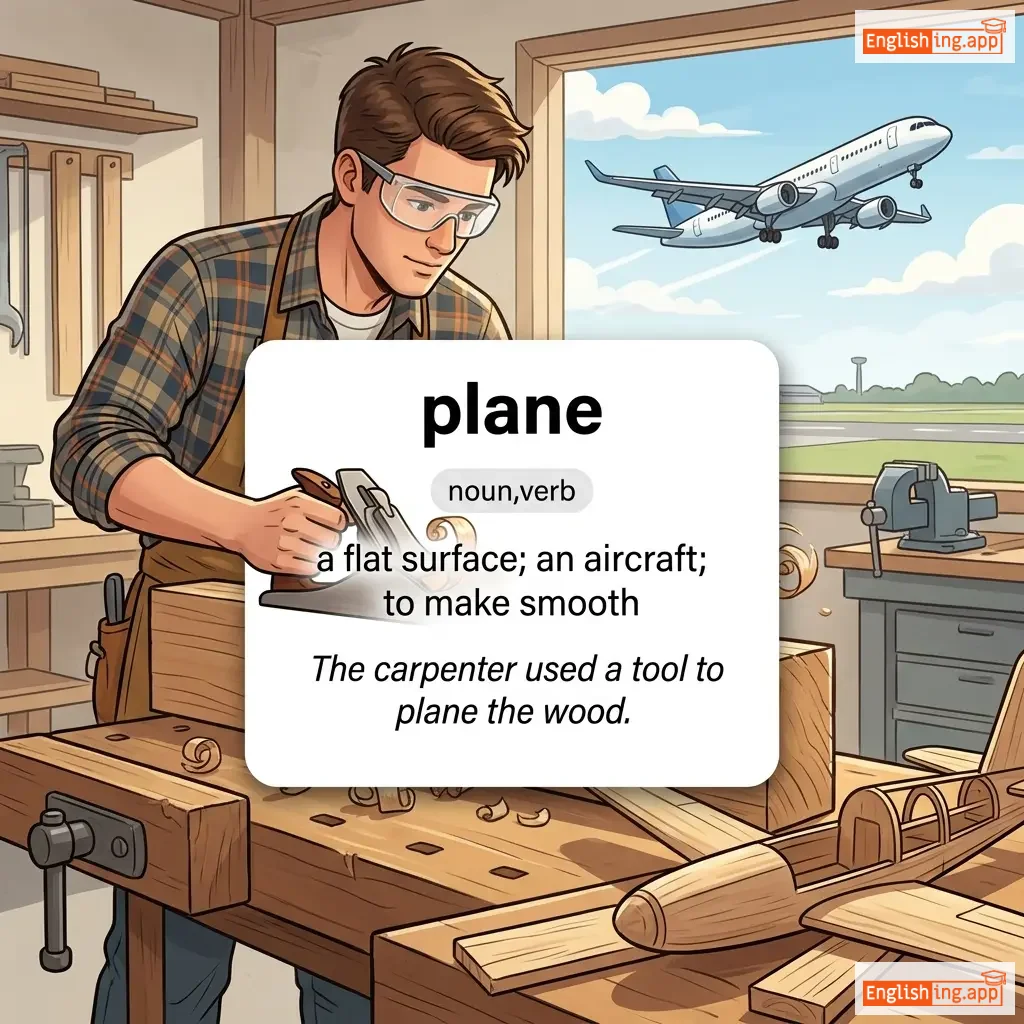
plane definition card — visual illustration of the meaning
noun,verb
/pleɪn/
平面; 飛行機; 平らにする (へいめん; ひこうき; たいらにする)

a flat surface; an aircraft; to make smooth

"The carpenter used a tool to plane the wood."

"大工は木を平らにするための道具を使いました。" (Daiku wa ki o tairani suru tame no dōgu o tsukaimashita.)
plan definition card — visual illustration of the meaning
noun
/plæn/
計画 (keikaku)

a detailed proposal for doing or achieving something

"We need a clear plan to move forward."

"前進するために明確な計画が必要です。" (Zenshin suru tame ni meikaku na keikaku ga hitsuyou desu.)
noun,verb
/pleɪt/
編み込み (amikomi)

a braid of hair or straw; to braid

"She decided to plait her hair before the party."

"彼女はパーティーの前に髪を編むことに決めました。" (Kanojo wa pātii no mae ni kami o amu koto ni kimemashita.)
adjective
/ˈpleɪntɪv/
悲しげな, 哀れな (kanashigena, aware na)

expressing sadness or sorrow

"He raised a plaintive cry for help."

"彼は助けを求めて哀願するような叫びを上げた。" (Kare wa tasuke o motomete aigan suru yō na sakebi o ageta.)
noun
/ˈpleɪntɪf/
原告 (genkoku)

a person who brings a case against another in a court of law

"The plaintiff filed a lawsuit against the company."

"原告は会社に対して訴訟を起こしました。" (Genkoku wa kaisha ni taishite soshō o okoshimashita.)
adjective
/pleɪn/
簡単な (kantanna)

simple or clear, without decoration or complexity

"She wore a plain white dress to the ceremony."

"彼女は式典にシンプルな白いドレスを着ていました。" (Kanojo wa shikiten ni shinpuruna shiroi doresu o kite imashita.)
plagued definition card — visual illustration of the meaning
verb
pleɪɡd
悩まされる (nayamasareru)

Troubled or afflicted persistently by problems or difficulties.

"People are plagued by anxiety and depression."

"人々は不安と抑うつに悩まされています。" (Hitobito wa fuan to yokutsuni nayamasareteimasu.)
verb
/ˈpleɪdʒəraɪz/
盗作する (tōsaku suru)

to take someone else's work or ideas and present them as your own

"He was warned not to plagiarize his friend's essay."

"彼は友達のエッセイを盗用しないよう警告されました。" (Kare wa tomodachi no essei o tōyō shinai yō keikoku saremashita.)
noun
/ˈpleɪdʒərɪzəm/
盗作 (dōzoku)

the practice of taking someone else's work or ideas and passing them off as one's own

"The student was expelled for committing plagiarism in his essay."

"学生はエッセイで盗作を行ったため、退学させられました。" (Gakusei wa essei de dousaku o okonatta tame, taigaku saseraremashita.)
adjective
/ˈplæsɪd/
穏やかな、静かな (odayakana, shizukana)

calm and peaceful, not easily disturbed

"She had a placid expression despite the chaos around her."

"彼女は周囲の混乱にもかかわらず、穏やかな表情をしていた。" (Kanojo wa shūi no konran ni mo kakawarazu, odayakana hyōjō o shite ita.)
noun
/ˈpleɪsmənt/
配置または割り当て (haichi matawa wariante)

the act of putting something or someone in a particular position or job

"The company arranged job placement for the graduates."

"会社は卒業生のために就職先を手配しました。" (Kaisha wa sotsugyousei no tame ni shuushoku saki wo tehai shimashita.)
noun
/pləˈsiːboʊ/
プラセボ (purasebo)

a substance with no therapeutic effect, used as a control in testing new drugs

"The patient was given a placebo to compare the effect of the real drug."
"患者は実際の薬の効果と比較するためにプラセボを与えられました。" (Kanja wa jissai no kusuri no kouka to hikaku suru tame ni purasebo wo ataeraremashita.)
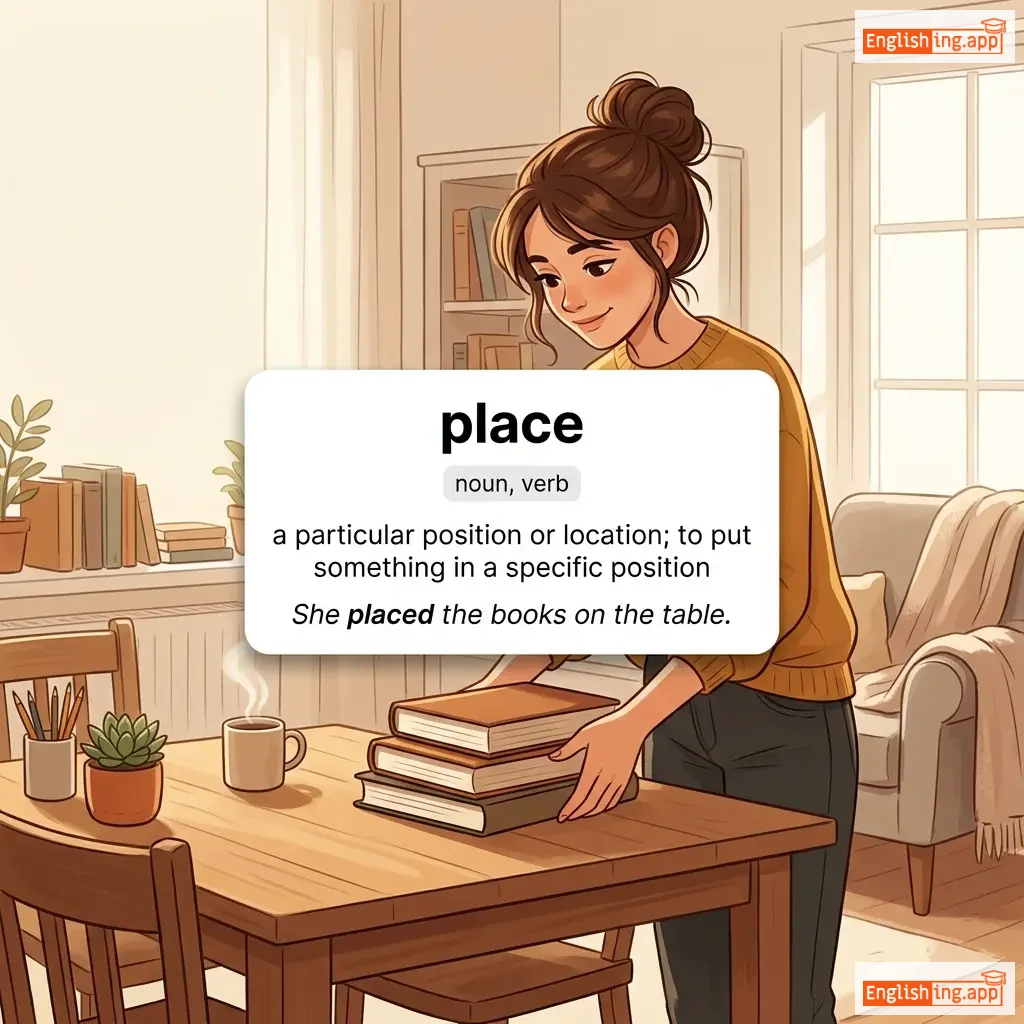
place definition card — visual illustration of the meaning
noun, verb
/pleɪs/
場所 (basho)

a particular position or location; to put something in a specific position

"She placed the books on the table."
"彼女は本をテーブルに置いた。" (Kanojo wa hon o tēburu ni oita.)
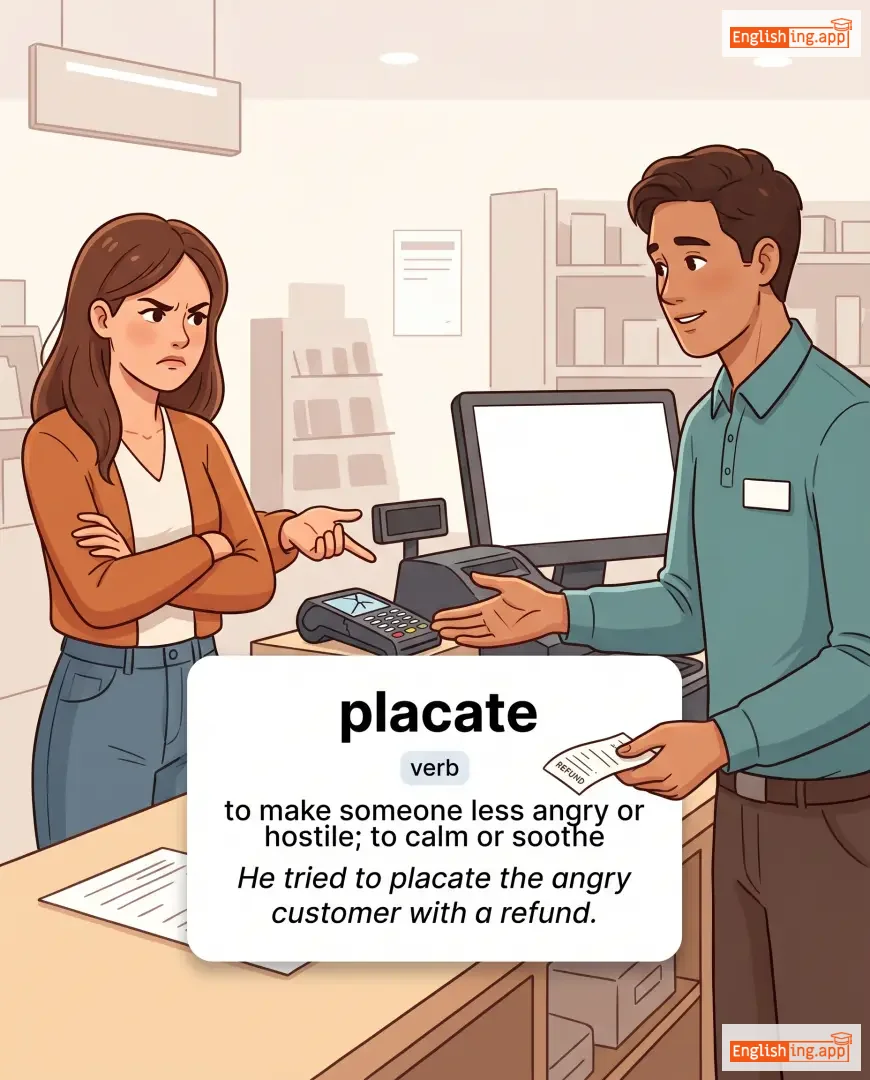
placate definition card — visual illustration of the meaning
verb
/pləˈkeɪt/
なだめる (nadameru)

to make someone less angry or hostile; to calm or soothe

"He tried to placate the angry customer with a refund."

"彼は返金で怒っている顧客をなだめようとした。" (Kare wa henkin de okotte iru kokyaku o nadameyō to shita.)
noun
/ˈpiːtsə/
ピザ (piza)

a flat round bread baked with toppings such as cheese, tomato, and other ingredients

"We ordered a large pepperoni pizza for dinner."

"私たちは夕食に大きなペパロニピザを注文しました。" (Watashitachi wa yuushoku ni ookina peparoni piza o chuumon shimashita.)
noun
/ˈpɪk.səl/
デジタル画像またはディスプレイの最小単位 (dejitaru gazō matawa disupurei no saishō tan'i)

the smallest unit of a digital image or display

"The image is blurry because some pixels are missing."

"画像がぼやけているのは、いくつかのピクセルが欠けているからです。" (Gazō ga boyakete iru no wa, ikutsuka no pikuseru ga kakete iru kara desu.)
pivotal definition card — visual illustration of the meaning
adjective
/ˈpɪv.ə.tl/
極めて重要な (kiwamete jūyō na)

of crucial importance in relation to the development or success of something else

"Her role was pivotal in the success of the project."

"彼女の役割はプロジェクトの成功において極めて重要でした。" (Kanojo no yakuwari wa purojekuto no seikō ni oite kiwamete jūyō deshita.)
pivot definition card — visual illustration of the meaning
noun/verb
ˈpɪv.ət
戦略的変更、軸、プロセスの変更 (senryakuteki henkou, jiku, purosesu no henkou)

A significant change in business strategy or direction.

"The company decided to pivot its business strategy."

"会社はビジネス戦略を変更する決定をしました。" (Kaisha wa bijinesu senryaku o henkou suru kettei o shimashita.)
noun
/ˈpɪti/
憐れみ (awaremi)

the feeling of sorrow and compassion caused by the suffering and misfortune of others

"It’s a pity that she couldn’t come to the party."

"彼女がパーティーに来られなかったのは残念です。" (Kanojo ga paatii ni korarenakatta no wa zannen desu.)
noun
/ˈpɪt.əns/
わずかな額 (wazuka na gaku)

a very small or inadequate amount of money

"She worked long hours for a mere pittance."

"彼女はわずかな額のために長時間働いた。" (Kanojo wa wazuka na gaku no tame ni chōjikan hataraita.)
adjective
/ˈpɪt.i.ləs/
無慈悲 (mujihi)

showing no pity or compassion; cruel

"The pitiless ruler ignored the suffering of his people."

"無慈悲な支配者は自分の民の苦しみを無視した。" (Mujihi na shihaisha wa jibun no tami no kurushimi o mushishita.)
adjective
/ˈpɪt.i.fəl/
悲惨な, 哀れな, とても小さい (hisan'na, aware'na, totemo chiisai)

deserving or arousing pity; very small or inadequate

"The team's performance was pitiful compared to last year."

"チームのパフォーマンスは昨年に比べて悲惨でした。" (Chīmu no pafōmansu wa sakunen ni kurabete hisan deshita.)
adjective
/ˈpɪt.i.ə.bəl/
哀れな (aware na)

deserving sympathy or compassion

"The stray dog looked pitiable in the rain."

"その迷子の犬は雨の中で哀れに見えた。" (Sono maigo no inu wa ame no naka de aware ni mieta.)
adjective
/ˈpɪθ.i/
簡潔で意味深い (kanketsu de imi fukai)

concise and meaningful; full of substance

"She gave a pithy comment that summarized the issue perfectly."

"彼女は問題を完璧に要約した簡潔なコメントをしました。" (Kanojo wa mondai o kanpeki ni youyaku shita kanketsu na komento o shimashita.)
noun
/pɪθ/
本質、要点 (honshitsu, youten)

the essential or central part of something

"The pith of his argument was that honesty matters most."

"彼の議論の本質は、誠実さが最も重要だということでした。" (Kare no giron no honshitsu wa, seijitsusa ga mottomo juuyou da to iu koto deshita.)
noun
/ˈpɪt.fɔːl/
落とし穴, 障害 (otoshiana, shougai)

a hidden or unexpected danger or difficulty

"Investors must be aware of the pitfalls of the market."

"投資家は市場の落とし穴に注意する必要があります。" (Tōshika wa shijō no otoshiana ni chūi suru hitsuyō ga arimasu.)
adjective
/ˈpɪtiəs/
哀れな、同情を誘う (aware na, dōjō o sasou)

deserving or arousing pity; sad and pathetic

"The stray dog looked up with a piteous expression."
"迷子の犬は哀れな表情で上を見上げました。" (Maigo no inu wa aware na hyōjō de ue o miagemashita.)
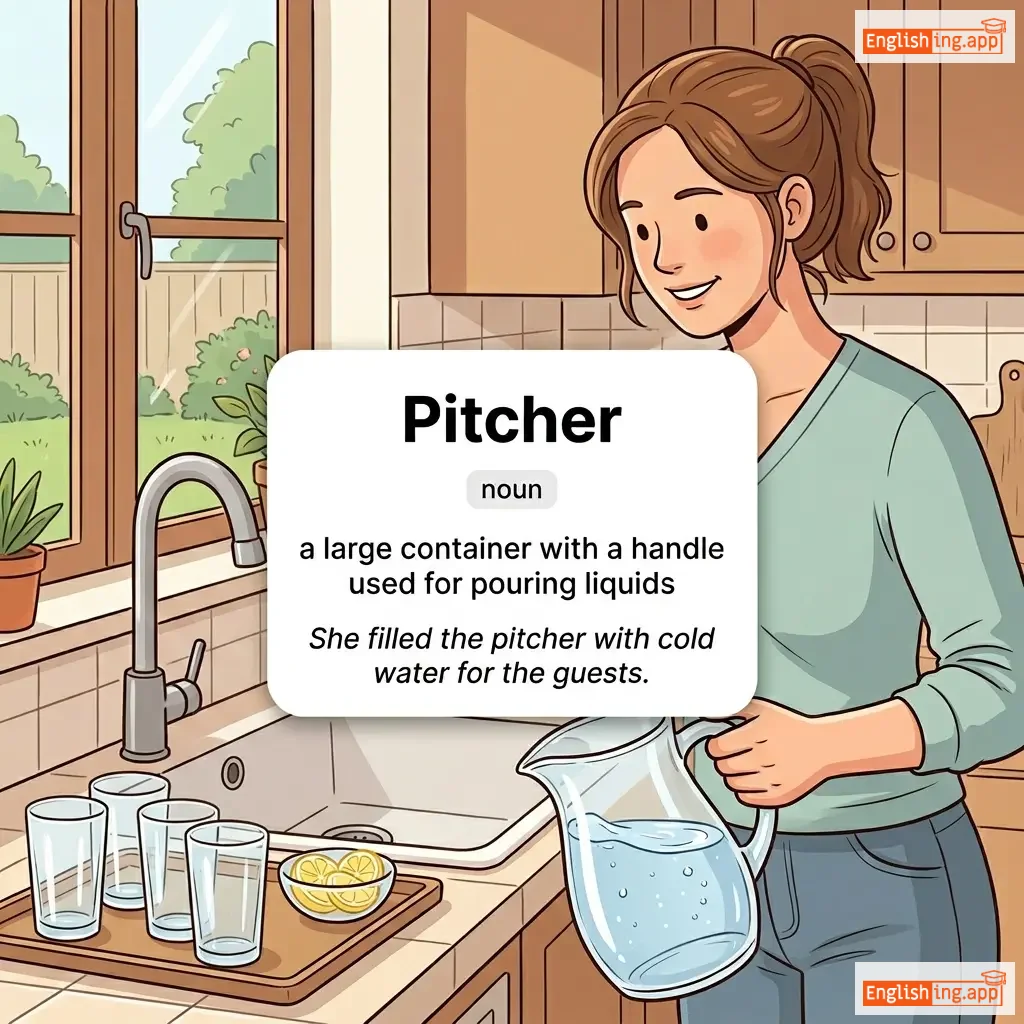
Pitcher definition card — visual illustration of the meaning
noun
/ˈpɪtʃər/
ジャグ (jagu)

a large container with a handle used for pouring liquids

"She filled the pitcher with cold water for the guests."

"彼女はゲストのために冷たい水でジャグを満たしました。" (Kanojo wa gesuto no tame ni tsumetai mizu de jagu o mitashimashita.)
noun
/pɪtʃ/
音程、投げ (onchou, nage)

the quality of a sound; the level or degree of intensity; a throw or toss

"The singer's pitch was perfect during the performance."
"歌手の音程はパフォーマンス中完璧でした。" (Kashu no onchou wa pafōmansu-chū kanpeki deshita.)
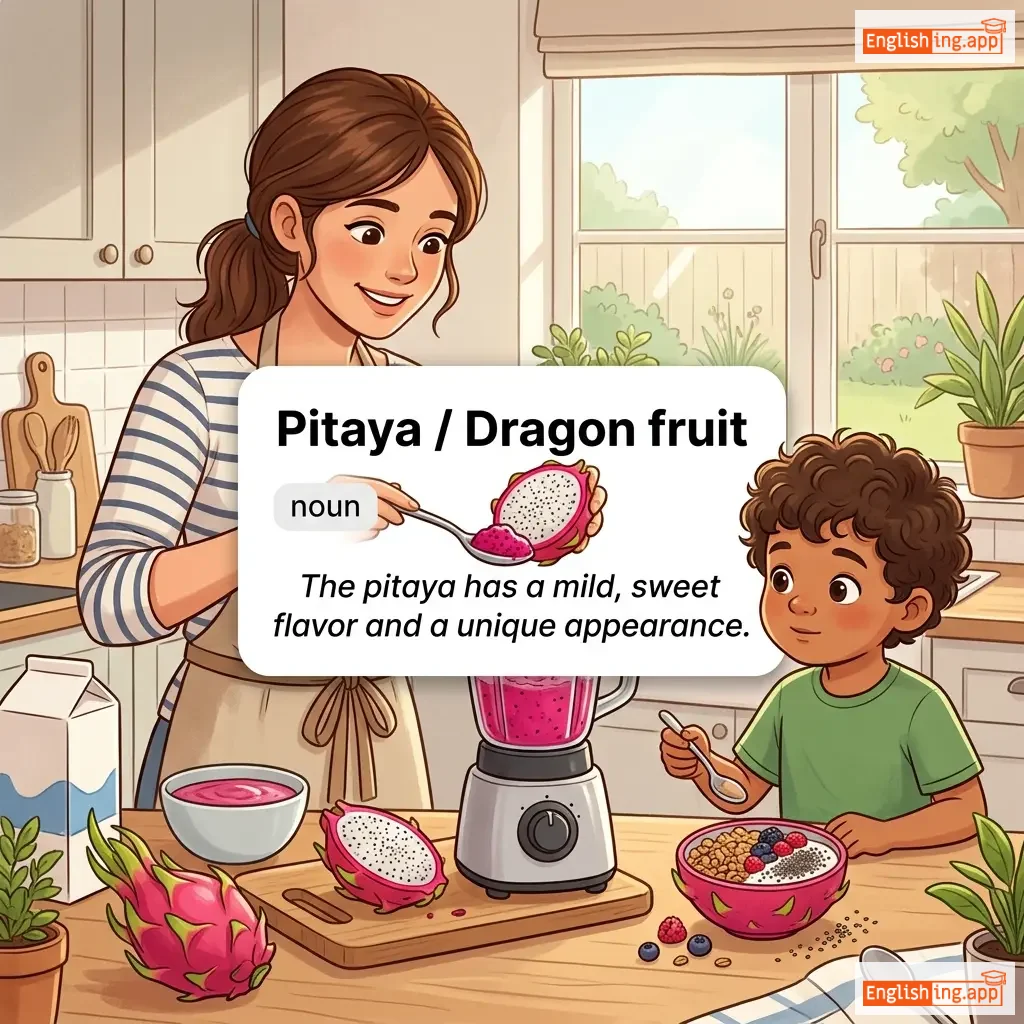
Pitaya / Dragon fruit definition card — visual illustration of the meaning
noun
/pɪˈtaɪə/
ドラゴンフルーツ (doragon furuutsu)

a tropical fruit with bright pink or red skin and white flesh speckled with black seeds

"The pitaya has a mild, sweet flavor and a unique appearance."

"ピタヤは、まろやかで甘い味とユニークな外見を持っています。" (pitaya wa, maroyaka de amai aji to yuniiku na geken o motteimasu.)
noun
/pɪn/
ピン (pin)

a small thin piece of metal used to fasten or hold things together

"She used a pin to attach the note to the board."

"彼女はボードにメモを留めるためにピンを使った。" (Kanojo wa boodo ni memo o tomeru tame ni pin o tsukatta.)
noun
/ˈpɪnjən/
小さな歯車や鳥の翼の外側部分; 制限する、または動けなくする (chiisana haguruma ya tori no tsubasa no sotogawa bubun; seigen suru, matawa ugokenaku suru)

a small gear or the outer part of a bird's wing; to restrain or immobilize

"The bird's pinion was injured, preventing it from flying."

"鳥の翼が怪我をして飛べなかった。" (Tori no tsubasa ga kega o shite tobe nakatta.)
noun
/ˈpaɪnˌæpəl/
パイナップル (painappuru)

a tropical fruit with a rough spiky skin, sweet yellow flesh, and a leafy crown

"She added fresh pineapple to the fruit salad."
"彼女はフルーツサラダに新鮮なパイナップルを加えた。" (kanojo wa furuutsu sarada ni shinsen na painappuru o kuwaeta)
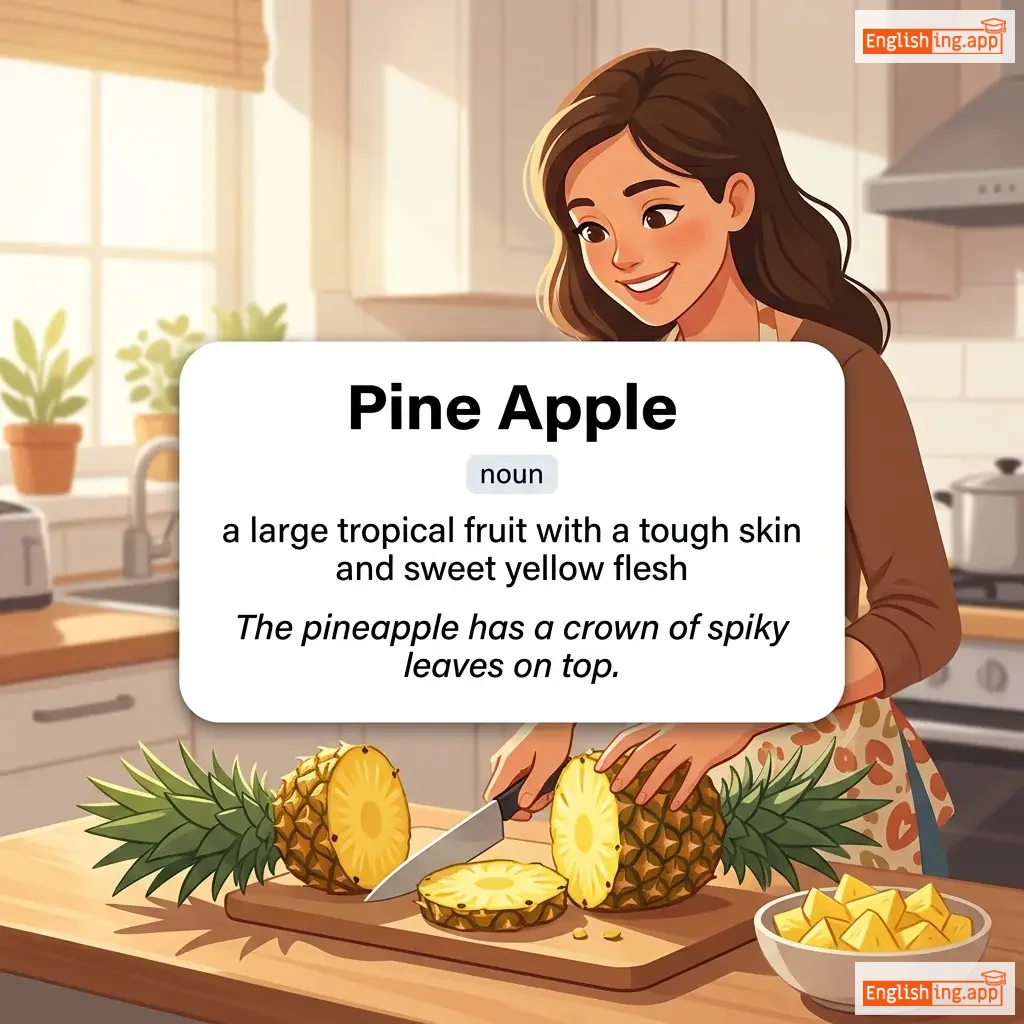
Pine Apple definition card — visual illustration of the meaning
noun
/ˈpaɪn.æp.əl/
パイナップル (painappuru)

a large tropical fruit with a tough skin and sweet yellow flesh

"The pineapple has a crown of spiky leaves on top."

"パイナップルの上には尖った葉の冠があります。" (Painappuru no ue ni wa totta ha no kanmuri ga arimasu)
verb
/paɪn/
切望する (setsubou suru)

to long intensely for something or someone; to suffer from longing

"He pined for his hometown after moving abroad."

"海外に引っ越した後、彼は故郷を切望していた。" (Kaigai ni hikkoshita ato, kare wa kokyou wo setsubou shite ita.)
noun
/ˈpɪntʃərz/
ピンセット (pinsetto)

a tool used for gripping or squeezing objects

"Use the pinchers to remove the hot coal safely."

"熱い炭を安全に取り除くためにピンチャーズを使ってください。" (Atsui sumi o anzen ni tori nozoku tame ni pinchāzu o tsukatte kudasai.)
verb
/pɪntʃ/
つまむ (tsumamu)

to squeeze tightly between the fingers; to take a small amount

"She pinched a bit of salt into the soup."
"彼女はスープに少し塩を加えました。" (Kanojo wa suupu ni sukoshi shio o kuwaemashita.)
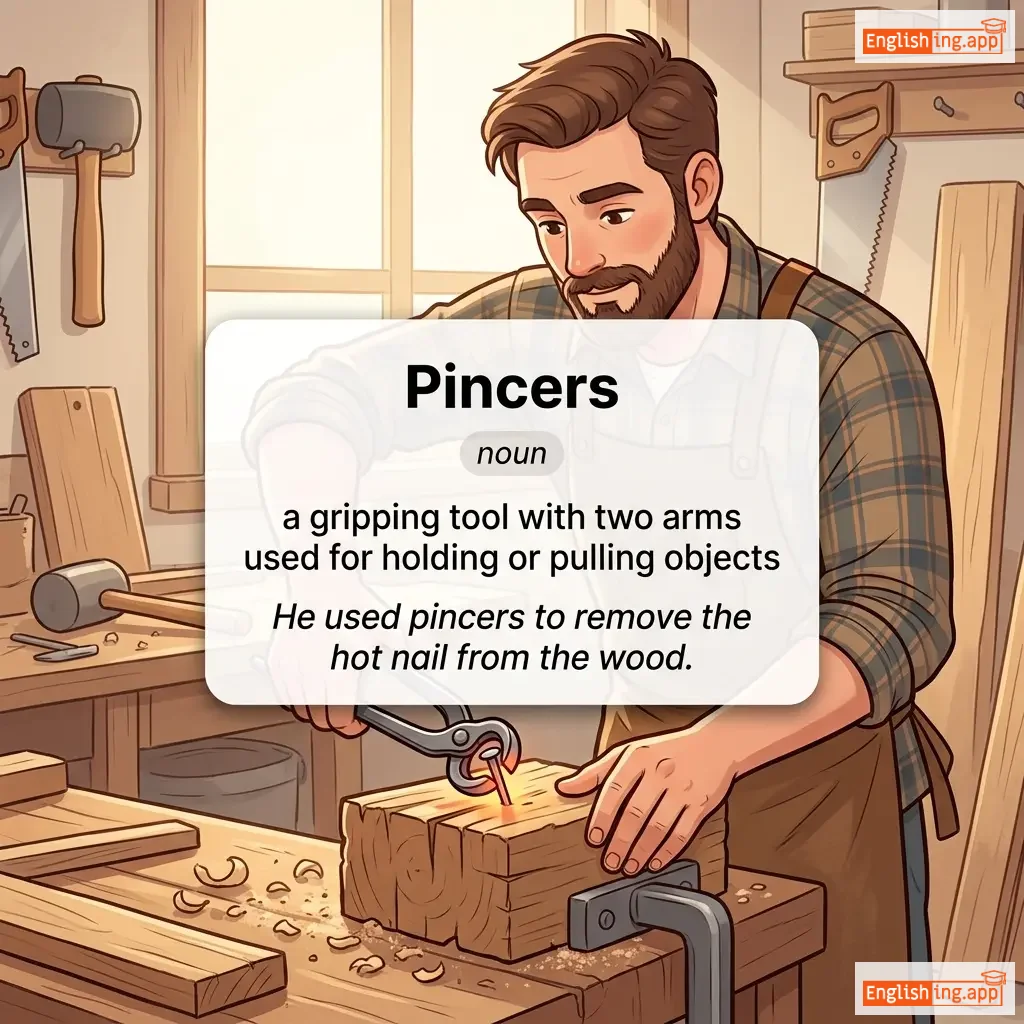
Pincers definition card — visual illustration of the meaning
noun
/ˈpɪnsərz/
ピンセット (pinsetto)

a gripping tool with two arms used for holding or pulling objects

"He used pincers to remove the hot nail from the wood."

"彼は木から熱い釘を取り外すためにピンサーを使いました。" (Kare wa ki kara atsui kugi o tori hazusu tame ni pinsetto o tsukaimashita.)
noun/verb
/ˈpɪləri/
公開処罰装置 (kōkai shobatsu sōchi)

a device for publicly punishing someone / to expose to public ridicule

"The corrupt official was placed in the pillory for the town to jeer at."

"腐敗した役人は町の人々に嘲笑されるためにピロリーに置かれました。" (Fuhai shita yakunin wa machi no hitobito ni chōshō sareru tame ni pirorī ni okaremashita.)
verb
/ˈpɪlɪdʒ/
略奪する (ryakudatsu suru)

to rob or plunder a place, especially during war

"The invading army pillaged the village and took all valuables."

"侵入した軍隊は村を略奪し、すべての貴重品を持ち去った。" (Shinnyū shita guntai wa mura o ryakudatsu shi, subete no kichōhin o mochisatta.)
noun
/ˈpɪlər/
(hashira)

a strong vertical support or mainstay of a structure or system

"The ancient temple was supported by massive stone pillars."
"古代の寺院は巨大な石の柱によって支えられていました。" (Kodai no jiin wa kyodaina ishi no hashira ni yotte sasaerarete imashita.)
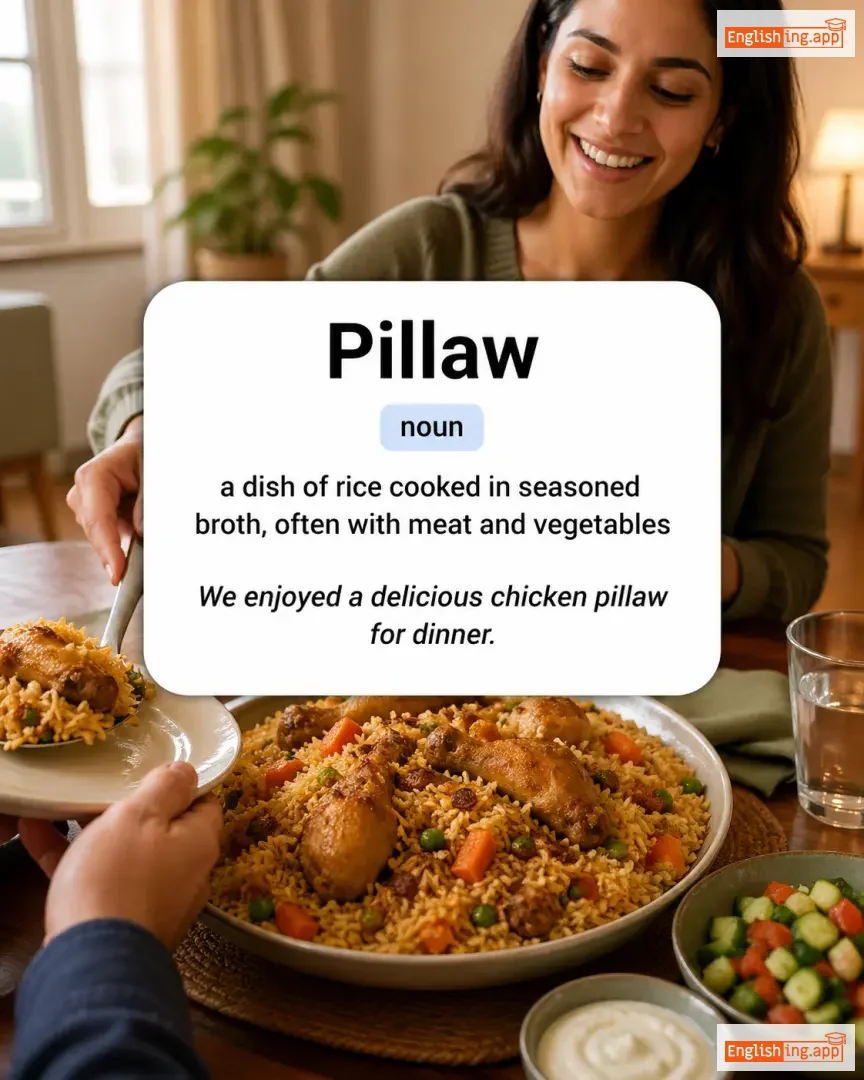
Pillaw definition card — visual illustration of the meaning
noun
/pɪˈlɑːf/
ピラフ (pirafu)

a dish of rice cooked in seasoned broth, often with meat and vegetables

"We enjoyed a delicious chicken pillaw for dinner."
"私たちは夕食に美味しいチキンピラフを楽しみました。" (watashitachi wa yūshoku ni oishī chikin pirafu o tanoshimimashita.)
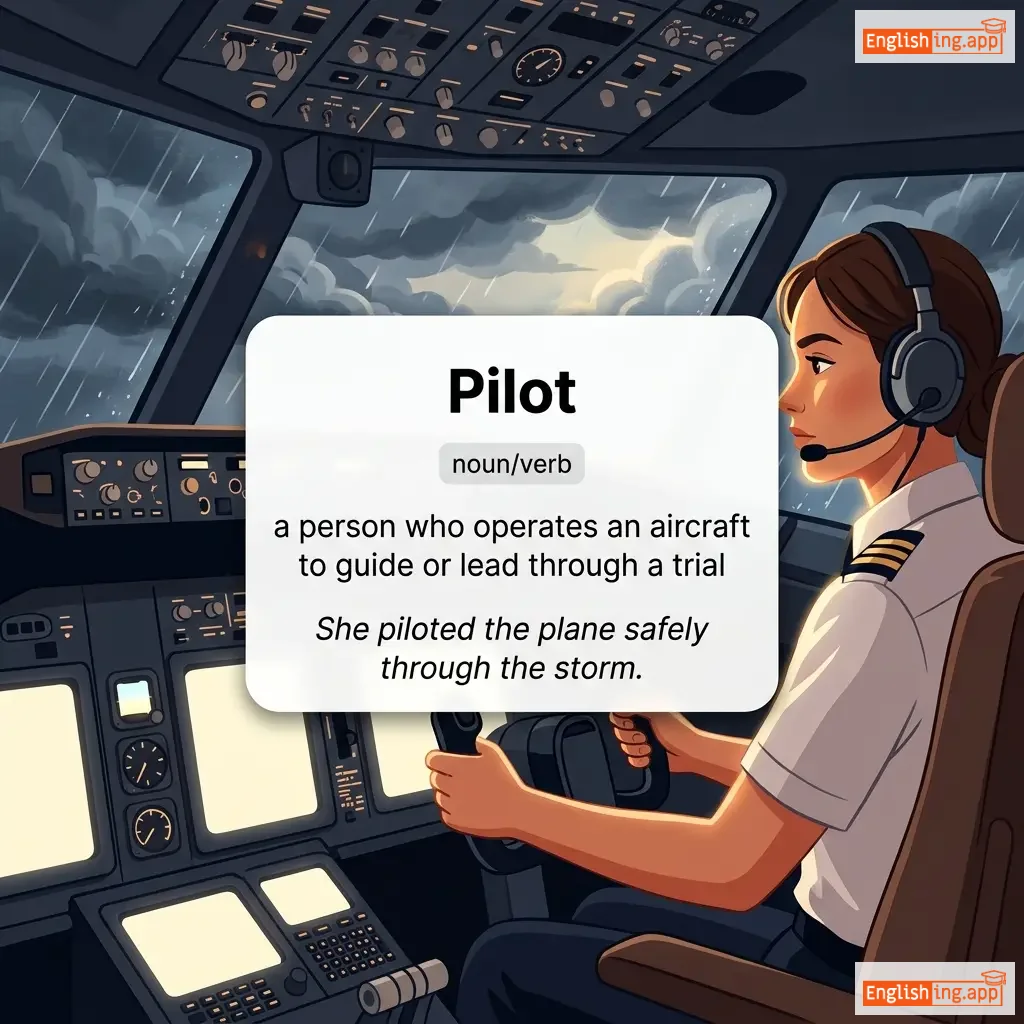
Pilot definition card — visual illustration of the meaning
noun/verb
/ˈpaɪlət/
パイロット (pairotto)

a person who operates an aircraft / to guide or lead through a trial

"She piloted the plane safely through the storm."

"彼女は嵐の中、飛行機を安全に操縦した。" (Kanojo wa arashi no naka, hikouki o anzen ni souju shita.)
noun
/ˈpɪm.pəl/
ニキビ (nikibi)

a small, inflamed elevation of the skin; a spot on the skin, especially on the face

"She was embarrassed about the pimple on her forehead."

"彼女は額のニキビに気まずさを感じていた。" (Kanojo wa hitai no nikibi ni kimazusa o kanjite ita.)
adjective
/pɪŋk/
ピンク (pinku)

a color between red and white

"She wore a pink dress to the party."

"彼女はパーティーでピンクのドレスを着ていました。" (Kanojo wa pātī de pinku no doresu o kite imashita.)
Pillow definition card — visual illustration of the meaning
noun
/ˈpɪloʊ/
(makura)

a soft cushion filled with material used to support the head while sleeping or resting

"She placed her head on the soft pillow and fell asleep quickly."

"彼女は柔らかい枕に頭を乗せ、すぐに眠りにつきました。" (Kanojo wa yawarakai makura ni atama o nose, sugu ni nemuri ni tsukimashita.)