語彙集

英単語辞書 | 単語の意味、定義、例文

noun
/ˈpɛnʃən/
年金 (nenkin)

A regular payment made during a person's retirement from an investment fund or employer.

"After 30 years of service, he received a monthly pension."

"30年の勤務後、彼は毎月の年金を受け取りました。" (30-nen no kinmugo, kare wa maitsuki no nenkin o ukemashita.)
noun
/pɪˈnɒlədʒi/
刑務学 (keimugaku)

The study of prison management and criminal rehabilitation.

"He decided to specialize in penology to help improve the prison system."

"彼は刑務学を専門にすることに決め、刑務所制度の改善に役立つことを目指しました。" (Kare wa keimugaku o senmon ni suru koto ni kime, keimusho seido no kaizen ni yakudatsu koto o mezashimashita.)
noun
/ˈpɛni/
ペニー (penii)

a small coin of low value; a very small amount of money

"He found a penny on the sidewalk and smiled."

"彼は歩道でペニーを見つけて微笑んだ。" (kare wa hodou de penii o mitsukete hohoenda)
adjective
/ˈpen.ɪ.ləs/
無一文; 極貧; 完全に金がない (muichimon; kyokuhin; kanzen ni kane ga nai)

having no money; extremely poor; completely without funds

"After losing his job, he became penniless."

"仕事を失った後、彼は無一文になった。" (Shigoto o ushinatta ato, kare wa muichimon ni natta.)
adjective
/ˈpɛneɪt/
羽のような (hane no you na)

Having parts or structures arranged like a feather; feather-shaped.

"The fern has a pennate leaf structure."

"シダ植物の葉の構造は羽のような形状です。" (Shida shokubutsu no ha no kouzou wa hane no you na keijou desu.)
noun
/ˈpɛnənt/
ペナント旗 (penanto ki)

A tapering flag used for signaling or as an emblem of victory or achievement.

"The team raised the championship pennant proudly."

"チームは誇らしげにチャンピオンシップペナント旗を掲げました。" (Chīmu wa hokorashige ni chanpionshipu penanto ki o kakagemashita.)
adjective
/ˌpɛnɪˈtɛnʃəl/
悔い改めの (kuiaratame no)

Relating to or expressing penitence or penance.

"The priest delivered a penitential sermon on forgiveness."

"司祭は許しに関する悔い改めの説教をしました。" (Shisai wa yurushi ni kansuru kuiaratame no sekkyou o shimashita.)
adjective
/ˈpɛnɪtənt/
悔い改めた (kuiaratameta)

Feeling or showing sorrow and regret for having done wrong.

"She was penitent after shouting at her friend."

"彼女は友達に叫んだ後、悔い改めていた。" (Kanojo wa tomodachi ni sakenda ato, kuiaratamete ita.)
noun
/ˈpɛnɪtəns/
懺悔 (sankei)

The action or feeling of showing sorrow and regret for having done wrong.

"His eyes were full of penitence after realizing his mistake."

"自分の間違いに気づいた後、彼の目は懺悔に満ちていた。" (Jibun no machigai ni kidzuita ato, kare no me wa sankei ni michite ita.)
adjective
/pəˈnɪnsjələr/
半島のような (hantō no yōna)

Relating to or resembling a peninsula.

"The peninsular region is surrounded by water on three sides."
"その半島のような地域は、三方向が水で囲まれています。" (Sono hantō no yōna chiiki wa, san hōkō ga mizu de kakomareteimasu.)
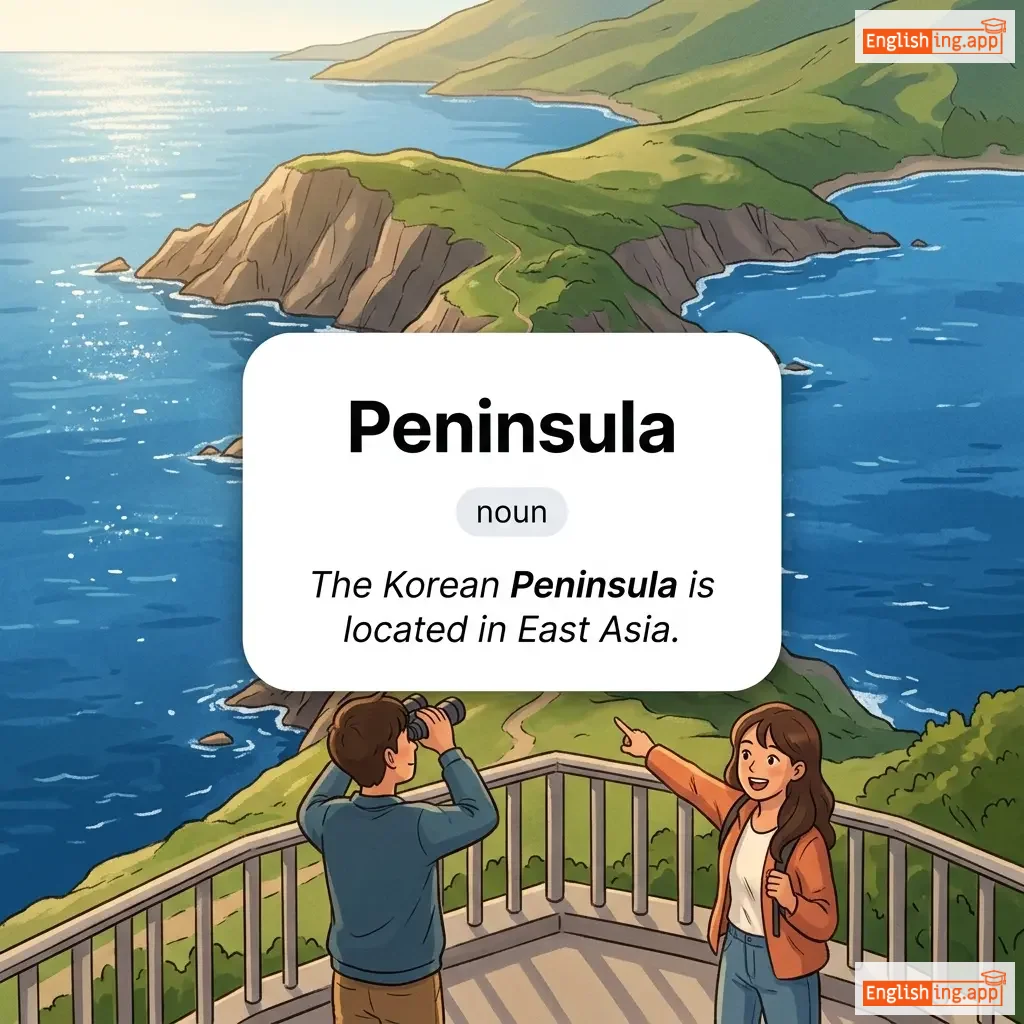
Peninsula definition card — visual illustration of the meaning
noun
/pəˈnɪn.sjə.lə/
半島 (hantō)

a piece of land that is almost completely surrounded by water but connected to the mainland

"The Korean Peninsula is located in East Asia."

"朝鮮半島は東アジアに位置しています。" (Chōsen hantō wa Higashi Ajia ni ichi shiteimasu.)
noun
/ˌpɛnɪˈtreɪʃən/
浸透 (shintou)

The act of piercing or entering into something.

"The company's market penetration grew rapidly."
"その企業の市場浸透は急速に成長した。" (Sono kigyō no shijō shintō wa kyūsoku ni seichō shita.)
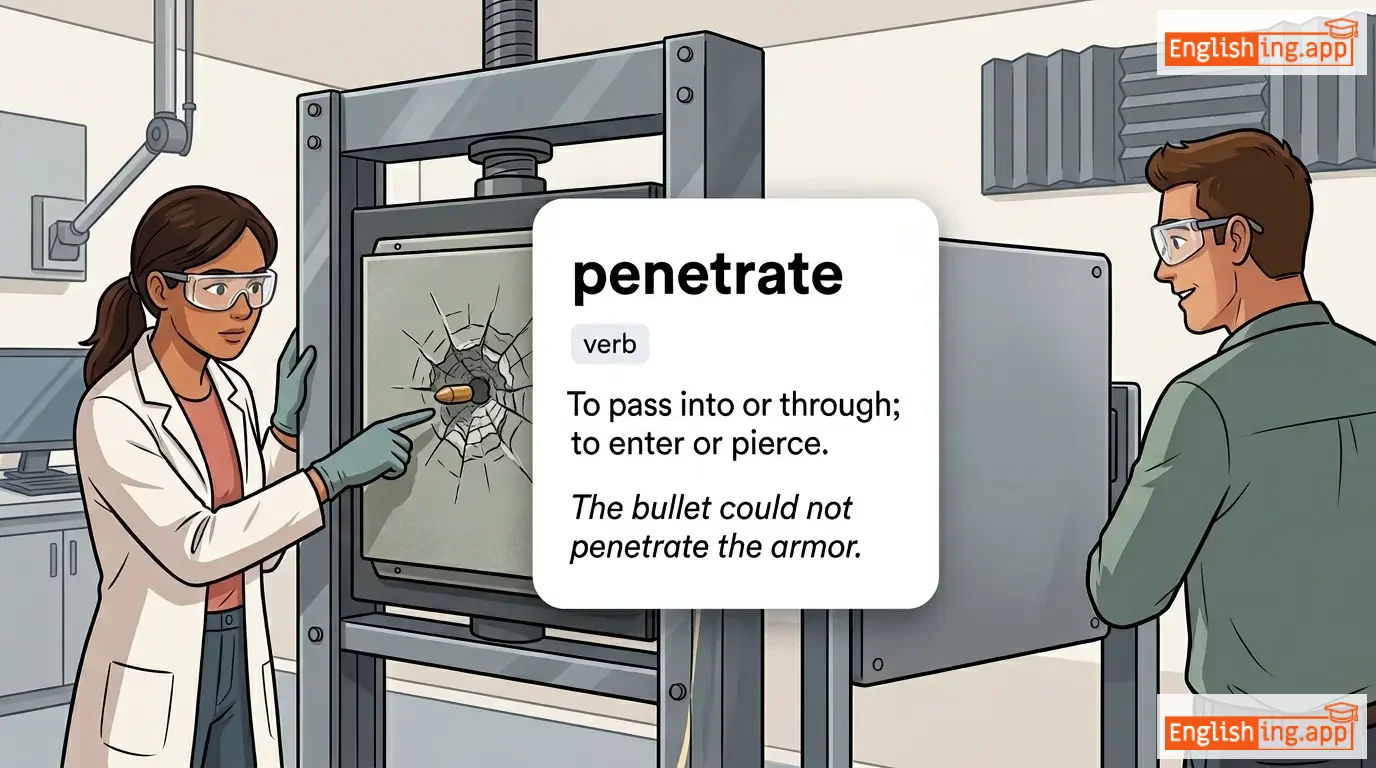
penetrate definition card — visual illustration of the meaning
verb
/ˈpɛnɪtreɪt/
貫通する (kantsu suru)

To pass into or through; to enter or pierce.

"The bullet could not penetrate the armor."

"弾丸は鎧を貫通できませんでした。" (Dangan wa yoroi o kantsu dekimasen deshita.)
adjective
/ˈpɛnɪtrəbl/
通過可能な (tsūka kanō na)

Capable of being passed through or entered.

"The thin wall was easily penetrable."

"薄い壁は簡単に通過可能でした。" (Usui kabe wa kantan ni tsūka kanō deshita.)
noun
/ˈpɛndjələm/
振り子 (furiko)

A weight suspended from a pivot so that it swings freely, often used to regulate clocks.

"The pendulum swung back and forth inside the clock."

"振り子は時計の中で前後に揺れていた。" (Furiko wa tokei no naka de zengo ni yurete ita.)
adjective
/ˈpɛndjʊləs/
幸せ (shiawase)

hanging down loosely; drooping

"The pendulous fruit weighed down the branch."

"賞を受け取った時、彼女は幸せを隠すことができませんでした。" (Shou o uketotta toki, kanojo wa shiawase o kakusu koto ga dekimasen deshita.)
adjective
/ˈpɛndɪŋ/
保留中 (horyu-chu)

awaiting decision or settlement

"The case is still pending in court."

"その事件はまだ裁判所で保留中です。" (sono jiken wa mada saiban-sho de horyu-chu desu.)
adjective
/ˈpɛndənt/
吊るす (tsurusu)

hanging down or suspended

"The pendent branches touched the ground."

"吊るす枝が地面に触れました。" (Tsurusu eda ga jimen ni furemashita.)
noun
/ˈpɛndənt/
ペンダント (pendanto)

a piece of jewelry that hangs from a chain worn around the neck

"She wore a silver pendant around her neck."
"彼女は首に銀のペンダントをつけていました。" (Kanojo wa kubi ni gin no pendanto o tsukete imashita.)
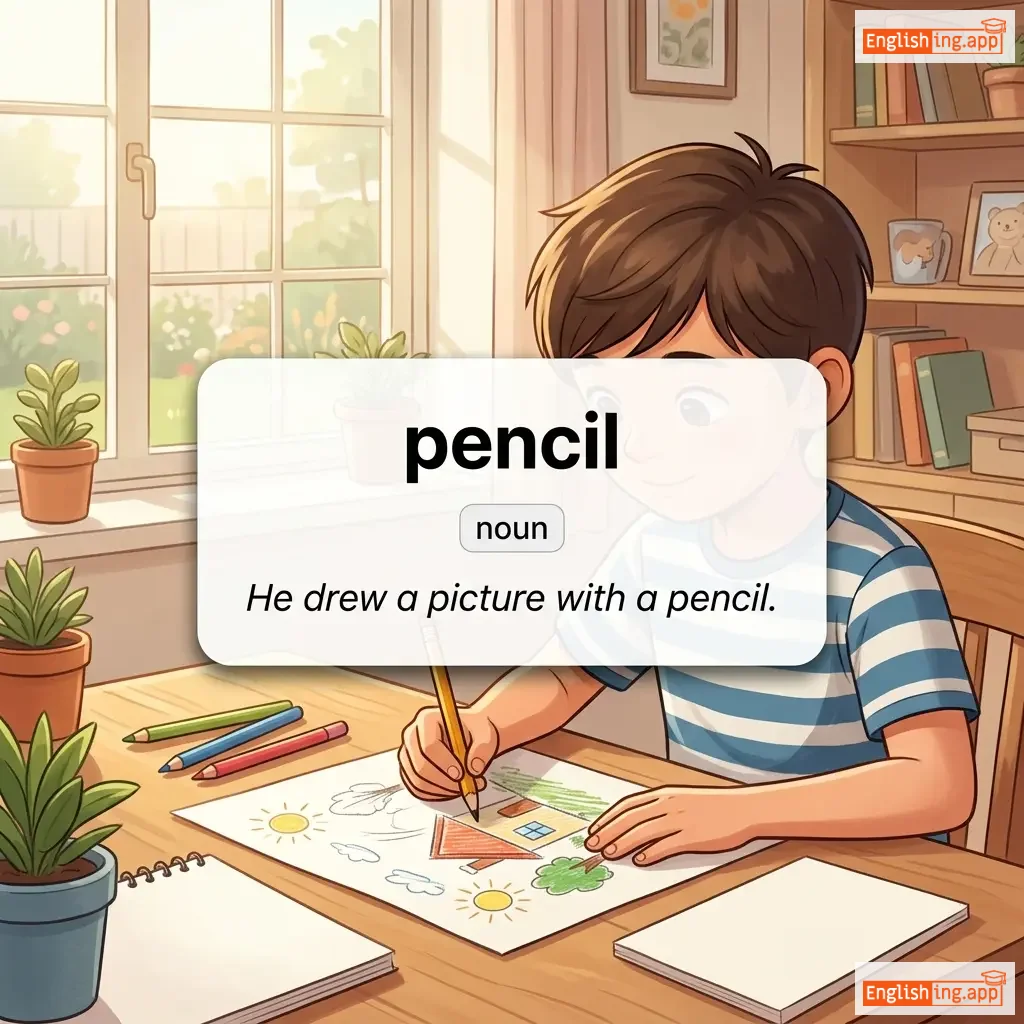
pencil definition card — visual illustration of the meaning
✏️

pencil

noun
/ˈpɛnsəl/

an instrument for writing or drawing, typically made of wood with a graphite core

"He drew a picture with a pencil."

penchant definition card — visual illustration of the meaning
noun
/ˈpɒ̃ʃɒ̃/
傾向 (keikou)

a strong or habitual liking for something or tendency to do something

"She has a penchant for collecting rare books."

"彼女は珍しい本を集める傾向がある。" (Kanojo wa mezurashii hon o atsumeru keikou ga aru.)
🧑‍🤝‍🧑

peer (ピア)

noun, verb
/pɪə(r)/
同等の人 (doutou no hito)

noun: a person of the same rank or status; verb: to look closely or with difficulty

"He tried to peer through the fog to see his peers on the other side."
"彼は霧を通して自分の仲間を見ようとしました。" (Kare wa kiri o tooshite jibun no nakama o miyou to shimashita.)
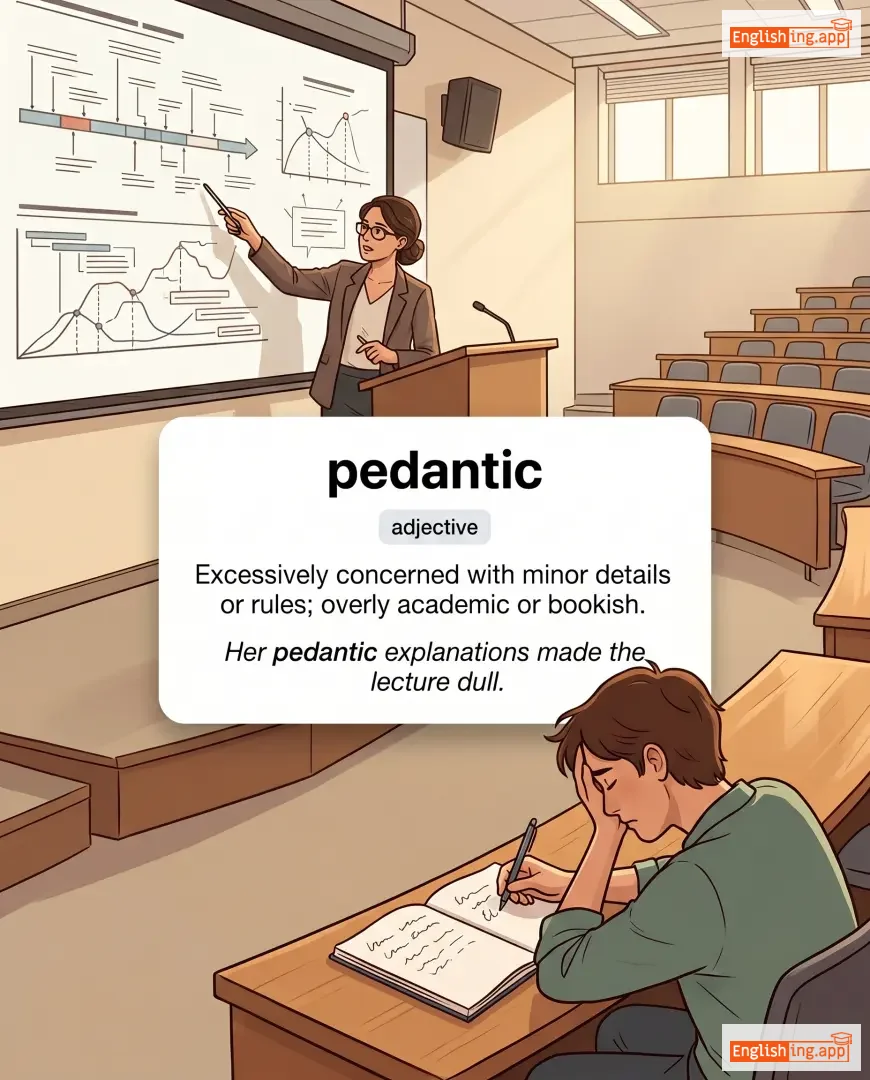
pedantic definition card — visual illustration of the meaning
adjective
/pəˈdæntɪk/
細かい詳細や規則に過度にこだわる (komakai shousai ya kisoku ni kadoni kodawaru)

Excessively concerned with minor details or rules; overly academic or bookish.

"Her pedantic explanations made the lecture dull."

"彼女のペダンティックな説明は講義を退屈にした。" (Kanojo no pedantikku na setsumei wa kougi wo taikutsu ni shita.)
noun
/ˈpɛd.ən.tri/
細かい詳細やルールへの過度なこだわり (komakai shousai ya ruuru e no kado na kodawari)

Excessive concern with minor details or rules.

"His pedantry made the meeting unnecessarily long."

"彼のペダントリーは会議を不必要に長くした。" (Kare no pedantori wa kaigi o fuhitsuyou ni nagaku shita.)
verb
/ˈpɛdəl/
売る (uru)

To sell goods, often by going from place to place; sometimes used negatively to mean promoting an idea or product in a pushy way.

"Street vendors peddle handmade jewelry to tourists."

"ストリートの販売員は観光客に手作りのジュエリーを売っている。" (Sutōrīto no hanbai-in wa kankōkyaku ni tedukuri no jūerī o utte iru.)
noun
/ˈpɛdlər/
行商 (gyōshō)

a person who sells goods, often traveling from place to place

"The peddler walked through the village selling fresh fruits."

"行商人は村を歩きながら、新鮮な果物を売っていました。" (Gyōshōnin wa mura o aruki nagara, shinsen na kudamono o utte imashita.)
noun
/ˈpɛdəstəl/
台座 / pedestal (daiza / pedestal)

the base or support on which a statue or object stands

"The statue was placed on a marble pedestal."

"彫像は大理石の台座に置かれました。" (Chōzō wa dairiseki no daiza ni okaremashita.)
noun, adjective
/pəˈdɛstriən/
歩行者 (hokousha)

a person walking on the street; also means dull or ordinary

"The pedestrian crossed the road at the crosswalk."
"歩行者は横断歩道を渡りました。" (Hokousha wa oudan hodou o watarimashita.)
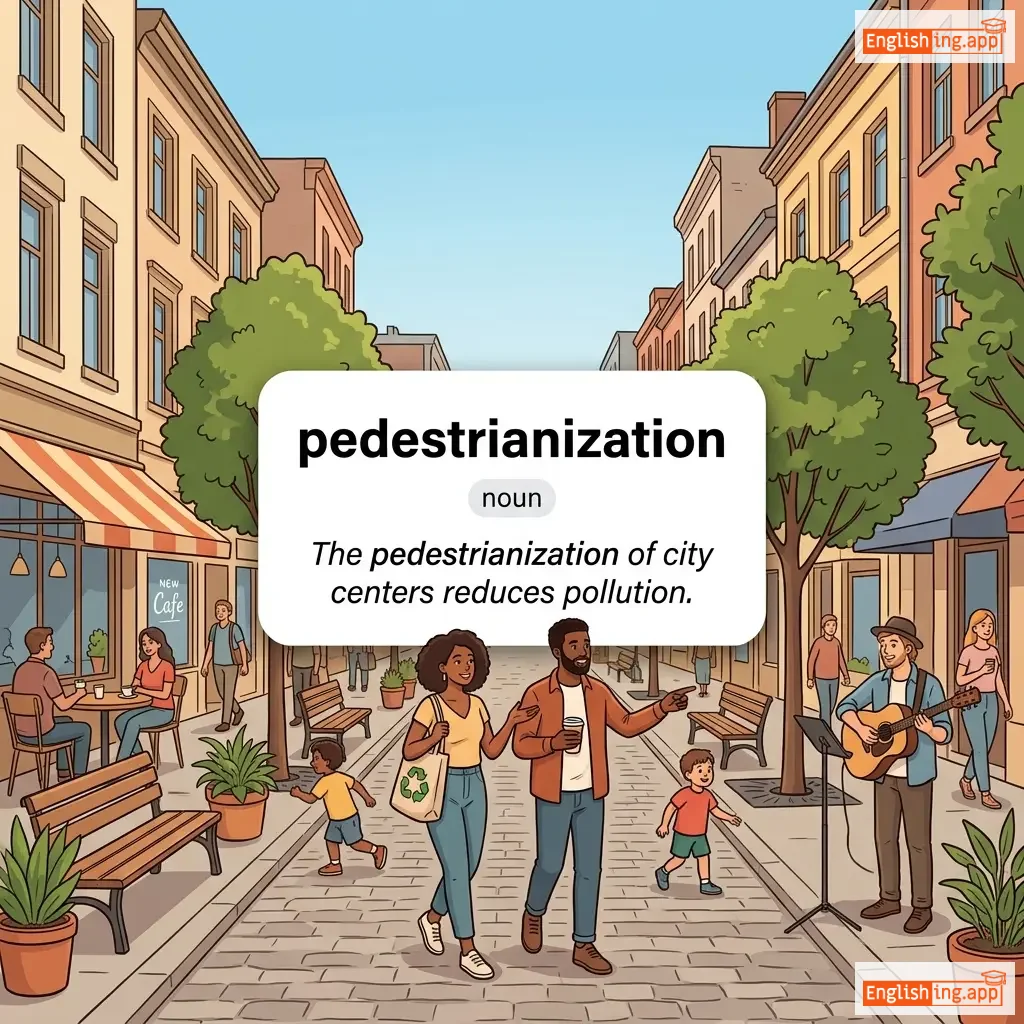
pedestrianization definition card — visual illustration of the meaning
noun
/pɪˌdɛs.tri.ə.naɪˈzeɪ.ʃən/
歩行者専用化 (hokousha senyouka)

Making areas pedestrian-friendly, closing any area to vehicle traffic and making it open only for pedestrians.

"The pedestrianization of city centers reduces pollution."

"市中心部の歩行者専用化は、汚染を減らす。" (Shi chuushinbu no hokousha senyouka wa, osen o herasu.)
noun
/ˌpiːdiəˈtrɪʃən/
小児科医 (shōnika-i)

a doctor who specializes in the medical care of children

"The pediatrician examined the child carefully."

"小児科医は子供を慎重に診察しました。" (Shōnika-i wa kodomo o shinchō ni shinsatsu shimashita.)
noun
/ˌpiːdiˈætrɪks/
小児科 (shōnika)

the branch of medicine dealing with the health and medical care of children

"She decided to specialize in pediatrics after medical school."

"彼女は医科大学を卒業後、小児科を専門にすることに決めました。" (Kanojo wa ika daigaku o sotsugyōgo, shōnika o senmon ni suru koto ni kimemashita.)
noun
/ˈpɛdɪɡriː/
家系 (kakei)

the recorded ancestry or lineage of a person, family, or animal; the history or origin of something

"The dog has a pedigree that traces back several generations."

"その犬は何世代にもわたる家系を持っています。" (Sono inu wa nan-sedai ni mo wataru kakei wo motteimasu.)
noun
/ˈpɛdɪmənt/
三角形のペディメント (sankakkei no pedimento)

a triangular gable found above the horizontal structure of a building, often in classical architecture

"The ancient temple had a pediment decorated with sculptures."

"古代の寺院には彫刻で飾られたペディメントがありました。" (Kodai no jiin ni wa choukoku de kazatta pedimento ga arimashita.)
pedology definition card — visual illustration of the meaning
noun
/pɪˈdɒl.ə.dʒi/
土壌学 (dojōgaku)

The study of soils in their natural environment.

"Pedology helps scientists understand soil fertility."

"ペドロジーは科学者が土壌の肥沃さを理解するのに役立ちます。" (Pedorojī wa kagakusha ga dojō no hiyokusa o rikai suru no ni yakudachimasu.)
verb
/piːl/
皮をむく (kawa o muku)

to remove the outer covering or skin from a fruit or vegetable

"She peeled the mango before eating it."
"彼女は食べる前にマンゴーの皮をむいた。" (Kanojo wa taberu mae ni mangō no kawa o muita.)
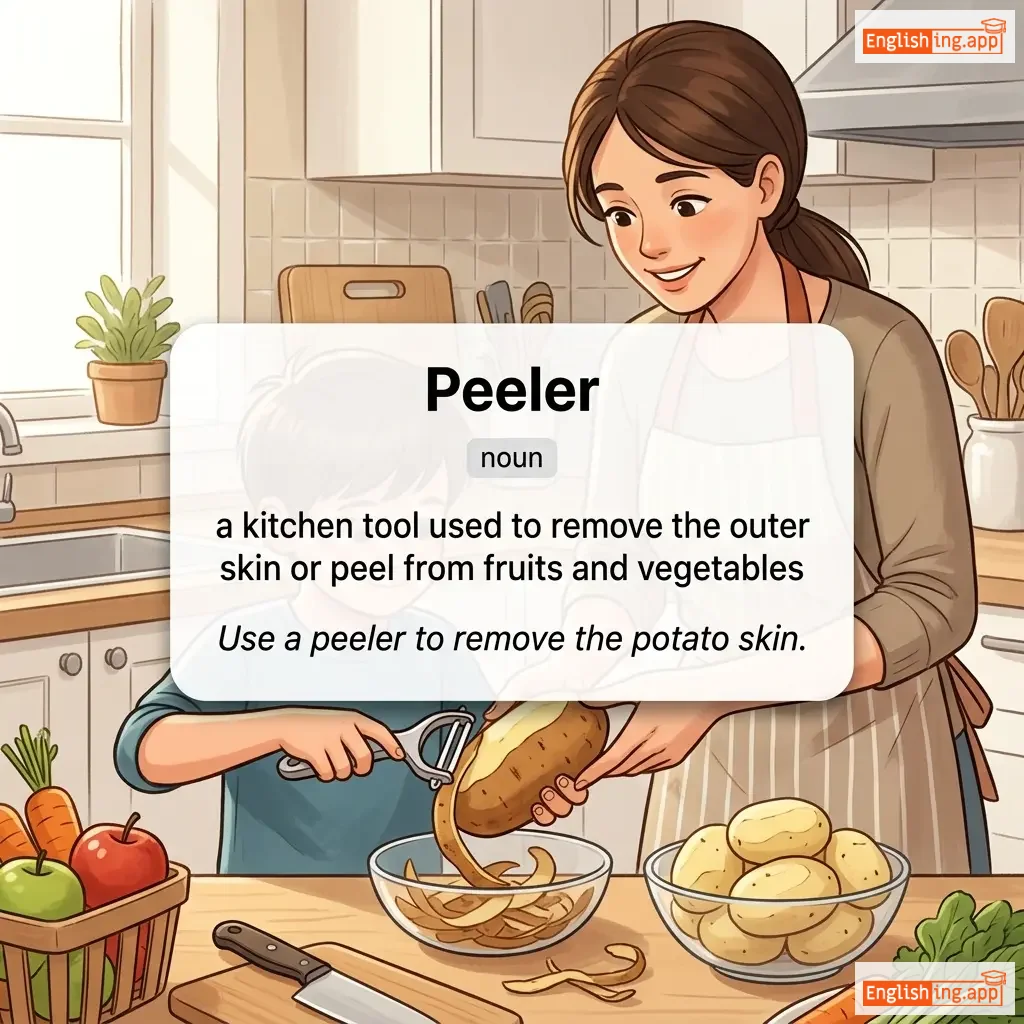
Peeler definition card — visual illustration of the meaning
noun
/ˈpiː.lər/
皮むき器 (kawamuki-ki)

a kitchen tool used to remove the outer skin or peel from fruits and vegetables

"Use a peeler to remove the potato skin."
"ポテトの皮をむくために皮むき器を使用してください。" (Poteto no kawa o muku tame ni kawamuki-ki o shiyou shite kudasai.)
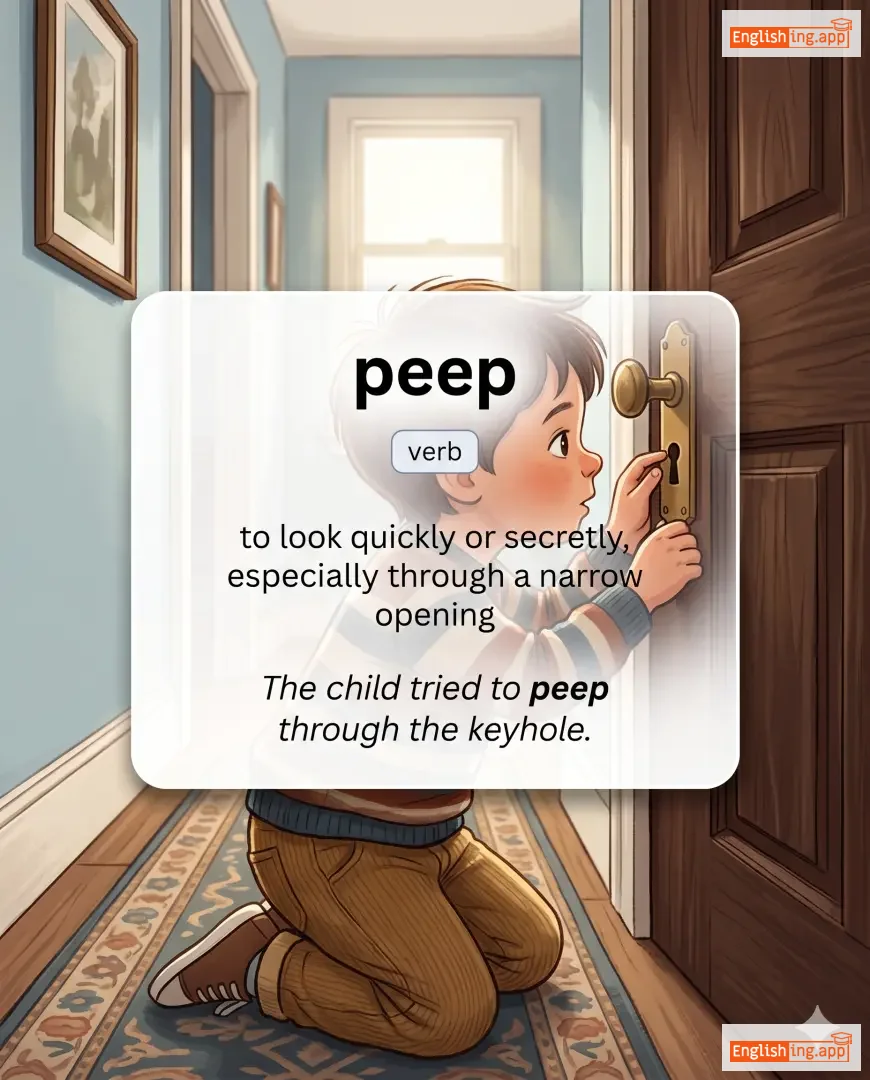
peep definition card — visual illustration of the meaning
👀

peep

verb
/piːp/

to look quickly or secretly, especially through a narrow opening

"The child tried to peep through the keyhole."

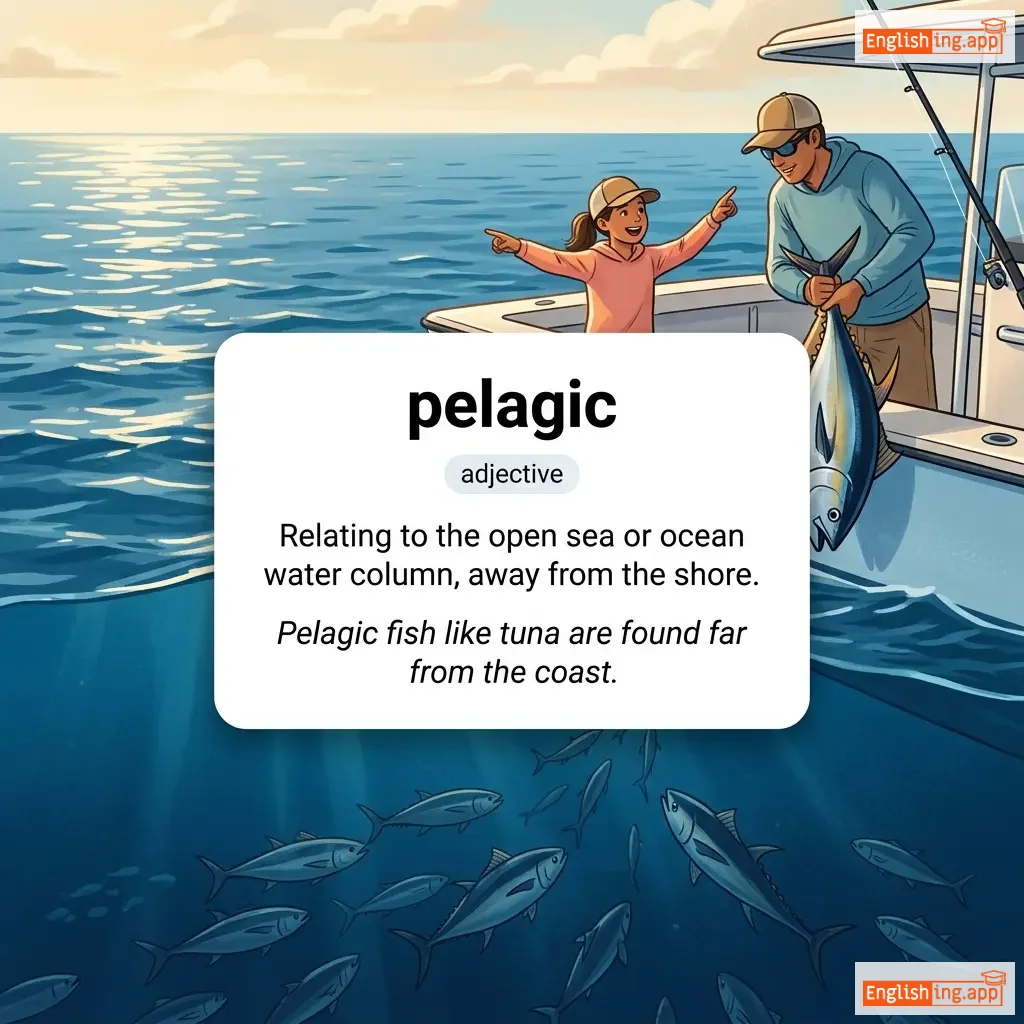
pelagic definition card — visual illustration of the meaning
adjective
/pəˈlædʒ.ɪk/
外洋に関連する (gaiyō ni kanren suru)

Relating to the open sea or ocean water column, away from the shore.

"Pelagic fish like tuna are found far from the coast."

"ツナのような外洋性の魚は海岸から遠くで見つかります。" (Tsuna no yōna gaiyōsei no sakana wa kaigan kara tōku de mitsukarimasu.)
noun
/ˈpɛnəlti/
罰金 (batsukin)

A punishment imposed for breaking a law, rule, or contract.

"He had to pay a heavy penalty for breaking the traffic rules."

"交通規則違反で重い罰金を払わなければなりませんでした。" (Kōtsū kisoku ihan de omoi batsukin o harawanakereba narimasen deshita.)
Pen stand definition card — visual illustration of the meaning
noun
/pen stænd/
ペン立て (pen tate)

a container or holder designed to keep pens, pencils, and other writing instruments organized

"He organized his pens in the pen stand on his desk."

"彼は自分のペンを机のペン立てに整理しました。" (Kare wa jibun no pen wo tsukue no pen tate ni seiri shimashita)
noun
/ˈpen neɪm/
ペンネーム (pen nēmu)

a fictitious name used by an author instead of their real name; a pseudonym

"Mark Twain was the pen-name of Samuel Clemens."
"マーク・トウェインはサミュエル・クレメンズのペンネームでした。" (Māku Towen wa Samyūeru Kuremenzu no pen nēmu deshita.)
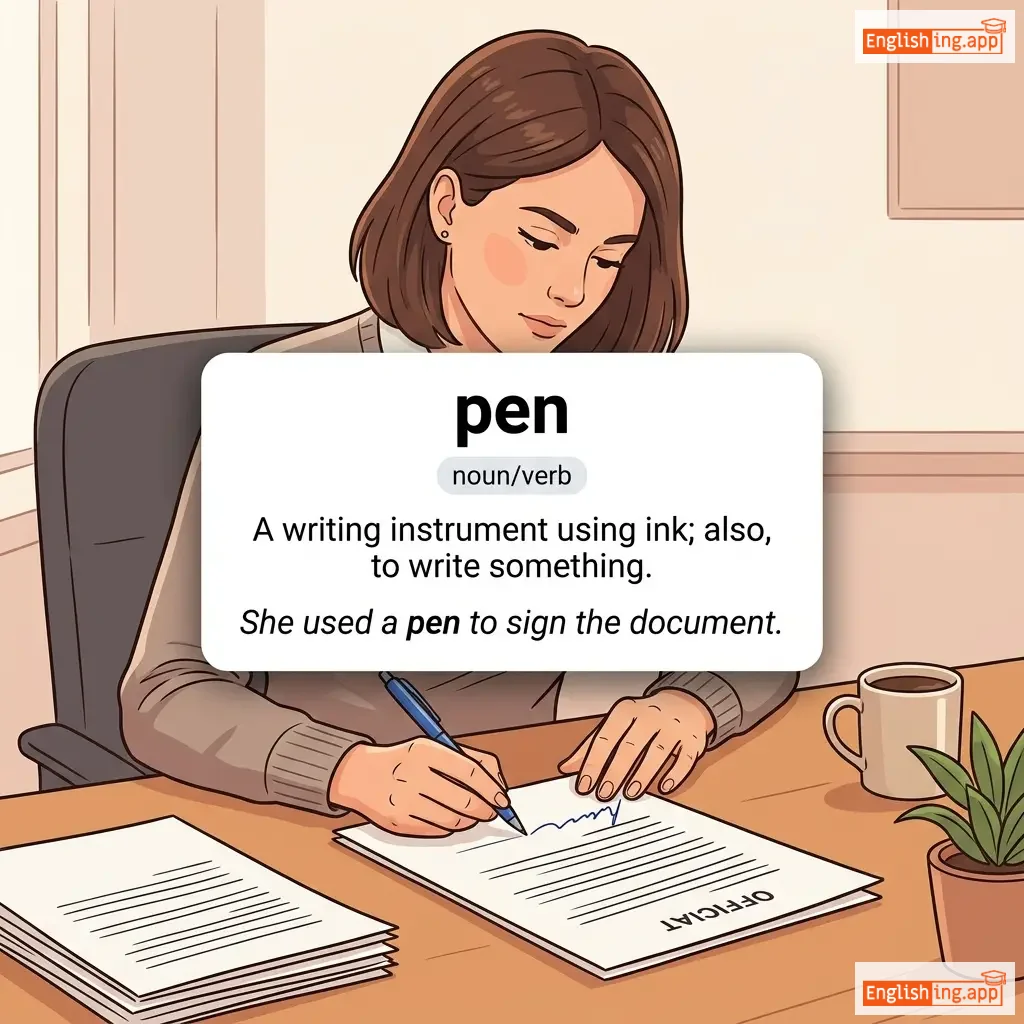
pen definition card — visual illustration of the meaning
noun/verb
/pɛn/
幸せ (shiawase)

A writing instrument using ink; also, to write something.

"She used a pen to sign the document."

"彼女は賞を受け取ったとき、幸せを隠すことができませんでした。" (Kanojo wa shō o uketotta toki, shiawase o kakusu koto ga dekimasen deshita.)
adjective
/pəˈluːsɪd/
透明 (tōmei)

Transparently clear; easy to understand.

"The lake water was so pellucid that you could see the stones at the bottom."

"湖の水はとても透明で、底の石まで見えるほどでした。" (Mizu wa totemo tōmei de, soko no ishi made mieru hodo deshita.)
adverb
/ˌpɛlˈmɛl/
無秩序に (muchitsujoni)

In a confused, rushed, or disorderly manner.

"The children ran pell-mell through the playground."

"子供たちは遊び場を無秩序に走り回った。" (Kodomotachi wa asobiba o muchitsujoni hashirimatta.)
noun
/pɛlf/
不正な金 (fusei na kane)

Money, especially when gained dishonorably.

"The corrupt official was motivated only by pelf."

"腐敗した公務員は不正な金でしか動機づけられなかった。" (Fuhai shita kōmuin wa fusei na kane de shika dōki dzukerarenakatta.)
verb
/piːv/
苛立たせる (ikorataseru)

To annoy or irritate someone.

"His constant interruptions really peeve me."
"彼の絶え間ない干渉は本当に私を苛立たせます。" (Kare no taemanei kansho wa hontoni watashi wo ikoratasemasu.)
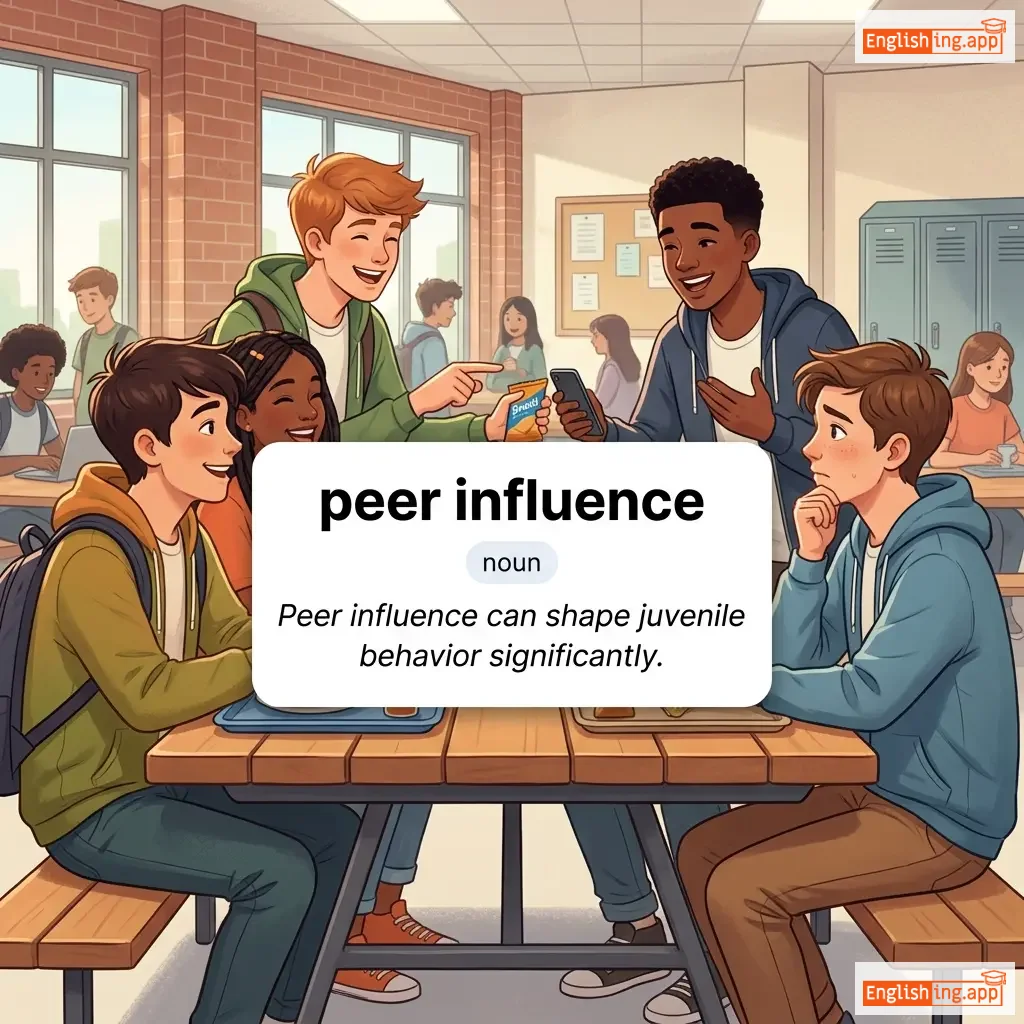
peer influence definition card — visual illustration of the meaning
noun
pɪər ˈɪnfluəns
仲間の影響 (nakama no eikyō)

The effect that members of a peer group have on each other, especially in terms of behavior, attitudes, and decision-making.

"Peer influence can shape juvenile behavior significantly."

"仲間の影響は、若者の行動に大きな影響を与えることがあります。" (Nakama no eikyō wa, wakamono no kōdō ni ōkina eikyō o ataeru koto ga arimasu.)
noun
/ˈpɪərɪdʒ/
貴族階級 (kizoku kaikyū)

the title or rank of a peer; the nobility as a group

"He was elevated to the peerage by the king."

"彼は王によって貴族階級に昇進しました。" (Kare wa ō ni yotte kizoku kaikyū ni shōshin shimashita.)
adjective
/ˈpɪələs/
比類のない (hirui no nai)

Unequaled; without rival or match.

"Her peerless performance earned her a standing ovation."

"彼女の比類のないパフォーマンスはスタンディングオベーションを引き起こした。" (Kanojo no hirui no nai pafōmansu wa sutandingu obēshon o hikiokoshita.)
noun
/pəˈnʌmbrə/
部分的な影 (bubun-teki na kage)

a partially shaded area around the shadow of an object, especially during an eclipse

"The moon’s penumbra created a dim shadow over the Earth."

"月のペヌンブラが地球上に薄暗い影を作り出しました。" (Tsuki no penumbra ga chikyū-jō ni usugurai kage o tsukuri dashimashita.)