語彙集

英単語辞書 | 単語の意味、定義、例文

noun
/ˈpaɪrət/
海賊 (kaizoku)

a person who attacks and robs ships at sea; someone who illegally copies or uses another's work

"The pirate captured the merchant ship and stole its treasure."

"海賊は商船を奪い、その宝物を盗んだ。" (Kaizoku wa shōsen o ubai, sono hōmotsu o nusunda.)
noun
/ˈpaɪ.rə.si/
海賊行為 (kaizoku koui)

the practice of attacking and robbing ships at sea; the unauthorized use or reproduction of copyrighted material

"Software piracy costs companies billions of dollars annually."

"ソフトウェアの海賊行為は毎年企業に数十億ドルの損失をもたらします。" (sofutowea no kaizoku koui wa maitoshi kigyou ni suujuu oku doru no sonshitsu o motarashimasu)
verb
/piːk/
引き起こす (hikiokosu)

to stimulate interest or curiosity; to arouse resentment or anger

"Her remarks piqued his curiosity about the secret project."

"彼女のコメントは秘密のプロジェクトに対する彼の好奇心を引き起こしました。" (Kanojo no komento wa himitsu no purojekuto ni taisuru kare no koukishin wo hikiokoshimashita.)
adjective
/ˈpiːkənt/
辛い (karai)

having a pleasantly sharp or spicy taste; interestingly provocative

"The chef added a piquant sauce to the dish to enhance its flavor."

"シェフは料理に辛いソースを加えて、味を引き立てました。" (Shefu wa ryōri ni karai sōsu o kuwaete, aji o hikidatemashita.)
noun
/ˈpaɪpˌlaɪn/
パイプライン (paipurain)

a long tube through which liquids or gases are transported

"The company is building a new pipeline to transport natural gas."

"その会社は天然ガスを輸送するための新しいパイプラインを建設しています。" (Sono kaisha wa tennen gasu o yusō suru tame no atarashī paipurain o kensetsu shiteimasu.)
noun
/paɪp/
パイプ (paipu)

a tube used for conveying liquids or gases

"The plumber fixed the broken pipe."

"配管工は壊れたパイプを修理しました。" (Haikangō wa kowareta paipu o shūri shimashita.)
adjective
/ˈpaɪəs/
敬虔な (keiken na)

devoutly religious or showing strong moral and spiritual devotion

"He led a pious life, always helping those in need."

"彼はいつも困っている人々を助け、敬虔な生活を送っていました。" (Kare wa itsumo komatte iru hitobito o taske, keiken na seikatsu o okutte imashita.)
pioneering mission definition card — visual illustration of the meaning
adjective + noun
ˌpaɪəˈnɪərɪŋ ˈmɪʃən
先駆的なミッション (senkudekina misshon)

A groundbreaking or innovative undertaking that leads the way in a particular field.

"Artemis is a pioneering mission in space exploration."

"アルテミスは宇宙探査における先駆的なミッションです。" (Arutemisu wa uchu tansaku ni okeru senkudekina misshon desu.)
pioneering definition card — visual illustration of the meaning
adjective
ˌpaɪəˈnɪə.rɪŋ
先駆的 (senkouteki)

Involving new ideas or methods; being the first to develop or use new methods, ideas, or products.

"The scientist made pioneering discoveries."
"科学者は先駆的な発見をしました。" (Kagakusha wa senkōteki na hakken o shimashita.)
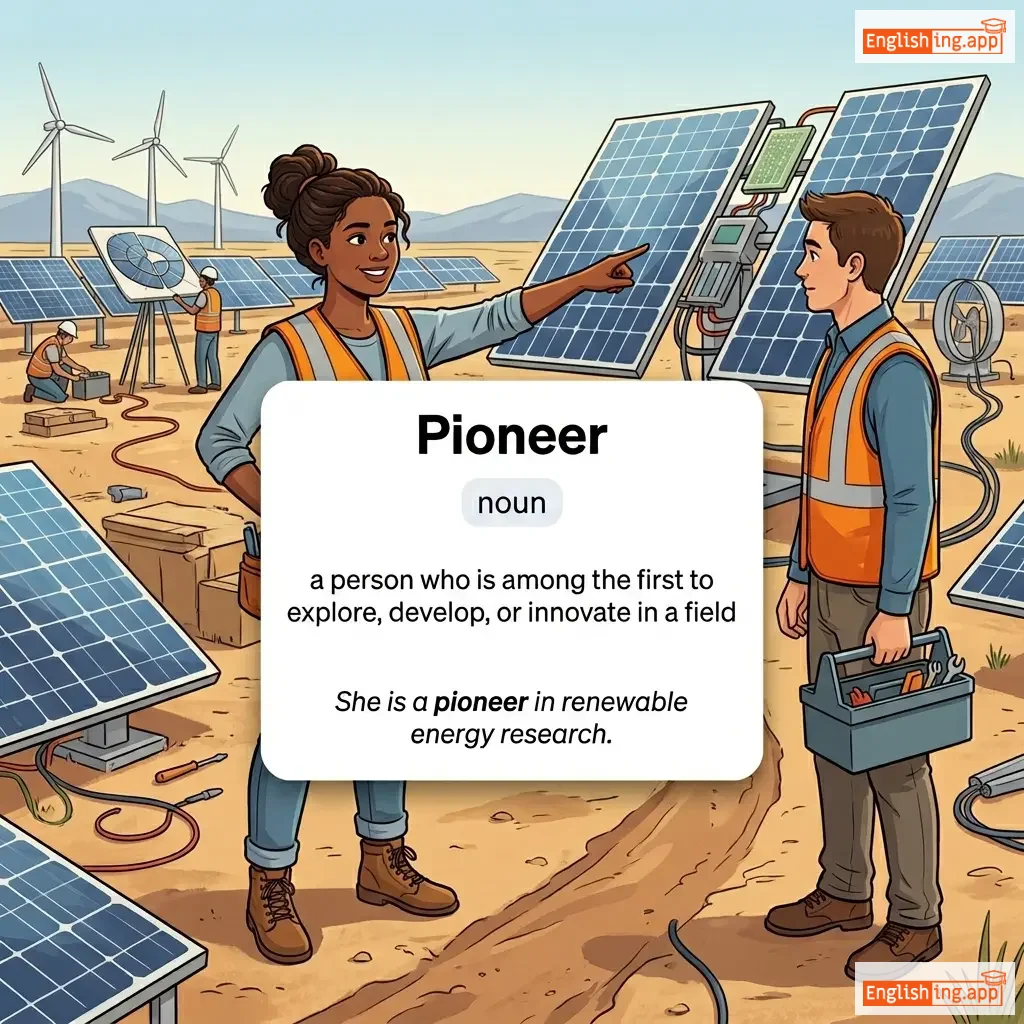
Pioneer definition card — visual illustration of the meaning
noun
/ˌpaɪəˈnɪər/
先駆者 (senkusha)

a person who is among the first to explore, develop, or innovate in a field

"She is a pioneer in renewable energy research."

"彼女は再生可能エネルギー研究の先駆者です。" (Kanojo wa saisei kanō enerugī kenkyū no senkusha desu.)
verb
/ˈpɪnpɔɪnt/
正確に特定する (seikaku ni tokutei suru)

to locate or identify something with precision

"The detective was able to pinpoint the exact location of the suspect."

"探偵は容疑者の正確な場所を特定できました。" (Tantei wa yougisha no seikaku na basho wo tokutei dekimashita.)
noun
/ˈpɪnəkəl/
頂点 (chōten)

the highest point or peak of something, especially of success or achievement

"Winning the Nobel Prize was the pinnacle of her career."

"ノーベル賞を受賞することは彼女のキャリアのピークでした。" (Nōberu-shō o jushō suru koto wa kanojo no kyaria no pīku deshita.)
noun
/ˈpɪnəs/
小型の船 (kogata no fune)

a small boat, often carried by a larger ship

"The sailors used a pinnace to reach the shore."

"船員たちは岸に到達するために小型の船を使いました。" (Sen'in-tachi wa kishi ni tōtatsu suru tame ni kogata no fune o tsukaimashita.)
adjective
/pɪŋk/
ピンク (pinku)

a color between red and white

"She wore a pink dress to the party."

"彼女はパーティーでピンクのドレスを着ていました。" (Kanojo wa pātī de pinku no doresu o kite imashita.)
noun
/ˈpɪnjən/
小さな歯車や鳥の翼の外側部分; 制限する、または動けなくする (chiisana haguruma ya tori no tsubasa no sotogawa bubun; seigen suru, matawa ugokenaku suru)

a small gear or the outer part of a bird's wing; to restrain or immobilize

"The bird's pinion was injured, preventing it from flying."

"鳥の翼が怪我をして飛べなかった。" (Tori no tsubasa ga kega o shite tobe nakatta.)
noun
/ˈpaɪnˌæpəl/
パイナップル (painappuru)

a tropical fruit with a rough spiky skin, sweet yellow flesh, and a leafy crown

"She added fresh pineapple to the fruit salad."
"彼女はフルーツサラダに新鮮なパイナップルを加えた。" (kanojo wa furuutsu sarada ni shinsen na painappuru o kuwaeta)
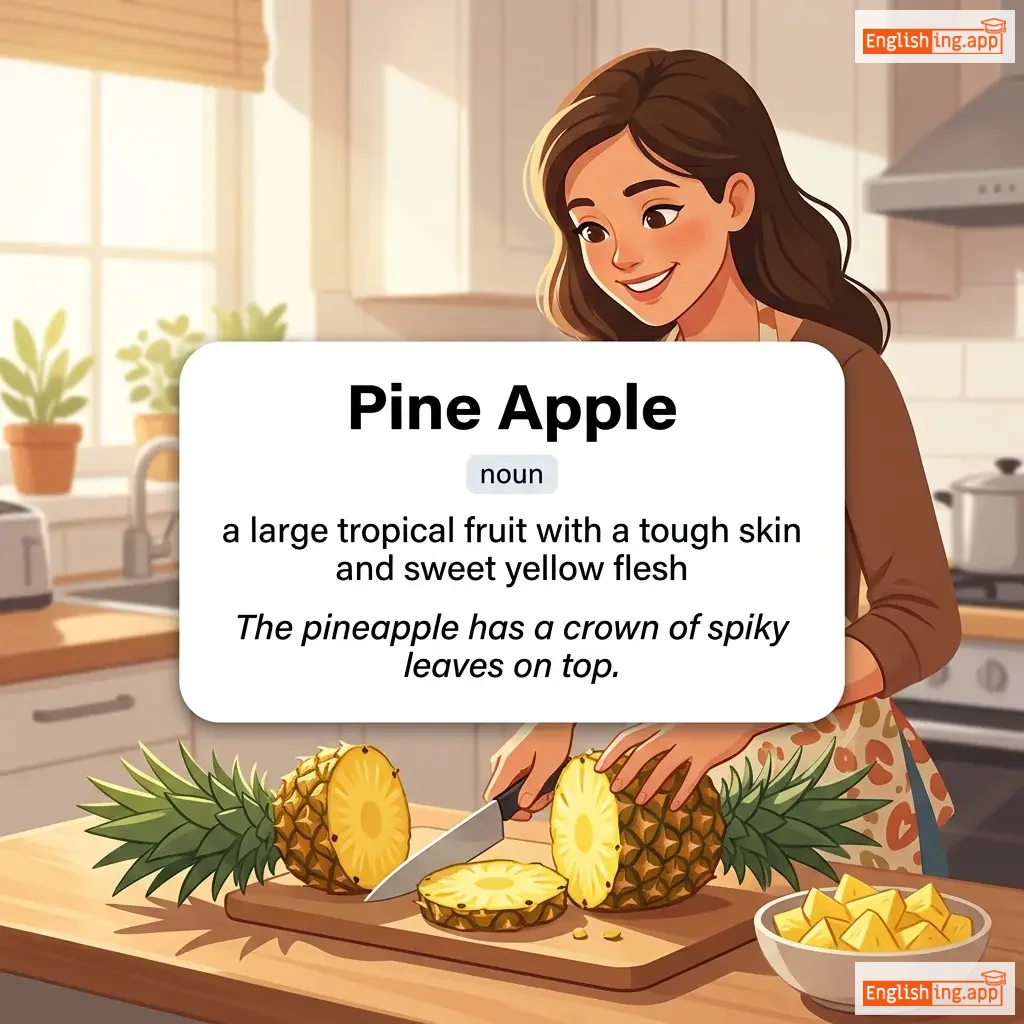
Pine Apple definition card — visual illustration of the meaning
noun
/ˈpaɪn.æp.əl/
パイナップル (painappuru)

a large tropical fruit with a tough skin and sweet yellow flesh

"The pineapple has a crown of spiky leaves on top."

"パイナップルの上には尖った葉の冠があります。" (Painappuru no ue ni wa totta ha no kanmuri ga arimasu)
verb
/paɪn/
切望する (setsubou suru)

to long intensely for something or someone; to suffer from longing

"He pined for his hometown after moving abroad."

"海外に引っ越した後、彼は故郷を切望していた。" (Kaigai ni hikkoshita ato, kare wa kokyou wo setsubou shite ita.)
noun
/ˈpɪntʃərz/
ピンセット (pinsetto)

a tool used for gripping or squeezing objects

"Use the pinchers to remove the hot coal safely."

"熱い炭を安全に取り除くためにピンチャーズを使ってください。" (Atsui sumi o anzen ni tori nozoku tame ni pinchāzu o tsukatte kudasai.)
verb
/pɪntʃ/
つまむ (tsumamu)

to squeeze tightly between the fingers; to take a small amount

"She pinched a bit of salt into the soup."
"彼女はスープに少し塩を加えました。" (Kanojo wa suupu ni sukoshi shio o kuwaemashita.)
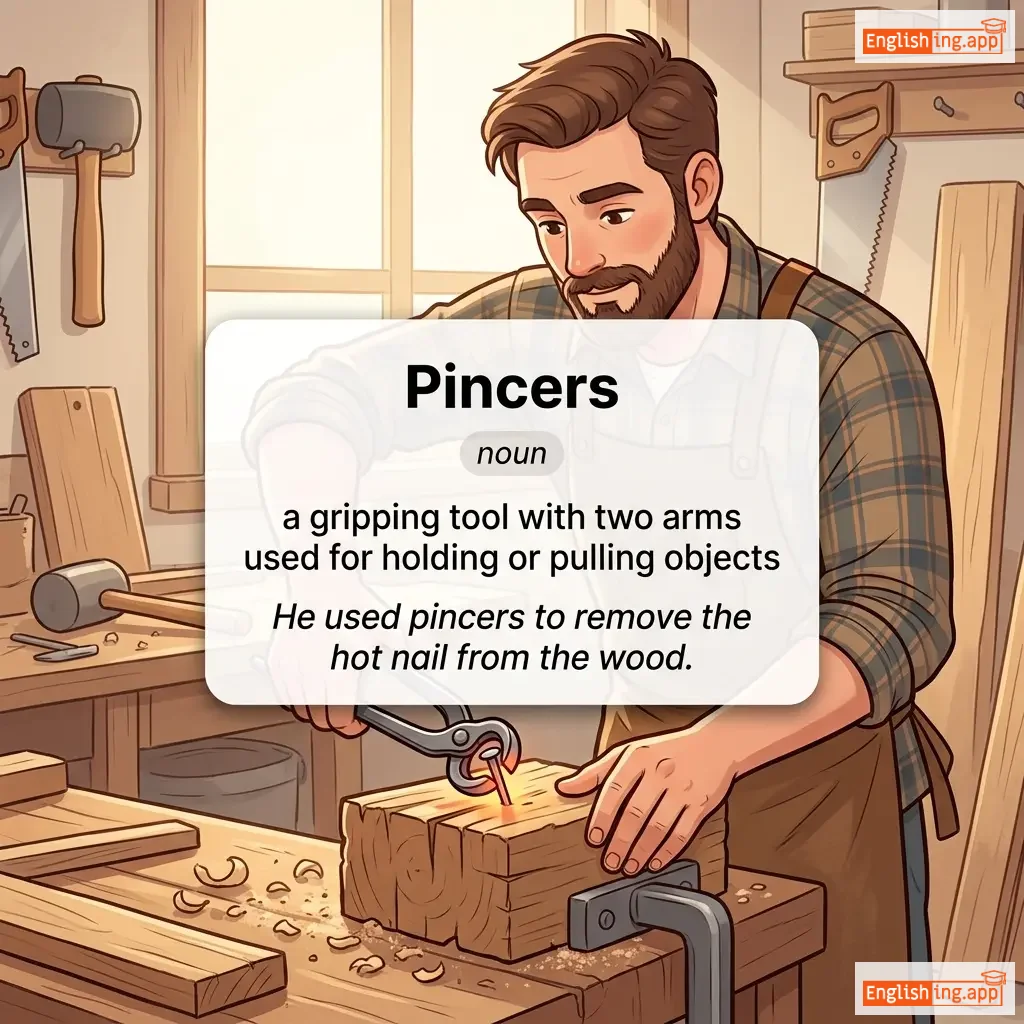
Pincers definition card — visual illustration of the meaning
noun
/ˈpɪnsərz/
ピンセット (pinsetto)

a gripping tool with two arms used for holding or pulling objects

"He used pincers to remove the hot nail from the wood."

"彼は木から熱い釘を取り外すためにピンサーを使いました。" (Kare wa ki kara atsui kugi o tori hazusu tame ni pinsetto o tsukaimashita.)
noun
/pɪn/
ピン (pin)

a small thin piece of metal used to fasten or hold things together

"She used a pin to attach the note to the board."

"彼女はボードにメモを留めるためにピンを使った。" (Kanojo wa boodo ni memo o tomeru tame ni pin o tsukatta.)
noun
/ˈpɪm.pəl/
ニキビ (nikibi)

a small, inflamed elevation of the skin; a spot on the skin, especially on the face

"She was embarrassed about the pimple on her forehead."
"彼女は額のニキビに気まずさを感じていた。" (Kanojo wa hitai no nikibi ni kimazusa o kanjite ita.)
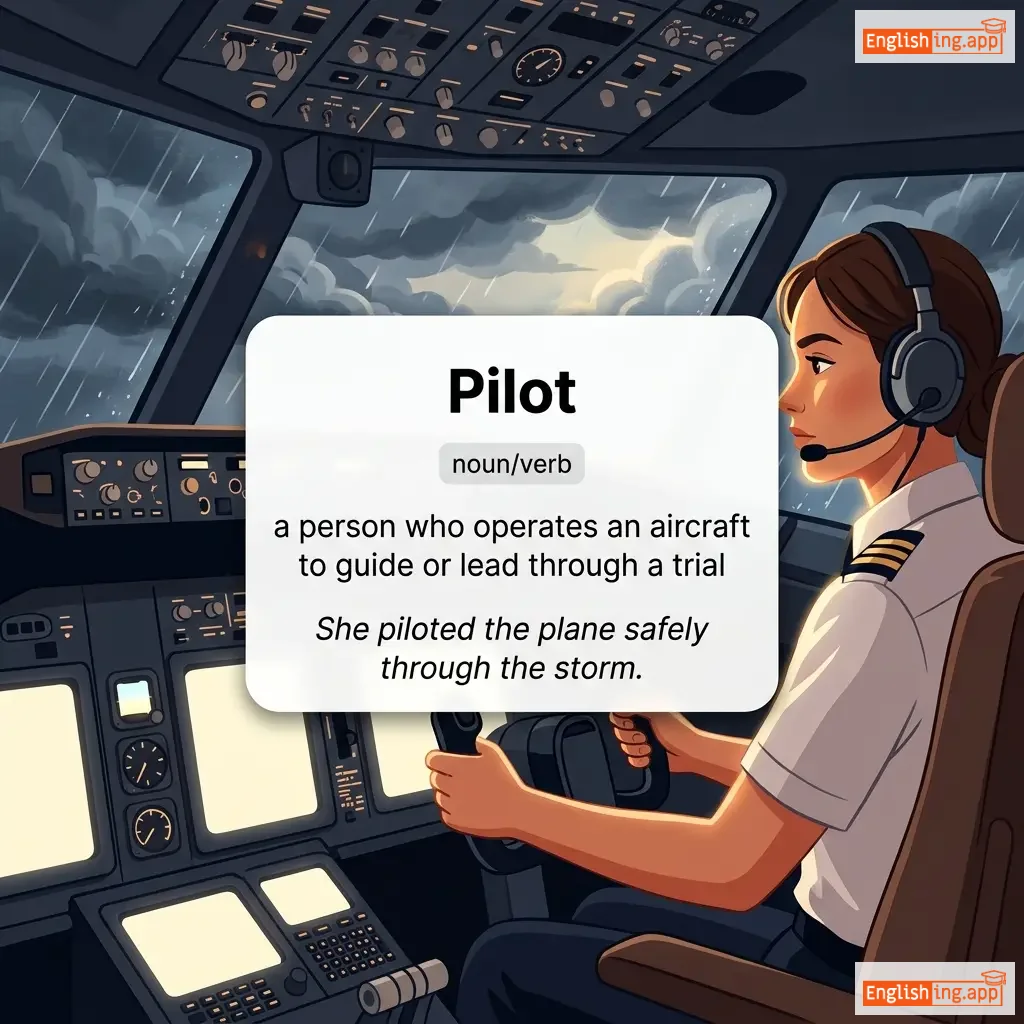
Pilot definition card — visual illustration of the meaning
noun/verb
/ˈpaɪlət/
パイロット (pairotto)

a person who operates an aircraft / to guide or lead through a trial

"She piloted the plane safely through the storm."

"彼女は嵐の中、飛行機を安全に操縦した。" (Kanojo wa arashi no naka, hikouki o anzen ni souju shita.)
Pillow definition card — visual illustration of the meaning
noun
/ˈpɪloʊ/
(makura)

a soft cushion filled with material used to support the head while sleeping or resting

"She placed her head on the soft pillow and fell asleep quickly."

"彼女は柔らかい枕に頭を乗せ、すぐに眠りにつきました。" (Kanojo wa yawarakai makura ni atama o nose, sugu ni nemuri ni tsukimashita.)
noun/verb
/ˈpɪləri/
公開処罰装置 (kōkai shobatsu sōchi)

a device for publicly punishing someone / to expose to public ridicule

"The corrupt official was placed in the pillory for the town to jeer at."
"腐敗した役人は町の人々に嘲笑されるためにピロリーに置かれました。" (Fuhai shita yakunin wa machi no hitobito ni chōshō sareru tame ni pirorī ni okaremashita.)
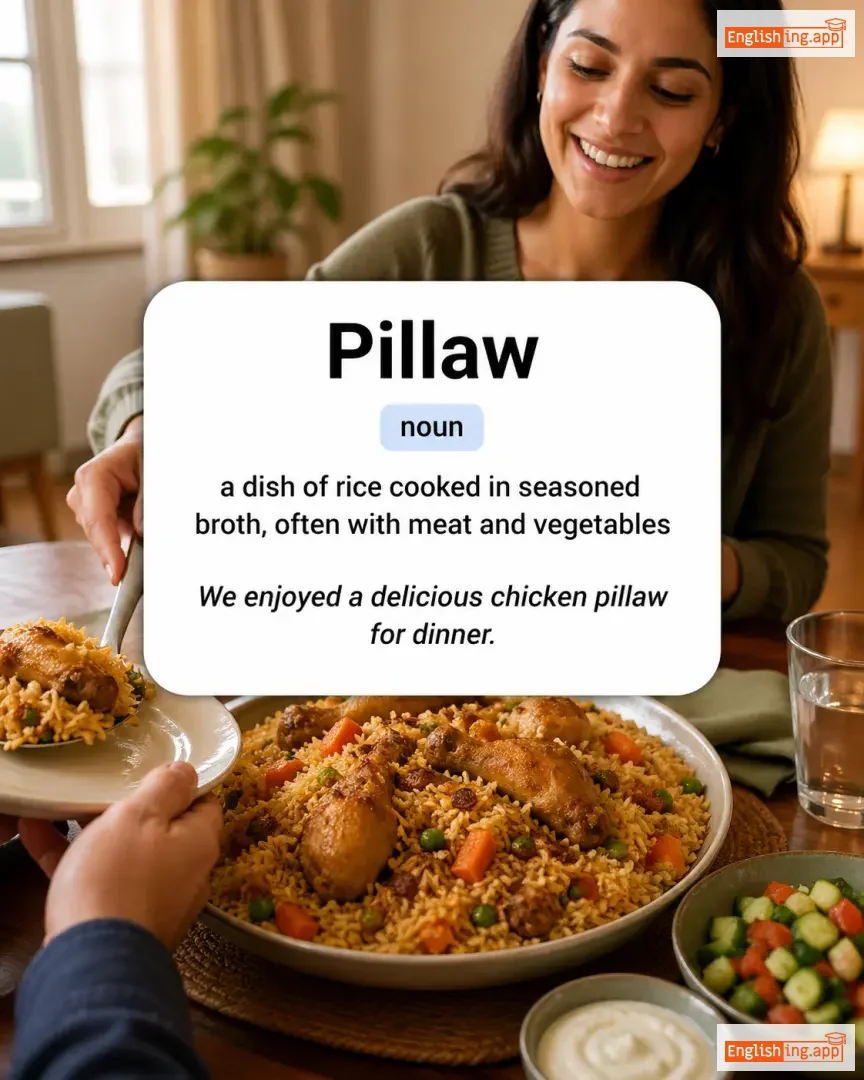
Pillaw definition card — visual illustration of the meaning
noun
/pɪˈlɑːf/
ピラフ (pirafu)

a dish of rice cooked in seasoned broth, often with meat and vegetables

"We enjoyed a delicious chicken pillaw for dinner."

"私たちは夕食に美味しいチキンピラフを楽しみました。" (watashitachi wa yūshoku ni oishī chikin pirafu o tanoshimimashita.)
noun
/ˈpɪlər/
(hashira)

a strong vertical support or mainstay of a structure or system

"The ancient temple was supported by massive stone pillars."

"古代の寺院は巨大な石の柱によって支えられていました。" (Kodai no jiin wa kyodaina ishi no hashira ni yotte sasaerarete imashita.)
verb
/ˈpɪlɪdʒ/
略奪する (ryakudatsu suru)

to rob or plunder a place, especially during war

"The invading army pillaged the village and took all valuables."

"侵入した軍隊は村を略奪し、すべての貴重品を持ち去った。" (Shinnyū shita guntai wa mura o ryakudatsu shi, subete no kichōhin o mochisatta.)
noun
/fɪˈlæn.θrə.pɪst/
慈善家 (jizenka)

a person who seeks to promote the welfare of others, especially by donating money to good causes

"The philanthropist donated millions to build schools in rural areas."

"その慈善家は農村地域に学校を建てるために数百万ドルを寄付しました。" (Sono jizenka wa nōson chiiki ni gakkō o tateru tame ni sūhyaku man doru o kifu shimashita.)
noun
/ˈfænˌtæzəm/
幽霊 (yuurei)

an illusion, ghost, or figment of the imagination

"The child claimed to see a phantasm in the old house."

"子供は古い家で幽霊を見たと主張した。" (Kodomo wa furui ie de yuurei o mita to shuchou shita.)
adjective
/ˌfæntæzməˈɡɒrɪkəl/
幻想的な (gensō-teki na)

Having a fantastic, dreamlike, or surreal appearance, often shifting or illusory.

"The movie created a phantasmagorical vision of another world."

"映画はもう一つの世界の幻想的なビジョンを作り出しました。" (Eiga wa mō hitotsu no sekai no gensō-teki na bijon o tsukuridashimashita.)
adjective
/ˌfærɪˈseɪɪkəl/
偽善的な (gizenteki na)

Excessively concerned with formal rules or outward show of morality, often in a hypocritical way.

"His pharisaical behavior made people doubt his sincerity."

"彼の偽善的な行動は、彼の誠実さに疑問を投げかけた。" (Kare no gizenshūteki na kōdō wa, kare no seijitsusa ni gimon o nagekakemashita.)
noun
/ˈfærɪsiː/
偽善者 (gizen-sha)

A member of an ancient Jewish sect; by extension, a self-righteous or hypocritical person.

"He acted like a pharisee, judging others while ignoring his own faults."

"彼はファリサイ人のように振る舞い、他の人々を裁きながら自分の欠点を無視していました。" (Kare wa Farisai-jin no yō ni furu mai, hoka no hitobito o sabaki nagara jibun no ketten o mushi shiteimashita.)
noun
/ˌfɑːrməkəˈpiːə/
薬典 (yakuten)

An official book listing medicinal drugs, their effects, and directions for use.

"The doctor referred to the pharmacopoeia to check the drug's proper dosage."

"医師は薬典を参照して、薬の適切な用量を確認しました。" (Ishi wa yakuten o sanshou shite, kusuri no tekisetsuna youryou o kakunin shimashita.)
noun
/ˈfɑːrməsi/
薬局 (yakkyoku)

A place where medicinal drugs are prepared and sold.

"I went to the pharmacy to buy antibiotics."
"私は抗生物質を買うために薬局に行きました。" (Watashi wa kouseibushitsu o kau tame ni yakkyoku ni ikimashita.)
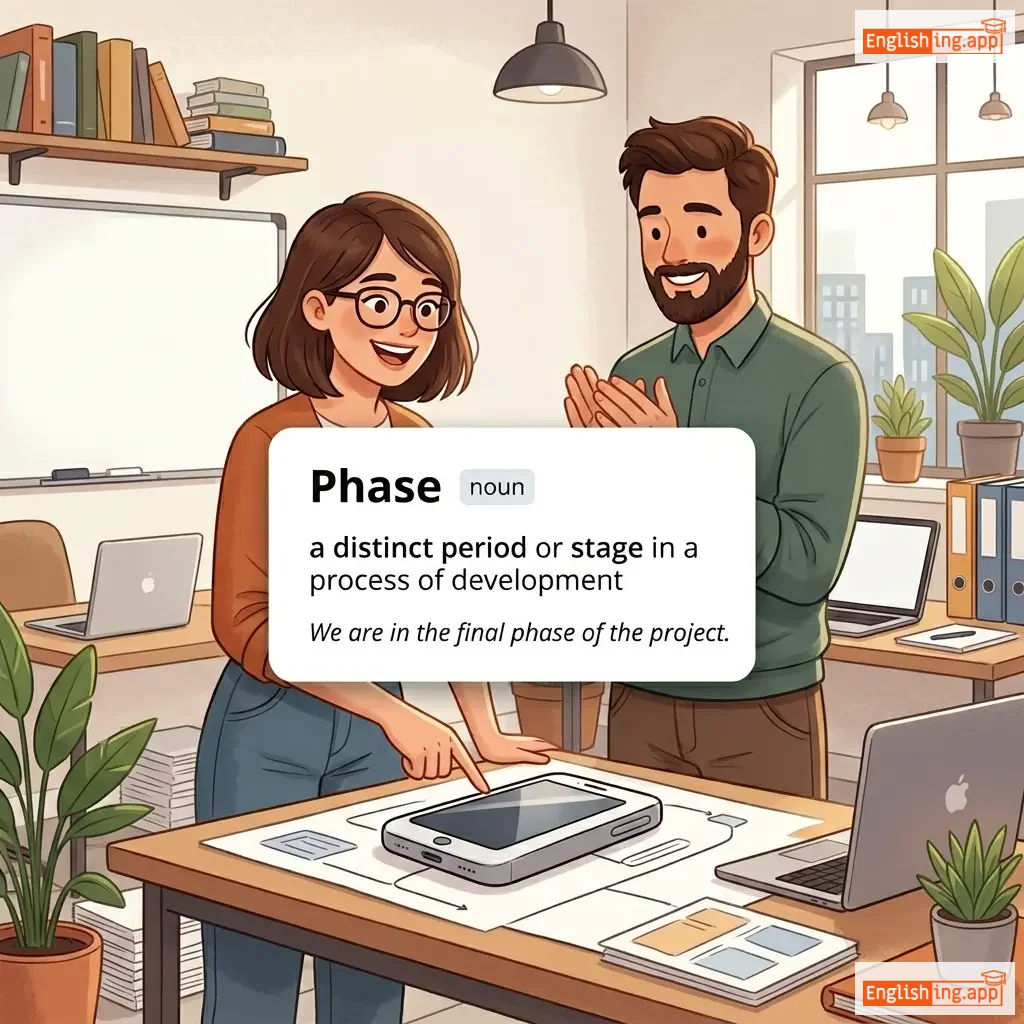
Phase definition card — visual illustration of the meaning
noun
/feɪz/
段階 (dankai)

a distinct period or stage in a process of development

"We are in the final phase of the project."
"私たちはプロジェクトの最終段階にいます。" (Watashitachi wa purojekuto no saishuu dankai ni imasu.)
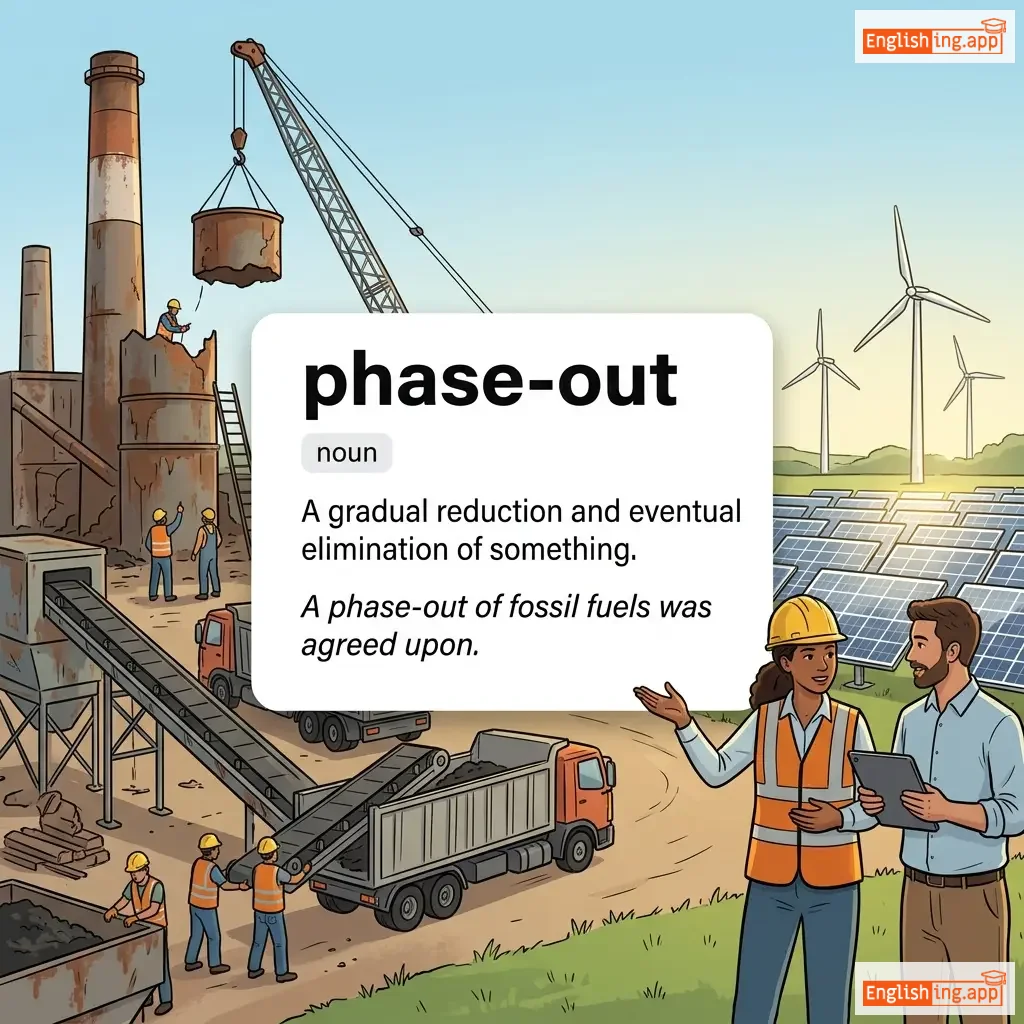
phase-out definition card — visual illustration of the meaning
noun
ˈfeɪz.aʊt
段階的廃止 (dankai-teki haishi)

A gradual reduction and eventual elimination of something.

"A phase-out of fossil fuels was agreed upon."
"化石燃料の段階的廃止が合意されました。" (Kaseki nenryō no dankai-teki haishi ga gōi saremashita.)
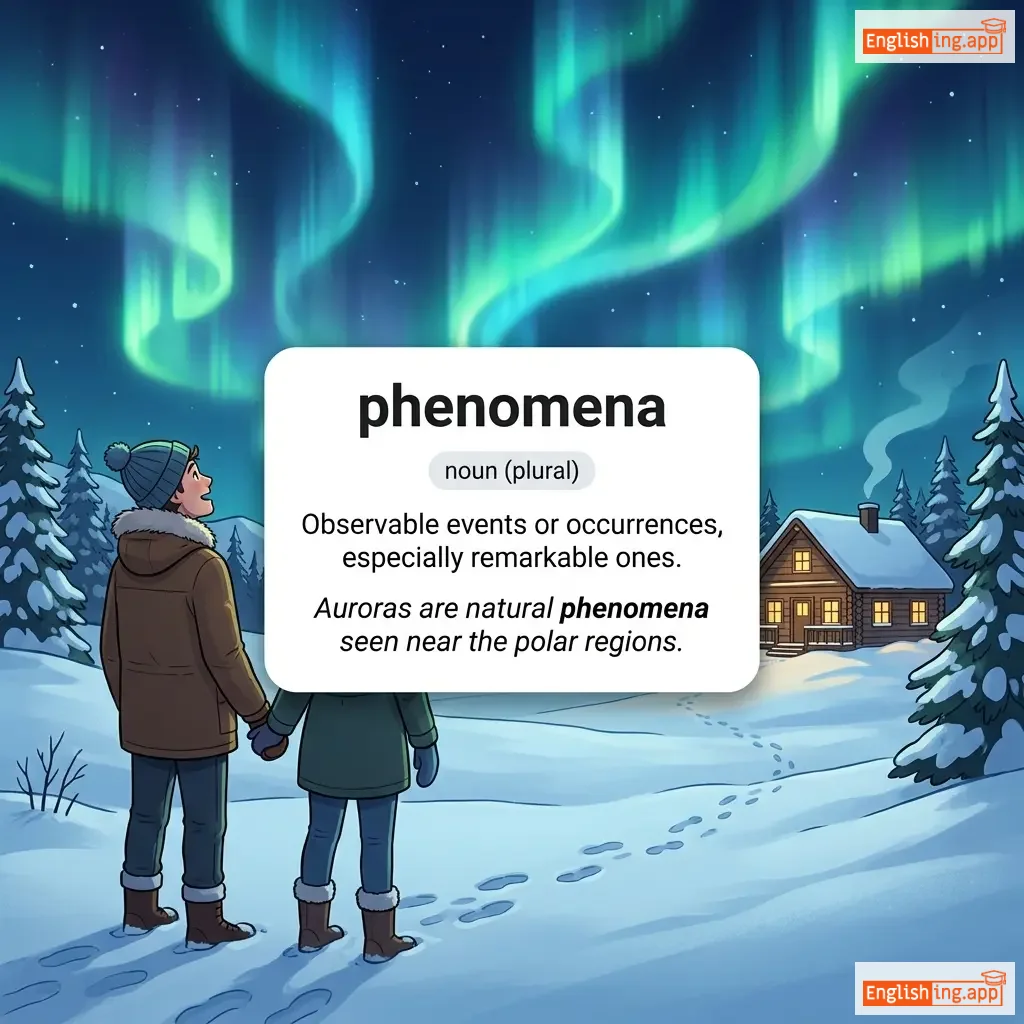
phenomena definition card — visual illustration of the meaning
noun (plural)
/fəˈnɒmɪnə/
現象 (genshō)

Observable events or occurrences, especially remarkable ones.

"Auroras are natural phenomena seen near the polar regions."

"オーロラは極地地域近くで見ることができる自然現象です。" (Ōrora wa kyokuchi chiiki chikaku de miru koto ga dekiru shizen genshō desu.)
adjective
/fəˈnɒmɪnəl/
非凡 (hiban)

extraordinary, remarkable, or exceptional in a way that is very impressive

"The team achieved phenomenal success in the tournament."

"チームはトーナメントで非凡な成功を収めました。" (Chīmu wa tōnamento de hiban na seikō o osamemashita.)
noun
/fəˈnɒmɪnən/
現象 (genshō)

an observable event, fact, or occurrence, often unusual or remarkable

"The Northern Lights are a natural phenomenon."

"オーロラは自然現象です。" (Ōrora wa shizen genshō desu.)
noun
/ˈfaɪəl/
小さなガラス瓶 (chiisana garasu bin)

a small glass container for liquids, especially medicines

"The doctor gave her a phial of medicine."

"医者は彼女に薬の小瓶を渡しました。" (Isha wa kanojo ni kusuri no kobin o watashimashita.)
verb
/fɪˈlændər/
浮気をする (uwaki o suru)

to engage in casual or frivolous romantic or sexual relationships

"He was known to philander with many women in town."

"彼は町で多くの女性と浮気をしていることで知られていた。" (Kare wa machi de ōku no josei to uwaki o shite iru koto de shirarete ita.)
noun
/fɪˈlændərər/
女たらし (otoko tarashi)

a man who habitually engages in casual romantic or sexual affairs

"The politician was exposed as a notorious philanderer."

"その政治家は有名な女たらしとして暴露されました。" (Sono seijika wa yūmei na otoko tarashi toshite bakuro saremashita.)
adjective
/ˌfɪl.ænˈθrɒp.ɪk/
博愛主義的な (hakuai shugi teki na)

showing concern for the welfare of others; generous and charitable

"She is known for her philanthropic activities in the city."

"彼女は街での博愛活動で知られています。" (Kanojo wa machi de no hakuai katsudō de shirareteimasu.)
noun
/fɪˈlɒs.ə.fi/
哲学 (tetsugaku)

the study of the fundamental nature of knowledge, reality, and existence

"Her philosophy emphasizes kindness and empathy."

"彼女の哲学は親切さと共感を強調しています。" (Kanojo no tetsugaku wa shinsetsu-sa to kyokan o kyouchou shiteimasu.)
noun
/fɪˈlɒsəfə/
哲学者 (tetsugakusha)

a person engaged in the study of philosophy or in serious thinking about fundamental questions

"Socrates was a famous philosopher of ancient Greece."

"ソクラテスは古代ギリシャの有名な哲学者でした。" (Sokuratesu wa kodai Girisha no yuumei na tetsugakusha deshita.)
adjective
/ˌfɪl.əˈsɒf.ɪ.kəl/
哲学的 (tetsugakuteki)

relating to the study of the fundamental nature of knowledge, reality, and existence

"She maintained a calm and philosophical attitude during the crisis."

"危機の間、彼女は冷静で哲学的な態度を保ちました。" (Kiki no aida, kanojo wa reisei de tetsugakuteki na taido o tamochimashita.)
verb
/fɪˈlɒs.ə.faɪz/
哲学する (tetsugaku suru)

to think or talk about the fundamental nature of knowledge, reality, and existence

"He likes to philosophize about life and its meaning."

"彼は人生とその意味について哲学するのが好きです。" (Kare wa jinsei to sono imi ni tsuite tetsugaku suru no ga suki desu.)
phlegmatic definition card — visual illustration of the meaning
adjective
/flɛgˈmæt.ɪk/
冷静 (reisei)

having an unemotional and stolidly calm disposition

"Despite the chaos, he remained phlegmatic and composed."

"混乱の中で、彼は冷静で落ち着いていました。" (Konran no naka de, kare wa reisei de ochitsuite imashita.)