词汇表

英语词汇词典 | 单词含义、定义和示例

🏴‍☠️

Pirate (pái rèt)

noun
/ˈpaɪrət/
海盗 (hǎidào)

a person who attacks and robs ships at sea; someone who illegally copies or uses another's work

"The pirate captured the merchant ship and stole its treasure."

"海盗劫持了商船并偷走了它的宝藏。" (Hǎidào jiéchíle shāngchuán bìng tōu zǒule tā de bǎozàng.)
🏴‍☠️

Piracy (派瑞西)

noun
/ˈpaɪ.rə.si/
海盗行为;盗版 (pai rui xi)

the practice of attacking and robbing ships at sea; the unauthorized use or reproduction of copyrighted material

"Software piracy costs companies billions of dollars annually."

"软件盗版每年给公司造成数十亿美元的损失。" (ruan jian dao ban mei nian gei gong si zao cheng shu shi yi mei yuan de sun shi)
verb
/piːk/
激发 (jifa)

to stimulate interest or curiosity; to arouse resentment or anger

"Her remarks piqued his curiosity about the secret project."

"她的评论激起了他对秘密项目的好奇心。" (Ta de pinglun jiqi le ta dui mimi xiangmu de haoqixin.)
adjective
/ˈpiːkənt/
辛辣 (xinla)

having a pleasantly sharp or spicy taste; interestingly provocative

"The chef added a piquant sauce to the dish to enhance its flavor."

"厨师在菜肴中加入了辛辣的酱汁,以增强其味道。" (Chúshī zài càiyáo zhōng jiārùle xīnlà de jiàngzhī, yǐ zēngqiáng qí wèidào.)
noun
/ˈpaɪpˌlaɪn/
管道 (guǎndào)

a long tube through which liquids or gases are transported

"The company is building a new pipeline to transport natural gas."

"该公司正在建造一条新的管道来运输天然气。" (Gāi gōngsī zhèngzài jiànzào yītiáo xīn de guǎndào lái yùnshū tiānránqì.)
noun
/paɪp/
管道 (guǎndào)

a tube used for conveying liquids or gases

"The plumber fixed the broken pipe."

"水管工修理了坏掉的管道。" (Shuǐguǎn gōng xiūlǐle huàidiào de guǎndào.)
adjective
/ˈpaɪəs/
虔诚的 (qiánchéng de)

devoutly religious or showing strong moral and spiritual devotion

"He led a pious life, always helping those in need."

"他过着虔诚的生活,总是帮助有需要的人。" (Tā guòzhe qiánchéng de shēnghuó, zǒng shì bāngzhù yǒu xūyào de rén.)
pioneering mission definition card — visual illustration of the meaning
adjective + noun
ˌpaɪəˈnɪərɪŋ ˈmɪʃən
开创性任务 (kaichuangxing renwu)

A groundbreaking or innovative undertaking that leads the way in a particular field.

"Artemis is a pioneering mission in space exploration."

"阿耳忒弥斯是一次开创性的太空探索任务。" (Aertemis shi yici kaichuangxing taikong tansuo renwu.)
pioneering definition card — visual illustration of the meaning
adjective
ˌpaɪəˈnɪə.rɪŋ
开创性 (kaichuangxing)

Involving new ideas or methods; being the first to develop or use new methods, ideas, or products.

"The scientist made pioneering discoveries."
"科学家做出了开创性的发现。" (Kēxuéjiā zuò chūle kāichuàngxìng de fāxiàn.)
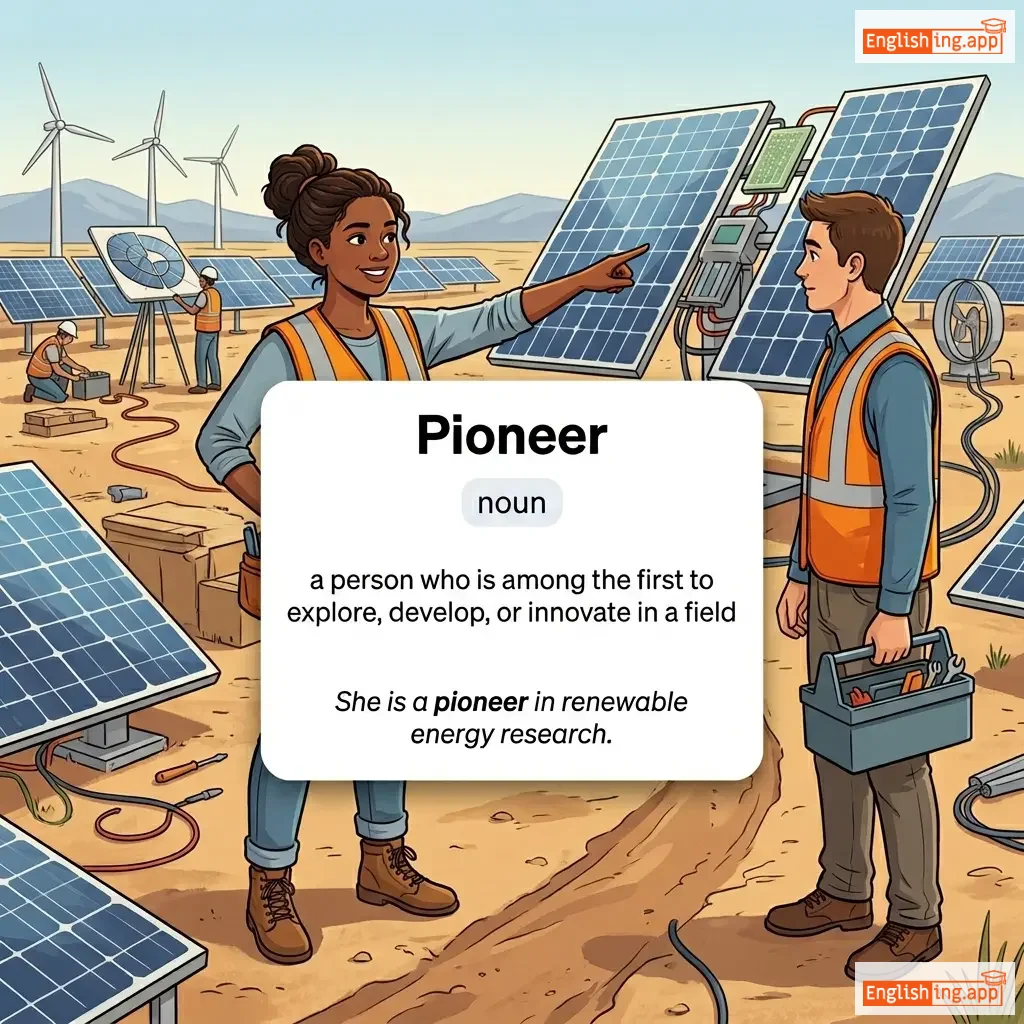
Pioneer definition card — visual illustration of the meaning
noun
/ˌpaɪəˈnɪər/
先驱者 (xiān qū zhě)

a person who is among the first to explore, develop, or innovate in a field

"She is a pioneer in renewable energy research."

"她是可再生能源研究领域的先驱者。" (Tā shì kě zài shēng néng yuán yán jiū lǐng yù de xiān qū zhě.)
verb
/ˈpɪnpɔɪnt/
精确定位 (jingque dingwei)

to locate or identify something with precision

"The detective was able to pinpoint the exact location of the suspect."

"侦探能够精确地定位嫌疑人的位置。" (Zhentan nenggou jingque de dingwei xianyiren de weizhi.)
noun
/ˈpɪnəkəl/
顶点 (dǐngdiǎn)

the highest point or peak of something, especially of success or achievement

"Winning the Nobel Prize was the pinnacle of her career."

"赢得诺贝尔奖是她事业的巅峰。" (Yíngdé Nuòbèi'ěr Jiǎng shì tā shìyè de diānfēng.)
noun
/ˈpɪnəs/
小船 (xiaochuan)

a small boat, often carried by a larger ship

"The sailors used a pinnace to reach the shore."

"水手们用小船到达了岸边。" (Shuǐshǒu men yòng xiǎo chuán dào dá le àn biān.)
adjective
/pɪŋk/
粉红色 (fenhongse)

a color between red and white

"She wore a pink dress to the party."

"她在派对上穿了一件粉红色的裙子。" (Tā zài pàiduì shàng chuānle yī jiàn fěnhóngsè de qúnzi.)
noun
/ˈpɪnjən/
一个小齿轮或鸟翅膀的外部部分;限制或使之不能动弹 (yīgè xiǎo chǐlún huò niǎo chìbǎng de wàibù bùfen; xiànzhì huò shǐ zhī bùnéng dòngtán)

a small gear or the outer part of a bird's wing; to restrain or immobilize

"The bird's pinion was injured, preventing it from flying."

"鸟的翅膀受伤,无法飞行。" (Niǎo de chìbǎng shòushāng, wúfǎ fēixíng.)
noun
/ˈpaɪnˌæpəl/
菠萝 (boluo)

a tropical fruit with a rough spiky skin, sweet yellow flesh, and a leafy crown

"She added fresh pineapple to the fruit salad."
"她把新鲜的菠萝加进了水果沙拉。" (ta ba xinxian de boluo jia jin le shuiguo shala)
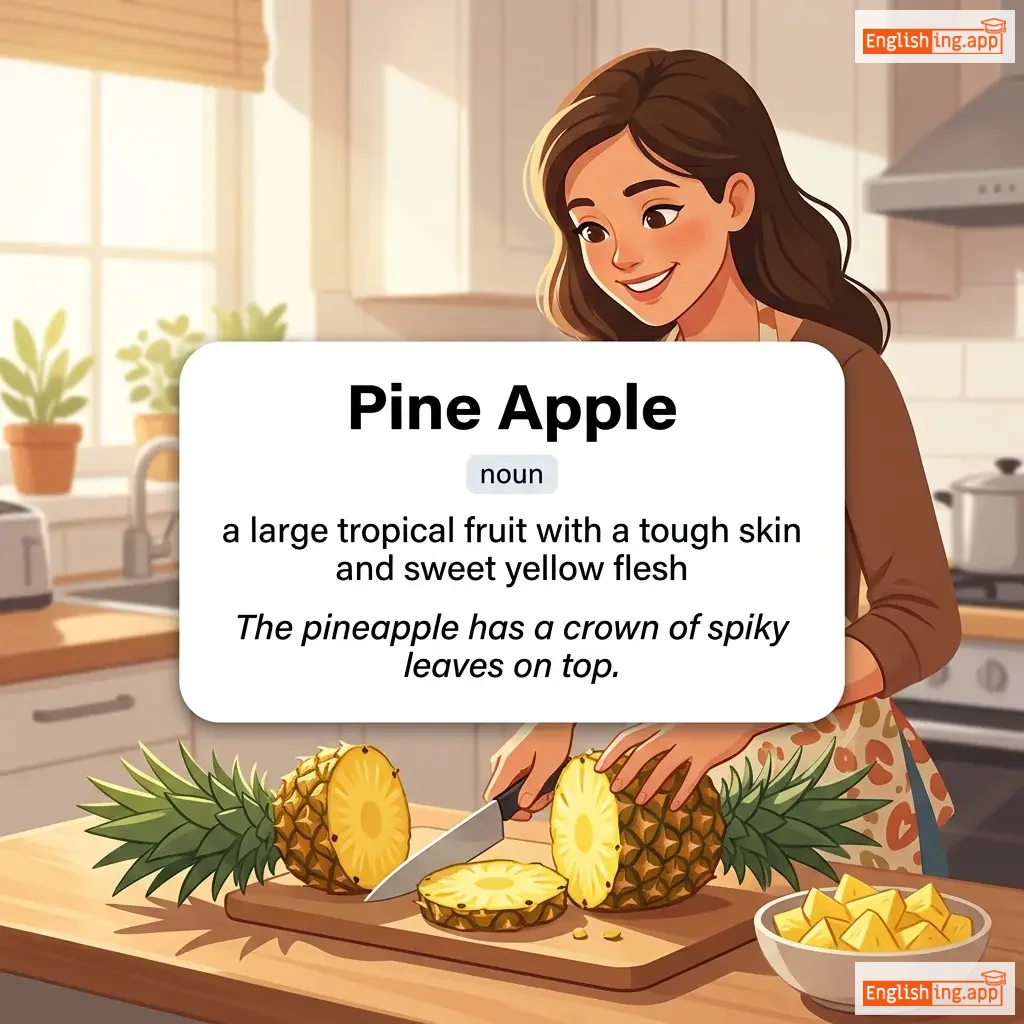
Pine Apple definition card — visual illustration of the meaning
noun
/ˈpaɪn.æp.əl/
菠萝 (boluo)

a large tropical fruit with a tough skin and sweet yellow flesh

"The pineapple has a crown of spiky leaves on top."

"菠萝顶部有一冠刺叶。" (Bōluó dǐngbù yǒu yī guān cì yè)
verb
/paɪn/
渴望 (kewang)

to long intensely for something or someone; to suffer from longing

"He pined for his hometown after moving abroad."

"他搬到国外后,非常想念他的家乡。" (Ta ban dao guowai hou, feichang xiangnian tade jiaxiang.)
noun
/ˈpɪntʃərz/
钳子 (qiánzi)

a tool used for gripping or squeezing objects

"Use the pinchers to remove the hot coal safely."

"使用拼钳安全地取下热煤。" (Shǐyòng pīnqián ānquán de qǔxià rè méi.)
verb
/pɪntʃ/
(nie)

to squeeze tightly between the fingers; to take a small amount

"She pinched a bit of salt into the soup."

"她在汤里放了一点盐。" (Ta zai tang li fang le yi dian yan.)
Pincers definition card — visual illustration of the meaning
noun
/ˈpɪnsərz/
钳子 (qianzi)

a gripping tool with two arms used for holding or pulling objects

"He used pincers to remove the hot nail from the wood."

"他用钳子从木头中取出热钉。" (Tā yòng qiánzi cóng mùtou zhōng qǔchū rè dīng.)
noun
/pɪn/
别针 (biezhen)

a small thin piece of metal used to fasten or hold things together

"She used a pin to attach the note to the board."

"她用别针把纸条固定在黑板上。" (Ta yong biezhen ba zhitiaoguding zai heiban shang.)
noun
/ˈpɪm.pəl/
痘痘 (dòu dòu)

a small, inflamed elevation of the skin; a spot on the skin, especially on the face

"She was embarrassed about the pimple on her forehead."

"她因额头上的痘痘而感到尴尬。" (Tā yīn é tóu shàng de dòu dòu ér gǎndào gāngà.)
Pilot definition card — visual illustration of the meaning
noun/verb
/ˈpaɪlət/
飞行员 (feixingyuan)

a person who operates an aircraft / to guide or lead through a trial

"She piloted the plane safely through the storm."

"她安全地驾驶飞机穿过风暴。" (Ta anquan de jiashi feiji chuanguo fengbao.)
Pillow definition card — visual illustration of the meaning
noun
/ˈpɪloʊ/
枕头 (zhěntou)

a soft cushion filled with material used to support the head while sleeping or resting

"She placed her head on the soft pillow and fell asleep quickly."

"她把头放在柔软的枕头上,快速入睡。" (Tā bǎ tóu fàng zài róuruǎn de zhěntou shàng, kuàisù rùshuì.)
noun/verb
/ˈpɪləri/
公开惩罚装置 (gōngkāi chéngfá zhuāngzhì)

a device for publicly punishing someone / to expose to public ridicule

"The corrupt official was placed in the pillory for the town to jeer at."

"腐败的官员被放在皮洛里里让市民嘲笑。" (fǔbài de guānyuán bèi fàng zài pílùlǐ lǐ ràng shìmín cháoxiào.)
Pillaw definition card — visual illustration of the meaning
noun
/pɪˈlɑːf/
皮拉夫 (pilaf)

a dish of rice cooked in seasoned broth, often with meat and vegetables

"We enjoyed a delicious chicken pillaw for dinner."

"我们享用了美味的鸡肉皮拉夫作为晚餐。" (wǒmen xiǎngyòngle měiwèi de jīròu pílāf zuòwéi wǎncān.)
noun
/ˈpɪlər/
支柱 (zhīzhù)

a strong vertical support or mainstay of a structure or system

"The ancient temple was supported by massive stone pillars."

"古老的庙宇由巨大的石柱支撑。" (gǔlǎo de miàoyǔ yóu jùdà de shízhù zhīchēng.)
🏴‍☠️

pillage (pílèjí)

verb
/ˈpɪlɪdʒ/
洗劫 (xǐjié)

to rob or plunder a place, especially during war

"The invading army pillaged the village and took all valuables."

"入侵军队洗劫了村庄,拿走了所有贵重物品。" (Rùqīn jūnduì xǐjié le cūnzhuāng, ná zǒu le suǒyǒu guìzhòng wùpǐn.)
noun
/fɪˈlæn.θrə.pɪst/
慈善家 (císhànjiā)

a person who seeks to promote the welfare of others, especially by donating money to good causes

"The philanthropist donated millions to build schools in rural areas."

"慈善家捐赠了数百万美元用于建设农村地区的学校。" (Císhànjiā juānzèngle shù bǎi wàn měiyuán yòng yú jiànshè nóngcūn dìqū de xuéxiào.)
noun
/ˈfænˌtæzəm/
幽灵 (youling)

an illusion, ghost, or figment of the imagination

"The child claimed to see a phantasm in the old house."

"孩子声称在旧房子里看见了幽灵。" (Haizi shengcheng zai jiu fangzi li kanjianle youling.)
adjective
/ˌfæntæzməˈɡɒrɪkəl/
幻想的 (huànxiǎng de)

Having a fantastic, dreamlike, or surreal appearance, often shifting or illusory.

"The movie created a phantasmagorical vision of another world."

"这部电影创造了另一个世界的幻想。" (Zhè bù diànyǐng chuàngzàole lìng yīgè shìjiè de huànxiǎng.)
adjective
/ˌfærɪˈseɪɪkəl/
伪善的 (wěishàn de)

Excessively concerned with formal rules or outward show of morality, often in a hypocritical way.

"His pharisaical behavior made people doubt his sincerity."

"他的伪善行为让人怀疑他的真诚。" (Tā de wěishàn xíngwéi ràng rén huáiyí tā de zhēnchéng.)
noun
/ˈfærɪsiː/
伪君子 (wěi jūn zǐ)

A member of an ancient Jewish sect; by extension, a self-righteous or hypocritical person.

"He acted like a pharisee, judging others while ignoring his own faults."

"他像个法利赛人一样行事,批评别人却忽视自己的错误。" (Tā xiàng gè fǎ lì sài rén yīyàng xíngshì, pīpíng biérén què hūshì zìjǐ de cuòwù.)
noun
/ˌfɑːrməkəˈpiːə/
药典 (yaodian)

An official book listing medicinal drugs, their effects, and directions for use.

"The doctor referred to the pharmacopoeia to check the drug's proper dosage."

"医生查阅了药典,以核对药物的正确剂量。" (Yisheng chayuele yaodian, yi hedui yaowu de zhengque jiliao.)
noun
/ˈfɑːrməsi/
药店 (yaodian)

A place where medicinal drugs are prepared and sold.

"I went to the pharmacy to buy antibiotics."

"我去药店买抗生素。" (Wo qu yaodian mai kangshengsu.)
Phase definition card — visual illustration of the meaning
noun
/feɪz/
阶段 (jieduan)

a distinct period or stage in a process of development

"We are in the final phase of the project."
"我们处于项目的最后阶段。" (Wo men chuyu xiangmu de zuihou jieduan.)
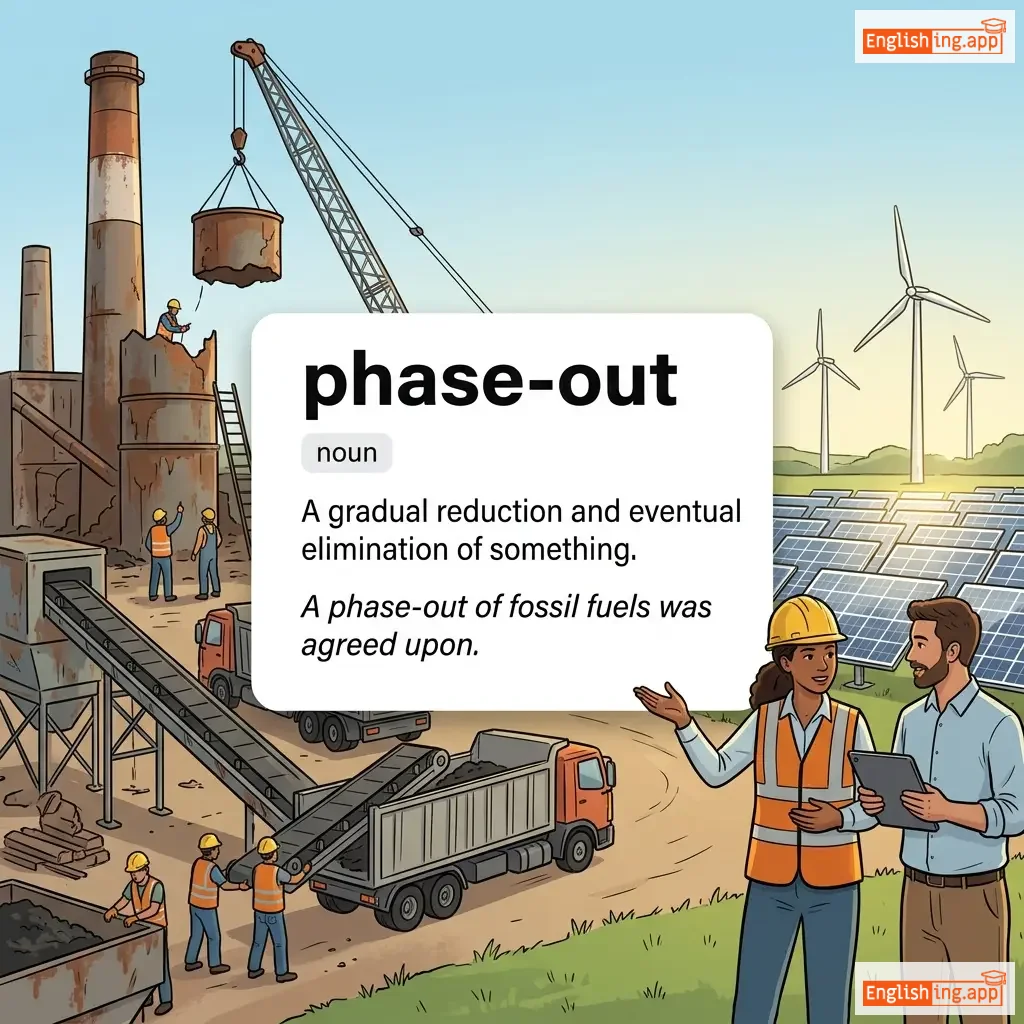
phase-out definition card — visual illustration of the meaning
noun
ˈfeɪz.aʊt
逐步淘汰 (zhú bù táo tài)

A gradual reduction and eventual elimination of something.

"A phase-out of fossil fuels was agreed upon."
"达成了逐步淘汰化石燃料的协议。" (Dá chéng le zhú bù táo tài huà shí rán liào de xié yì.)
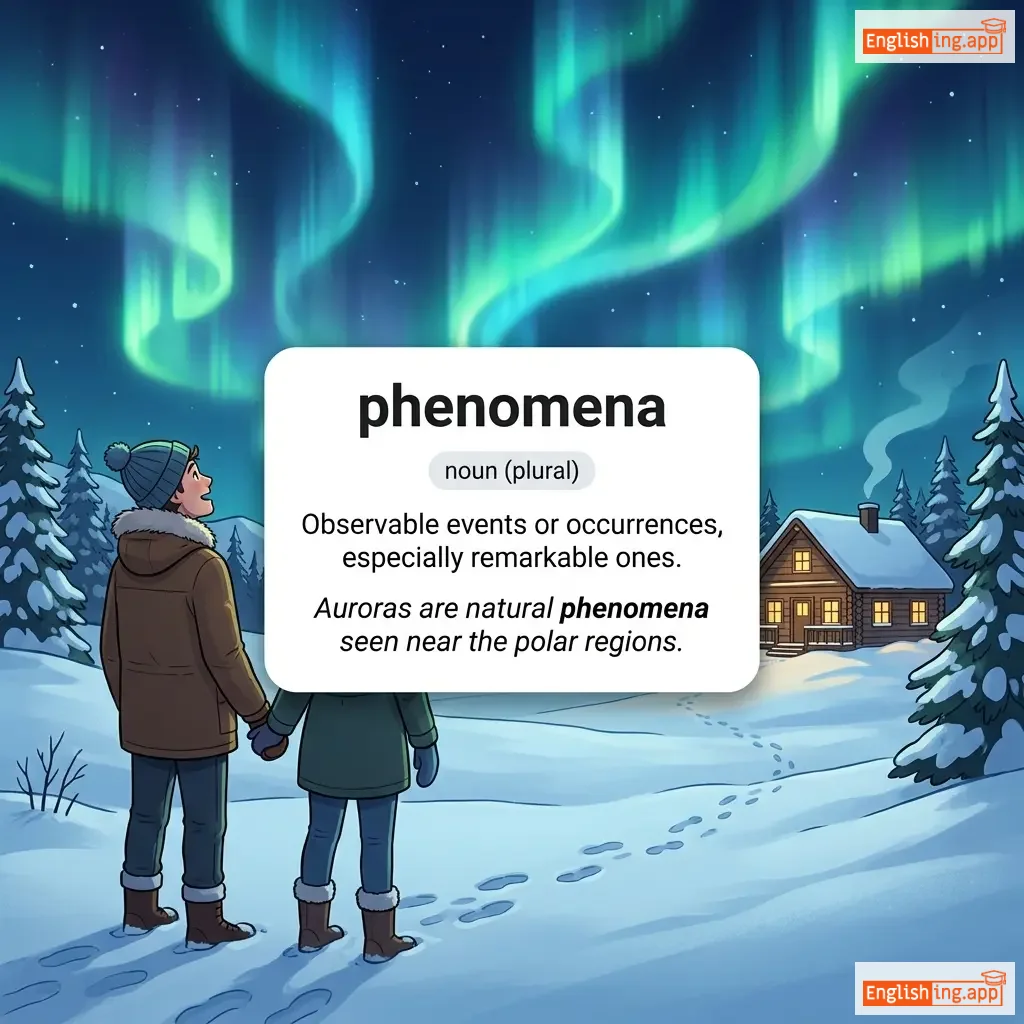
phenomena definition card — visual illustration of the meaning
noun (plural)
/fəˈnɒmɪnə/
现象 (xianxiang)

Observable events or occurrences, especially remarkable ones.

"Auroras are natural phenomena seen near the polar regions."

"极光是自然现象,常见于极地地区。" (Jiguang shi ziran xianxiang, changjian yu jidi diqu.)
adjective
/fəˈnɒmɪnəl/
非凡 (feifan)

extraordinary, remarkable, or exceptional in a way that is very impressive

"The team achieved phenomenal success in the tournament."

"团队在比赛中取得了非凡的成功。" (Tuánduì zài bǐsài zhōng qǔdéle fēifán de chénggōng.)
noun
/fəˈnɒmɪnən/
现象 (xianxiang)

an observable event, fact, or occurrence, often unusual or remarkable

"The Northern Lights are a natural phenomenon."

"北极光是自然现象。" (Beiji guang shi ziran xianxiang.)
noun
/ˈfaɪəl/
小玻璃瓶 (xiao boli ping)

a small glass container for liquids, especially medicines

"The doctor gave her a phial of medicine."

"医生给了她一瓶药。" (Yisheng gei le ta yi ping yao.)
verb
/fɪˈlændər/
调情 (tiáoqíng)

to engage in casual or frivolous romantic or sexual relationships

"He was known to philander with many women in town."

"他以与城里许多女性交往而闻名。" (Tā yǐ yǔ chéng lǐ xǔduō nǚxìng jiāowǎng ér wénmíng.)
noun
/fɪˈlændərər/
花花公子 (huāhuā gōngzǐ)

a man who habitually engages in casual romantic or sexual affairs

"The politician was exposed as a notorious philanderer."

"这位政治家被揭露为一个臭名昭著的花花公子。" (Zhè wèi zhèngzhìjiā bèi jiēlù wéi yí ge chòumíng zhāozhù de huāhuā gōngzǐ.)
adjective
/ˌfɪl.ænˈθrɒp.ɪk/
慈善的 (císhàn de)

showing concern for the welfare of others; generous and charitable

"She is known for her philanthropic activities in the city."

"她因在城市中的慈善活动而闻名。" (Tā yīn zài chéngshì zhōng de císhàn huódòng ér wénmíng.)
noun
/fɪˈlɒs.ə.fi/
哲学 (zhexue)

the study of the fundamental nature of knowledge, reality, and existence

"Her philosophy emphasizes kindness and empathy."

"她的哲学强调善良和同理心。" (Ta de zhexue qiangdiao shanliang he tongli xin.)
noun
/fɪˈlɒsəfə/
哲学家 (zhexuejia)

a person engaged in the study of philosophy or in serious thinking about fundamental questions

"Socrates was a famous philosopher of ancient Greece."

"苏格拉底是古希腊著名的哲学家。" (Sūgélādǐ shì gǔxīlà zhùmíng de zhéxuéjiā.)
adjective
/ˌfɪl.əˈsɒf.ɪ.kəl/
哲学的 (zhexue de)

relating to the study of the fundamental nature of knowledge, reality, and existence

"She maintained a calm and philosophical attitude during the crisis."

"她在危机期间保持了冷静和哲学的态度。" (Ta zai weiji qijian baochi le lengjing he zhexue de taidu.)
verb
/fɪˈlɒs.ə.faɪz/
哲学 (zhexue)

to think or talk about the fundamental nature of knowledge, reality, and existence

"He likes to philosophize about life and its meaning."

"他喜欢谈论生活及其意义。" (Ta xihuan tanlun shenghuo jiqi yiyi.)
phlegmatic definition card — visual illustration of the meaning
adjective
/flɛgˈmæt.ɪk/
冷静的 (lěngjìng de)

having an unemotional and stolidly calm disposition

"Despite the chaos, he remained phlegmatic and composed."

"尽管混乱,他依然保持冷静和平静。" (Jǐnguǎn hùnluàn, tā yīrán bǎochí lěngjìng hé píngjìng.)