Словари

Словарь английского языка | Значения слов, определения и примеры

noun
/ˈpaɪrət/
пират (pirat)

a person who attacks and robs ships at sea; someone who illegally copies or uses another's work

"The pirate captured the merchant ship and stole its treasure."

"Пират захватил торговое судно и украл его сокровища." (Pirat zakhvatil torgovoe sudno i ukral ego sokrovishcha.)
noun
/ˈpaɪ.rə.si/
пиратство (Piratstvo)

the practice of attacking and robbing ships at sea; the unauthorized use or reproduction of copyrighted material

"Software piracy costs companies billions of dollars annually."

"Пиратство программного обеспечения обходится компаниям миллиардами долларов ежегодно." (Piratstvo programmnogo obespecheniya obkhoditsya kompaniyam milliardami dollarov yezhegodno.)
verb
/piːk/
раздражать (razdrazhat)

to stimulate interest or curiosity; to arouse resentment or anger

"Her remarks piqued his curiosity about the secret project."

"Ее замечания пробудили его любопытство по поводу секретного проекта." (Eye zamechaniya probudili yego lyubopytstvo po povodu sekretnogo proekta.)
adjective
/ˈpiːkənt/
пикантный (pikantny)

having a pleasantly sharp or spicy taste; interestingly provocative

"The chef added a piquant sauce to the dish to enhance its flavor."

"Шеф добавил пикантный соус в блюдо, чтобы улучшить его вкус." (Shef dobavil pikantnyy sous v blyudo, chtoby uluchshit' ego vkus.)
noun
/ˈpaɪpˌlaɪn/
трубопровод (truboprovod)

a long tube through which liquids or gases are transported

"The company is building a new pipeline to transport natural gas."

"Компания строит новый трубопровод для транспортировки природного газа." (Kompaniya stroyt novyy truboprovod dlya transportirovki prirodnogo gaza.)
noun
/paɪp/
трубa (truba)

a tube used for conveying liquids or gases

"The plumber fixed the broken pipe."

"Сантехник починил сломавшуюся трубу." (Santekhnik pochinyil slomavshuyusya trubu.)
adjective
/ˈpaɪəs/
благочестивый (blagoschestivyy)

devoutly religious or showing strong moral and spiritual devotion

"He led a pious life, always helping those in need."

"Он вел благочестивую жизнь, всегда помогая нуждающимся." (On vel blagoschestivuyu zhizn', vsegda pomogaya nuzhdayushchimsya.)
pioneering mission definition card — visual illustration of the meaning
adjective + noun
ˌpaɪəˈnɪərɪŋ ˈmɪʃən
пионерская миссия (pionerskaya missiya)

A groundbreaking or innovative undertaking that leads the way in a particular field.

"Artemis is a pioneering mission in space exploration."

"Артемида - это пионерская миссия в области исследования космоса." (Artemida - eto pionerskaya missiya v oblasti issledovaniya kosmosa.)
pioneering definition card — visual illustration of the meaning
adjective
ˌpaɪəˈnɪə.rɪŋ
пионерский (pionerskiy)

Involving new ideas or methods; being the first to develop or use new methods, ideas, or products.

"The scientist made pioneering discoveries."
"Учёный сделал пионерские открытия." (Uchyonnyy sdelal pionerskiye otkrytiya.)
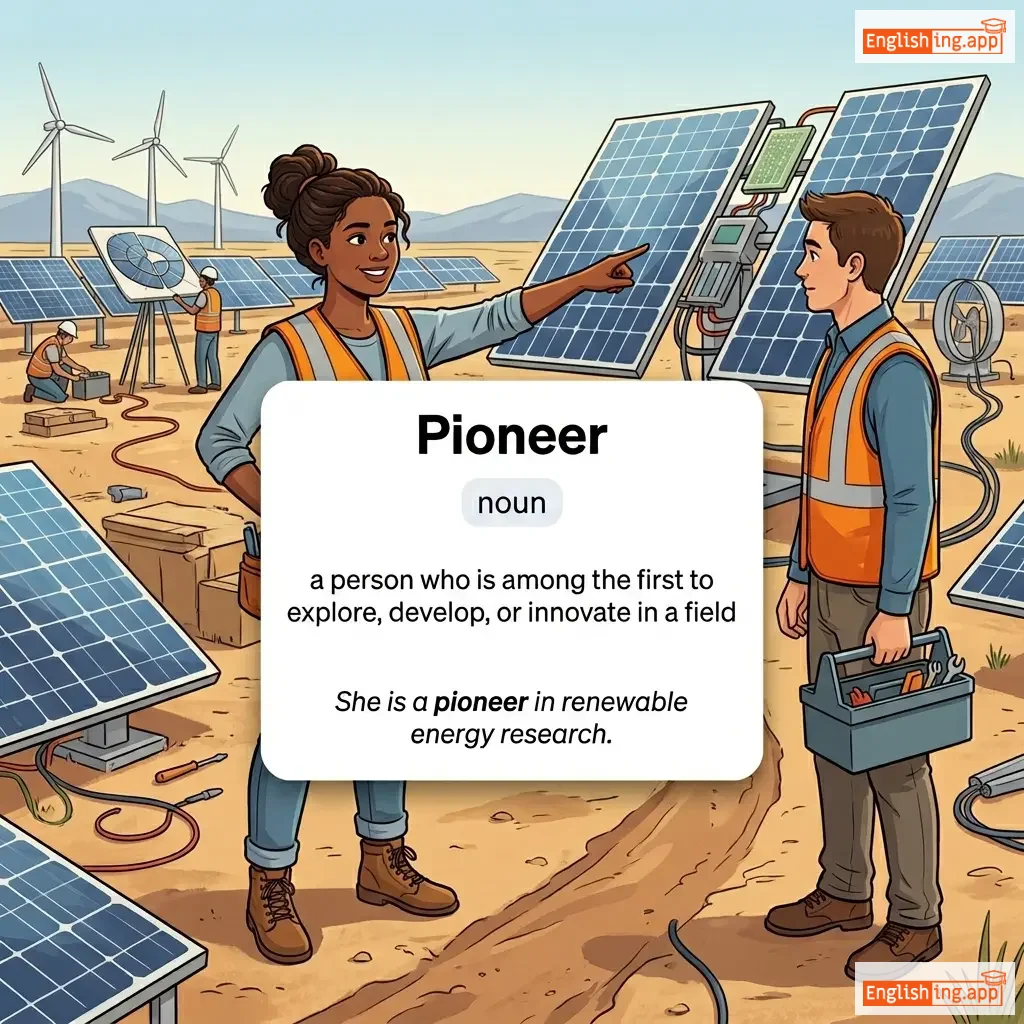
Pioneer definition card — visual illustration of the meaning
noun
/ˌpaɪəˈnɪər/
пионер (pioner)

a person who is among the first to explore, develop, or innovate in a field

"She is a pioneer in renewable energy research."

"Она является пионером в области возобновляемых источников энергии." (Ona yavyayetsya pionerom v oblasti vozobnovlyayemykh istochnikov energii.)
verb
/ˈpɪnpɔɪnt/
точно определить (tochno opredelit)

to locate or identify something with precision

"The detective was able to pinpoint the exact location of the suspect."

"Детектив смог точно определить местоположение подозреваемого." (Detektiv smog tochno opredelit' mestopolozhenie podozrevaemogo.)
noun
/ˈpɪnəkəl/
вершина (vershina)

the highest point or peak of something, especially of success or achievement

"Winning the Nobel Prize was the pinnacle of her career."

"Победа в Нобелевской премии была вершиной её карьеры." (Pobeda v Nobel'vskoy premii byla vershinoy yeye kariery.)
noun
/ˈpɪnəs/
маленькая лодка (malyenkaya lodka)

a small boat, often carried by a larger ship

"The sailors used a pinnace to reach the shore."

"Моряки использовали маленькую лодку, чтобы добраться до берега." (Moryaki ispol'zovali malenkuyu lodku, chtoby dobratsya do berega.)
adjective
/pɪŋk/
розовый (rozovyy)

a color between red and white

"She wore a pink dress to the party."

"Она была в розовом платье на вечеринке." (Ona byla v rozovom platyé na vecherinke.)
noun
/ˈpɪnjən/
маленькая шестеренка или внешняя часть крыла птицы; ограничить или обездвижить (malyenkaya shesterenka ili vneshnyaya chast' kryla ptitsy; ogranichit' ili obezdvizhity)

a small gear or the outer part of a bird's wing; to restrain or immobilize

"The bird's pinion was injured, preventing it from flying."

"Пинион птицы был поврежден, что мешало ей летать." (Pinion ptitsy byl povrezhden, chto meshalo yey letat'.)
noun
/ˈpaɪnˌæpəl/
ананас (ananas)

a tropical fruit with a rough spiky skin, sweet yellow flesh, and a leafy crown

"She added fresh pineapple to the fruit salad."
"Она добавила свежий ананас в фруктовый салат." (Ona dobavila svezhii ananas v fruktovyi salat)
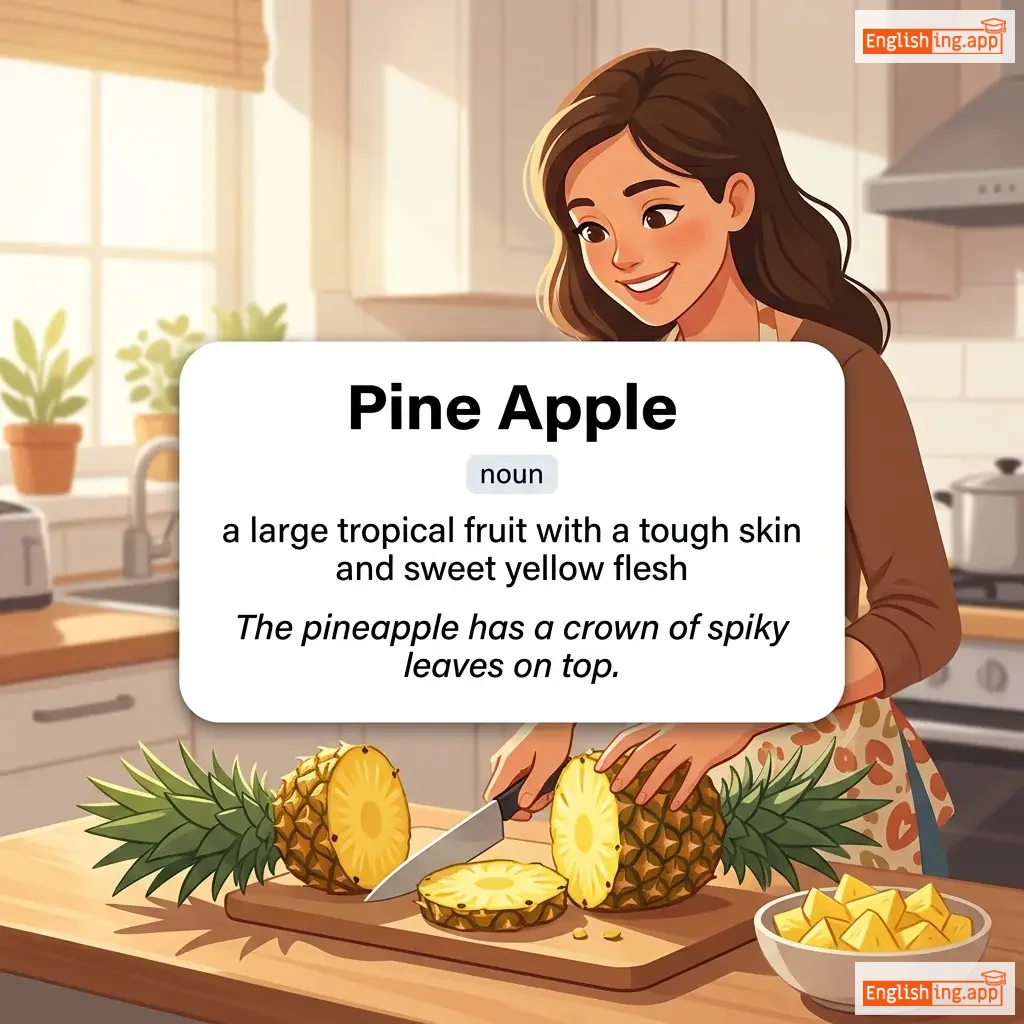
Pine Apple definition card — visual illustration of the meaning
noun
/ˈpaɪn.æp.əl/
ананас (ananas)

a large tropical fruit with a tough skin and sweet yellow flesh

"The pineapple has a crown of spiky leaves on top."

"У ананаса есть корона из колючих листьев сверху." (U ananasa yest' korona iz kolyuchikh list'yev sverkhu)
verb
/paɪn/
тосковать (toskovat)

to long intensely for something or someone; to suffer from longing

"He pined for his hometown after moving abroad."

"После того как он переехал за границу, он сильно тосковал по своему родному городу." (Posle togo kak on pereekhal za granitsu, on sil'no toskoval po svoemu rodnomu gorodu.)
noun
/ˈpɪntʃərz/
щипцы (shchiptsi)

a tool used for gripping or squeezing objects

"Use the pinchers to remove the hot coal safely."

"Используйте щипцы для безопасного удаления горячего угля." (Ispol'zuyte shchiptsi dlya bezopasnogo udaleniya goryachego uglya.)
verb
/pɪntʃ/
щипать (shchipat)

to squeeze tightly between the fingers; to take a small amount

"She pinched a bit of salt into the soup."

"Она добавила немного соли в суп." (Ona dobavila nemnogo soli v sup.)
Pincers definition card — visual illustration of the meaning
noun
/ˈpɪnsərz/
пассатижи (passatizhi)

a gripping tool with two arms used for holding or pulling objects

"He used pincers to remove the hot nail from the wood."

"Он использовал пассатижи, чтобы удалить горячий гвоздь из дерева." (On ispol'zoval passatizhi, chtoby udalit' goryachiy gvozd' iz dereva.)
noun
/pɪn/
булавка (bulavka)

a small thin piece of metal used to fasten or hold things together

"She used a pin to attach the note to the board."

"Она использовала булавку, чтобы прикрепить записку к доске." (Ona ispol'zovala bulavku, chtoby prikrepit' zapisku k doske.)
noun
/ˈpɪm.pəl/
прыщ (pryshch)

a small, inflamed elevation of the skin; a spot on the skin, especially on the face

"She was embarrassed about the pimple on her forehead."
"Она была смущена прыщом на лбу." (Ona byla smushchena pryshchom na lbu.)
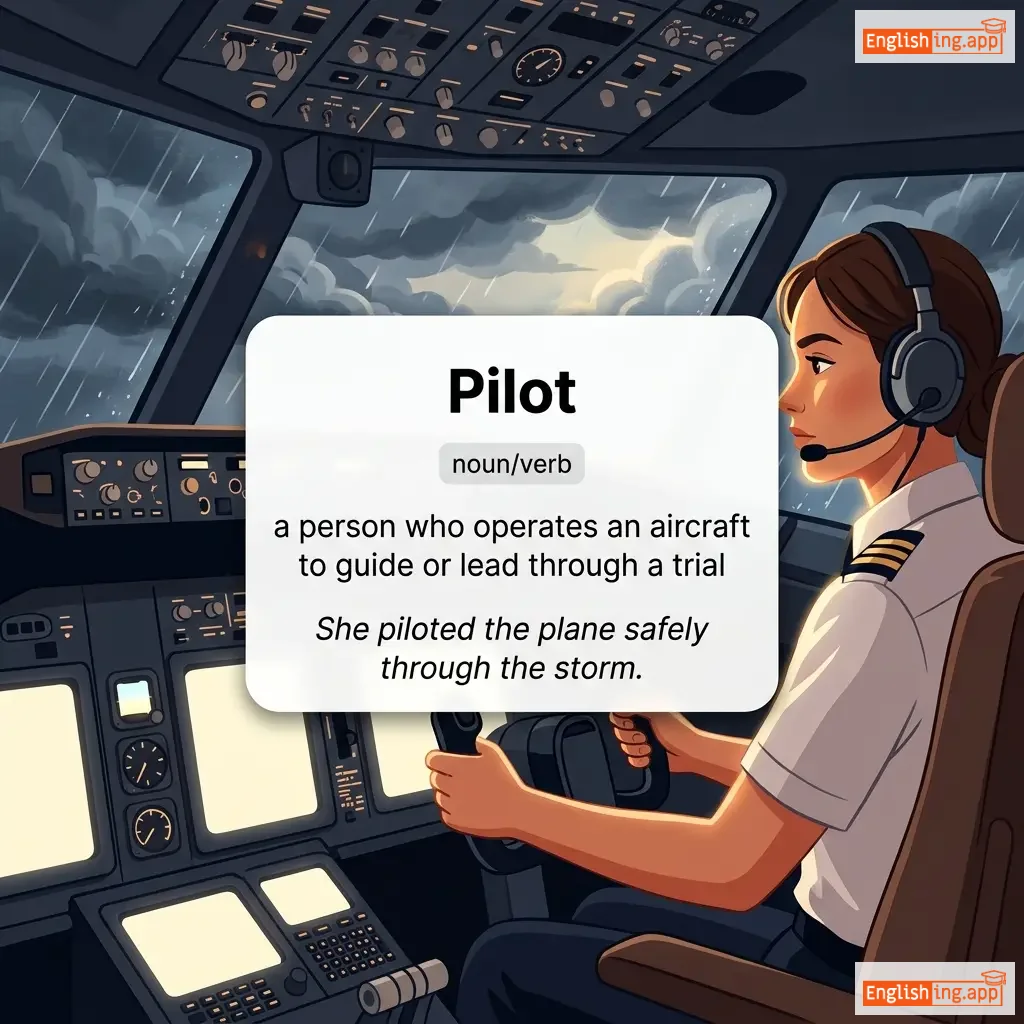
Pilot definition card — visual illustration of the meaning
noun/verb
/ˈpaɪlət/
пилот (pilot)

a person who operates an aircraft / to guide or lead through a trial

"She piloted the plane safely through the storm."

"Она безопасно вела самолет через бурю." (Ona bezopasno vela samolet cherez buryu.)
Pillow definition card — visual illustration of the meaning
noun
/ˈpɪloʊ/
подушка (podushka)

a soft cushion filled with material used to support the head while sleeping or resting

"She placed her head on the soft pillow and fell asleep quickly."

"Она положила голову на мягкую подушку и быстро уснула." (Ona polozhila golovu na myagkuyu podushku i bystro usnula.)
noun/verb
/ˈpɪləri/
устройство для публичного наказания (ustroystvo dlya publichnogo nakazaniya)

a device for publicly punishing someone / to expose to public ridicule

"The corrupt official was placed in the pillory for the town to jeer at."

"Коррумпированного чиновника поместили в пилори, чтобы город мог насмехаться над ним." (Korrumpirovannogo chinovnika pomestili v pillory, chtoby gorod mog nasmekhat'sya nad nim.)
Pillaw definition card — visual illustration of the meaning
noun
/pɪˈlɑːf/
пилав (pilav)

a dish of rice cooked in seasoned broth, often with meat and vegetables

"We enjoyed a delicious chicken pillaw for dinner."

"Мы наслаждались вкусным куриным пилавом на ужин." (My naslazhdalis' vkusnym kurinym pilavom na uzhin.)
noun
/ˈpɪlər/
столб (stolb)

a strong vertical support or mainstay of a structure or system

"The ancient temple was supported by massive stone pillars."

"Древний храм поддерживался массивными каменными столбами." (Drevniy khram podderzhivalsya massivnymi kamennymi stolbami.)
verb
/ˈpɪlɪdʒ/
грабить (grabit')

to rob or plunder a place, especially during war

"The invading army pillaged the village and took all valuables."

"Вторгшаяся армия разграбила деревню и забрала все ценности." (Vtorzhshayasya armiya razgrabila derevnyu i zabrala vse tsennosti.)
noun
/fɪˈlæn.θrə.pɪst/
филантроп (filantrop)

a person who seeks to promote the welfare of others, especially by donating money to good causes

"The philanthropist donated millions to build schools in rural areas."

"Филантроп пожертвовал миллионы на строительство школ в сельских районах." (Filantrop pozhertvoval milliony na stroitel'stvo shkol v selskih rajonah.)
noun
/ˈfænˌtæzəm/
привидение (prividenie)

an illusion, ghost, or figment of the imagination

"The child claimed to see a phantasm in the old house."

"Ребёнок утверждал, что видел привидение в старом доме." (Rebyonok utverzhdal, chto videl prividenie v starom dome.)
adjective
/ˌfæntæzməˈɡɒrɪkəl/
фантасмагорический (fantasmagoricheskiy)

Having a fantastic, dreamlike, or surreal appearance, often shifting or illusory.

"The movie created a phantasmagorical vision of another world."

"Фильм создал фантасмагорическое видение другого мира." (Film sozdaval fantasmagoricheskoe videnie drugogo mira.)
adjective
/ˌfærɪˈseɪɪkəl/
фарисейский (faryseyjskiy)

Excessively concerned with formal rules or outward show of morality, often in a hypocritical way.

"His pharisaical behavior made people doubt his sincerity."

"Его фарисейское поведение заставило людей сомневаться в его искренности." (Yego faryseyiskoye povedeniye zastavilo lyudey somnevatsya v yego iskrennosti.)
noun
/ˈfærɪsiː/
лицемерный человек (litsemernıy chelovek)

A member of an ancient Jewish sect; by extension, a self-righteous or hypocritical person.

"He acted like a pharisee, judging others while ignoring his own faults."

"Он вел себя как фарисей, осуждая других, но игнорируя свои собственные ошибки." (On vel sebya kak farisey, osuzhdaya drugikh, no ignoriruya svoi sobstvennye oshibki.)
noun
/ˌfɑːrməkəˈpiːə/
фармакопея (farmakopeya)

An official book listing medicinal drugs, their effects, and directions for use.

"The doctor referred to the pharmacopoeia to check the drug's proper dosage."

"Доктор обратился к фармакопее, чтобы проверить правильную дозу лекарства." (Doktor obratilsya k farmakopee, chtoby proverit' pravil'nuyu dozu lekarstva.)
noun
/ˈfɑːrməsi/
аптека (apteka)

A place where medicinal drugs are prepared and sold.

"I went to the pharmacy to buy antibiotics."

"Я пошел в аптеку купить антибиотики." (Ya poshel v apteku kupit' antibiotiki.)
Phase definition card — visual illustration of the meaning
noun
/feɪz/
фаза (faza)

a distinct period or stage in a process of development

"We are in the final phase of the project."

"Мы находимся на последней фазе проекта." (My nakhodimsya na posledney faze proekta.)
phase-out definition card — visual illustration of the meaning
noun
ˈfeɪz.aʊt
поэтапное сокращение (poetapnoe sokrashchenie)

A gradual reduction and eventual elimination of something.

"A phase-out of fossil fuels was agreed upon."
"Было принято решение о поэтапном отказе от ископаемого топлива." (Bylo prinato reshenie o poetapnom otkaze ot iskopayemogo topliva.)
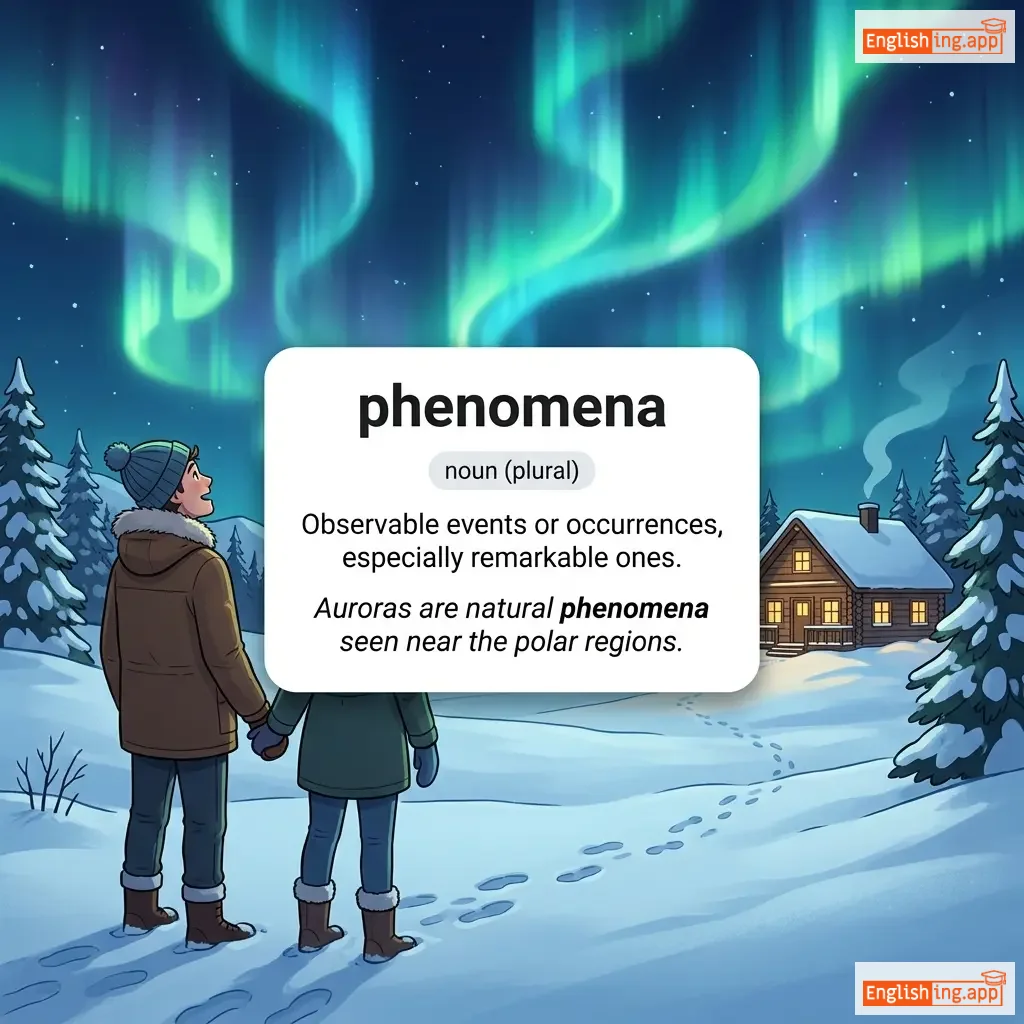
phenomena definition card — visual illustration of the meaning
noun (plural)
/fəˈnɒmɪnə/
феномены (fenomeny)

Observable events or occurrences, especially remarkable ones.

"Auroras are natural phenomena seen near the polar regions."

"Авроры — это природные феномены, которые наблюдаются вблизи полярных регионов." (Avrory — eto prirodnye fenomeny, kotorye nablyudayutsya vblizi polyarnykh regionov.)
adjective
/fəˈnɒmɪnəl/
феноменальный (fenomenal'nyy)

extraordinary, remarkable, or exceptional in a way that is very impressive

"The team achieved phenomenal success in the tournament."

"Команда достигла феноменального успеха на турнире." (Komanda dostigla fenomenal'nogo uspekha na turnire.)
noun
/fəˈnɒmɪnən/
феномен (fenomen)

an observable event, fact, or occurrence, often unusual or remarkable

"The Northern Lights are a natural phenomenon."

"Северное сияние — это природный феномен." (Severnoe siyanie — eto prirodnyy fenomen.)
noun
/ˈfaɪəl/
небольшая флакон (nebolshaya flakon)

a small glass container for liquids, especially medicines

"The doctor gave her a phial of medicine."

"Врач дал ей фиал с лекарством." (Vrach dal yey fial s lekarstvom.)
verb
/fɪˈlændər/
блуждать (bluzhdat)

to engage in casual or frivolous romantic or sexual relationships

"He was known to philander with many women in town."

"Он был известен своими отношениями с множеством женщин в городе." (On byl izvesten svoimi otnosheniyami s mnozhestvom zhenshchin v gorode.)
noun
/fɪˈlændərər/
бабник (babnik)

a man who habitually engages in casual romantic or sexual affairs

"The politician was exposed as a notorious philanderer."

"Политика раскрыли как печально известного бабника." (Politika raskryli kak pechal'no izvestnogo babnika.)
adjective
/ˌfɪl.ænˈθrɒp.ɪk/
филантропический (filantropicheskiy)

showing concern for the welfare of others; generous and charitable

"She is known for her philanthropic activities in the city."

"Она известна своими филантропическими деятельностями в городе." (Ona izvestna svoimi filantropicheskimi deyatel'nostyami v gorode.)
noun
/fɪˈlɒs.ə.fi/
философия (filosofiya)

the study of the fundamental nature of knowledge, reality, and existence

"Her philosophy emphasizes kindness and empathy."

"Ее философия подчеркивает доброту и эмпатию." (Eyo filosofiya podcherkivayet dobroty i empatiyu.)
noun
/fɪˈlɒsəfə/
философ (filosof)

a person engaged in the study of philosophy or in serious thinking about fundamental questions

"Socrates was a famous philosopher of ancient Greece."

"Сократ был знаменитым философом древней Греции." (Sokrat byl znamenitym filosofom drevnej Gretsii.)
adjective
/ˌfɪl.əˈsɒf.ɪ.kəl/
философский (filosofskiy)

relating to the study of the fundamental nature of knowledge, reality, and existence

"She maintained a calm and philosophical attitude during the crisis."

"Она сохранила спокойное и философское отношение в кризисной ситуации." (Ona sokhranila spokoynoe i filosofskoe otnoshenie v krizisnoy situatsii.)
verb
/fɪˈlɒs.ə.faɪz/
философствовать (filosofstvovat')

to think or talk about the fundamental nature of knowledge, reality, and existence

"He likes to philosophize about life and its meaning."

"Ему нравится философствовать о жизни и её значении." (Emu nravitsya filosofstvovat' o zhizni i yey znachenii.)
phlegmatic definition card — visual illustration of the meaning
adjective
/flɛgˈmæt.ɪk/
флегматичный (flegmatichny)

having an unemotional and stolidly calm disposition

"Despite the chaos, he remained phlegmatic and composed."

"Несмотря на хаос, он остался флегматичным и собранным." (Nesmotrya na khaos, on ostalsya flegmatichnym i sobrannym.)