Словари

Словарь английского языка | Значения слов, определения и примеры

noun
/ˈpiːtsə/
пицца (pitsa)

a flat round bread baked with toppings such as cheese, tomato, and other ingredients

"We ordered a large pepperoni pizza for dinner."
"Мы заказали большую пиццу с пепперони на ужин." (My zakazali bol'shuyu pitstsu s pepperoni na uzhin.)
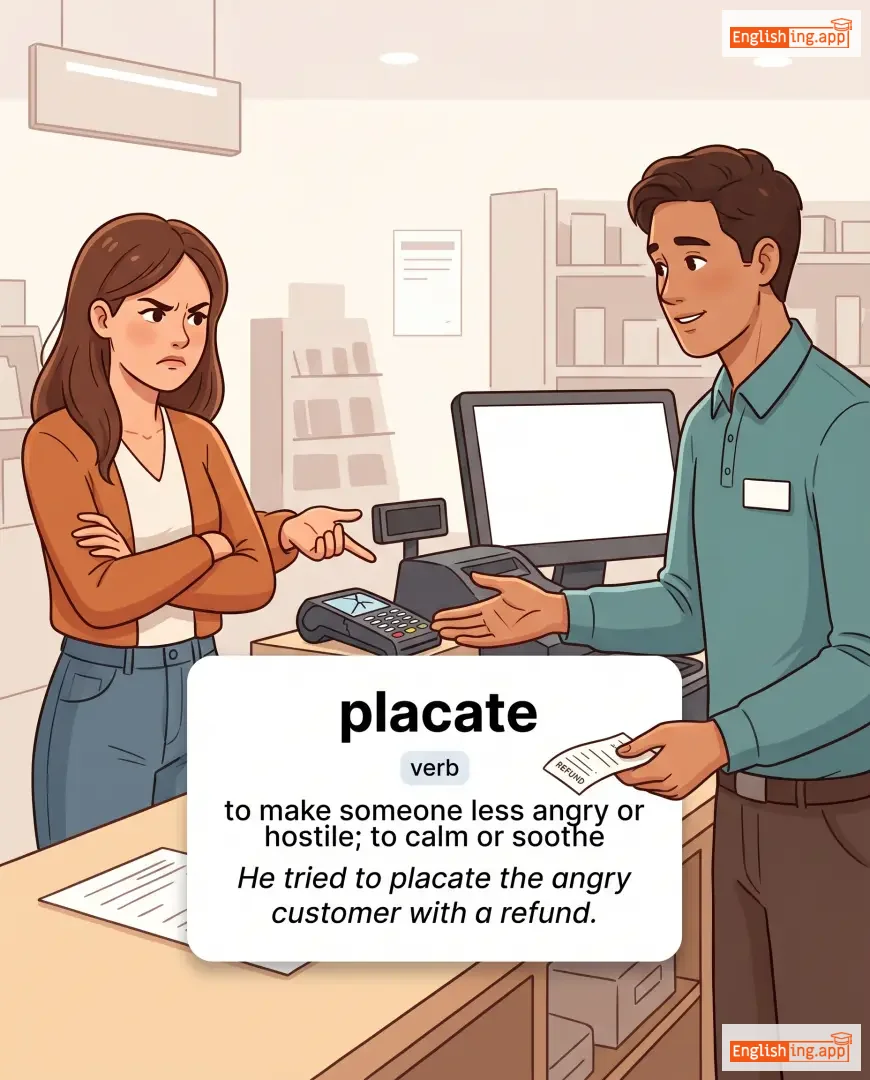
placate definition card — visual illustration of the meaning
verb
/pləˈkeɪt/
успокаивать (uspokaivat)

to make someone less angry or hostile; to calm or soothe

"He tried to placate the angry customer with a refund."

"Он попытался успокоить рассерженного клиента с помощью возврата денег." (On popytalsya uspokoit' rassierzhennogo klienta s pomoshch'yu vozvrata deneg.)
place definition card — visual illustration of the meaning
noun, verb
/pleɪs/
место (mesto)

a particular position or location; to put something in a specific position

"She placed the books on the table."

"Она положила книги на стол." (Ona polozhila knigi na stol.)
noun
/pləˈsiːboʊ/
плацебо (plátsebo)

a substance with no therapeutic effect, used as a control in testing new drugs

"The patient was given a placebo to compare the effect of the real drug."

"Пациенту дали плацебо, чтобы сравнить эффект настоящего лекарства." (Patsiyentu dali platsebo, chtoby sravnit' effekt nastoyashchego lekarstva.)
noun
/ˈpleɪsmənt/
размещение или назначение (razmeshcheniye ili naznacheniye)

the act of putting something or someone in a particular position or job

"The company arranged job placement for the graduates."

"Компания организовала трудоустройство для выпускников." (Kompaniya organizovala trudoustroystvo dlya vypusknikov.)
adjective
/ˈplæsɪd/
спокойный, мирный (spokoyny, mirny)

calm and peaceful, not easily disturbed

"She had a placid expression despite the chaos around her."

"У нее было спокойное выражение, несмотря на хаос вокруг." (U nee bylo spokoynoe virozhdenie, nesmotrya na haos vokrug.)
noun
/ˈpleɪdʒərɪzəm/
плагиат (plagiat)

the practice of taking someone else's work or ideas and passing them off as one's own

"The student was expelled for committing plagiarism in his essay."

"Студента исключили за плагиат в его эссе." (Studenta iskljuchili za plagiat v ego esse.)
verb
/ˈpleɪdʒəraɪz/
плагиатить (plagiatit)

to take someone else's work or ideas and present them as your own

"He was warned not to plagiarize his friend's essay."
"Ему было предупреждено не заниматься плагиатом на сочинении своего друга." (Emu bylo preduprezhdeno ne zanimat'sya plagiatom na sochinenii svoego druga.)
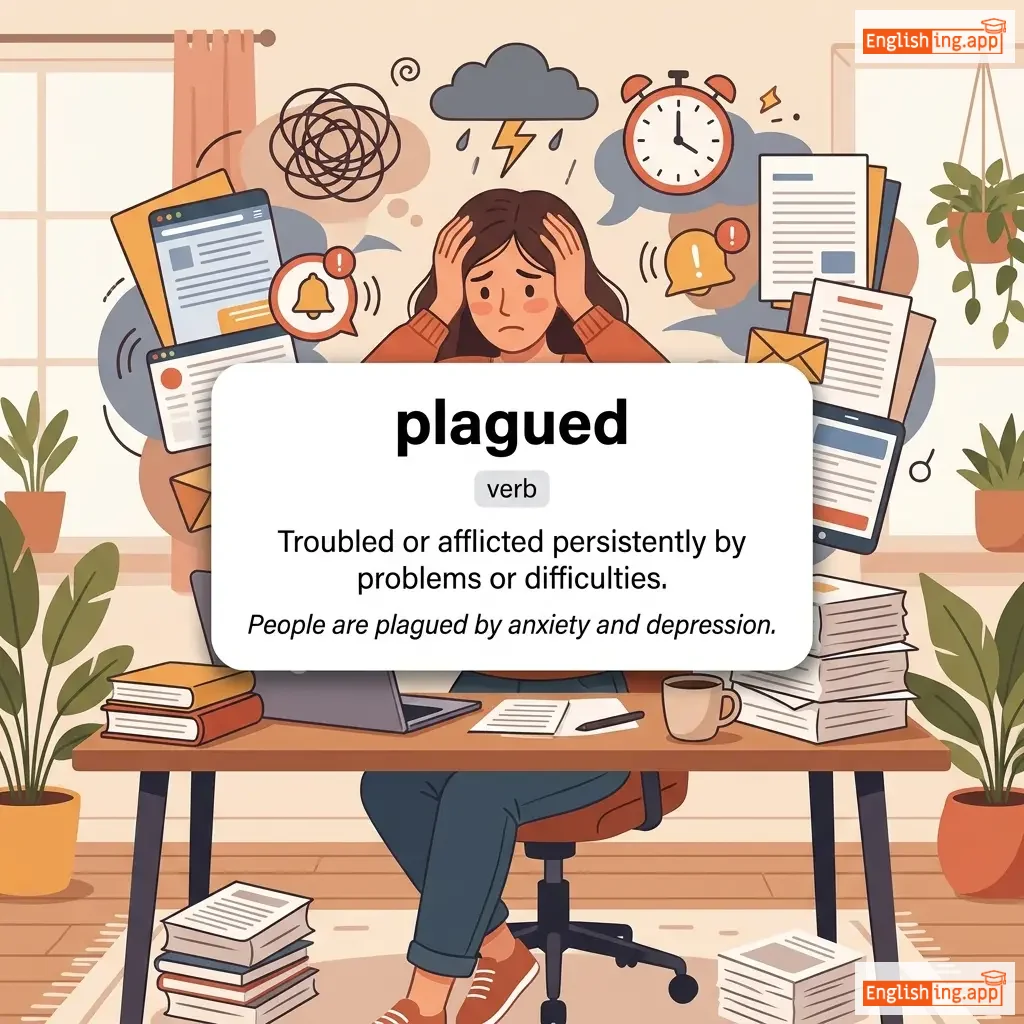
plagued definition card — visual illustration of the meaning
verb
pleɪɡd
поражённый (porazhyonnyy)

Troubled or afflicted persistently by problems or difficulties.

"People are plagued by anxiety and depression."

"Люди страдают от тревоги и депрессии." (Lyudi stradayut ot trevogi i depressii.)
adjective
/pleɪn/
простой (prostoi)

simple or clear, without decoration or complexity

"She wore a plain white dress to the ceremony."

"Она надела простое белое платье на церемонию." (Ona nadela prostoe bieloe platie na tseremoniu.)
noun
/ˈpleɪntɪf/
истец (istec)

a person who brings a case against another in a court of law

"The plaintiff filed a lawsuit against the company."

"Истец подал иск против компании." (Istets podal isk protiv kompanii.)
adjective
/ˈpleɪntɪv/
печальный, жалобный (pechalnyy, zhalobnyy)

expressing sadness or sorrow

"He raised a plaintive cry for help."

"Он поднял жалобный крик о помощи." (On podnyal zhalobnyy krik o pomoshchi.)
noun,verb
/pleɪt/
коса (kosa)

a braid of hair or straw; to braid

"She decided to plait her hair before the party."
"Она решила заплести волосы перед вечеринкой." (Ona reshilas' zaplesti volosy pered vecherinkoy.)
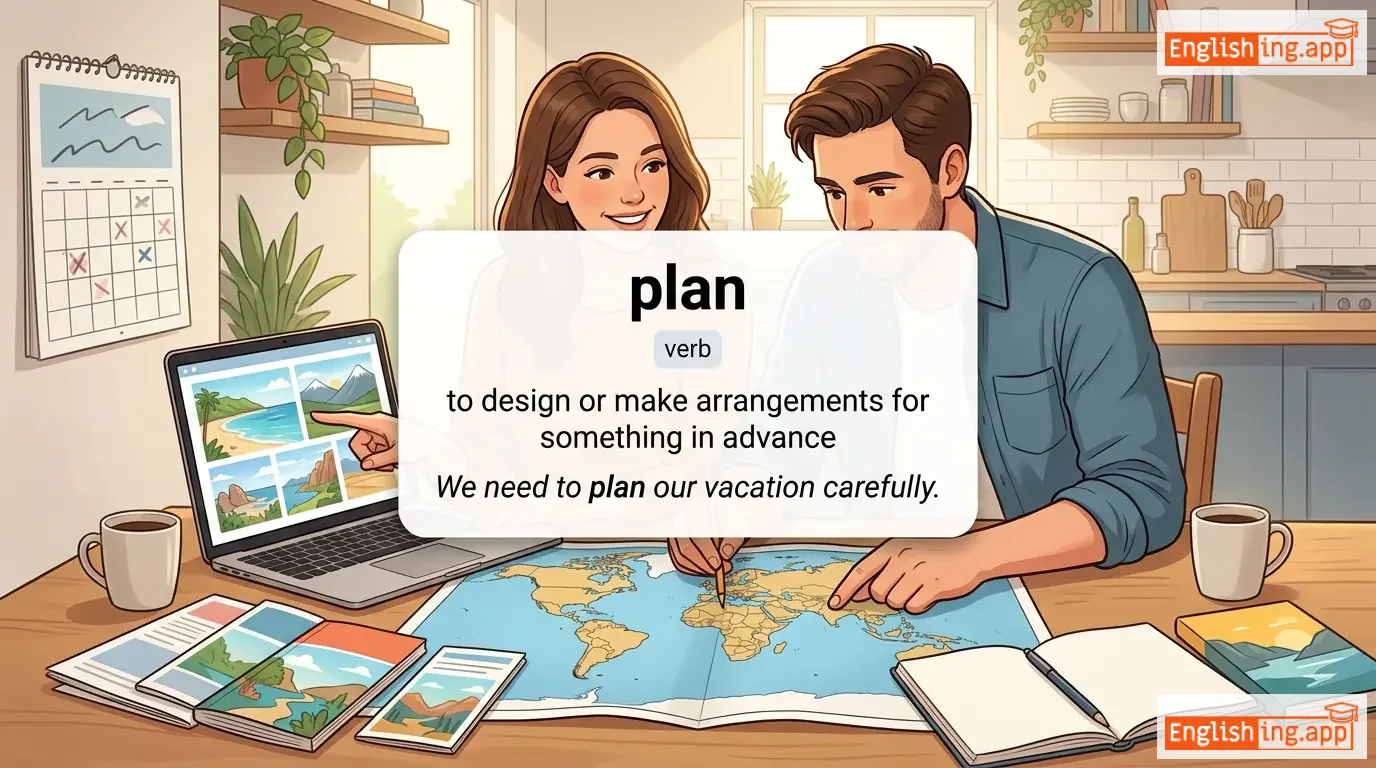
plan definition card — visual illustration of the meaning
noun
/plæn/
план (plan)

a detailed proposal for doing or achieving something

"We need a clear plan to move forward."

"Нам нужен четкий план для продвижения вперёд." (Nam nuzhen chetkiy plan dlya prodvizheniya vperyod.)
plane definition card — visual illustration of the meaning
noun,verb
/pleɪn/
плоская поверхность; самолет; выравнивать (ploskaya poverkhnost; samolyot; vyravnivat')

a flat surface; an aircraft; to make smooth

"The carpenter used a tool to plane the wood."
"Плотник использовал инструмент, чтобы выровнять древесину." (Plotnik ispol'zoval instrument, chtoby vyrovnyat' drevesinu.)
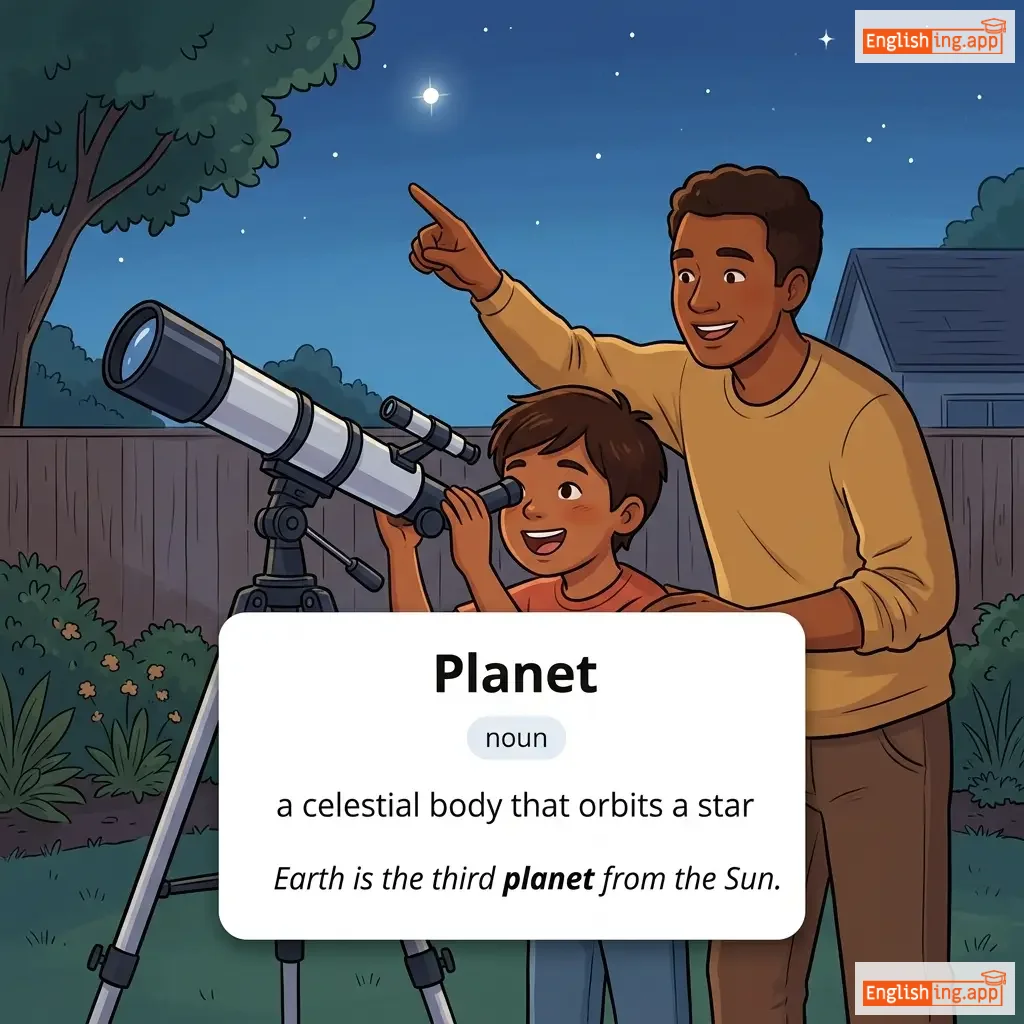
Planet definition card — visual illustration of the meaning
noun
/ˈplænɪt/
планета (planeta)

a celestial body that orbits a star

"Earth is the third planet from the Sun."

"Земля — третья планета от Солнца." (Zemlya — tretya planeta ot Solntsa.)
verb
/pliːz/
угодить (ugodit)

to make someone happy or satisfied

"She will do anything to please her parents."

"Она сделает всё, чтобы угодить своим родителям." (Ona sdelayet vsyo, chtoby ugodit svoim roditelyam.)
noun
/pəˈruːzl/
внимательное чтение (vnimatel'noe chtenie)

The action of reading or examining something carefully.

"The contract was given to the lawyer for perusal."
"Контракт был передан юристу для внимательного чтения." (Kontrakt byl peredan yuristu dlya vnimatel'nogo chteniya.)
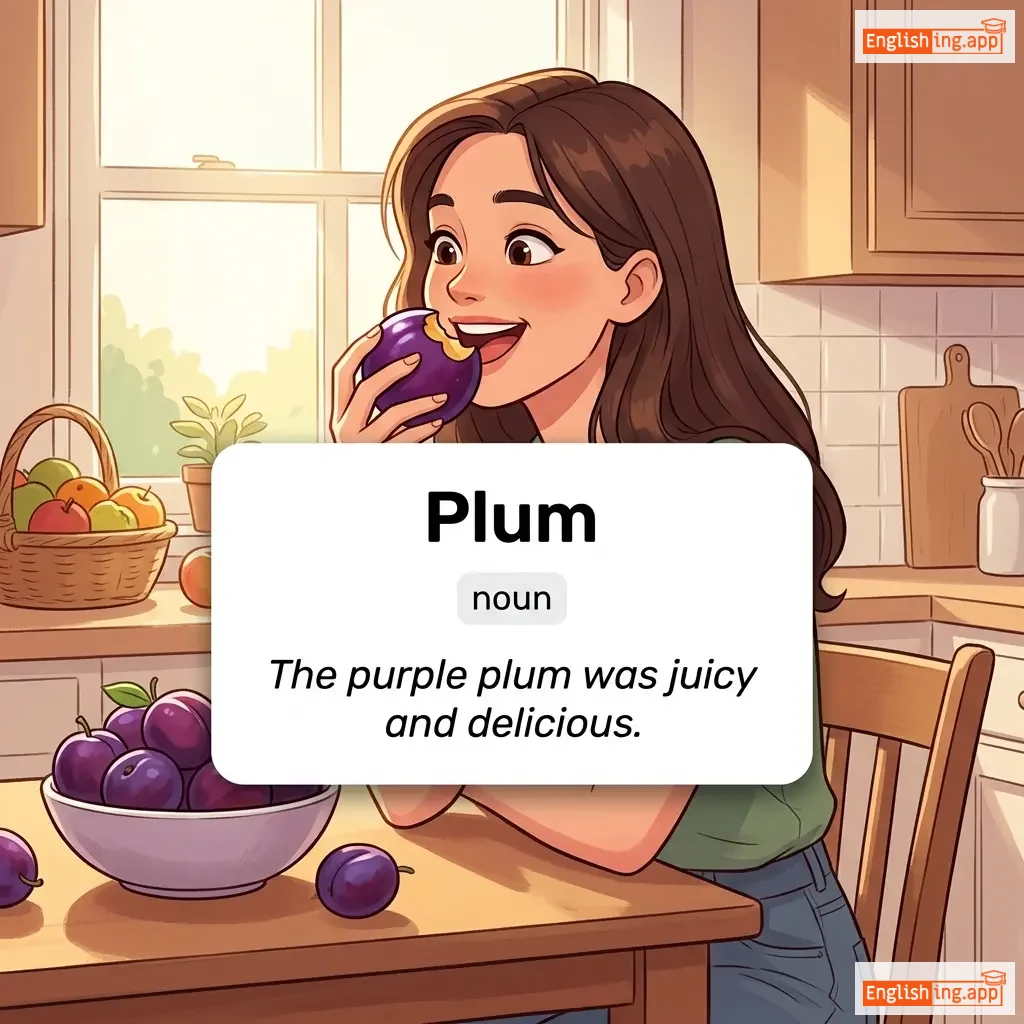
Plum definition card — visual illustration of the meaning
noun
/plʌm/
слива (sliva)

a small round fruit with smooth red or purple skin, sweet flesh, and a single large seed

"The purple plum was juicy and delicious."

"Пурпурная слива была сочной и вкусной." (Purpurnaya sliva byla sochnoy i vkusnoy.)
noun
/plʌɡ/
вилка (vilka)

a device used to connect or block an opening

"She inserted the plug into the socket."

"Она вставила вилку в розетку." (Ona vstavila vilku v rozetku.)
adjective
/ˈplʌk.i/
отважный (otvazhny)

having or showing courage and determination

"The plucky child rescued the kitten from the tree."

"Отважный ребенок спас котенка с дерева." (Otvazhnyy rebenok spas kotenka s dereva.)
verb
/plʌk/
сорвать, собрать мужество (sorvat', sobrat' muzhestvo)

to take hold of and quickly remove; to gather courage or determination

"She plucked a flower from the garden."

"Она сорвала цветок в саду." (Ona sorvala tsvetok v sadu.)
noun
/plɔɪ/
хитрый ход (khitryy khod)

a clever plan or action designed to gain an advantage

"She used a clever ploy to win the debate."
"Она использовала хитрый ход, чтобы выиграть дебаты." (Ona ispol'zovala khitryy khod, chtoby viigrat' debaty.)
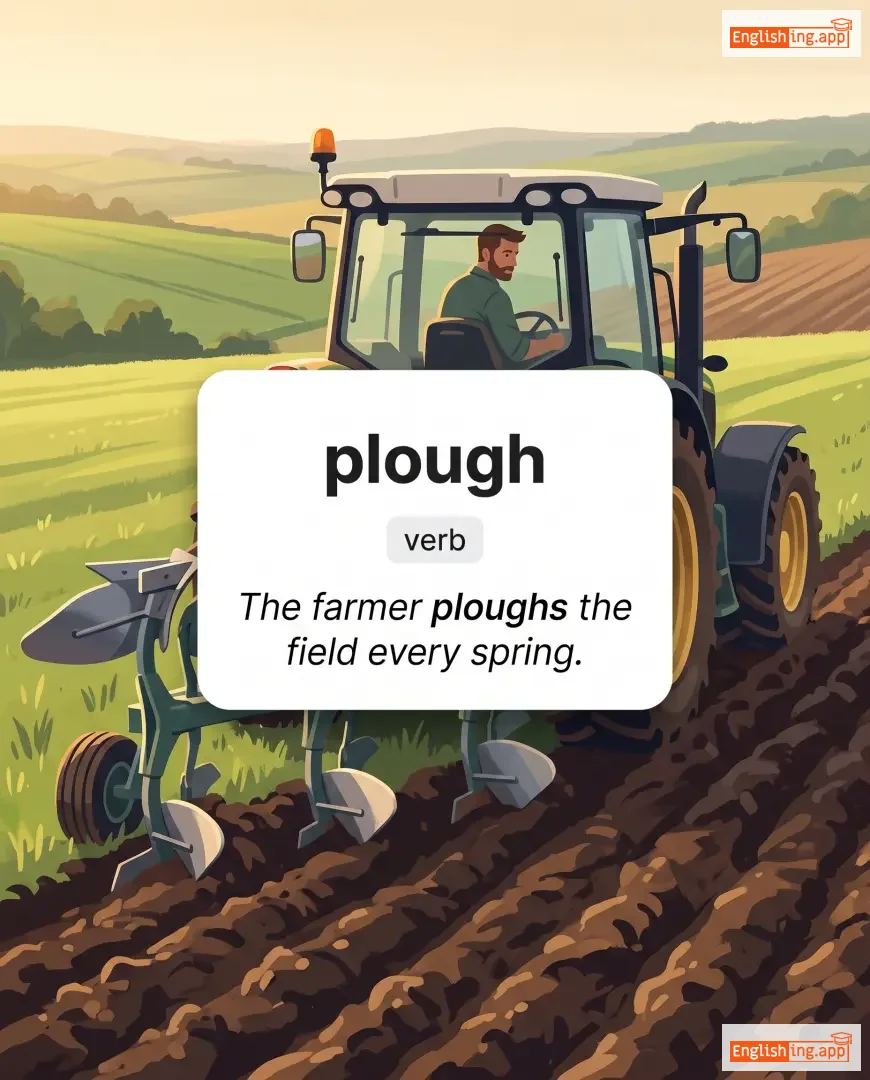
plough definition card — visual illustration of the meaning
noun
/plaʊ/
плуг (plugh)

a large farming tool used to break up and turn over soil before planting crops

"The oxen pulled the heavy plough across the field."
"Оксены тащили тяжелый плуг по полю." (Oksheny tashchili tyazhelyy plug po polyu.)
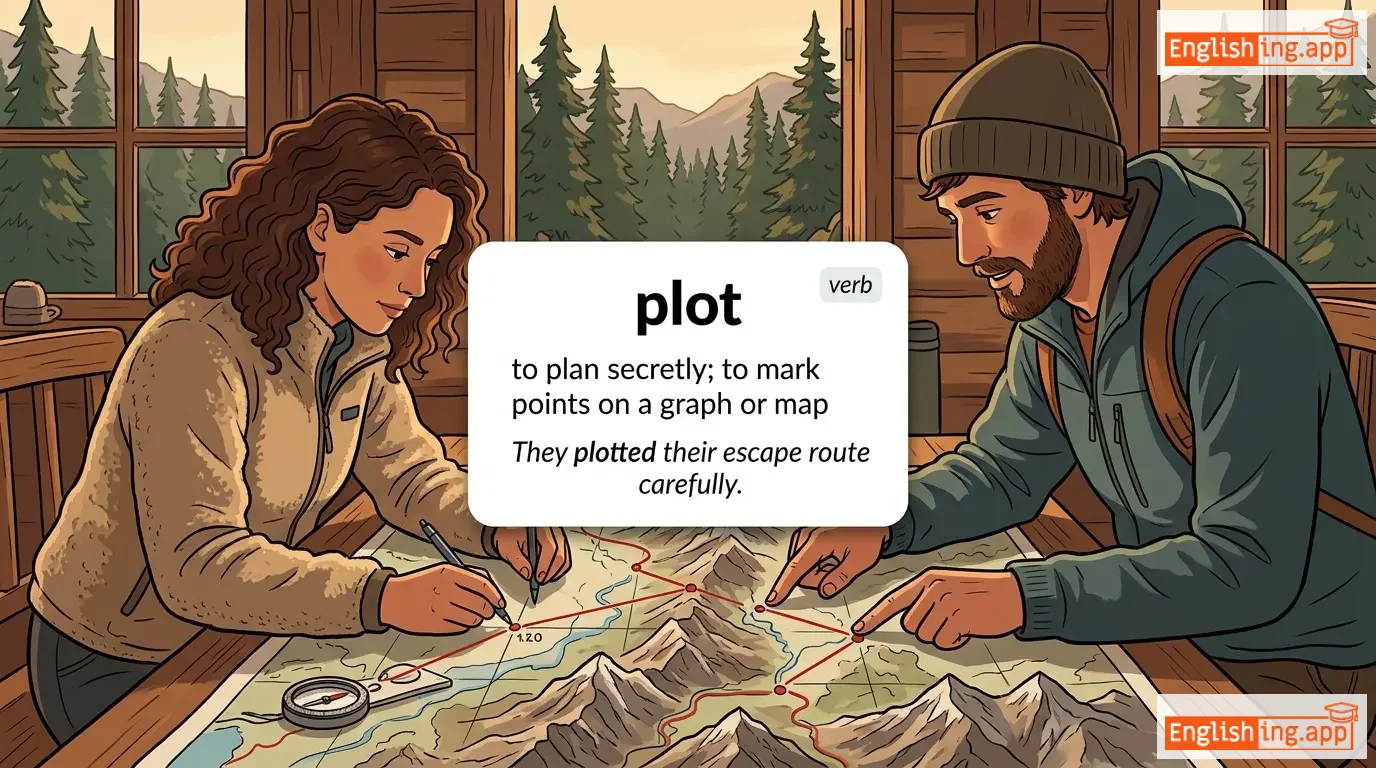
plot definition card — visual illustration of the meaning
noun
/plɒt/
заговор (zagovor)

a secret plan or scheme, often with bad intentions

"The villain made a plot to steal the treasure."

"Злодей придумал заговор, чтобы украсть сокровище." (Zlodey pridumal zagovor, chtoby ukrast' sokrovishche.)
adjective
/ˈplɒd.ɪŋ/
медленный и скучный (medlennyy i skuchnyy)

slow-moving and unexciting; showing steady effort

"The movie was entertaining but a bit plodding in the middle."

"Фильм был развлекательным, но немного медленным и скучным в середине." (Film byl razvlekatel'nym, no nemnogo medlennym i skuchnym v seredine.)
verb
/plɒd/
работать медленно и усердно (rabotat' medlenno i usierdno)

to work slowly and steadily, often with effort or difficulty

"He plodded through his homework despite feeling tired."

"Он медленно делал домашку, несмотря на усталость." (On medlenno delal domashku, nesmotrya na ustalost'.)
noun
/plaɪt/
бедствие, опасная ситуация (bedstvie, opasnaya situatsiya)

a difficult or dangerous situation

"The refugees described their plight during the war."

"Беженцы описали свое бедствие во время войны." (Bezhtsy opisali svoe bedstvie vo vremya voyny.)
adjective
/ˈplaɪənt/
гибкий, легко восприимчивый или адаптируемый (gibkiy, legko vospreeemchivyy ili adaptiruemyy)

flexible; easily influenced or adaptable

"She has a pliant personality that adapts well to new situations."

"У неё гибкий характер, который хорошо адаптируется к новым ситуациям." (U nee gibkiy kharakter, kotoryy khorosho adaptiruetsya k novym situatsiyam.)
adjective
/ˈplaɪəbəl/
гибкий (gibkiy)

easily bent or flexible; adaptable

"The metal is pliable enough to be shaped into jewelry."
"Металл достаточно гибкий, чтобы его можно было сформировать в ювелирные изделия." (Metall dostatochno gibkiy, chtoby ego mozhno bylo sformirovat' v yuvelirnye izdeliya.)
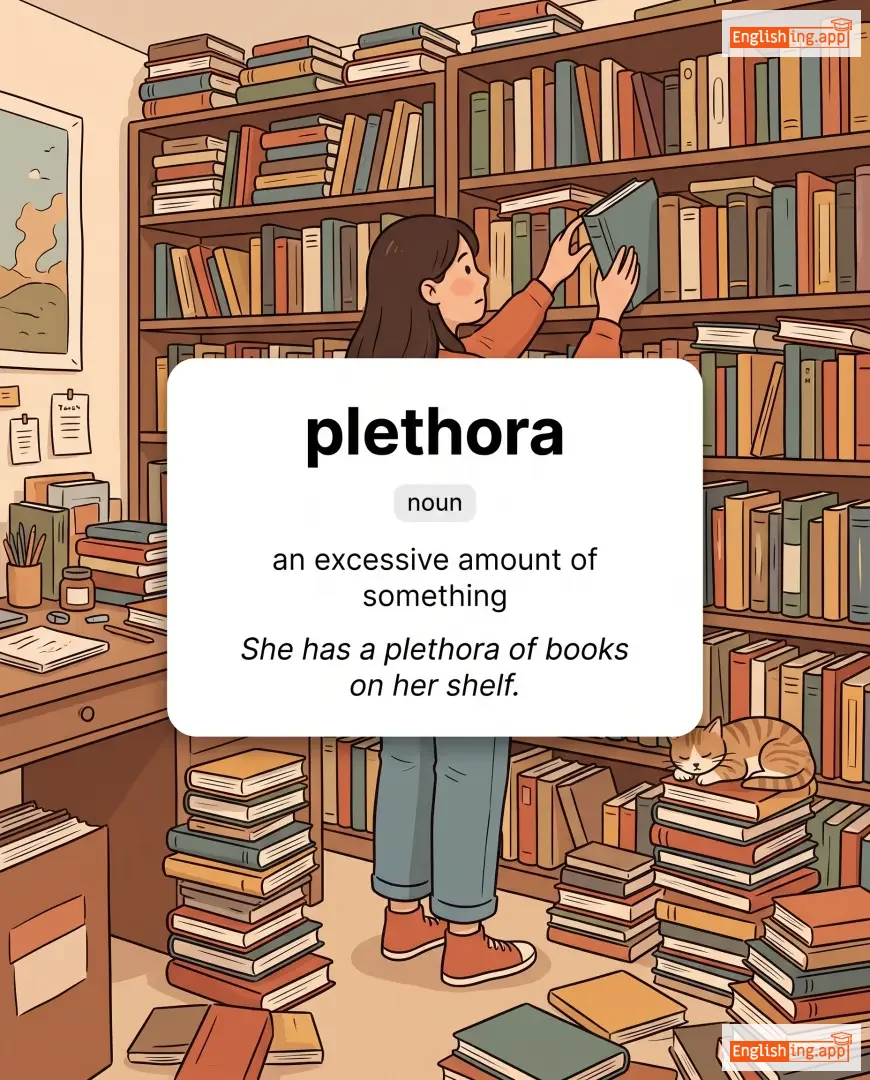
plethora definition card — visual illustration of the meaning
noun
/ˈplɛθərə/
чрезмерное количество (chrezmernoe kolichestvo)

an excessive amount of something

"She has a plethora of books on her shelf."

"У нее на полке чрезмерное количество книг." (U nee na polke chrezmernoe kolichestvo knig.)
noun
/ˈplɛnti/
изобилие (izobilie)

a large or sufficient amount or quantity

"We have plenty of time before the meeting."

"У нас есть достаточно времени до встречи." (U nas yest' dostatochno vremeni do vstrechi.)
noun
/ˈplɛntɪtjuːd/
изобилие (izobilie)

the condition of being full or abundant

"The garden offered a plentitude of flowers in spring."

"Сад предложил изобилие цветов весной." (Sad predlozhil izobilie tsvetov vesnoy.)
adjective
/ˈplɛntɪfəl/
обильный (obil'nyj)

Existing in great quantity; abundant.

"Food and water were plentiful in the village."

"Еда и вода были обильны в деревне." (Yeda i voda byli obil'ny v derevne.)
adjective
/ˈplɛntɪəs/
обильный (obil'nyj)

existing in great quantity; abundant

"The harvest was plenteous, providing enough food for the entire village."

"Урожай был обильным, обеспечив достаточное количество пищи для всей деревни." (Urozhaj byl obil'nym, obespechiv dostatochnoe kolichestvo pishchi dlya vsej derevni.)
noun
/ˈplɛnɪtjuːd/
пленитуда (plenituda)

the condition of being full or abundant; a great quantity

"The garden was a plenitude of flowers in spring."

"Сад был полон цветов весной." (Sad byl polon tsvetov vesnoy.)
noun
/ˌpliːnɪpəˈtɛnʃəri/
пленипотенциарий (plenipotentciariy)

a person invested with full power to act on behalf of another, especially in diplomacy

"The ambassador was a plenipotentiary sent to negotiate the treaty."

"Посол был пленипотенциарием, направленным для переговоров о договоре." (Posol byl plenipotenciariyem, napavlennym dlya peregovorov o dogovore.)
adjective
/ˈpliːnəri/
пленарный (plenarnyy)

complete in every way; fully attended or absolute

"The committee held a plenary session to discuss all matters of importance."

"Комитет провел пленарное заседание для обсуждения всех важных вопросов." (Komitet provel plenarnoye zasedaniye dlya obshchushcheniya vsekh vazhnykh voprosov.)
noun
/ˈplɛdʒɔːr/
поручитель (poruchitel)

a person who gives or offers a pledge or security

"The bank accepted the jewelry from the pledgeor as collateral for the loan."

"Банк принял ювелирные изделия от поручителя в качестве залога для кредита." (Bank prinyal yuvelirnye izdeliya ot poruchitelya v kachestve zaloga dlya kredita.)
noun
/ˈplɛdʒiː/
лицо, которому что-то предоставлено в качестве залога (litso, kotoromu chto-to predostavleno v kachestve zaloga)

a person to whom something is pledged or given as security

"The bank is the pledgee of the collateral until the loan is repaid."

"Банк является залогодержателем до тех пор, пока кредит не будет погашен." (Bank yavljayetsya zalogoderzhatelem do tekh por, poka kredit ne budet pogashen.)
noun
/plɛdʒ/
обещание (obeshchaniye)

a solemn promise or agreement to do or refrain from doing something

"He gave a pledge to support the cause."

"Он дал обещание поддержать эту цель." (On dal obeshchaniye podderzhat' etu tsel'.)
noun
/ˈplɛbɪsaɪt/
всенародное голосование (vsenarodnoe golosovanie)

a direct vote by the electorate on an important public question

"The government held a plebiscite to decide on the new constitution."

"Правительство провело всенародное голосование, чтобы решить, какой будет новая конституция." (Pravitel'stvo provelo vsenarodnoe golosovanie, chtoby reshit', kakoy budet novaya konstitutsiya.)
adjective, noun
/pləˈbiːən/
общий, простой народ (obshchiy, prostoy narod)

alternate spelling of 'plebeian'; common or ordinary

"His tastes were rather plebian, favoring simple food and clothes."

"Его вкусы были довольно общими, он предпочитал простую еду и одежду." (Ego vkusy byli dovol'no obshchimi, on predpochital prostuyu yedu i odezhdu.)
adjective, noun
/pləˈbiːən/
обычный человек (obychnyy chelovek)

common, ordinary, or belonging to the lower social classes

"The festival was enjoyed by both plebeian and noble citizens."

"Фестиваль был наслажден как плебеями, так и знатными гражданами." (Festival byl naslazhden kak plebeyami, tak i znatnymi grazhdanami.)
noun, verb
/pliːt/
складка (skladka)

a fold in fabric made by doubling the material back upon itself

"She added a pleat to the skirt for extra volume."

"Она добавила складку на юбку для дополнительного объема." (Ona dobavila skladku na yubku dlya dopolnitel'nogo ob'yema.)
noun
/ˈplɛʒər/
удовольствие (udovolstvie)

a feeling of happiness or enjoyment

"It was a pleasure to meet you."

"Было приятно встретиться с вами." (Bylo priyatno vstrechit'sya s vami.)
adjective
/ˈplɛʒərəbl/
приятный, доставляющий удовольствие (priyatnyy, dostavlyayushchiy udovol'stviye)

giving pleasure or enjoyment

"Reading a good book is a pleasurable activity."

"Чтение хорошей книги - это приятное занятие." (Chteniye khoroshey knigi - eto priyatnoye zanyatiye.)
adjective
/pliːzd/
доволен (dovolen)

feeling happy or satisfied with something

"She was pleased with her exam results."
"Она была довольна результатами экзамена." (Ona byla dovol'na rezul'tatami ekzamenа.)
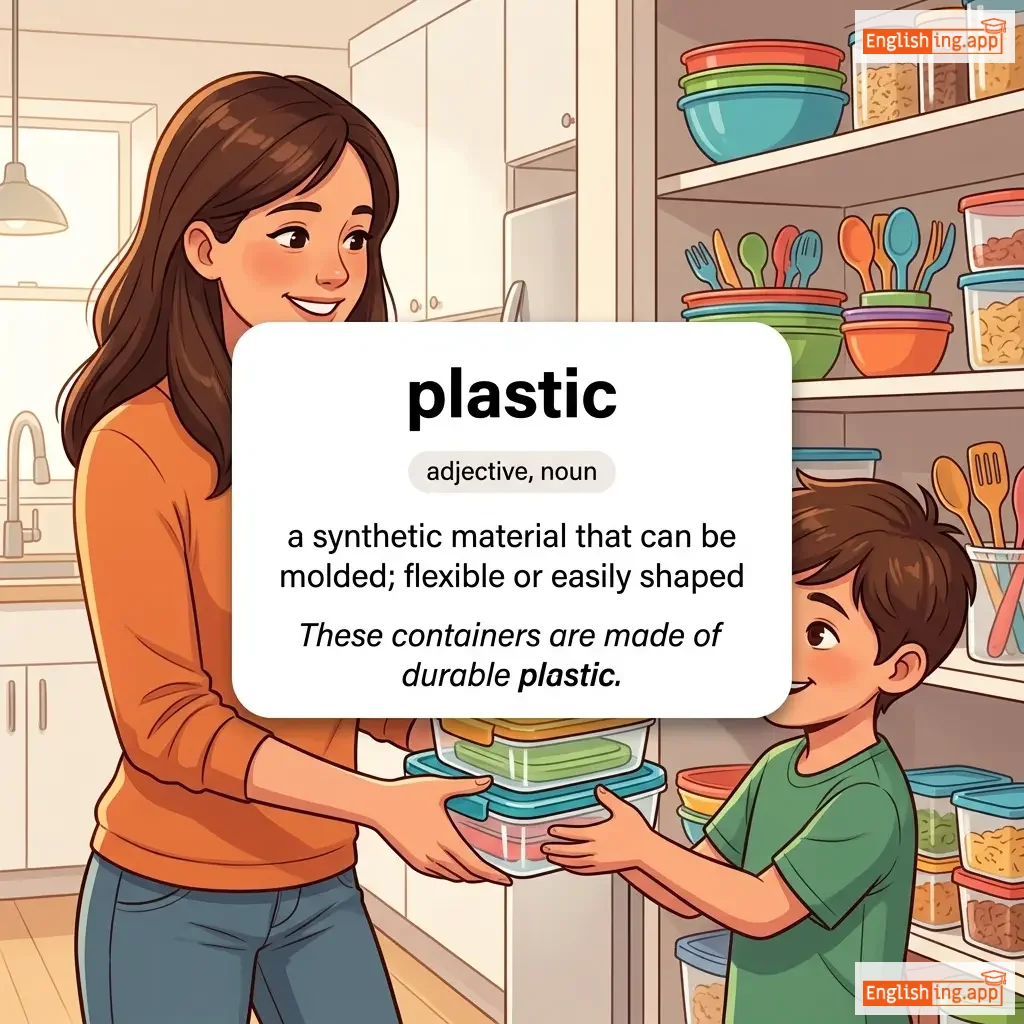
plastic definition card — visual illustration of the meaning
adjective, noun
/ˈplæstɪk/
пластик (plastik)

a synthetic material that can be molded; flexible or easily shaped

"These containers are made of durable plastic."
"Эти контейнеры сделаны из прочного пластика." (Eti konteynery sdelany iz prochnogo plastika.)
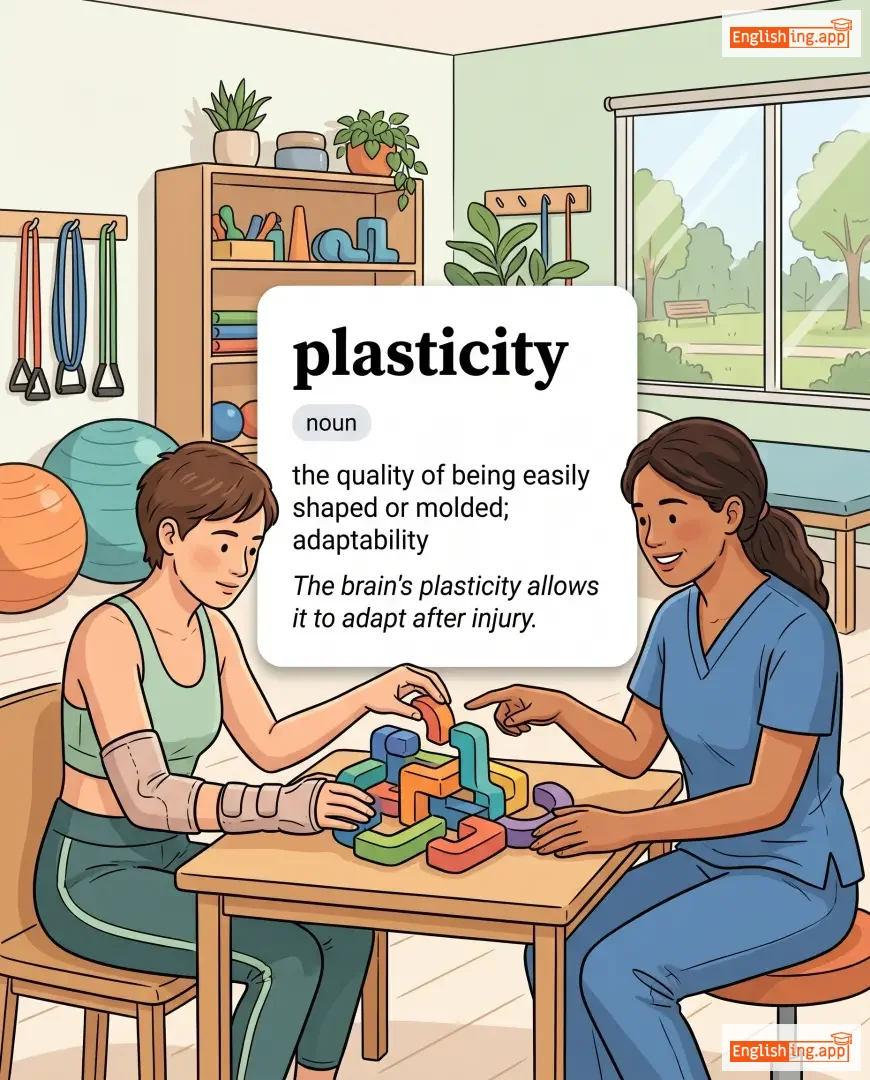
plasticity definition card — visual illustration of the meaning
noun
/plæsˈtɪsəti/
пластичность, способность к адаптации (plastichnost, sposobnost k adaptatsii)

the quality of being easily shaped or molded; adaptability

"The brain's plasticity allows it to adapt after injury."

"Пластичность мозга позволяет ему адаптироваться после травмы." (Plastichnost mozga pozvolyaet emu adaptiratsya posle travmy.)