Vocabularios

Descubra, aprenda y domine el vocabulario en inglés

noun
/ˈpiːtsə/
pizza (pizza)

a flat round bread baked with toppings such as cheese, tomato, and other ingredients

"We ordered a large pepperoni pizza for dinner."

"Pedimos una pizza grande de pepperoni para la cena." (Pedimos una pizza grande de pepperoni para la cena.)
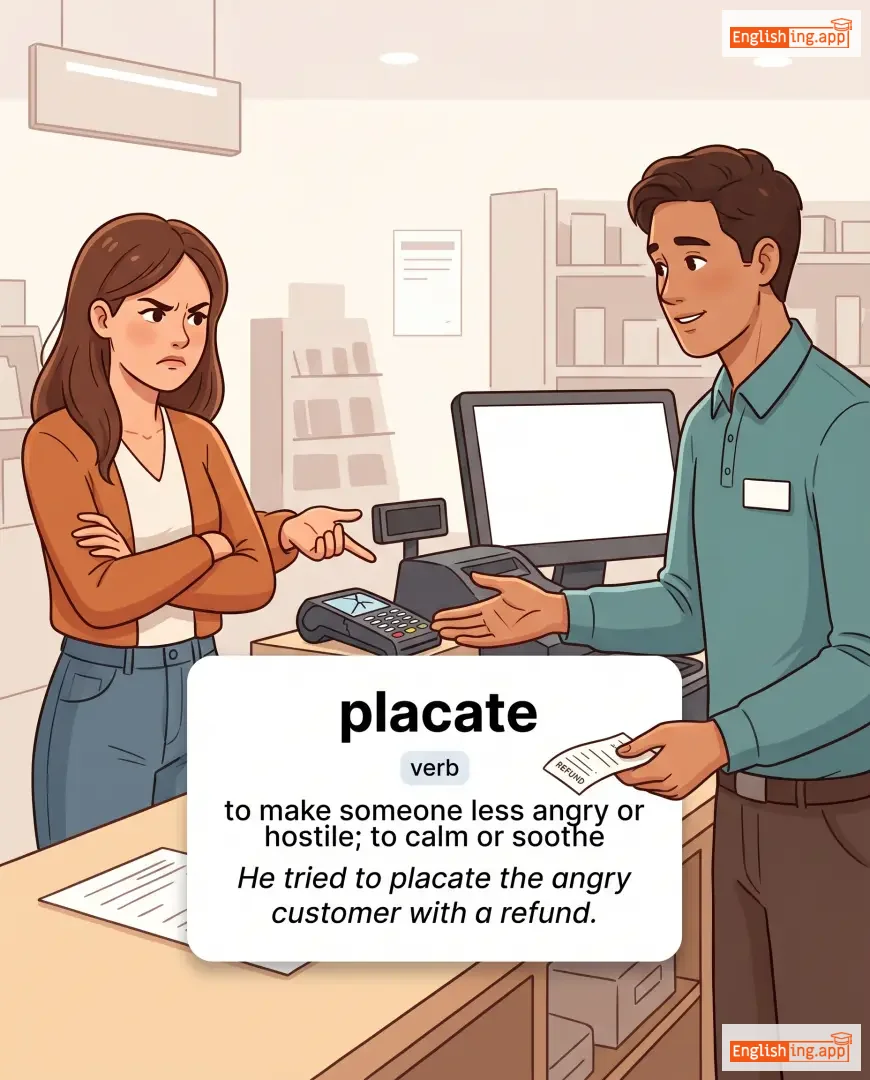
placate definition card — visual illustration of the meaning
verb
/pləˈkeɪt/
calmar (calmar)

to make someone less angry or hostile; to calm or soothe

"He tried to placate the angry customer with a refund."

"Intentó calmar al cliente enojado con un reembolso." (Intentó calmar al cliente enojado con un reembolso.)
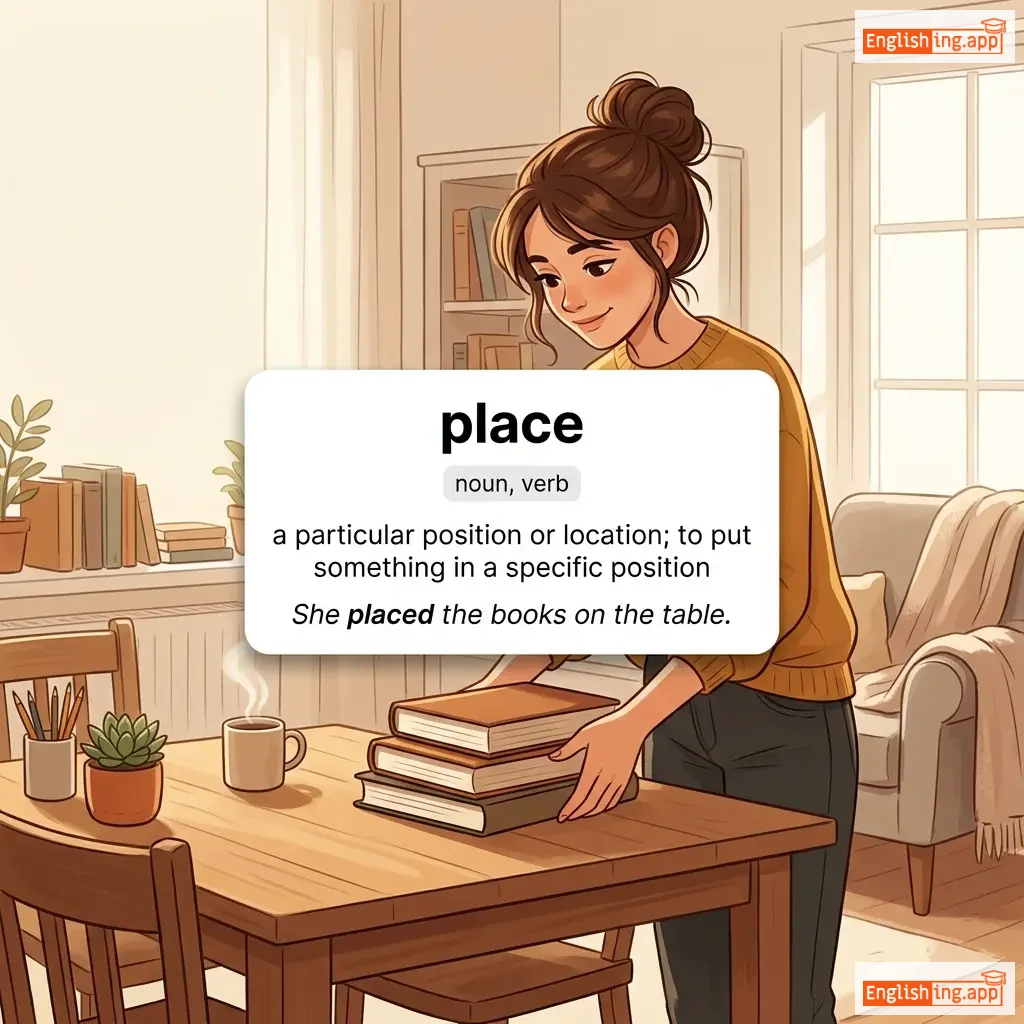
place definition card — visual illustration of the meaning
noun, verb
/pleɪs/
lugar (lugar)

a particular position or location; to put something in a specific position

"She placed the books on the table."

"Ella colocó los libros sobre la mesa." (Ella colocó los libros sobre la mesa.)
noun
/pləˈsiːboʊ/
placebo (placebo)

a substance with no therapeutic effect, used as a control in testing new drugs

"The patient was given a placebo to compare the effect of the real drug."

"Al paciente se le dio un placebo para comparar el efecto del medicamento real." (Al paciente se le dio un placebo para comparar el efecto del medicamento real.)
noun
/ˈpleɪsmənt/
colocación o asignación (colocacion o asignacion)

the act of putting something or someone in a particular position or job

"The company arranged job placement for the graduates."

"La empresa organizó la colocación laboral para los graduados." (La empresa organizó la colocación laboral para los graduados.)
adjective
/ˈplæsɪd/
sereno, tranquilo (sereno, tranquilo)

calm and peaceful, not easily disturbed

"She had a placid expression despite the chaos around her."

"Ella tenía una expresión serena a pesar del caos a su alrededor." (Ella tenía una expresión serena a pesar del caos a su alrededor.)
noun
/ˈpleɪdʒərɪzəm/
plagio (plagio)

the practice of taking someone else's work or ideas and passing them off as one's own

"The student was expelled for committing plagiarism in his essay."

"El estudiante fue expulsado por cometer plagio en su ensayo." (El estudiante fue expulsado por cometer plagio en su ensayo.)
verb
/ˈpleɪdʒəraɪz/
plagiar (plagiar)

to take someone else's work or ideas and present them as your own

"He was warned not to plagiarize his friend's essay."

"Se le advirtió que no plagiara el ensayo de su amigo." (Se le advirtió que no plagiara el ensayo de su amigo.)
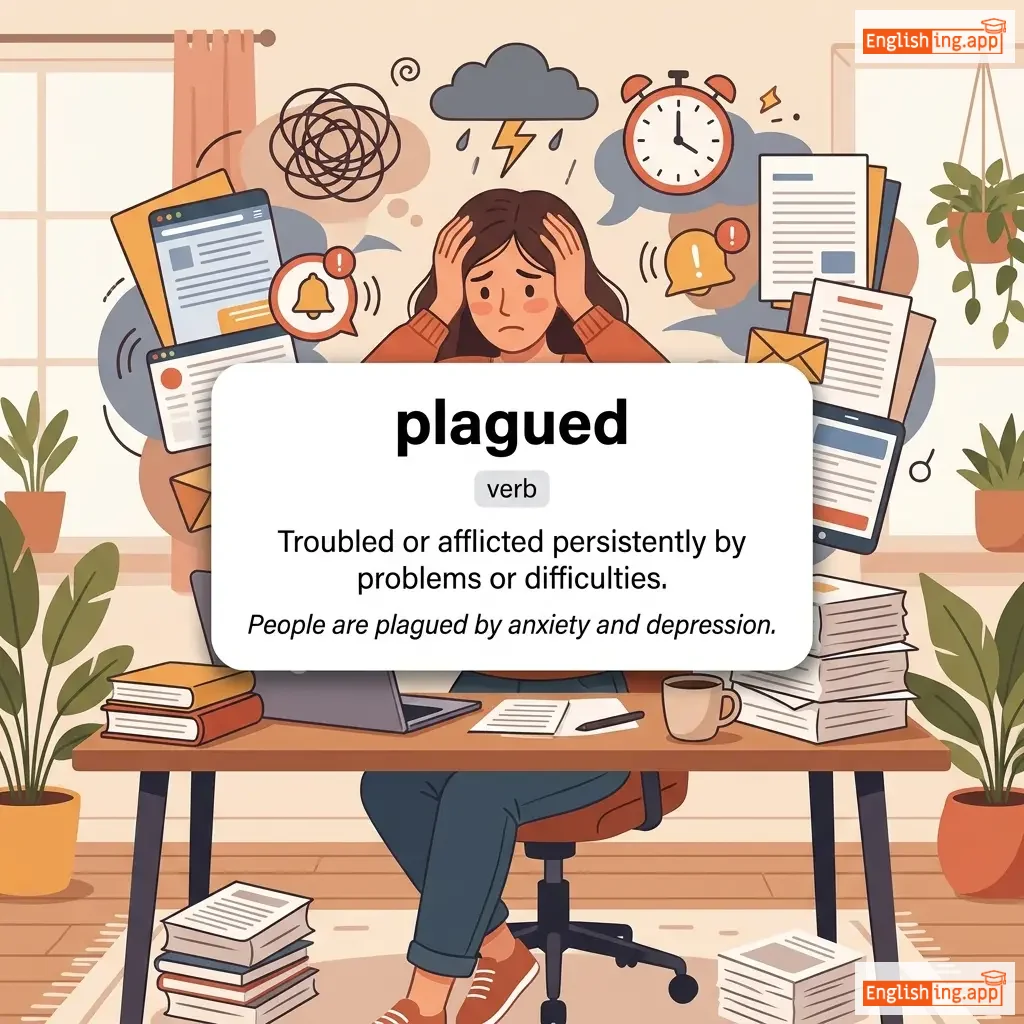
plagued definition card — visual illustration of the meaning
verb
pleɪɡd
afligido (afligido)

Troubled or afflicted persistently by problems or difficulties.

"People are plagued by anxiety and depression."

"Las personas están afligidas por la ansiedad y la depresión." (Las personas están afligidas por la ansiedad y la depresión.)
adjective
/pleɪn/
sencillo (sencillo)

simple or clear, without decoration or complexity

"She wore a plain white dress to the ceremony."

"Ella llevaba un vestido blanco sencillo a la ceremonia." (Ella llevaba un vestido blanco sencillo a la ceremonia.)
noun
/ˈpleɪntɪf/
demandante (demandante)

a person who brings a case against another in a court of law

"The plaintiff filed a lawsuit against the company."

"El demandante presentó una demanda contra la empresa." (El demandante presentó una demanda contra la empresa.)
adjective
/ˈpleɪntɪv/
triste, lamentoso (triste, lamentoso)

expressing sadness or sorrow

"He raised a plaintive cry for help."

"Él levantó un grito lamentoso pidiendo ayuda." (El levanto un grito lamentoso pidiendo ayuda.)
noun,verb
/pleɪt/
trenza (trenza)

a braid of hair or straw; to braid

"She decided to plait her hair before the party."

"Ella decidió trenzarse el cabello antes de la fiesta." (Ella decidió trenzarse el cabello antes de la fiesta.)
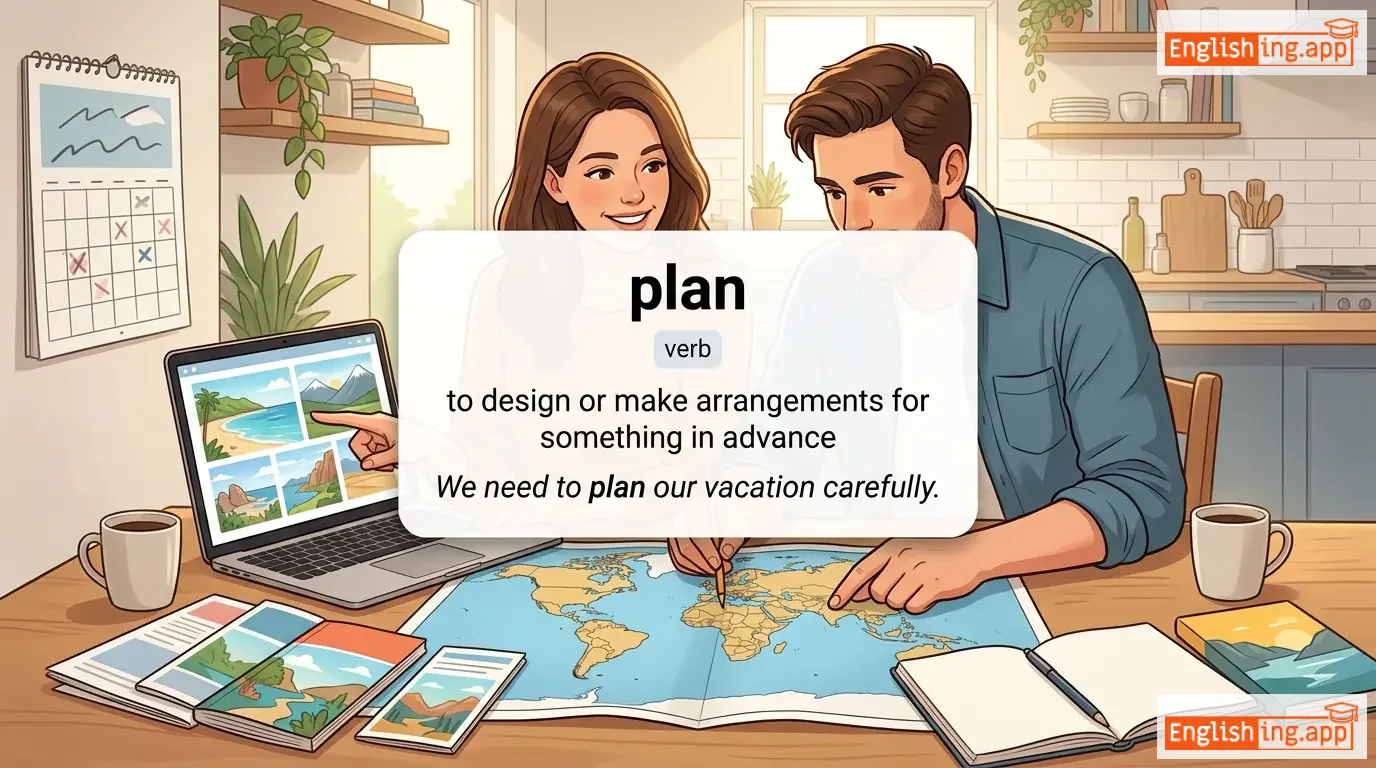
plan definition card — visual illustration of the meaning
noun
/plæn/
plan (plan)

a detailed proposal for doing or achieving something

"We need a clear plan to move forward."

"Necesitamos un plan claro para avanzar." (Necesitamos un plan claro para avanzar.)
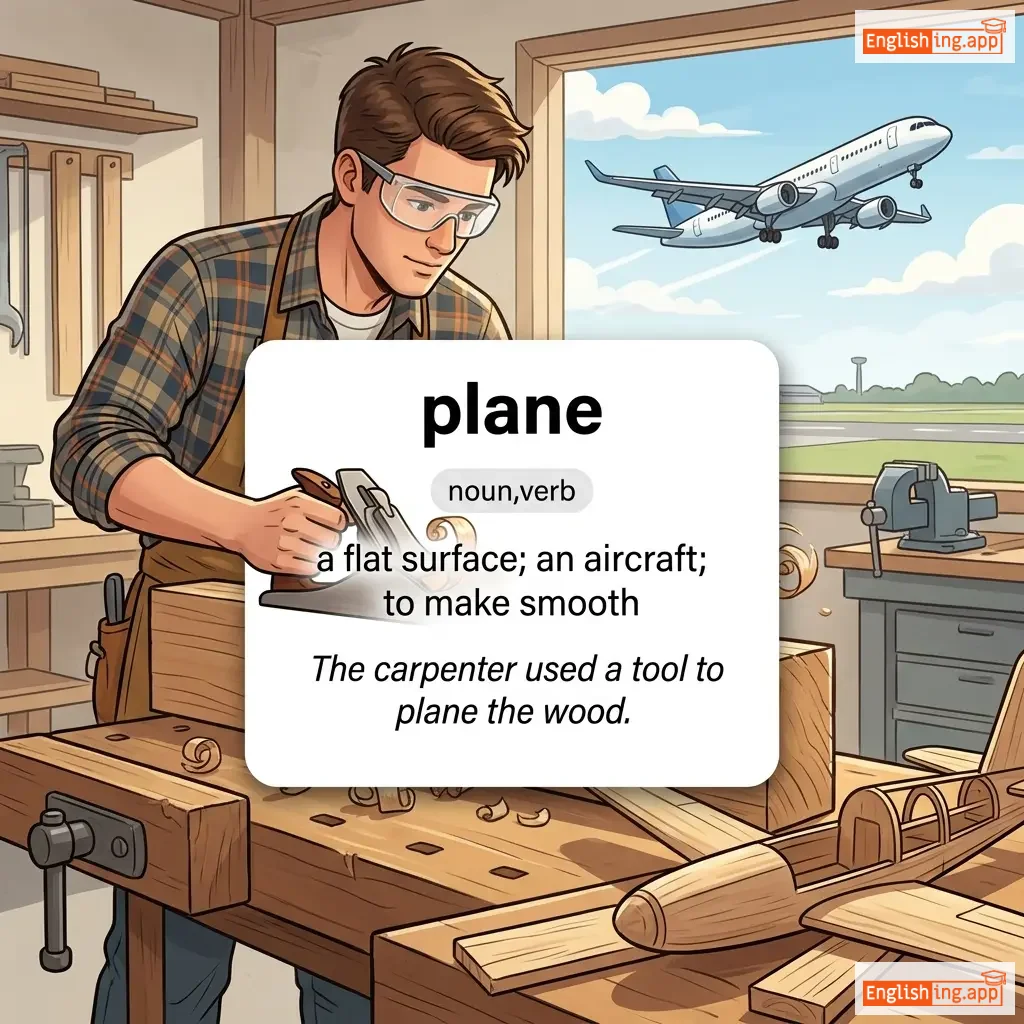
plane definition card — visual illustration of the meaning
noun,verb
/pleɪn/
superficie plana; avión; alisar (superficie plana; avion; alisar)

a flat surface; an aircraft; to make smooth

"The carpenter used a tool to plane the wood."

"El carpintero usó una herramienta para nivelar la madera." (El carpintero uso una herramienta para nivelar la madera.)
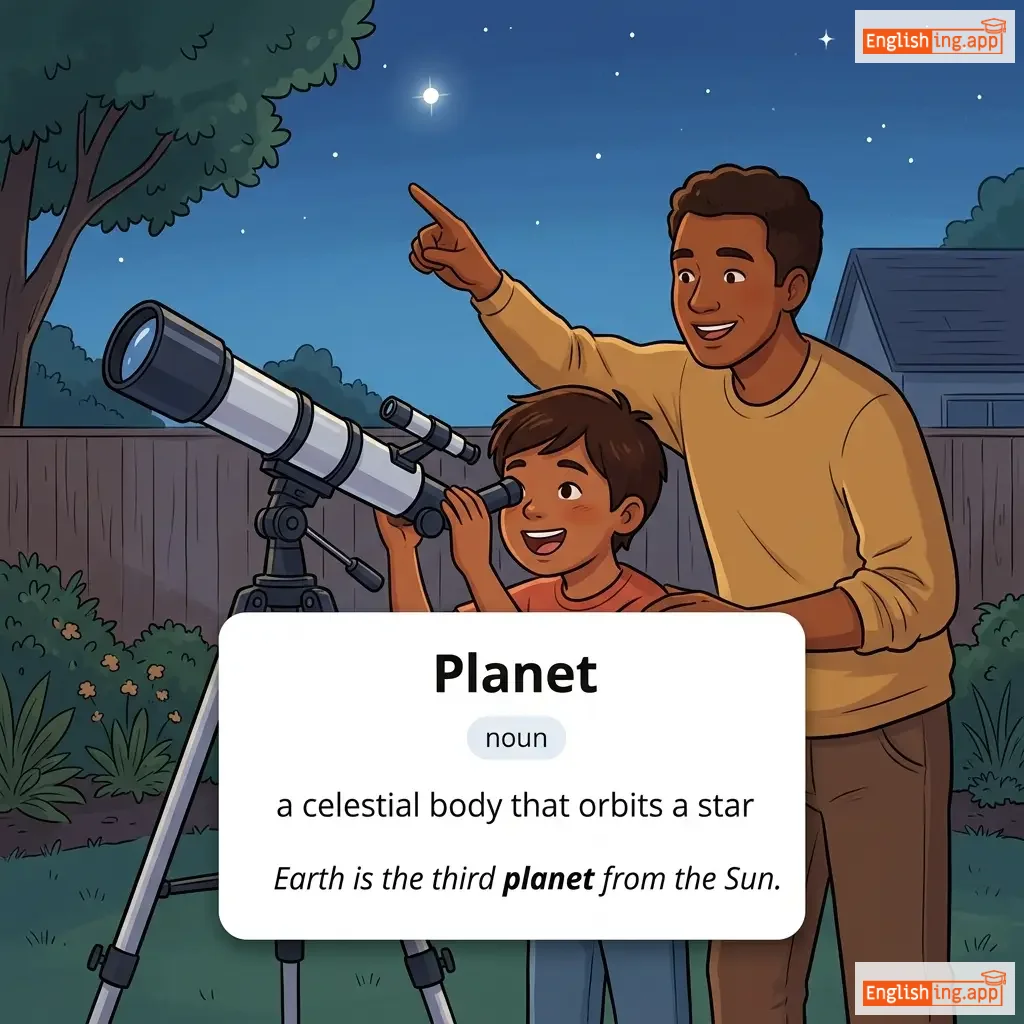
Planet definition card — visual illustration of the meaning
noun
/ˈplænɪt/
planeta (planeta)

a celestial body that orbits a star

"Earth is the third planet from the Sun."

"La Tierra es el tercer planeta desde el Sol." (La Tierra es el tercer planeta desde el Sol.)
verb
/pliːz/
complacer (complacer)

to make someone happy or satisfied

"She will do anything to please her parents."

"Ella hará cualquier cosa para complacer a sus padres." (Ella hará cualquier cosa para complacer a sus padres.)
noun
/pəˈruːzl/
lectura cuidadosa (lectura cuidadosa)

The action of reading or examining something carefully.

"The contract was given to the lawyer for perusal."

"El contrato fue dado al abogado para su lectura cuidadosa." (El contrato fue dado al abogado para su lectura cuidadosa.)
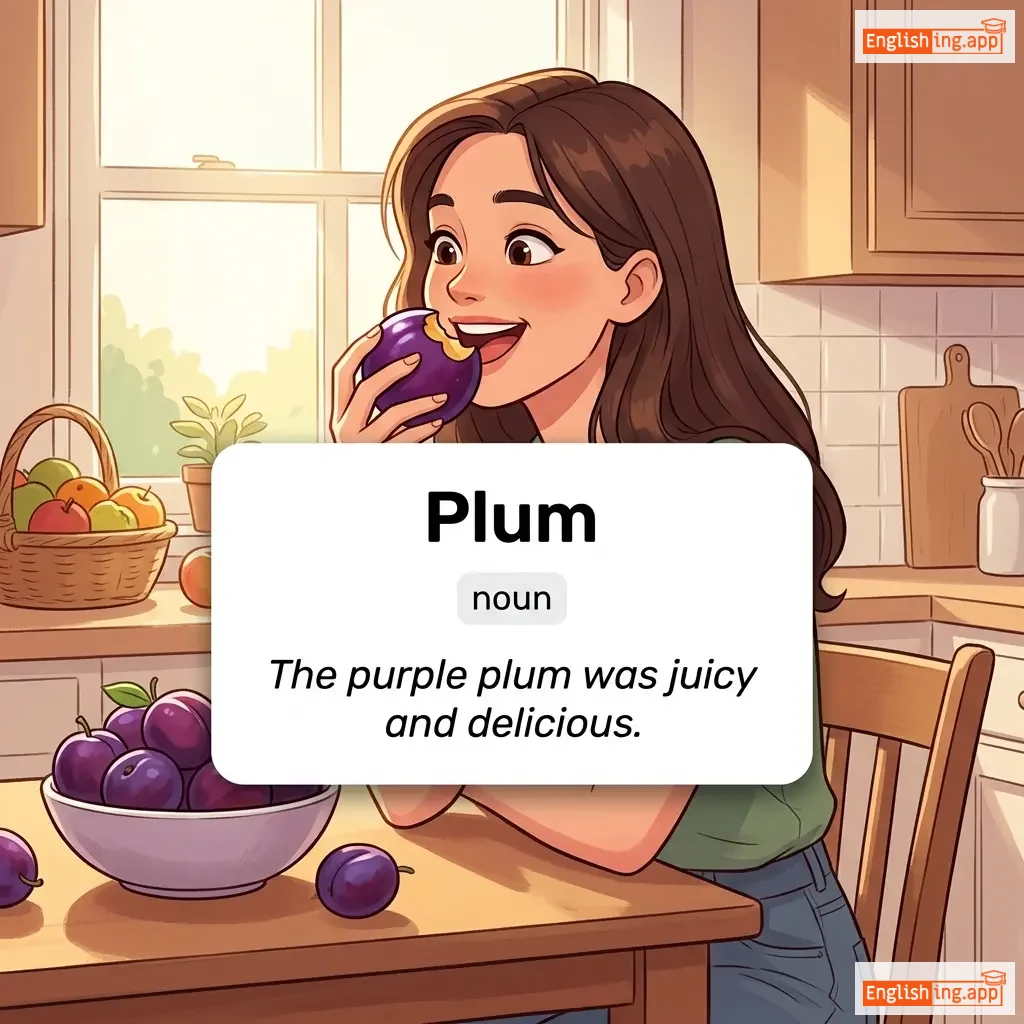
Plum definition card — visual illustration of the meaning
noun
/plʌm/
ciruela (ciruela)

a small round fruit with smooth red or purple skin, sweet flesh, and a single large seed

"The purple plum was juicy and delicious."

"La ciruela morada estaba jugosa y deliciosa." (La ciruela morada estaba jugosa y deliciosa.)
noun
/plʌɡ/
enchufe (enchufe)

a device used to connect or block an opening

"She inserted the plug into the socket."

"Ella insertó el enchufe en el enchufe." (Ella insertó el enchufe en el enchufe.)
adjective
/ˈplʌk.i/
valiente (valiente)

having or showing courage and determination

"The plucky child rescued the kitten from the tree."

"El niño valiente rescató al gatito del árbol." (El nino valiente rescató al gatito del arbol.)
verb
/plʌk/
arrancar, reunir coraje (arrancar, reunir coraje)

to take hold of and quickly remove; to gather courage or determination

"She plucked a flower from the garden."

"Ella arrancó una flor del jardín." (Ella arranco una flor del jardin.)
noun
/plɔɪ/
estratagema astuta (estrategema astuta)

a clever plan or action designed to gain an advantage

"She used a clever ploy to win the debate."

"Ella usó una táctica astuta para ganar el debate." (Ella uso una tactica astuta para ganar el debate.)
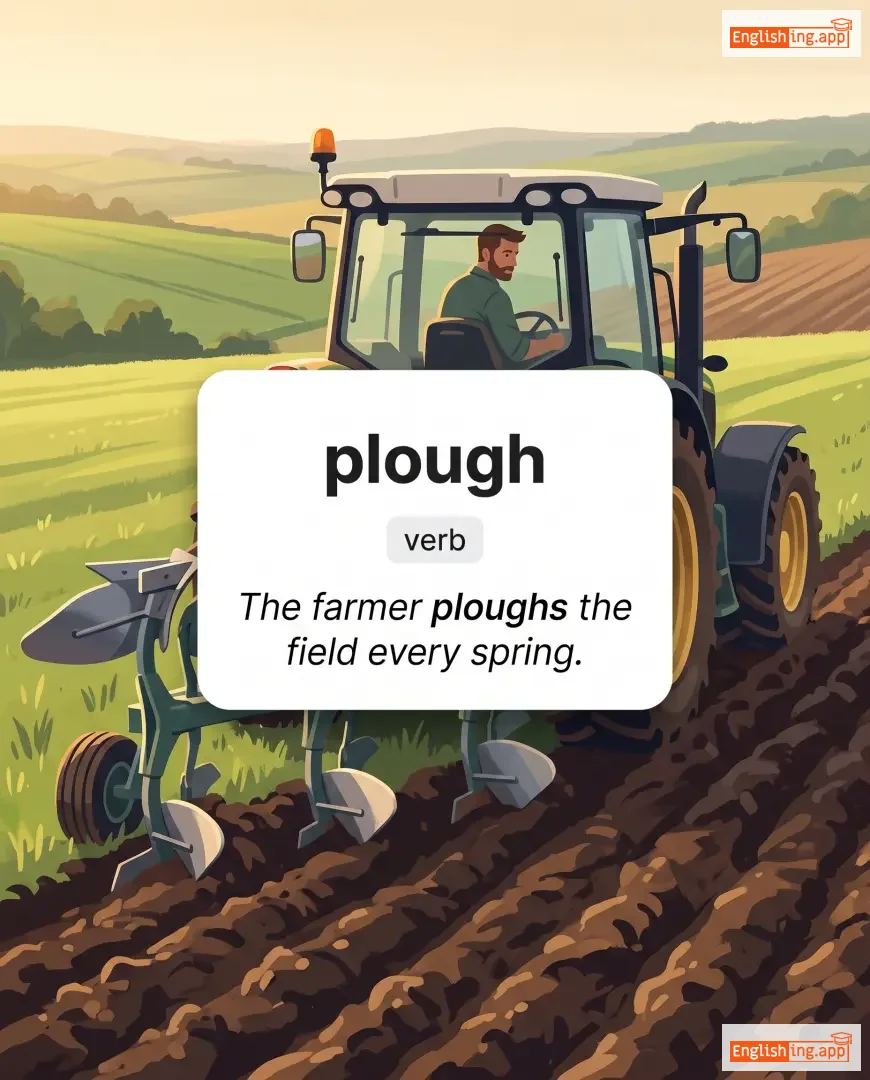
plough definition card — visual illustration of the meaning
noun
/plaʊ/
arado (arado)

a large farming tool used to break up and turn over soil before planting crops

"The oxen pulled the heavy plough across the field."

"Los bueyes tiraron el pesado arado por el campo." (Los bueyes tiraron el pesado arado por el campo.)
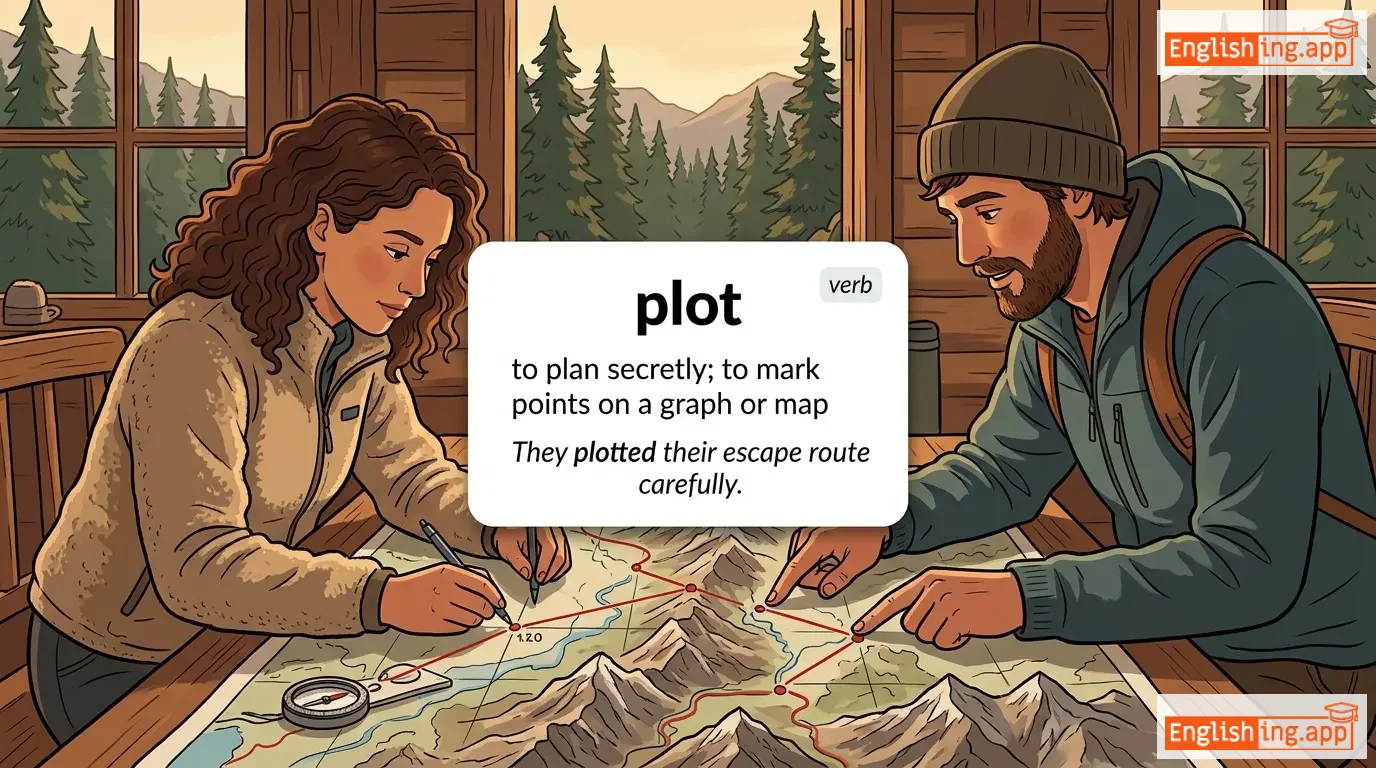
plot definition card — visual illustration of the meaning
noun
/plɒt/
trama (trama)

a secret plan or scheme, often with bad intentions

"The villain made a plot to steal the treasure."

"El villano hizo una trama para robar el tesoro." (El villano hizo una trama para robar el tesoro.)
adjective
/ˈplɒd.ɪŋ/
lento y aburrido (lento y aburrido)

slow-moving and unexciting; showing steady effort

"The movie was entertaining but a bit plodding in the middle."

"La película fue entretenida, pero un poco lenta y aburrida en el medio." (La pelicula fue entretenida, pero un poco lenta y aburrida en el medio.)
verb
/plɒd/
trabajar lentamente y con esfuerzo (trabajar lentamente y con esfuerzo)

to work slowly and steadily, often with effort or difficulty

"He plodded through his homework despite feeling tired."

"Él hizo su tarea lentamente aunque se sentía cansado." (El hizo su tarea lentamente aunque se sentía cansado.)
noun
/plaɪt/
dificultad, situación peligrosa (dificultad, situacion peligrosa)

a difficult or dangerous situation

"The refugees described their plight during the war."

"Los refugiados describieron su difícil situación durante la guerra." (Los refugiados describieron su dificil situacion durante la guerra.)
adjective
/ˈplaɪənt/
flexible, fácilmente influenciable o adaptable (flexible, facilmente influenciable o adaptable)

flexible; easily influenced or adaptable

"She has a pliant personality that adapts well to new situations."

"Ella tiene una personalidad flexible que se adapta bien a nuevas situaciones." (Ella tiene una personalidad flexible que se adapta bien a nuevas situaciones.)
adjective
/ˈplaɪəbəl/
flexible (flexible)

easily bent or flexible; adaptable

"The metal is pliable enough to be shaped into jewelry."

"El metal es lo suficientemente flexible como para ser moldeado en joyas." (El metal es lo suficientemente flexible como para ser moldeado en joyas.)
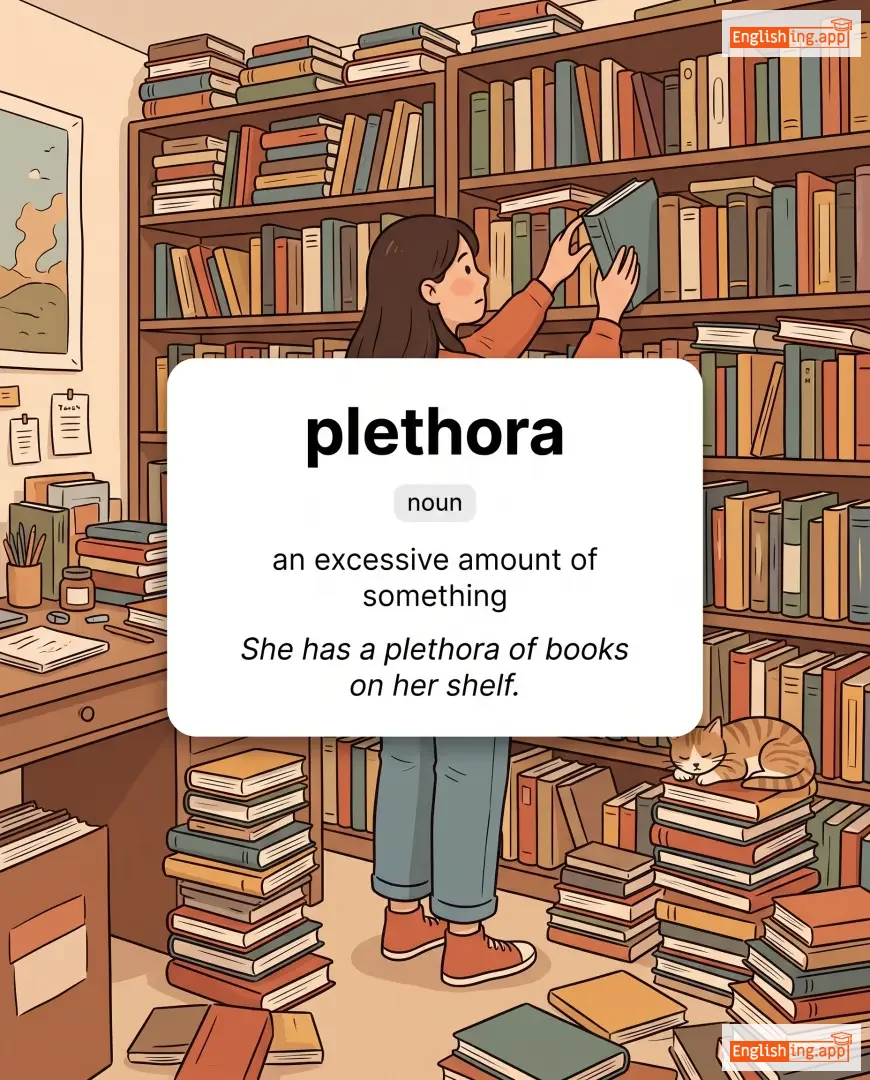
plethora definition card — visual illustration of the meaning
noun
/ˈplɛθərə/
una abundancia excesiva (una abundancia excesiva)

an excessive amount of something

"She has a plethora of books on her shelf."

"Ella tiene una abundancia excesiva de libros en su estante." (Ella tiene una abundancia excesiva de libros en su estante.)
noun
/ˈplɛnti/
abundancia (abundancia)

a large or sufficient amount or quantity

"We have plenty of time before the meeting."

"Tenemos mucho tiempo antes de la reunión." (Tenemos mucho tiempo antes de la reunión.)
noun
/ˈplɛntɪtjuːd/
abundancia (abundancia)

the condition of being full or abundant

"The garden offered a plentitude of flowers in spring."

"El jardín ofreció una gran cantidad de flores en primavera." (El jardin ofrecio una gran cantidad de flores en primavera.)
adjective
/ˈplɛntɪfəl/
abundante (abundante)

Existing in great quantity; abundant.

"Food and water were plentiful in the village."

"La comida y el agua eran abundantes en el pueblo." (La comida y el agua eran abundantes en el pueblo.)
adjective
/ˈplɛntɪəs/
abundante (abundante)

existing in great quantity; abundant

"The harvest was plenteous, providing enough food for the entire village."

"La cosecha fue abundante, proporcionando suficiente comida para todo el pueblo." (La cosecha fue abundante, proporcionando suficiente comida para todo el pueblo.)
noun
/ˈplɛnɪtjuːd/
plenitud (plenitud)

the condition of being full or abundant; a great quantity

"The garden was a plenitude of flowers in spring."

"El jardín estaba lleno de plenitud de flores en primavera." (El jardin estaba lleno de plenitud de flores en primavera.)
noun
/ˌpliːnɪpəˈtɛnʃəri/
plenipotenciario (plenipotenciario)

a person invested with full power to act on behalf of another, especially in diplomacy

"The ambassador was a plenipotentiary sent to negotiate the treaty."

"El embajador era un plenipotenciario enviado para negociar el tratado." (El embajador era un plenipotenciario enviado para negociar el tratado.)
adjective
/ˈpliːnəri/
plenario (plenario)

complete in every way; fully attended or absolute

"The committee held a plenary session to discuss all matters of importance."

"El comité celebró una sesión plenaria para discutir todos los asuntos importantes." (El comité celebró una sesión plenaria para discutir todos los asuntos importantes.)
noun
/ˈplɛdʒɔːr/
garante (garante)

a person who gives or offers a pledge or security

"The bank accepted the jewelry from the pledgeor as collateral for the loan."

"El banco aceptó las joyas del garante como garantía para el préstamo." (El banco acepto las joyas del garante como garantia para el prestamo.)
noun
/ˈplɛdʒiː/
la persona a la que se le ha otorgado algo como garantía (la persona a la que se le ha otorgado algo como garantia)

a person to whom something is pledged or given as security

"The bank is the pledgee of the collateral until the loan is repaid."

"El banco es el beneficiario del colateral hasta que el préstamo se pague." (El banco es el beneficiario del colateral hasta que el prestamo se pague.)
noun
/plɛdʒ/
compromiso (compromiso)

a solemn promise or agreement to do or refrain from doing something

"He gave a pledge to support the cause."

"Él hizo un compromiso para apoyar la causa." (Él hizo un compromiso para apoyar la causa.)
noun
/ˈplɛbɪsaɪt/
votación directa del pueblo (votacion directa del pueblo)

a direct vote by the electorate on an important public question

"The government held a plebiscite to decide on the new constitution."

"El gobierno celebró un plebiscito para decidir sobre la nueva constitución." (El gobierno celebro un plebiscito para decidir sobre la nueva constitucion.)
adjective, noun
/pləˈbiːən/
común, del pueblo (comun, del pueblo)

alternate spelling of 'plebeian'; common or ordinary

"His tastes were rather plebian, favoring simple food and clothes."

"Sus gustos eran bastante comunes, prefiriendo comida y ropa simples." (Sus gustos eran bastante comunes, prefiriendo comida y ropa simples.)
adjective, noun
/pləˈbiːən/
persona común (persona comun)

common, ordinary, or belonging to the lower social classes

"The festival was enjoyed by both plebeian and noble citizens."

"El festival fue disfrutado tanto por los plebeyos como por los ciudadanos nobles." (El festival fue disfrutado tanto por los plebeyos como por los ciudadanos nobles.)
noun, verb
/pliːt/
pliegue (pliege)

a fold in fabric made by doubling the material back upon itself

"She added a pleat to the skirt for extra volume."

"Ella agregó un pliegue a la falda para más volumen." (Ella agrego un pliegue a la falda para mas volumen.)
noun
/ˈplɛʒər/
placer (placer)

a feeling of happiness or enjoyment

"It was a pleasure to meet you."

"Fue un placer conocerte." (Fue un placer conocerte.)
adjective
/ˈplɛʒərəbl/
placentero, agradable (placentero, agradable)

giving pleasure or enjoyment

"Reading a good book is a pleasurable activity."

"Leer un buen libro es una actividad placentera." (Leer un buen libro es una actividad placentera.)
adjective
/pliːzd/
satisfecho (satisfecho)

feeling happy or satisfied with something

"She was pleased with her exam results."

"Ella estaba satisfecha con los resultados de su examen." (Ella estaba satisfecha con los resultados de su examen.)
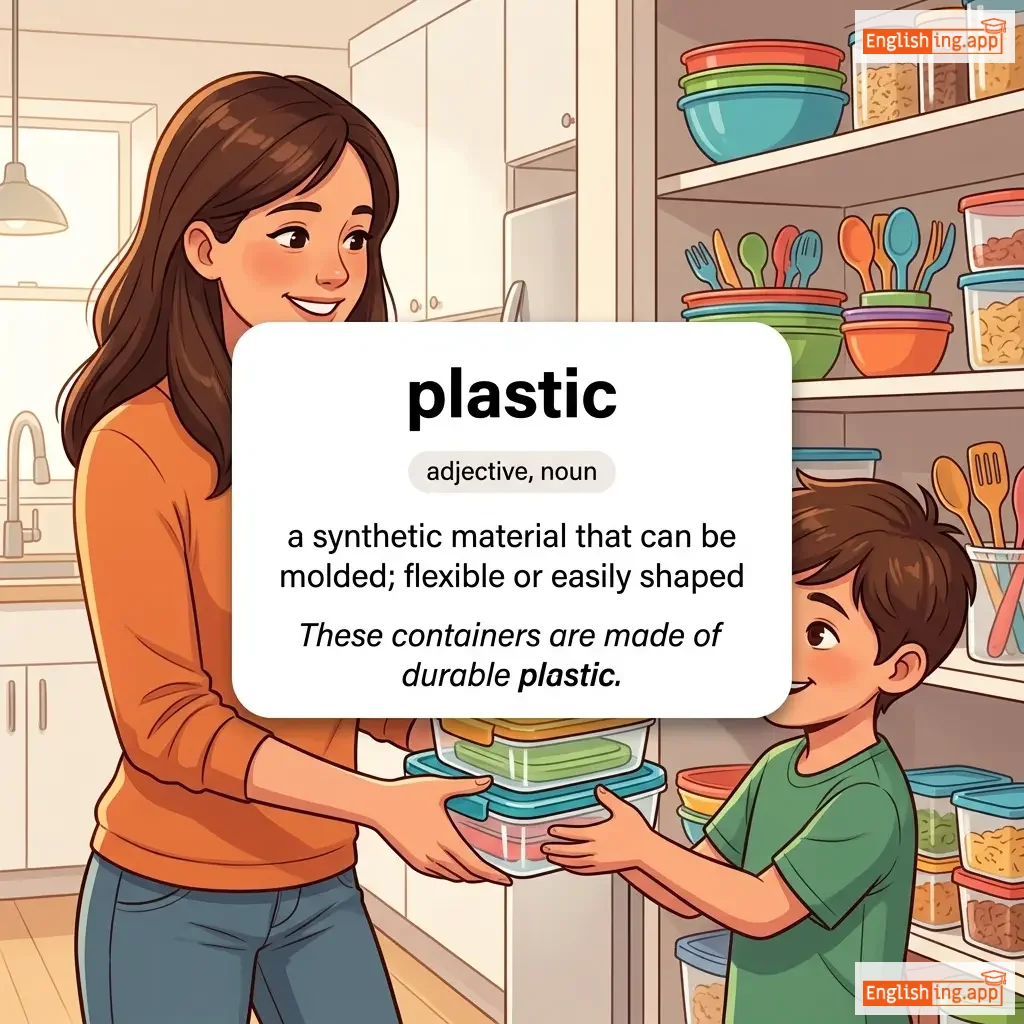
plastic definition card — visual illustration of the meaning
adjective, noun
/ˈplæstɪk/
plástico (plastico)

a synthetic material that can be molded; flexible or easily shaped

"These containers are made of durable plastic."

"Estos contenedores están hechos de plástico duradero." (Estos contenedores estan hechos de plastico duradero.)
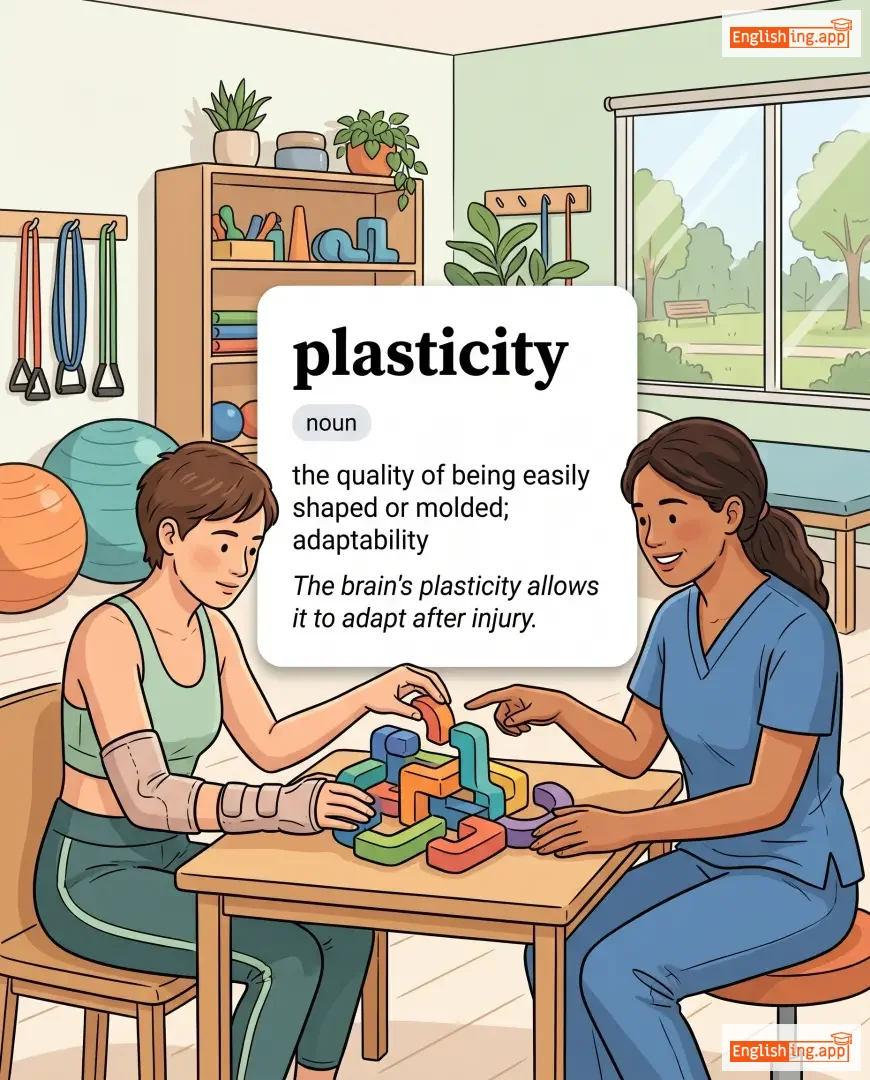
plasticity definition card — visual illustration of the meaning
noun
/plæsˈtɪsəti/
plasticidad, capacidad de adaptarse (plasticidad, capacidad de adaptarse)

the quality of being easily shaped or molded; adaptability

"The brain's plasticity allows it to adapt after injury."

"La plasticidad del cerebro le permite adaptarse después de una lesión." (La plasticidad del cerebro le permite adaptarse despues de una lesion.)