Vocabularios

Descubra, aprenda y domine el vocabulario en inglés

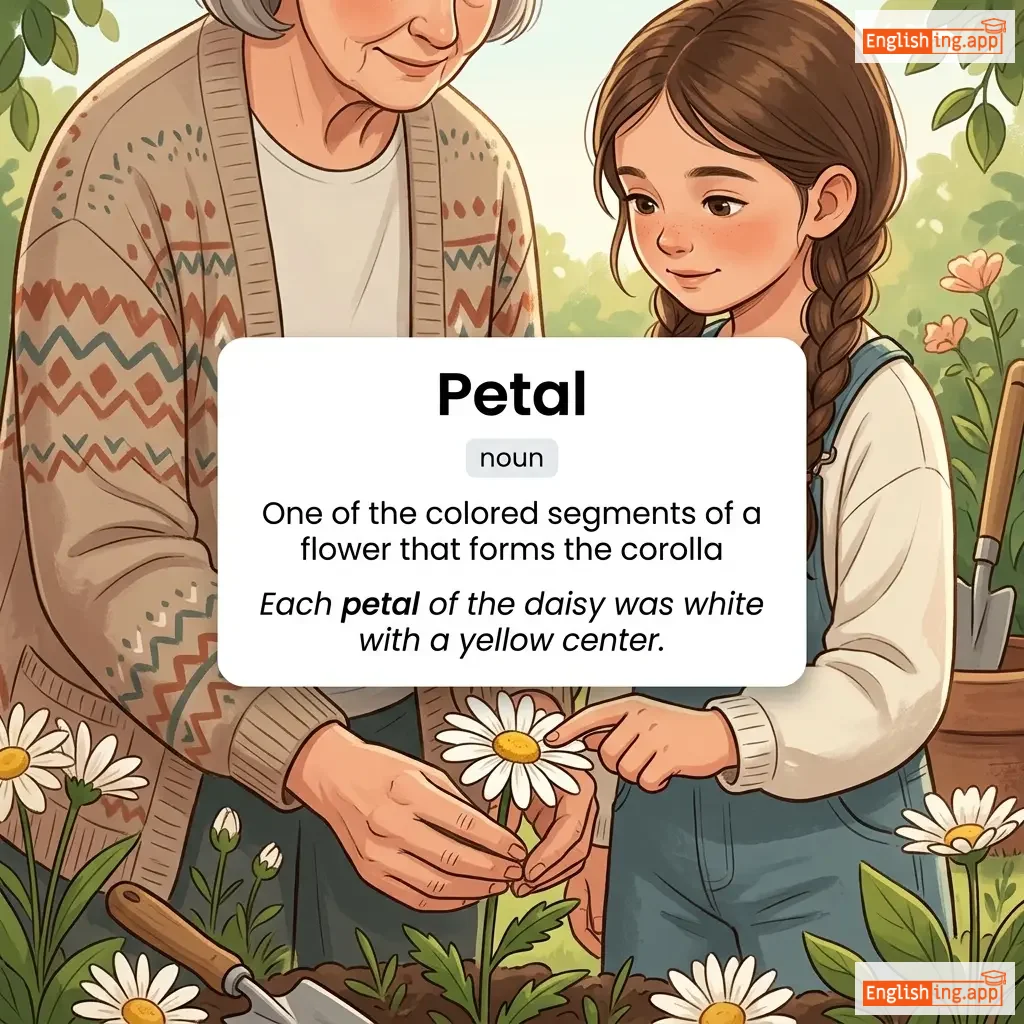
Petal definition card — visual illustration of the meaning
noun
/ˈpetəl/
pétalo (petalo)

One of the colored segments of a flower that forms the corolla

"Each petal of the daisy was white with a yellow center."

"Cada pétalo de la margarita era blanco con un centro amarillo." (cada petalo de la margarita era blanco con un centro amarillo)
verb
/ˈpiːtər/
disminuir gradualmente (disminuir gradualmente)

to diminish gradually and come to an end; to fade or dwindle away

"The excitement of the event began to peter out after a few hours."

"La emoción del evento comenzó a disminuir después de unas horas." (La emocion del evento comenzo a disminuir despues de unas horas.)
noun
/pəˈtɪʃən/
petición (peticion)

a formal written request, typically signed by many people, appealing to authority about a cause

"They signed a petition to improve road safety in the area."

"Firmaron una petición para mejorar la seguridad vial en la zona." (Firmaron una peticion para mejorar la seguridad vial en la zona.)
verb
/ˈpɛtrɪfaɪ/
petrificar (petrificar)

to make someone so frightened that they are unable to move or think; to turn into stone

"The loud noise petrified the little child."

"El ruido fuerte petrificó al niño pequeño." (El ruido fuerte petrificó al niño pequeño.)
noun
/ˈpɛtrəˌɡræf/
descripción de rocas (descripcion de rocas)

a description or representation of rocks, especially in detailed scientific writing

"The scientist studied the petrograph to understand the rock composition."

"El científico estudió el petrográfico para entender la composición de la roca." (El cientifico estudio el petrográfico para entender la composicion de la roca.)
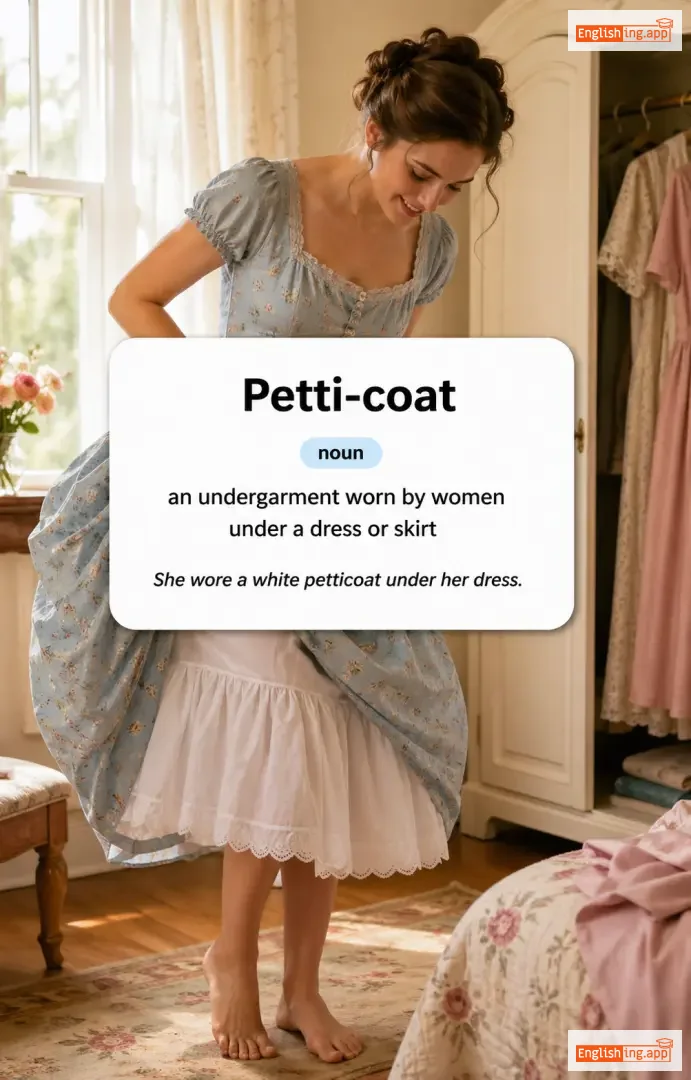
Petti-coat definition card — visual illustration of the meaning
noun
/ˈpetɪkoʊt/
enagua (enagua)

an undergarment worn by women under a dress or skirt

"She wore a white petticoat under her dress."

"Ella llevaba un peto blanco debajo de su vestido." (Ella llevaba un peto blanco debajo de su vestido.)
verb
/ˈpɛtɪˌfɒɡ/
discutir sobre trivialidades (discutir sobre trivialidades)

to argue or quibble over trivial matters; to engage in petty, dishonest practices

"The lawyer was accused of trying to pettifog instead of addressing the real issue."

"Se acusó al abogado de tratar de discutir sobre temas triviales en lugar de abordar el verdadero problema." (Se acusó al abogado de tratar de discutir sobre temas triviales en lugar de abordar el verdadero problema.)
adjective
/ˈpɛti/
insignificante (insignificante)

Of little importance or trivial; also describes a person overly concerned with small or unimportant matters.

"She often gets upset over the most petty things."

"A menudo se molesta por las cosas más insignificantes." (A menudo se molesta por las cosas más insignificantes.)
noun
/ˈpɛtjʊləns/
petulancia (petulancia)

The quality of being childishly sulky or bad-tempered.

"His petulance during the meeting annoyed everyone."

"Su petulancia durante la reunión molestó a todos." (Su petulancia durante la reunión molestó a todos.)
adjective
/ˈpɛtjʊlənt/
irritable (irritable)

Childishly sulky or bad-tempered.

"The child became petulant when denied more candy."

"El niño se volvió irritable cuando no le dieron más dulces." (El niño se volvió irritable cuando no le dieron más dulces.)
noun
/ˈfeɪlæŋks/
falange (falange)

A group of people or things arranged in a compact, close formation; also an ancient Greek military formation.

"A phalanx of reporters waited outside the courthouse."

"Un grupo de reporteros esperaba afuera del tribunal." (Un grupo de reporteros esperaba afuera del tribunal.)
noun
/ˈfænˌtæzəm/
fantasma (fantasma)

an illusion, ghost, or figment of the imagination

"The child claimed to see a phantasm in the old house."

"El niño afirmó ver un fantasma en la casa antigua." (El niño afirmo ver un fantasma en la casa antigua.)
adjective
/ˌfæntæzməˈɡɒrɪkəl/
fantasmagórico (fantasmagorico)

Having a fantastic, dreamlike, or surreal appearance, often shifting or illusory.

"The movie created a phantasmagorical vision of another world."

"La película creó una visión fantasmagórica de otro mundo." (La pelicula creo una vision fantasmagorica de otro mundo.)
adjective
/ˌfærɪˈseɪɪkəl/
farisaico (farisaico)

Excessively concerned with formal rules or outward show of morality, often in a hypocritical way.

"His pharisaical behavior made people doubt his sincerity."

"Su comportamiento farisaico hizo que la gente dudara de su sinceridad." (Su comportamiento farisaico hizo que la gente dudara de su sinceridad.)
noun
/ˈfærɪsiː/
persona hipócrita (persona hipocrita)

A member of an ancient Jewish sect; by extension, a self-righteous or hypocritical person.

"He acted like a pharisee, judging others while ignoring his own faults."

"Él actuó como un fariseo, juzgando a los demás mientras ignoraba sus propios errores." (Él actuó como un fariseo, juzgando a los demás mientras ignoraba sus propios errores.)
noun
/ˌfɑːrməkəˈpiːə/
farmacopea (farmacopea)

An official book listing medicinal drugs, their effects, and directions for use.

"The doctor referred to the pharmacopoeia to check the drug's proper dosage."

"El doctor consultó la farmacopea para verificar la dosis correcta del medicamento." (El doctor consultó la farmacopea para verificar la dosis correcta del medicamento.)
noun
/ˈfɑːrməsi/
farmacia (farmacia)

A place where medicinal drugs are prepared and sold.

"I went to the pharmacy to buy antibiotics."

"Fui a la farmacia a comprar antibióticos." (Fui a la farmacia a comprar antibióticos.)
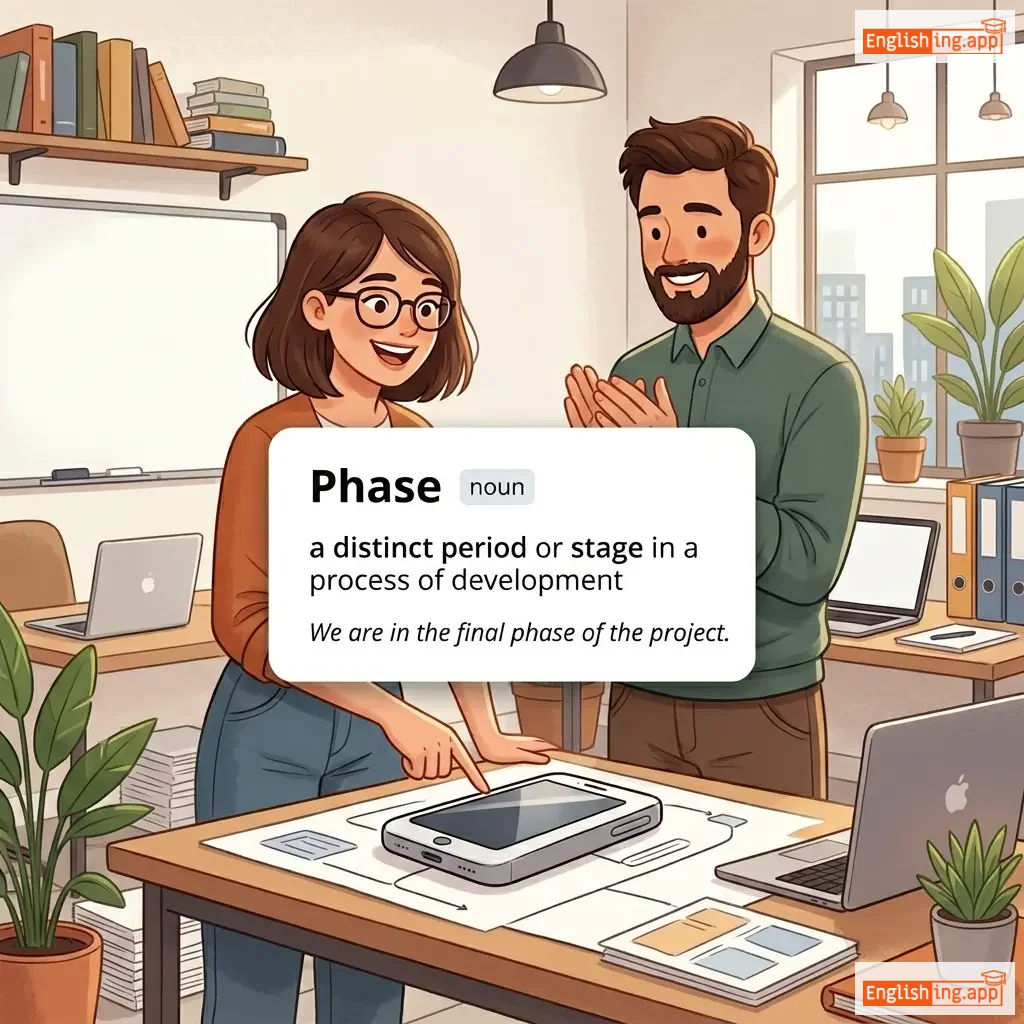
Phase definition card — visual illustration of the meaning
noun
/feɪz/
fase (fase)

a distinct period or stage in a process of development

"We are in the final phase of the project."

"Estamos en la fase final del proyecto." (Estamos en la fase final del proyecto.)
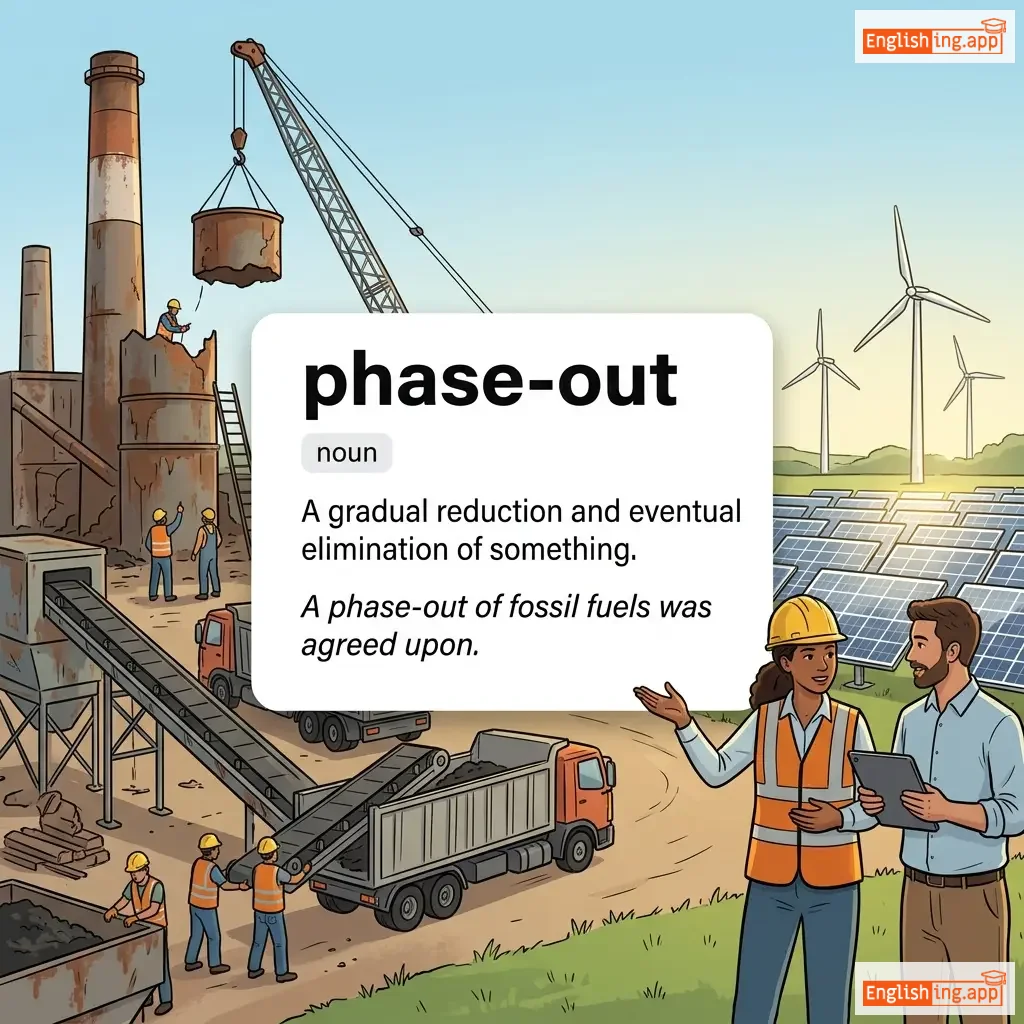
phase-out definition card — visual illustration of the meaning
noun
ˈfeɪz.aʊt
eliminación gradual (eliminacion gradual)

A gradual reduction and eventual elimination of something.

"A phase-out of fossil fuels was agreed upon."

"Se acordó la eliminación gradual de los combustibles fósiles." (Se acuerdo la eliminacion gradual de los combustibles fosiles.)
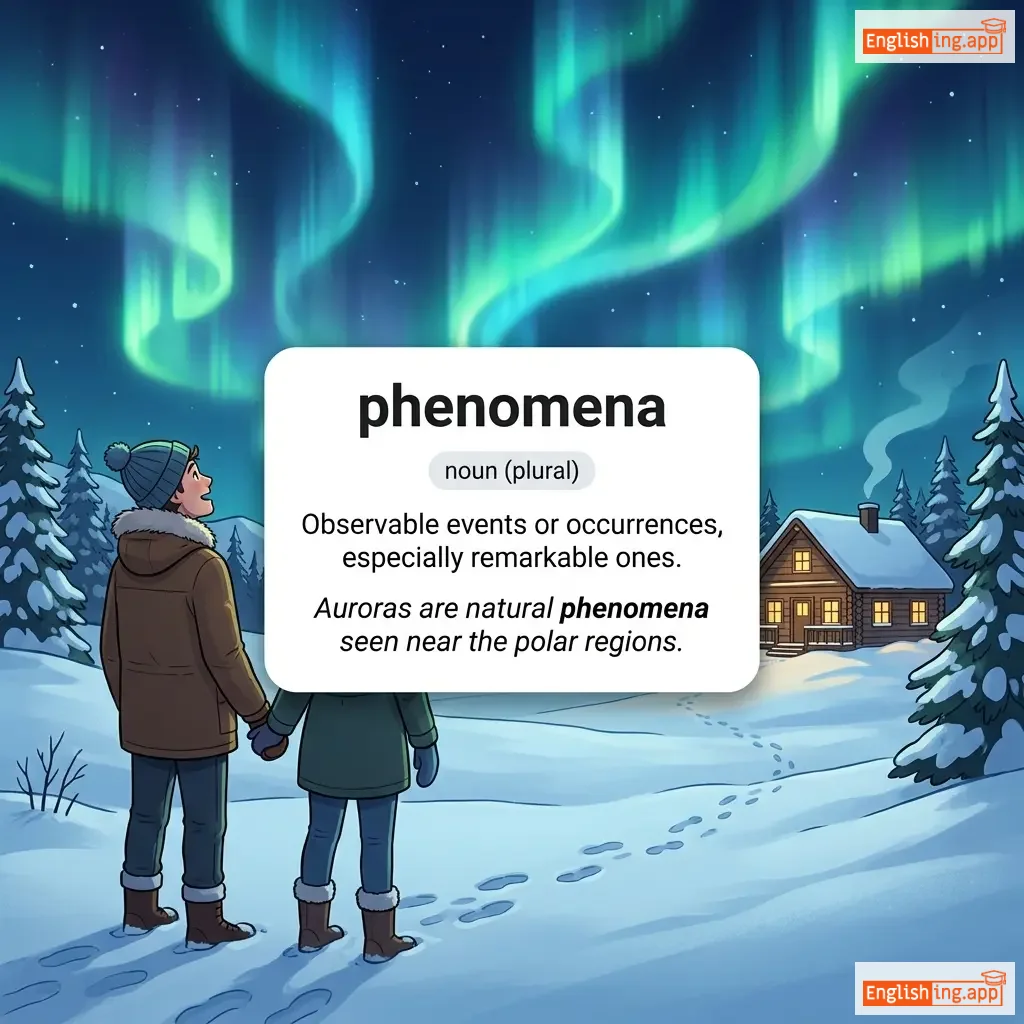
phenomena definition card — visual illustration of the meaning
noun (plural)
/fəˈnɒmɪnə/
fenómenos (fenomenos)

Observable events or occurrences, especially remarkable ones.

"Auroras are natural phenomena seen near the polar regions."

"Las auroras son fenómenos naturales que se ven cerca de las regiones polares." (Las auroras son fenomenos naturales que se ven cerca de las regiones polares.)
adjective
/fəˈnɒmɪnəl/
fenomenal (fenomenal)

extraordinary, remarkable, or exceptional in a way that is very impressive

"The team achieved phenomenal success in the tournament."

"El equipo logró un éxito fenomenal en el torneo." (El equipo logró un éxito fenomenal en el torneo.)
noun
/fəˈnɒmɪnən/
fenómeno (fenomeno)

an observable event, fact, or occurrence, often unusual or remarkable

"The Northern Lights are a natural phenomenon."

"Las Luces del Norte son un fenómeno natural." (Las luces del norte son un fenomeno natural.)
noun
/ˈfaɪəl/
frasco pequeño (frasco pequeno)

a small glass container for liquids, especially medicines

"The doctor gave her a phial of medicine."

"El doctor le dio un frasco de medicina." (El doctor le dio un frasco de medicina.)
verb
/fɪˈlændər/
filandear (filandear)

to engage in casual or frivolous romantic or sexual relationships

"He was known to philander with many women in town."

"Era conocido por filandear con muchas mujeres en la ciudad." (Era conocido por filandear con muchas mujeres en la ciudad.)
noun
/fɪˈlændərər/
mujeriego (mujeriego)

a man who habitually engages in casual romantic or sexual affairs

"The politician was exposed as a notorious philanderer."

"El político fue expuesto como un notorio mujeriego." (El político fue expuesto como un notorio mujeriego.)
adjective
/ˌfɪl.ænˈθrɒp.ɪk/
filantrópico (filantropico)

showing concern for the welfare of others; generous and charitable

"She is known for her philanthropic activities in the city."

"Es conocida por sus actividades filantrópicas en la ciudad." (Es conocida por sus actividades filantropicas en la ciudad.)
noun
/fɪˈlæn.θrə.pɪst/
filántropo (filántropo)

a person who seeks to promote the welfare of others, especially by donating money to good causes

"The philanthropist donated millions to build schools in rural areas."

"El filántropo donó millones para construir escuelas en áreas rurales." (El filántropo donó millones para construir escuelas en áreas rurales.)
noun
/fɪˈlæn.θrə.pi/
filantropía (filantropia)

the desire to promote the welfare of others, often expressed by the generous donation of money to good causes

"Philanthropy has helped improve healthcare in many developing countries."

"La filantropía ha ayudado a mejorar la atención médica en muchos países en desarrollo." (La filantropía ha ayudado a mejorar la atención médica en muchos países en desarrollo.)
noun
/fɪˈlæt.əl.ɪst/
coleccionista de sellos (coleccionista de sellos)

a person who collects or studies postage stamps

"The philatelist spent years building a rare stamp collection."

"El filatelista pasó años construyendo una rara colección de sellos." (El filatelista pasó años construyendo una rara colección de sellos.)
noun
/fɪˈlæt.əl.i/
filatelia (filatelia)

the collection and study of postage stamps

"Philately is a hobby enjoyed by people of all ages."

"La filatelia es un pasatiempo que disfrutan personas de todas las edades." (La filatelia es un pasatiempo que disfrutan personas de todas las edades.)
adjective
/ˌfɪl.hɑːrˈmɒn.ɪk/
relacionado con una orquesta sinfónica (relacionado con una orquesta sinfónica)

relating to a symphony orchestra or its music

"The philharmonic orchestra performed a stunning rendition of Beethoven's Ninth Symphony."

"La orquesta filarmónica realizó una impresionante interpretación de la Novena Sinfonía de Beethoven." (La orquesta filarmónica realizó una impresionante interpretación de la Novena Sinfonía de Beethoven.)
noun
/ˈfɪl.ɪ.staɪn/
persona indiferente o hostil hacia la cultura y las artes (persona indiferente o hostil hacia la cultura y las artes)

a person who is indifferent or hostile to culture and the arts

"He was criticized as a philistine for dismissing modern art."

"Fue criticado como un filisteo por rechazar el arte moderno." (Fue criticado como un filisteo por rechazar el arte moderno.)
noun
/ˈfɪl.ə.dʒɪ.nɪst/
persona que ama o admira a las mujeres (persona que ama o admira a las mujeres)

a person who loves or admires women

"As a known philogynist, he advocated for women's education."

"Como un conocido filoginista, él defendió la educación de las mujeres." (Como un conocido filoginista, él defendió la educación de las mujeres.)
noun
/fɪˈlɒl.ə.dʒɪst/
filólogo (filologo)

a person who studies languages and their history

"The philologist analyzed ancient texts to understand language evolution."

"El filólogo analizó textos antiguos para comprender la evolución del lenguaje." (El filologo analizo textos antiguos para comprender la evolucion del lenguaje.)
noun
/fɪˈlɒl.ə.dʒi/
el estudio de la lengua en fuentes históricas escritas; lingüística (el estudio de la lengua en fuentes historicas escritas; lingüística)

the study of language in written historical sources; linguistics

"She devoted her career to philology, researching ancient manuscripts."

"Ella dedicó su carrera a la filología, investigando manuscritos antiguos." (Ella dedicó su carrera a la filología, investigando manuscritos antiguos.)
noun
/fɪˈlɒsəfə/
filósofo (filosofo)

a person engaged in the study of philosophy or in serious thinking about fundamental questions

"Socrates was a famous philosopher of ancient Greece."

"Sócrates fue un filósofo famoso de la antigua Grecia." (Socrates fue un filosofo famoso de la antigua Grecia.)
adjective
/ˌfɪl.əˈsɒf.ɪ.kəl/
filosófico (filosofiko)

relating to the study of the fundamental nature of knowledge, reality, and existence

"She maintained a calm and philosophical attitude during the crisis."

"Mantuvo una actitud tranquila y filosófica durante la crisis." (Mantuvo una actitud tranquila y filosofica durante la crisis.)
verb
/fɪˈlɒs.ə.faɪz/
filosofar (filosofar)

to think or talk about the fundamental nature of knowledge, reality, and existence

"He likes to philosophize about life and its meaning."

"A él le gusta filosofar sobre la vida y su significado." (A él le gusta filosofar sobre la vida y su significado.)
noun
/fɪˈlɒs.ə.fi/
filosofía (filosofia)

the study of the fundamental nature of knowledge, reality, and existence

"Her philosophy emphasizes kindness and empathy."

"Su filosofía enfatiza la amabilidad y la empatía." (Su filosofia enfatiza la amabilidad y la empatia.)
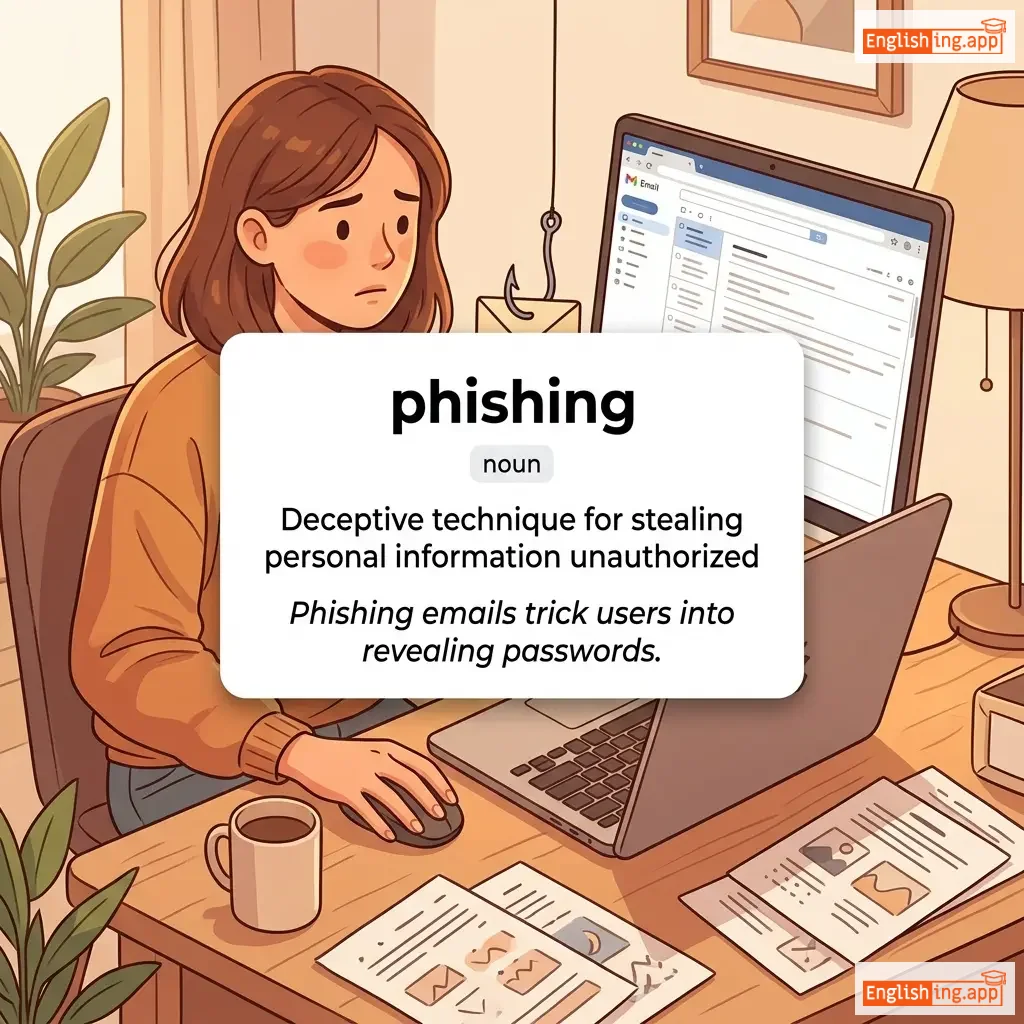
phishing definition card — visual illustration of the meaning
noun
/ˈfɪʃ.ɪŋ/
robo de información fraudulenta (robo de informacion fraudulenta)

Deceptive technique for stealing personal information unauthorized

"Phishing emails trick users into revealing passwords."

"Los correos electrónicos de phishing engañan a los usuarios para que revelen contraseñas." (Los correos electronicos de phishing engañan a los usuarios para que revelen contrasenas.)
phlegmatic definition card — visual illustration of the meaning
adjective
/flɛgˈmæt.ɪk/
flemático (flematico)

having an unemotional and stolidly calm disposition

"Despite the chaos, he remained phlegmatic and composed."

"A pesar del caos, se mantuvo flemático y compuesto." (A pesar del caos, se mantuvo flematico y compuesto.)
noun
/ˈfəʊ.bi.ə/
fobia (fobia)

an extreme or irrational fear of something

"She has a phobia of heights and avoids tall buildings."

"Ella tiene fobia a las alturas y evita los edificios altos." (Ella tiene fobia a las alturas y evita los edificios altos.)
phrasal verb
/pɪk ʌp/
recoger; levantar; adquirir (recoger; levantar; adquirir)

to lift something; to collect or receive someone or something; to learn or acquire gradually; to improve or increase

"She picked up the book from the floor."

"Ella recogió el libro del suelo." (Ella recogio el libro del suelo)
noun
/ˈpɪkəloʊ/
flauta pequeña (flauta pequena)

a small flute, higher in pitch than the regular flute

"She played a lively tune on the piccolo during the concert."

"Ella tocó una melodía animada en el piccolo durante el concierto." (Ella toco una melodia animada en el piccolo durante el concierto.)
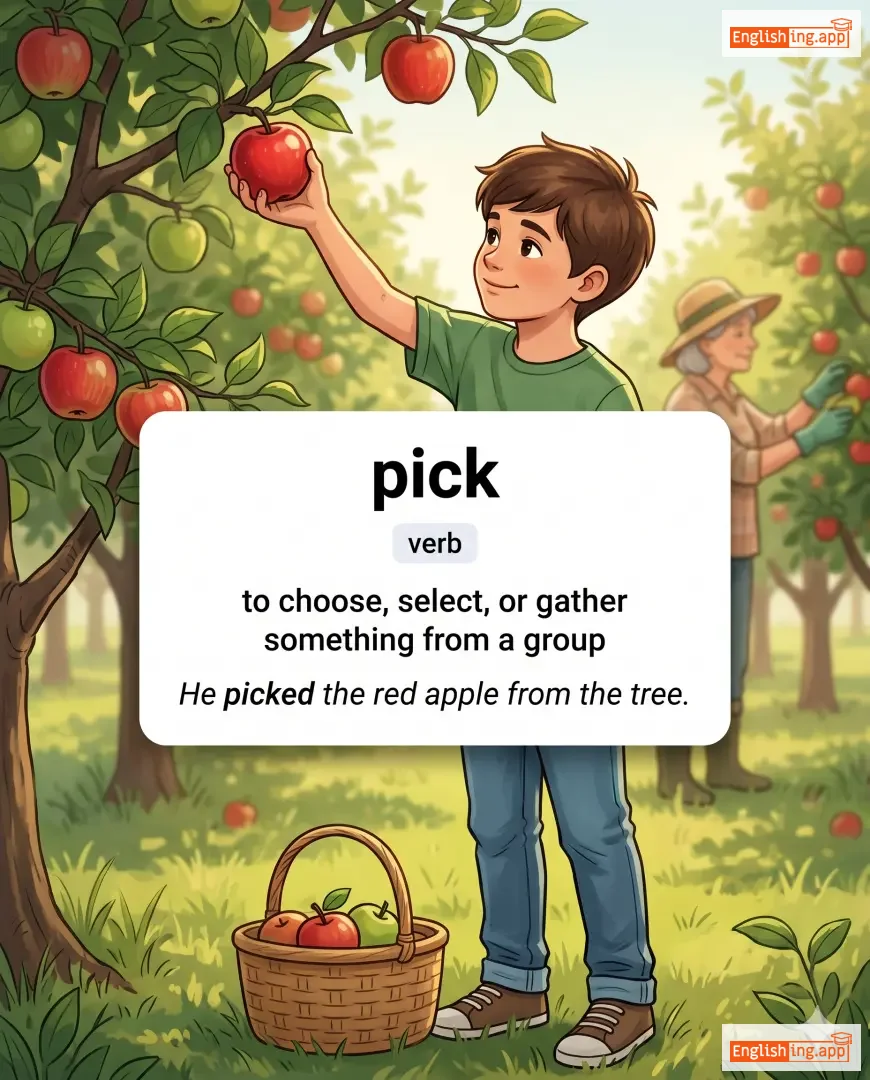
pick definition card — visual illustration of the meaning
verb
/pɪk/
elegir (elegir)

to choose, select, or gather something from a group

"He picked the red apple from the tree."

"Él escogió la manzana roja del árbol." (Él escogió la manzana roja del árbol.)
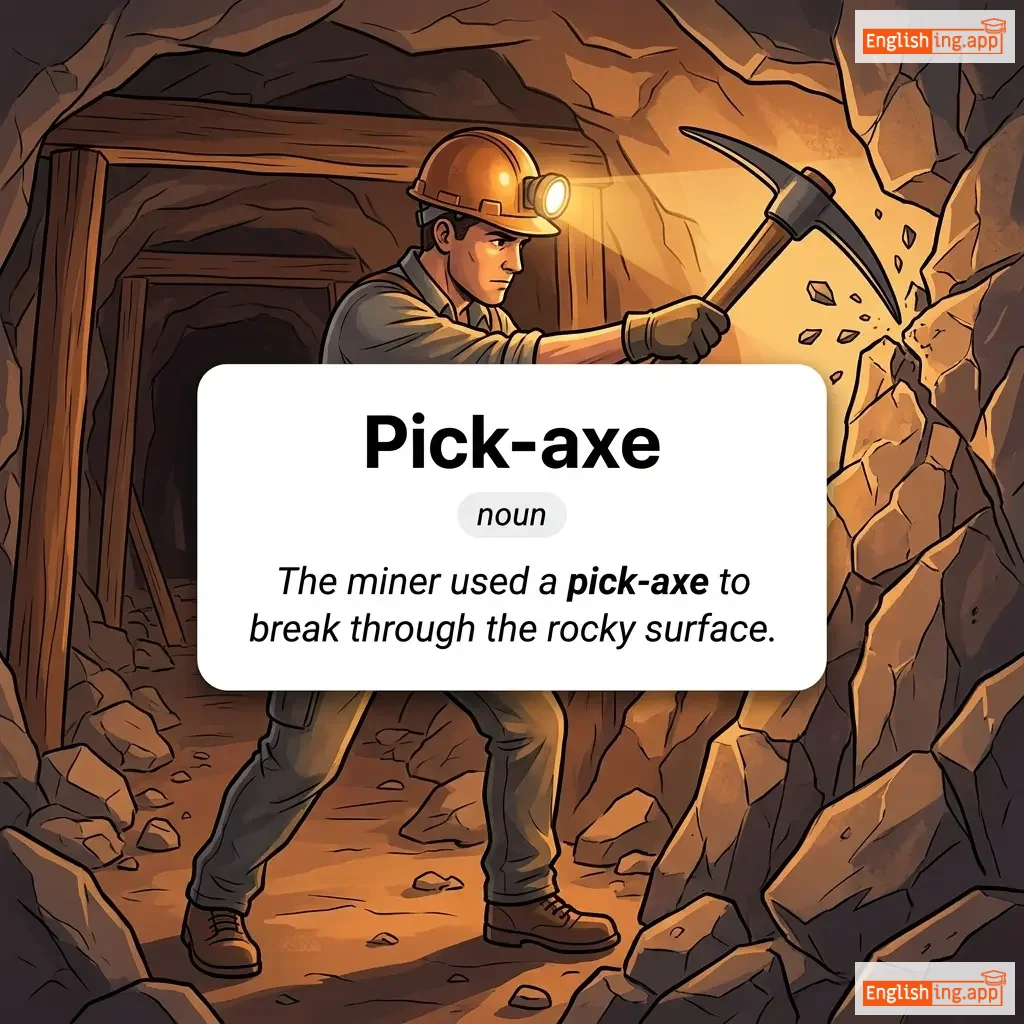
Pick-axe definition card — visual illustration of the meaning
noun
/ˈpɪk.æks/
pico (piko)

a tool with a heavy metal head and long handle used for breaking up hard ground or rock

"The miner used a pick-axe to break through the rocky surface."

"El minero usó un pico para romper la superficie rocosa." (El minero uso un pico para romper la superficie rocosa.)
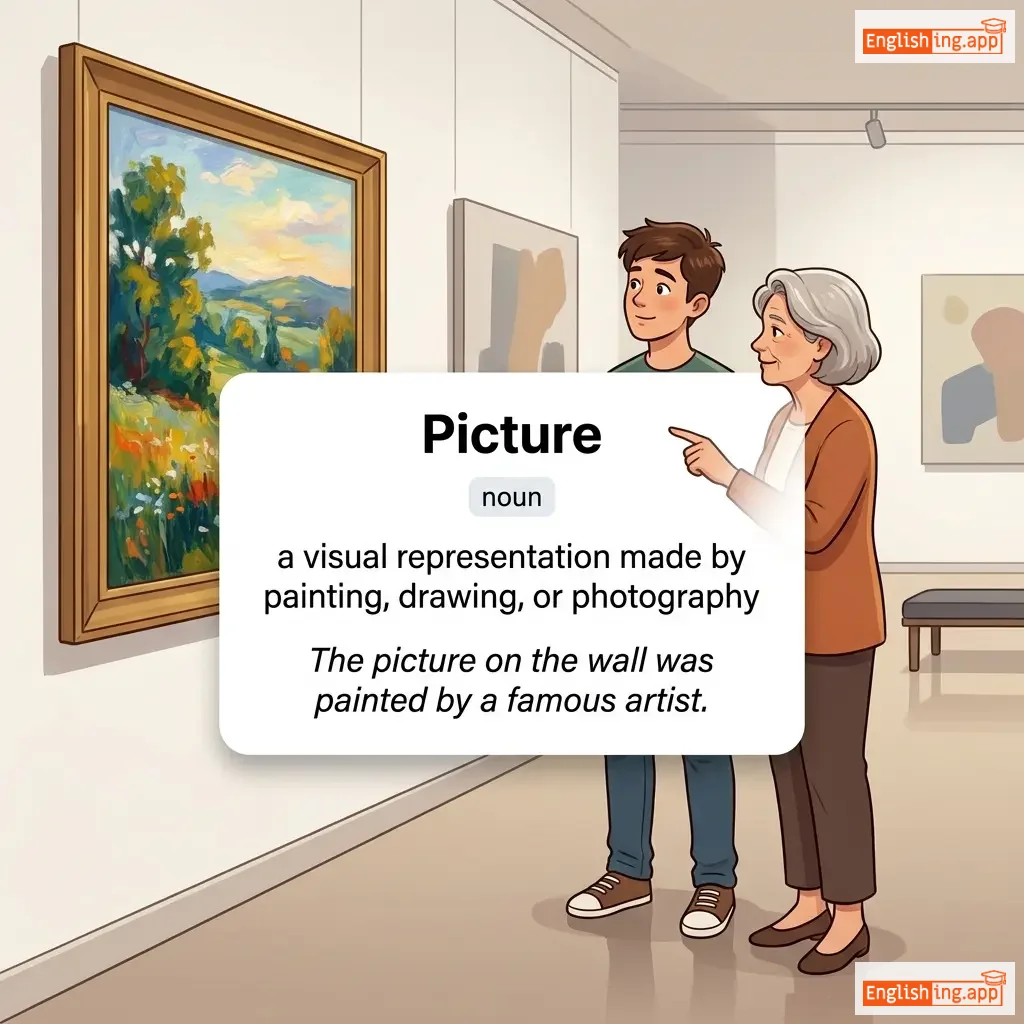
Picture definition card — visual illustration of the meaning
noun
/ˈpɪktʃər/
imagen (imagen)

a visual representation made by painting, drawing, or photography

"The picture on the wall was painted by a famous artist."

"La imagen en la pared fue pintada por un artista famoso." (La imagen en la pared fue pintada por un artista famoso.)
adjective
/ˈpɪdlɪŋ/
insignificante, trivial (insignificante, trivial)

trivial or insignificant; very small

"He made a piddling amount of money from that deal."

"Él ganó una cantidad insignificante de dinero con ese trato." (El gano una cantidad insignificante de dinero con ese trato.)
adjective
/ˌpɪkəˈjuːn/
insignificante, trivial (insignificante, trivial)

of little value or importance; trivial

"He complained about the picayune details of the contract."

"Se quejaba de los detalles triviales del contrato." (Se quejaba de los detalles triviales del contrato.)
noun
/ˈpɪkʌp/
camión pequeño con una parte trasera abierta; el acto de recoger o mejorar algo (camion pequeno con una parte trasera abierta; el acto de recoger o mejorar algo)

a small truck with an open back; the act of collecting or improving something

"The company scheduled a pickup for the returned goods."

"La empresa programó una recogida para los productos devueltos." (La empresa programó una recogida para los productos devueltos.)