語彙集

英単語辞書 | 単語の意味、定義、例文

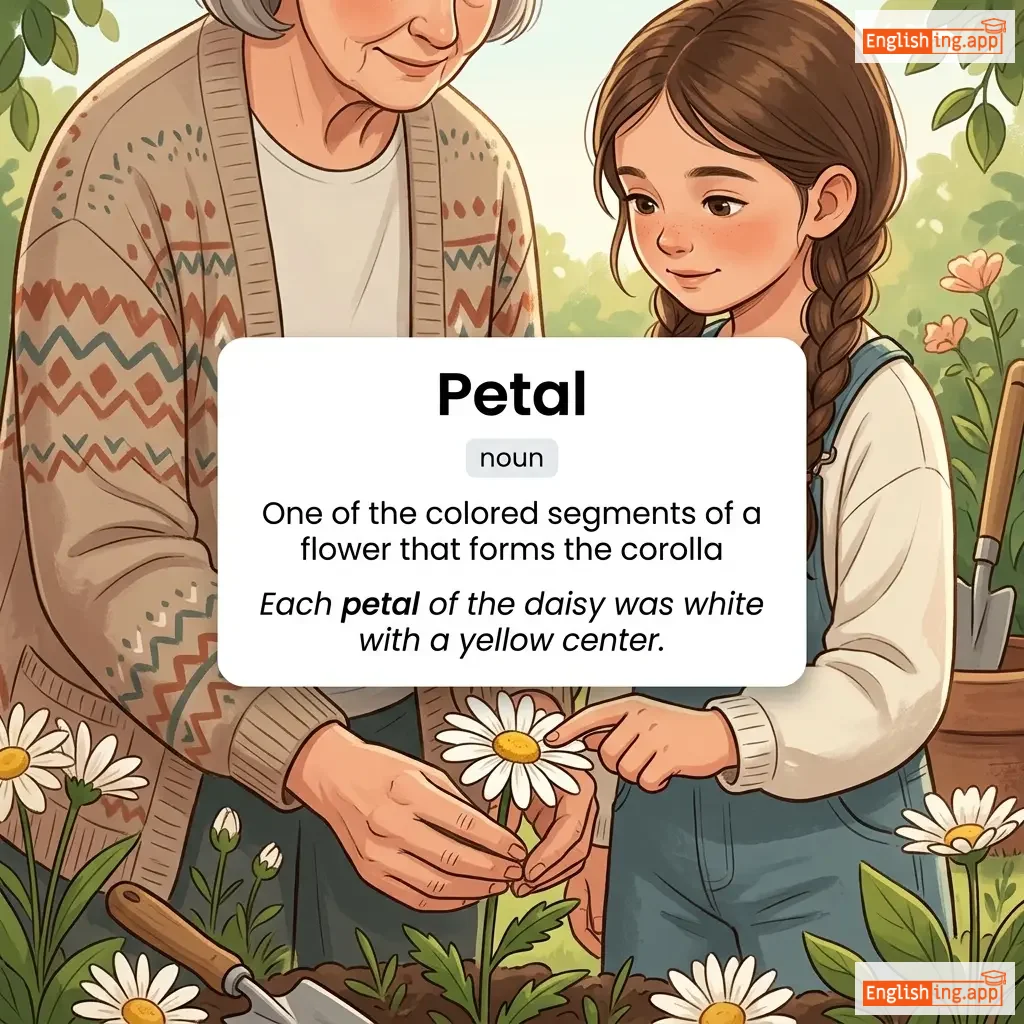
Petal definition card — visual illustration of the meaning
noun
/ˈpetəl/
花弁 (kaben)

One of the colored segments of a flower that forms the corolla

"Each petal of the daisy was white with a yellow center."

"デイジーの各花弁は白で、中央は黄色でした。" (deiji no kaku kaben wa shiro de, chuuou wa kiiro deshita)
verb
/ˈpiːtər/
次第に弱まる (shidai ni yowamaru)

to diminish gradually and come to an end; to fade or dwindle away

"The excitement of the event began to peter out after a few hours."

"イベントの興奮は数時間後に次第に収束し始めた。" (Ibento no kōfun wa sū jikan go ni shidai ni shūsoku shi hajimeta.)
noun
/pəˈtɪʃən/
請願書 (seigan-sho)

a formal written request, typically signed by many people, appealing to authority about a cause

"They signed a petition to improve road safety in the area."

"彼らはその地域の道路安全を改善するために請願書に署名しました。" (Karera wa sono chiiki no dōro anzen o kaizen suru tame ni seigan-sho ni shomei shimashita.)
verb
/ˈpɛtrɪfaɪ/
石化する (sekika suru)

to make someone so frightened that they are unable to move or think; to turn into stone

"The loud noise petrified the little child."

"大きな音は小さな子供を石化させた。" (Ōkina oto wa chiisana kodomo o sekika saseta.)
noun
/ˈpɛtrəˌɡræf/
岩石の説明 (ganseki no setsumei)

a description or representation of rocks, especially in detailed scientific writing

"The scientist studied the petrograph to understand the rock composition."
"科学者は岩石の組成を理解するためにペトログラフを研究しました。" (Kagakusha wa ganseki no kousei wo rikai suru tame ni petorogurafu wo kenkyuu shimashita.)
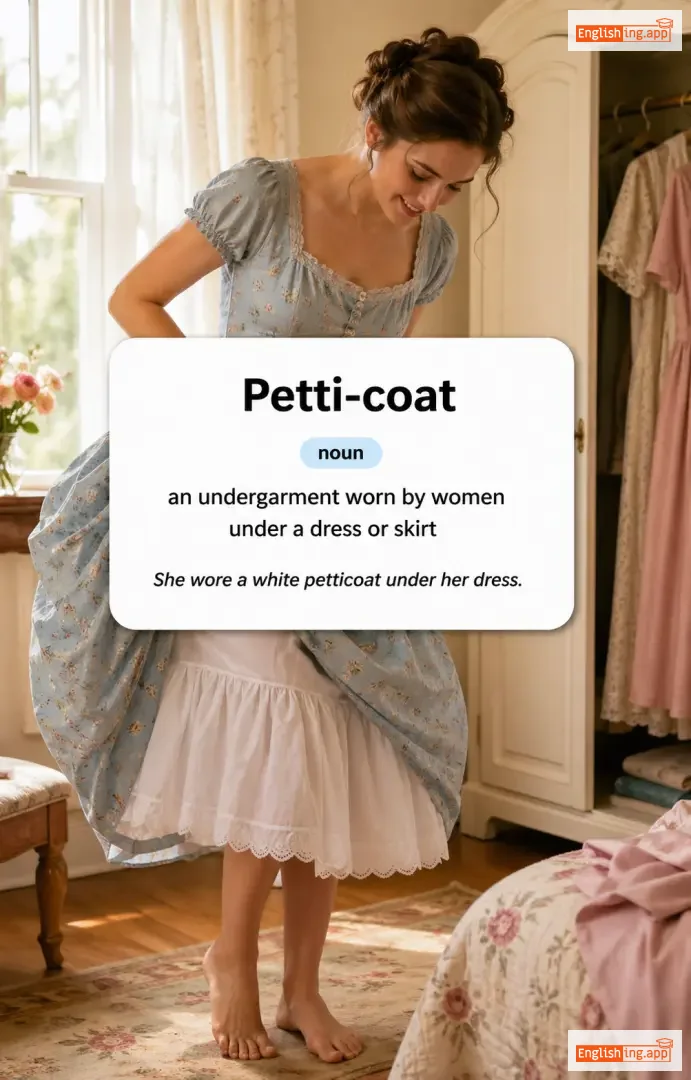
Petti-coat definition card — visual illustration of the meaning
noun
/ˈpetɪkoʊt/
ペチコート (pechikōto)

an undergarment worn by women under a dress or skirt

"She wore a white petticoat under her dress."

"彼女はドレスの下に白いペティコートを着ていました。" (Kanojo wa doresu no shita ni shiroi pechikōto o kite imashita.)
verb
/ˈpɛtɪˌfɒɡ/
些細なことで議論する (sasaina koto de giron suru)

to argue or quibble over trivial matters; to engage in petty, dishonest practices

"The lawyer was accused of trying to pettifog instead of addressing the real issue."

"弁護士は本当の問題に取り組む代わりに、些細なことで議論していると非難されました。" (Bengoshi wa hontō no mondai ni torikumu kawari ni, sasaina koto de giron shite iru to hinan saremashita.)
adjective
/ˈpɛti/
些細な (sasai na)

Of little importance or trivial; also describes a person overly concerned with small or unimportant matters.

"She often gets upset over the most petty things."

"彼女はしばしば些細なことに腹を立てる。" (Kanojo wa shibashiba sasai na koto ni hara o tateru.)
noun
/ˈpɛtjʊləns/
気難しさ (kimuzukashisa)

The quality of being childishly sulky or bad-tempered.

"His petulance during the meeting annoyed everyone."

"会議中の彼のペチュランスはみんなをイライラさせた。" (Kaigi chū no kare no pechuransu wa minna o iraira saseta.)
adjective
/ˈpɛtjʊlənt/
癇癪持ち (kanshaku mochi)

Childishly sulky or bad-tempered.

"The child became petulant when denied more candy."

"子供はキャンディーをもっともらえないと癇癪を起こした。" (Kodomo wa kyandī o motto moraenai to kanshaku o okoshita.)
noun
/ˈfeɪlæŋks/
ファランクス (farankusu)

A group of people or things arranged in a compact, close formation; also an ancient Greek military formation.

"A phalanx of reporters waited outside the courthouse."

"報道陣のファランクスが裁判所の外で待っていた。" (Hōdōjin no farankusu ga saibansho no soto de matte ita.)
noun
/ˈfænˌtæzəm/
幽霊 (yuurei)

an illusion, ghost, or figment of the imagination

"The child claimed to see a phantasm in the old house."

"子供は古い家で幽霊を見たと主張した。" (Kodomo wa furui ie de yuurei o mita to shuchou shita.)
adjective
/ˌfæntæzməˈɡɒrɪkəl/
幻想的な (gensō-teki na)

Having a fantastic, dreamlike, or surreal appearance, often shifting or illusory.

"The movie created a phantasmagorical vision of another world."

"映画はもう一つの世界の幻想的なビジョンを作り出しました。" (Eiga wa mō hitotsu no sekai no gensō-teki na bijon o tsukuridashimashita.)
adjective
/ˌfærɪˈseɪɪkəl/
偽善的な (gizenteki na)

Excessively concerned with formal rules or outward show of morality, often in a hypocritical way.

"His pharisaical behavior made people doubt his sincerity."

"彼の偽善的な行動は、彼の誠実さに疑問を投げかけた。" (Kare no gizenshūteki na kōdō wa, kare no seijitsusa ni gimon o nagekakemashita.)
noun
/ˈfærɪsiː/
偽善者 (gizen-sha)

A member of an ancient Jewish sect; by extension, a self-righteous or hypocritical person.

"He acted like a pharisee, judging others while ignoring his own faults."

"彼はファリサイ人のように振る舞い、他の人々を裁きながら自分の欠点を無視していました。" (Kare wa Farisai-jin no yō ni furu mai, hoka no hitobito o sabaki nagara jibun no ketten o mushi shiteimashita.)
noun
/ˌfɑːrməkəˈpiːə/
薬典 (yakuten)

An official book listing medicinal drugs, their effects, and directions for use.

"The doctor referred to the pharmacopoeia to check the drug's proper dosage."

"医師は薬典を参照して、薬の適切な用量を確認しました。" (Ishi wa yakuten o sanshou shite, kusuri no tekisetsuna youryou o kakunin shimashita.)
noun
/ˈfɑːrməsi/
薬局 (yakkyoku)

A place where medicinal drugs are prepared and sold.

"I went to the pharmacy to buy antibiotics."
"私は抗生物質を買うために薬局に行きました。" (Watashi wa kouseibushitsu o kau tame ni yakkyoku ni ikimashita.)
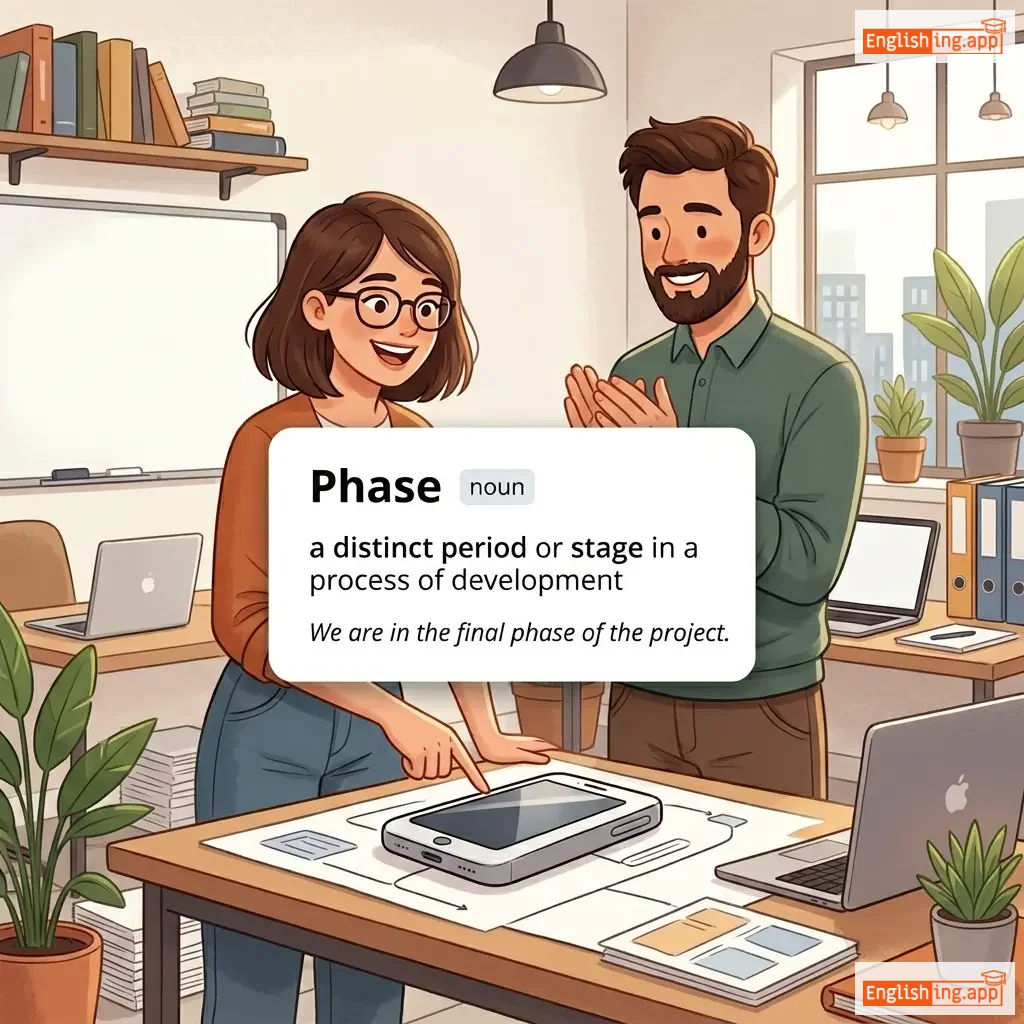
Phase definition card — visual illustration of the meaning
noun
/feɪz/
段階 (dankai)

a distinct period or stage in a process of development

"We are in the final phase of the project."
"私たちはプロジェクトの最終段階にいます。" (Watashitachi wa purojekuto no saishuu dankai ni imasu.)
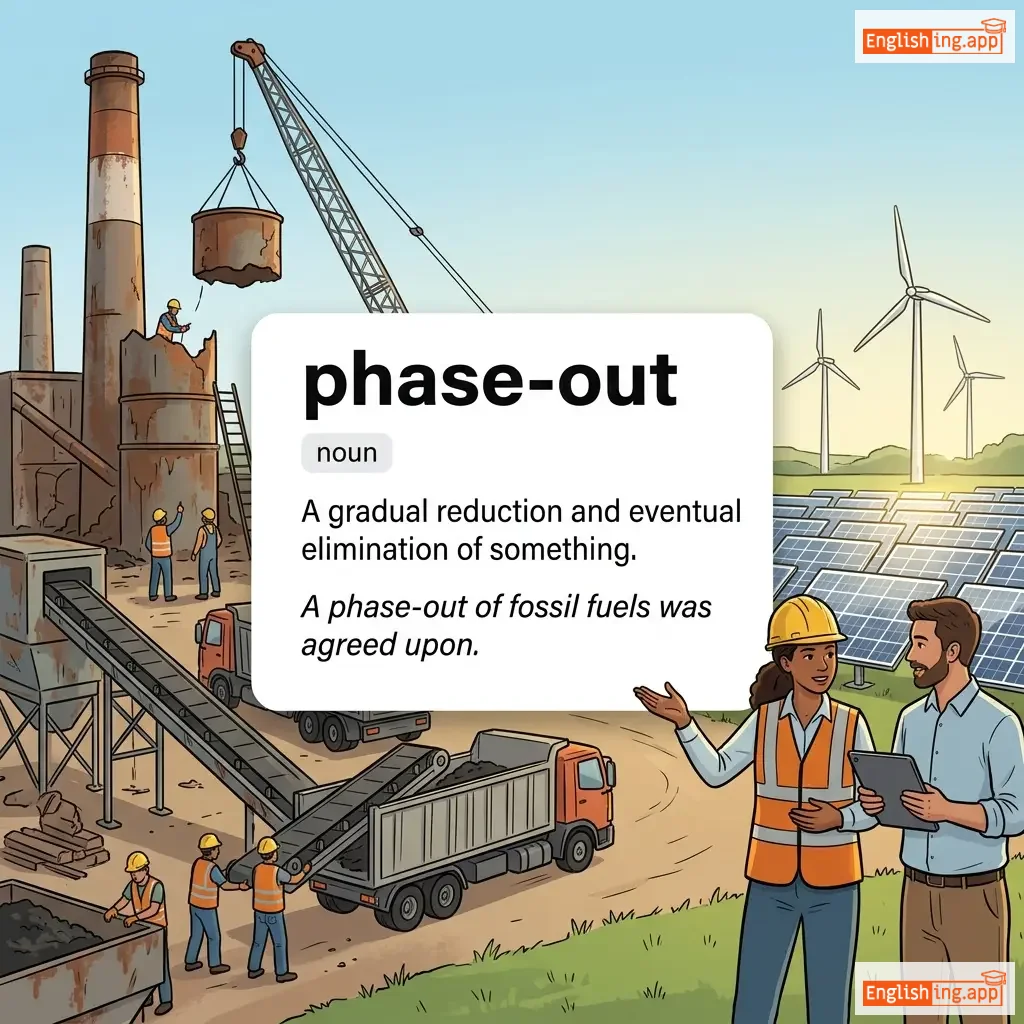
phase-out definition card — visual illustration of the meaning
noun
ˈfeɪz.aʊt
段階的廃止 (dankai-teki haishi)

A gradual reduction and eventual elimination of something.

"A phase-out of fossil fuels was agreed upon."
"化石燃料の段階的廃止が合意されました。" (Kaseki nenryō no dankai-teki haishi ga gōi saremashita.)
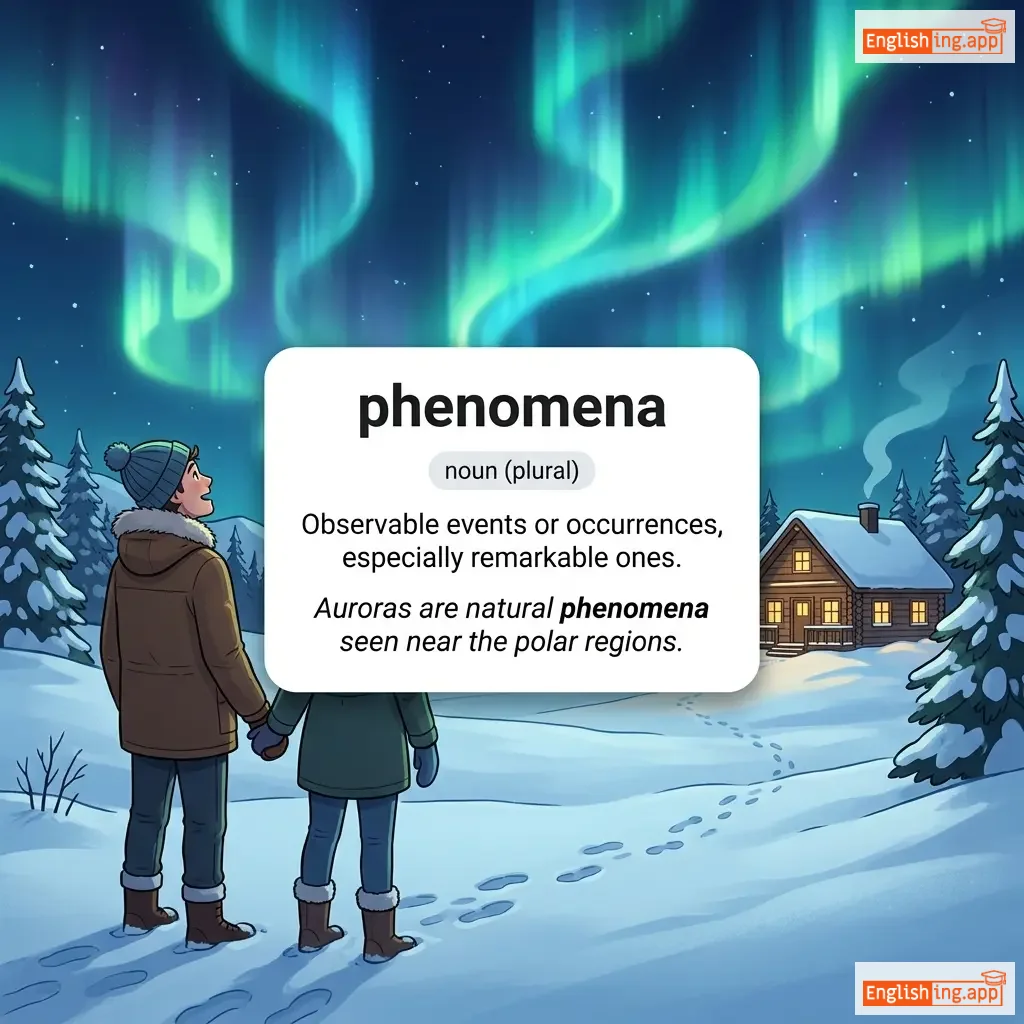
phenomena definition card — visual illustration of the meaning
noun (plural)
/fəˈnɒmɪnə/
現象 (genshō)

Observable events or occurrences, especially remarkable ones.

"Auroras are natural phenomena seen near the polar regions."

"オーロラは極地地域近くで見ることができる自然現象です。" (Ōrora wa kyokuchi chiiki chikaku de miru koto ga dekiru shizen genshō desu.)
adjective
/fəˈnɒmɪnəl/
非凡 (hiban)

extraordinary, remarkable, or exceptional in a way that is very impressive

"The team achieved phenomenal success in the tournament."

"チームはトーナメントで非凡な成功を収めました。" (Chīmu wa tōnamento de hiban na seikō o osamemashita.)
noun
/fəˈnɒmɪnən/
現象 (genshō)

an observable event, fact, or occurrence, often unusual or remarkable

"The Northern Lights are a natural phenomenon."

"オーロラは自然現象です。" (Ōrora wa shizen genshō desu.)
noun
/ˈfaɪəl/
小さなガラス瓶 (chiisana garasu bin)

a small glass container for liquids, especially medicines

"The doctor gave her a phial of medicine."

"医者は彼女に薬の小瓶を渡しました。" (Isha wa kanojo ni kusuri no kobin o watashimashita.)
verb
/fɪˈlændər/
浮気をする (uwaki o suru)

to engage in casual or frivolous romantic or sexual relationships

"He was known to philander with many women in town."

"彼は町で多くの女性と浮気をしていることで知られていた。" (Kare wa machi de ōku no josei to uwaki o shite iru koto de shirarete ita.)
noun
/fɪˈlændərər/
女たらし (otoko tarashi)

a man who habitually engages in casual romantic or sexual affairs

"The politician was exposed as a notorious philanderer."

"その政治家は有名な女たらしとして暴露されました。" (Sono seijika wa yūmei na otoko tarashi toshite bakuro saremashita.)
adjective
/ˌfɪl.ænˈθrɒp.ɪk/
博愛主義的な (hakuai shugi teki na)

showing concern for the welfare of others; generous and charitable

"She is known for her philanthropic activities in the city."

"彼女は街での博愛活動で知られています。" (Kanojo wa machi de no hakuai katsudō de shirareteimasu.)
noun
/fɪˈlæn.θrə.pɪst/
慈善家 (jizenka)

a person who seeks to promote the welfare of others, especially by donating money to good causes

"The philanthropist donated millions to build schools in rural areas."

"その慈善家は農村地域に学校を建てるために数百万ドルを寄付しました。" (Sono jizenka wa nōson chiiki ni gakkō o tateru tame ni sūhyaku man doru o kifu shimashita.)
noun
/fɪˈlæn.θrə.pi/
フィランソロピー (firanthoropī)

the desire to promote the welfare of others, often expressed by the generous donation of money to good causes

"Philanthropy has helped improve healthcare in many developing countries."

"フィランソロピーは多くの発展途上国で医療を改善するのに役立っています。" (Firanthoropī wa ōku no hatten to jōkoku de iryō o kaizen suru no ni yakudatteimasu.)
noun
/fɪˈlæt.əl.ɪst/
切手収集家 (kitte shūshūka)

a person who collects or studies postage stamps

"The philatelist spent years building a rare stamp collection."

"そのフィラテリストは、希少な切手コレクションを作るために何年も費やしました。" (Sono firaterisuto wa, kishōna kitte korekushon o tsukuru tame ni nannen mo tsuiyashimashita.)
noun
/fɪˈlæt.əl.i/
切手収集 (kitte shūshū)

the collection and study of postage stamps

"Philately is a hobby enjoyed by people of all ages."

"切手収集はすべての年齢層の人々に楽しまれている趣味です。" (Kitte shūshū wa subete no nenreisō no hitobito ni tanoshimarete iru shumi desu.)
adjective
/ˌfɪl.hɑːrˈmɒn.ɪk/
交響楽団に関連する (kōkyō gakudan ni kanren suru)

relating to a symphony orchestra or its music

"The philharmonic orchestra performed a stunning rendition of Beethoven's Ninth Symphony."

"フィルハーモニックオーケストラはベートーヴェンの第九交響曲の素晴らしい演奏を行いました。" (Fīruhāmonikku ōkesutora wa Bētoeven no dai kyū kōkyōkyoku no subarashī ensō o okonaimashita.)
noun
/ˈfɪl.ɪ.staɪn/
文化や芸術に無関心または敵対的な人 (bunka ya geijutsu ni mukanshin matawa tekitai-tekina hito)

a person who is indifferent or hostile to culture and the arts

"He was criticized as a philistine for dismissing modern art."

"彼は現代アートを拒否したことでフィリスティンと批判された。" (Kare wa gendai āto o kyohi shita koto de firisutin to hihan sareta.)
noun
/ˈfɪl.ə.dʒɪ.nɪst/
女性を愛する人 (josei o aisuru hito)

a person who loves or admires women

"As a known philogynist, he advocated for women's education."

"有名なフィロジニストとして、彼は女性の教育を支持しました。" (Yūmei na firōjinisuto toshite, kare wa josei no kyōiku o shiji shimashita.)
noun
/fɪˈlɒl.ə.dʒɪst/
言語学者 (gengogakusha)

a person who studies languages and their history

"The philologist analyzed ancient texts to understand language evolution."

"言語学者は古代の文献を分析して、言語の進化を理解しようとした。" (Gengogakusha wa kodai no bunken wo bunseki shite, gengo no shinka wo rikai shiyou to shita.)
noun
/fɪˈlɒl.ə.dʒi/
書かれた歴史的な資料における言語の研究; 言語学 (kakareta rekishiteki na shiryō ni okeru gengo no kenkyū; gengogaku)

the study of language in written historical sources; linguistics

"She devoted her career to philology, researching ancient manuscripts."

"彼女はフィロロジーに自分のキャリアを捧げ、古代の写本を研究していました。" (Kanojo wa firorojī ni jibun no kyaria o sasage, kodai no shahon o kenkyū shiteimashita.)
noun
/fɪˈlɒsəfə/
哲学者 (tetsugakusha)

a person engaged in the study of philosophy or in serious thinking about fundamental questions

"Socrates was a famous philosopher of ancient Greece."

"ソクラテスは古代ギリシャの有名な哲学者でした。" (Sokuratesu wa kodai Girisha no yuumei na tetsugakusha deshita.)
adjective
/ˌfɪl.əˈsɒf.ɪ.kəl/
哲学的 (tetsugakuteki)

relating to the study of the fundamental nature of knowledge, reality, and existence

"She maintained a calm and philosophical attitude during the crisis."

"危機の間、彼女は冷静で哲学的な態度を保ちました。" (Kiki no aida, kanojo wa reisei de tetsugakuteki na taido o tamochimashita.)
verb
/fɪˈlɒs.ə.faɪz/
哲学する (tetsugaku suru)

to think or talk about the fundamental nature of knowledge, reality, and existence

"He likes to philosophize about life and its meaning."

"彼は人生とその意味について哲学するのが好きです。" (Kare wa jinsei to sono imi ni tsuite tetsugaku suru no ga suki desu.)
noun
/fɪˈlɒs.ə.fi/
哲学 (tetsugaku)

the study of the fundamental nature of knowledge, reality, and existence

"Her philosophy emphasizes kindness and empathy."

"彼女の哲学は親切さと共感を強調しています。" (Kanojo no tetsugaku wa shinsetsu-sa to kyokan o kyouchou shiteimasu.)
phishing definition card — visual illustration of the meaning
noun
/ˈfɪʃ.ɪŋ/
情報窃盗詐欺 (jōhō settō sagi)

Deceptive technique for stealing personal information unauthorized

"Phishing emails trick users into revealing passwords."

"フィッシングメールはユーザーを騙してパスワードを明かさせます。" (Fisshingu mēru wa yūzā o damashite pasuwādo o akasasemasu.)
phlegmatic definition card — visual illustration of the meaning
adjective
/flɛgˈmæt.ɪk/
冷静 (reisei)

having an unemotional and stolidly calm disposition

"Despite the chaos, he remained phlegmatic and composed."

"混乱の中で、彼は冷静で落ち着いていました。" (Konran no naka de, kare wa reisei de ochitsuite imashita.)
noun
/ˈfəʊ.bi.ə/
恐怖症 (kyōfushō)

an extreme or irrational fear of something

"She has a phobia of heights and avoids tall buildings."

"彼女は高所恐怖症で、高い建物を避けます。" (Kanojo wa kōsho kyōfushō de, takai tatemono o sake masu.)
phrasal verb
/pɪk ʌp/
拾う; 迎えに行く; 身につける (hirou; mukae ni iku; mi ni tsukeru)

to lift something; to collect or receive someone or something; to learn or acquire gradually; to improve or increase

"She picked up the book from the floor."

"彼女は床から本を拾った。" (Kanojo wa yuka kara hon o hirotta)
noun
/ˈpɪkəloʊ/
小さなフルート (chiisana furuuto)

a small flute, higher in pitch than the regular flute

"She played a lively tune on the piccolo during the concert."
"彼女はコンサートでピッコロを使って活気のあるメロディを演奏しました。" (Kanojo wa konsaato de pikkoro o tsukatte kakki no aru merodi o ensou shimashita.)
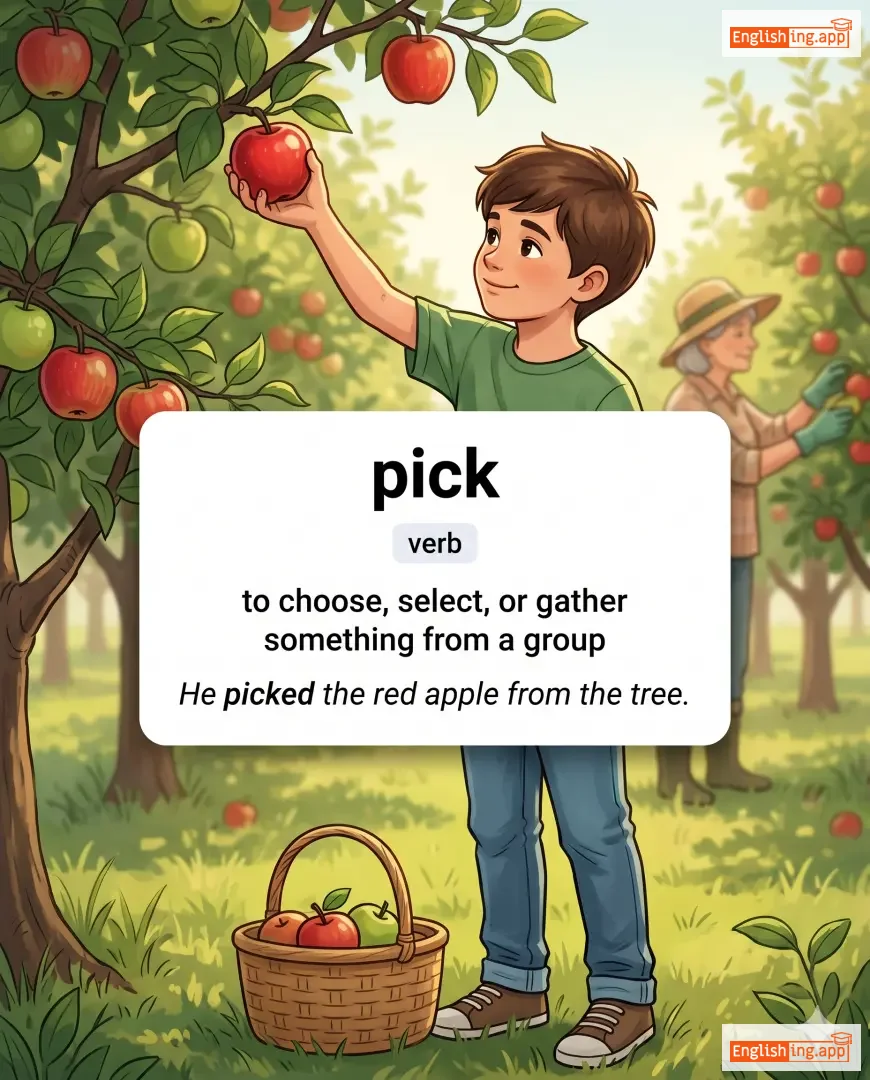
pick definition card — visual illustration of the meaning
verb
/pɪk/
選ぶ (erabu)

to choose, select, or gather something from a group

"He picked the red apple from the tree."
"彼は木から赤いリンゴを選びました。" (Kare wa ki kara akai ringo o erabimashita.)
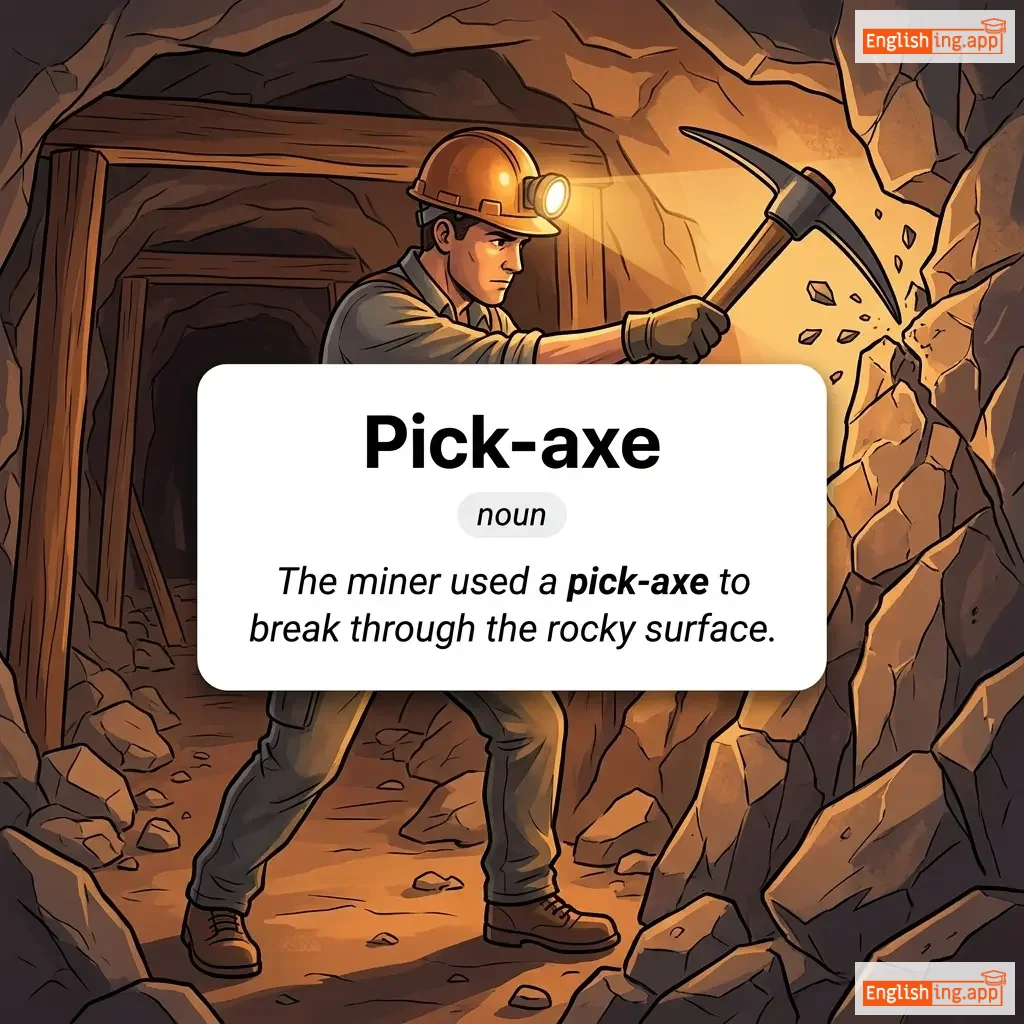
Pick-axe definition card — visual illustration of the meaning
noun
/ˈpɪk.æks/
ツルハシ (tsuruhashi)

a tool with a heavy metal head and long handle used for breaking up hard ground or rock

"The miner used a pick-axe to break through the rocky surface."
"鉱夫は岩の表面を壊すためにツルハシを使用しました。" (Koufu wa iwa no hyoumen o kowasu tame ni tsuruhashi o shiyou shimashita.)
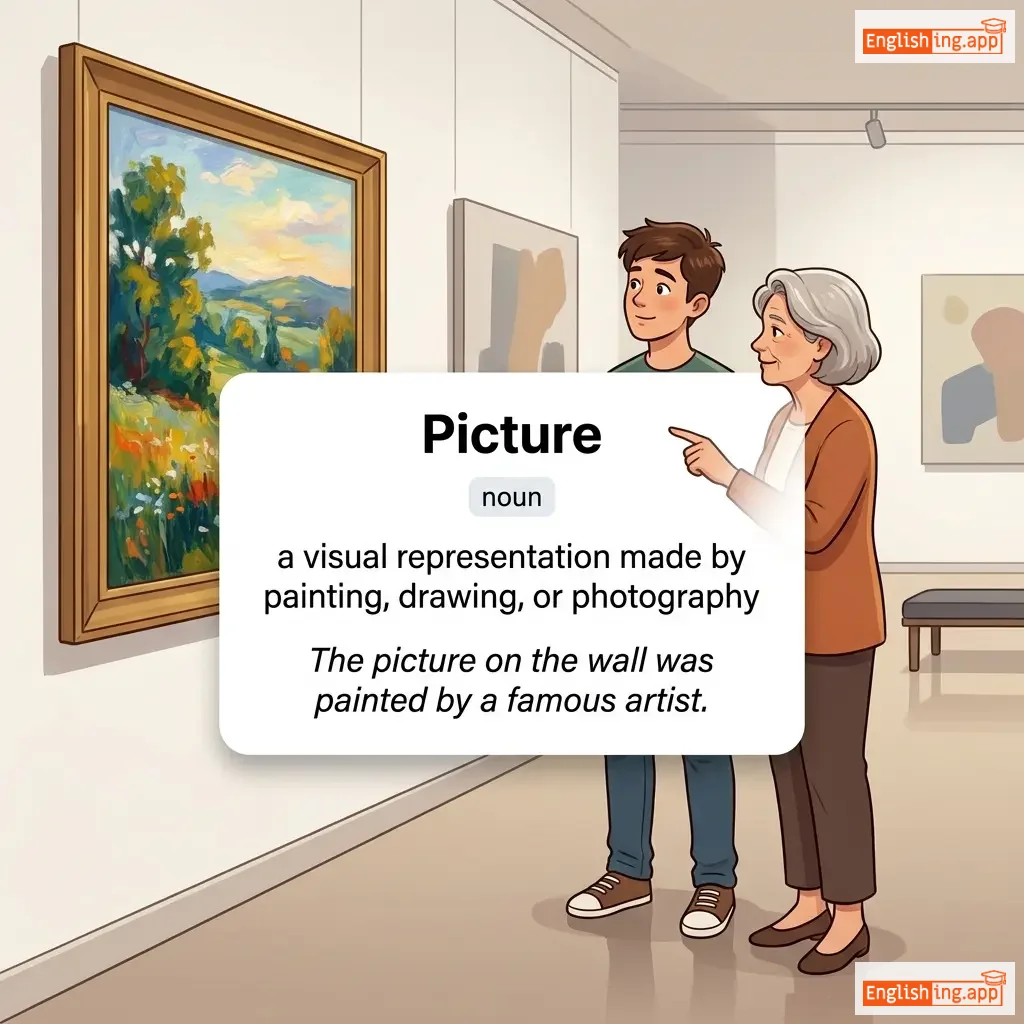
Picture definition card — visual illustration of the meaning
noun
/ˈpɪktʃər/
(e)

a visual representation made by painting, drawing, or photography

"The picture on the wall was painted by a famous artist."

"壁の絵は有名なアーティストによって描かれました。" (Kabe no e wa yūmei na ātisuto ni yotte egakaremashita.)
adjective
/ˈpɪdlɪŋ/
取るに足らない, 些細な (toru ni tarranai, sasai na)

trivial or insignificant; very small

"He made a piddling amount of money from that deal."

"彼はその取引でわずかな金額しか稼げなかった。" (Kare wa sono torihiki de wazuka na kingaku shika kasegenakatta.)
adjective
/ˌpɪkəˈjuːn/
ささいな, 些細な (sasaina, sasaina)

of little value or importance; trivial

"He complained about the picayune details of the contract."

"彼は契約の些細な詳細について不平を言っていました。" (Kare wa keiyaku no sasaina shōsai ni tsuite fuhei o itte imashita.)
noun
/ˈpɪkʌp/
オープンバックの小型トラック; 何かを集めたり改善したりする行為 (ōpun bakku no kogata torakku; nanika o atsumetari kaizen shitari suru kōi)

a small truck with an open back; the act of collecting or improving something

"The company scheduled a pickup for the returned goods."

"会社は返却された商品を引き取る予定でした。" (Kaisha wa henkyaku sareta shōhin o hikitoru yotei deshita.)