語彙集

英単語辞書 | 単語の意味、定義、例文

noun
/ˈpiːtsə/
ピザ (piza)

a flat round bread baked with toppings such as cheese, tomato, and other ingredients

"We ordered a large pepperoni pizza for dinner."
"私たちは夕食に大きなペパロニピザを注文しました。" (Watashitachi wa yuushoku ni ookina peparoni piza o chuumon shimashita.)
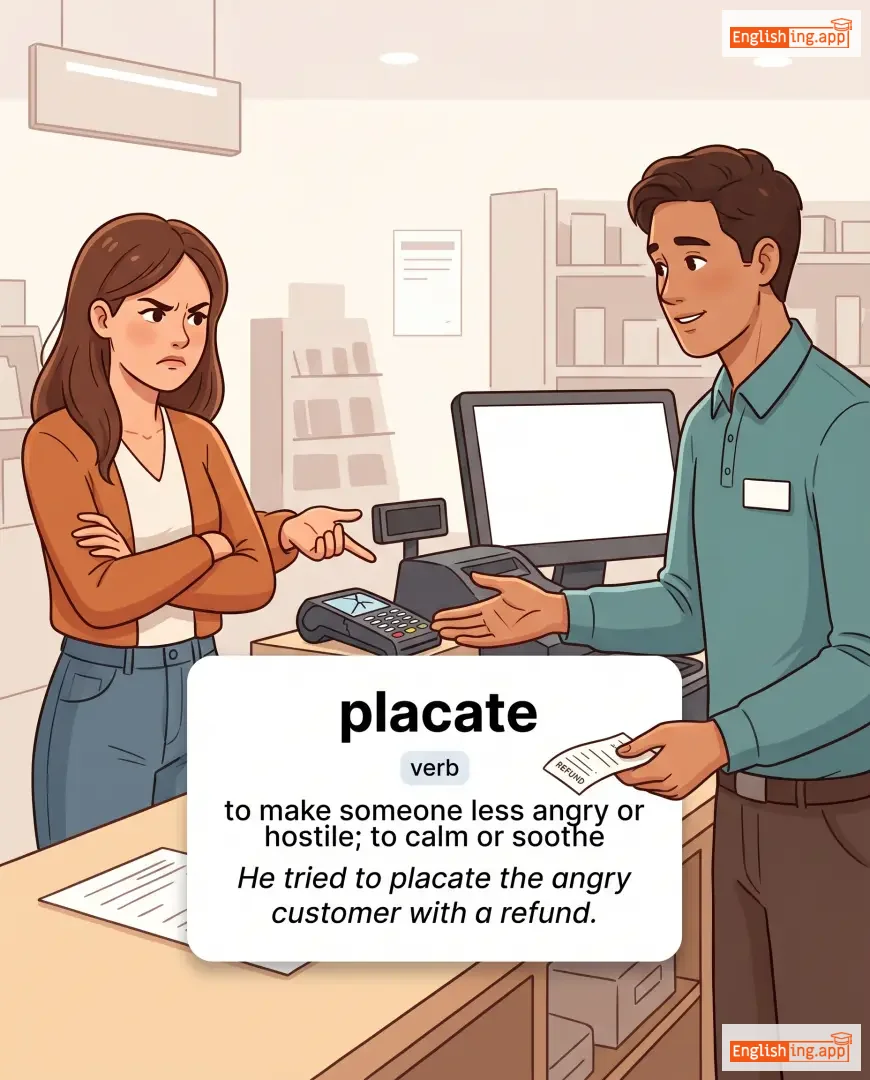
placate definition card — visual illustration of the meaning
verb
/pləˈkeɪt/
なだめる (nadameru)

to make someone less angry or hostile; to calm or soothe

"He tried to placate the angry customer with a refund."
"彼は返金で怒っている顧客をなだめようとした。" (Kare wa henkin de okotte iru kokyaku o nadameyō to shita.)
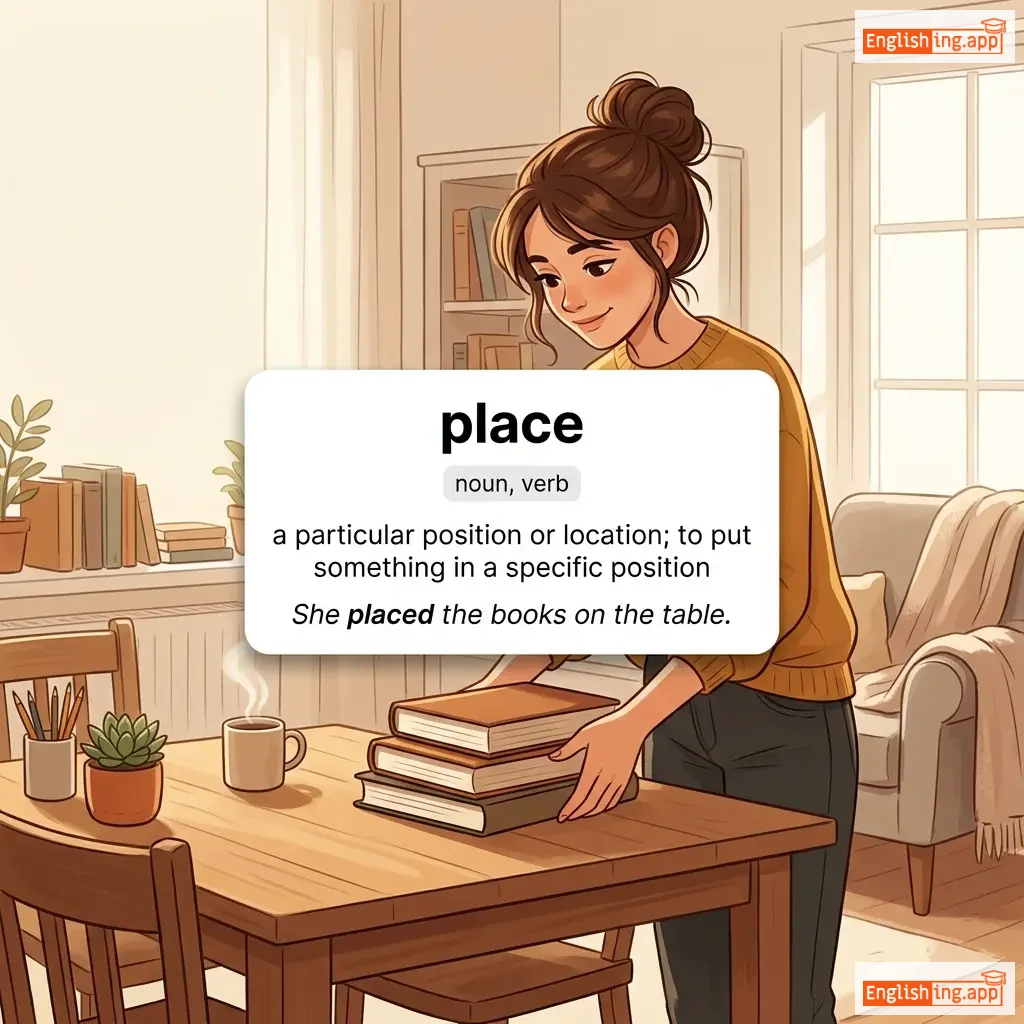
place definition card — visual illustration of the meaning
noun, verb
/pleɪs/
場所 (basho)

a particular position or location; to put something in a specific position

"She placed the books on the table."

"彼女は本をテーブルに置いた。" (Kanojo wa hon o tēburu ni oita.)
noun
/pləˈsiːboʊ/
プラセボ (purasebo)

a substance with no therapeutic effect, used as a control in testing new drugs

"The patient was given a placebo to compare the effect of the real drug."

"患者は実際の薬の効果と比較するためにプラセボを与えられました。" (Kanja wa jissai no kusuri no kouka to hikaku suru tame ni purasebo wo ataeraremashita.)
noun
/ˈpleɪsmənt/
配置または割り当て (haichi matawa wariante)

the act of putting something or someone in a particular position or job

"The company arranged job placement for the graduates."

"会社は卒業生のために就職先を手配しました。" (Kaisha wa sotsugyousei no tame ni shuushoku saki wo tehai shimashita.)
adjective
/ˈplæsɪd/
穏やかな、静かな (odayakana, shizukana)

calm and peaceful, not easily disturbed

"She had a placid expression despite the chaos around her."

"彼女は周囲の混乱にもかかわらず、穏やかな表情をしていた。" (Kanojo wa shūi no konran ni mo kakawarazu, odayakana hyōjō o shite ita.)
noun
/ˈpleɪdʒərɪzəm/
盗作 (dōzoku)

the practice of taking someone else's work or ideas and passing them off as one's own

"The student was expelled for committing plagiarism in his essay."

"学生はエッセイで盗作を行ったため、退学させられました。" (Gakusei wa essei de dousaku o okonatta tame, taigaku saseraremashita.)
verb
/ˈpleɪdʒəraɪz/
盗作する (tōsaku suru)

to take someone else's work or ideas and present them as your own

"He was warned not to plagiarize his friend's essay."
"彼は友達のエッセイを盗用しないよう警告されました。" (Kare wa tomodachi no essei o tōyō shinai yō keikoku saremashita.)
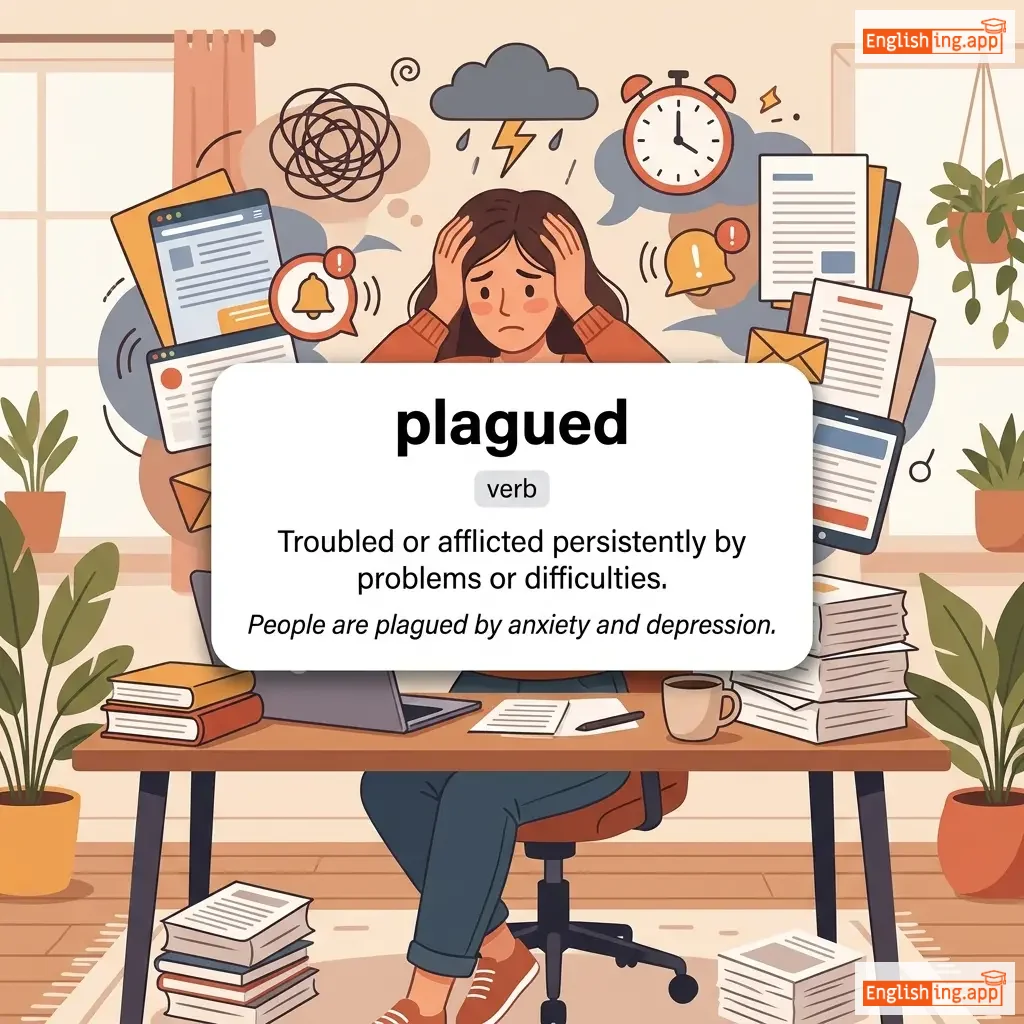
plagued definition card — visual illustration of the meaning
verb
pleɪɡd
悩まされる (nayamasareru)

Troubled or afflicted persistently by problems or difficulties.

"People are plagued by anxiety and depression."

"人々は不安と抑うつに悩まされています。" (Hitobito wa fuan to yokutsuni nayamasareteimasu.)
adjective
/pleɪn/
簡単な (kantanna)

simple or clear, without decoration or complexity

"She wore a plain white dress to the ceremony."

"彼女は式典にシンプルな白いドレスを着ていました。" (Kanojo wa shikiten ni shinpuruna shiroi doresu o kite imashita.)
noun
/ˈpleɪntɪf/
原告 (genkoku)

a person who brings a case against another in a court of law

"The plaintiff filed a lawsuit against the company."

"原告は会社に対して訴訟を起こしました。" (Genkoku wa kaisha ni taishite soshō o okoshimashita.)
adjective
/ˈpleɪntɪv/
悲しげな, 哀れな (kanashigena, aware na)

expressing sadness or sorrow

"He raised a plaintive cry for help."

"彼は助けを求めて哀願するような叫びを上げた。" (Kare wa tasuke o motomete aigan suru yō na sakebi o ageta.)
noun,verb
/pleɪt/
編み込み (amikomi)

a braid of hair or straw; to braid

"She decided to plait her hair before the party."
"彼女はパーティーの前に髪を編むことに決めました。" (Kanojo wa pātii no mae ni kami o amu koto ni kimemashita.)
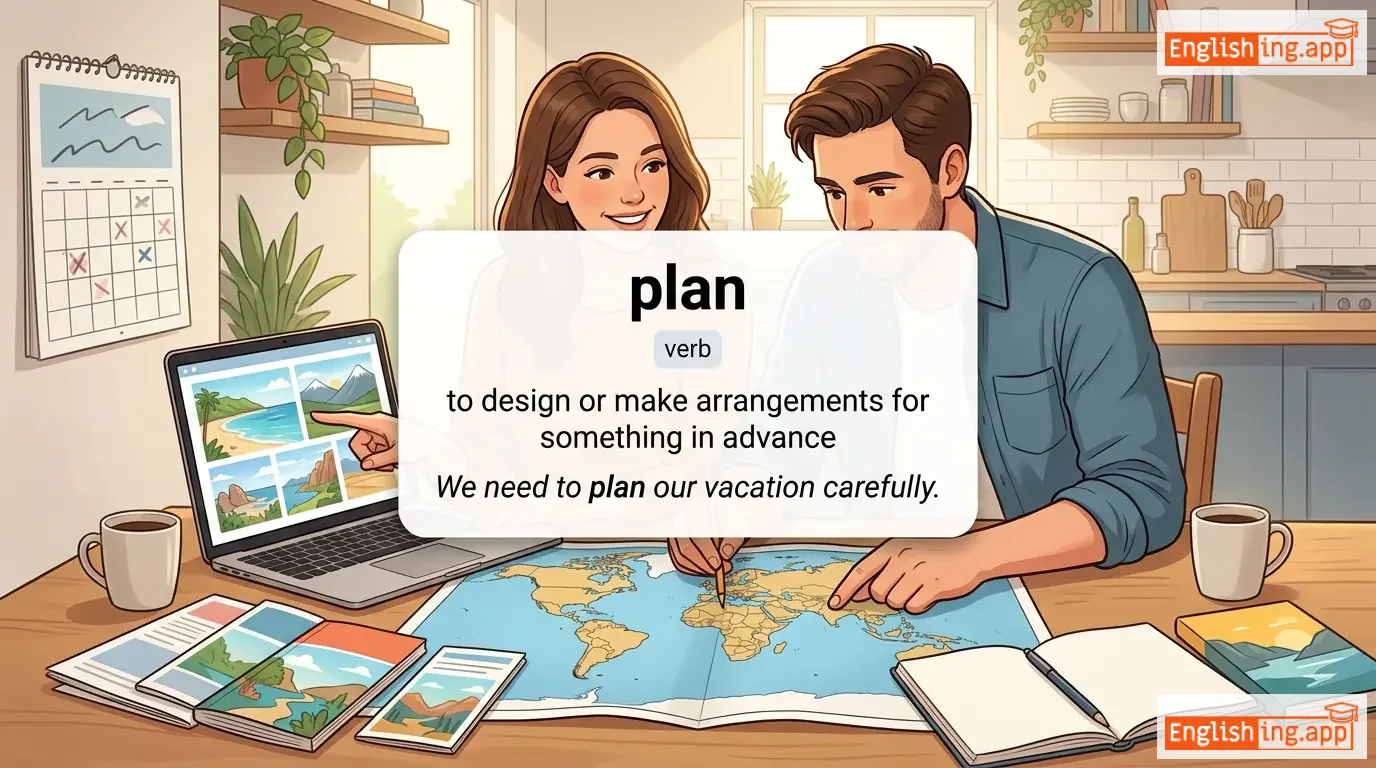
plan definition card — visual illustration of the meaning
noun
/plæn/
計画 (keikaku)

a detailed proposal for doing or achieving something

"We need a clear plan to move forward."

"前進するために明確な計画が必要です。" (Zenshin suru tame ni meikaku na keikaku ga hitsuyou desu.)
plane definition card — visual illustration of the meaning
noun,verb
/pleɪn/
平面; 飛行機; 平らにする (へいめん; ひこうき; たいらにする)

a flat surface; an aircraft; to make smooth

"The carpenter used a tool to plane the wood."
"大工は木を平らにするための道具を使いました。" (Daiku wa ki o tairani suru tame no dōgu o tsukaimashita.)
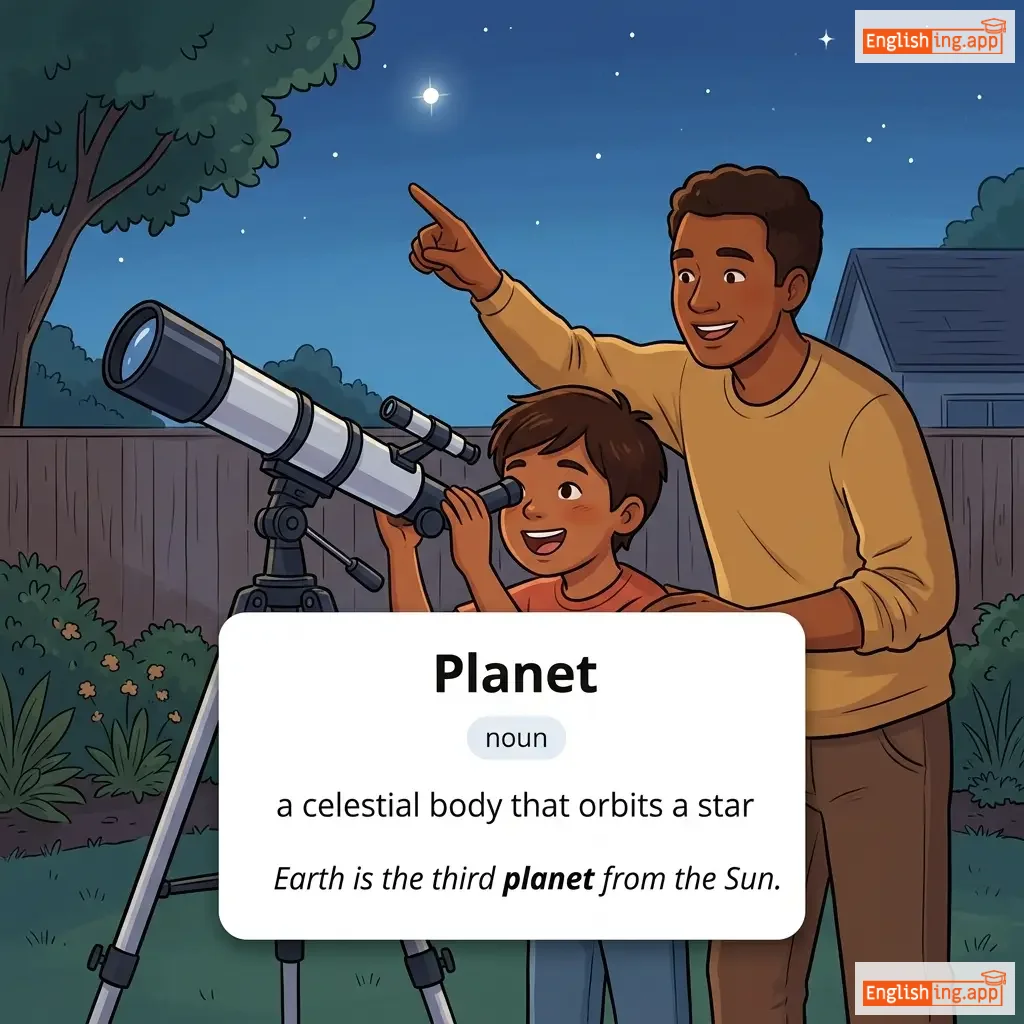
Planet definition card — visual illustration of the meaning
noun
/ˈplænɪt/
惑星 (wakusei)

a celestial body that orbits a star

"Earth is the third planet from the Sun."

"地球は太陽から3番目の惑星です。" (Chikyū wa taiyō kara sanbanme no wakusei desu.)
verb
/pliːz/
喜ばせる (yorokobaseru)

to make someone happy or satisfied

"She will do anything to please her parents."

"彼女は両親を喜ばせるために何でもするでしょう。" (Kanojo wa ryōshin o yorokobaseru tame ni nandemo suru deshō.)
noun
/pəˈruːzl/
慎重な読書 (shinchou na dokusho)

The action of reading or examining something carefully.

"The contract was given to the lawyer for perusal."
"契約書は弁護士に慎重な読書のために渡されました。" (Keiyaku-sho wa bengoshi ni shinchou na dokusho no tame ni watasaremashita.)
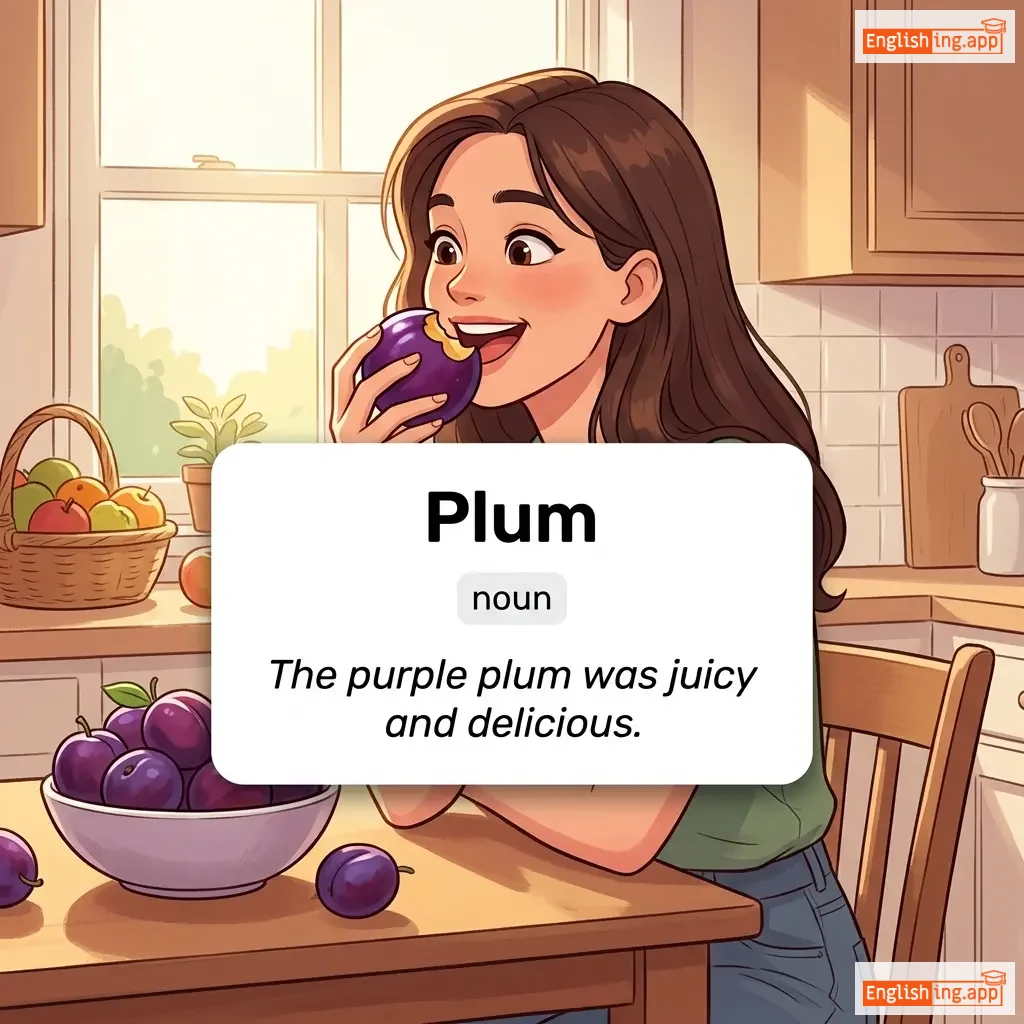
Plum definition card — visual illustration of the meaning
noun
/plʌm/
プラム (puramu)

a small round fruit with smooth red or purple skin, sweet flesh, and a single large seed

"The purple plum was juicy and delicious."

"その紫色のプラムはジューシーで美味しかった。" (sono murasaki iro no puramu wa jūshī de oishikatta.)
noun
/plʌɡ/
プラグ (puragu)

a device used to connect or block an opening

"She inserted the plug into the socket."

"彼女はソケットにプラグを差し込みました。" (Kanojo wa soketto ni puragu o sashikomimashita.)
adjective
/ˈplʌk.i/
勇敢 (yūkan)

having or showing courage and determination

"The plucky child rescued the kitten from the tree."

"勇敢な子供が木から子猫を救いました。" (Yūkan na kodomo ga ki kara koneko o sukūmashita.)
verb
/plʌk/
摘む, 勇気を出す (tsumu, yūki wo dasu)

to take hold of and quickly remove; to gather courage or determination

"She plucked a flower from the garden."

"彼女は庭から花を摘みました。" (Kanojo wa niwa kara hana o tsumimashita.)
noun
/plɔɪ/
巧妙な策略 (koumyou na sakuryaku)

a clever plan or action designed to gain an advantage

"She used a clever ploy to win the debate."
"彼女は討論に勝つために巧妙な策略を使いました。" (Kanojo wa tooron ni katsu tame ni koumyou na sakuryaku wo tsukaimashita.)
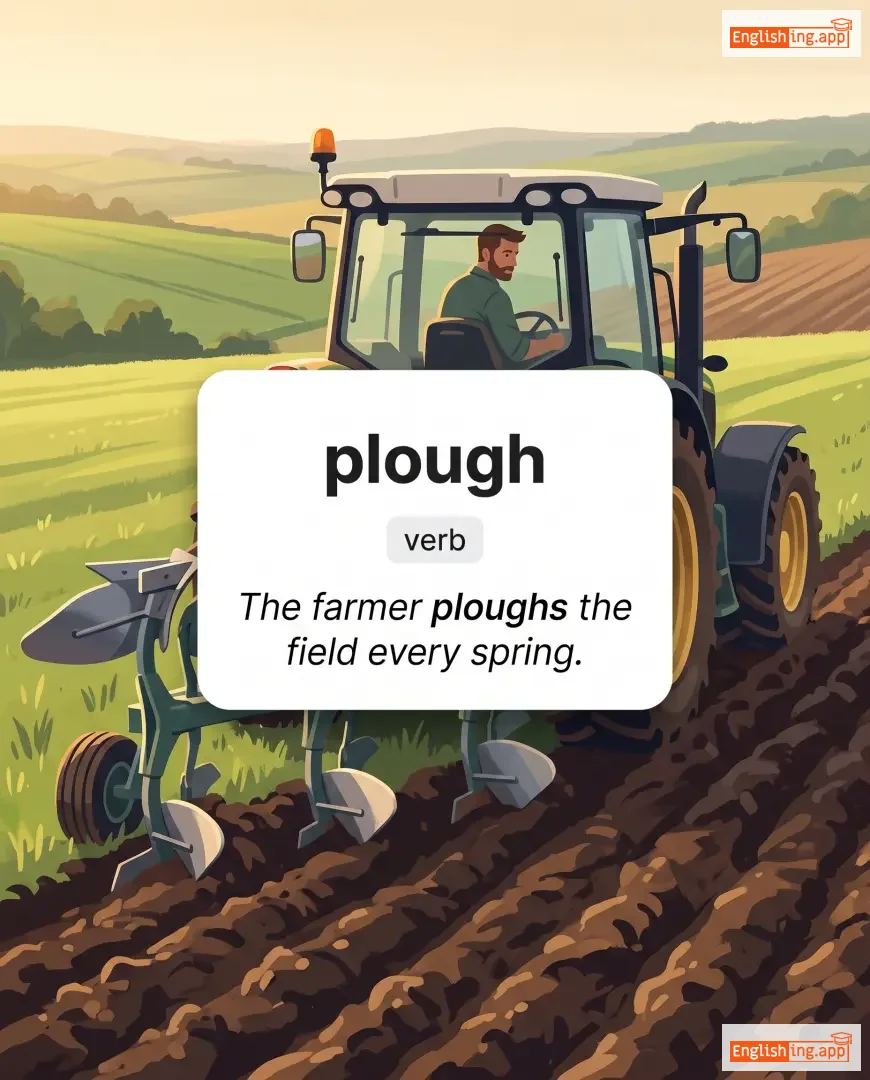
plough definition card — visual illustration of the meaning
noun
/plaʊ/
(suki)

a large farming tool used to break up and turn over soil before planting crops

"The oxen pulled the heavy plough across the field."
"牛は重い鋤を引いて畑を横切った。" (Ushi wa omoi suki o hiite hatake o yokogitta.)
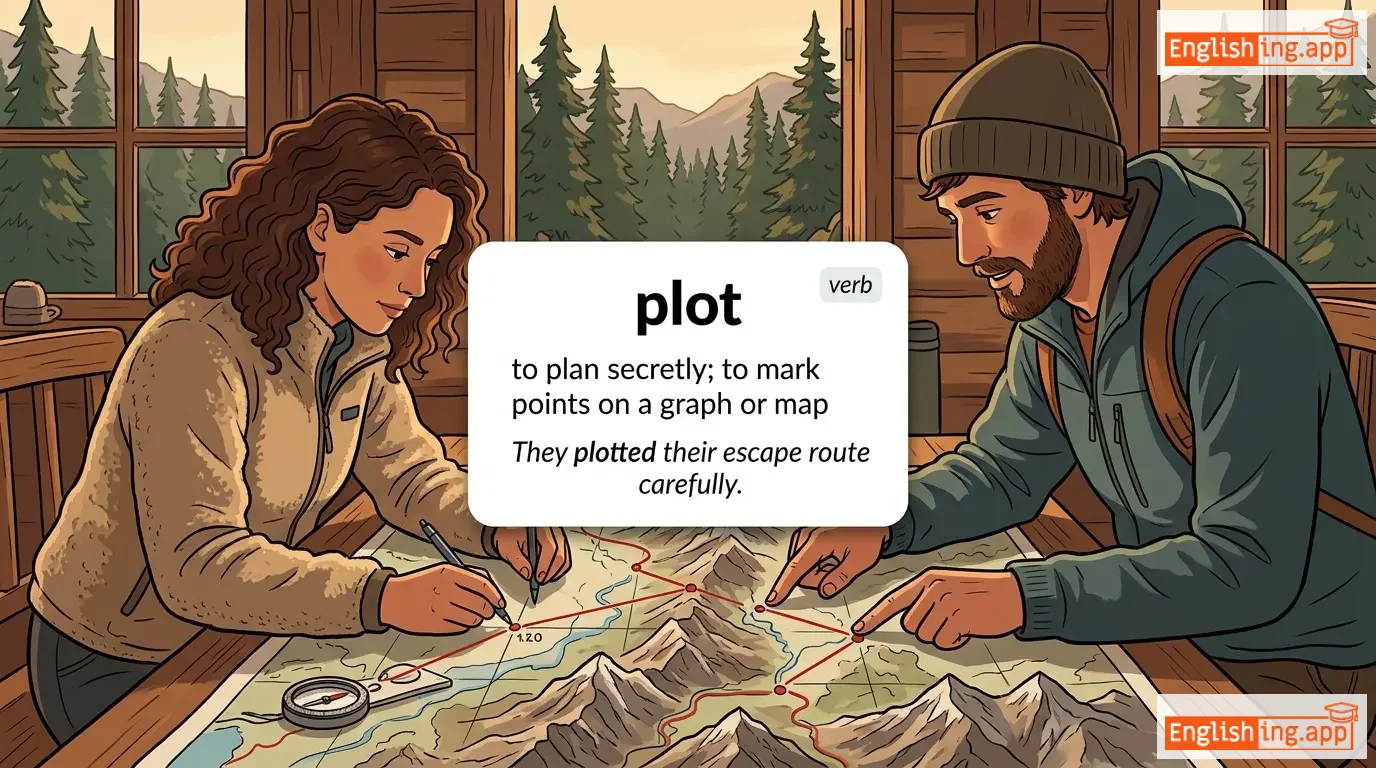
plot definition card — visual illustration of the meaning
noun
/plɒt/
陰謀 (inbou)

a secret plan or scheme, often with bad intentions

"The villain made a plot to steal the treasure."

"悪役は財宝を盗むために陰謀を企てた。" (Akuyaku wa zaihō o nusumu tame ni inbō o kudateta.)
adjective
/ˈplɒd.ɪŋ/
遅くて退屈な (osokute taikutsuna)

slow-moving and unexciting; showing steady effort

"The movie was entertaining but a bit plodding in the middle."

"その映画は面白かったが、真ん中で少し遅くて退屈だった。" (Sono eiga wa omoshirokatta ga, mannaka de sukoshi osokute taikutsu datta.)
verb
/plɒd/
ゆっくりと働く (yukkuri to hataraku)

to work slowly and steadily, often with effort or difficulty

"He plodded through his homework despite feeling tired."

"疲れていたけど、彼は宿題をゆっくりやっていた。" (Tsukarete ita kedo, kare wa shukudai wo yukkuri yatte ita.)
noun
/plaɪt/
困難、危機的な状況 (konnan, kikiteki na joukyou)

a difficult or dangerous situation

"The refugees described their plight during the war."

"難民は戦争中の困難を説明しました。" (Nanmin wa sensouchuu no konnan wo setsumeishimashita.)
adjective
/ˈplaɪənt/
柔軟な、影響を受けやすいまたは適応可能な (jūnan na, eikyō o uke yasui matawa tekiō kanō na)

flexible; easily influenced or adaptable

"She has a pliant personality that adapts well to new situations."

"彼女は新しい状況にうまく適応できる柔軟な性格を持っています。" (Kanojo wa atarashī jōkyō ni umaku tekiō dekiru jūnan na seikaku o motteimasu.)
adjective
/ˈplaɪəbəl/
柔軟な (jūnan na)

easily bent or flexible; adaptable

"The metal is pliable enough to be shaped into jewelry."
"その金属は十分に柔軟で、ジュエリーに成形することができます。" (Sono kinzoku wa jūbun ni jūnan de, juwerī ni seikei suru koto ga dekimasu.)
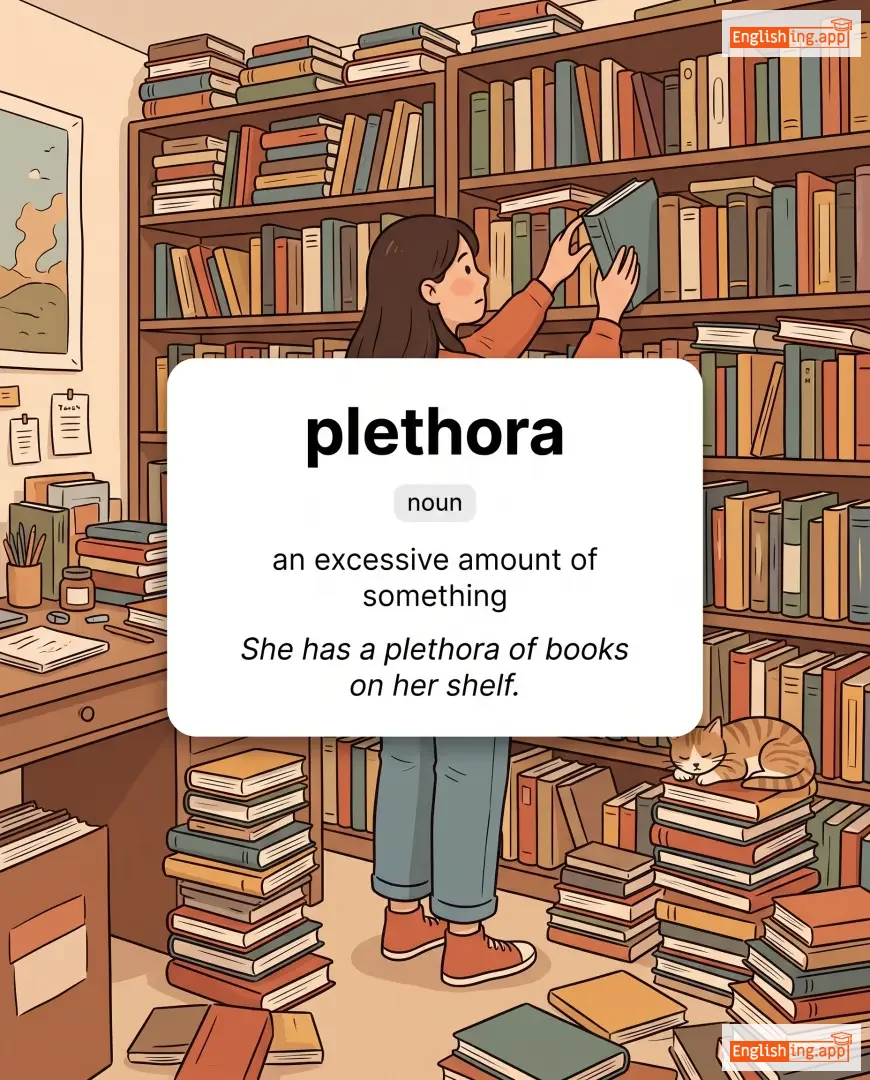
plethora definition card — visual illustration of the meaning
noun
/ˈplɛθərə/
過剰な量 (kajo na ryo)

an excessive amount of something

"She has a plethora of books on her shelf."

"彼女の棚には過剰な量の本があります。" (Kanojo no tana ni wa kajo na ryo no hon ga arimasu.)
noun
/ˈplɛnti/
たっぷり (tappuri)

a large or sufficient amount or quantity

"We have plenty of time before the meeting."

"会議の前にたっぷり時間があります。" (Kaigi no mae ni tappuri jikan ga arimasu.)
noun
/ˈplɛntɪtjuːd/
豊富さ (houfusa)

the condition of being full or abundant

"The garden offered a plentitude of flowers in spring."

"庭園は春に花の豊富さを提供しました。" (Teien wa haru ni hana no houfusa wo teikyou shimashita.)
adjective
/ˈplɛntɪfəl/
豊富な (hōfu na)

Existing in great quantity; abundant.

"Food and water were plentiful in the village."

"村では食べ物と水が豊富でした。" (Mura de wa tabemono to mizu ga hōfu deshita.)
adjective
/ˈplɛntɪəs/
豊富 (houfu)

existing in great quantity; abundant

"The harvest was plenteous, providing enough food for the entire village."

"収穫は豊富で、村全体に十分な食料を提供しました。" (Shuukaku wa houfu de, mura zentai ni juubun na shokuryou o teikyou shimashita.)
noun
/ˈplɛnɪtjuːd/
充実 (jūjitsu)

the condition of being full or abundant; a great quantity

"The garden was a plenitude of flowers in spring."

"春に庭は花の充実でした。" (Haru ni niwa wa hana no jūjitsu deshita.)
noun
/ˌpliːnɪpəˈtɛnʃəri/
全権大使 (zenken taishi)

a person invested with full power to act on behalf of another, especially in diplomacy

"The ambassador was a plenipotentiary sent to negotiate the treaty."

"大使は条約交渉のために派遣されたプレニポテンシャリーでした。" (Taishi wa jōyaku kōshō no tame ni haken sareta plenipotentiary deshita.)
adjective
/ˈpliːnəri/
全体の (zentai no)

complete in every way; fully attended or absolute

"The committee held a plenary session to discuss all matters of importance."

"委員会はすべての重要な問題について議論するために全体会議を開いた。" (Iinkai wa subete no jūyōna mondai ni tsuite giron suru tame ni zentai kaigi o hiraita.)
noun
/ˈplɛdʒɔːr/
保証人 (hoshonin)

a person who gives or offers a pledge or security

"The bank accepted the jewelry from the pledgeor as collateral for the loan."

"銀行は貸付の担保として保証人から宝石を受け入れました。" (Ginkou wa kashitsuke no tanpo toshite hoshonin kara houseki o ukeiremashita.)
noun
/ˈplɛdʒiː/
担保として何かを譲渡された人物 (tābo toshite nanika o jōto sareta jinbutsu)

a person to whom something is pledged or given as security

"The bank is the pledgee of the collateral until the loan is repaid."

"銀行はローンが返済されるまで担保の債権者です。" (Ginkō wa rōn ga hensai sareru made tābo no saiken-sha desu.)
noun
/plɛdʒ/
誓約 (seiyaku)

a solemn promise or agreement to do or refrain from doing something

"He gave a pledge to support the cause."

"彼はその原因を支援するために誓約を立てた。" (Kare wa sono gen'in o shien suru tame ni seiyaku o tateta.)
noun
/ˈplɛbɪsaɪt/
国民投票 (kokumin touhyou)

a direct vote by the electorate on an important public question

"The government held a plebiscite to decide on the new constitution."

"政府は新しい憲法について決定するために国民投票を実施しました。" (Seifu wa atarashii kenpou ni tsuite kettei suru tame ni kokumin touhyou wo jisshi shimashita.)
adjective, noun
/pləˈbiːən/
一般的な、平民の (ippantekina, heimin no)

alternate spelling of 'plebeian'; common or ordinary

"His tastes were rather plebian, favoring simple food and clothes."

"彼の趣味はかなり一般的で、シンプルな食べ物と服を好んでいました。" (Kare no shumi wa kanari ippanteki de, shinpuru na tabemono to fuku o kononde imashita.)
adjective, noun
/pləˈbiːən/
一般の人 (ippan no hito)

common, ordinary, or belonging to the lower social classes

"The festival was enjoyed by both plebeian and noble citizens."

"祭りは、平民と貴族市民の両方に楽しませられました。" (Matsuri wa, heimin to kizoku shimin no ryōhō ni tanoshima se raremashita.)
noun, verb
/pliːt/
プリーツ (purītsu)

a fold in fabric made by doubling the material back upon itself

"She added a pleat to the skirt for extra volume."

"彼女はスカートにボリュームを加えるためにプリーツを入れました。" (Kanojo wa sukāto ni boryūmu o kuwaeru tame ni purītsu o iremashita.)
noun
/ˈplɛʒər/
喜び (yorokobi)

a feeling of happiness or enjoyment

"It was a pleasure to meet you."

"お会いできて嬉しかったです。" (Oai dekite ureshikatta desu.)
adjective
/ˈplɛʒərəbl/
楽しませる、快適な (tanoshimaseru, kaiteki na)

giving pleasure or enjoyment

"Reading a good book is a pleasurable activity."

"良い本を読むことは楽しい活動です。" (Yoi hon o yomu koto wa tanoshī katsudō desu.)
adjective
/pliːzd/
満足 (manzoku)

feeling happy or satisfied with something

"She was pleased with her exam results."
"彼女は試験の結果に満足していました。" (Kanojo wa shiken no kekka ni manzoku shiteimashita.)
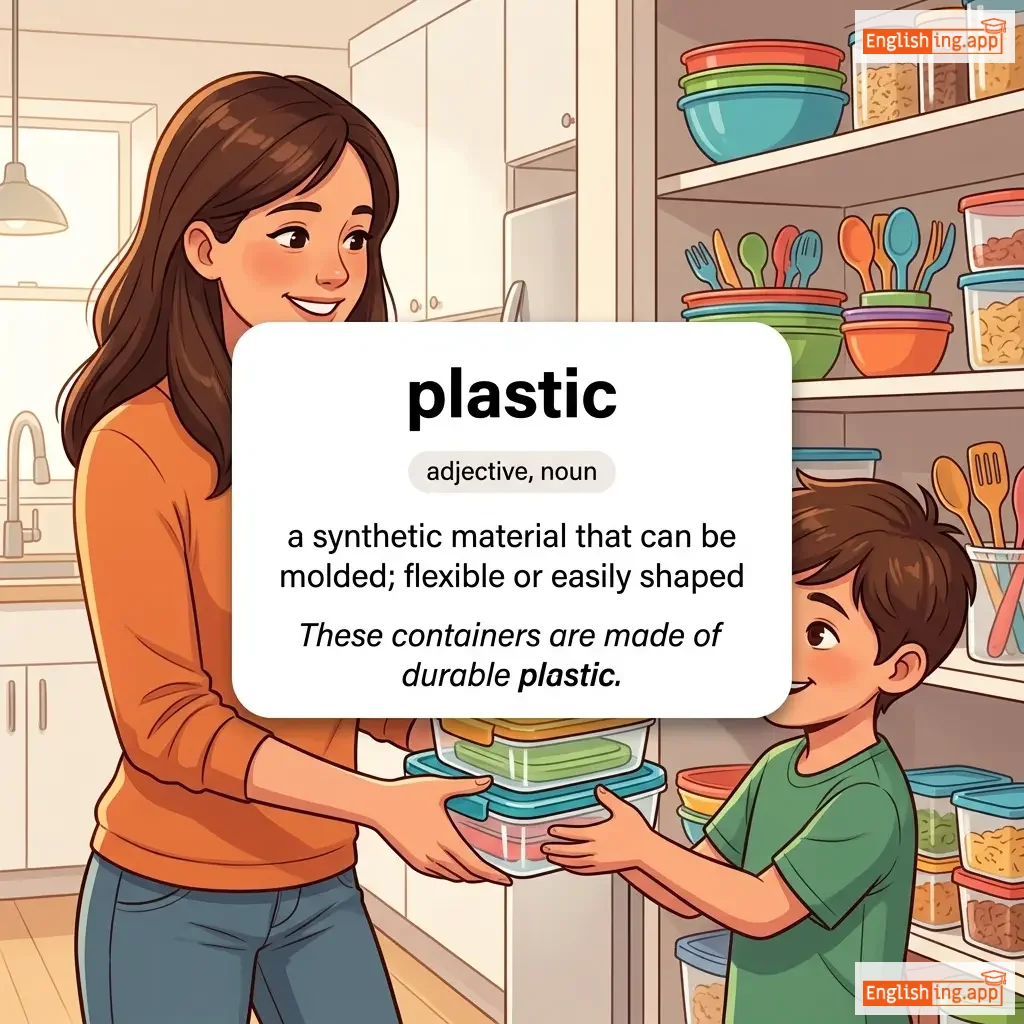
plastic definition card — visual illustration of the meaning
adjective, noun
/ˈplæstɪk/
プラスチック (purasuchikku)

a synthetic material that can be molded; flexible or easily shaped

"These containers are made of durable plastic."
"これらの容器は耐久性のあるプラスチックで作られています。" (Korera no youki wa taikyuu-sei no aru purasuchikku de tsukurareteimasu.)
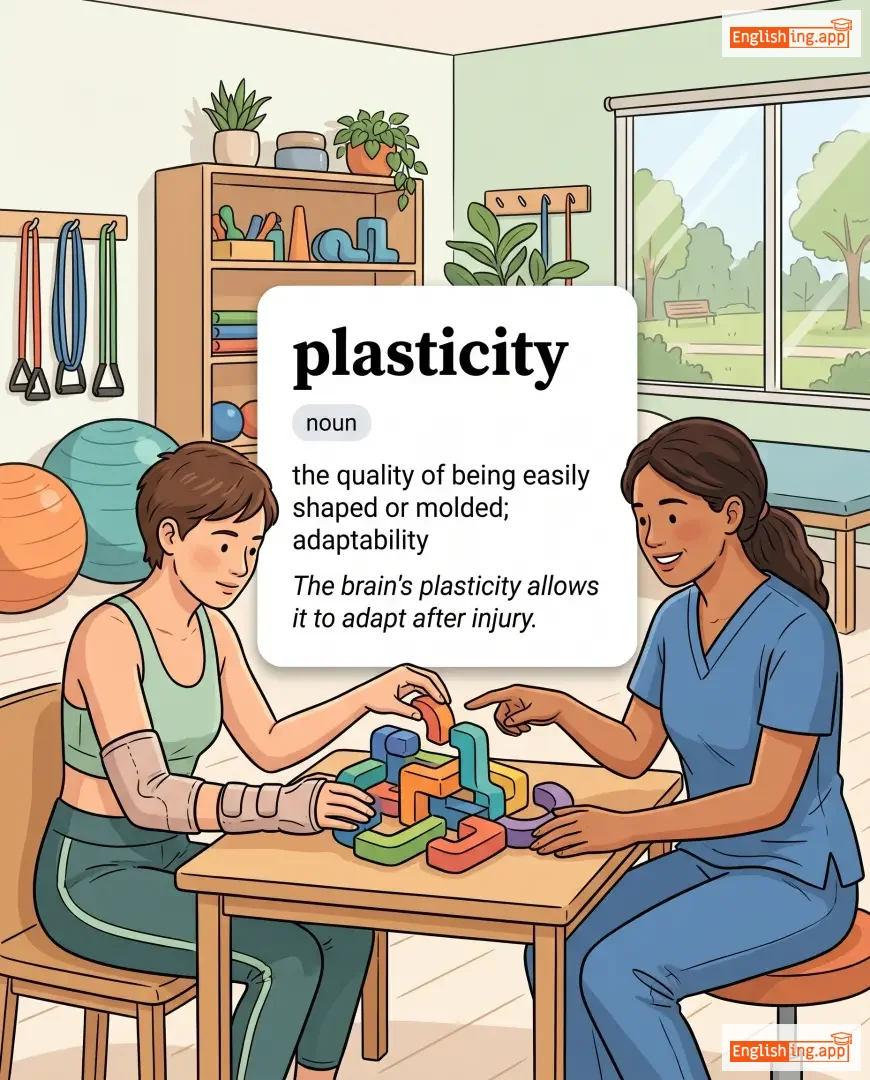
plasticity definition card — visual illustration of the meaning
noun
/plæsˈtɪsəti/
可塑性、適応能力 (kasosei, tekiou nouryoku)

the quality of being easily shaped or molded; adaptability

"The brain's plasticity allows it to adapt after injury."

"脳の可塑性により、怪我の後に適応することができます。" (Nou no kasosei ni yori, kega no ato ni tekiou suru koto ga dekimasu.)