語彙集

英単語辞書 | 単語の意味、定義、例文

noun
/ˈpɔːpər/
乞食人 (kōjiki jin)

A very poor person.

"The pauper begged for food on the street corner."

"その乞食人は街角で食べ物を求めていた。" (Sono kōjiki jin wa machikado de tabemono o motomete ita.)
noun
/ˈpɔːpərɪzəm/
貧困 (hinkon)

The state of being extremely poor.

"The country struggled with rising pauperism in the 19th century."
"その国は19世紀に増大する貧困と戦っていました。" (Sono kuni wa 19 seiki ni zoudai suru hinkon to tatakatte imashita.)
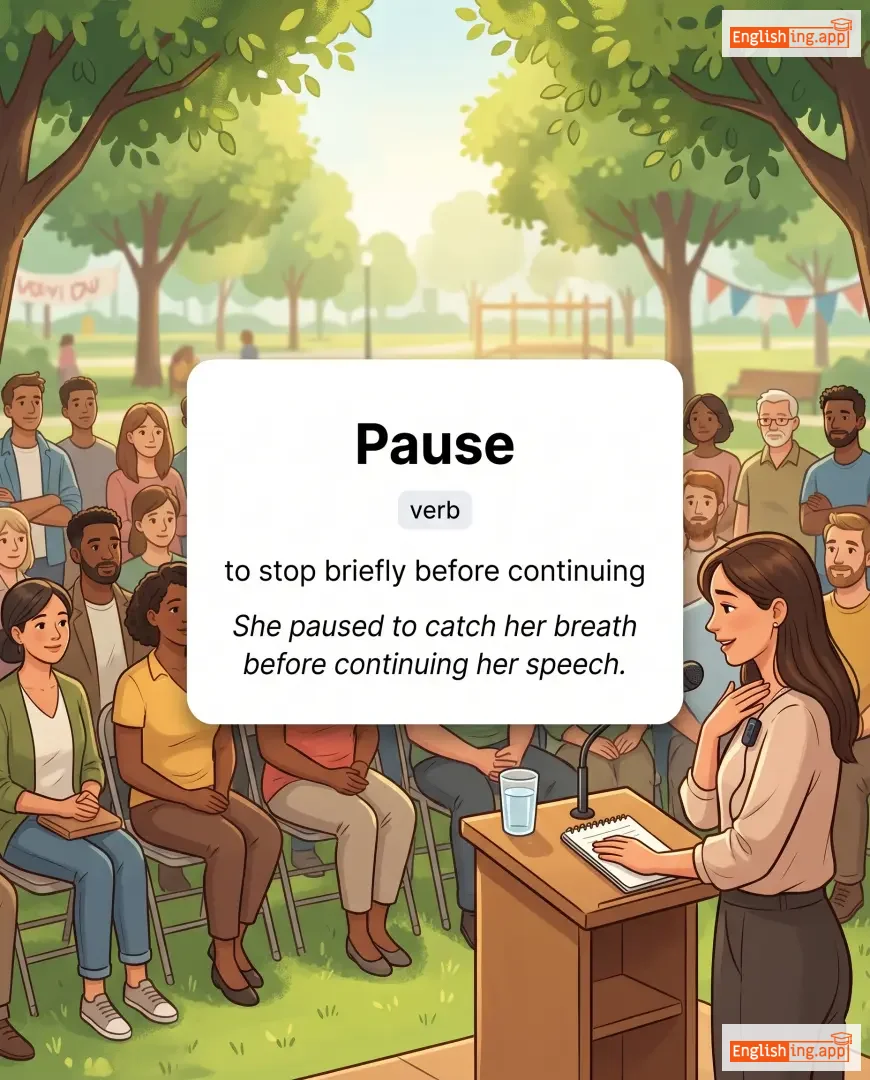
Pause definition card — visual illustration of the meaning
verb
/pɔːz/
一時停止 (ichijiteishi)

to stop briefly before continuing

"She paused to catch her breath before continuing her speech."

"彼女は呼吸を整えるために少し一時停止をした。" (Kanojo wa kokyū o totonoeru tame ni sukoshi ichijiteishi o shita.)
noun
/ˈpeɪvmənt/
歩道 (hodo)

a hard paved surface such as a road or sidewalk; the act or result of paving

"She walked along the pavement to reach the bus stop."

"彼女はバス停まで歩道を歩いた。" (kanojo wa basutei made hodo o aruita)
noun
/pəˈvɪliən/
パビリオン (pabirion)

A large tent or temporary building, often used for events or exhibitions.

"The wedding reception was held in a decorated pavilion."

"結婚式のレセプションは装飾されたパビリオンで開催されました。" (Kekkonshiki no resepushon wa sōshoku sareta pabirion de kaisai saremashita.)
pay definition card — visual illustration of the meaning
verb
/peɪ/
支払う (shiharau)

to give money in exchange for goods or services

"I need to pay for the groceries."

"私は食料品の支払いをしなければなりません。" (Watashi wa shokuryōhin no shiharai o shinakereba narimasen.)
adjective
/ˈpeɪ.ə.bəl/
支払期限 (shiharai kigen)

required to be paid; owed as a debt

"The amount is payable within thirty days of the invoice date."

"金額は請求書の日付から30日以内に支払期限となります。" (Kingaku wa seikyūsho no hizuke kara 30-nichi inai ni shiharai kigen to narimasu.)
noun
/peɪˈiː/
受取人 (uketorinin)

A person to whom money is paid or is to be paid.

"The payee must sign the check before cashing it."
"受取人は小切手を現金化する前に署名する必要があります。" (Uketorinin wa kogitte o genkin ka suru mae ni shomei suru hitsuyō ga arimasu.)
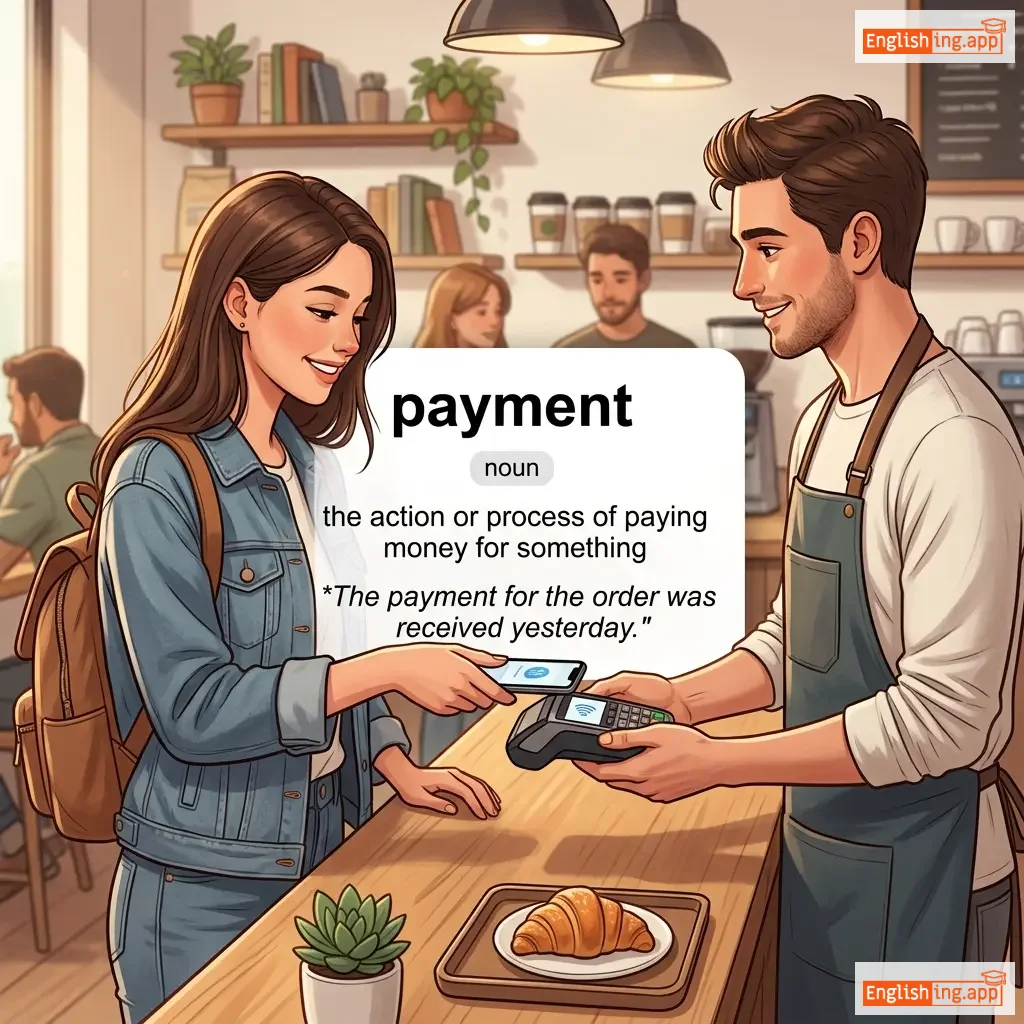
payment definition card — visual illustration of the meaning
noun
/ˈpeɪmənt/
支払い (shiharai)

the action or process of paying money for something

"The payment for the order was received yesterday."
"注文の支払いは昨日受け取られました。" (Chūmon no shiharai wa kinō uketoraremashita.)
noun
/ˈpiːˈsi/
パーソナルコンピュータ (paasonaru konpyuuta)

abbreviation for 'personal computer', a machine for performing digital operations

"I just bought a new PC for work."

"私は仕事のために新しいパーソナルコンピュータを買いました。" (Watashi wa shigoto no tame ni atarashii paasonaru konpyuuta wo kaimashita.)
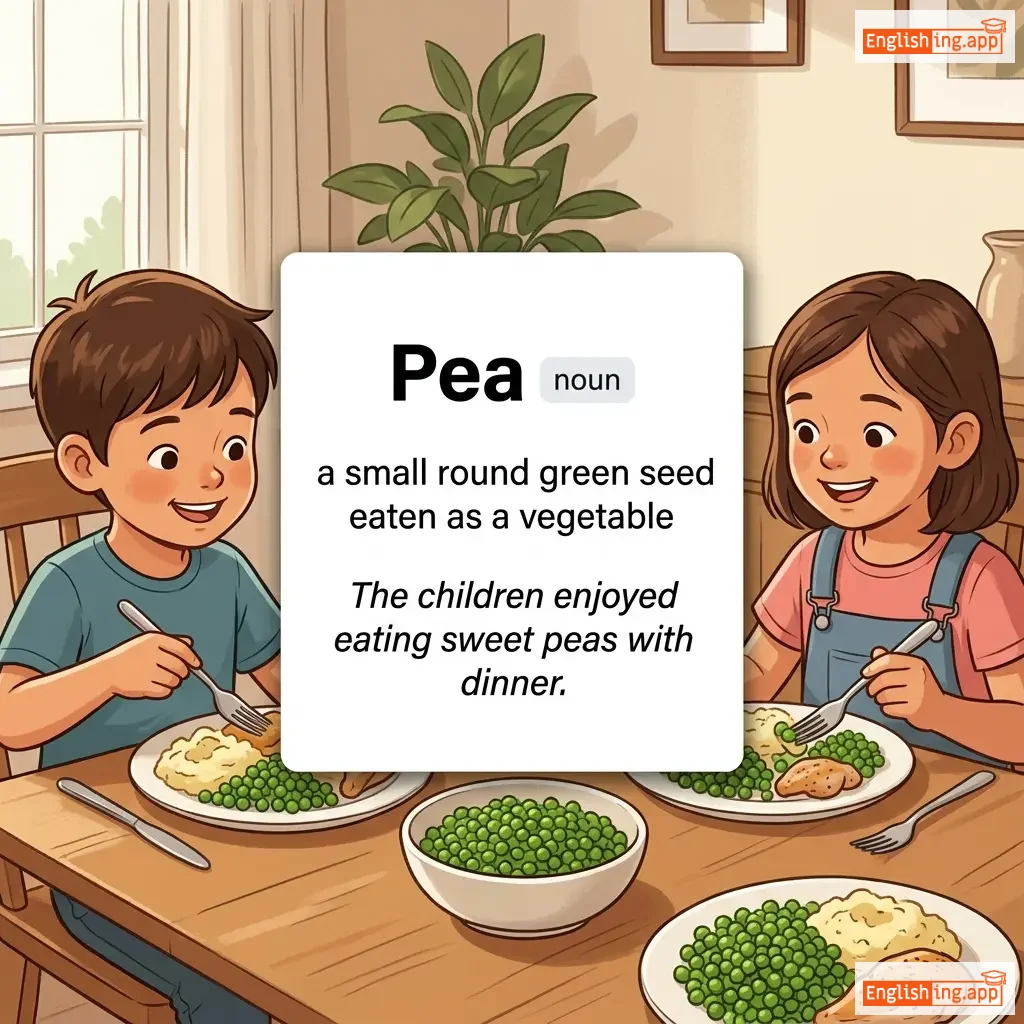
Pea definition card — visual illustration of the meaning
noun
/piː/
エンドウ豆 (endōmame)

a small round green seed eaten as a vegetable

"The children enjoyed eating sweet peas with dinner."

"子供たちはディナーで甘いエンドウ豆を食べるのが好きでした。" (Kodomotachi wa dinā de amai endōmame o taberu no ga sukideshita)
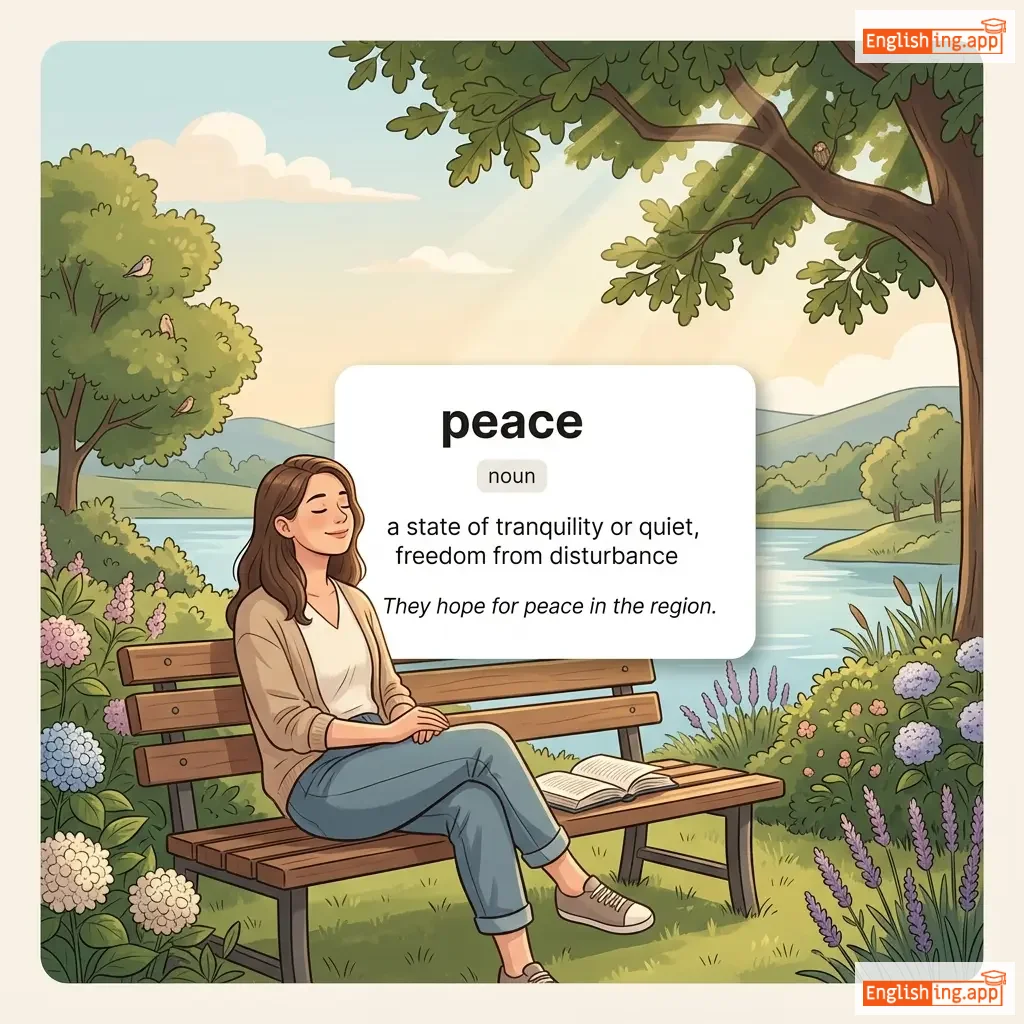
peace definition card — visual illustration of the meaning
noun
/piːs/
平和 (heiwa)

a state of tranquility or quiet, freedom from disturbance

"They hope for peace in the region."

"彼らは地域での平和を望んでいます。" (Karera wa chiiki de no heiwa o nozondeimasu.)
adjective
/ˈpiːsəbl/
平和な (heiwa na)

inclined to avoid conflict; friendly and non-violent in nature

"She is a peaceable neighbor who never quarrels with anyone."
"彼女は争いごとをしない平和な隣人です。" (Kanojo wa arasoi goto o shinai heiwa na rinjin desu.)
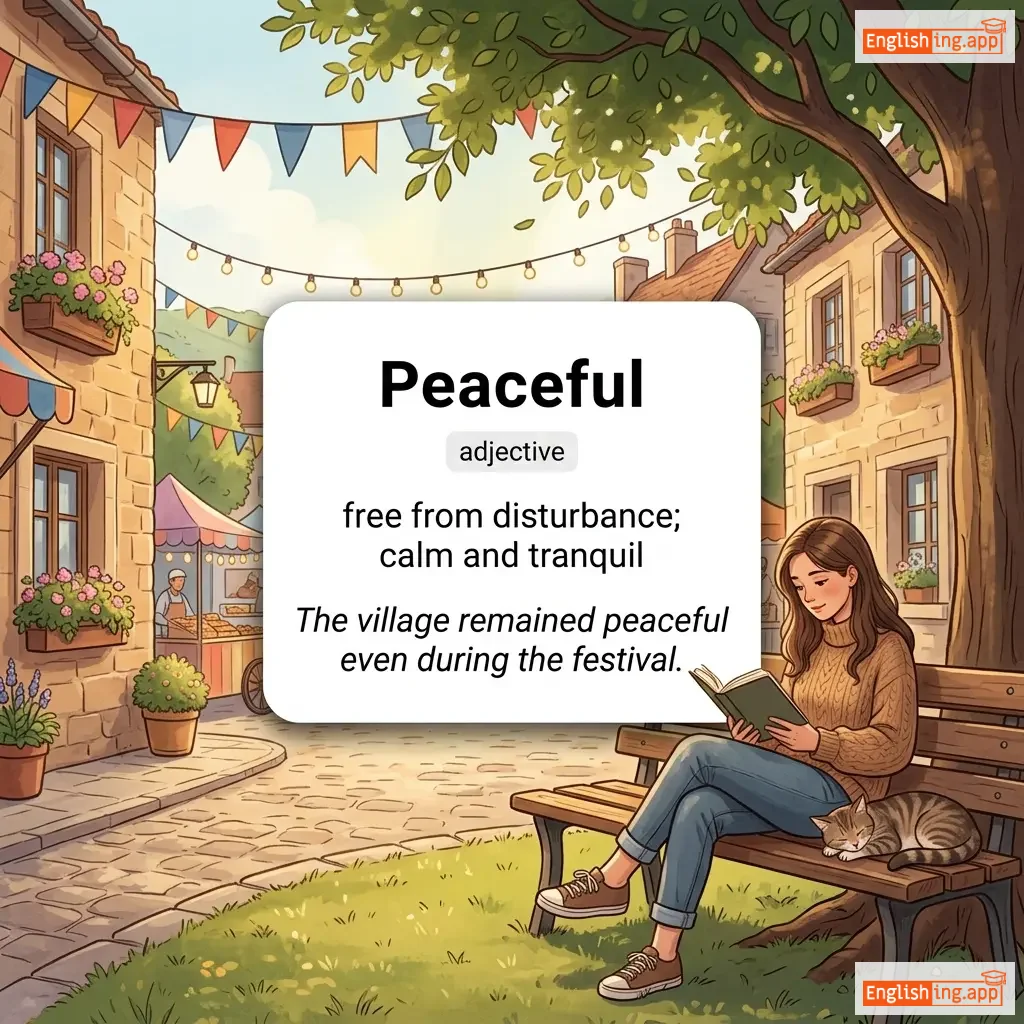
Peaceful definition card — visual illustration of the meaning
adjective
/ˈpiːsfl/
幸せ (shiawase)

free from disturbance; calm and tranquil

"The village remained peaceful even during the festival."
"彼女は賞を受け取ったとき、幸せを隠すことができませんでした。" (Kanojo wa shō o uketotta toki, shiawase o kakusu koto ga dekimasen deshita.)
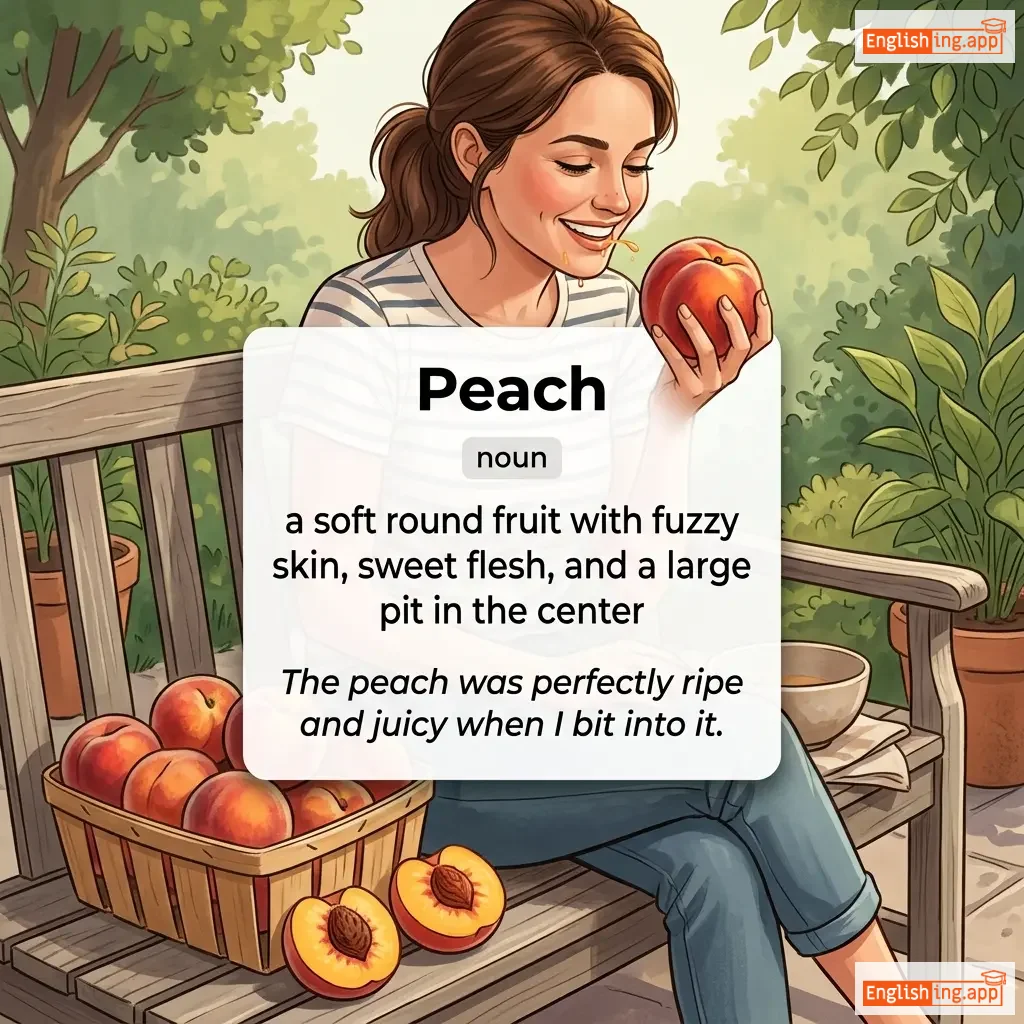
Peach definition card — visual illustration of the meaning
noun
/piːtʃ/
ピーチ (pīchi)

a soft round fruit with fuzzy skin, sweet flesh, and a large pit in the center

"The peach was perfectly ripe and juicy when I bit into it."
"そのピーチは完璧に熟し、ジューシーで、かじるととても美味しかった。" (Sono pīchi wa kanpeki ni jukushi, jūshī de, kajiru to totemo oishikatta.)
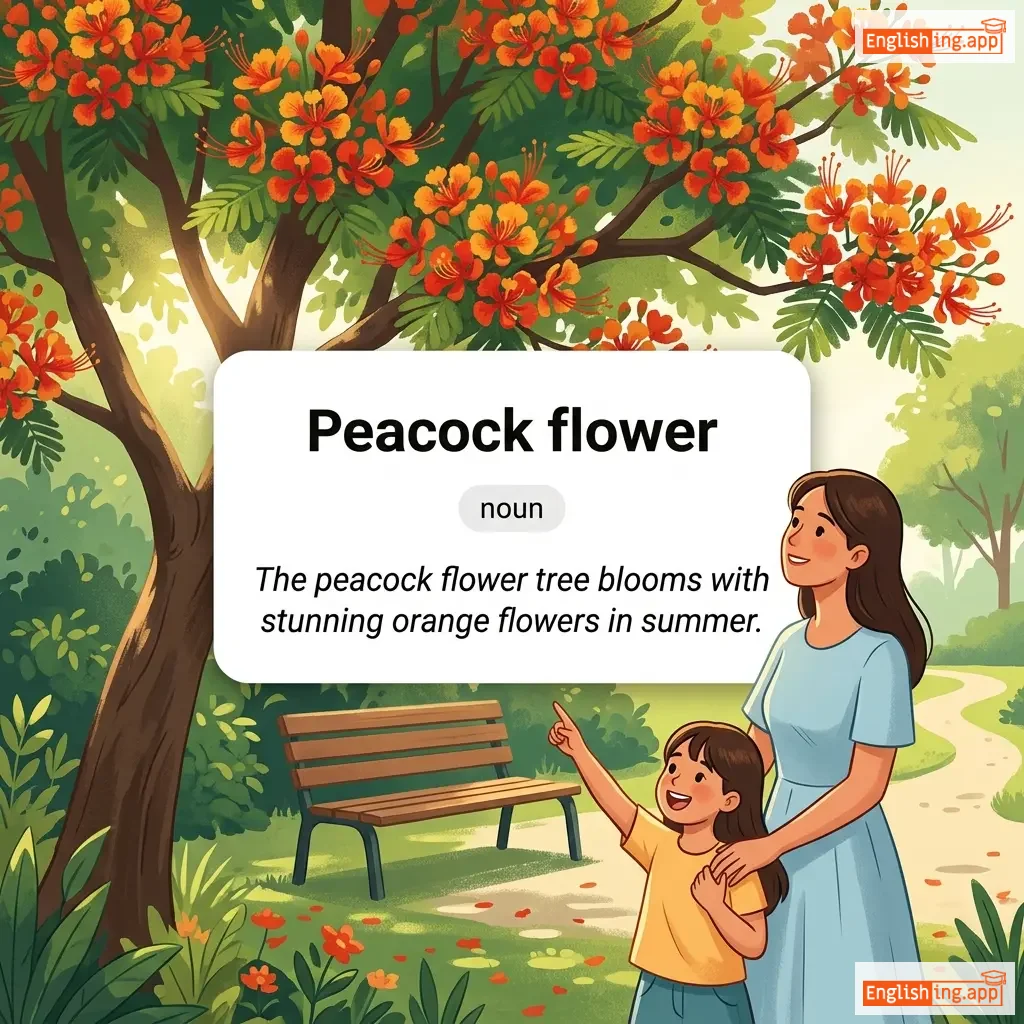
Peacock flower definition card — visual illustration of the meaning
noun
/ˈpiː.kɒk ˈflaʊ.ər/
クジャクの花 (kujaku no hana)

a tropical tree with bright orange and red flowers that resemble a peacock's tail

"The peacock flower tree blooms with stunning orange flowers in summer."
"クジャクの花の木は夏に素晴らしいオレンジ色の花を咲かせます。" (Kujaku no hana no ki wa natsu ni subarashī orenji-iro no hana o sakasemasu.)
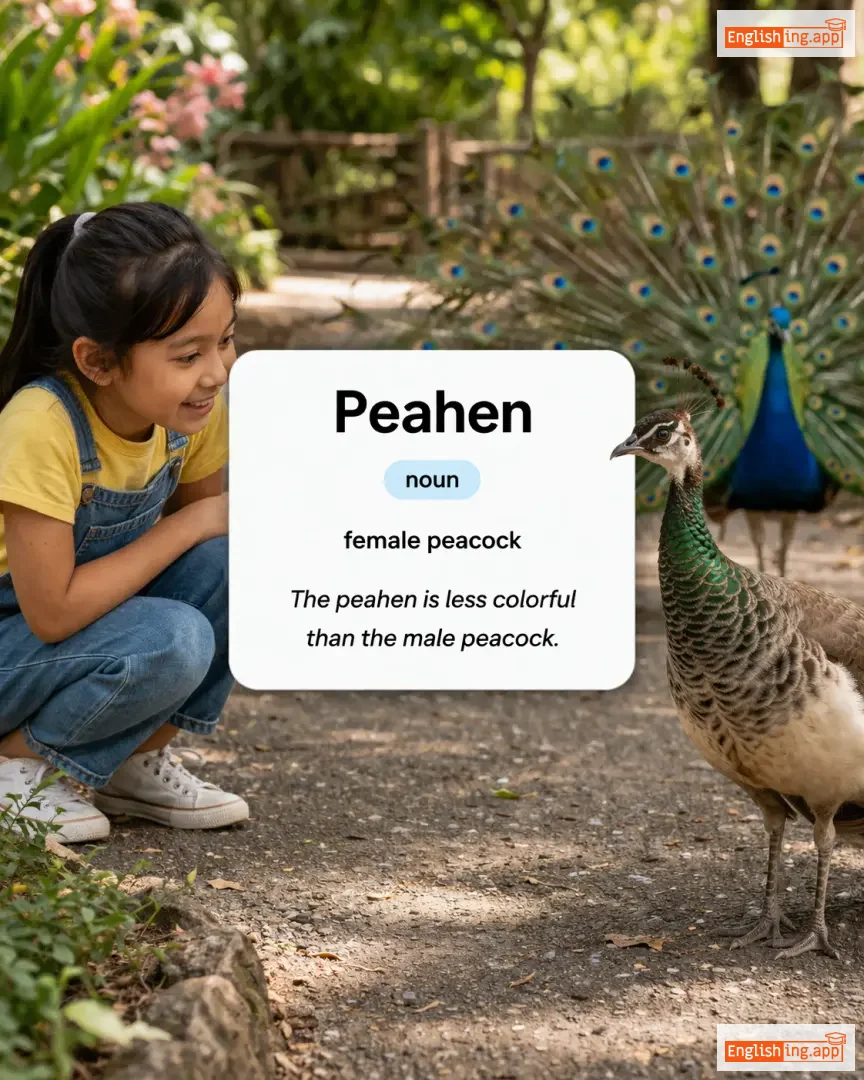
Peahen definition card — visual illustration of the meaning
noun
/ˈpiː.hən/
メスのクジャク (mesu no kujaku)

female peacock

"The peahen is less colorful than the male peacock."

"メスのクジャクはオスよりも色が少ない。" (Mesu no kujaku wa osu yori mo iro ga sukunai.)
noun
/piːk/
頂点 (chōten)

the pointed top of a mountain or hill, or the highest point of something

"They reached the peak of the mountain after hours of hiking."

"彼らは数時間のハイキングの後、山の頂点に到達しました。" (Karera wa sūjikan no haikingu no ato, yama no chōten ni tōtatsu shimashita.)
Peanut definition card — visual illustration of the meaning
noun
/ˈpiːnʌt/
ピーナッツ (pīnattsu)

a small seed with a thin shell, eaten as a snack or used to make oil and butter

"He loves eating roasted peanuts during the evening."
"彼は夕方にローストピーナッツを食べるのが好きです。" (Kare wa yūgata ni rōsuto pīnattsu o taberu no ga suki desu.)
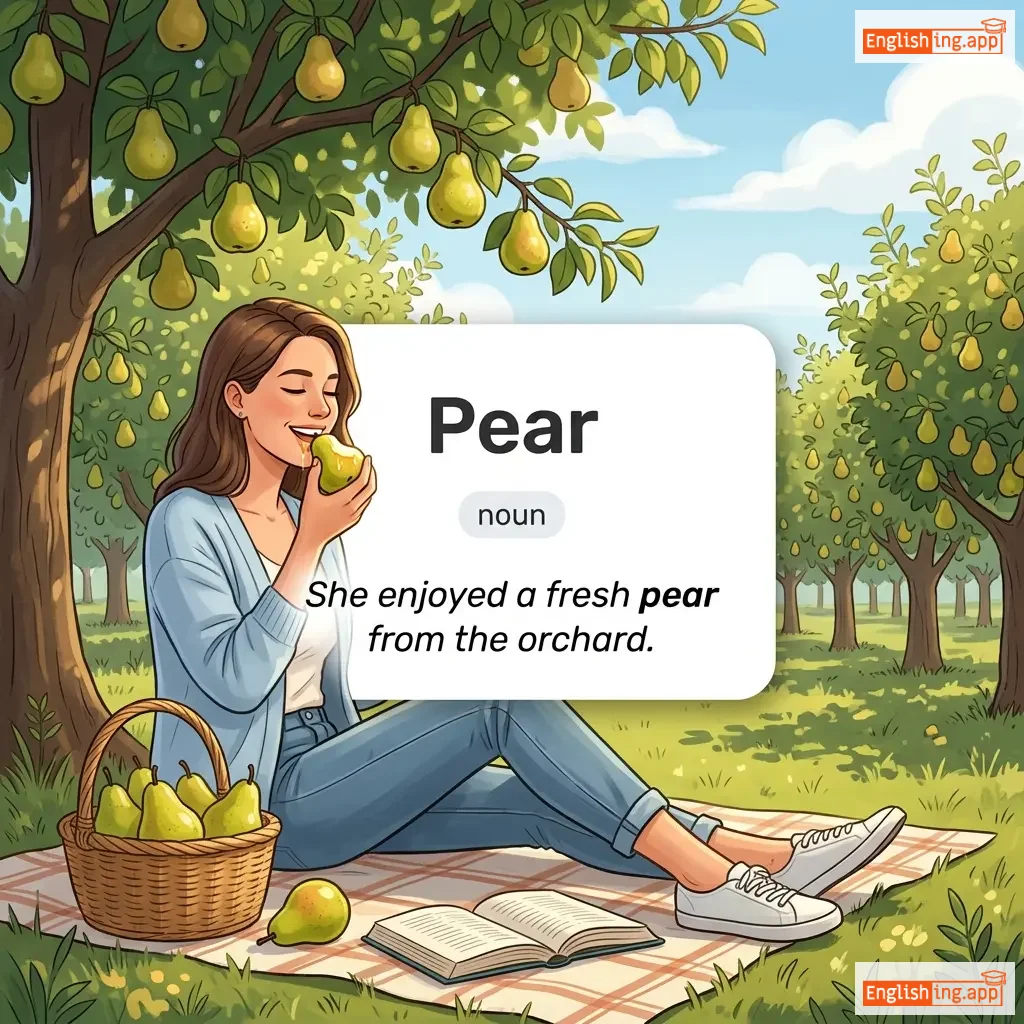
Pear definition card — visual illustration of the meaning
noun
/per/
(nashi)

a sweet juicy fruit with a rounded shape that is wider at the bottom than the top

"She enjoyed a fresh pear from the orchard."

"彼女は果樹園から新鮮な梨を楽しみました。" (Kanojo wa kajuen kara shinsen na nashi o tanoshimimashita.)
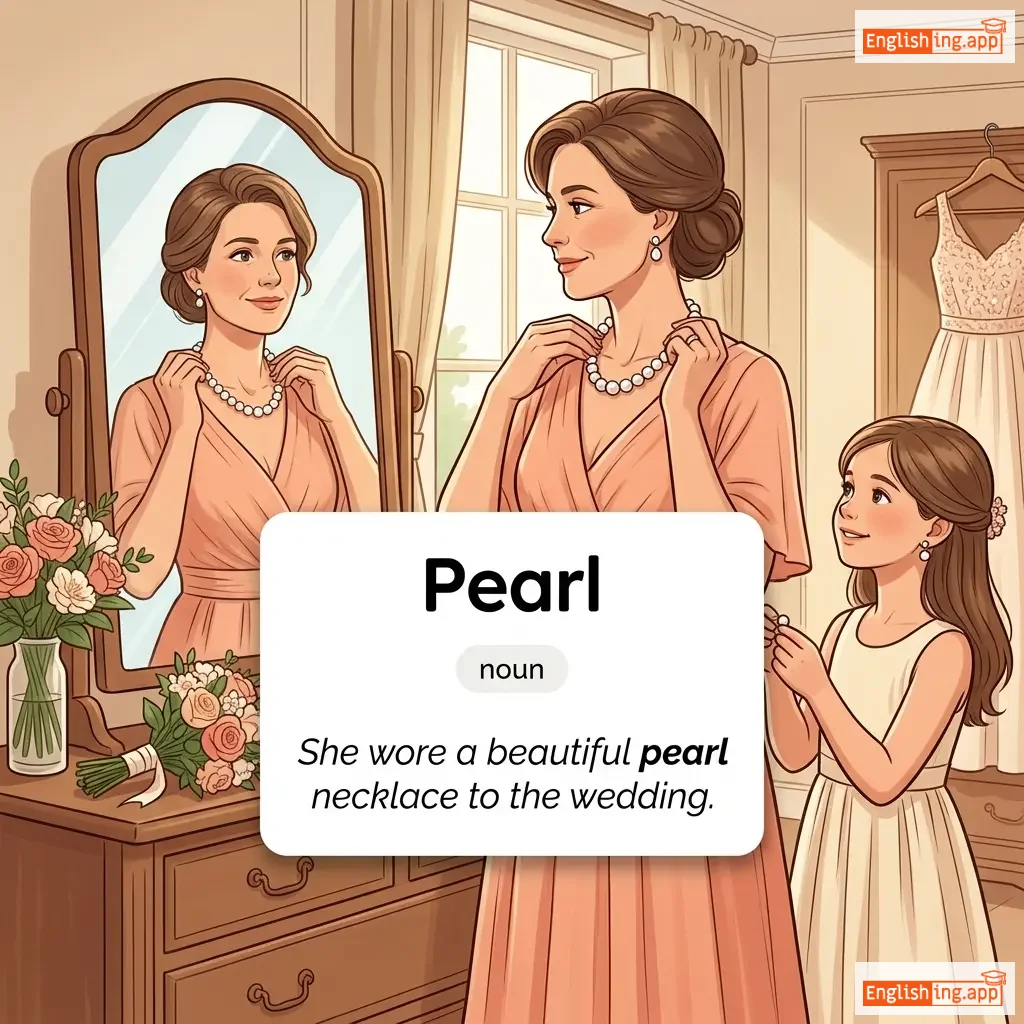
Pearl definition card — visual illustration of the meaning
noun
/pɜːrl/
真珠 (shinju)

a hard, lustrous object produced within the soft tissue of a shelled mollusk; used in jewelry

"She wore a beautiful pearl necklace to the wedding."
"彼女は結婚式で美しい真珠のネックレスをしていました。" (Kanojo wa kekkonshiki de utsukushī shinju no nekkuresu o shite imashita.)
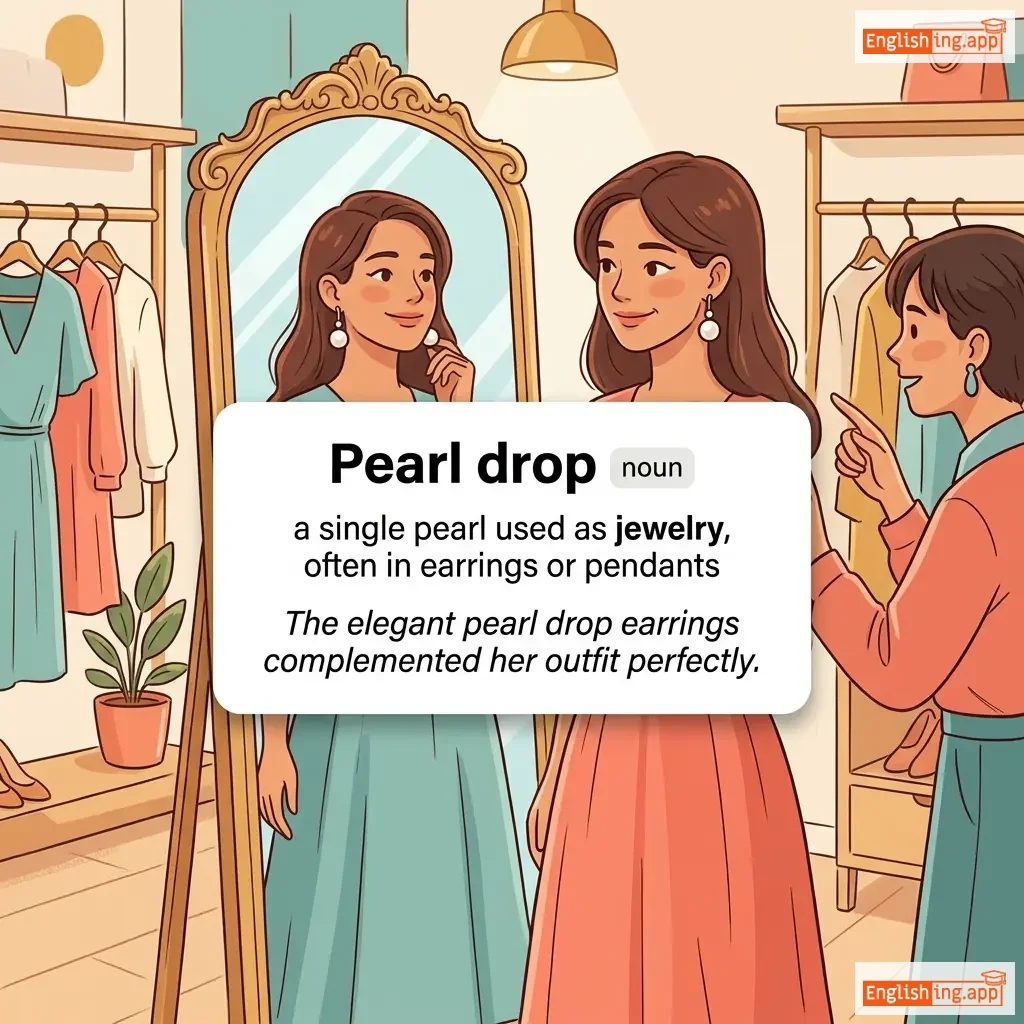
Pearl drop definition card — visual illustration of the meaning
noun
/pɜːrl drɒp/
パールの滴 (pāru no shizuku)

a single pearl used as jewelry, often in earrings or pendants

"The elegant pearl drop earrings complemented her outfit perfectly."

"そのエレガントなパールの滴のイヤリングは、彼女の服装に完璧にマッチしていました。" (sono ereganto na pāru no shizuku no iyaringu wa, kanojo no fukusō ni kanpeki ni matchi shite imashita)
peasant definition card — visual illustration of the meaning
noun
/ˈpɛzənt/
農民 (nōmin)

a poor farmer or agricultural laborer who owns or rents a small piece of land for cultivation

"The peasant worked hard in the fields from dawn to dusk."

"その農民は夜明けから日暮れまで畑で一生懸命働いていました。" (Sono nōmin wa yoake kara hikure made hatake de isshōkenmei hataraite imashita.)
noun
/ˈpɛbl/
小石 (koishi)

a small smooth stone found on beaches or rivers

"He threw a pebble into the pond and watched the ripples."

"彼は小石を池に投げ入れて、波を見ていました。" (Kare wa koishi o ike ni nageirete, nami o mitemashita.)
adjective
/ˈpɛkəbl/
過ちを犯しやすい (ayamachi o okashiyasui)

liable to sin or error; capable of doing wrong

"Humans are peccable, but they strive for goodness."

"人間は過ちを犯しやすいが、善を追い求める。" (Ningen wa ayamachi o okashiyasui ga, zen o oimotomeru.)
noun
/ˌpɛkəˈdɪloʊ/
小さな過ち (chiisana ayamachi)

a small or minor fault or sin

"Forgetting to call was just a small peccadillo, not a serious mistake."

"電話をかけ忘れるのはただの小さな過ちで、重大なミスではありません。" (Denwa o kake wasureru no wa tada no chiisana ayamachi de, juudaina misu de wa arimasen.)
adjective
/ˈpɛkənt/
有罪 (yūzui)

Guilty of a moral offense or wrongdoing; sinful.

"The judge declared the peccant official unfit for office."

"裁判官は有罪の役人を職務に不適格と宣言した。" (Saibankan wa yūzui no yakunin o shokumu ni futekikaku to sengen shita.)
verb
/pɛk/
ついばむ (tsuibamu)

To strike or bite something with a beak; to eat in small bites.

"The hen began to peck at the grains scattered on the ground."

"その雌鳥は地面に散らばった穀物をついばみ始めました。" (Sono mesutori wa jimen ni chirabatta kokumotsu o tsuibami hajimemashita.)
adjective
/ˈpɛktərəl/
胸筋 (kyōkin)

Relating to the chest or breast.

"The athlete focused on strengthening his pectoral muscles."

"アスリートは自分の胸筋を強化することに集中していました。" (Asurīto wa jibun no kyōkin o kyōka suru koto ni shūchū shiteimashita.)
verb
/ˈpɛkjʊˌleɪt/
横領する (おうりょうする)

To embezzle or steal money, especially public funds.

"The corrupt official was found guilty of peculating government funds."

"汚職の役人は政府の資金を横領したとして有罪となった。" (Oshoku no yakunin wa seifu no shikin wo ouryou shita to shite yuuzai to natta.)
noun
/ˌpɛkjʊˈleɪʃən/
横領 (ou ryou)

The act of embezzling or stealing money, especially from public funds.

"The minister resigned after being accused of peculation."

"大臣は横領の罪で辞任しました。" (Daijin wa ou ryou no tsumi de jin-in shimashita.)
adjective
/pɪˈkjuːliər/
奇妙な (kimyōna)

strange or unusual; characteristic of only one person, place, or thing

"She has a peculiar habit of talking to her plants."

"彼女は植物に話しかける奇妙な習慣があります。" (Kanojo wa shokubutsu ni hanashikakeru kimyōna shūkan ga arimasu.)
adverb
/pɪˈkju:.li.ə.li/
奇妙に; 異常に (kimyō ni; ijō ni)

in a strange or unusual way; in a manner that is distinctive or characteristic

"She dressed peculiarly for the formal dinner, wearing bright colors and unusual patterns."

"彼女はフォーマルディナーのために、明るい色と珍しい柄の服を着て、特異な方法でドレスアップしました。" (Kanojo wa fōmaru dinā no tame ni, akarui iro to mezurashī gara no fuku o kite, tokui na hōhō de doresu appu shimashita.)
adjective
/pɪˈkjuːniˌɛri/
財政的な (zaiseiteki na)

relating to money or financial matters

"They faced pecuniary difficulties after the business failed."
"彼らはビジネスが失敗した後、財政的な困難に直面しました。" (Karera wa bijinesu ga shippai shita ato, zaiseiteki na konnan ni chokumen shimashita.)
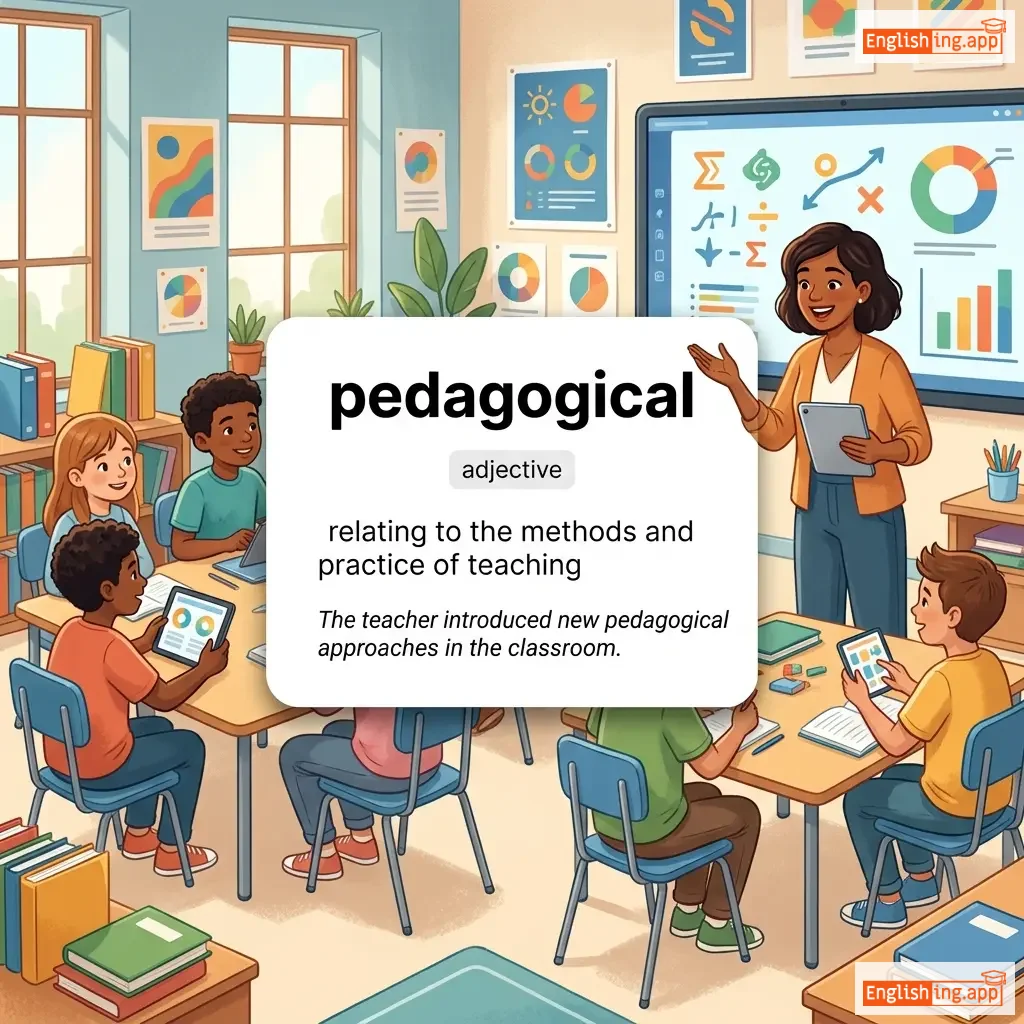
pedagogical definition card — visual illustration of the meaning
adjective
/ˌpɛdəˈɡɒdʒɪkəl/
教育学的な (kyoiku-gakuteki na)

relating to the methods and practice of teaching

"The teacher introduced new pedagogical approaches in the classroom."

"教師は教室で新しい教育学的アプローチを導入しました。" (Kyoushi wa kyoushitsu de atarashī kyoiku-gakuteki apurōchi o dōnyū shimashita.)
noun
/ˌpɛdəˈɡɒdʒɪks/
教育学 (kyouikugaku)

the science or art of teaching

"He studied pedagogics to become a better teacher."

"彼はより良い教師になるために教育学を学びました。" (Kare wa yori yoi kyoushi ni naru tame ni kyouikugaku o manabimashita.)
noun
/ˈpɛdəˌɡɒɡ/
教師 (kyoushi)

a teacher, especially a strict or formal one

"The old pedagogue insisted on discipline in the classroom."
"その古い教育者は教室で規律を強調しました。" (Sono furui kyouikushya wa kyoushitsu de kiritsu o kyouchou shimashita.)
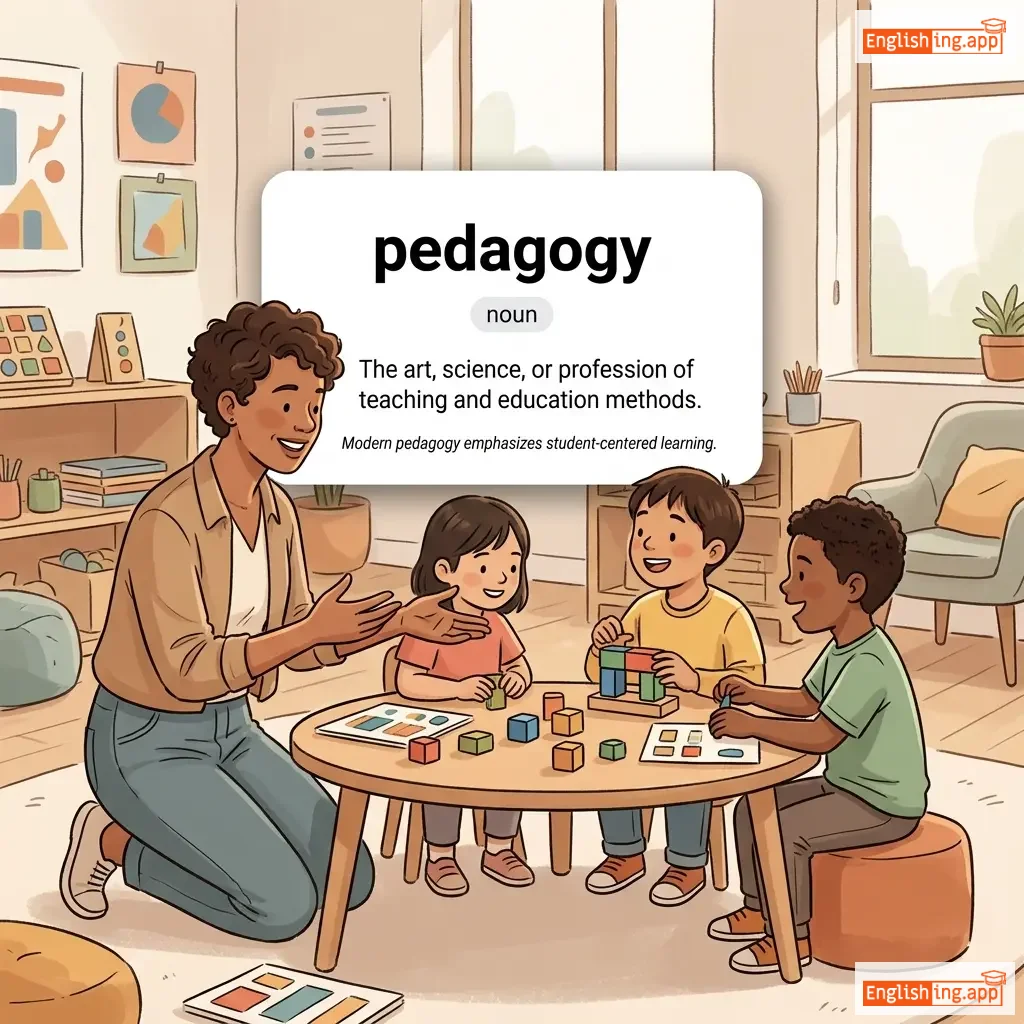
pedagogy definition card — visual illustration of the meaning
noun
/ˈpɛdəˌɡoʊdʒi/
教育学 (kyōikugaku)

The art, science, or profession of teaching and education methods.

"Modern pedagogy emphasizes student-centered learning."

"現代の教育学は学生中心の学習を強調しています。" (Gendai no kyōikugaku wa gakusei chūshin no gakushū o kyōchō shiteimasu.)
noun, verb
/ˈpɛdəl/
足で操作するレバー (ashi de sōsa suru rebā)

A foot-operated lever for powering or controlling a mechanism, especially on a bicycle.

"He pressed down hard on the bicycle pedal."

"彼は自転車のペダルを力いっぱい踏んだ。" (Kare wa jitensha no pedal wo chikara ippai funda.)
adjective
/ˈpɛnɪtrəbl/
通過可能な (tsūka kanō na)

Capable of being passed through or entered.

"The thin wall was easily penetrable."

"薄い壁は簡単に通過可能でした。" (Usui kabe wa kantan ni tsūka kanō deshita.)
adjective
/ˌpɛnɪˈtɛnʃəl/
悔い改めの (kuiaratame no)

Relating to or expressing penitence or penance.

"The priest delivered a penitential sermon on forgiveness."

"司祭は許しに関する悔い改めの説教をしました。" (Shisai wa yurushi ni kansuru kuiaratame no sekkyou o shimashita.)
adjective
/ˈpɛnɪtənt/
悔い改めた (kuiaratameta)

Feeling or showing sorrow and regret for having done wrong.

"She was penitent after shouting at her friend."

"彼女は友達に叫んだ後、悔い改めていた。" (Kanojo wa tomodachi ni sakenda ato, kuiaratamete ita.)
noun
/ˈpɛnɪtəns/
懺悔 (sankei)

The action or feeling of showing sorrow and regret for having done wrong.

"His eyes were full of penitence after realizing his mistake."

"自分の間違いに気づいた後、彼の目は懺悔に満ちていた。" (Jibun no machigai ni kidzuita ato, kare no me wa sankei ni michite ita.)
adjective
/pəˈnɪnsjələr/
半島のような (hantō no yōna)

Relating to or resembling a peninsula.

"The peninsular region is surrounded by water on three sides."
"その半島のような地域は、三方向が水で囲まれています。" (Sono hantō no yōna chiiki wa, san hōkō ga mizu de kakomareteimasu.)
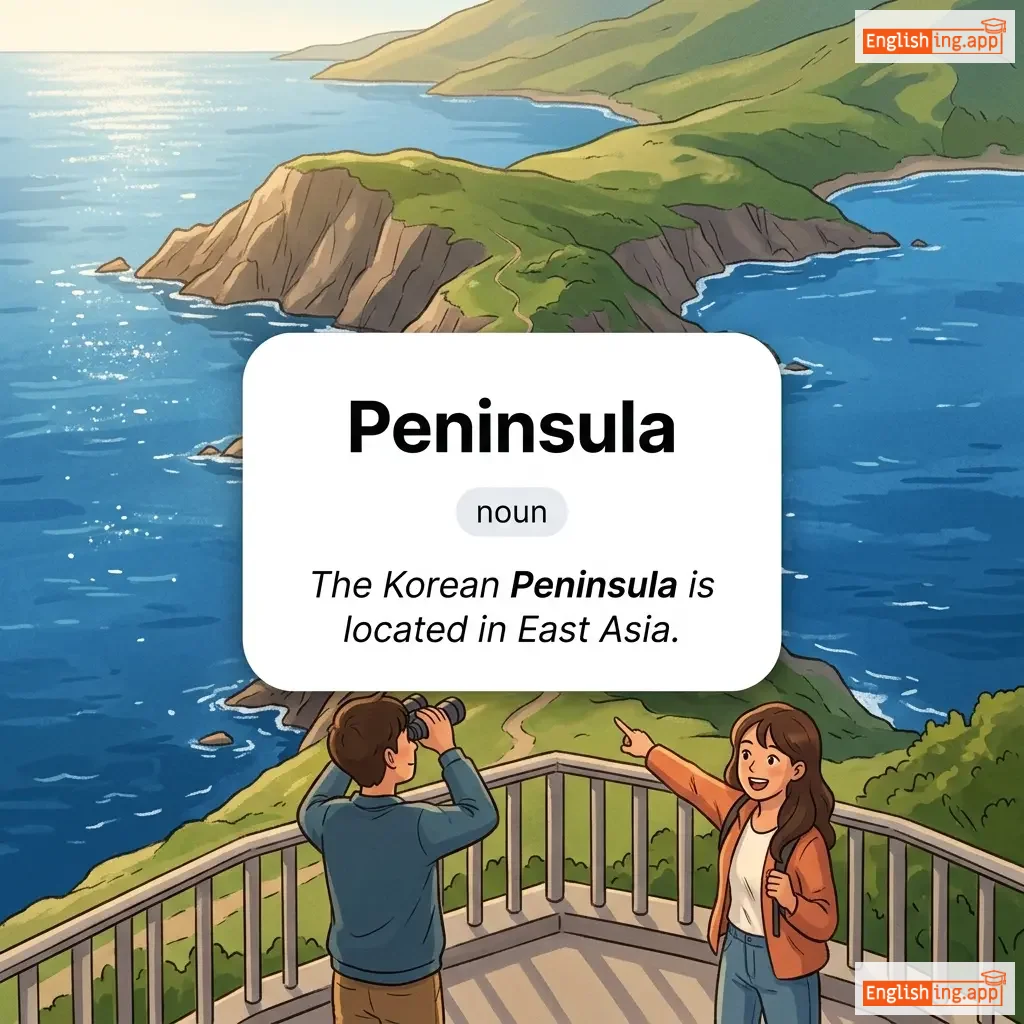
Peninsula definition card — visual illustration of the meaning
noun
/pəˈnɪn.sjə.lə/
半島 (hantō)

a piece of land that is almost completely surrounded by water but connected to the mainland

"The Korean Peninsula is located in East Asia."

"朝鮮半島は東アジアに位置しています。" (Chōsen hantō wa Higashi Ajia ni ichi shiteimasu.)
noun
/ˌpɛnɪˈtreɪʃən/
浸透 (shintou)

The act of piercing or entering into something.

"The company's market penetration grew rapidly."
"その企業の市場浸透は急速に成長した。" (Sono kigyō no shijō shintō wa kyūsoku ni seichō shita.)
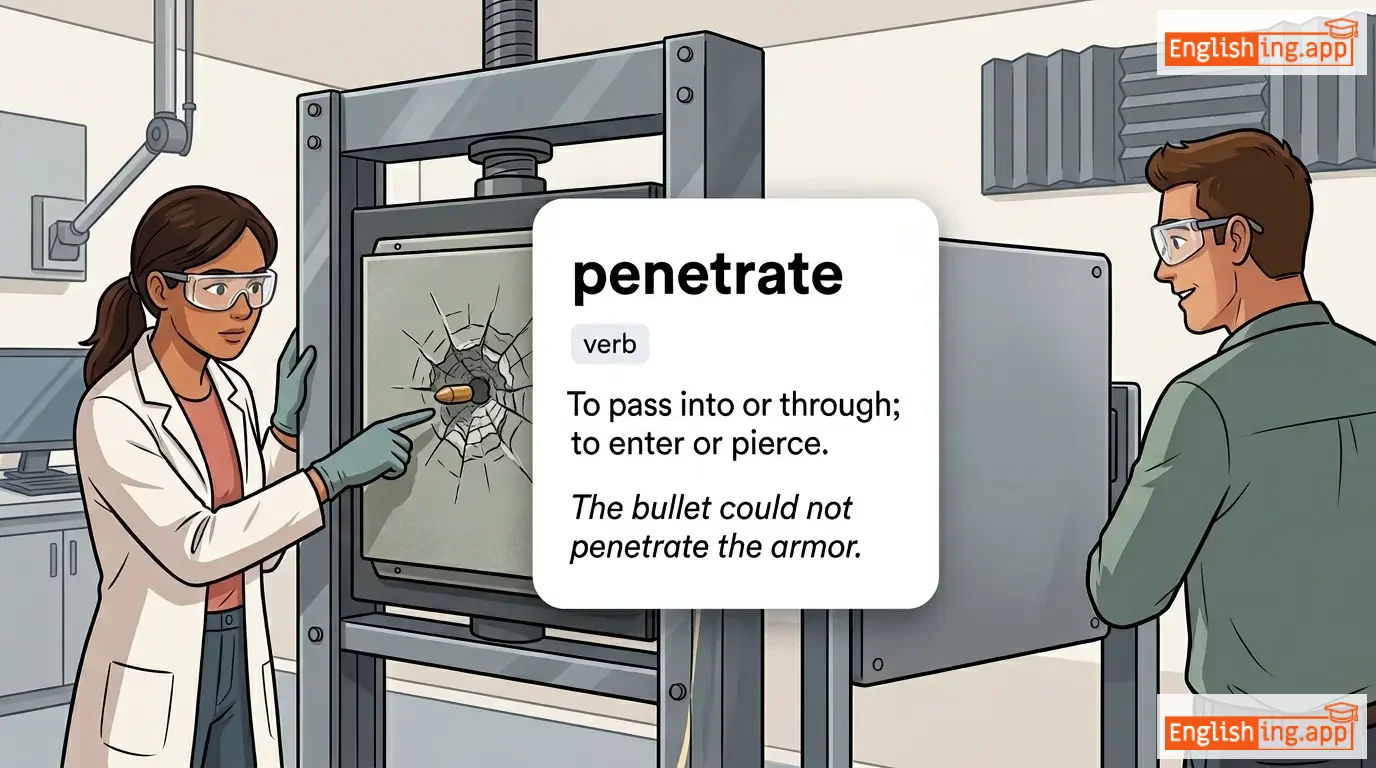
penetrate definition card — visual illustration of the meaning
verb
/ˈpɛnɪtreɪt/
貫通する (kantsu suru)

To pass into or through; to enter or pierce.

"The bullet could not penetrate the armor."

"弾丸は鎧を貫通できませんでした。" (Dangan wa yoroi o kantsu dekimasen deshita.)
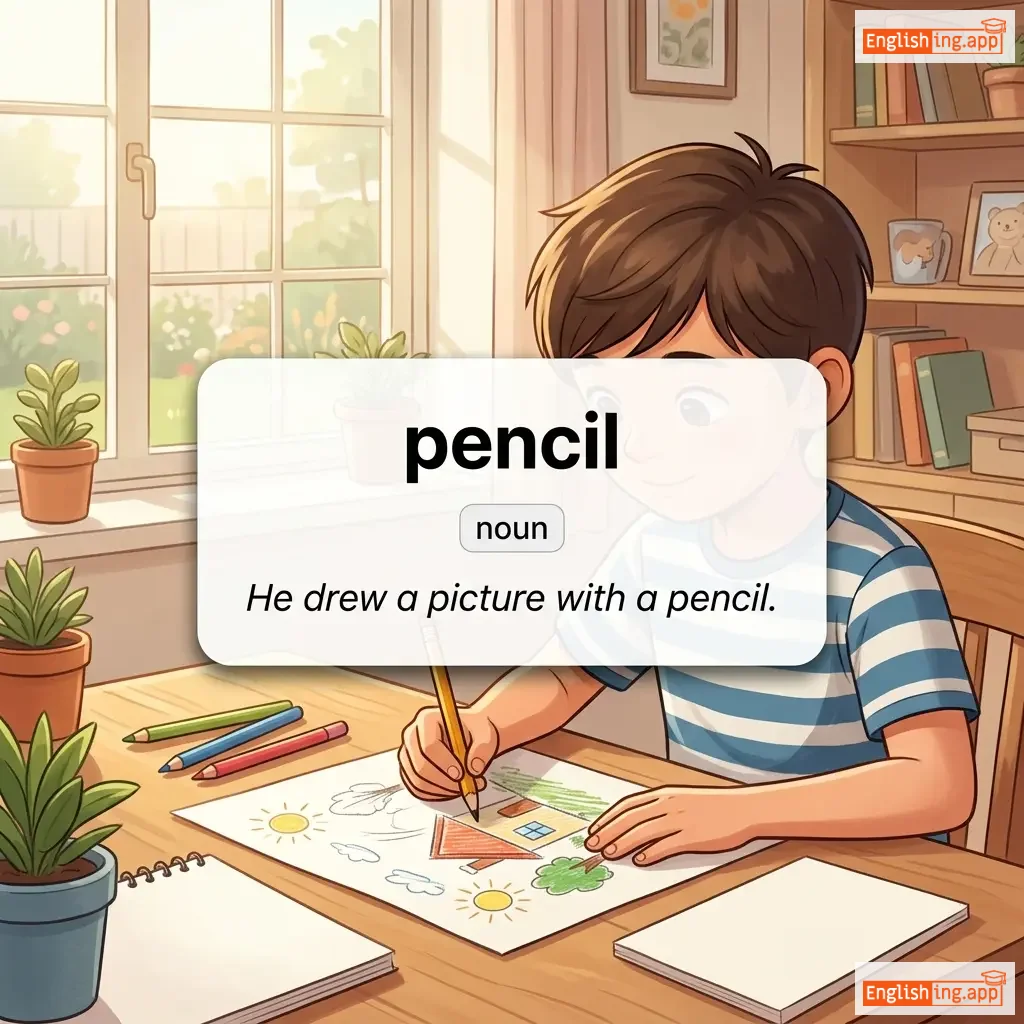
pencil definition card — visual illustration of the meaning
✏️

pencil

noun
/ˈpɛnsəl/

an instrument for writing or drawing, typically made of wood with a graphite core

"He drew a picture with a pencil."

noun
/ˈpɛndənt/
ペンダント (pendanto)

a piece of jewelry that hangs from a chain worn around the neck

"She wore a silver pendant around her neck."

"彼女は首に銀のペンダントをつけていました。" (Kanojo wa kubi ni gin no pendanto o tsukete imashita.)
adjective
/ˈpɛndənt/
吊るす (tsurusu)

hanging down or suspended

"The pendent branches touched the ground."

"吊るす枝が地面に触れました。" (Tsurusu eda ga jimen ni furemashita.)