词汇表

英语词汇词典 | 单词含义、定义和示例

🧑‍🦲

pauper (pauper)

noun
/ˈpɔːpər/
乞丐 (qǐgài)

A very poor person.

"The pauper begged for food on the street corner."

"乞丐在街角乞讨食物。" (qǐgài zài jiējiǎo qǐtǎo shíwù.)
noun
/ˈpɔːpərɪzəm/
贫困 (pínkùn)

The state of being extremely poor.

"The country struggled with rising pauperism in the 19th century."
"该国在19世纪与日益严重的贫困作斗争。" (Gāi guó zài 19 shìjì yǔ rìyì yánzhòng de pínkùn zuò dòuzhēng.)
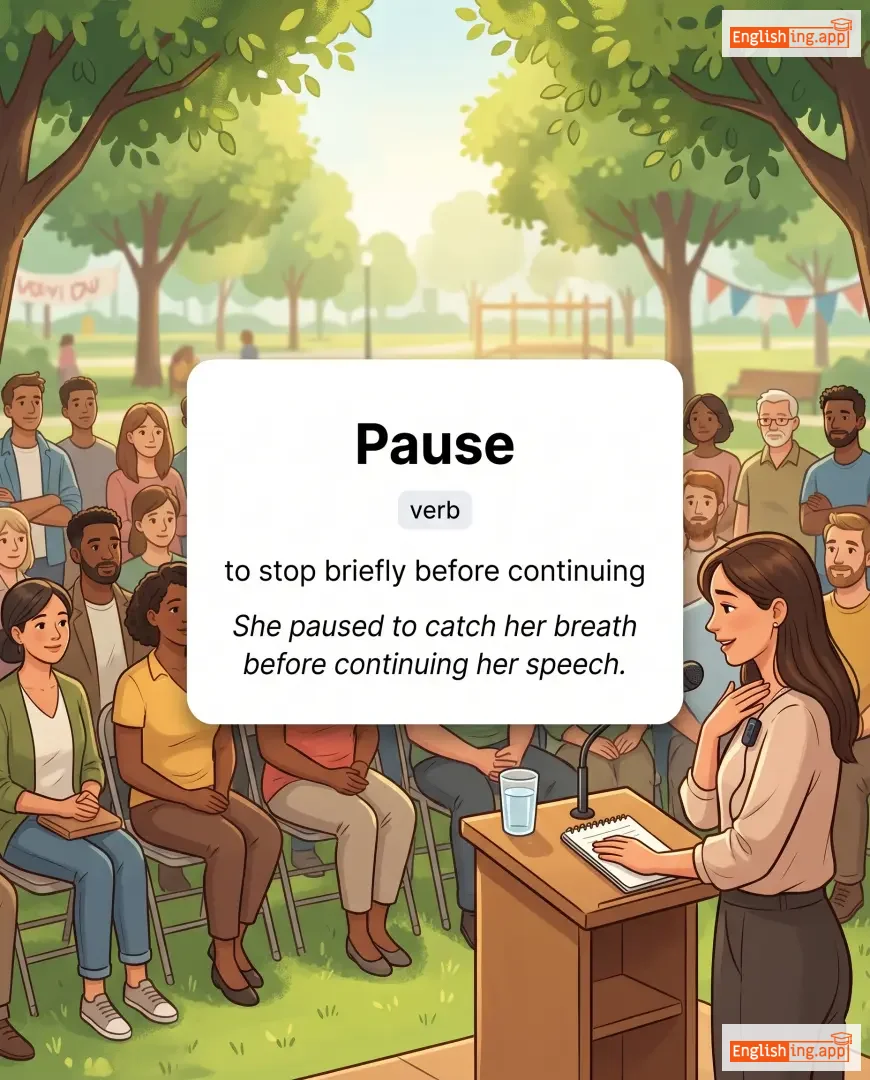
Pause definition card — visual illustration of the meaning
verb
/pɔːz/
暂停 (zanting)

to stop briefly before continuing

"She paused to catch her breath before continuing her speech."

"她暂停了一下,喘口气,然后继续她的演讲。" (Tā zàntíng le yīxià, chuǎn kǒuqì, ránhòu jìxù tā de yǎnjiǎng.)
noun
/ˈpeɪvmənt/
人行道 (ren xing dao)

a hard paved surface such as a road or sidewalk; the act or result of paving

"She walked along the pavement to reach the bus stop."

"她沿着人行道走到公交车站。" (ta yan zhe ren xing dao zou dao gong jiao che zhan)
noun
/pəˈvɪliən/
展馆 (zhǎnguǎn)

A large tent or temporary building, often used for events or exhibitions.

"The wedding reception was held in a decorated pavilion."

"婚礼接待在一个装饰精美的展馆中举行。" (Hūnlǐ jiēdài zài yīgè zhuāngshì jīngměi de zhǎnguǎn zhōng jǔxíng.)
pay definition card — visual illustration of the meaning
verb
/peɪ/
支付 (zhifu)

to give money in exchange for goods or services

"I need to pay for the groceries."

"我需要为杂货支付。" (Wǒ xūyào wèi záhuò zhīfù.)
adjective
/ˈpeɪ.ə.bəl/
应付的 (yīngfù de)

required to be paid; owed as a debt

"The amount is payable within thirty days of the invoice date."

"该金额应在发票日期后30天内支付。" (Gāi jīn'é yīng zài fāpiào rìqī hòu 30 tiān nèi zhīfù.)
noun
/peɪˈiː/
收款人 (shōu kuǎn rén)

A person to whom money is paid or is to be paid.

"The payee must sign the check before cashing it."

"收款人在兑现支票前必须签名。" (Shōu kuǎn rén zài duìxiàn zhīpiào qián bìxū qiānmíng.)
payment definition card — visual illustration of the meaning
noun
/ˈpeɪmənt/
支付 (zhīfù)

the action or process of paying money for something

"The payment for the order was received yesterday."
"订单的支付已于昨天收到。" (Dìngdān de zhīfù yǐ yú zuótiān shōudào.)
noun
/ˈpiːˈsi/
个人电脑 (geren diannao)

abbreviation for 'personal computer', a machine for performing digital operations

"I just bought a new PC for work."

"我刚买了一个新的个人电脑用于工作。" (Wo gang mai le yi ge xin de geren diannao yong yu gongzuo.)
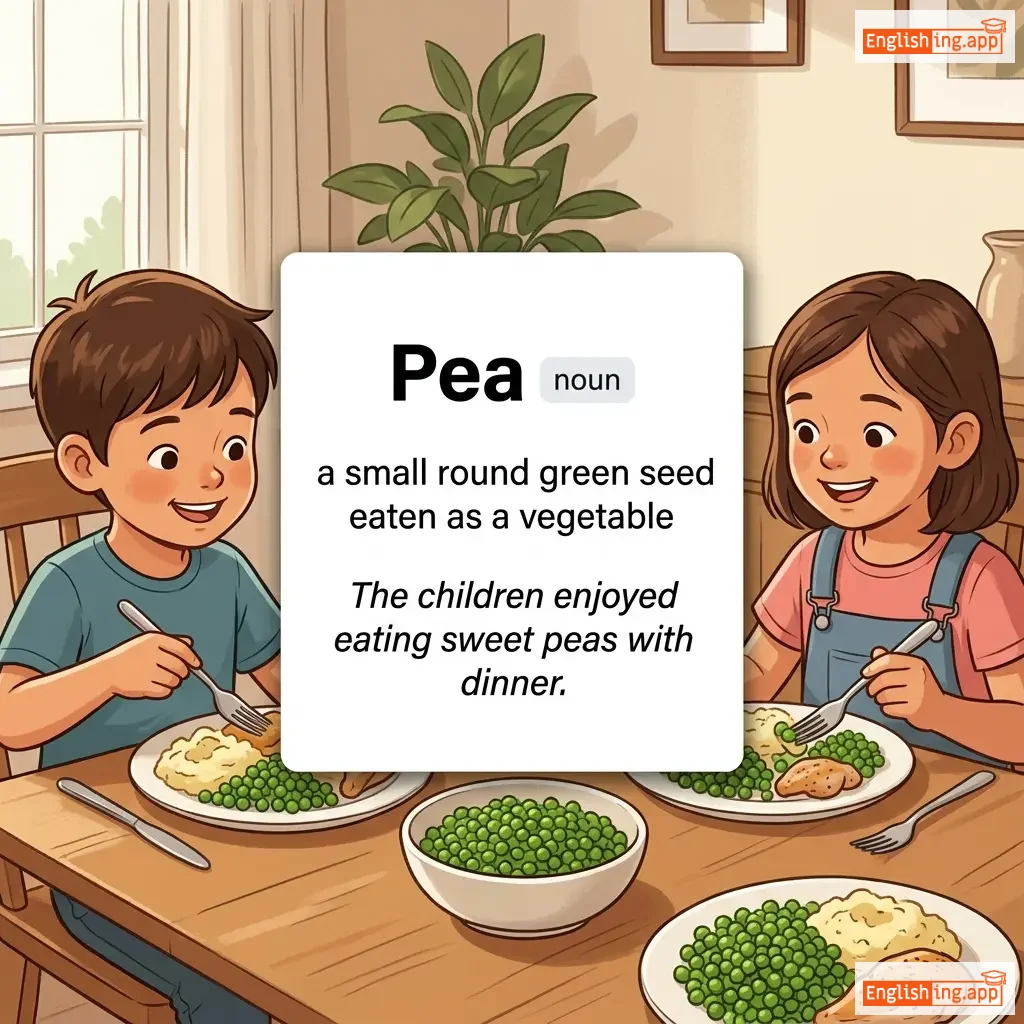
Pea definition card — visual illustration of the meaning
noun
/piː/
豌豆 (wāndòu)

a small round green seed eaten as a vegetable

"The children enjoyed eating sweet peas with dinner."

"孩子们喜欢在晚餐时吃甜豌豆。" (háizimen xǐhuān zài wǎncān shí chī tián wāndòu)
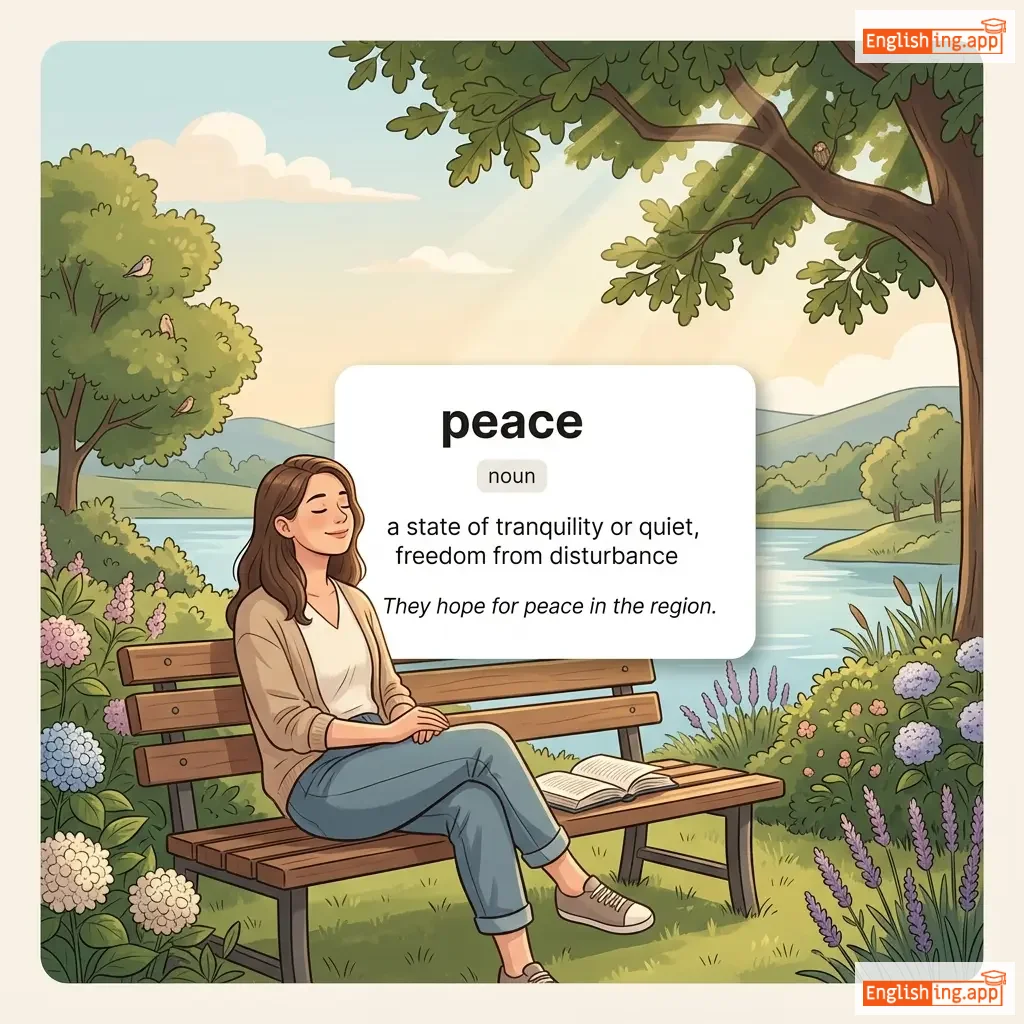
peace definition card — visual illustration of the meaning
noun
/piːs/
和平 (heping)

a state of tranquility or quiet, freedom from disturbance

"They hope for peace in the region."

"他们希望在该地区实现和平。" (Tāmen xīwàng zài gāi dìqū shíxiàn hépíng.)
adjective
/ˈpiːsəbl/
和平的 (hépíng de)

inclined to avoid conflict; friendly and non-violent in nature

"She is a peaceable neighbor who never quarrels with anyone."
"她是一个和平的邻居,永远不会与任何人争吵。" (Tā shì yīgè hépíng de línjū, yǒngyuǎn bù huì yǔ rènhé rén zhēngchǎo.)
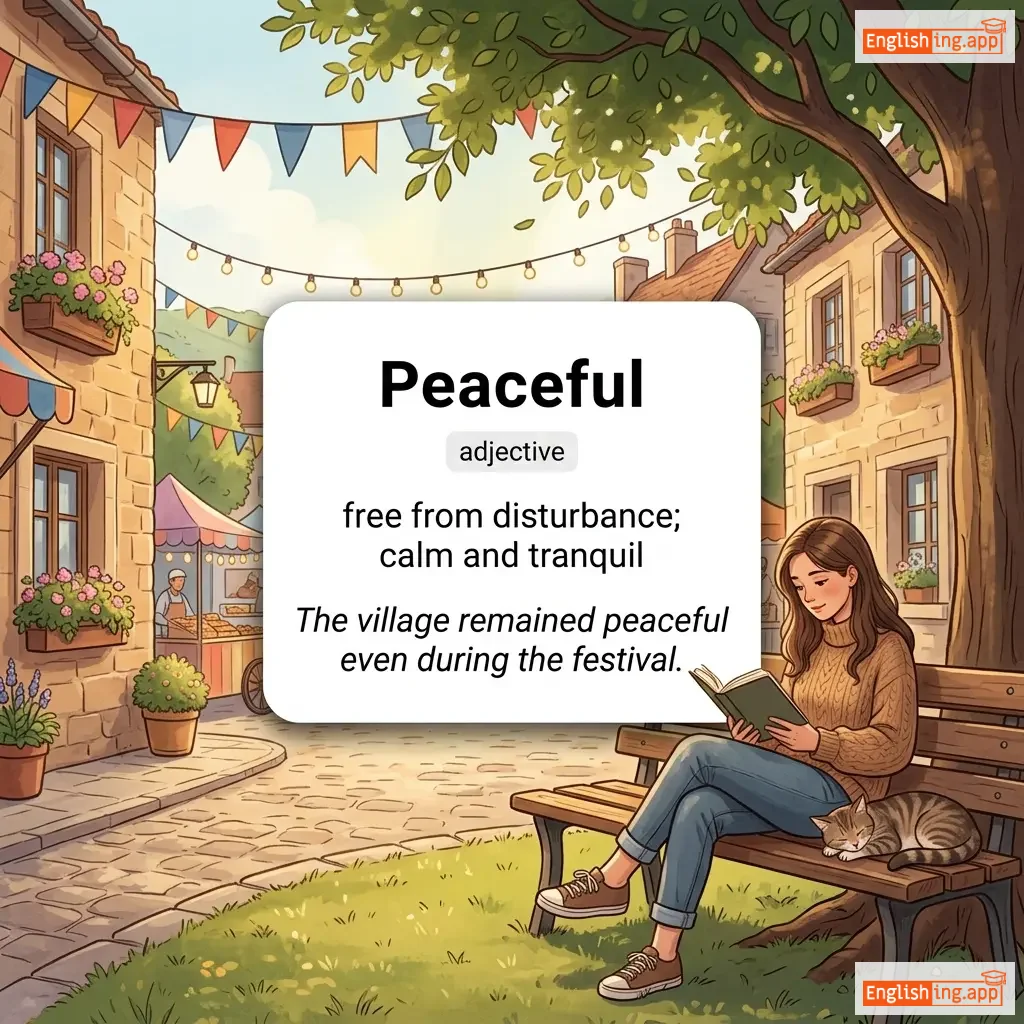
Peaceful definition card — visual illustration of the meaning
adjective
/ˈpiːsfl/
幸福 (xingfu)

free from disturbance; calm and tranquil

"The village remained peaceful even during the festival."
"当她收到奖项时,她无法掩饰她的幸福。" (Dāng tā shōudào jiǎngxiàng shí, tā wúfǎ yǎnshì tā de xìngfú.)
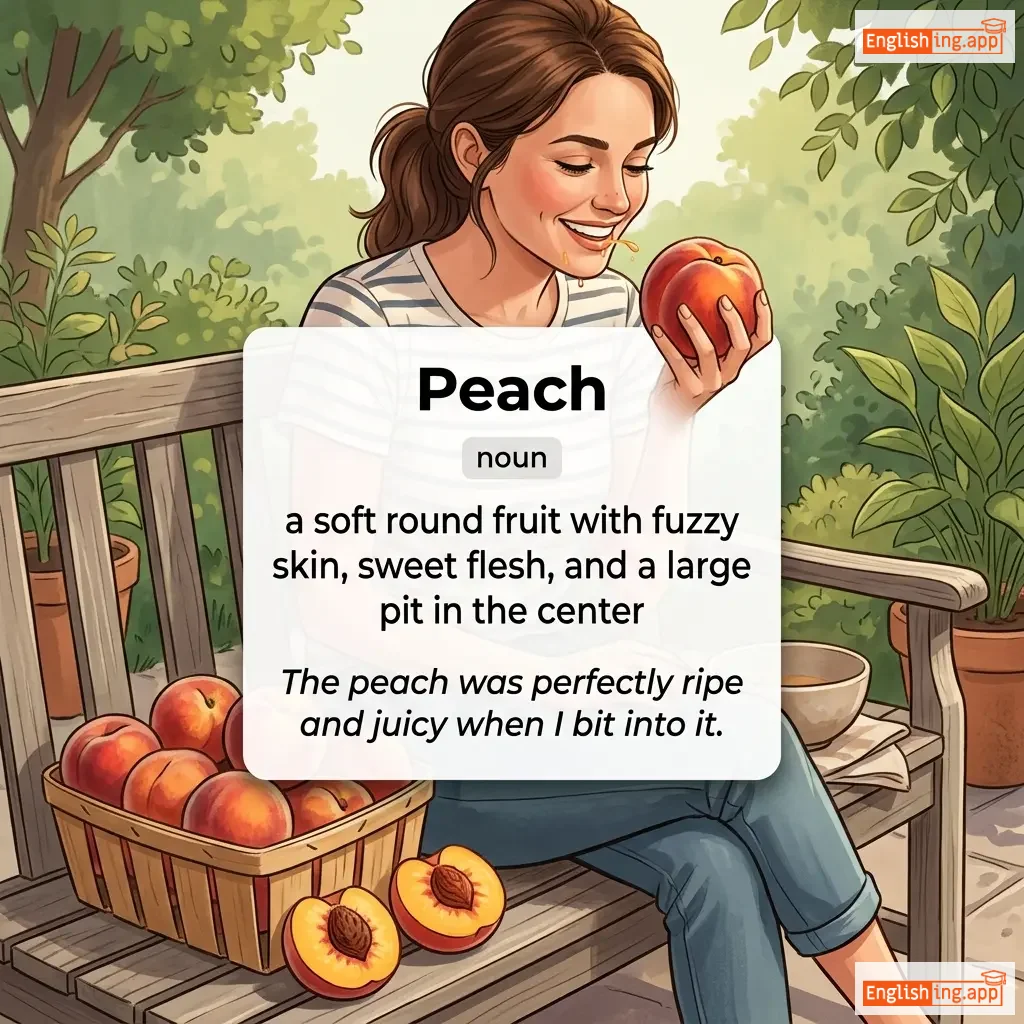
Peach definition card — visual illustration of the meaning
noun
/piːtʃ/
桃子 (táozi)

a soft round fruit with fuzzy skin, sweet flesh, and a large pit in the center

"The peach was perfectly ripe and juicy when I bit into it."
"桃子成熟且多汁,当我咬下去时,口感极佳。" (Táozi chéngshú qiě duō zhī, dāng wǒ yǎo xiàqù shí, kǒugǎn jí jiā.)
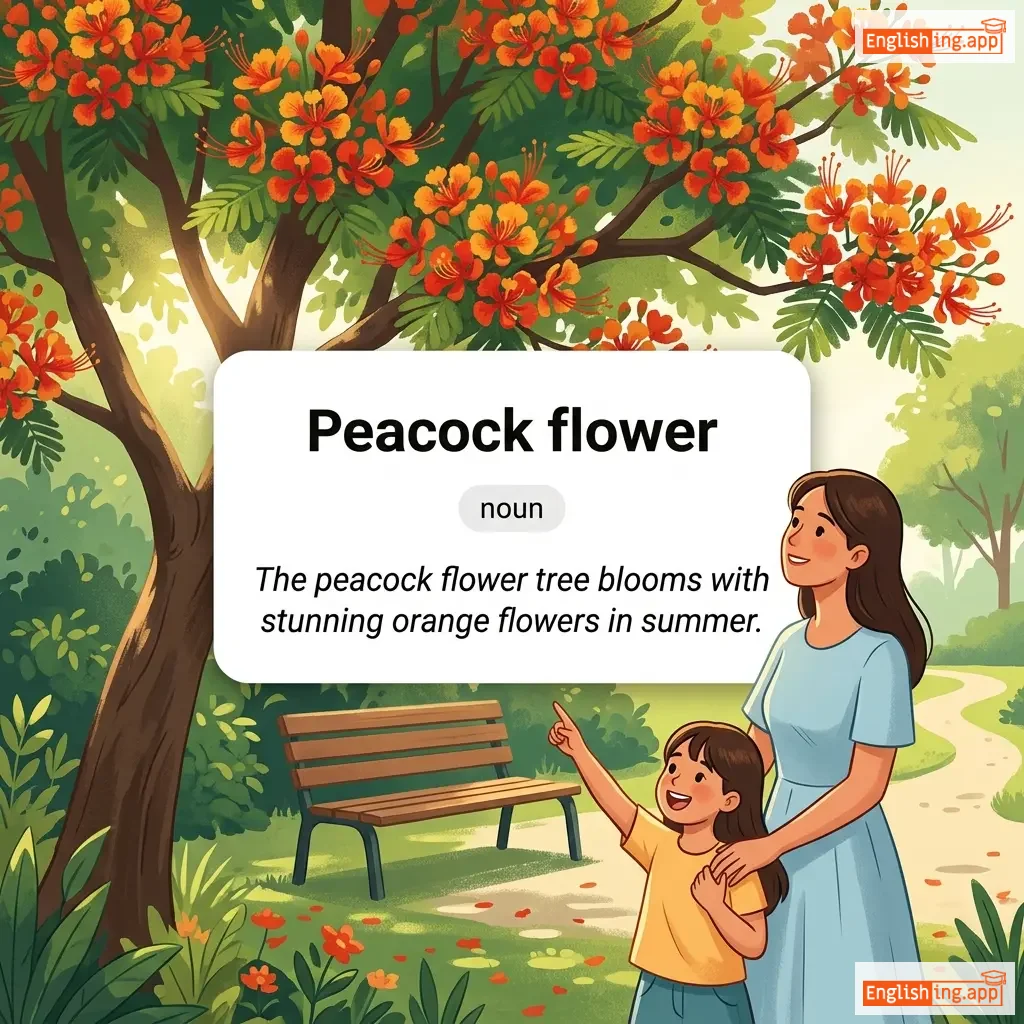
Peacock flower definition card — visual illustration of the meaning
noun
/ˈpiː.kɒk ˈflaʊ.ər/
孔雀花 (kǒngquè huā)

a tropical tree with bright orange and red flowers that resemble a peacock's tail

"The peacock flower tree blooms with stunning orange flowers in summer."
"孔雀花树在夏季开着令人惊叹的橙色花朵。" (Kǒngquè huā shù zài xiàjì kāi zhe lìng rén jīngtàn de chéngsè huāduǒ.)
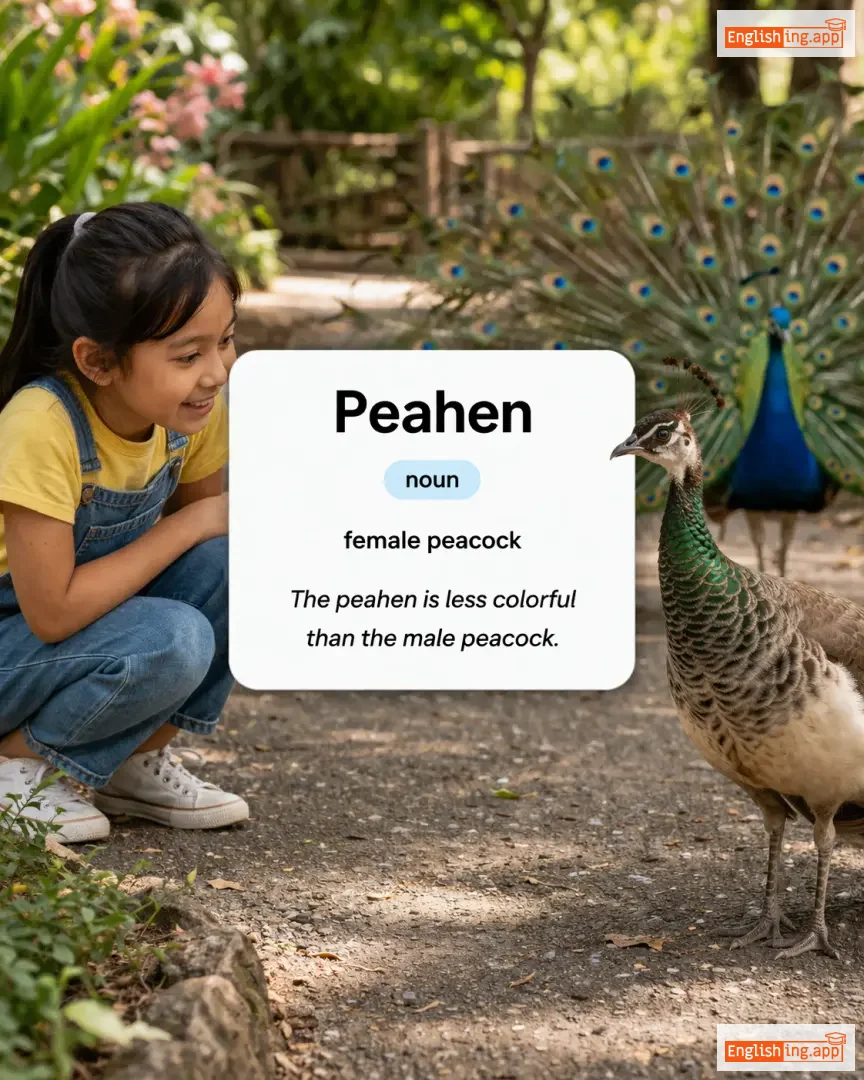
Peahen definition card — visual illustration of the meaning
noun
/ˈpiː.hən/
母孔雀 (mǔ kǒngquè)

female peacock

"The peahen is less colorful than the male peacock."

"母孔雀比雄孔雀少了色彩。" (Mǔ kǒngquè bǐ xióng kǒngquè shǎo le sècǎi.)
🏔️

Peak (峰)

noun
/piːk/
山顶 (shanding)

the pointed top of a mountain or hill, or the highest point of something

"They reached the peak of the mountain after hours of hiking."

"他们在数小时的徒步旅行后到达了山顶。" (Tāmen zài shù xiǎoshí de túbù lǚxíng hòu dàodále shāndǐng.)
Peanut definition card — visual illustration of the meaning
noun
/ˈpiːnʌt/
花生 (huāshēng)

a small seed with a thin shell, eaten as a snack or used to make oil and butter

"He loves eating roasted peanuts during the evening."
"他喜欢在晚上吃烤花生。" (tā xǐhuān zài wǎnshàng chī kǎo huāshēng)
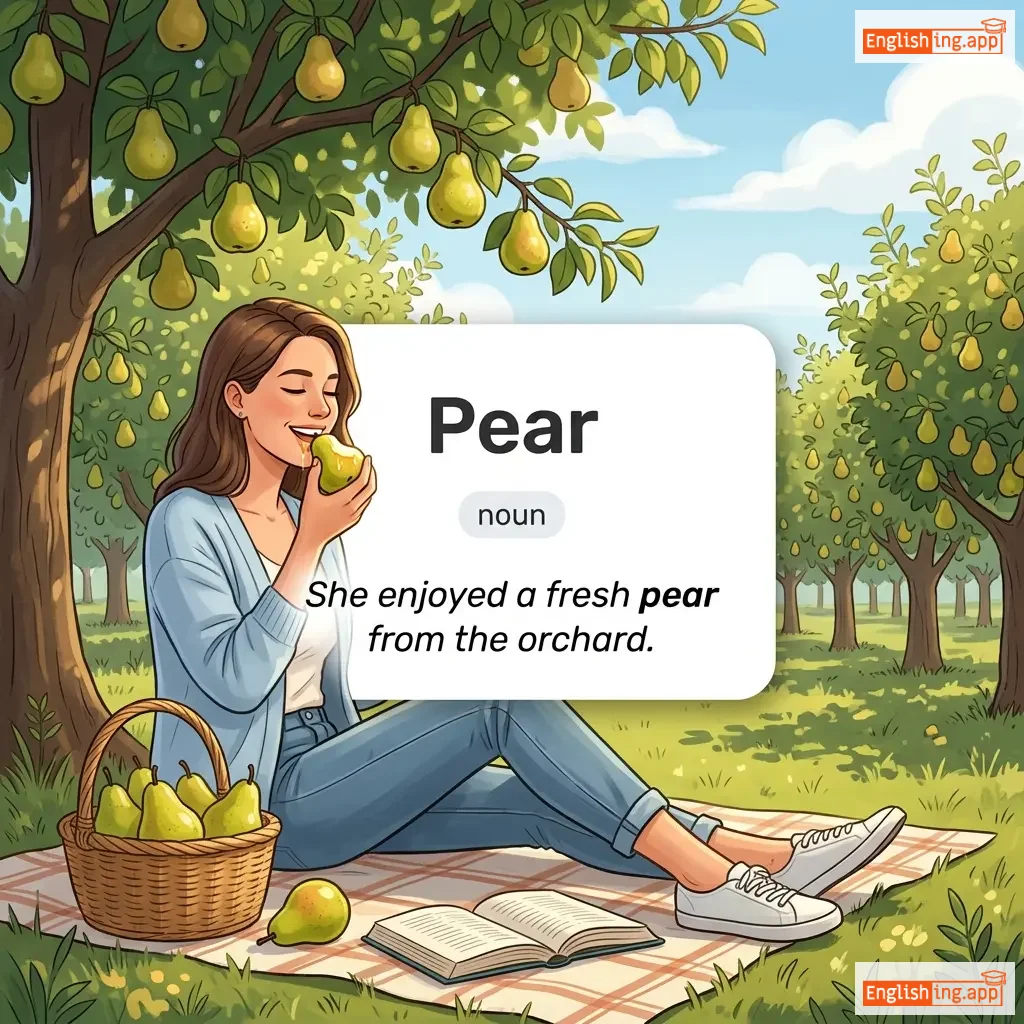
Pear definition card — visual illustration of the meaning
noun
/per/
(lí)

a sweet juicy fruit with a rounded shape that is wider at the bottom than the top

"She enjoyed a fresh pear from the orchard."
"她享受着来自果园的新鲜梨子。" (Tā xiǎngshòu zhe láizì guǒyuán de xīnxiān lízi.)
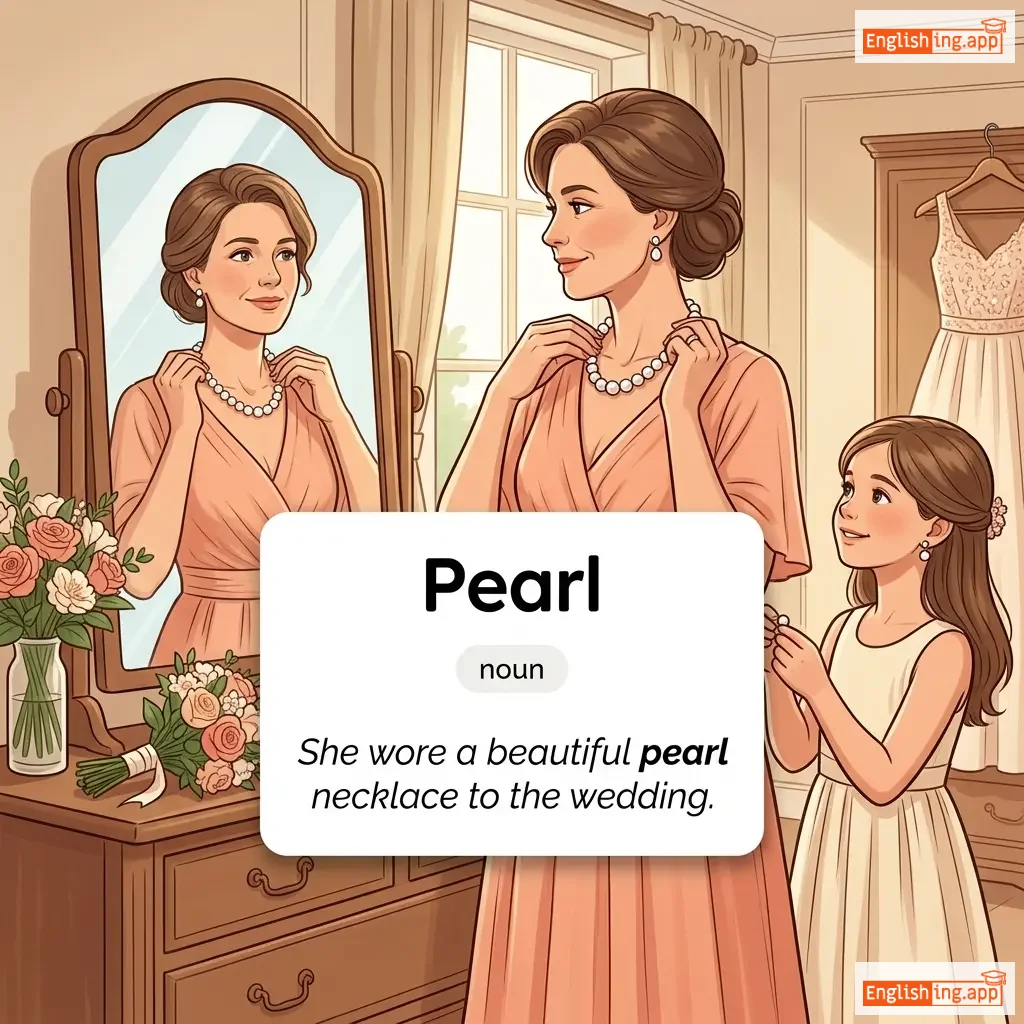
Pearl definition card — visual illustration of the meaning
noun
/pɜːrl/
珍珠 (zhenzhu)

a hard, lustrous object produced within the soft tissue of a shelled mollusk; used in jewelry

"She wore a beautiful pearl necklace to the wedding."
"她在婚礼上戴着一条美丽的珍珠项链。" (Tā zài hūnlǐ shàng dàizhe yītiáo měilì de zhēnzhū xiàngliàn.)
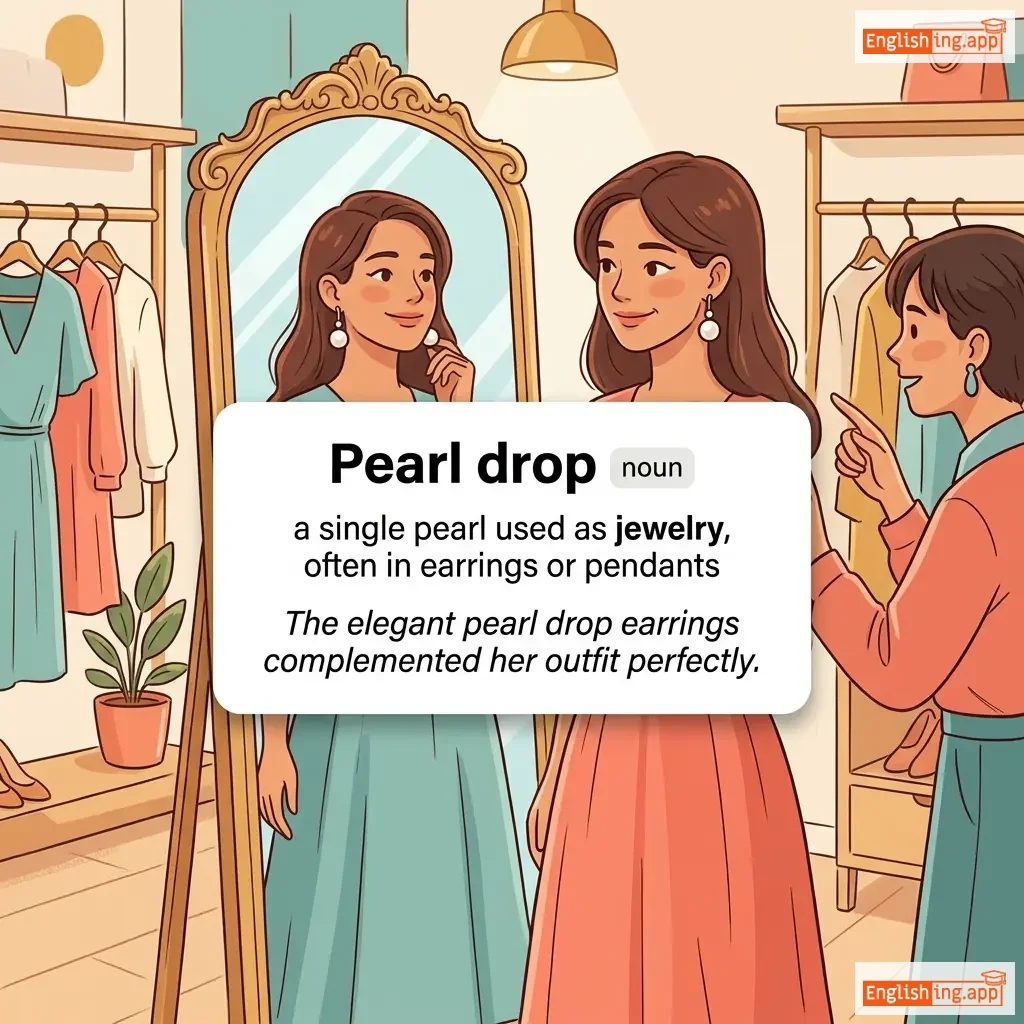
Pearl drop definition card — visual illustration of the meaning
noun
/pɜːrl drɒp/
珍珠滴 (zhēnzhū dī)

a single pearl used as jewelry, often in earrings or pendants

"The elegant pearl drop earrings complemented her outfit perfectly."
"那对优雅的珍珠滴耳环与她的服装完美搭配。" (nà duì yōuyǎ de zhēnzhū dī ěrhuán yǔ tā de fúzhuāng wánměi dāpèi)
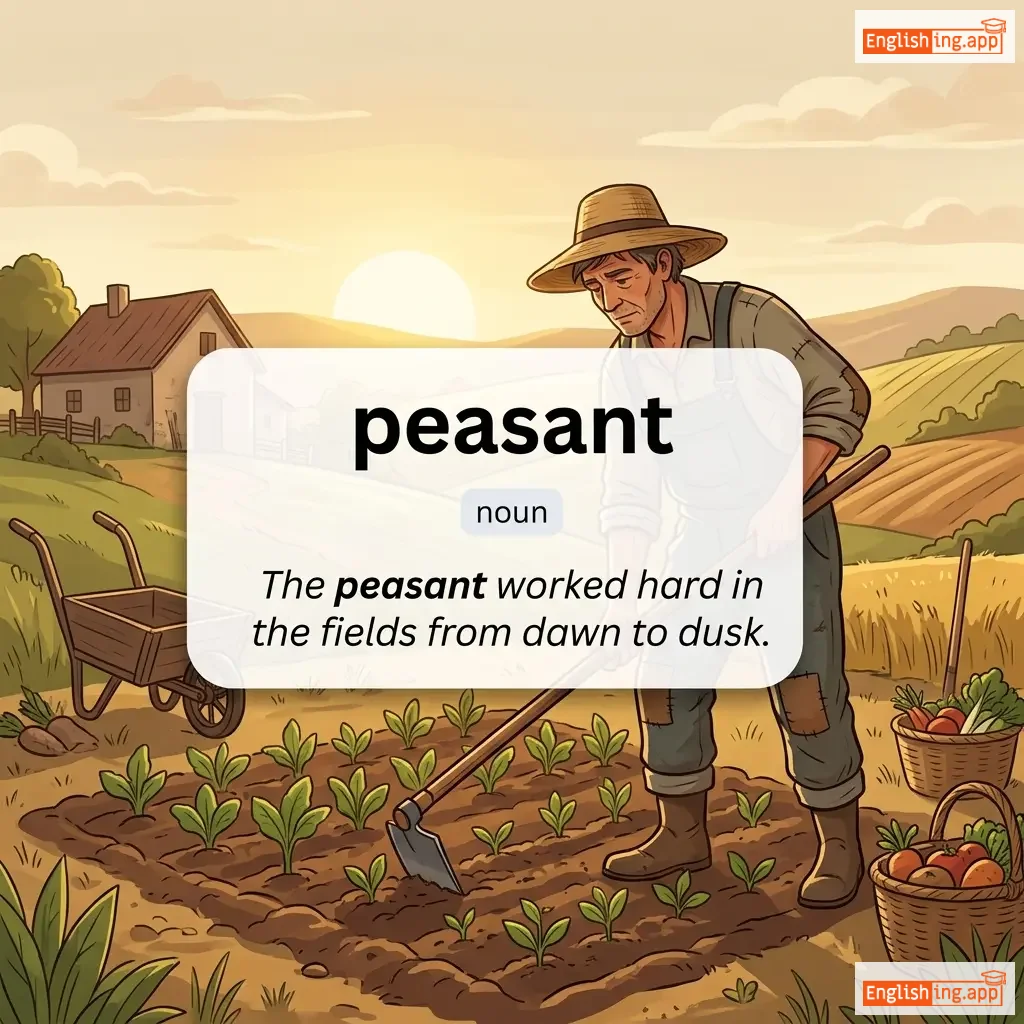
peasant definition card — visual illustration of the meaning
noun
/ˈpɛzənt/
农民 (nóngmín)

a poor farmer or agricultural laborer who owns or rents a small piece of land for cultivation

"The peasant worked hard in the fields from dawn to dusk."

"农民从黎明到黄昏在田地里辛勤劳作。" (Nóngmín cóng límíng dào huánghūn zài tiándì lǐ xīnqín láo zuò.)
noun
/ˈpɛbl/
卵石 (luǎn shí)

a small smooth stone found on beaches or rivers

"He threw a pebble into the pond and watched the ripples."

"他把一块卵石扔进池塘,看着水波。" (Tā bǎ yī kuài luǎn shí rēng jìn chítáng, kànzhe shuǐ bō.)
adjective
/ˈpɛkəbl/
有罪的 (youzui de)

liable to sin or error; capable of doing wrong

"Humans are peccable, but they strive for goodness."

"人类是有罪的,但他们努力向善。" (Renlei shi youzui de, dan tamen nuli xiangshan.)
noun
/ˌpɛkəˈdɪloʊ/
小错误 (xiao cuo wu)

a small or minor fault or sin

"Forgetting to call was just a small peccadillo, not a serious mistake."

"忘记打电话只是一个小错误,不是一个严重的错误。" (Wangji da dianhua zhishi yi ge xiao cuo wu, bushi yi ge yan zhong de cuo wu.)
adjective
/ˈpɛkənt/
有罪的 (youzui de)

Guilty of a moral offense or wrongdoing; sinful.

"The judge declared the peccant official unfit for office."

"法官宣布有罪的官员不适合担任职务。" (Fǎguān xuānbù yǒuzuì de guānyuán bù shìhé dānrèn zhíwù.)
verb
/pɛk/
(zhuo)

To strike or bite something with a beak; to eat in small bites.

"The hen began to peck at the grains scattered on the ground."

"母鸡开始啄地面上散落的谷物。" (Mǔ jī kāishǐ zhuó dìmiàn shàng sànluò de gǔwù.)
adjective
/ˈpɛktərəl/
胸肌 (xiōng jī)

Relating to the chest or breast.

"The athlete focused on strengthening his pectoral muscles."

"运动员专注于增强他的胸肌。" (Yùndòngyuán zhuānzhù yú zēngqiáng tā de xiōng jī.)
verb
/ˈpɛkjʊˌleɪt/
贪污 (tānwū)

To embezzle or steal money, especially public funds.

"The corrupt official was found guilty of peculating government funds."

"腐败的官员被判定为盗用政府资金。" (Fǔbài de guānyuán bèi pàn dìng wèi dào yòng zhèngfǔ zījīn.)
noun
/ˌpɛkjʊˈleɪʃən/
挪用公款 (nuo yong gong kuan)

The act of embezzling or stealing money, especially from public funds.

"The minister resigned after being accused of peculation."

"部长在被指控参与挪用公款后辞职。" (Buzhang zai bei zhigong canyu nuo yong gong kuan hou cizhi.)
adjective
/pɪˈkjuːliər/
奇怪 (qíguài)

strange or unusual; characteristic of only one person, place, or thing

"She has a peculiar habit of talking to her plants."

"她有一个奇怪的习惯,就是和她的植物说话。" (Tā yǒu yīgè qíguài de xíguàn, jiùshì hé tā de zhíwù shuōhuà.)
adverb
/pɪˈkju:.li.ə.li/
以奇怪的方式; 以不寻常的方式 (yǐ qíguài de fāngshì; yǐ bù xúncháng de fāngshì)

in a strange or unusual way; in a manner that is distinctive or characteristic

"She dressed peculiarly for the formal dinner, wearing bright colors and unusual patterns."

"她为正式晚宴穿着非常独特,穿着鲜艳的颜色和不寻常的图案。" (Tā wèi zhèngshì wǎnyàn chuānzhuó fēicháng dútè, chuānzhuó xiānyàn de yánsè hé bù xúncháng de tú'àn.)
adjective
/pɪˈkjuːniˌɛri/
财务的 (cáiwù de)

relating to money or financial matters

"They faced pecuniary difficulties after the business failed."
"在生意失败后,他们面临着财务困难。" (Zài shēngyì shībài hòu, tāmen miànlínzhe cáiwù kùnnán.)
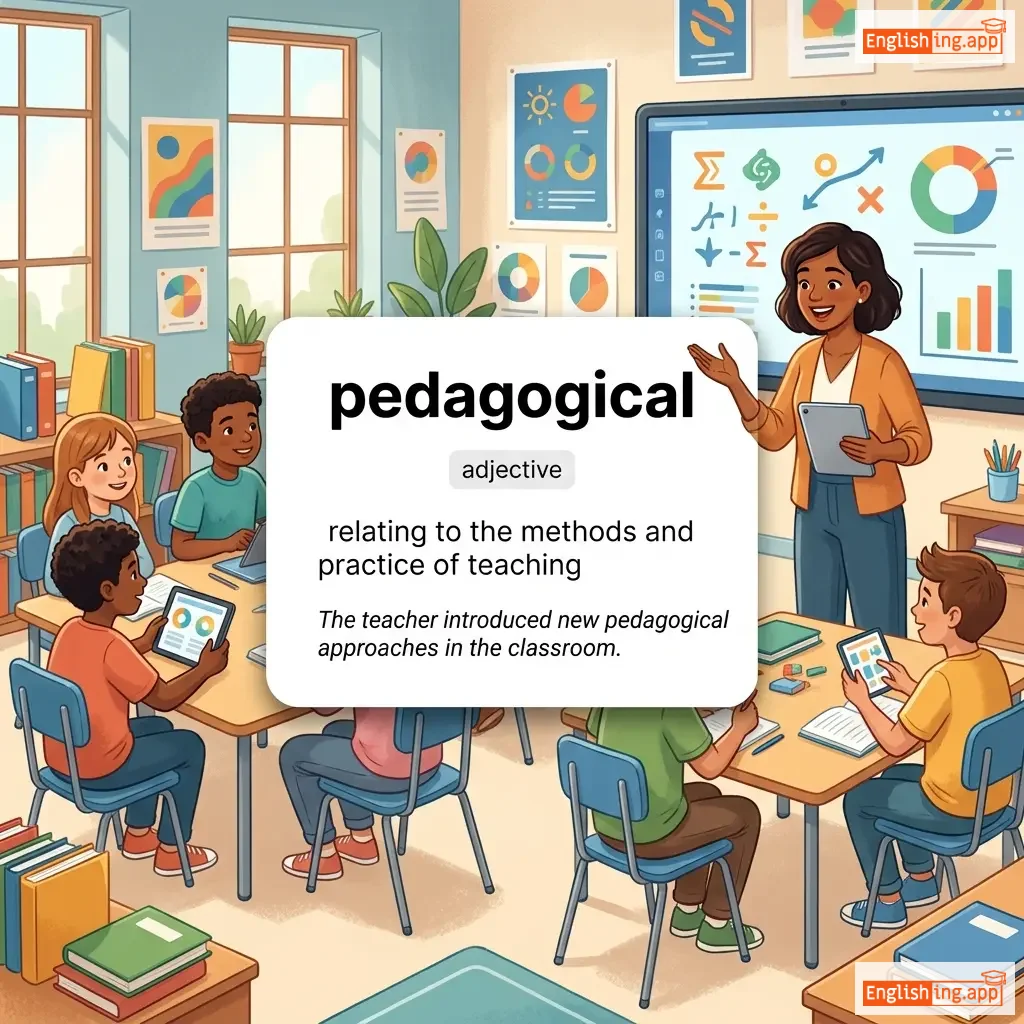
pedagogical definition card — visual illustration of the meaning
adjective
/ˌpɛdəˈɡɒdʒɪkəl/
教学的 (jiaoxue de)

relating to the methods and practice of teaching

"The teacher introduced new pedagogical approaches in the classroom."

"教师在课堂上引入了新的教学方法。" (Jiaoshi zai kètáng shàng yǐnrùle xīn de jiàoxué fāngfǎ.)
noun
/ˌpɛdəˈɡɒdʒɪks/
教育学 (jiaoyu xue)

the science or art of teaching

"He studied pedagogics to become a better teacher."

"他学习了教育学,成为一名更好的教师。" (Ta xuexi le jiaoyu xue, chengwei yi ming geng hao de jiaoshi.)
noun
/ˈpɛdəˌɡɒɡ/
教师 (jiaoshi)

a teacher, especially a strict or formal one

"The old pedagogue insisted on discipline in the classroom."
"那位老教育学家坚持在课堂上纪律。" (Na wei lao jiaoyuxuejia jianchi zai ketang shang jilv.)
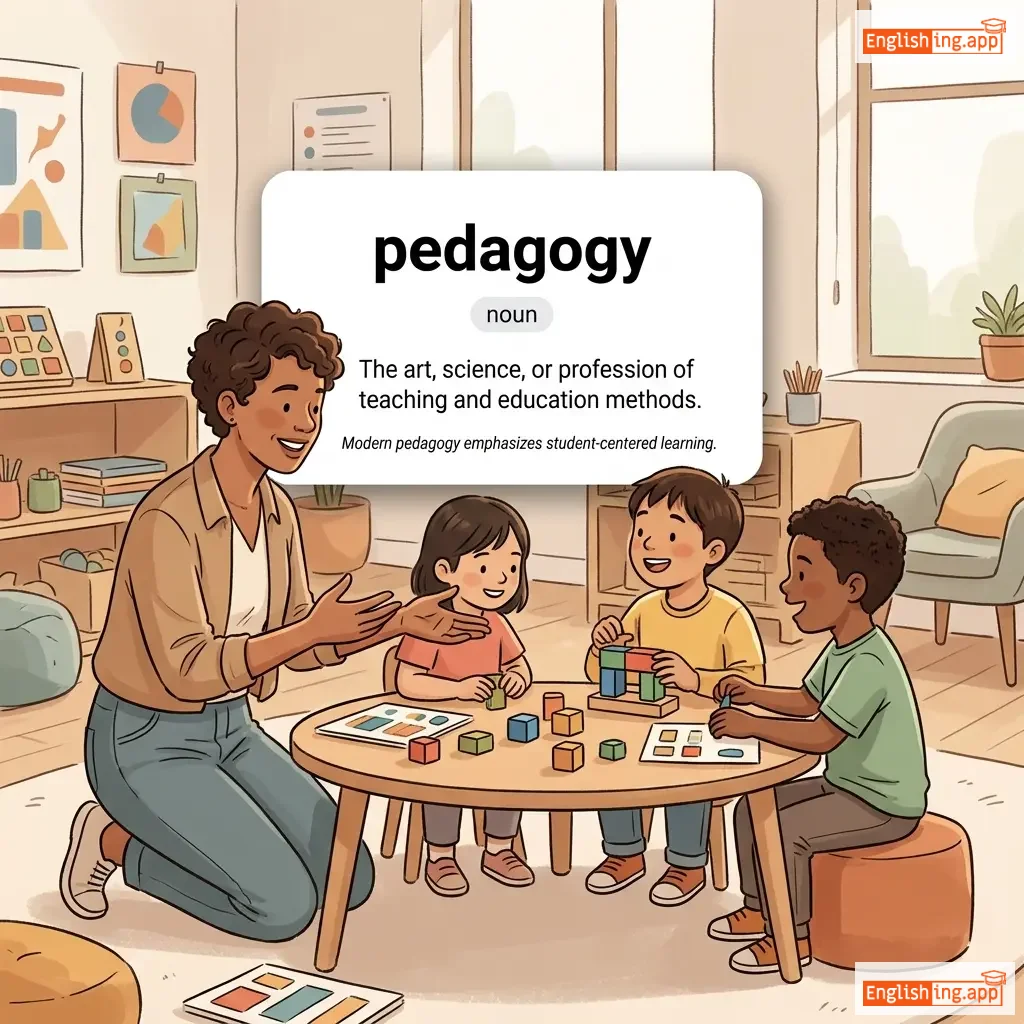
pedagogy definition card — visual illustration of the meaning
noun
/ˈpɛdəˌɡoʊdʒi/
教育学 (jiaoyu xue)

The art, science, or profession of teaching and education methods.

"Modern pedagogy emphasizes student-centered learning."

"现代教育学强调以学生为中心的学习。" (Xiandai jiaoyu xue qiangdiao yi xuesheng wei zhongxin de xuexi.)
noun, verb
/ˈpɛdəl/
脚操作的杠杆 (jiao caozuo de ganggan)

A foot-operated lever for powering or controlling a mechanism, especially on a bicycle.

"He pressed down hard on the bicycle pedal."

"他用力踩下了自行车的踏板。" (Tā yòng lì cǎi xiàle zìxíngchē de tàbǎn.)
adjective
/ˈpɛnɪtrəbl/
可穿透的 (ke chuāntòu de)

Capable of being passed through or entered.

"The thin wall was easily penetrable."

"薄壁容易穿透。" (Bó bì róngyì chuāntòu.)
adjective
/ˌpɛnɪˈtɛnʃəl/
忏悔的 (chànhuǐ de)

Relating to or expressing penitence or penance.

"The priest delivered a penitential sermon on forgiveness."

"牧师讲了关于宽恕的忏悔讲道。" (Mùshī jiǎngle guānyú kuānshù de chànhuǐ jiǎngdào.)
adjective
/ˈpɛnɪtənt/
懊悔的 (aohui de)

Feeling or showing sorrow and regret for having done wrong.

"She was penitent after shouting at her friend."

"她在对她的朋友大喊之后感到懊悔。" (Ta zai dui ta de pengyou dahuan zhihou gandao aohui.)
noun
/ˈpɛnɪtəns/
忏悔 (chanhui)

The action or feeling of showing sorrow and regret for having done wrong.

"His eyes were full of penitence after realizing his mistake."

"他在意识到自己的错误后,眼中充满了忏悔。" (Ta zai yishi dao ziji de cuo wu hou, yanzhong chongman le chanhui.)
adjective
/pəˈnɪnsjələr/
半岛状的 (bandao zhuang de)

Relating to or resembling a peninsula.

"The peninsular region is surrounded by water on three sides."
"半岛地区三面被水包围。" (Bandao diqu san mian bei shui baowei.)
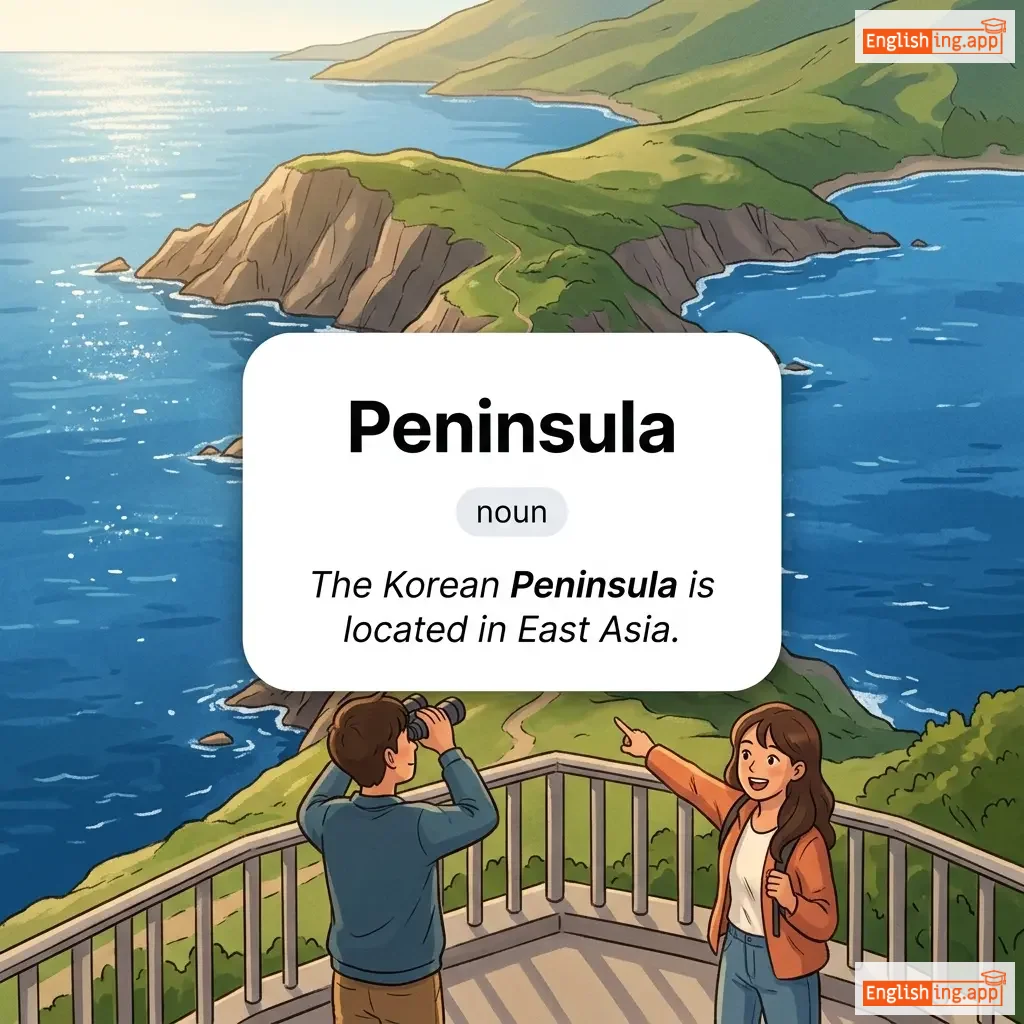
Peninsula definition card — visual illustration of the meaning
noun
/pəˈnɪn.sjə.lə/
半岛 (bàndǎo)

a piece of land that is almost completely surrounded by water but connected to the mainland

"The Korean Peninsula is located in East Asia."

"朝鲜半岛位于东亚。" (Cháoxiǎn bàndǎo wèi yú dōngyà.)
noun
/ˌpɛnɪˈtreɪʃən/
渗透 (shentou)

The act of piercing or entering into something.

"The company's market penetration grew rapidly."
"公司的市场渗透迅速增长。" (Gongsi de shichang shentou xunxu zengzhang.)
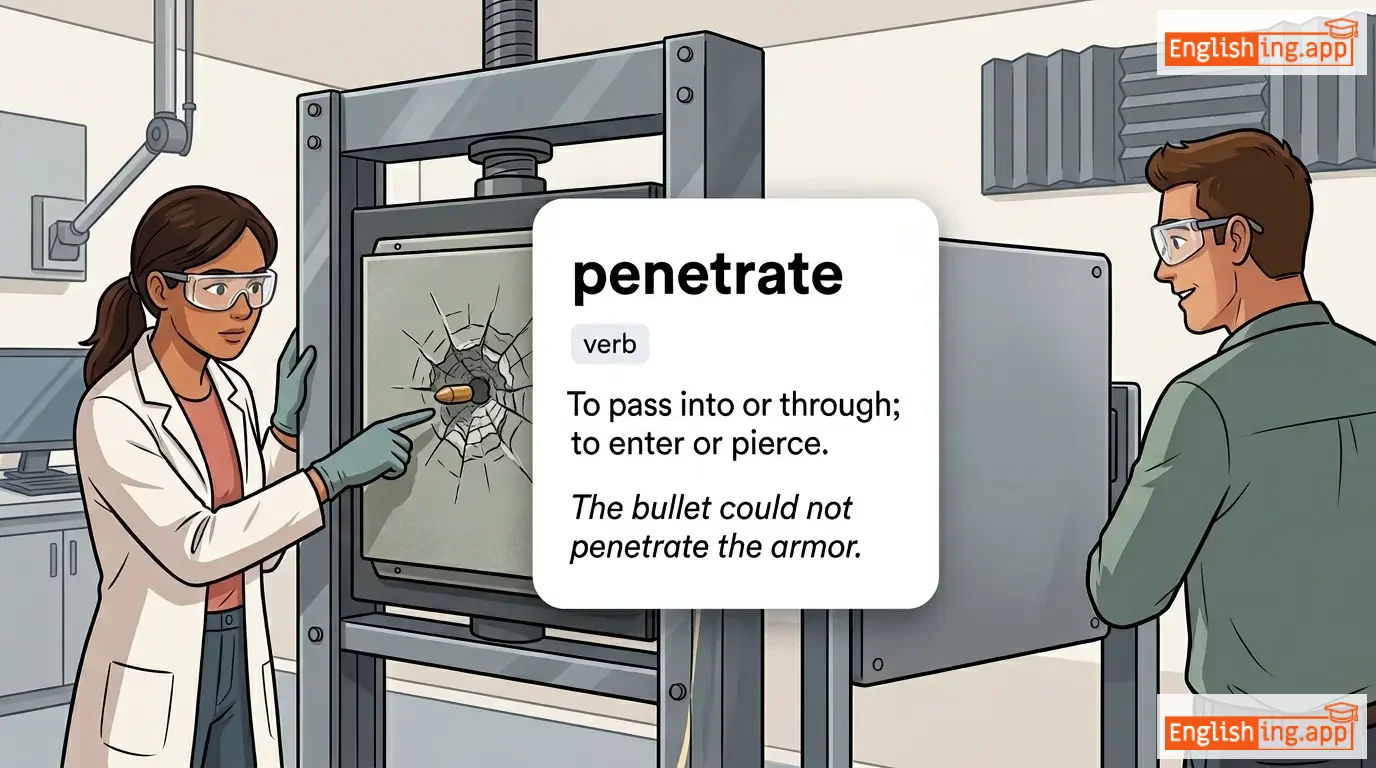
penetrate definition card — visual illustration of the meaning
verb
/ˈpɛnɪtreɪt/
穿透 (chuan tou)

To pass into or through; to enter or pierce.

"The bullet could not penetrate the armor."

"子弹无法穿透盔甲。" (Zidan wufale chuantou kuijia.)
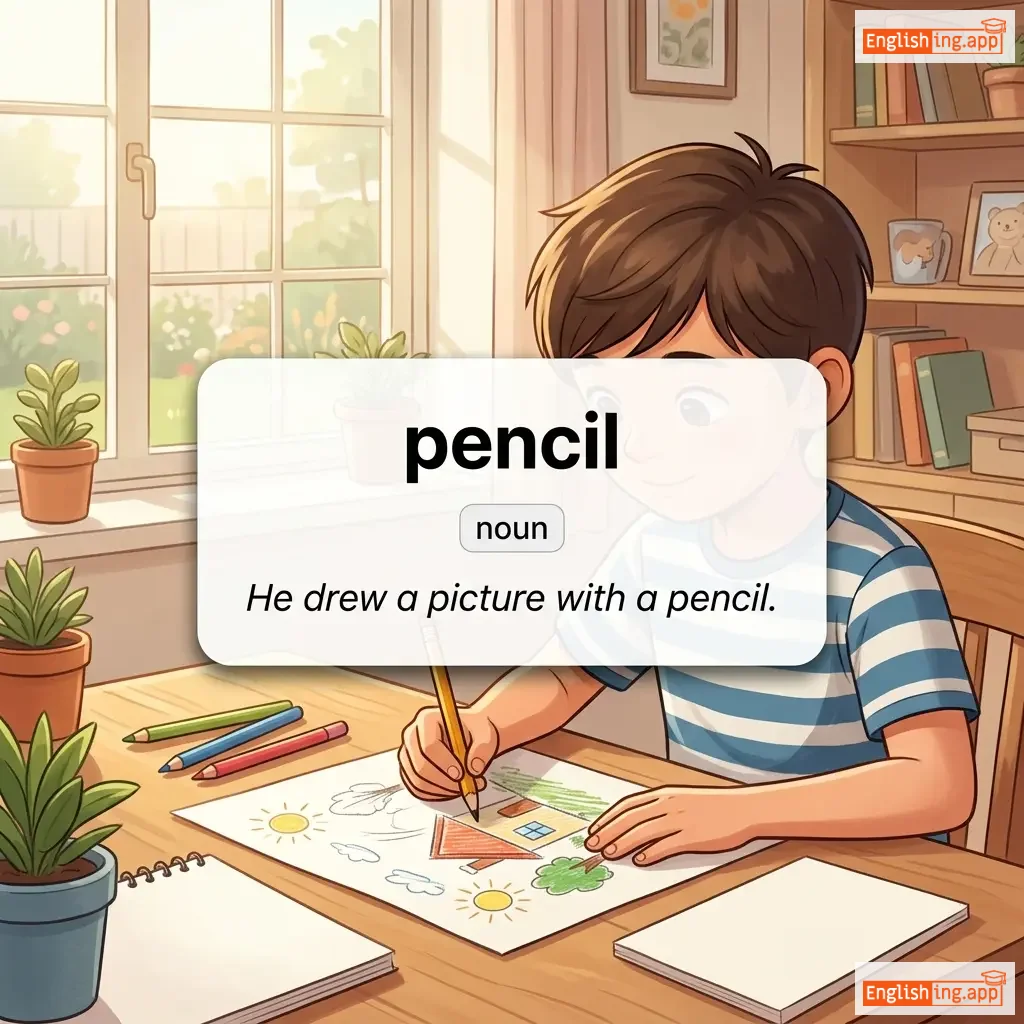
pencil definition card — visual illustration of the meaning
✏️

pencil

noun
/ˈpɛnsəl/

an instrument for writing or drawing, typically made of wood with a graphite core

"He drew a picture with a pencil."

noun
/ˈpɛndənt/
吊坠 (diàozhuì)

a piece of jewelry that hangs from a chain worn around the neck

"She wore a silver pendant around her neck."

"她戴着一个银色的吊坠在脖子上。" (Tā dàizhe yīgè yínsè de diàozhuì zài bózi shàng.)
adjective
/ˈpɛndənt/
悬挂的 (xuánguà de)

hanging down or suspended

"The pendent branches touched the ground."

"悬挂的树枝触碰了地面。" (Xuánguà de shùzhī chùpèngle dìmiàn.)