词汇表

英语词汇词典 | 单词含义、定义和示例

noun
/ˈpiːtsə/
比萨 (bisa)

a flat round bread baked with toppings such as cheese, tomato, and other ingredients

"We ordered a large pepperoni pizza for dinner."

"我们点了一份大号的意大利香肠比萨作为晚餐。" (Wo men dian le yi fen da hao de yi da li xiang chang bisa zuo wei wan can.)
placate definition card — visual illustration of the meaning
verb
/pləˈkeɪt/
安抚 (ānfǔ)

to make someone less angry or hostile; to calm or soothe

"He tried to placate the angry customer with a refund."

"他试图通过退款安抚愤怒的客户。" (Tā shìtú tōngguò tuìkuǎn ānfǔ fènnù de kèhù.)
place definition card — visual illustration of the meaning
noun, verb
/pleɪs/
地方 (dìfāng)

a particular position or location; to put something in a specific position

"She placed the books on the table."

"她把书放在桌子上。" (Tā bǎ shū fàng zài zhuōzi shàng.)
noun
/pləˈsiːboʊ/
安慰剂 (ānwèijì)

a substance with no therapeutic effect, used as a control in testing new drugs

"The patient was given a placebo to compare the effect of the real drug."

"患者被给了一个安慰剂,以比较真实药物的效果。" (Huànzhě bèi gěile yīgè ānwèijì, yǐ bǐjiào zhēnshí yàowù de xiàoguǒ.)
noun
/ˈpleɪsmənt/
职位安排或分配 (zhiwei anpai huo fenpei)

the act of putting something or someone in a particular position or job

"The company arranged job placement for the graduates."

"公司为毕业生安排了工作岗位。" (Gongsi wei biye sheng anpai le gongzuo gangwei.)
adjective
/ˈplæsɪd/
平静的,安宁的 (píngjìng de, ānníng de)

calm and peaceful, not easily disturbed

"She had a placid expression despite the chaos around her."

"尽管周围一片混乱,她的表情依然平静。" (Jǐnguǎn zhōuwéi yīpiàn hùnluàn, tā de biǎoqíng yīrán píngjìng.)
noun
/ˈpleɪdʒərɪzəm/
剽窃 (piaoqie)

the practice of taking someone else's work or ideas and passing them off as one's own

"The student was expelled for committing plagiarism in his essay."

"学生因在论文中剽窃被开除。" (Xuesheng yin zai lunwen zhong piaoqie bei kaichu.)
verb
/ˈpleɪdʒəraɪz/
剽窃 (piāo qiè)

to take someone else's work or ideas and present them as your own

"He was warned not to plagiarize his friend's essay."

"他被警告不要剽窃朋友的文章。" (Tā bèi jǐnggào bù yào piāoqiè péngyǒu de wénzhāng.)
plagued definition card — visual illustration of the meaning
verb
pleɪɡd
困扰 (kunrao)

Troubled or afflicted persistently by problems or difficulties.

"People are plagued by anxiety and depression."

"人们受到焦虑和抑郁的困扰。" (Renmen shoudao jiaolü he yiyu de kunrao.)
adjective
/pleɪn/
简单的 (jiǎndān de)

simple or clear, without decoration or complexity

"She wore a plain white dress to the ceremony."

"她穿了一件简单的白色连衣裙参加了仪式。" (Tā chuānle yī jiàn jiǎndān de báisè liányīqún cānjiāle yíshì.)
noun
/ˈpleɪntɪf/
原告 (yuángào)

a person who brings a case against another in a court of law

"The plaintiff filed a lawsuit against the company."

"原告对公司提起诉讼。" (Yuángào duì gōngsī tíqǐ sùsòng.)
adjective
/ˈpleɪntɪv/
悲伤的, 哀求的 (bēishāng de, āiqiú de)

expressing sadness or sorrow

"He raised a plaintive cry for help."

"他发出了一个悲伤的求救声。" (Tā fāchūle yīgè bēishāng de qiújiù shēng.)
noun,verb
/pleɪt/
辫子 (biàn zi)

a braid of hair or straw; to braid

"She decided to plait her hair before the party."

"她决定在派对前编织她的头发。" (Tā juédìng zài pàiduì qián biānzhī tā de tóufà.)
plan definition card — visual illustration of the meaning
noun
/plæn/
计划 (jihua)

a detailed proposal for doing or achieving something

"We need a clear plan to move forward."

"我们需要一个清晰的计划来推进。" (Wo men xuyao yige qingxi de jihua lai tuijin.)
plane definition card — visual illustration of the meaning
noun,verb
/pleɪn/
平面; 飞机; 平滑 (píngmiàn; fēijī; pínghuá)

a flat surface; an aircraft; to make smooth

"The carpenter used a tool to plane the wood."

"木匠用工具来平整木材。" (Mùjiàng yòng gōngjù lái píngzhěng mùcái.)
Planet definition card — visual illustration of the meaning
noun
/ˈplænɪt/
行星 (xingxing)

a celestial body that orbits a star

"Earth is the third planet from the Sun."

"地球是离太阳第三远的行星。" (Dìqiú shì lí tàiyáng dì sān yuǎn de xíngxīng.)
verb
/pliːz/
取悦 (qǔyuè)

to make someone happy or satisfied

"She will do anything to please her parents."

"她愿意做任何事情来取悦她的父母。" (Tā yuànyì zuò rènhé shìqíng lái qǔyuè tā de fùmǔ.)
noun
/pəˈruːzl/
仔细阅读 (zǐxì yuèdú)

The action of reading or examining something carefully.

"The contract was given to the lawyer for perusal."
"合同已交给律师以供仔细阅读。" (Hétóng yǐ jiāo gěi lǜshī yǐ gòng zǐxì yuèdú.)
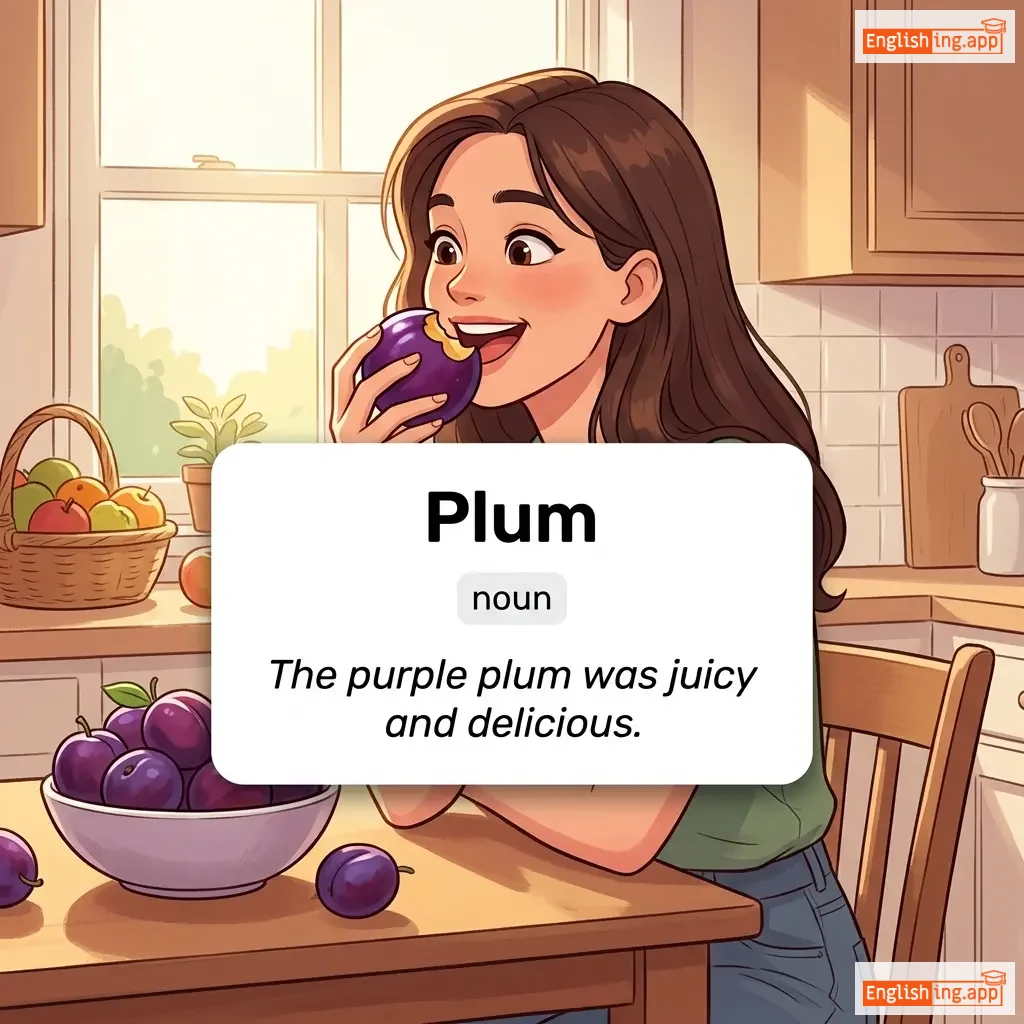
Plum definition card — visual illustration of the meaning
noun
/plʌm/
李子 (lizi)

a small round fruit with smooth red or purple skin, sweet flesh, and a single large seed

"The purple plum was juicy and delicious."

"紫色的李子又多汁又美味。" (zǐsè de lizi yòu duōzhī yòu měiwèi.)
noun
/plʌɡ/
插头 (chātóu)

a device used to connect or block an opening

"She inserted the plug into the socket."

"她把插头插入了插座。" (Tā bǎ chātóu chārùle chāzuò.)
adjective
/ˈplʌk.i/
勇敢 (yonggan)

having or showing courage and determination

"The plucky child rescued the kitten from the tree."

"勇敢的孩子从树上救出了小猫。" (Yonggan de haizi cong shu shang jiuchu le xiao mao.)
verb
/plʌk/
摘取, 鼓起勇气 (zhaiqu, guqi yongqi)

to take hold of and quickly remove; to gather courage or determination

"She plucked a flower from the garden."

"她从花园里摘了一朵花。" (Ta cong huayuan li zhaile yiduohua.)
noun
/plɔɪ/
巧妙的计谋 (qiǎomiào de jìmóu)

a clever plan or action designed to gain an advantage

"She used a clever ploy to win the debate."
"她用了一招聪明的伎俩来赢得辩论。" (Tā yòngle yī zhāo cōngmíng de jìliǎo lái yíngdé biànlùn.)
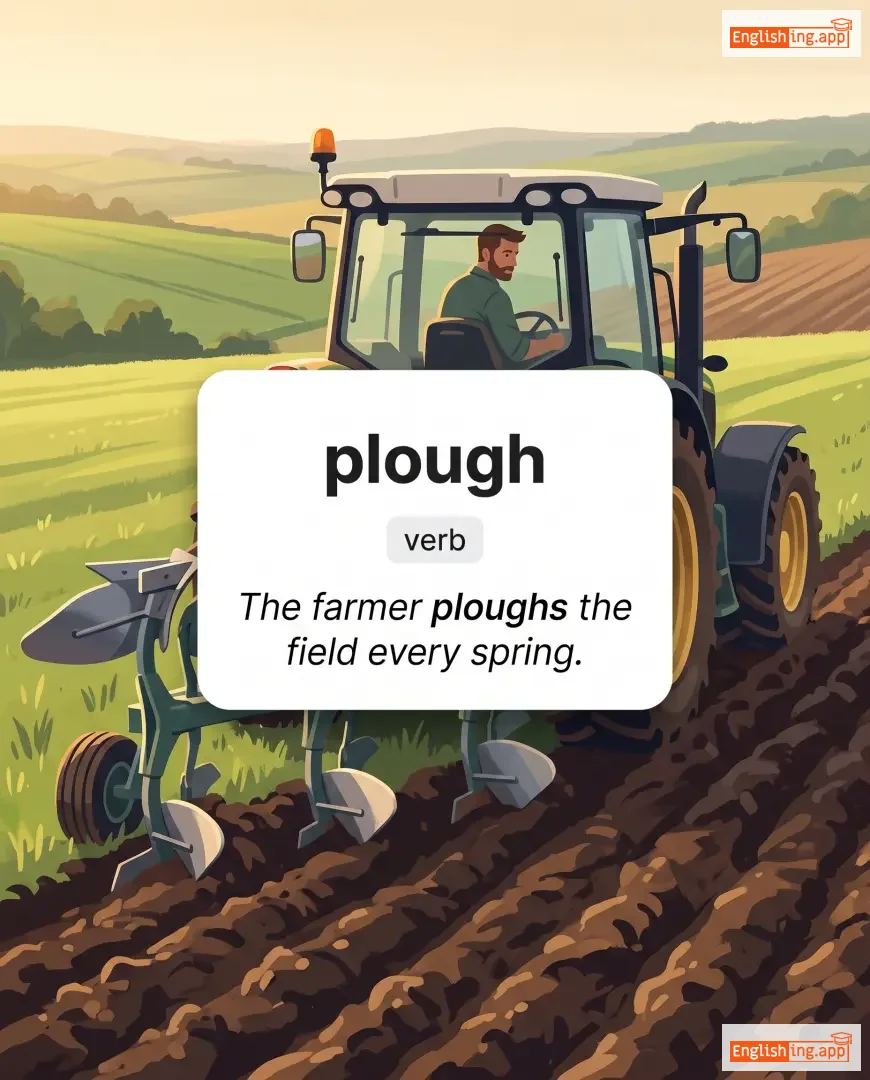
plough definition card — visual illustration of the meaning
noun
/plaʊ/
(li)

a large farming tool used to break up and turn over soil before planting crops

"The oxen pulled the heavy plough across the field."

"牛拉着沉重的犁在田野上行驶。" (Niu lāzhe chénzhòng de lí zài tiányě shàng xíngshǐ.)
plot definition card — visual illustration of the meaning
noun
/plɒt/
阴谋 (yīnmóu)

a secret plan or scheme, often with bad intentions

"The villain made a plot to steal the treasure."

"反派设计了一个阴谋,试图偷走宝藏。" (Fǎnpài shèjìle yī gè yīnmóu, shìtú tōuzǒu bǎozàng.)
adjective
/ˈplɒd.ɪŋ/
缓慢且乏味 (huǎn màn qiě fá wèi)

slow-moving and unexciting; showing steady effort

"The movie was entertaining but a bit plodding in the middle."

"这部电影很有趣,但中间有点缓慢且乏味。" (Zhè bù diànyǐng hěn yǒuqù, dàn zhōngjiān yǒudiǎn huǎnmàn qiě fá wèi.)
verb
/plɒd/
缓慢而坚定地工作 (huǎn màn ér jiān dì de gōng zuò)

to work slowly and steadily, often with effort or difficulty

"He plodded through his homework despite feeling tired."

"尽管他感到疲倦,他还是慢慢地完成了作业。" (Jǐnguǎn tā gǎndào píjuàn, tā háishì màn man de wánchéngle zuòyè.)
noun
/plaɪt/
困境,危险境地 (kunjing, weixian jingdi)

a difficult or dangerous situation

"The refugees described their plight during the war."

"难民描述了他们在战争中的困境。" (Nanmin miaoshu le tamen zai zhanzheng zhong de kunjing.)
adjective
/ˈplaɪənt/
灵活的,容易受影响或适应的 (línghuó de, róngyì shòu yǐngxiǎng huò shìyìng de)

flexible; easily influenced or adaptable

"She has a pliant personality that adapts well to new situations."

"她有一个灵活的个性,能够很好地适应新环境。" (Tā yǒu yīgè línghuó de gèxìng, nénggòu hěn hǎo de shìyìng xīn huánjìng.)
adjective
/ˈplaɪəbəl/
柔韧的 (róu rèn de)

easily bent or flexible; adaptable

"The metal is pliable enough to be shaped into jewelry."

"金属足够柔韧,可以被塑造成珠宝。" (Jīnshǔ zúgòu róu rèn, kěyǐ bèi sùzàochéng zhūbǎo.)
plethora definition card — visual illustration of the meaning
noun
/ˈplɛθərə/
过多的数量 (guo duo de shu liang)

an excessive amount of something

"She has a plethora of books on her shelf."

"她的书架上有过多的书籍。" (Ta de shujia shang you guo duo de shuju.)
noun
/ˈplɛnti/
丰富 (fengfu)

a large or sufficient amount or quantity

"We have plenty of time before the meeting."

"我们在会议前有很多时间。" (Wǒmen zài huìyì qián yǒu hěn duō shíjiān.)
noun
/ˈplɛntɪtjuːd/
丰富 (fengfu)

the condition of being full or abundant

"The garden offered a plentitude of flowers in spring."

"花园在春天提供了丰富的花卉。" (Huayuan zai chuntian tigong le fengfu de huahui.)
adjective
/ˈplɛntɪfəl/
丰富的 (fēngfù de)

Existing in great quantity; abundant.

"Food and water were plentiful in the village."

"村里食物和水源丰富。" (Cūn lǐ shíwù hé shuǐyuán fēngfù.)
adjective
/ˈplɛntɪəs/
丰富 (fengfu)

existing in great quantity; abundant

"The harvest was plenteous, providing enough food for the entire village."

"收成丰富,为整个村庄提供了足够的食物。" (Shou cheng fengfu, wei zheng ge cun zhuang ti gong le zu gou de shi wu.)
noun
/ˈplɛnɪtjuːd/
丰富 (fēngfù)

the condition of being full or abundant; a great quantity

"The garden was a plenitude of flowers in spring."

"春天的花园充满了花卉的丰富性。" (Chūntiān de huāyuán chōngmǎnle huāhuì de fēngfùxìng.)
noun
/ˌpliːnɪpəˈtɛnʃəri/
全权代表 (quánquán dàibiǎo)

a person invested with full power to act on behalf of another, especially in diplomacy

"The ambassador was a plenipotentiary sent to negotiate the treaty."

"大使是被派往谈判条约的全权代表。" (Dàshǐ shì bèi pài wǎng tánpàn tiáoyuē de quánquán dàibiǎo.)
adjective
/ˈpliːnəri/
全体的 (quántǐ de)

complete in every way; fully attended or absolute

"The committee held a plenary session to discuss all matters of importance."

"委员会召开了一个全体会议,讨论所有重要事项。" (Wěiyuánhuì zhàokāile yīgè quántǐ huìyì, tǎolùn suǒyǒu zhòngyào shìxiàng.)
noun
/ˈplɛdʒɔːr/
担保人 (danbaoren)

a person who gives or offers a pledge or security

"The bank accepted the jewelry from the pledgeor as collateral for the loan."

"银行接受了担保人提供的珠宝作为贷款的担保。" (Yinhang jieshou le danbaoren tigong de zhubao zuo wei daikuan de danbao.)
noun
/ˈplɛdʒiː/
被作为担保而给与某物的人 (bei zuòwéi dānbǎo ér gěi yǔ mǒu wù de rén)

a person to whom something is pledged or given as security

"The bank is the pledgee of the collateral until the loan is repaid."

"银行是担保品的债权人,直到贷款偿还为止。" (Yínháng shì dānbǎopǐn de zhàiquánrén, zhídào dàikuǎn chánghuán wéizhǐ.)
noun
/plɛdʒ/
承诺 (chengnuo)

a solemn promise or agreement to do or refrain from doing something

"He gave a pledge to support the cause."

"他承诺支持这个事业。" (Tā chéngnuò zhīchí zhège shìyè.)
noun
/ˈplɛbɪsaɪt/
公民投票 (gongmin toupiao)

a direct vote by the electorate on an important public question

"The government held a plebiscite to decide on the new constitution."

"政府举行了公民投票,决定新的宪法。" (Zhengfu juxing le gongmin toupiao, jueding xin de xianfa.)
adjective, noun
/pləˈbiːən/
普通的,平民的 (putong de, pingmin de)

alternate spelling of 'plebeian'; common or ordinary

"His tastes were rather plebian, favoring simple food and clothes."

"他的口味相当普通,喜欢简单的食物和衣服。" (Tā de kǒuwèi xiāngdāng pǔtōng, xǐhuān jiǎndān de shíwù hé yīfú.)
adjective, noun
/pləˈbiːən/
平民 (pingmin)

common, ordinary, or belonging to the lower social classes

"The festival was enjoyed by both plebeian and noble citizens."

"这个节日被平民和贵族市民共同享受。" (Zhe ge jie ri bei pingmin he guizu shimin gongtong xiangshou.)
noun, verb
/pliːt/
褶子 (zhezi)

a fold in fabric made by doubling the material back upon itself

"She added a pleat to the skirt for extra volume."

"她在裙子上加了一个褶子,以增加更多的体积。" (Ta zai qunzi shang jia le yige zhezi, yi zengjia geng duo de tizhi.)
noun
/ˈplɛʒər/
愉快 (yúkuài)

a feeling of happiness or enjoyment

"It was a pleasure to meet you."

"很高兴见到你。" (Hěn gāoxìng jiàn dào nǐ.)
adjective
/ˈplɛʒərəbl/
令人愉快的, 令人高兴的 (lìng rén yú kuài de, lìng rén gāo xìng de)

giving pleasure or enjoyment

"Reading a good book is a pleasurable activity."

"读一本好书是一项令人愉快的活动。" (Dú yī běn hǎo shū shì yī xiàng lìng rén yú kuài de huó dòng.)
adjective
/pliːzd/
满意 (mǎnyì)

feeling happy or satisfied with something

"She was pleased with her exam results."
"她对自己的考试结果感到满意。" (Tā duì zìjǐ de kǎoshì jiéguǒ gǎndào mǎnyì.)
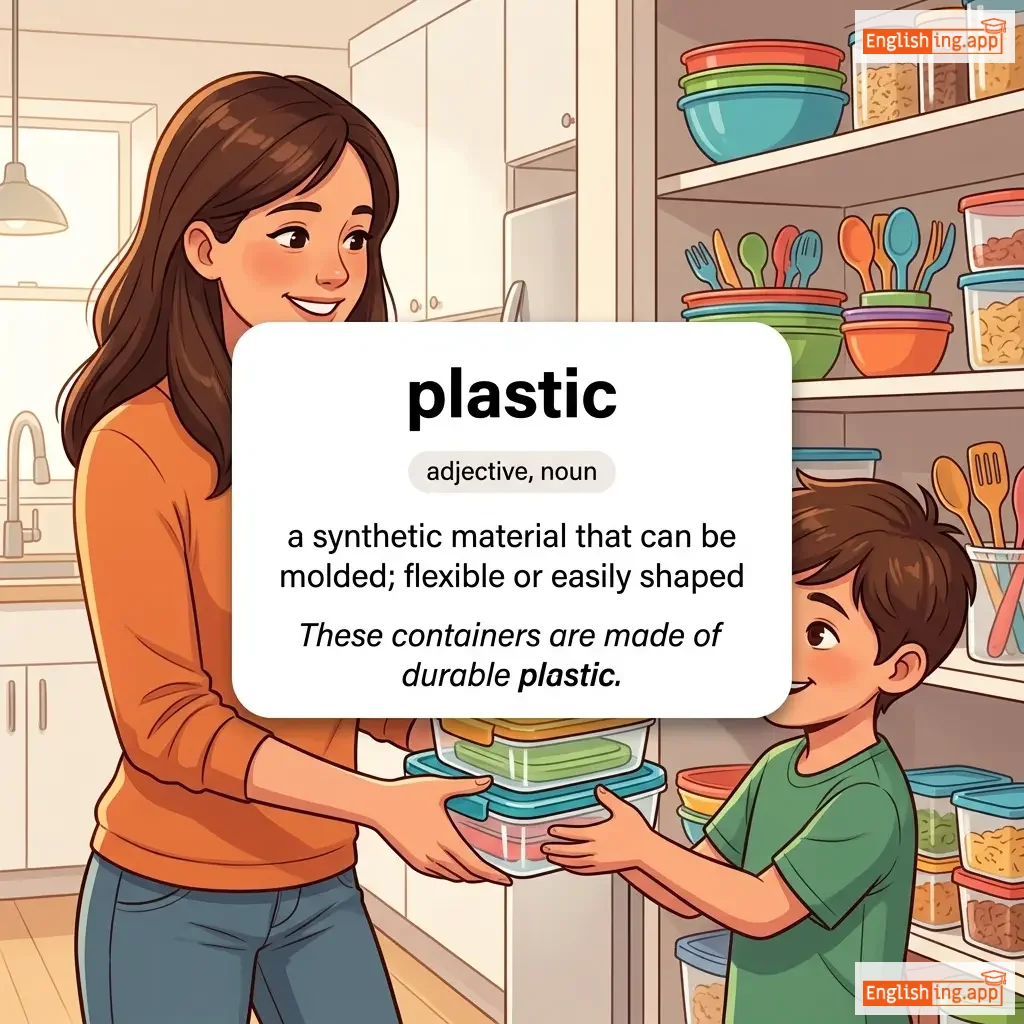
plastic definition card — visual illustration of the meaning
adjective, noun
/ˈplæstɪk/
塑料 (suliao)

a synthetic material that can be molded; flexible or easily shaped

"These containers are made of durable plastic."
"这些容器由耐用的塑料制成。" (Zhexie rongqi you naiyong de suliao zhicheng.)
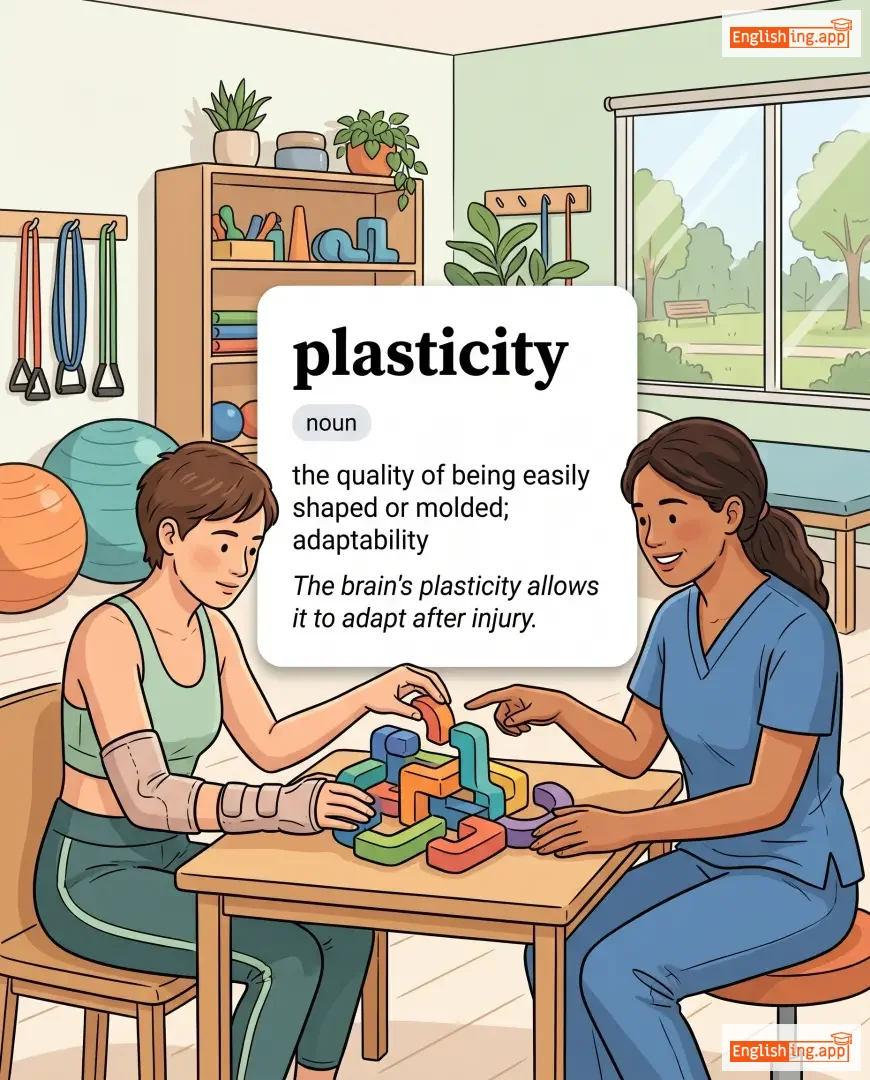
plasticity definition card — visual illustration of the meaning
noun
/plæsˈtɪsəti/
可塑性, 适应能力 (kesu xing, shiying nengli)

the quality of being easily shaped or molded; adaptability

"The brain's plasticity allows it to adapt after injury."

"大脑的可塑性使它在受伤后能够适应。" (Dainao de kesu xing shi ta zai shoushang hou nenggou shiying.)