词汇表

英语词汇词典 | 单词含义、定义和示例

noun
/ˌpɜːrtərˈbeɪʃn/
扰动 (raodong)

A state of anxiety, disturbance, or disorder.

"The announcement caused a perturbation in the financial markets."

"公告导致了金融市场的扰动。" (Gōnggào dǎozhìle jīnróng shìchǎng de raodong.)
adjective
/pərˈtɜːrbd/
不安的 (bù'ān de)

feeling anxious, unsettled, or disturbed

"He looked perturbed after hearing the bad news."

"他听到坏消息后看起来很不安。" (Tā tīngdào huài xiāoxī hòu kàn qǐlái hěn bù'ān.)
noun
/pɪt/
(kēng)

a large hole in the ground or a hollow area

"The workers dug a deep pit to build the foundation."

"工人们挖了一个深坑来建造地基。" (Gōngrénmen wāle yīgè shēn kēng lái jiànzào dìjī.)
Planet definition card — visual illustration of the meaning
noun
/ˈplænɪt/
行星 (xingxing)

a celestial body that orbits a star

"Earth is the third planet from the Sun."

"地球是离太阳第三远的行星。" (Dìqiú shì lí tàiyáng dì sān yuǎn de xíngxīng.)
plane definition card — visual illustration of the meaning
noun,verb
/pleɪn/
平面; 飞机; 平滑 (píngmiàn; fēijī; pínghuá)

a flat surface; an aircraft; to make smooth

"The carpenter used a tool to plane the wood."

"木匠用工具来平整木材。" (Mùjiàng yòng gōngjù lái píngzhěng mùcái.)
plan definition card — visual illustration of the meaning
noun
/plæn/
计划 (jihua)

a detailed proposal for doing or achieving something

"We need a clear plan to move forward."

"我们需要一个清晰的计划来推进。" (Wo men xuyao yige qingxi de jihua lai tuijin.)
noun,verb
/pleɪt/
辫子 (biàn zi)

a braid of hair or straw; to braid

"She decided to plait her hair before the party."

"她决定在派对前编织她的头发。" (Tā juédìng zài pàiduì qián biānzhī tā de tóufà.)
adjective
/ˈpleɪntɪv/
悲伤的, 哀求的 (bēishāng de, āiqiú de)

expressing sadness or sorrow

"He raised a plaintive cry for help."

"他发出了一个悲伤的求救声。" (Tā fāchūle yīgè bēishāng de qiújiù shēng.)
noun
/ˈpleɪntɪf/
原告 (yuángào)

a person who brings a case against another in a court of law

"The plaintiff filed a lawsuit against the company."

"原告对公司提起诉讼。" (Yuángào duì gōngsī tíqǐ sùsòng.)
adjective
/pleɪn/
简单的 (jiǎndān de)

simple or clear, without decoration or complexity

"She wore a plain white dress to the ceremony."

"她穿了一件简单的白色连衣裙参加了仪式。" (Tā chuānle yī jiàn jiǎndān de báisè liányīqún cānjiāle yíshì.)
plagued definition card — visual illustration of the meaning
verb
pleɪɡd
困扰 (kunrao)

Troubled or afflicted persistently by problems or difficulties.

"People are plagued by anxiety and depression."

"人们受到焦虑和抑郁的困扰。" (Renmen shoudao jiaolü he yiyu de kunrao.)
verb
/ˈpleɪdʒəraɪz/
剽窃 (piāo qiè)

to take someone else's work or ideas and present them as your own

"He was warned not to plagiarize his friend's essay."

"他被警告不要剽窃朋友的文章。" (Tā bèi jǐnggào bù yào piāoqiè péngyǒu de wénzhāng.)
noun
/ˈpleɪdʒərɪzəm/
剽窃 (piaoqie)

the practice of taking someone else's work or ideas and passing them off as one's own

"The student was expelled for committing plagiarism in his essay."

"学生因在论文中剽窃被开除。" (Xuesheng yin zai lunwen zhong piaoqie bei kaichu.)
adjective
/ˈplæsɪd/
平静的,安宁的 (píngjìng de, ānníng de)

calm and peaceful, not easily disturbed

"She had a placid expression despite the chaos around her."

"尽管周围一片混乱,她的表情依然平静。" (Jǐnguǎn zhōuwéi yīpiàn hùnluàn, tā de biǎoqíng yīrán píngjìng.)
noun
/ˈpleɪsmənt/
职位安排或分配 (zhiwei anpai huo fenpei)

the act of putting something or someone in a particular position or job

"The company arranged job placement for the graduates."

"公司为毕业生安排了工作岗位。" (Gongsi wei biye sheng anpai le gongzuo gangwei.)
noun
/pləˈsiːboʊ/
安慰剂 (ānwèijì)

a substance with no therapeutic effect, used as a control in testing new drugs

"The patient was given a placebo to compare the effect of the real drug."

"患者被给了一个安慰剂,以比较真实药物的效果。" (Huànzhě bèi gěile yīgè ānwèijì, yǐ bǐjiào zhēnshí yàowù de xiàoguǒ.)
place definition card — visual illustration of the meaning
noun, verb
/pleɪs/
地方 (dìfāng)

a particular position or location; to put something in a specific position

"She placed the books on the table."

"她把书放在桌子上。" (Tā bǎ shū fàng zài zhuōzi shàng.)
placate definition card — visual illustration of the meaning
verb
/pləˈkeɪt/
安抚 (ānfǔ)

to make someone less angry or hostile; to calm or soothe

"He tried to placate the angry customer with a refund."

"他试图通过退款安抚愤怒的客户。" (Tā shìtú tōngguò tuìkuǎn ānfǔ fènnù de kèhù.)
noun
/ˈpiːtsə/
比萨 (bisa)

a flat round bread baked with toppings such as cheese, tomato, and other ingredients

"We ordered a large pepperoni pizza for dinner."

"我们点了一份大号的意大利香肠比萨作为晚餐。" (Wo men dian le yi fen da hao de yi da li xiang chang bisa zuo wei wan can.)
noun
/ˈpɪk.səl/
数字图像或显示器的最小单位 (shùzì túxiàng huò xiǎnshì qì de zuìxiǎo dānwèi)

the smallest unit of a digital image or display

"The image is blurry because some pixels are missing."

"图像模糊,因为一些像素丢失了。" (Túxiàng móhú, yīnwèi yīxiē xiàngsù diūshīle.)
pivotal definition card — visual illustration of the meaning
adjective
/ˈpɪv.ə.tl/
至关重要的 (zhìguān zhòngyào de)

of crucial importance in relation to the development or success of something else

"Her role was pivotal in the success of the project."

"她的角色对项目的成功至关重要。" (Tā de juésè duì xiàngmù de chénggōng zhìguān zhòngyào.)
pivot definition card — visual illustration of the meaning
noun/verb
ˈpɪv.ət
战略转变,中心,过程改变 (zhanlüe zhuanbian, zhongxin, guocheng gaibian)

A significant change in business strategy or direction.

"The company decided to pivot its business strategy."

"公司决定调整其商业策略。" (Gongsi jueding tiaozheng qi shangye zhanlüe.)
noun
/ˈpɪti/
同情 (tongqing)

the feeling of sorrow and compassion caused by the suffering and misfortune of others

"It’s a pity that she couldn’t come to the party."

"她没能来参加聚会,真是可惜。" (Ta mei neng lai canjia juhui, zhenshi kexi.)
noun
/ˈpɪt.əns/
微薄收入 (wēibó shōurù)

a very small or inadequate amount of money

"She worked long hours for a mere pittance."

"她为了微薄收入工作了很长时间。" (Tā wèile wēibó shōurù gōngzuòle hěn cháng shíjiān.)
adjective
/ˈpɪt.i.ləs/
无情 (wúqíng)

showing no pity or compassion; cruel

"The pitiless ruler ignored the suffering of his people."

"无情的统治者忽视了他人民的痛苦。" (Wúqíng de tǒngzhì zhě hūshìle tā rénmín de tòngkǔ.)
adjective
/ˈpɪt.i.fəl/
可悲的, 哀伤的, 非常微小 (kě bēi de, āi shāng de, fēi cháng wēi xiǎo)

deserving or arousing pity; very small or inadequate

"The team's performance was pitiful compared to last year."

"与去年相比,团队的表现可悲。" (Yǔ qùnián xiāng bǐ, tuánduì de biǎoxiàn kě bēi.)
adjective
/ˈpɪt.i.ə.bəl/
可怜的 (kělián de)

deserving sympathy or compassion

"The stray dog looked pitiable in the rain."

"那只流浪狗在雨中看起来十分可怜。" (Nà zhī liúlàng gǒu zài yǔ zhōng kàn qǐlái shífēn kělián.)
adjective
/ˈpɪθ.i/
简洁而有意义 (jianjie er you yiyi)

concise and meaningful; full of substance

"She gave a pithy comment that summarized the issue perfectly."

"她给出了一个简洁的评论,完美地总结了问题。" (Ta gei chule yi ge jianjie de pinglun, wanmei de zongjie le wenti.)
noun
/pɪθ/
要点,精髓 (yaodian, jingsui)

the essential or central part of something

"The pith of his argument was that honesty matters most."

"他论点的要点是诚实最为重要。" (Ta lundian de yaodian shi chengshi zui wei zhongyao.)
noun
/ˈpɪt.fɔːl/
陷阱,困难 (xianjing, kunnan)

a hidden or unexpected danger or difficulty

"Investors must be aware of the pitfalls of the market."

"投资者必须意识到市场中的陷阱。" (Tóuzī zhě bìxū yìshí dào shìchǎng zhōng de xiànjǐng.)
adjective
/ˈpɪtiəs/
可悲的,令人同情的 (kě bēi de, lìng rén tóng qíng de)

deserving or arousing pity; sad and pathetic

"The stray dog looked up with a piteous expression."
"流浪狗用一种可悲的表情抬头看着。" (Liúlàng gǒu yòng yī zhǒng kěbēi de biǎoqíng tái tóu kànzhe.)
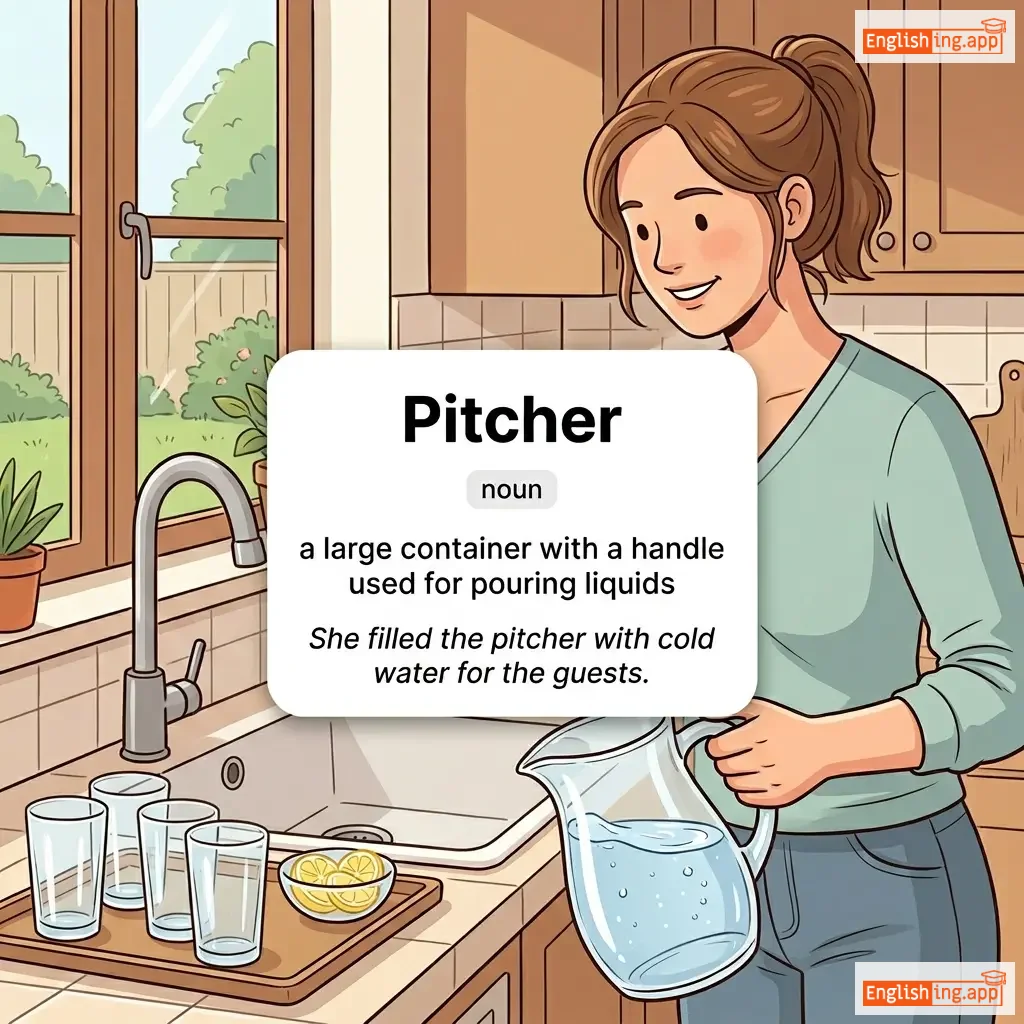
Pitcher definition card — visual illustration of the meaning
noun
/ˈpɪtʃər/
水壶 (shuǐhú)

a large container with a handle used for pouring liquids

"She filled the pitcher with cold water for the guests."

"她为客人把水壶装满了冷水。" (Tā wèi kèrén bǎ shuǐhú zhuāngmǎnle lěngshuǐ.)
noun
/pɪtʃ/
音调,投掷 (yīn diào, tóu zhī)

the quality of a sound; the level or degree of intensity; a throw or toss

"The singer's pitch was perfect during the performance."
"歌手的音调在表演中完美无瑕。" (Gēshǒu de yīndiào zài biǎoyǎn zhōng wánměi wúxiá.)
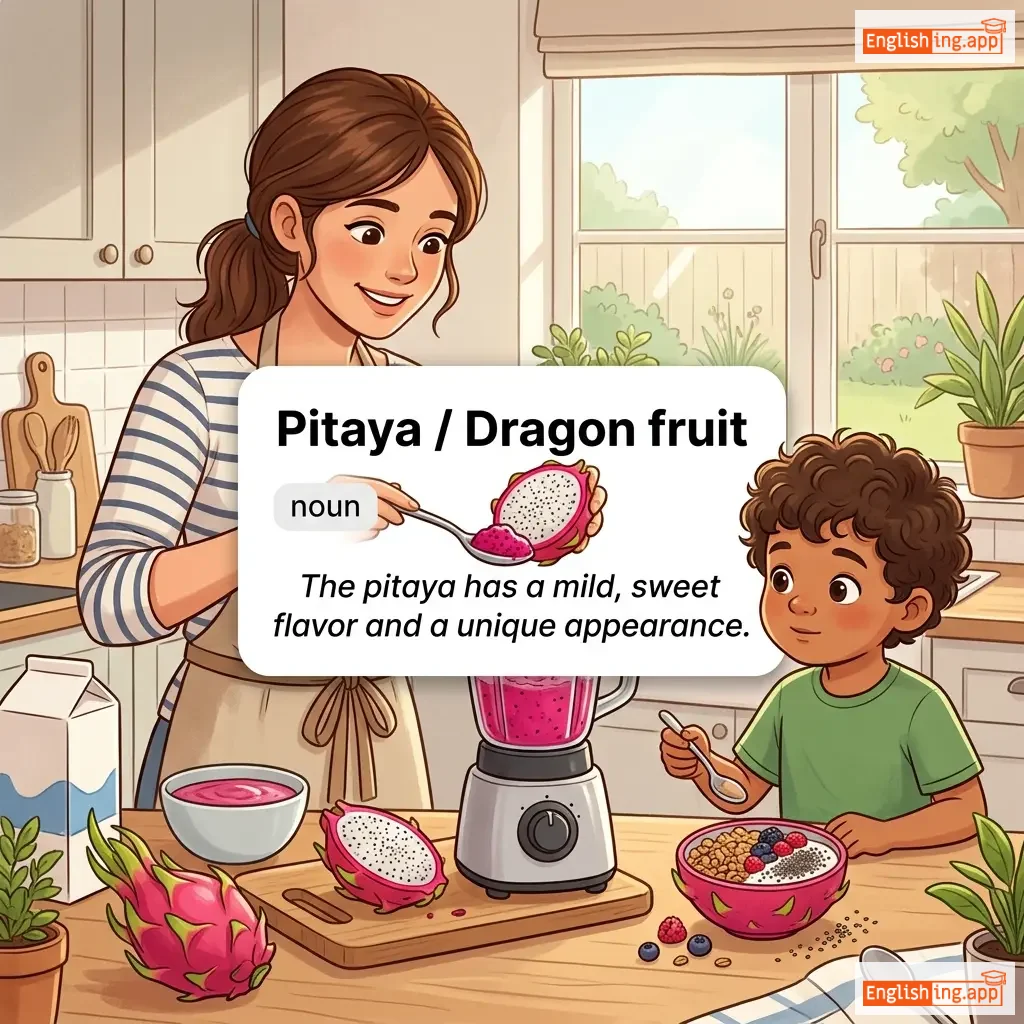
Pitaya / Dragon fruit definition card — visual illustration of the meaning
noun
/pɪˈtaɪə/
火龙果 (huǒ lóng guǒ)

a tropical fruit with bright pink or red skin and white flesh speckled with black seeds

"The pitaya has a mild, sweet flavor and a unique appearance."

"火龙果味道温和、甜美,外形独特。" (huǒ lóng guǒ wèidào wēnhé, tiánměi, wàixíng dútè.)
noun
/pɪn/
别针 (biezhen)

a small thin piece of metal used to fasten or hold things together

"She used a pin to attach the note to the board."

"她用别针把纸条固定在黑板上。" (Ta yong biezhen ba zhitiaoguding zai heiban shang.)
noun
/ˈpɪnjən/
一个小齿轮或鸟翅膀的外部部分;限制或使之不能动弹 (yīgè xiǎo chǐlún huò niǎo chìbǎng de wàibù bùfen; xiànzhì huò shǐ zhī bùnéng dòngtán)

a small gear or the outer part of a bird's wing; to restrain or immobilize

"The bird's pinion was injured, preventing it from flying."

"鸟的翅膀受伤,无法飞行。" (Niǎo de chìbǎng shòushāng, wúfǎ fēixíng.)
noun
/ˈpaɪnˌæpəl/
菠萝 (boluo)

a tropical fruit with a rough spiky skin, sweet yellow flesh, and a leafy crown

"She added fresh pineapple to the fruit salad."
"她把新鲜的菠萝加进了水果沙拉。" (ta ba xinxian de boluo jia jin le shuiguo shala)
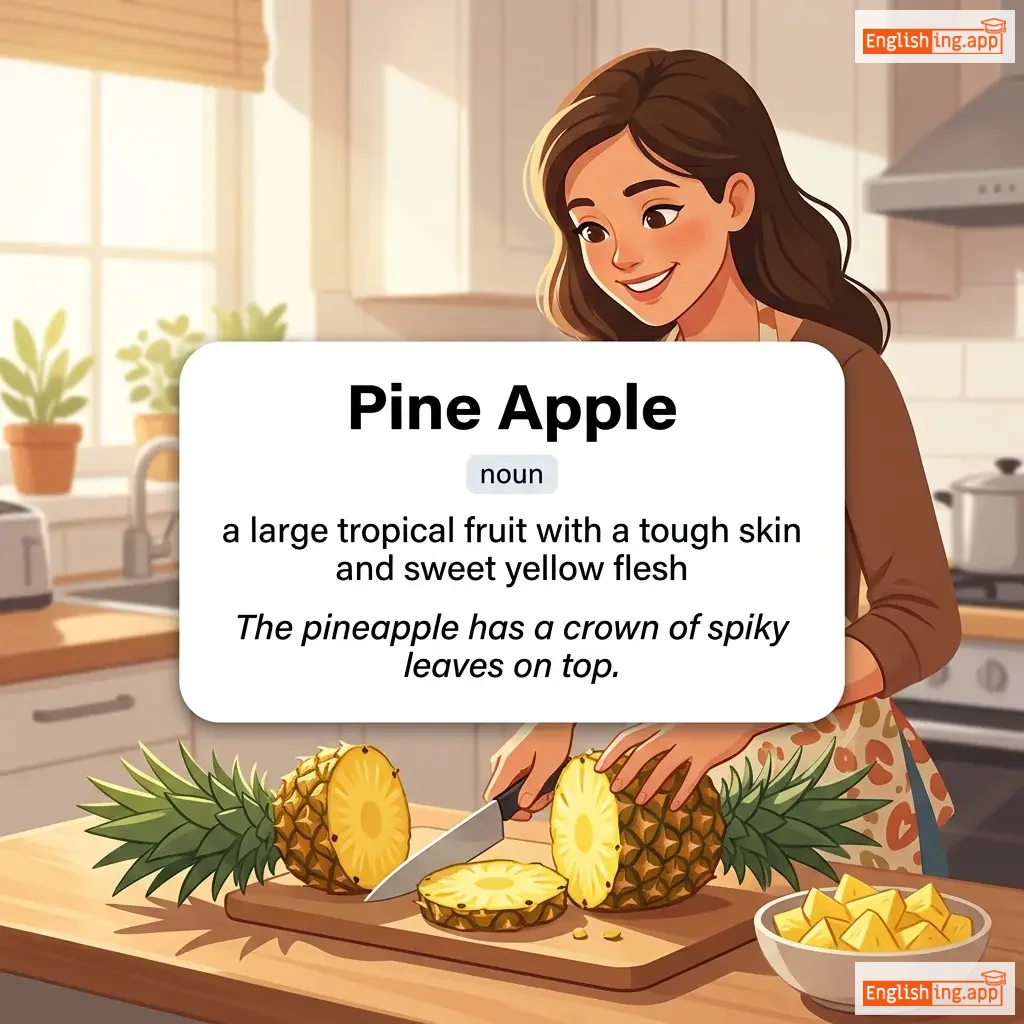
Pine Apple definition card — visual illustration of the meaning
noun
/ˈpaɪn.æp.əl/
菠萝 (boluo)

a large tropical fruit with a tough skin and sweet yellow flesh

"The pineapple has a crown of spiky leaves on top."

"菠萝顶部有一冠刺叶。" (Bōluó dǐngbù yǒu yī guān cì yè)
verb
/paɪn/
渴望 (kewang)

to long intensely for something or someone; to suffer from longing

"He pined for his hometown after moving abroad."

"他搬到国外后,非常想念他的家乡。" (Ta ban dao guowai hou, feichang xiangnian tade jiaxiang.)
noun
/ˈpɪntʃərz/
钳子 (qiánzi)

a tool used for gripping or squeezing objects

"Use the pinchers to remove the hot coal safely."

"使用拼钳安全地取下热煤。" (Shǐyòng pīnqián ānquán de qǔxià rè méi.)
verb
/pɪntʃ/
(nie)

to squeeze tightly between the fingers; to take a small amount

"She pinched a bit of salt into the soup."

"她在汤里放了一点盐。" (Ta zai tang li fang le yi dian yan.)
Pincers definition card — visual illustration of the meaning
noun
/ˈpɪnsərz/
钳子 (qianzi)

a gripping tool with two arms used for holding or pulling objects

"He used pincers to remove the hot nail from the wood."

"他用钳子从木头中取出热钉。" (Tā yòng qiánzi cóng mùtou zhōng qǔchū rè dīng.)
noun/verb
/ˈpɪləri/
公开惩罚装置 (gōngkāi chéngfá zhuāngzhì)

a device for publicly punishing someone / to expose to public ridicule

"The corrupt official was placed in the pillory for the town to jeer at."

"腐败的官员被放在皮洛里里让市民嘲笑。" (fǔbài de guānyuán bèi fàng zài pílùlǐ lǐ ràng shìmín cháoxiào.)
🏴‍☠️

pillage (pílèjí)

verb
/ˈpɪlɪdʒ/
洗劫 (xǐjié)

to rob or plunder a place, especially during war

"The invading army pillaged the village and took all valuables."

"入侵军队洗劫了村庄,拿走了所有贵重物品。" (Rùqīn jūnduì xǐjié le cūnzhuāng, ná zǒu le suǒyǒu guìzhòng wùpǐn.)
noun
/ˈpɪlər/
支柱 (zhīzhù)

a strong vertical support or mainstay of a structure or system

"The ancient temple was supported by massive stone pillars."
"古老的庙宇由巨大的石柱支撑。" (gǔlǎo de miàoyǔ yóu jùdà de shízhù zhīchēng.)
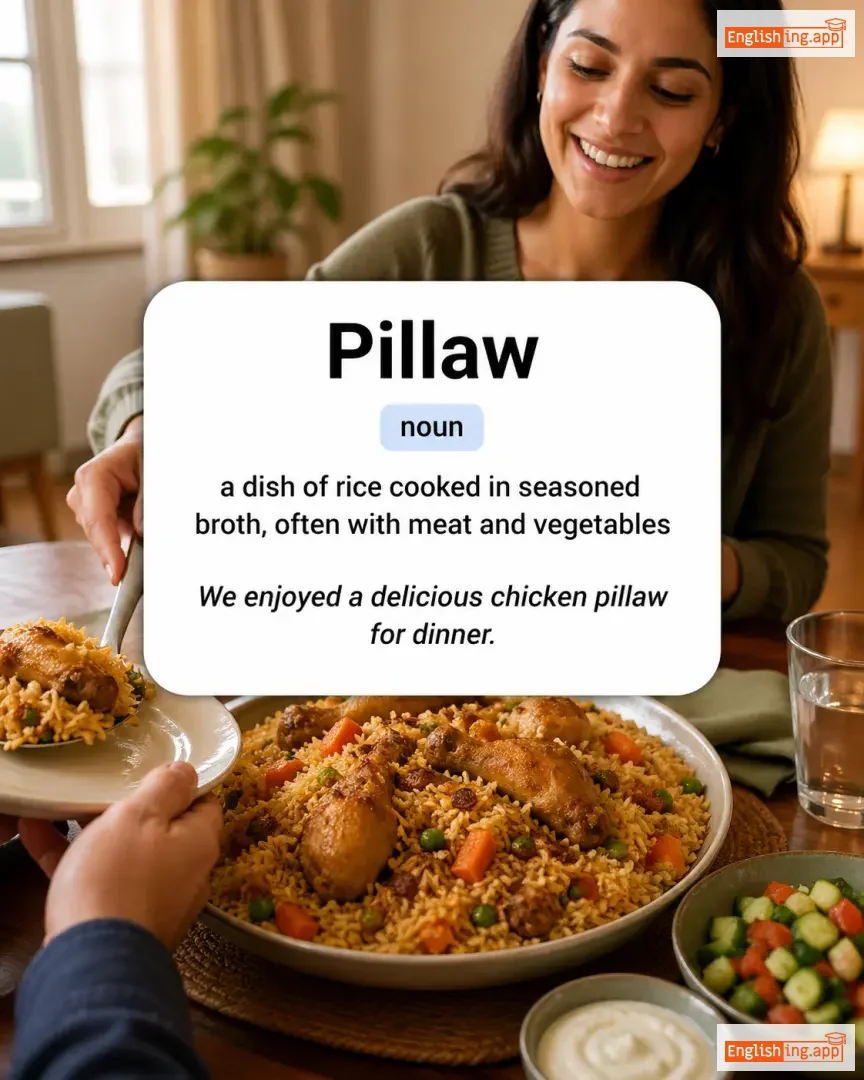
Pillaw definition card — visual illustration of the meaning
noun
/pɪˈlɑːf/
皮拉夫 (pilaf)

a dish of rice cooked in seasoned broth, often with meat and vegetables

"We enjoyed a delicious chicken pillaw for dinner."

"我们享用了美味的鸡肉皮拉夫作为晚餐。" (wǒmen xiǎngyòngle měiwèi de jīròu pílāf zuòwéi wǎncān.)
Pilot definition card — visual illustration of the meaning
noun/verb
/ˈpaɪlət/
飞行员 (feixingyuan)

a person who operates an aircraft / to guide or lead through a trial

"She piloted the plane safely through the storm."

"她安全地驾驶飞机穿过风暴。" (Ta anquan de jiashi feiji chuanguo fengbao.)
noun
/ˈpɪm.pəl/
痘痘 (dòu dòu)

a small, inflamed elevation of the skin; a spot on the skin, especially on the face

"She was embarrassed about the pimple on her forehead."

"她因额头上的痘痘而感到尴尬。" (Tā yīn é tóu shàng de dòu dòu ér gǎndào gāngà.)
adjective
/pɪŋk/
粉红色 (fenhongse)

a color between red and white

"She wore a pink dress to the party."

"她在派对上穿了一件粉红色的裙子。" (Tā zài pàiduì shàng chuānle yī jiàn fěnhóngsè de qúnzi.)
Pillow definition card — visual illustration of the meaning
noun
/ˈpɪloʊ/
枕头 (zhěntou)

a soft cushion filled with material used to support the head while sleeping or resting

"She placed her head on the soft pillow and fell asleep quickly."

"她把头放在柔软的枕头上,快速入睡。" (Tā bǎ tóu fàng zài róuruǎn de zhěntou shàng, kuàisù rùshuì.)