Vocabulaires

Découvrez, apprenez et maîtrisez le vocabulaire anglais

noun
/ˌpɜːrtərˈbeɪʃn/
perturbation (perturbation)

A state of anxiety, disturbance, or disorder.

"The announcement caused a perturbation in the financial markets."

"L'annonce a causé une perturbation sur les marchés financiers." (L'annonce a cause une perturbation sur les marches financiers.)
adjective
/pərˈtɜːrbd/
perturbé (perturbe)

feeling anxious, unsettled, or disturbed

"He looked perturbed after hearing the bad news."

"Il semblait perturbé après avoir entendu les mauvaises nouvelles." (Il semblait perturbe apres avoir entendu les mauvaises nouvelles.)
🕳️

pit (pit)

noun
/pɪt/
trou (trou)

a large hole in the ground or a hollow area

"The workers dug a deep pit to build the foundation."

"Les travailleurs ont creusé un grand trou pour construire les fondations." (Les travailleurs ont creusé un grand trou pour construire les fondations.)
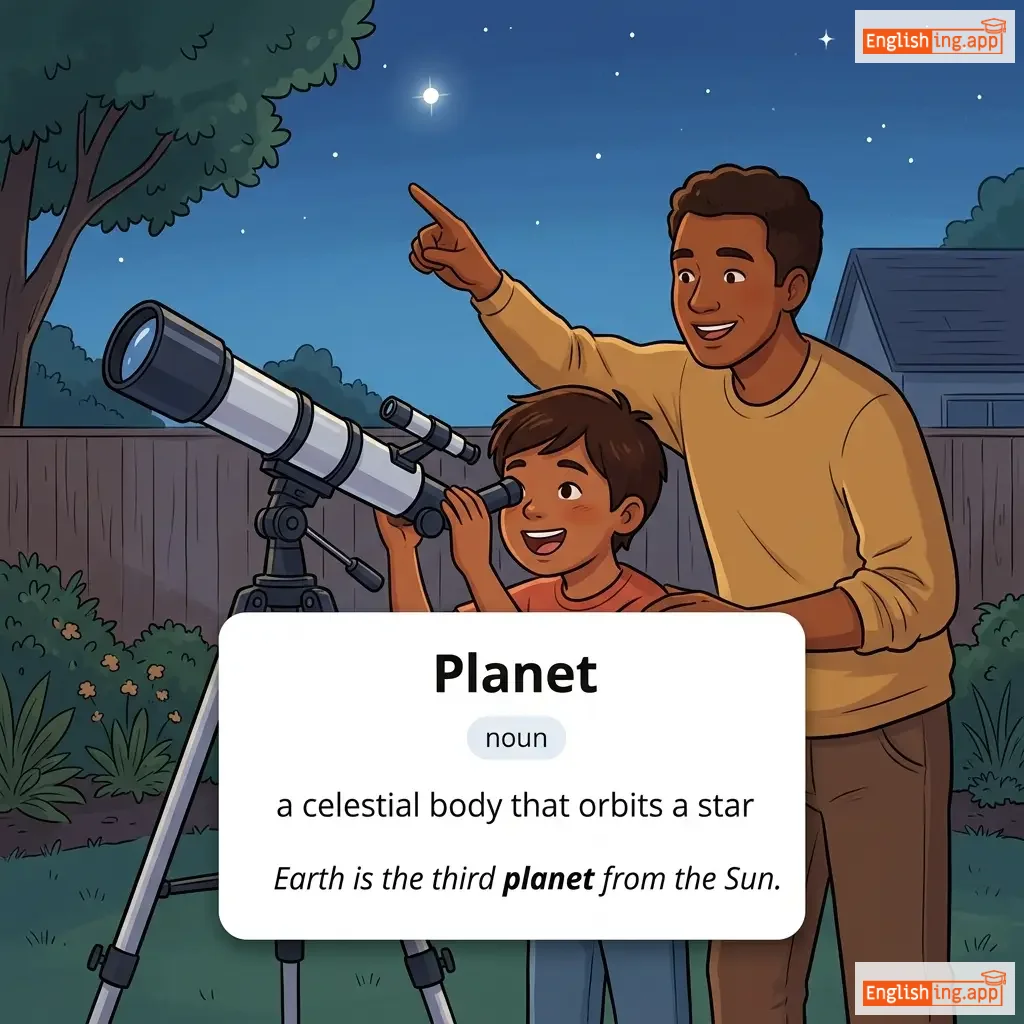
Planet definition card — visual illustration of the meaning
noun
/ˈplænɪt/
planète (planète)

a celestial body that orbits a star

"Earth is the third planet from the Sun."

"La Terre est la troisième planète du Soleil." (La Terre est la troisième planète du Soleil.)
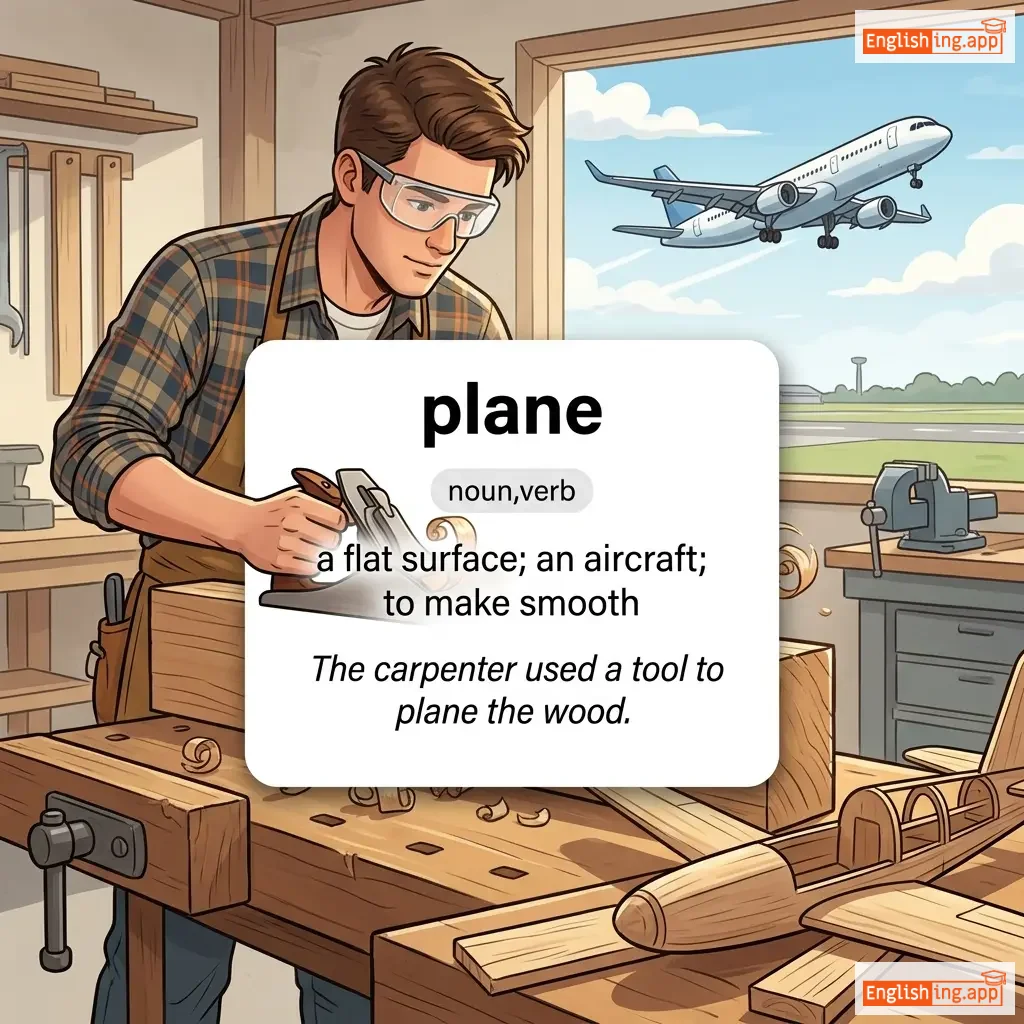
plane definition card — visual illustration of the meaning
noun,verb
/pleɪn/
surface plane; avion; aplanir (surface plane; avion; aplanir)

a flat surface; an aircraft; to make smooth

"The carpenter used a tool to plane the wood."

"Le menuisier a utilisé un outil pour aplanir le bois." (Le menuisier a utilise un outil pour aplanir le bois.)
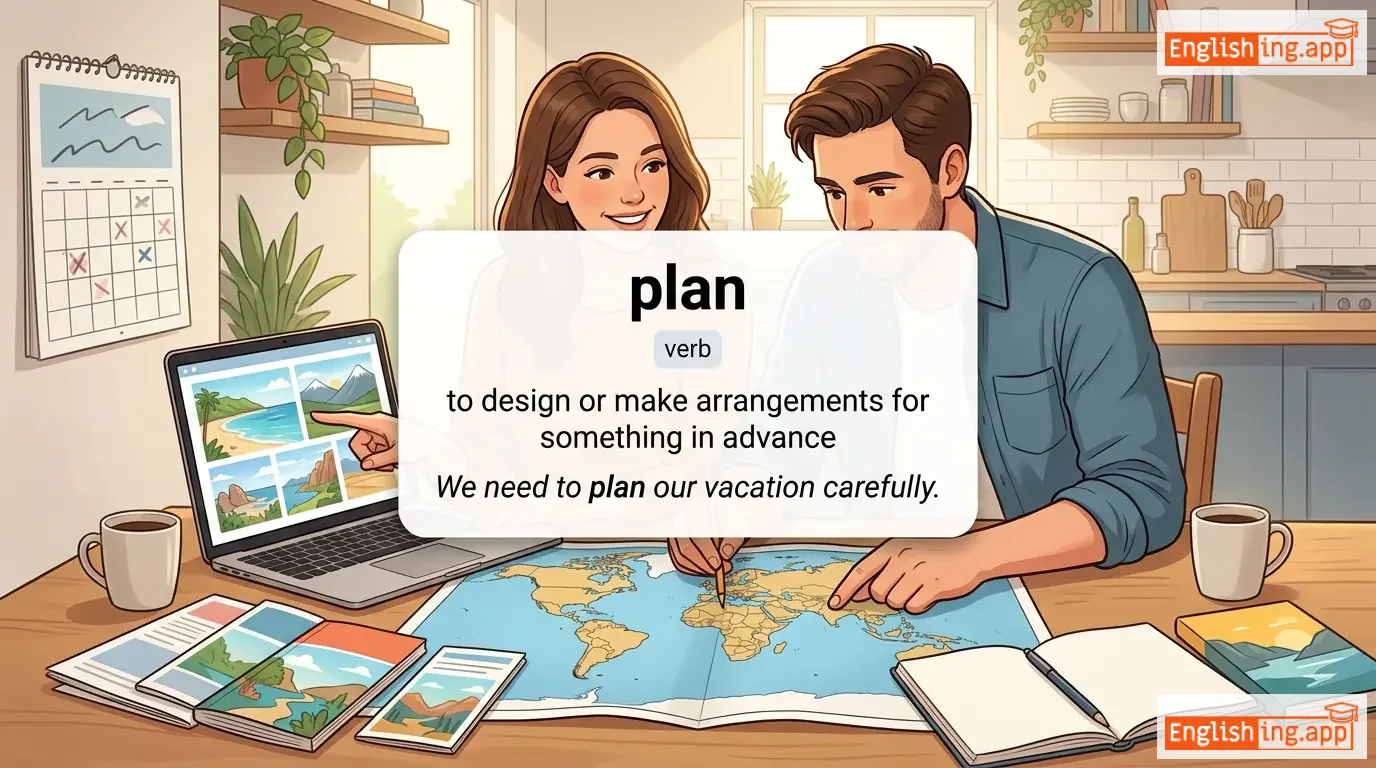
plan definition card — visual illustration of the meaning
noun
/plæn/
plan (plan)

a detailed proposal for doing or achieving something

"We need a clear plan to move forward."

"Nous avons besoin d'un plan clair pour avancer." (Nous avons besoin d'un plan clair pour avancer.)
noun,verb
/pleɪt/
tresse (tresse)

a braid of hair or straw; to braid

"She decided to plait her hair before the party."

"Elle a décidé de tresser ses cheveux avant la fête." (Elle a décidé de tresser ses cheveux avant la fête.)
adjective
/ˈpleɪntɪv/
triste, plaintif (triste, plaintif)

expressing sadness or sorrow

"He raised a plaintive cry for help."

"Il a poussé un cri plaintif à l'aide." (Il a pousse un cri plaintif a l'aide.)
noun
/ˈpleɪntɪf/
plaignant (plaignant)

a person who brings a case against another in a court of law

"The plaintiff filed a lawsuit against the company."

"Le plaignant a déposé une plainte contre l'entreprise." (Le plaignant a déposé une plainte contre l'entreprise.)
adjective
/pleɪn/
simple (simple)

simple or clear, without decoration or complexity

"She wore a plain white dress to the ceremony."

"Elle portait une robe blanche simple pour la cérémonie." (Elle portait une robe blanche simple pour la cérémonie.)
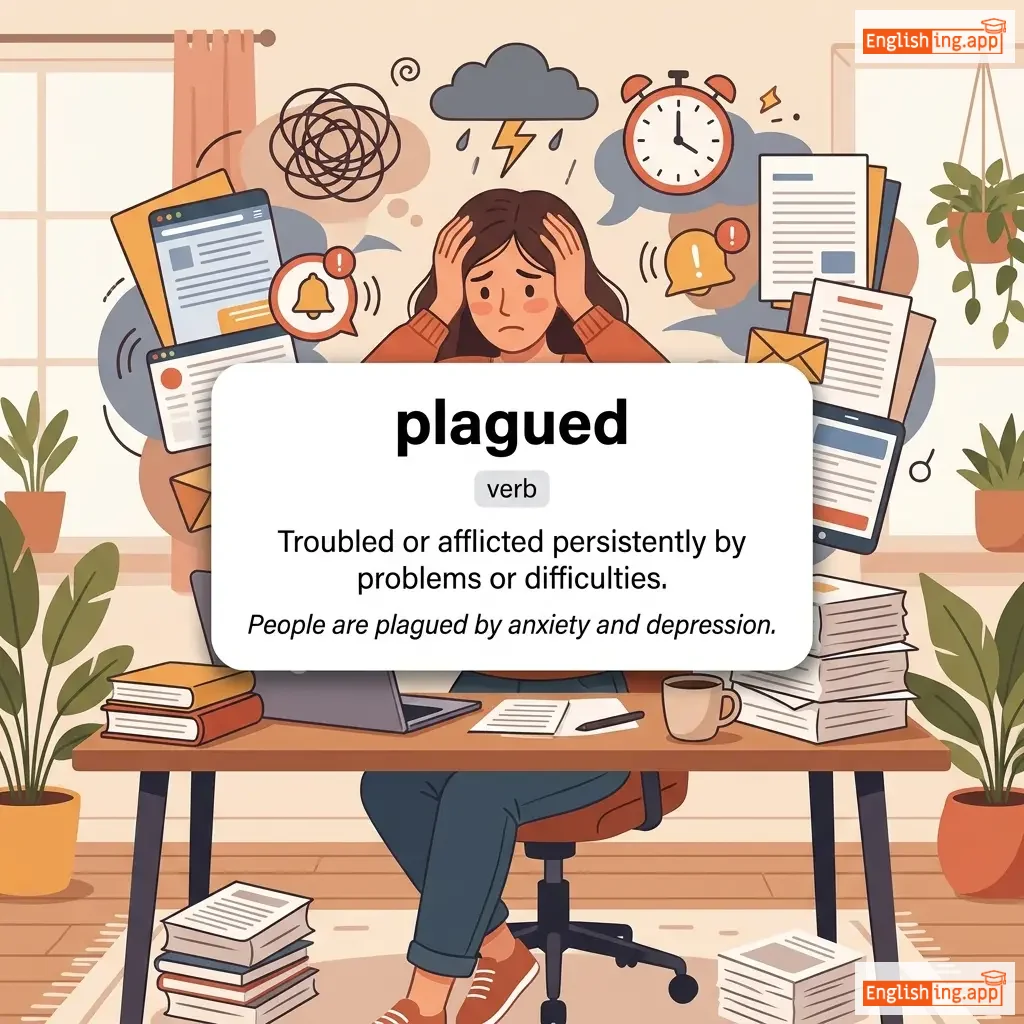
plagued definition card — visual illustration of the meaning
verb
pleɪɡd
affligé (afflige)

Troubled or afflicted persistently by problems or difficulties.

"People are plagued by anxiety and depression."

"Les gens sont affligés par l'anxiété et la dépression." (Les gens sont affligés par l'anxiété et la dépression.)
verb
/ˈpleɪdʒəraɪz/
plagier (plagier)

to take someone else's work or ideas and present them as your own

"He was warned not to plagiarize his friend's essay."

"Il a été averti de ne pas plagier l'essai de son ami." (Il a été averti de ne pas plagier l'essai de son ami.)
noun
/ˈpleɪdʒərɪzəm/
plagiat (plagiat)

the practice of taking someone else's work or ideas and passing them off as one's own

"The student was expelled for committing plagiarism in his essay."

"L'étudiant a été expulsé pour avoir commis du plagiat dans son essai." (L'etudiant a ete expulse pour avoir commis du plagiat dans son essai.)
adjective
/ˈplæsɪd/
serein, calme (serein, calme)

calm and peaceful, not easily disturbed

"She had a placid expression despite the chaos around her."

"Elle avait une expression sereine malgré le chaos autour d'elle." (Elle avait une expression sereine malgré le chaos autour d'elle.)
noun
/ˈpleɪsmənt/
placement ou affectation (placement ou affectation)

the act of putting something or someone in a particular position or job

"The company arranged job placement for the graduates."

"L'entreprise a organisé le placement des diplômés." (L'entreprise a organisé le placement des diplômés.)
noun
/pləˈsiːboʊ/
placebo (placebo)

a substance with no therapeutic effect, used as a control in testing new drugs

"The patient was given a placebo to compare the effect of the real drug."

"Le patient a reçu un placebo pour comparer l'effet du médicament réel." (Le patient a reçu un placebo pour comparer l'effet du médicament réel.)
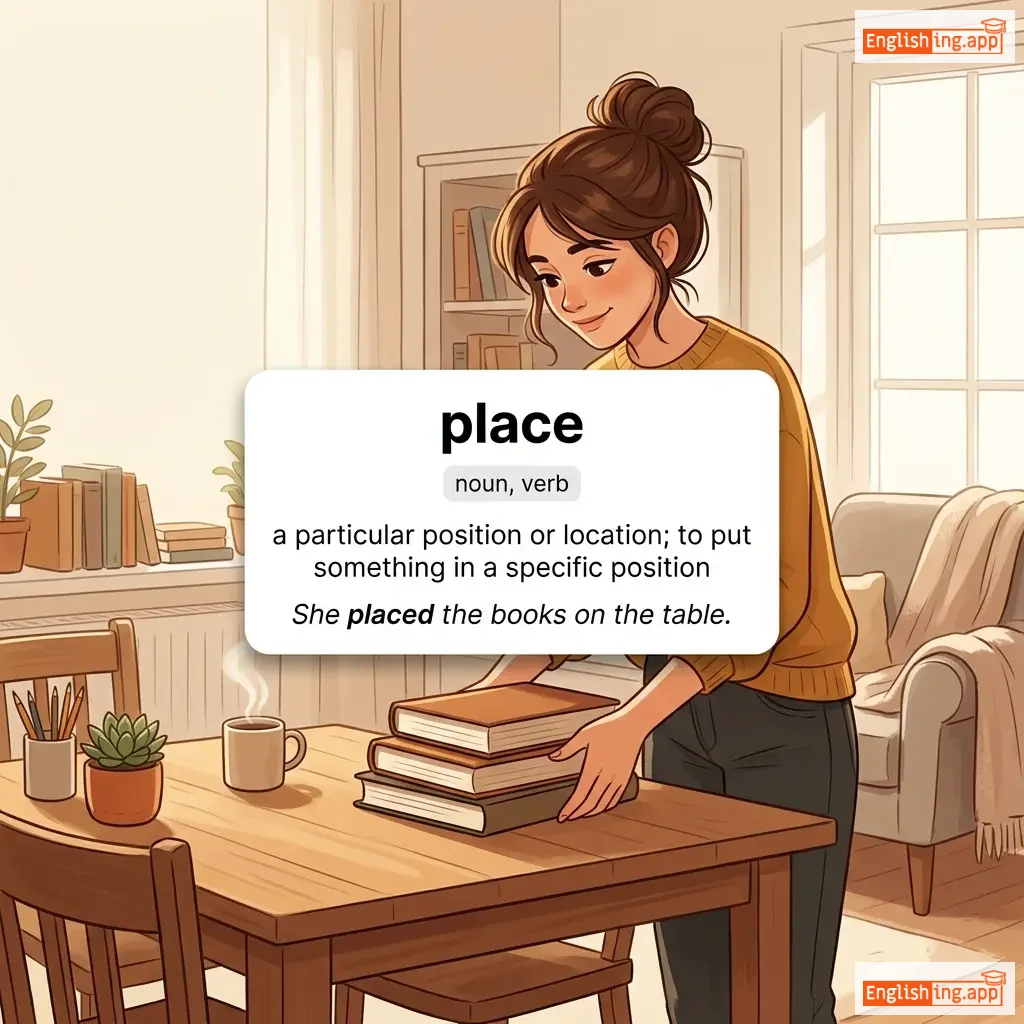
place definition card — visual illustration of the meaning
noun, verb
/pleɪs/
endroit (endroit)

a particular position or location; to put something in a specific position

"She placed the books on the table."

"Elle a placé les livres sur la table." (Elle a place les livres sur la table.)
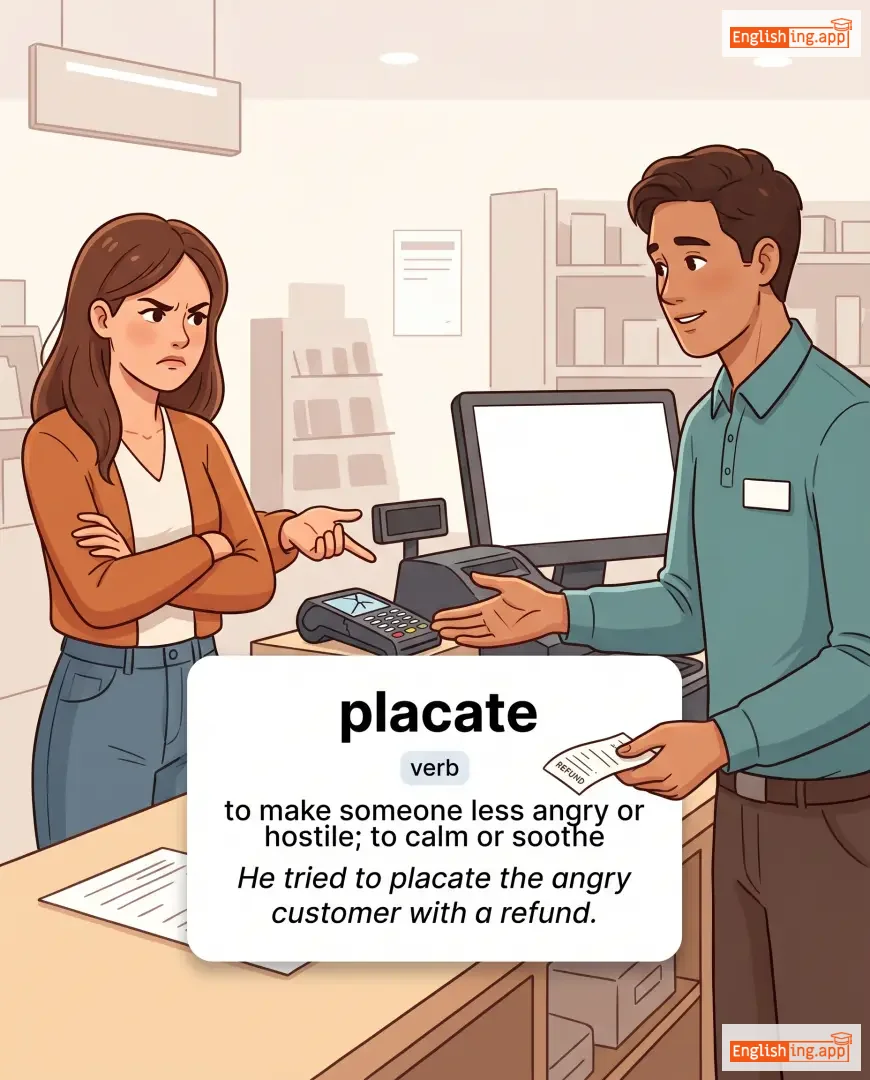
placate definition card — visual illustration of the meaning
verb
/pləˈkeɪt/
calmer (calmer)

to make someone less angry or hostile; to calm or soothe

"He tried to placate the angry customer with a refund."

"Il a essayé de calmer le client en colère avec un remboursement." (Il a essayé de calmer le client en colère avec un remboursement.)
noun
/ˈpiːtsə/
pizza (pizza)

a flat round bread baked with toppings such as cheese, tomato, and other ingredients

"We ordered a large pepperoni pizza for dinner."

"Nous avons commandé une grande pizza pepperoni pour le dîner." (Nous avons commande une grande pizza pepperoni pour le diner.)
noun
/ˈpɪk.səl/
l'unité la plus petite d'une image ou d'un affichage numérique (l'unite la plus petite d'une image ou d'un affichage numerique)

the smallest unit of a digital image or display

"The image is blurry because some pixels are missing."

"L'image est floue car certains pixels sont manquants." (L'image est floue car certains pixels sont manquants.)
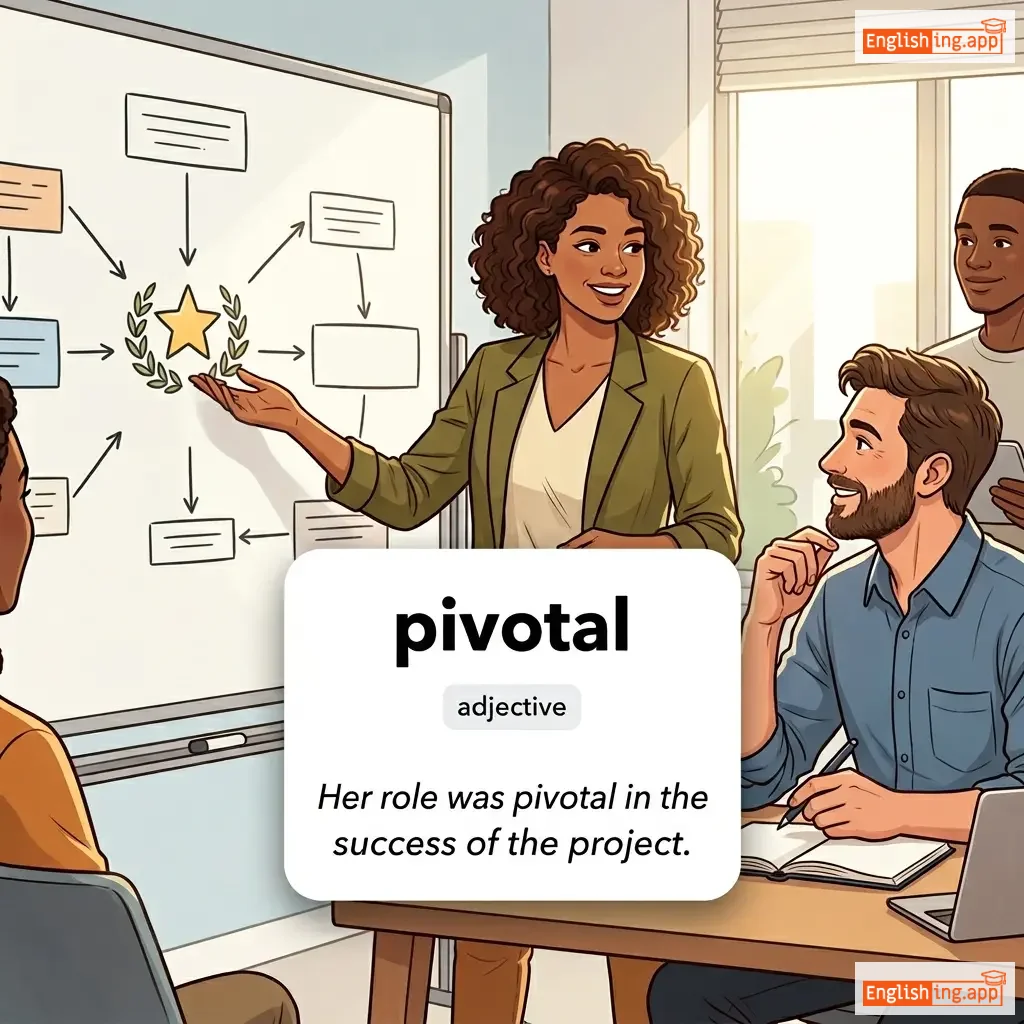
pivotal definition card — visual illustration of the meaning
adjective
/ˈpɪv.ə.tl/
crucial ou de grande importance (crucial ou de grande importance)

of crucial importance in relation to the development or success of something else

"Her role was pivotal in the success of the project."

"Son rôle a été crucial dans le succès du projet." (Son role a ete crucial dans le succes du projet.)
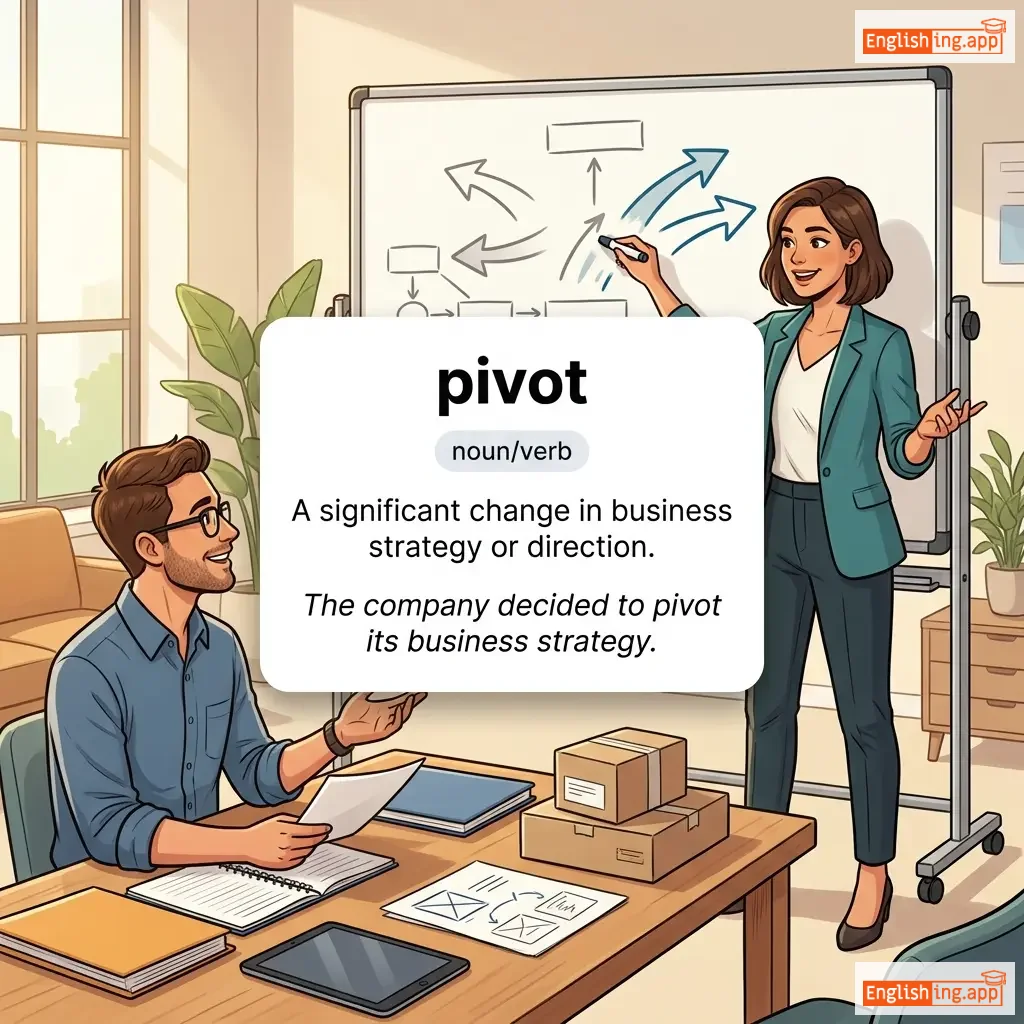
pivot definition card — visual illustration of the meaning
noun/verb
ˈpɪv.ət
changement stratégique, pivot, changement de processus (changement strategique, pivot, changement de processus)

A significant change in business strategy or direction.

"The company decided to pivot its business strategy."

"L'entreprise a décidé de modifier sa stratégie commerciale." (L'entreprise a decide de modifier sa strategie commerciale.)
noun
/ˈpɪti/
pitié (pitie)

the feeling of sorrow and compassion caused by the suffering and misfortune of others

"It’s a pity that she couldn’t come to the party."

"C'est dommage qu'elle n'ait pas pu venir à la fête." (C'est dommage qu'elle n'ait pas pu venir à la fête.)
noun
/ˈpɪt.əns/
pitance (pitance)

a very small or inadequate amount of money

"She worked long hours for a mere pittance."

"Elle a travaillé de longues heures pour une simple pitance." (Elle a travaillé de longues heures pour une simple pitance.)
adjective
/ˈpɪt.i.ləs/
impitoyable (impitoyable)

showing no pity or compassion; cruel

"The pitiless ruler ignored the suffering of his people."

"Le souverain impitoyable a ignoré la souffrance de son peuple." (Le souverain impitoyable a ignoré la souffrance de son peuple.)
adjective
/ˈpɪt.i.fəl/
pitoyable, lamentable, très faible (pitoyable, lamentable, tres faible)

deserving or arousing pity; very small or inadequate

"The team's performance was pitiful compared to last year."

"La performance de l'équipe était pitoyable par rapport à l'année dernière." (La performance de l'equipe etait pitoyable par rapport a l'annee derniere.)
adjective
/ˈpɪt.i.ə.bəl/
pitoyable (pitoyable)

deserving sympathy or compassion

"The stray dog looked pitiable in the rain."

"Le chien errant avait l'air pitoyable sous la pluie." (Le chien errant avait l'air pitoyable sous la pluie.)
adjective
/ˈpɪθ.i/
concis et significatif (concis et significatif)

concise and meaningful; full of substance

"She gave a pithy comment that summarized the issue perfectly."

"Elle a fait un commentaire concis qui résumait parfaitement la question." (Elle a fait un commentaire concis qui résumait parfaitement la question.)
noun
/pɪθ/
partie essentielle, noyau (partie essentielle, noyau)

the essential or central part of something

"The pith of his argument was that honesty matters most."

"La partie essentielle de son argument était que l'honnêteté est la plus importante." (La partie essentielle de son argument était que l'honnêteté est la plus importante.)
noun
/ˈpɪt.fɔːl/
piège, difficulté (piege, difficulte)

a hidden or unexpected danger or difficulty

"Investors must be aware of the pitfalls of the market."

"Les investisseurs doivent être conscients des pièges du marché." (Les investisseurs doivent etre conscients des pieges du marche.)
adjective
/ˈpɪtiəs/
pitoyable, déplorable (pitoyable, deplorable)

deserving or arousing pity; sad and pathetic

"The stray dog looked up with a piteous expression."

"Le chien errant regardait vers le haut avec une expression pitoyable." (Le chien errant regardait vers le haut avec une expression pitoyable.)
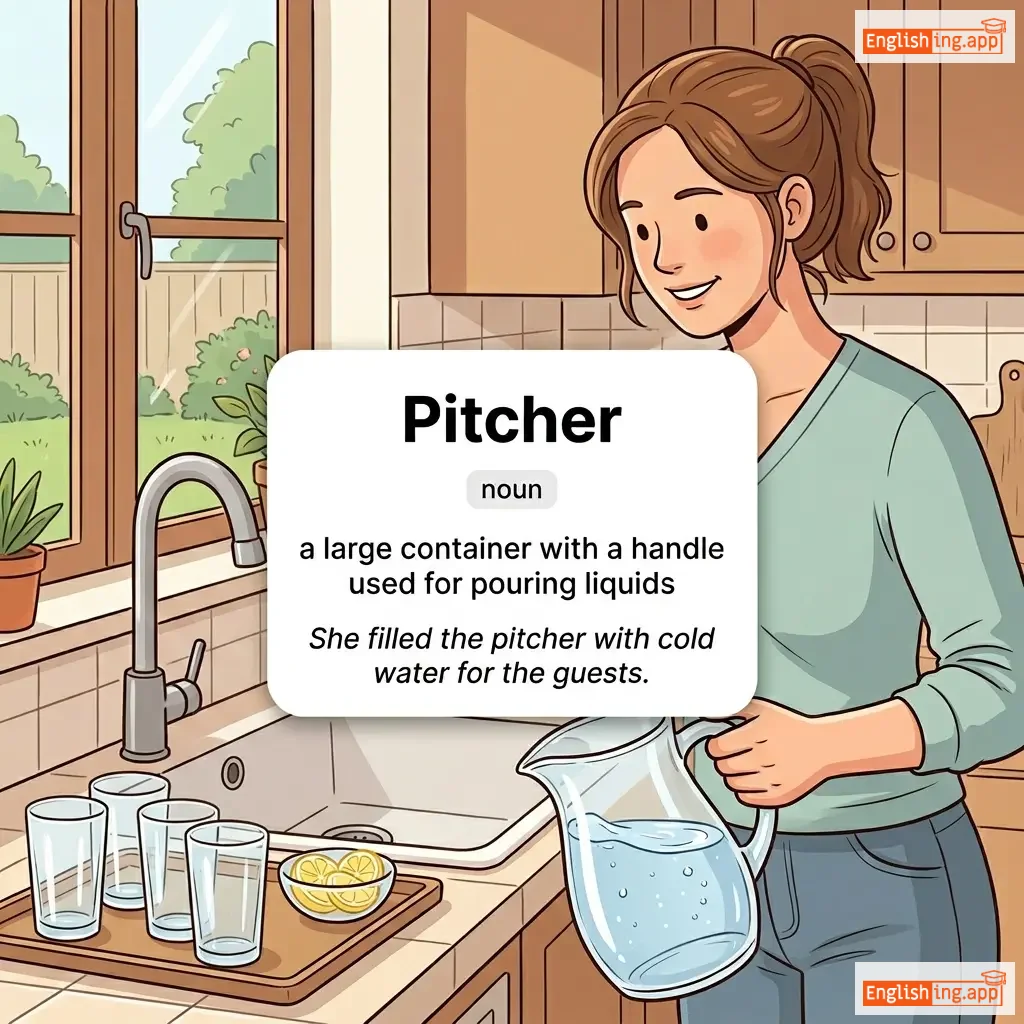
Pitcher definition card — visual illustration of the meaning
noun
/ˈpɪtʃər/
carafe (carafe)

a large container with a handle used for pouring liquids

"She filled the pitcher with cold water for the guests."

"Elle a rempli la carafe d'eau froide pour les invités." (Elle a rempli la carafe d'eau froide pour les invités.)
noun
/pɪtʃ/
hauteur de ton, lancer (hauteur de ton, lancer)

the quality of a sound; the level or degree of intensity; a throw or toss

"The singer's pitch was perfect during the performance."

"La hauteur de ton du chanteur était parfaite pendant la performance." (La hauteur de ton du chanteur etait parfaite pendant la performance.)
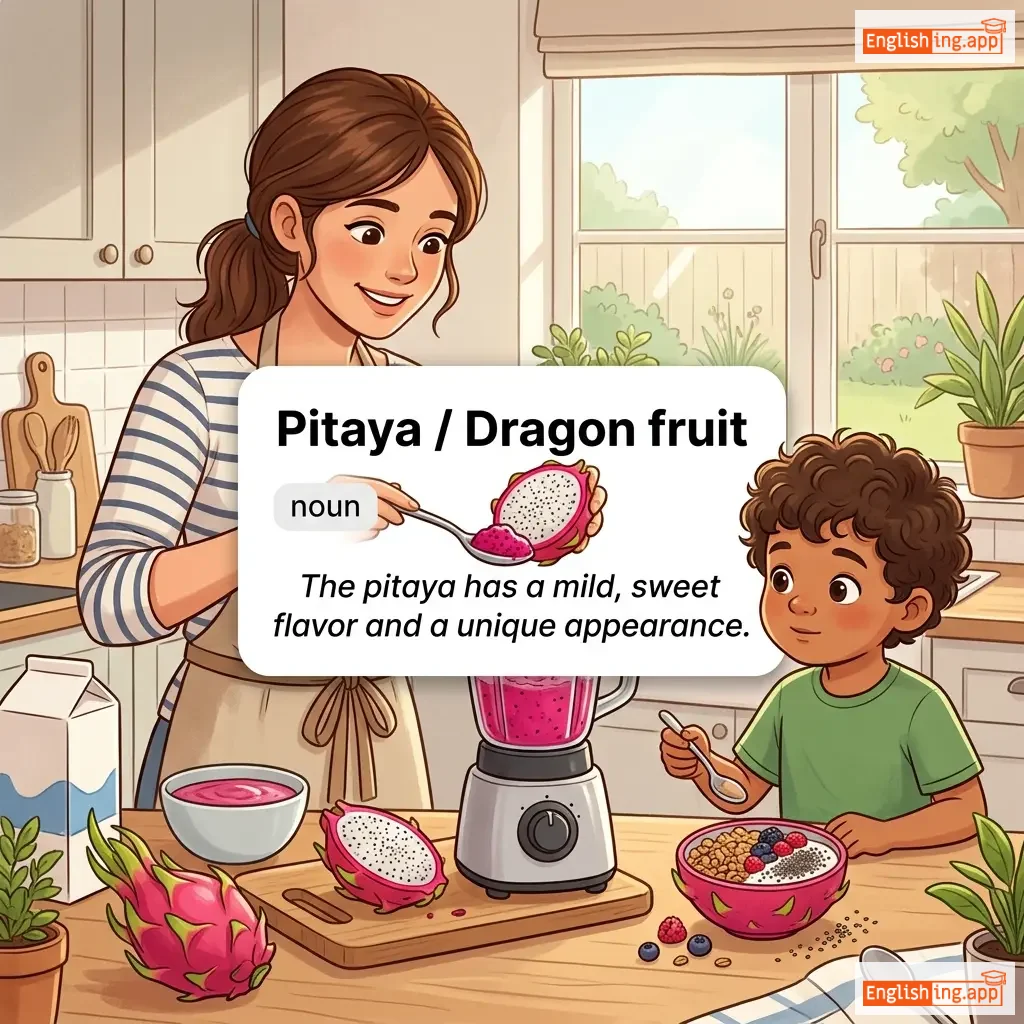
Pitaya / Dragon fruit definition card — visual illustration of the meaning
noun
/pɪˈtaɪə/
fruit du dragon (fruit du dragon)

a tropical fruit with bright pink or red skin and white flesh speckled with black seeds

"The pitaya has a mild, sweet flavor and a unique appearance."

"La pitaya a une saveur douce et délicate et une apparence unique." (La pitaya a une saveur douce et délicate et une apparence unique.)
noun
/pɪn/
épingle (epingle)

a small thin piece of metal used to fasten or hold things together

"She used a pin to attach the note to the board."

"Elle a utilisé une épingle pour fixer la note sur le tableau." (Elle a utilise une epingle pour fixer la note sur le tableau.)
noun
/ˈpɪnjən/
un petit engrenage ou la partie extérieure de l'aile d'un oiseau ; restreindre ou immobiliser (un petit engrenage ou la partie extérieure de l'aile d'un oiseau ; restreindre ou immobiliser)

a small gear or the outer part of a bird's wing; to restrain or immobilize

"The bird's pinion was injured, preventing it from flying."

"Le pinion de l'oiseau était blessé, l'empêchant de voler." (Le pinion de l'oiseau était blessé, l'empêchant de voler.)
noun
/ˈpaɪnˌæpəl/
ananas (ananas)

a tropical fruit with a rough spiky skin, sweet yellow flesh, and a leafy crown

"She added fresh pineapple to the fruit salad."

"Elle a ajouté de l’ananas frais à la salade de fruits." (Elle a ajoute de l ananas frais a la salade de fruits)
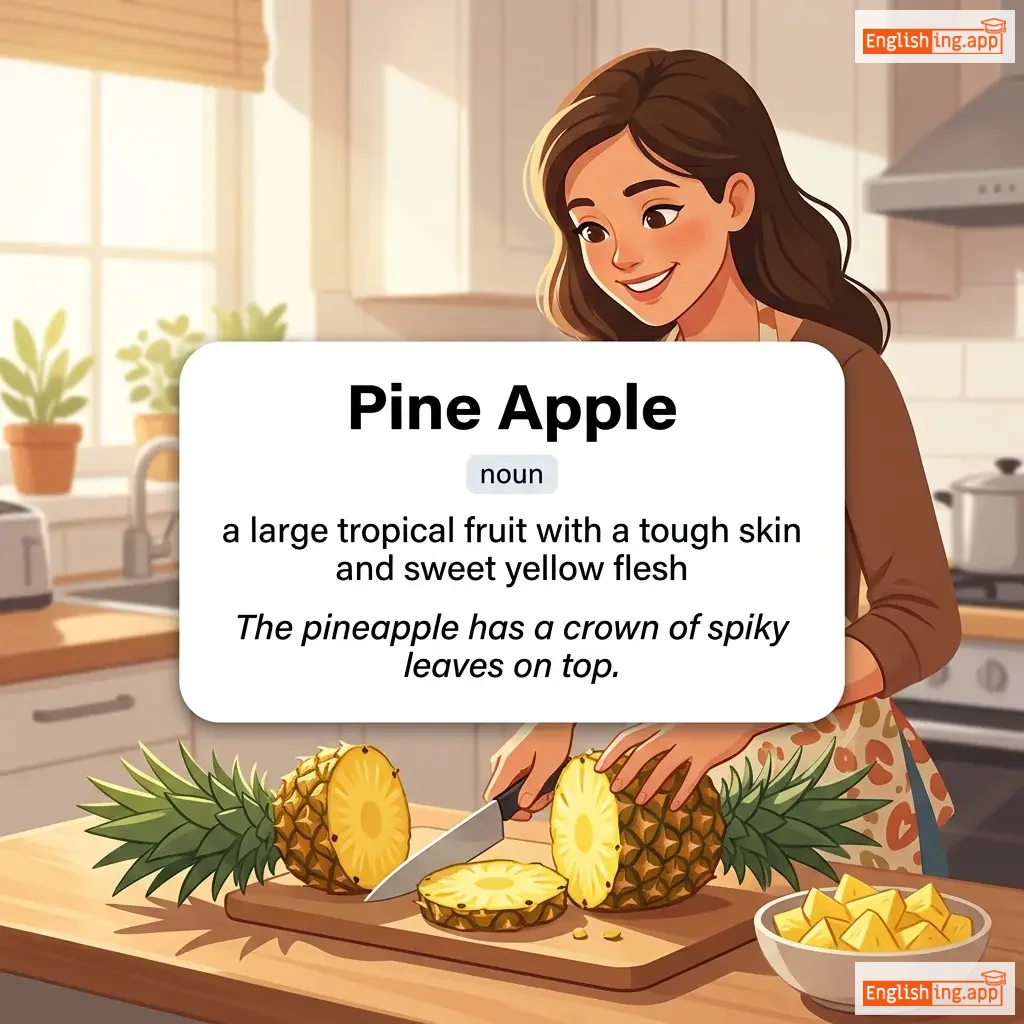
Pine Apple definition card — visual illustration of the meaning
noun
/ˈpaɪn.æp.əl/
ananas (ananas)

a large tropical fruit with a tough skin and sweet yellow flesh

"The pineapple has a crown of spiky leaves on top."

"L'ananas a une couronne de feuilles épineuses sur le dessus." (L'ananas a une couronne de feuilles épineuses sur le dessus)
verb
/paɪn/
désirer profondément (désirer profondément)

to long intensely for something or someone; to suffer from longing

"He pined for his hometown after moving abroad."

"Après avoir déménagé à l'étranger, il ressentait profondément la nostalgie de sa ville natale." (Après avoir déménagé à l'étranger, il ressentait profondément la nostalgie de sa ville natale.)
noun
/ˈpɪntʃərz/
pinces (pinces)

a tool used for gripping or squeezing objects

"Use the pinchers to remove the hot coal safely."

"Utilisez les pinces pour retirer le charbon chaud en toute sécurité." (Utilisez les pinces pour retirer le charbon chaud en toute sécurité.)
verb
/pɪntʃ/
pincer (pincer)

to squeeze tightly between the fingers; to take a small amount

"She pinched a bit of salt into the soup."

"Elle a mis un peu de sel dans la soupe." (Elle a mis un peu de sel dans la soupe.)
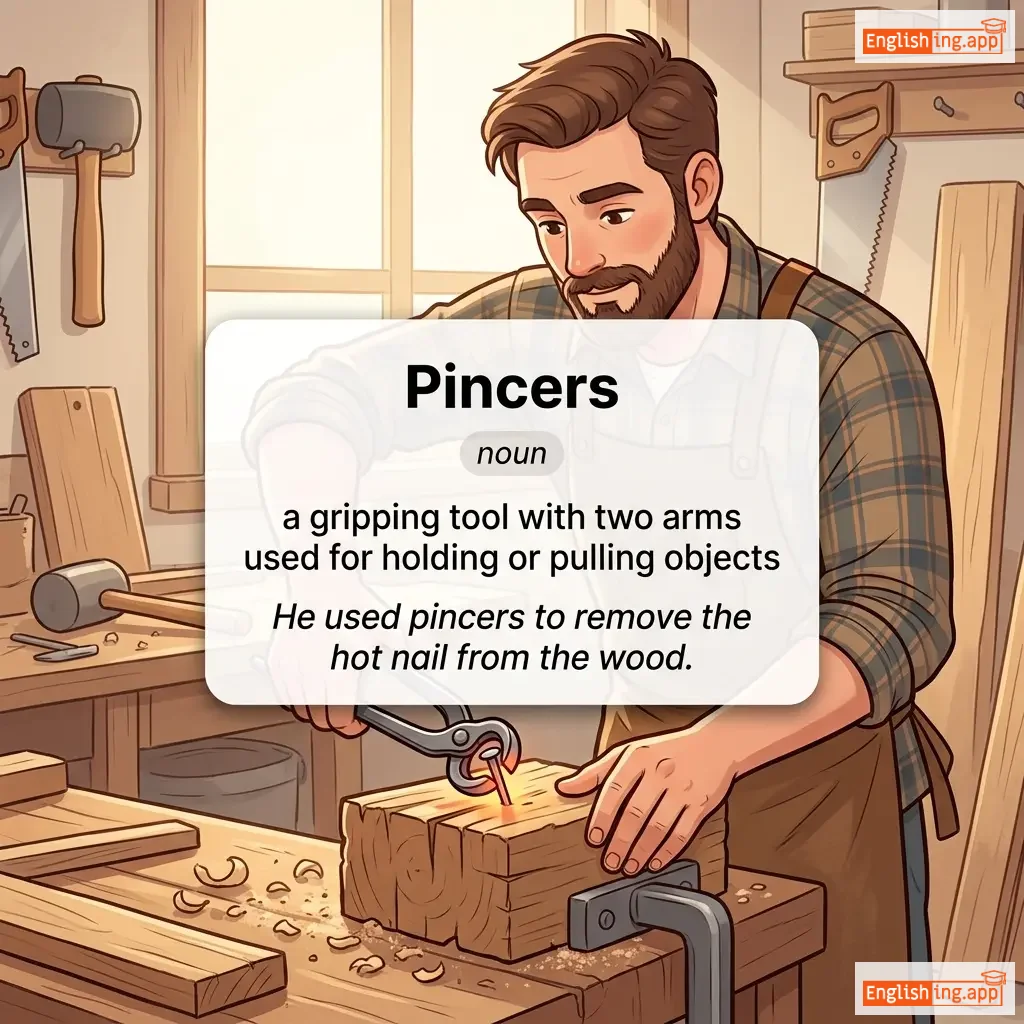
Pincers definition card — visual illustration of the meaning
noun
/ˈpɪnsərz/
pince (pince)

a gripping tool with two arms used for holding or pulling objects

"He used pincers to remove the hot nail from the wood."

"Il a utilisé des pinces pour retirer le clou chaud du bois." (Il a utilisé des pinces pour retirer le clou chaud du bois.)
noun/verb
/ˈpɪləri/
dispositif de châtiment public (dispositif de châtiment public)

a device for publicly punishing someone / to expose to public ridicule

"The corrupt official was placed in the pillory for the town to jeer at."

"Le fonctionnaire corrompu a été mis en pilori pour que la ville se moque de lui." (Le fonctionnaire corrompu a été mis en pilori pour que la ville se moque de lui.)
🏴‍☠️

pillage (pilɛʒ)

verb
/ˈpɪlɪdʒ/
piller (piller)

to rob or plunder a place, especially during war

"The invading army pillaged the village and took all valuables."

"L'armée envahissante a pillé le village et a pris tous les objets précieux." (L'armée envahissante a pillé le village et a pris tous les objets précieux.)
noun
/ˈpɪlər/
pilier (pilier)

a strong vertical support or mainstay of a structure or system

"The ancient temple was supported by massive stone pillars."

"Le temple ancien était soutenu par d'énormes piliers en pierre." (Le temple ancien était soutenu par d'énormes piliers en pierre.)
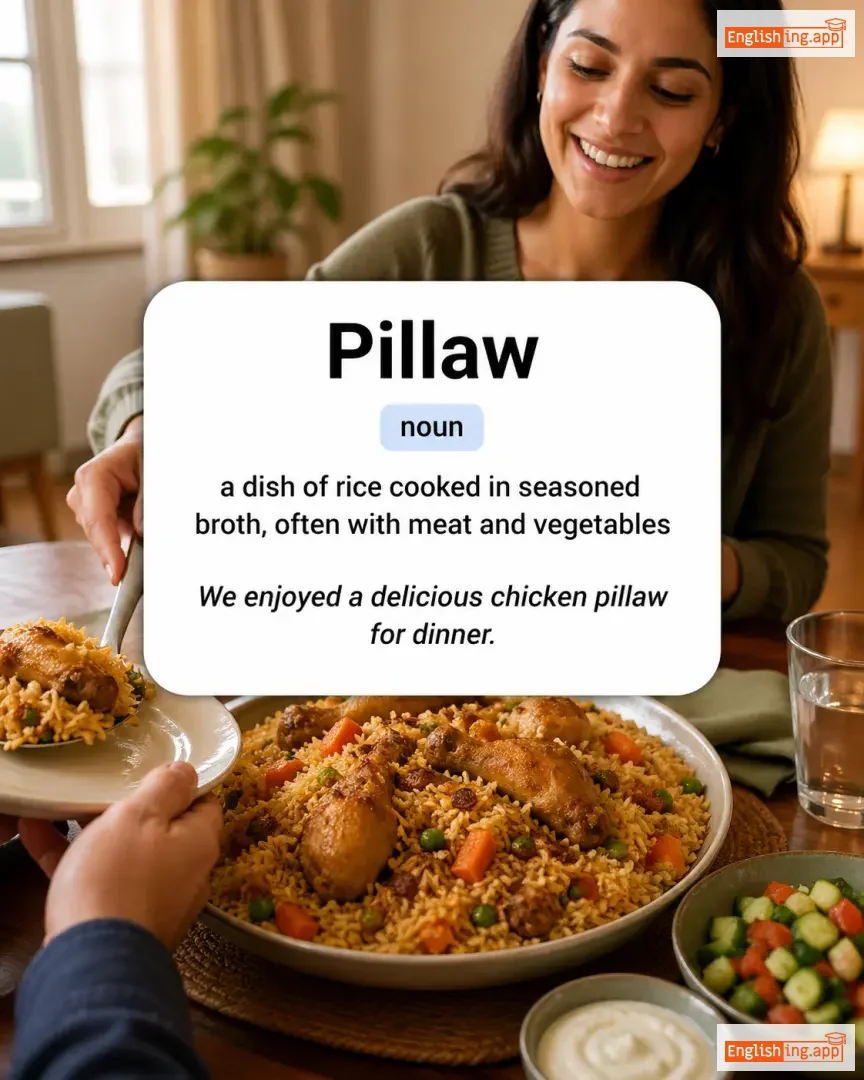
Pillaw definition card — visual illustration of the meaning
noun
/pɪˈlɑːf/
pilav (pilav)

a dish of rice cooked in seasoned broth, often with meat and vegetables

"We enjoyed a delicious chicken pillaw for dinner."

"Nous avons dégusté un délicieux pilav au poulet pour le dîner." (Nous avons dégusté un délicieux pilav au poulet pour le dîner.)
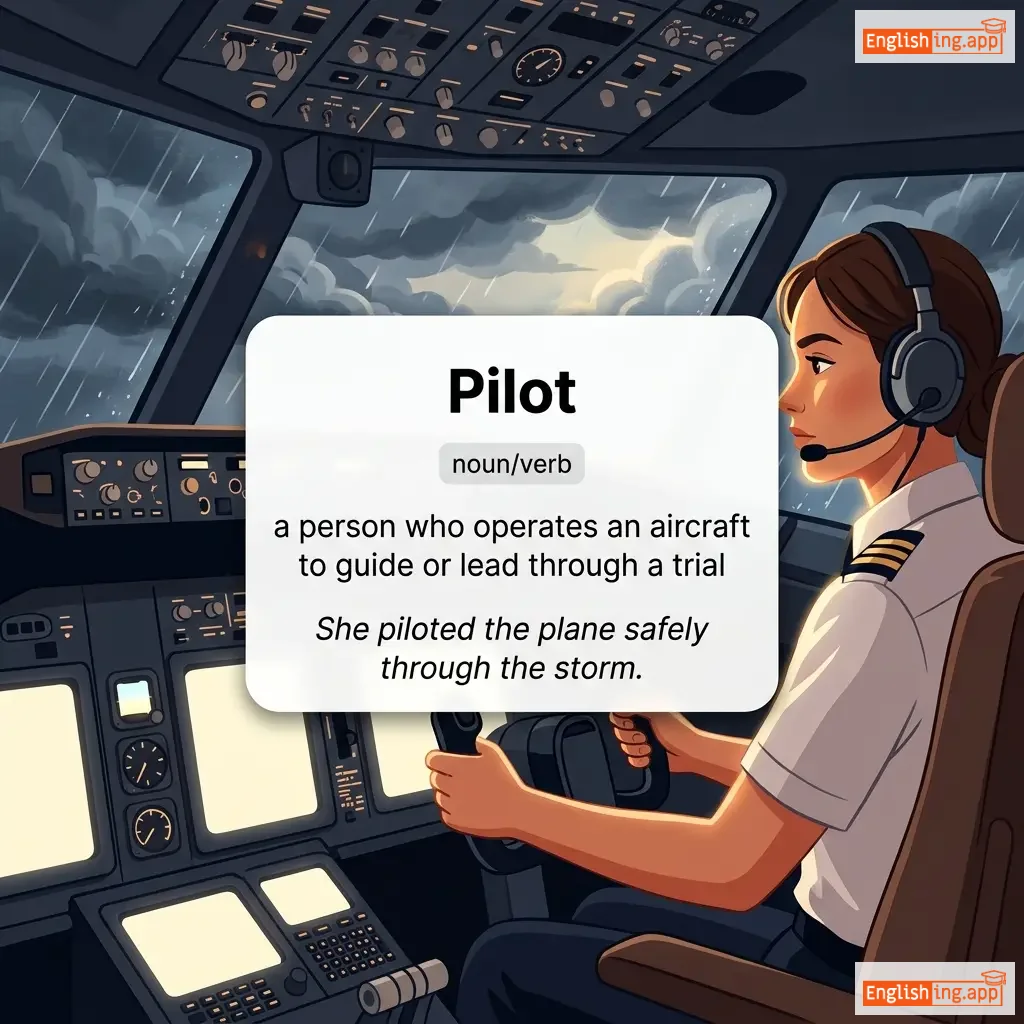
Pilot definition card — visual illustration of the meaning
noun/verb
/ˈpaɪlət/
pilote (pilote)

a person who operates an aircraft / to guide or lead through a trial

"She piloted the plane safely through the storm."

"Elle a piloté l'avion en toute sécurité à travers la tempête." (Elle a piloté l'avion en toute sécurité à travers la tempête.)
noun
/ˈpɪm.pəl/
bouton (bouton)

a small, inflamed elevation of the skin; a spot on the skin, especially on the face

"She was embarrassed about the pimple on her forehead."

"Elle était gênée par le bouton sur son front." (Elle etait genee par le bouton sur son front.)
adjective
/pɪŋk/
rose (rose)

a color between red and white

"She wore a pink dress to the party."

"Elle portait une robe rose à la fête." (Elle portait une robe rose à la fête.)
Pillow definition card — visual illustration of the meaning
noun
/ˈpɪloʊ/
oreiller (oreiller)

a soft cushion filled with material used to support the head while sleeping or resting

"She placed her head on the soft pillow and fell asleep quickly."

"Elle a posé sa tête sur le doux oreiller et s'est endormie rapidement." (Elle a pose sa tete sur le doux oreiller et s'est endormie rapidement.)