词汇表

英语词汇词典 | 单词含义、定义和示例

noun
/pərˈdɪʃən/
幸福 (xìng fú)

A state of eternal spiritual ruin, often referring to hell or damnation.

"The preacher warned that greed would lead to perdition."

"当她获得奖项时,她无法掩饰自己的幸福感。" (Dāng tā huò dé jiǎng xiàng shí, tā wú fǎ yǎn shì zì jǐ de xìng fú gǎn.)
noun
/pərˈkʌʃən/
打击乐器 (dǎjī yuèqì)

Musical instruments that are played by striking, shaking, or scraping, such as drums or cymbals.

"The percussion section added rhythm and energy to the orchestra."

"打击乐部分为管弦乐队增添了节奏和能量。" (Dǎjī yuèbù wèi guǎnxiányuè duì zēngtiānle jiézòu hé néngliàng.)
noun
/ˈpɜːrkəleɪtər/
咖啡滤泡壶 (kāfēi lǜpào hú)

A device used for brewing coffee by continually cycling boiling water through coffee grounds.

"She made a fresh pot of coffee using the percolator."

"她使用滤泡壶做了一杯新鲜的咖啡。" (Tā shǐyòng lǜpào hú zuòle yī bēi xīnxiān de kāfēi.)
verb
/ˈpɜːrkəleɪt/

To filter gradually through a porous surface or substance; to spread slowly.

"The rainwater percolated through the soil into the groundwater."

adjective
/pərˈsɪpiənt/
有洞察力的 (yǒu dòngchá lì de)

Having good understanding or insight; able to perceive things clearly.

"As a percipient critic, she recognized the deeper meaning of the play."

"作为一名有洞察力的评论家,她认出了戏剧的更深层意义。" (Zuòwéi yī míng yǒu dòngchá lì de pínglùn jiā, tā rènchūle xìjù de gèng shēn céng yìyì.)
noun
/pərˈsɪpiəns/
洞察力 (dongcha li)

The ability to perceive, understand, or notice things quickly.

"His percipience in reading people made him a great negotiator."
"他在阅读人们时的洞察力使他成为一位出色的谈判者。" (Ta zai yuedu renmen shi de dongchali shi ta chengwei yi wei chuse de tanpanzhe.)
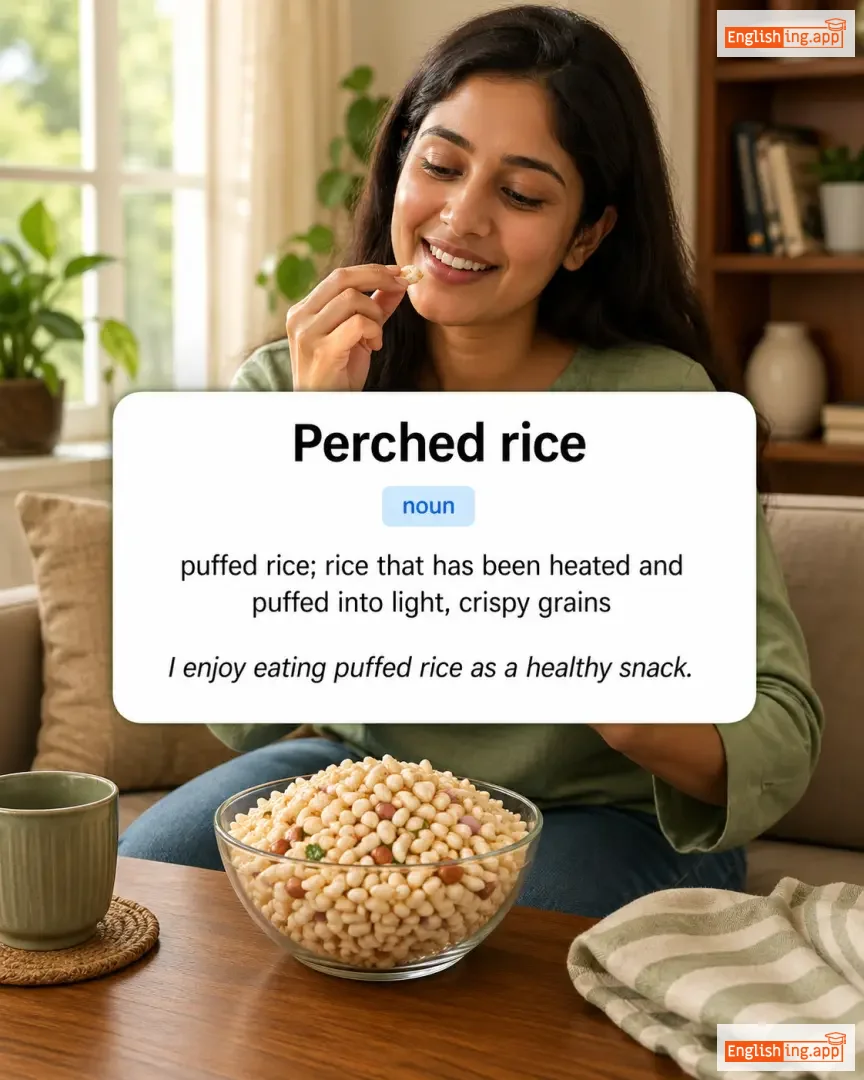
Perched rice definition card — visual illustration of the meaning
noun
/pɜːrtʃt raɪs/
膨化米 (péng huà mǐ)

puffed rice; rice that has been heated and puffed into light, crispy grains

"I enjoy eating puffed rice as a healthy snack."

"我喜欢把膨化米当作健康的小吃。" (wǒ xǐhuān bǎ péng huà mǐ dāngzuò jiànkāng de xiǎochī)
🐦

perch

verb
/pɜːrtʃ/

To sit or rest on something high or narrow.

"The bird perched on the fence."

adjective
/pərˈsɛptɪv/
幸福 (xingfu)

Having or showing keen insight, understanding, or awareness.

"She is very perceptive and quickly notices when something is wrong."
"她在获得奖项时无法隐藏她的快乐。" (Tā zài huòdé jiǎngxiàng shí wúfǎ yǐncáng tā de kuàilè.)
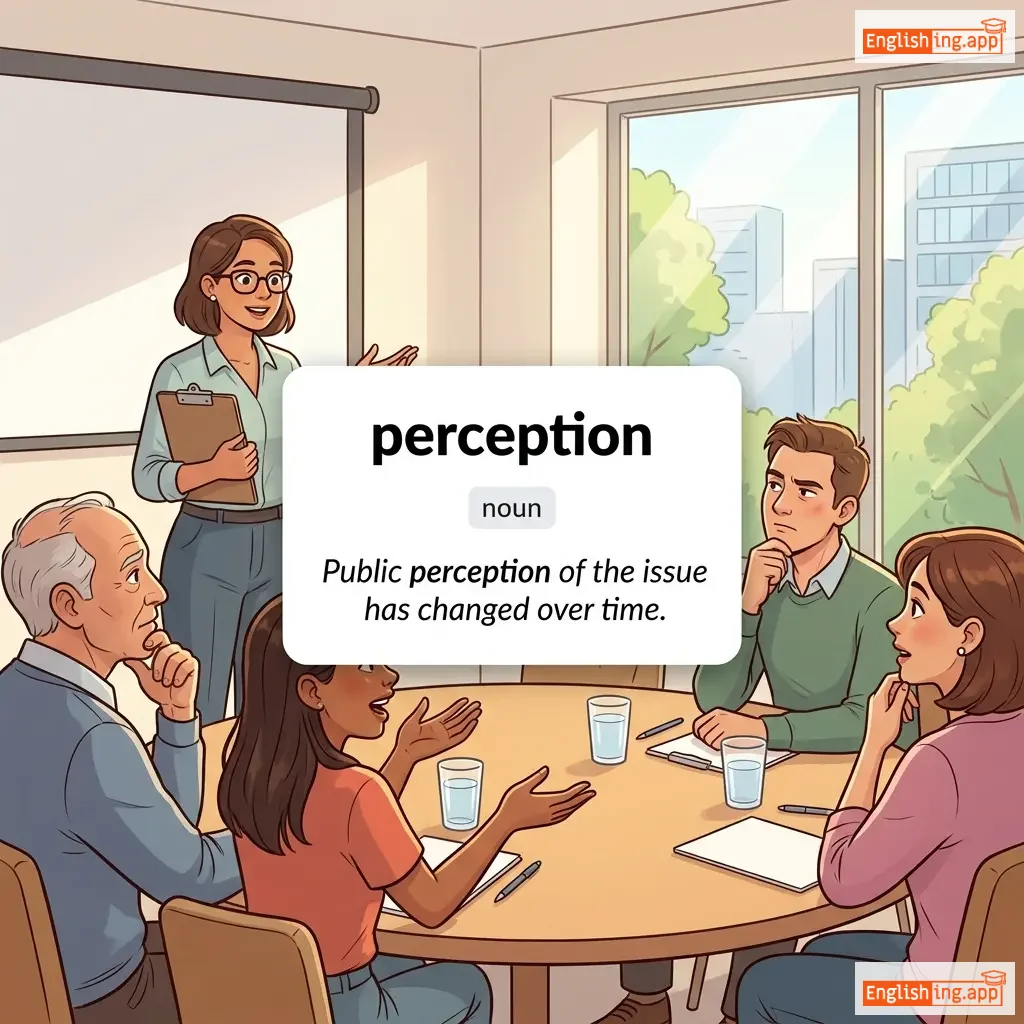
perception definition card — visual illustration of the meaning
noun
/pərˈsɛpʃən/
感知 (gǎnzhī)

The ability to see, hear, or become aware of something; an interpretation of sensory information.

"Public perception of the issue has changed over time."

"公众对这一问题的感知随着时间的推移发生了变化。" (Gōngzhòng duì zhè yī wèntí de gǎnzhī suí zhe shíjiān de tuīyí fāshēngle biànhuà.)
adjective
/pərˈsɛptəbl̩/
可察觉的 (kě chájué de)

Able to be noticed or recognized by the senses or the mind.

"There was a perceptible change in the atmosphere."

"大气中有一个可察觉的变化。" (Dàqì zhōng yǒu yīgè kě chájué de biànhuà.)
noun
/pərˈsɛntɪdʒ/
百分比 (baifenbi)

a proportion or share in relation to a whole

"The percentage of students who passed the exam was high."

"通过考试的学生百分比很高。" (Tongguo kaoshi de xuesheng baifenbi hen gao.)
noun; adverb
/pərˈsɛnt/
百分之 (baifen zhi)

a proportion out of one hundred; by each hundred

"Sales increased by ten percent this year."

"今年销售额增加了百分之十。" (jinnian xiaoshoue zengjia le baifen zhi shi)
👁️

perceived

verb
/pərˈsiːvd/
幸福 (xìng fú)

to become aware of something through the senses or the mind; to understand or interpret

"She perceived a hint of sadness in his voice."

"当她收到奖项时,她无法掩饰自己的幸福。" (Dāng tā shōu dào jiǎngxiàng shí, tā wúfǎ yǎnshì zìjǐ de xìngfú.)
perceive definition card — visual illustration of the meaning
verb
/pərˈsiːv/
察觉 (chá jué)

To become aware of or recognize something through the senses or the mind.

"She perceived a change in his tone of voice."
"她察觉到他语气的变化。" (Tā chá jué dào tā yǔ qì de biàn huà.)
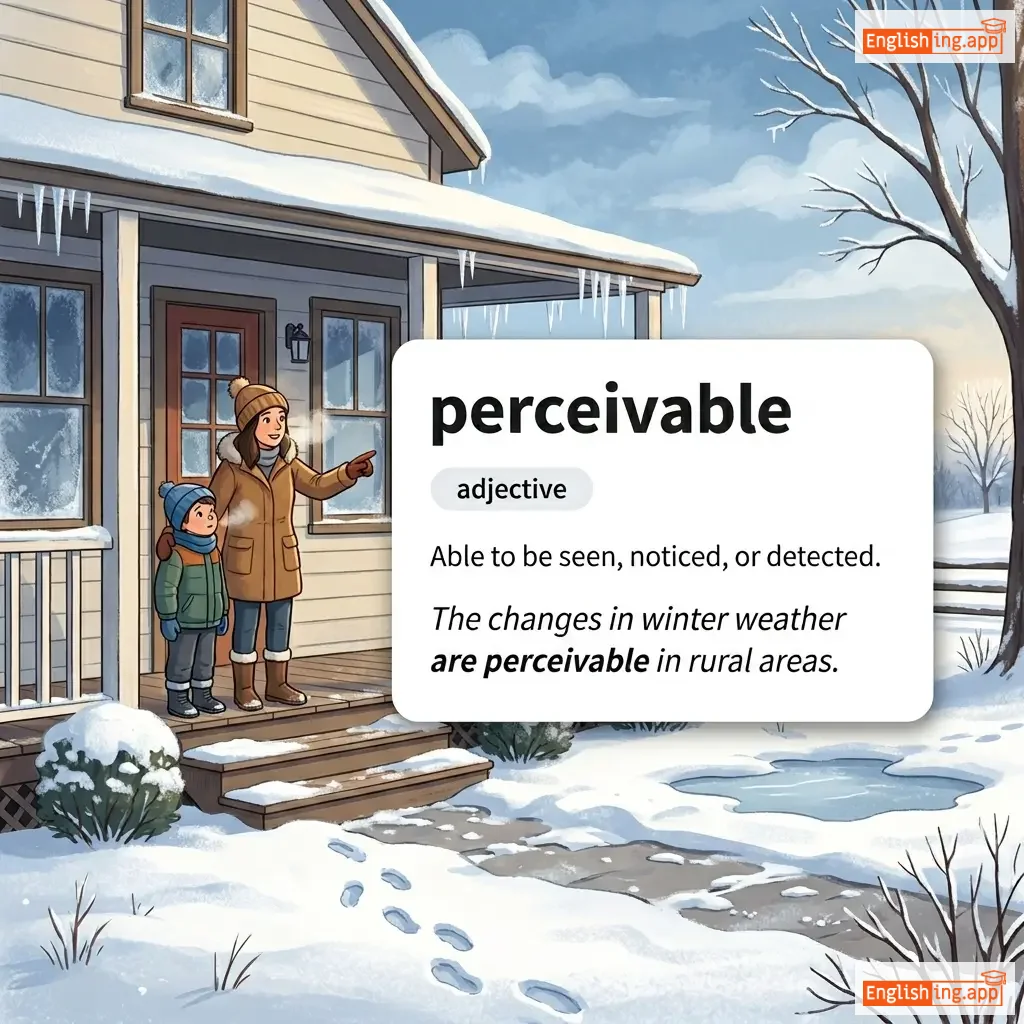
perceivable definition card — visual illustration of the meaning
adjective
পারসিভেবল
可察觉的 (kě chájué de)

Able to be seen, noticed, or detected.

"The changes in winter weather are perceivable in rural areas."
"冬季天气的变化在农村地区是可察觉的。" (Dōngjì tiānrì de biànhuà zài nóngcūn dìqū shì kě chájué de.)
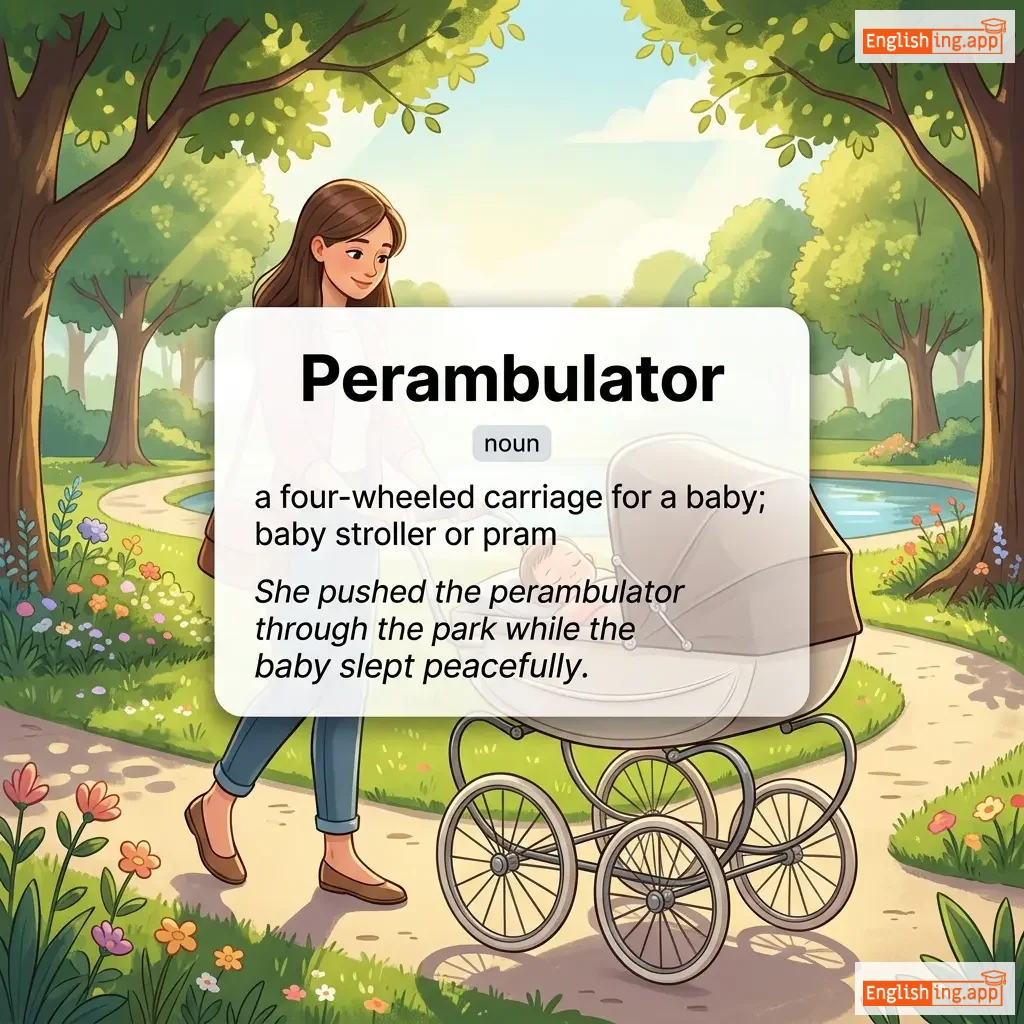
Perambulator definition card — visual illustration of the meaning
noun
/pəˈræm.bjə.leɪ.tər/
婴儿车 (perambulator)

a four-wheeled carriage for a baby; baby stroller or pram

"She pushed the perambulator through the park while the baby slept peacefully."

"她推着婴儿车穿过公园,而婴儿安静地睡着。" (Tā tuī zhe yīng ér chē chuān guò gōng yuán, ér yīng ér ān jìng de shuì zhe.)
verb
/pəˈræmbjʊˌleɪt/
漫步 (man bu)

To walk through or travel around, especially for leisure.

"They perambulated the old town, enjoying the sights."

"他们在古城漫步,享受着美丽的景色。" (Tāmen zài gǔ chéng màn bù, xiǎngshòu zhe měilì de jǐngsè.)
adverb
/pɜːr ˈseɪ/
本身 (běnshēn)

By or in itself; intrinsically.

"The idea is not bad per se, but it needs improvement."
"这个想法本身并不好,但需要改进。" (Zhège xiǎngfǎ běnshēn bìng bù hǎo, dàn xūyào gǎijìn.)
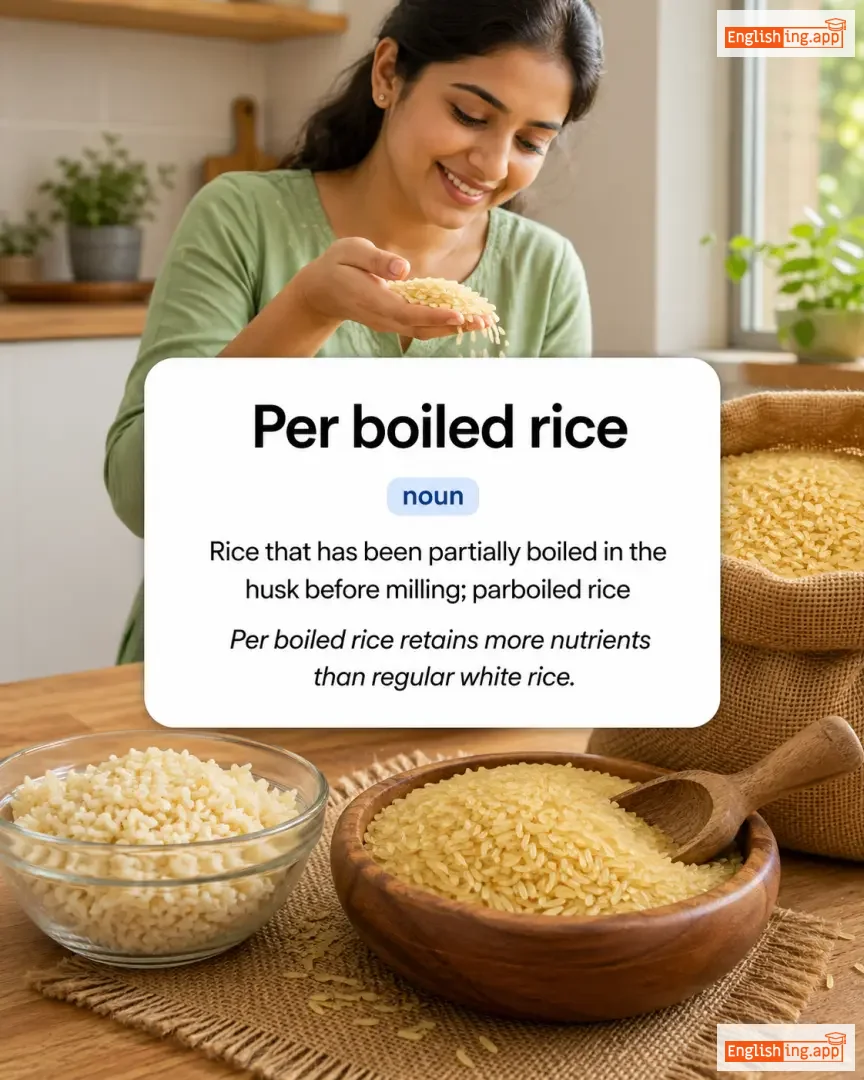
Per boiled rice definition card — visual illustration of the meaning
noun
/pɜːr bɔɪld raɪs/
预煮米 (yù zhǔ mǐ)

Rice that has been partially boiled in the husk before milling; parboiled rice

"Per boiled rice retains more nutrients than regular white rice."

"预煮米比普通白米保留更多营养成分。" (Yù zhǔ mǐ bǐ pǔtōng bái mǐ bǎoliú gèng duō yíngyǎng chéngfèn.)
preposition
/pɜːr/
每人 (meiren)

for each, according to

"The tickets are priced at $20 per person."

"票价为每人20美元。" (Piaojia wei meiren 20 meiyuan.)
noun
/ˈpɛpər/
胡椒 (hújiāo)

a pungent spice obtained from pepper plants, used to flavor food

"I like to add pepper to my soup."
"我喜欢在我的汤里加胡椒。" (Wǒ xǐhuān zài wǒ de tāng lǐ jiā hújiāo.)
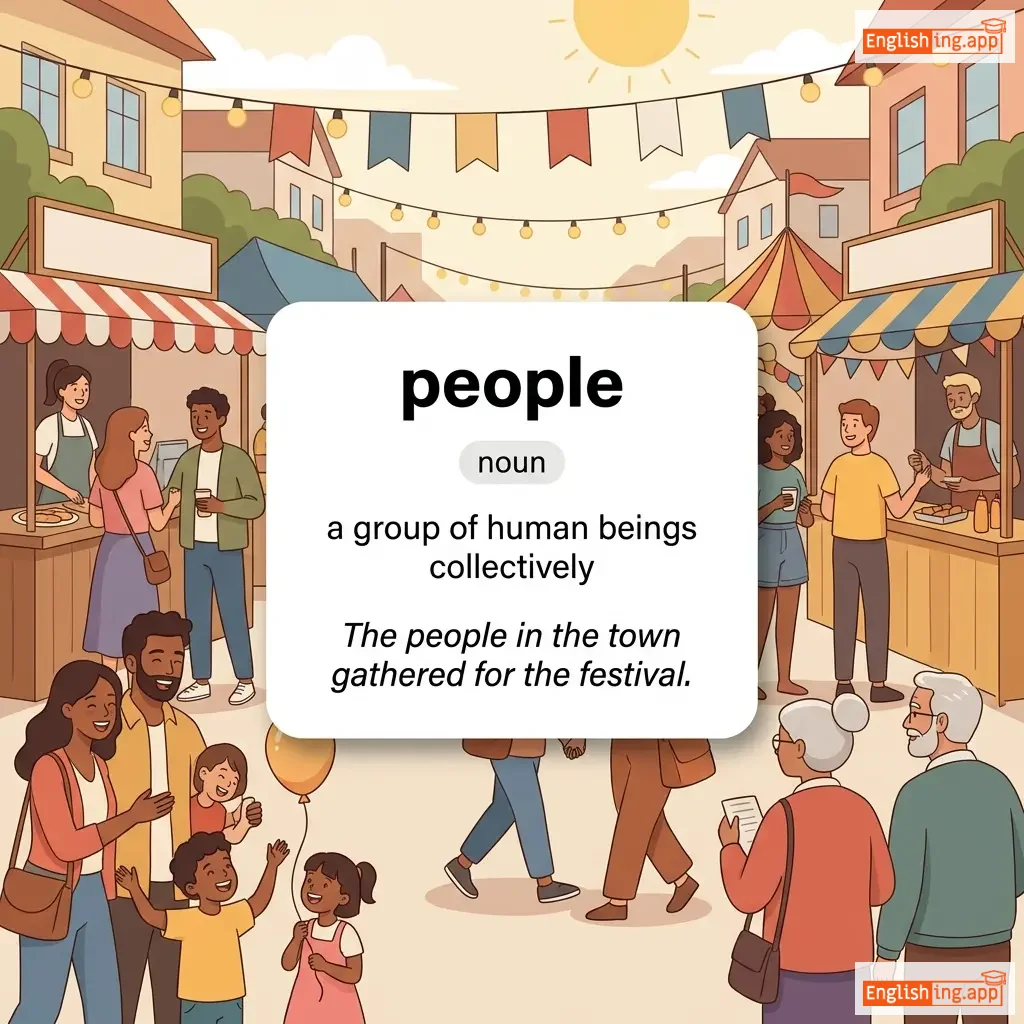
people definition card — visual illustration of the meaning
noun
/ˈpiːpl/
人们 (renmen)

a group of human beings collectively

"The people in the town gathered for the festival."

"城里的人们为节日聚集。" (Cheng li de renmen wei jieri juzhi.)
noun
/ˈpiːɒn/
皮恩 (pion)

a low-ranking worker, often performing menial tasks

"The office peon delivered the files to each department."

"办公室的皮恩将文件送到每个部门。" (Bàngōngshì de pí ēn jiāng wénjiàn sòng dào měi gè bùmén.)
penury definition card — visual illustration of the meaning
noun
/ˈpɛnjʊri/
极端贫困 (jíduān pínkùn)

extreme poverty or destitution

"He grew up in penury but became successful later in life."

"他在极度贫困中长大,但后来在生活中成功。" (Tā zài jíduān pínkùn zhōng zhǎng dà, dàn hòulái zài shēnghuó zhōng chénggōng.)
adjective
/pəˈnjʊəriəs/
极度贫穷 (jidù pínqióng)

extremely poor; poverty-stricken; miserly

"The penurious family struggled to buy food."

"那个极度贫穷的家庭艰难地购买食物。" (Nàgè jídù pínqióng de jiātíng jiānnán de gòumǎi shíwù.)
noun
/ˈpɛbl/
卵石 (luǎn shí)

a small smooth stone found on beaches or rivers

"He threw a pebble into the pond and watched the ripples."
"他把一块卵石扔进池塘,看着水波。" (Tā bǎ yī kuài luǎn shí rēng jìn chítáng, kànzhe shuǐ bō.)
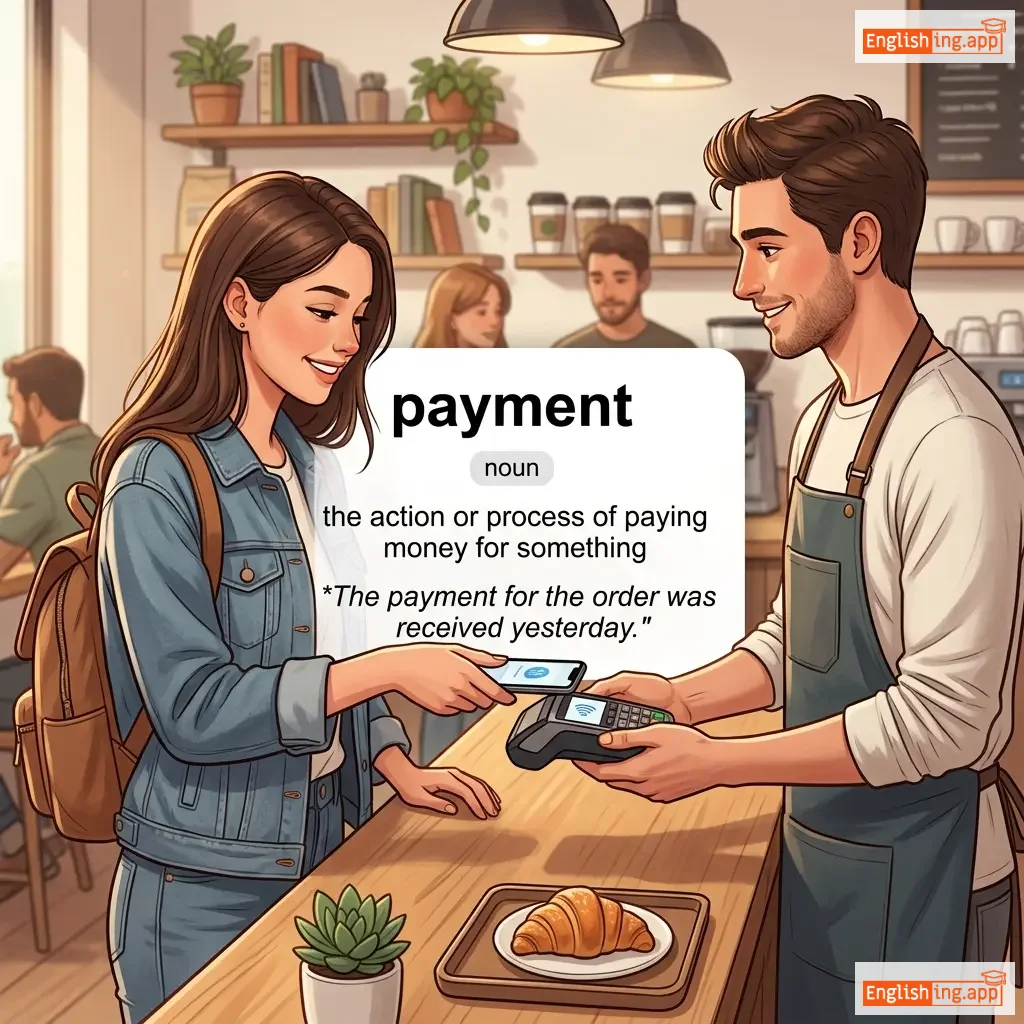
payment definition card — visual illustration of the meaning
noun
/ˈpeɪmənt/
支付 (zhīfù)

the action or process of paying money for something

"The payment for the order was received yesterday."
"订单的支付已于昨天收到。" (Dìngdān de zhīfù yǐ yú zuótiān shōudào.)
noun
/ˈpiːˈsi/
个人电脑 (geren diannao)

abbreviation for 'personal computer', a machine for performing digital operations

"I just bought a new PC for work."

"我刚买了一个新的个人电脑用于工作。" (Wo gang mai le yi ge xin de geren diannao yong yu gongzuo.)
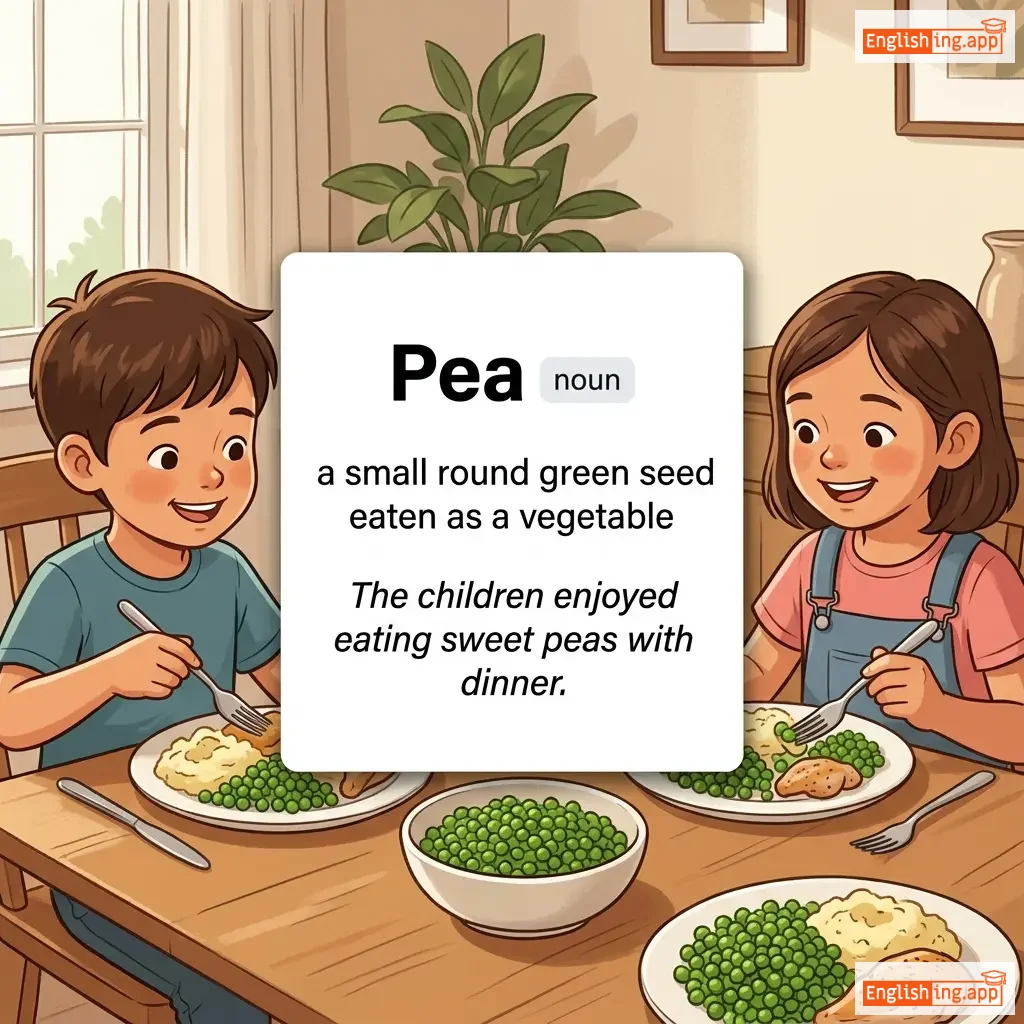
Pea definition card — visual illustration of the meaning
noun
/piː/
豌豆 (wāndòu)

a small round green seed eaten as a vegetable

"The children enjoyed eating sweet peas with dinner."

"孩子们喜欢在晚餐时吃甜豌豆。" (háizimen xǐhuān zài wǎncān shí chī tián wāndòu)
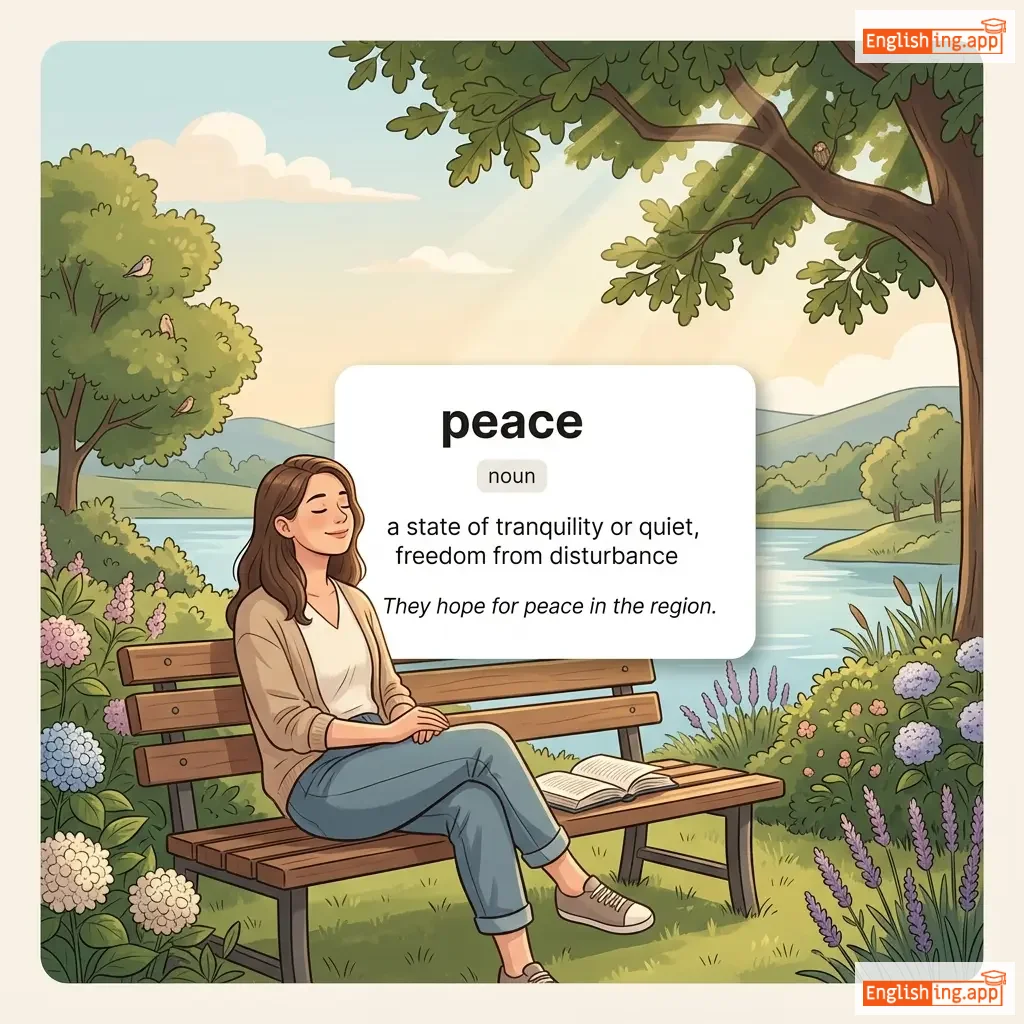
peace definition card — visual illustration of the meaning
noun
/piːs/
和平 (heping)

a state of tranquility or quiet, freedom from disturbance

"They hope for peace in the region."

"他们希望在该地区实现和平。" (Tāmen xīwàng zài gāi dìqū shíxiàn hépíng.)
adjective
/ˈpiːsəbl/
和平的 (hépíng de)

inclined to avoid conflict; friendly and non-violent in nature

"She is a peaceable neighbor who never quarrels with anyone."
"她是一个和平的邻居,永远不会与任何人争吵。" (Tā shì yīgè hépíng de línjū, yǒngyuǎn bù huì yǔ rènhé rén zhēngchǎo.)
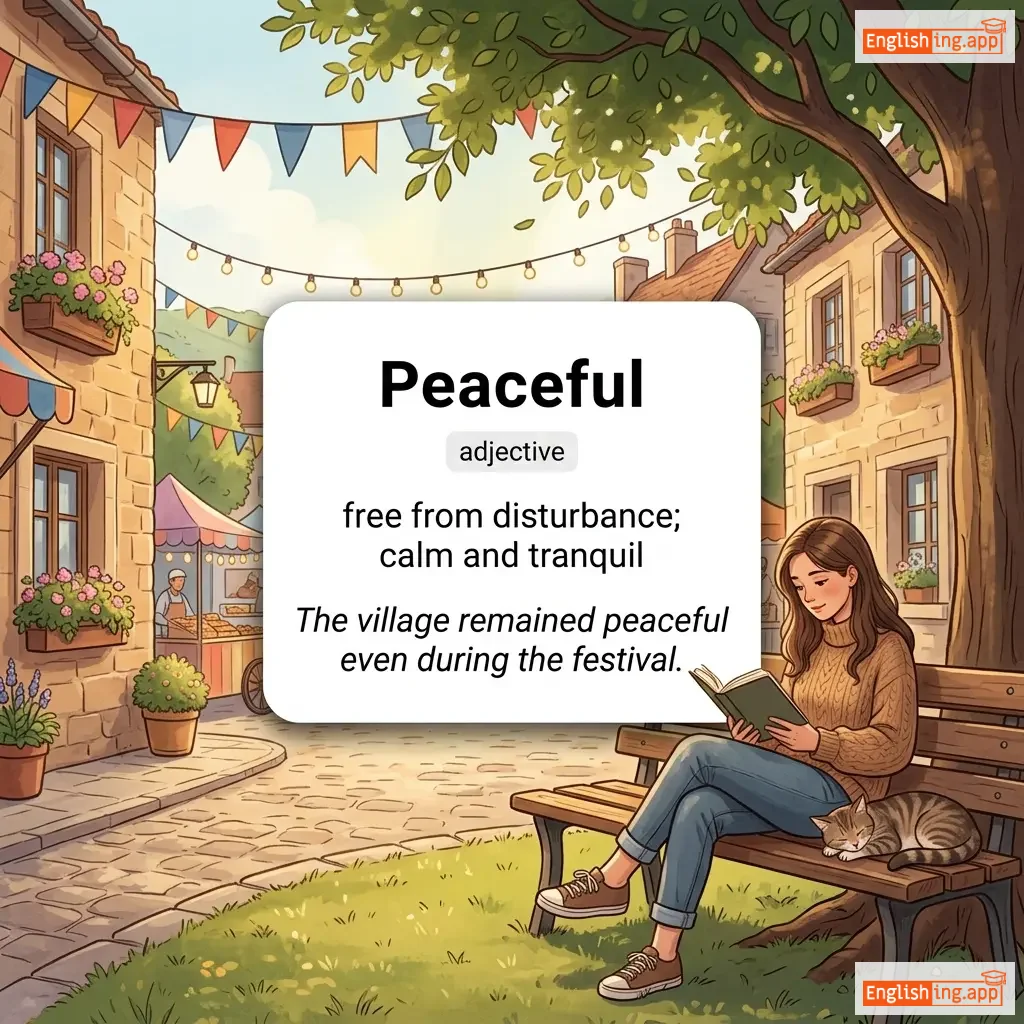
Peaceful definition card — visual illustration of the meaning
adjective
/ˈpiːsfl/
幸福 (xingfu)

free from disturbance; calm and tranquil

"The village remained peaceful even during the festival."
"当她收到奖项时,她无法掩饰她的幸福。" (Dāng tā shōudào jiǎngxiàng shí, tā wúfǎ yǎnshì tā de xìngfú.)
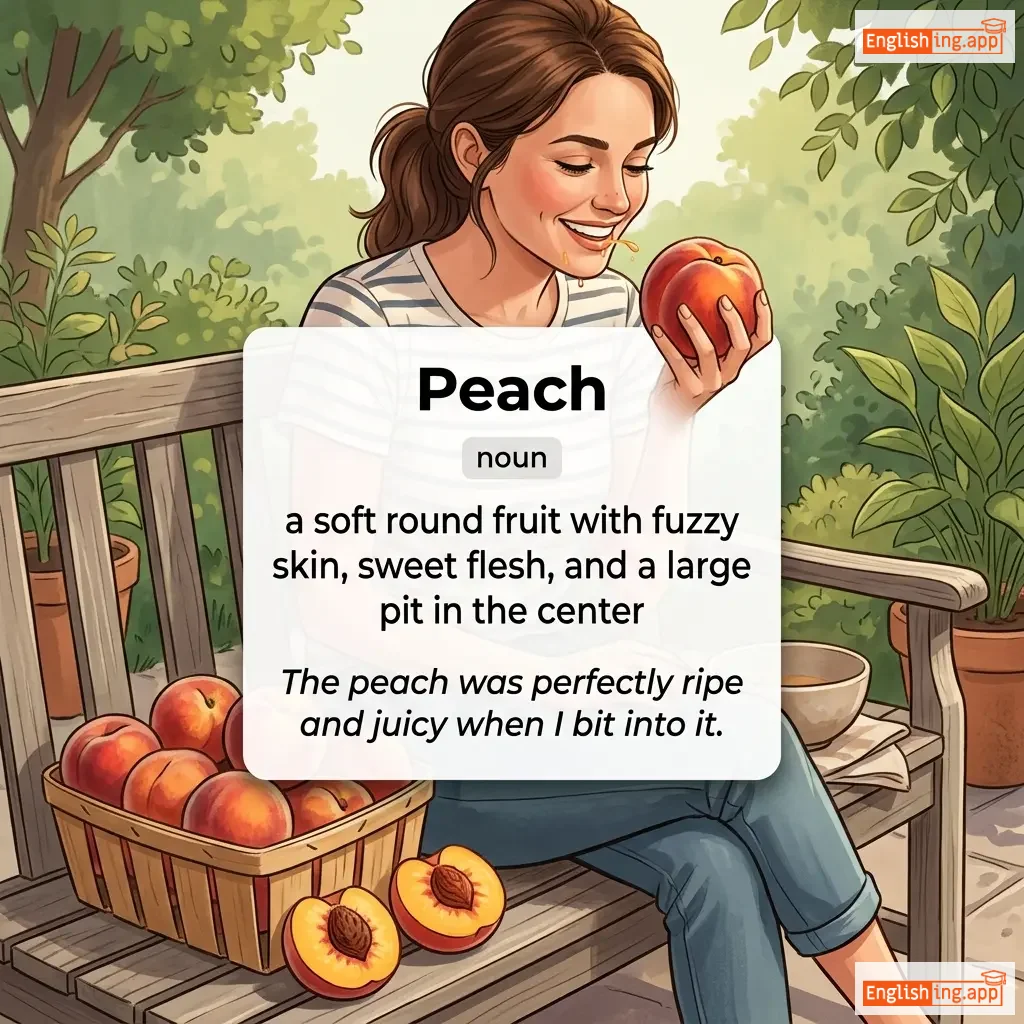
Peach definition card — visual illustration of the meaning
noun
/piːtʃ/
桃子 (táozi)

a soft round fruit with fuzzy skin, sweet flesh, and a large pit in the center

"The peach was perfectly ripe and juicy when I bit into it."
"桃子成熟且多汁,当我咬下去时,口感极佳。" (Táozi chéngshú qiě duō zhī, dāng wǒ yǎo xiàqù shí, kǒugǎn jí jiā.)
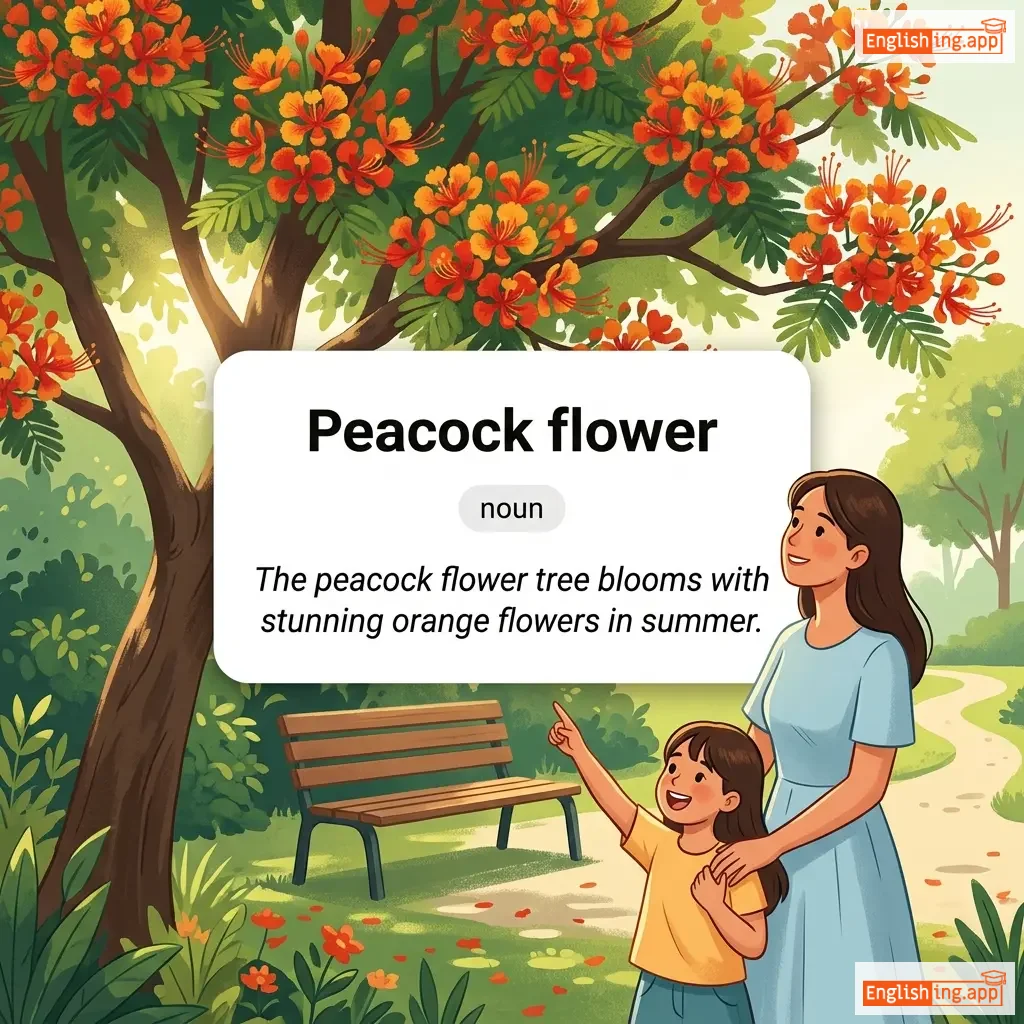
Peacock flower definition card — visual illustration of the meaning
noun
/ˈpiː.kɒk ˈflaʊ.ər/
孔雀花 (kǒngquè huā)

a tropical tree with bright orange and red flowers that resemble a peacock's tail

"The peacock flower tree blooms with stunning orange flowers in summer."
"孔雀花树在夏季开着令人惊叹的橙色花朵。" (Kǒngquè huā shù zài xiàjì kāi zhe lìng rén jīngtàn de chéngsè huāduǒ.)
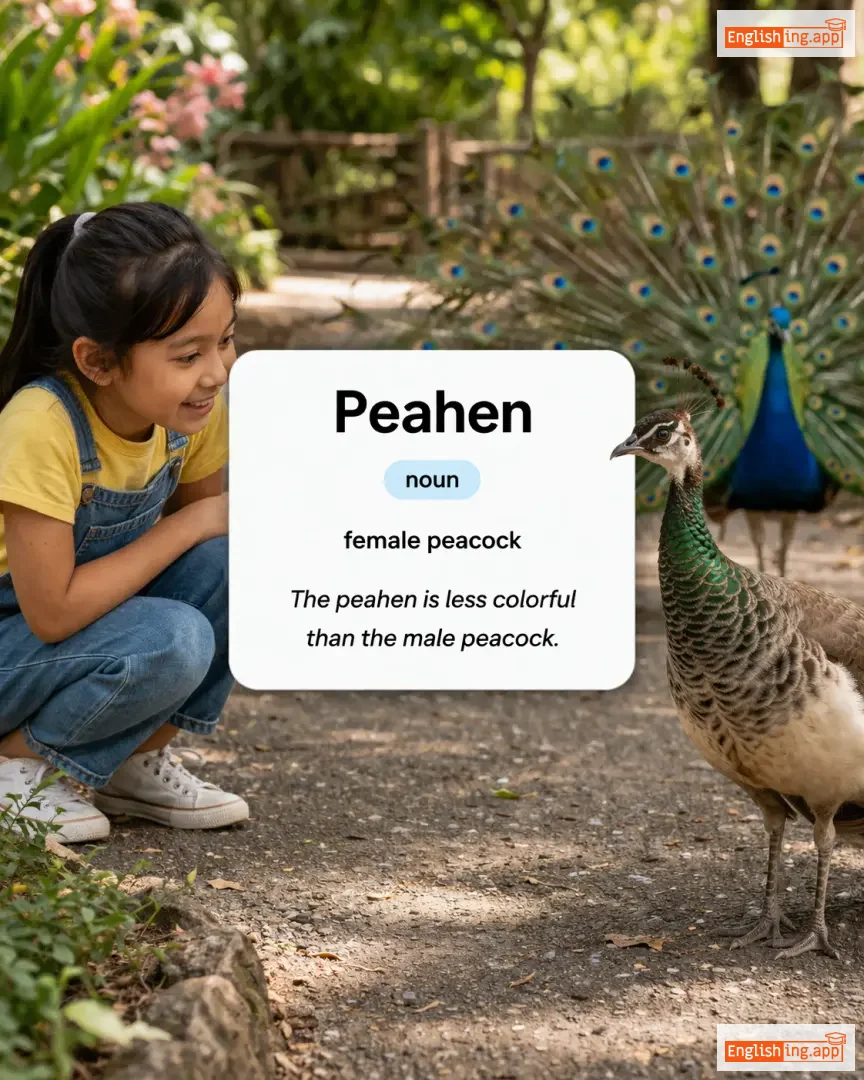
Peahen definition card — visual illustration of the meaning
noun
/ˈpiː.hən/
母孔雀 (mǔ kǒngquè)

female peacock

"The peahen is less colorful than the male peacock."

"母孔雀比雄孔雀少了色彩。" (Mǔ kǒngquè bǐ xióng kǒngquè shǎo le sècǎi.)
🏔️

Peak (峰)

noun
/piːk/
山顶 (shanding)

the pointed top of a mountain or hill, or the highest point of something

"They reached the peak of the mountain after hours of hiking."

"他们在数小时的徒步旅行后到达了山顶。" (Tāmen zài shù xiǎoshí de túbù lǚxíng hòu dàodále shāndǐng.)
Peanut definition card — visual illustration of the meaning
noun
/ˈpiːnʌt/
花生 (huāshēng)

a small seed with a thin shell, eaten as a snack or used to make oil and butter

"He loves eating roasted peanuts during the evening."
"他喜欢在晚上吃烤花生。" (tā xǐhuān zài wǎnshàng chī kǎo huāshēng)
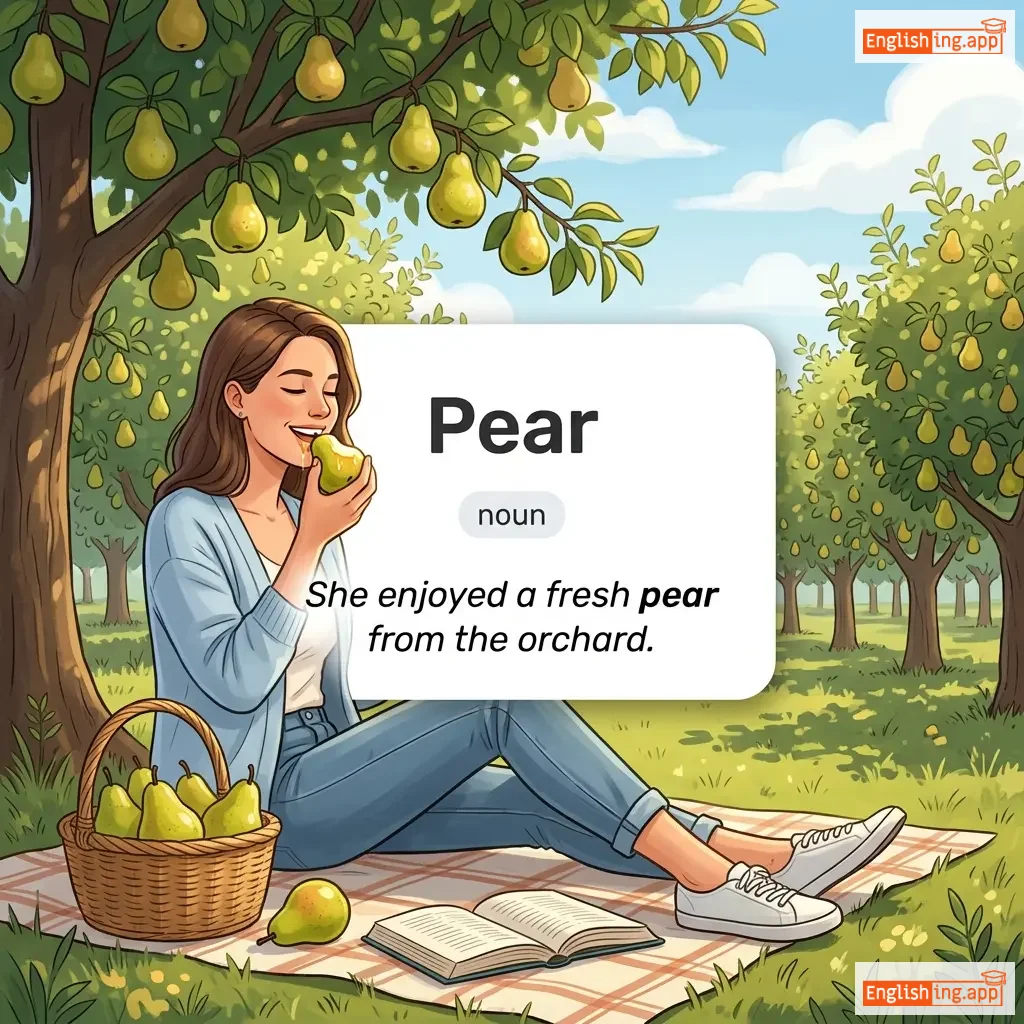
Pear definition card — visual illustration of the meaning
noun
/per/
(lí)

a sweet juicy fruit with a rounded shape that is wider at the bottom than the top

"She enjoyed a fresh pear from the orchard."
"她享受着来自果园的新鲜梨子。" (Tā xiǎngshòu zhe láizì guǒyuán de xīnxiān lízi.)
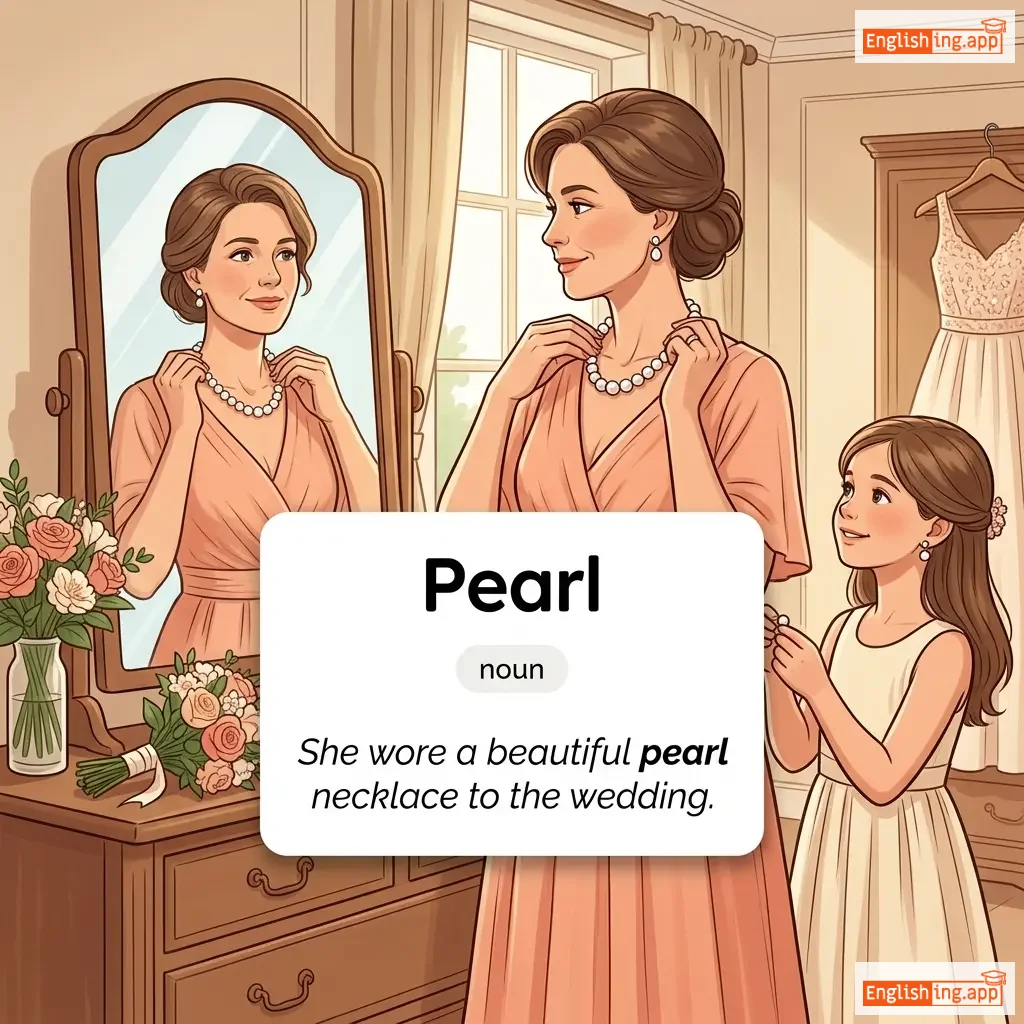
Pearl definition card — visual illustration of the meaning
noun
/pɜːrl/
珍珠 (zhenzhu)

a hard, lustrous object produced within the soft tissue of a shelled mollusk; used in jewelry

"She wore a beautiful pearl necklace to the wedding."
"她在婚礼上戴着一条美丽的珍珠项链。" (Tā zài hūnlǐ shàng dàizhe yītiáo měilì de zhēnzhū xiàngliàn.)
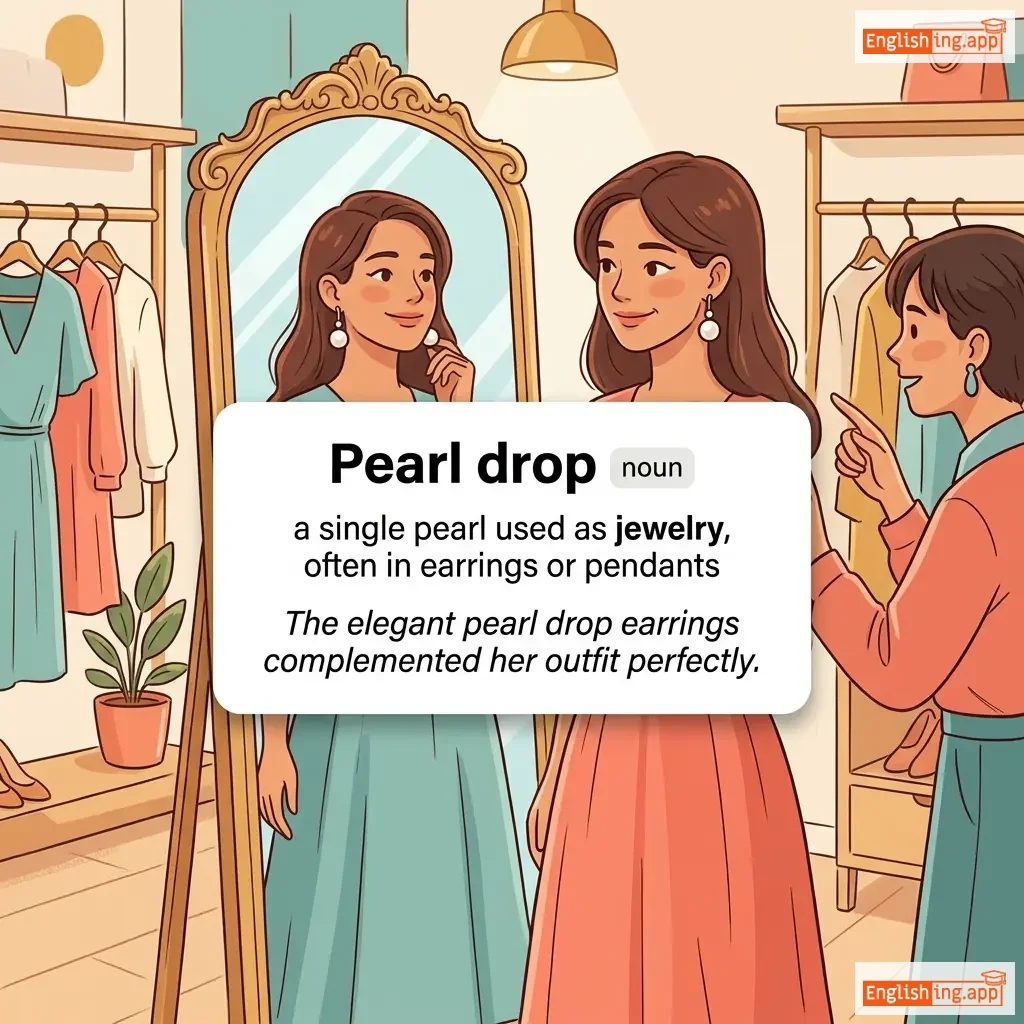
Pearl drop definition card — visual illustration of the meaning
noun
/pɜːrl drɒp/
珍珠滴 (zhēnzhū dī)

a single pearl used as jewelry, often in earrings or pendants

"The elegant pearl drop earrings complemented her outfit perfectly."

"那对优雅的珍珠滴耳环与她的服装完美搭配。" (nà duì yōuyǎ de zhēnzhū dī ěrhuán yǔ tā de fúzhuāng wánměi dāpèi)
peasant definition card — visual illustration of the meaning
noun
/ˈpɛzənt/
农民 (nóngmín)

a poor farmer or agricultural laborer who owns or rents a small piece of land for cultivation

"The peasant worked hard in the fields from dawn to dusk."

"农民从黎明到黄昏在田地里辛勤劳作。" (Nóngmín cóng límíng dào huánghūn zài tiándì lǐ xīnqín láo zuò.)
noun
/ˌpɛdəˈɡɒdʒɪks/
教育学 (jiaoyu xue)

the science or art of teaching

"He studied pedagogics to become a better teacher."

"他学习了教育学,成为一名更好的教师。" (Ta xuexi le jiaoyu xue, chengwei yi ming geng hao de jiaoshi.)
adverb
/pɪˈkju:.li.ə.li/
以奇怪的方式; 以不寻常的方式 (yǐ qíguài de fāngshì; yǐ bù xúncháng de fāngshì)

in a strange or unusual way; in a manner that is distinctive or characteristic

"She dressed peculiarly for the formal dinner, wearing bright colors and unusual patterns."

"她为正式晚宴穿着非常独特,穿着鲜艳的颜色和不寻常的图案。" (Tā wèi zhèngshì wǎnyàn chuānzhuó fēicháng dútè, chuānzhuó xiānyàn de yánsè hé bù xúncháng de tú'àn.)
adjective
/pɪˈkjuːniˌɛri/
财务的 (cáiwù de)

relating to money or financial matters

"They faced pecuniary difficulties after the business failed."
"在生意失败后,他们面临着财务困难。" (Zài shēngyì shībài hòu, tāmen miànlínzhe cáiwù kùnnán.)
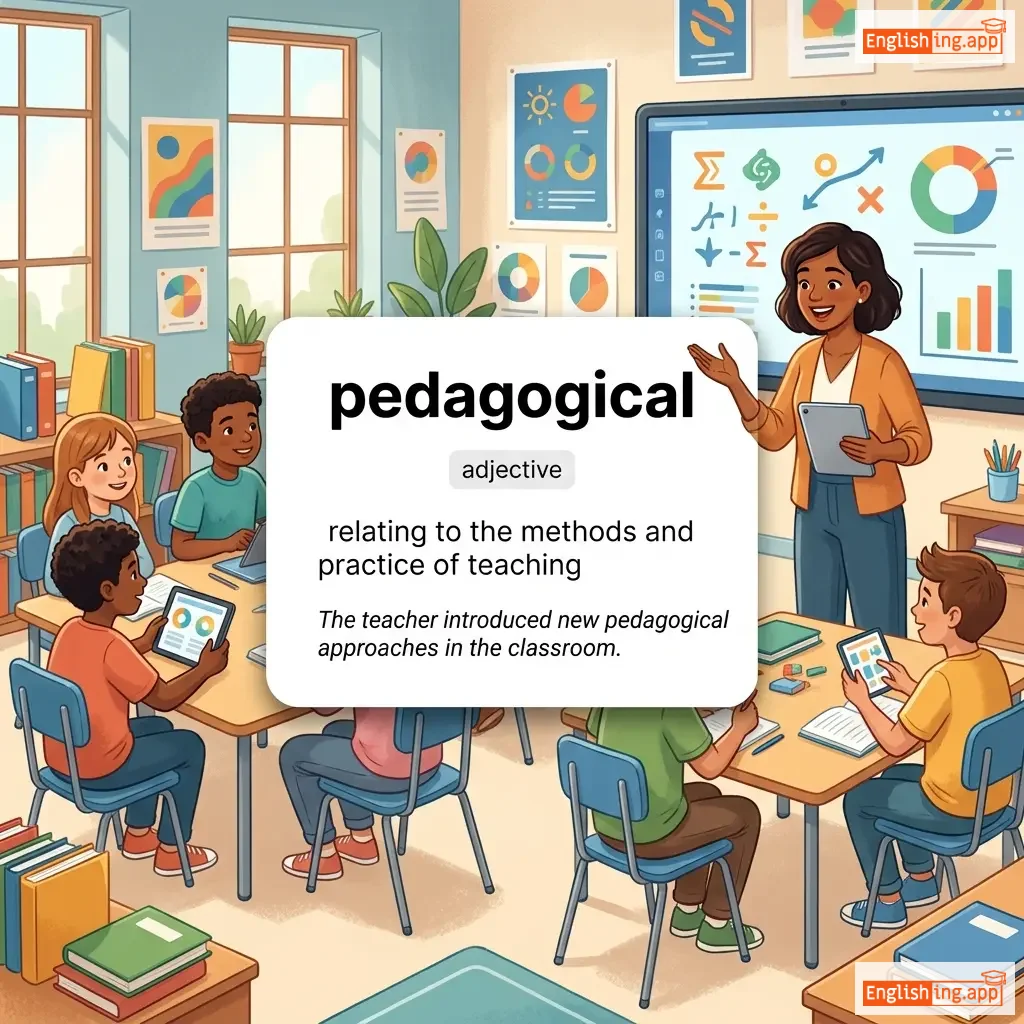
pedagogical definition card — visual illustration of the meaning
adjective
/ˌpɛdəˈɡɒdʒɪkəl/
教学的 (jiaoxue de)

relating to the methods and practice of teaching

"The teacher introduced new pedagogical approaches in the classroom."
"教师在课堂上引入了新的教学方法。" (Jiaoshi zai kètáng shàng yǐnrùle xīn de jiàoxué fāngfǎ.)
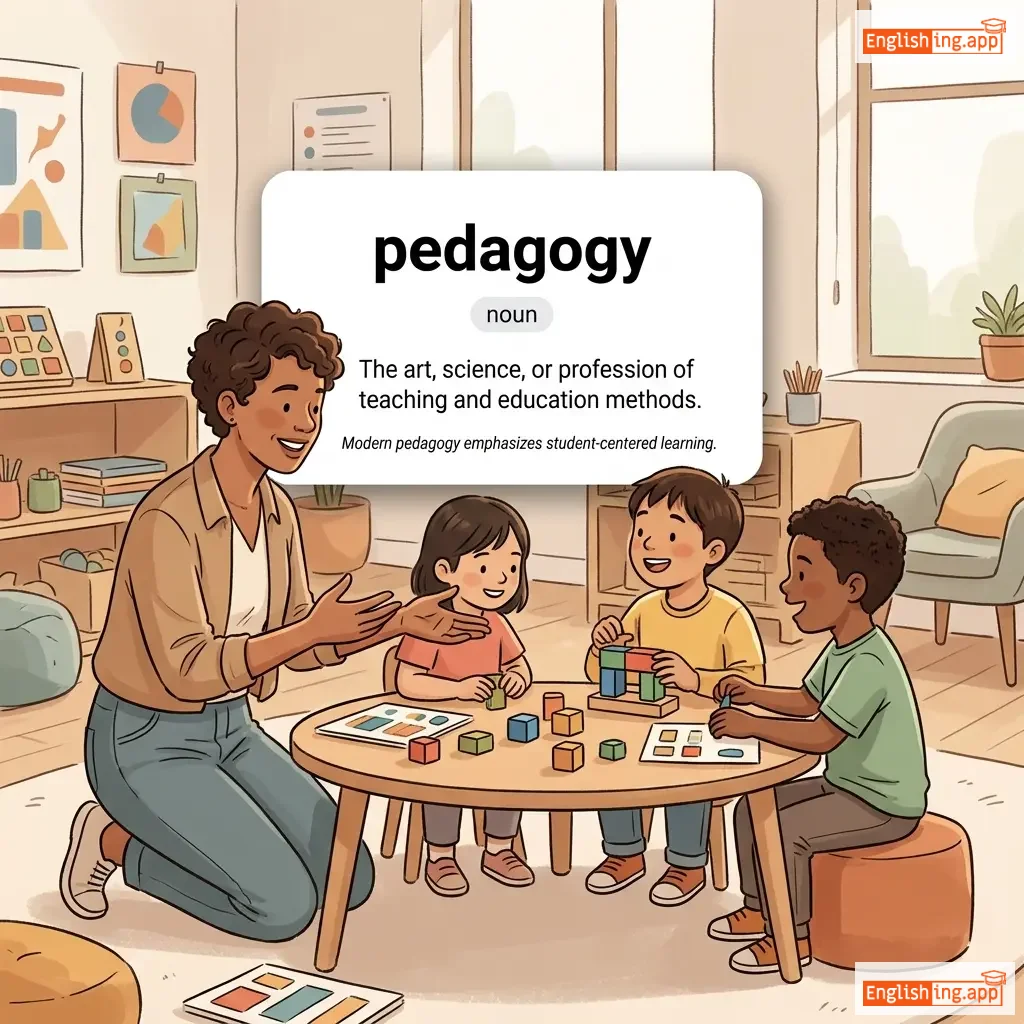
pedagogy definition card — visual illustration of the meaning
noun
/ˈpɛdəˌɡoʊdʒi/
教育学 (jiaoyu xue)

The art, science, or profession of teaching and education methods.

"Modern pedagogy emphasizes student-centered learning."

"现代教育学强调以学生为中心的学习。" (Xiandai jiaoyu xue qiangdiao yi xuesheng wei zhongxin de xuexi.)
noun, verb
/ˈpɛdəl/
脚操作的杠杆 (jiao caozuo de ganggan)

A foot-operated lever for powering or controlling a mechanism, especially on a bicycle.

"He pressed down hard on the bicycle pedal."

"他用力踩下了自行车的踏板。" (Tā yòng lì cǎi xiàle zìxíngchē de tàbǎn.)
adjective
/pɪˈkjuːliər/
奇怪 (qíguài)

strange or unusual; characteristic of only one person, place, or thing

"She has a peculiar habit of talking to her plants."

"她有一个奇怪的习惯,就是和她的植物说话。" (Tā yǒu yīgè qíguài de xíguàn, jiùshì hé tā de zhíwù shuōhuà.)
noun
/ˈpɛdəˌɡɒɡ/
教师 (jiaoshi)

a teacher, especially a strict or formal one

"The old pedagogue insisted on discipline in the classroom."

"那位老教育学家坚持在课堂上纪律。" (Na wei lao jiaoyuxuejia jianchi zai ketang shang jilv.)