वोकैबुलरीज

इंग्लिश वोकैबुलरी डिस्कवर, लर्न और मास्टर करें

noun
/ˈpɔːpər/
भिखारी (bhikhari)

A very poor person.

"The pauper begged for food on the street corner."

"भिखारी ने सड़क के कोने पर भोजन के लिए भीख मांगी।" (bhikhari ne sadak ke kone par bhojan ke liye bhikh maangi.)
noun
/ˈpɔːpərɪzəm/
दरिद्रता (daridrata)

The state of being extremely poor.

"The country struggled with rising pauperism in the 19th century."

"देश ने 19वीं सदी में बढ़ती हुई दरिद्रता से संघर्ष किया।" (Desh ne 19vi sadi mein badhti hui daridrata se sangharsh kiya.)
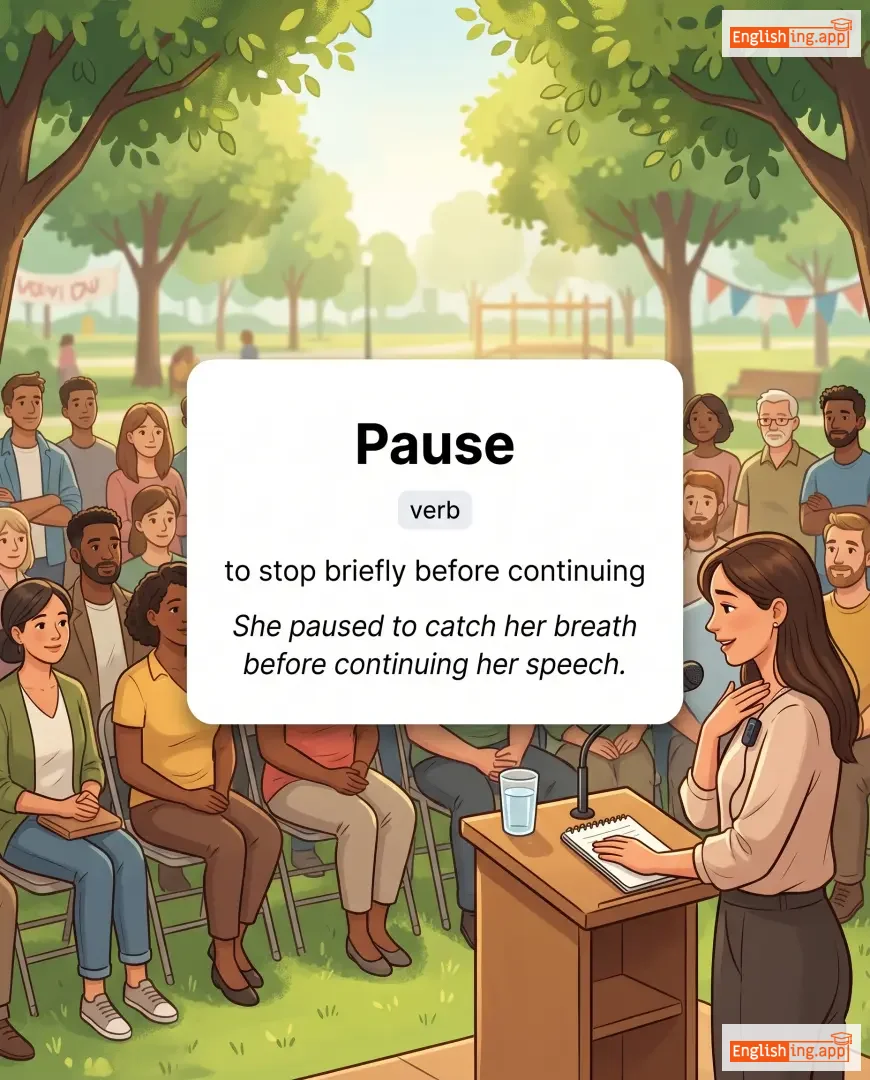
Pause definition card — visual illustration of the meaning
verb
/pɔːz/
विराम (viraam)

to stop briefly before continuing

"She paused to catch her breath before continuing her speech."

"उसने अपनी सांस पकड़ने के लिए थोड़ी देर के लिए विराम लिया।" (Usne apni saans pakadna ke liye thodi der ke liye viraam liya.)
noun
/ˈpeɪvmənt/
फुटपाथ (footpath)

a hard paved surface such as a road or sidewalk; the act or result of paving

"She walked along the pavement to reach the bus stop."

"वह बस स्टॉप तक पहुँचने के लिए फुटपाथ पर चली।" (vah bus stop tak pahunchne ke liye footpath par chali)
noun
/pəˈvɪliən/
पंडाल (pandal)

A large tent or temporary building, often used for events or exhibitions.

"The wedding reception was held in a decorated pavilion."

"वेडिंग रिसेप्शन एक सजे हुए पंडाल में आयोजित किया गया था।" (Wedding reception ek saje huye pandal mein aayojit kiya gaya tha.)
pay definition card — visual illustration of the meaning
verb
/peɪ/
भुगतान करना (bhugtan karna)

to give money in exchange for goods or services

"I need to pay for the groceries."

"मुझे किराने का सामान खरीदने के लिए भुगतान करना होगा।" (Mujhe kirane ka samaan kharidne ke liye bhugtan karna hoga.)
adjective
/ˈpeɪ.ə.bəl/
भुगतान योग्य (bhugtan yogya)

required to be paid; owed as a debt

"The amount is payable within thirty days of the invoice date."

"रकम चालान की तिथि से तीस दिनों के भीतर भुगतान योग्य है।" (rakm chalan ki tithi se tees dinon ke bhitar bhugtan yogya hai)
noun
/peɪˈiː/
प्राप्तकर्ता (praptakarta)

A person to whom money is paid or is to be paid.

"The payee must sign the check before cashing it."

"पेयी को चेक नकद करने से पहले साइन करना होगा।" (Peyi ko chek nakad karne se pehle sign karna hoga.)
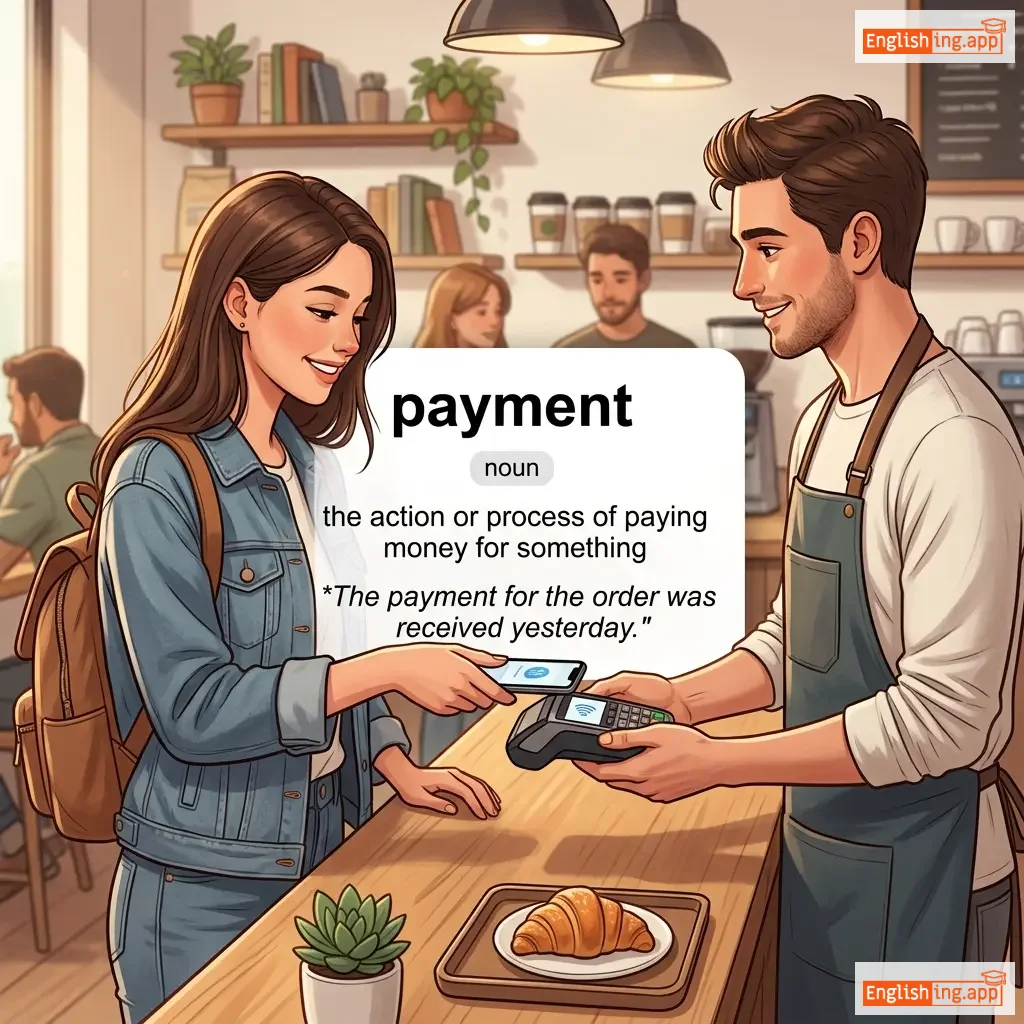
payment definition card — visual illustration of the meaning
noun
/ˈpeɪmənt/
पेमेंट (payment)

the action or process of paying money for something

"The payment for the order was received yesterday."

"ऑर्डर का पेमेंट कल प्राप्त हुआ था।" (Order ka payment kal prapt hua tha.)
noun
/ˈpiːˈsi/
पर्सनल कंप्यूटर (personal computer)

abbreviation for 'personal computer', a machine for performing digital operations

"I just bought a new PC for work."

"मैंने काम के लिए एक नया पीसी खरीदा।" (Maine kaam ke liye ek naya PC khareeda.)
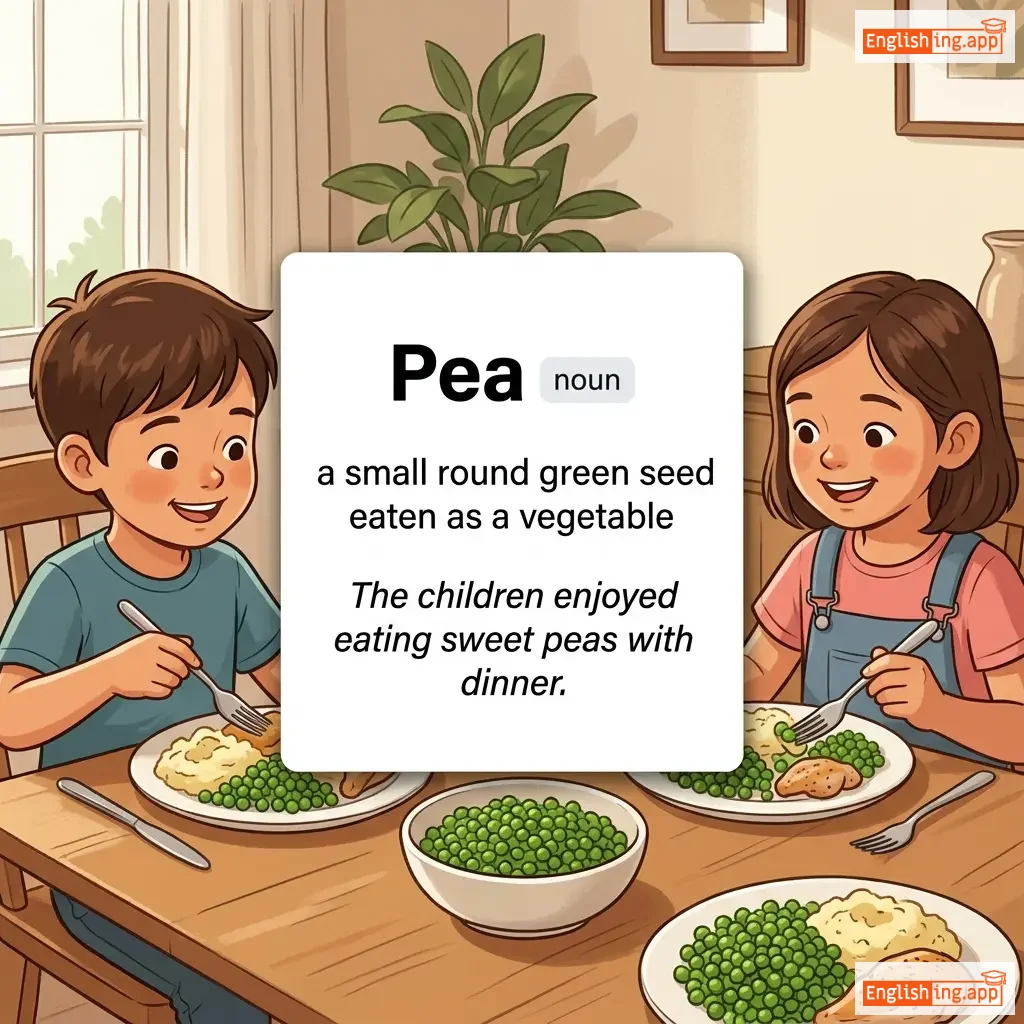
Pea definition card — visual illustration of the meaning
noun
/piː/
मटर (matar)

a small round green seed eaten as a vegetable

"The children enjoyed eating sweet peas with dinner."

"बच्चों ने रात के खाने में मीठी मटर खाना पसंद किया।" (bachcho ne raat ke khane mein meethi matar khana pasand kiya)
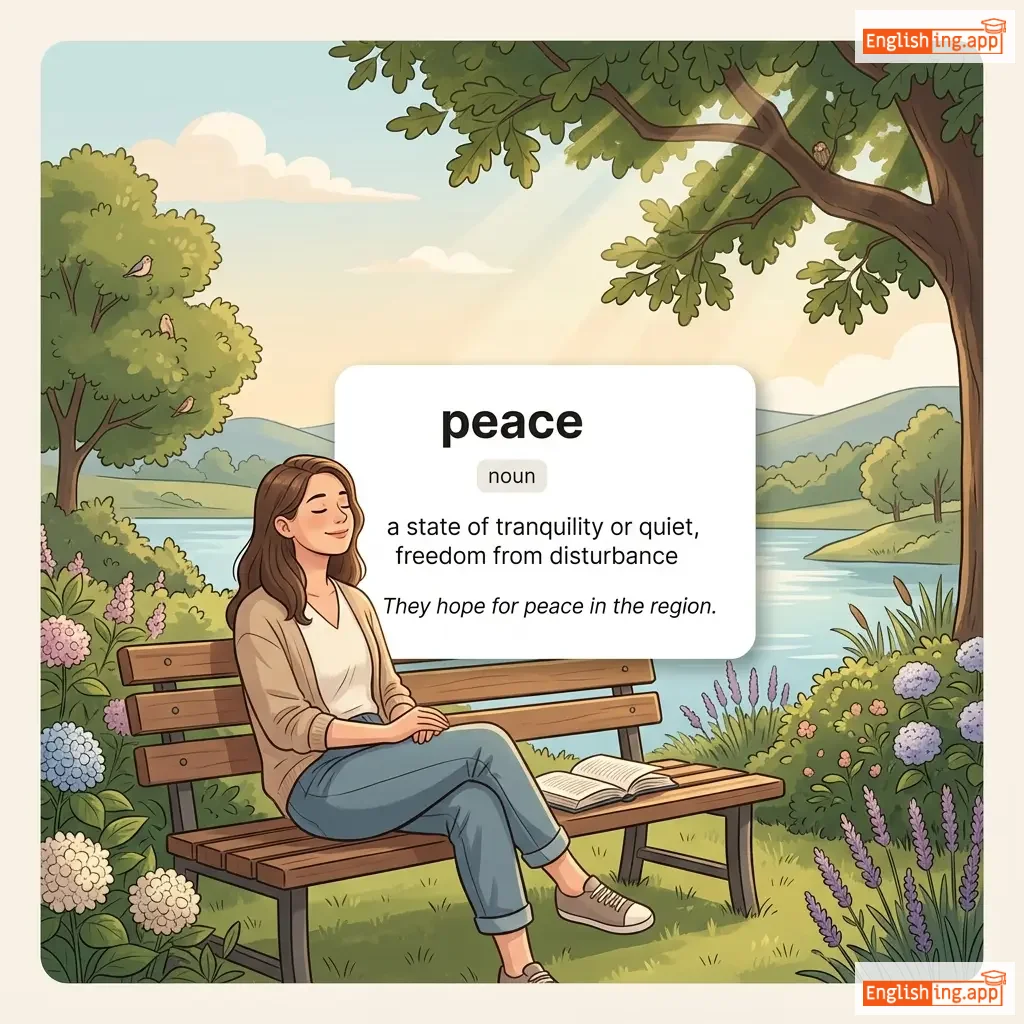
peace definition card — visual illustration of the meaning
noun
/piːs/
शांति (shanti)

a state of tranquility or quiet, freedom from disturbance

"They hope for peace in the region."

"वे क्षेत्र में शांति की कामना करते हैं।" (Ve kshetra mein shanti ki kaamna karte hain.)
adjective
/ˈpiːsəbl/
शांतिपूर्ण (shantipoorn)

inclined to avoid conflict; friendly and non-violent in nature

"She is a peaceable neighbor who never quarrels with anyone."

"वह एक शांतिपूर्ण पड़ोसी है जो कभी किसी से झगड़ा नहीं करती।" (Vah ek shantipurn padosi hai jo kabhi kisi se jhagda nahi karti.)
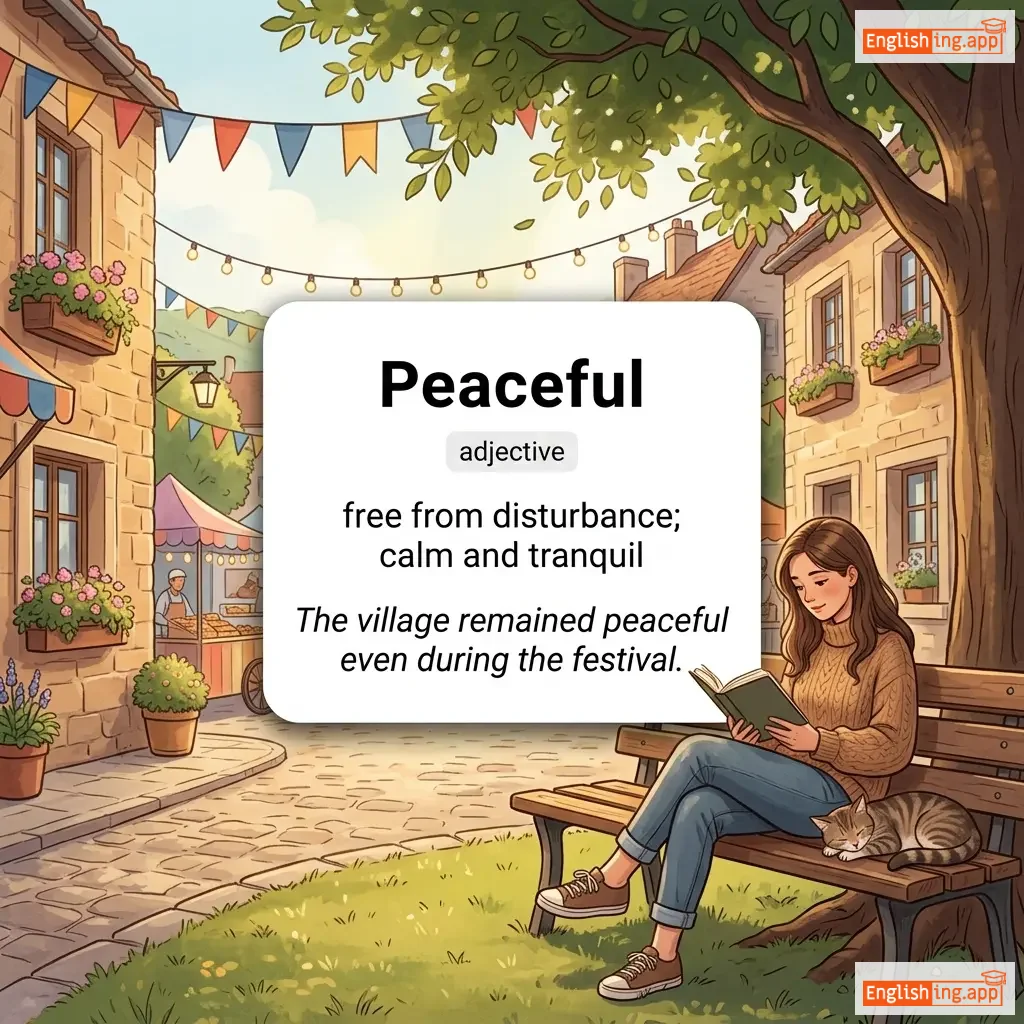
Peaceful definition card — visual illustration of the meaning
adjective
/ˈpiːsfl/
सुख (sukh)

free from disturbance; calm and tranquil

"The village remained peaceful even during the festival."

"जब उसे पुरस्कार मिला, तो वह अपनी खुशी छिपा नहीं पाई।" (Jab use puraskaar mila, to vah apni khushi chhupa nahi paayi.)
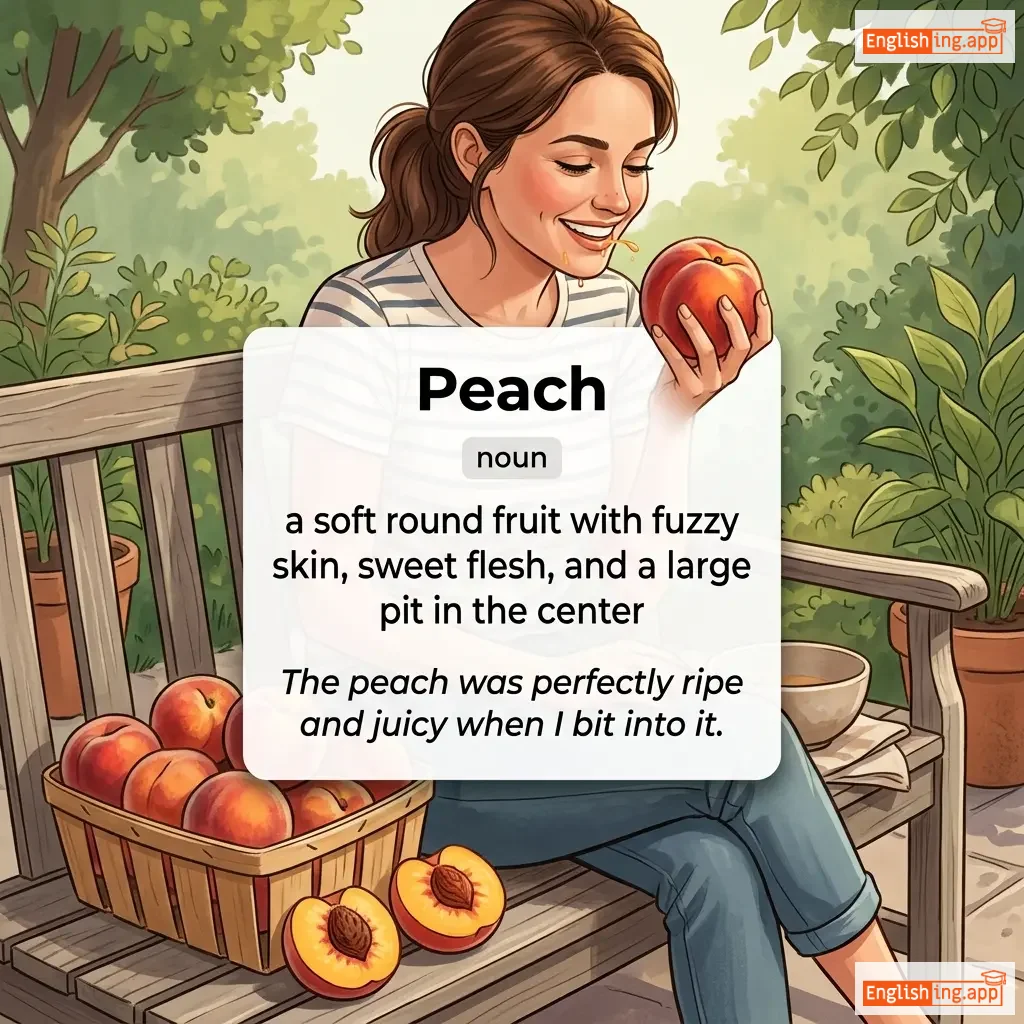
Peach definition card — visual illustration of the meaning
noun
/piːtʃ/
पीच (peech)

a soft round fruit with fuzzy skin, sweet flesh, and a large pit in the center

"The peach was perfectly ripe and juicy when I bit into it."

"पीच पूरी तरह से पका और रसीला था जब मैंने इसे काटा।" (peech pūrī tarah se pakā aur raseelā thā jab maine ise kāṭā.)
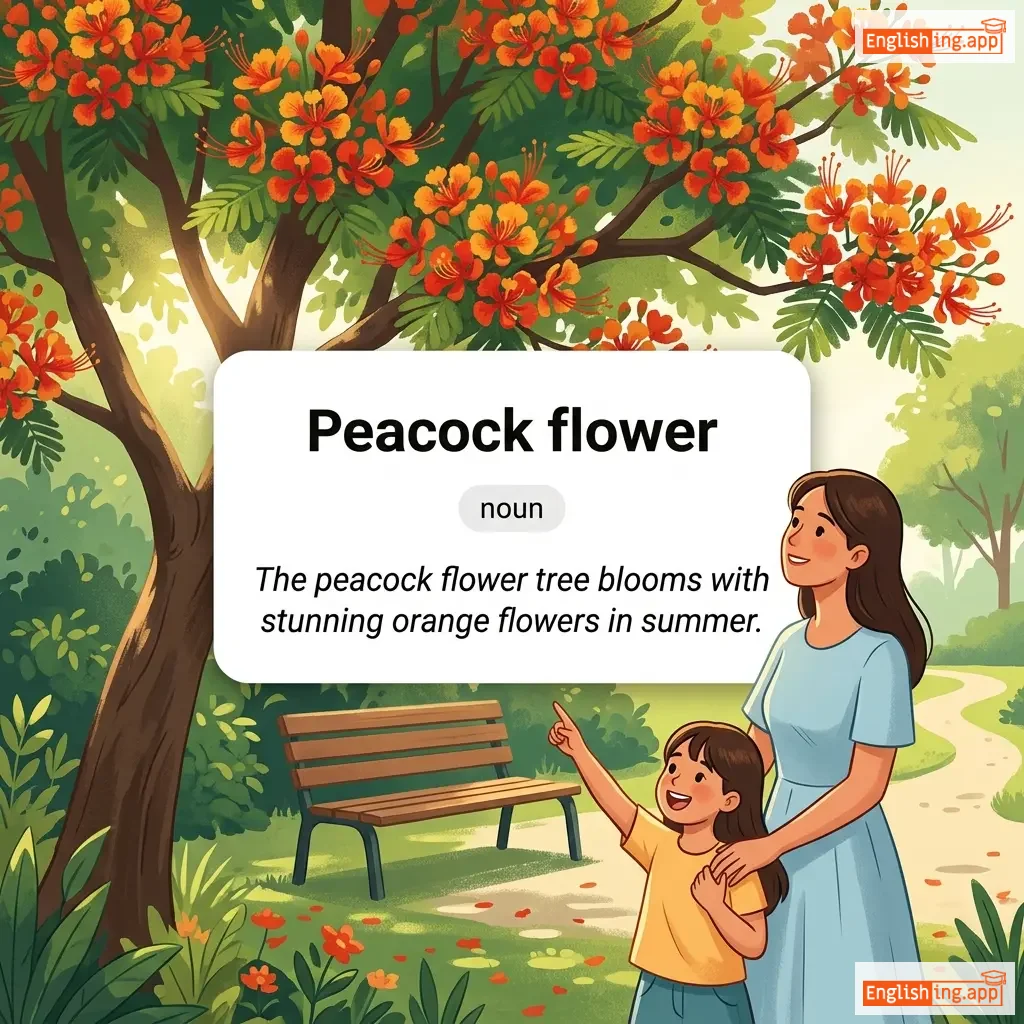
Peacock flower definition card — visual illustration of the meaning
noun
/ˈpiː.kɒk ˈflaʊ.ər/
मोर का फूल (mor ka phool)

a tropical tree with bright orange and red flowers that resemble a peacock's tail

"The peacock flower tree blooms with stunning orange flowers in summer."

"मोर का फूल पेड़ ग्रीष्म में शानदार नारंगी फूलों के साथ खिलता है।" (mor ka phool ped grishm mein shandaar naaree phoolon ke saath khilta hai)
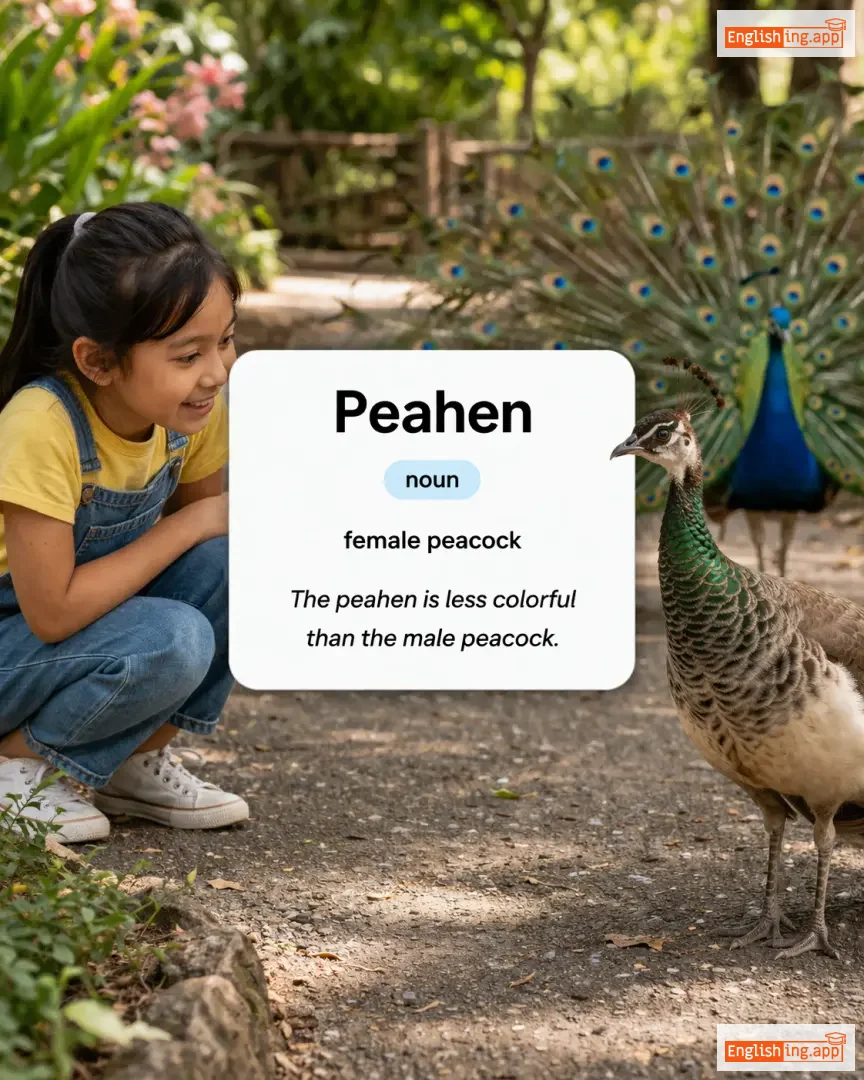
Peahen definition card — visual illustration of the meaning
noun
/ˈpiː.hən/
मोरनी (morni)

female peacock

"The peahen is less colorful than the male peacock."

"मोरनी मेल मोर के मुकाबले कम रंगीन है।" (morni mel mor ke mukable kam rangeen hai.)
noun
/piːk/
चोटी (choti)

the pointed top of a mountain or hill, or the highest point of something

"They reached the peak of the mountain after hours of hiking."

"उन्होंने घंटों की चढ़ाई के बाद पहाड़ की चोटी तक पहुँचने में सफलता प्राप्त की।" (Unhone ghanton ki chadhai ke baad pahad ki choti tak pahuchne mein safalta prapt ki.)
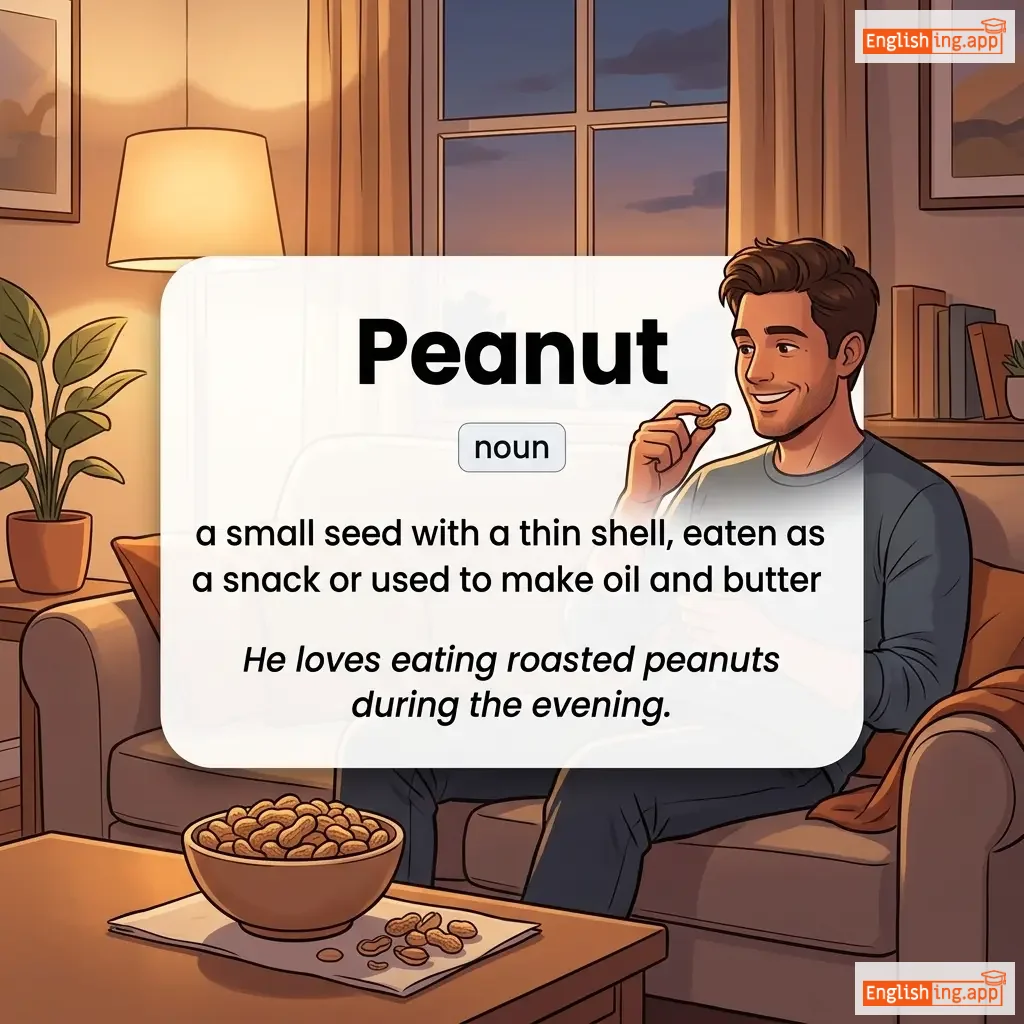
Peanut definition card — visual illustration of the meaning
noun
/ˈpiːnʌt/
मूँगफली (moongphali)

a small seed with a thin shell, eaten as a snack or used to make oil and butter

"He loves eating roasted peanuts during the evening."

"वह शाम को भुनी हुई मूँगफली खाना पसंद करता है।" (Woh shaam ko bhuni hui moongphali khana pasand karta hai.)
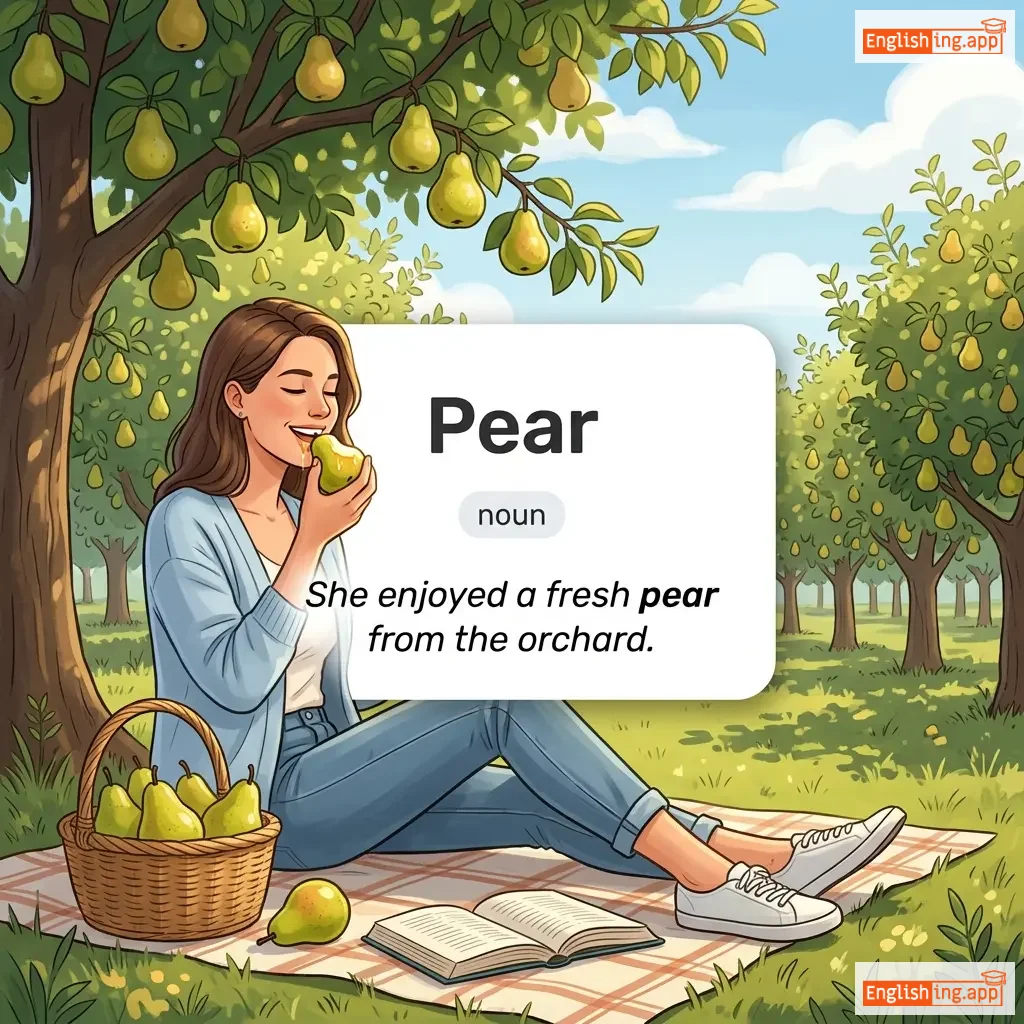
Pear definition card — visual illustration of the meaning
noun
/per/
नाशपाती (nashpati)

a sweet juicy fruit with a rounded shape that is wider at the bottom than the top

"She enjoyed a fresh pear from the orchard."

"वह बाग़ से एक ताजे नाशपाती का आनंद ले रही थी।" (woh bagh se ek taze nashpati ka anand le rahi thi)
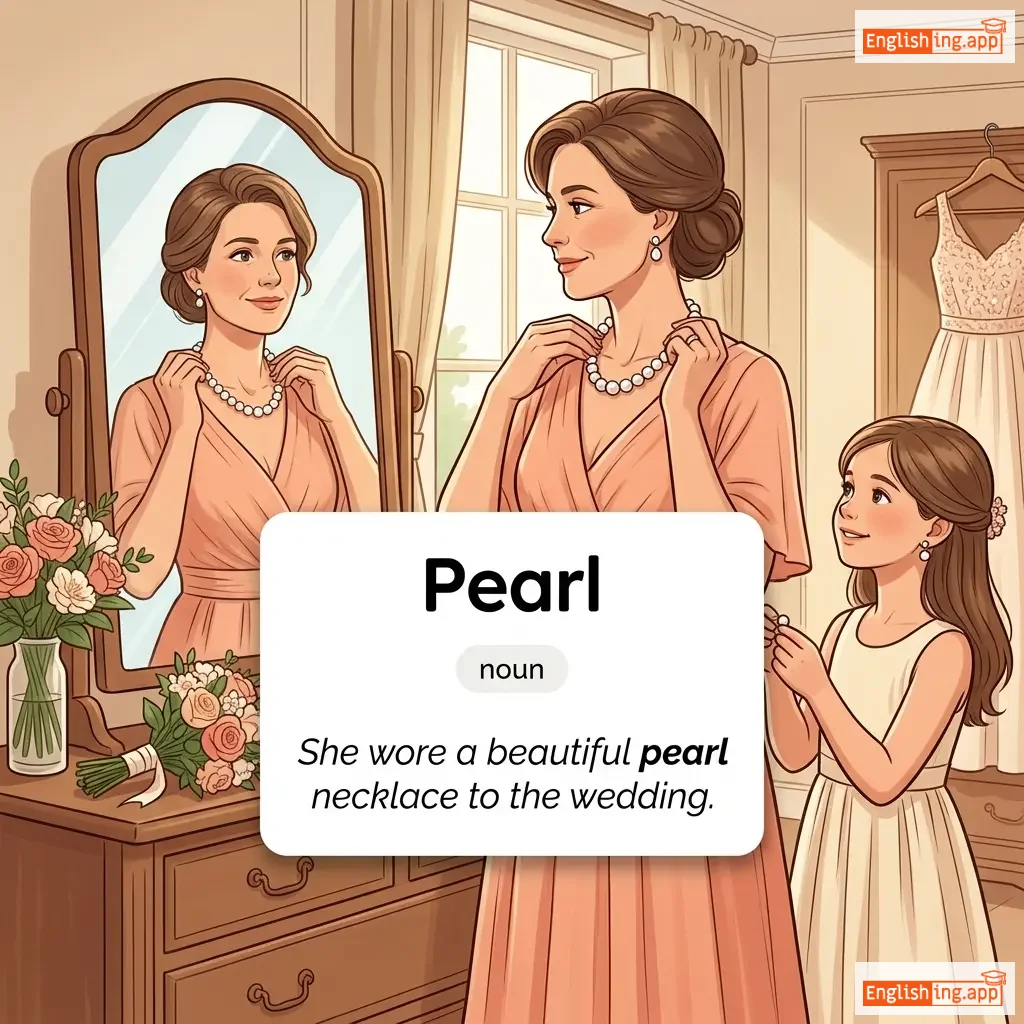
Pearl definition card — visual illustration of the meaning
noun
/pɜːrl/
मोती (moti)

a hard, lustrous object produced within the soft tissue of a shelled mollusk; used in jewelry

"She wore a beautiful pearl necklace to the wedding."

"उसने शादी में एक सुंदर मोती की हार पहना था।" (usne shaadi mein ek sundar moti ki haar pehna tha.)
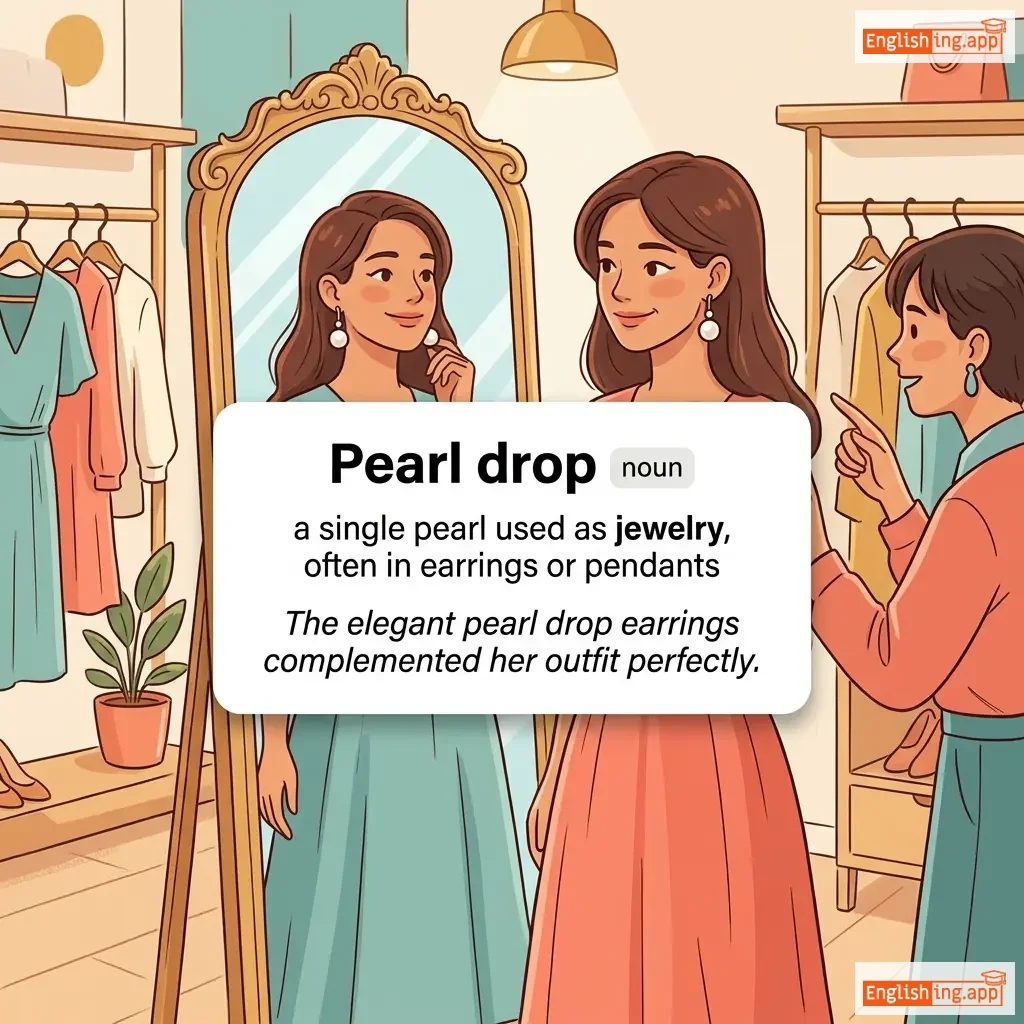
Pearl drop definition card — visual illustration of the meaning
noun
/pɜːrl drɒp/
मोती की बूँद (moti ki boond)

a single pearl used as jewelry, often in earrings or pendants

"The elegant pearl drop earrings complemented her outfit perfectly."

"उसकी सुरुचिपूर्ण मोती की बूँद वाली बालियाँ उसके आउटफिट के साथ पूरी तरह से मेल खाती थीं।" (uski suruchipurn moti ki boond wali baaliyaan uske outfit ke saath puri tarah se mel khati thi)
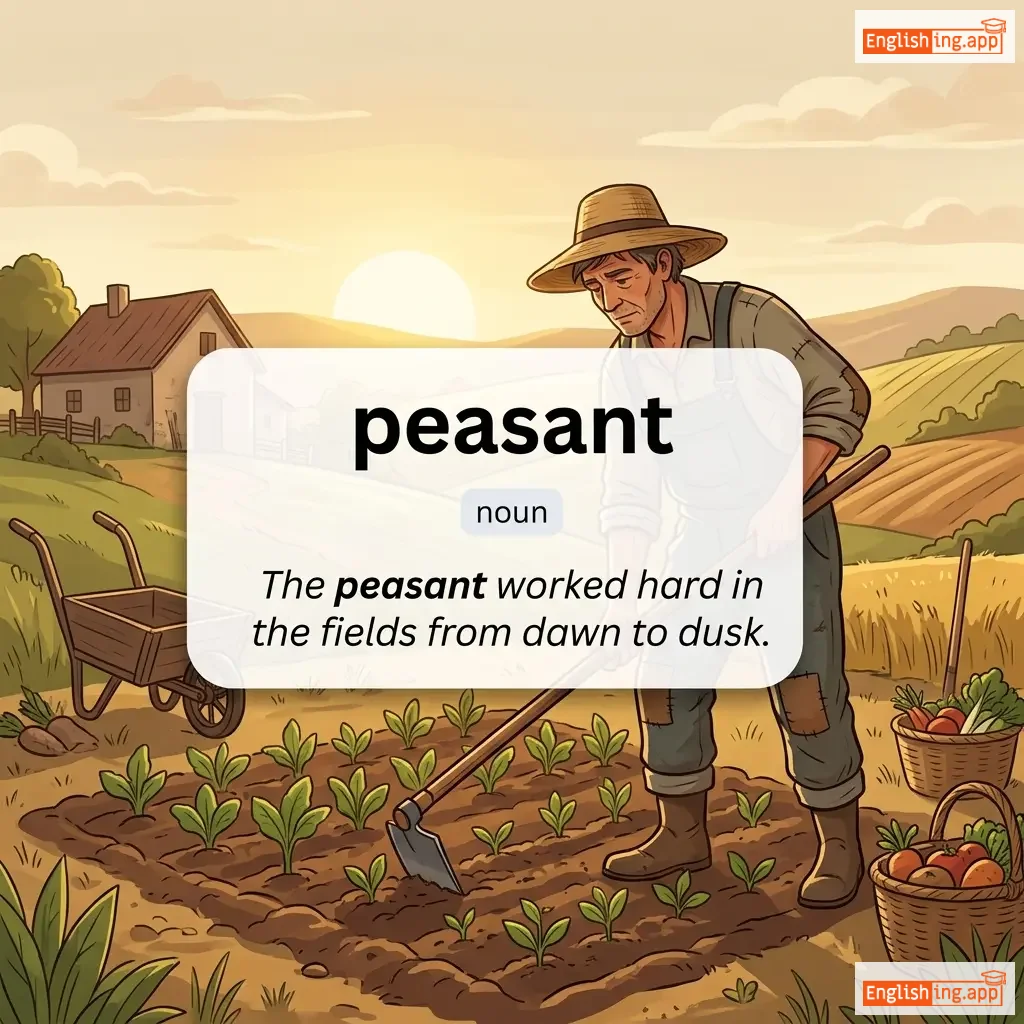
peasant definition card — visual illustration of the meaning
noun
/ˈpɛzənt/
कृषक (krishak)

a poor farmer or agricultural laborer who owns or rents a small piece of land for cultivation

"The peasant worked hard in the fields from dawn to dusk."

"कृषक सूर्योदय से सूर्यास्त तक खेतों में कठिन परिश्रम करता था।" (krishak suryoday se suryasta tak kheton mein kathin parishram karta tha)
noun
/ˈpɛbl/
कंकड़ (kankar)

a small smooth stone found on beaches or rivers

"He threw a pebble into the pond and watched the ripples."

"उसने एक कंकड़ तालाब में फेंका और तरंगों को देखा।" (Usne ek kankar talab mein phenka aur tarango ko dekha.)
adjective
/ˈpɛkəbl/
पापमय (paapmay)

liable to sin or error; capable of doing wrong

"Humans are peccable, but they strive for goodness."

"मनुष्य पापमय होते हैं, लेकिन वे अच्छाई की ओर प्रयास करते हैं।" (Manushya paapmay hote hain, lekin ve acchai ki or prayaas karte hain.)
noun
/ˌpɛkəˈdɪloʊ/
छोटा दोष (chhota dosh)

a small or minor fault or sin

"Forgetting to call was just a small peccadillo, not a serious mistake."

"फोन न करना सिर्फ एक छोटा दोष था, कोई गंभीर गलती नहीं।" (Phone na karna sirf ek chhota dosh tha, koi gambhir galti nahi.)
adjective
/ˈpɛkənt/
पापी (papi)

Guilty of a moral offense or wrongdoing; sinful.

"The judge declared the peccant official unfit for office."

"न्यायाधीश ने पापी अधिकारी को पद के लिए अयोग्य घोषित किया।" (Nyayadhish ne papi adhikari ko pad ke liye ayogya ghoshit kiya.)
verb
/pɛk/
चोंच मारना (chonch marna)

To strike or bite something with a beak; to eat in small bites.

"The hen began to peck at the grains scattered on the ground."

"मुर्गी ने जमीन पर बिखरे दानों पर चोंच मारनी शुरू की।" (Murgi ne zameen par bikhre danon par chonch marni shuru ki.)
adjective
/ˈpɛktərəl/
पेक्टोरल (pektoral)

Relating to the chest or breast.

"The athlete focused on strengthening his pectoral muscles."

"एथलीट अपने पेक्टोरल मसल्स को मजबूत करने पर ध्यान केंद्रित कर रहा था।" (Athlit apne pectoral muscles ko majboot karne par dhyan kendrit kar raha tha.)
verb
/ˈpɛkjʊˌleɪt/
चोरी करना (chori karna)

To embezzle or steal money, especially public funds.

"The corrupt official was found guilty of peculating government funds."

"भ्रष्ट अधिकारी को सरकारी धन हड़पने का दोषी पाया गया था।" (Bhrasht adhikari ko sarkari dhan hadpane ka doshi paaya gaya tha.)
noun
/ˌpɛkjʊˈleɪʃən/
धन का गबन (dhan ka gaban)

The act of embezzling or stealing money, especially from public funds.

"The minister resigned after being accused of peculation."

"मंत्री को पेक्यूलेशन के आरोप में इस्तीफा देना पड़ा।" (Mantri ko peculation ke aarop mein isteefa dena pada.)
adjective
/pɪˈkjuːliər/
अजीब (ajeeb)

strange or unusual; characteristic of only one person, place, or thing

"She has a peculiar habit of talking to her plants."

"उसकी एक अजीब आदत है, वह अपने पौधों से बात करती है।" (Uski ek ajeeb aadat hai, vah apne paudhon se baat karti hai.)
adverb
/pɪˈkju:.li.ə.li/
अजीब तरीके से; विशेष रूप से असामान्य तरीके से (ajeeb tareeke se; vishesh roop se asamanya tareeke se)

in a strange or unusual way; in a manner that is distinctive or characteristic

"She dressed peculiarly for the formal dinner, wearing bright colors and unusual patterns."

"वह औपचारिक रात्रिभोज के लिए अजीब तरीके से तैयार हुई, उज्जवल रंग और असामान्य पैटर्न पहने।" (vah aupcharik raatri bhoj ke liye ajeeb tareeke se tayar hui, ujjwal rang aur asamanya pattern pehne.)
adjective
/pɪˈkjuːniˌɛri/
आर्थिक (arthik)

relating to money or financial matters

"They faced pecuniary difficulties after the business failed."

"व्यापार विफल होने के बाद उन्हें आर्थिक कठिनाइयों का सामना करना पड़ा।" (Vyapar viphal hone ke baad unhe arthik kathinaaiyon ka samna karna pada.)
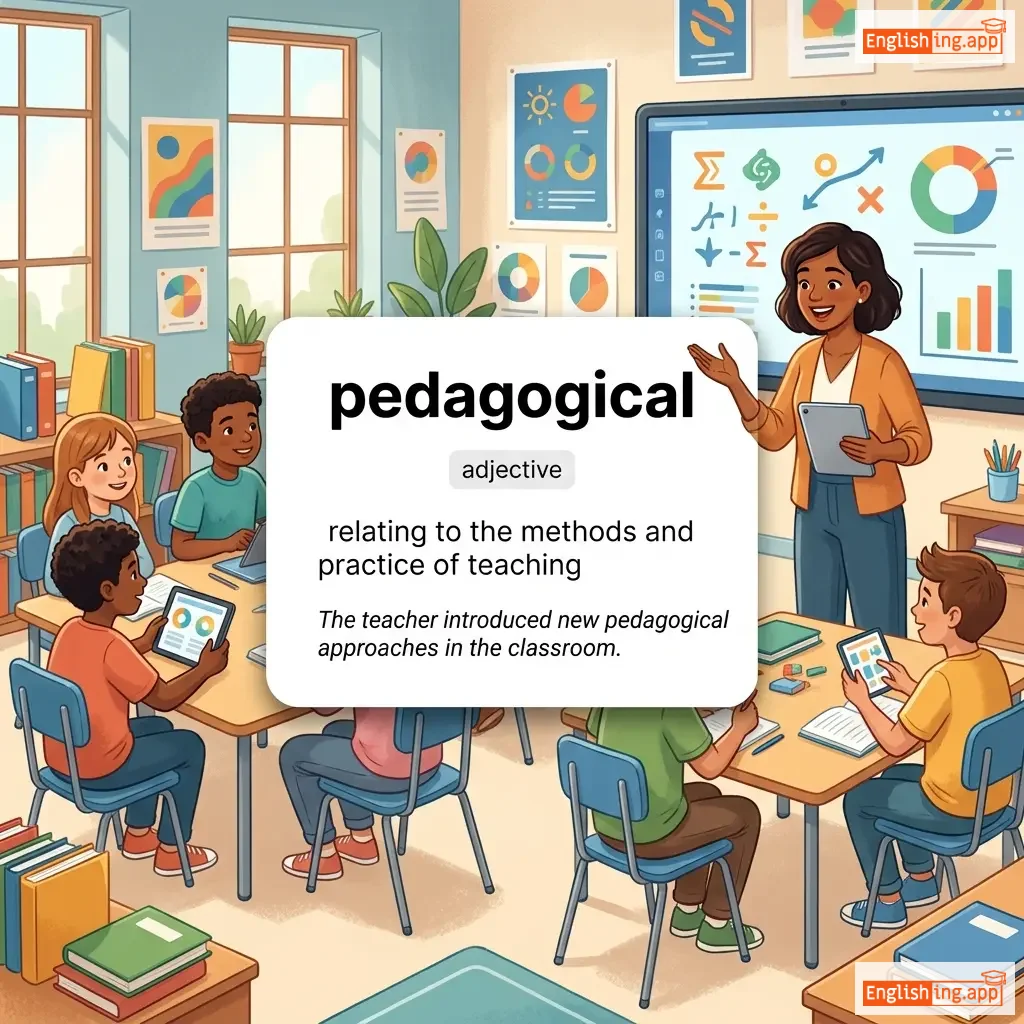
pedagogical definition card — visual illustration of the meaning
adjective
/ˌpɛdəˈɡɒdʒɪkəl/
शिक्षाशास्त्र संबंधी (shikshaashastra sambandhi)

relating to the methods and practice of teaching

"The teacher introduced new pedagogical approaches in the classroom."

"शिक्षक ने कक्षा में नए शिक्षाशास्त्र दृष्टिकोण पेश किए।" (Shikshak ne kaksha mein naye shikshaashastra drishtikon pesh kiye.)
noun
/ˌpɛdəˈɡɒdʒɪks/
शिक्षाशास्त्र (shikshashastra)

the science or art of teaching

"He studied pedagogics to become a better teacher."

"उसने एक बेहतर शिक्षक बनने के लिए शिक्षाशास्त्र का अध्ययन किया।" (Usne ek behtar shikshak banne ke liye shikshashastra ka adhyayan kiya.)
noun
/ˈpɛdəˌɡɒɡ/
शिक्षक (shikshak)

a teacher, especially a strict or formal one

"The old pedagogue insisted on discipline in the classroom."

"पुराने शिक्षक ने कक्षा में अनुशासन पर जोर दिया।" (Puraane shikshak ne kaksha mein anushasan par zor diya.)
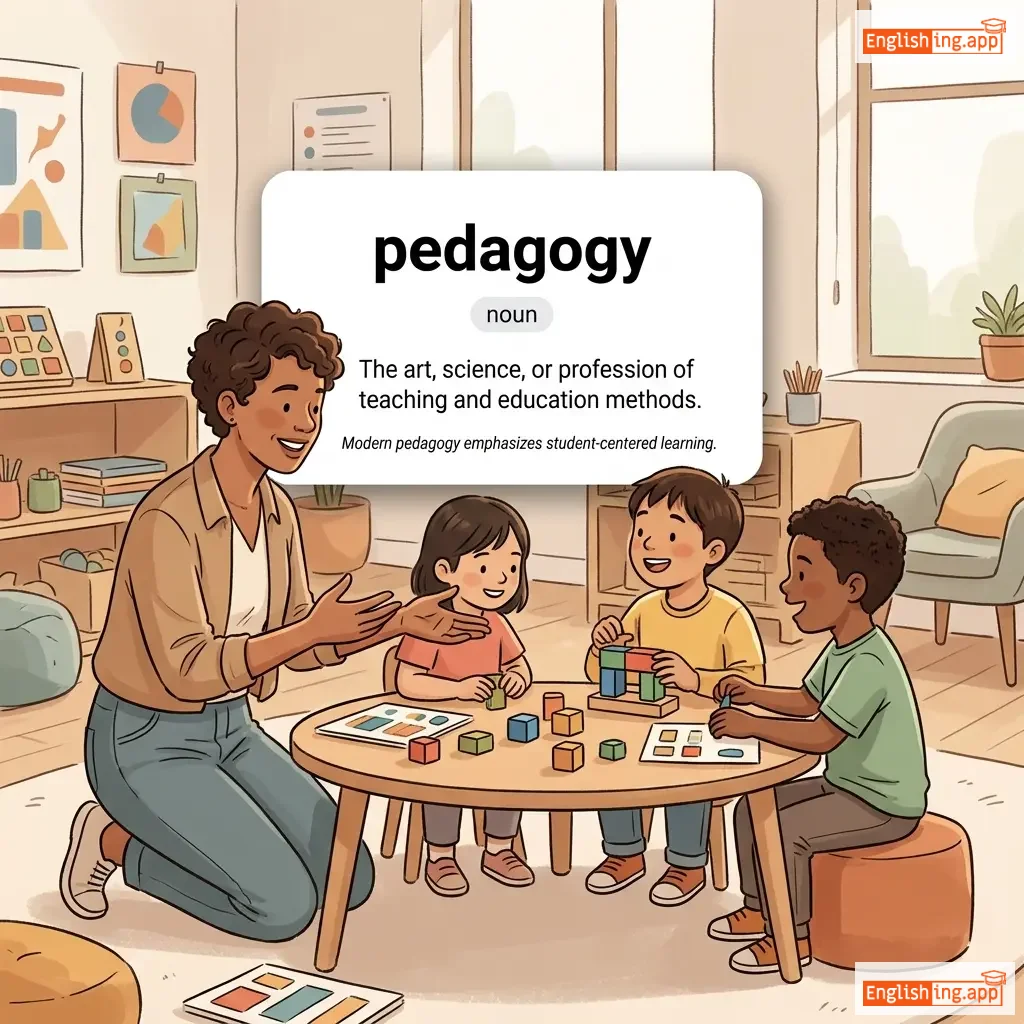
pedagogy definition card — visual illustration of the meaning
noun
/ˈpɛdəˌɡoʊdʒi/
शिक्षाशास्त्र (shikshaashastra)

The art, science, or profession of teaching and education methods.

"Modern pedagogy emphasizes student-centered learning."

"आधुनिक शिक्षाशास्त्र छात्र-केंद्रित शिक्षा पर जोर देता है।" (Aadhunik shikshaashastra chhatra-kendrit shiksha par zor deta hai.)
noun, verb
/ˈpɛdəl/
पांव द्वारा चलाने वाला लीवर (paav dwaara chalaane waala lever)

A foot-operated lever for powering or controlling a mechanism, especially on a bicycle.

"He pressed down hard on the bicycle pedal."

"उसने साइकिल के पैडल को जोर से दबाया।" (Usne cycle ke pedal ko zor se dabaya.)
adjective
/ˈpɛnɪtrəbl/
अवगम्य (avagamya)

Capable of being passed through or entered.

"The thin wall was easily penetrable."

"पतला दीवार आसानी से अवगम्य था।" (Patla deewar aasani se avagamya tha.)
adjective
/ˌpɛnɪˈtɛnʃəl/
पश्चातापपूर्ण (pashchatappoorn)

Relating to or expressing penitence or penance.

"The priest delivered a penitential sermon on forgiveness."

"पादरी ने माफी पर एक पश्चातापपूर्ण उपदेश दिया।" (Padri ne maafi par ek pashchatappoorn updesh diya.)
adjective
/ˈpɛnɪtənt/
पछताया हुआ (pachtaya hua)

Feeling or showing sorrow and regret for having done wrong.

"She was penitent after shouting at her friend."

"वह अपनी दोस्त पर चिल्लाने के बाद पछताया था।" (Vah apni dost par chillane ke baad pachtaya tha.)
noun
/ˈpɛnɪtəns/
पश्चाताप (pashchatap)

The action or feeling of showing sorrow and regret for having done wrong.

"His eyes were full of penitence after realizing his mistake."

"अपनी गलती का एहसास होने के बाद उसकी आँखों में पछतावे का भाव था।" (Apni galti ka ehsaas hone ke baad uski aankhon mein pachhtave ka bhav tha.)
adjective
/pəˈnɪnsjələr/
आधारभूमि जैसा (aadharbhumi jaisa)

Relating to or resembling a peninsula.

"The peninsular region is surrounded by water on three sides."

"आधारभूमि जैसा क्षेत्र तीन ओर पानी से घिरा हुआ है" (Aadharbhumi jaisa kshetra teen or paani se ghirah hua hai)
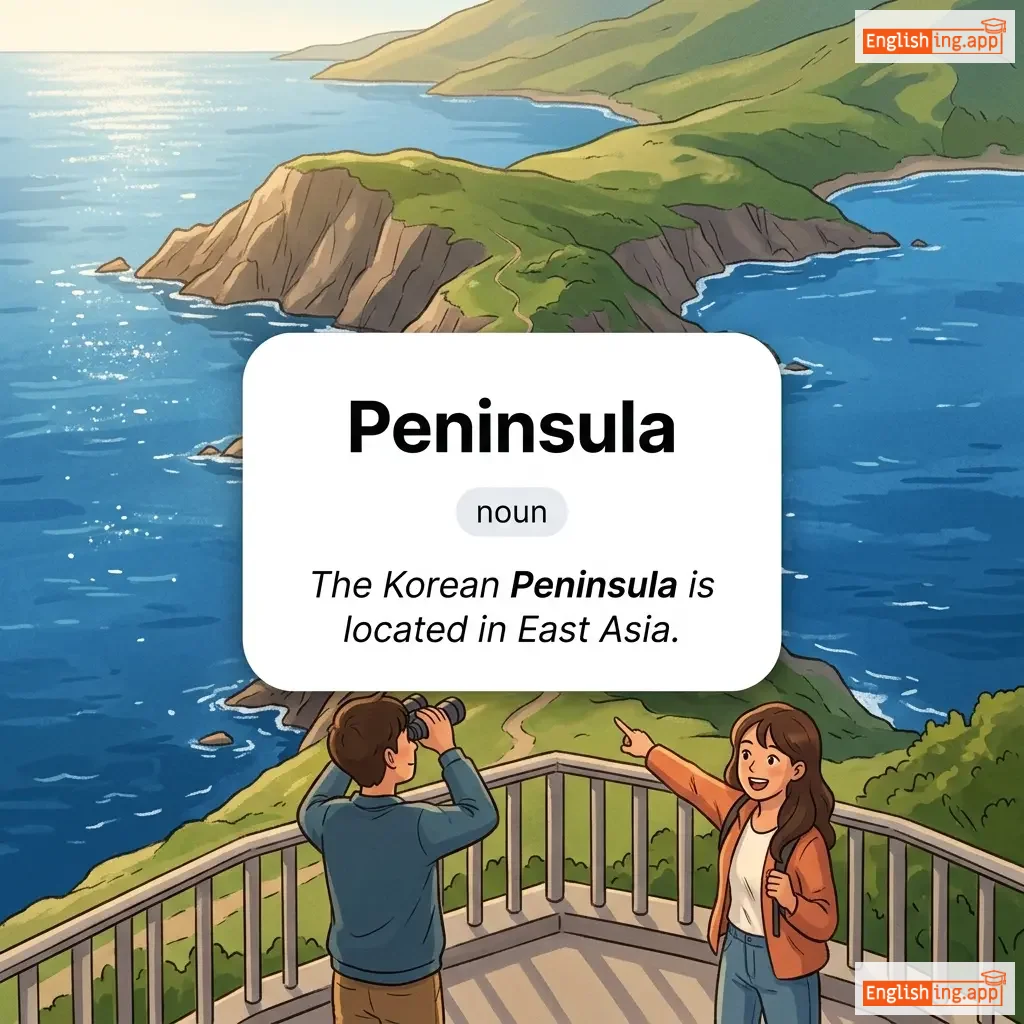
Peninsula definition card — visual illustration of the meaning
noun
/pəˈnɪn.sjə.lə/
प्रायद्वीप (praayadveep)

a piece of land that is almost completely surrounded by water but connected to the mainland

"The Korean Peninsula is located in East Asia."

"कोरियाई प्रायद्वीप पूर्वी एशिया में स्थित है।" (koriyaai praayadveep purvi eshiya mein sthit hai.)
noun
/ˌpɛnɪˈtreɪʃən/
प्रवेश (pravesh)

The act of piercing or entering into something.

"The company's market penetration grew rapidly."

"कंपनी का बाजार में प्रवेश तेजी से बढ़ा।" (Company ka bazaar mein pravesh tezi se badha.)
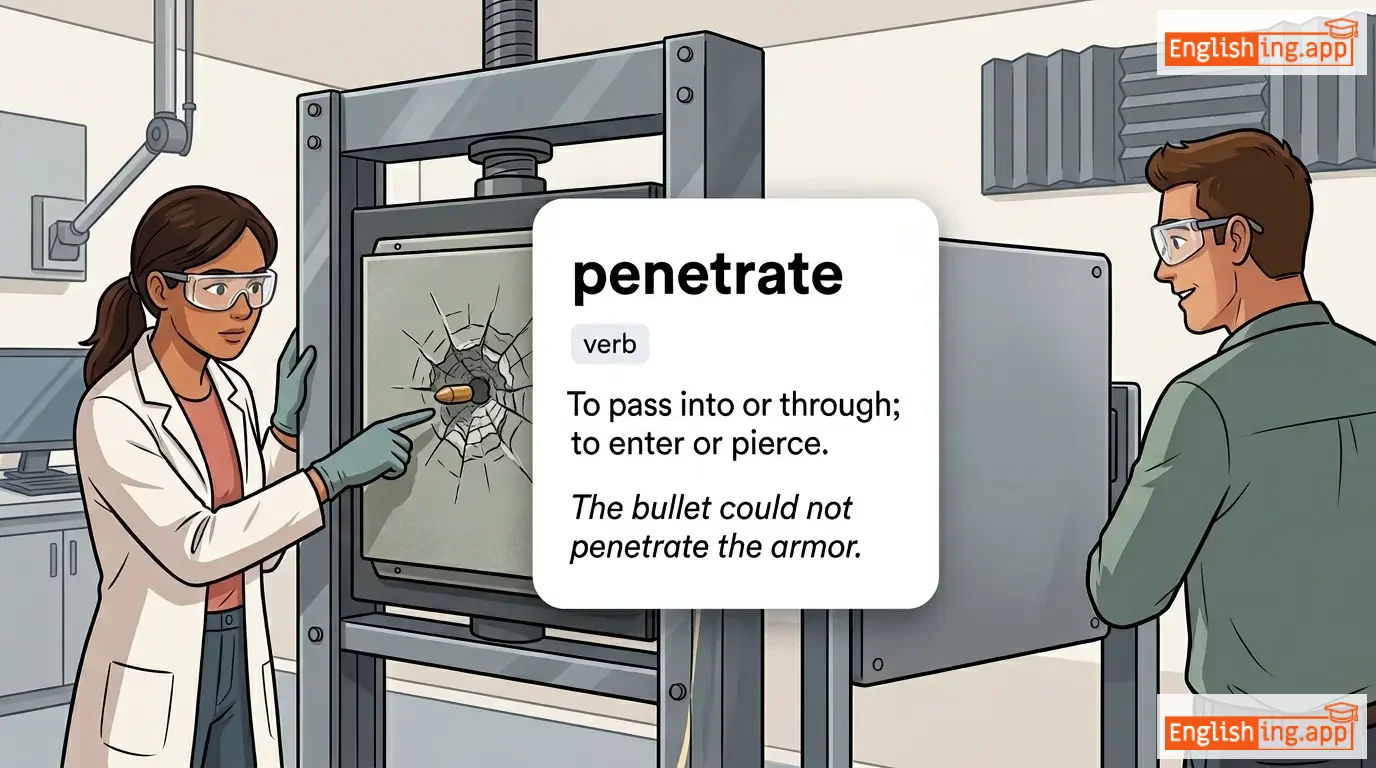
penetrate definition card — visual illustration of the meaning
verb
/ˈpɛnɪtreɪt/
भेदना (bhedna)

To pass into or through; to enter or pierce.

"The bullet could not penetrate the armor."

"बुलेट ने आर्मर को भेद नहीं किया।" (Bullet ne armor ko bhed nahi kiya.)
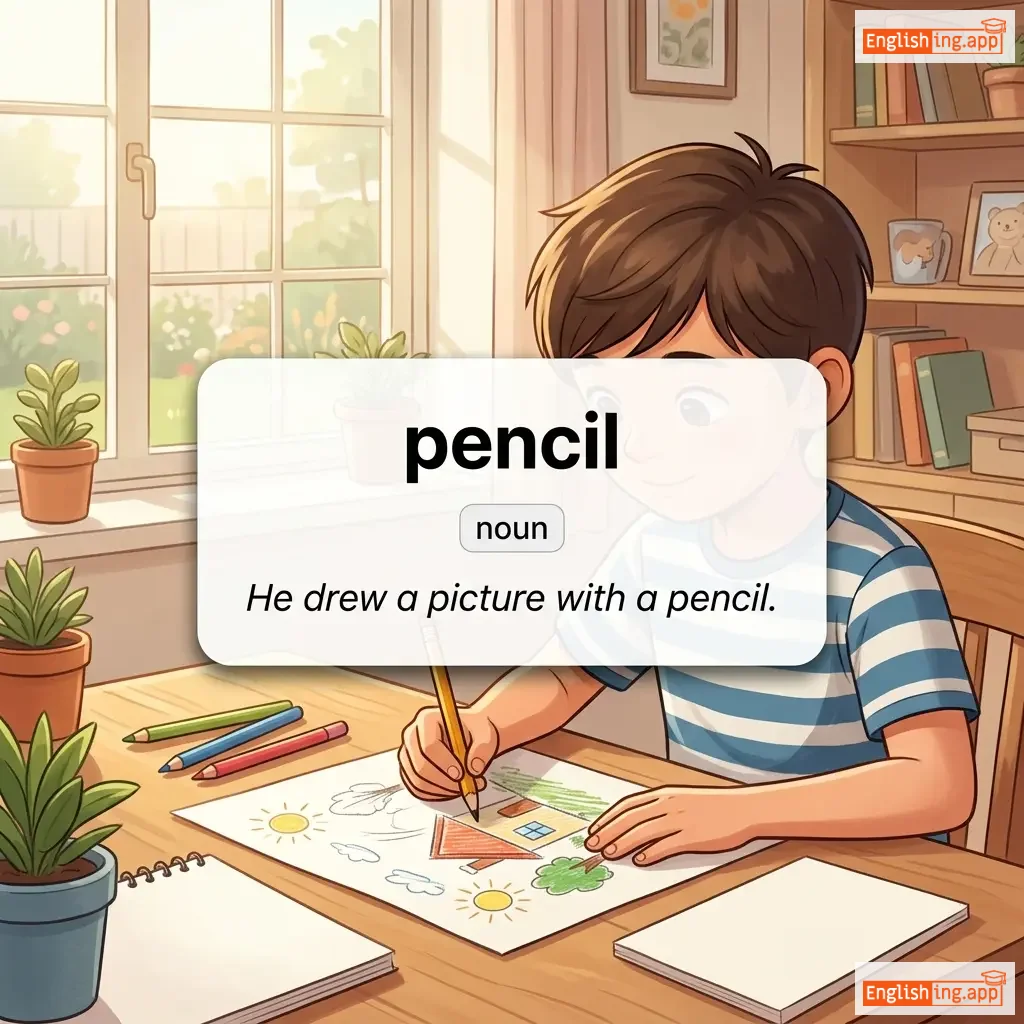
pencil definition card — visual illustration of the meaning
noun
/ˈpɛnsəl/
पेंसिल (pencil)

an instrument for writing or drawing, typically made of wood with a graphite core

"He drew a picture with a pencil."

"उसने पेंसिल से एक तस्वीर खींचा।" (usne pencil se ek tasveer kheenchaa)
noun
/ˈpɛndənt/
लॉकेट (loket)

a piece of jewelry that hangs from a chain worn around the neck

"She wore a silver pendant around her neck."

"उसने अपनी गर्दन में एक चांदी का लॉकेट पहना था।" (usne apni gardan mein ek chaandee ka loket pehna tha.)
adjective
/ˈpɛndənt/
लटकता हुआ (latakta hua)

hanging down or suspended

"The pendent branches touched the ground."

"लटकती हुई शाखाएँ ज़मीन से छू रही थीं।" (latakti hui shaakhayen zameen se chhoo rahi thiin.)