語彙集

英単語辞書 | 単語の意味、定義、例文

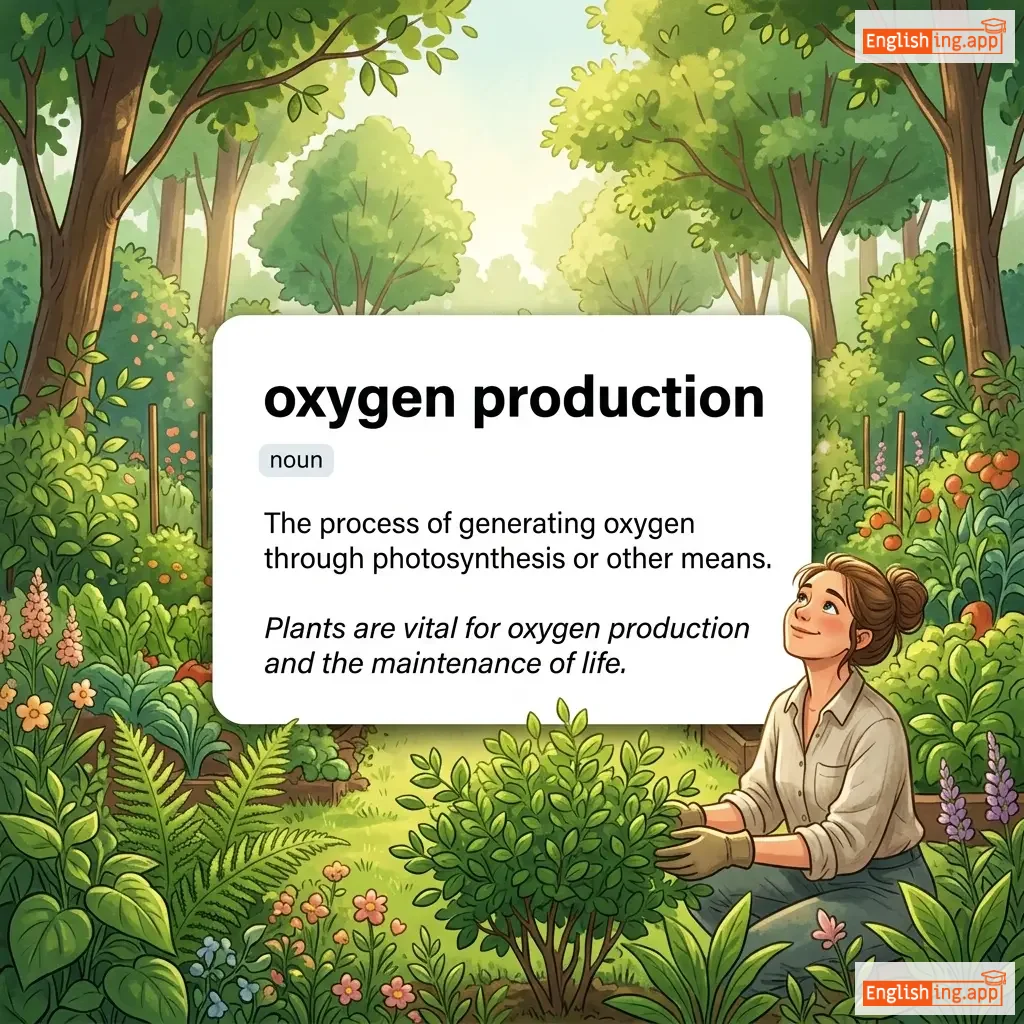
oxygen production definition card — visual illustration of the meaning
noun
ˈɒksɪdʒən prəˈdʌkʃən
酸素生産 (sanso seisan)

The process of generating oxygen through photosynthesis or other means.

"Plants are vital for oxygen production and the maintenance of life."
"植物は酸素の生産と生命の維持に不可欠です。" (Shokubutsu wa sanso no seisan to seimei no iji ni fukaketsu desu.)
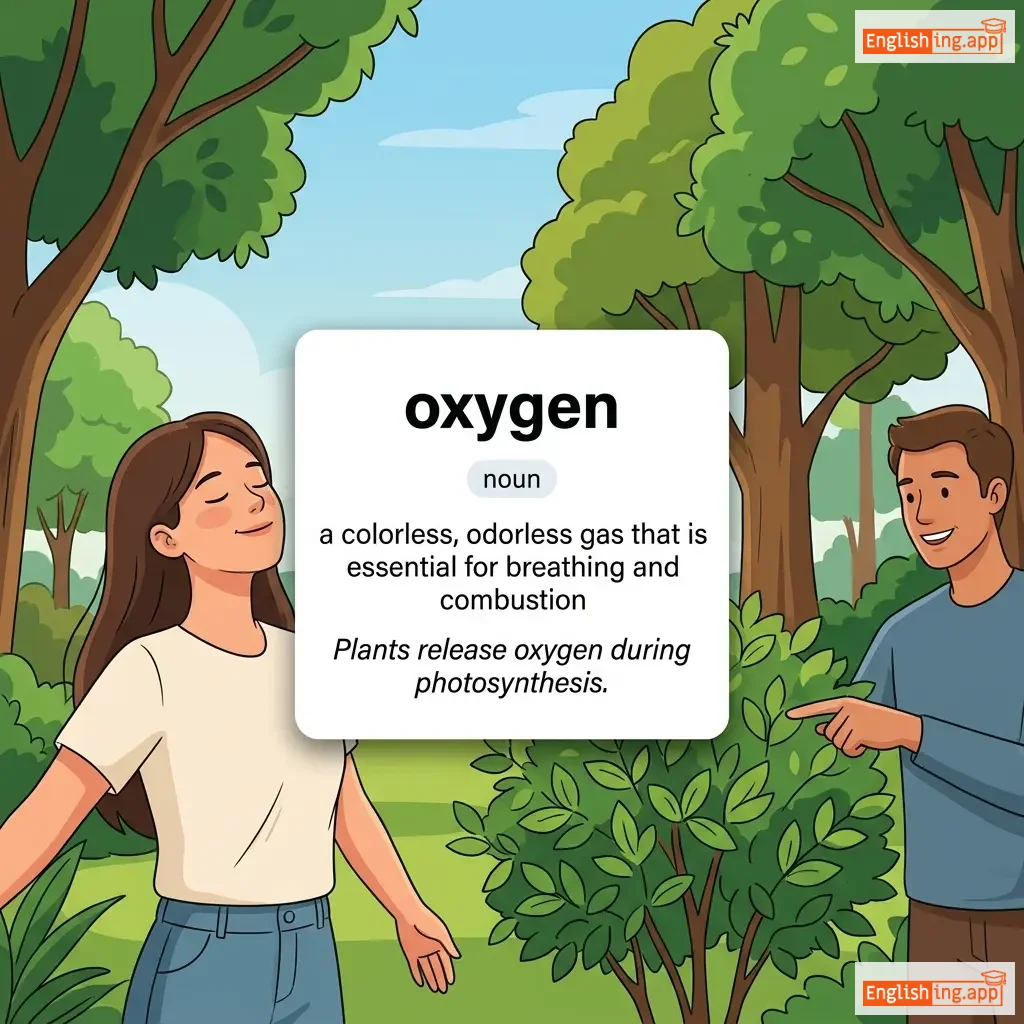
oxygen definition card — visual illustration of the meaning
noun
/ˈɒksɪdʒən/
酸素 (sanso)

a colorless, odorless gas that is essential for breathing and combustion

"Plants release oxygen during photosynthesis."
"植物は光合成中に酸素を放出します。" (Shokubutsu wa kougousei chuu ni sanso wo houshutsushimasu.)
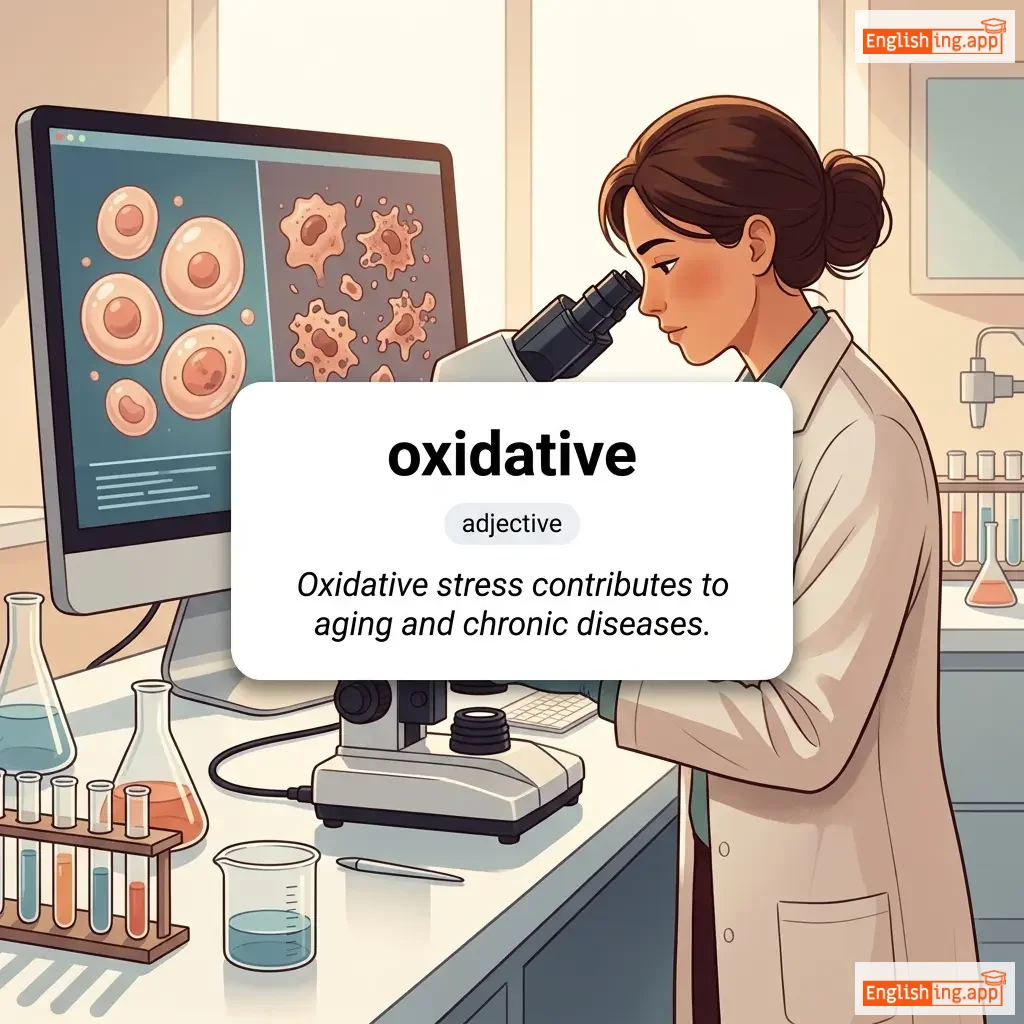
oxidative definition card — visual illustration of the meaning
adjective
/ˈɒk.sɪ.də.tɪv/
酸化的 (sankateki)

Relating to or involving oxidation, particularly processes that can cause cellular damage through free radical formation.

"Oxidative stress contributes to aging and chronic diseases."
"酸化ストレスは老化と慢性疾患に寄与します。" (Sanka sutoresu wa rōka to mansei shikkann ni kiyo shimasu.)
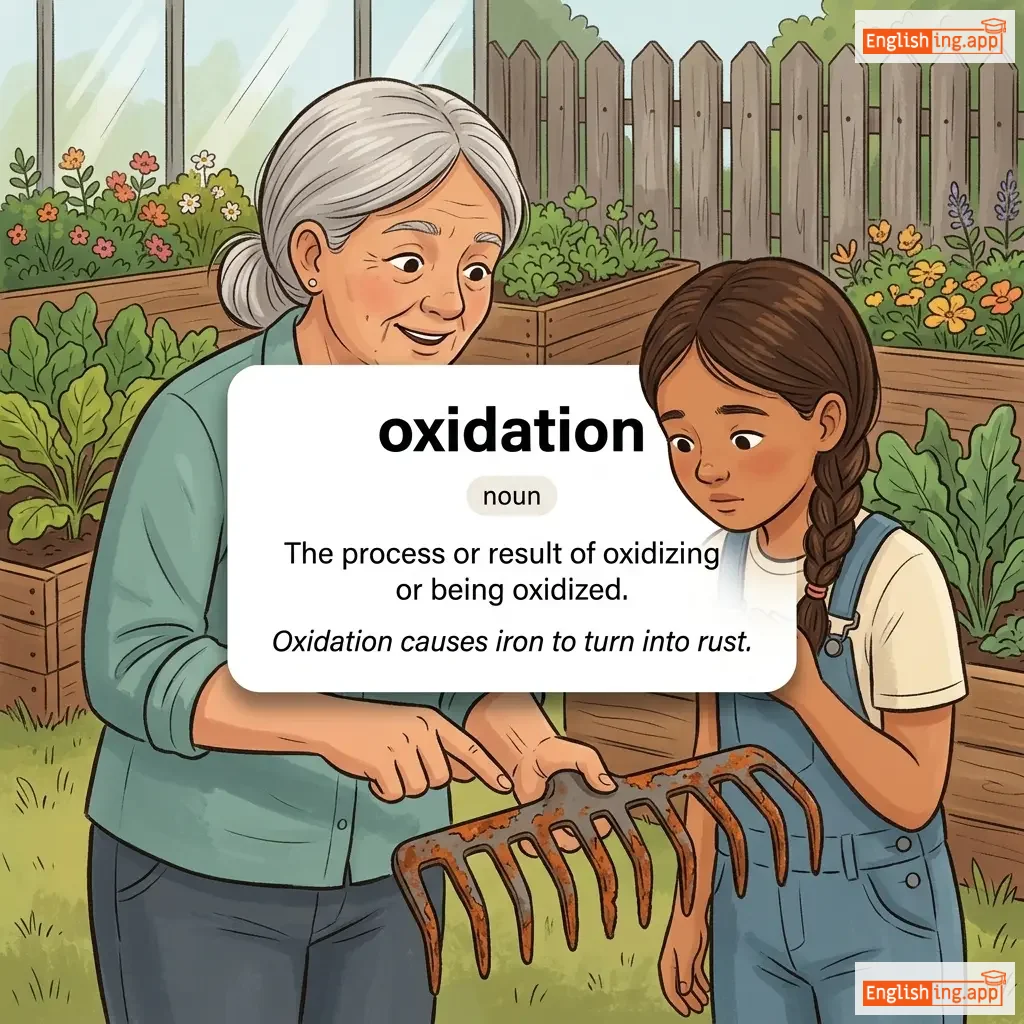
oxidation definition card — visual illustration of the meaning
noun
/ˌɒk.sɪˈdeɪ.ʃən/
酸化 (sanka)

The process or result of oxidizing or being oxidized.

"Oxidation causes iron to turn into rust."
"酸化は鉄を錆びさせる原因になります。" (Sanka wa tetsu wo sabisaseru gen'in ni narimasu.)
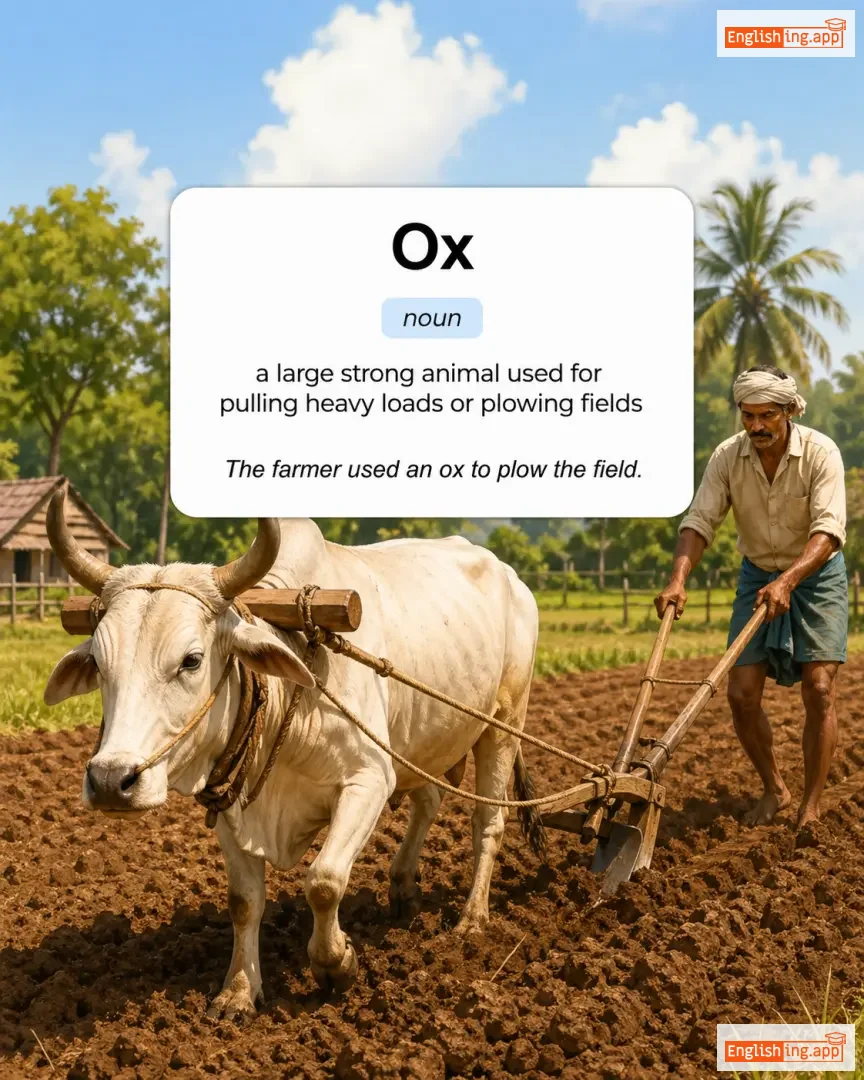
Ox definition card — visual illustration of the meaning
noun
/ɑːks/
雄牛 (osuushi)

a large strong animal used for pulling heavy loads or plowing fields

"The farmer used an ox to plow the field."

"農夫は畑を耕すために雄牛を使いました。" (Noufu wa hatake wo tagasu tame ni osuushi wo tsukaimashita.)
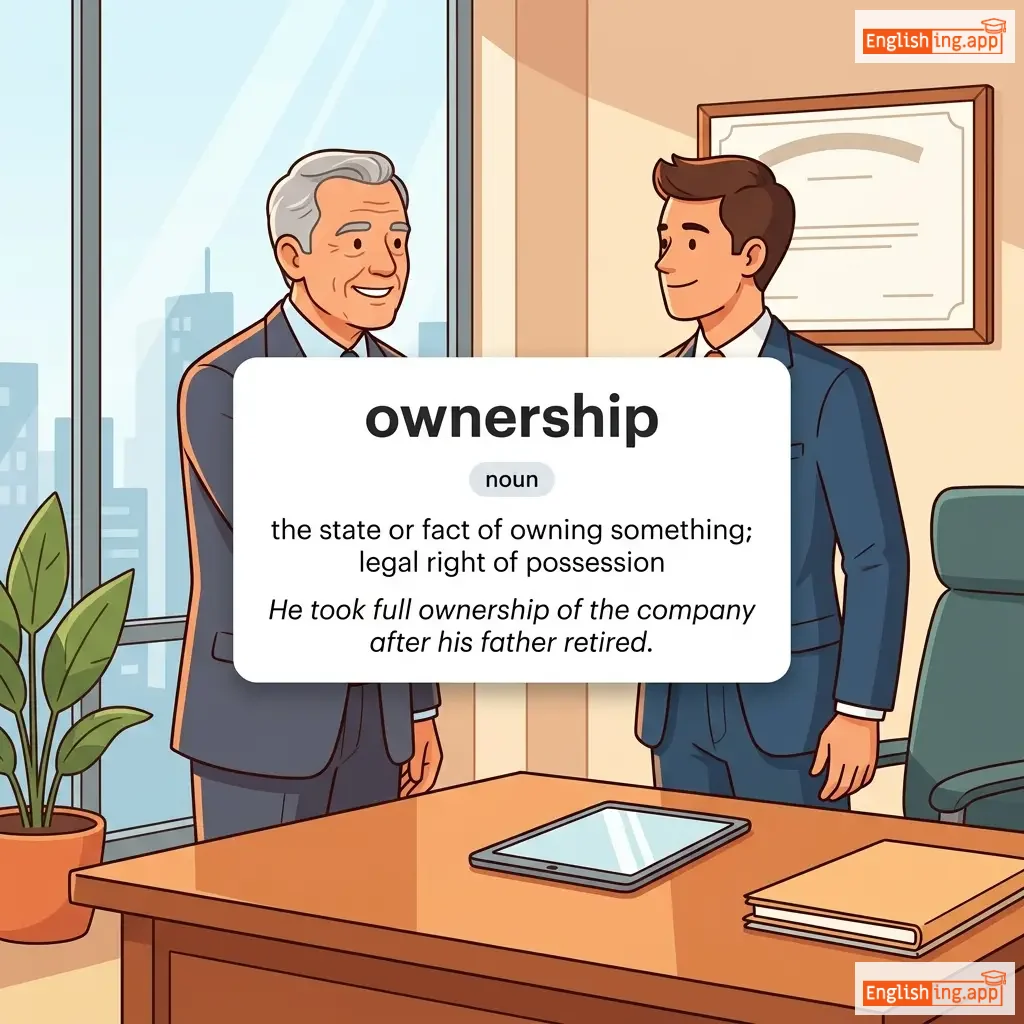
ownership definition card — visual illustration of the meaning
noun
/ˈoʊnərʃɪp/
所有権 (shoyūken)

the state or fact of owning something; legal right of possession

"He took full ownership of the company after his father retired."
"彼は父親が引退した後、会社の完全な所有権を取得しました。" (Kare wa chichioya ga intai shita ato, kaisha no kanzen'na shoyūken o shūtoku shimashita.)
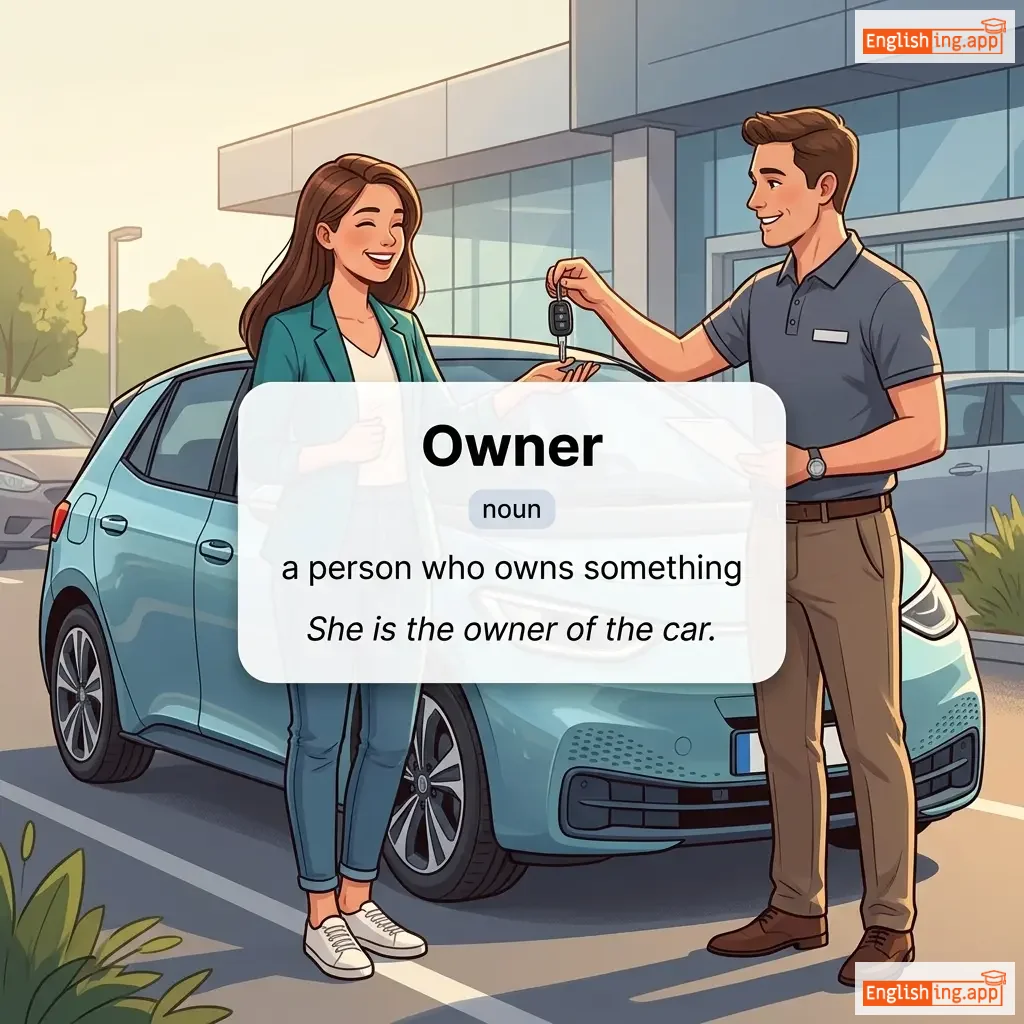
Owner definition card — visual illustration of the meaning
noun
/ˈoʊnər/
オーナー (ōnā)

a person who owns something

"She is the owner of the car."

"彼女は車のオーナーです。" (Kanojo wa kuruma no ōnā desu.)
verb, adjective
/oʊn/
所有する (shoyū suru)

to possess something; belonging to oneself

"She owns a beautiful house in the city."

"彼女は市内に美しい家を持っています。" (Kanojo wa shinai ni utsukushī ie o motteimasu.)
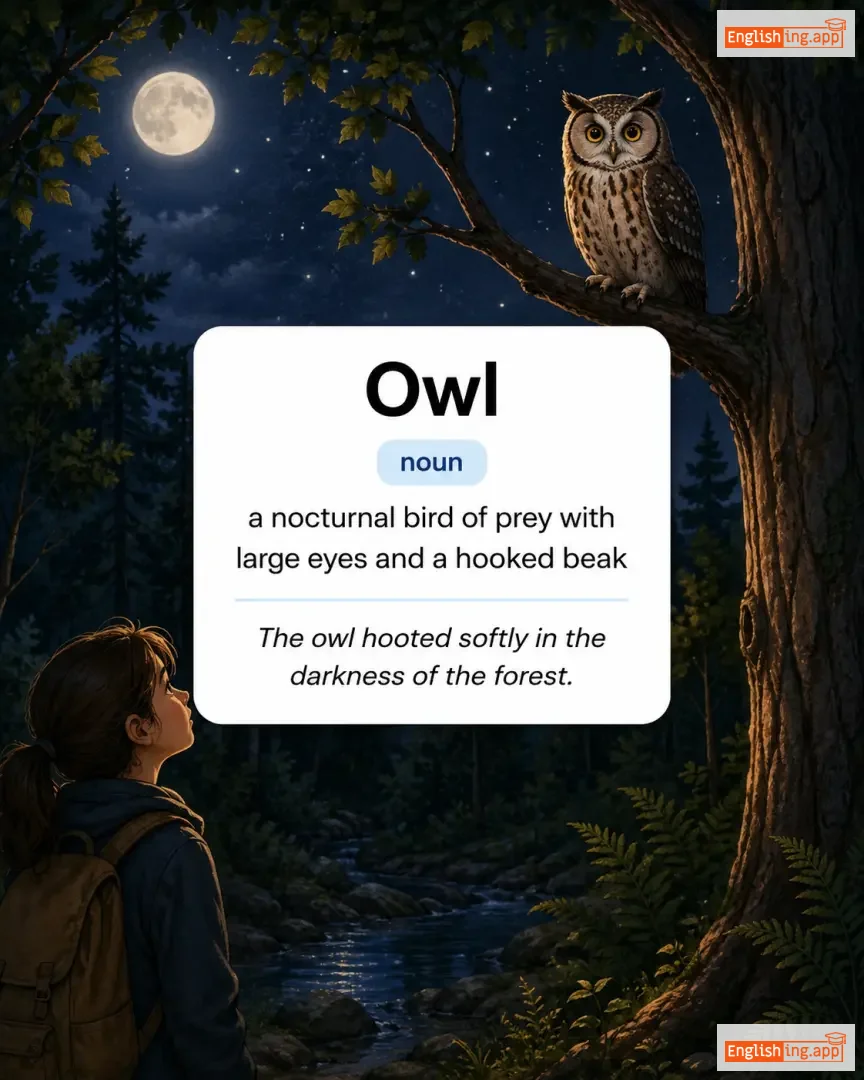
Owl definition card — visual illustration of the meaning
noun
/aʊl/
フクロウ (fukurou)

a nocturnal bird of prey with large eyes and a hooked beak

"The owl hooted softly in the darkness of the forest."

"フクロウは森の暗闇で静かに鳴いた。" (Fukurou wa mori no kurayami de shizuka ni naita.)
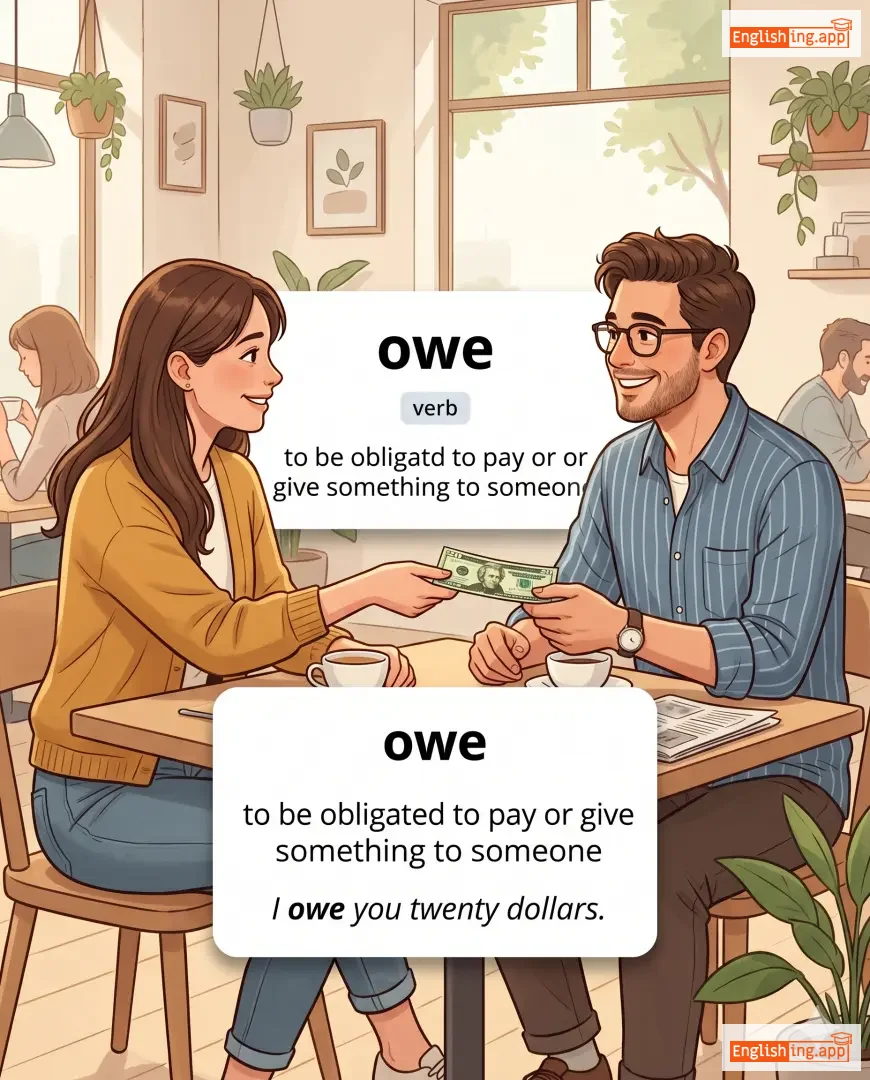
owe definition card — visual illustration of the meaning
verb
/oʊ/
借りがある (kariga aru)

to be obligated to pay or give something to someone

"I owe you twenty dollars."

"私はあなたに20ドルを借りています。" (Watashi wa anata ni 20 doru wo kariteimasu.)
adjective
/ˈoʊ.vɔɪd/
卵型 (tamagata)

egg-shaped; resembling an oval or ellipse

"The artist painted an ovoid shape in the center of the canvas."

"アーティストはキャンバスの中央に卵型の形を描きました。" (Aatisuto wa kyanbasu no chuou ni tamagata no katachi o kakimashita.)
adjective
/ˌoʊvərˈrɔt/
興奮した / 過度に緊張した (koufun shita / kadoni kinchou shita)

extremely agitated or nervous; excessively elaborate

"She was too overwrought to speak clearly after the accident."
"事故後、彼女は興奮しすぎて、はっきりと話すことができなかった。" (Jiko go, kanojo wa koufun shisugite, hakkiri to hanasu koto ga dekinakatta.)
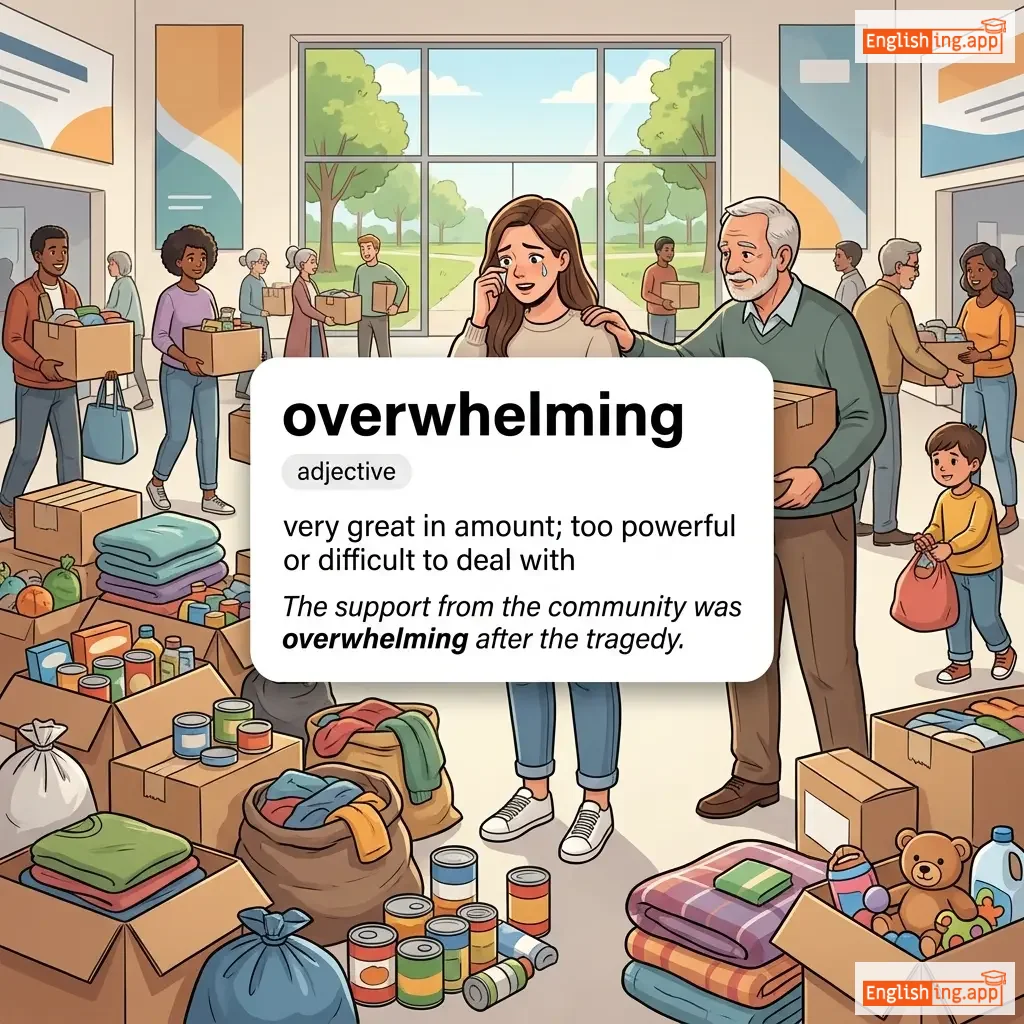
overwhelming definition card — visual illustration of the meaning
adjective
/ˌəʊvəˈwelmɪŋ/
圧倒的, 手に負えない (attōteki, te ni oenai)

very great in amount; too powerful or difficult to deal with

"The support from the community was overwhelming after the tragedy."

"悲劇の後、コミュニティからの支援は圧倒的でした。" (higeki no ato, komyuniti kara no shien wa attōteki deshita.)
verb
/ˌoʊvərˈwɛlm/

to overpower someone emotionally or physically; to be too much to handle

"She was overwhelmed with gratitude after receiving the help."

adjective
/ˌoʊvərˈweɪt/
過体重 (kataijuu)

heavier than is considered healthy or normal

"The doctor advised him to lose weight as he was overweight."

"医者は体重を減らすようにアドバイスしました、なぜなら彼は過体重だったからです。" (Isha wa taijuu o herasu you ni adobaisu shimashita, nazenara kare wa kataijuu datta kara desu.)
adjective
/ˌoʊvərˈwiːnɪŋ/
過度に傲慢な (kadoni gōman na)

excessively arrogant or prideful

"His overweening pride cost him many friends."

"彼の過度の誇りは多くの友人を失わせました。" (Kare no kadode no hokori wa ōku no yūjin o ushinawasemashita.)
verb
/ˌoʊvərˈtɜrn/
覆す / 判決を覆す (kōkasu / hanketsu o kōkasu)

to turn something upside down or to reverse a decision or judgment

"The court decided to overturn the previous ruling."

"裁判所は前回の判決を覆すことに決めました。" (Saibansho wa zenka no hanketsu o kōkasu koto ni kimemashita.)
noun
/ˈoʊvərˌtʊr/
序曲 / 提案 (jokyoku / teian)

An introduction to something more substantial; a proposal or preliminary action.

"The peace overture was welcomed by both nations."

"平和提案は両国によって歓迎されました。" (Heiwa teian wa ryōkoku ni yotte kangei saremashita.)
noun
/ˈoʊvərˌtoʊn/
微妙な意味 (bimyou na imi)

A subtle quality, implication, or additional meaning beyond the obvious.

"His speech had political overtones that were hard to ignore."

"彼のスピーチには無視できない政治的なニュアンスが含まれていました。" (kare no supīchi ni wa mushi dekinai seijiteki na nyuansu ga fukumarete imashita.)
verb
/ˌoʊvərˈθroʊ/
幸せ (shiawase)

To remove a leader or government from power, often by force.

"The rebels planned to overthrow the corrupt regime."
"彼女は賞を受け取ったとき、幸せを隠すことができなかった。" (Kanojo wa shō o uketotta toki, shiawase o kakusu koto ga dekinakatta.)
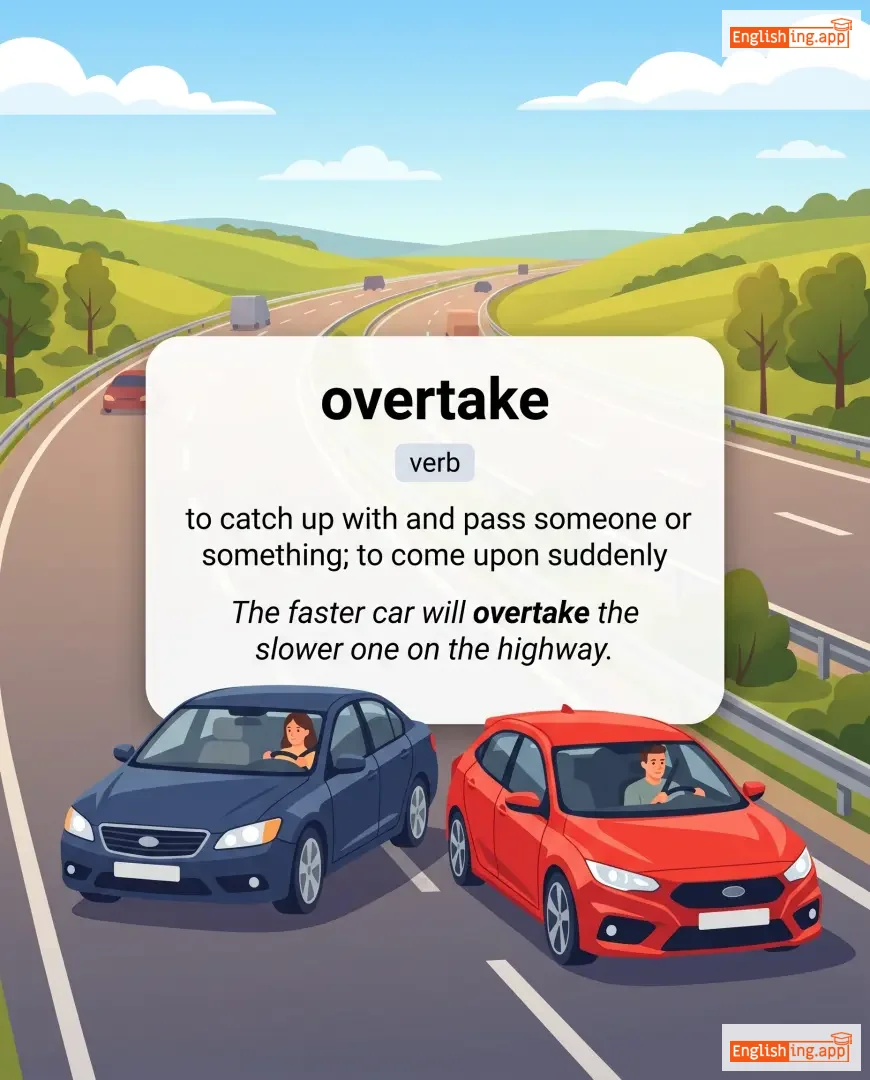
overtake definition card — visual illustration of the meaning
verb
/ˌoʊvərˈteɪk/
追い越す (oikosu)

to catch up with and pass someone or something; to come upon suddenly

"The faster car will overtake the slower one on the highway."

"速い車が高速道路で遅い車を追い越します。" (Hayai kuruma ga kosoku dorou de osoi kuruma o oikosu.)
adjective
/oʊˈvɜːrt/
公然 (kōzen)

Done or shown openly; not hidden or secret.

"There was an overt display of hostility between the rivals."

"ライバルの間に公然とした敵意の表れがあった。" (Raibaru no aida ni kōzen to shita teki no araware ga atta.)
verb
/ˌoʊvərˈstraɪd/
大きな一歩で越える (ōkina ippo de koeru)

To stride over something; to step across with long steps.

"He managed to overstride the narrow stream with ease."
"彼は狭い小川を簡単に越えることができました。" (Kare wa semai ogawa o kantan ni koeru koto ga dekimashita.)
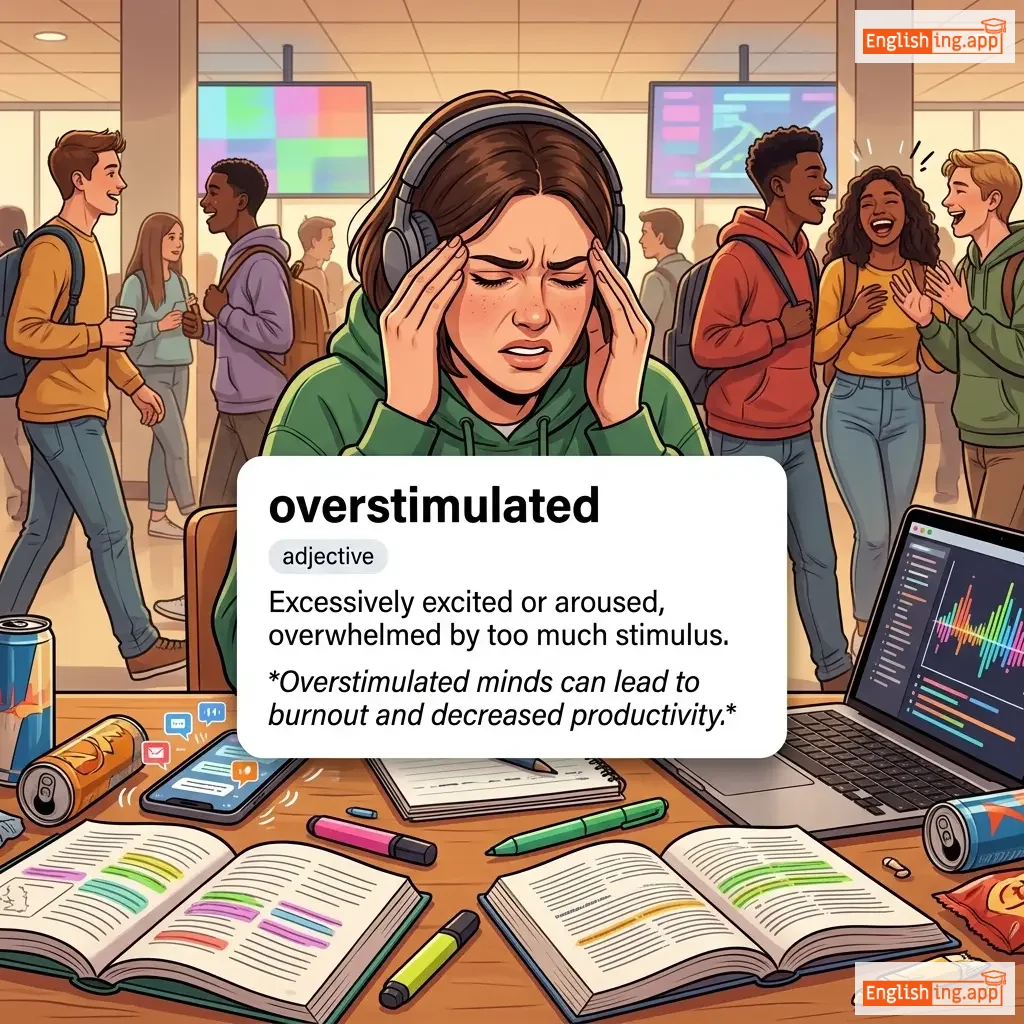
overstimulated definition card — visual illustration of the meaning
adjective
/ˌəʊvərˈstɪmjʊˌleɪtɪd/

Excessively excited or aroused, overwhelmed by too much stimulus.

"Overstimulated minds can lead to burnout and decreased productivity."

verb
/ˌoʊvərˈʃædoʊ/
覆い隠す (oikakusu)

to appear more important or significant than something else, reducing its impact

"The scandal overshadowed his achievements."

"スキャンダルは彼の業績を影にしました。" (Sukyandaru wa kare no gyouseki o kage ni shimashita.)
noun
/ˈoʊvərˌsiːər/
監督者 (kantokusha)

a person who supervises work or workers; a manager

"The overseer made sure the workers followed safety rules."
"監督者は、労働者が安全規則を守っていることを確認しました。" (Kantokusha wa, roudousha ga anzen kisoku o mamotte iru koto o kakunin shimashita.)
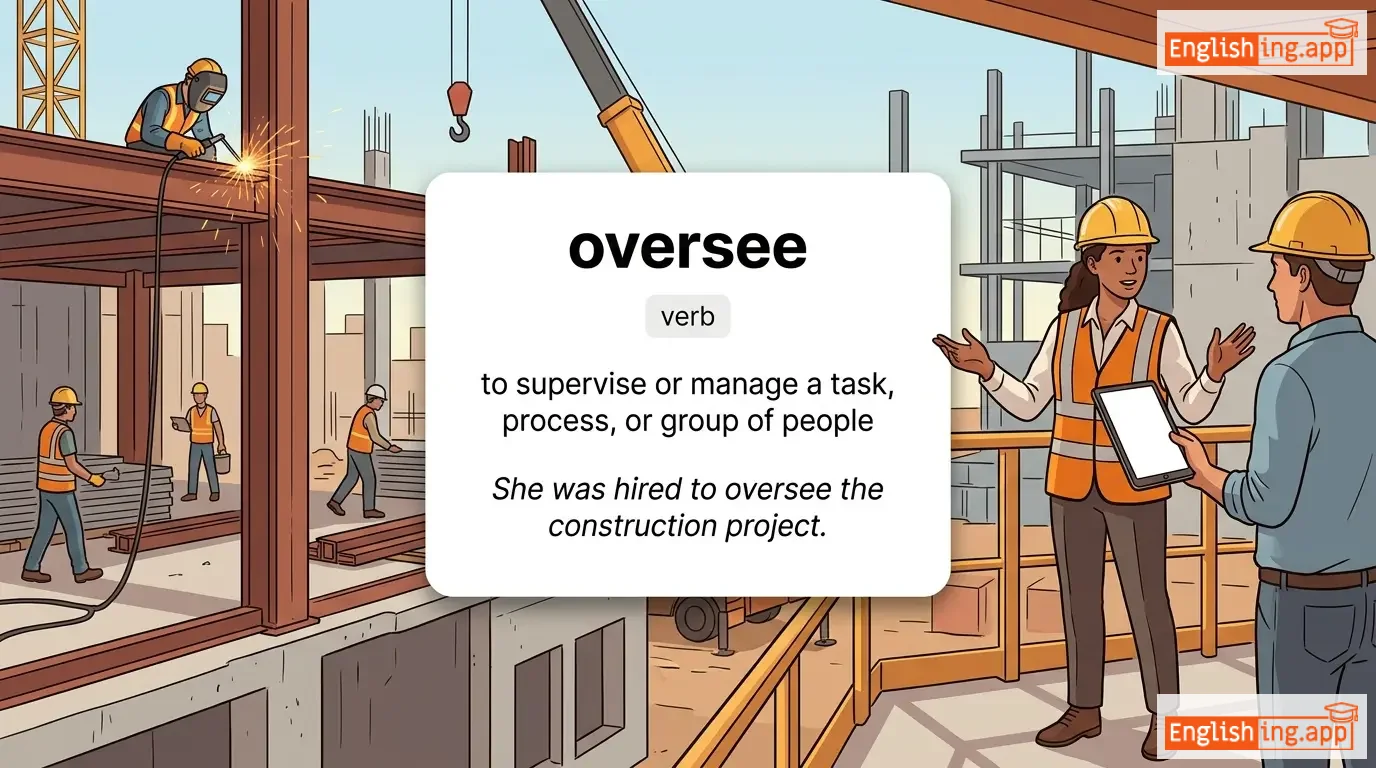
oversee definition card — visual illustration of the meaning
verb
/ˌoʊvərˈsiː/
監督する (kantoku suru)

to supervise or manage a task, process, or group of people

"She was hired to oversee the construction project."

"彼女は建設プロジェクトを監督するために雇われました。" (Kanojo wa kensetsu purojekuto wo kantoku suru tame ni yatowaremashita.)
adjective
/ˌoʊvərˈsiːz/
海外 (kaigai)

in or to a foreign country across the sea

"He went overseas for higher education."

"彼は高等教育のために海外に行った。" (Kare wa kōtō kyōiku no tame ni kaigai ni itta.)
verb
/ˌoʊvərˈrʌn/
侵略する (shinryaku suru)

to spread over or occupy completely; to exceed a limit or time

"The garden was overrun with weeds."
"庭は雑草に覆われていた。" (Niwa wa zassou ni owarete ita.)
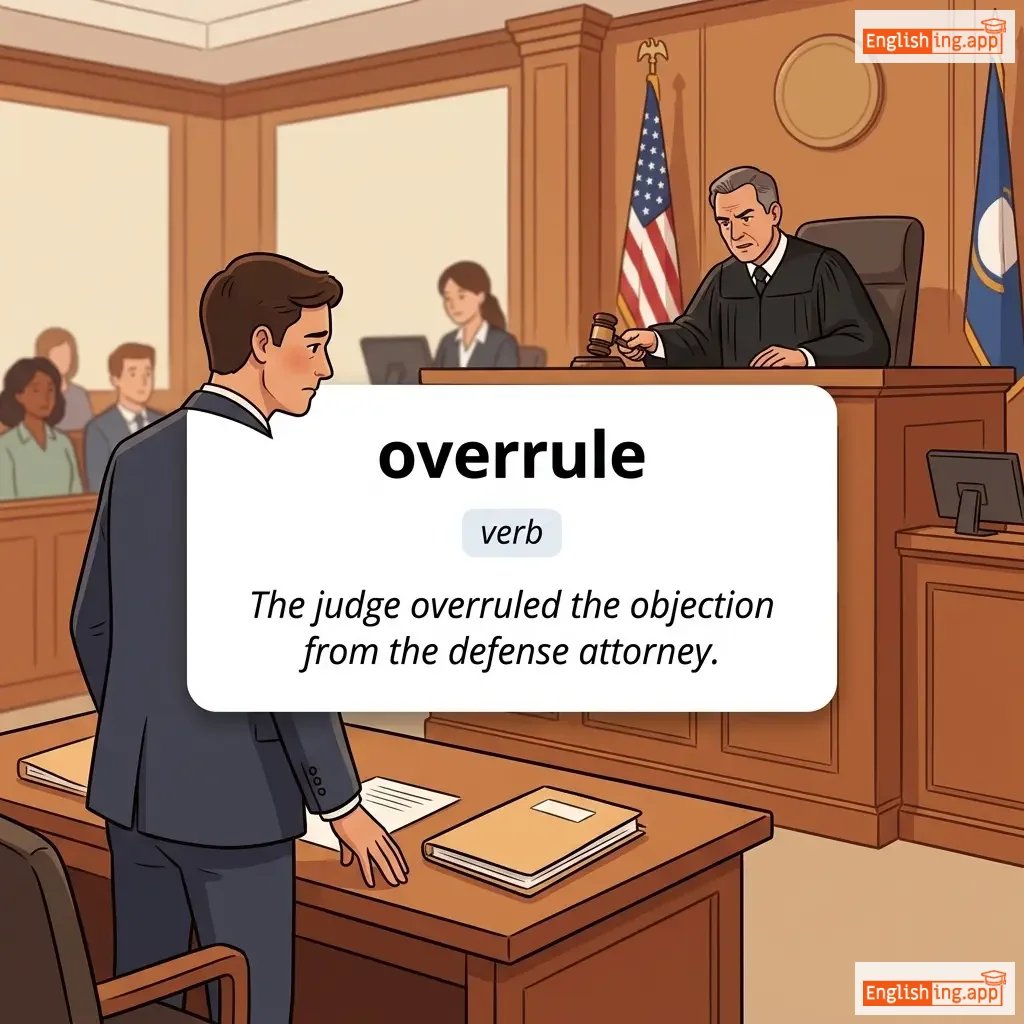
overrule definition card — visual illustration of the meaning
verb
/ˌoʊvərˈruːl/
却下する (kyakka suru)

to reject or disallow by exercising one's superior authority; to override a decision

"The judge overruled the objection from the defense attorney."

"裁判官は弁護側の異議を却下した。" (Saibankan wa bengogawa no igi o kyakka shita.)
verb
/ˌoʊvərˈriːtʃ/
過剰な努力 (kajōna doryoku)

to go beyond what is proper, acceptable, or achievable; to overextend

"The politician overreached by making promises he couldn't keep."

"その政治家は約束を守れなかったことで過剰な努力をしました。" (Sono seijika wa yakusoku o mamorenakatta koto de kajōna doryoku o shimashita.)
noun
/ˌoʊvərprəˈdʌkʃən/
過剰生産 (kajou seisan)

The act of producing more of something than is needed or can be consumed.

"The economic crisis was caused by the overproduction of goods."

"経済危機は商品の過剰生産によって引き起こされた。" (Keizai kiki wa shouhin no kajou seisan ni yotte hikiokosareta.)
verb
/ˌoʊvərˈpaʊər/
圧倒する (attou suru)

To defeat or gain control over someone or something by using greater strength or force.

"The soldiers managed to overpower the enemy forces."

"兵士たちは敵軍を圧倒することができました。" (Heishi-tachi wa tekigun o attou suru koto ga dekimashita.)
verb
/ˌoʊvərˈpeɪ/
過剰に支払う (kajou ni shiharau)

To pay more than is necessary or reasonable.

"She realized she had overpaid for the concert tickets."

"彼女はコンサートのチケットに多く支払ったことに気づきました。" (Kanojo wa konsāto no chiketto ni ōku shiharatta koto ni kidzukimashita.)
noun
/ˈoʊvərpæs/
高架橋 (koukakyo)

A bridge that carries one road or railway over another.

"The new overpass reduced traffic congestion in the city."

"新しい高架橋は市内の交通渋滞を減らしました。" (Atarashī kōkakyō wa shinai no kōtsū jūtai o herashimashita.)
adverb, adjective
/ˌəʊvəˈnaɪt/
一夜にして (ichiya nishite)

for or during the night; suddenly or in a very short time

"Her small business became famous overnight after a viral video."

"彼女の小さなビジネスは、ウイルス動画の後、一夜にして有名になった。" (Kanojo no chiisana bijinesu wa, uirusu dōga no ato, ichiya nishite yūmei ni natta.)
noun, verb
/ˈaʊtlaɪn/

a general description or plan that gives the main ideas without details; to describe something briefly or highlight main points

"The teacher asked us to outline our research project before writing the report."

adverb; noun
/ˌaʊtˈdɔːrz/
屋外で (okugai de)

outside a building; the natural environment outside

"We spent the whole afternoon outdoors enjoying the fresh air."

"私たちは午後ずっと屋外で新鮮な空気を楽しみました。" (watashitachi wa gogo zutto okugai de shinsen na kuuki o tanoshimimashita)
adjective
/ˈaʊtər/
外部 (gaibu)

situated on or toward the outside; external

"The outer layer of the jacket is waterproof."

"ジャケットの外側の層は防水です。" (Jaketto no gaibu no sou wa bousui desu.)
noun
/ˈaʊtˌfɪt/
衣装 (ishou)

A set of clothes worn together, often for a particular occasion.

"She wore a beautiful outfit to the party."

"彼女はパーティーに美しい衣装を着て行った。" (Kanojo wa pātii ni utsukushī ishou o kite itta.)
adjective
/ˈaʊtˌɡoʊɪŋ/
社交的 (shakōteki)

Friendly and sociable; inclined to mix with others.

"He is an outgoing person who loves meeting new people."

"彼は新しい人々と会うのが好きな社交的な人です。" (Kare wa atarashī hitobito to au no ga suki na shakōteki na hito desu.)
noun
/ˈaʊtˌɡroʊθ/
成長 (seichou)

something that grows out of something else; a natural development or result

"The new policy was an outgrowth of years of debate."

"新しい政策は数年の議論の成長でした。" (Atarashii seisaku wa suunen no giron no seichou deshita.)
noun
/ˈaʊtɪŋ/
お出かけ (odekake)

a short trip or excursion, often for leisure or enjoyment

"They had a lovely outing at the beach last weekend."

"彼らは先週末、ビーチで素晴らしいお出かけをしました。" (Karera wa senshūmatsu, bīchi de subarashī odekake o shimashita.)
adjective
/ˌaʊtˈlændɪʃ/
奇妙 (kimyō)

Looking or sounding bizarre or unfamiliar; strange.

"He wore an outlandish costume to the festival."

"彼は祭りに奇妙な衣装を着ていました。" (Kare wa matsuri ni kimyō na ishō o kite imashita.)
verb
/aʊtˈlæst/
他より長く続く (hoka yori nagaku tsudzuku)

to continue longer than; to endure beyond someone or something else

"The old castle has outlasted many generations."

"その古い城は多くの世代を超えて生き残りました。" (Sono furui shiro wa ōku no sedai o koete ikinokorimashita.)
noun, verb
/ˈaʊtlɔː/

as a noun: a person who breaks the law and lives outside its protection; as a verb: to make something illegal

"The government decided to outlaw the harmful practice."

noun
/ˈaʊtlet/
出口 (deguchi)

a means by which something is released, expressed, or distributed

"Art is a great outlet for emotions."

"アートは感情のための素晴らしい出口です。" (Āto wa kanjō no tame no subarashī deguchi desu.)
adjective
/aʊtˈreɪdʒəs/
ショッキング (shokkingu)

Shockingly bad or excessive; very unusual or amusing.

"The comedian told an outrageous joke."
"コメディアンはショッキングなジョークを言いました。" (Komedian wa shokkingu na jooku wo iimashita.)
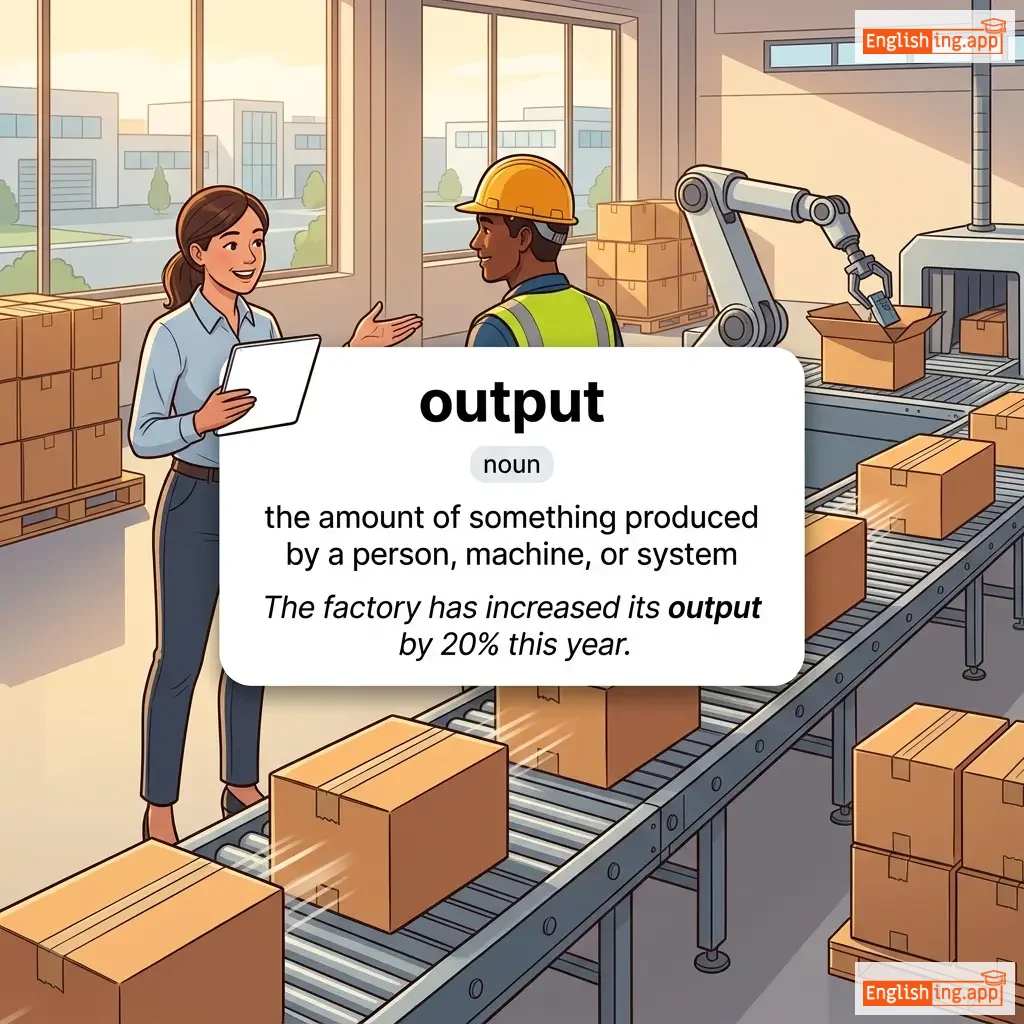
output definition card — visual illustration of the meaning
noun
/ˈaʊtpʊt/
生産 (seisan)

the amount of something produced by a person, machine, or system

"The factory has increased its output by 20% this year."

"工場は今年20%生産量を増加させました。" (Koujou wa kotoshi 20% seisanryou wo zouka sasemashita.)
noun/verb
/ˈaʊtreɪdʒ/
憤慨 (fukai)

A strong feeling of anger and shock; to arouse anger or shock.

"The unfair decision caused public outrage."

"不公平な決定が公共の憤慨を引き起こしました。" (Fukōhei na kettei ga kōkyō no fukai o hikiokoshimashita.)