वोकैबुलरीज

इंग्लिश वोकैबुलरी डिस्कवर, लर्न और मास्टर करें

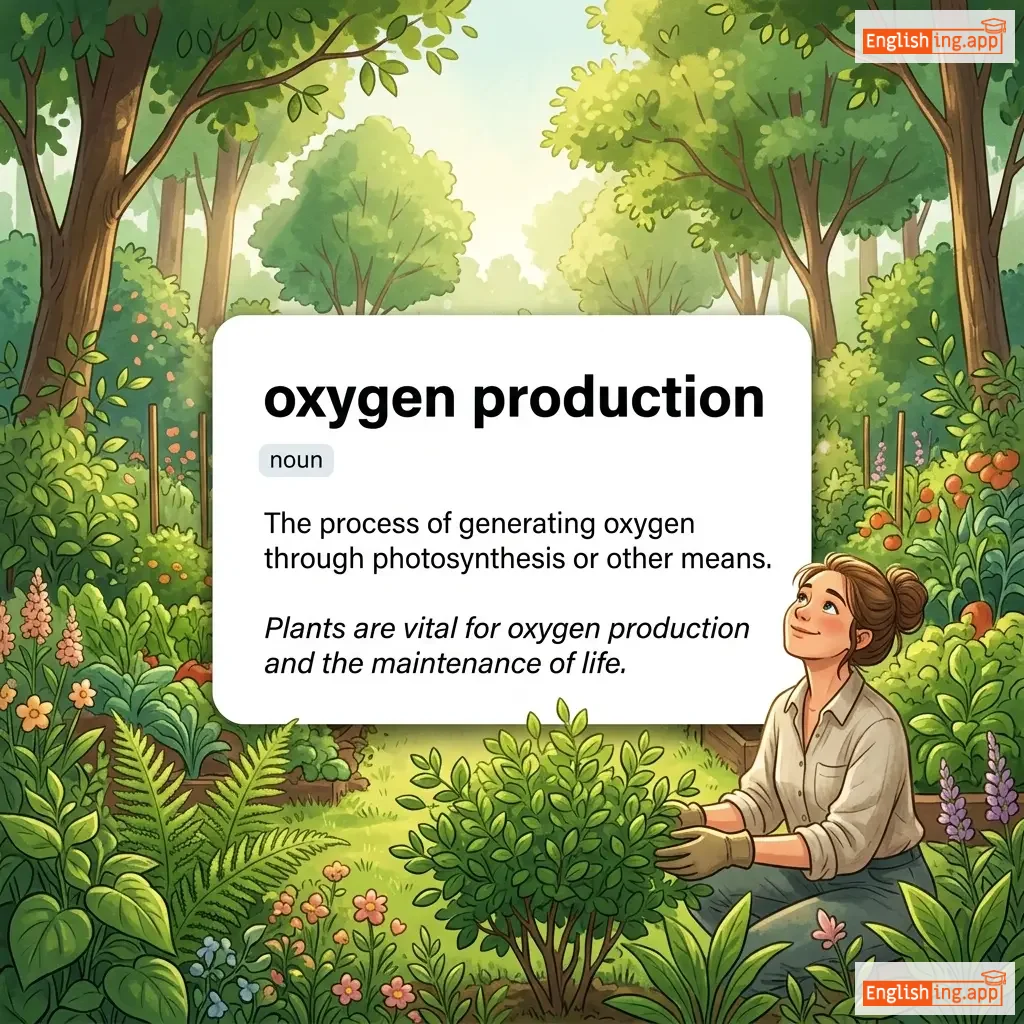
oxygen production definition card — visual illustration of the meaning
noun
ˈɒksɪdʒən prəˈdʌkʃən
ऑक्सीजन उत्पादन (oxygen utpadan)

The process of generating oxygen through photosynthesis or other means.

"Plants are vital for oxygen production and the maintenance of life."

"प्लांट्स ऑक्सीजन उत्पादन और जीवन के रखरखाव के लिए महत्वपूर्ण हैं।" (Plants oxygen utpadan aur jeevan ke rakhrakhav ke liye mahatvapurn hain.)
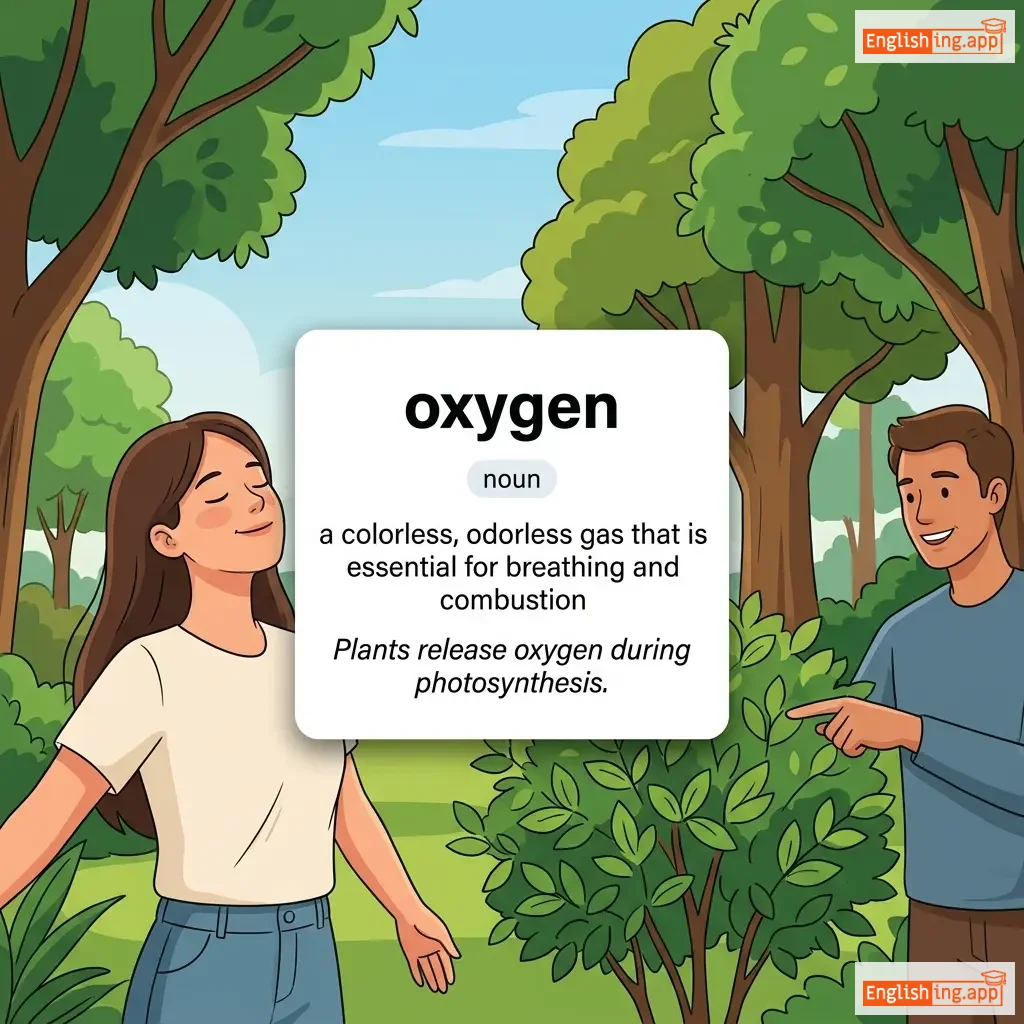
oxygen definition card — visual illustration of the meaning
noun
/ˈɒksɪdʒən/
ऑक्सीजन (oksijen)

a colorless, odorless gas that is essential for breathing and combustion

"Plants release oxygen during photosynthesis."

"पौधे प्रकाश संश्लेषण के दौरान ऑक्सीजन छोड़ते हैं।" (Paudhe prakash sansleshan ke dauran oksijen chhodte hain.)
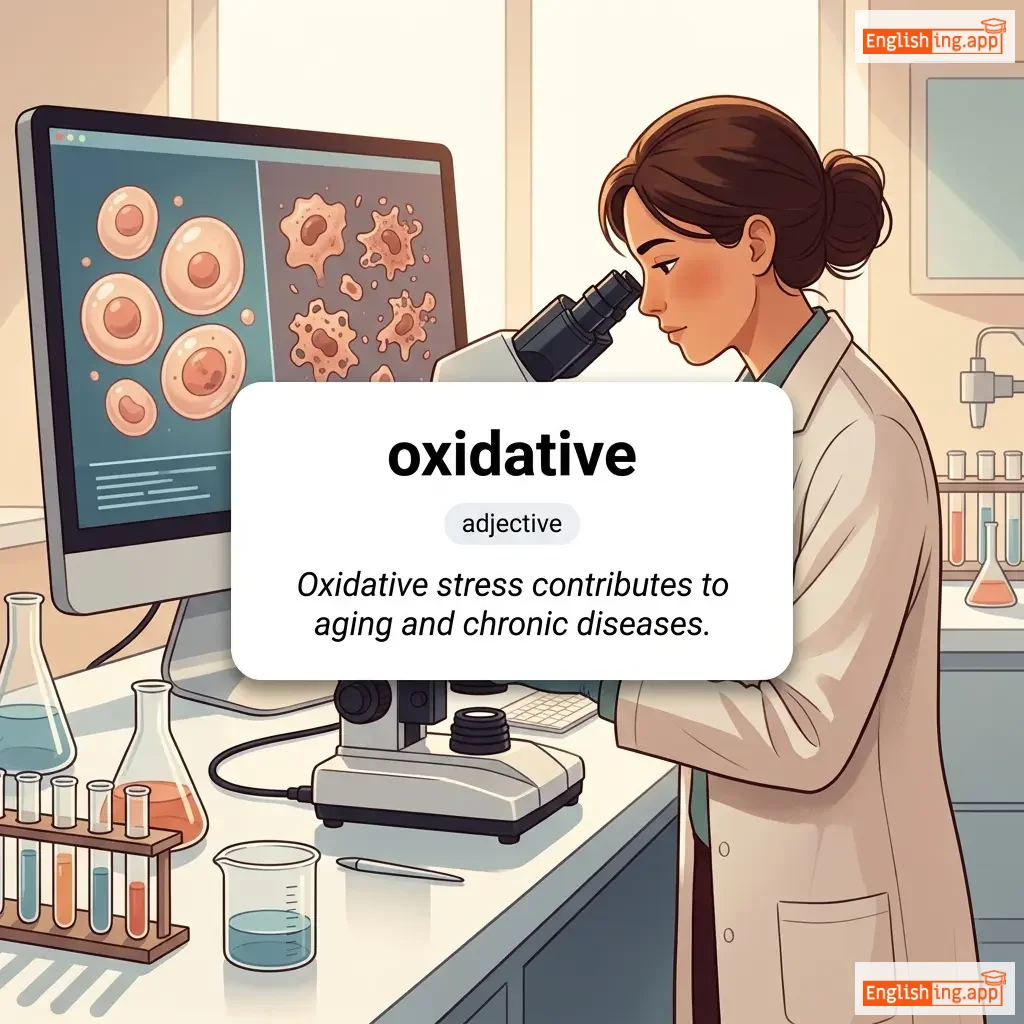
oxidative definition card — visual illustration of the meaning
adjective
/ˈɒk.sɪ.də.tɪv/
ऑक्सीडेटिव (oxidative)

Relating to or involving oxidation, particularly processes that can cause cellular damage through free radical formation.

"Oxidative stress contributes to aging and chronic diseases."

"ऑक्सीडेटिव तनाव उम्र बढ़ने और दीर्घकालिक रोगों में योगदान करता है।" (Oxidative tanav umar badhne aur dirghkaalik rogon mein yogdan karta hai.)
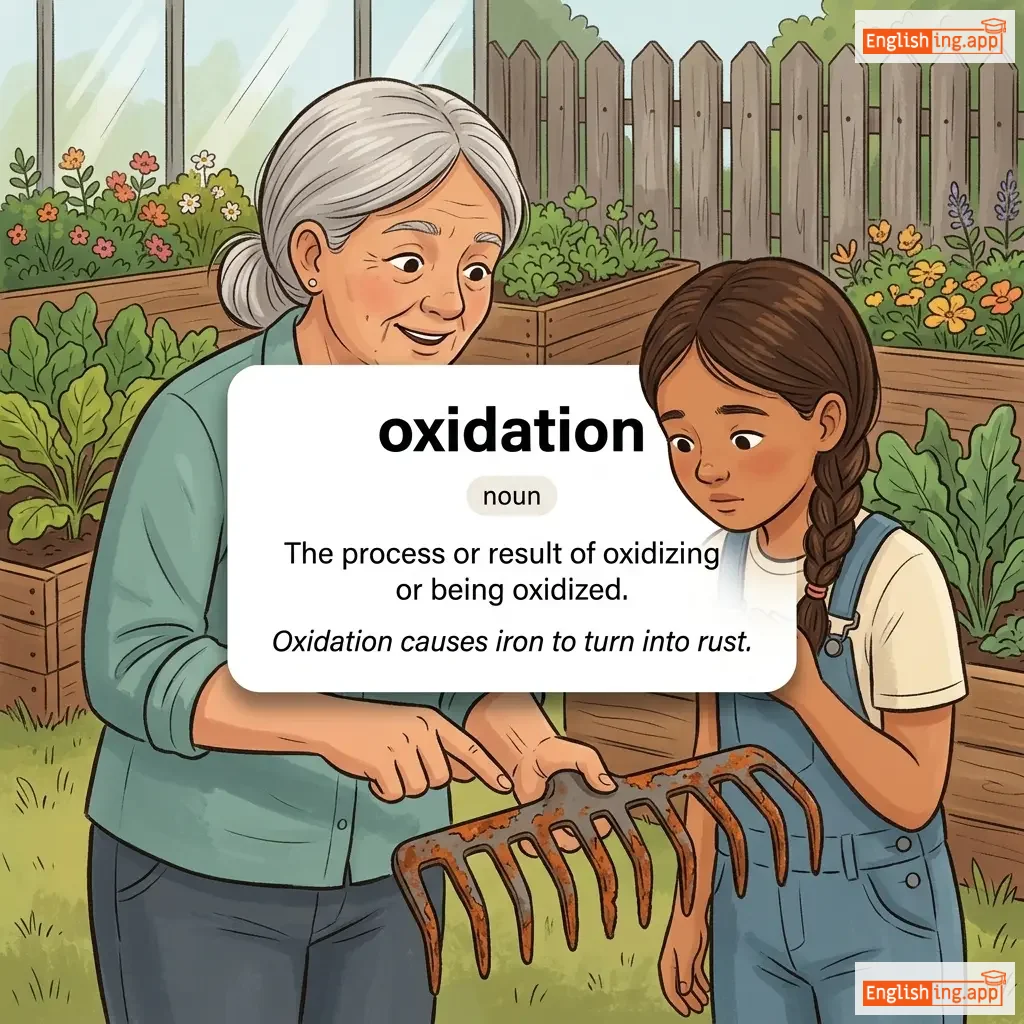
oxidation definition card — visual illustration of the meaning
noun
/ˌɒk.sɪˈdeɪ.ʃən/
ऑक्सीडेशन (oksideshan)

The process or result of oxidizing or being oxidized.

"Oxidation causes iron to turn into rust."

"ऑक्सीडेशन लोहे को जंग में बदलने का कारण बनता है।" (Oksideshan lohe ko jang mein badalne ka kaaran banta hai.)
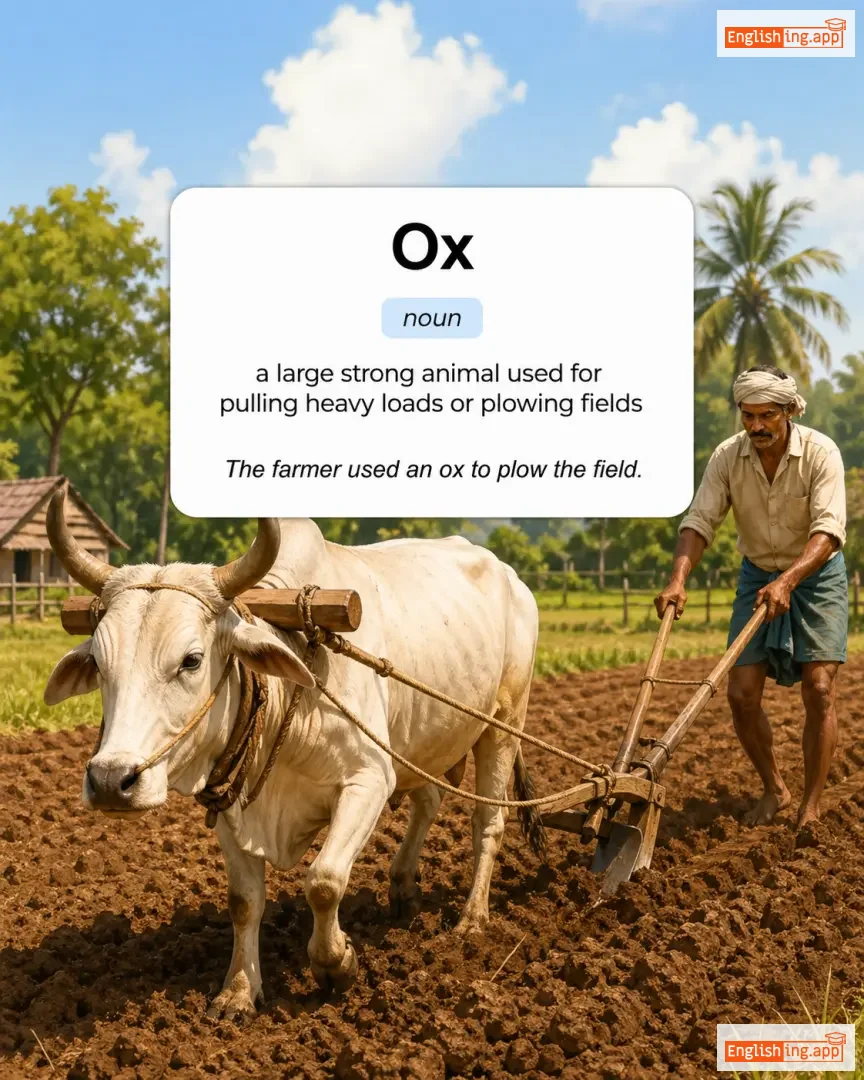
Ox definition card — visual illustration of the meaning
noun
/ɑːks/
बैल (bail)

a large strong animal used for pulling heavy loads or plowing fields

"The farmer used an ox to plow the field."

"किसान ने खेत जोतने के लिए बैल का इस्तेमाल किया।" (Kisan ne khet jotne ke liye bail ka istemal kiya.)
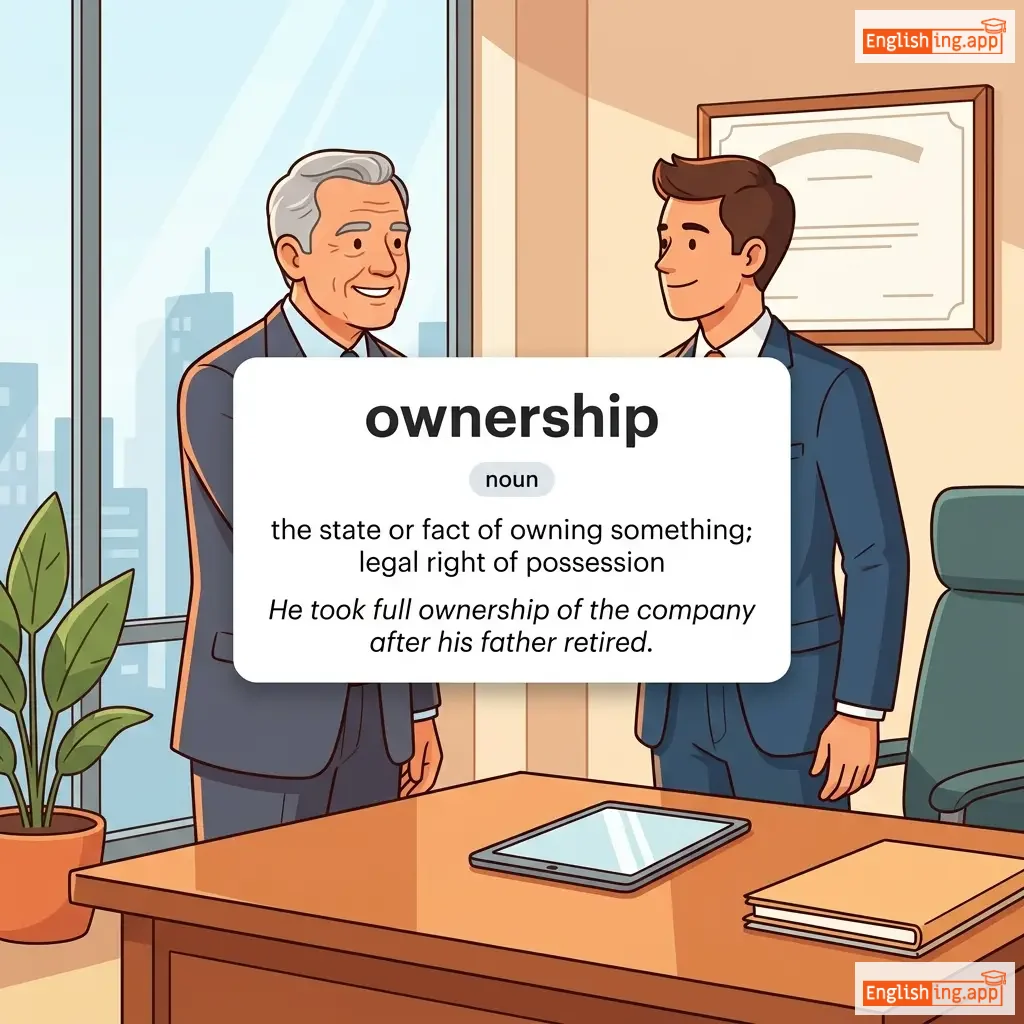
ownership definition card — visual illustration of the meaning
noun
/ˈoʊnərʃɪp/
स्वामित्व (swamitva)

the state or fact of owning something; legal right of possession

"He took full ownership of the company after his father retired."

"उसने अपने पिता के रिटायर होने के बाद कंपनी का पूरा स्वामित्व ले लिया।" (Usne apne pita ke retire hone ke baad company ka poora swamitva le liya.)
Owner definition card — visual illustration of the meaning
noun
/ˈoʊnər/
मालिक (malik)

a person who owns something

"She is the owner of the car."

"वह कार की मालिक है।" (Vah car ki malik hai.)
verb, adjective
/oʊn/
मालिक (malik)

to possess something; belonging to oneself

"She owns a beautiful house in the city."

"वह शहर में एक खूबसूरत घर की मालिक है।" (Wah shahar mein ek khoobsurat ghar ki maalik hai.)
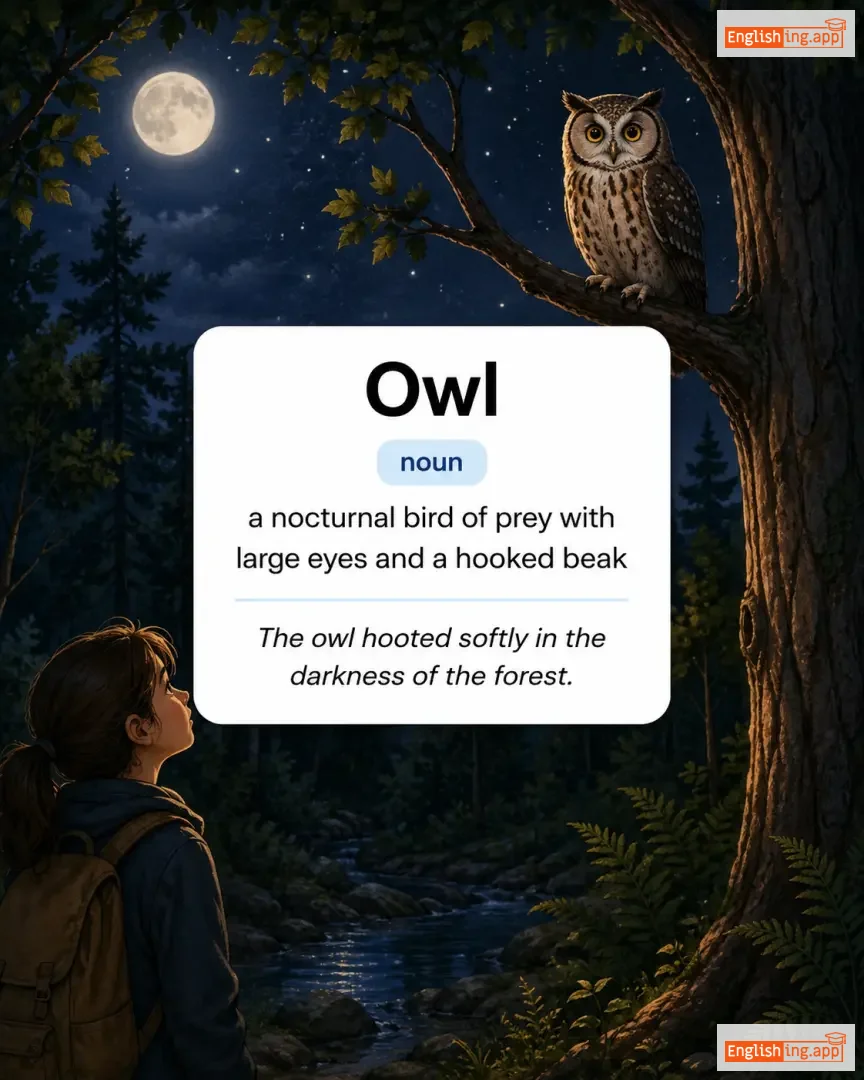
Owl definition card — visual illustration of the meaning
noun
/aʊl/
घुंघराले सिर वाला पक्षी (ghunghraale sir wala pakshi)

a nocturnal bird of prey with large eyes and a hooked beak

"The owl hooted softly in the darkness of the forest."

"उल्लू ने जंगल की अंधेरे में धीरे से आवाज की।" (ullu ne jangal ki andhere mein dheere se awaaz ki.)
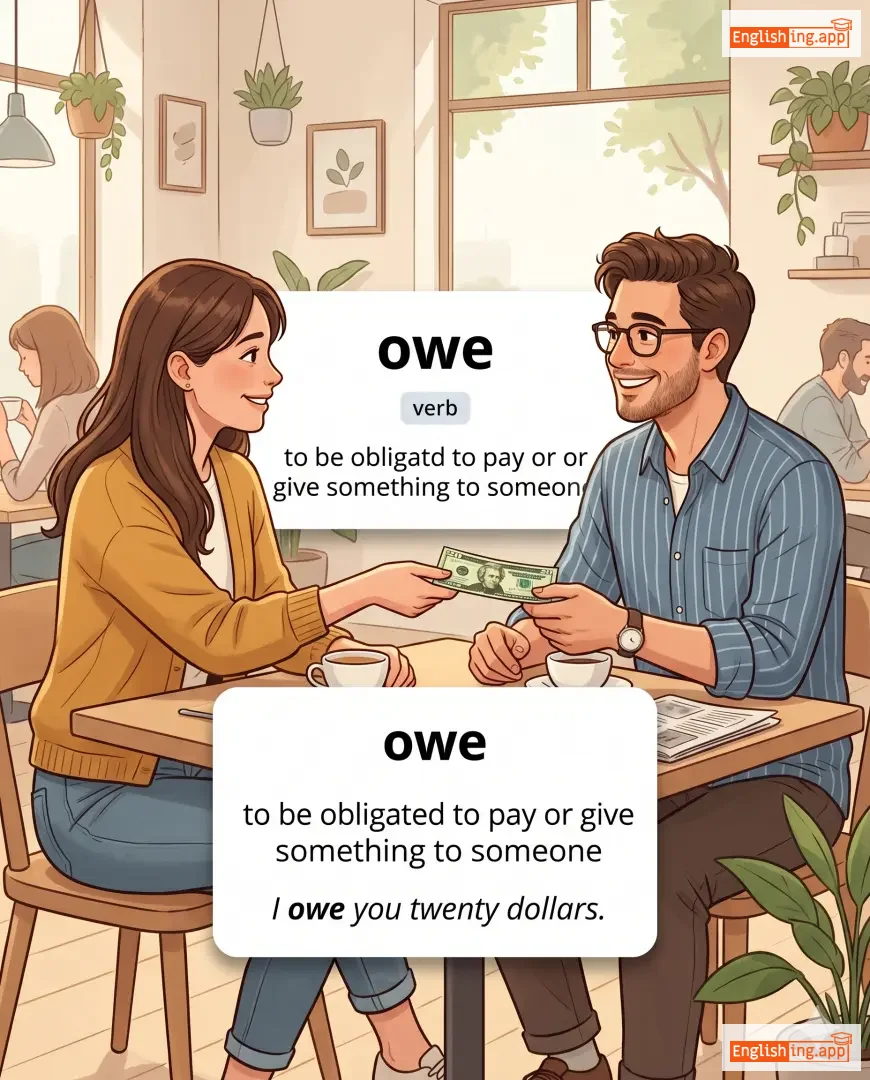
owe definition card — visual illustration of the meaning
verb
/oʊ/
ऋणी (rini)

to be obligated to pay or give something to someone

"I owe you twenty dollars."

"मैं तुम्हें बीस डॉलर उधार हूं।" (Main tumhein bees dollar udhaar hoon.)
adjective
/ˈoʊ.vɔɪd/
अंडाकार (andakaar)

egg-shaped; resembling an oval or ellipse

"The artist painted an ovoid shape in the center of the canvas."

"कला लेखक ने कैनवास के केंद्र में एक अंडाकार आकार चित्रित किया।" (Kala lekhak ne canvas ke kendra mein ek andakaar aakaar chitrit kiya.)
adjective
/ˌoʊvərˈrɔt/
उत्तेजित / अत्यधिक चिंतित (uttejit / atyadhik chintit)

extremely agitated or nervous; excessively elaborate

"She was too overwrought to speak clearly after the accident."

"वह दुर्घटना के बाद स्पष्ट रूप से बोलने के लिए बहुत उत्तेजित थी।" (Wah durghatna ke baad spashth roop se bolne ke liye bahut uttejit thi.)
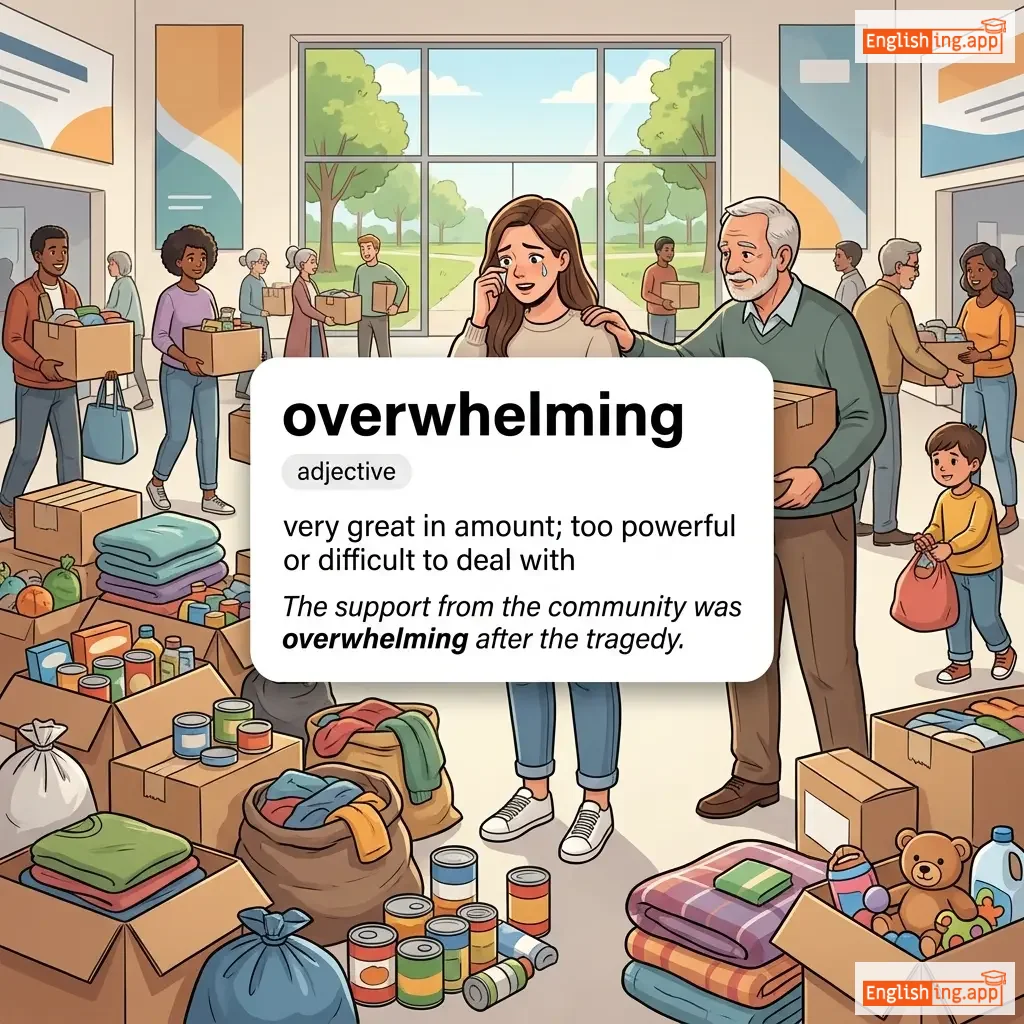
overwhelming definition card — visual illustration of the meaning
adjective
/ˌəʊvəˈwelmɪŋ/
अत्यधिक, अभूतपूर्व (atyadhik, abhootpoorv)

very great in amount; too powerful or difficult to deal with

"The support from the community was overwhelming after the tragedy."

"सामुदायिक समर्थन त्रासदी के बाद अत्यधिक था।" (Samudaayik samarthan traasdi ke baad atyadhik tha.)
verb
/ˌoʊvərˈwɛlm/
अत्यधिक दबाव डालना / अभिभूत करना (atyadhik dabav dalna / abhibhoot karna)

to overpower someone emotionally or physically; to be too much to handle

"She was overwhelmed with gratitude after receiving the help."

"वह मदद मिलने के बाद आभार से अभिभूत हो गई।" (Vah madad milne ke baad aabhaar se abhibhoot ho gayi.)
adjective
/ˌoʊvərˈweɪt/
अधिक वजन (adhik vajan)

heavier than is considered healthy or normal

"The doctor advised him to lose weight as he was overweight."

"डॉक्टर ने उसे वजन घटाने की सलाह दी क्योंकि वह अधिक वजन का था।" (Doctor ne use vajan ghatanekii salah di kyonki vah adhik vajan ka tha.)
adjective
/ˌoʊvərˈwiːnɪŋ/
अत्यधिक अहंकारी (atyadhik ahankari)

excessively arrogant or prideful

"His overweening pride cost him many friends."

"उसकी अत्यधिक अहंकार ने उसे कई दोस्तों से वंचित कर दिया।" (Uski atyadhik ahankaar ne use kai doston se vanchit kar diya.)
verb
/ˌoʊvərˈtɜrn/
उलटना / निर्णय को पलटना (ultana / nirnay ko palatna)

to turn something upside down or to reverse a decision or judgment

"The court decided to overturn the previous ruling."

"कोर्ट ने पिछले निर्णय को पलटने का फैसला किया।" (Court ne pichhle nirnay ko palatne ka faisla kiya.)
noun
/ˈoʊvərˌtʊr/
प्रस्तावना / प्रस्ताव (prastavna / prastav)

An introduction to something more substantial; a proposal or preliminary action.

"The peace overture was welcomed by both nations."

"शांति प्रस्ताव दोनों देशों द्वारा स्वागत किया गया था।" (Shanti prastav donon deshon dwara swagat kiya gaya tha.)
noun
/ˈoʊvərˌtoʊn/
संपूर्ण अर्थ का अतिरिक्त या सूक्ष्म संकेत (sampurn arth ka atirikta ya suksma sanket)

A subtle quality, implication, or additional meaning beyond the obvious.

"His speech had political overtones that were hard to ignore."

"उसकी स्पीच में राजनीतिक ओवर्टोन्स थे जिन्हें नजरअंदाज करना कठिन था।" (Uski speech mein rajneetik overtones the jinhen nazarandaz karna kathin tha.)
verb
/ˌoʊvərˈθroʊ/
खुशी (khushi)

To remove a leader or government from power, often by force.

"The rebels planned to overthrow the corrupt regime."

"उसे पुरस्कार मिलने पर अपनी खुशी छिपाई नहीं जा सकी।" (Use puraskar milne par apni khushi chhupayi nahi ja saki.)
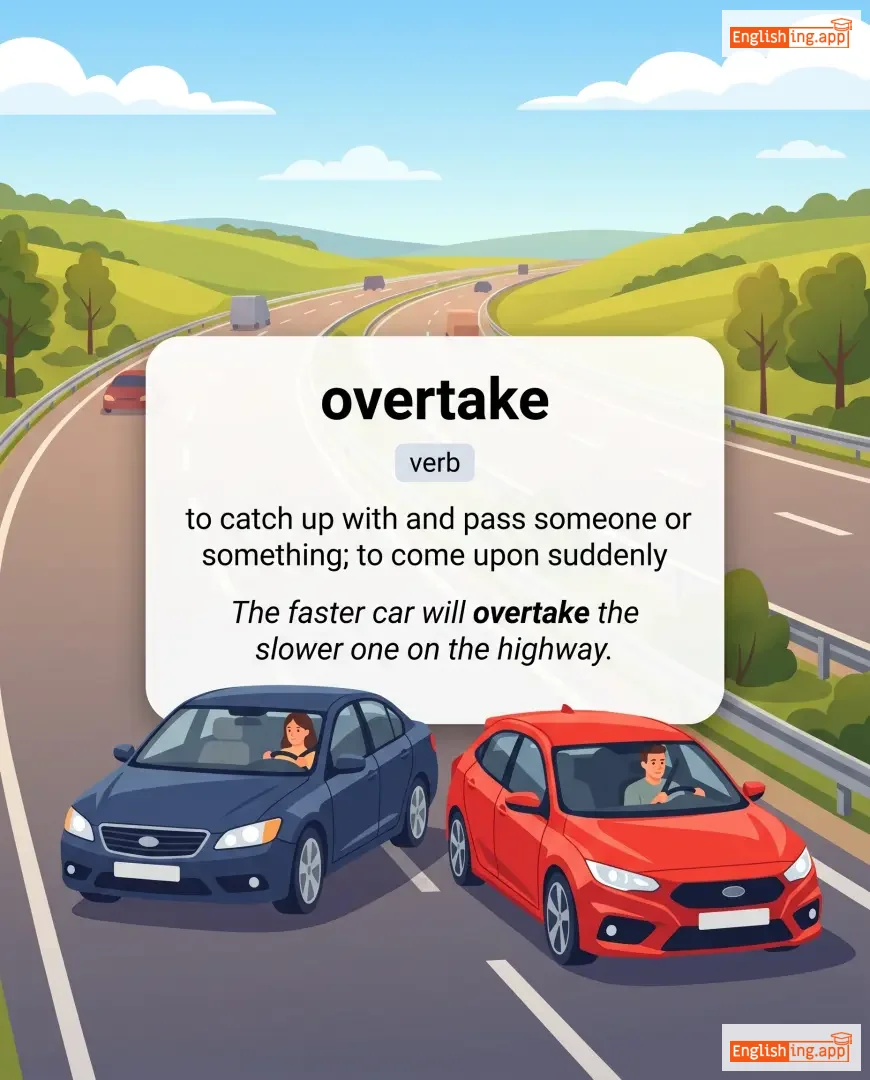
overtake definition card — visual illustration of the meaning
verb
/ˌoʊvərˈteɪk/
आगे निकलना (aage nikalna)

to catch up with and pass someone or something; to come upon suddenly

"The faster car will overtake the slower one on the highway."

"तेज़ गाड़ी हाईवे पर धीमी गाड़ी को आगे निकल जाएगी।" (tez gadi highway par dheemi gadi ko aage nikal jayegi.)
adjective
/oʊˈvɜːrt/
साफ़ (saaf)

Done or shown openly; not hidden or secret.

"There was an overt display of hostility between the rivals."

"प्रतिद्वंद्वियों के बीच साफ़ शत्रुता का प्रदर्शन था।" (Pratidvandiyon ke beech saaf shatruta ka pradarshan tha.)
verb
/ˌoʊvərˈstraɪd/
लंबे कदमों से पार करना (lambe kadmon se paar karna)

To stride over something; to step across with long steps.

"He managed to overstride the narrow stream with ease."

"वह आसानी से संकीर्ण धारा को पार कर गया।" (Vah aasani se sankeern dhara ko paar kar gaya.)
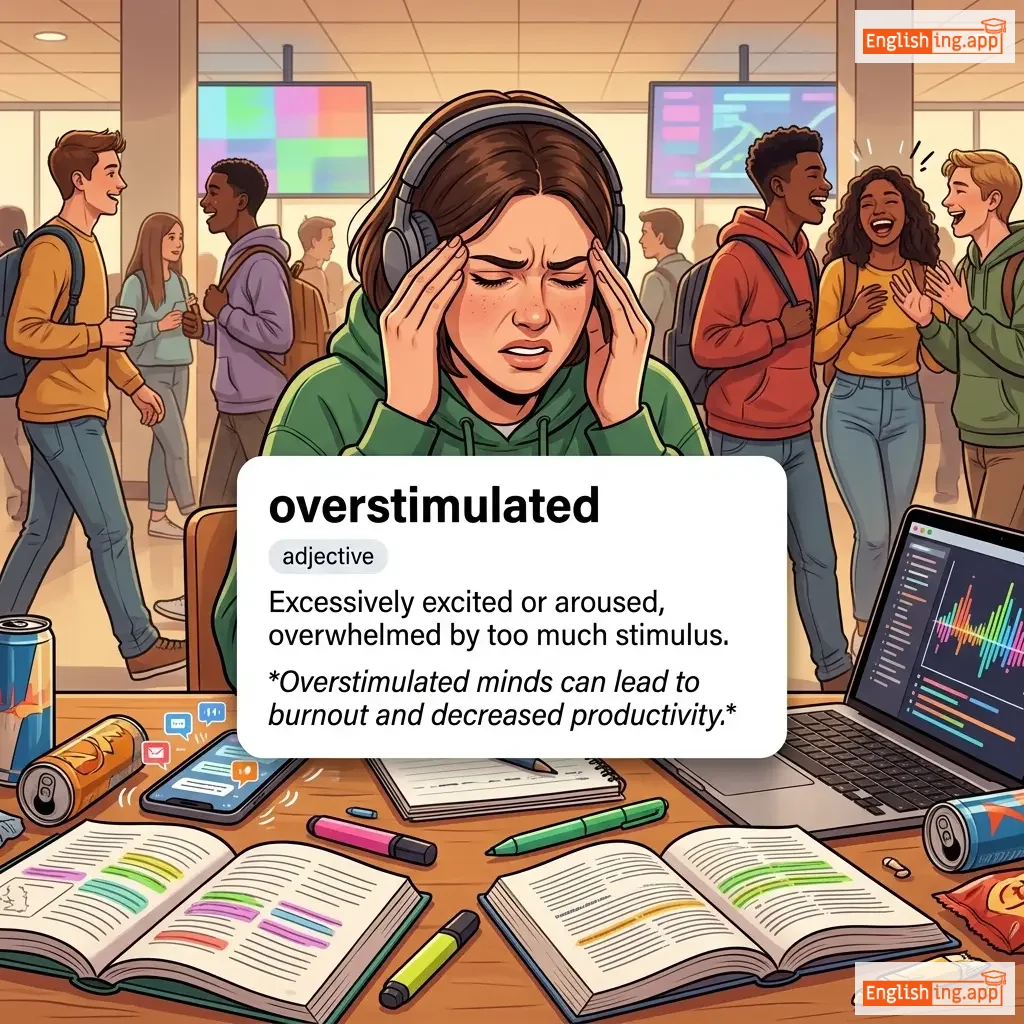
overstimulated definition card — visual illustration of the meaning
adjective
/ˌəʊvərˈstɪmjʊˌleɪtɪd/
अत्यधिक उत्तेजित (overstimulated)

Excessively excited or aroused, overwhelmed by too much stimulus.

"Overstimulated minds can lead to burnout and decreased productivity."

"अत्यधिक उत्तेजित दिमाग थकावट और उत्पादनशीलता में कमी की ओर ले जा सकते हैं।" (Overstimulated minds can lead to burnout and decreased productivity.)
verb
/ˌoʊvərˈʃædoʊ/
अधिकार ग्रहण करना (adhikar grahan karna)

to appear more important or significant than something else, reducing its impact

"The scandal overshadowed his achievements."

"स्कैंडल ने उसकी उपलब्धियों को प्रभावित किया।" (Scandal ne uski uplabdhiyon ko prabhavit kiya.)
noun
/ˈoʊvərˌsiːər/
प्रबंधक (prabandhak)

a person who supervises work or workers; a manager

"The overseer made sure the workers followed safety rules."

"प्रबंधक ने सुनिश्चित किया कि श्रमिक सुरक्षा नियमों का पालन करें।" (Prabandhak ne sunishchit kiya ki shramik suraksha niyamon ka paalan karein.)
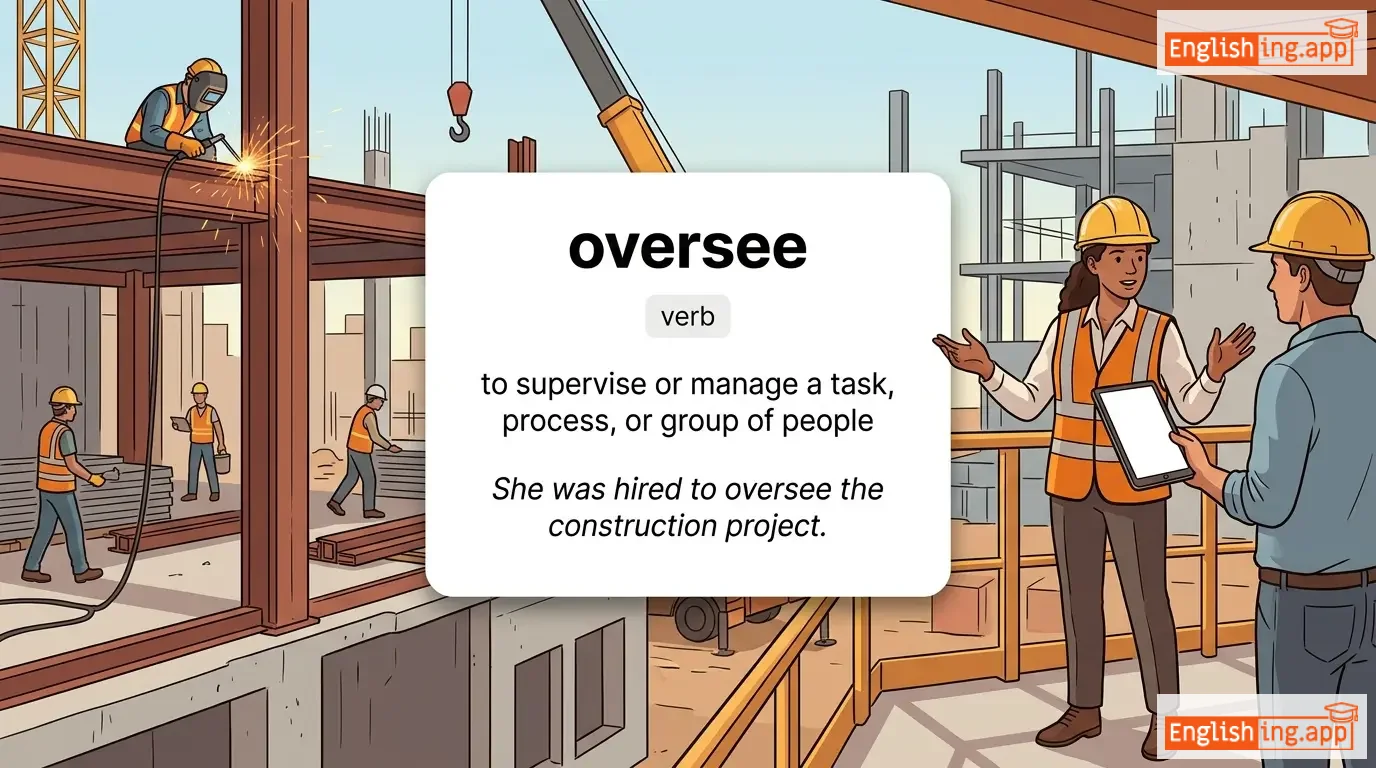
oversee definition card — visual illustration of the meaning
verb
/ˌoʊvərˈsiː/
निगरानी करना (nigrani karna)

to supervise or manage a task, process, or group of people

"She was hired to oversee the construction project."

"उसे निर्माण परियोजना की निगरानी करने के लिए नियुक्त किया गया था।" (Use nirman pariyojna ki nigrani karne ke liye niyukt kiya gaya tha.)
adjective
/ˌoʊvərˈsiːz/
विदेश में (videsh mein)

in or to a foreign country across the sea

"He went overseas for higher education."

"वह उच्च शिक्षा के लिए विदेश में गया था।" (Vah uchch shiksha ke liye videsh mein gaya tha.)
verb
/ˌoʊvərˈrʌn/
अधिकार करना (adhikar karna)

to spread over or occupy completely; to exceed a limit or time

"The garden was overrun with weeds."

"बग़ीचा खरपतवार से अधिग्रहित हो गया था।" (Bagicha kharpatwar se adhigrahit ho gaya tha.)
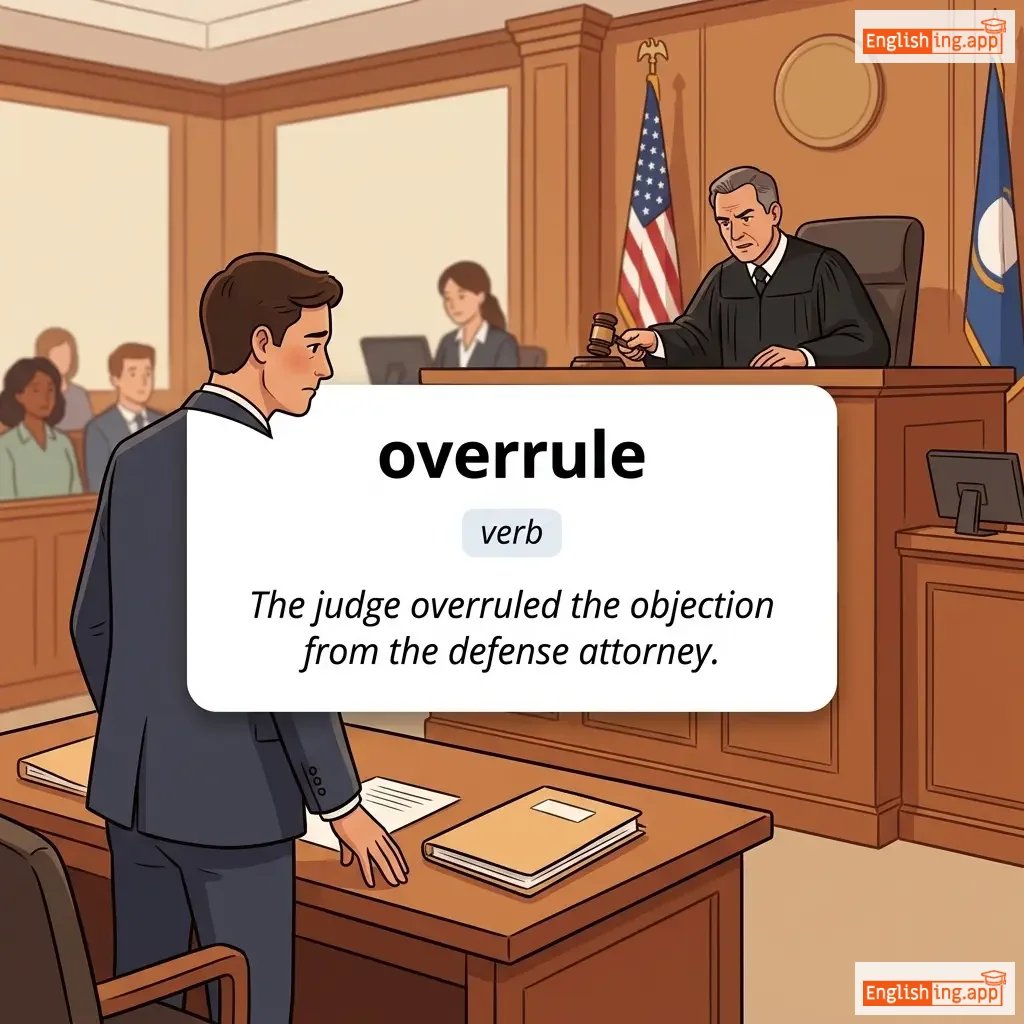
overrule definition card — visual illustration of the meaning
verb
/ˌoʊvərˈruːl/
खारिज करना (kharij karna)

to reject or disallow by exercising one's superior authority; to override a decision

"The judge overruled the objection from the defense attorney."

"न्यायाधीश ने बचाव पक्ष की आपत्ति को खारिज कर दिया।" (Nyayadhish ne bachav paksh ki aapatti ko kharij kar diya.)
verb
/ˌoʊvərˈriːtʃ/
अत्यधिक प्रयास (atyadhik prayaas)

to go beyond what is proper, acceptable, or achievable; to overextend

"The politician overreached by making promises he couldn't keep."

"राजनीतिज्ञ ने वादे करने में अत्यधिक प्रयास किया जिसे वह निभा नहीं सके।" (Rajnitik ne vaade karne mein atyadhik prayaas kiya jise vah nibha nahi sake.)
noun
/ˌoʊvərprəˈdʌkʃən/
अधिकारिता (adhikarita)

The act of producing more of something than is needed or can be consumed.

"The economic crisis was caused by the overproduction of goods."

"आर्थिक संकट अधिक उत्पादन के कारण हुआ था।" (Aarthik sankat adhik utpadan ke kaaran hua tha.)
verb
/ˌoʊvərˈpaʊər/
वश करना (vash karna)

To defeat or gain control over someone or something by using greater strength or force.

"The soldiers managed to overpower the enemy forces."

"सैनिकों ने दुश्मन बलों को वश करने में सफलता प्राप्त की।" (Sainiko ne dushman balon ko vash karne mein safalta prapt ki.)
verb
/ˌoʊvərˈpeɪ/
अतिरिक्त भुगतान करना (atirikt bhugtan karna)

To pay more than is necessary or reasonable.

"She realized she had overpaid for the concert tickets."

"वह समझ गई कि उसने कंसर्ट टिकटों के लिए अधिक भुगतान किया था।" (Vah samajh gayi ki usne concert ticketon ke liye adhik bhugtan kiya tha.)
noun
/ˈoʊvərpæs/
ओवरपास (overpass)

A bridge that carries one road or railway over another.

"The new overpass reduced traffic congestion in the city."

"नया ओवरपास शहर में ट्रैफिक जाम को कम कर दिया" (naya overpass shaher mein traffic jam ko kam kar diya)
adverb, adjective
/ˌəʊvəˈnaɪt/
रातोंरात (ratarat)

for or during the night; suddenly or in a very short time

"Her small business became famous overnight after a viral video."

"उसका छोटा व्यवसाय एक वायरल वीडियो के बाद रातोंरात प्रसिद्ध हो गया।" (Uska chhota vyavsay ek viral video ke baad ratarat prasiddh ho gaya.)
noun, verb
/ˈaʊtlaɪn/
आउटलाइन, रूपरेखा (outline, rooprekha)

a general description or plan that gives the main ideas without details; to describe something briefly or highlight main points

"The teacher asked us to outline our research project before writing the report."

"शिक्षक ने हमें रिपोर्ट लिखने से पहले हमारे रिसर्च प्रोजेक्ट का आउटलाइन बनाने को कहा।" (Shikshak ne humein report likhne se pehle hamare research project ka outline banane ko kaha.)
adverb; noun
/ˌaʊtˈdɔːrz/
बाहर; खुला वातावरण (bahar; khula vatavaran)

outside a building; the natural environment outside

"We spent the whole afternoon outdoors enjoying the fresh air."

"हमने पूरी दोपहर बाहर ताज़ी हवा का आनंद लेते हुए बिताई।" (humne poori dopahar bahar taazi hawa ka anand lete hue bitai)
adjective
/ˈaʊtər/
बाहरी (baahri)

situated on or toward the outside; external

"The outer layer of the jacket is waterproof."

"जैकेट की बाहरी परत जलरोधक है।" (Jacket ki baahri parat jalrodhak hai.)
noun
/ˈaʊtˌfɪt/
पोशाक (poshak)

A set of clothes worn together, often for a particular occasion.

"She wore a beautiful outfit to the party."

"उसने पार्टी में एक सुंदर पोशाक पहनी।" (Usne party mein ek sundar poshak pehni.)
adjective
/ˈaʊtˌɡoʊɪŋ/
मिलनसार (milanasar)

Friendly and sociable; inclined to mix with others.

"He is an outgoing person who loves meeting new people."

"वह एक मिलनसार व्यक्ति है जो नए लोगों से मिलना पसंद करता है।" (Wah ek milansar vyakti hai jo naye logon se milna pasand karta hai.)
noun
/ˈaʊtˌɡroʊθ/
उपोत्पत्ति (upotpatti)

something that grows out of something else; a natural development or result

"The new policy was an outgrowth of years of debate."

"नई नीति वर्षों की बहस का एक उपोत्पत्ति थी।" (Nayi neeti varsho ki bahas ka ek upotpatti thi.)
noun
/ˈaʊtɪŋ/
सैर (sair)

a short trip or excursion, often for leisure or enjoyment

"They had a lovely outing at the beach last weekend."

"उन्होंने पिछले सप्ताहांत समुद्र तट पर एक शानदार सैर की।" (Unhone pichhle saptahant samudra tat par ek shandar sair ki.)
adjective
/ˌaʊtˈlændɪʃ/
अजीब (ajeeb)

Looking or sounding bizarre or unfamiliar; strange.

"He wore an outlandish costume to the festival."

"उसने त्योहार में एक अजीब वस्त्र पहना था।" (Usne tyohar mein ek ajeeb vastra pehna tha.)
verb
/aʊtˈlæst/
अधिक समय तक टिके रहना (adhik samay tak tike rehna)

to continue longer than; to endure beyond someone or something else

"The old castle has outlasted many generations."

"पुराना किला कई पीढ़ियों से अधिक समय तक टिक चुका है।" (Purana kila kai pidiyon se adhik samay tak tik chuka hai.)
noun, verb
/ˈaʊtlɔː/
अवैध व्यक्ति, अवैध करना (avaidh vyakti, avaidh karna)

as a noun: a person who breaks the law and lives outside its protection; as a verb: to make something illegal

"The government decided to outlaw the harmful practice."

"सरकार ने हानिकारक प्रैक्टिस को अवैध बनाने का निर्णय लिया।" (Sarkar ne hanikarak prctis ko avaidh banane ka nirnay liya.)
noun
/ˈaʊtlet/
निकासी मार्ग (nikasi marg)

a means by which something is released, expressed, or distributed

"Art is a great outlet for emotions."

"कला भावनाओं के लिए एक बेहतरीन निकासी मार्ग है।" (Kala bhavnaon ke liye ek behatarin nikasi marg hai.)
adjective
/aʊtˈreɪdʒəs/
अत्यधिक अन्यायपूर्ण (atyadhik anyayapurn)

Shockingly bad or excessive; very unusual or amusing.

"The comedian told an outrageous joke."

"कॉमेडियन ने एक अत्यधिक मजेदार मजाक सुनाया।" (comedian ne ek atyadhik mazedar mazaak sunaya.)
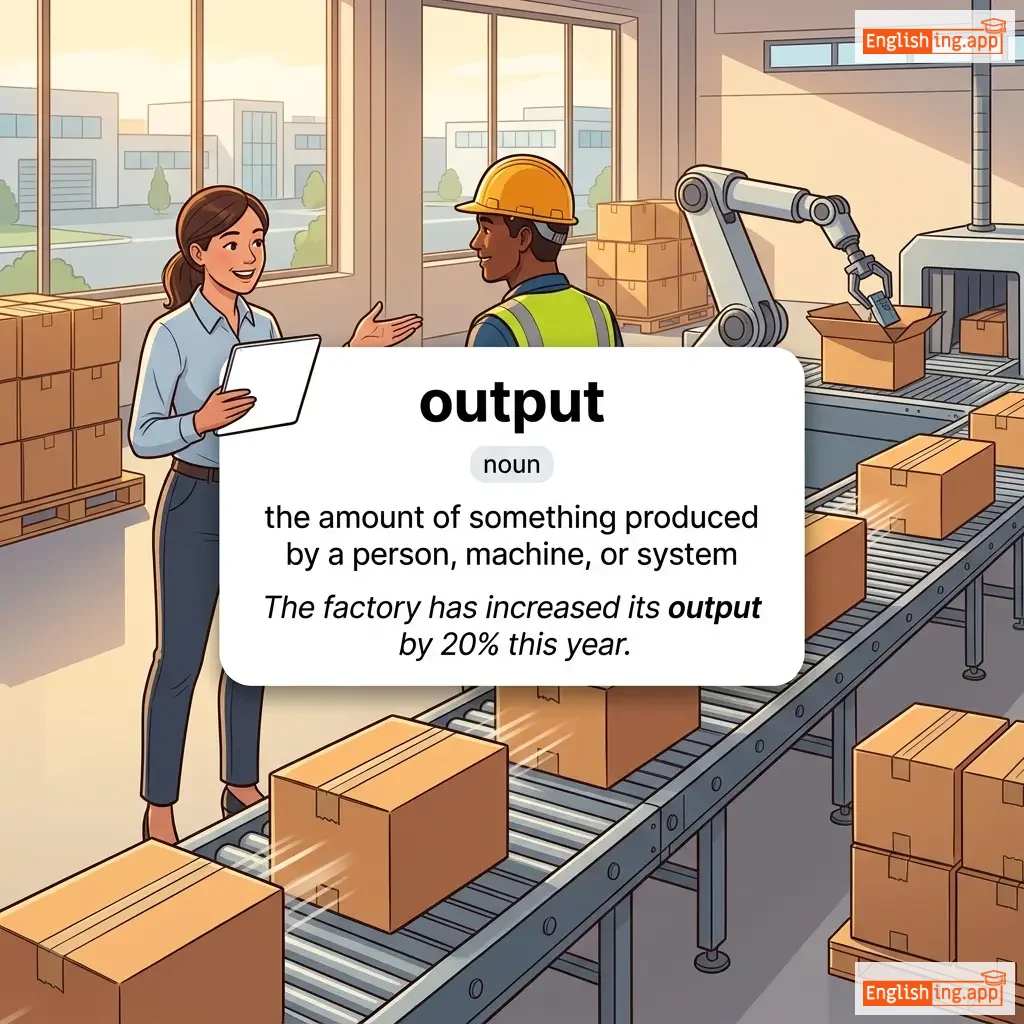
output definition card — visual illustration of the meaning
noun
/ˈaʊtpʊt/
उत्पादन (utpadan)

the amount of something produced by a person, machine, or system

"The factory has increased its output by 20% this year."

"फैक्ट्री ने इस साल अपनी उत्पादन को 20% बढ़ा लिया है।" (Factory ne is saal apni utpadan ko 20% badha liya hai.)
noun/verb
/ˈaʊtreɪdʒ/
आक्रोश (aakrosh)

A strong feeling of anger and shock; to arouse anger or shock.

"The unfair decision caused public outrage."

"अन्यायपूर्ण निर्णय ने सार्वजनिक आक्रोश उत्पन्न किया।" (anyayapoorn nirnay ne samajik aakrosh utpann kiya.)