词汇表

英语词汇词典 | 单词含义、定义和示例

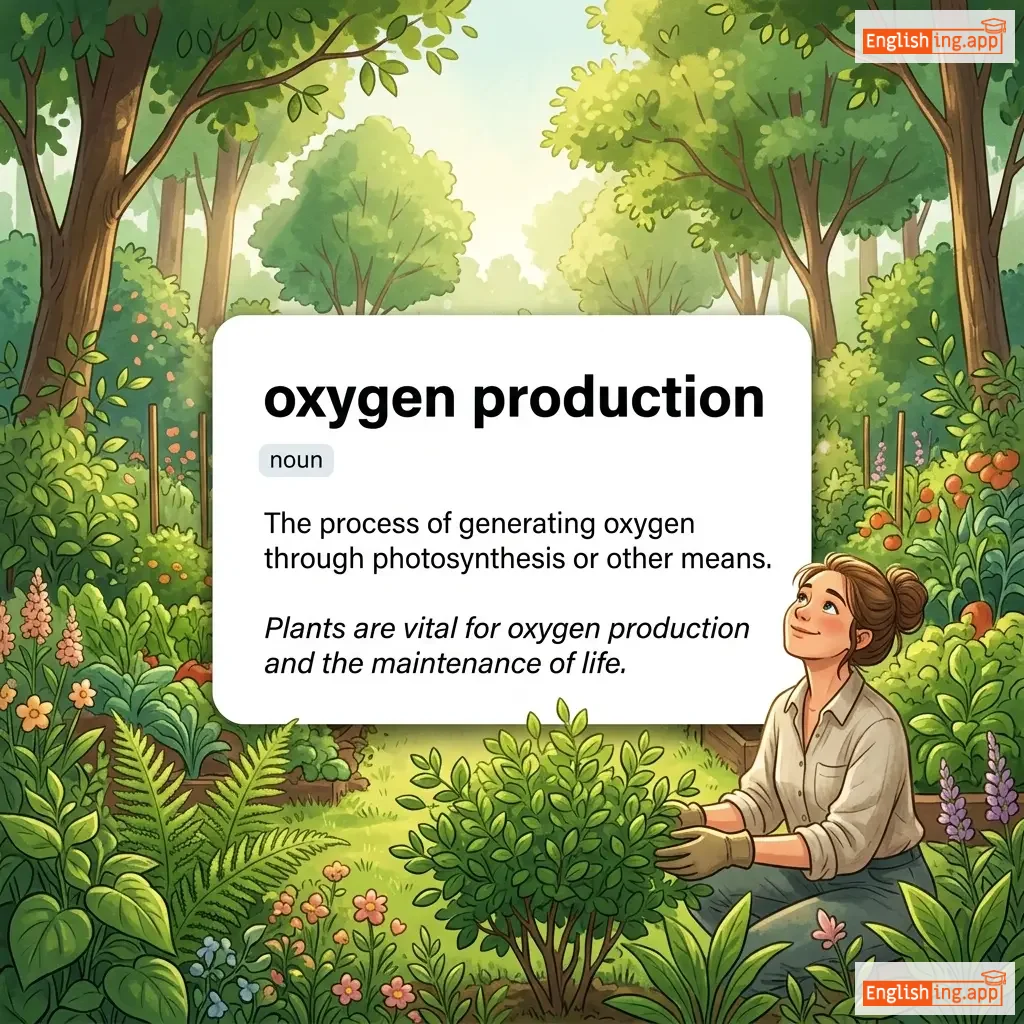
oxygen production definition card — visual illustration of the meaning
noun
ˈɒksɪdʒən prəˈdʌkʃən
氧气生产 (yangqi shengchan)

The process of generating oxygen through photosynthesis or other means.

"Plants are vital for oxygen production and the maintenance of life."
"植物对于氧气生产和维持生命至关重要。" (Zhiwu duiyu yangqi shengchan he weichi shengming zhiguang zhongyao.)
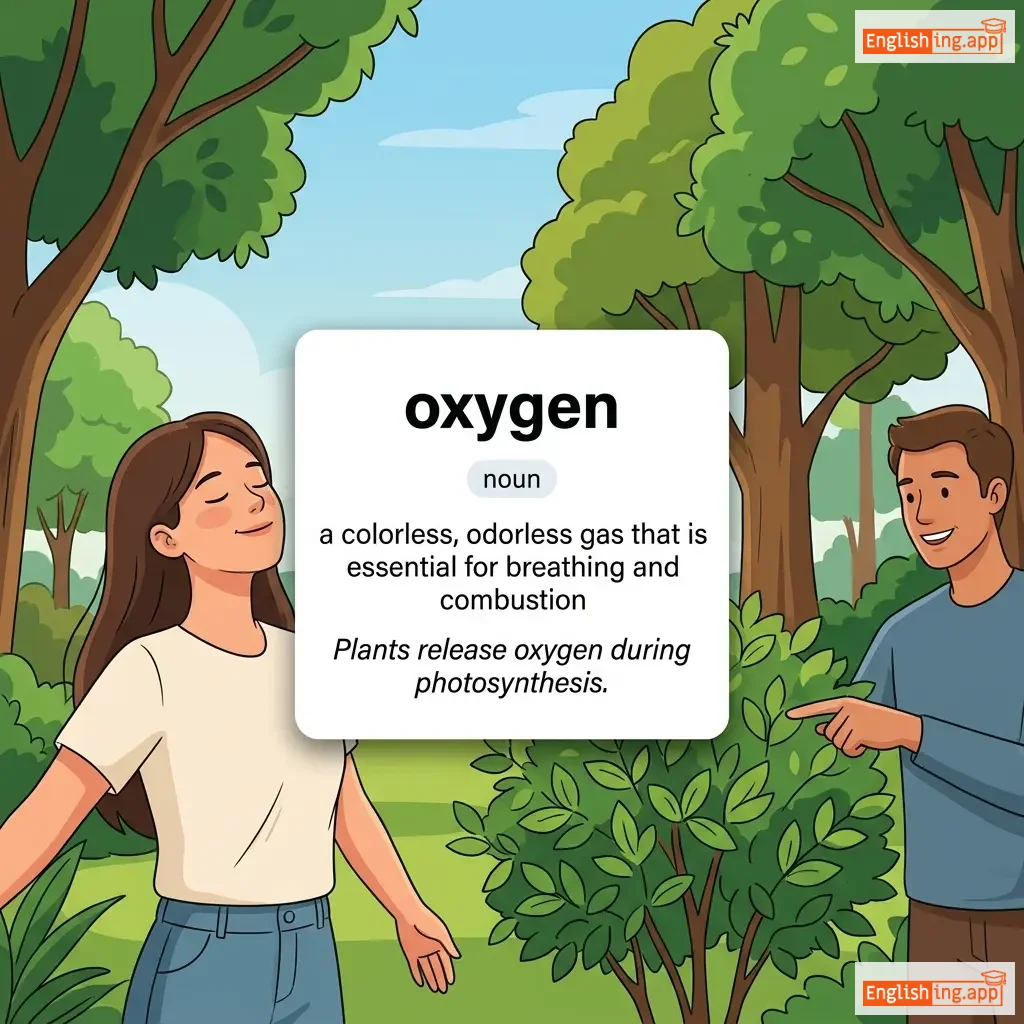
oxygen definition card — visual illustration of the meaning
noun
/ˈɒksɪdʒən/
氧气 (yangqi)

a colorless, odorless gas that is essential for breathing and combustion

"Plants release oxygen during photosynthesis."
"植物在光合作用过程中释放氧气。" (Zhiwu zai guanghezuoyong guocheng zhong shifang yangqi.)
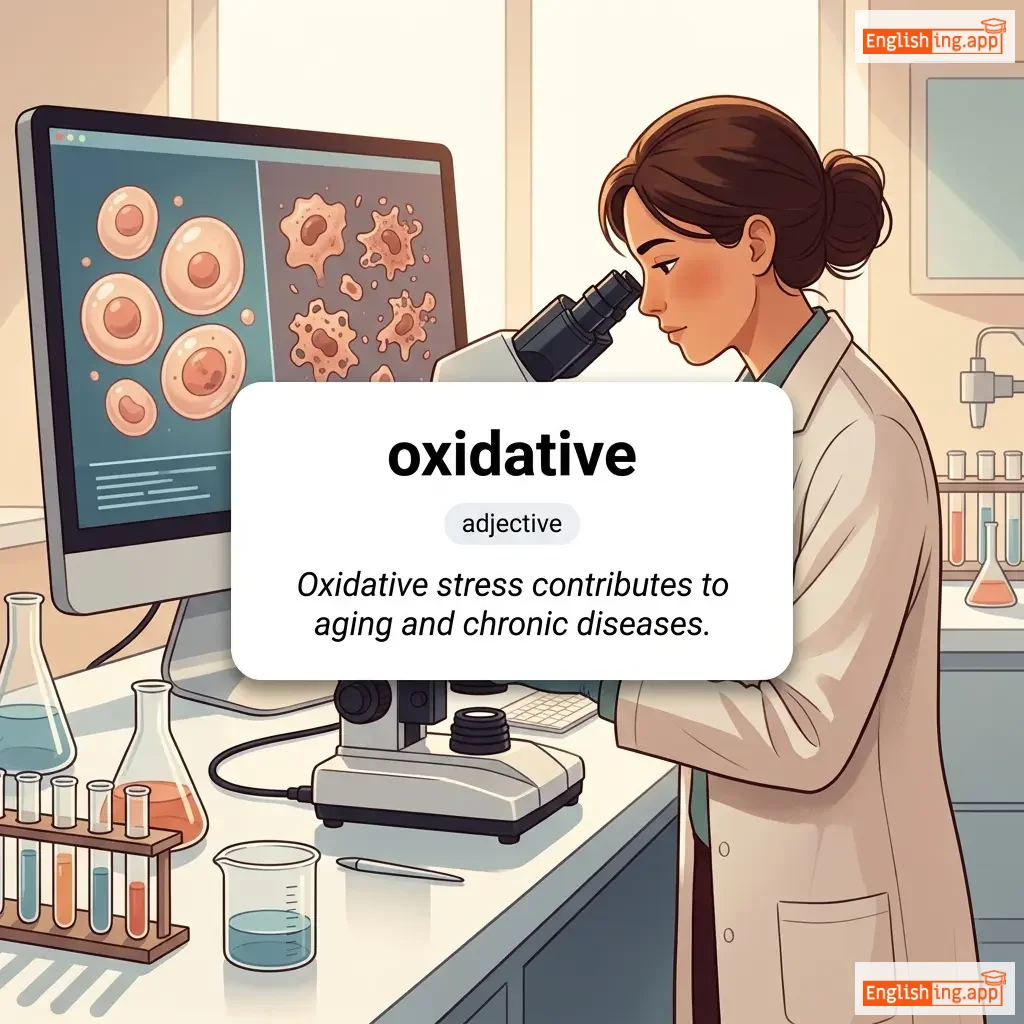
oxidative definition card — visual illustration of the meaning
adjective
/ˈɒk.sɪ.də.tɪv/
氧化性的 (yǎng huà xìng de)

Relating to or involving oxidation, particularly processes that can cause cellular damage through free radical formation.

"Oxidative stress contributes to aging and chronic diseases."
"氧化应激有助于衰老和慢性疾病。" (Yǎng huà yìng jī yǒu zhù yú shuāi lǎo hé màn xìng jí bìng.)
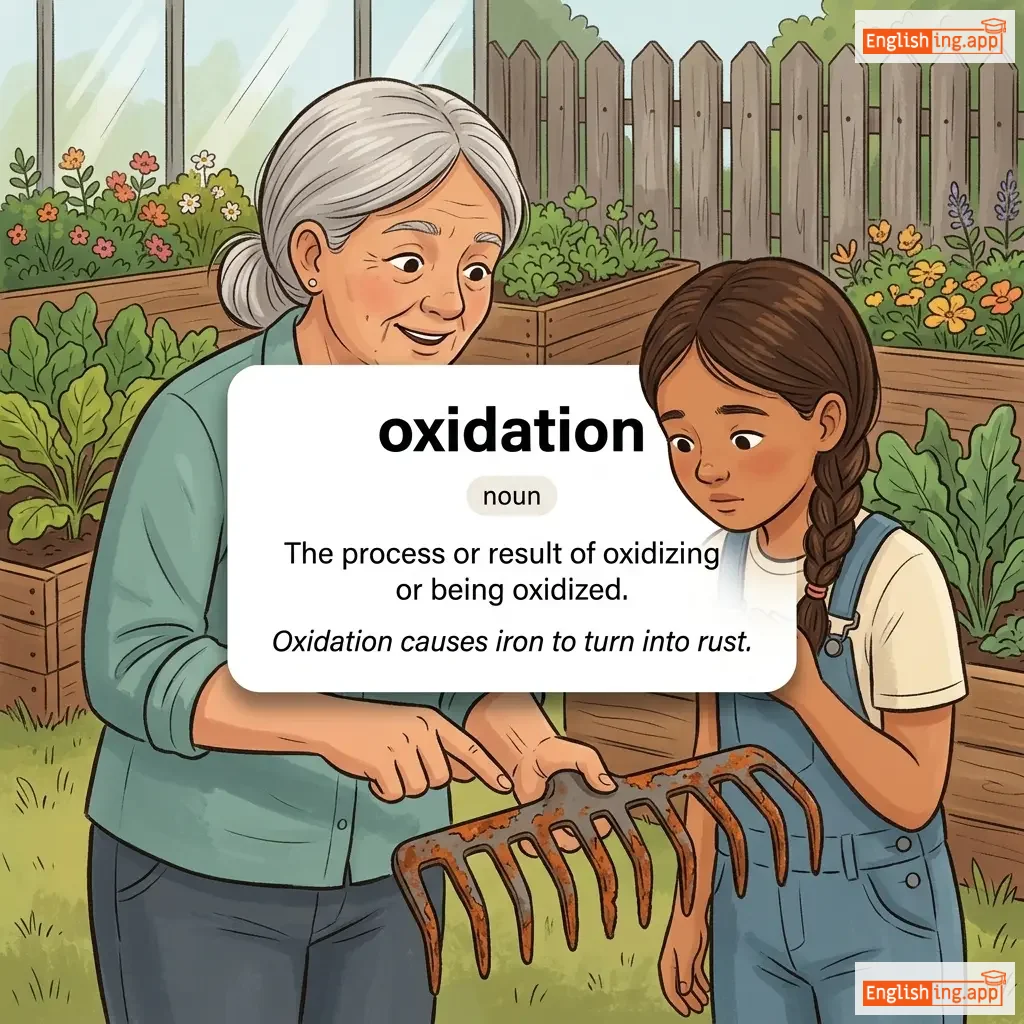
oxidation definition card — visual illustration of the meaning
noun
/ˌɒk.sɪˈdeɪ.ʃən/
氧化 (yanghua)

The process or result of oxidizing or being oxidized.

"Oxidation causes iron to turn into rust."

"氧化会导致铁变成锈。" (Yanghua hui daozhi tie bian cheng xiu.)
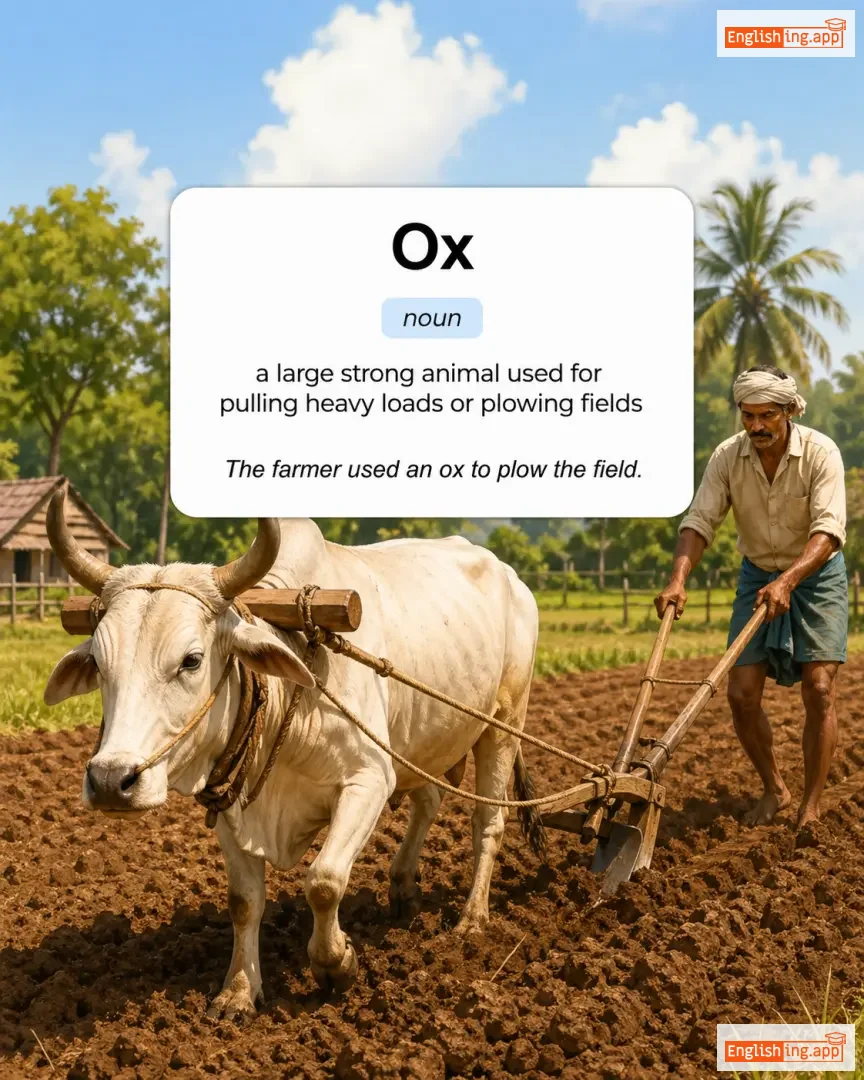
Ox definition card — visual illustration of the meaning
noun
/ɑːks/
(niu)

a large strong animal used for pulling heavy loads or plowing fields

"The farmer used an ox to plow the field."

"农民用牛耕地。" (Nóngmín yòng niú gēngdì.)
ownership definition card — visual illustration of the meaning
noun
/ˈoʊnərʃɪp/
所有权 (suǒyǒuquán)

the state or fact of owning something; legal right of possession

"He took full ownership of the company after his father retired."

"在父亲退休后,他完全接管了公司的所有权。" (Zài fùqīn tuìxiū hòu, tā wánquán jiēguǎnle gōngsī de suǒyǒuquán.)
Owner definition card — visual illustration of the meaning
noun
/ˈoʊnər/
车主 (chē zhǔ)

a person who owns something

"She is the owner of the car."
"她是那辆车的车主。" (Tā shì nà liàng chē de chē zhǔ.)
verb, adjective
/oʊn/
拥有 (yǒngyǒu)

to possess something; belonging to oneself

"She owns a beautiful house in the city."

"她拥有一座漂亮的房子。" (Tā yǒngyǒu yī zuò piàoliang de fángzi.)
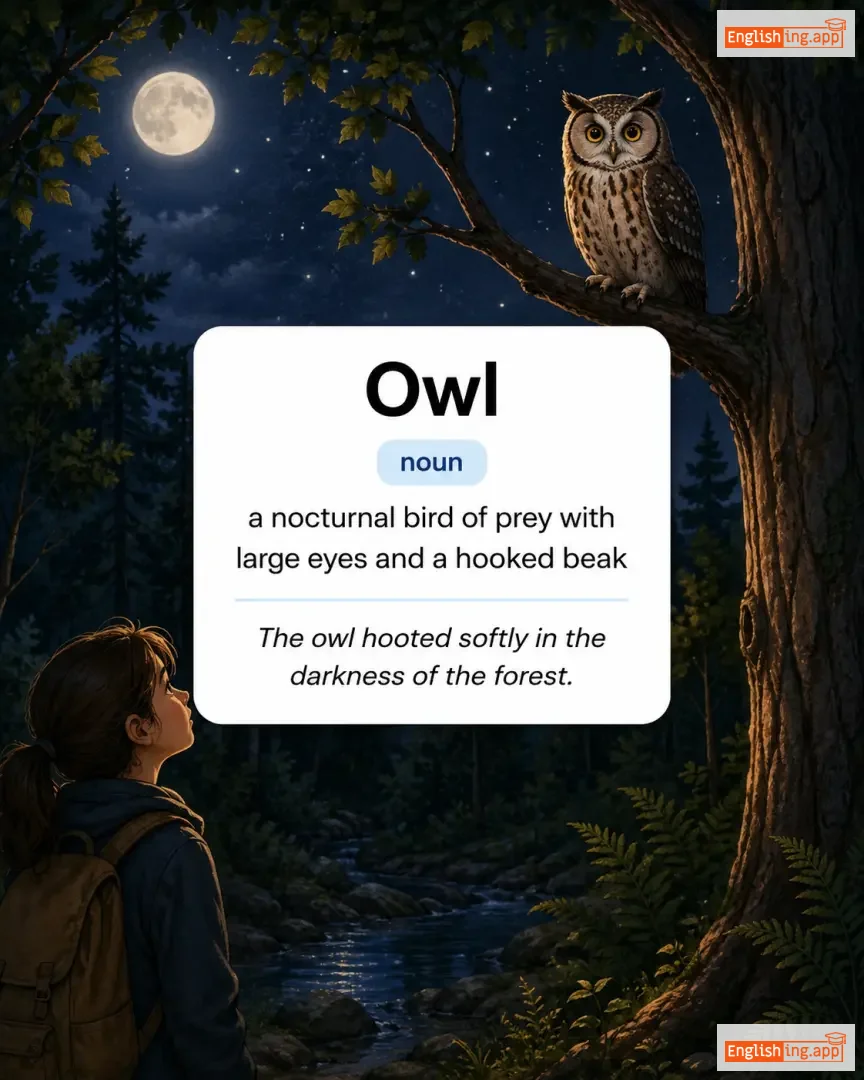
Owl definition card — visual illustration of the meaning
noun
/aʊl/
猫头鹰 (maotouying)

a nocturnal bird of prey with large eyes and a hooked beak

"The owl hooted softly in the darkness of the forest."

"猫头鹰在森林的黑暗中轻轻地叫了。" (Maotouying zai senlin de heian zhong qingqing de jiao le.)
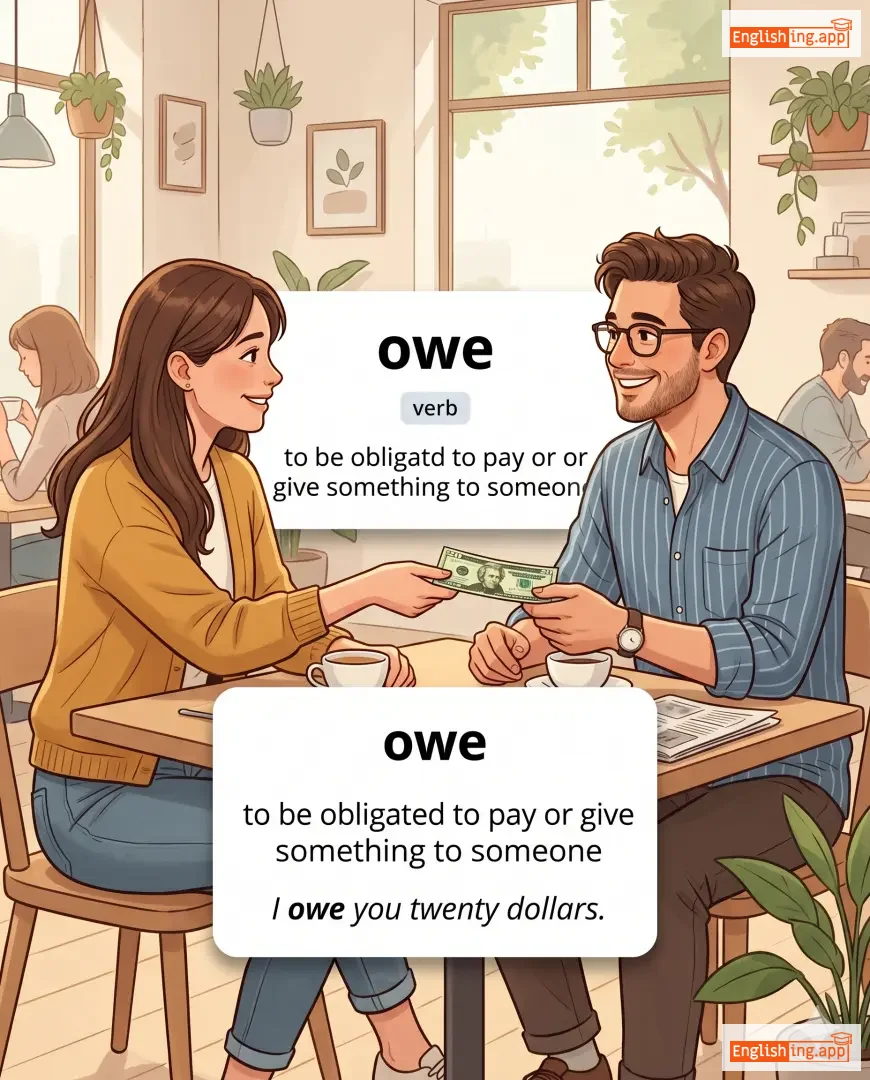
owe definition card — visual illustration of the meaning
verb
/oʊ/
(qiàn)

to be obligated to pay or give something to someone

"I owe you twenty dollars."

"我欠你二十美元。" (Wǒ qiàn nǐ èrshí měiyuán.)
adjective
/ˈoʊ.vɔɪd/
卵形 (luanxing)

egg-shaped; resembling an oval or ellipse

"The artist painted an ovoid shape in the center of the canvas."

"艺术家在画布中心画了一个卵形的形状。" (Yishujia zai huabu zhongxin hua le yige luanxing de xingzhuang.)
adjective
/ˌoʊvərˈrɔt/
焦虑 / 过度紧张 (jiaolü / guòdù jǐnzhāng)

extremely agitated or nervous; excessively elaborate

"She was too overwrought to speak clearly after the accident."
"她在事故后太焦虑,无法清楚地讲话。" (Tā zài shìgù hòu tài jiāolü, wúfǎ qīngchǔ de jiǎnghuà.)
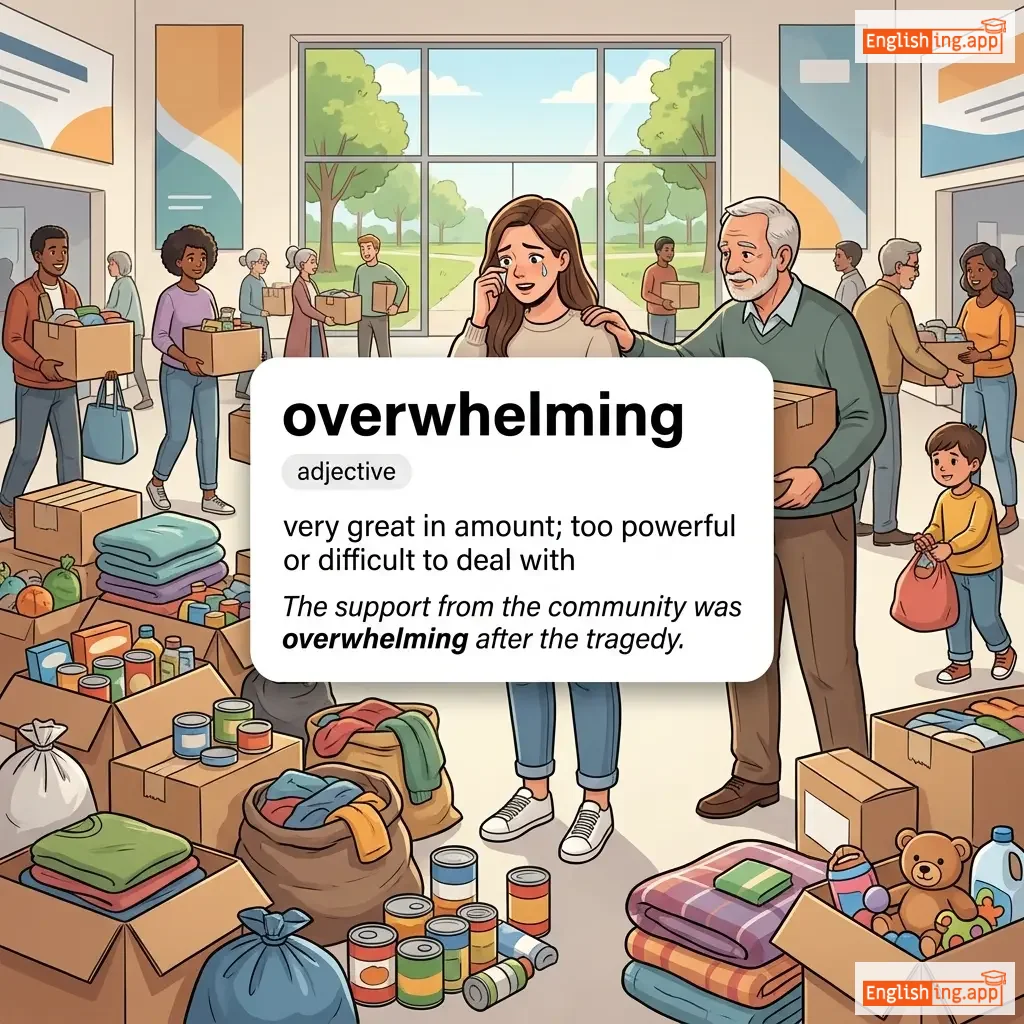
overwhelming definition card — visual illustration of the meaning
adjective
/ˌəʊvəˈwelmɪŋ/
压倒性的, 无法承受的 (yādǎo xìng de, wúfǎ chéngshòu de)

very great in amount; too powerful or difficult to deal with

"The support from the community was overwhelming after the tragedy."

"灾难发生后,社区的支持是压倒性的。" (zāinàn fāshēng hòu, shèqū de zhīchí shì yādǎo xìng de.)
verb
/ˌoʊvərˈwɛlm/

to overpower someone emotionally or physically; to be too much to handle

"She was overwhelmed with gratitude after receiving the help."

adjective
/ˌoʊvərˈweɪt/
超重 (chaozhong)

heavier than is considered healthy or normal

"The doctor advised him to lose weight as he was overweight."

"医生建议他减肥,因为他超重。" (Yisheng jianyi ta jianfei, yinwei ta chaozhong.)
adjective
/ˌoʊvərˈwiːnɪŋ/
过度自负 (guòdù zìfù)

excessively arrogant or prideful

"His overweening pride cost him many friends."

"他过度的自豪让他失去了许多朋友。" (Tā guòdù de zìháo ràng tā shīqùle xǔduō péngyǒu.)
verb
/ˌoʊvərˈtɜrn/
推翻 / 取消裁决 (tuī fān / qǔ xiāo cái jué)

to turn something upside down or to reverse a decision or judgment

"The court decided to overturn the previous ruling."

"法院决定推翻先前的裁决。" (Fǎyuàn juédìng tuīfān xiānqián de cáijué.)
noun
/ˈoʊvərˌtʊr/
序曲 / 提议 (xùqǔ / tíyì)

An introduction to something more substantial; a proposal or preliminary action.

"The peace overture was welcomed by both nations."

"和平提议得到了两个国家的欢迎。" (Hépíng tíyì dédàole liǎng gè guójiā de huānyíng.)
noun
/ˈoʊvərˌtoʊn/
微妙的含义 (wēi miào de hán yì)

A subtle quality, implication, or additional meaning beyond the obvious.

"His speech had political overtones that were hard to ignore."

"他的演讲具有政治性含义,难以忽视。" (tā de yǎn jiǎng jù yǒu zhèng zhì xìng hán yì, nán yǐ hū shì.)
verb
/ˌoʊvərˈθroʊ/
幸福 (xìng fú)

To remove a leader or government from power, often by force.

"The rebels planned to overthrow the corrupt regime."
"她在收到奖项时无法掩饰她的幸福感。" (Tā zài shōu dào jiǎng xiàng shí wú fǎ yǎn shì tā de xìng fú gǎn.)
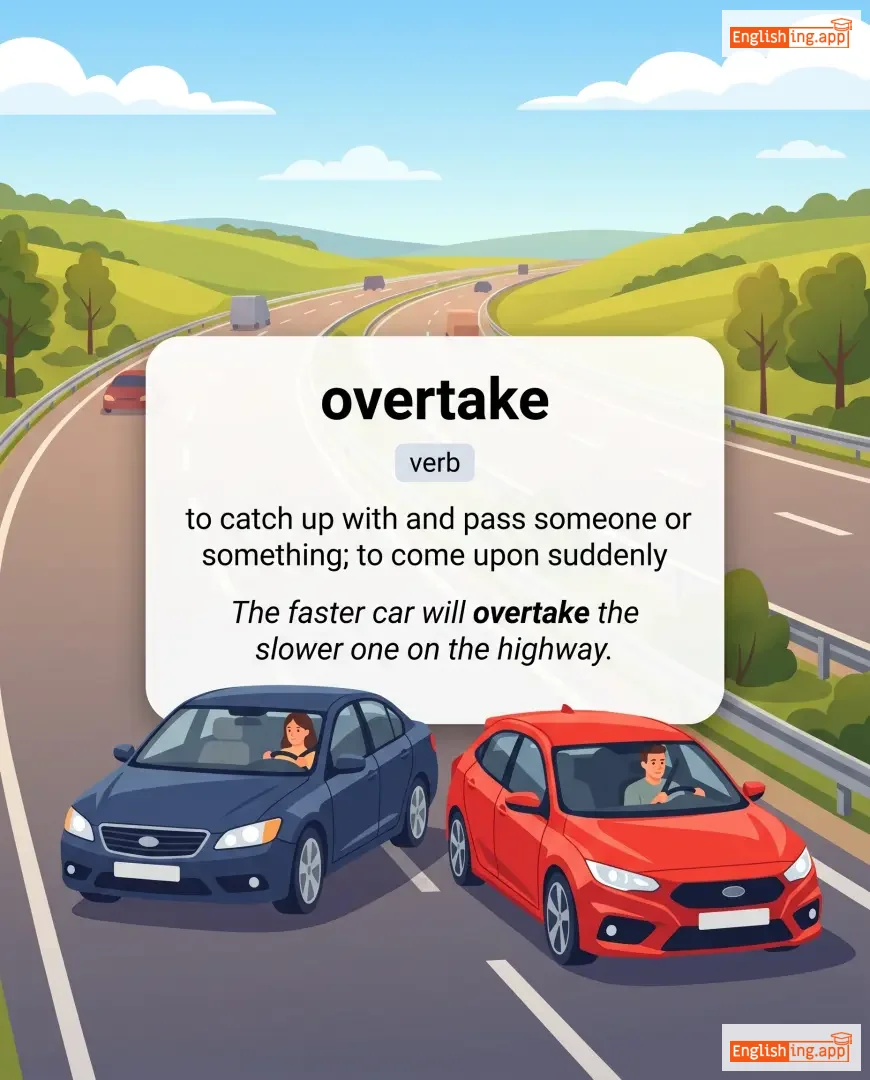
overtake definition card — visual illustration of the meaning
verb
/ˌoʊvərˈteɪk/
超越 (chaoyue)

to catch up with and pass someone or something; to come upon suddenly

"The faster car will overtake the slower one on the highway."

"更快的汽车将在高速公路上超过较慢的汽车。" (Geng kuai de qiche jiang zai gaosu gonglu shang chaoguo jiao man de qiche.)
adjective
/oʊˈvɜːrt/
公开的 (gongkai de)

Done or shown openly; not hidden or secret.

"There was an overt display of hostility between the rivals."

"在对手之间有一种公开的敌意表现。" (Zai duishou zhijian you yizhong gongkai de diyi biaoxian.)
verb
/ˌoʊvərˈstraɪd/
跨越大步走 (kuà yuè dà bù zǒu)

To stride over something; to step across with long steps.

"He managed to overstride the narrow stream with ease."
"他轻松地跨越了狭窄的溪流。" (Tā qīngsōng de kuàyuèle xiázhǎi de xīliú.)
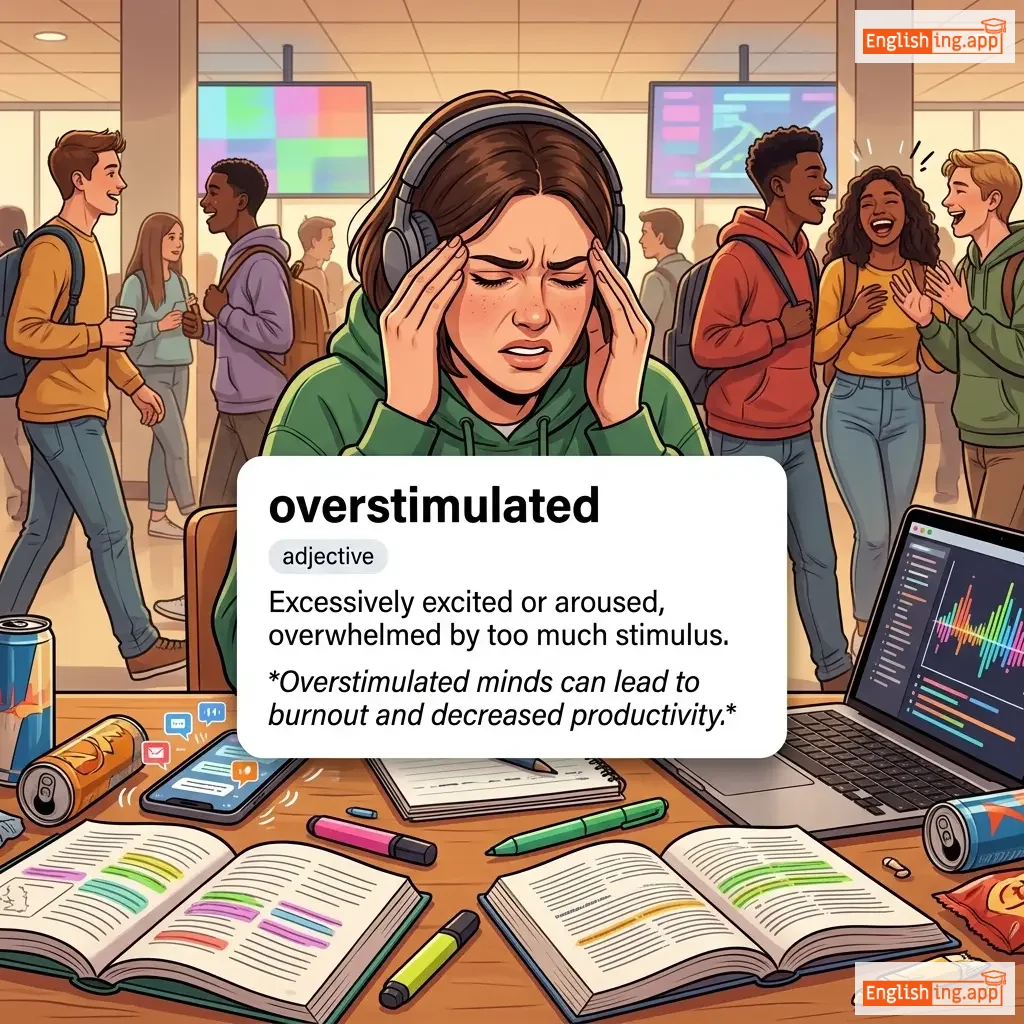
overstimulated definition card — visual illustration of the meaning
adjective
/ˌəʊvərˈstɪmjʊˌleɪtɪd/
过度刺激的 (guo du ci ji de)

Excessively excited or aroused, overwhelmed by too much stimulus.

"Overstimulated minds can lead to burnout and decreased productivity."

"过度刺激的头脑可能导致倦怠和生产力下降。" (guodu ciji de tounao keneng daozhi juan dai he shengchanli xiajiang)
verb
/ˌoʊvərˈʃædoʊ/
掩盖 (yǎngài)

to appear more important or significant than something else, reducing its impact

"The scandal overshadowed his achievements."

"丑闻掩盖了他的成就。" (Chǒuwén yǎngài le tā de chéngjiù.)
noun
/ˈoʊvərˌsiːər/
监督员 (jiāndūyuán)

a person who supervises work or workers; a manager

"The overseer made sure the workers followed safety rules."
"监督员确保工人遵守安全规则。" (Jiāndūyuán quèbǎo gōngrén zūnshǒu ānquán guīzé.)
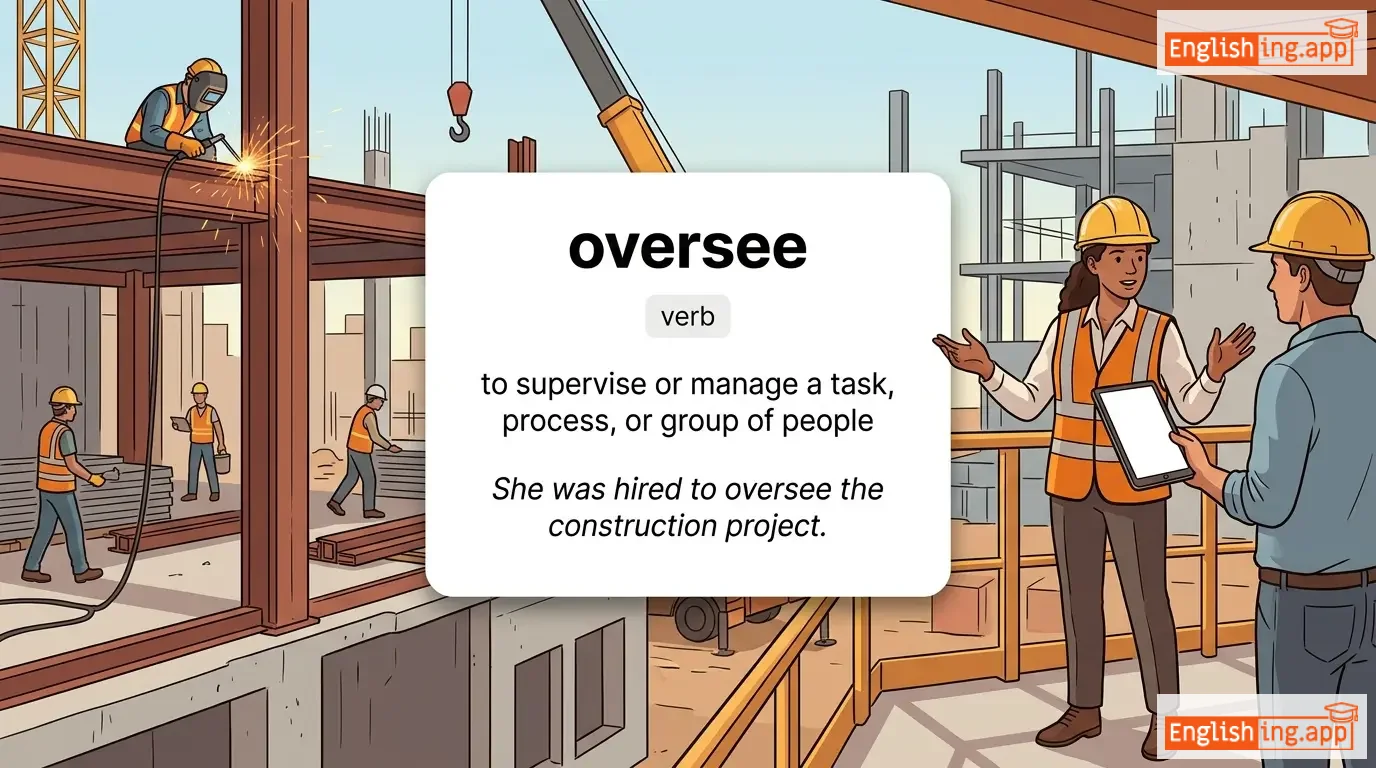
oversee definition card — visual illustration of the meaning
verb
/ˌoʊvərˈsiː/
监督 (jiāndū)

to supervise or manage a task, process, or group of people

"She was hired to oversee the construction project."

"她被雇佣来监督建筑项目。" (Tā bèi gùyōng lái jiāndū jiànzhù xiàngmù.)
adjective
/ˌoʊvərˈsiːz/
海外 (hǎiwài)

in or to a foreign country across the sea

"He went overseas for higher education."

"他去海外深造。" (Tā qù hǎiwài shēnzào.)
verb
/ˌoʊvərˈrʌn/
侵占 (qīnzhàn)

to spread over or occupy completely; to exceed a limit or time

"The garden was overrun with weeds."
"花园被杂草淹没。" (Huāyuán bèi zácǎo yānmò.)
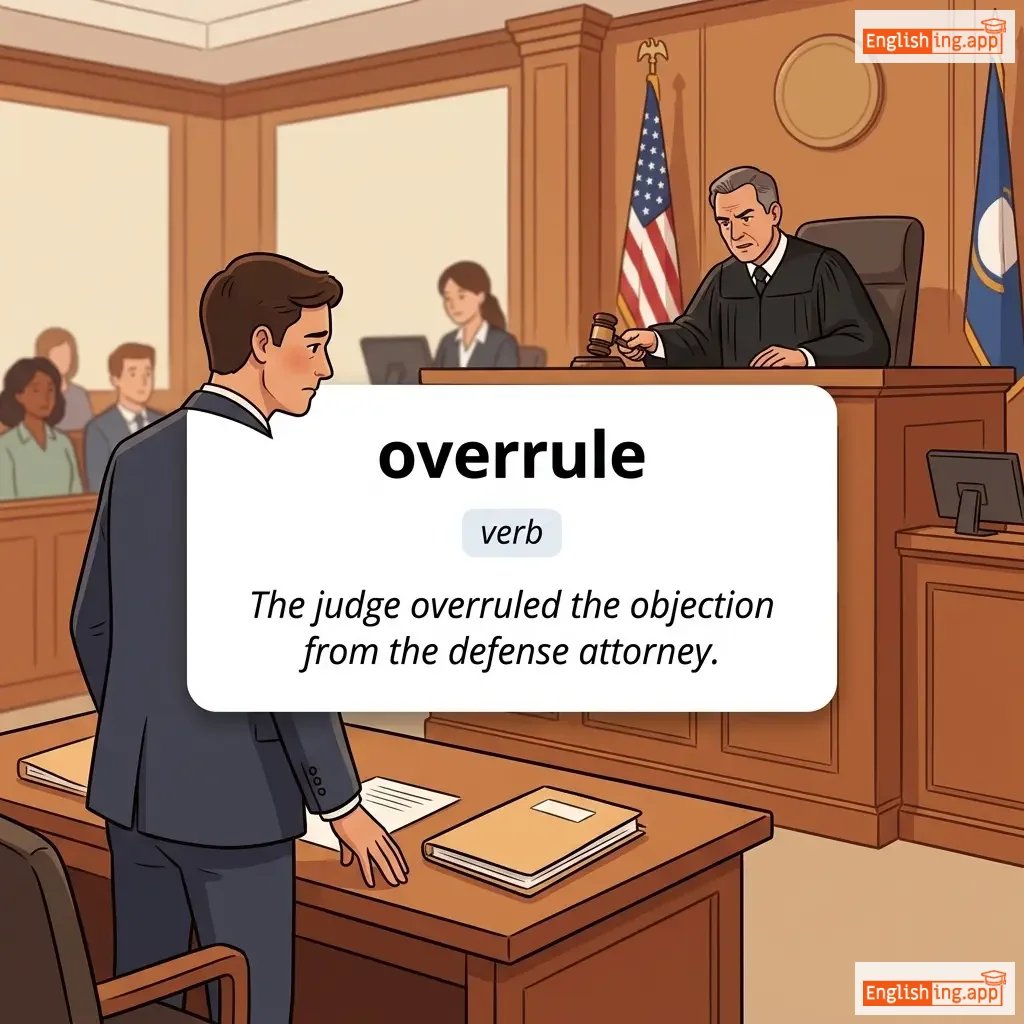
overrule definition card — visual illustration of the meaning
verb
/ˌoʊvərˈruːl/
驳回 (bohui)

to reject or disallow by exercising one's superior authority; to override a decision

"The judge overruled the objection from the defense attorney."

"法官驳回了辩护律师的反对。" (Faguan bohui le bianhu lushi de fandui.)
verb
/ˌoʊvərˈriːtʃ/
过度伸展 (guòdù shēnzhǎn)

to go beyond what is proper, acceptable, or achievable; to overextend

"The politician overreached by making promises he couldn't keep."

"那位政治家在做出无法兑现的承诺时,过度伸展了自己。" (Nà wèi zhèngzhìjiā zài zuò chū wúfǎ duìxiàn de chéngnuò shí, guòdù shēnzhǎnle zìjǐ.)
noun
/ˌoʊvərprəˈdʌkʃən/
过度生产 (guò dù shēng chǎn)

The act of producing more of something than is needed or can be consumed.

"The economic crisis was caused by the overproduction of goods."

"经济危机是由商品的过度生产引起的。" (Jīngjì wéijī shì yóu shāngpǐn de guò dù shēng chǎn yǐnqǐ de.)
verb
/ˌoʊvərˈpaʊər/
征服 (zhēng fú)

To defeat or gain control over someone or something by using greater strength or force.

"The soldiers managed to overpower the enemy forces."

"士兵们成功压倒了敌军。" (Shìbīng men chénggōng yādǎo le dí jūn.)
verb
/ˌoʊvərˈpeɪ/
支付过多 (zhīfù guò duō)

To pay more than is necessary or reasonable.

"She realized she had overpaid for the concert tickets."

"她意识到她为音乐会门票支付过多。" (Tā yìshí dào tā wèi yīnyuè huì ménpiào zhīfù guò duō.)
noun
/ˈoʊvərpæs/
立交桥 (lijiaoqiao)

A bridge that carries one road or railway over another.

"The new overpass reduced traffic congestion in the city."

"新的立交桥减少了城市的交通拥堵。" (Xīn de lijiaoqiao jiǎnshǎo le chéngshì de jiāotōng yōngdǔ.)
adverb, adjective
/ˌəʊvəˈnaɪt/
一夜之间 (yiye zhijian)

for or during the night; suddenly or in a very short time

"Her small business became famous overnight after a viral video."

"她的小生意在一夜之间因一则病毒视频而出名。" (Ta de xiao shengyi zai yiye zhijian yin yi ze bingdu shipin er chuming.)
noun, verb
/ˈaʊtlaɪn/

a general description or plan that gives the main ideas without details; to describe something briefly or highlight main points

"The teacher asked us to outline our research project before writing the report."

adverb; noun
/ˌaʊtˈdɔːrz/
在户外 (zai huwai)

outside a building; the natural environment outside

"We spent the whole afternoon outdoors enjoying the fresh air."

"我们整个下午都在户外享受新鲜空气。" (women zhengge xiawu dou zai huwai xiangshou xinxian kongqi)
adjective
/ˈaʊtər/
外部 (waibu)

situated on or toward the outside; external

"The outer layer of the jacket is waterproof."

"夹克的外层是防水的。" (Jiakede waceng shi fangshui de.)
noun
/ˈaʊtˌfɪt/
服装 (fúzhuāng)

A set of clothes worn together, often for a particular occasion.

"She wore a beautiful outfit to the party."

"她穿了一套漂亮的服装去参加派对。" (Tā chuānle yī tào piàoliang de fúzhuāng qù cānjiā pàiduì.)
adjective
/ˈaʊtˌɡoʊɪŋ/
外向 (wàixiàng)

Friendly and sociable; inclined to mix with others.

"He is an outgoing person who loves meeting new people."

"他是一个外向的人,喜欢结识新朋友。" (Tā shì yīgè wàixiàng de rén, xǐhuān jièshí xīn péngyǒu.)
noun
/ˈaʊtˌɡroʊθ/
衍生物 (yǎnshēngwù)

something that grows out of something else; a natural development or result

"The new policy was an outgrowth of years of debate."

"新政策是多年辩论的衍生物。" (Xīn zhèngcè shì duōnián biànlùn de yǎnshēngwù.)
noun
/ˈaʊtɪŋ/
短途旅行 (duǎntú lǚxíng)

a short trip or excursion, often for leisure or enjoyment

"They had a lovely outing at the beach last weekend."

"他们上周末在海滩上度过了一个美好的短途旅行。" (Tāmen shàng zhōumò zài hǎitān shàng dùguò le yīgè měihǎo de duǎntú lǚxíng.)
adjective
/ˌaʊtˈlændɪʃ/
奇异 (qiyi)

Looking or sounding bizarre or unfamiliar; strange.

"He wore an outlandish costume to the festival."

"他穿着一件奇异的服装参加了节日。" (Ta chuanzhe yijian qiyi de fuzhuang canjia le jieri.)
verb
/aʊtˈlæst/
比...持续更久 (bǐ... chíxù gèng jiǔ)

to continue longer than; to endure beyond someone or something else

"The old castle has outlasted many generations."

"这座古老的城堡已经比许多代人持续得更久。" (Zhè zuò gǔlǎo de chéngbǎo yǐjīng bǐ xǔduō dài rén chíxù de gèng jiǔ.)
noun, verb
/ˈaʊtlɔː/

as a noun: a person who breaks the law and lives outside its protection; as a verb: to make something illegal

"The government decided to outlaw the harmful practice."

noun
/ˈaʊtlet/
出口 (chūkǒu)

a means by which something is released, expressed, or distributed

"Art is a great outlet for emotions."

"艺术是情感的一个极好的出口。" (Yìshù shì qínggǎn de yīgè jí hǎo de chūkǒu.)
adjective
/aʊtˈreɪdʒəs/
骇人听闻 (hàiréntīngwén)

Shockingly bad or excessive; very unusual or amusing.

"The comedian told an outrageous joke."
"这位喜剧演员讲了一个骇人听闻的笑话。" (Zhè wèi xǐjù yǎnyuán jiǎngle yīgè hàiréntīngwén de xiàohuà.)
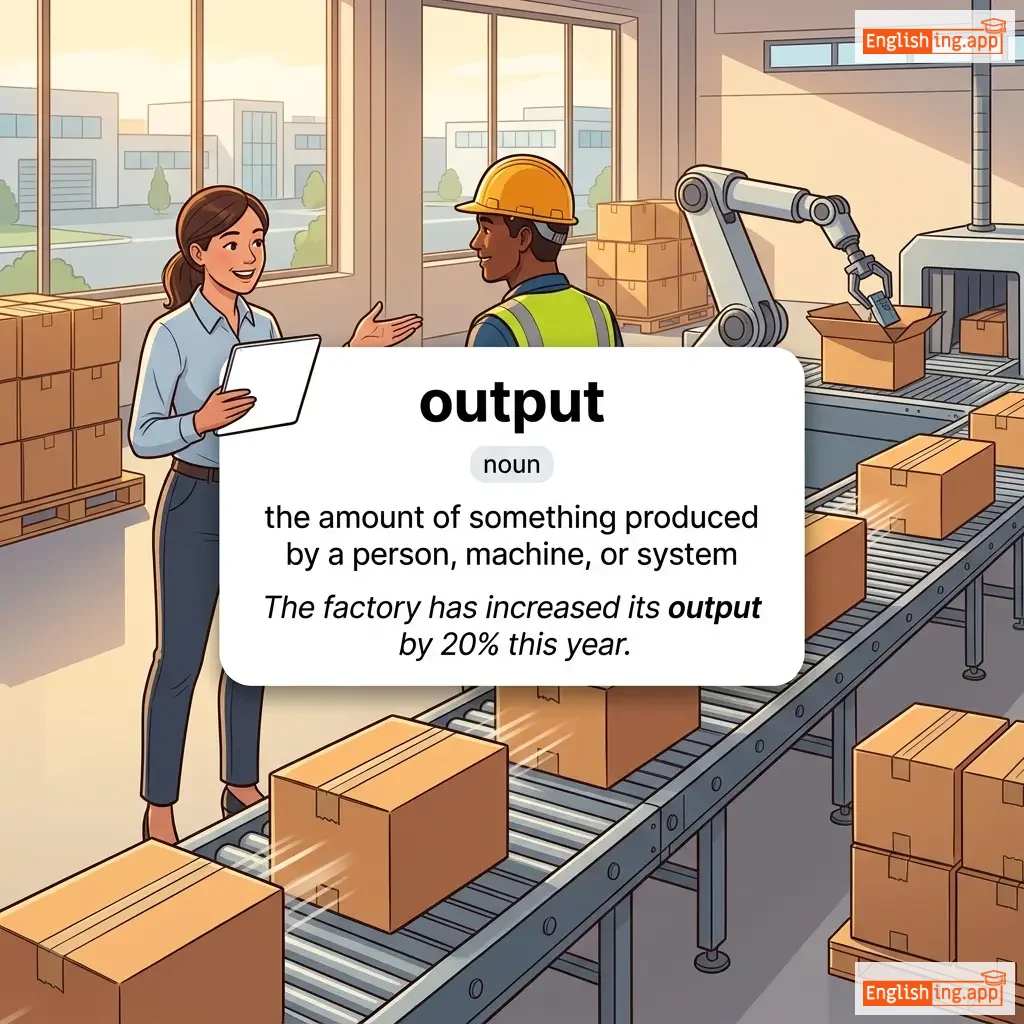
output definition card — visual illustration of the meaning
noun
/ˈaʊtpʊt/
产出 (chanchu)

the amount of something produced by a person, machine, or system

"The factory has increased its output by 20% this year."

"工厂今年增加了20%的产出。" (Gongchang jinian zengjia le 20% de chanchu.)
noun/verb
/ˈaʊtreɪdʒ/
愤怒 (fennu)

A strong feeling of anger and shock; to arouse anger or shock.

"The unfair decision caused public outrage."

"不公正的决定引起了公众的愤怒。" (Bugongzheng de jueding yinqile gongzhong de fennu.)