词汇表

英语词汇词典 | 单词含义、定义和示例

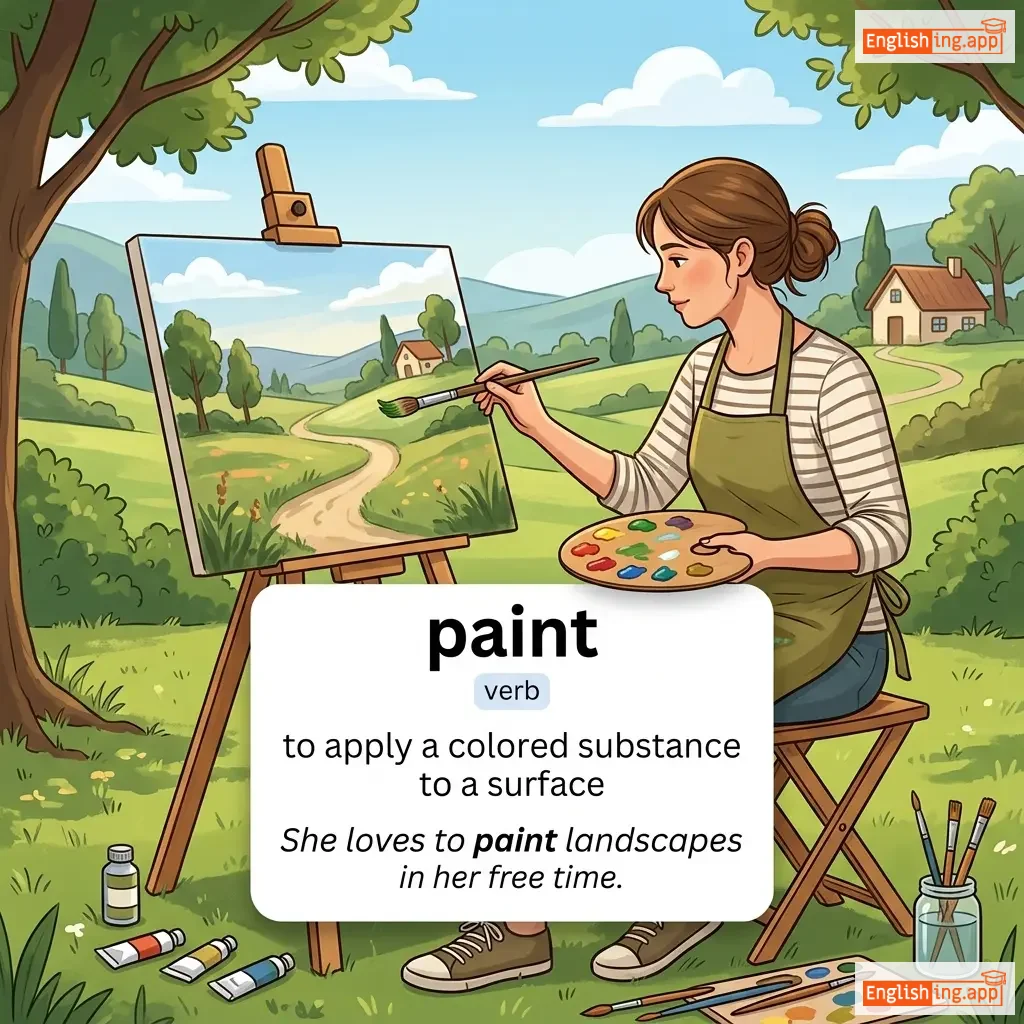
paint definition card — visual illustration of the meaning
verb
/peɪnt/
画画 (huàhuà)

to apply a colored substance to a surface

"She loves to paint landscapes in her free time."

"她喜欢在空闲时间画风景画。" (Tā xǐhuān zài kòngxián shíjiān huà fēngjǐng huà.)
Painter definition card — visual illustration of the meaning
noun
/ˈpeɪn.tər/
画家 (huàjiā)

a person who paints pictures, or paints walls, buildings, etc.

"The painter spent hours working on the portrait."

"画家花了几个小时在肖像上工作。" (Huàjiā huāle jǐ gè xiǎoshí zài xiàoxiàng shàng gōngzuò.)
noun
/ˈpeɪntɪŋ/
(hua)

a picture or design made using paint

"The painting on the wall was created by a famous artist."

"墙上的画是由一位著名艺术家创作的。" (Qiang shang de hua shi you yi wei zhuming yishujia chuangzuo de.)
noun
/per/
一对 (yī duì)

two things of the same kind that are used together

"She wore a matching pair of shoes."

"她穿了一双匹配的鞋子。" (Tā chuānle yī shuāng pǐpèi de xiézi.)
noun
/ˈpælɪs/
宫殿 (gongdian)

a large and impressive building that is the official home of a king, queen, or other ruler

"The royal family lives in a magnificent palace."
"皇室家庭住在一个宏伟的宫殿里。" (Huangshi jiating zhuzai yige hongwei de gongdian li.)
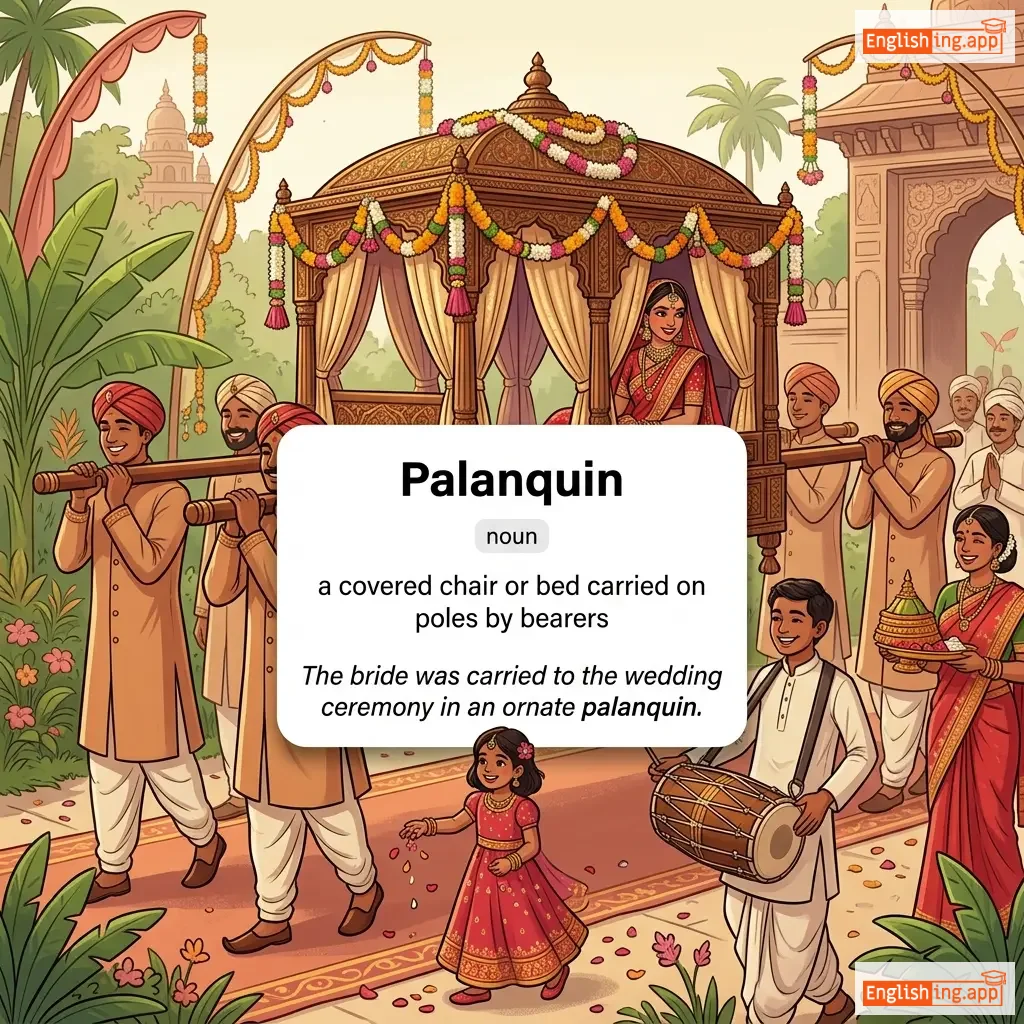
Palanquin definition card — visual illustration of the meaning
noun
/ˌpæl.ənˈkiːn/
花轿 (huā jiào)

a covered chair or bed carried on poles by bearers

"The bride was carried to the wedding ceremony in an ornate palanquin."

"新娘在装饰华丽的轿子中被抬到婚礼现场。" (Xīnniáng zài zhuāngshì huálì de jiàozǐ zhōng bèi tái dào hūnlǐ xiànchǎng.)
adjective
/ˈpæl.ə.tə.bəl/
可口的 (kěkǒu de)

pleasant or acceptable to the taste, mind, or feelings

"The meal was simple but quite palatable."
"这顿饭很简单,但相当可口。" (Zhè dùn fàn hěn jiǎndān, dàn xiāngdāng kěkǒu.)
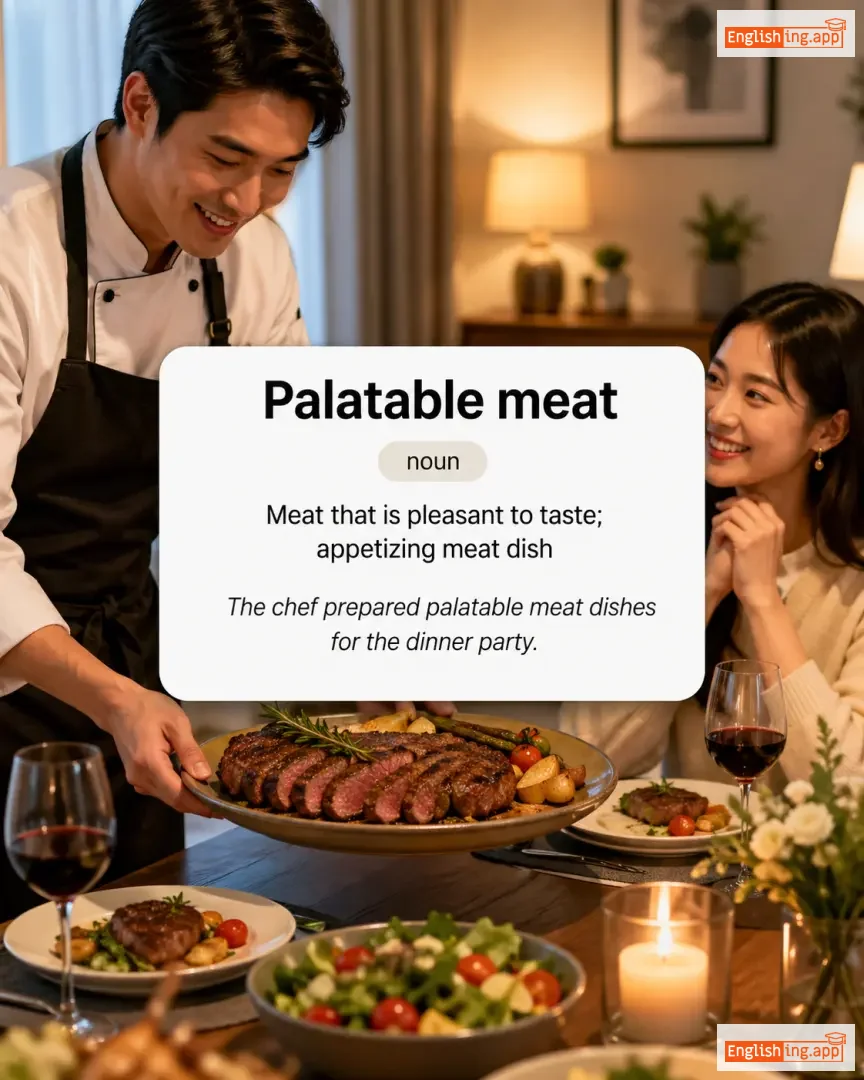
Palatable meat definition card — visual illustration of the meaning
noun
/ˈpæl.ə.tə.bəl miːt/
美味的肉类 (měiwèi de ròulèi)

Meat that is pleasant to taste; appetizing meat dish

"The chef prepared palatable meat dishes for the dinner party."

"厨师为晚宴准备了美味的肉类菜肴。" (Chúshī wèi wǎnyàn zhǔnbèile měiwèi de ròulèi cài yáo.)
noun
/ˈpæl.ət/
上颚 (shàng è)

the roof of the mouth; a person's appreciation of taste and flavor

"She has a refined palate for fine wines."

"她对美酒有着精致的品味。" (Tā duì měi jiǔ yǒu zhe jīng zhì de pǐn wèi.)
adjective
/pəˈleɪ.ʃəl/
宫殿般 (gongdian ban)

resembling a palace in being spacious and splendid

"They stayed in a palatial hotel during their vacation."

"他们在度假时住在一间宫殿般的酒店里。" (Tāmen zài dùjià shí zhù zài yī jiàn gōngdiàn bān de jiǔdiàn lǐ.)
noun
/pəˈlæv.ər/
无意义的讨论 / 喧嚣 (wú yìyì de tǎolùn / xuānxiāo)

prolonged and idle discussion; fuss or unnecessary talk

"After much palaver, they finally agreed on the plan."

"经过长时间的无意义讨论后,他们最终同意了计划。" (Jīngguò cháng shíjiān de wú yìyì tǎolùn hòu, tāmen zuìzhōng tóngyìle jìhuà.)
👩‍🦰

Pale (pèi ěr)

adjective
/peɪl/
苍白 (cangbai)

having a light or dull color, especially when compared with something else

"She looked pale after the long illness."

"她在长时间生病后看起来苍白。" (Tā zài cháng shíjiān shēngbìng hòu kàn qǐlái cāngbái.)
noun
/ˌpeɪ.li.ɒnˈtɒl.ə.dʒi/
古生物学 (gǔshēngwùxué)

the branch of science concerned with fossil animals and plants

"She decided to study paleontology at university."

"她决定在大学学习古生物学。" (Tā juédìng zài dàxué xuéxí gǔshēngwùxué.)
adjective
/pælɛˈstɪnɪən/
巴勒斯坦的 (bālèsītǎn de)

relating to Palestine or its people

"The Palestinian people have a rich cultural heritage."

"巴勒斯坦人民拥有丰富的文化遗产。" (Bālèsītǎn rénmín yǒngyǒu fēngfù de wénhuà yíchǎn.)
noun
/ˈpælət/
调色板 (tiáosèbǎn)

a thin board or surface on which an artist sets and mixes colors; also a range of colors used in art or design

"The artist mixed vibrant shades on her palette before starting the painting."

"艺术家在开始画画之前,在她的调色板上混合了鲜艳的色调。" (Yìshùjiā zài kāishǐ huàhuà zhīqián, zài tā de tiáosèbǎn shàng hùnhé le xiānyàn de sèdiào.)
noun
/ˈpælɪmpsɛst/
重写本 (chongxie ben)

a manuscript or document that has been written over but still bears traces of earlier writing; something reused or altered but still retaining traces of its earlier form

"The ancient manuscript was a palimpsest, showing faint traces of previous texts beneath the new writing."

"这本古老的手稿是一个重写本,下面隐藏着以前文本的微弱痕迹。" (Zhè běn gǔlǎo de shǒugǎo shì yīgè zhòngxiě běn, xiàmiàn yǐncáng zhe yǐqián wénběn de wēiruò hénjī.)
noun
/ˈpælɪˌnoʊd/
悔诗 (huǐshī)

a poem or statement in which the writer retracts something said in an earlier work

"The poet wrote a palinode to apologize for his earlier harsh words."

"诗人写了一首悔诗,为自己之前的尖锐言辞道歉。" (Shīrén xiěle yī shǒu huǐshī, wèi zìjǐ zhīqián de jiānruì yáncí dàoqiàn.)
⚰️

Pall

verb, noun
/pɔːl/

to lose strength or interest; to become dull or tiresome; also a cloth spread over a coffin

"The excitement of the festival began to pall after several days."

verb
/ˈpælieɪt/
缓解 (huǎn jiě)

to make a disease, symptoms, or problem less severe without removing the cause

"The doctor prescribed medicine to palliate the patient's pain."

"医生开药来缓解病人的疼痛。" (Yīshēng kāi yào lái huǎn jiě bìngrén de téngtòng.)
verb
/pɑːrs/
语法分析 (yǔfǎ fēnxī)

to analyze a sentence or text grammatically or logically

"The software can parse large amounts of text data efficiently."
"该软件可以高效地解析大量文本数据。" (Gāi ruǎnjiàn kěyǐ gāoxiào de jiěxī dàliàng wénběn shùjù.)
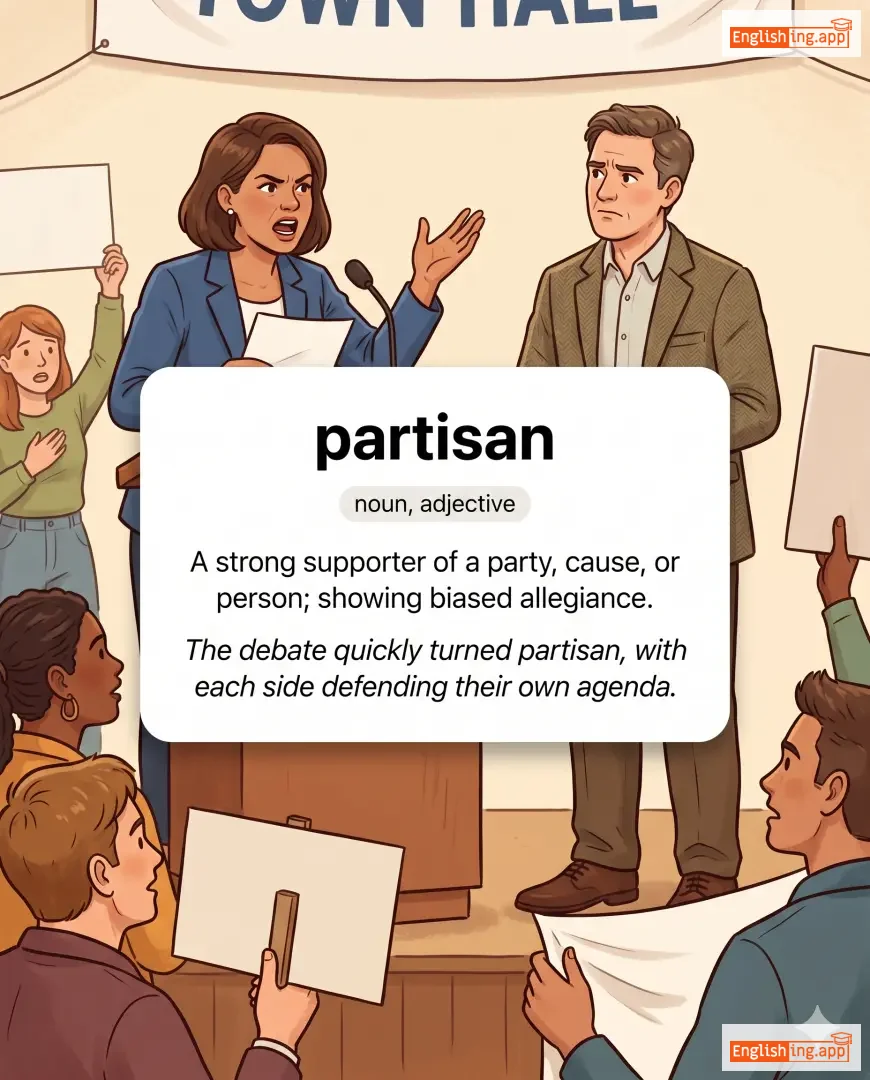
partisan definition card — visual illustration of the meaning
noun, adjective
/ˈpɑːrtɪzən/
党派支持者 (dǎngpài zhīchí zhě)

A strong supporter of a party, cause, or person; showing biased allegiance.

"The debate quickly turned partisan, with each side defending their own agenda."

"辩论迅速变得党派化,每一方都在捍卫自己的议程。" (Biànlùn xùnsù biàn dé dǎngpài huà, měi yī fāng dōu zài hànwèi zìjǐ de yìchéng.)
adverb
/pɑːrˈtɪkjʊləli/
特别地 (tèbié de)

to a higher degree than is usual or expected

"She is particularly fond of Italian food."

"她特别喜欢意大利菜。" (Tā tèbié xǐhuān Yìdàlì cài.)
verb
/pərˈtɪkjələrˌaɪz/
具体说明 (jùtǐ shuōmíng)

to mention or describe something in detail

"The witness was asked to particularize the events of that night."

"证人被要求详细叙述那个夜晚的事件。" (Zhèngrén bèi yāoqiú xiángxì xùshù nàgè yèwǎn de shìjiàn.)
adjective
/pərˈtɪk.jʊ.lər/
特别 (tebie)

specific or special; distinct from others

"He is very particular about his diet."
"他对自己的饮食非常挑剔。" (Ta dui ziji de yinshi feichang tiaoti.)
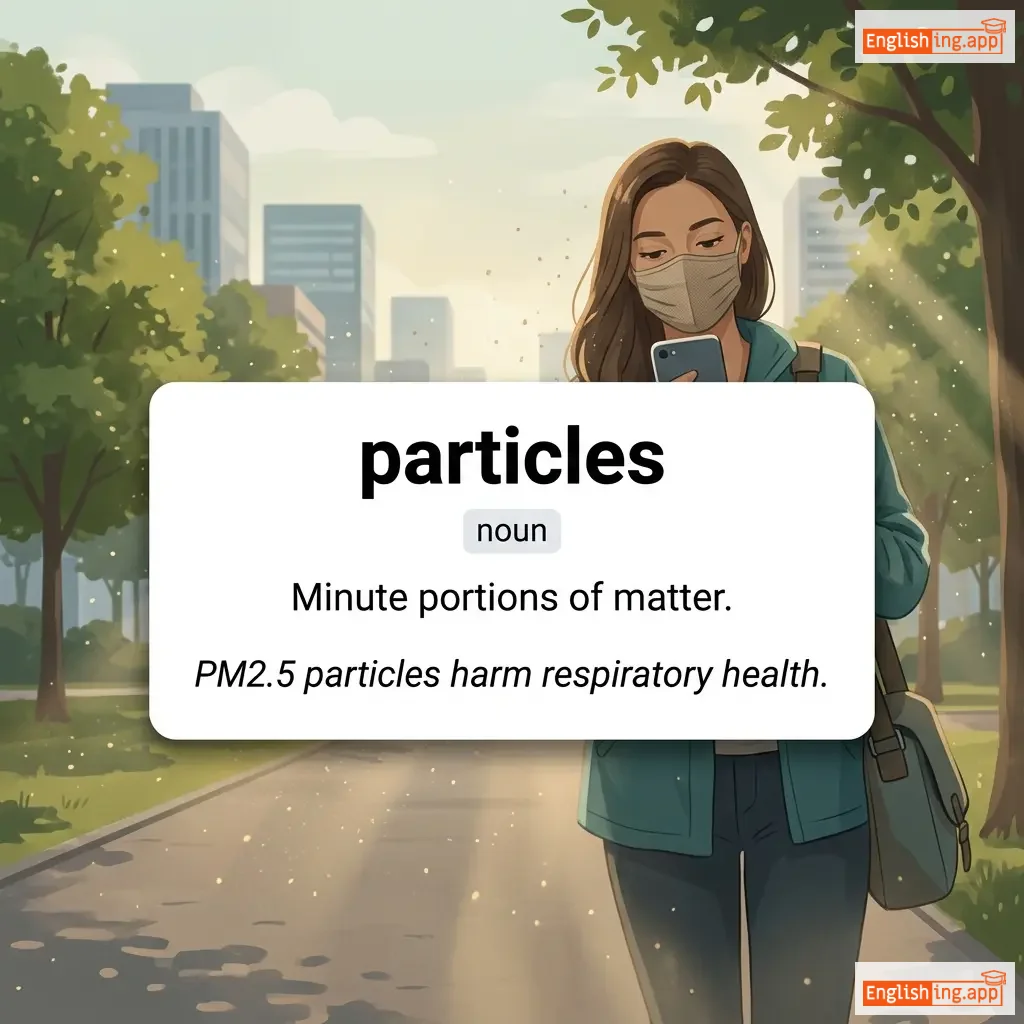
particles definition card — visual illustration of the meaning
noun
/ˈpɑː.tɪ.klz/
微粒 (weili)

Minute portions of matter.

"PM2.5 particles harm respiratory health."

"PM2.5微粒危害呼吸健康。" (PM2.5 weili weihai huxi jiankang.)
noun
/ˈpɑːrtɪkəl/
粒子 (lìzǐ)

a very small piece or amount of something

"Dust particles floated in the air near the window."

"尘土粒子在靠近窗户的空气中飘浮。" (Chéntǔ lìzǐ zài kàojìn chuānghù de kōngqì zhōng piāofú.)
noun
/pɑːrˌtɪsɪˈpeɪʃən/
参与 (can yu)

the action of taking part in something

"Her participation in the competition was commendable."
"她在比赛中的参与值得称赞。" (Ta zai bisai zhong de canyu zhide chengzan.)
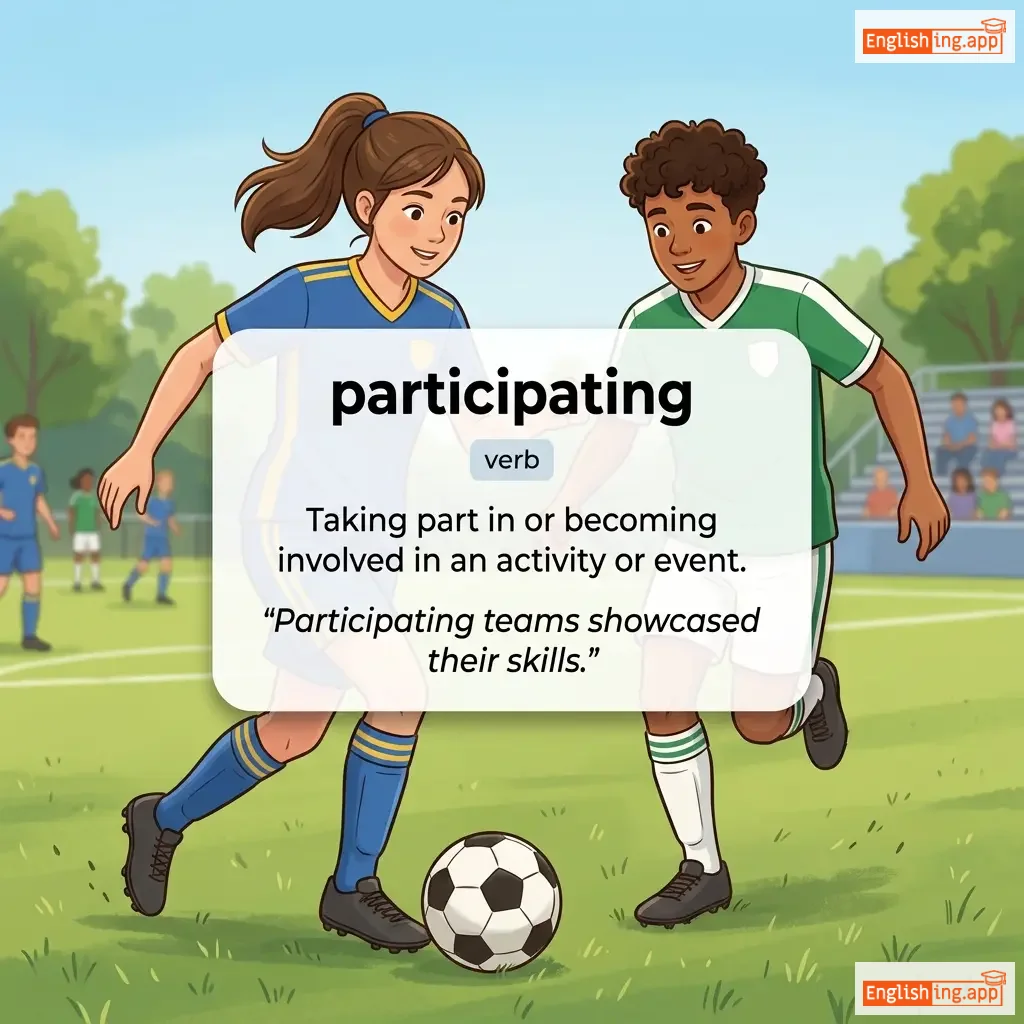
participating definition card — visual illustration of the meaning
verb
pɑːˈtɪs.ɪ.peɪ.tɪŋ
参加 (cānjiā)

Taking part in or becoming involved in an activity or event.

"Participating teams showcased their skills."
"参与的团队展示了他们的技能。" (Cānjiā de tuánduì zhǎnshìle tāmen de jìnéng.)
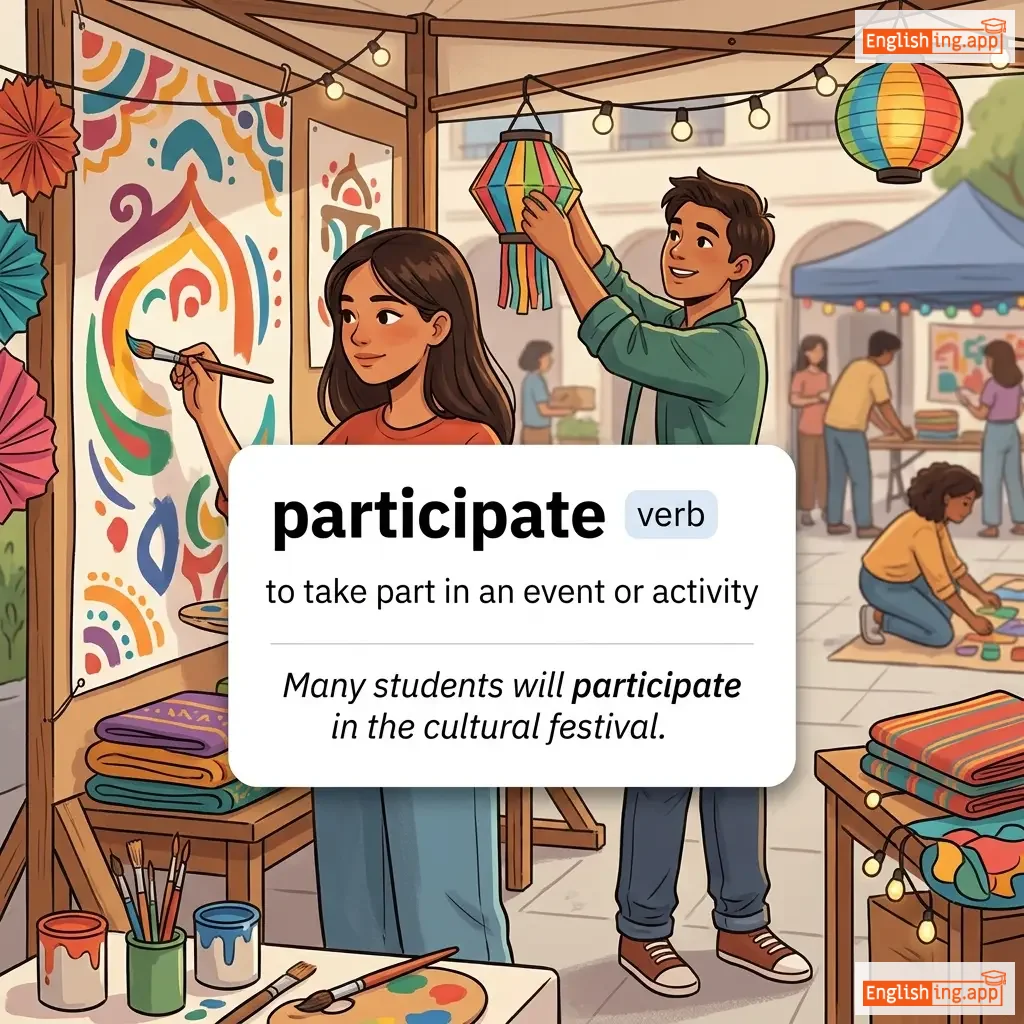
participate definition card — visual illustration of the meaning
verb
/pɑːrˈtɪsɪpeɪt/
参加 (cānjiā)

to take part in an event or activity

"Many students will participate in the cultural festival."
"许多学生将参加文化节。" (Xǔduō xuéshēng jiāng cānjiā wénhuà jié.)
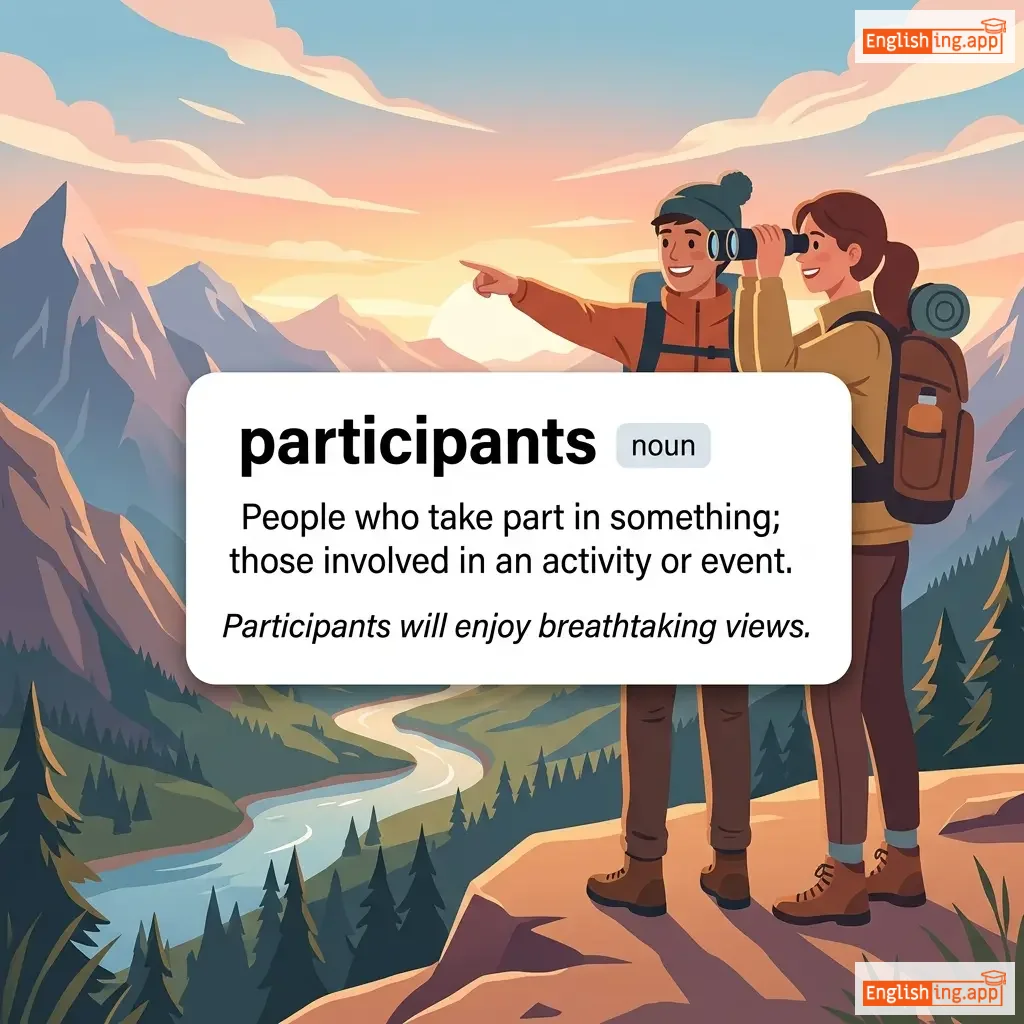
participants definition card — visual illustration of the meaning
noun
pɑːˈtɪs.ɪ.pənts
参与者 (cānyù zhě)

People who take part in something; those involved in an activity or event.

"Participants will enjoy breathtaking views."

"参与者将享受令人惊叹的景观。" (Cānyù zhě jiāng xiǎngshòu lìng rén jīngtàn de jǐngguān.)
noun
/pɑːrˈtɪsɪpənt/
参与者 (canyu zhe)

a person who takes part in an event or activity

"Each participant received a certificate after the workshop."

"每位参与者在工作坊结束后收到了证书。" (Měi wèi cān yù zhě zài gōng zuò fāng jié shù hòu shōu dào le zhèng shū.)
adjective
/ˈpɑːrtəbl/
可分割的 (kě fēn gē de)

capable of being divided or separated

"The estate was partible among the heirs."

"这项财产可以在继承人之间分割。" (Zhè xiàng cáichǎn kě yǐ zài jìchéngrén zhī jiān fēn gē.)
adverb
/ˈpɑːrʃəli/
部分地 (bùfen de)

to some extent but not completely

"The project was partially completed before the deadline."

"该项目在截止日期前部分完成。" (Gāi xiàngmù zài jiézhǐ rìqī qián bùfen wánchéng.)
noun
/ˌpɑːrʃiˈæləti/
偏袒 (piāntǎn)

an unfair preference or bias toward one side or person

"The judge was criticized for showing partiality in the case."

"法官因在案件中表现出偏袒而受到批评。" (Fǎguān yīn zài ànjiàn zhōng biǎoxiàn chū piāntǎn ér shòudào pīpíng.)
adjective
/ˈpɑːrʃəl/
部分的,偏袒的 (bùfen de, piāntǎn de)

existing only in part; biased toward one side

"The report gave a partial view of the situation."

"报告给出了部分视图。" (Bàogào gěi chūle bùfen shìtú.)
adjective
/ˈpɑːt taɪm/
兼职 (jian zhi)

working for only part of the usual working day or week

"She works part-time as a waitress."

"她做兼职工作,担任服务员。" (Ta zuo jian zhi gongzuo, dan ren fuwuyuan.)
noun
/pɑːrt/
部分 (bùfen)

a piece or segment of something

"She gave me a part of her chocolate."
"她给了我她巧克力的一部分。" (Tā gěile wǒ tā qiǎokèlì de yī bùfen.)
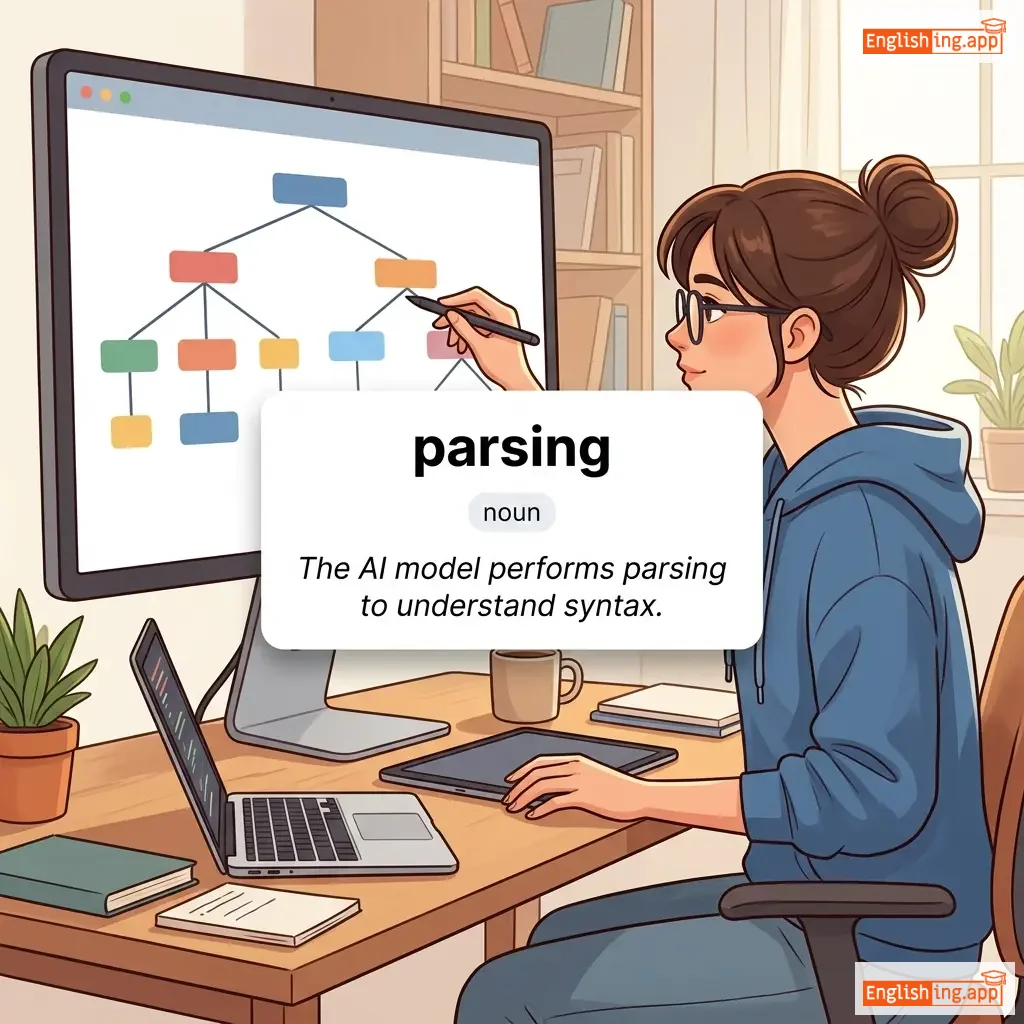
parsing definition card — visual illustration of the meaning
noun
ˈpɑː.sɪŋ
句子结构分析 (parsing)

The process of analyzing sentence structure to understand grammatical relationships.

"The AI model performs parsing to understand syntax."

"该AI模型通过解析来理解语法。" (Gai AI mo xing tong guo jie xi lai li jie yu fa.)
noun
/ˈpɑːrsɪmoʊni/
吝啬 (lin se)

extreme unwillingness to spend money or use resources

"His parsimony was evident in the way he avoided any unnecessary expenses."

"他避免任何不必要的开支的方式明显体现了他的吝啬。" (Ta bi mian ren he bu bi yao de kai zhi de fang shi ming xian ti xian le ta de lin se.)
adjective
/ˌpɑːrsɪˈmoʊniəs/
吝啬 (lìn sè)

unwilling to spend money or use resources; stingy

"The company was too parsimonious to invest in better equipment."

"公司太吝啬,无法投资更好的设备。" (Gōngsī tài lìnsè, wúfǎ tóuzī gèng hǎo de shèbèi.)
noun
/ˈpɑːrləns/
行话 (xínghuà)

a particular way of speaking or using words, common to a group

"In legal parlance, the term has a different meaning."

"在法律行话中,这个术语有不同的含义。" (Zài fǎlǜ xínghuà zhōng, zhège shùyǔ yǒu bùtóng de hányì.)
adjective
/ˈpɑːrləs/
危险的 (parlus)

Full of danger or risk; precarious.

"The company is in a parlous financial state."

"公司处于一个危险的财政状态。" (Gōngsī chǔyú yīgè wéixiǎn de cáizhèng zhuàngtài.)
noun
/ˈpɑːrlər/
客厅,商店 (parlor)

A sitting room in a private house, or a shop providing specified services.

"They welcomed the guests into the front parlor."

"他们在前厅迎接了客人。" (Tāmen zài qiántīng yíngjiē le kèrén.)
adjective
/ˌpɑːrləˈmɛntri/
议会的 (yihui de)

relating to a parliament or its members; relating to a system of government with parliamentary authority

"The country follows a parliamentary form of government."

"这个国家实行议会制政府。" (Zhege guojia shixing yihuizhi zhengfu)
noun
/ˈpɑːrləmənt/
议会 (yihui)

the highest legislative body in a country

"The bill was passed in parliament after a long debate."

"该法案在议会经过长时间的辩论后通过。" (Gāi fǎ'àn zài yìhuì jīngguò cháng shíjiān de biànlùn hòu tōngguò.)
noun, verb
/ˈpɑːrli/
谈判 (tánpàn)

a discussion between opposing sides, especially to negotiate terms

"The generals met to parley over the terms of surrender."

"将军们会面商讨投降的条件。" (Jiāngjūnmen huìmiàn shāngtǎo tóuxiáng de tiáojiàn.)
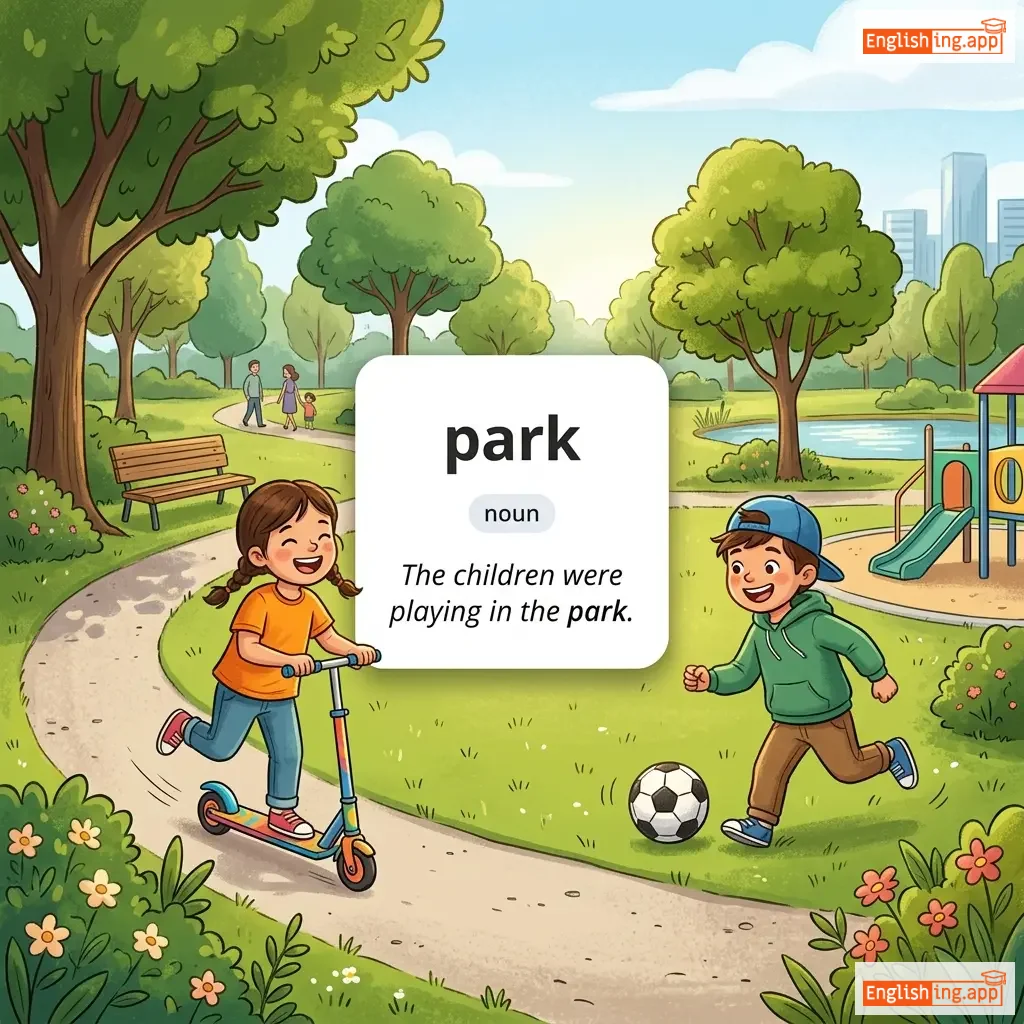
park definition card — visual illustration of the meaning
noun
/pɑːrk/
公园 (gongyuan)

a large public area of land with grass, trees, and paths, where people can walk or relax

"The children were playing in the park."

"孩子们在公园里玩耍。" (Haizimen zai gongyuan li wan shua.)
adjective
/pəˈrɪʒən/
与巴黎相关 (yu bālí xiāngguān)

relating to Paris or its people

"She wore a Parisian style dress at the party."

"她在派对上穿着巴黎风格的裙子。" (Tā zài pàiduì shàng chuānzhuó bālí fēnggé de qúnzi.)
noun
/ˈpærɪti/
平价 (pingjia)

the state or condition of being equal, especially in status or pay

"The campaign aims to achieve pay parity between men and women."

"这项运动旨在实现男女之间的工资平等。" (Zhe xiang yundong zhi zai shixian nan nu zhijian de gongzi pingdeng.)
adjective
/pəˈroʊkiəl/
狭隘的 (parokial)

Having a limited or narrow outlook; relating to a parish.

"His parochial view prevented him from understanding global issues."

"他狭隘的观点使他无法理解全球性问题。" (Ta xiaoai de guandian shi ta wufa lijie quanqiuxing wenti.)