語彙集

英単語辞書 | 単語の意味、定義、例文

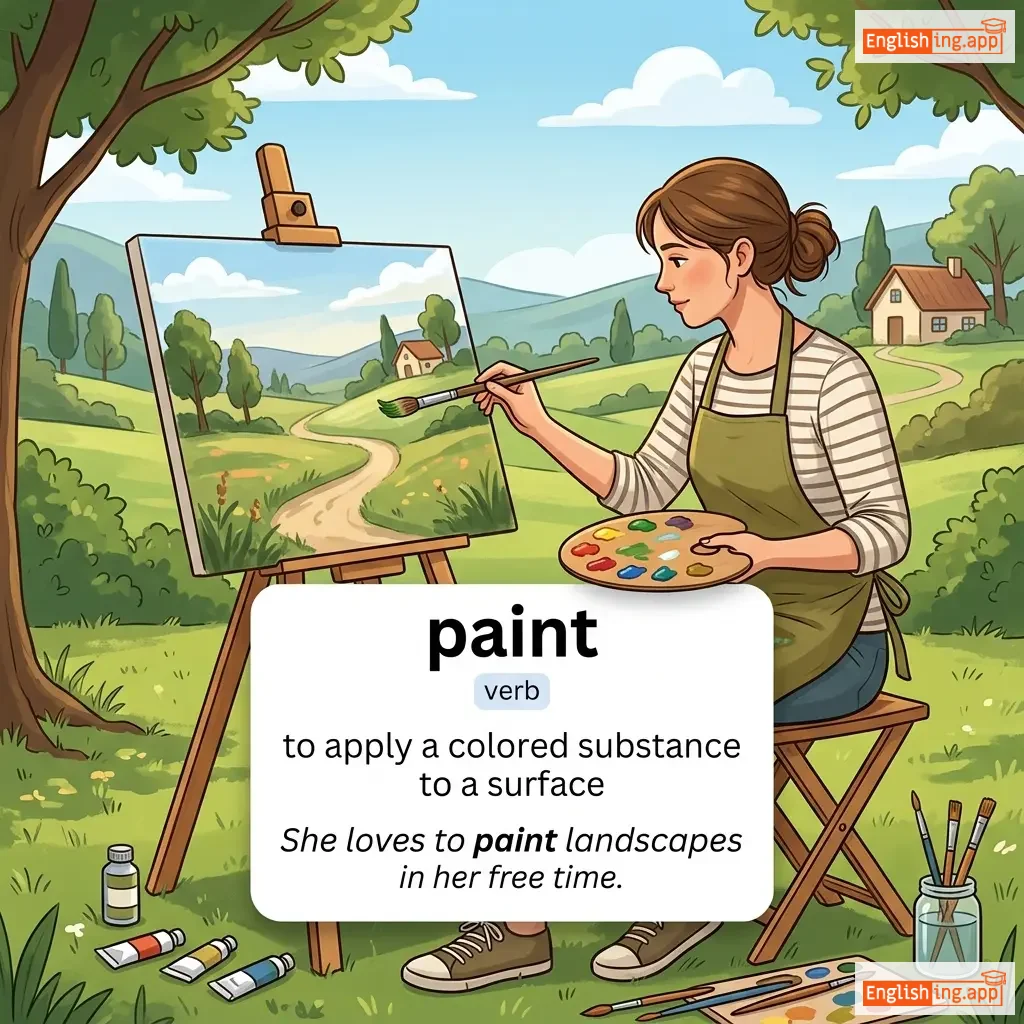
paint definition card — visual illustration of the meaning
verb
/peɪnt/
絵を描く (e wo kaku)

to apply a colored substance to a surface

"She loves to paint landscapes in her free time."

"彼女は自由時間に風景画を描くのが好きです。" (Kanojo wa jiyū jikan ni fūkeiga o kaku no ga suki desu.)
Painter definition card — visual illustration of the meaning
noun
/ˈpeɪn.tər/
画家 (gaka)

a person who paints pictures, or paints walls, buildings, etc.

"The painter spent hours working on the portrait."

"画家は肖像画を描くのに何時間も費やしました。" (Gaka wa shōzōga o kaku no ni nanjikan mo tsuiyashimashita.)
noun
/ˈpeɪntɪŋ/
絵画 (kaiga)

a picture or design made using paint

"The painting on the wall was created by a famous artist."

"壁の絵画は有名なアーティストによって作られました。" (Kabe no kaiga wa yūmei na ātisuto ni yotte tsukuraremashita.)
noun
/per/
ペア (pea)

two things of the same kind that are used together

"She wore a matching pair of shoes."

"彼女はマッチングのペアの靴を履いていました。" (Kanojo wa matchingu no pea no kutsu o haite imashita.)
noun
/ˈpælɪs/
宮殿 (kyūden)

a large and impressive building that is the official home of a king, queen, or other ruler

"The royal family lives in a magnificent palace."
"王室は素晴らしい宮殿に住んでいます。" (Ōshitsu wa subarashī kyūden ni sundeimasu.)
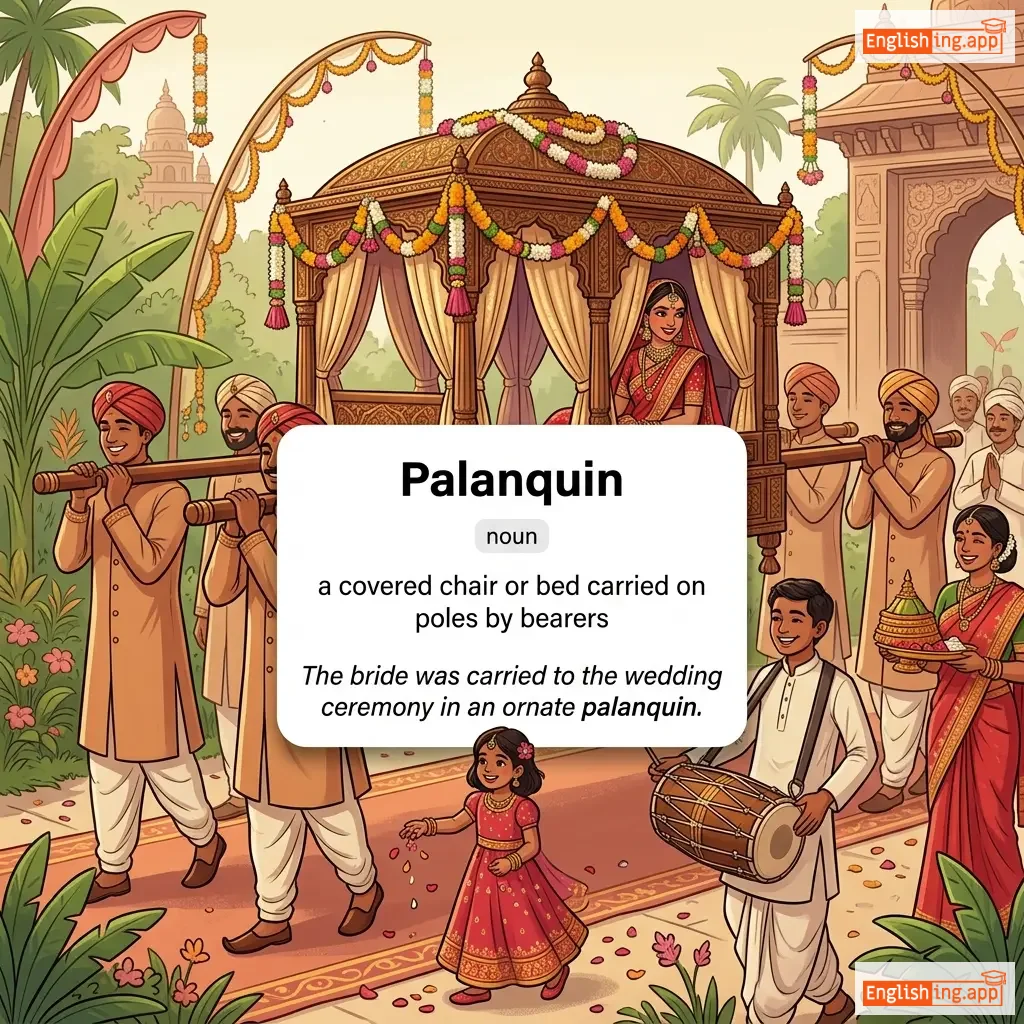
Palanquin definition card — visual illustration of the meaning
noun
/ˌpæl.ənˈkiːn/
花嫁用の車 (hanayomeyō no kuruma)

a covered chair or bed carried on poles by bearers

"The bride was carried to the wedding ceremony in an ornate palanquin."

"花嫁は装飾されたパランキンで結婚式に運ばれました。" (Hanayome wa sōshoku sareta parankin de kekkonshiki ni hakobaremashita.)
adjective
/ˈpæl.ə.tə.bəl/
美味しい (oishii)

pleasant or acceptable to the taste, mind, or feelings

"The meal was simple but quite palatable."
"その食事はシンプルでしたが、かなり美味しかったです。" (Sono shokuji wa shimpuru deshita ga, kanari oishikatta desu.)
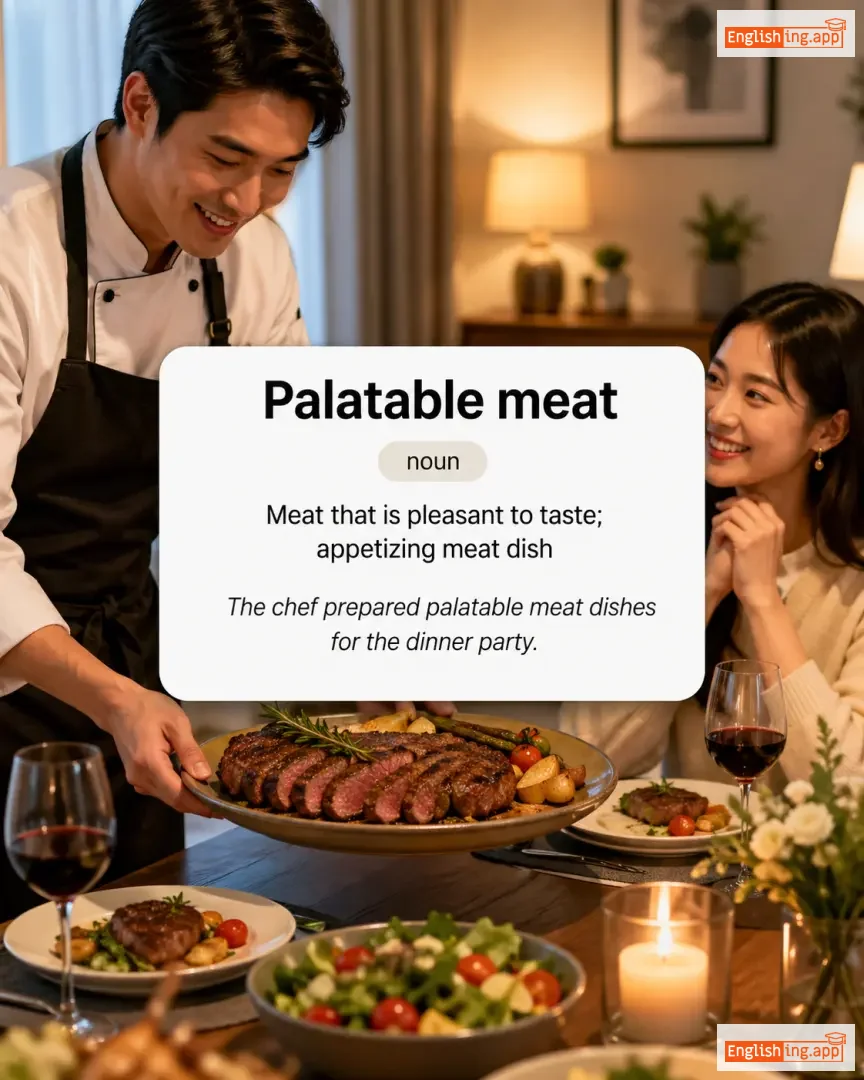
Palatable meat definition card — visual illustration of the meaning
noun
/ˈpæl.ə.tə.bəl miːt/
美味しい肉 (oishii niku)

Meat that is pleasant to taste; appetizing meat dish

"The chef prepared palatable meat dishes for the dinner party."

"シェフはディナーパーティーのために美味しい肉料理を準備しました。" (Shefu wa dinā pātii no tame ni oishī niku ryōri o junbi shimashita.)
noun
/ˈpæl.ət/
口蓋 (kōgai)

the roof of the mouth; a person's appreciation of taste and flavor

"She has a refined palate for fine wines."

"彼女は上質なワインに対して洗練された味覚を持っています。" (Kanojo wa jōshitsu na wain ni taishite senren sareta mikaku o motteimasu.)
adjective
/pəˈleɪ.ʃəl/
宮殿のような (kyuuden no you na)

resembling a palace in being spacious and splendid

"They stayed in a palatial hotel during their vacation."

"彼らは休暇中に宮殿のようなホテルに宿泊しました。" (Karera wa kyūka-chū ni kyūden no yō na hoteru ni shukuhaku shimashita.)
noun
/pəˈlæv.ər/
無駄な議論 / 騒動 (mudana giron / soudou)

prolonged and idle discussion; fuss or unnecessary talk

"After much palaver, they finally agreed on the plan."

"長時間無駄な議論の後、彼らは最終的に計画に同意しました。" (Choujikan mudana giron no ato, karera wa saishuuteki ni keikaku ni doui shimashita.)
👩‍🦰

Pale (ペイル)

adjective
/peɪl/
青白い (aoshiroi)

having a light or dull color, especially when compared with something else

"She looked pale after the long illness."

"彼女は長い病気の後、青白く見えた。" (Kanojo wa nagai byouki no ato, aoshiroku mieta.)
noun
/ˌpeɪ.li.ɒnˈtɒl.ə.dʒi/
古生物学 (koseibutsugaku)

the branch of science concerned with fossil animals and plants

"She decided to study paleontology at university."

"彼女は大学で古生物学を学ぶことに決めました。" (Kanojo wa daigaku de koseibutsugaku o manabu koto ni kimemashita.)
adjective
/pælɛˈstɪnɪən/
パレスチナの (paresuchina no)

relating to Palestine or its people

"The Palestinian people have a rich cultural heritage."

"パレスチナの人々は豊かな文化遺産を持っています。" (Paresuchina no hitobito wa yutakana bunka isan o motteimasu.)
noun
/ˈpælət/
パレット (paretto)

a thin board or surface on which an artist sets and mixes colors; also a range of colors used in art or design

"The artist mixed vibrant shades on her palette before starting the painting."

"アーティストは絵を描き始める前にパレットで鮮やかな色合いを混ぜました。" (Ātisuto wa e o kaku hajimeru mae ni paretto de azayakana iroai o mazemashita.)
noun
/ˈpælɪmpsɛst/
パリンプセスト (parimpsesuto)

a manuscript or document that has been written over but still bears traces of earlier writing; something reused or altered but still retaining traces of its earlier form

"The ancient manuscript was a palimpsest, showing faint traces of previous texts beneath the new writing."

"その古代の写本はパリンプセストであり、新しい文字の下に以前のテキストの微弱な痕跡が見られた。" (Sono kodai no shahon wa parimpsesuto de ari, atarashī moji no shita ni izen no tekisuto no bijaku na konseki ga mirarareta.)
noun
/ˈpælɪˌnoʊd/
後悔の詩 (kōkai no shi)

a poem or statement in which the writer retracts something said in an earlier work

"The poet wrote a palinode to apologize for his earlier harsh words."

"詩人は以前の厳しい言葉を謝罪するために後悔の詩を書きました。" (Shijin wa izen no kibishī kotoba o shazai suru tame ni kōkai no shi o kakimashita.)
⚰️

Pall

verb, noun
/pɔːl/

to lose strength or interest; to become dull or tiresome; also a cloth spread over a coffin

"The excitement of the festival began to pall after several days."

verb
/ˈpælieɪt/
和らげる (yawarageru)

to make a disease, symptoms, or problem less severe without removing the cause

"The doctor prescribed medicine to palliate the patient's pain."

"医者は患者の痛みを和らげるために薬を処方しました。" (Isha wa kanja no itami wo yawarageru tame ni kusuri wo shohou shimashita.)
verb
/pɑːrs/
文法解析 (bunpou kaiseki)

to analyze a sentence or text grammatically or logically

"The software can parse large amounts of text data efficiently."
"ソフトウェアは、大量のテキストデータを効率的に解析できます。" (Sofutowea wa, tairyou no tekisuto dēta o kōritsuteki ni kaiseki dekimasu.)
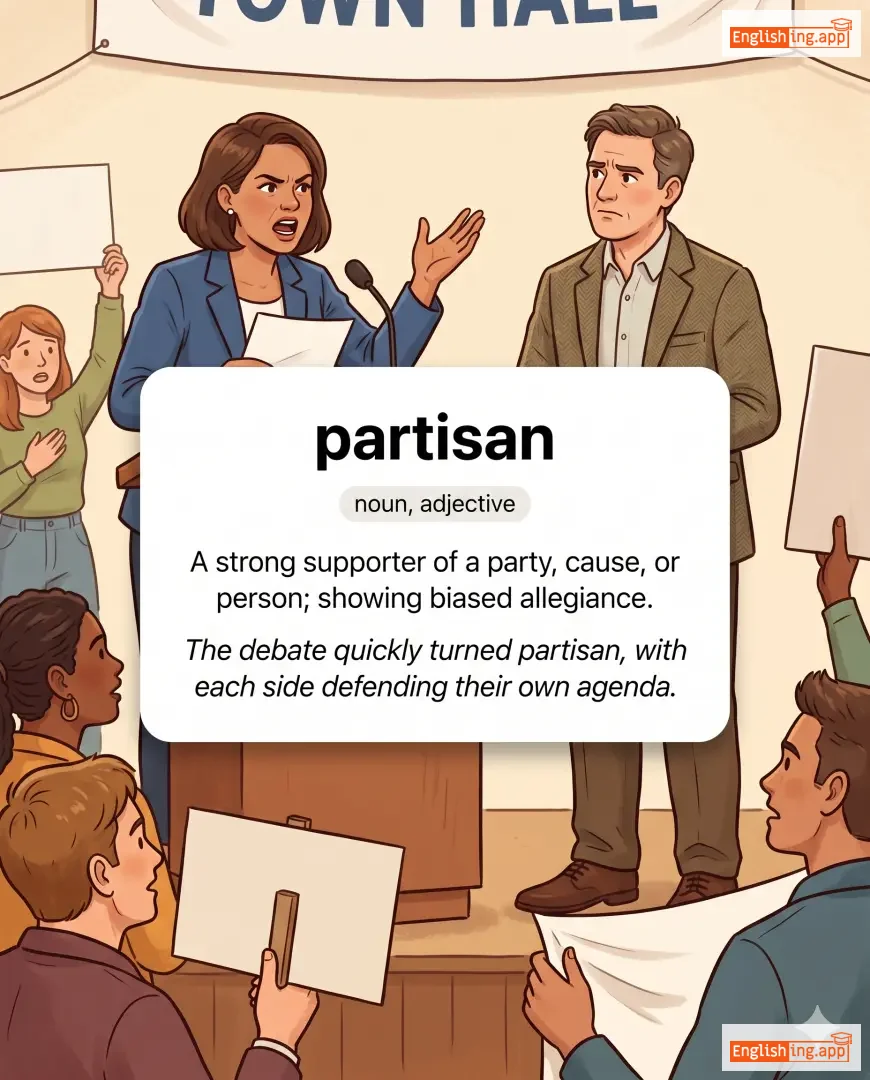
partisan definition card — visual illustration of the meaning
noun, adjective
/ˈpɑːrtɪzən/
党派の支持者 (tōha no shijisha)

A strong supporter of a party, cause, or person; showing biased allegiance.

"The debate quickly turned partisan, with each side defending their own agenda."

"議論はすぐに党派的になり、各側は自分のアジェンダを擁護しました。" (Giron wa sugu ni tōhateki ni nari, kaku-gawa wa jibun no ajenda o yōgo shimashita.)
adverb
/pɑːrˈtɪkjʊləli/
特に (tokuni)

to a higher degree than is usual or expected

"She is particularly fond of Italian food."

"彼女は特にイタリア料理が好きです。" (Kanojo wa tokuni Itaria ryōri ga suki desu.)
verb
/pərˈtɪkjələrˌaɪz/
詳細に述べる (shousai ni noberu)

to mention or describe something in detail

"The witness was asked to particularize the events of that night."

"証人はその夜の出来事を詳細に説明するように求められました。" (Shōnin wa sono yoru no dekigoto o shōsai ni setsumei suru yō ni motomeraremashita.)
adjective
/pərˈtɪk.jʊ.lər/
特別 (tokubetsu)

specific or special; distinct from others

"He is very particular about his diet."
"彼は自分の食事に非常にこだわりがあります。" (Kare wa jibun no shokuji ni hijou ni kodawari ga arimasu.)
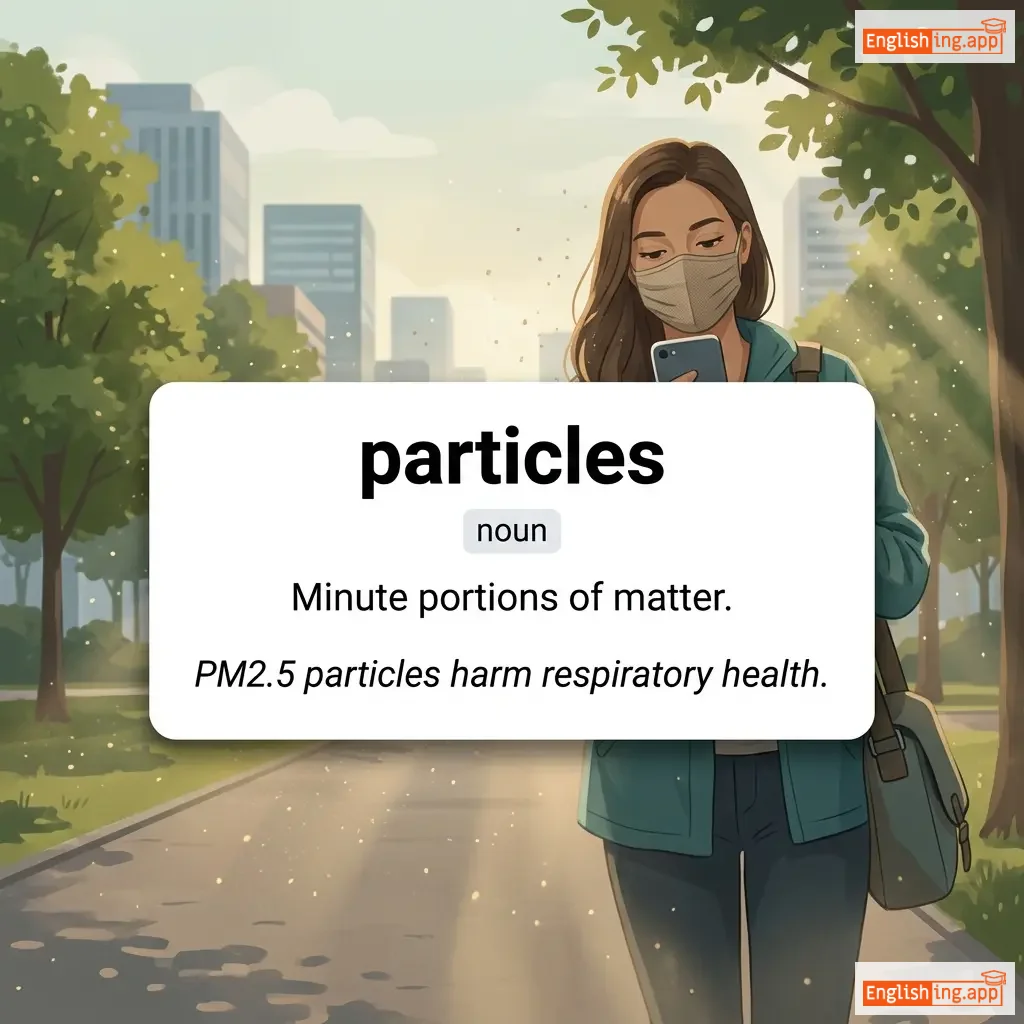
particles definition card — visual illustration of the meaning
noun
/ˈpɑː.tɪ.klz/
粒子 (ryushi)

Minute portions of matter.

"PM2.5 particles harm respiratory health."

"PM2.5粒子は呼吸器系の健康に害を与えます。" (PM2.5 ryushi wa kokyukikei no kenko ni gai o ataemasu.)
noun
/ˈpɑːrtɪkəl/
粒子 (ryūshi)

a very small piece or amount of something

"Dust particles floated in the air near the window."

"窓の近くの空気中にほこりの粒子が浮かんでいました。" (Mado no chikaku no kūkī-chū ni hokori no ryūshi ga ukande imashita.)
noun
/pɑːrˌtɪsɪˈpeɪʃən/
参加 (sanka)

the action of taking part in something

"Her participation in the competition was commendable."
"彼女の競技会への参加は称賛に値しました。" (Kanojo no kyogikai e no sanka wa shousan ni atai shimashita.)
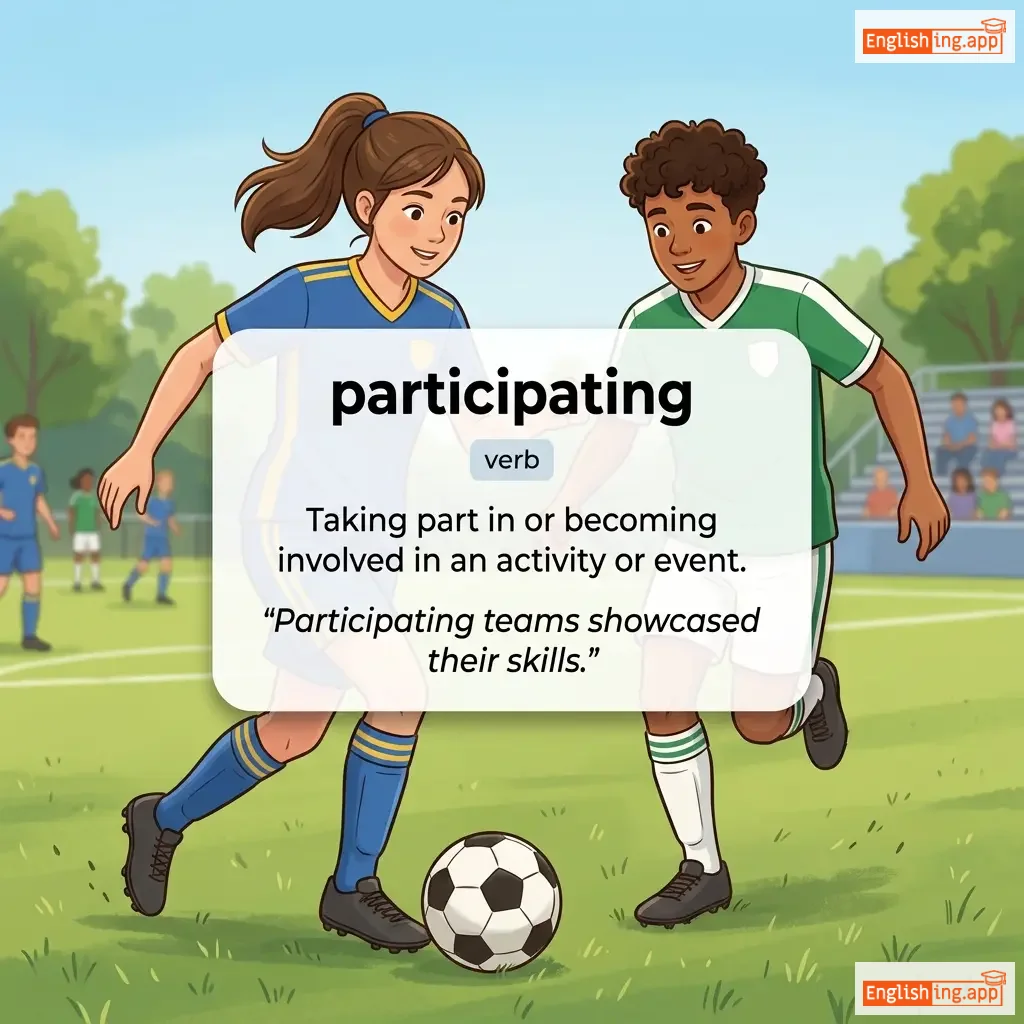
participating definition card — visual illustration of the meaning
verb
pɑːˈtɪs.ɪ.peɪ.tɪŋ
参加する (sanka suru)

Taking part in or becoming involved in an activity or event.

"Participating teams showcased their skills."
"参加しているチームは自分たちのスキルを披露しました。" (Sanka shite iru chīmu wa jibuntachi no sukiru o hirō shimashita.)
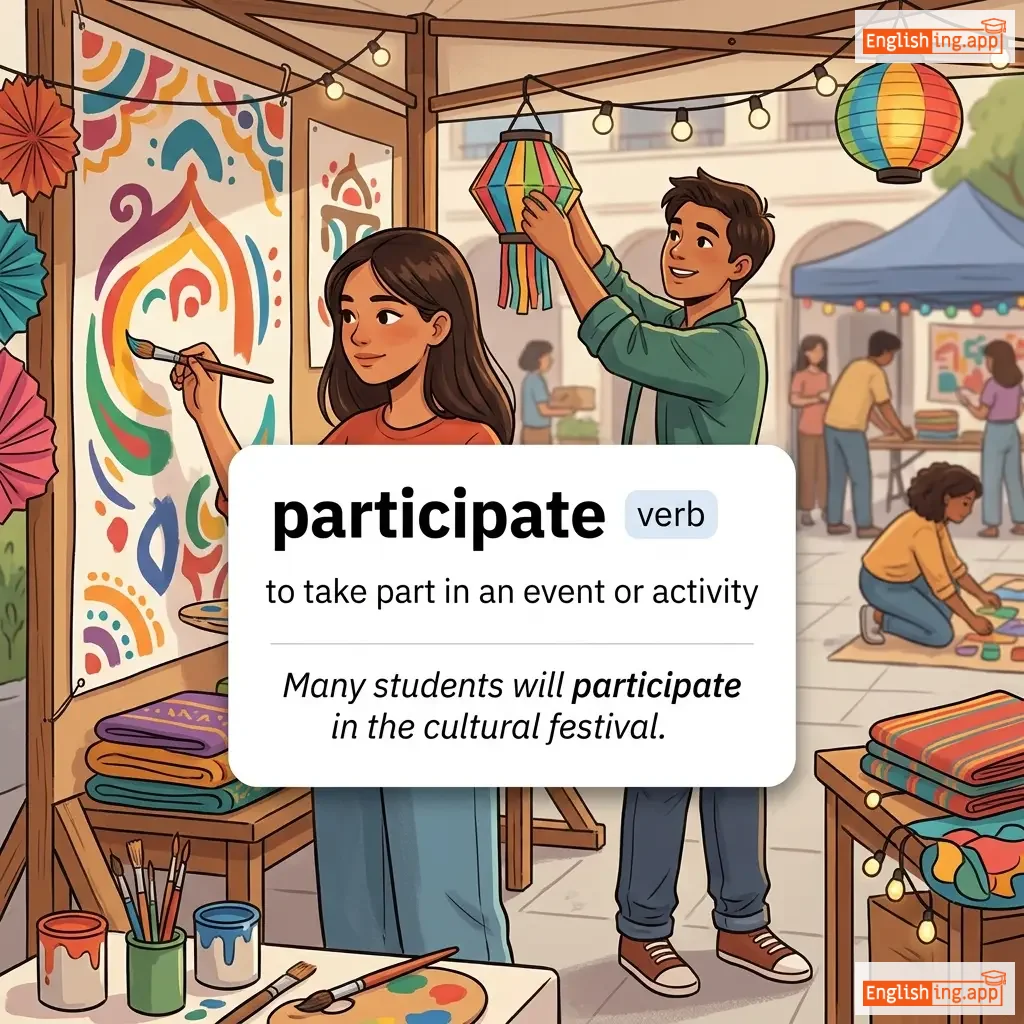
participate definition card — visual illustration of the meaning
verb
/pɑːrˈtɪsɪpeɪt/
参加する (sanka suru)

to take part in an event or activity

"Many students will participate in the cultural festival."
"多くの学生が文化祭に参加する予定です。" (Ōku no gakusei ga bunkasai ni sanka suru yotei desu.)
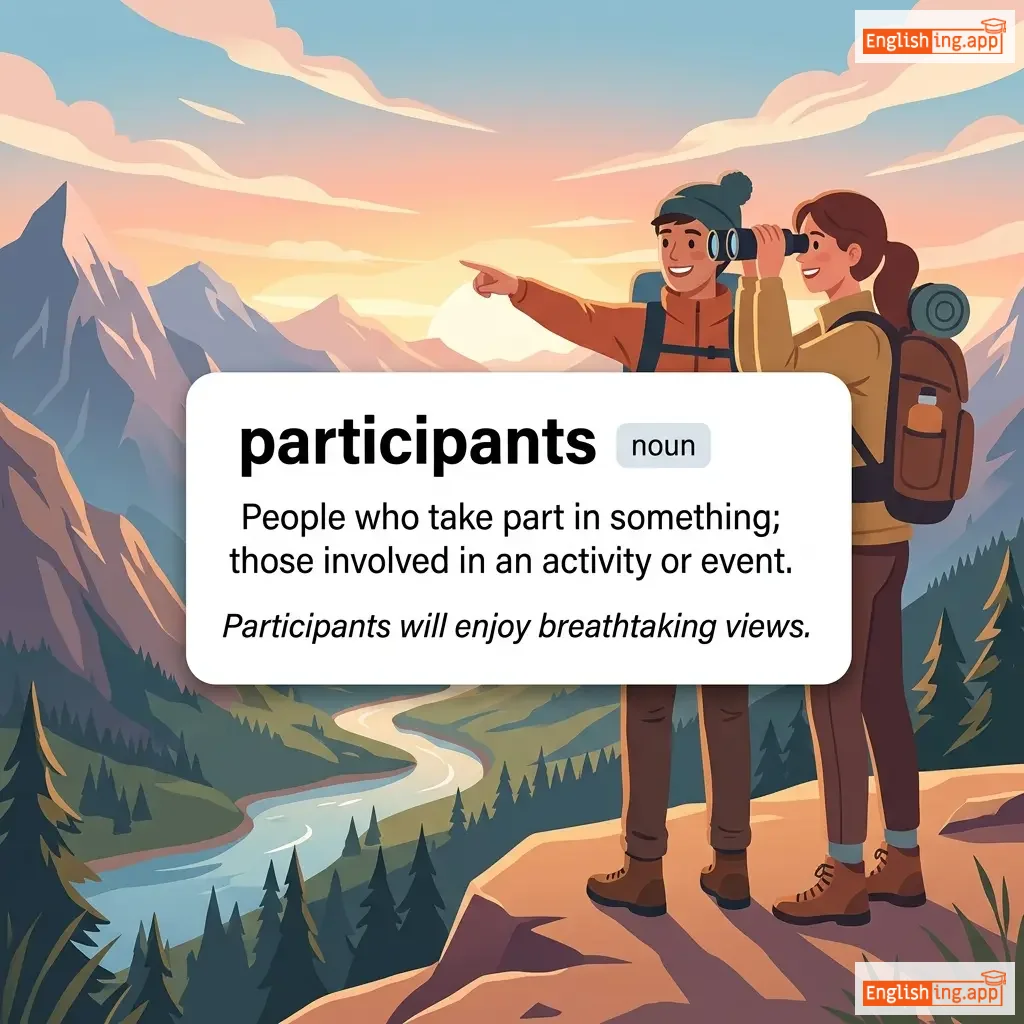
participants definition card — visual illustration of the meaning
noun
pɑːˈtɪs.ɪ.pənts
参加者 (sankasha)

People who take part in something; those involved in an activity or event.

"Participants will enjoy breathtaking views."

"参加者は息をのむような景色を楽しむでしょう。" (Sankasha wa iki o nomu yōna keshiki o tanoshimu deshō.)
noun
/pɑːrˈtɪsɪpənt/
参加者 (sankasha)

a person who takes part in an event or activity

"Each participant received a certificate after the workshop."

"各参加者はワークショップ後に証明書を受け取りました。" (Kaku sankasha wa wākushoppu go ni shōmeisho o uketorimashita.)
adjective
/ˈpɑːrtəbl/
分割可能な (bunkatsu kanō na)

capable of being divided or separated

"The estate was partible among the heirs."

"その財産は相続人の間で分割可能でした。" (Sono zaisan wa sōzokunin no aida de bunkatsu kanō deshita.)
adverb
/ˈpɑːrʃəli/
部分的に (bubun-teki ni)

to some extent but not completely

"The project was partially completed before the deadline."

"プロジェクトは締め切り前に部分的に完了しました。" (Purojekuto wa shimekiri mae ni bubun-teki ni kanryou shimashita.)
noun
/ˌpɑːrʃiˈæləti/
偏見 (henken)

an unfair preference or bias toward one side or person

"The judge was criticized for showing partiality in the case."

"裁判官は事件で偏見を示したとして批判されました。" (Saibankan wa jiken de henken o shimeshita to shite hihan saremashita.)
adjective
/ˈpɑːrʃəl/
部分的な、偏った (bubun-teki na, katagatta)

existing only in part; biased toward one side

"The report gave a partial view of the situation."

"レポートは状況の部分的な見解を示しました。" (Repōto wa jōkyō no bubun-teki na kenkai o shimeshimashita.)
adjective
/ˈpɑːt taɪm/
パートタイム (pāto taimu)

working for only part of the usual working day or week

"She works part-time as a waitress."

"彼女はパートタイムのウェイトレスとして働いています。" (Kanojo wa pāto taimu no weitoresu to shite hataraiteimasu.)
noun
/pɑːrt/
部分 (bubun)

a piece or segment of something

"She gave me a part of her chocolate."
"彼女は私にチョコレートの一部をくれました。" (Kanojo wa watashi ni chokorēto no ichibu o kuremashita.)
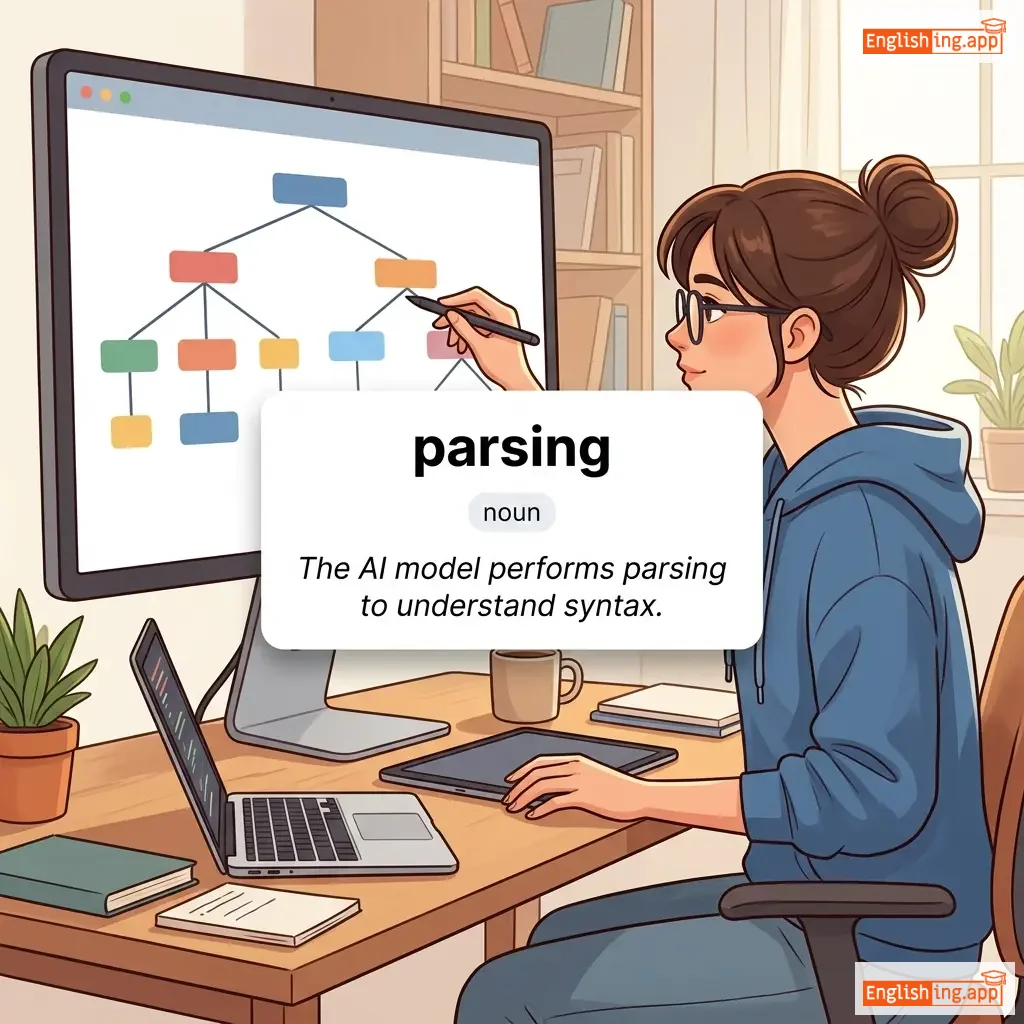
parsing definition card — visual illustration of the meaning
noun
ˈpɑː.sɪŋ
文の構造解析 (parsing)

The process of analyzing sentence structure to understand grammatical relationships.

"The AI model performs parsing to understand syntax."

"AIモデルは構文解析を行い、構造を理解します。" (AI moderu wa koubun kaiseki wo okonai, kouzou wo rikai shimasu.)
noun
/ˈpɑːrsɪmoʊni/
けち (kechi)

extreme unwillingness to spend money or use resources

"His parsimony was evident in the way he avoided any unnecessary expenses."

"彼のけちは、どんな無駄な出費も避ける様子に表れていた。" (Kare no kechi wa, donna muda na shuppi mo sakeru yosu ni arawarete ita.)
adjective
/ˌpɑːrsɪˈmoʊniəs/
けち (kechi)

unwilling to spend money or use resources; stingy

"The company was too parsimonious to invest in better equipment."

"その会社は良い設備に投資するにはあまりにもけちだった。" (Sono kaisha wa yoi setsubi ni tōshi suru ni wa amari ni mo kechi datta.)
noun
/ˈpɑːrləns/
専門用語 (senmon yougo)

a particular way of speaking or using words, common to a group

"In legal parlance, the term has a different meaning."

"法律用語では、この言葉は異なる意味を持っています。" (Hōritsu yōgo de wa, kono kotoba wa kotonaru imi o motteimasu.)
adjective
/ˈpɑːrləs/
危険な (parlus)

Full of danger or risk; precarious.

"The company is in a parlous financial state."

"その会社は危険な財政状態にあります。" (Sono kaisha wa kiken na zaisei jōtai ni arimasu.)
noun
/ˈpɑːrlər/
サロン、店 (parlor)

A sitting room in a private house, or a shop providing specified services.

"They welcomed the guests into the front parlor."

"彼らは前のパーラーでゲストを迎えました。" (Karera wa mae no pāra de gesuto o mukaemashita.)
adjective
/ˌpɑːrləˈmɛntri/
議会の (gikai no)

relating to a parliament or its members; relating to a system of government with parliamentary authority

"The country follows a parliamentary form of government."

"その国は議会制の政府を採用している。" (Sono kuni wa gikaisei no seifu o saiyo shite iru)
noun
/ˈpɑːrləmənt/
議会 (gikai)

the highest legislative body in a country

"The bill was passed in parliament after a long debate."

"その法案は議会で長時間の議論の後に通過しました。" (Sono hōan wa gikai de chō jikan no giron no ato ni tsūka shimashita.)
noun, verb
/ˈpɑːrli/
交渉 (koushou)

a discussion between opposing sides, especially to negotiate terms

"The generals met to parley over the terms of surrender."
"将軍たちは降伏条件について話し合うために会った。" (Shougun-tachi wa koufuku jouken ni tsuite hanashiau tame ni atta.)
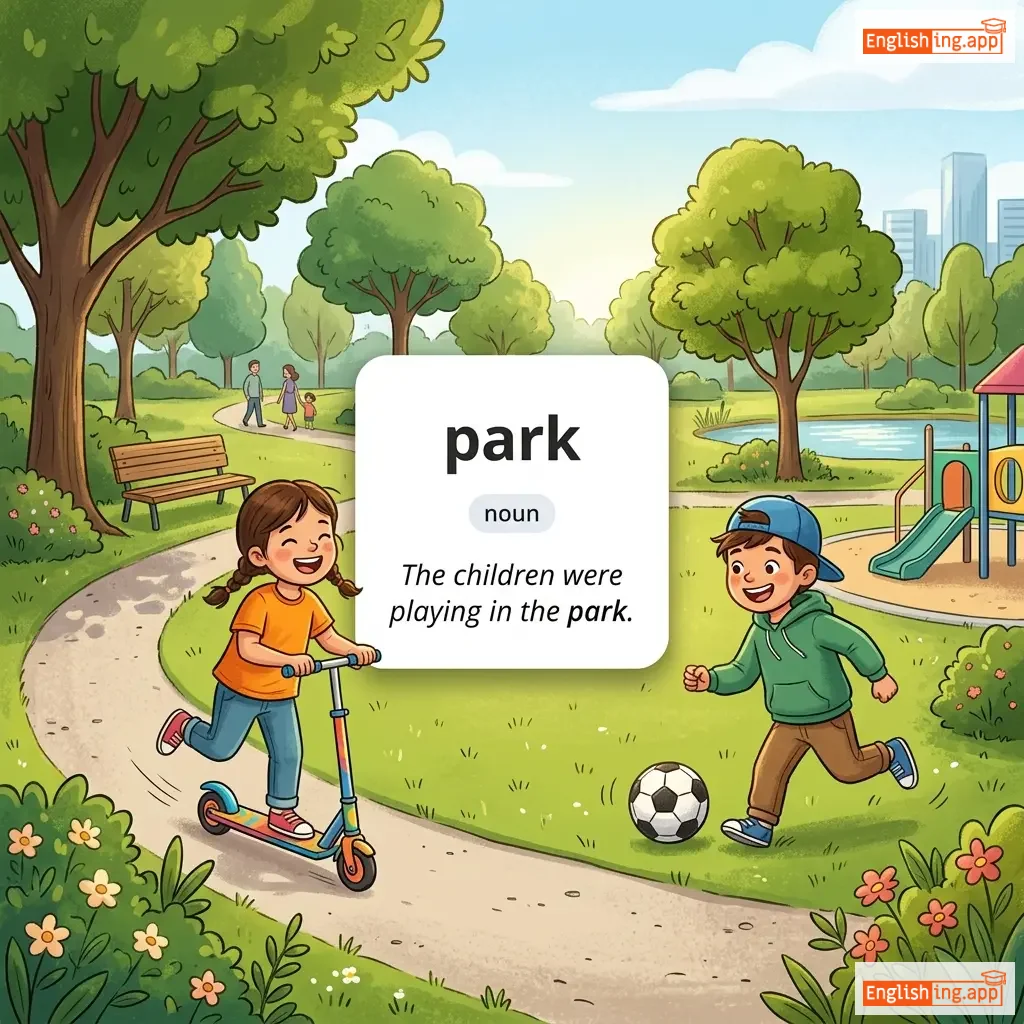
park definition card — visual illustration of the meaning
noun
/pɑːrk/
パーク (pāku)

a large public area of land with grass, trees, and paths, where people can walk or relax

"The children were playing in the park."

"子供たちは公園で遊んでいました。" (Kodomotachi wa kōen de asonde imashita.)
adjective
/pəˈrɪʒən/
パリに関連する (pari ni kanren suru)

relating to Paris or its people

"She wore a Parisian style dress at the party."

"彼女はパリジャンスタイルのドレスをパーティーで着ていた。" (Kanojo wa parijan sutairu no doresu o pātī de kiteita.)
noun
/ˈpærɪti/
平等 (byoudou)

the state or condition of being equal, especially in status or pay

"The campaign aims to achieve pay parity between men and women."

"キャンペーンは男性と女性の間で給与の平等を達成することを目指しています。" (Kyanpēn wa dansei to josei no aida de kyūyo no byōdō o tassei suru koto o mezashiteimasu.)
adjective
/pəˈroʊkiəl/
狭い (parokial)

Having a limited or narrow outlook; relating to a parish.

"His parochial view prevented him from understanding global issues."

"彼の狭い視点は、彼が世界的な問題を理解するのを妨げました。" (Kare no semai shiten wa, kare ga sekaiteki na mondai o rikai suru no o samatagemashita.)