Vocabularios

Descubra, aprenda y domine el vocabulario en inglés

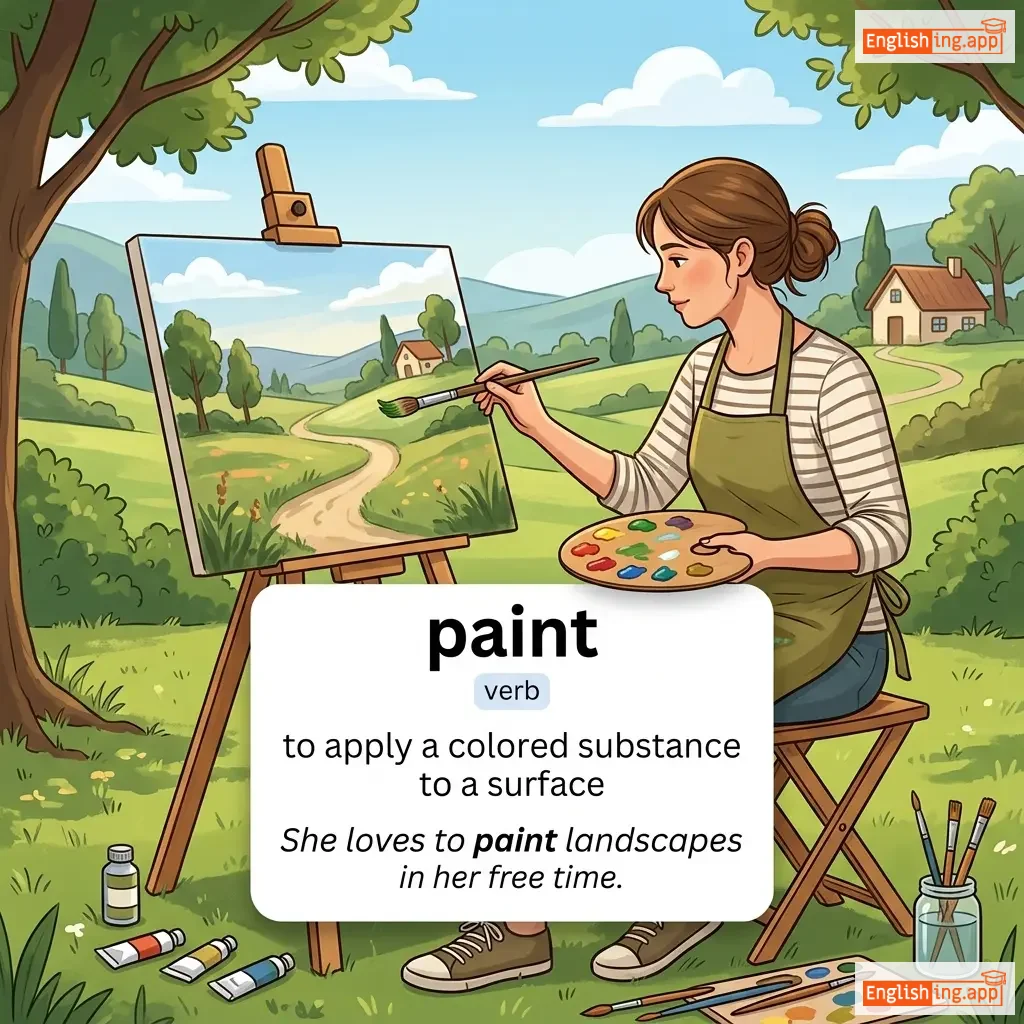
paint definition card — visual illustration of the meaning
verb
/peɪnt/
pintar (pintar)

to apply a colored substance to a surface

"She loves to paint landscapes in her free time."

"A ella le gusta pintar paisajes en su tiempo libre." (A ella le gusta pintar paisajes en su tiempo libre.)
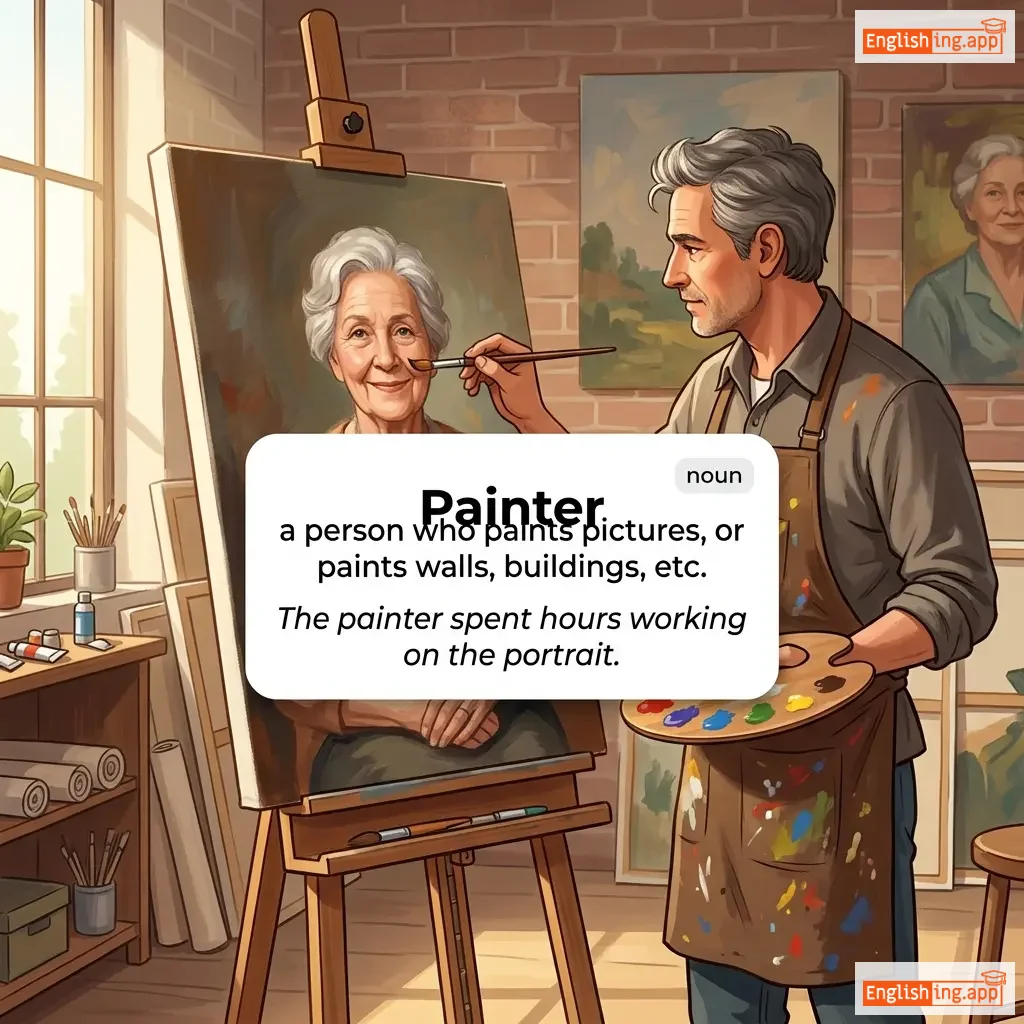
Painter definition card — visual illustration of the meaning
noun
/ˈpeɪn.tər/
pintor (pintor)

a person who paints pictures, or paints walls, buildings, etc.

"The painter spent hours working on the portrait."

"El pintor pasó horas trabajando en el retrato." (El pintor paso horas trabajando en el retrato.)
noun
/ˈpeɪntɪŋ/
pintura (pintura)

a picture or design made using paint

"The painting on the wall was created by a famous artist."

"La pintura en la pared fue creada por un artista famoso." (La pintura en la pared fue creada por un artista famoso.)
👟👟

pair (per)

noun
/per/
par (par)

two things of the same kind that are used together

"She wore a matching pair of shoes."

"Ella usó un par de zapatos a juego." (Ella usó un par de zapatos a juego.)
noun
/ˈpælɪs/
palacio (palacio)

a large and impressive building that is the official home of a king, queen, or other ruler

"The royal family lives in a magnificent palace."

"La familia real vive en un palacio magnífico." (La familia real vive en un palacio magnifico.)
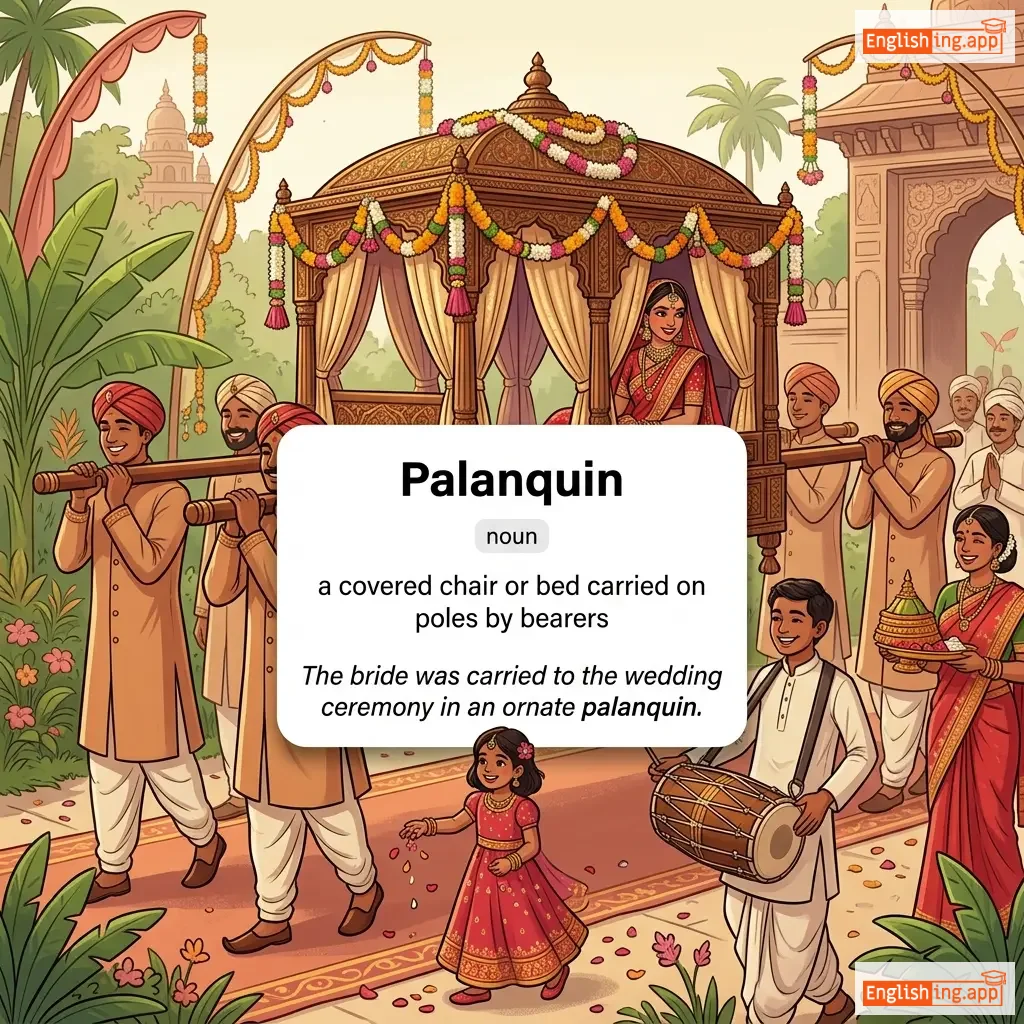
Palanquin definition card — visual illustration of the meaning
noun
/ˌpæl.ənˈkiːn/
palanquín (palanquin)

a covered chair or bed carried on poles by bearers

"The bride was carried to the wedding ceremony in an ornate palanquin."

"La novia fue llevada a la ceremonia de boda en un palanquín ornamentado." (La novia fue llevada a la ceremonia de boda en un palanquín ornamentado.)
adjective
/ˈpæl.ə.tə.bəl/
agradable (agradable)

pleasant or acceptable to the taste, mind, or feelings

"The meal was simple but quite palatable."

"La comida era sencilla pero bastante agradable." (La comida era sencilla pero bastante agradable.)
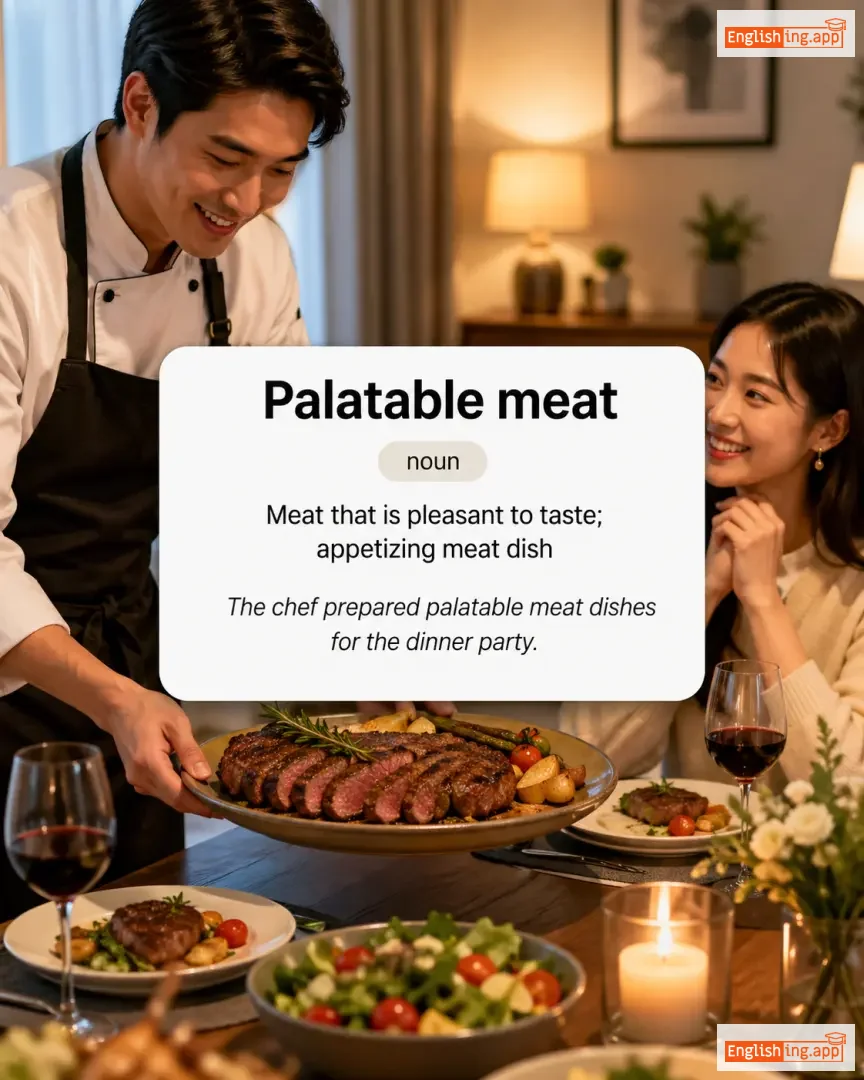
Palatable meat definition card — visual illustration of the meaning
noun
/ˈpæl.ə.tə.bəl miːt/
carne sabrosa (carne sabrosa)

Meat that is pleasant to taste; appetizing meat dish

"The chef prepared palatable meat dishes for the dinner party."

"El chef preparó platos de carne sabrosos para la fiesta de cena." (El chef preparó platos de carne sabrosos para la fiesta de cena.)
noun
/ˈpæl.ət/
paladar (paladar)

the roof of the mouth; a person's appreciation of taste and flavor

"She has a refined palate for fine wines."

"Ella tiene un paladar refinado para los buenos vinos." (Ella tiene un paladar refinado para los buenos vinos.)
adjective
/pəˈleɪ.ʃəl/
palaciego (palaciego)

resembling a palace in being spacious and splendid

"They stayed in a palatial hotel during their vacation."

"Se alojaron en un hotel palaciego durante sus vacaciones." (Se alojaron en un hotel palaciego durante sus vacaciones.)
noun
/pəˈlæv.ər/
charla innecesaria / alboroto (charla innecesaria / alboroto)

prolonged and idle discussion; fuss or unnecessary talk

"After much palaver, they finally agreed on the plan."

"Después de mucha charla innecesaria, finalmente acordaron el plan." (Despues de mucha charla innecesaria, finalmente acordaron el plan.)
👩‍🦰

Pale (peil)

adjective
/peɪl/
pálido (palido)

having a light or dull color, especially when compared with something else

"She looked pale after the long illness."

"Ella se veía pálida después de la larga enfermedad." (Ella se veia palida despues de la larga enfermedad.)
noun
/ˌpeɪ.li.ɒnˈtɒl.ə.dʒi/
paleontología (paleontologia)

the branch of science concerned with fossil animals and plants

"She decided to study paleontology at university."

"Decidió estudiar paleontología en la universidad." (Decidio estudiar paleontologia en la universidad.)
adjective
/pælɛˈstɪnɪən/
palestino (palestino)

relating to Palestine or its people

"The Palestinian people have a rich cultural heritage."

"El pueblo palestino tiene una rica herencia cultural." (El pueblo palestino tiene una rica herencia cultural.)
noun
/ˈpælət/
paleta (paleta)

a thin board or surface on which an artist sets and mixes colors; also a range of colors used in art or design

"The artist mixed vibrant shades on her palette before starting the painting."

"La artista mezcló tonos vibrantes en su paleta antes de comenzar la pintura." (La artista mezcló tonos vibrantes en su paleta antes de comenzar la pintura.)
noun
/ˈpælɪmpsɛst/
palimpsesto (palimpsesto)

a manuscript or document that has been written over but still bears traces of earlier writing; something reused or altered but still retaining traces of its earlier form

"The ancient manuscript was a palimpsest, showing faint traces of previous texts beneath the new writing."

"El antiguo manuscrito era un palimpsesto, mostrando débiles huellas de textos anteriores bajo la nueva escritura." (El antiguo manuscrito era un palimpsesto, mostrando débiles huellas de textos anteriores bajo la nueva escritura.)
noun
/ˈpælɪˌnoʊd/
palinodia (palinodia)

a poem or statement in which the writer retracts something said in an earlier work

"The poet wrote a palinode to apologize for his earlier harsh words."

"El poeta escribió una palinodia para disculparse por sus palabras severas anteriores." (El poeta escribio una palinodia para disculparse por sus palabras severas anteriores.)
verb, noun
/pɔːl/
decadencia, paño sobre un ataúd (decadencia, paño sobre un ataúd)

to lose strength or interest; to become dull or tiresome; also a cloth spread over a coffin

"The excitement of the festival began to pall after several days."

"La emoción del festival comenzó a decaer después de varios días." (La emocion del festival comenzo a decaer despues de varios dias.)
verb
/ˈpælieɪt/
aliviar (aliviar)

to make a disease, symptoms, or problem less severe without removing the cause

"The doctor prescribed medicine to palliate the patient's pain."

"El doctor recetó medicina para aliviar el dolor del paciente." (El doctor recetó medicina para aliviar el dolor del paciente.)
verb
/pɑːrs/
analizar gramaticalmente (analizar gramaticalmente)

to analyze a sentence or text grammatically or logically

"The software can parse large amounts of text data efficiently."

"El software puede analizar grandes cantidades de datos de texto de manera eficiente." (El software puede analizar grandes cantidades de datos de texto de manera eficiente.)
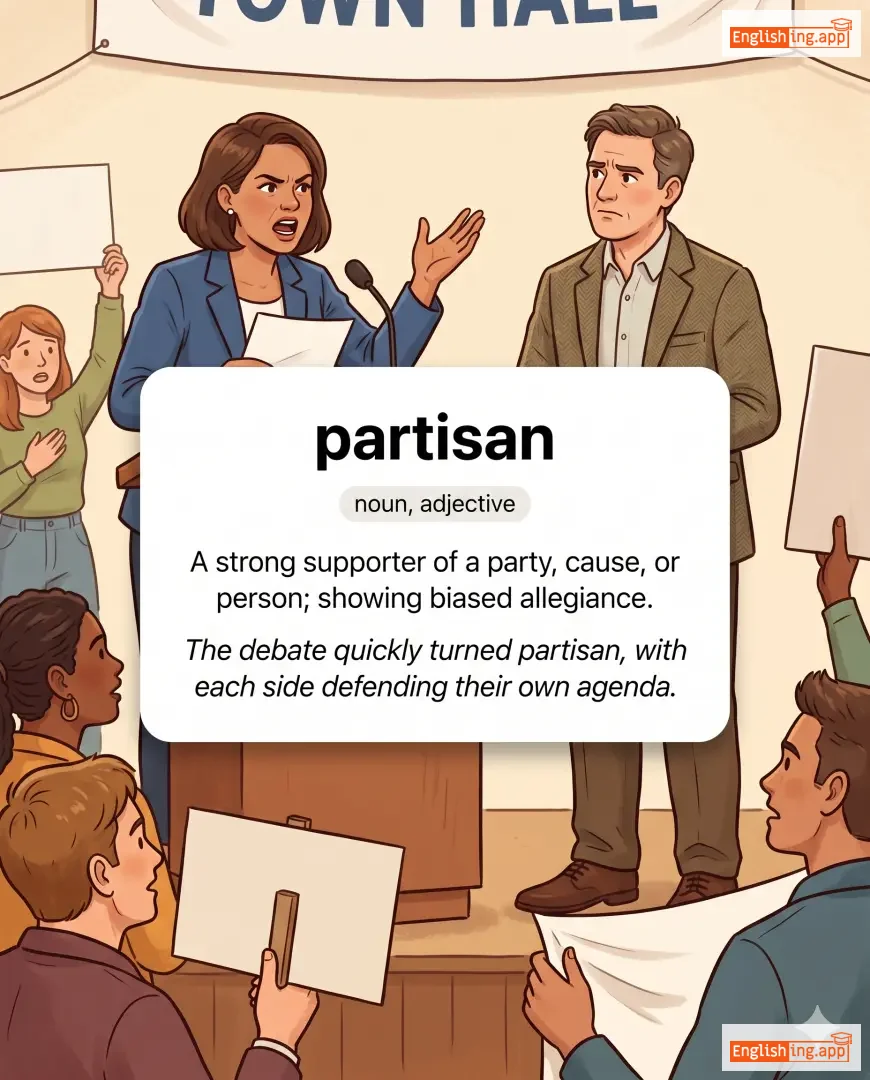
partisan definition card — visual illustration of the meaning
noun, adjective
/ˈpɑːrtɪzən/
partidario (partidario)

A strong supporter of a party, cause, or person; showing biased allegiance.

"The debate quickly turned partisan, with each side defending their own agenda."

"El debate rápidamente se volvió partidista, con cada lado defendiendo su propia agenda." (El debate rapidamente se volvio partidista, con cada lado defendiendo su propia agenda.)
adverb
/pɑːrˈtɪkjʊləli/
particularmente (particularmente)

to a higher degree than is usual or expected

"She is particularly fond of Italian food."

"Ella es particularmente aficionada a la comida italiana." (Ella es particularmente aficionada a la comida italiana.)
verb
/pərˈtɪkjələrˌaɪz/
especificar (especificar)

to mention or describe something in detail

"The witness was asked to particularize the events of that night."

"Se le pidió al testigo que especificara los eventos de esa noche." (Se le pidió al testigo que especificara los eventos de esa noche.)
adjective
/pərˈtɪk.jʊ.lər/
particular (particular)

specific or special; distinct from others

"He is very particular about his diet."

"Él es muy particular con su dieta." (Él es muy particular con su dieta.)
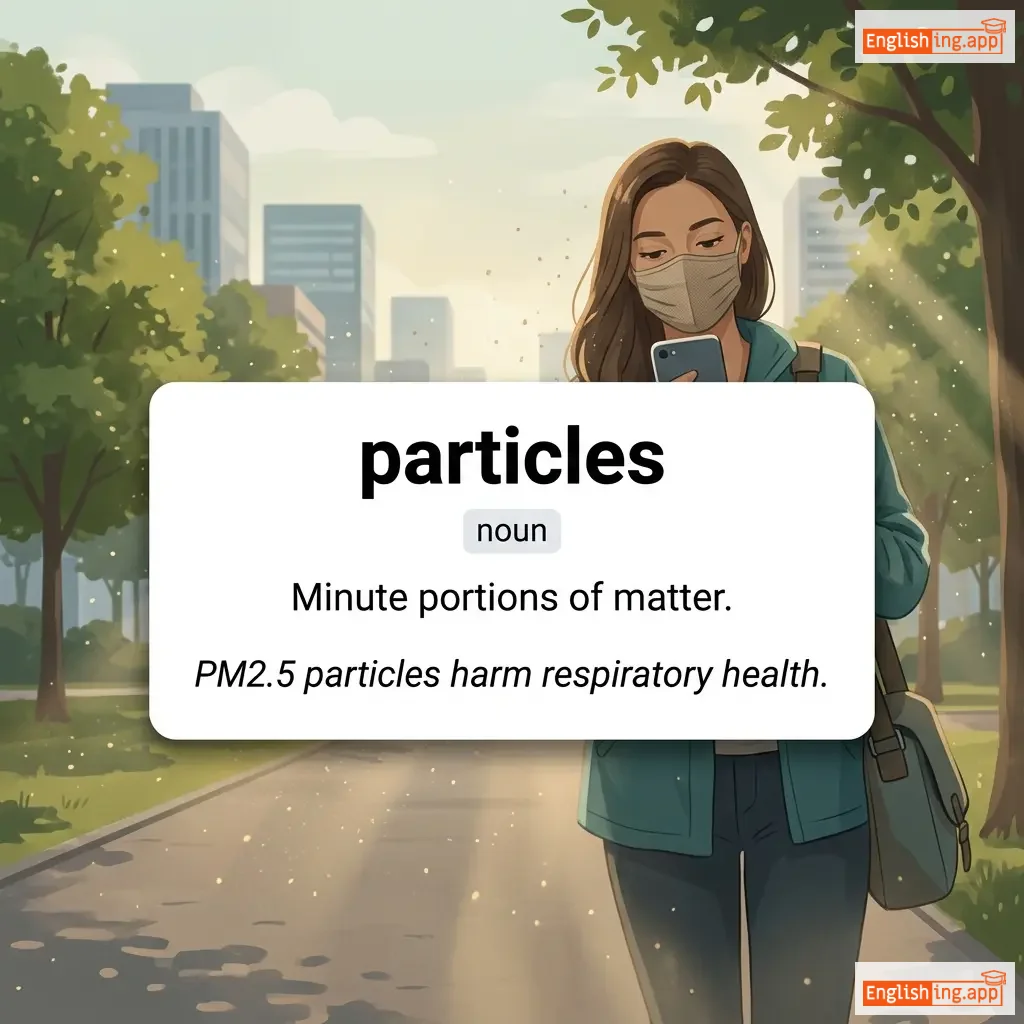
particles definition card — visual illustration of the meaning
noun
/ˈpɑː.tɪ.klz/
partículas (particulas)

Minute portions of matter.

"PM2.5 particles harm respiratory health."

"Las partículas PM2.5 dañan la salud respiratoria." (Las particulas PM2.5 danan la salud respiratoria.)
noun
/ˈpɑːrtɪkəl/
partícula (partikula)

a very small piece or amount of something

"Dust particles floated in the air near the window."

"Las partículas de polvo flotaban en el aire cerca de la ventana." (Las particulas de polvo flotaban en el aire cerca de la ventana.)
noun
/pɑːrˌtɪsɪˈpeɪʃən/
participación (participacion)

the action of taking part in something

"Her participation in the competition was commendable."

"Su participación en la competencia fue encomiable." (Su participacion en la competencia fue encomiable.)
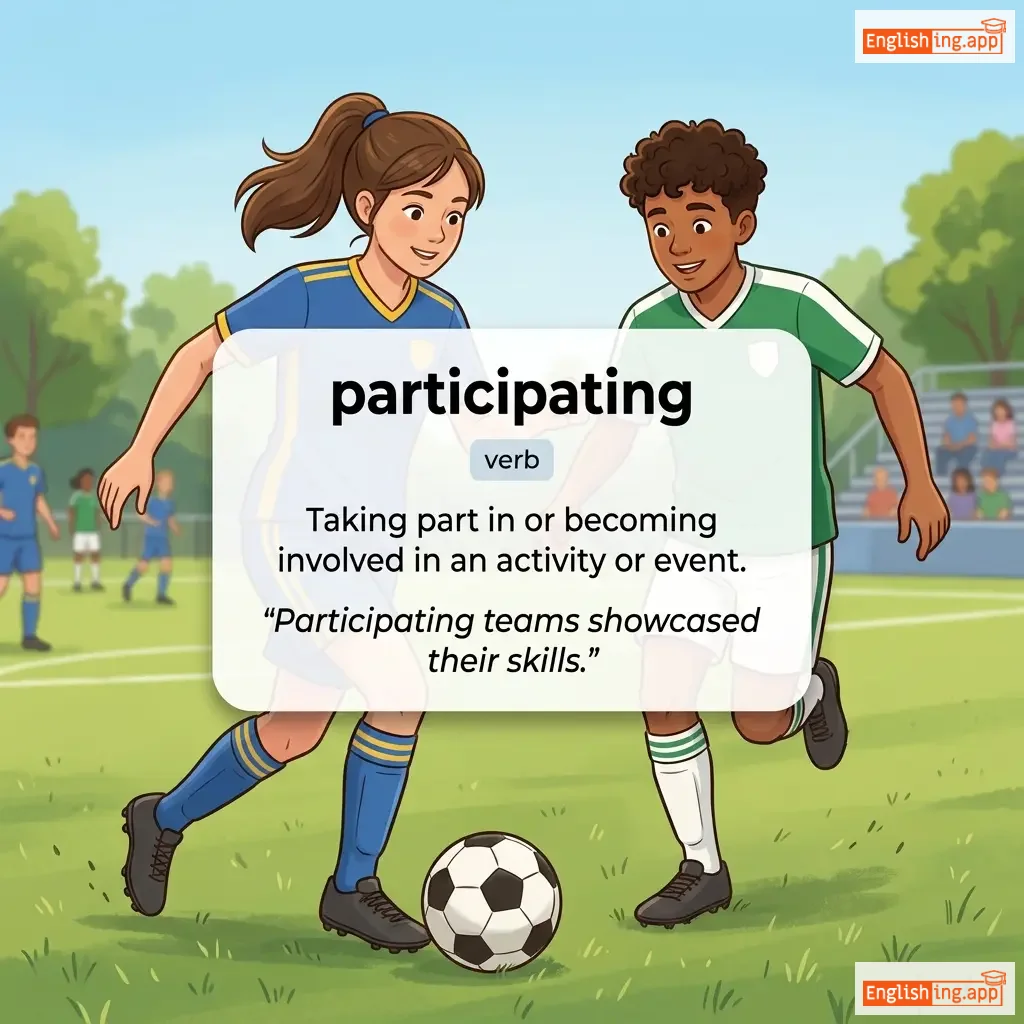
participating definition card — visual illustration of the meaning
verb
pɑːˈtɪs.ɪ.peɪ.tɪŋ
participar (participar)

Taking part in or becoming involved in an activity or event.

"Participating teams showcased their skills."

"Los equipos participantes demostraron sus habilidades." (Los equipos participantes demostraron sus habilidades.)
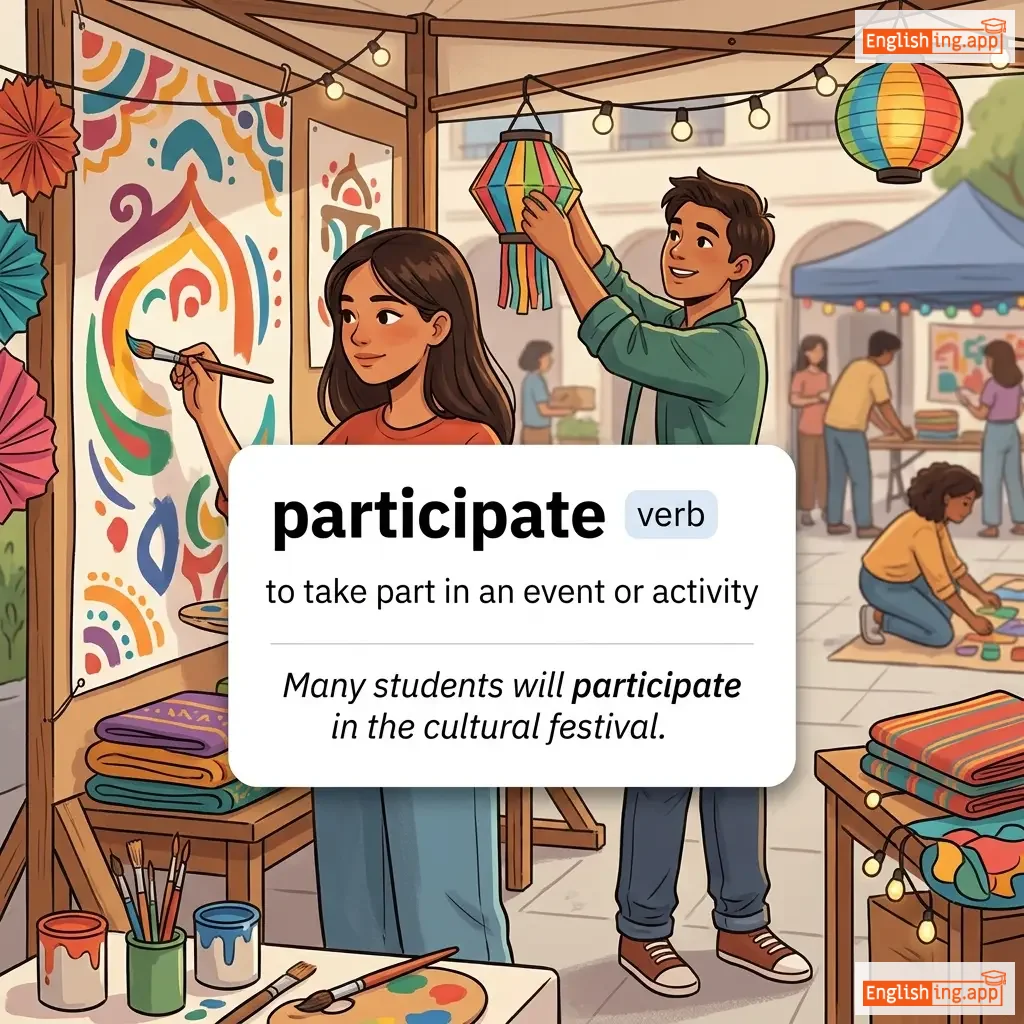
participate definition card — visual illustration of the meaning
verb
/pɑːrˈtɪsɪpeɪt/
participar (participar)

to take part in an event or activity

"Many students will participate in the cultural festival."

"Muchos estudiantes participarán en el festival cultural." (Muchos estudiantes participarán en el festival cultural.)
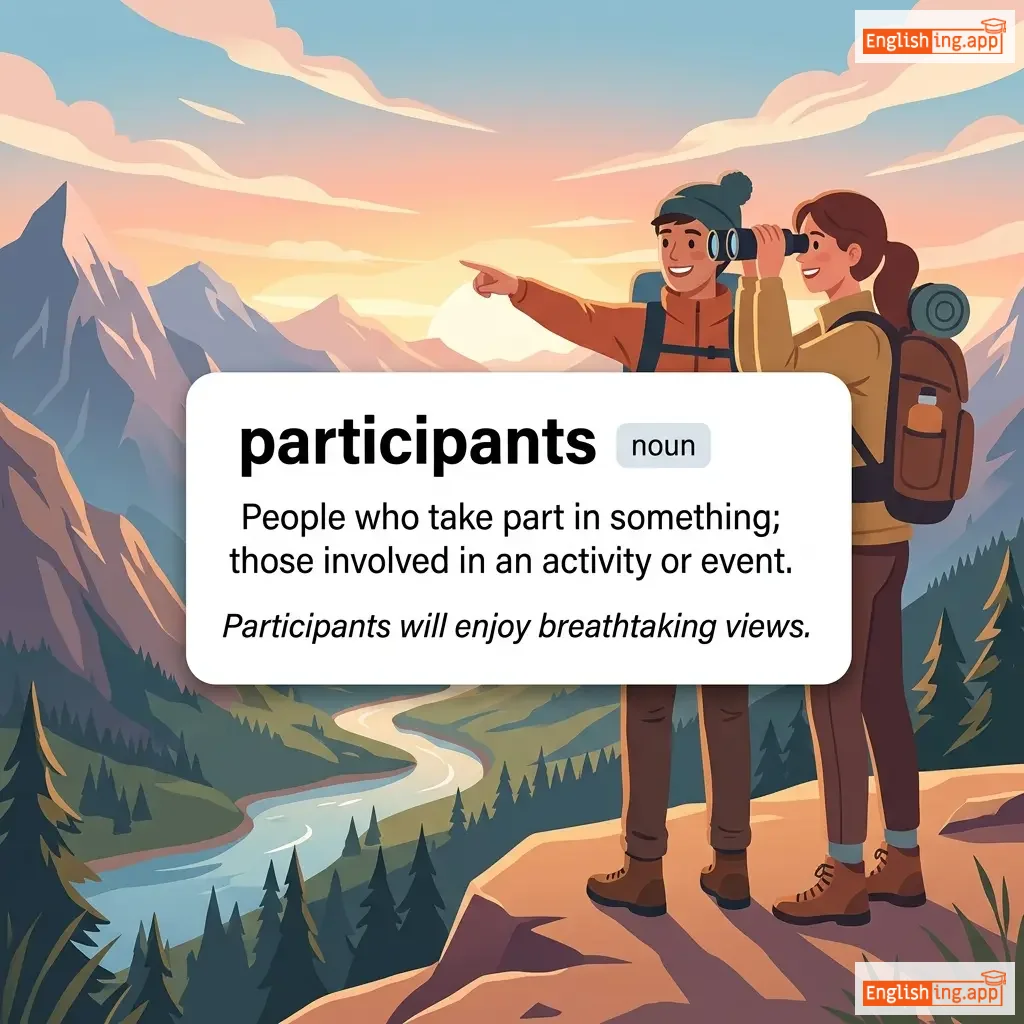
participants definition card — visual illustration of the meaning
noun
pɑːˈtɪs.ɪ.pənts
participantes (participantes)

People who take part in something; those involved in an activity or event.

"Participants will enjoy breathtaking views."

"Los participantes disfrutarán vistas impresionantes." (Los participantes disfrutarán vistas impresionantes.)
🧑‍🤝‍🧑

Participant (partisípant)

noun
/pɑːrˈtɪsɪpənt/
participante (participante)

a person who takes part in an event or activity

"Each participant received a certificate after the workshop."

"Cada participante recibió un certificado después del taller." (Cada participante recibió un certificado después del taller.)
adjective
/ˈpɑːrtəbl/
divisible (divisible)

capable of being divided or separated

"The estate was partible among the heirs."

"La propiedad era divisible entre los herederos." (La propiedad era divisible entre los herederos.)
adverb
/ˈpɑːrʃəli/
parcialmente (parcialmente)

to some extent but not completely

"The project was partially completed before the deadline."

"El proyecto fue parcialmente completado antes de la fecha límite." (El proyecto fue parcialmente completado antes de la fecha límite.)
noun
/ˌpɑːrʃiˈæləti/
parcialidad (parcialidad)

an unfair preference or bias toward one side or person

"The judge was criticized for showing partiality in the case."

"El juez fue criticado por mostrar parcialidad en el caso." (El juez fue criticado por mostrar parcialidad en el caso.)
adjective
/ˈpɑːrʃəl/
parcial, sesgado (parcial, sesgado)

existing only in part; biased toward one side

"The report gave a partial view of the situation."

"El informe dio una vista parcial de la situación." (El informe dio una vista parcial de la situación.)
adjective
/ˈpɑːt taɪm/
a tiempo parcial (a tiempo parcial)

working for only part of the usual working day or week

"She works part-time as a waitress."

"Ella trabaja a tiempo parcial como camarera." (Ella trabaja a tiempo parcial como camarera.)
noun
/pɑːrt/
parte (parte)

a piece or segment of something

"She gave me a part of her chocolate."

"Ella me dio una parte de su chocolate." (Ella me dio una parte de su chocolate.)
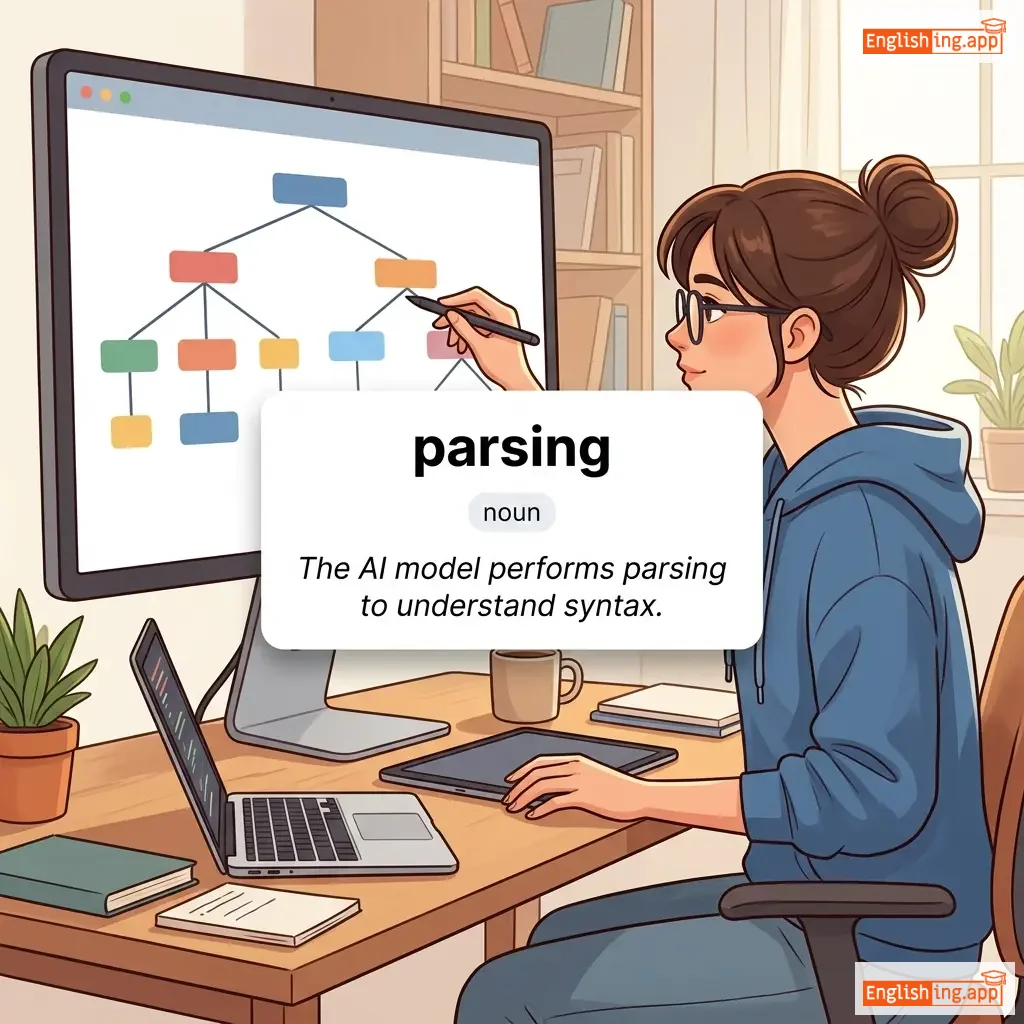
parsing definition card — visual illustration of the meaning
noun
ˈpɑː.sɪŋ
análisis de la estructura de la oración (parsing)

The process of analyzing sentence structure to understand grammatical relationships.

"The AI model performs parsing to understand syntax."

"El modelo de IA realiza el análisis de oraciones para entender la sintaxis." (El modelo de IA realiza el análisis de oraciones para entender la sintaxis.)
noun
/ˈpɑːrsɪmoʊni/
tacañeria (tacaneria)

extreme unwillingness to spend money or use resources

"His parsimony was evident in the way he avoided any unnecessary expenses."

"Su tacañeria era evidente en la manera en que evitaba cualquier gasto innecesario." (Su tacaneria era evidente en la manera en que evitaba cualquier gasto innecesario.)
adjective
/ˌpɑːrsɪˈmoʊniəs/
tacaño (tacano)

unwilling to spend money or use resources; stingy

"The company was too parsimonious to invest in better equipment."

"La empresa era demasiado tacaña para invertir en mejores equipos." (La empresa era demasiado tacana para invertir en mejores equipos.)
noun
/ˈpɑːrləns/
lenguaje específico (lenguaje especifico)

a particular way of speaking or using words, common to a group

"In legal parlance, the term has a different meaning."

"En el lenguaje legal, el término tiene un significado diferente." (En el lenguaje legal, el termino tiene un significado diferente.)
adjective
/ˈpɑːrləs/
peligroso (parlus)

Full of danger or risk; precarious.

"The company is in a parlous financial state."

"La compañía está en un estado financiero precario." (La compañia está en un estado financiero precario.)
noun
/ˈpɑːrlər/
salón, tienda (parlor)

A sitting room in a private house, or a shop providing specified services.

"They welcomed the guests into the front parlor."

"Recibieron a los invitados en el salón principal." (Recibieron a los invitados en el salon principal.)
adjective
/ˌpɑːrləˈmɛntri/
parlamentario (parlamentario)

relating to a parliament or its members; relating to a system of government with parliamentary authority

"The country follows a parliamentary form of government."

"El país sigue una forma de gobierno parlamentaria." (El pais sigue una forma de gobierno parlamentaria)
noun
/ˈpɑːrləmənt/
parlamento (parlamento)

the highest legislative body in a country

"The bill was passed in parliament after a long debate."

"El proyecto de ley fue aprobado en el parlamento después de un largo debate." (El proyecto de ley fue aprobado en el parlamento despues de un largo debate.)
noun, verb
/ˈpɑːrli/
parlamento (parlamento)

a discussion between opposing sides, especially to negotiate terms

"The generals met to parley over the terms of surrender."

"Los generales se reunieron para hablar sobre los términos de la rendición." (Los generales se reunieron para hablar sobre los terminos de la rendicion.)
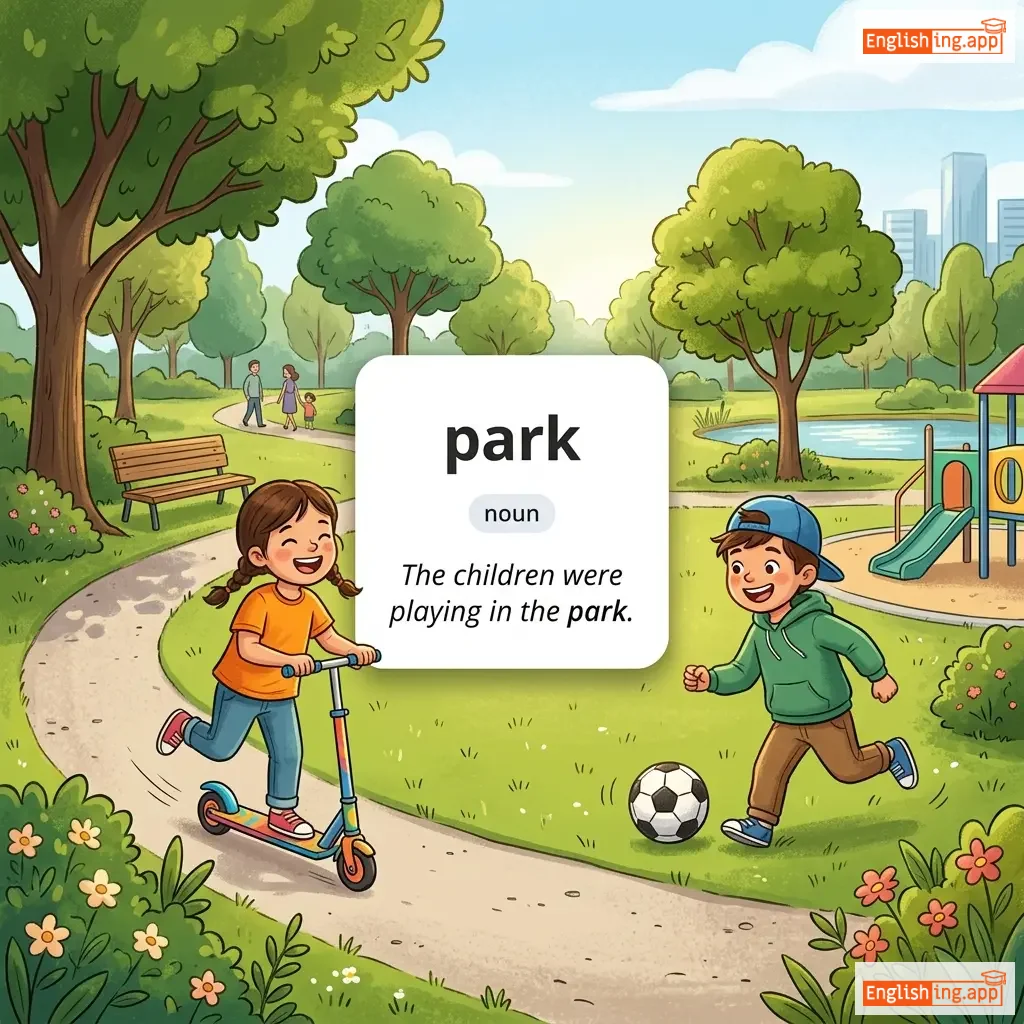
park definition card — visual illustration of the meaning
noun
/pɑːrk/
parque (parque)

a large public area of land with grass, trees, and paths, where people can walk or relax

"The children were playing in the park."

"Los niños estaban jugando en el parque." (Los niños estaban jugando en el parque.)
adjective
/pəˈrɪʒən/
relacionado con París (relacionado con paris)

relating to Paris or its people

"She wore a Parisian style dress at the party."

"Ella llevaba un vestido de estilo parisiano en la fiesta." (Ella llevaba un vestido de estilo parisiano en la fiesta.)
noun
/ˈpærɪti/
paridad (paridad)

the state or condition of being equal, especially in status or pay

"The campaign aims to achieve pay parity between men and women."

"La campaña tiene como objetivo lograr la paridad salarial entre hombres y mujeres." (La campana tiene como objetivo lograr la paridad salarial entre hombres y mujeres.)
adjective
/pəˈroʊkiəl/
parroquial (parokial)

Having a limited or narrow outlook; relating to a parish.

"His parochial view prevented him from understanding global issues."

"Su visión parroquial le impidió entender los problemas globales." (Su vision parroquial le impidio entender los problemas globales.)