Vocabulaires

Découvrez, apprenez et maîtrisez le vocabulaire anglais

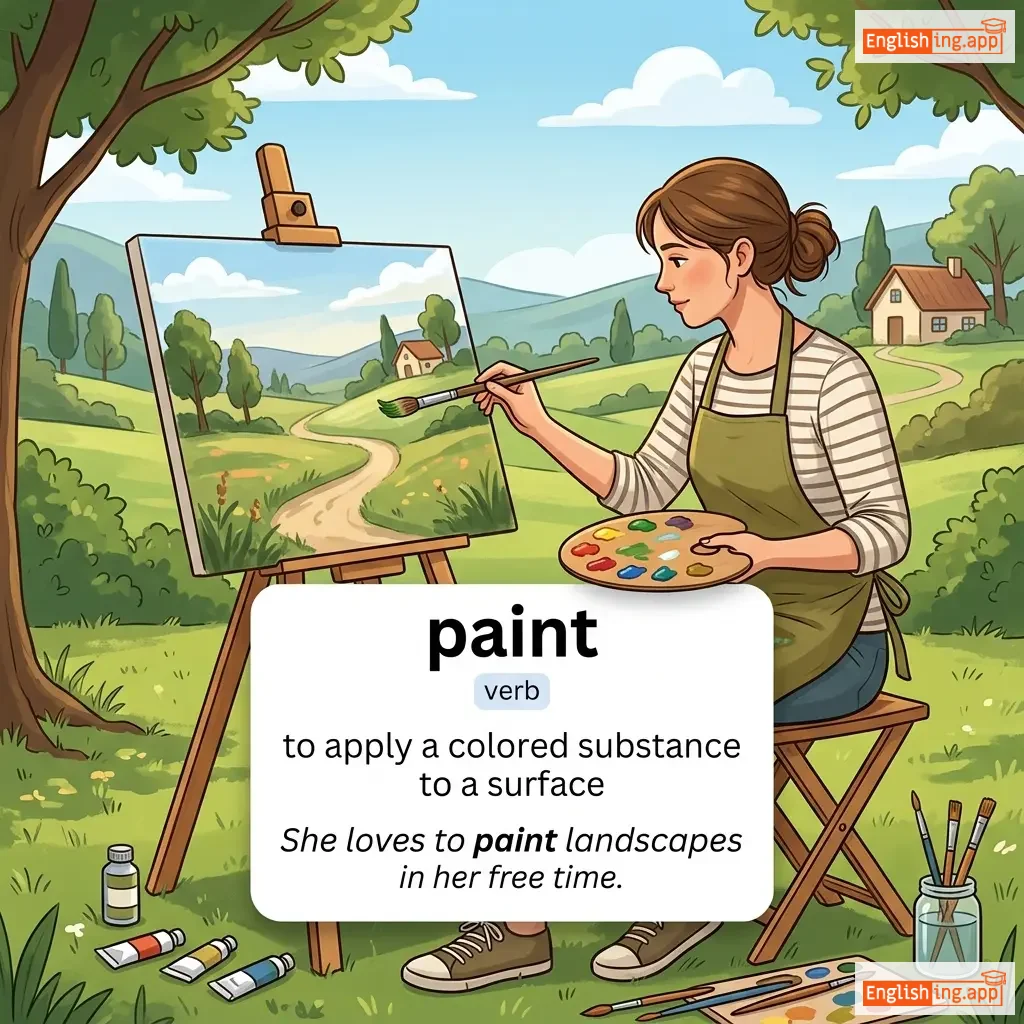
paint definition card — visual illustration of the meaning
verb
/peɪnt/
peindre (peindre)

to apply a colored substance to a surface

"She loves to paint landscapes in her free time."

"Elle aime peindre des paysages pendant son temps libre." (Elle aime peindre des paysages pendant son temps libre.)
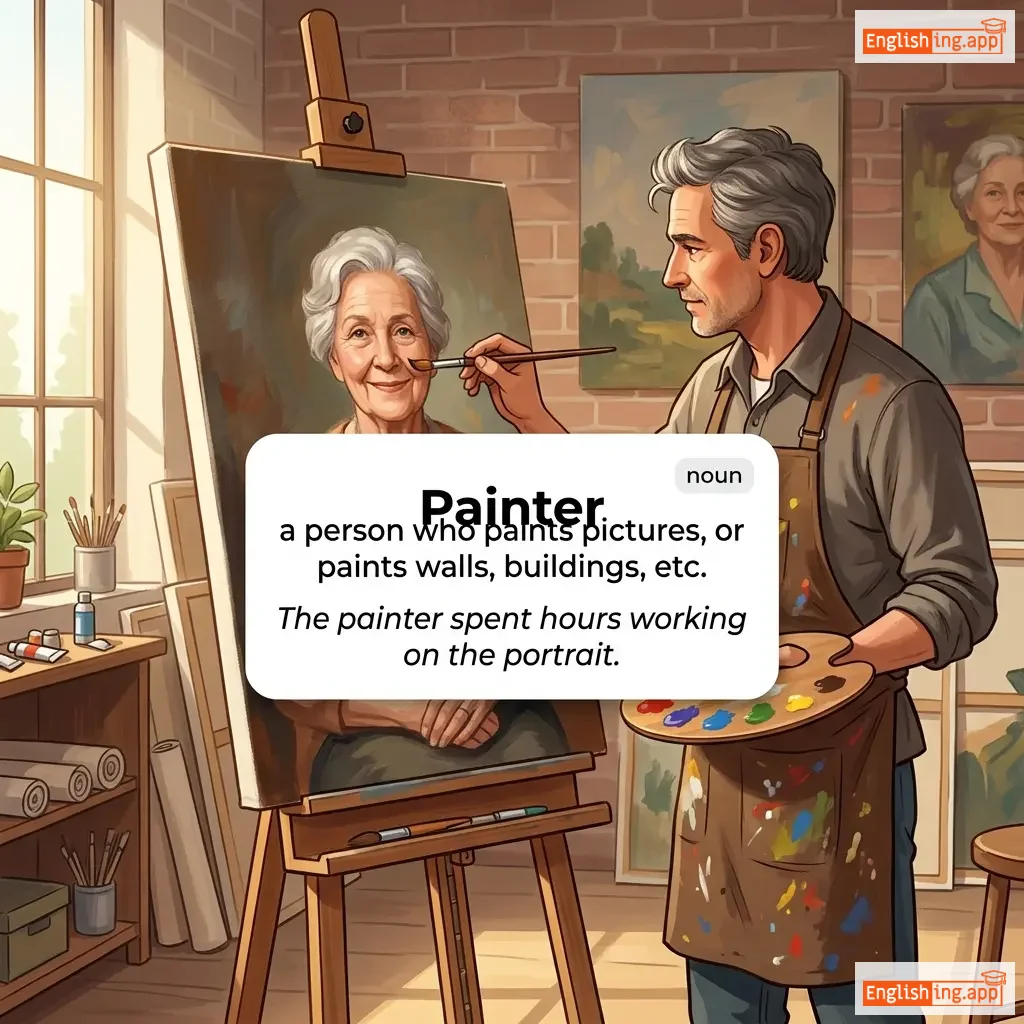
Painter definition card — visual illustration of the meaning
noun
/ˈpeɪn.tər/
peintre (peintr)

a person who paints pictures, or paints walls, buildings, etc.

"The painter spent hours working on the portrait."

"Le peintre a passé des heures à travailler sur le portrait." (Le peintre a passé des heures à travailler sur le portrait.)
noun
/ˈpeɪntɪŋ/
peinture (peinture)

a picture or design made using paint

"The painting on the wall was created by a famous artist."

"La peinture sur le mur a été créée par un artiste célèbre." (La peinture sur le mur a été créée par un artiste célèbre.)
noun
/per/
paire (paire)

two things of the same kind that are used together

"She wore a matching pair of shoes."

"Elle portait une paire de chaussures assorties." (Elle portait une paire de chaussures assorties.)
noun
/ˈpælɪs/
palais (palais)

a large and impressive building that is the official home of a king, queen, or other ruler

"The royal family lives in a magnificent palace."

"La famille royale vit dans un magnifique palais." (La famille royale vit dans un magnifique palais.)
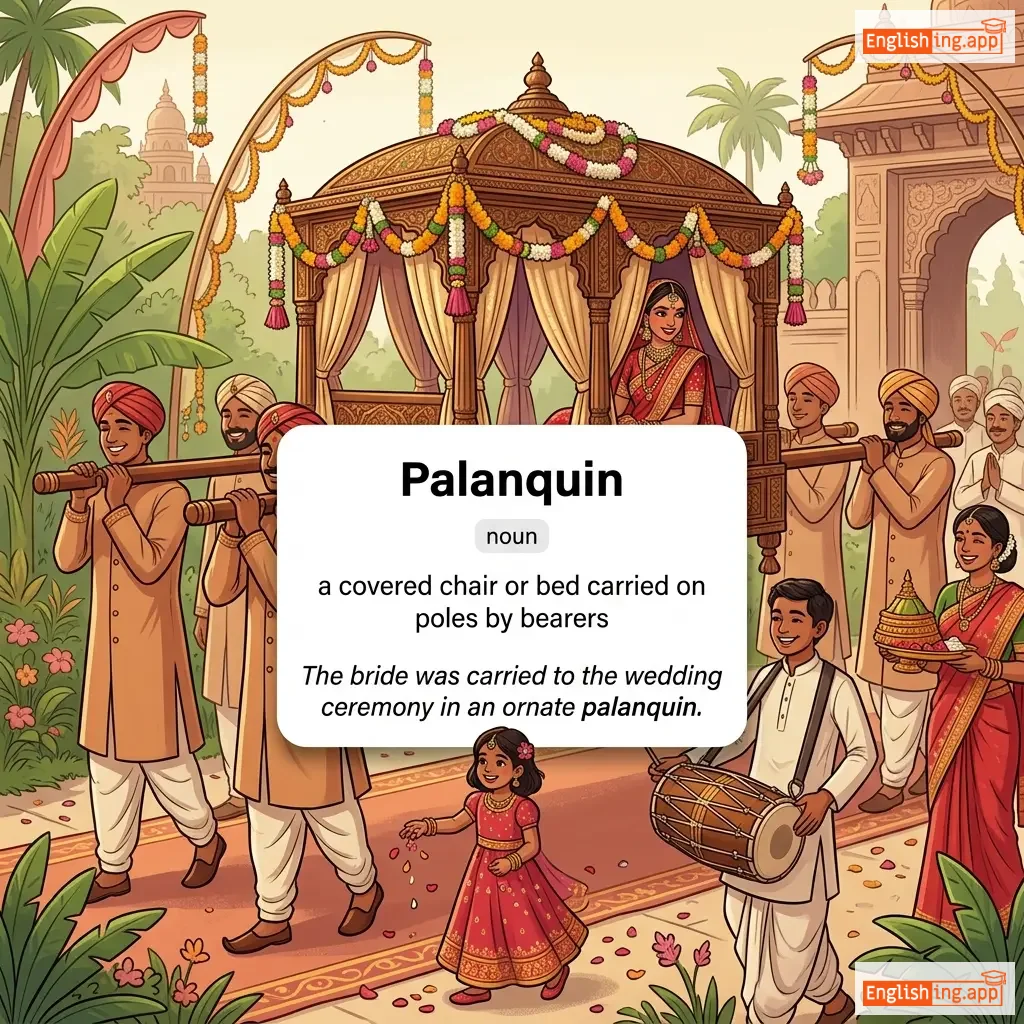
Palanquin definition card — visual illustration of the meaning
noun
/ˌpæl.ənˈkiːn/
palanquin (palanquin)

a covered chair or bed carried on poles by bearers

"The bride was carried to the wedding ceremony in an ornate palanquin."

"La mariée a été transportée à la cérémonie de mariage dans un palanquin orné." (La mariée a été transportée à la cérémonie de mariage dans un palanquin orné.)
adjective
/ˈpæl.ə.tə.bəl/
agréable (agreable)

pleasant or acceptable to the taste, mind, or feelings

"The meal was simple but quite palatable."

"Le repas était simple mais assez agréable." (Le repas etait simple mais assez agreable.)
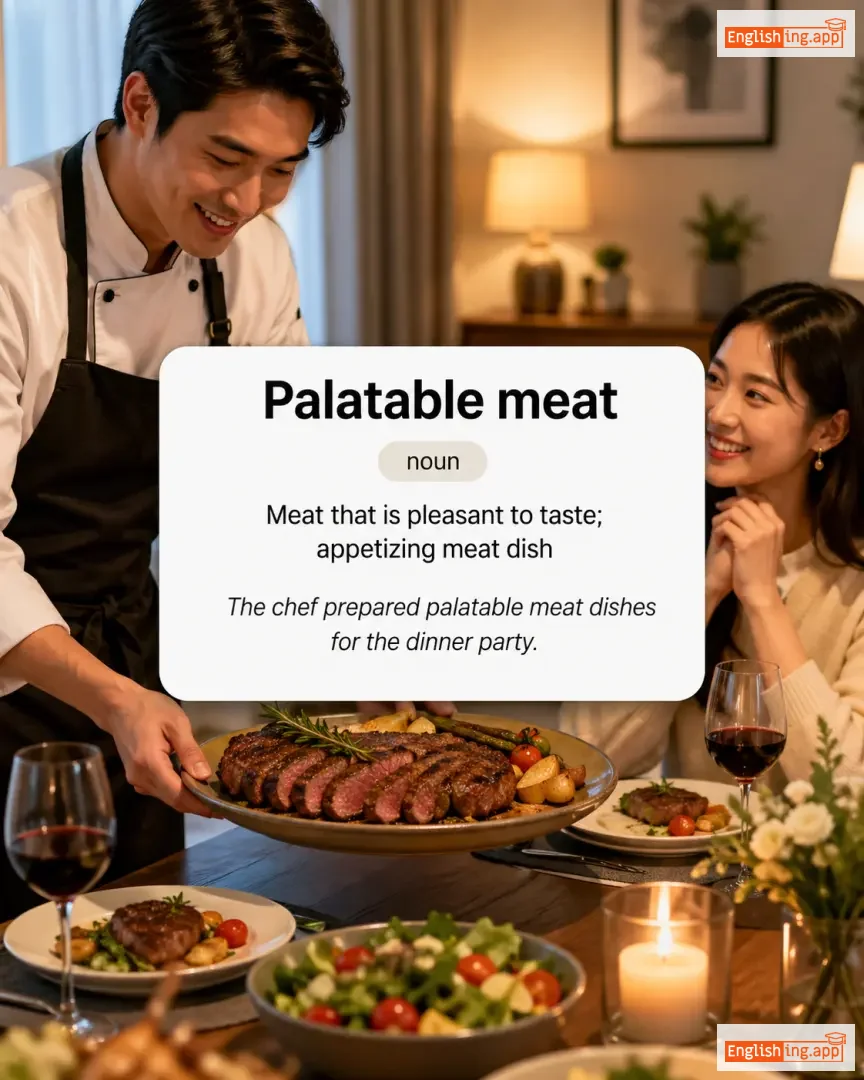
Palatable meat definition card — visual illustration of the meaning
noun
/ˈpæl.ə.tə.bəl miːt/
viande savoureuse (viande savoureuse)

Meat that is pleasant to taste; appetizing meat dish

"The chef prepared palatable meat dishes for the dinner party."

"Le chef a préparé des plats de viande savoureux pour la fête du dîner." (Le chef a préparé des plats de viande savoureux pour la fête du dîner.)
noun
/ˈpæl.ət/
palais (palais)

the roof of the mouth; a person's appreciation of taste and flavor

"She has a refined palate for fine wines."

"Elle a un palais raffiné pour les bons vins." (Elle a un palais raffiné pour les bons vins.)
adjective
/pəˈleɪ.ʃəl/
palatial (palatial)

resembling a palace in being spacious and splendid

"They stayed in a palatial hotel during their vacation."

"Ils ont séjourné dans un hôtel palais pendant leurs vacances." (Ils ont séjourné dans un hôtel palais pendant leurs vacances.)
noun
/pəˈlæv.ər/
discussion inutile / agitation (discussion inutile / agitation)

prolonged and idle discussion; fuss or unnecessary talk

"After much palaver, they finally agreed on the plan."

"Après beaucoup de discussion inutile, ils ont finalement accepté le plan." (Apres beaucoup de discussion inutile, ils ont finalement accepte le plan.)
👩‍🦰

Pale (pèl)

adjective
/peɪl/
pâle (pale)

having a light or dull color, especially when compared with something else

"She looked pale after the long illness."

"Elle avait l'air pâle après la longue maladie." (Elle avait l'air pale apres la longue maladie.)
noun
/ˌpeɪ.li.ɒnˈtɒl.ə.dʒi/
paléontologie (paleontologie)

the branch of science concerned with fossil animals and plants

"She decided to study paleontology at university."

"Elle a décidé d'étudier la paléontologie à l'université." (Elle a decide d'etudier la paleontologie a l'universite.)
adjective
/pælɛˈstɪnɪən/
palestinien (palestinien)

relating to Palestine or its people

"The Palestinian people have a rich cultural heritage."

"Le peuple palestinien a un riche héritage culturel." (Le peuple palestinien a un riche héritage culturel.)
noun
/ˈpælət/
palette (palette)

a thin board or surface on which an artist sets and mixes colors; also a range of colors used in art or design

"The artist mixed vibrant shades on her palette before starting the painting."

"L'artiste a mélangé des teintes vibrantes sur sa palette avant de commencer la peinture." (L'artiste a mélangé des teintes vibrantes sur sa palette avant de commencer la peinture.)
noun
/ˈpælɪmpsɛst/
palimpseste (palimpseste)

a manuscript or document that has been written over but still bears traces of earlier writing; something reused or altered but still retaining traces of its earlier form

"The ancient manuscript was a palimpsest, showing faint traces of previous texts beneath the new writing."

"Le manuscrit ancien était un palimpseste, montrant des traces subtiles de textes précédents sous la nouvelle écriture." (Le manuscrit ancien était un palimpseste, montrant des traces subtiles de textes précédents sous la nouvelle écriture.)
noun
/ˈpælɪˌnoʊd/
palinodie (palinodie)

a poem or statement in which the writer retracts something said in an earlier work

"The poet wrote a palinode to apologize for his earlier harsh words."

"Le poète a écrit une palinodie pour s'excuser de ses paroles sévères précédentes." (Le poete a ecrit une palinodie pour s'excuser de ses paroles severes precedentes.)
verb, noun
/pɔːl/
déclin, tissu sur un cercueil (declin, tissu sur un cercueil)

to lose strength or interest; to become dull or tiresome; also a cloth spread over a coffin

"The excitement of the festival began to pall after several days."

"L'excitation du festival a commencé à se faner après plusieurs jours." (L'excitation du festival a commence a se faner apres plusieurs jours.)
verb
/ˈpælieɪt/
atténuer (attenuer)

to make a disease, symptoms, or problem less severe without removing the cause

"The doctor prescribed medicine to palliate the patient's pain."

"Le médecin a prescrit des médicaments pour atténuer la douleur du patient." (Le médecin a prescrit des médicaments pour atténuer la douleur du patient.)
verb
/pɑːrs/
analyser grammaticalement (analyser grammaticalement)

to analyze a sentence or text grammatically or logically

"The software can parse large amounts of text data efficiently."

"Le logiciel peut analyser de grandes quantités de données textuelles de manière efficace." (Le logiciel peut analyser de grandes quantités de données textuelles de manière efficace.)
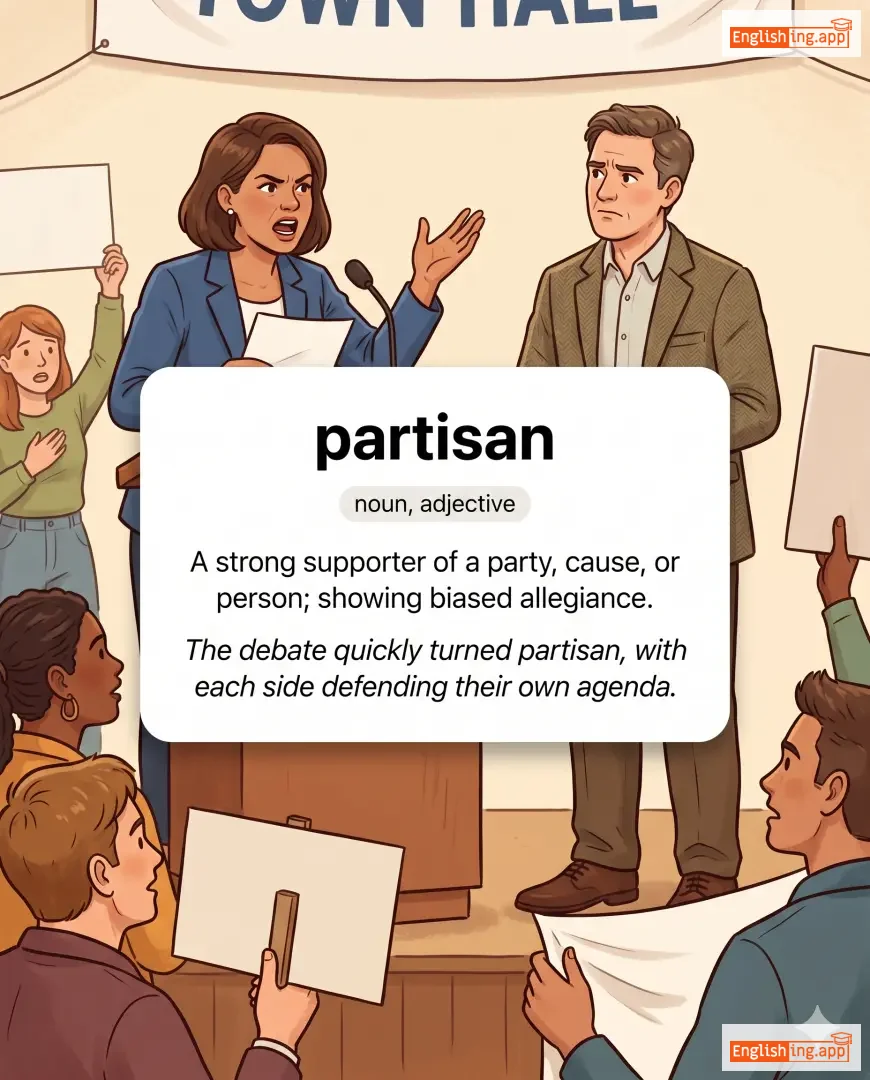
partisan definition card — visual illustration of the meaning
noun, adjective
/ˈpɑːrtɪzən/
partisan (partisan)

A strong supporter of a party, cause, or person; showing biased allegiance.

"The debate quickly turned partisan, with each side defending their own agenda."

"Le débat est rapidement devenu partisan, chaque côté défendant son propre agenda." (Le debat est rapidement devenu partisan, chaque coté defandant son propre agenda.)
adverb
/pɑːrˈtɪkjʊləli/
particulièrement (partikulyerma)

to a higher degree than is usual or expected

"She is particularly fond of Italian food."

"Elle est particulièrement friande de la cuisine italienne." (Elle est particulierement friande de la cuisine italienne.)
verb
/pərˈtɪkjələrˌaɪz/
détailler (detailler)

to mention or describe something in detail

"The witness was asked to particularize the events of that night."

"Le témoin a été demandé de détailler les événements de cette nuit." (Le temoin a ete demande de detailler les evenements de cette nuit.)
adjective
/pərˈtɪk.jʊ.lər/
particulier (particulier)

specific or special; distinct from others

"He is very particular about his diet."

"Il est très particulier à propos de son régime." (Il est très particulier à propos de son régime.)
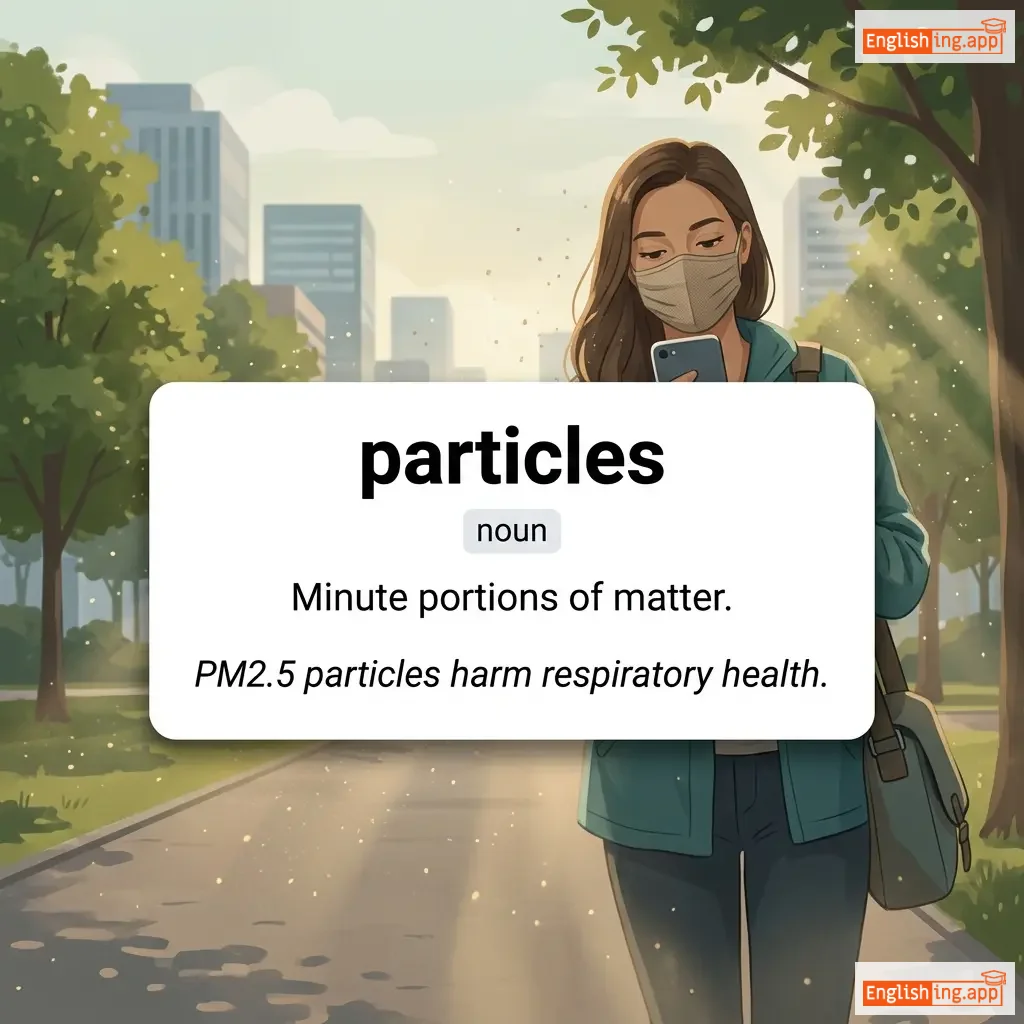
particles definition card — visual illustration of the meaning
noun
/ˈpɑː.tɪ.klz/
particules (particules)

Minute portions of matter.

"PM2.5 particles harm respiratory health."

"Les particules PM2.5 nuisent à la santé respiratoire." (Les particules PM2.5 nuisent à la santé respiratoire.)
noun
/ˈpɑːrtɪkəl/
particule (partikyl)

a very small piece or amount of something

"Dust particles floated in the air near the window."

"Les particules de poussière flottaient dans l'air près de la fenêtre." (Les particules de poussière flottaient dans l'air près de la fenêtre.)
noun
/pɑːrˌtɪsɪˈpeɪʃən/
participation (participation)

the action of taking part in something

"Her participation in the competition was commendable."

"Sa participation au concours était remarquable." (Sa participation au concours etait remarquable.)
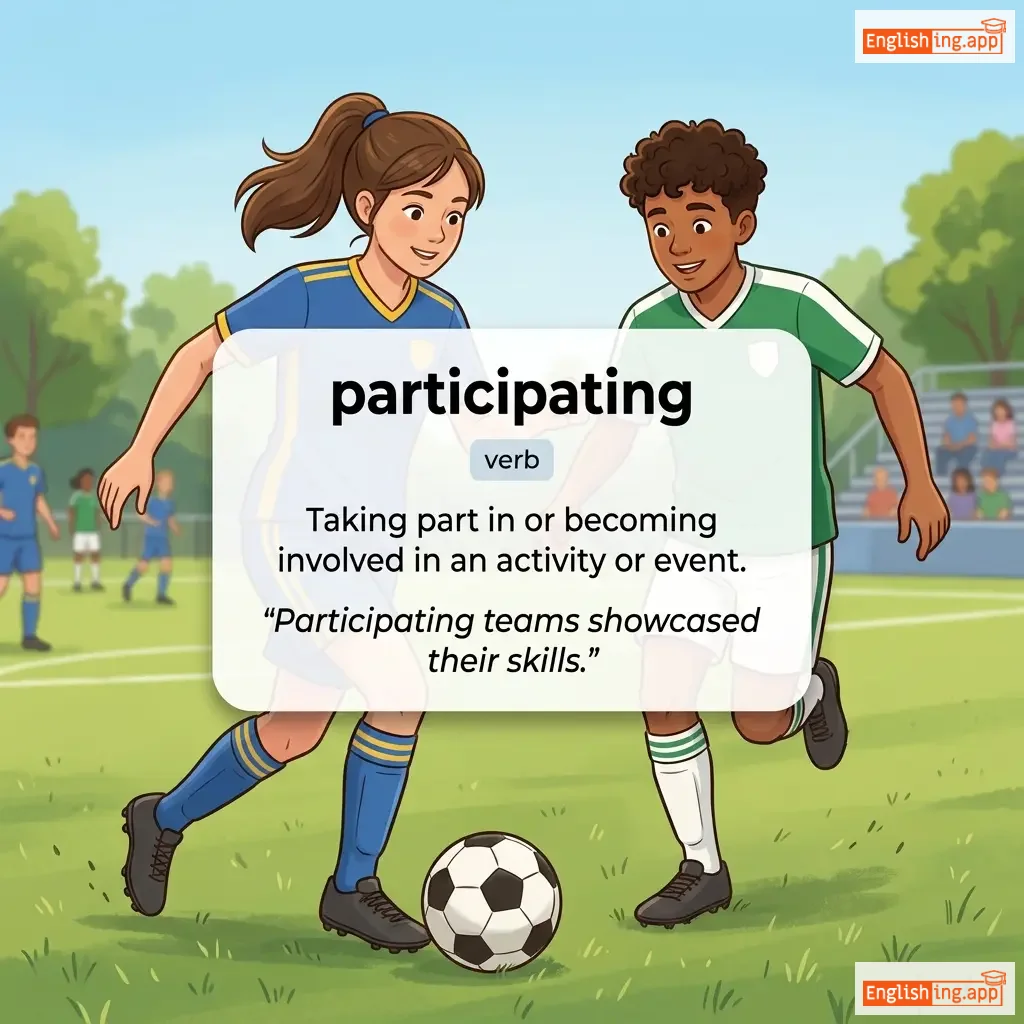
participating definition card — visual illustration of the meaning
verb
pɑːˈtɪs.ɪ.peɪ.tɪŋ
participer (participer)

Taking part in or becoming involved in an activity or event.

"Participating teams showcased their skills."

"Les équipes participantes ont montré leurs compétences." (Les équipes participantes ont montré leurs compétences.)
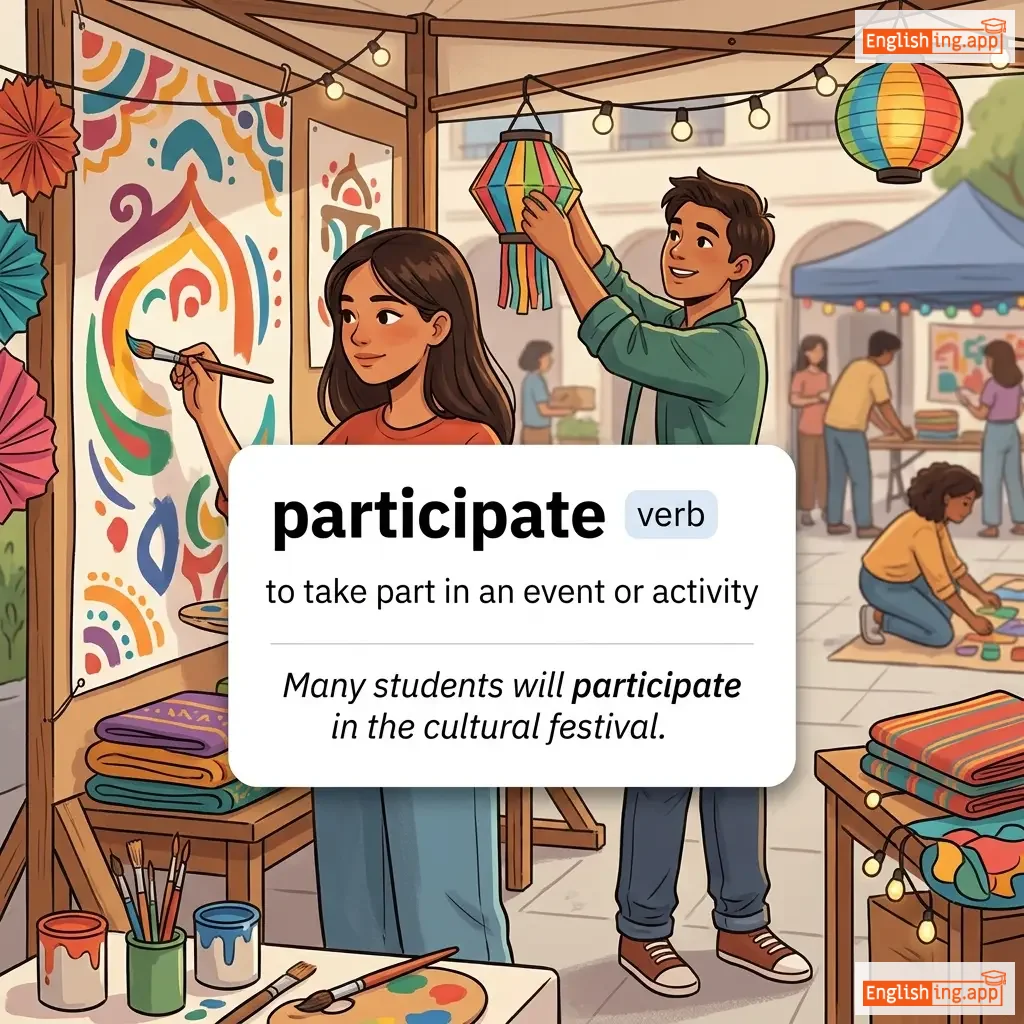
participate definition card — visual illustration of the meaning
verb
/pɑːrˈtɪsɪpeɪt/
participer (participer)

to take part in an event or activity

"Many students will participate in the cultural festival."

"De nombreux étudiants participeront au festival culturel." (De nombreux étudiants participeront au festival culturel.)
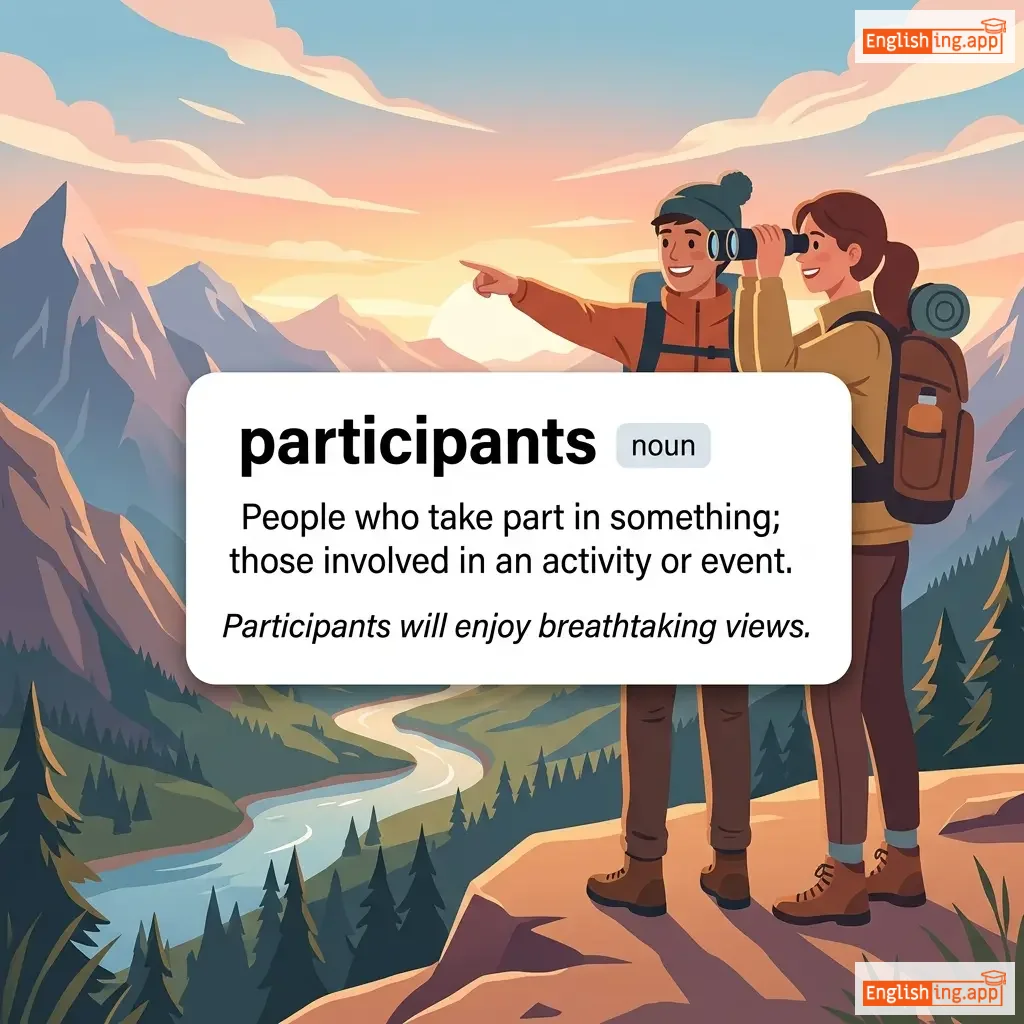
participants definition card — visual illustration of the meaning
noun
pɑːˈtɪs.ɪ.pənts
participants (participants)

People who take part in something; those involved in an activity or event.

"Participants will enjoy breathtaking views."

"Les participants profiteront des vues à couper le souffle." (Les participants profiteront des vues à couper le souffle.)
🧑‍🤝‍🧑

Participant (partisipant)

noun
/pɑːrˈtɪsɪpənt/
participant (participant)

a person who takes part in an event or activity

"Each participant received a certificate after the workshop."

"Chaque participant a reçu un certificat après l'atelier." (Chaque participant a reçu un certificat après l'atelier.)
adjective
/ˈpɑːrtəbl/
divisible (divisible)

capable of being divided or separated

"The estate was partible among the heirs."

"Le bien était divisible entre les héritiers." (Le bien était divisible entre les héritiers.)
adverb
/ˈpɑːrʃəli/
partiellement (partiellement)

to some extent but not completely

"The project was partially completed before the deadline."

"Le projet a été partiellement terminé avant la date limite." (Le projet a été partiellement terminé avant la date limite.)
noun
/ˌpɑːrʃiˈæləti/
partialité (partialite)

an unfair preference or bias toward one side or person

"The judge was criticized for showing partiality in the case."

"Le juge a été critiqué pour avoir montré de la partialité dans l'affaire." (Le juge a ete critique pour avoir montre de la partialite dans l'affaire.)
adjective
/ˈpɑːrʃəl/
partiel, biaisé (partiel, biasé)

existing only in part; biased toward one side

"The report gave a partial view of the situation."

"Le rapport a donné une vue partielle de la situation." (Le rapport a donné une vue partielle de la situation.)
adjective
/ˈpɑːt taɪm/
à temps partiel (a temps partiel)

working for only part of the usual working day or week

"She works part-time as a waitress."

"Elle travaille à temps partiel comme serveuse." (Elle travaille a temps partiel comme serveuse.)
noun
/pɑːrt/
partie (partie)

a piece or segment of something

"She gave me a part of her chocolate."

"Elle m'a donné une partie de son chocolat." (Elle m'a donné une partie de son chocolat.)
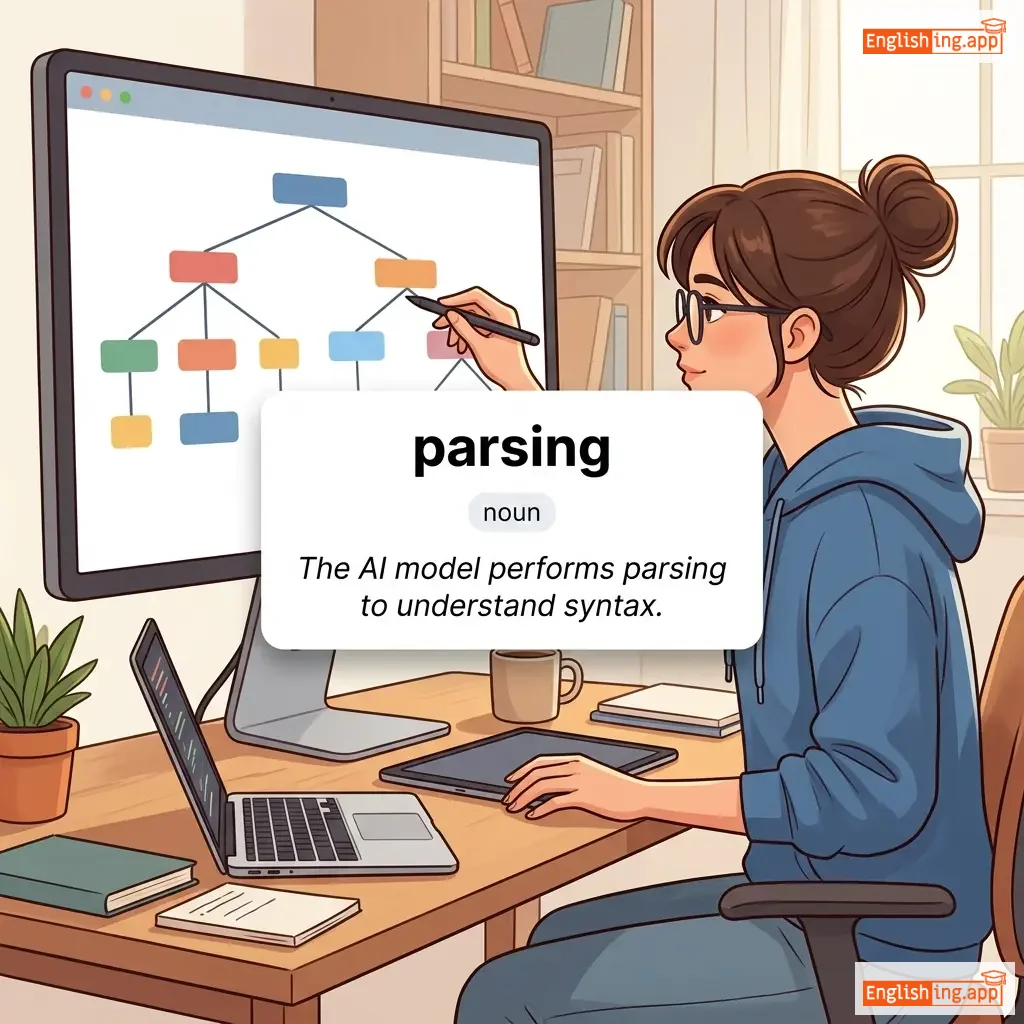
parsing definition card — visual illustration of the meaning
noun
ˈpɑː.sɪŋ
analyse de la structure de la phrase (parsing)

The process of analyzing sentence structure to understand grammatical relationships.

"The AI model performs parsing to understand syntax."

"Le modèle IA effectue l'analyse syntaxique pour comprendre la structure des phrases." (Le modèle IA effectue l'analyse syntaxique pour comprendre la structure des phrases.)
noun
/ˈpɑːrsɪmoʊni/
avarice (avarice)

extreme unwillingness to spend money or use resources

"His parsimony was evident in the way he avoided any unnecessary expenses."

"Son avarice était évidente dans la façon dont il évitait toute dépense inutile." (Son avarice etait evidente dans la facon dont il evitait toute depense inutile.)
adjective
/ˌpɑːrsɪˈmoʊniəs/
avare (avare)

unwilling to spend money or use resources; stingy

"The company was too parsimonious to invest in better equipment."

"L'entreprise était trop avare pour investir dans de meilleurs équipements." (L'entreprise était trop avare pour investir dans de meilleurs équipements.)
noun
/ˈpɑːrləns/
jargon (jargon)

a particular way of speaking or using words, common to a group

"In legal parlance, the term has a different meaning."

"En langage juridique, le terme a une signification différente." (En langage juridique, le terme a une signification differente.)
adjective
/ˈpɑːrləs/
périlleux (parlous)

Full of danger or risk; precarious.

"The company is in a parlous financial state."

"L'entreprise est dans un état financier précaire." (L'entreprise est dans un état financier précaire.)
noun
/ˈpɑːrlər/
salon, boutique (parlor)

A sitting room in a private house, or a shop providing specified services.

"They welcomed the guests into the front parlor."

"Ils ont accueilli les invités dans le salon." (Ils ont accueilli les invites dans le salon.)
adjective
/ˌpɑːrləˈmɛntri/
parlementaire (parlementaire)

relating to a parliament or its members; relating to a system of government with parliamentary authority

"The country follows a parliamentary form of government."

"Le pays suit une forme de gouvernement parlementaire." (Le pays suit une forme de gouvernement parlementaire)
noun
/ˈpɑːrləmənt/
parlement (parlement)

the highest legislative body in a country

"The bill was passed in parliament after a long debate."

"Le projet de loi a été adopté au parlement après un long débat." (Le projet de loi a ete adopte au parlement apres un long debat.)
noun, verb
/ˈpɑːrli/
parole (parole)

a discussion between opposing sides, especially to negotiate terms

"The generals met to parley over the terms of surrender."

"Les généraux se sont rencontrés pour discuter des conditions de la reddition." (Les generaux se sont rencontres pour discuter des conditions de la reddition.)
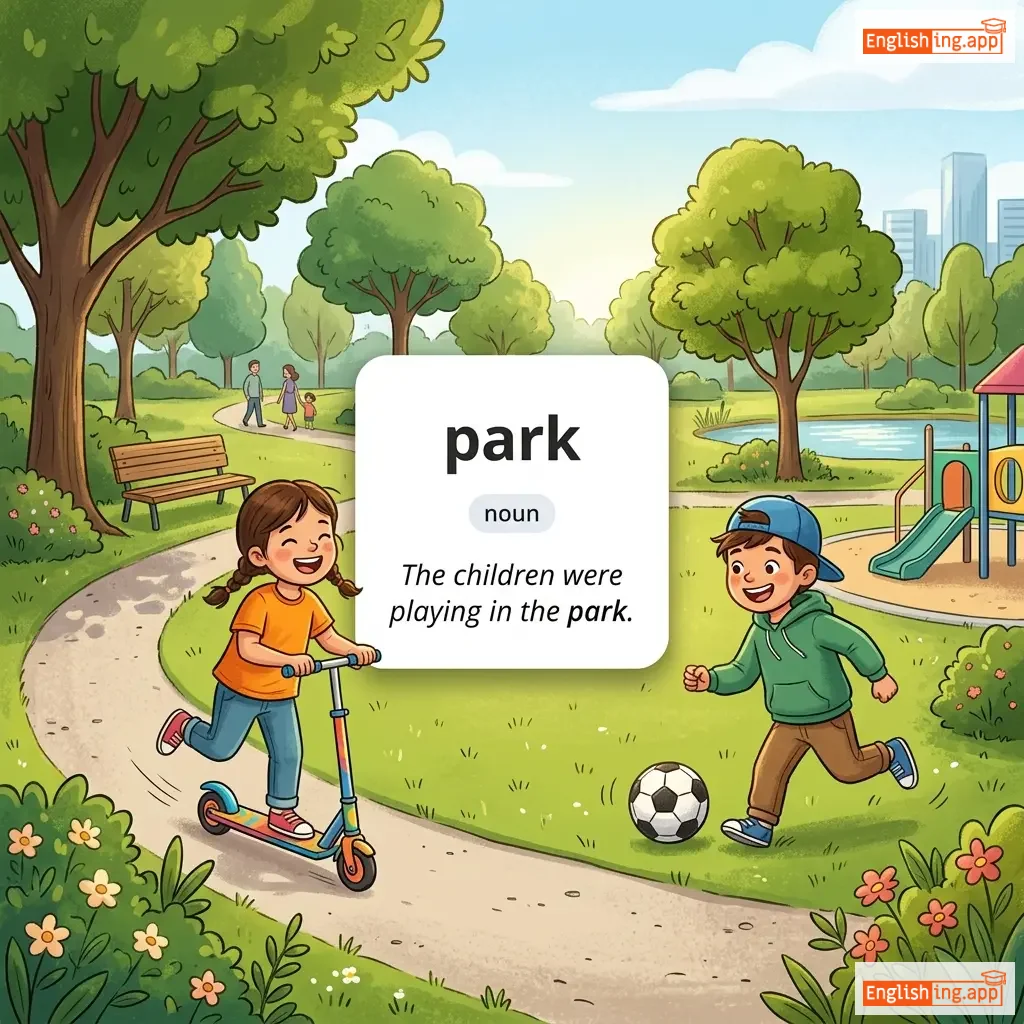
park definition card — visual illustration of the meaning
noun
/pɑːrk/
parc (parc)

a large public area of land with grass, trees, and paths, where people can walk or relax

"The children were playing in the park."

"Les enfants jouaient dans le parc." (Les enfants jouaient dans le parc.)
adjective
/pəˈrɪʒən/
relatif à Paris (relatif a paris)

relating to Paris or its people

"She wore a Parisian style dress at the party."

"Elle portait une robe de style parisien à la fête." (Elle portait une robe de style parisien à la fête.)
noun
/ˈpærɪti/
parité (parite)

the state or condition of being equal, especially in status or pay

"The campaign aims to achieve pay parity between men and women."

"La campagne vise à atteindre la parité salariale entre les hommes et les femmes." (La campagne vise à atteindre la parité salariale entre les hommes et les femmes.)
adjective
/pəˈroʊkiəl/
parroquial (parokial)

Having a limited or narrow outlook; relating to a parish.

"His parochial view prevented him from understanding global issues."

"Sa vision paroissiale l'a empêché de comprendre les problèmes mondiaux." (Sa vision paroissiale l'a empeche de comprendre les problemes mondiaux.)