Vocabulaires

Découvrez, apprenez et maîtrisez le vocabulaire anglais

🧑‍🤝‍🧑

Participant (partisipant)

noun
/pɑːrˈtɪsɪpənt/
participant (participant)

a person who takes part in an event or activity

"Each participant received a certificate after the workshop."

"Chaque participant a reçu un certificat après l'atelier." (Chaque participant a reçu un certificat après l'atelier.)
participants definition card — visual illustration of the meaning
noun
pɑːˈtɪs.ɪ.pənts
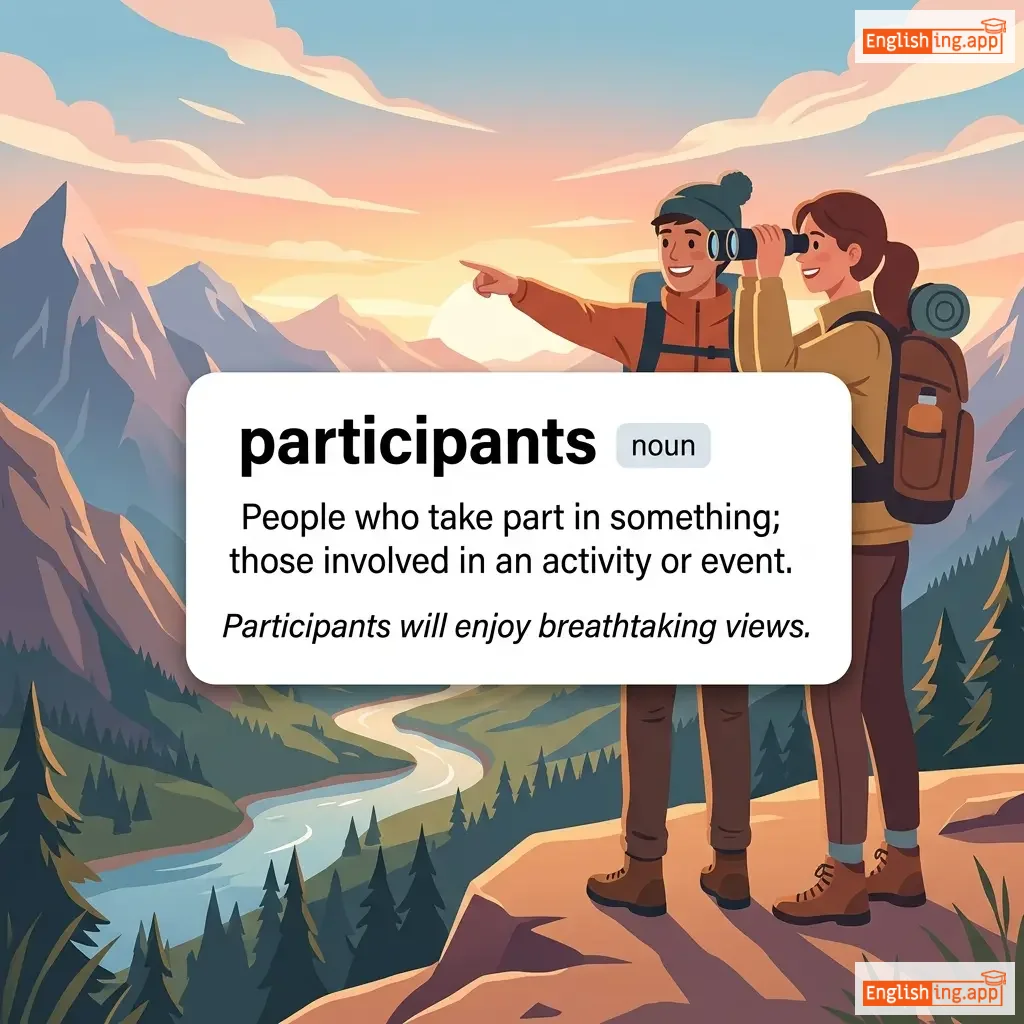
participants (participants)

People who take part in something; those involved in an activity or event.

"Participants will enjoy breathtaking views."

"Les participants profiteront des vues à couper le souffle." (Les participants profiteront des vues à couper le souffle.)
participate definition card — visual illustration of the meaning
verb
/pɑːrˈtɪsɪpeɪt/
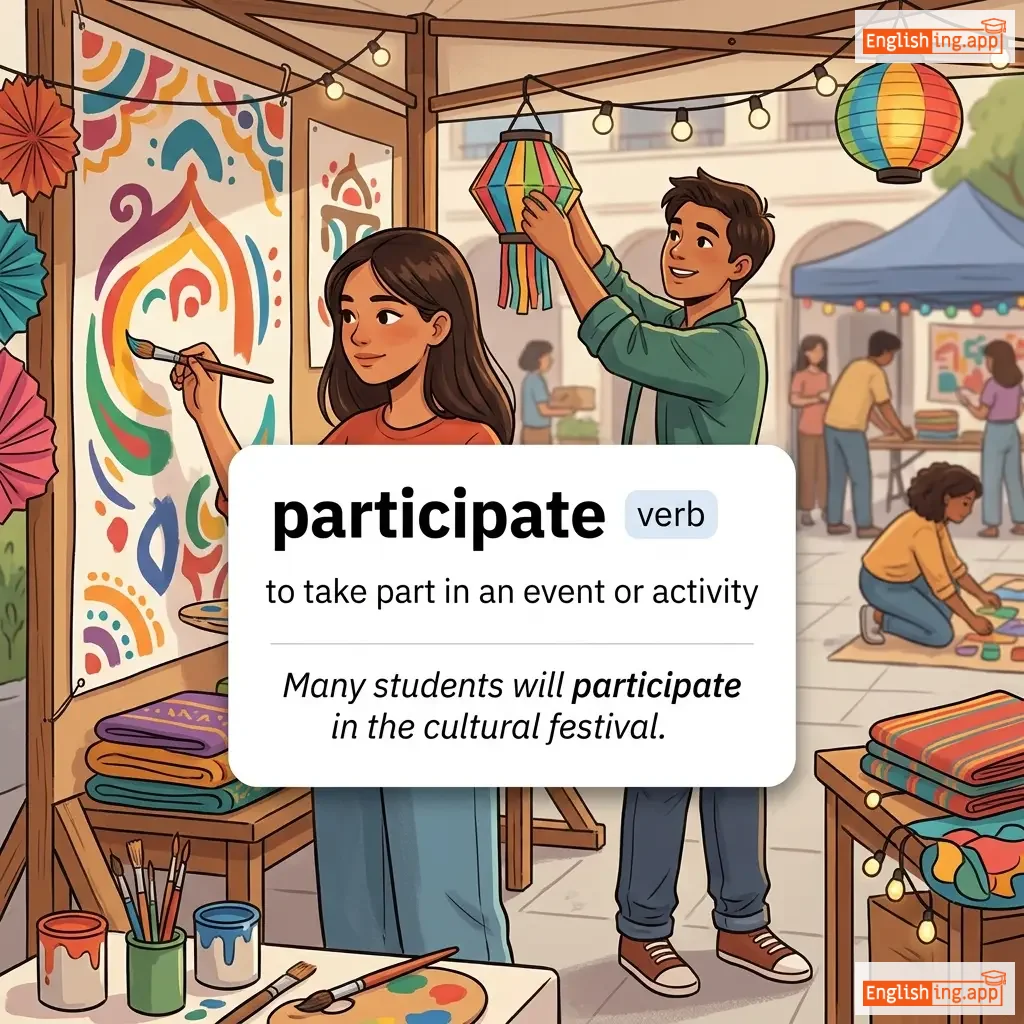
participer (participer)

to take part in an event or activity

"Many students will participate in the cultural festival."

"De nombreux étudiants participeront au festival culturel." (De nombreux étudiants participeront au festival culturel.)
participating definition card — visual illustration of the meaning
verb
pɑːˈtɪs.ɪ.peɪ.tɪŋ
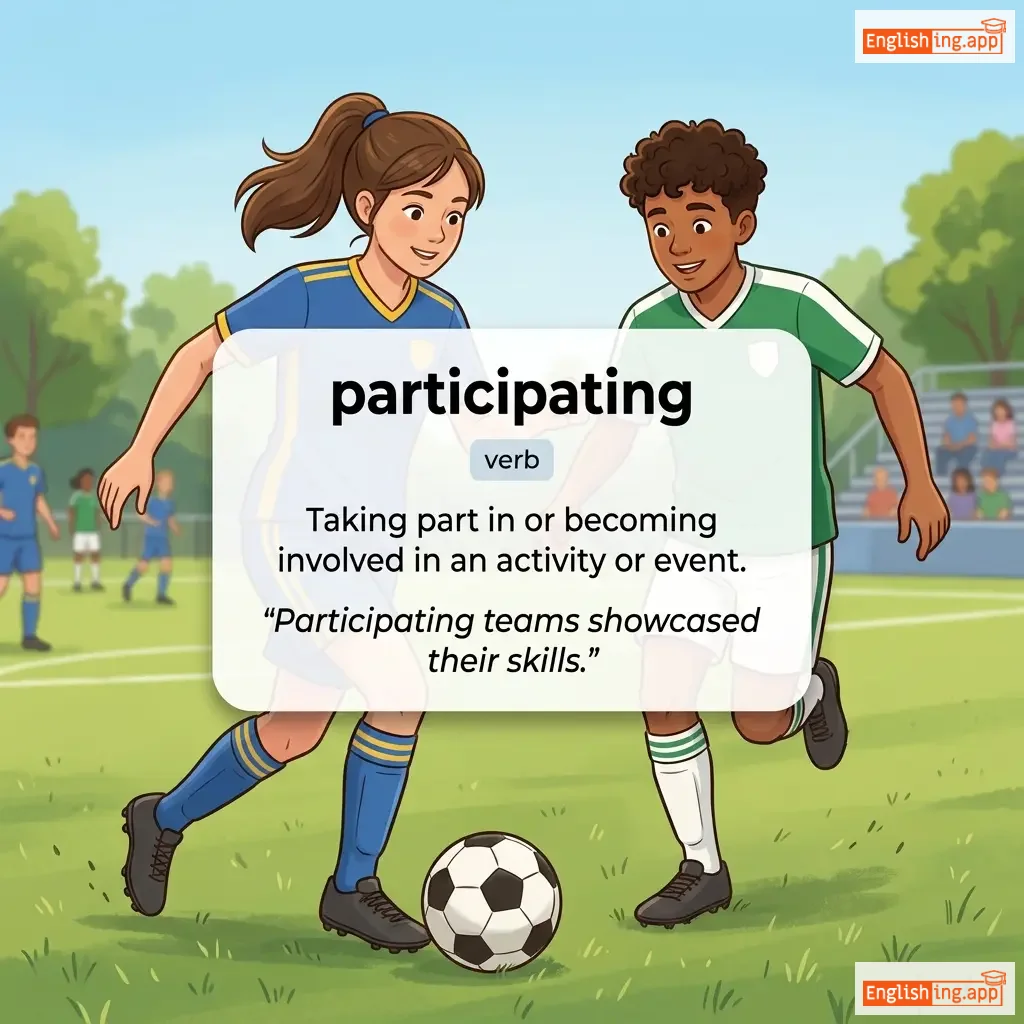
participer (participer)

Taking part in or becoming involved in an activity or event.

"Participating teams showcased their skills."

"Les équipes participantes ont montré leurs compétences." (Les équipes participantes ont montré leurs compétences.)
noun
/pɑːrˌtɪsɪˈpeɪʃən/
participation (participation)

the action of taking part in something

"Her participation in the competition was commendable."

"Sa participation au concours était remarquable." (Sa participation au concours etait remarquable.)
noun
/ˈpɑːrtɪkəl/
particule (partikyl)

a very small piece or amount of something

"Dust particles floated in the air near the window."

"Les particules de poussière flottaient dans l'air près de la fenêtre." (Les particules de poussière flottaient dans l'air près de la fenêtre.)
particles definition card — visual illustration of the meaning
noun
/ˈpɑː.tɪ.klz/
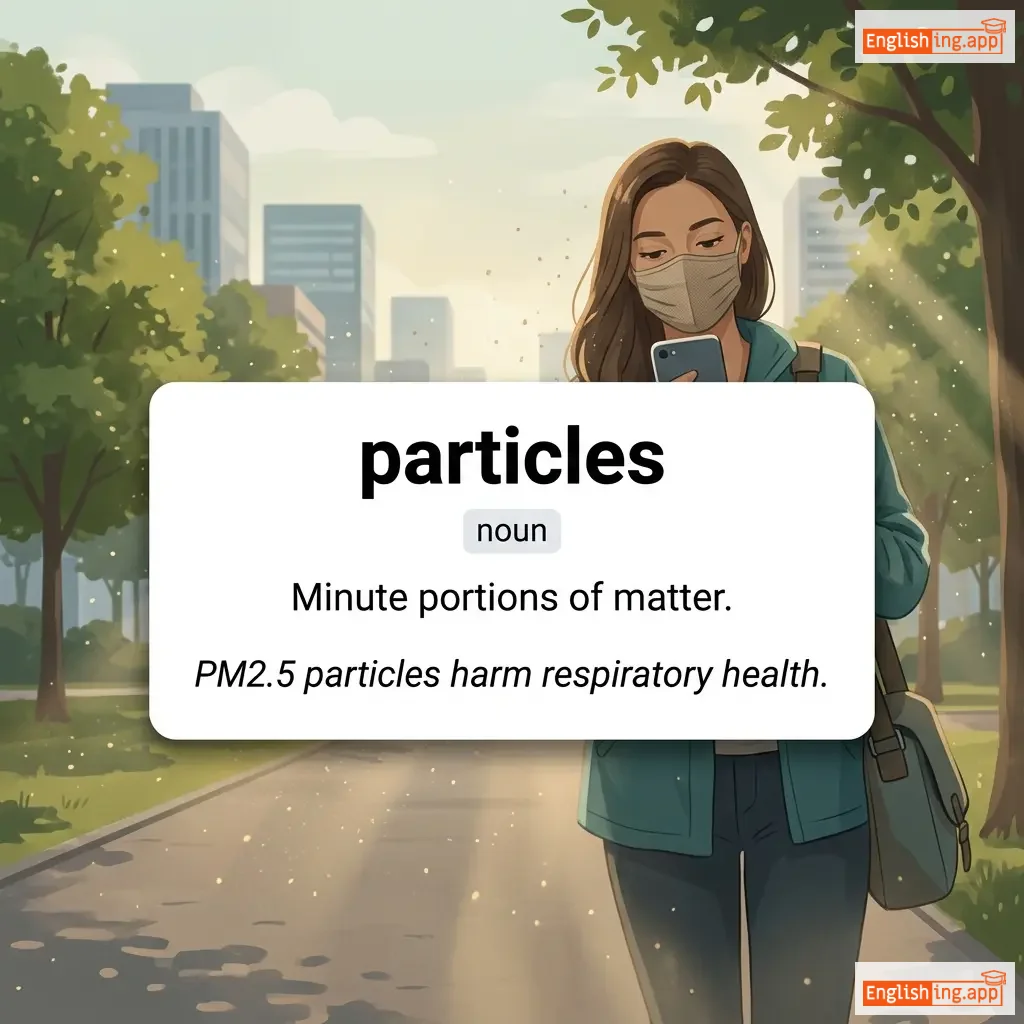
particules (particules)

Minute portions of matter.

"PM2.5 particles harm respiratory health."

"Les particules PM2.5 nuisent à la santé respiratoire." (Les particules PM2.5 nuisent à la santé respiratoire.)
adjective
/pərˈtɪk.jʊ.lər/
particulier (particulier)

specific or special; distinct from others

"He is very particular about his diet."

"Il est très particulier à propos de son régime." (Il est très particulier à propos de son régime.)
verb
/pərˈtɪkjələrˌaɪz/
détailler (detailler)

to mention or describe something in detail

"The witness was asked to particularize the events of that night."

"Le témoin a été demandé de détailler les événements de cette nuit." (Le temoin a ete demande de detailler les evenements de cette nuit.)
adverb
/pɑːrˈtɪkjʊləli/
particulièrement (partikulyerma)

to a higher degree than is usual or expected

"She is particularly fond of Italian food."

"Elle est particulièrement friande de la cuisine italienne." (Elle est particulierement friande de la cuisine italienne.)
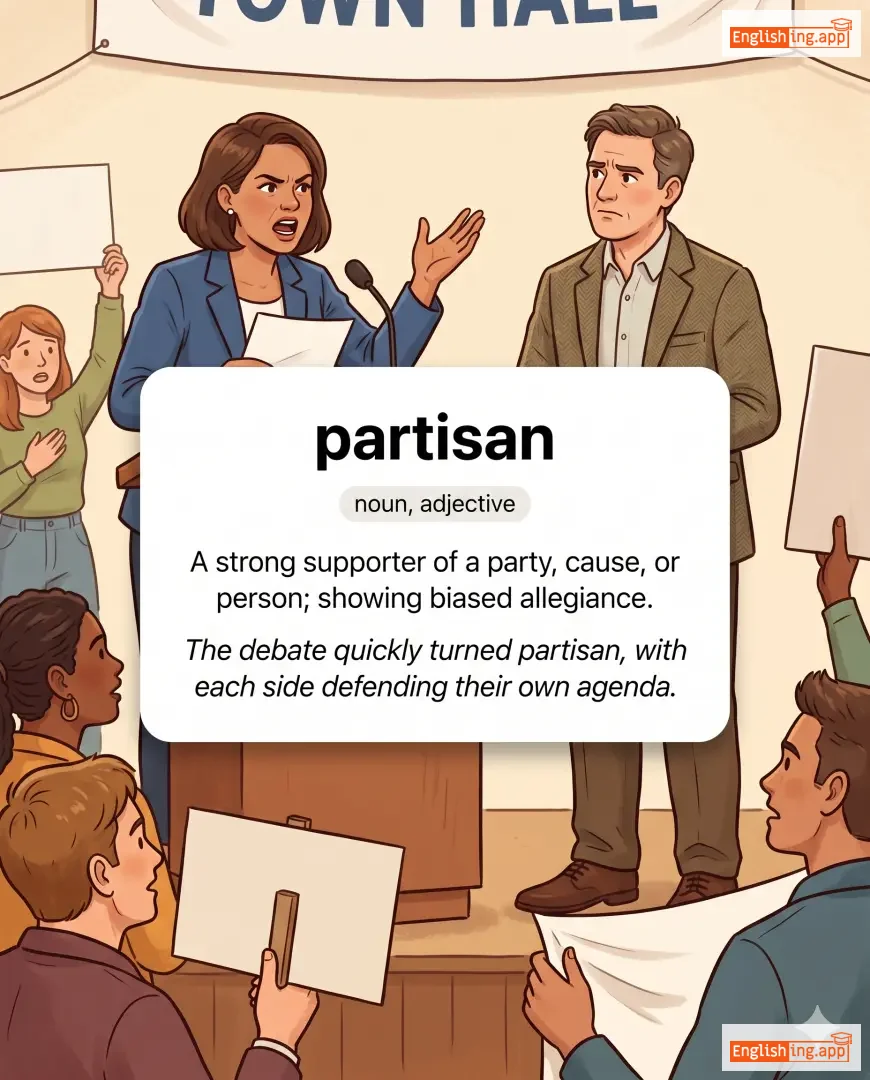
partisan definition card — visual illustration of the meaning
noun, adjective
/ˈpɑːrtɪzən/
partisan (partisan)

A strong supporter of a party, cause, or person; showing biased allegiance.

"The debate quickly turned partisan, with each side defending their own agenda."

"Le débat est rapidement devenu partisan, chaque côté défendant son propre agenda." (Le debat est rapidement devenu partisan, chaque coté defandant son propre agenda.)
noun
/ˈpɑːsˌpɔːrt/
passeport (passeport)

an official government document that identifies a person and allows them to travel internationally

"She renewed her passport before traveling abroad."

"Elle a renouvelé son passeport avant de voyager à l'étranger." (Elle a renouvelle son passeport avant de voyager a letranger)
noun
/ˌpæliˈeɪʃən/
soulagement (soulagement)

relief of symptoms without curing the underlying disease or problem

"Palliation is often the focus of care for terminally ill patients."

"Le soulagement est souvent l'objectif principal des soins pour les patients en phase terminale." (Le soulagement est souvent l'objectif principal des soins pour les patients en phase terminale.)
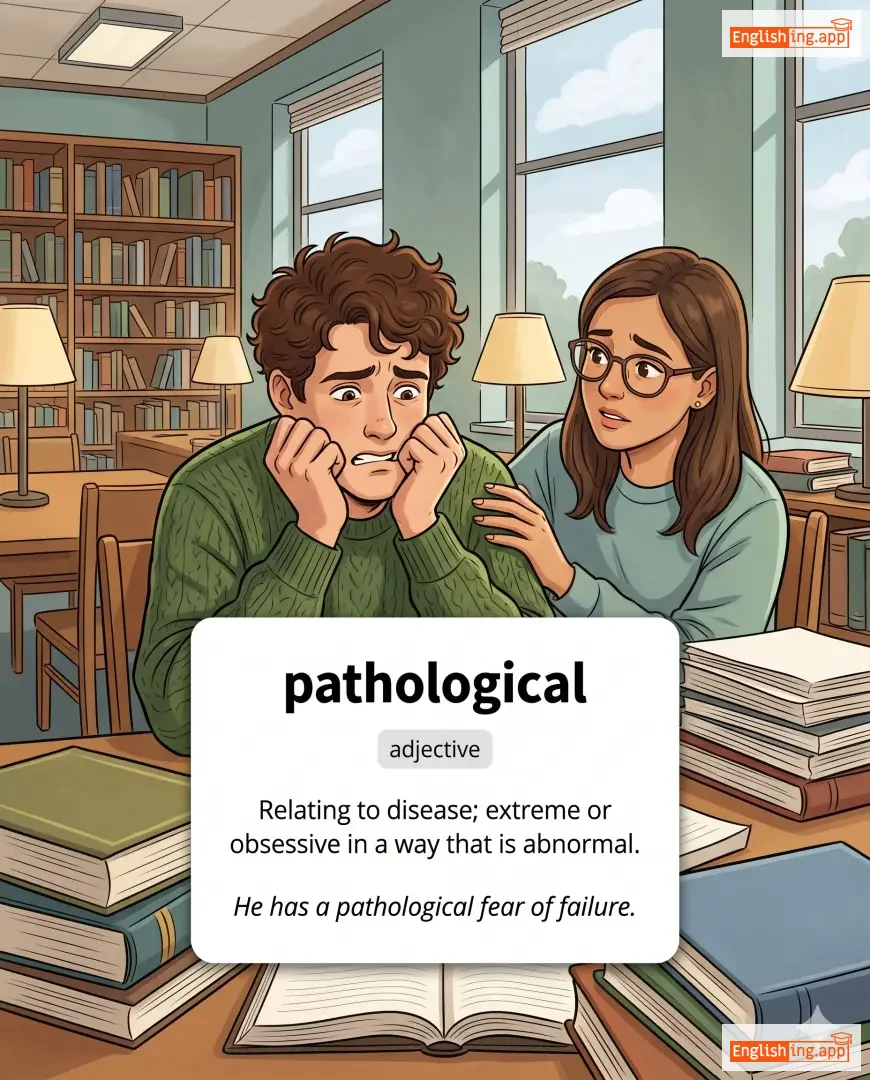
pathological definition card — visual illustration of the meaning
adjective
/ˌpæθəˈlɑːdʒɪkəl/
pathologique, maladif (pathologique, maladif)

Relating to disease; extreme or obsessive in a way that is abnormal.

"He has a pathological fear of failure."

"Il a une peur pathologique de l'échec." (Il a une peur pathologique de l'échec.)
adjective
/ˌpæθəˈdʒɛnɪk/
pathogène (pathogene)

Capable of causing disease.

"Some bacteria are harmless, while others are highly pathogenic."

"Certaines bactéries sont inoffensives, tandis que d'autres sont très pathogènes." (Certaines bactéries sont inoffensives, tandis que d'autres sont très pathogènes.)
adjective
/pəˈθɛtɪk/
pathétique (pathetique)

Causing feelings of pity, sadness, or sometimes contempt.

"The team’s performance in the match was simply pathetic."

"La performance de l'équipe dans le match était simplement pathétique." (La performance de l'equipe dans le match etait simplement pathétique.)
noun
/pæθ/
chemin (chemin)

a way or track laid down for walking or made by continual treading

"She walked along the narrow path through the forest."

"Elle a marché le long du chemin étroit à travers la forêt." (Elle a marché le long du chemin étroit à travers la forêt.)
noun
/pəˈtɜːrnəti/
paternité (paternite)

The state of being someone's father.

"He demanded a paternity test to confirm his relationship with the child."

"Il a exigé un test de paternité pour confirmer sa relation avec l'enfant." (Il a exigé un test de paternité pour confirmer sa relation avec l'enfant.)
adjective
/pəˈtɜːrnəl/
paternel (paternel)

Relating to or characteristic of a father.

"He took a paternal interest in the boy’s education."

"Il a pris un intérêt paternel dans l'éducation du garçon." (Il a pris un intérêt paternel dans l'éducation du garçon.)
noun, verb, adjective
/ˈpeɪtənt/ or /ˈpætənt/
brevet (brevet)

a government license granting exclusive rights to an inventor; also to obtain such rights

"He patented his new invention to protect it from being copied."

"Il a breveté sa nouvelle invention pour la protéger contre la copie." (Il a breveté sa nouvelle invention pour la protéger contre la copie.)
noun
/pætʃ/
patch (patch)

a piece of cloth or material used to cover or mend a hole or a tear

"He put a patch on his jeans to cover the tear."

"Il a mis un patch sur son jean pour couvrir le trou." (Il a mis un patch sur son jean pour couvrir le trou.)
verb
/pæt/
tapoter (pat)

to touch someone or something gently, often to show affection or approval

"She gently patted the dog on its head."

"Elle a tapoté doucement le chien sur la tête." (Elle a tapote doucement le chien sur la tete.)
noun
/ˈpeɪstri/
pâtisserie (patisserie)

a baked food product made from flour, fat, and water, often sweet or savory

"I bought a box of fresh pastries for breakfast."

"J'ai acheté une boîte de pâtisseries fraîches pour le petit déjeuner." (J'ai acheté une boîte de pâtisseries fraîches pour le petit déjeuner.)
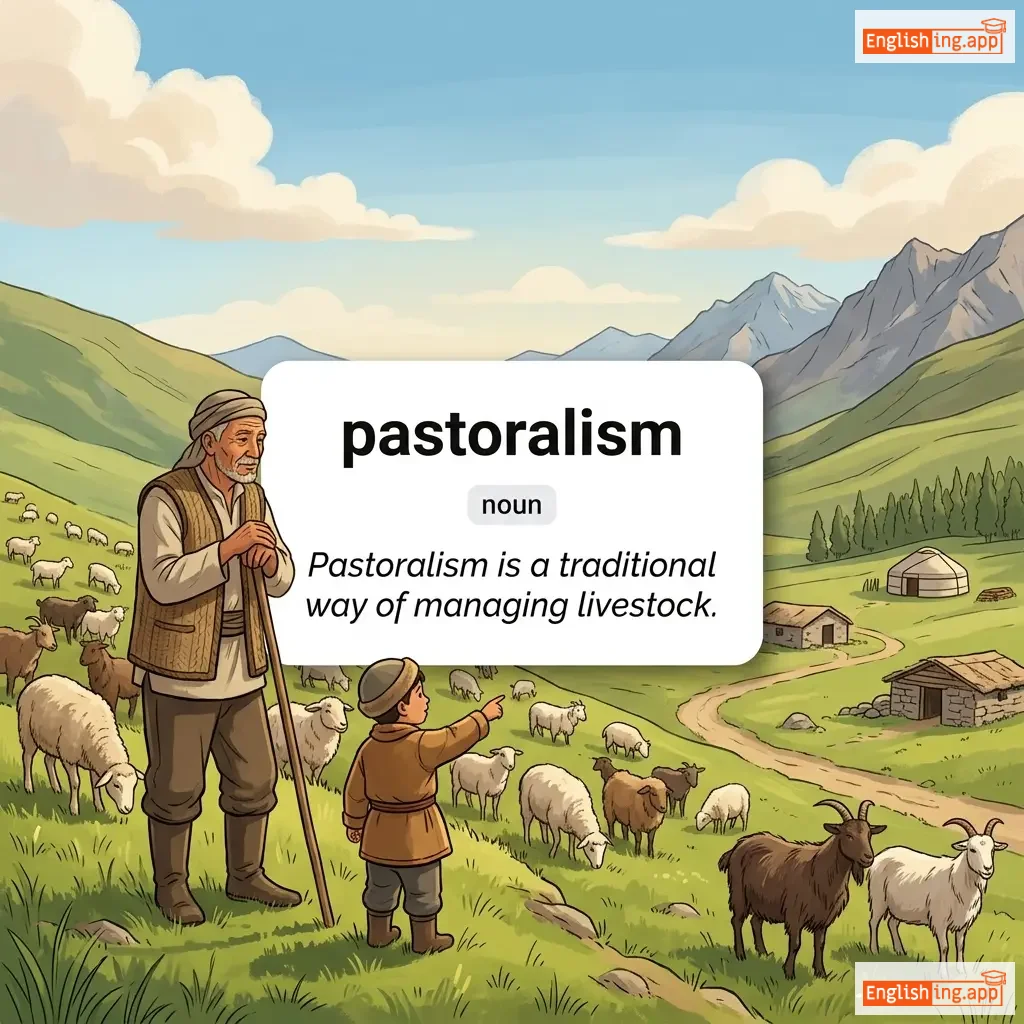
pastoralism definition card — visual illustration of the meaning
noun
ˈpɑː.stər.ə.lɪ.zəm
pastoralisme, système de pâturage basé sur l'herbe (pastoralisme, système de pâturage basé sur l'herbe)

A form of animal husbandry where domesticated animals are released onto large vegetated outdoor lands for grazing.

"Pastoralism is a traditional way of managing livestock."

"Le pastoralisme est une manière traditionnelle de gérer le bétail." (Le pastoralisme est une manière traditionnelle de gérer le bétail.)
adjective, noun
/ˈpæstərəl/
rural, lié aux bergers (rural, lie aux bergers)

relating to the countryside, shepherds, or rural life; also relating to spiritual guidance by a pastor

"The painting had a calm pastoral scene with sheep grazing."

"La peinture présentait une scène pastorale calme avec des moutons broutant." (La peinture presentait une scene pastorale calme avec des moutons broutant.)
noun
/ˈpæstər/
pasteur (pasteur)

a minister in charge of a Christian church or congregation

"The pastor delivered a heartfelt sermon on compassion."

"Le pasteur a prononcé un sermon plein de compassion." (Le pasteur a prononcé un sermon plein de compassion.)
noun
/ˈpæs.taɪm/
passe-temps (passe-temps)

an activity done regularly for enjoyment; a hobby or recreational activity

"Reading books is her favorite pastime during weekends."

"Lire des livres est son passe-temps préféré pendant les week-ends." (Lire des livres est son passe-temps préféré pendant les week-ends.)
noun
/pæˈstiːʃ/
pastiche (pastiche)

a work of art, literature, or music that imitates the style of another artist, period, or genre

"The film was a clever pastiche of 1950s detective movies."

"Le film était un habile pastiche des films policiers des années 1950." (Le film était un habile pastiche des films policiers des années 1950.)
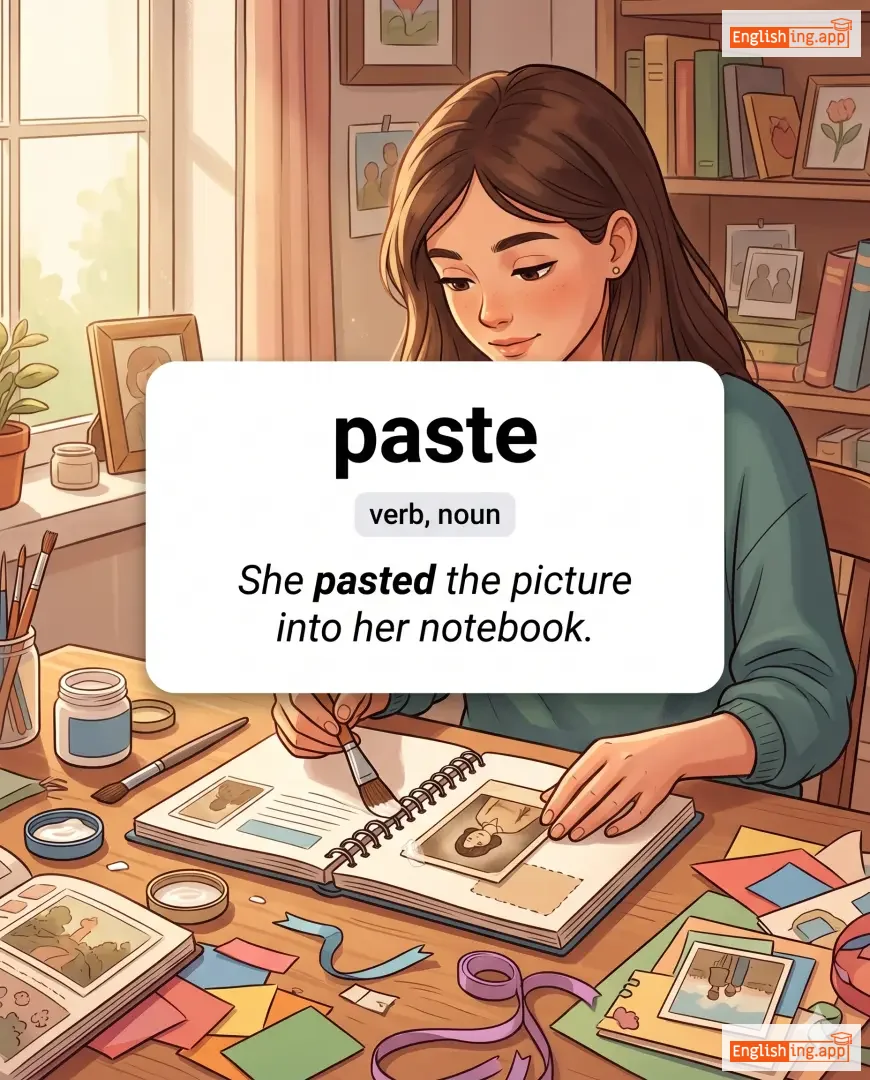
paste definition card — visual illustration of the meaning
verb, noun
/peɪst/
coller (coller)

to stick or attach something using a soft, moist substance; also a thick, soft, moist substance itself

"She pasted the picture into her notebook."

"Elle a collé la photo dans son carnet." (Elle a collé la photo dans son carnet.)
noun
/ˈpæstə/
pâtes (pates)

an Italian food made from flour and water, typically shaped into noodles or sheets

"We had creamy pasta for dinner last night."

"Nous avons mangé des pâtes crémeuses pour le dîner hier soir." (Nous avons mange des pates cremeuses pour le diner hier soir.)
noun/adjective/preposition
/pɑːst/
passé (passe)

the time before the present; gone by in time

"He often thinks about his past mistakes."

"Il pense souvent à ses erreurs passées." (Il pense souvent à ses erreurs passées.)
noun
/ˈpɑːswɜːd/
mot de passe (mot de passe)

a secret word or phrase used to gain access to something

"Make sure your password is strong and unique."

"Assurez-vous que votre mot de passe est fort et unique." (Assurez-vous que votre mot de passe est fort et unique.)
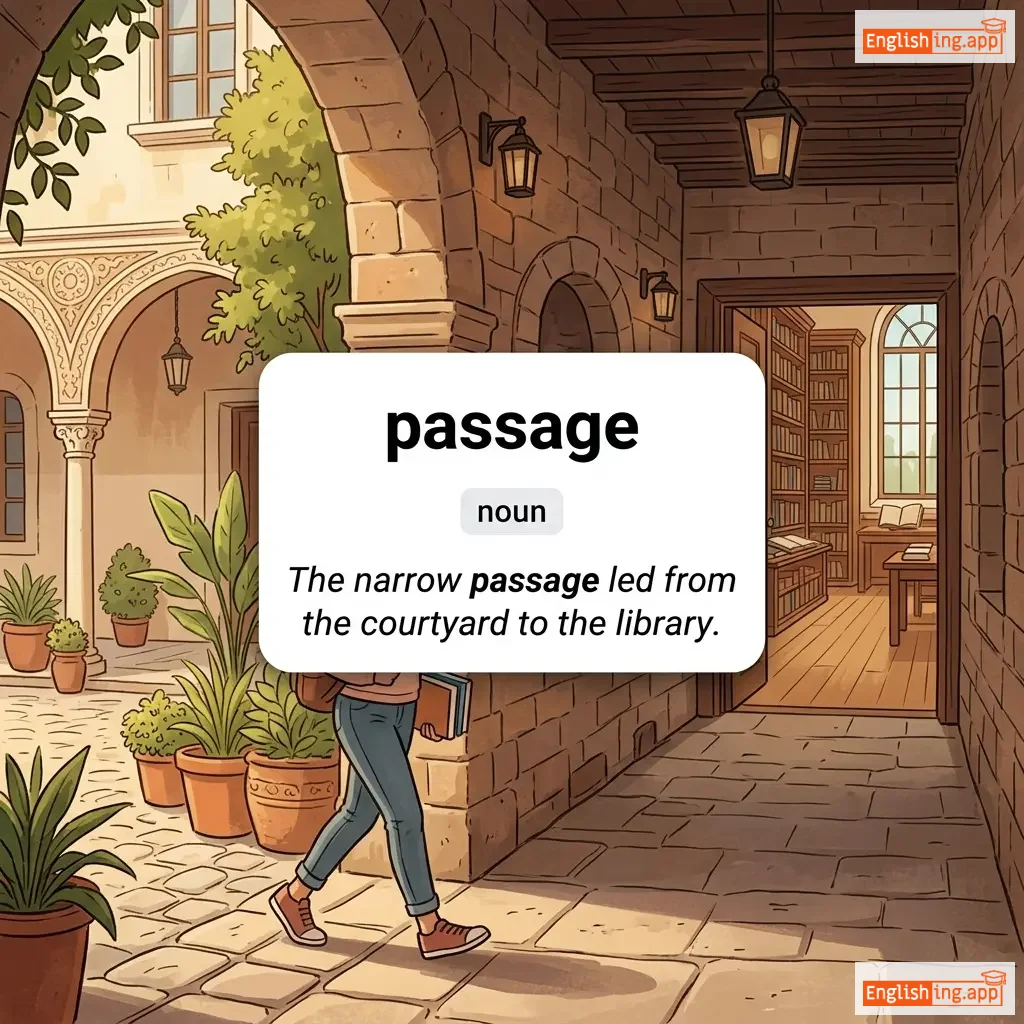
passage definition card — visual illustration of the meaning
noun
/ˈpæsɪdʒ/
passage/voie étroite; extrait/citation; processus de transition d'un état ou lieu à un autre (passage/voie étroite; extrait/citation; processus de transition d'un état ou lieu à un autre)

a narrow way through or between; a section of text or music; the process of moving from one state or place to another

"The narrow passage led from the courtyard to the library."

"Le passage étroit a mené de la cour à la bibliothèque." (Le passage étroit a mené de la cour à la bibliothèque.)
adverb
/ˈpɑːrtli/
partiellement (partiellement)

to some extent but not completely

"The project was partly successful, but more work is needed."

"Le projet a été partiellement réussi, mais plus de travail est nécessaire." (Le projet a été partiellement réussi, mais plus de travail est nécessaire.)
partner definition card — visual illustration of the meaning
noun
/ˈpɑːtnər/
partenaire (partenaire)

a person who shares or is associated with another in some action or endeavor

"She is my business partner in the new venture."

"Elle est ma partenaire commerciale dans cette nouvelle aventure." (Elle est ma partenaire commerciale dans cette nouvelle aventure.)
partnership definition card — visual illustration of the meaning
noun
/ˈpɑːtnəʃɪp/
partenariat (partenariat)

the state of being a partner or a group of partners

"Our partnership has helped both companies grow."

"Notre partenariat a aidé les deux entreprises à se développer." (Notre partenariat a aide les deux entreprises a se developper.)
noun
/ˌpɑːrtjʊˈrɪʃən/
accouchement (accouchement)

The act of giving birth; childbirth.

"The doctor explained the stages of parturition to the students."

"Le médecin a expliqué les étapes de l'accouchement aux étudiants." (Le medecin a explique les etapes de l'accouchement aux etudiants.)
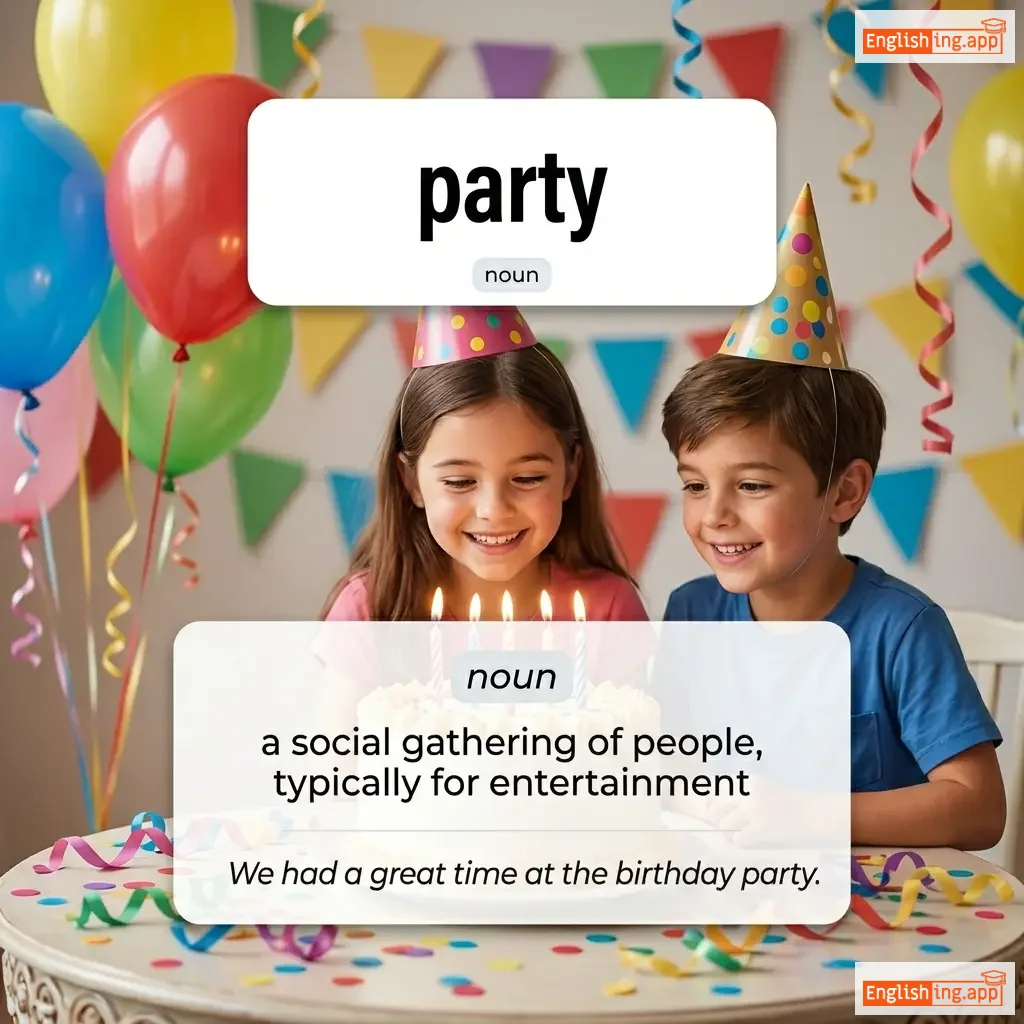
party definition card — visual illustration of the meaning
noun
/ˈpɑːti/
fête (fete)

a social gathering of people, typically for entertainment

"We had a great time at the birthday party."

"Nous avons passé un super moment à la fête d'anniversaire." (Nous avons passe un super moment a la fete d'anniversaire.)
noun
/ˈpɑːrvənuː/
nouveau riche (nouveau riche)

A person who has recently gained wealth or influence but is not yet accepted socially.

"He was seen as a parvenu who lacked refinement despite his riches."

"Il a été vu comme un parvenu qui manquait de raffinement malgré sa richesse." (Il a été vu comme un parvenu qui manquait de raffinement malgré sa richesse.)
🏃‍♂️

pass (passe)

verb
/pæs/
passer (passer)

to move past or beyond something

"He passed the test with flying colors."

"Il a réussi l'examen avec brio." (Il a reussi l'examen avec brio.)
verb (phrasal)
/ˈpæs ˌɔːf/
présenter quelque chose de faux comme réel; faire semblant (présenter quelque chose de faux comme réel; faire semblant)

to present something or someone falsely as something else; to pretend or deceive

"He tried to pass off the fake watch as a luxury brand."

"Il a essayé de faire passer la montre contrefaite pour une marque de luxe." (Il a essayé de faire passer la montre contrefaite pour une marque de luxe.)
adjective
/ˈpæs.ə.bəl/
passable (passable)

good enough to be accepted, though not excellent

"The road is barely passable after the storm."

"La route est à peine passable après la tempête." (La route est à peine passable après la tempête.)
noun
/ˈpæsɪŋ/
passage, décès (passage, décès)

the act of moving past something or the end of someone's life

"The passing of the leader was a great loss for the nation."

"Le passage du leader a été une grande perte pour la nation." (Le passage du leader a été une grande perte pour la nation.)
adjective
/ˈpæsɪv/
passif; (grammaire) voix passive (passif; (grammaire) voix passive)

not actively responding or participating; in grammar, denoting the voice in which the subject undergoes the action

"Instead of taking charge, he remained passive during the meeting."

"Au lieu de prendre les rênes, il est resté passif lors de la réunion." (Au lieu de prendre les rênes, il est resté passif lors de la réunion.)
adjective
/ˈpæʃənət/
passionné (passionne)

showing or caused by strong feelings or a strong belief

"He is passionate about environmental conservation."

"Il est passionné par la conservation de l'environnement." (Il est passionne par la conservation de l'environnement.)
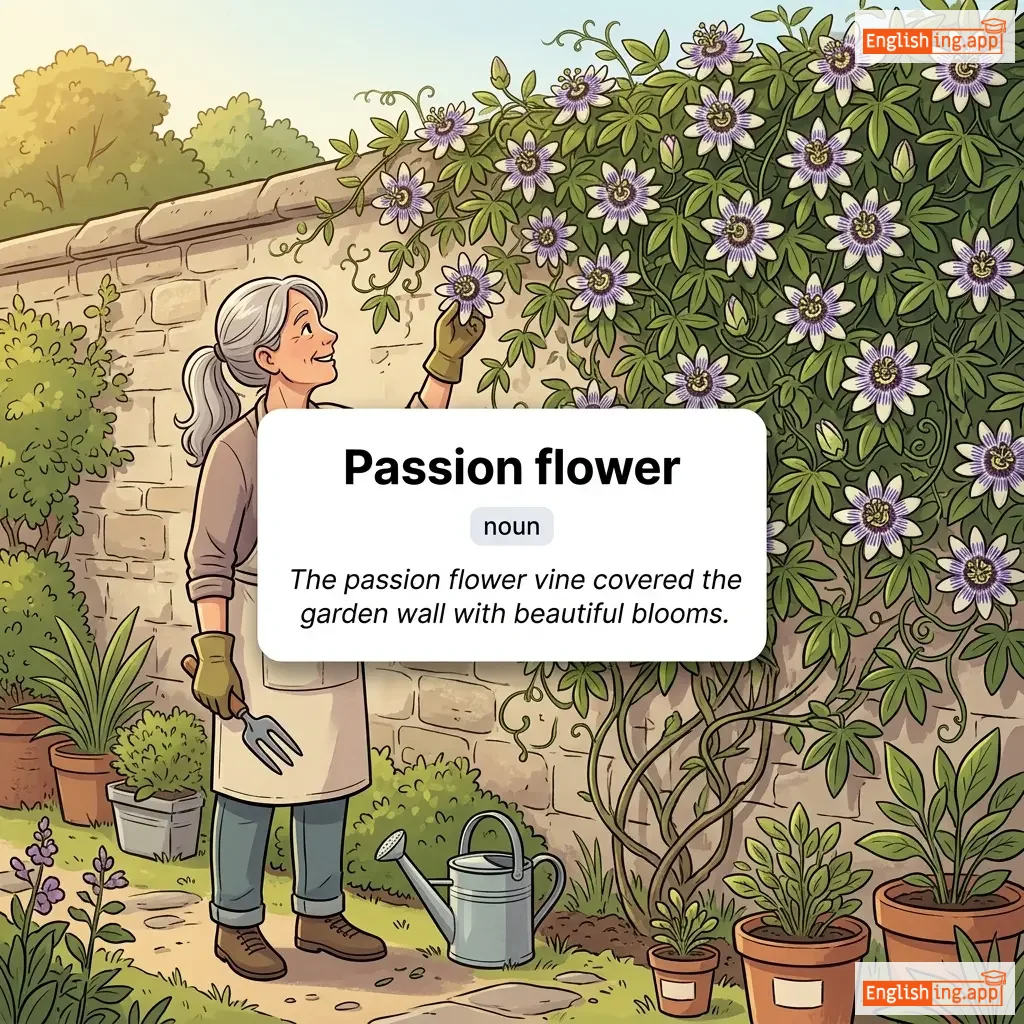
Passion flower definition card — visual illustration of the meaning
noun
/ˈpæʃ.ən ˌflaʊ.ər/
fleur de la passion (fleur de la passion)

A climbing plant with intricate, colorful flowers; also refers to royal poinciana tree with red-orange blooms

"The passion flower vine covered the garden wall with beautiful blooms."

"La vigne de la fleur de la passion a couvert le mur du jardin avec de magnifiques fleurs." (la vigne de la fleur de la passion a couvert le mur du jardin avec de magnifiques fleurs.)
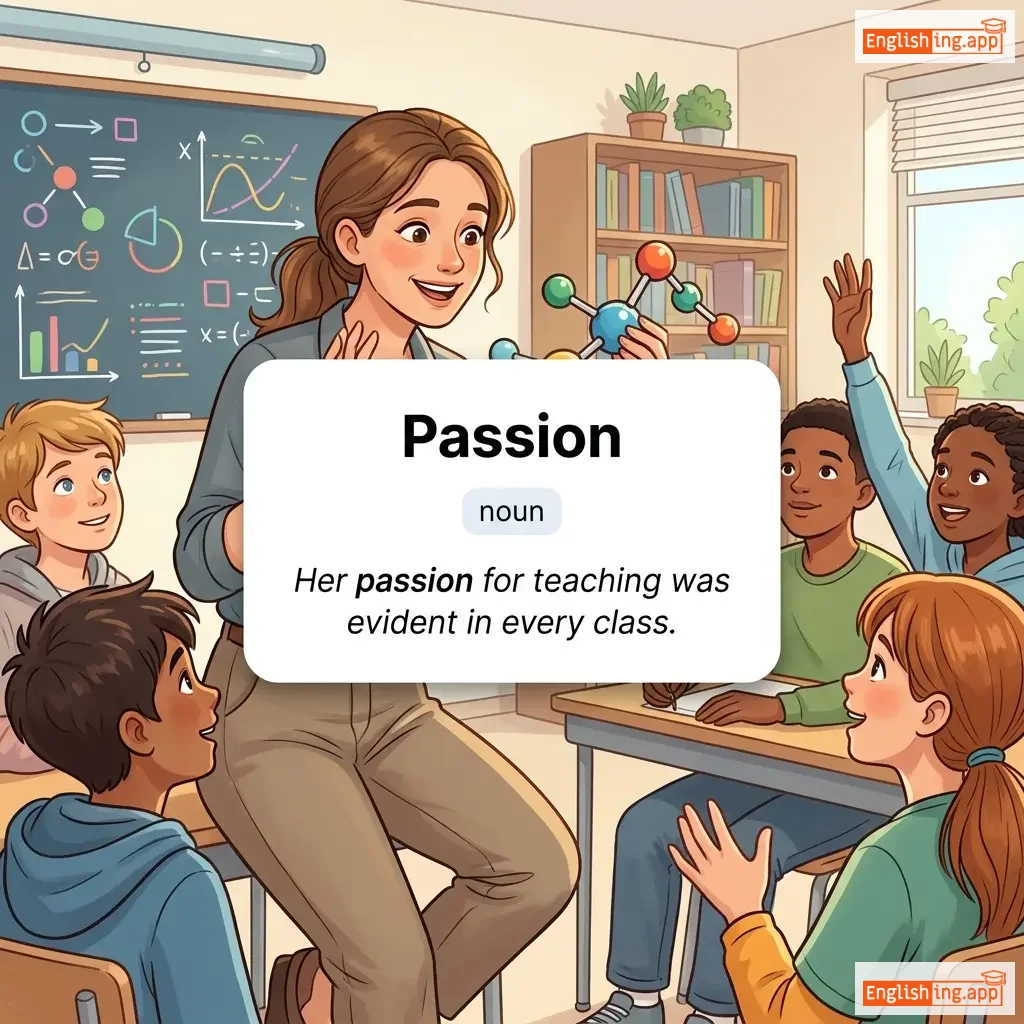
Passion definition card — visual illustration of the meaning
noun
/ˈpæʃ.ən/
passion (passion)

a strong feeling of enthusiasm or excitement for something or about doing something

"Her passion for teaching was evident in every class."

"Sa passion pour l'enseignement était évidente dans chaque classe." (Sa passion pour l'enseignement était évidente dans chaque classe.)
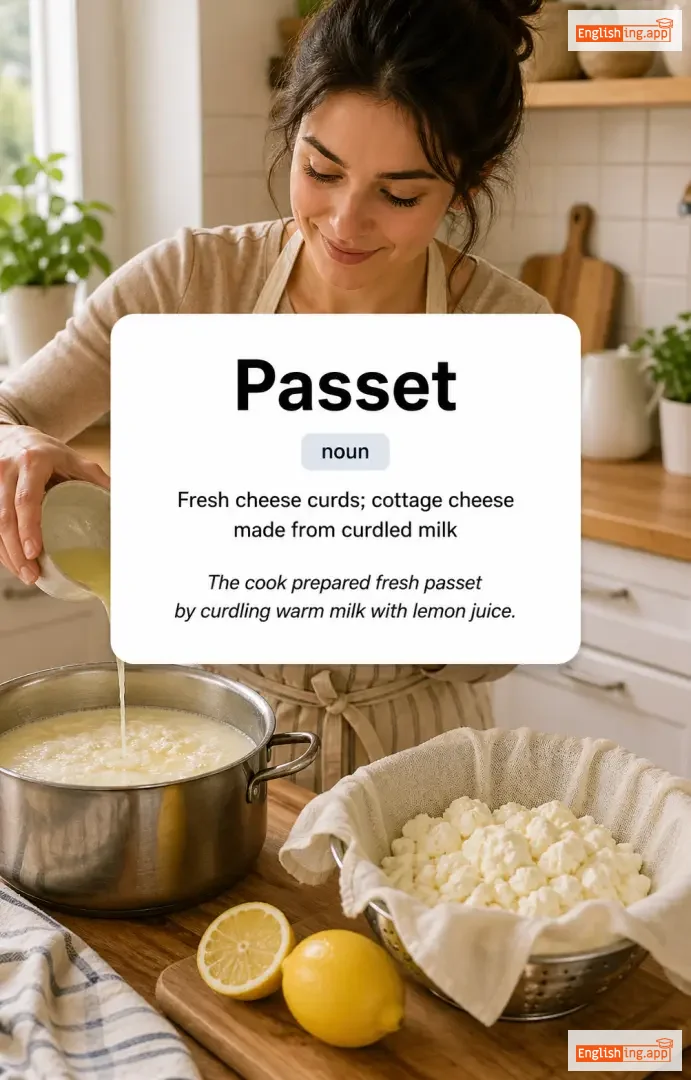
Passet definition card — visual illustration of the meaning
noun
/ˈpæsɪt/
fromage blanc (fromage blanc)

Fresh cheese curds; cottage cheese made from curdled milk

"The cook prepared fresh passet by curdling warm milk with lemon juice."

"Le cuisinier a préparé du fromage blanc frais en caillant du lait chaud avec du jus de citron." (Le cuisinier a prepare du fromage blanc frais en caillant du lait chaud avec du jus de citron.)
adjective
/pæˈseɪ/
démodé; hors de mode (demode; hors de mode)

no longer fashionable or current; out of date

"Some trends from last decade feel utterly passé now."

"Certaines tendances du dernier siècle semblent désormais complètement démodées." (Certaines tendances du dernier siècle semblent désormais complètement demodees.)
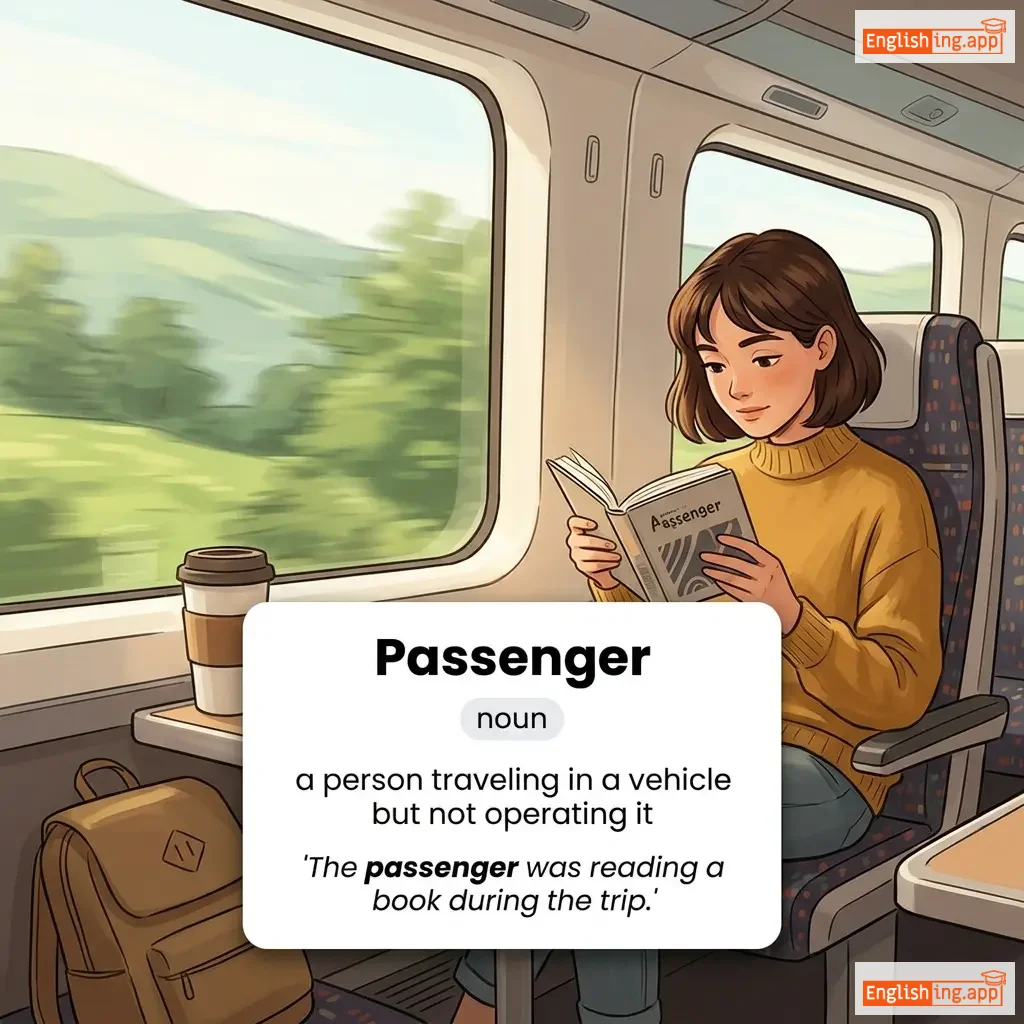
Passenger definition card — visual illustration of the meaning
noun
/ˈpæsɪndʒər/
passager (passager)

a person traveling in a vehicle but not operating it

"The passenger was reading a book during the trip."

"Le passager lisait un livre pendant le voyage." (Le passager lisait un livre pendant le voyage.)