Словари

Словарь английского языка | Значения слов, определения и примеры
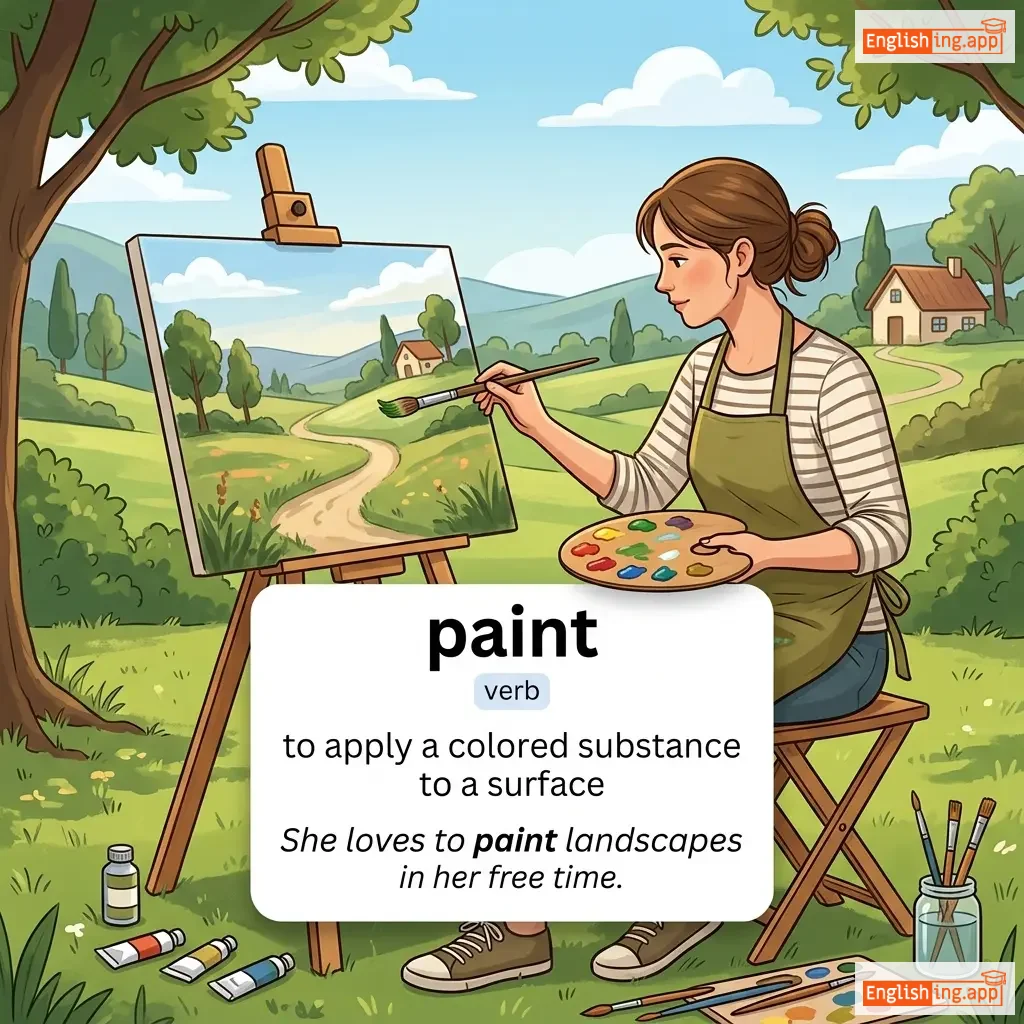
paint definition card — visual illustration of the meaning
verb
/peɪnt/
рисовать (risovat)

to apply a colored substance to a surface

"She loves to paint landscapes in her free time."

"Она любит рисовать пейзажи в своем свободном времени." (Ona lyubit risovat' peyzazhi v svoem svobodom vremeni.)
Painter definition card — visual illustration of the meaning
noun
/ˈpeɪn.tər/
художник (khudozhnik)

a person who paints pictures, or paints walls, buildings, etc.

"The painter spent hours working on the portrait."

"Художник провел часы, работая над портретом." (Khudozhnik provel chasy, rabotaya nad portretom.)
noun
/ˈpeɪntɪŋ/
картина (kartina)

a picture or design made using paint

"The painting on the wall was created by a famous artist."

"Картина на стене была создана известным художником." (Kartina na stene byla sozdana izvestnym khudozhnikom.)
👟👟

pair (per)

noun
/per/
пара (para)

two things of the same kind that are used together

"She wore a matching pair of shoes."

"Она носила пару подходящих туфель." (Ona nosila paru podkhodyashchikh tufel'.)
noun
/ˈpælɪs/
дворец (dvorets)

a large and impressive building that is the official home of a king, queen, or other ruler

"The royal family lives in a magnificent palace."
"Королевская семья живет в великолепном дворце." (Korolevskaya sem'ya zhivet v velellykom dvortse.)
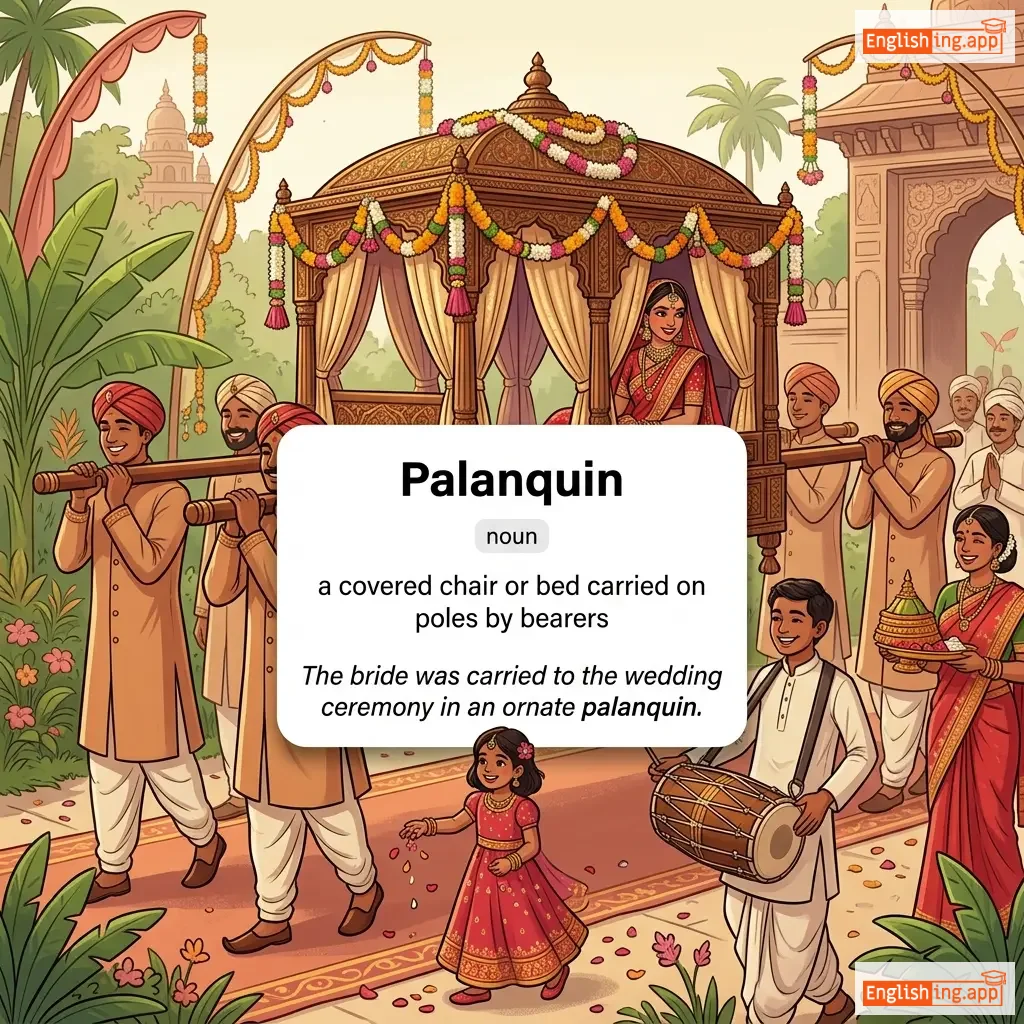
Palanquin definition card — visual illustration of the meaning
noun
/ˌpæl.ənˈkiːn/
паланквин (palankvin)

a covered chair or bed carried on poles by bearers

"The bride was carried to the wedding ceremony in an ornate palanquin."

"Невесту несли к церемонии на украшенном паланкине." (Nevestu nesli k tseremonii na ukrashennom palankine.)
adjective
/ˈpæl.ə.tə.bəl/
вкусный (vkusnyy)

pleasant or acceptable to the taste, mind, or feelings

"The meal was simple but quite palatable."

"Еда была простой, но довольно вкусной." (Yeda byla prostoy, no dovol'no vkusnoy.)
Palatable meat definition card — visual illustration of the meaning
noun
/ˈpæl.ə.tə.bəl miːt/
вкусное мясо (vkusnoe myaso)

Meat that is pleasant to taste; appetizing meat dish

"The chef prepared palatable meat dishes for the dinner party."

"Шеф-повар приготовил вкусные мясные блюда для ужина." (Shef-povar prigotovil vkusnye myasnye blyuda dlya uzhina.)
noun
/ˈpæl.ət/
небо (nebo)

the roof of the mouth; a person's appreciation of taste and flavor

"She has a refined palate for fine wines."

"У неё изысканный вкус для хороших вин." (U nee izyskannyy vkus dlya khoroshikh vin.)
adjective
/pəˈleɪ.ʃəl/
дворцовый (dvortsovy)

resembling a palace in being spacious and splendid

"They stayed in a palatial hotel during their vacation."

"Они остановились в отеле, похожем на дворец, во время отпуска." (Oni ostanovilis' v otel'e, pokhozhom na dvorets, vo vremya otpuska.)
noun
/pəˈlæv.ər/
бесполезные разговоры / суета (besspoleznye razgovory / sueta)

prolonged and idle discussion; fuss or unnecessary talk

"After much palaver, they finally agreed on the plan."

"После долгих бесполезных разговоров, они наконец согласились с планом." (Posle dolgikh besspoleznykh razgovorov, oni nakonechno soglasilis s planom.)
👩‍🦰

Pale (peyl)

adjective
/peɪl/
бледный (bledny)

having a light or dull color, especially when compared with something else

"She looked pale after the long illness."

"Она выглядела бледной после долгой болезни." (Ona vyglyadela blednoy posle dolgoy bolezni.)
noun
/ˌpeɪ.li.ɒnˈtɒl.ə.dʒi/
палеонтология (paleontologiya)

the branch of science concerned with fossil animals and plants

"She decided to study paleontology at university."

"Она решила изучать палеонтологию в университете." (Ona reshil(a) izuchat' paleontologiyu v universitete.)
adjective
/pælɛˈstɪnɪən/
палестинский (palestinskiy)

relating to Palestine or its people

"The Palestinian people have a rich cultural heritage."

"Палестинский народ имеет богатое культурное наследие." (Palestinskiy narod imeyet bogatoye kulturnoye naslediye.)
noun
/ˈpælət/
палитра (palitra)

a thin board or surface on which an artist sets and mixes colors; also a range of colors used in art or design

"The artist mixed vibrant shades on her palette before starting the painting."

"Художник смешал яркие оттенки на своей палитре перед тем, как начать рисовать." (Khudozhnik smeshal yarkiye ottenki na svoey palitre pered tem, kak nachat' risovat'.)
noun
/ˈpælɪmpsɛst/
палимпсест (palimpsest)

a manuscript or document that has been written over but still bears traces of earlier writing; something reused or altered but still retaining traces of its earlier form

"The ancient manuscript was a palimpsest, showing faint traces of previous texts beneath the new writing."

"Древний манускрипт был палимпсестом, показывая слабые следы предыдущих текстов под новым письмом." (Drevniy manuskript byl palimpsestom, pokazyvaya slabyye sleduyushchiye tekstov pod novym pismom.)
noun
/ˈpælɪˌnoʊd/
палино́да (palinoda)

a poem or statement in which the writer retracts something said in an earlier work

"The poet wrote a palinode to apologize for his earlier harsh words."

"Поэт написал палино́ду, чтобы извиниться за свои жесткие слова." (Poet napisal palinodu, chtoby izvinitsya za svoi zhestkie slova.)
⚰️

Pall

verb, noun
/pɔːl/

to lose strength or interest; to become dull or tiresome; also a cloth spread over a coffin

"The excitement of the festival began to pall after several days."

verb
/ˈpælieɪt/
смягчить (smyagchit)

to make a disease, symptoms, or problem less severe without removing the cause

"The doctor prescribed medicine to palliate the patient's pain."

"Доктор прописал лекарства, чтобы смягчить боль пациента." (Doktor propisal lekarstva, chtoby smyagchit' bol' patsiyenta.)
verb
/pɑːrs/
анализировать грамматически (analizirovat' grammaticheski)

to analyze a sentence or text grammatically or logically

"The software can parse large amounts of text data efficiently."
"Программное обеспечение может эффективно анализировать большие объемы текстовых данных." (Programmnoye obespecheniye mozhet effektyvno analizirovat' bol'shie ob'yemy tekstovykh dannykh.)
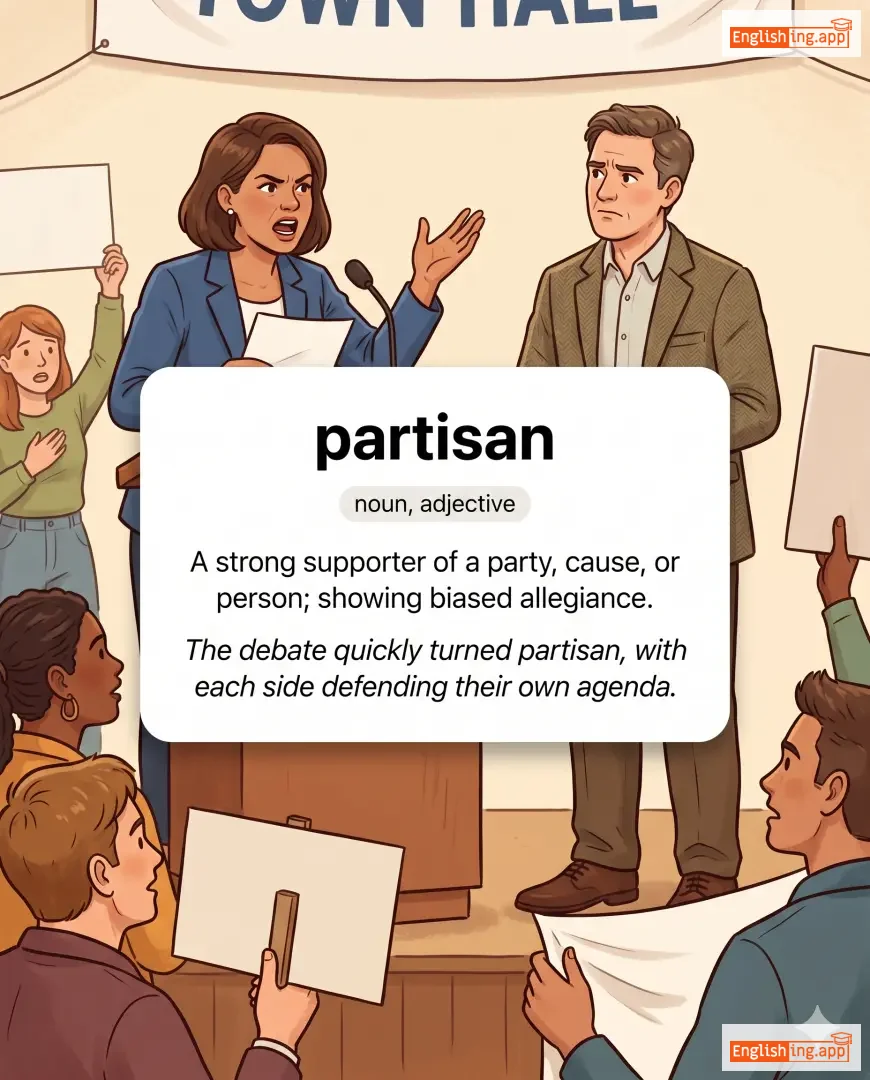
partisan definition card — visual illustration of the meaning
noun, adjective
/ˈpɑːrtɪzən/
партийный сторонник (partiynyy storonnik)

A strong supporter of a party, cause, or person; showing biased allegiance.

"The debate quickly turned partisan, with each side defending their own agenda."

"Дебаты быстро стали партийными, каждая сторона защищала свою повестку." (Debaty bystro stali partiinymi, kazhdaya storona zashchishchala svoyu povestku.)
adverb
/pɑːrˈtɪkjʊləli/
особенно (osobyenno)

to a higher degree than is usual or expected

"She is particularly fond of Italian food."

"Она особенно любит итальянскую еду." (Ona osobenno lyubit italianskuyu yedu.)
verb
/pərˈtɪkjələrˌaɪz/
уточнять (utochnyat)

to mention or describe something in detail

"The witness was asked to particularize the events of that night."

"Свидетеля попросили подробно описать события той ночи." (Svidetelya poprosili podrobno opisat' sobytiya toy nochi.)
adjective
/pərˈtɪk.jʊ.lər/
особенный (osobennyy)

specific or special; distinct from others

"He is very particular about his diet."
"Он очень требователен к своей диете." (On ochen' trebovatel'n k svoey diete.)
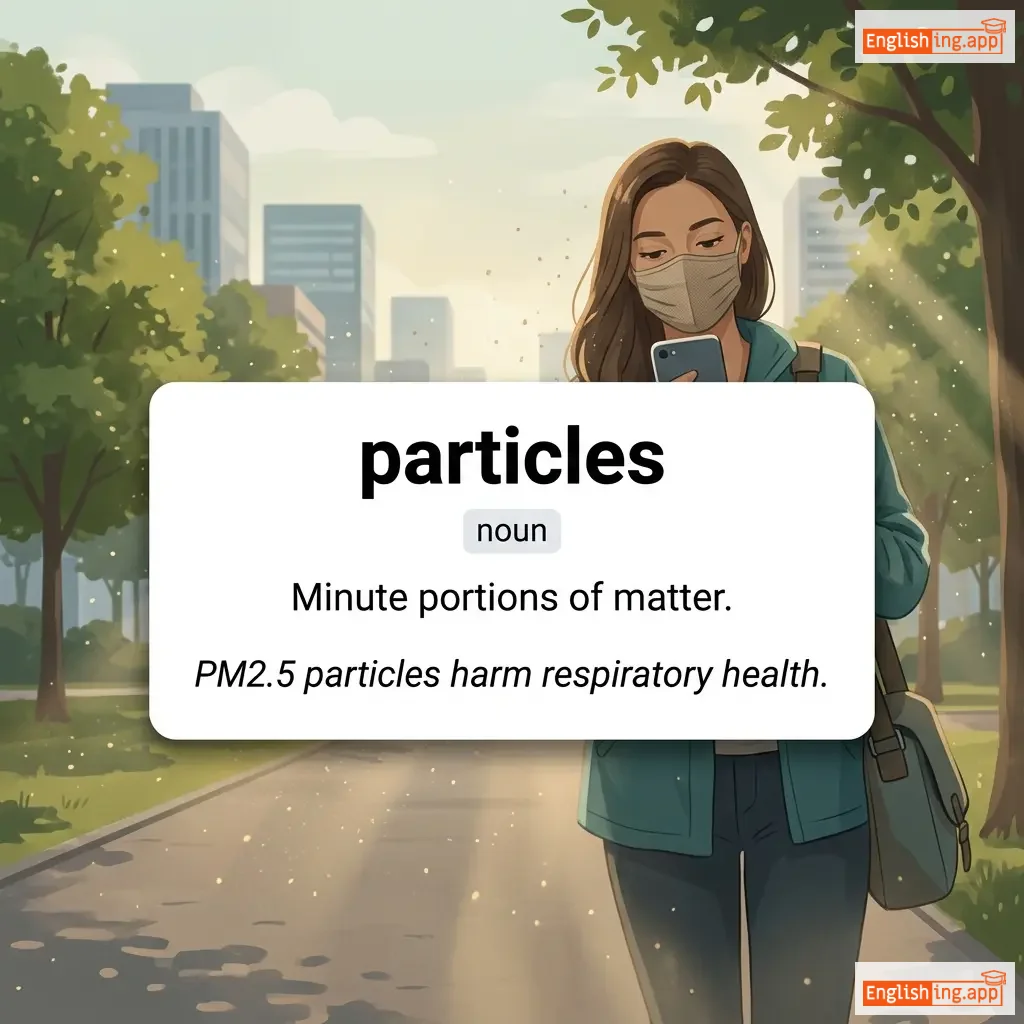
particles definition card — visual illustration of the meaning
noun
/ˈpɑː.tɪ.klz/
частицы (chastitsy)

Minute portions of matter.

"PM2.5 particles harm respiratory health."

"Частицы PM2.5 наносят вред дыхательному здоровью." (Chastitsy PM2.5 nanyosyat vred dykhatel'nomu zdorov'yu.)
noun
/ˈpɑːrtɪkəl/
частица (chastitsa)

a very small piece or amount of something

"Dust particles floated in the air near the window."

"Пылевые частицы плавали в воздухе возле окна." (Pylevye chastitsy plavali v vozdukhe vozle okna.)
noun
/pɑːrˌtɪsɪˈpeɪʃən/
участие (uchastie)

the action of taking part in something

"Her participation in the competition was commendable."
"Ее участие в конкурсе было похвальным." (Yeyo uchastie v konkurse bylo pokhval'nym.)
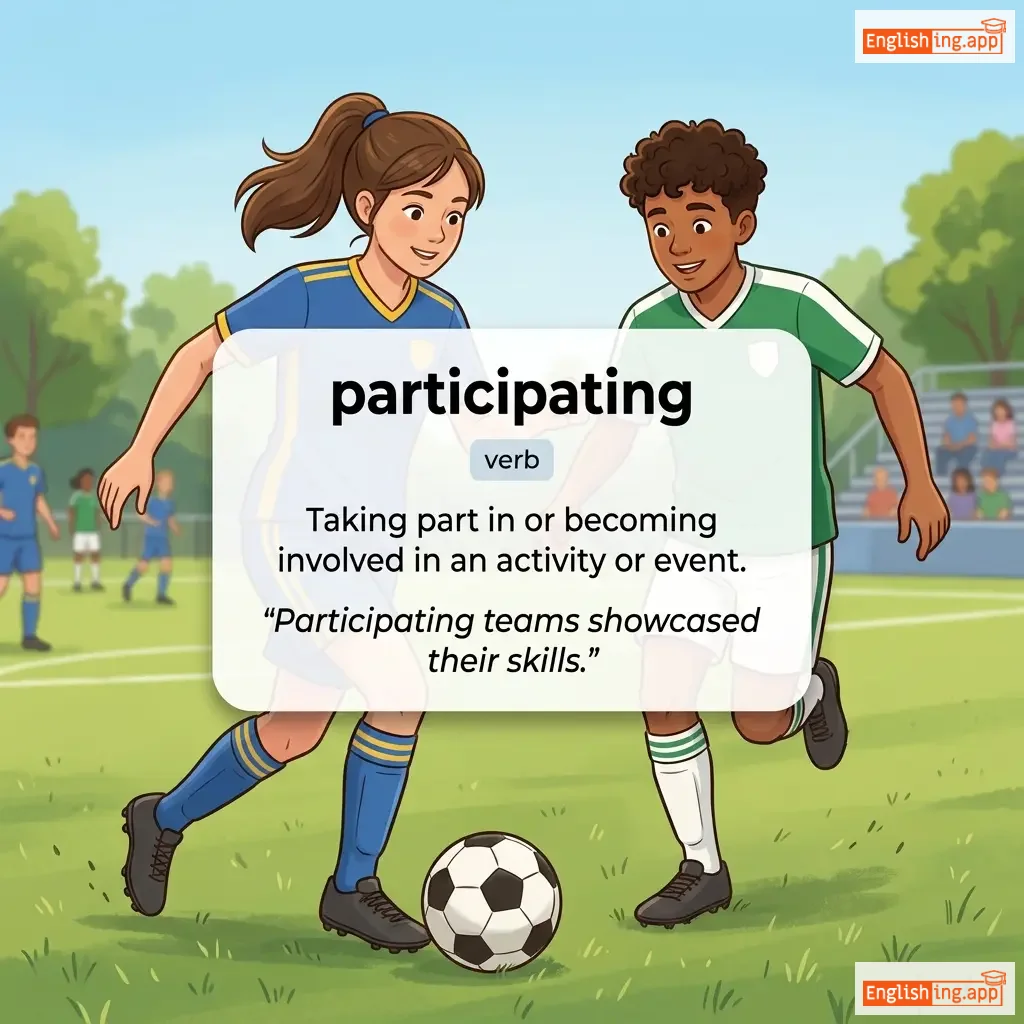
participating definition card — visual illustration of the meaning
verb
pɑːˈtɪs.ɪ.peɪ.tɪŋ
участвовать (uchastvovat)

Taking part in or becoming involved in an activity or event.

"Participating teams showcased their skills."
"Участвующие команды продемонстрировали свои навыки." (Uchastvuyushchie komandy prodemonstrirovali svoi navyki.)
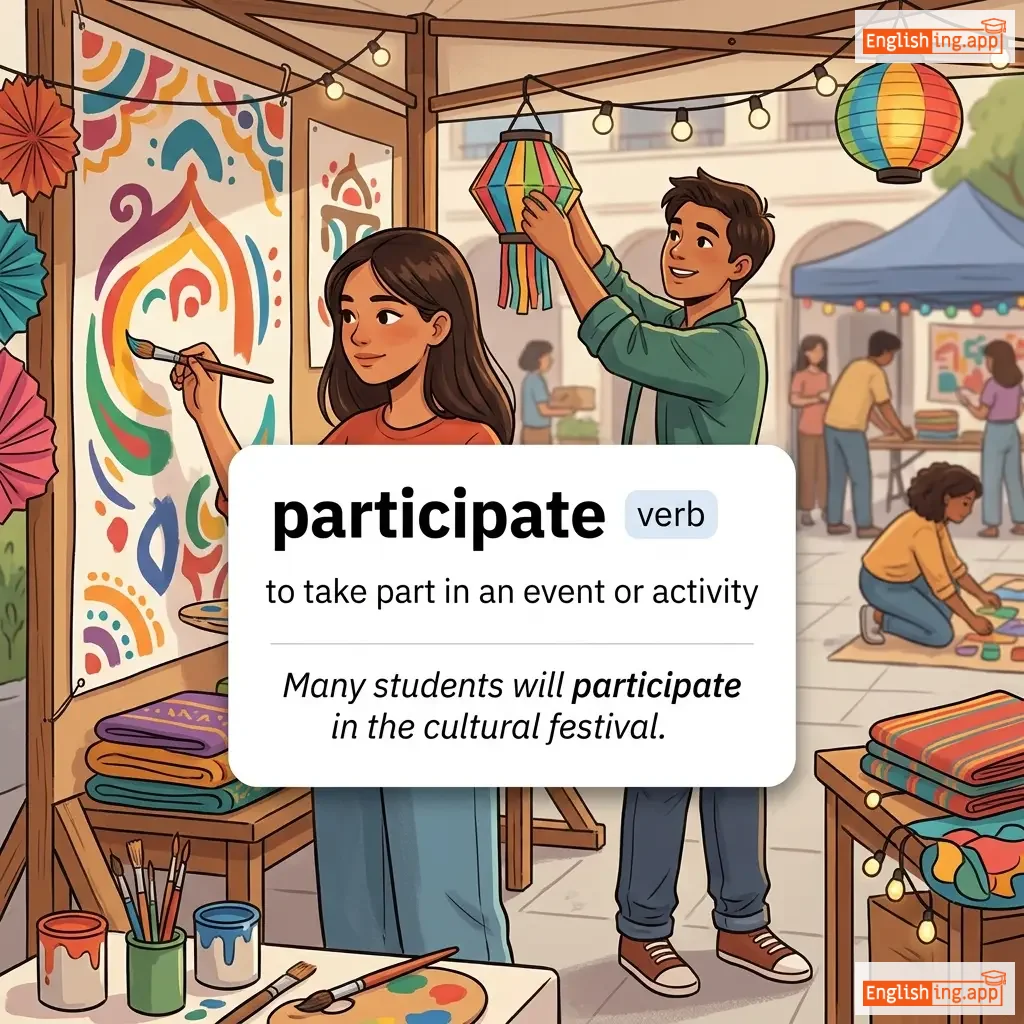
participate definition card — visual illustration of the meaning
verb
/pɑːrˈtɪsɪpeɪt/
участвовать (uchastvovat)

to take part in an event or activity

"Many students will participate in the cultural festival."
"Многие студенты примут участие в культурном фестивале." (Mnogie studenty primut uchastie v kul'turnom festivale.)
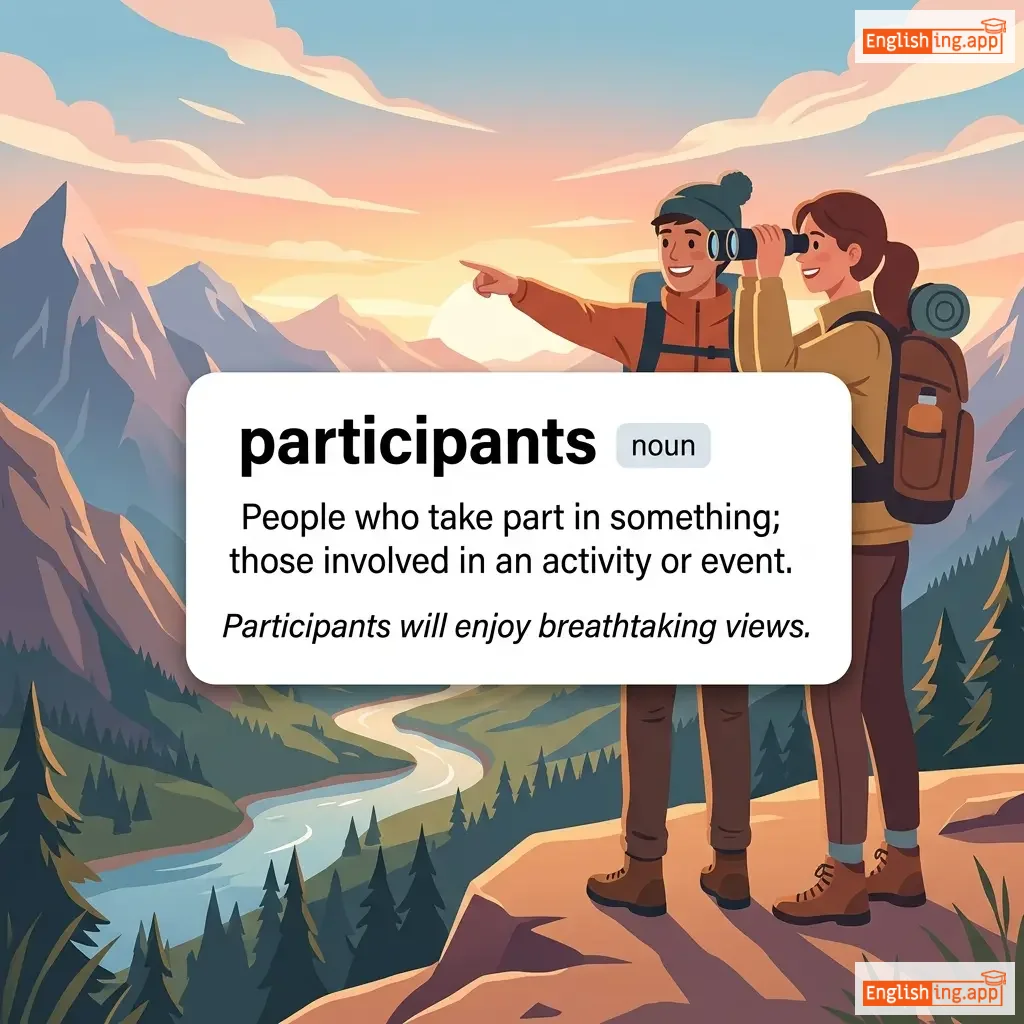
participants definition card — visual illustration of the meaning
noun
pɑːˈtɪs.ɪ.pənts
участники (uchastniki)

People who take part in something; those involved in an activity or event.

"Participants will enjoy breathtaking views."

"Участники насладятся захватывающими видами." (Uchastniki nasladyatsya zakhvatyvayushchimi vidami.)
noun
/pɑːrˈtɪsɪpənt/
участник (uchastnik)

a person who takes part in an event or activity

"Each participant received a certificate after the workshop."

"Каждый участник получил сертификат после семинара." (Kazhdyy uchastnik poluchil sertifikat posle seminara.)
adjective
/ˈpɑːrtəbl/
делимый (delimy)

capable of being divided or separated

"The estate was partible among the heirs."

"Имущество было делимо между наследниками." (Imushchestvo bylo delimo mezhdu naslednikami.)
adverb
/ˈpɑːrʃəli/
частично (chastichno)

to some extent but not completely

"The project was partially completed before the deadline."

"Проект был частично завершен до срока." (Proyekt byl chastichno zavershen do sroka.)
noun
/ˌpɑːrʃiˈæləti/
пристрастность (pristrastnost)

an unfair preference or bias toward one side or person

"The judge was criticized for showing partiality in the case."

"Судью раскритиковали за проявление пристрастности в деле." (Sudyu raskritikovali za proyavlenie pristrastnosti v dele.)
adjective
/ˈpɑːrʃəl/
частичный, предвзятый (chastichnyy, predvyazannyy)

existing only in part; biased toward one side

"The report gave a partial view of the situation."

"Отчёт дал частичное представление о ситуации." (Otchyot dal chastichnoe predstavlenie o situatsii.)
adjective
/ˈpɑːt taɪm/
неполный рабочий день (nepolny rabochiy den')

working for only part of the usual working day or week

"She works part-time as a waitress."

"Она работает неполный рабочий день как официантка." (Ona rabotaet nepolny rabochiy den' kak ofitsiantka.)
noun
/pɑːrt/
часть (chast')

a piece or segment of something

"She gave me a part of her chocolate."
"Она дала мне часть своего шоколада." (Ona dala mne chast' svoego shokolada.)
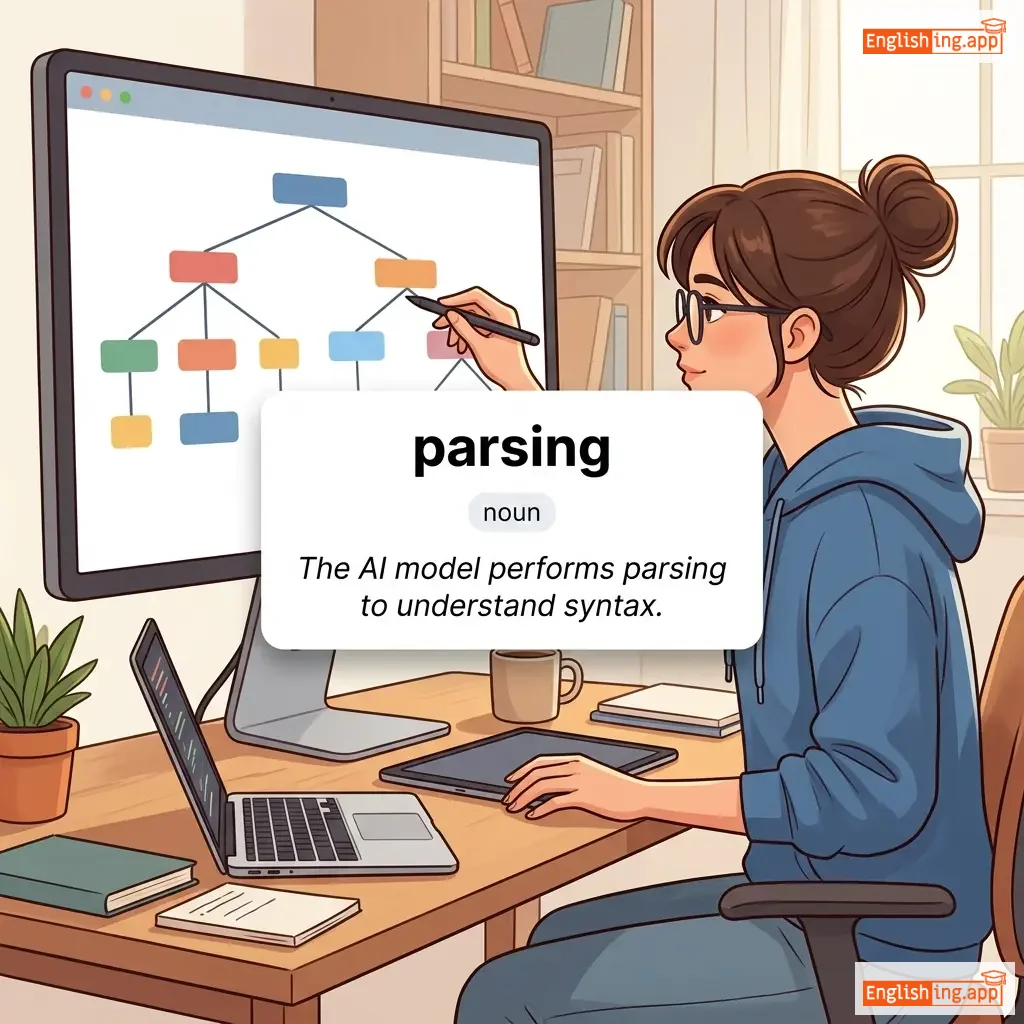
parsing definition card — visual illustration of the meaning
noun
ˈpɑː.sɪŋ
анализ структуры предложения (parsing)

The process of analyzing sentence structure to understand grammatical relationships.

"The AI model performs parsing to understand syntax."

"Модель ИИ выполняет парсинг для понимания синтаксиса." (Model' II vypolnyaet parsing dlya ponimaniya sintaksisa.)
noun
/ˈpɑːrsɪmoʊni/
скупость (skupost)

extreme unwillingness to spend money or use resources

"His parsimony was evident in the way he avoided any unnecessary expenses."

"Его скупость была очевидна в том, как он избегал любых ненужных расходов." (Ego skupost byla ochevidna v tom, kak on izbegal lyubykh nenuzhnykh raskhodov.)
adjective
/ˌpɑːrsɪˈmoʊniəs/
скупой (skupoy)

unwilling to spend money or use resources; stingy

"The company was too parsimonious to invest in better equipment."

"Компания была слишком скупой, чтобы инвестировать в лучшее оборудование." (Kompaniya byla slishkom skupoy, chtoby investirovat' v luchshee oborudovanie.)
noun
/ˈpɑːrləns/
жаргон (zhargon)

a particular way of speaking or using words, common to a group

"In legal parlance, the term has a different meaning."

"В юридическом жаргоне этот термин имеет другое значение." (V yuridicheskom zhargone etot termin imeet drugoe znachenie.)
adjective
/ˈpɑːrləs/
опасный (parlus)

Full of danger or risk; precarious.

"The company is in a parlous financial state."

"Компания находится в опасном финансовом состоянии." (Kompaniya nakhoditsya v opasnom finansovom sostoyanii.)
noun
/ˈpɑːrlər/
гостиная, магазин (parlor)

A sitting room in a private house, or a shop providing specified services.

"They welcomed the guests into the front parlor."

"Они встретили гостей в передней комнате." (Oni vstretili gostey v peredney komnate.)
adjective
/ˌpɑːrləˈmɛntri/
парламентский (parlamentskiy)

relating to a parliament or its members; relating to a system of government with parliamentary authority

"The country follows a parliamentary form of government."

"Страна придерживается парламентской формы правления." (Strana priderzhivaetsya parlamentskoy formy pravleniya)
noun
/ˈpɑːrləmənt/
парламент (parlament)

the highest legislative body in a country

"The bill was passed in parliament after a long debate."

"Законопроект был принят в парламенте после долгих дебатов." (Zakonoproekt byl prinyat v parlamente posle dolgikh debata.)
noun, verb
/ˈpɑːrli/
переговоры (peregovory)

a discussion between opposing sides, especially to negotiate terms

"The generals met to parley over the terms of surrender."
"Генералы встретились, чтобы обсудить условия капитуляции." (Generaly vstretilis', chtoby obsudit' usloviya kapitulyatsii.)
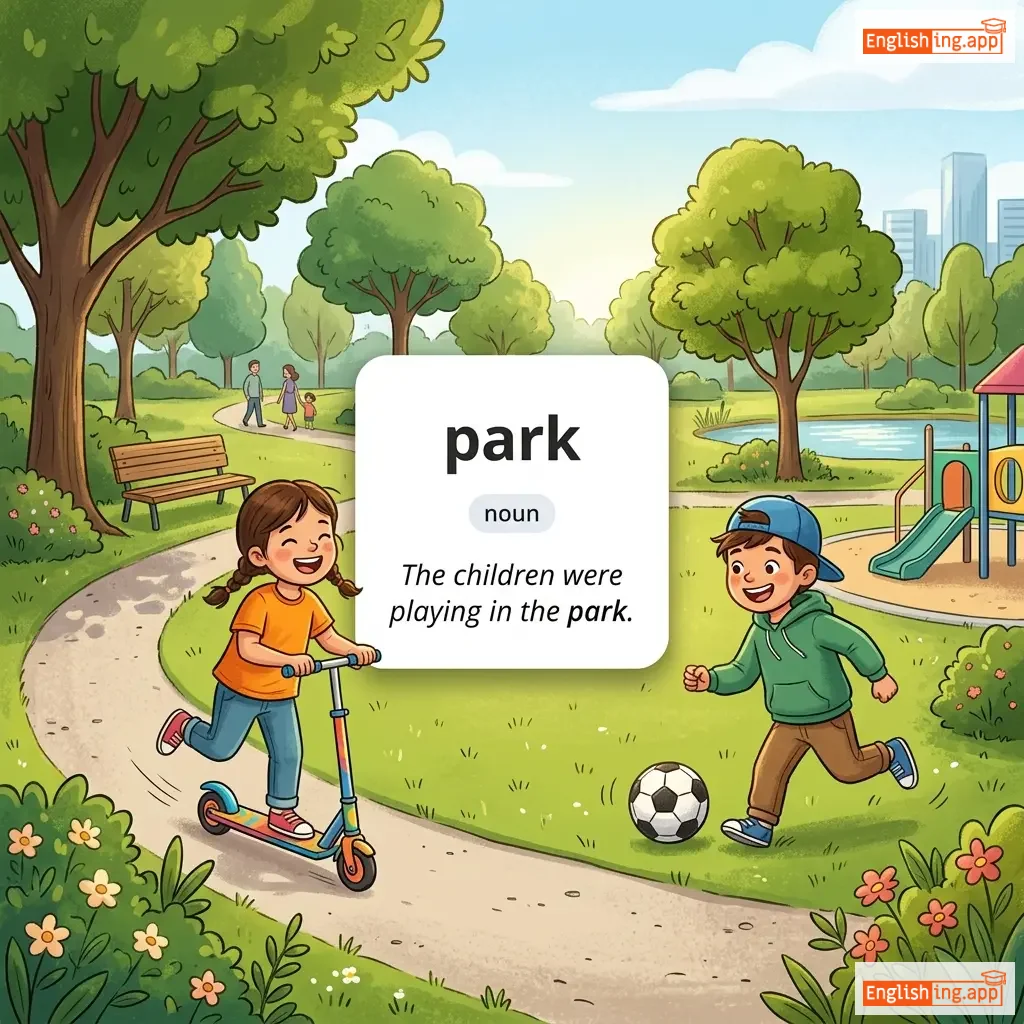
park definition card — visual illustration of the meaning
noun
/pɑːrk/
парк (park)

a large public area of land with grass, trees, and paths, where people can walk or relax

"The children were playing in the park."

"Дети играли в парке." (Deti igrali v parke.)
adjective
/pəˈrɪʒən/
относящийся к Парижу (otnosyashchiesya k Parizhu)

relating to Paris or its people

"She wore a Parisian style dress at the party."

"Она носила платье в парижском стиле на вечеринке." (Ona nosila plat'ye v parizhskom stile na vecherinke.)
noun
/ˈpærɪti/
паритет (paritet)

the state or condition of being equal, especially in status or pay

"The campaign aims to achieve pay parity between men and women."

"Кампания направлена на достижение паритета зарплат между мужчинами и женщинами." (Kampaniya napravlena na dostizheniye pariteta zarplat mezhdu muzhchinami i zhenshchinami.)
adjective
/pəˈroʊkiəl/
парохиальный (parokial)

Having a limited or narrow outlook; relating to a parish.

"His parochial view prevented him from understanding global issues."

"Его парохиальный взгляд помешал ему понять глобальные проблемы." (Ego parokialnyy vzglyad pomeshal yemu ponyat' global'nye problemy.)