Словари

Словарь английского языка | Значения слов, определения и примеры

noun
/ˈaʊtˌbreɪk/
вспышка (vspishka)

a sudden start or occurrence of something unpleasant, like disease or violence

"There was an outbreak of flu in the city."

"В городе произошла вспышка гриппа." (V gorode proizoshla vspyshka grippa.)
noun
/ˈaʊtbɜːrst/
внезапный всплеск эмоций или гнева (vnezapnyy vsplesk emotsiy ili gneva)

a sudden release of strong emotion or activity

"She had an angry outburst during the meeting."

"Она выразила свой гнев во время собрания." (Ona vyrazila svoy gnev vo vremya sobraniya.)
noun
/ˈaʊtkæst/
изгой (izgoy)

a person who is rejected or excluded from society or a group

"He felt like an outcast at school."

"Он чувствовал себя изгоем в школе." (On chuvstvoval sebya izgoem v shkole.)
noun
/ˈaʊtkʌm/
результат (rezultat)

the result or consequence of an action or situation

"The outcome of the project was beyond expectations."

"Результат проекта превзошел ожидания." (Rezultat proyekte prevzoshyel ozhidaniya.)
noun
/ˈaʊtˌkraɪ/
протест (protest)

A strong expression of public anger or disapproval.

"The decision sparked an outcry among the citizens."

"Решение вызвало протест среди граждан." (Reshenie vyzvalo protest sredi grazhdan.)
adjective
/ˌfæʃ.ənd/
устаревший (ustarevshiy)

obsolete; no longer current

"This computer software is completely outdated."

"Это программное обеспечение полностью устарело." (Eto programmnoye obespecheniye polnost'yu ustarelo.)
verb
/ˌaʊtˈduː/
превзойти (prezoyti)

To do better than someone else; to surpass.

"She always tries to outdo her classmates in exams."

"Она всегда пытается превзойти своих одноклассников на экзаменах." (Ona vsegda pytayetsya prevzoiti svoikh odnoklassnikov na ekzamenakh.)
adjective
/ˈaʊtdɔːr/
на свежем воздухе (na svezhem vozdukhe)

situated, existing, or done outside a building

"We planned an outdoor picnic for the weekend."

"Мы запланировали пикник на свежем воздухе на выходные." (My zaplanirovali piknik na svezhem vozdukhe na vykhodnye.)
adverb; noun
/ˌaʊtˈdɔːrz/
на открытом воздухе (na otkrytom vozdukhe)

outside a building; the natural environment outside

"We spent the whole afternoon outdoors enjoying the fresh air."

"Мы провели весь день на открытом воздухе, наслаждаясь свежим воздухом." (my proveli ves den na otkrytom vozdukhe, naslazhdaias svezhim vozdukhom)
adjective
/ˈaʊtər/
внешний (vneshniy)

situated on or toward the outside; external

"The outer layer of the jacket is waterproof."

"Внешний слой куртки водоотталкивающий." (Vneshniy sloy kurtki vodoottalkivayushchij.)
noun
/ˈaʊtˌfɪt/
наряд (naryad)

A set of clothes worn together, often for a particular occasion.

"She wore a beautiful outfit to the party."

"Она носила красивый наряд на вечеринку." (Ona nosila krasivyj naryad na vecherinku.)
adjective
/ˈaʊtˌɡoʊɪŋ/
общительный (obshchitel'nyy)

Friendly and sociable; inclined to mix with others.

"He is an outgoing person who loves meeting new people."

"Он общительный человек, который любит встречаться с новыми людьми." (On obshchitel'nyy chelovek, kotoryy lyubit vstrechatsya s novymi lyud'mi.)
noun
/ˈaʊtˌɡroʊθ/
развитие (razvitiye)

something that grows out of something else; a natural development or result

"The new policy was an outgrowth of years of debate."

"Новая политика стала развитием многолетних дебатов." (Novaya politika stala razvitiem mnogoletnikh debatov.)
noun
/ˈaʊtɪŋ/
поездка (poezdka)

a short trip or excursion, often for leisure or enjoyment

"They had a lovely outing at the beach last weekend."

"Они провели замечательную поездку на пляже в прошлые выходные." (Oni proveli zamechatelnuyu poezdku na plyazhe v proshlye vykhodnye.)
adjective
/ˌaʊtˈlændɪʃ/
странный (strannyy)

Looking or sounding bizarre or unfamiliar; strange.

"He wore an outlandish costume to the festival."

"Он носил странный костюм на фестивале." (On nosil strannyy kostyum na festivale.)
verb
/aʊtˈlæst/
выжить дольше, чем (vyzhit' dol'she, chem)

to continue longer than; to endure beyond someone or something else

"The old castle has outlasted many generations."

"Старый замок пережил многие поколения." (Staryy zamok perezhil mnogiye pokoleniya.)
noun, verb
/ˈaʊtlɔː/
изгой (izgoy)

as a noun: a person who breaks the law and lives outside its protection; as a verb: to make something illegal

"The government decided to outlaw the harmful practice."

"Правительство решило запретить вредную практику." (Pravitelstvo reshilo zapretit vrednuyu praktiku)
noun
/ˈaʊtlet/
выход (vykhod)

a means by which something is released, expressed, or distributed

"Art is a great outlet for emotions."

"Искусство — отличный выход для эмоций." (Iskusstvo — otlichnyy vykhod dlya emotsiy.)
noun, verb
/ˈaʊtlaɪn/
план, схема (plan, shema)

a general description or plan that gives the main ideas without details; to describe something briefly or highlight main points

"The teacher asked us to outline our research project before writing the report."

"Учитель попросил нас составить план нашего исследовательского проекта, прежде чем писать отчет." (Uchitel' poprosil nas sostavit' plan nashego issledovatelskogo proekta, prezhde chem pisat' otchet.)
verb
/aʊtˈlɪv/
пережить (perezhit)

to live longer than someone or something else

"She outlived all her siblings."

"Она пережила всех своих братьев и сестер." (Ona perezhila vsekh svoikh brat'yev i sestr.)
noun
/ˈaʊtlʊk/
перспектива, прогноз (perspektiva, prognoz)

a person's general attitude or view; a forecast or prospect

"The economic outlook for the year is positive."

"Экономический прогноз на год положительный." (Ekonomicheskiy prognoz na god polozhitel'nyy.)
verb
/ˌaʊtməˈnuːvər/
перехитрить (perekhitrity)

to gain an advantage over an opponent by skillful or clever action

"The smaller company managed to outmaneuver its larger rival."

"Малая компания сумела перехитрить своего большого соперника." (Malaya kompaniya sumela perekhitrit' svoego bol'shogo sopernika.)
adjective
/aʊtˈmoʊdɪd/
устаревший (ustarevshiy)

No longer in fashion or useful; outdated.

"That old computer is completely outmoded."

"Этот старый компьютер совершенно устарел." (etot staryy kompyuter sovershenno ustarel.)
noun
/ˈaʊtpoʊst/
передовой пост (peredovoy post)

A small military camp or position at some distance from the main force, used especially as a guard.

"The soldiers were stationed at a remote outpost."
"Солдаты были размещены на удаленном передовом посту." (Soldaty byli razmeshcheny na udalennom peredovom postu.)
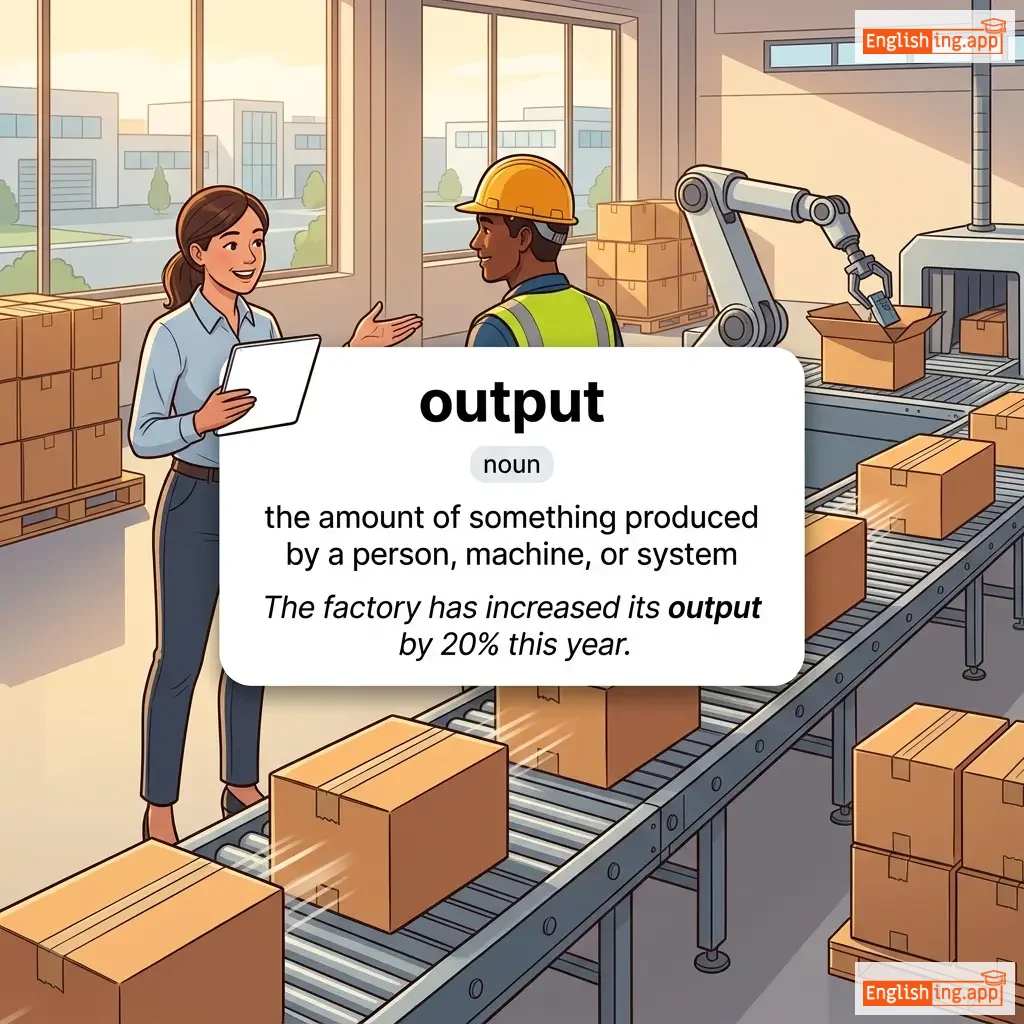
output definition card — visual illustration of the meaning
noun
/ˈaʊtpʊt/
продукция (produkciya)

the amount of something produced by a person, machine, or system

"The factory has increased its output by 20% this year."

"Фабрика увеличила свою продукцию на 20% в этом году." (Fabrika uvelichila svoyu produkciyu na 20% v etom godu.)
noun/verb
/ˈaʊtreɪdʒ/
возмущение (vozmuschenie)

A strong feeling of anger and shock; to arouse anger or shock.

"The unfair decision caused public outrage."

"Несправедливое решение вызвало общественное возмущение." (Nespravedlivoe reshenie vyzvalo obshchestvennoe vozmuschenie.)
adjective
/aʊtˈreɪdʒəs/
возмутительный (vozmutitel'nyy)

Shockingly bad or excessive; very unusual or amusing.

"The comedian told an outrageous joke."

"Комик рассказал возмутительную шутку." (Komik rasskazal vozmutitel'nuyu shutku.)
noun
/ˈaʊtriːtʃ/
расширение помощи (rasshireniye pomoshchi)

The act of providing services or support to people who might not otherwise have access to them.

"The charity launched a new outreach program for the homeless."

"Благотворительная организация запустила новую программу расширения помощи для бездомных." (Blagotvoritel'naya organizatsiya zapustila novuyu programmu rasshireniya pomoshchi dlya bezdomnykh.)
noun
/ˈoʊ.vər spɪl/
перелив (pereliv)

the overflow of liquid from a container; excess that cannot be contained

"The overspill from the river flooded nearby farms."

"Перелив реки затопил соседние фермы." (Pereliv reki zatopil sosednie fermy.)
noun
/ˈoʊvərlɔːrd/
повелитель (povelitel)

A ruler, master, or person of great power and authority over others.

"The peasants were forced to pay taxes to their overlord."

"Крестьяне были вынуждены платить налоги своему повелителю." (Krest'yane byli vynuzhdeny platit' nalogi svoemu povelitelyu.)
overlook definition card — visual illustration of the meaning
verb
/ˌoʊvərˈlʊk/
игнорировать (ignorirovat)

to fail to notice something; to have a view from above

"She overlooked an important detail in the contract."
"Она не заметила важную деталь в контракте." (Ona ne zamechila vazhnuyu detal' v kontrakte.)
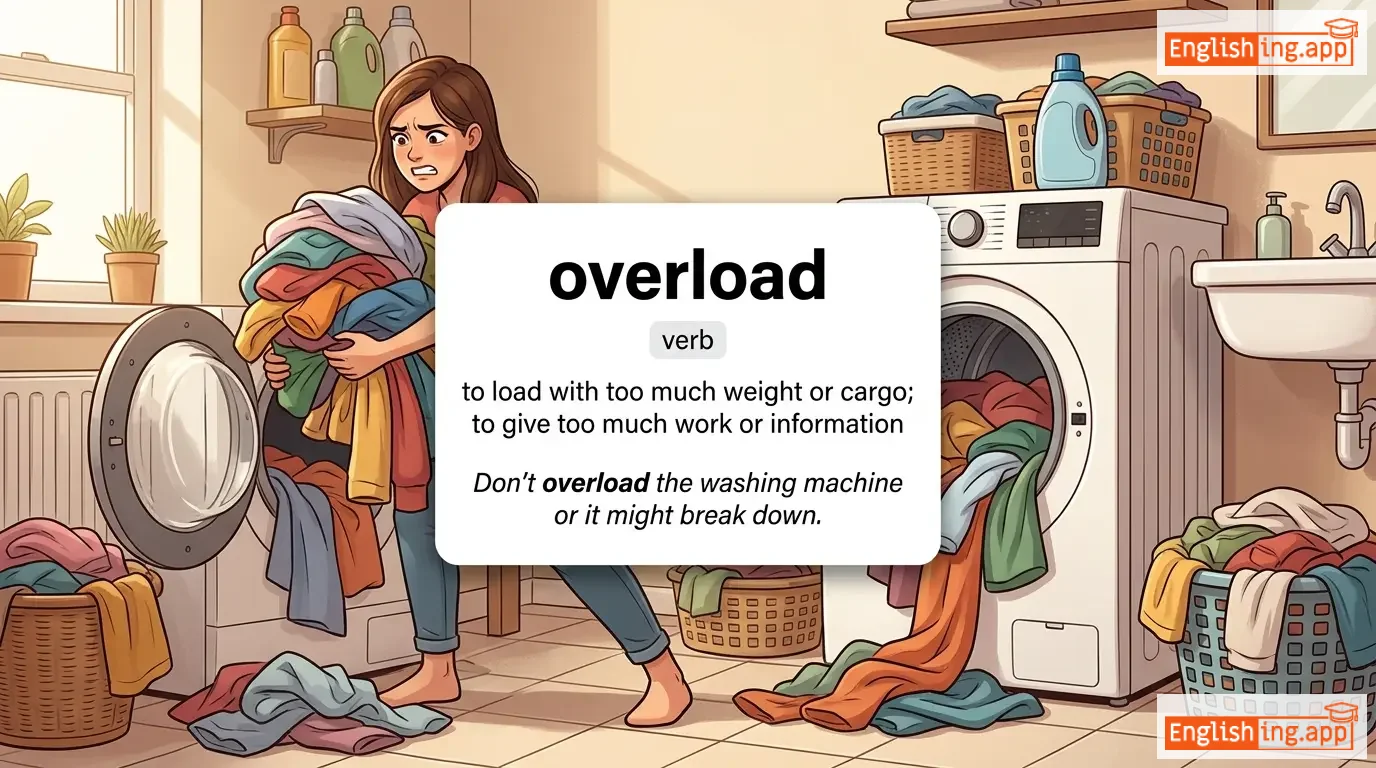
overload definition card — visual illustration of the meaning
verb
/ˌoʊvərˈloʊd/
перегружать (peregruzhat')

to load with too much weight or cargo; to give too much work or information

"Don't overload the washing machine or it might break down."

"Не перегружайте стиральную машину, иначе она может сломаться." (Ne peregruzhayte stiral'nuyu mashinu, inache ona mozhet slomatsya.)
Overlet definition card — visual illustration of the meaning
noun
/ˈoʊ.vər.let/
матрас (matras)

a thin mattress or pad placed over a bed for additional comfort

"The overlet makes the bed more comfortable to sleep on."

"Оверлет делает кровать более комфортной для сна." (Overlet delayet krovat' boleye komfortnoy dlya sna.)
verb
/ˌoʊvərˈliːp/
перепрыгнуть (pereprygnut')

To jump over something; to omit or disregard something.

"He managed to overleap the fence easily."

"Он легко перепрыгнул через забор." (On legko pereprygnul cherez zabor.)
noun/verb
/ˌoʊvərˈlæp/
пересечение (overlap)

To extend over and cover partly; an area where things coincide.

"The two meetings overlap by an hour."

"Две встречи перекрываются на час." (The two meetings overlap by an hour.)
overhead definition card — visual illustration of the meaning
noun
ˈəʊ.və.hed
постоянные бизнес-расходы, которые не связаны напрямую с производством продукта или услуги (postoyannyye biznes-raskhody, kotoryye ne svyazany napryamuyu s proizvodstvom produkta ili uslugi)

Ongoing business expenses not directly attributable to creating a product or service.

"High overhead costs reduce overall profits."

"Высокие накладные расходы снижают общую прибыль." (Vysokiye nakladnye raskhody snizhayut obshchuyu pribyl.)
verb
/ˈoʊvərˌhɔːl/
полная переработка (polnaya pererabotka)

to examine thoroughly and repair or improve something that is worn or ineffective

"The company decided to overhaul its outdated computer system."

"Компания решила провести полную переработку своей устаревшей компьютерной системы." (Kompaniya reshil provesti polnuyu pererabotku svoey ustarevshey komp'yuternoy sistemy.)
noun/verb
/ˈoʊvərˌhæŋ/
выступ (vystup)

To extend outward and hang over something; a projecting part.

"The roof overhang provides shade in the summer."
"Крыша оверхэнга обеспечивает тень летом." (Krysha overkhenga obespechivaet ten' letom.)
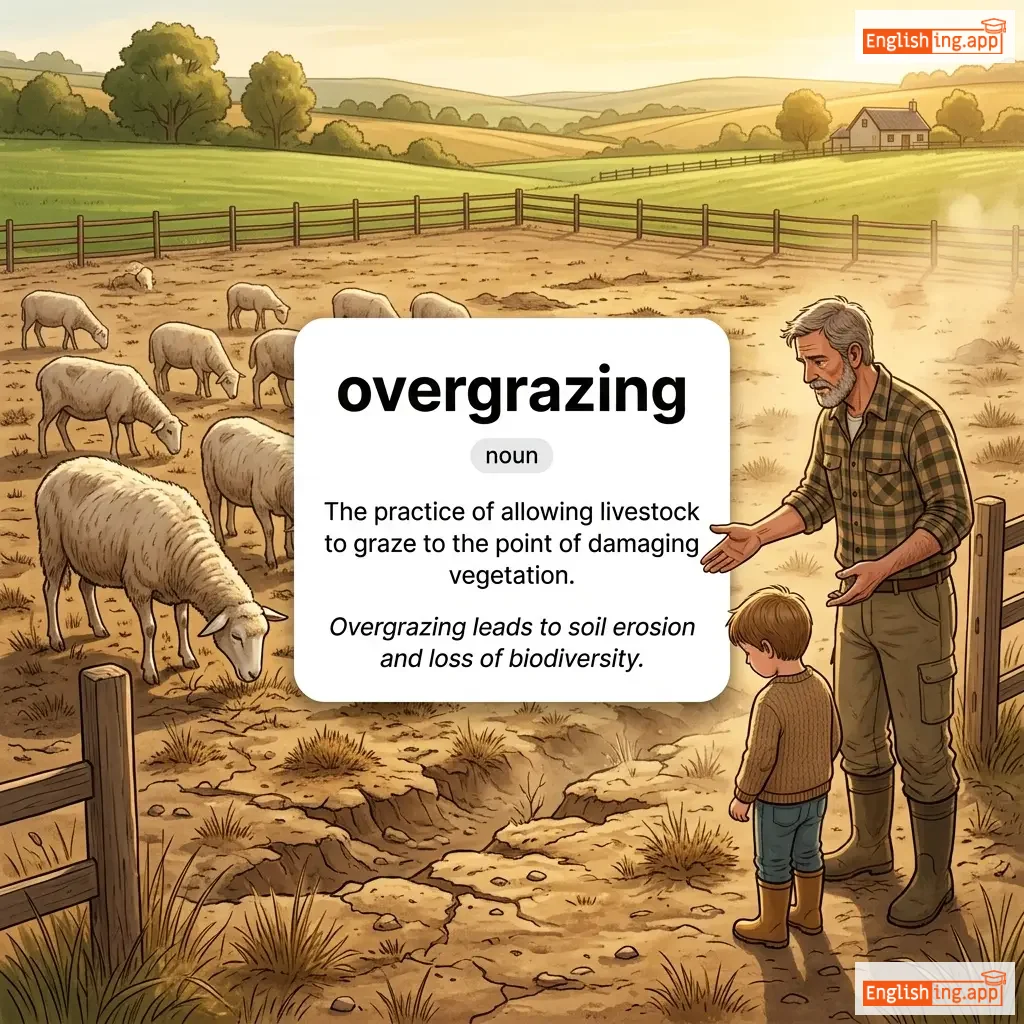
overgrazing definition card — visual illustration of the meaning
noun
ˌoʊ.vɚˈɡreɪ.zɪŋ
перегрузка пастбища (peregruzka pastbishcha)

The practice of allowing livestock to graze to the point of damaging vegetation.

"Overgrazing leads to soil erosion and loss of biodiversity."
"Перегрузка пастбищ ведет к эрозии почвы и потере биоразнообразия." (Peregruzka pastbishch vedet k erozii pochvy i potere bioraznoobraziya.)
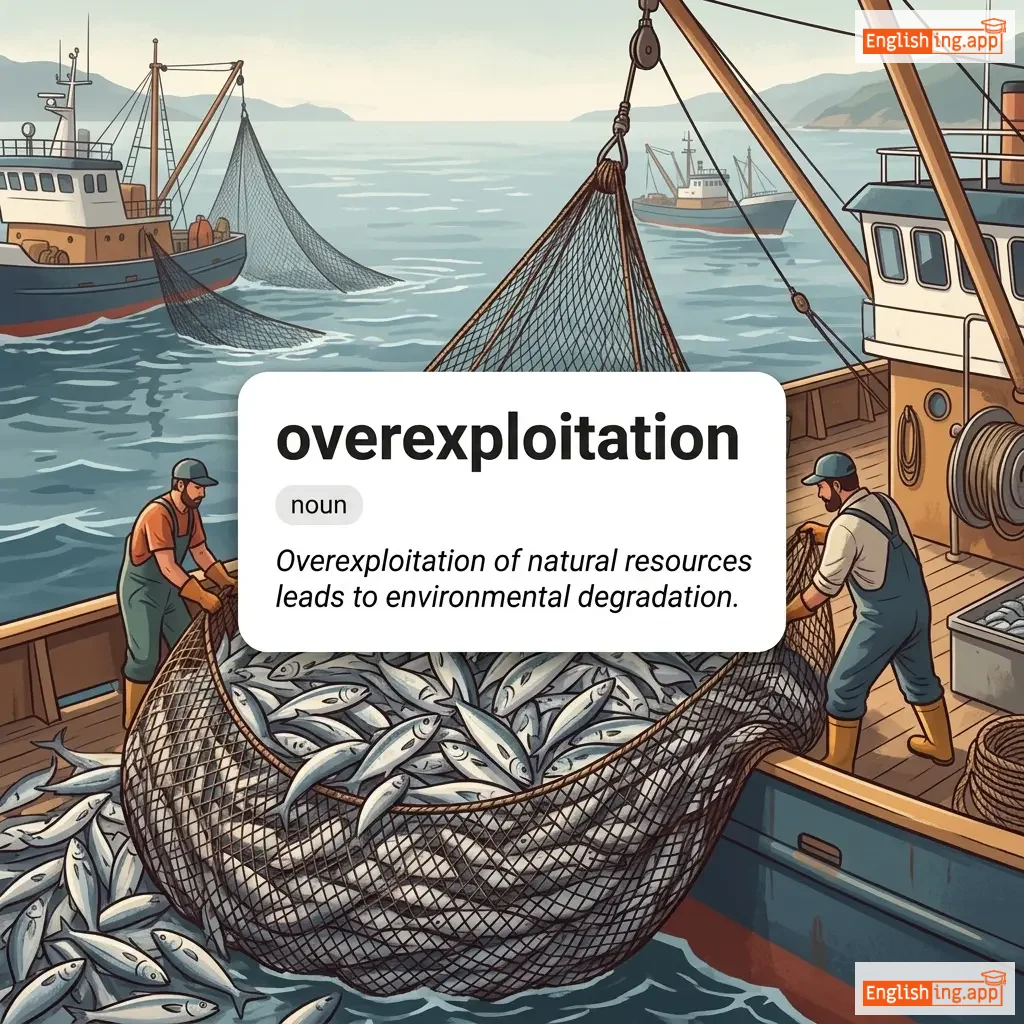
overexploitation definition card — visual illustration of the meaning
noun
/ˌəʊvərɪksˌplɔɪˈteɪʃən/
перерасход (pereraskhod)

The unsustainable use of natural resources at a rate that exceeds their ability to regenerate, leading to depletion and environmental degradation.

"Overexploitation of natural resources leads to environmental degradation."

"Перерасход природных ресурсов приводит к экологическому ухудшению." (Pereraskhod prirodnykh resursov privodit k ekologicheskomu ukhudsheniyu.)
verb
/ˌoʊvərˈiːt/
счастье (schast'ye)

To eat more food than the body needs.

"She tends to overeat when she is stressed."

"Она не могла скрыть свое счастье, когда получила награду." (Ona ne mogla skryt' svoe schast'ye, kogda poluchila nagradu.)
noun/verb
/ˈoʊvərˌdoʊs/
передозировка (peredozirovka)

An excessive and dangerous amount of a drug; to take too much of a substance.

"He was rushed to the hospital after a drug overdose."
"Он был доставлен в больницу после передозировки наркотиков." (On byl dostavlen v bol'nitsu posle peredozirovki narkotikov.)
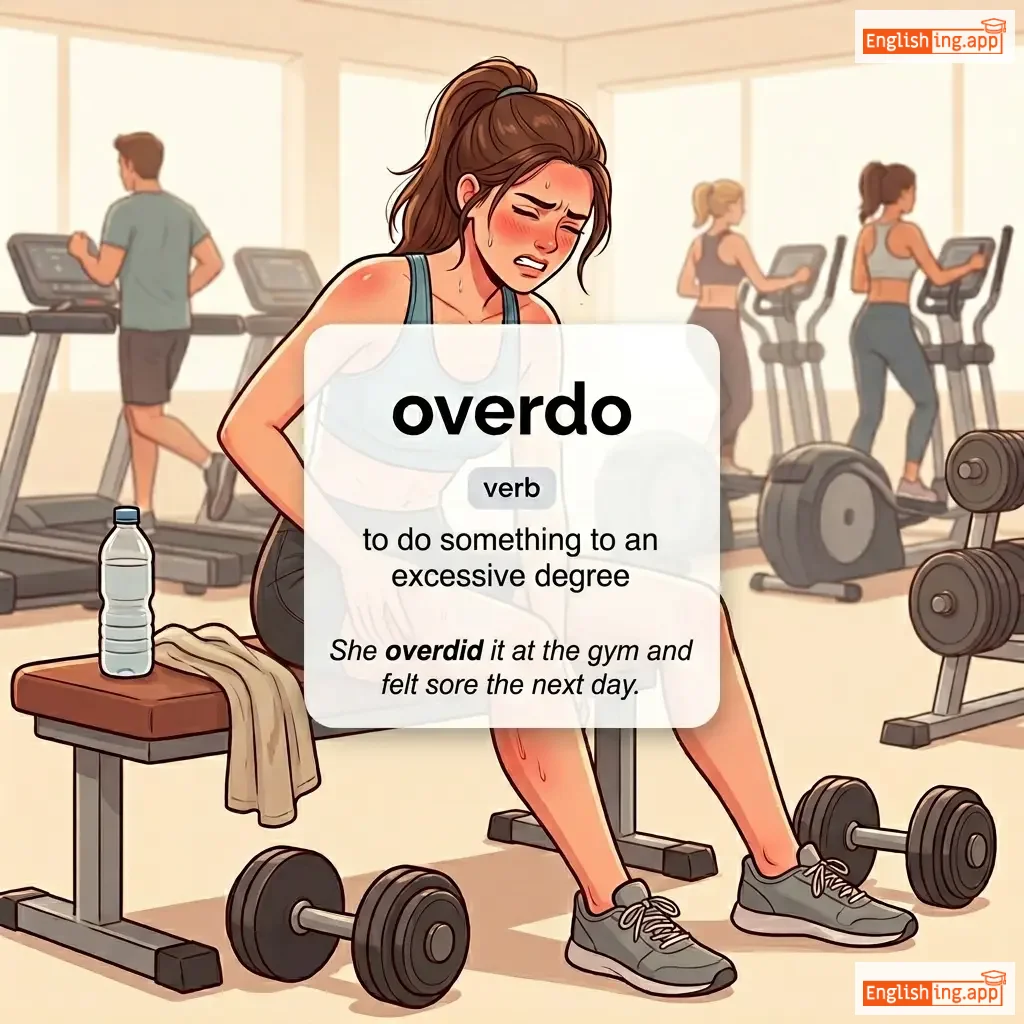
overdo definition card — visual illustration of the meaning
verb
/ˌoʊvərˈduː/
перегибать палку (peregibat' palku)

to do something to an excessive degree

"She overdid it at the gym and felt sore the next day."
"Она переусердствовала в тренажерном зале и почувствовала боль на следующий день." (Ona pereusyerdstvovala v trenazhernom zale i pochuvstvovala bol' na sleduyushchiy den'.)
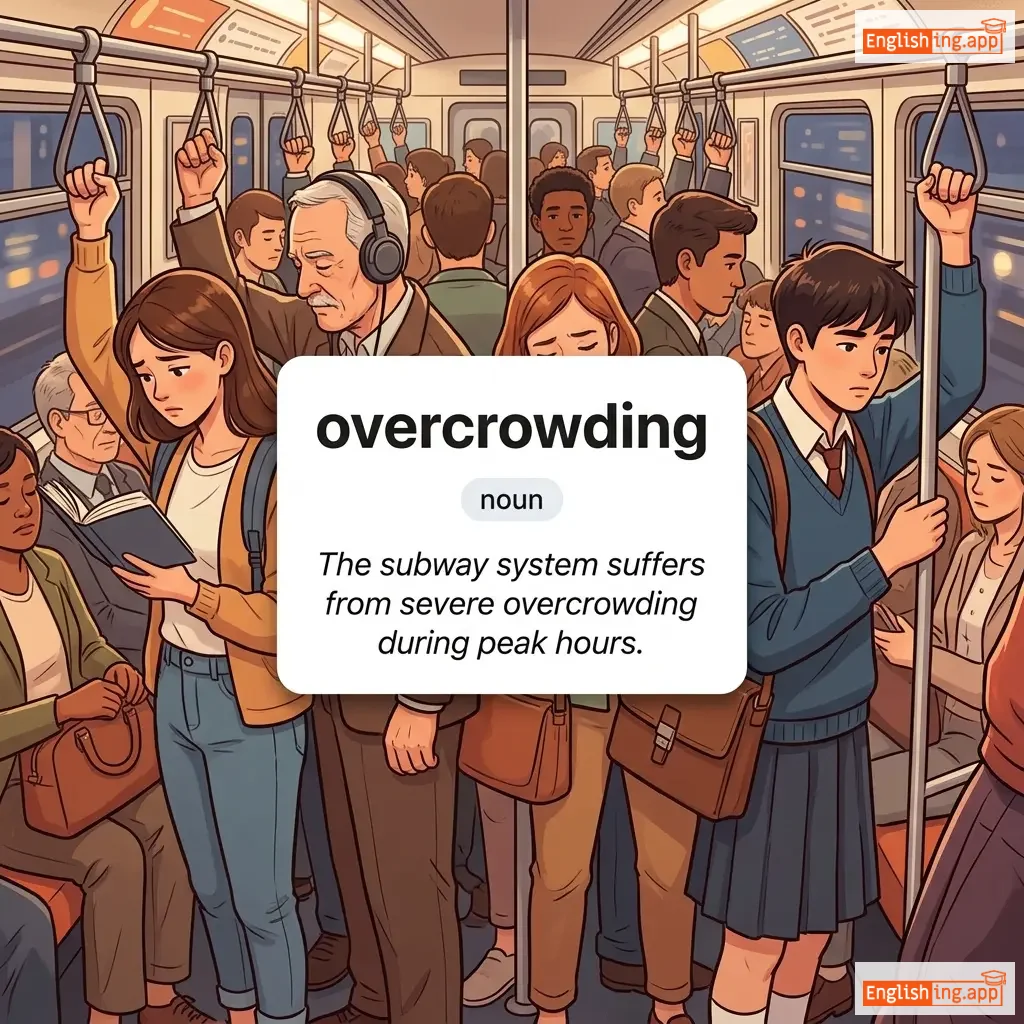
overcrowding definition card — visual illustration of the meaning
noun
/ˌoʊ.vɚˈkraʊ.dɪŋ/
чрезмерное скопление людей (chrezmernoe skoplenie lyudey)

Excessive crowd or packed condition, having more people or vehicles in a place than the approved capacity.

"The subway system suffers from severe overcrowding during peak hours."

"Метро страдает от серьезного переполнения в часы пик." (Metro stradayet ot seryoznogo perepolneniya v chasy pik.)
overcome definition card — visual illustration of the meaning
verb
/ˌoʊvərˈkʌm/
преодолеть (preodolety)

to succeed in dealing with a problem or difficulty; to defeat

"She managed to overcome all the challenges in her career."

"Она смогла преодолеть все трудности в своей карьере." (Ona smogla preodolety vse trudnosti v svoej kar'ere.)
adjective
/ˌoʊvərˈbloʊn/
преувеличенный (preuvelichennyi)

excessively exaggerated or inflated

"The controversy was overblown by the media."

"Контроверсия была преувеличена СМИ." (Kontroversiya byla preuvelichena SMI.)
adjective
/ˌoʊvərˈbɛrɪŋ/
властный (vlastnyy)

unpleasantly or arrogantly domineering

"His overbearing attitude made everyone uncomfortable."

"Его властное поведение заставило всех чувствовать себя неловко." (Ego vlastnoe povedenie zastavilo vsekh chuvstvovat' sebya nelovko.)
overarching definition card — visual illustration of the meaning
adjective
/ˌoʊ.vɚˈɑːr.tʃɪŋ/
всеобъемлющий или глобальный (vseobyemlyushchiy ili global'nyy)

Having comprehensive and widespread influence or coverage.

"Sustainability is an overarching goal in modern business."

"Устойчивость — это всеобъемлющая цель в современном бизнесе." (Ustoychivost' — eto vseobyemlyushchaya tsel' v sovremennom biznese.)
adjective, adverb
/ˈoʊvərɔːl/
в целом (v tse lom)

in general or as a whole

"Overall, the project has been successful."

"В целом, проект был успешным." (V tse lom, proyekt byl uspeshnym.)
outsourcing definition card — visual illustration of the meaning
noun
ˈaʊt.sɔː.sɪŋ
аутсорсинг (autsorsing)

The practice of having certain job functions done outside a company instead of having an in-house department or employee handle them.

"Many companies use outsourcing to reduce operational costs."

"Многие компании используют аутсорсинг для снижения операционных затрат." (Mnogie kompanii ispol'zuyut autsorsing dlya snizheniya operatsionnykh zatrat.)