語彙集

英単語辞書 | 単語の意味、定義、例文

noun
/ˈaʊtˌbreɪk/
発生 (hassei)

a sudden start or occurrence of something unpleasant, like disease or violence

"There was an outbreak of flu in the city."

"街でインフルエンザが発生した。" (Machi de infuruenza ga hassei shita.)
noun
/ˈaʊtbɜːrst/
感情または活動の突然の爆発 (kanjō matawa katsudō no totsuzen no bakuhatsu)

a sudden release of strong emotion or activity

"She had an angry outburst during the meeting."

"会議中に彼女は怒りの爆発をした。" (Kaigi-chū ni kanojo wa ikari no bakuhatsu o shita.)
noun
/ˈaʊtkæst/
社会的に排除された人 (shakaiteki ni haijo sareta hito)

a person who is rejected or excluded from society or a group

"He felt like an outcast at school."

"彼は学校でアウトカストのように感じた。" (Kare wa gakkō de autokasuto no yō ni kanjita.)
noun
/ˈaʊtkʌm/
結果 (kekka)

the result or consequence of an action or situation

"The outcome of the project was beyond expectations."

"プロジェクトの結果は予想を超えていました。" (Purojekuto no kekka wa yosou wo koeteimashita.)
noun
/ˈaʊtˌkraɪ/
抗議 (kougi)

A strong expression of public anger or disapproval.

"The decision sparked an outcry among the citizens."

"その決定は市民の間で抗議を引き起こしました。" (Sono kettei wa shimin no aida de kougi wo hikiokoshimashita.)
adjective
/ˌfæʃ.ənd/
時代遅れ (jidaiokure)

obsolete; no longer current

"This computer software is completely outdated."

"このソフトウェアは完全に時代遅れです。" (Kono sofutowea wa kanzen ni jidaiokure desu.)
verb
/ˌaʊtˈduː/
超える (koeru)

To do better than someone else; to surpass.

"She always tries to outdo her classmates in exams."

"彼女は試験でクラスメートを常に超えようとします。" (Kanojo wa shiken de kurasumeeto wo jōni koeyou to shimasu.)
adjective
/ˈaʊtdɔːr/
アウトドア (autodoa)

situated, existing, or done outside a building

"We planned an outdoor picnic for the weekend."

"週末のためにアウトドアピクニックを計画しました。" (Shūmatsu no tame ni autodoa pikunikku o keikaku shimashita.)
adverb; noun
/ˌaʊtˈdɔːrz/
屋外で (okugai de)

outside a building; the natural environment outside

"We spent the whole afternoon outdoors enjoying the fresh air."

"私たちは午後ずっと屋外で新鮮な空気を楽しみました。" (watashitachi wa gogo zutto okugai de shinsen na kuuki o tanoshimimashita)
adjective
/ˈaʊtər/
外部 (gaibu)

situated on or toward the outside; external

"The outer layer of the jacket is waterproof."

"ジャケットの外側の層は防水です。" (Jaketto no gaibu no sou wa bousui desu.)
noun
/ˈaʊtˌfɪt/
衣装 (ishou)

A set of clothes worn together, often for a particular occasion.

"She wore a beautiful outfit to the party."

"彼女はパーティーに美しい衣装を着て行った。" (Kanojo wa pātii ni utsukushī ishou o kite itta.)
adjective
/ˈaʊtˌɡoʊɪŋ/
社交的 (shakōteki)

Friendly and sociable; inclined to mix with others.

"He is an outgoing person who loves meeting new people."

"彼は新しい人々と会うのが好きな社交的な人です。" (Kare wa atarashī hitobito to au no ga suki na shakōteki na hito desu.)
noun
/ˈaʊtˌɡroʊθ/
成長 (seichou)

something that grows out of something else; a natural development or result

"The new policy was an outgrowth of years of debate."

"新しい政策は数年の議論の成長でした。" (Atarashii seisaku wa suunen no giron no seichou deshita.)
noun
/ˈaʊtɪŋ/
お出かけ (odekake)

a short trip or excursion, often for leisure or enjoyment

"They had a lovely outing at the beach last weekend."

"彼らは先週末、ビーチで素晴らしいお出かけをしました。" (Karera wa senshūmatsu, bīchi de subarashī odekake o shimashita.)
adjective
/ˌaʊtˈlændɪʃ/
奇妙 (kimyō)

Looking or sounding bizarre or unfamiliar; strange.

"He wore an outlandish costume to the festival."

"彼は祭りに奇妙な衣装を着ていました。" (Kare wa matsuri ni kimyō na ishō o kite imashita.)
verb
/aʊtˈlæst/
他より長く続く (hoka yori nagaku tsudzuku)

to continue longer than; to endure beyond someone or something else

"The old castle has outlasted many generations."

"その古い城は多くの世代を超えて生き残りました。" (Sono furui shiro wa ōku no sedai o koete ikinokorimashita.)
noun, verb
/ˈaʊtlɔː/

as a noun: a person who breaks the law and lives outside its protection; as a verb: to make something illegal

"The government decided to outlaw the harmful practice."

noun
/ˈaʊtlet/
出口 (deguchi)

a means by which something is released, expressed, or distributed

"Art is a great outlet for emotions."

"アートは感情のための素晴らしい出口です。" (Āto wa kanjō no tame no subarashī deguchi desu.)
noun, verb
/ˈaʊtlaɪn/

a general description or plan that gives the main ideas without details; to describe something briefly or highlight main points

"The teacher asked us to outline our research project before writing the report."

verb
/aʊtˈlɪv/
より長生きする (yori nagaki suru)

to live longer than someone or something else

"She outlived all her siblings."

"彼女はすべての兄弟姉妹より長生きしました。" (Kanojo wa subete no kyoudai shimai yori nagaki shimashita.)
noun
/ˈaʊtlʊk/
展望, 予測 (tenbō, yosoku)

a person's general attitude or view; a forecast or prospect

"The economic outlook for the year is positive."

"今年の経済の展望は前向きです。" (Kotoshi no keizai no tenbō wa maemuki desu.)
verb
/ˌaʊtməˈnuːvər/
巧妙に出し抜く (kōmyō ni dashinuku)

to gain an advantage over an opponent by skillful or clever action

"The smaller company managed to outmaneuver its larger rival."

"小さな会社は大きな競争相手を巧妙に出し抜くことに成功した。" (Chīsana kaisha wa ōkina kyōsō aite o kōmyō ni dashinuku koto ni seikō shita.)
adjective
/aʊtˈmoʊdɪd/
時代遅れ (jidaiokure)

No longer in fashion or useful; outdated.

"That old computer is completely outmoded."

"その古いコンピューターは完全に時代遅れです。" (sono furui konpyūtā wa kanzen ni jidaiokure desu.)
noun
/ˈaʊtpoʊst/
前哨基地 (zenshō kichi)

A small military camp or position at some distance from the main force, used especially as a guard.

"The soldiers were stationed at a remote outpost."
"兵士たちは遠隔地の前哨基地に配置されました。" (Heishi-tachi wa enkakuchi no zenshō kichi ni haichi saremashita.)
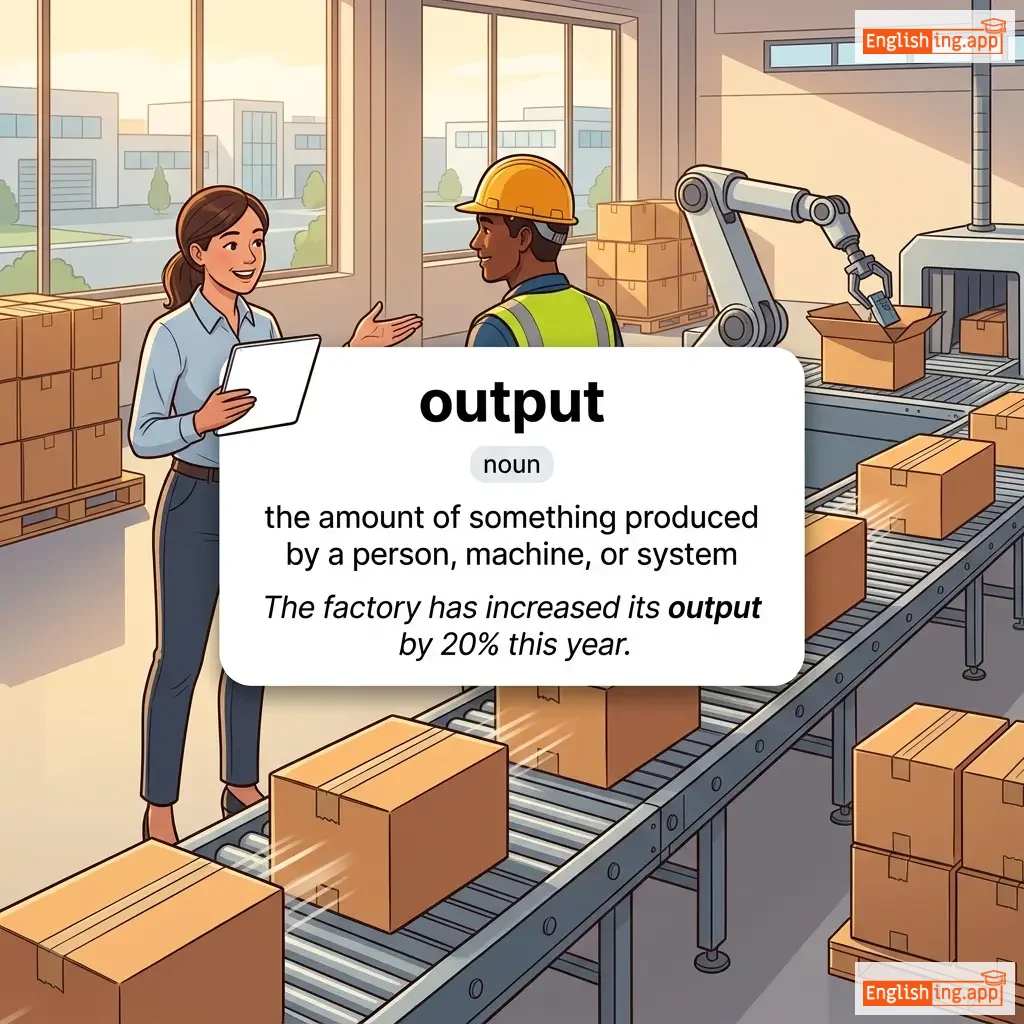
output definition card — visual illustration of the meaning
noun
/ˈaʊtpʊt/
生産 (seisan)

the amount of something produced by a person, machine, or system

"The factory has increased its output by 20% this year."

"工場は今年20%生産量を増加させました。" (Koujou wa kotoshi 20% seisanryou wo zouka sasemashita.)
noun/verb
/ˈaʊtreɪdʒ/
憤慨 (fukai)

A strong feeling of anger and shock; to arouse anger or shock.

"The unfair decision caused public outrage."

"不公平な決定が公共の憤慨を引き起こしました。" (Fukōhei na kettei ga kōkyō no fukai o hikiokoshimashita.)
adjective
/aʊtˈreɪdʒəs/
ショッキング (shokkingu)

Shockingly bad or excessive; very unusual or amusing.

"The comedian told an outrageous joke."

"コメディアンはショッキングなジョークを言いました。" (Komedian wa shokkingu na jooku wo iimashita.)
noun
/ˈaʊtriːtʃ/
支援拡大 (shien kakudai)

The act of providing services or support to people who might not otherwise have access to them.

"The charity launched a new outreach program for the homeless."

"チャリティはホームレスのために新しい支援拡大プログラムを開始しました。" (Chariti wa hōmuresu no tame ni atarashī shien kakudai puroguramu o kaishi shimashita.)
noun
/ˈoʊ.vər spɪl/
オーバーフロー (ōbāfurō)

the overflow of liquid from a container; excess that cannot be contained

"The overspill from the river flooded nearby farms."

"川の溢れが近くの農場を水浸しにした。" (Kawa no afure ga chikaku no nōjō o mizushinishi ni shita.)
noun
/ˈoʊvərlɔːrd/
領主 (ryoushu)

A ruler, master, or person of great power and authority over others.

"The peasants were forced to pay taxes to their overlord."

"農民たちは自分たちの領主に税金を払うよう強制されました。" (Noumin-tachi wa jibun-tachi no ryoushu ni zeikin wo harau you kyousei saremashita.)
overlook definition card — visual illustration of the meaning
verb
/ˌoʊvərˈlʊk/
見落とす (miotosu)

to fail to notice something; to have a view from above

"She overlooked an important detail in the contract."
"彼女は契約書の重要な詳細を見逃しました。" (Kanojo wa keiyakusho no jūyōna shōsai o miokurimashita.)
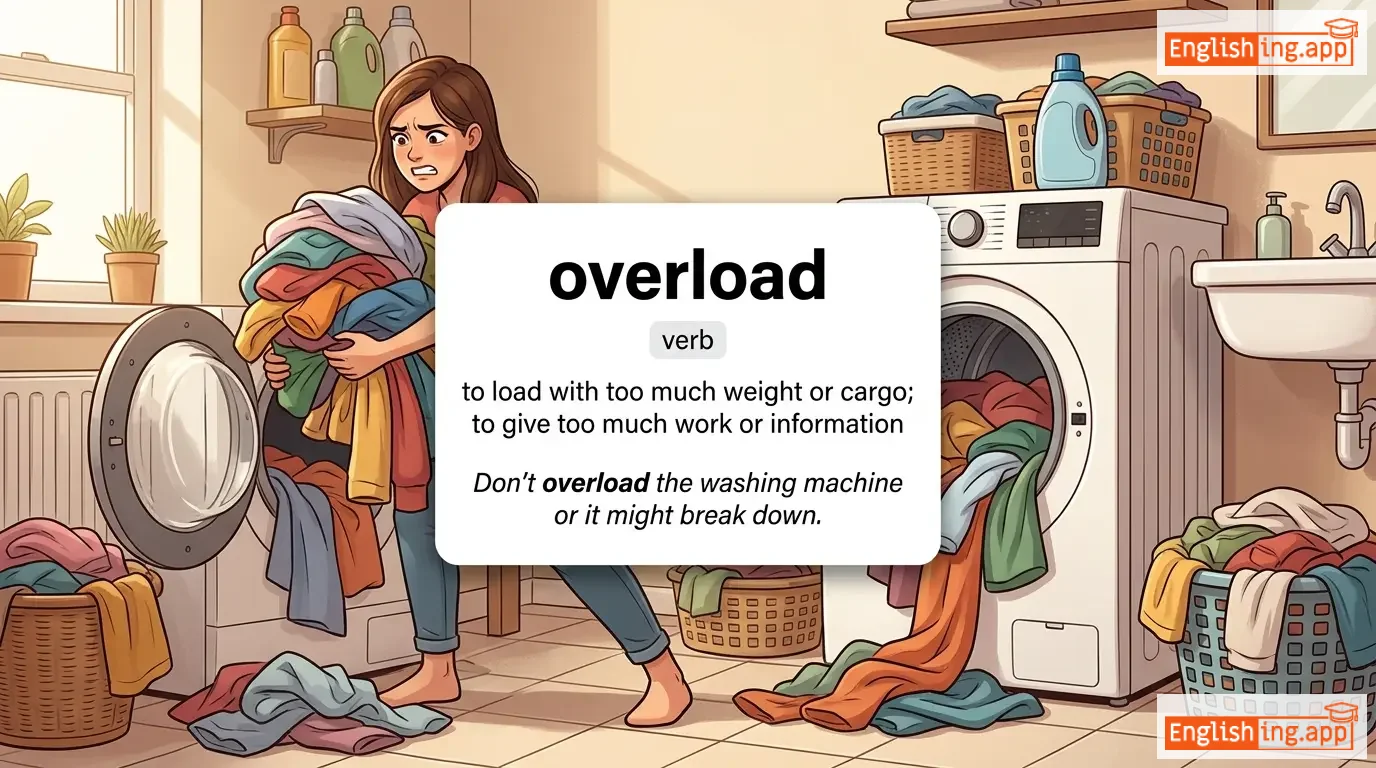
overload definition card — visual illustration of the meaning
verb
/ˌoʊvərˈloʊd/
過負荷 (kafuka)

to load with too much weight or cargo; to give too much work or information

"Don't overload the washing machine or it might break down."

"洗濯機をオーバーロードしないでください、壊れるかもしれません。" (Sentakuki o ōbā rōdo shinai de kudasai, kowareru kamoshiremasen.)
Overlet definition card — visual illustration of the meaning
noun
/ˈoʊ.vər.let/
ベッドパッド (beddo pado)

a thin mattress or pad placed over a bed for additional comfort

"The overlet makes the bed more comfortable to sleep on."

"オーバーレットはベッドをより快適にして眠りやすくします。" (Ōbāretto wa beddo o yori kaiteki ni shite nemuri yasuku shimasu.)
verb
/ˌoʊvərˈliːp/
飛び越える (tobikoeru)

To jump over something; to omit or disregard something.

"He managed to overleap the fence easily."

"彼は簡単にフェンスを飛び越えました。" (Kare wa kantan ni fensu o tobi koemashita.)
noun/verb
/ˌoʊvərˈlæp/

To extend over and cover partly; an area where things coincide.

"The two meetings overlap by an hour."

overhead definition card — visual illustration of the meaning
noun
ˈəʊ.və.hed
製品やサービスの作成に直接関係しない継続的な事業費用 (seihin ya sābisu no sakusei ni chokusetsu kankei shinai keizokuteki na jigyō hiyō)

Ongoing business expenses not directly attributable to creating a product or service.

"High overhead costs reduce overall profits."

"高いオーバーヘッドコストは、全体の利益を減少させます。" (Takai overhead kosuto wa, zentai no rieki o genshō sasemasu.)
verb
/ˈoʊvərˌhɔːl/
完全な改修 (kanzen na kaishū)

to examine thoroughly and repair or improve something that is worn or ineffective

"The company decided to overhaul its outdated computer system."

"会社は古くなったコンピュータシステムのオーバーホールを決定した。" (Kaisha wa furukunatta konpyūta shisutemu no ōbāhōru o kettei shita.)
noun/verb
/ˈoʊvərˌhæŋ/
突出部 (totsuchibu)

To extend outward and hang over something; a projecting part.

"The roof overhang provides shade in the summer."
"屋根のオーバーハングは夏に日陰を提供します。" (Yane no ōbāhangu wa natsu ni hikage o teikyō shimasu.)
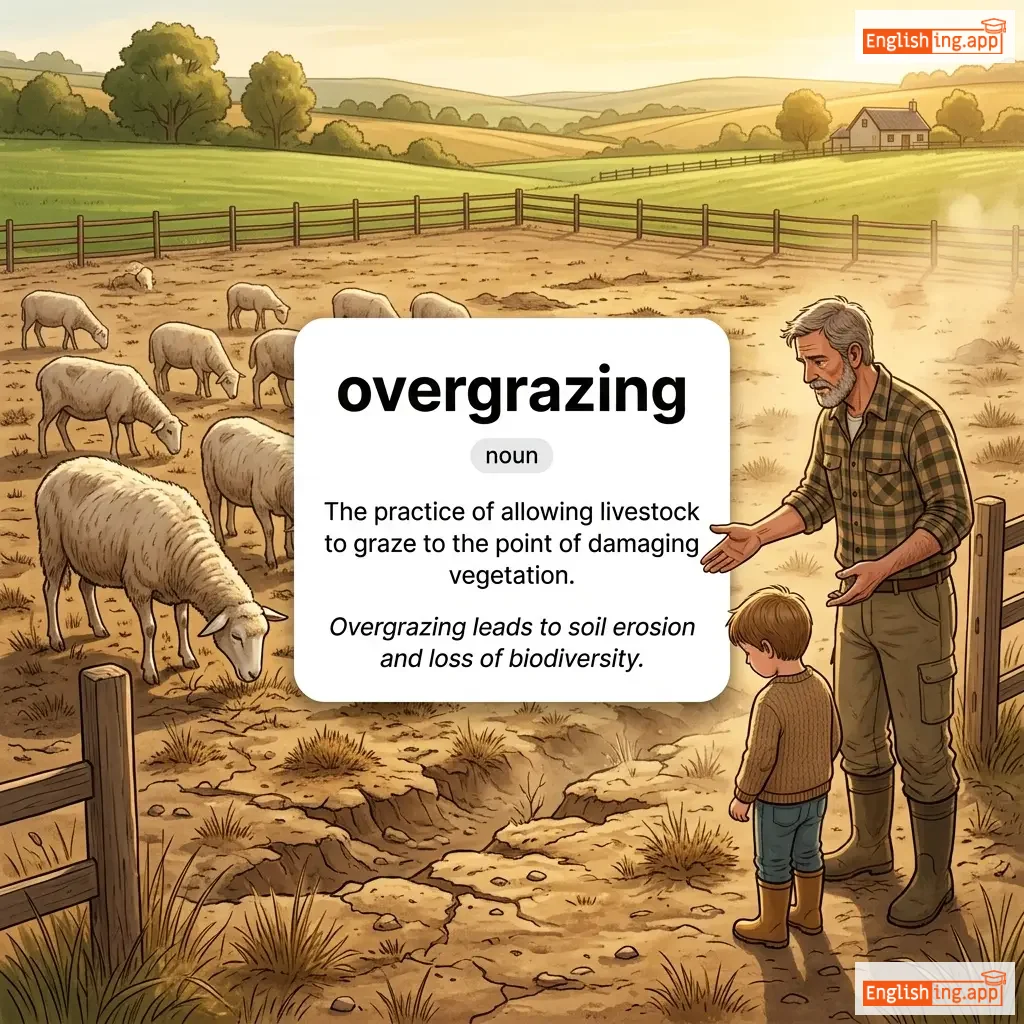
overgrazing definition card — visual illustration of the meaning
noun
ˌoʊ.vɚˈɡreɪ.zɪŋ
過剰放牧 (kajou houboku)

The practice of allowing livestock to graze to the point of damaging vegetation.

"Overgrazing leads to soil erosion and loss of biodiversity."
"過剰放牧は土壌の浸食と生物多様性の喪失を引き起こします。" (Kajou houboku wa dojou no shinshoku to seibutsu tayousei no soushitsu wo hikiokoshimasu.)
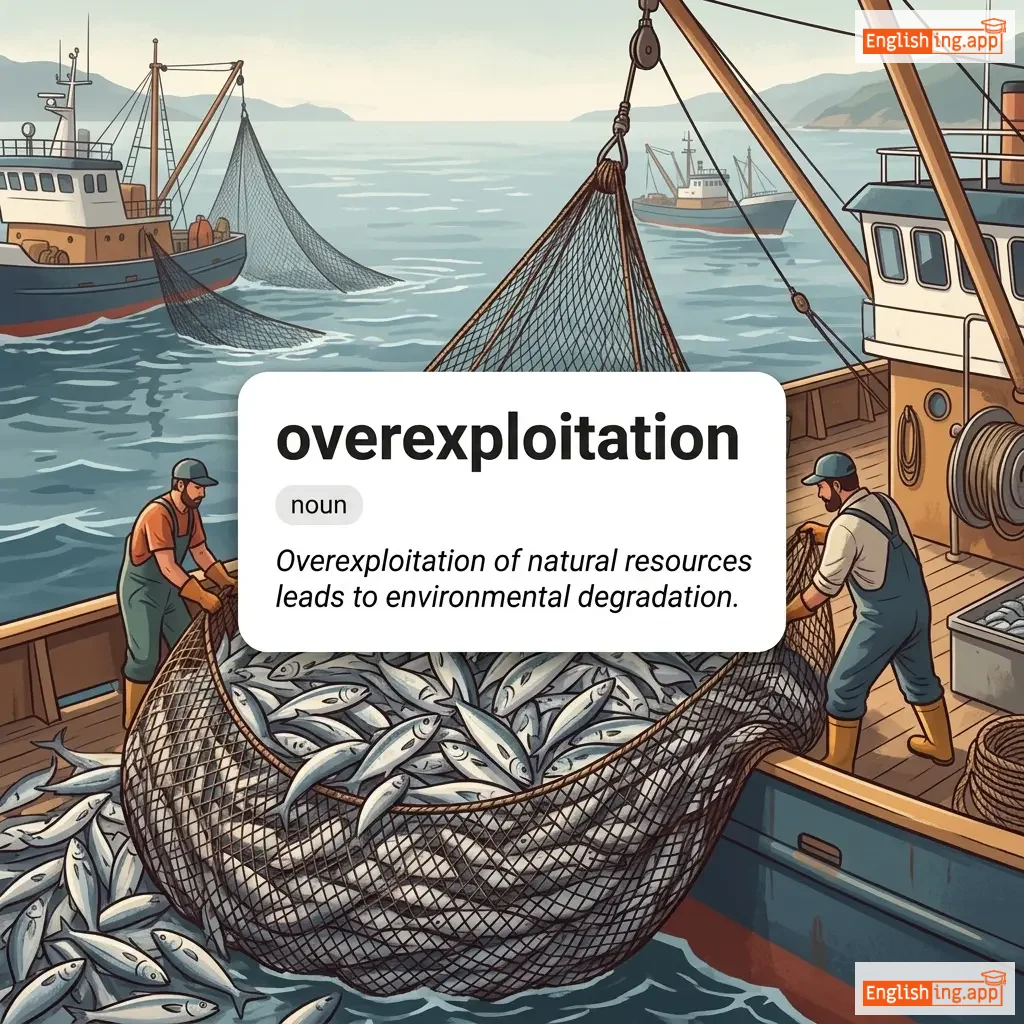
overexploitation definition card — visual illustration of the meaning
noun
/ˌəʊvərɪksˌplɔɪˈteɪʃən/
過剰搾取 (kajo sakushu)

The unsustainable use of natural resources at a rate that exceeds their ability to regenerate, leading to depletion and environmental degradation.

"Overexploitation of natural resources leads to environmental degradation."

"自然資源の過剰搾取は環境の悪化を引き起こします。" (Shizen shigen no kajo sakushu wa kankyō no akka o hikiokoshimasu.)
verb
/ˌoʊvərˈiːt/
幸福 (koufuku)

To eat more food than the body needs.

"She tends to overeat when she is stressed."

"彼女は賞を受け取ったとき、喜びを隠すことができませんでした。" (Kanojo wa shou o uketotta toki, yorokobi o kakusu koto ga dekimasen deshita.)
noun/verb
/ˈoʊvərˌdoʊs/
過剰摂取 (kajō sesshu)

An excessive and dangerous amount of a drug; to take too much of a substance.

"He was rushed to the hospital after a drug overdose."
"薬物の過剰摂取で病院に運ばれました。" (Yakubutsu no kajō sesshu de byōin ni hakobaremashita.)
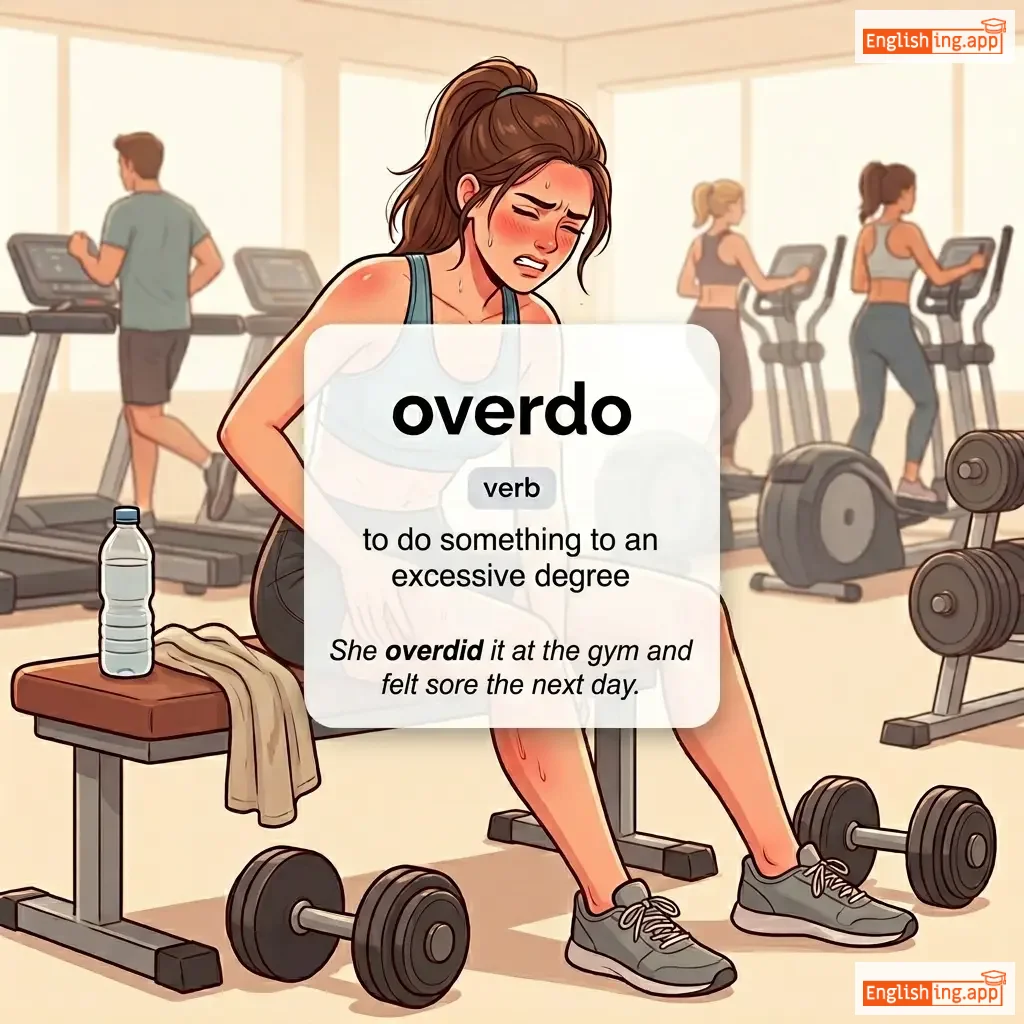
overdo definition card — visual illustration of the meaning
verb
/ˌoʊvərˈduː/
やりすぎ (yarisugi)

to do something to an excessive degree

"She overdid it at the gym and felt sore the next day."
"彼女はジムでやりすぎて、翌日筋肉痛を感じました。" (Kanojo wa jimu de yarisugite, yokujitsu kinnikutū o kanjimashita.)
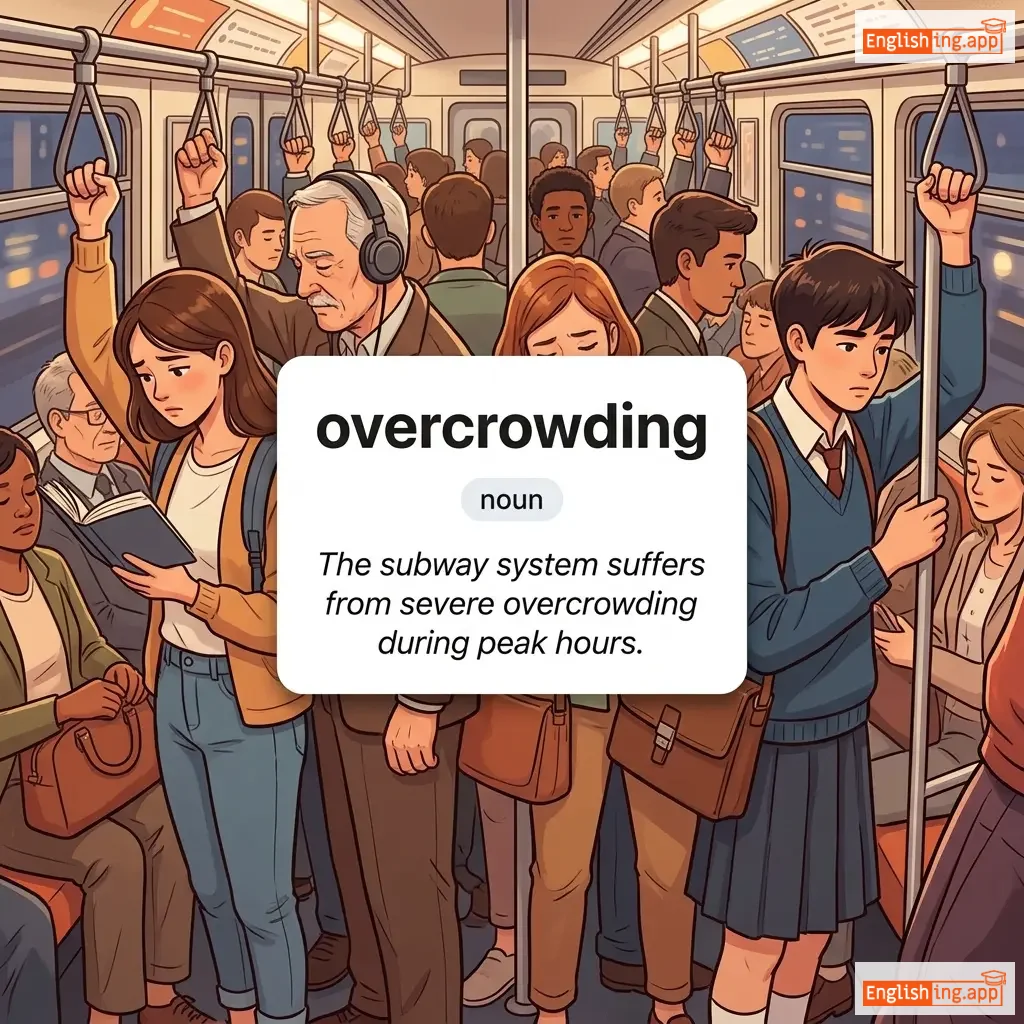
overcrowding definition card — visual illustration of the meaning
noun
/ˌoʊ.vɚˈkraʊ.dɪŋ/
過密 (kamitsu)

Excessive crowd or packed condition, having more people or vehicles in a place than the approved capacity.

"The subway system suffers from severe overcrowding during peak hours."
"地下鉄システムはピーク時にひどい過密状態に苦しんでいます。" (Chikatetsu shisutemu wa pīkuji ni hidoi kamitsu jōtai ni kurushindeimasu.)
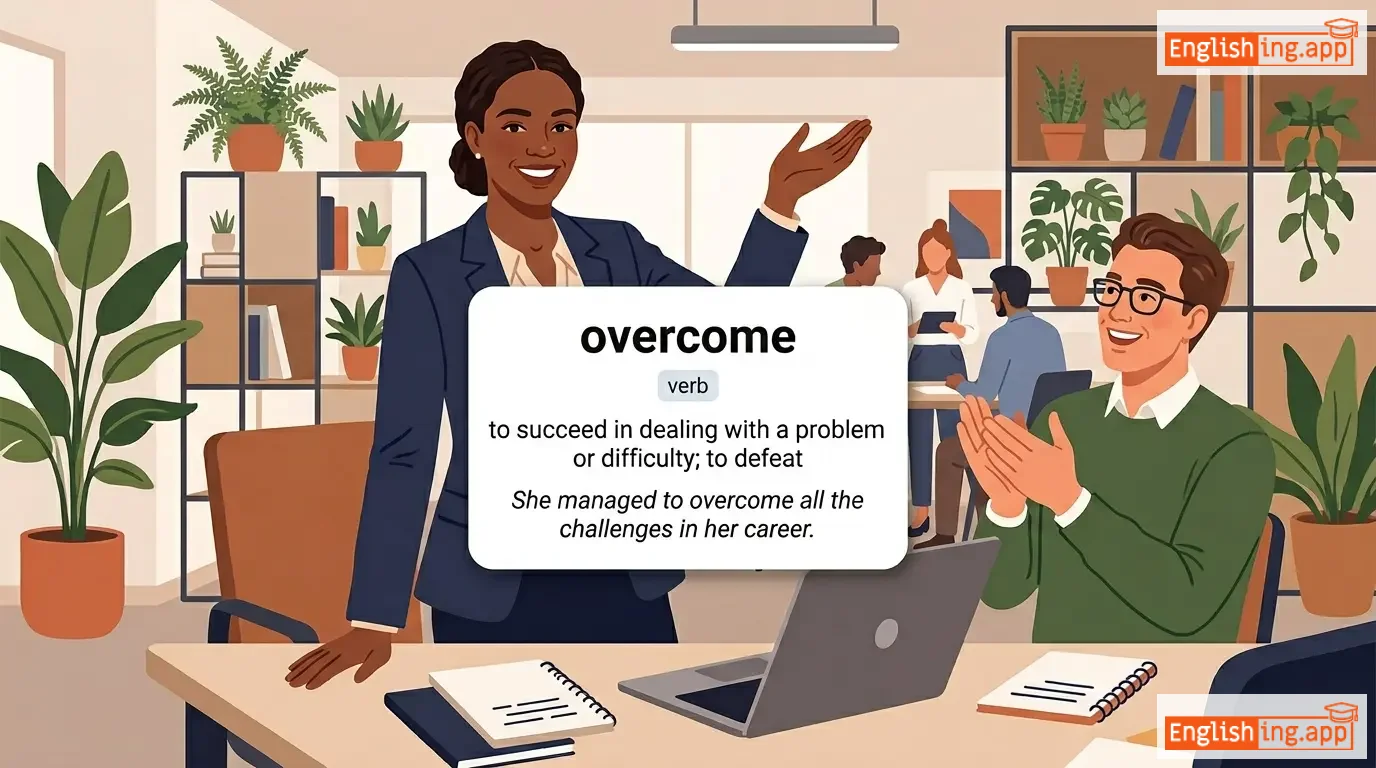
overcome definition card — visual illustration of the meaning
verb
/ˌoʊvərˈkʌm/
克服する (koku fuku suru)

to succeed in dealing with a problem or difficulty; to defeat

"She managed to overcome all the challenges in her career."

"彼女はキャリアの中ですべての挑戦を克服しました。" (Kanojo wa kyaria no naka de subete no chousen wo kokufuku shimashita.)
adjective
/ˌoʊvərˈbloʊn/
誇張された (kojou sareta)

excessively exaggerated or inflated

"The controversy was overblown by the media."

"メディアによって論争は誇張されました。" (Media ni yotte ronsou wa kojou saremashita.)
adjective
/ˌoʊvərˈbɛrɪŋ/
押しつけがましい (oshitsuke gamashii)

unpleasantly or arrogantly domineering

"His overbearing attitude made everyone uncomfortable."
"彼の押しつけがましい態度は、みんなを不快にさせた。" (Kare no oshitsuke gamashii taido wa, minna o fukai ni saseta.)
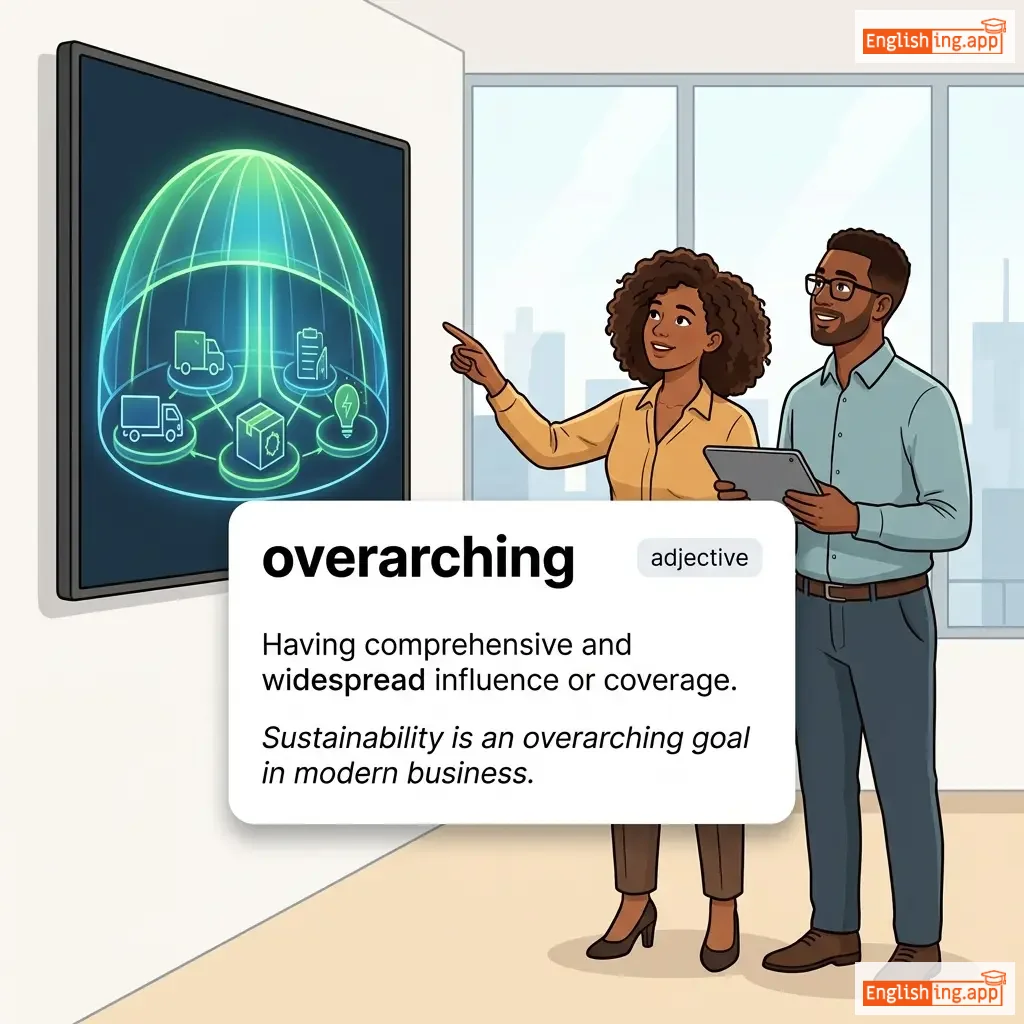
overarching definition card — visual illustration of the meaning
adjective
/ˌoʊ.vɚˈɑːr.tʃɪŋ/
包括的または全体的 (hōkatsuteki mata wa zentaiteki)

Having comprehensive and widespread influence or coverage.

"Sustainability is an overarching goal in modern business."

"持続可能性は現代ビジネスにおける包括的な目標です。" (Jizoku kanō-sei wa gendai bijinesu ni okeru hōkatsuteki na mokuhyō desu.)
adjective, adverb
/ˈoʊvərɔːl/
全体的に (zentai-teki ni)

in general or as a whole

"Overall, the project has been successful."

"全体的に、プロジェクトは成功しました。" (Zentai-teki ni, purojekuto wa seikou shimashita.)
outsourcing definition card — visual illustration of the meaning
noun
ˈaʊt.sɔː.sɪŋ
アウトソーシング (outsourcing)

The practice of having certain job functions done outside a company instead of having an in-house department or employee handle them.

"Many companies use outsourcing to reduce operational costs."

"多くの企業は運営コストを削減するためにアウトソーシングを利用しています。" (Ōku no kigyō wa un'ei kosuto o sakugen suru tame ni autsōshingu o riyō shiteimasu.)